The Timeless Beauty of the Citroën DS, the Car Mythologized by Roland Barthes (1957)
In the postwar Western imagination, modernity took three forms: the rocketship, the jetliner, and the automobile. The first two may have more direct claim to defining the “Space Age,” but only the third lay within reach of the average (or slightly above average) consumer. And at the 1955 Paris Auto Show the world first beheld a car that, aesthetically speaking, might as well have been a spacecraft: the Citroën DS. Pronounced in French like déesse, that language’s word for “goddess,” the car received 80,000 order deposits during the show, a record that stood for six decades until the debut of Tesla’s Model 3 — which, whatever its respectability as a feat of design and engineering, will never have Roland Barthes to extol its beauty.
“Cars today are almost the exact equivalent of the great Gothic cathedrals,” writes Barthes in an essay on the DS (which you can read in both English translation and the original French here) that appears in 1957’s Mythologies, many of whose editions bear the car’s image on the cover.
“I mean the supreme creation of an era, conceived with passion by unknown artists, and consumed in image if not in usage by a whole population which appropriates them as a purely magical object. It is obvious that the new Citroen has fallen from the sky inasmuch as it appears at first sight as a superlative object.” Possessed of all the features of “one of those objects from another universe which have supplied fuel for the neomania of the eighteenth century and that of our own science-fiction: the Déesse is first and foremost a new Nautilus.”
Smoothness, Barthes writes, “is always an attribute of perfection because its opposite reveals a technical and typically human operation of assembling: Christ’s robe was seamless, just as the airships of science-fiction are made of unbroken metal.” Hence his detection, in the unprecedentedly smooth lines of the DS, of “the beginnings of a new phenomenology of assembling, as if one progressed from a world where elements are welded to a world where they are juxtaposed and hold together by sole virtue of their wondrous shape, which of course is meant to prepare one for the idea of a more benign Nature.” Here we have “a humanized art, and it is possible that the Déesse marks a change in the mythology of cars,” raising them from “the bestiary of power” into the realm of the “spiritual and more object-like.”
In the Influx video at the top of the post, British Citroën specialist Matt Damper reads from Barthes’ essay to evoke the distinctive joie de vivre of French car culture in general and classic Citroëns in particular. (It must be said, however, that one of the main “unknown artists” to which the DS owes its unearthly beauty, sculptor turned industrial designer Flaminio Bertoni, hailed from Italy.) “You have to drive it in a completely different way than you drive any other car, really,” says Damper. “It’s that Frenchness: it’s like, ‘We’re right. This is the correct way of building a car. Just get used to it.’ ” Wired’s Jack Stewart echoes the sentiment in the video just above, “The 1955 Citroën DS Still Feels Ahead of Its Time.”
Stewart names the “strange semi-automatic gearbox that you have to get used to,” among the innovative or at least unconventional features with which the DS debuted, a list that also included hydraulic suspension (suited to France’s still-shambolic roads) and disc brakes. “That’s just the thing with Citroëns: they’re unforgiving if you don’t know what you’re doing, so you really have to learn how to drive these cars.” Or as Citroëns’s American ad campaign put it, “It takes a special person to drive a special car.” The DS didn’t sell stateside, in part due to its low-powered engine made to dodge French automobile tax structures, but now car-lovers around the world recognize it as one of the great achievements in motoring. The Citroën DS and the prose of Roland Barthes have a deep commonality: only those who understand that they have to approach the object on its own terms will find themselves in the presence of superior craft — albeit of a distinctively Gallic variety.
Below Jay Leno gives you a close up view of his 1971 Citroën DS and its unique suspension system.
Related Content:
Hear Roland Barthes Present His 40-Hour Course, La Préparation du roman, in French (1978–80)
178,000 Images Documenting the History of the Car Now Available on a New Stanford Web Site
Based in Seoul, Colin Marshall writes and broadcasts on cities, language, and culture. His projects include the book The Stateless City: a Walk through 21st-Century Los Angeles and the video series The City in Cinema. Follow him on Twitter at @colinmarshall or on Facebook.
Read More...Why Should You Read Haruki Murakami? An Animated Video on His “Epic Literary Puzzle” Kafka on the Shore Makes the Case
Haruki Murakami’s vast international fan base includes people dedicated to literature. It also includes people who have barely cracked any books in their lives — apart, that is, from Murakami’s novels with their distinctive mixture of the lighthearted with the grim and the mundane with the uncanny. Since the publication of his first novel, Hear the Wind Sing, 40 years ago in his native Japan, Murakami has become both a literary phenomenon and an extra-literary phenomenon, and different readers endorse different paths into his unique textual realm.
The TED-Ed video above makes the case for one fan favorite in particular: 2002’s Kafka on the Shore, an “epic literary puzzle filled with time travel, hidden histories, and magical underworlds. Readers delight in discovering how the mind-bending imagery, whimsical characters and eerie coincidences fit together.” So says the video’s narrator, reading from a lesson written by literary scholar Iseult Gillespie (who has also made cases for Charles Dickens, Virginia Woolf, and Ray Bradbury).
Murakami tells this story, and keeps it fresh through more than 500 pages, by alternating between two point-of-view characters: a teenager “desperate to escape his tyrannical father and the family curse he feels doomed to repeat,” who “renames himself Kafka after his favorite author and runs away from home,” and an old man with “a mysterious knack for talking to cats.”
When the latter is commissioned to use his unusual skill to track down a lost pet, “he’s thrown onto a dangerous path that runs parallel to Kafka’s.” Soon, “prophecies come true, portals to different dimensions open up — and fish and leeches begin raining from the sky.” But it’s all of a piece with Murakami’s body of work, with its novels and stories that “often forge fantastic connections between personal experience, supernatural possibilities, and Japanese history.” His “references to Western society and Japanese customs tumble over each other, from literature and fashion to food and ghost stories.”
All of it comes tied together with threads of music: “As the runaway Kafka wanders the streets of a strange city, Led Zeppelin and Prince keep him company,” and he later befriends a librarian who “introduces him to classical music like Schubert.” Safe to say that such references put some distance between Murakami’s work and that of his character Kafka’s favorite writer, to whom Murakami himself has been compared. Kafka on the Shore showcases Murakami’s storytelling sensibility, but is it in any sense Kafkaesque? You’ll have plenty more questions after taking the plunge into Murakami’s reality, but there’s another TED-Ed lesson that might at least help you answer that one.
Related Content:
Read 6 Stories By Haruki Murakami Free Online
What Does “Kafkaesque” Really Mean? A Short Animated Video Explains
Why Should We Read Charles Dickens? A TED-Ed Animation Makes the Case
Why Should We Read Ray Bradbury’s Fahrenheit 451? A New TED-Ed Animation Explains
Why Should We Read Virginia Woolf? A TED-Ed Animation Makes the Case
Based in Seoul, Colin Marshall writes and broadcasts on cities, language, and culture. His projects include the book The Stateless City: a Walk through 21st-Century Los Angeles and the video series The City in Cinema. Follow him on Twitter at @colinmarshall or on Facebook.
Read More...Klaus Nomi Performs with Kraftwerk on German Television (1982)
You’ll hardly ever run into a description of German New Wave wunderkind Klaus Nomi that doesn’t contain a reference to Weimar Germany. It would seem like a serious oversight not to mention Nomi’s embodiment of Weimar cabaret mannerisms, fitted for a space-age late-20th century. But the influence was far more than a stylistic borrowing. Nomi wasn’t just “the most German act ever,” as blogger Debris Slide writes; “Weimar Republic comes to Danceteria, except with spaceships” may also have been the most historically gay act in modern pop.
The Weimar Republic is well known as “a period of remarkable artistic energy,” writes Andrew Dickson at the British Library, “a roaring surge of modernist art, theatre, design, dance and film.” It was also a time when “the constraints of 19th-century manners and mores were torn down.” Hidden sexualities could emerge in public in Berlin, thanks a relaxed policing policy, as historian Robert Beachy shows in his book Gay Berlin. The fine arts and culture of Weimar flourished alongside the cabaret scene, whose camp showed up in everything from German Expressionist film to avant-garde opera.
“I think there probably had never been anything like this before,” Beachy tells NPR, “and there was no culture as open again until the 1970s.” Klaus Nomi arrived in the 70s with his cabaret space alien act to announce that the creative and personal freedoms of Weimar had returned, and he was their avatar, freely mixing opera and pop with astonishing facility, incorporating mime and vaudeville. “The influence of playwright and theatrical icon Bertolt Brecht would come to serve as a definitive touchstone” for Nomi’s career, writes Evan Zwisler at Flypaper.
“One of the ideas that Nomi incorporated into his own act was Verfremdungseffekt (or, ‘the distancing effect’)”—drawing heightened attention to the performance as performance, a significant feature of nearly all avant-garde theater in the early 20th century. Klaus Nomi was also the most Modernist act ever, at least in pop music. He would have fit in with a Dada cabaret revue of sixty years earlier. I’m not sure what it says about Berlin in the 70s that Nomi only truly found himself while onstage in New York. He moved to the city in 1972 after working as an usher in Berlin opera houses, where his astonishing soprano went unappreciated.
Nomi became “a quietly revolutionary part of the New York City art scene,” notes Zwisler, inspiring Jean-Michel Basquiat and Keith Haring. He appeared on Saturday Night Live with David Bowie in 1979 and in the 1981 documentary Urgh! A Music War. Had AIDS not claimed his life in 1983, Nomi’s fame may have spread even farther and wider. As it stood, however, the year before his death, it had at least spread to his home country, where he was welcomed by TV host Thomas Gottschalk on the German program No Sowas!, performing with Kraftwerk, the biggest German pop cultural export to date.
See Nomi sing the aria from Camille Saint-Saens’ “Samson and Delilah.” Then, we have a rare treat: the very Caligari-like cabaret of Kraftwerk, at the height of their austere synth pop fame. Nomi returns to sing “Total Eclipse” from his first album. You can read an English translation of Nomi’s between-song interview with Gottschalk here. The host wraps up this segment by saying, “he is already a big name in America, and now we present him here in Germany.”
Related Content:
The Enchanting Opera Performances of Klaus Nomi
Klaus Nomi: Watch the Final, Brilliant Performance of a Dying Man
David Bowie and Klaus Nomi’s Hypnotic Performance on SNL (1979)
Josh Jones is a writer and musician based in Durham, NC. Follow him at @jdmagness
Read More...Harvard Gives Free Online Access to 40 Million Pages of U.S. Case Law: Explore 6.4 Million Cases Dating Back to 1658

There was a time—a strange time in pop culture history, I’ll grant—when legal dramas were everywhere in television, popular fiction, and film. Next to the barn-burning courtroom set pieces in A Few Good Men and A Time to Kill, for example, scenes of lawyers poring over case law with loosened ties, high heels kicked off, and martinis and scotches in hand were rendered with maximum dramatic tension, despite the fact that case law is a nigh unreadable jumble of jargon, citations, archaic diction and syntax, etc… anything but brimming with cinematic potential.
Do law students and legal scholars disagree with this assessment? It’s beside the point, many might say. The centuries-old web of case law—reinforcing, contradicting, overturning, creating patterns and structures—is the very stuff the law is made of.
It’s a referential tradition, and when most of the documents are in the hands of only a few people, only those people understand why the law works the way it does. The rest of us are left to wonder why the legal system is so Byzantine and incomprehensible. Real life rarely has the clarity of a satisfying courtroom drama.
Last year, The Harvard Crimson reported a seemingly revolutionary shift in that dynamic, when Harvard Law’s Caselaw Access Project “digitized more than 40 million pages of U.S. state, federal, and territorial case law documents from the Law School library,” dating back to 1658. The Crimson issued one caveat: the full database is accessible to the public, but “users are limited to five hundred full case texts per day.” Plan your intense, scotch-soaked all-nighters accordingly.
Is this altruism, civic duty, a move in the right direction of freeing publicly funded research for public use? Several Harvard Law faculty have said as much. “Case law is the product of public resources poured into our court system,” writes Professor I. Glenn Cohen. “It’s great that the public will now have better access to it.” It is indeed, Professor Christopher T. Bavitz says: “If we want to ensure that people have access to justice, that means that we have to ensure that they have access to cases. The text of cases is the law.”
The law is not a set of abstract principles, theories, or rules, in other words, but a series of historical examples, woven together into a social narrative. Machines can analyze data from The Caselaw Access Project far faster and more efficiently than any human, giving us broader views of legal history and precedent, and greatly expanding public understanding of the system. Harvard’s Library Innovation Lab has itself already created several apps for just this purpose.
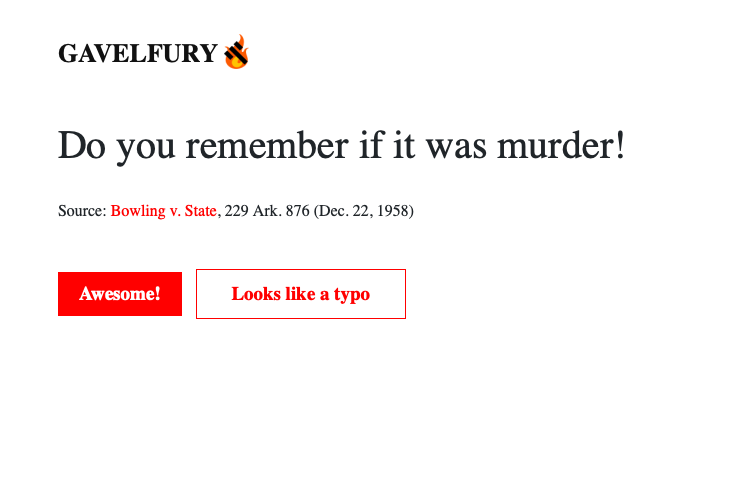
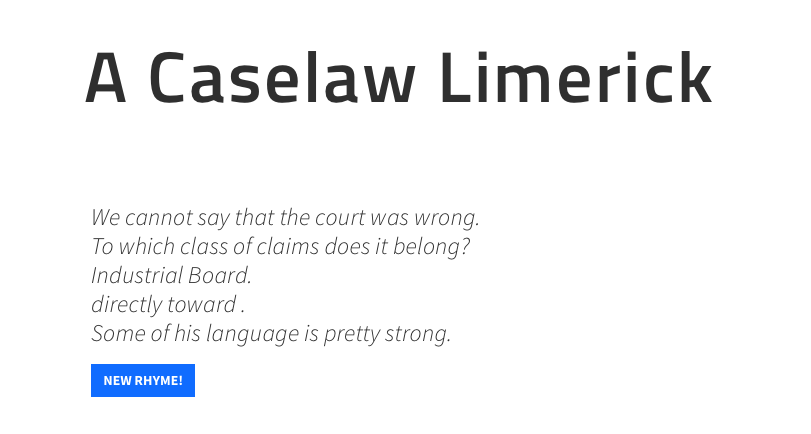
There’s California Wordclouds, which shows the most-used words in California caselaw between 1852 and 2015, and Witchcraft in Caselaw, which does what it says, with an interactive map of all appearances of witchcraft in cases across the country. There’s “Fun Stuff” too, like a Caselaw Limerick Generator, a visual database that analyzes colors in case law, and “Gavelfury,” which analyzes “all instances of ‘!,’” giving us gems like “Do you remember if it was murder!” from Bowling v. State, 229 Ark. 876 (Dec. 22, 1958).
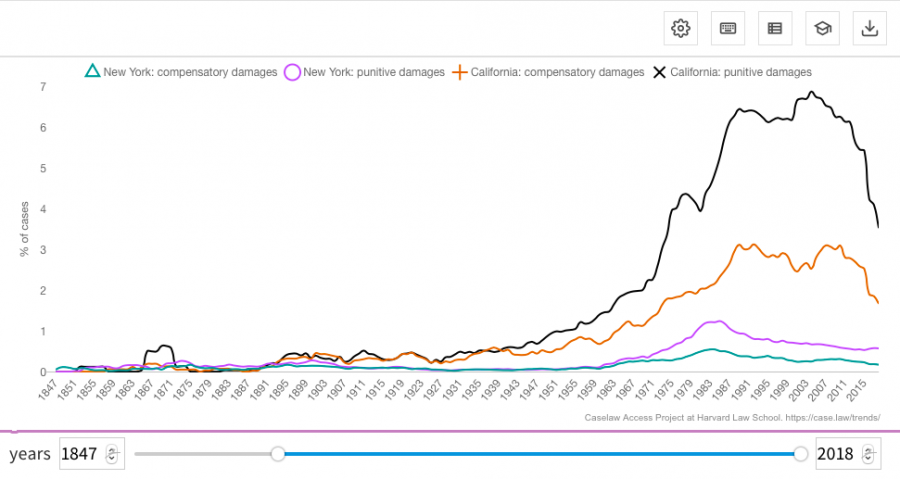
One new graphing tool, Historical Trends, announced in June, makes it easy for users to “visualize word usage in court opinions over time,” writes the Library Innovation Lab. (Examples include comparing the “frequency of ‘compensatory damages’ and ‘punitive damages’ in New York and California” and comparing “privacy” with “publicity.”) Anyone can build their own data visualization using their own search terms. (Learn how and get started here.) Case law may never be glamorous, exactly, or fun to read, but it may be far more interesting, and empowering, than we imagine.
Be aware that the Caselaw Access Project could still find ways to restrict or monetize access, for a short time, at least. “The project was funded partly through a partnership with Ravel, a legal analytics startup founded by two Stanford Law School students,” reports the Crimson. The company “earned ‘some commercial rights’ through March 2024 to charge for greater access to files.” The startup has issued no word on whether this will happen. In the meantime, public interest legal scholars may wish to do their own digging through this trove of caselaw to better understand the public’s right to information of all kinds.
Related Content:
Bound by Law?: Free Comic Book Explains How Copyright Complicates Art
Positive Psychology: A Free Course from Harvard University
Harvard Launches a Free Online Course to Promote Religious Tolerance & Understanding
Josh Jones is a writer and musician based in Durham, NC. Follow him at @jdmagness
Read More...Discover the Spelling Dictionary That Ludwig Wittgenstein Created for Elementary School Students
He only published two books of philosophy, and only one of them in his lifetime, but Ludwig Wittgenstein’s influence on 20th century thought is incalculable. Both of his books, the Tractatus Logico-Philosophicus and the posthumous Philosophical Investigations, constitute major turning points in analytic philosophy—the one inspiring the 1920s logical positivism of the Vienna Circle, the other repudiating Wittgenstein’s earlier thought and invigorating mid-century pragmatism and the Ordinary Language school.
“By the 1930s,” notes Tim Rayner at Philosophy for Change, “Wittgenstein had decided” that the theory of language he had advanced in the Tractatus “was quite wrong. He devoted the rest of his life to explaining why.” This marked a dramatic shift away from the work that first made him famous, but Wittgenstein never did anything halfway. After publishing the Tractatus—partly composed while he fought in World War I—the Austrian son of a wealthy Viennese industrialist announced that he had solved all of the problems in philosophy. Nothing more needed to be said on the matter.
He “retired” to try his hand at several other trades, including grade school teacher, for a period of about six years in rural villages in Austria. “By the time he decided to teach,” Spencer Robins notes at The Paris Review, “Wittgenstein was well on his way to being considered the greatest philosopher alive.” He couldn’t have cared less. “Convinced he was a moral failure, he took extreme steps to change his circumstances, divesting himself of his enormous family fortune” and choosing a profession “influenced by a romantic idea of what it would be like to work with peasants—an idea he’d gotten from reading Tolstoy.”
Wittgenstein was an unsparing taskmaster, by all accounts. His brief elementary teaching career ended abruptly in 1926 when he viciously attacked a student. While his personality did not suit him to the role at all, his pedagogy was apparently very effective. Wittgenstein “engaged his students in a sort of ‘project-based learning’ that wouldn’t be out of place in the best elementary classrooms today,” writes Robins. In the last years of teaching, he worked with his students to produce what is technically his second published book—Wörterbuch für Volksschulen, a German spelling dictionary for elementary schools.
One of the shocks that awaited the philosopher when he arrived in rural schools was the expense of books, and students’ inability to obtain them. “I had never realized dictionaries would be so mightily expensive,” he told educationalist Ludwig Hansel. “I think, if I live long enough, I will produce a small dictionary for elementary schools.” Often a pragmatist in life, if not always in his thought, Wittgenstein took the opportunity to turn this promise into a teachable moment, testing drafts of his dictionary in the classroom. “The improvement of spelling was astonishing,” he remarked.
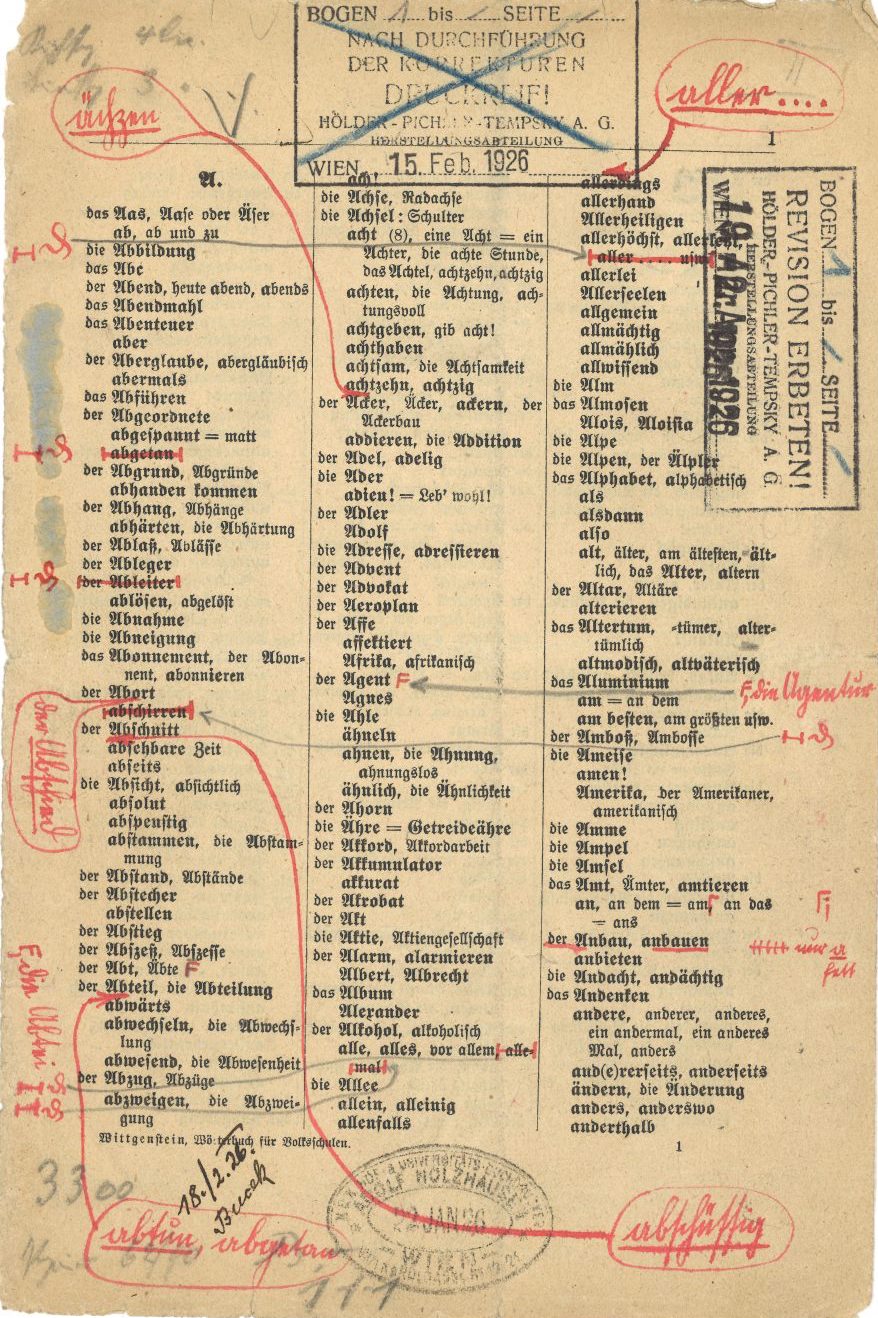
The dictionary, and Wittgenstein’s teaching methods in general during this period, “reveal his continued interest in the philosophy of language and its practical, everyday manifestations,” as Désirée Weber, Assistant Professor of Political Theory at the University of Wooster in Ohio, writes at the British Wittgenstein Society site. Copies of the 42-page book are extremely rare. The page above comes from a set of proof pages discovered and examined by Weber. The pages show the philosopher tailoring his reference guide to the world his students knew and the language they already spoke.
“Although there is some question” which, or whether, the various editorial marks are in Wittgenstein’s own hand, “the contents of the dictionary and the corrections yield a fascinating view of the words that Wittgenstein deemed central to the forms of life and language-games in which his students were immersed.” He captured “the specificity of the rural Austrian dialect,” Weber writes at the Wittgenstein Initiative, as well as “words that pertained to cultural practices that were part of their community and with which they would have been well acquainted.”
Wittgenstein elaborates his practical purpose in an introduction, showing his intent to initiate his students into their “language-using community” and into “the responsibility this carries,” Weber writes. The project also shows him engaging in the theoretical work that would occupy him for the rest of his career.
Related Content:
Ludwig Wittgenstein’s Short, Strange & Brutal Stint as an Elementary School Teacher
In Search of Ludwig Wittgenstein’s Secluded Hut in Norway: A Short Travel Film
Josh Jones is a writer and musician based in Durham, NC. Follow him at @jdmagness
Read More...Stream Marcel Proust’s In Search of Lost Time, a BBC Production Featuring Derek Jacobi (Free for a Limited Time)
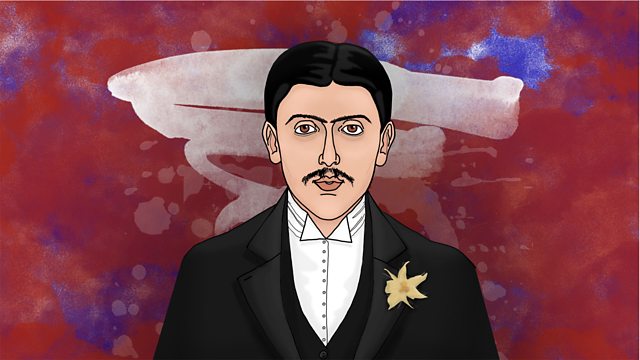
A nice tip from Metafilter: “BBC Radio 4 is airing Marcel Proust’s In Search of Lost Time in 10 episodes running to about nine hours in total. With a starry cast headed by Derek Jacobi as the Narrator, the adaptation is written by U.S.-born, UK-based playwright Timberlake Wertenbaker.”
The entire audio collection will remain streamable for the next 28 days. Here are the individual episodes:
Find more audio books in our collection, 1,000 Free Audio Books: Download Great Books for Free.
If you would like to support the mission of Open Culture, consider making a donation to our site. It’s hard to rely 100% on ads, and your contributions will help us continue providing the best free cultural and educational materials to learners everywhere. You can contribute through PayPal, Patreon, and Venmo (@openculture). Thanks!
Related Content:
The First Known Footage of Marcel Proust Discovered: Watch It Online
When James Joyce & Marcel Proust Met in 1922, and Totally Bored Each Other
Marcel Proust Fills Out a Questionnaire in 1890: The Manuscript of the ‘Proust Questionnaire’
Read More...Why Route 66 Became America’s Most Famous Road
Most Americans know Route 66, but sometimes it seems like non-Americans know it better. I happen to be an American living outside America myself, and whenever conversations turn to the subject of road trips in my homeland, it’s only a matter of time before I hear the usual question: “Have you driven Route 66?” Originally commissioned in 1926, the 2,448-mile road from Chicago to Santa Monica enjoyed about three decades of primacy before its eclipse by the Interstate Highway System. Quaint though Route 66 may now seem compared to that vast postwar infrastructural project, it somehow hasn’t quite let go of its hold on the American imagination, and even less so the world’s imagination about America.
“Route 66 has been in the shadows twice as long as it was in the spotlight,” says Vox’s Phil Edwards, “but there’s still this energy around it.” In the video “Why Route 66 Became America’s Most Famous Road,” Edwards does the iconic road trip himself, and along the way tells the story behind what John Steinbeck called “the mother road, the road of flight.”
This naturally involves an abundance of both cinematically empty landscapes, flamboyantly unhealthy cuisine, and richly kitschy Americana, the kind of thing featured in Atlas Obscura’s robust Route 66 category. Edwards visits colossal cowboy statues, the American Quarter Horse Hall of Fame and Museum (“horses must be dead to be considered”), and a roadhouse where, if you “eat 72 ounces of steak and sides in under an hour, you get it for free” — and those are just in Texas.
Route 66 can’t but appeal to American history buffs, but in recent decades it has also attracted connoisseurs of desolation. Originally shaped by a variety of lobbying interests, including an especially vigorous promoter of Tulsa, Oklahoma named Cyrus Avery, the “Main Street of America” turned many of the hamlets along its path into, if not destinations, then places worth spending the night. Fascinating artifacts remain of Route 66’s vibrant midcentury “motel culture,” but not even the most America-besotted visitors from foreign lands could overlook how thoroughly history seems to have passed most of these places by. I saw this first-hand myself when I drove across the United States on Interstate 40, the continent-spanning freeway that follows Route 66 in places and certainly hastened its demise. You can see it and much else on Route 66 besides in the “aerial documentary” above.
Edwards’ interviewees include denizens of Route 66 making a go of reversing the decline of this 34-years-decommissioned road, such as the proprietor of the Motel Safari, a veritable 1950s time-capsule in Tucumcari, New Mexico. He also talks to the editor of Route 66 News, an elderly Texan lady with a thing for dinosaurs, a modern-day Cyrus Avery looking to promote the glories of Route 66’s Oklahoma stretch, and Route 66 road-trippers of various ages and nationalities, including a guy who actually ate that 72-ounce steak within an hour. “There was dessert as far as the eye can see,” says one still-marveling young European. He almost surely meant desert, but as far as the charms of America’s open roads go, both interpretations are equally true.
Related Content:
If You Drive Down a Stretch of Route 66, the Road Will Play “America the Beautiful”
12 Classic Literary Road Trips in One Handy Interactive Map
Four Interactive Maps Immortalize the Road Trips That Inspired Jack Kerouac’s On the Road
Jack Kerouac’s On The Road Turned Into Google Driving Directions & Published as a Free eBook
Based in Seoul, Colin Marshall writes and broadcasts on cities, language, and culture. His projects include the book The Stateless City: a Walk through 21st-Century Los Angeles and the video series The City in Cinema. Follow him on Twitter at @colinmarshall or on Facebook.
Read More...Mister Rogers Demonstrates How to Cut a Record
When I was a little boy, I thought the greatest thing in the world would be to be able to make records. — Fred Rogers
By 1972, when the above episode of Mister Rogers’ Neighborhood aired, host Fred Rogers had already cut four records, including the hit-filled A Place of Our Own.
But a childlike curiosity compelled him to explore on camera how a virgin disc could become that most wondrous thing—a record.
So he borrowed a “special machine”—a Rek-O-Kut M12S overhead with an Audax mono head, for those keeping score at home—so he could show his friends, on camera, “how one makes records.”
This technology was already in decline, ousted by the vastly more portable home cassette recorder, but the record cutter held far more visual interest, yielding hair-like remnants that also became objects of fascination to Mister Rogers.
What we wouldn’t give to stumble across one of those machines and a stash of blank discs in a thrift store…
Wait, scratch that, imagine running across the actual platter Rogers cut that day!
Though we’d be remiss if we failed to mention that a member of The Secret Society of Lathe Trolls, a forum devoted to “record-cutting deviants, renegades, professionals & experimenters,” claims to have had an aunt who worked on the show, and according to her, the “reproduction” was faked in post.
(“It sounded like they recorded the repro on like an old Stenorette rim drive reel to reel or something and then piped that back in,” another commenter promptly responds.)
The Trolls’ episode discussion offers a lot of vintage audio nerd nitty gritty, as well as an interesting history of the one-off self-recoded disc craze.
The mid-century general public could go to a coin-operated portable sound booth to record a track or two. Spoken word messages were popular, though singers and bands also took the opportunity to lay down some grooves.
Radio stations and recording studios also kept machines similar to the one Rogers is seen using. Sun Records’ secretary, Marion Keisker, operated the cutting lathe the day an unknown named Elvis Presley showed up to cut a lacquered disc for a fee of $3.25.
The rest is history.
More recently, The Shins, The Kills, and Seasick Steve, below, recorded live direct-to-acetate records on a modified 1953 Scully Lathe at Nashville’s Third Man Records.
(Legend has it that James Brown’s “It’s A Man’s World” was cut on that same lathe… Cut a hit of your own during a tour of Third Man’s direct-to-acetate recording facilities.)
via @wfmu
Related Content:
How Old School Records Were Made, From Start to Finish: A 1937 Video Featuring Duke Ellington
Watch a Needle Ride Through LP Record Grooves Under an Electron Microscope
How Vinyl Records Are Made: A Primer from 1956
An Interactive Map of Every Record Shop in the World
Ayun Halliday is an author, illustrator, theater maker and Chief Primatologist of the East Village Inkyzine, current issue the just-released #60. Join her in NYC on Monday, September 9 for another season of her book-based variety show, Necromancers of the Public Domain. Follow her @AyunHalliday.
Read More...What Happens To Your Body & Brain If You Don’t Get Sleep? Neuroscientist Matthew Walker Explains
As an insomniac in a morning person’s world, I wince at sleep news, especially from Matthew Walker, neuroscientist, Berkeley professor, and author of Why We Sleep. Something of a “sleep evangelist,” as Berkeley News calls him (he prefers “sleep diplomat”), Walker has taken his message on the road—or the 21st century equivalent: the TED Talk stages and animated explainer videos.
One such video has Walker saying that “sleep when you’re dead” is “mortally unwise advice… short sleep predicts a shorter life.” Or as he elaborates in an interview with Fresh Air’s Terry Gross, “every disease that is killing us in developed nations has causal and significant links to a lack of sleep.”

Yeesh. Does he lay it on thick? Nope, he’s got the evidence and wants to scare us straight. It’s a psychological tactic that hasn’t always worked so well, although next to “sleep or die” sermons, there’s good news: sleep, when harnessed properly (yes, somewhere in the area of 8 hours a night) can also be a “superpower.” Sleep does “wonderfully good things… for your brain and for your body,” boosting memory, concentration, and immunity, just for starters.
But back to the bad.…
In the Tech Insider video above, Walker delivers the grim facts. As he frequently points out, most of us need to hear it. Sleep deprivation is a serious epidemic—brought on by a complex of socio-economic-politico-technological factors you can probably imagine. See Walker’s comparisons (to the brain as an email inbox and a sewage system) animated, and learn about how lack of sleep contributes to a 24% increase in heart attacks and numerous forms of cancer. (The World Health Organization has recently “classified nighttime shift work as a probable carcinogen.”)
On the upside, rarely is health science so unambiguous. If nutritionists could only give us such clear-cut advice. Whether we’d take it is another question. Learn more about the multiple, and sometimes fatal, consequences of sleep deprivation in the animated TED-Ed video above.
Related Content:
10 Hours of Ambient Arctic Sounds Will Help You Relax, Meditate, Study & Sleep
Josh Jones is a writer and musician based in Durham, NC. Follow him at @jdmagness.
Read More...Marilyn Monroe Recounts Her Harrowing Experience in a Psychiatric Ward (1961)

By the end of 1960, Marilyn Monroe was coming apart.
She spent much of that year shooting what would be her final completed movie – The Misfits (see a still from the trailer above). Arthur Miller penned the film, which is about a beautiful, fragile woman who falls in love with a much older man. The script was pretty clearly based on his own troubled marriage with Monroe. The production was by all accounts spectacularly punishing. Shot in the deserts of Nevada, the temperature on set would regularly climb north of 100 degrees. Director John Huston spent much of the shoot ragingly drunk. Star Clark Gable dropped dead from a heart attack less than a week after production wrapped. And Monroe watched as her husband, who was on set, fell in love with photographer Inge Morath. Never one blessed with confidence or a thick skin, Monroe retreated into a daze of prescription drugs. Monroe and Miller announced their divorce on November 11, 1960.
A few months later, the emotionally exhausted movie star was committed by her psychoanalyst Dr. Marianne Kris to the Payne Whitney Psychiatric Clinic in New York. Monroe thought she was going in for a rest cure. Instead, she was escorted to a padded cell. The four days she spent in the psych ward proved to be among the most distressing of her life.
In a riveting 6‑page letter to her other shrink, Dr. Ralph Greenson, written soon after her release, she detailed her terrifying experience.
There was no empathy at Payne-Whitney — it had a very bad effect — they asked me after putting me in a “cell” (I mean cement blocks and all) for very disturbed depressed patients (except I felt I was in some kind of prison for a crime I hadn’t committed. The inhumanity there I found archaic. They asked me why I wasn’t happy there (everything was under lock and key; things like electric lights, dresser drawers, bathrooms, closets, bars concealed on the windows — the doors have windows so patients can be visible all the time, also, the violence and markings still remain on the walls from former patients). I answered: “Well, I’d have to be nuts if I like it here.”
Monroe quickly became desperate.
I sat on the bed trying to figure if I was given this situation in an acting improvisation what would I do. So I figured, it’s a squeaky wheel that gets the grease. I admit it was a loud squeak but I got the idea from a movie I made once called “Don’t Bother to Knock”. I picked up a light-weight chair and slammed it, and it was hard to do because I had never broken anything in my life — against the glass intentionally. It took a lot of banging to get even a small piece of glass — so I went over with the glass concealed in my hand and sat quietly on the bed waiting for them to come in. They did, and I said to them “If you are going to treat me like a nut I’ll act like a nut”. I admit the next thing is corny but I really did it in the movie except it was with a razor blade. I indicated if they didn’t let me out I would harm myself — the furthest thing from my mind at that moment since you know Dr. Greenson I’m an actress and would never intentionally mark or mar myself. I’m just that vain.
During her four days there, she was subjected to forced baths and a complete loss of privacy and personal freedom. The more she sobbed and resisted, the more the doctors there thought she might actually be psychotic. Monroe’s second husband, Joe DiMaggio, rescued her by getting her released early, over the objections of the staff.
You can read the full letter (where she also talks about reading the letters of Sigmund Freud) over at Letters of Note. And while there, make sure you pick up a copy of the very elegant Letters of Note book.
Note: An earlier version of this post appeared on our site in August 2015.
Related Content:
The 430 Books in Marilyn Monroe’s Library: How Many Have You Read?
Marilyn Monroe Reads Joyce’s Ulysses at the Playground (1955)
Marilyn Monroe Reads Walt Whitman’s Leaves of Grass (1952)
Marilyn Monroe Explains Relativity to Albert Einstein (in a Nicolas Roeg Movie)
Jonathan Crow is a Los Angeles-based writer and filmmaker whose work has appeared in Yahoo!, The Hollywood Reporter, and other publications. You can follow him at @jonccrow. And check out his blog Veeptopus, featuring lots of pictures of vice presidents with octopuses on their heads. The Veeptopus store is here.
Read More...Support Us
We're hoping to rely on loyal readers, rather than erratic ads. Please click the Donate button and support Open Culture. You can use Paypal, Venmo, Patreon, even Crypto! We thank you!

About Us

Open Culture scours the web for the best educational media. We find the free courses and audio books you need, the language lessons & educational videos you want, and plenty of enlightenment in between.
Advertise With Us

FREE UPDATES!
GET OUR DAILY EMAIL
Get the best cultural and educational resources on the web curated for you in a daily email. We never spam. Unsubscribe at any time.
FOLLOW ON SOCIAL MEDIA

Open Culture editor Dan Colman scours the web for the best educational media. He finds the free courses and audio books you need, the language lessons & movies you want, and plenty of enlightenment in between.
Advertise With Us

