Fashion Designers in 1939 Predict How People Would Dress in the Year 2000
Some two decades before The Jetsons brought their animated vision of the future to the small screen, the cinemagazine Pathetone Weekly ran a featurette in which the “most famous” fashion designers in the U.S. predicted what the well-dressed woman would find herself wearing in the year 2000.
Cantilevered heels, multifunctional garments to go from office to evening wear in mere seconds, tech integrations, dresses made of aluminum and transparent net…
As one commenter on YouTube astutely observed, “Madonna wore most of these before we even reached 2000.”
As is to be expected, these futuristic fashions exhibited the flattering bias cut that we in 2019 associate with the period in which they were envisioned.
Gisele Bündchen, the top supermodel of 2000, could certainly hold her own against her glamorous 1939 counterparts, but the same cannot be said of the trucker hats, low slung jeans, velour track suits and denim everything that truly defined the look of the millennium.
The biggest loser of the year AD 2000, as envisioned by those famous designers of 1939, is the American male, whose drapey harem pants, Prince Valiant ‘do, and ill advised facial hair make George Jetson look like like Clark Gable.
The poor guy does deserve some cool points for wearing a phone, though. (It’s like they had a crystal ball!)
And his radio may well prefigure the iPod, which made its debut in 2001.
Because pockets were presumed to be going the way of the dodo (and skirts for women), a utility belt holds his keys, change, and “candy for cuties.”
This last item is surely an unnecessary burden, given the narrative emphasis on the female clothing designs’ man-catching prowess.
(Imagine the 21st-century feminine disappointment when their electric headlights revealed what they’d reeled in.)
Perhaps the most useful innovation to come from this exercise is the “electric belt to adapt the body to climactic changes.”
Don’t tell 1939, but I think we’re gonna need a bigger belt.
As to the identities of the famous designers and the delightfully chatty (“Ooh, swish!”narrator), they seem to have been lost to the ages. Readers, if you have any intel, please advise.
Related Content:
1930s Fashion Designers Predict How People Would Dress in the Year 2000
Ayun Halliday is an author, illustrator, theater maker and Chief Primatologist of the East Village Inky zine. Join her in New York City on April 15 for the next installment of her book-based variety show, Necromancers of the Public Domain. Follow her @AyunHalliday.
Read More...How to Take a Picture of a Black Hole: Watch the 2017 Ted Talk by Katie Bouman, the MIT Grad Student Who Helped Take the Groundbreaking Photo
What triggered the worst impulses of the Internet last week?
The world’s first photo of a black hole, which proved the presence of troll life here on earth, and confirms that female scientists, through no fault of their own, have a much longer way to go, baby.
If you want a taste, sort the comments on the two year old TED Talk, above, so they’re ordered “newest first.”
Katie Bouman, soon-to-be assistant professor of computing and mathematical sciences at the California Institute of Technology, was a PhD candidate at MIT two years ago, when she taped the talk, but she could’ve passed for a nervous high schooler competing in the National Science Bowl finals, in clothes borrowed from Aunt Judy, who works at the bank.
The focus of her studies were the ways in which emerging computational methods could help expand the boundaries of interdisciplinary imaging.
Prior to last week, I’m not sure how well I could have parsed the focus of her work had she not taken the time to help less STEM-inclined viewers such as myself wrap our heads around her highly technical, then-wholly-theoretical subject.
What I know about black holes could still fit in a thimble, and in truth, my excitement about one being photographed for the first time pales in comparison to my excitement about Game of Thrones returning to the airwaves.
Fortunately, we’re not obligated to be equally turned on by the same interests, an idea theoretical physicist Richard Feynman promoted:
I’ve always been very one-sided about science and when I was younger I concentrated almost all my effort on it. I didn’t have time to learn and I didn’t have much patience with what’s called the humanities, even though in the university there were humanities that you had to take. I tried my best to avoid somehow learning anything and working at it. It was only afterwards, when I got older, that I got more relaxed, that I’ve spread out a little bit. I’ve learned to draw and I read a little bit, but I’m really still a very one-sided person and I don’t know a great deal. I have a limited intelligence and I use it in a particular direction.
I’m pretty sure my lack of passion for science is not tied to my gender. Some of my best friends are guys who feel the same. (Some of them don’t like team sports either.)
But I couldn’t help but experience a wee thrill that this young woman, a science nerd who admittedly could’ve used a few theater nerd tips regarding relaxation and public speaking, realized her dream—an honest to goodness photo of a black hole just like the one she talked about in her TED Talk, “How to take a picture of a black hole.”
Bouman and the 200+ colleagues she acknowledges and thanks at every opportunity, achieved their goal, not with an earth-sized camera but rather a network of linked telescopes, much as she had described two years earlier, when she invoked disco balls, Mick Jagger, oranges, selfies, and a jigsaw puzzle in an effort to help people like me understand.

Look at that sucker (or, more accurately, its shadow!) That thing’s 500 million trillion kilometers from Earth!
(That’s much farther than King’s Landing is from Winterfell.)
I’ll bet a lot of elementary science teachers, be they male, female, or non-binary, are going to make science fun by having their students draw pictures of the picture of the black hole.
If we could go back (or forward) in time, I can almost guarantee that mine would be among the best because while I didn’t “get” science (or gym), I was a total art star with the crayons.
Then, crafty as Lord Petyr Baelish when presentation time rolled around, I would partner with a girl like Katie Bouman, who could explain the science with winning vigor. She genuinely seems to embrace the idea that it “takes a village,” and that one’s fellow villagers should be credited whenever possible.
(How did I draw the black hole, you ask? Honestly, it’s not that much harder than drawing a doughnut. Now back to Katie!)
Alas, her professional warmth failed to register with legions of Internet trolls who began sliming her shortly after a colleague at MIT shared a beaming snapshot of her, taken, presumably, with a regular old phone as the black hole made its debut. That pic cemented her accidental status as the face of this project.
Note to the trolls—it wasn’t a dang selfie.
“I’m so glad that everyone is as excited as we are and people are finding our story inspirational,’’ Bouman told The New York Times. “However, the spotlight should be on the team and no individual person. Focusing on one person like this helps no one, including me.”
Although Bouman was a junior team member, she and other grad students made major contributions. She directed the verification of images, the selection of imaging parameters, and authored an imaging algorithm that researchers used in the creation of three scripted code pipelines from which the instantly-famous picture was cobbled together.
As Vincent Fish, a research scientist at MIT’s Haystack Observatory told CNN:
One of the insights Katie brought to our imaging group is that there are natural images. Just think about the photos you take with your camera phone—they have certain properties.… If you know what one pixel is, you have a good guess as to what the pixel is next to it.
Hey, that makes sense.
As The Verge’s science editor, Mary Beth Griggs, points out, the rush to defame Bouman is of a piece with some of the non-virtual realities women in science face:
Part of the reason that some posters found Bouman immediately suspicious had to do with her gender. Famously, a number of prominent men like disgraced former CERN physicist Alessandro Strumia have argued that women aren’t being discriminated against in science — they simply don’t like it, or don’t have the aptitude for it. That argument fortifies a notion that women don’t belong in science, or can’t really be doing the work. So women like Bouman must be fakes, this warped line of thinking goes…
Even I, whose 7th grade science teacher tempered a bad grade on my report card by saying my interest in theater would likely serve me much better than anything I might eek from her class, know that just as many girls and women excel at science, technology, engineering, and math as excel in the arts. (Sometimes they excel at both!)
(And power to every little boy with his sights set on nursing, teaching, or ballet!)
(How many black holes have the haters photographed recently?)
Griggs continues:
Saying that she was part of a larger team doesn’t diminish her work, or minimize her involvement in what is already a history-making project. Highlighting the achievements of a brilliant, enthusiastic scientist does not diminish the contributions of the other 214 people who worked on the project, either. But what it is doing is showing a different model for a scientist than the one most of us grew up with. That might mean a lot to some kids — maybe kids who look like her — making them excited about studying the wonders of the Universe.
Related Content:
Watch a Star Get Devoured by a Supermassive Black Hole
Ayun Halliday is an author, illustrator, theater maker and Chief Primatologist of the East Village Inky zine. Join her in New York City tonight for the next installment of her book-based variety show, Necromancers of the Public Domain. Follow her @AyunHalliday.
Read More...Google Celebrates the Bauhaus School’s 100th Anniversary with an Animated Doodle
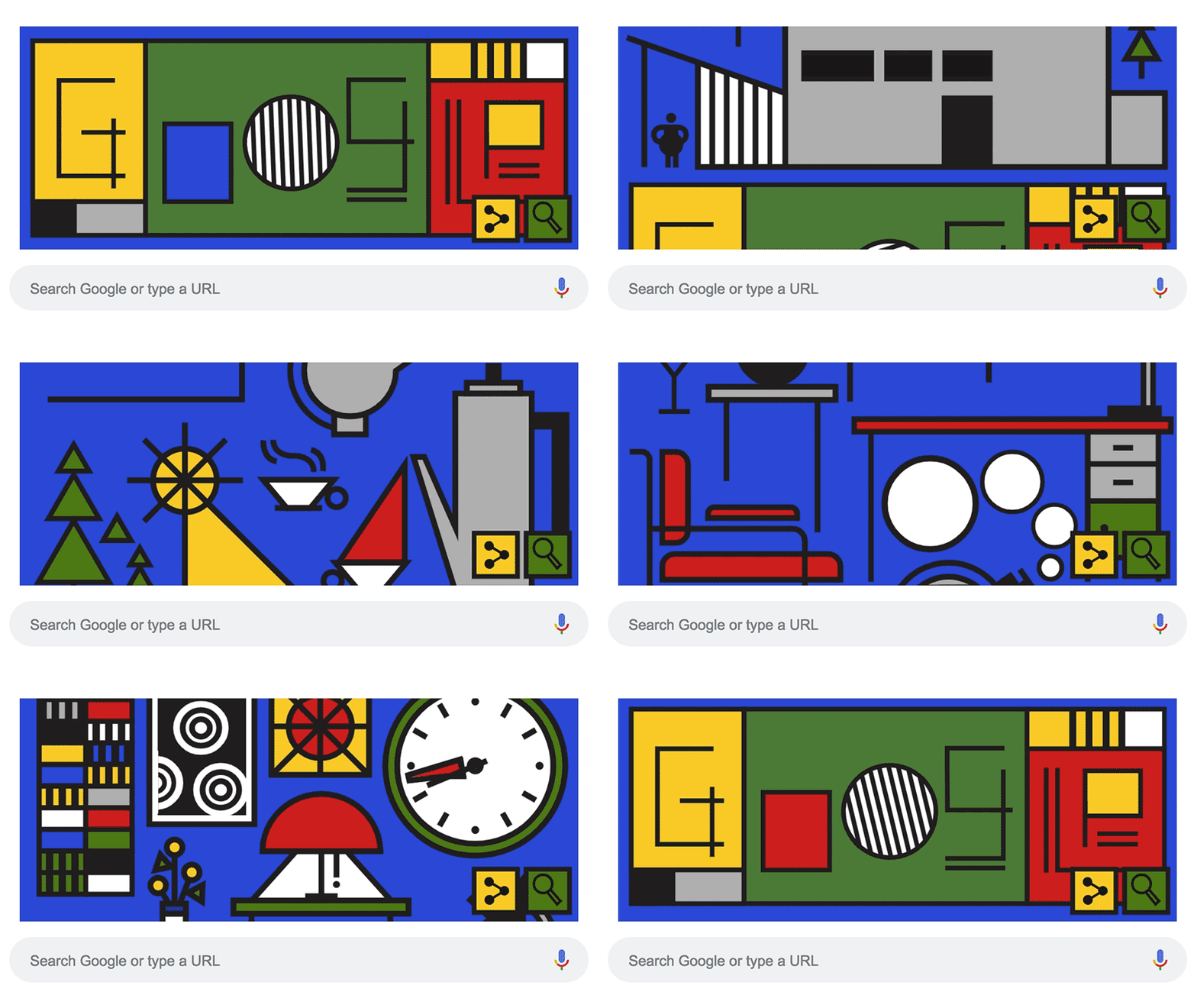
Google has commemorated the 100th anniversary of the birth of the Bauhaus school with a nice animated doodle. They write:
Both a school for the arts and a school of thought, the Bauhaus was founded by architect Walter Gropius exactly 100 years ago in Weimar, Germany, gathering many of Europe’s most brilliant artists and designers with the aim of training a new generation of creatives to reinvent the world. Today’s animated Doodle celebrates the legacy of this institution and the worldwide movement it began, which transformed the arts by applying the principle “form follows function.”
Gropius envisioned the Bauhaus—whose name means “house of building”—as a merger of craftsmanship, the “fine” arts, and modern technology. His iconic Bauhaus Building in Dessau was a forerunner of the influential “International Style,” but the impact of the Bauhaus’s ideas and practices reached far beyond architecture. Students of the Bauhaus received interdisciplinary instruction in carpentry, metal, pottery, stained glass, wall painting, weaving, graphics, and typography, learning to infuse even the simplest functional objects (like the ones seen in today’s Doodle) with the highest artistic aspirations.
Steering away from luxury and toward industrial mass production, the Bauhaus attracted a stellar faculty including painters Wassily Kandinsky and Paul Klee, photographer and sculptor László Moholy-Nagy, graphic designer Herbert Bayer, industrial designer Marianne Brandt, and Marcel Breuer, whose Model B3 tubular chair changed furniture design forever.
Though the Bauhaus officially disbanded on August 10, 1933, its students returned to 29 countries, founding the New Bauhaus in Chicago, Black Mountain College in North Carolina, and White City in Tel Aviv. Bauhaus affiliates also took leadership positions at the Illinois Institute of Technology, the Harvard School of Architecture, and the Museum of Modern Art. Through all of these institutions, and the work created in their spirit, the ideas of the Bauhaus live on.
Find more anniversary celebrations in the Relateds below.
If you would like to support the mission of Open Culture, consider making a donation to our site. It’s hard to rely 100% on ads, and your contributions will help us continue providing the best free cultural and educational materials to learners everywhere. You can contribute through PayPal, Patreon, and Venmo (@openculture). Thanks!
Related Content:
32,000+ Bauhaus Art Objects Made Available Online by Harvard Museum Website
Read More...Jorge Luis Borges Draws a Self-Portrait After Going Blind
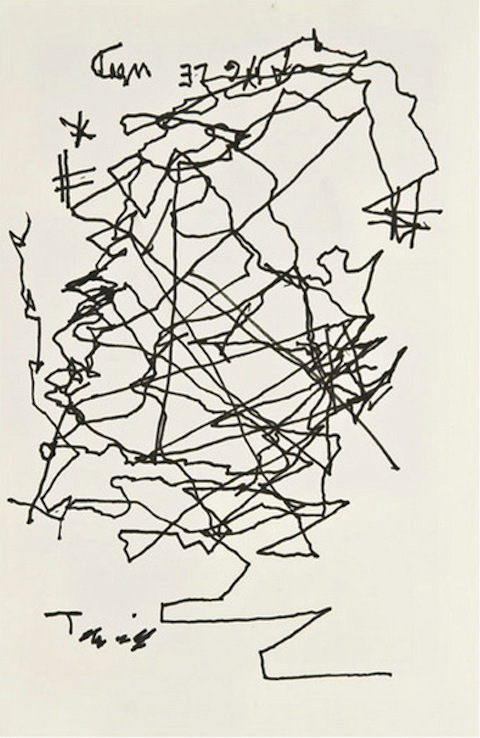
Jorge Luis Borges (1899–1986), one of the great writers to come out of Argentina, went blind when he was only 55 years old. As unsettling as it must have been, it wasn’t particularly a surprise. He once told The New York Times, “I knew I would go blind, because my father, my paternal grandmother, my great-grandfather, they had all gone blind.”
In the years following that life-changing moment, Borges never learned braille and could no longer read. But he did continue to write; he served as the director of Argentina’s National Library; he traveled and delivered an important series of lectures at Harvard on poetry (click to listen); and he even took a stab at drawing — something he did fairly well earlier in life. (See our previous post: Two Drawings by Jorge Luis Borges Illustrate the Author’s Obsessions.)
Above, you can see a self portrait that Borges drew in the basement of the famous Strand Bookstore in New York City. According to the Times, he did this “using one finger to guide the pen he was holding with his other hand.” After making the sketch, Borges entered the main part of the bookstore and started “listening to the room, the stacks, the books,” and made the remarkable observation “You have as many books as we have in our national library.”
If you’ve ever been to The Strand, you know how many books it holds. Indeed, the store boasts of being “New York City’s legendary home of 18 Miles of new, used and rare books.” My guess is that Argentina’s national library might have a few more volumes than that. But who is really counting?
Note: An earlier version of this post appeared on our site in March 2014.
If you would like to support the mission of Open Culture, consider making a donation to our site. It’s hard to rely 100% on ads, and your contributions will help us continue providing the best free cultural and educational materials to learners everywhere. You can contribute through PayPal, Patreon, and Venmo (@openculture). Thanks!
Related Content:
Jorge Luis Borges’ 1967–8 Norton Lectures On Poetry (And Everything Else Literary)
Jorge Luis Borges Chats with William F. Buckley on Firing Line (1977)
Read More...Thomas Mann Explains the Nazis’ Ulterior Motive for Spreading Anti-Semitism in Rare 1940 Audio
Here’s a rare recording of the German writer Thomas Mann, author of Buddenbrooks and The Magic Mountain, explaining what he sees as the real reason behind the systematic spreading of anti-Semitism in Nazi Germany.
It’s from an NBC radio address Mann gave on March 9, 1940, while he was living in California. Mann had gone into exile from Germany in 1933, shortly after Adolf Hitler was elected chancellor and began seizing dictatorial powers. The author had been an outspoken critic of the Nazi party since its emergence in the early twenties.
In 1930, a year after he received the Nobel Prize in Literature, Mann gave a high-profile “Address to the Germans: An Appeal to Reason,” in which he denounced the Nazis as barbarians. A Christian man married to a Jewish woman, Mann often spoke against the Nazi’s anti-Semitism, which he saw as part of a larger assault on the Mediterranean underpinnings of Western Civilization. In the radio address, Mann says:
The anti-semitism of today, the efficient though artificial anti-Semitism of our technical age, is no object in itself. It is nothing but a wrench to unscrew, bit by bit, the whole machinery of our civilization. Or, to use an up-to-date simile, Anti-Semitism is like a hand grenade tossed over the wall to work havoc and confusion in the camp of democracy. That is its real and main purpose.
Later in the speech, Mann argues that the Nazi attack on the Jews is “but a starting signal for a general drive against the foundations of Christianity, that humanitarian creed for which we are forever indebted to the people of the Holy Writ, originated in the old Mediterranean world. What we are witnessing today is nothing else than the ever recurrent revolt of unconquered pagan instincts, protesting against the restrictions imposed by the Ten Commandments.”
If you would like to support the mission of Open Culture, consider making a donation to our site. It’s hard to rely 100% on ads, and your contributions will help us continue providing the best free cultural and educational materials to learners everywhere. You can contribute through PayPal, Patreon, and Venmo (@openculture). Thanks!
Note: An earlier version of this post appeared in our site in June 2013.
Related Content:
J.R.R. Tolkien Snubs a German Publisher Asking for Proof of His “Aryan Descent” (1938)
The Enigma Machine: How Alan Turing Helped Break the Unbreakable Nazi Code
Listen as Albert Einstein Reads ‘The Common Language of Science’ (1941)
Read More...Economics 101: Hedge Fund Investor Ray Dalio Explains How the Economy Works in a 30-Minute Animated Video
Want to know how the economy works? It “works like a simple machine,” according to Ray Dalio, who explains its mechanisms in the 30-minute video above. The presentation is “simple but not simplistic,” says the site Economic Principles, a research arm of Dalio’s company Bridgewater Associates. The lesson packs in most of the major boldfaced concepts in the average overpriced college economics textbook, “such as credit, interest, rates, leveraging, and deleveraging.” And it does so in that most engaging means of learning things online, an animated video, narrated by an expert.
All that’s well and good, but can we really understand such a volatile beast as “the economy”—an abstraction that sometimes seems like a cruelly rigged game and sometimes like a not-particularly-benevolent (to most people) deity—in only half an hour? Should we trust Dalio to summarize its complexity? The billionaire hedge-fund manager did, he tells us, manage “to anticipate and to sidestep the global financial crisis.” And he has made quite an impression on people like Forbes Senior Contributor Carmine Gallo with his “7,500-word LinkedIn article titled ‘Why and How Capitalism Needs to be Reformed.’”
In that piece, the “voracious learner who studies narrative and communication… turns an enormously complex subject into a simple, compelling narrative.” He also makes it clear right in the title that by “the economy” he means a capitalist economy. It’s a point largely taken for granted in the animated explainer but an important one nonetheless given the underlying assumptions of the theory. Serious critiques of capitalism seem much harder to condense because they’re tasked with unpacking all those assumptions.
Marx’s Das Kapital spans three volumes, though he only lived to publish the first one, itself a monster of a read. Thomas Piketty’s Capital in the 21st Century is maybe a little breezier, at 696 pages (though if you let The Economist read it for you, they can sum it up in four paragraphs). By contrast, Dalio offers a comprehensive primer in brief for those of us who skipped that macroeconomics course, or who never got the chance to sign up for one. But elsewhere he has matched capitalism’s biggest critics with his own best-selling book Principles: Life and Work, a huge and highly-praised look at economic crises of debt, gross inequality, stagnant wages, etc. See him describe the book, in five minutes, on 60 Minutes, just above.
Capitalism’s best-known critics, even those who want to see the current system swapped out for a more equitable, sustainable model, have known they must begin by learning how the current system works, or how it doesn’t. Dalio himself isn’t setting out to build a worker’s paradise or to make financiers like himself obsolete, but he does have some trenchant thoughts on capitalism’s failures—and they are many, in his estimation. Still, he believes he knows how it can be reformed “to produce better outcomes.” Learn more in his compellingly-written essay here.
Related Content:
How The Economic Machine Works: A 30-Minute Animated Primer by Hedge Fund Investor Ray Dalio
Free Online Economics Courses
David Harvey’s Course on Marx’s Capital: Volumes 1 & 2 Now Available Free Online
Piketty’s Capital in a Nutshell
Free Online Economics Courses
Josh Jones is a writer and musician based in Durham, NC. Follow him at @jdmagness
Read More...A Brief History of IDEO: A Short Documentary Takes You Inside the Design Firm That Changed the Way We Think about Design
The design firm IDEO was founded in 1991, which may not sound like an especially long time ago, but consider it in technological terms: what kind of devices were we using in 1991? How did they look and feel? Chances are not just that the phone and computer you now carry around bear no resemblance to the ones you would have carried around — not that most of them could be carried around — 28 years ago, but that your furniture and household appliances have changed as well. And think, too, of your everyday experiences with shopping, medical care, and government services: some have transformed, usually for the better, and if others haven’t, it’s probably not a good thing that they’ve stayed the same.
IDEO has worked on the design of products and services in all those fields and others, and has indeed done much to redefine the field of design itself. The company’s founders and employees tell the story in their own words in the short documentary video IDEO and a Story of Design above, which focuses on IDEO’s achievements in changing the way we think about design (exemplified by the time they redesigned the humble shopping cart on Nightline).
And though IDEO as a corporate entity has only existed since the early 1990s, it has deeper roots in the history of design, appearing as it did as a merger of four existing firms, David Kelley Design, ID Two, Matrix Product Design in California, and Moggridge Associates in London. Kelley, who’s also a professor at Stanford, appears in the video not only to remember IDEO’s founding, but also to talk about its future.
So does Tim Brown, who after nineteen years as IDEO’s CEO announced last week that he will step down, passing the position on to former global managing director Sandy Speicher. When IDEO enters a world, Speicher says in the video, “we bring our creative lens, imagining how we can make that world better. I’m careful about words like ‘solution’ or ‘the answer,’ because these are people-based systems.” That remark, as well as the others made by the variety of IDEO people — in a variety of accents befitting a now-global firm with nine locations around the world — provide a glimpse into IDEO’s mutually inseparable corporate culture and its conception of design. And if all their talk about reinvention, responsiveness, and asking the big questions sounds a bit high-flown, most of it may come down to an old saying that holds up in every domain just as well today as it did in 1991: There’s always room for improvement.
Related Content:
Free: A Crash Course in Design Thinking from Stanford’s Design School
Download 20 Free eBooks on Design from O’Reilly Media
Saul Bass’ Advice for Designers: Make Something Beautiful and Don’t Worry About the Money
Paola Antonelli on Design as the Interface Between Progress and Humanity
Dieter Rams Lists the 10 Timeless Principles of Good Design–Backed by Music by Brian Eno
Based in Seoul, Colin Marshall writes and broadcasts on cities, language, and culture. His projects include the book The Stateless City: a Walk through 21st-Century Los Angeles and the video series The City in Cinema. Follow him on Twitter at @colinmarshall or on Facebook.
Read More...New Augmented Reality App Celebrates Stories of Women Typically Omitted from U.S. History Textbooks
How do we know if we’ve lived through a major shift toward greater equality? Maybe it’s when history textbooks start telling different stories than the ones they’ve always told about heroes in knee breeches, waistcoats, epaulets, top hats, and beards. Aside from the occasional historical figure in bonnet or bloomers, most texts really have just told “his story.”
In the U.S., at least, studies show that only 11% of the stories in history textbooks are about women. Is this because 50% of the population only contributed to 11% percent of the country’s events? No, even the kids know—like the kids in the video above from a new app called Lessons in Herstory—history mostly features men because “a lot of it was written by men and was mostly all about men.”
Textbook makers, and the school boards who give them marching orders, may stick to their guns, so to speak, but another major shift could render their dictates irrelevant. Smartphone and tablet technology has become so familiar to today’s kids that instead of turning the pages, they “swipe, like, in the history books,” as one of the youngsters puts it.
Students stuck with the old patriarchal pedagogies can easily supplement, enhance, or substitute their education with new media. While there are some serious downsides to this phenomenon, given a distinct lack of quality control online, the internet has also opened up innumerable opportunities for telling the stories of women in history.
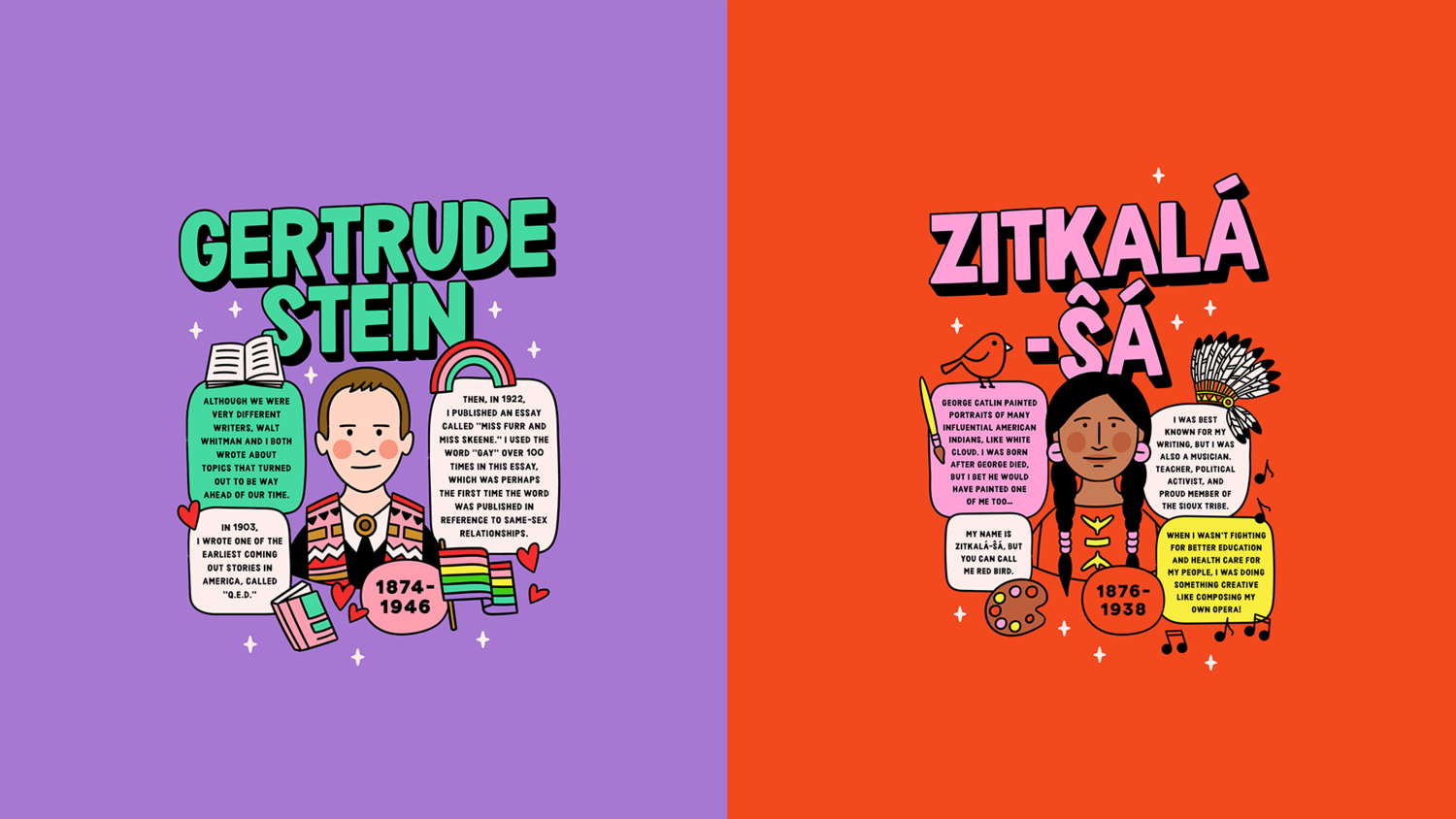
Lessons in Herstory, built by an organization called Daughters of the Evolution, takes a unique approach. Instead of supplanting textbooks, it adds to them in an augmented reality smartphone app (currently designed for ios devices) students can point at pictures of historical dudes to pull up stories about a notable women from the same time.
Granted, some of these women, like Harriet Tubman and Sacagawea, had already been granted access to the limited space allotted female figures in grade school textbooks. But a great many other people in the app have not. Featuring a diverse selection of 75 herstorical women, Lessons in Herstory is the product of ad agency Goodby Silverstein & Partners’ chief creative officer Margaret Johnson, who launched it at this year’s SXSW.
The app has pretty limited application at the moment. It works with one textbook, A History of US, Book 5: Liberty for All? 1820–1860, and with a handful of historical photographs on its website. (Many of the women featured made their mark after 1860.) But with plans to expand and with the backing of a large ad agency, who may or may not have their own designs in marketing Lessons in Herstory, it promises to make women’s history more accessible to students who already spend more time staring at screens than pages.
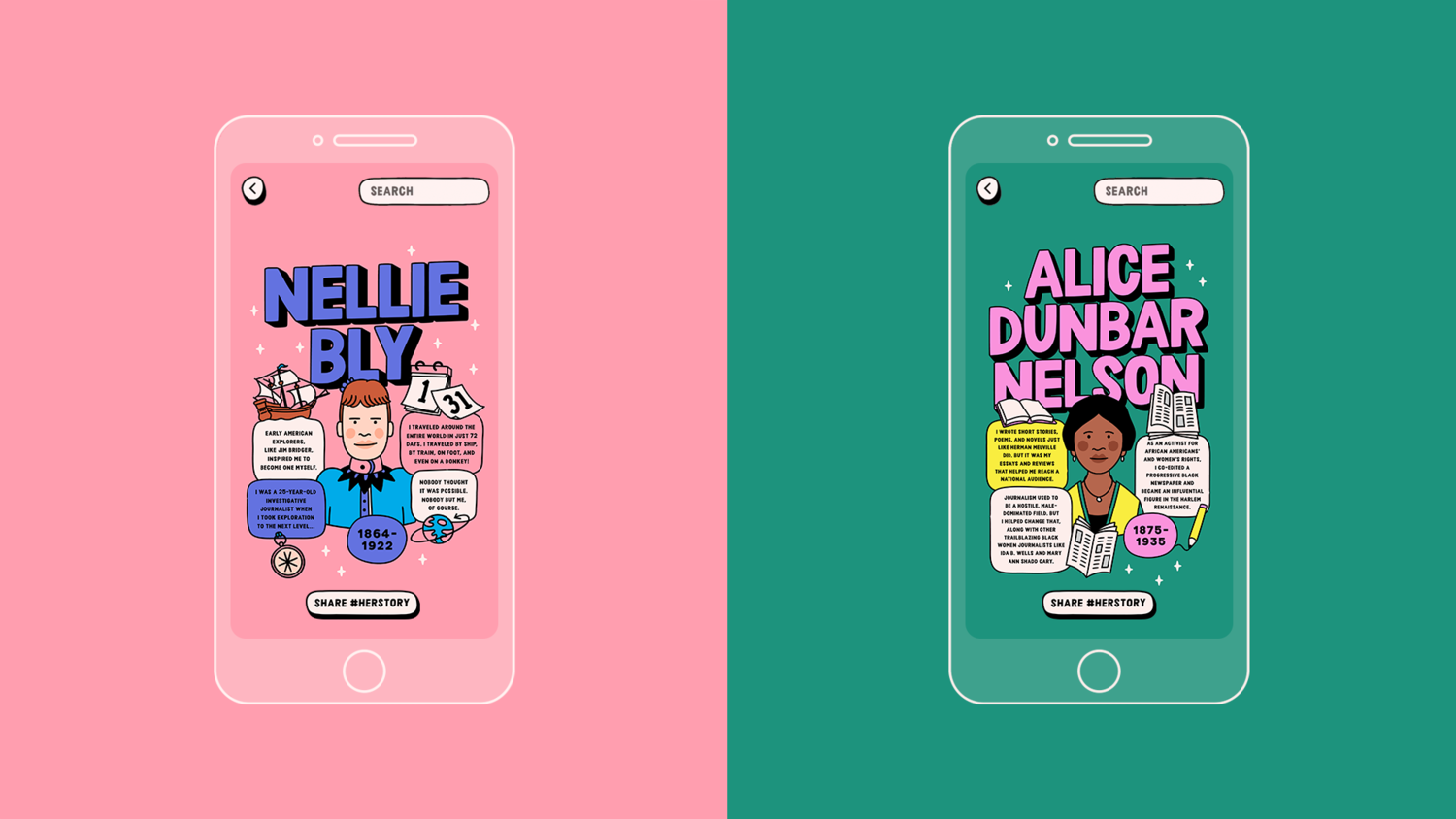
“There’s a saying,” writes Cara Curtis at The Next Web, “’you can’t be what you can’t see.’” Apps like Lessons in Herstory, along with a number of influential books and websites for young people that narrate the past through the lens of women, indigenous people, African-Americans, artists, activists, working people, and so on, show kids that no matter who they are or where they come from, people who looked like them have always made significant contributions to history.
Related Content:
Josh Jones is a writer and musician based in Durham, NC. Follow him at @jdmagness
Read More...550 Million Years of Human Evolution in an Illustrated Flipbook
Graphic artist Jurian Moller created a flipbook that lets you watch 550 million years of human evolution unfold in a matter of seconds. He writes: “This flipbook goes back in time and shows you the evolution of the generations in both a personal and scientific way. The differences between the generations on each page are very difficult to see, but the long, continuous ancestral line goes right back to our very origins.”
The action is on full display above. Below, watch the same flipbook in an animated form. Purchase the book in various formats at Moller’s site here.
If you would like to support the mission of Open Culture, consider making a donation to our site. It’s hard to rely 100% on ads, and your contributions will help us continue providing the best free cultural and educational materials to learners everywhere. You can contribute through PayPal, Patreon, and Venmo (@openculture). Thanks!
Related Content:
Carl Sagan Explains Evolution in an Eight-Minute Animation
10 Million Years of Evolution Visualized in an Elegant, 5‑Foot Long Infographic from 1931
Richard Dawkins Explains Why There Was Never a First Human Being
Read More...Behold the Sola-Busca Tarot Deck, the Earliest Complete Set of Tarot Cards (1490)
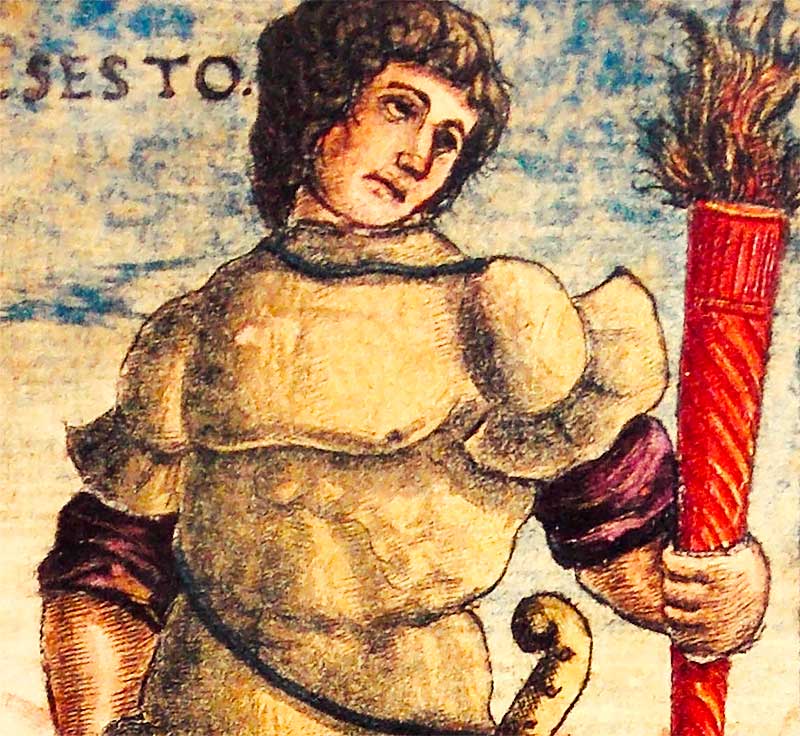
Whatever you think of the predictive power of tarot cards, the story of how humanity has produced them and put them to use provides a fascinating cultural history of the last 500 years or so. We’ve featured a variety of tarot decks here on Open Culture, mostly from the past century: decks designed by Aleister Crowley, Salvador Dalí, and H.R. Giger, as well as one featuring the characters from Twin Peaks. But today we give you the oldest extant example, and a highly distinctive one for reasons not just historical but aesthetic: the Sola-Busca tarot deck, dating from the early 1490s, which L’Italo Americano’s Francesca Bezzone describes as “78, beautifully illustrated cards, 22 major arcana and 56 minor arcana, engraved on cardboard and hand painted with tempera colors and gold.”
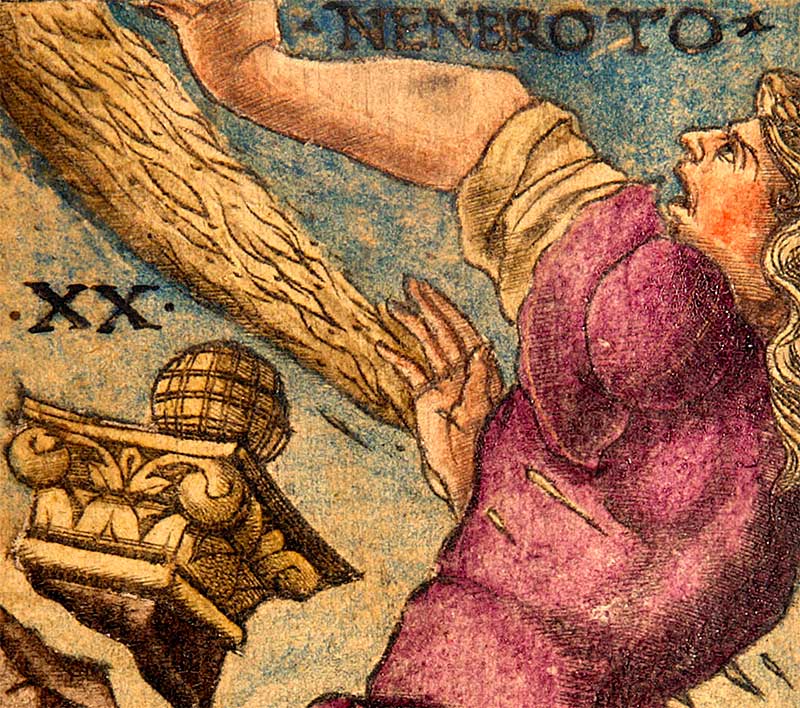
The Sola-Busca tarot deck, whose name derives from those of its last two owners Marquise Busca and Count Sola, set a structural precedent for decks to come by being divided into those sets of major arcana (or “major secrets”) and minor arcana (or “minor secrets”).
In the cards of the major arcana, which trace the rise and fall of the Roman Empire, “Classical and Biblical figures take the place of traditional tarot illustrations: for instance, the arcana of justice is Nero and that of the world is Nebuchadnezzar. Among others represented Gaius Marius, uncle of Juluis Caesar, and Bacchus,” as well as now more difficult-to-identify personages from later centuries. The minor arcana cards, writes Bezzone, “are also different from all other decks’, because they are finely and richly illustrated with scenes of daily life.”
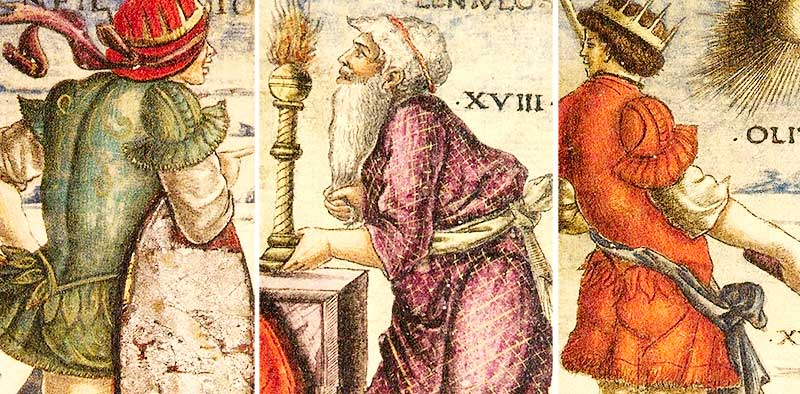
But even the everyday images contain secrets: “This is particularly evident in the suit of coins, which apparently illustrates the process of coin minting, but in reality alludes to the complex and secret practices of the Opus Alchemicum, that is, the method used to create the lapis philosophorum, the philosopher’s stone, alchemic instrument of immortality and perfection.” But “in spite of the refined and delicate artistry behind their illustrations, the name of the man, or men, who created them remained shrouded in darkness for centuries,” though in 1938 art historian Arthur Mayger Hind determined that, based on the references to the Republic of Venice in the deck’s artwork, its was likely made for a Venetian client, possibly by the engraver Mattia Serrati da Cosandola or, according to another theory, the painter Nicola di Maestro Antonio and historian Marin Sanudo.
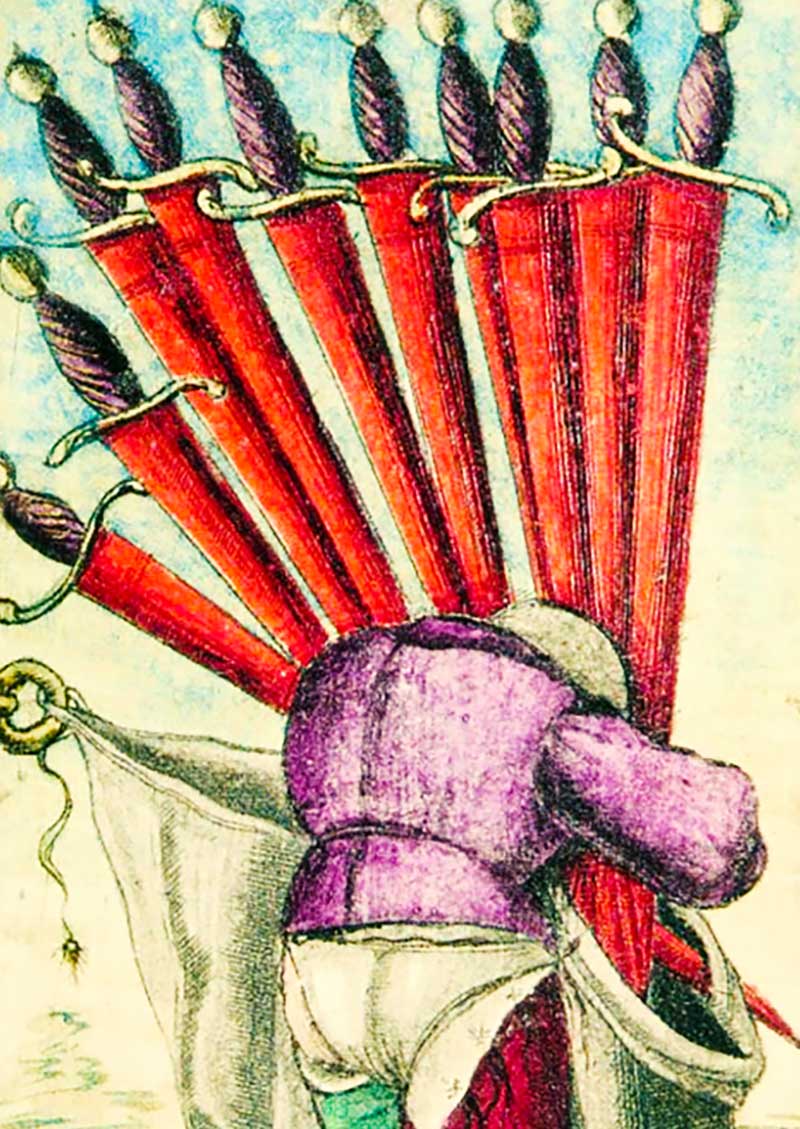
Il segreto dei segreti, an exhibition on the Sola-Busca deck at Milan’s Pinacoteca di Brera gallery, brings another Renaissance figure into the mix: “While largely unknown today, the Humanist and Hermeticist Ludovico Lazzarelli from San Severino Marche played a significant role in Italian court Humanism,” and because of “his personality, role, and interest in Hermetic and alchemical themes” as well as his relations with powerful courts of the day “is believed to have designed the complex iconographical program of the Sola-Busca tarots.” The tenets of Renaissance Hermeticism held that mankind could transform nature by apprehending it, making it in some sense a forerunner to modern scientific thinking. And while the notion that we can see our future in the turn of playing cards may not itself sound wildly scientific, an artifact like the Sola-Busca deck, all of whose 78 carts you can see here, still has more to teach us about our past. Decks can also be purchased online.
Related Content:
Alejandro Jodorowsky Explains How Tarot Cards Can Give You Creative Inspiration
The Tarot Card Deck Designed by Salvador Dalí
The Thoth Tarot Deck Designed by Famed Occultist Aleister Crowley
Twin Peaks Tarot Cards Now Available as 78-Card Deck
Based in Seoul, Colin Marshall writes and broadcasts on cities, language, and culture. His projects include the book The Stateless City: a Walk through 21st-Century Los Angeles and the video series The City in Cinema. Follow him on Twitter at @colinmarshall or on Facebook.
Read More...Support Us
We're hoping to rely on loyal readers, rather than erratic ads. Please click the Donate button and support Open Culture. You can use Paypal, Venmo, Patreon, even Crypto! We thank you!

About Us

Open Culture scours the web for the best educational media. We find the free courses and audio books you need, the language lessons & educational videos you want, and plenty of enlightenment in between.
Advertise With Us

FREE UPDATES!
GET OUR DAILY EMAIL
Get the best cultural and educational resources on the web curated for you in a daily email. We never spam. Unsubscribe at any time.
FOLLOW ON SOCIAL MEDIA

Open Culture editor Dan Colman scours the web for the best educational media. He finds the free courses and audio books you need, the language lessons & movies you want, and plenty of enlightenment in between.
Advertise With Us

