Download Digitized Copies of The Negro Travelers’ Green Book, the Pre-Civil Rights Guide to Traveling Safely in the U.S. (1936–66)
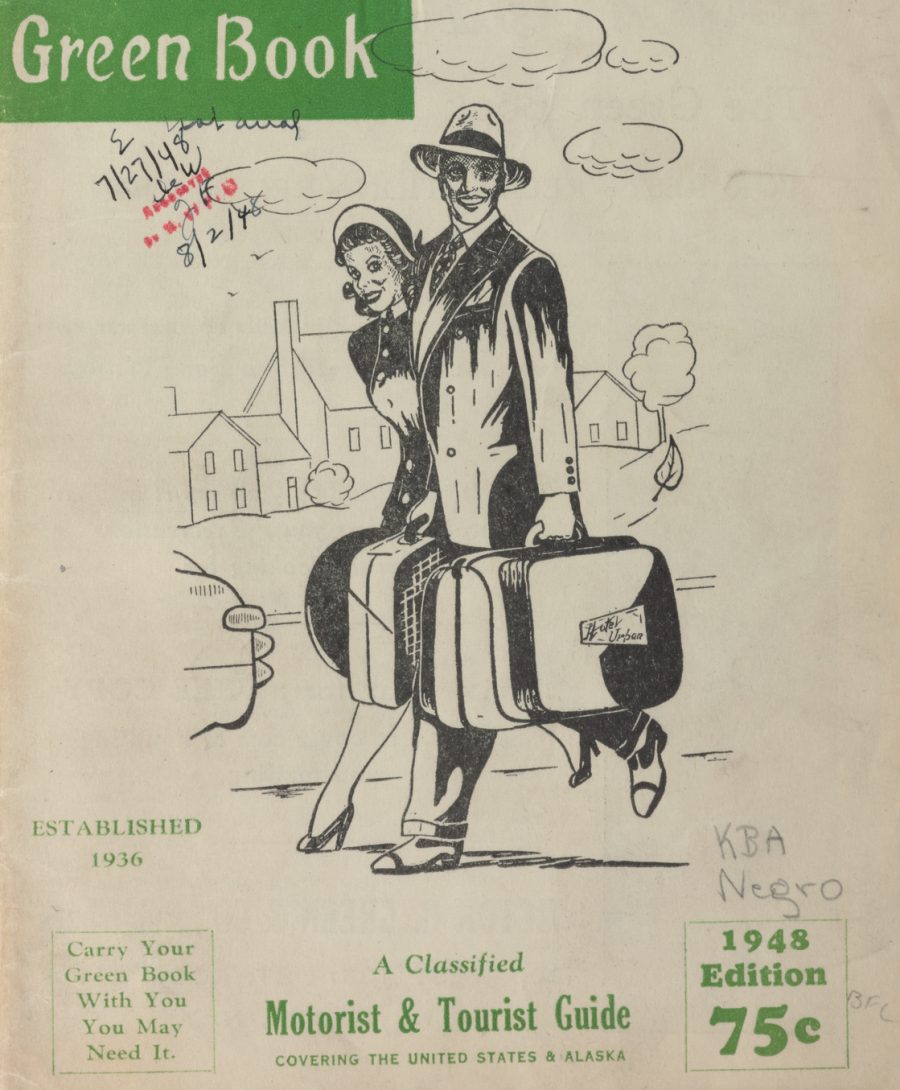
As an American living outside America, I’m often asked how best to see my homeland by people wanting to visit it. I always suggest the same method: road-tripping, preferably across the entire continent — a way of experiencing the U.S. of A guaranteed to at once to confirm and shatter the visitor’s pre-existing perceptions of the country. But even under the best possible conditions, such road trips have their arduous stretches and even their dangers, a fact understood by nobody better than by the black travelers of the Green Book era. Published between 1936 and 1967, the guide officially known as The Negro Motorist Green Book informed such travelers of where in America (and later other countries as well) they could have a meal, stay the night, and get their car repaired without prejudice.
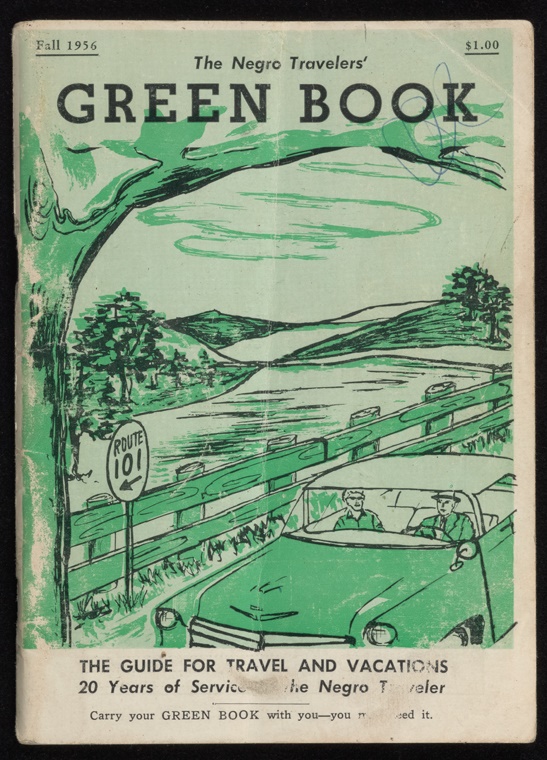
You can learn more about the Green Book (which we’ve previously featured here on Open Culture) from the Vox explainer video above. Then, to get a fuller idea of the books’ content, head over to the New York Public Library’s digital collections, where you’ll find 23 issues from the Green Book’s more than 30-year run.
Digitized by the NYPL’s Schomburg Center for Research in Black Culture, they’re free to read online and download. Data drawn from this archive and released into the public domain has also given rise to projects like “Navigating the Green Book,” where you can explore its recommended places laid out on a map and even plot a trip between any two cities in America according to the Green Book’s 1947 or 1956 editions.
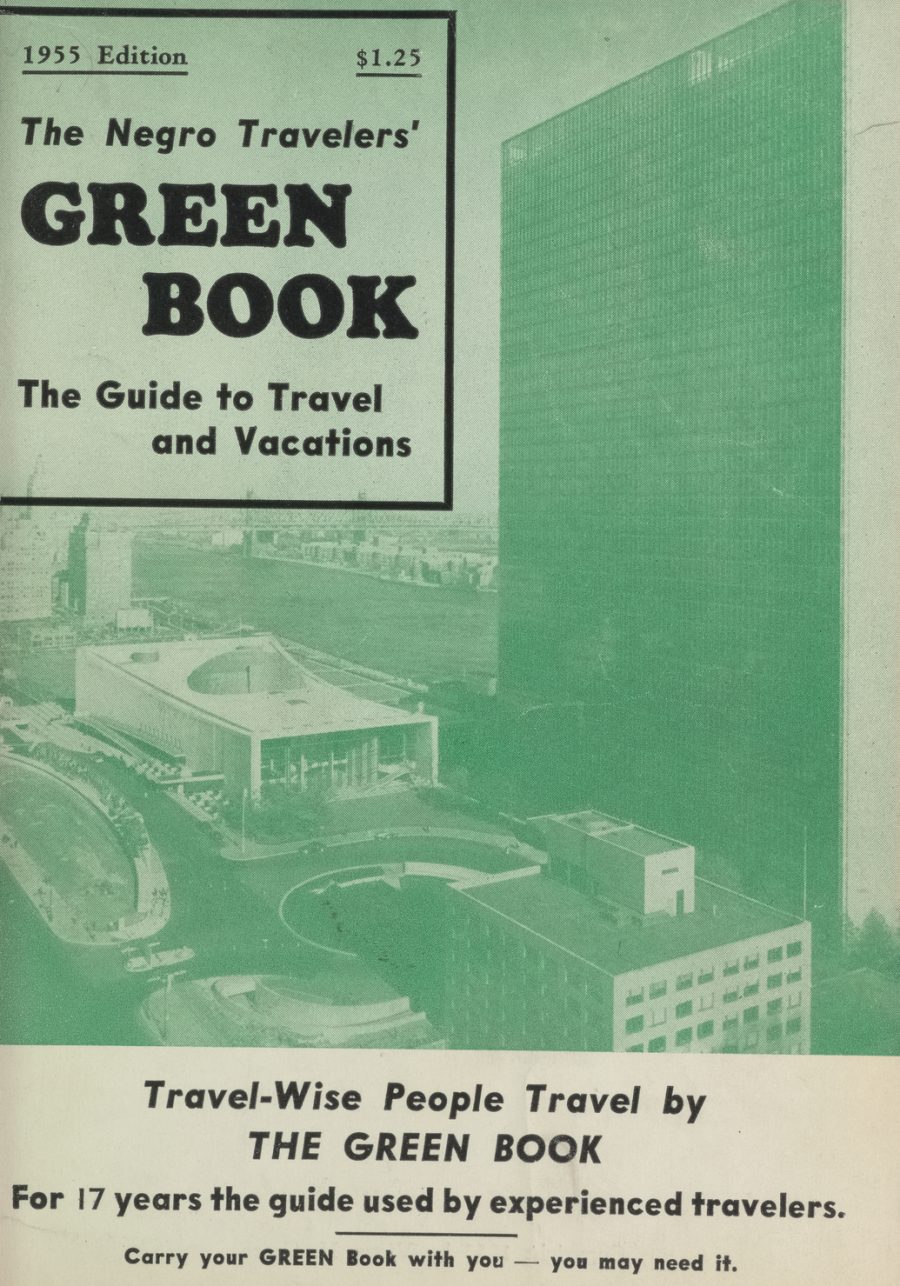
Though the Green Book ceased publication not long after the passage of the Civil Rights Act, interest in the America they reflect hasn’t vanished, and has in fact grown in recent years. Academia has produced more studies of Jim Crow-era travel over the past decade or two, and this Thanksgiving will see the wide release of Green Book, Peter Farrelly’s feature film about the friendship between black pianist Don Shirley and the chauffeur who drove him through the Deep South in the 1960s. “To flip through a Green Book is to open a window into history and perhaps to see, the tiniest amount, through the eyes of someone who lived it,” writes K Menick on the NYPL’s blog. “Read these books; map them in your mind. Think about the trips you could take, can take, will take. See how the size of the world can change depending on the color of your skin.”
Related Content:
Robert Penn Warren Archive Brings Early Civil Rights to Life
Vintage 1930s Japanese Posters Artistically Market the Wonders of Travel
Foodie Alert: New York Public Library Presents an Archive of 17,000 Restaurant Menus (1851–2008)
Based in Seoul, Colin Marshall writes and broadcasts on cities, language, and culture. His projects include the book The Stateless City: a Walk through 21st-Century Los Angeles and the video series The City in Cinema. Follow him on Twitter at @colinmarshall or on Facebook.
Read More...A Database of Paper Airplane Designs: Hours of Fun for Kids & Adults Alike
Though we can trace the history of paper aircraft back 2000 years to the Chinese and their kites, and into the 19th century with the French and their imaginary airships, the origin of the modern paper airplane is shrouded in mystery. A San Diego Reader article placed the birth somewhere in 1910. By 1915, most American kids were already tormenting teachers. And Jack Northrup used paper models to work on aerodynamics at Lockheed in the 1930s, but even that doesn’t do much to explain how such a ubiquitous object has continued to be so humble and ordinary while inspiring a recent upsurge of interest.
The database at Fold’n’Fly shows how much variety there is beyond the basic “dart” style, and each airplane comes with step-by-step folding instructions, a printable pattern page, and a helpful video.
You can choose by difficulty level, whether or not you will need scissors, or sort by distance, acrobatics, time aloft, or purely decorative.
One of the reasons for the renewed interest in paper airplanes is the use of CAD (computer aided design) in constructing prototypes, and that in itself is a response to the challenge set by various Guinness world records.
The current distance record is 226 feet, 10 inches, set in March 2012 by a former college quarterback Joe Ayoob. The plane was designed by television producer John Collins, who used Ayoob’s throwing arm strength to break the previous record holder by nearly 20 feet.
The longest time a paper airplane has been in the air is currently 27.6 seconds, set in 1998 by Ken Blackburn at the Georgia Dome. He was breaking his own record for the third time.
Lastly, the record for largest paper airplane is 40 ft 10 inches, designed by students from the Technology University of Delft in 1995.
So, now you know what you’re up against. If you think you can do better, dive into this website and get folding.
via Metafilter
Related Content:
NASA Puts 400+ Historic Experimental Flight Videos on YouTube
Ted Mills is a freelance writer on the arts who currently hosts the artist interview-based FunkZone Podcast and is the producer of KCRW’s Curious Coast. You can also follow him on Twitter at @tedmills, read his other arts writing at tedmills.com and/or watch his films here.
Read More...The First House Powered by Coffee
Since 2006, Dunkin’ Donuts has used the tagline “America Runs on Dunkin’,” presumably alluding to the coffee and donuts that get millions of Americans through each morning. But maybe, all along, they’ve had something more in mind. Above, Dunkin’ presents a tiny home powered by biofuel made from spent coffee grounds, a process masterminded by a company called Blue Marble Biomaterials. Working with luxury tiny homebuilder New Frontier Tiny Homes, they’ve created a process–notes a Dunkin’ press release–that works something like this:
- Step 1: Extract excess oils in the spent coffee grounds. There can be natural oils left in spent coffee grounds, all depending on the coffee bean type and original processing methods.
- Step 2: Mix and react. These oils are then mixed with an alcohol to undergo a chemical reaction known as transesterification. This produces biodiesel and glycerin as a byproduct.
- Step 3: Refine. The biodiesel is washed and refined to create the final product.
When all is said and done, 170 pounds of used coffee grounds translates into one gallon of fuel. From 65,000 pounds of coffee grounds, you got enough juice to power a 275 square foot home, at least for a while.
Take a 360 degree interactive tour of the tiny home here.
Related Content:
How to Make the World’s Smallest Cup of Coffee, from Just One Coffee Bean
A Rollicking French Animation on the Perils of Drinking a Little Too Much Coffee
Philosophers Drinking Coffee: The Excessive Habits of Kant, Voltaire & Kierkegaard
David Lynch Directs a Mini-Season of Twin Peaks in the Form of Japanese Coffee Commercials
“The Virtues of Coffee” Explained in 1690 Ad: The Cure for Lethargy, Scurvy, Dropsy, Gout & More
Read More...Freddie Mercury’s Final Days: Watch a Poignant Montage That Documents the Last Chapter of the Singer’s Life
The “biopic” has delivered dramatic retellings of famous figures’ lives since the very earliest days of cinema. We hunger, it seems, to see more-or-less-faithful approximations of our idols stride across the screen, enacting events witnessed by millions and those hidden away from everyone. In the case of popular musicians, these tend to involve epic alcohol and drug use, tumultuous love affairs, stadium-sized triumphs and the crushing defeats of falling out of cultural favor. Such scenes can prove difficult to recreate convincingly, especially the music and signature moves of world famous stars.
Condensing lifetimes into marketable narrative films that hit typical Hollywood beats also involves taking a fair amount of license. And as a spate of articles like “Everything Bohemian Rhapsody Got Wrong About Freddie Mercury’s Life” testify, the new biopic about Queen singer Freddie Mercury, played in the film by Rami Malek, twists or totally changes key events in Mercury’s life. The film re-imagines, for example, how Mercury met his bandmembers, his girlfriend Mary, and Jim Hutton, his longtime and final partner.
And, oddly, it imagines Mercury telling Queen about his HIV diagnosis during rehearsals for their 1985 Live Aid appearance, which it stages as a reunion, showing the band as having been on hiatus while members pursued solo projects. The truth, however, is that Mercury didn’t receive his diagnosis until 1987, and his bandmates weren’t fully aware of his illness until 1989. And when the band came together to perform at Live Aid, they had just toured the world in support of their 1984 album The Works.
Such distortions are a little perplexing given that Brian May and Roger Taylor served as creative consultants, sitting in on set during the production. The film has been also been accused of “straightwashing” Mercury’s sexuality and glossing over his roots and religion. You’ll have to evaluate the merits of these charges for yourself, but the case remains that if we want to know what Mercury’s life was really like, we need to supplant the entertaining fiction with the even more compelling truth.
The video above helps in some small part to fill gaps in our knowledge of Mercury’s last years, editing together interviews, TV clips, and performance footage. Although Mercury was very sick during this period, you would hardly have known it, and most of the people around him didn’t. He continued to write and record, working hard on Queen’s last album, Innuendo, released in the final year of his life.
We learn that his closest friends, colleagues, and bandmembers were in denial, “right up to the last minute,” as Brian May says, about the severity of his disease. “We sort of refused to know” how bad it was, May admits. Mercury himself pushed the knowledge away, immersing himself in his music to keep going. “The sicker Freddie got,” says Roger Taylor, “the more he seemed to need to record to give himself something to do, you know, some sort of reason to get up… so it was a period of fairly intense work.”
Mercury’s early death was tragic, but he met it heroically. And though his bandmates struggled to face the truth, they rallied around him in support, both in life and in death. When the tabloid press viciously slandered and attacked him, May and Taylor went on television to defend their friend. “He had a very responsible attitude to everyone that he was close to and he was a very generous and caring person to all the people that came through his life and more than that you can’t ask,” said May in a 1991 interview appearance after Mercury passed away. “I tell you we do feel absolutely bound to stick up for him,” added Taylor, “because he can’t stick up for himself anymore, you know?”
via Laughing Squid
Related Content:
Watch Behind-the-Scenes Footage From Freddie Mercury’s Final Video Performance
Josh Jones is a writer and musician based in Durham, NC. Follow him at @jdmagness
Read More...The Disgusting Food Museum Curates 80 of the World’s Most Repulsive Dishes: Maggot-Infested Cheese, Putrid Shark & More
Often we get to know each other by talking which foods we like. Perhaps even more often, we get to know each other by talking about which foods we hate. Entertaining disagreements tend to arise from such discussions, usually around traditionally divisive comestibles like anchovies, cilantro, brussel sprouts, or the Japanese dish of fermented soybeans known as natto. But however many of us prefer to avoid them, these foods all look more or less conventional compared to the dishes curated by the Disgusting Food Museum, which the Washington Post’s Maura Judkis describes as “the world’s first exhibition devoted to foods that some would call revolting.”

“The exhibit has 80 of the world’s most disgusting foods,” says the museum’s official site. Adventurous visitors will appreciate the opportunity to smell and taste some of these notorious foods. Do you dare smell the world’s stinkiest cheese? Or taste sweets made with metal cleansing chemicals?” Judkis notes that “the museum’s name and its contents are pretty controversial — one culture’s disgusting is another culture’s delicacy.
That goes for escamoles, the tree-ant larvae eaten in Mexico, or shirako, the cod sperm eaten in Japan, or bird’s nest soup, a Chinese dish of nests made from bird saliva.” It all goes to emphasize the Disgusting Food Museum’s stated premises: “Disgust is one of the six fundamental human emotions. While the emotion is universal, the foods that we find disgusting are not. What is delicious to one person can be revolting to another.”

With interest in food seemingly at an all-time high — and not just food, but traditional food from all around the world — the cultural studies wing of academia has begun to get serious mileage out of that proposition. But the Disgusting Food Museum has taken on a less intellectual and much more visceral mission, placing before its visitors durian fruit, banned from many a public space across Asia for its sheer stinkiness; casu marzu, which the museum’s site describes as “maggot-infested cheese from Sardinia”; and hákarl, which Judkis describes as “a putrid shark meat dish from Iceland that the late Anthony Bourdain said was one of the worst things he had ever tasted.”

You can learn more about these and the Disgusting Food Museum’s other offerings from the Associated Press video at the top of the post, as well as at Smithsonian and the New York Times. If you’d like to see, smell, and even taste some of its exhibits for yourself, you’ll have to make the trek out to Malmö, Sweden. The project comes from the mind of Samuel West, a Swede best known for creating the Museum of Failure (previously featured here on Open Culture), whose half-American parentage has made him familiar with several items of U.S. cuisine that gross out non-Americans, from Spam to Jell‑O pasta salad (shades of James Lileks’ midcentury midwest-focused Gallery of Regrettable Food) to Rocky Mountain oysters. Despite being American myself, I’ve never known anyone who likes that last, a dish made of bull testicles, or at least no one has ever admitted to me that they like it. But if someone did, I’d certainly feel as if I’d learned something about them.
Related Content:
Salvador Dalí’s 1973 Cookbook Gets Reissued: Surrealist Art Meets Haute Cuisine
What Prisoners Ate at Alcatraz in 1946: A Vintage Prison Menu
Based in Seoul, Colin Marshall writes and broadcasts on cities, language, and culture. His projects include the book The Stateless City: a Walk through 21st-Century Los Angeles and the video series The City in Cinema. Follow him on Twitter at @colinmarshall or on Facebook.
Read More...An Atlas of Literary Maps Created by Great Authors: J.R.R Tolkien’s Middle Earth, Robert Louis Stevenson’s Treasure Island & More
Plot, setting, character… we learn to think of these as discrete elements in literary writing, comparable to the strategy, board, and pieces of a chess game. But what if this scheme doesn’t quite work? What about when the setting is a character? There are many literary works named and well-known for the unforgettable places they introduce: Walden, Wuthering Heights, Howards End…. There are invented domains that seem more real to readers than reality: Faulkner’s Yoknapatowpha, Thomas Hardy’s Wessex… There are works that describe impossible places so vividly we believe in their existence against all reason: Italo Calvino’s Invisible Cities, China Miéville’s The City and the City, Jorge Luis Borges’ “Tlön, Uqbar, Orbis Tertius”….
What sustains our belief in the integrity of fictional places? The fact that they seem to act upon events as much as the people who live in them, for one thing. And, just as often, the fact that so many authors and illustrators draw elaborate maps of literary settings, making their features real to us and embedding them in our minds.
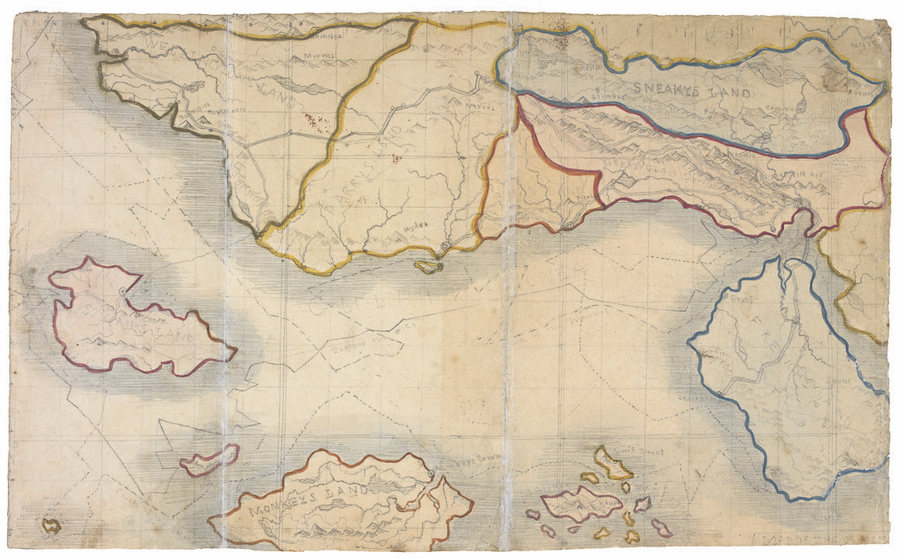
A new book, The Writer’s Map, edited by Huw Lewis-Jones, offers lovers of literary maps—whether in non-fiction, realism, or fantasy—the opportunity to pore over maps of Thomas More’s Utopia (said to be the first literary map), Robert Louis Stevenson’s Treasure Island, J.R.R Tolkien’s Middle Earth, Branwell Brontë’s Verdopolis (above), and so many more.
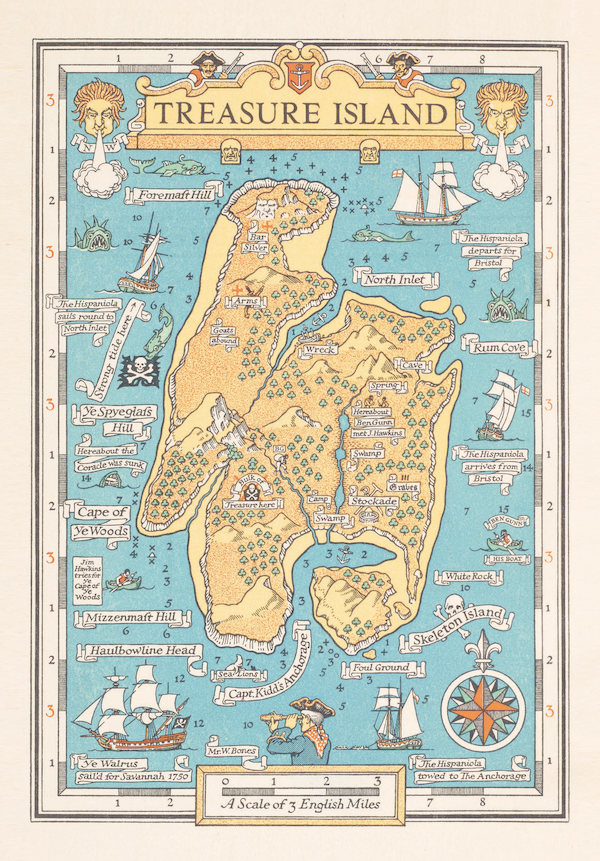
The book is filled with essays about literary mapping by writers and map-makers, and it touches on the way authors themselves view imaginative mapping. “For some writers making a map is absolutely central to the craft of shaping and telling their tale,” writes Lewis-Jones. For others, making maps is also a way to avoid the painful task of writing, which Philip Pullman calls “a matter of sullen toil.” Drawing, on the other hand, he says, “is pure joy. Drawing a map to go with a story is messing around, with the added fun of coloring it in.” David Mitchell agrees: “As long as I was busy dreaming of topography,” he says of his maps, “I didn’t have to get my hands dirty with the mechanics of plot and character.”
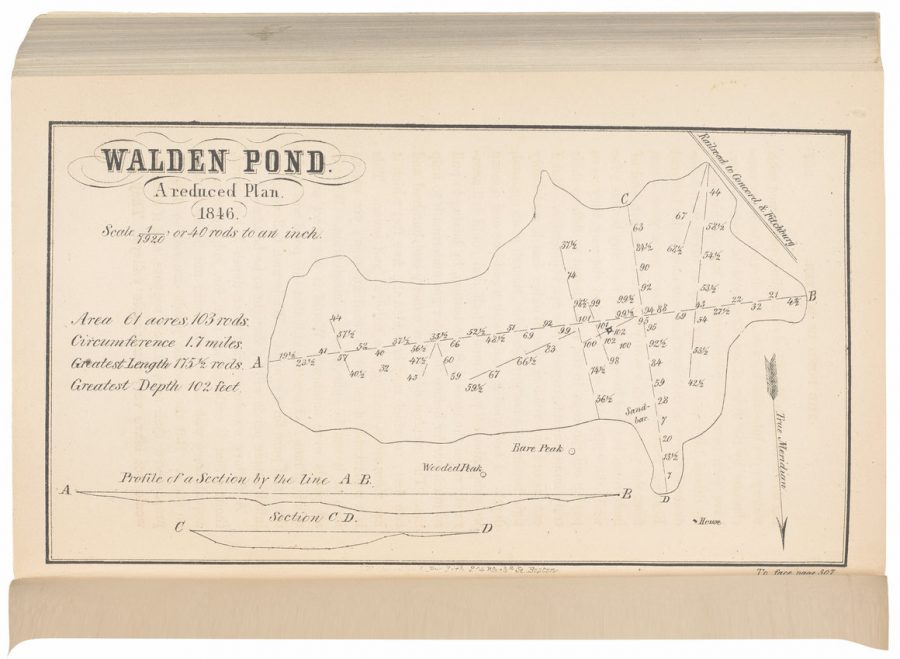
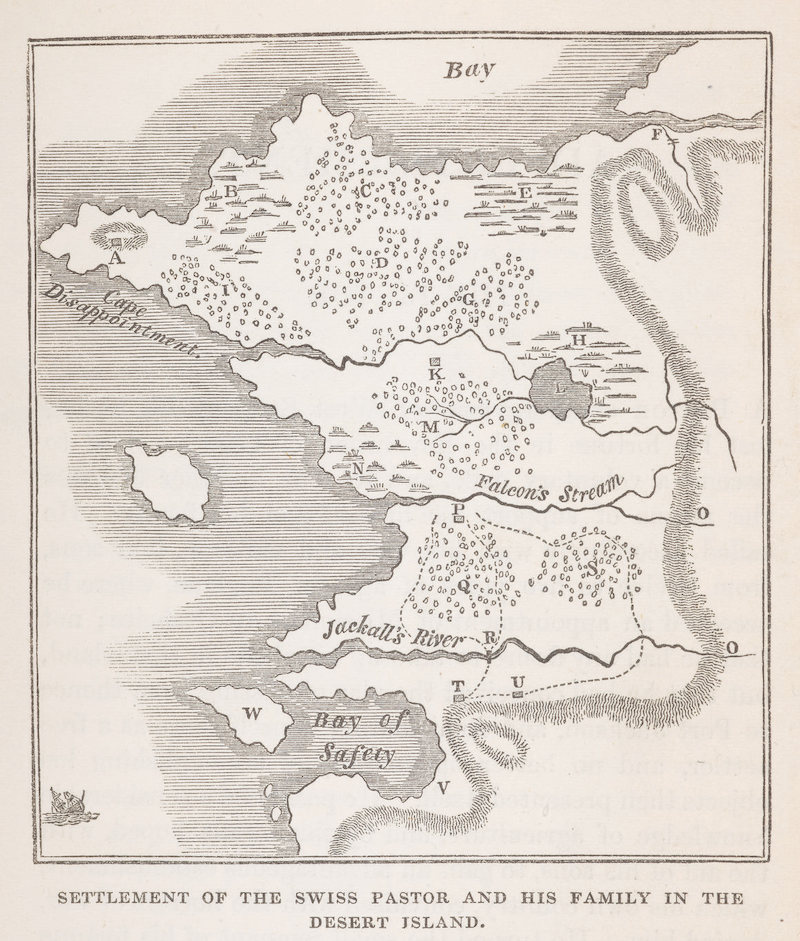
It may surprise you to hear that writers hate to write, but writers are people, after all, and most people find writing tedious and difficult in some part. What all of the writers featured in this collection share is that they love indulging their imaginations, making real their lucid dreams, whether through the diversion of drawing maps or the grind of grammar and syntax. Many of these maps, like Thoreau’s drawing of Walden Pond or Johann David Wyss’s illustration of the desert island in The Swiss Family Robinson, accompanied their books into publication. Many more remained secreted in authors’ notebooks.
There are many such “private treasures” in The Writer’s Map, notes Atlas Obscura: “J.R.R. Tolkien’s own sketch of Mordor, on graph paper; C.S. Lewis’s sketches; unpublished maps from the notebooks of David Mitchell… Jack Kerouac’s own route in On the Road….” Do we read a literary map differently when it wasn’t meant for us? Can maps be sly acts of misdirection as well as whimsical visual aids? Should we treat them as paratextual and unnecessary, or are they central, when an author chooses to include them, to our understanding of a story? Such questions, and many, many more, are taken up in The Writer’s Map, a long overdue survey of this longstanding literary tradition.
via Atlas Obscura
Related Content:
12 Classic Literary Road Trips in One Handy Interactive Map
Map of Middle-Earth Annotated by Tolkien Found in a Copy of Lord of the Rings
William Faulkner Draws Maps of Yoknapatawpha County, the Fictional Home of His Great Novels
Josh Jones is a writer and musician based in Durham, NC. Follow him at @jdmagness
Read More...Behind the Banksy Stunt: An In-Depth Breakdown of the Artist’s Self-Shredding Painting
By now, even those of us who pay no attention at all to the art market have heard about Banksy’s latest art stunt: a painting called Balloon Girl that, when it sold for $1.4 million at auction, then immediately shredded itself. Assessments on the intent and impact of the piece’s self-destruction have varied: many have complained that, far from the bold statement against the economics of modern art it may have looked like (and many of Banksy’s fans may well have come to expect from his artistic persona), it could also be nothing more than a cynical publicity stunt to raise the speculative value of his work further still. And a counterpoint, in the words of economist Tyler Cowen, an expert on the economics of culture in his own right: “Banksy is a genius.”
So how properly to think about the Balloon Girl stunt, which has received no small amount of press but which remains something of an unsettled issue? Here to help clarify the matter is a new and topical episode of The Art Assignment, John and Sarah Green’s web series previously featured here on Open Culture.
As well as providing a brief primer on Banksy and the way his career has so far made its mark (often literally) on the world, the eleven-minute video gets into how his building a shredder into a picture frame and setting it off at the moment of sale fits into his body of work, art history, and the international art scene as it is today.
“There are many ways a work of art comes into being, be it an additive process, a subtractive process, one that must unfold in space and time, or one that’s immaterial and not existing until the moment it’s performed and then disappearing as soon as it’s over,” says Sarah Green. “Girl with Balloon was one artwork, and now it’s another that came into being through a public auction but which still very much has a material presence, because the object wasn’t destroyed — it’s only half-shredded — and since it was canvas going through, the remaining fringe is pretty stable.” In a sense, then, even this self-destructing artwork never really self-destructed. So what, in artistic terms, actually happened to it? We may continue arguing about it for years, but it will always come back to the shredding itself — an event relivable at any time in Banksy’s “director’s cut” video just above.
Related Content:
Banksy Creates a Tiny Replica of The Great Sphinx Of Giza In Queens
Based in Seoul, Colin Marshall writes and broadcasts on cities, language, and culture. His projects include the book The Stateless City: a Walk through 21st-Century Los Angeles and the video series The City in Cinema. Follow him on Twitter at @colinmarshall or on Facebook.
Read More...What Are the Most Influential Books Written by Scholars in the Last 20 Years?: Leading Academics Pick “The New Canon”
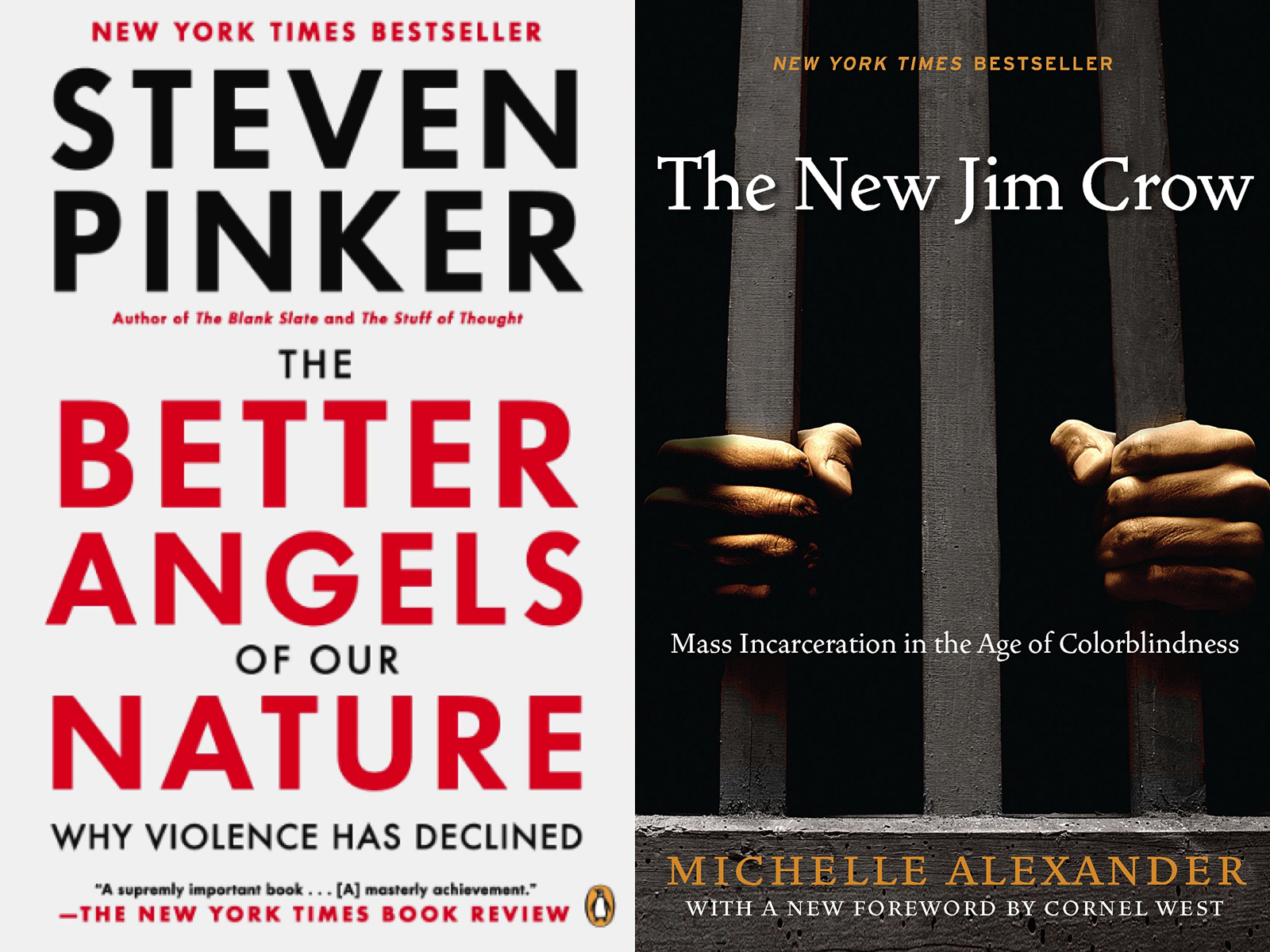
It’s a fraught time to be an academic. Budgets have been slashed, departments decimated, political battles sensationalized by partisan opportunists, social media posts intensified into test cases for speech. Yet as corporatism and culture wars have pushed their way into academia in the past twenty plus years, more scholarship has seemed to make its way out into the mainstream, with books by academic historians like Eric Foner and Ibram X. Kendi, literary scholars like Stephen Greenblatt and bell hooks, sociologists like Robert Putnam, scientists like Richard Dawkins, economists like Thomas Piketty, legal scholars like Michelle Alexander, and so on, topping bestseller lists and winning National Book Awards.
Such books distill difficult ideas without dumbing them down, in accessible and often urgent prose. Their popularity speaks to how they address the pressing issues of their times, and undercuts the stereotype of academics as jargon-spewing, out-of-touch inhabitants of ivory towers. And they often have the power to not only radically alter public discourse, but to inspire mass movements and shift public policy.
Most of the more than 15,000 academic books published each year—by university presses or tiny independents—reach only “their core audience of disciplinary specialists.” A few resonate outside their fields yet still fail to find an audience outside higher education circles (nor are they really meant to).
But some books by scholars, like those by the authors named above, “enter the public consciousness,” writes The Chronicle of Higher Education, and thus deserve to be described as “influential” in a broad sense, “like On the Origin of Species or Das Kapital or The Interpretation of Dreams,” as Yale professor of psychology Paul Bloom writes (while also pointing out that none of these books’ authors were professional academics). Under the banner of forming a “New Canon,” the Chronicle asked Bloom and a number of other scholars—including Deborah Tannen, professor of linguistics and author of several best-selling popular books—to name what they believed were the most influential scholarly books of the past 20 years.
Each respondent was asked “to select books—academic or not, but written by scholars—from within or outside their own fields.” Each wrote a brief defense of their choice and, in some cases, of their criteria for “influence.” You can read these blurbs at the Chronicle’s site, and just below, see a full list of the picks. Some of the books, the Chronicle concedes, fall “slightly outside our time frame, but we included them anyway.”
Some of them are typically academic works, like Mark Greif’s choice of Eve Kosofsky Sedgwick’s Touching Feeling, a book unlikely to inspire a Netflix documentary. Others, like Michelle Alexander’s The New Jim Crow, an impetus for Ava DuVernay’s 13th, were written for the widest of readerships. Do these distinctions make books like Alexander more “influential” than those like Sedgewick’s? It all depends, I suppose, on what we mean by the word—and by what, or whom, or how, or why, or how many we think need to be influenced.
The Better Angels of our Nature, by Steven Pinker
Bowling Alone: The Collapse and Revival of American Community, by Robert Putnam
The New Jim Crow: Mass Incarceration in the Age of Colorblindness, by Michelle Alexander
The History Manifesto, by Jo Guldi and David Armitage
Freaks of Fortune: The Emerging World of Capitalism and Risk in America, Jonathan Levy
What Art Is, by Arthur Danto
Homo Deus: A Brief History of Tomorrow, by Yuval Noah Harari
Killing the Black Body: Race, Reproduction, and the Meaning of Liberty, by Dorothy Roberts
The Feeling of What Happens: Body and Emotion in the Making of Consciousness, by Antonio R. Damasio
Paying for the Party: How College Maintains Inequality, by Elizabeth A. Armstrong and Laura T. Hamilton
A Brief History of NeoLiberalism, by David Harvey
Critical Race Theory: The Key Writings That Formed The Movement, by Kimberle Crenshaw and Neil Gotanda
The Restless Clock: A History of the Centuries-Long Argument over What Makes Living Things Tick, by Jessica Riskin
Touching Feeling: Affect, Pedagogy, Performativity, by Eve Kosofsky Sedgwick
Ella Baker and the Black Freedom Movement: A Radical Democratic Vision, by Barbara Ransby
Truth and Truthfulness: An Essay in Genealogy, by Bernard Williams
War Powers: How the Imperial Presidency Hijacked the Constitution, by Peter Irons
Age of Fracture, by Daniel T. Rodgers
Shapeshifters: Black Girls and the Choreography of Citizenship, by Daniel T. Rodgers
The Argonauts, by Maggie Nelson
Read about all of the books at the Chronicle of Higher Education.
Related Content:
The 20 Most Influential Academic Books of All Time: No Spoilers
74 Essential Books for Your Personal Library: A List Curated by Female Creatives
Umberto Eco Explains Why We Make Lists
Read More...
The Top 100 Foreign-Language Films of All-Time, According to 209 Critics from 43 Countries
What qualifies as a “foreign-language film” is in the ear of the beholder, even if the global dominance of Hollywood effectively makes the category refer to any film in a language other than English. The sheer cultural and linguistic diversity in world cinema can seem to render the term too all-encompassing to be of much critical use. From the point of view of cinema’s purest, earliest aspirations—to be an international visual language that transcends linguistic barriers—emphasizing spoken language differences can seem to miss the point of filmic art.
On the other hand, these days multi-million-dollar popcorn blockbusters are created with international audiences foremost in mind. But that impulse, too—purely, venally, commercial—doesn’t begin to get at what makes film both a culturally specific and a universal medium.
We go to the movies to be entertained, but also to be shocked, surprised, intrigued, to be let in on the lives of people we might never meet. International film, even in its most experimental deviations, respects the universal conventions that give audiences entry to those lives, no matter what language they hear.
It is no empty saying that “the language of film is universal,” as the BBC writes in the introduction to its list of “The 100 Greatest Foreign-Language Films.” Nor is it contradictory to also point out that “the cinema of an individual nation is inevitably tied to its unique identity and history.” The latter quality is what makes non-Western film challenging, even forbidding, for viewers with more insular perspectives. The former is what makes world cinema accessible to them nonetheless.
If you’ve somehow avoided seeing some of the world’s greatest “foreign-language films”—for reasons of subtitle-aversion or otherwise, it’s never too late to overcome your resistance and discover how the cultural richness of world cinema still speaks an international language. And you can hardly go wrong with the BBC list as a guide. Compiled by 209 critics from 43 different countries who speak a total of 41 different languages, the list seems about as inclusive as it gets, with some qualifications.
“French can claim to be the international language of acclaimed cinema,” with 27 of the highest-rated films in that language, “followed by 12 in Mandarin, and 11 each in Italian and Japanese.” A full quarter of the list of films come from East Asia—Japan, China, Taiwan, Hong Kong, and South Korea. “If there’s anything disappointing about the final list,” the BBC notes, “it’s the paucity of films directed or co-directed by women,” just four out of 100. But female critics made up 45 percent of the respondents.
Just below see the first ten films on the list. Perhaps unsurprisingly, Akira Kurosawa makes the top ten twice, with Seven Samurai at number one and Rashomon coming in at number four. Kurosawa “was loved by critics everywhere,” except, perhaps surprisingly, in Japan, where the six critics who voted “didn’t go for a single Kurosawa film between them,” a reminder that film may be universal but criticism is not. Or as the great John Carpenter once put it, “In France, I’m an auteur. In England, I’m a horror movie director. In Germany, I’m a filmmaker. In the U.S., I’m a bum.”
You can dive into the full list of top 100 “foreign-language” films at the BBC here.
- Seven Samurai (Akira Kurosawa, 1954)
- Bicycle Thieves (Vittorio de Sica, 1948)
- Tokyo Story (Yasujirô Ozu, 1953)
- Rashomon (Akira Kurosawa, 1950)
- The Rules of the Game (Jean Renoir, 1939)
- Persona (Ingmar Bergman, 1966)
- 8 1/2 (Federico Fellini, 1963)
- The 400 Blows (François Truffaut, 1959)
- In the Mood for Love (Wong Kar-wai, 2000)
- La Dolce Vita (Federico Fellini, 1960)
Related Content:
The 10 Greatest Films of All Time According to 846 Film Critics
The Top 100 American Films of All Time, According to 62 International Film Critics
The Best 100 Movies of the 21st Century (So Far) Named by 177 Film Critics
Josh Jones is a writer and musician based in Durham, NC. Follow him at @jdmagness
Read More...Edward Gorey Talks About His Love Cats & More in the Animated Series, “Goreytelling”
My childhood discovery of Edward Gorey proved revelatory. I recognized my own bewilderment in the blank expressions of his obsessively-rendered Edwardian children. His characters, imprisoned in starched collars and stays, stared at the world through hollow eyes, struck dumb by alternating currents of absurdity and horror. Every youngster with budding goth and New Romantic sensibilities found themselves drawn into Gorey’s weird worlds. Confessed Goreyphiles like Tim Burton and Neil Gaiman took much from a style Steven Kurutz describes as “camp-macabre, ironic-gothic or dark whimsy.”
He gave his readers permission to be odd and haunted, and to laugh about it, but he never seemed to have needed such permission himself. He was as sui generis as he was mysterious, the scowling older gentleman with the long white beard assumed the role of an anti-Santa, bestowing gifts of guilt-free, solitary indulgence in dark fantasy.
But the man himself remained shrouded, and that was just as well. Learning more about him as an adult, I have been struck by just how closely he resembles some of his characters, or rather, by how much he was, in work and life, entirely himself.
A fashionably bookish hermit and Wildean aesthete, a man to whom, “by his own admission… nothing happened,” Gorey organized his life in New York around reading, seeing films, and attending George Balanchine’s ballets. (He rarely missed a performance over the course of three decades, then moved to his famed Cape Cod house when Balanchine died in the mid-80s.) “Despite being a lifelong Anglophile, he made just one brief visit to Scotland and England,” writes Kurutz, “his only trip abroad.”
In a Proust Questionnaire he answered for Vanity Fair, Gorey wrote that his favorite journey was “looking out the window.” The supreme love of his life, he wrote: his cats. Those beloved creatures are the subject of the third episode of Goreytelling, at the top, an animated web series consisting of short excerpts from an upcoming documentary simply titled Gorey, directed by Christopher Seufert, who spent several years recording his conversations with Gorey. The very Gorey-like animations are by Benjamin and Jim Wickey.
If you’ve ever wondered what Edward Gorey sounded like, wonder no more. Hear his solidly Midwestern accent (Gorey grew up in Chicago) as he describes the travails of living with adorable, frustrated predators who destroy the furniture and throw themselves on his drawing table, ruining his work. Further up, he tells the story of a mummy’s head he kept wrapped up in his closet, and just above he tells a story about The Loathesome Couple a 1977 book he wrote based a series of real-life murders of British children by a married couple. “A lot people,” he says, would tell him “this one book of yours, I really find a little… much.”
Goreyphiles out there, and they number in the millions, will thoroughly enjoy these animations. Gorey the documentary promises to bring us even closer to the curmudgeonly author and artist. His life makes for a quirky series of vignettes, but ultimately Gorey was a “Magellan of the imagination,” says cultural critic and biographer Mark Dery. “He journeyed vastly between his ears…. So that’s where you have to look for the life. On the psychic geography of his unconscious,” and in the pages of his over 100 satisfyingly unsettling books.
via Laughing Squid
Related Content:
Edward Gorey Illustrates H.G. Wells’ The War of the Worlds in His Inimitable Gothic Style (1960)
Alfred Hitchcock Meditates on Suspense & Dark Humor in a New Animated Video
Josh Jones is a writer and musician based in Durham, NC. Follow him at @jdmagness
Read More...Support Us
We're hoping to rely on loyal readers, rather than erratic ads. Please click the Donate button and support Open Culture. You can use Paypal, Venmo, Patreon, even Crypto! We thank you!

About Us

Open Culture scours the web for the best educational media. We find the free courses and audio books you need, the language lessons & educational videos you want, and plenty of enlightenment in between.
Advertise With Us

FREE UPDATES!
GET OUR DAILY EMAIL
Get the best cultural and educational resources on the web curated for you in a daily email. We never spam. Unsubscribe at any time.
FOLLOW ON SOCIAL MEDIA

Open Culture editor Dan Colman scours the web for the best educational media. He finds the free courses and audio books you need, the language lessons & movies you want, and plenty of enlightenment in between.
Advertise With Us

