NASA’s New Online Archive Puts a Wealth of Free Science Articles Online

Since our website took flight a decade ago, we’ve kept you apprised of the free offerings made available by NASA–everything from collections of photography and space sounds, to software, ebooks, and posters. But there’s one item we missed last summer (blame it on the heat!). And that’s NASA PubSpace, an online archive that gives you free access to science journal articles funded by the space agency. Previously, these articles were hidden behind paywalls. Now, “all NASA-funded authors and co-authors … will be required to deposit copies of their peer-reviewed scientific publications and associated data into” NASA PubSpace.
This project grew out of the Obama administration’s Open Science Initiative, designed to increase public access to federally funded research and make it easier for scientists to build upon existing research. You can search through NASA’s archive here.
If you would like to support the mission of Open Culture, consider making a donation to our site. It’s hard to rely 100% on ads, and your contributions will help us continue providing the best free cultural and educational materials to learners everywhere. You can contribute through PayPal, Patreon, and Venmo (@openculture). Thanks!
Related Content:
NASA Its Software Online & Makes It Free to Download
NASA Puts Online a Big Collection of Space Sounds, and They’re Free to Download and Use
NASA Releases 3 Million Thermal Images of Our Planet Earth
Free NASA eBook Theorizes How We Will Communicate with Aliens
NASA Archive Collects Great Time-Lapse Videos of our Planet
Great Cities at Night: Views from the International Space Station
NASA Presents “The Earth as Art” in a Free eBook and Free iPad App
Read More...Download Animals and Ethics 101: Thinking Critically About Animal Rights (Free)
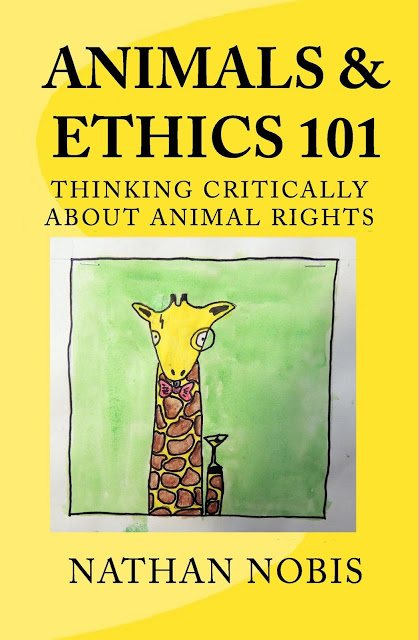
FYI: Nathan Nobis, a philosophy professor at Morehouse College in Atlanta, recently published Animals and Ethics 101: Thinking Critically About Animal Rights. A well-reviewed introduction to animal ethics, the textbook (created to accompany an online course on the same subject) evaluates the arguments for and against various uses of animals, including:
- Is it morally wrong to experiment on animals? Why or why not?
- Is it morally permissible to eat meat? Why or why not?
- Are we morally obligated to provide pets with veterinary care (and, if so, how much)? Why or why not?
You can buy the paperback on Amazon for $5.99 or Kindle for $2.99. But Nobis has also made the text available free online, under a Creative Commons license. You can download it in multiple formats here.
Ethics 101: Thinking Critically About Animal Rights will be added to our list of Free Textbooks.
Related Content:
Watch Glass Walls, Paul McCartney’s Case for Going Vegetarian
Free Online Philosophy Courses
Read More...Chuck Berry Jams Out “Johnny B. Goode” with Eric Clapton, Keith Richards, John Lennon & Bruce Springsteen
The King of Rock and Roll is dead, and, no, I don’t mean Elvis, but Chuck Berry, who proclaimed himself at every opportunity the rightful sovereign. Next to Berry (according to Berry) every other hip-swiveling, duck-walking, pompadour-combing jackelope was nothing but a lowdown pretender, even those who only bore the faintest resemblance to the above. See, for example, his take on punk rock—so clearly derivative of his work that he can’t help taking credit for most of it. To people raised on The Ramones instead of the Stones his attitude seemed ridiculous. But for those who came of age at a time when rock and roll was a near synonym for Chuck Berry, he was right all along. We failed to appreciate the enormity of his talent, the uniqueness of his style, the genius of his licks.
I’ve wrestled with both the dismissal of Berry and the hagiography. My generation’s “classic rock” involved a Richards or a Clapton. Berry’s music may as well have been buried in Pleistocene strata, though he lived until the irascible age of 90, performing until just a few years ago. We knew the pioneers, the Boppers, the Checkers, the Hollys.
They could seem like cartoon characters from our parents’ infantilized 50s childhoods: wholesome, corny, downright creepy. Bleh to all that. But, it’s true, out of his generation of players, Berry has always been special. He was the first rock and roll guitar hero. And if he sometimes seemed salty about it, imagine how you’d feel to have your biggest hit—with the “12th greatest solo of all time”—stolen from you by the Beach Boys and Marty McFly.
Even the most pedestrian guitar players should recognize how many licks Berry built into rock and roll’s architectural vocabulary from the fretboard of his Gibson 335. Consider then the recognition from those greats who learned to play as kids by listening to him on the radio. Chuck Berry may have felt underappreciated, or undercompensated, but read an interview from almost any decade with Richards or Clapton or Harrison or Page, etc. and you’ll be surprised if his name doesn’t come up. He was such an august American patriarch at his death that the National Review called him “the founding father of rock,” his influence “almost impossible to overstate”—sentiments echoed by nearly every living guitar god to have worn the title. NRO’s Berry eulogy also includes a roundup of covers of “Johnny B Goode,” from Jimi Hendrix to AC/DC, the Grateful Dead, Prince, Judas Priest, the Sex Pistols…. Not all respectful covers, but name a band, they’ve probably done it.
But it was the lucky few guitar gods who got to play with Berry himself, gazing at him in awe, out of their minds with fifteen-year-old glee. Keith Richards and Eric Clapton once traded solos on an extended “Johnny B. Goode” (top—the video and sound go out of sync, making for a slightly surreal viewing experience.) Berry seemed to soak it up as much as they did. Further up, see a boyishly happy John Lennon play “Johnny B. Goode” with Berry on The Mike Douglas Show in 1972. Lennon understood why Berry was so influential not only as a guitarist but as a songwriter. He wrote “good lyrics and intelligent lyrics in the 1950s when people were singing ‘Oh baby, I love you so.’ It was people like him that influenced our generation to try and make sense out of the songs rather than just sing ‘do wa diddy.’” Though Lennon did his share of that.
Finally, Bruce Springsteen plays sideman to Berry during “Johnny B. Goode” at the concert for the Rock and Roll Hall of Fame in 1995. Springsteen paid homage to Berry frequently, and also played in his band in the 70s, “an experience,” writes Ultimate Classic Rock, “that challenged the young musician’s ability to think on his feet.” You may notice Springsteen and Berry’s “Johnny B. Goode” performance seems a “a little wobbly.” This is because Berry decided to shift the song “in gears and a key without talking to us,” remembers guitarist Nils Lofgren. The setlist said “Rock and Roll Music,” Berry decided he’d rather play “Johnny B. Goode.” So they played “Johnny B. Goode.” (See Springsteen replicate the experience by playing Berry’s “You Never Can Tell” live with his band, totally unrehearsed.)
All of Berry’s protégés and musician-admirers quickly learned what to expect when they met their idol: when they got together to jam with him, they were “going to do some Chuck Berry songs,” as Springsteen remembers him saying during their old days together. To Berry and to much of the generation that followed, the phrase was pretty much synonymous with rock and roll.
Related Content:
Chuck Berry Takes Keith Richards to School, Shows Him How to Rock (1987)
Josh Jones is a writer and musician based in Durham, NC. Follow him at @jdmagness
Read More...Watch 70 Movies in HD from Famed Russian Studio Mosfilm: Classic Films, Beloved Comedies, Tarkovsky, Kurosawa & More
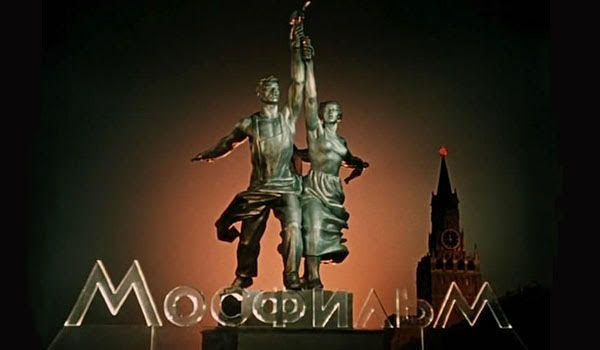
To most international cinephiles, the word Mosfilm immediately brings to mind two towering names in Russian motion pictures: Sergei Eisenstein and Andrei Tarkovsky. Both directors made not just important movies but took major steps to develop the visual language of film itself, and both worked for Mosfilm, one of Russia’s largest and oldest film studios. First established in 1923, it went on to produce more than 3,000 films during the Soviet era, some of which now define the cinema of that period. Now viewers around the world can enjoy their aesthetic lushness, historical interest, and pure entertainment value more easily than ever on Mosfilm’s Youtube channel, which offers among its many freely viewable pictures a selection of 70 films in high definition.
You’ll want to start, of course, with Eisenstein and Tarkovsky. Mosfilm has made available in HD the former’s Alexander Nevsky (1938) and much of the latter’s filmography: Ivan’s Childhood (1962), Andrei Rublev (1966), Solaris (1972), The Mirror (1975), and Stalker (1979).
For all their high artistic achievement, however, they may admittedly reinforce the West’s Cold War-era image of Russians as terribly serious people who seldom even crack a smile, let alone laugh. So why not follow those up with a dive into Mosfilm’s considerable HD selection of beloved, light-hearted Soviet comedies?
Of all Soviet comedy directors, Leonid Gaidai stands as by far the most successful. You can watch a fair few of his works, long and short, on Mosfilm’s HD playlist, including Operation Y and Shurik’s Other Adventures (1965); the intriguingly titled Kidnapping, Caucasian Style (1967); The Diamond Arm (1969), the most popular society comedy ever; The Twelve Chairs (1971); Ivan Vasilievich Changes Profession (1973), based on a play by Mikhail Bulgakov; and It Can’t Be! (1975). It also offers several films from Gaidai’s contemporary Eldar Ryazanov, who worked in a more satirical vein (and showed a surprising willingness to poke fun at the absurdities of Soviet life): Carnival Night (1956), the beloved musical Hussar Ballad (1962), Beware of the Car (1966), Office Romance (1977), Station for Two (1982), and A Cruel Romance (1984).
You may also notice the conspicuous presence of a certain highly notable non-Russian filmmaker: Akira Kurosawa, who in 1975 worked with Mosfilm to make Dersu Uzala, an adaptation of the memoirs of a trapper in Russia’s far eastern wilderness. It came as just one of Mosfilm’s many literary adaptations, the most famous perhaps being Sergei Bondarchuk’s 1969 vision of Leo Tolstoy’s War and Peace. On Mosfilm’s HD playlist you’ll also find two features drawing on the work of Anton Chekhov: Andrei Konchalovsky’s Uncle Vanya (1971), and Emil Loteanu’s My Tender and Affectionate Beast, or a Hunting Accident (1978), a feature-length adaptation of A Hunting Party.
Mosfilm’s Youtube channel features not just Soviet-era movies, but those from more recent years as well: the mighty film studio survived the dissolution of the Soviet Union itself, continuing to contribute to cinema as a quasi-private federation of independent studios. Its current Director General, Karen Shakhnazarov, boasts an impressive filmography of his own. You can get an HD taste of his work by watching Jazzmen (1983), Winter Evening in Gagra (1985), Courier (1986), Zerograd (1989), The Assassin of the Tsar (1991), Dreams (1993), Poisons, or the World History of Poisoning (2001), and The Vanished Empire (2008), all of which weave together the threads — the visionary, the historical, the everyday, the absurd — running through Mosfilm’s long history.
NOTE: Though many of the titles on Mosfilm’s HD playlist appear only in Russian, most of the films themselves come with English subtitles. Make sure to click the “CC” icon on the lower right of the Youtube player to turn them on.
Some of the films mentioned above will be added to our meta collection, 4,000+ Free Movies Online: Great Classics, Indies, Noir, Westerns, Documentaries & More.
Related Content:
Watch War and Peace: The Splendid, Epic Film Adaptation of Leo Tolstoy’s Grand Novel (1969)
Free Films by Andrei Tarkovsky, Sergei Eisenstein & Other Russian Greats
Watch Battleship Potemkin and Other Free Sergei Eisenstein Films
A Visual Introduction to Soviet Montage Theory: A Revolution in Filmmaking
Based in Seoul, Colin Marshall writes and broadcasts on cities and culture. He’s at work on a book about Los Angeles, A Los Angeles Primer, the video series The City in Cinema, the crowdfunded journalism project Where Is the City of the Future?, and the Los Angeles Review of Books’ Korea Blog. Follow him on Twitter at @colinmarshall or on Facebook.
Read More...Hayao Miyazaki Tells Video Game Makers What He Thinks of Their Characters Made with Artificial Intelligence: “I’m Utterly Disgusted. This Is an Insult to Life Itself”
For a young person in an animation-based field, the opportunity to share new work with director Hayao Miyazaki must feel like a golden opportunity.
This may still hold true for Nobuo Kawakami, the chairman of Dwango, a Japanese telecommunications and media company, but not for the reasons he likely anticipated at the start of the above video.
The subject of their discussion is a computer generated animated model whose artificial intelligence causes it to move by squirming on its head. Its creators haven’t invested it with any particular personality traits or storyline, but its flayed appearance and tortuous movements suggest it’s unlikely to be boarding Miyazaki’s magical cat bus any time soon.
Even without an explicit narrative, the model’s potential should be evident to anyone who’s ever sat through the final-reel resurrection of a horribly maimed, presumed-dead terrorizer of scantily clad young ladies.
The model’s grotesque squirmings could also be an asset to zombie video games, as Kawakami excitedly points out.
Let us remember that Miyazaki’s films are rooted not in gross-out effects, but redemption, a reverence for nature, and respect for children and all living things.
The master watches the demonstration without comment, then dispenses with traditional Japanese etiquette in favor of some strongly worded medicine that leaves no doubt as to what he really thought of Dwango’s artificially intelligent wretch:
“I am utterly disgusted… I strongly feel that this is an insult to life itself.”
(At this point, you really should watch the video, to hear Miyazaki’s opening statement, about a disabled friend for whom even a simple high-five is a painful physical exertion.)
Poor Kawakami-san! Unceremoniously shamed in front of his colleagues by a national treasure, he doesn’t push back. All he can offer is something along the lines of “We didn’t mean anything by it”—a statement that seems credible.
The American president may be into dehumanizing those with disabilities, but the Dwango crew’s heads were likely occupied with boyish visions of a thrillingly gruesome zombie apocalypse.
It’s a harsh, but important message for Miyazaki to have gotten across. Dwango is responsible for creating a lot of online games. In other words, they hold considerable sway over impressionable youth.
Studio Ghibli co-founder Toshio Suzuki grants Kawakami and his colleagues an opportunity to save face, asking what the team’s goals are.
“We’d like to build a machine that can draw pictures like humans do,” one shellshocked-looking young man responds.
What, like, Henri Maillardet’s automaton from 1810? While I can imagine such a contraption showing up in one of Miyazaki’s steam-punk-flavored adventures, the hush that greets this statement all but screams “wrong answer!”
What will this encounter lead to?
The release of an online game in which one scores points by hideously dismembering the animated form of director Hayao Miyazaki?
Or a newfound sensitivity, in which cool technological advances are viewed through a lens of actual human experience?
Only time will tell.
Related Content:
Software Used by Hayao Miyazaki’s Animation Studio Becomes Open Source & Free to Download
Hayao Miyazaki Meets Akira Kurosawa: Watch the Titans of Japanese Film in Conversation (1993)
Ayun Halliday is an author, illustrator, theater maker and Chief Primatologist of the East Village Inky zine. Follow her @AyunHalliday.
Read More...An Animated Introduction to McCarthyism: What Is It? And How Did It Happen?
During the 1970s, a young Donald Trump was mentored by Roy Cohn, a brash, take-no-prisoners lawyer, who first came to prominence during the 1950s, when he served as the consigliere to Joseph McCarthy and his campaign to expose suspected communists in the United States. In what’s known as the Second Red Scare, McCarthy led increasingly broad and paranoid investigations, trying to find Communists, sympathizers and spies, both inside and outside the federal government. Mostly on the basis of rumor, not fact, “thousands of individuals were aggressively investigated and questioned before government panels.” Blacklists were created. Some were jailed. Careers and livelihoods were destroyed.
Year later, playwright Arthur Miller recalled, “Suffice it to say, it was a time of great–no doubt unprecedented–fear.” “The air of terror was heavy.” “I was sure the whole thing would soon go away.” Eventually a sense of futility gave way to anger, and Miller responded by writing The Crucible, a commentary on McCarthyism wrapped in a drama about the Salem witch trials of 1692/93.
Above, you can watch above a six minute primer on McCarthyism, prepared by Ellen Schrecker, professor emerita of American history at Yeshiva University. An expert on the history of McCarthyism, she has been called “the dean of the anti-anti-Communist historians.” Her books on the subject include: Many Are the Crimes: McCarthyism in America and Age of McCarthyism: A Brief History with Documents.
If you would like to support the mission of Open Culture, consider making a donation to our site. It’s hard to rely 100% on ads, and your contributions will help us continue providing the best free cultural and educational materials to learners everywhere. You can contribute through PayPal, Patreon, and Venmo (@openculture). Thanks!
Related Content:
Free Online History Courses
Bertolt Brecht Testifies Before the House Un-American Activities Committee (1947)
Ayn Rand Helped the FBI Identify It’s A Wonderful Life as Communist Propaganda
How to Spot a Communist Using Literary Criticism: A 1955 Manual from the U.S. Military
Read More...
Introduction to Indian Philosophy: A Free Online Course
Taught by Prof. Satya Sundar Sethy, this course from the Indian Institute of Technology-Madras provides an Introduction to Indian Philosophy, and it’s summarized as follows:
Indian Philosophy (Sanskrit: Bhārtiya Darshan) deals with various philosophical thoughts of many several traditions those originated in the Indian subcontinent, including Hindu philosophy, Buddhist philosophy, and Jain philosophy. The common themes of all these philosophies are unity and diversity (advaita and dvaita) in their understanding, interpretation of the existence of reality, and explanation of the attainment of liberation (moksha). The Indian philosophical systems are classified into two groups on the basis of the acceptance of Vedas; Orthodox (Vaisheshika, Nyāya, Sāmkhya, Yoga, Purva-Mimānsā, and Uttar-Mimānsā) and Heterodox (Chārvaka School, Jainism and Buddhism). All these systems are discussed with a critical approach to their theories in this course. Over and above, an introductory note to Indian Philosophy is placed at the beginning of the course.
All lectures can be viewed above, or streamed at this Youtube playlist. The course has been added to our list of Free Online Philosophy Courses, a subset of our collection, 1,700 Free Online Courses from Top Universities.
Read More...Philosophy of Religion: A Free Online Course
This is the full set of lectures from Matt McCormick’s Philosophy of Religion course (Phil 131) at California State University, Sacramento, the syllabus for which you can find here. Here’s the ground it covers:
Religion is perhaps one of the most widespread and familiar of human behaviors. For as long as humans have been recognizably human, they have been religious. Religious claims are of particular interest to philosophers because they raise so many important metaphysical issues. That is, religious claims often make assertions about the ultimate nature of reality, the existence of souls, an afterlife, and most importantly, the existence of a God or gods. Part of the reason people have such a strong interest in religion is because of the implications religious claims would have on our lives if they are true.
We will discuss the philosophical, metaphysical, and epistemological foundations of Christianity, Islam, and Judaism. There will be some discussion of Buddhism and Hinduism, as well. At the outset we will concern several issues surrounding the relationship of religion, science, and morality. Then we will consider some of the most influential and recent arguments that have been given for the existence of an all powerful, all knowing, all good, personal, and singular God. This notion is central to the predominant western and non-western monotheistic traditions. We will consider different epistemological approaches to religious belief, arguments for and against the existence of God, the problem of evil, faith, revelation, mysticism, the creation-evolution debate, the attributes of God, miracles, religion and rationality, and so on. We will operate with some assumptions: 1) serious rational inquiry and respectful dialogue on religious issues can help us learn about God, religion, and ourselves, and 2) we can obtain better, more reasonable positions regarding these topics. The perspectives and contributions of various ethnic, socio-economic, and religious groups will be considered in the discussions and readings.
You can stream the 31 lectures above, or find them on YouTube here. The course has been added to our collection, 1,700 Free Online Courses from Top Universities.
Read More...Symbolic Logic: A Free Online Course
From John Sanders, Professor of Philosophy at the Rochester Institute of Technology, comes the course, Symbolic Logic. In 15 lectures, Sanders offers an “introduction to symbolic, or formal, deductive logic and techniques, such as truth tables, truth trees, and formal derivations. The emphasis will be on propositional (or sentential) logic and first-order predicate logic.” You can stream all the lectures above, or find them all on this YouTube playlist.
Symbolic Logic will be added to our list of Free Philosophy Courses, a subset of our collection, 1,700 Free Online Courses from Top Universities.
Read More...Social and Political Philosophy: A Free Online Course
From John Sanders, Professor of Philosophy at the Rochester Institute of Technology, comes the course, Social and Political Philosophy. In 10 lectures, Sanders “examines some of the main problems of social and political philosophy through an analysis, comparison and critical examination of various views concerning the natures of individuality and society and the relations between them.” Thinkers covered include Aristotle, Hobbes, Locke, Mills, Marx, Engels, Hayek and Rawls. You can stream all the lectures above, or find them all on this YouTube playlist.
Social and Political Philosophy will be added to our list of Free Philosophy Courses, a subset of our collection, 1,700 Free Online Courses from Top Universities.
Read More...Support Us
We're hoping to rely on loyal readers, rather than erratic ads. Please click the Donate button and support Open Culture. You can use Paypal, Venmo, Patreon, even Crypto! We thank you!

About Us

Open Culture scours the web for the best educational media. We find the free courses and audio books you need, the language lessons & educational videos you want, and plenty of enlightenment in between.
Advertise With Us

FREE UPDATES!
GET OUR DAILY EMAIL
Get the best cultural and educational resources on the web curated for you in a daily email. We never spam. Unsubscribe at any time.
FOLLOW ON SOCIAL MEDIA

Open Culture editor Dan Colman scours the web for the best educational media. He finds the free courses and audio books you need, the language lessons & movies you want, and plenty of enlightenment in between.
Advertise With Us

