Are We Living Inside a Computer Simulation?: An Introduction to the Mind-Boggling “Simulation Argument”
The idea that we are living in a vast computer simulation as hyper-sophisticated simulated characters with limited self-awareness sounds like the kind of thing that issues forth from stoned philosophy majors in late night dorm room sessions. And no doubt it has, thousands of times over, especially after 1999, when The Matrix debuted and turned an amalgam of Plato, Descartes, Berkeley, and other metaphysicians into a then-cutting-edge sci-fi kung fu flick.
But is it a ridiculous idea? The obvious objection that first arises is: how could we possibly ever know? Computer simulated characters, after all, have no ability to step beyond the confines of the worlds designed for them by programmers, a limitation illustrated when one reaches a dead-end in a game and finds that, while there may be the image of a forest or a field, the game designers have seen no need to actually create the environment. Our character bumps up against the game’s edge stupidly, until we toggle the controls and move it back into the prescribed field of play.
But (fire up your bongs), does the character know it’s reached a dead end? And if the universe is a simulation, who’s running the damned thing? And why? Welcome to “the simulation argument,” a theory endorsed by philosopher and futurologist Nick Bostrom, Tesla and Space X founder Elon Musk, and quite a few other non-dorm-dwelling thinkers. “Many people have imagined this scenario over the years,” writes Joshua Rothman at The New Yorker, “usually while high. But recently, a number of philosophers, futurists, science-fiction writers, and technologists—people who share a near-religious faith in technological progress—have come to believe that the simulation argument is not just plausible, but inescapable.”
Given their quasi-religious bent, are these technologists and futurists simply replacing a creator-god with a creator-coder to flatter themselves? Judge for yourself, firstly perhaps by listening to Musk explain the concept in brief at a Recode Conference above. (If you find yourself comforted by his answer, you may just be a game designer.) Then, for a more sprawling, pop-cultural dive into the simulation argument, spend an hour with The Simulation Hypothesis at the top of the post, a documentary that—depending on the laws of your current place of residence—may or may not be enhanced by an edible.
We might also reference Bostrom’s 2003 article—or watch him describe his position in the video below. Bostrom speculates that we might be living in an “ancestor simulation” run by an incredibly advanced civilization thousands of years in our future. Like Musk, writes Rothman, he concludes that “we are far more likely to be living inside a simulation right now than to be living outside of one.” The possibility raises all sorts of disturbing questions about the reality of choice, the moral meaning of our actions, and the nature of human identity. These are questions philosophers (and Philip K. Dick) have always asked, but until recently, they had little recourse to independent confirmation of their hypotheses. Now, as you’ll discover in The Simulation Hypothesis, physicists have begun to discover that “our universe isn’t an objective reality.”
It is indeed perfectly plausible, given the exponential speed with which technology advances, that we will be able to run simulations with the same level of sophistication as our reality in a matter of a few generations or less… provided we don’t destroy ourselves first or completely lose interest. Which answers the question of who might be running the program. As with the higher beings in Interstellar who reach back to give the dying human species a hand, “there is,” writes Rothman, “no sanctity or holiness in the simulation argument. The people outside the simulation aren’t gods,” or even aliens, “they’re us.” Or some sufficiently evolved version, that is, whose technological achievements would likely seem to us like magic.
The Simulation Hypothesis will be added to our list of Free Documentaries, a subset of our collection, 4,000+ Free Movies Online: Great Classics, Indies, Noir, Westerns, Documentaries & More.
Related Content:
Free Online Philosophy Courses, a subset of our collection 1,700 Free Online Courses from Top Universities
What Do Most Philosophers Believe? A Wide-Ranging Survey Project Gives Us Some Idea
Daniel Dennett and Cornel West Decode the Philosophy of The Matrix
Josh Jones is a writer and musician based in Durham, NC. Follow him at @jdmagness
Read More...Memoranda: Haruki Murakami’s World Recreated as a Classic Adventure Video Game
Haruki Murakami has a special way of inspiring his fans. I write these very words, in fact, from a coffee shop in Seoul not just stocked with his books and the music referenced in them but named after the jazz bar he ran in Tokyo in the 1970s before becoming a writer. But each fan builds their own kind of monument to the author of Norwegian Wood, Hard-Boiled Wonderland and the End of the World, The Wind-Up Bird Chronicle, and other novels with a sensibility all their own. The Murakami-heads (or perhaps Harukists) at Vancouver-based studio Bit Byterz have chosen to pay elaborate tribute to Murakami by recreating his uncanny world with an adventure game called Memoranda.
You may remember this project from when we featured its Kickstarter drive back in 2015. Bit Byterz ended up raising about $20,000, enabling them to release Memoranda this year. You can buy it on Steam, or first view the launch trailer above and get a sense of what The Verge’s Andrew Webster describes as a game “inspired in large part by Murakami’s stories” which “centers on a young woman in a vaguely European town who has lost her memory — she doesn’t even remember her name. (The title, Memoranda, refers to the sticky notes she uses to remind herself of important things.)” While not a direct adaptation of any one work of Murakami’s in particular, its locations, its characters, and above all its atmosphere come drawn from the same — to use a highly appropriate metaphor — well.
“I started with one of his short stories, and gradually added characters from other short stories,” lead developer Sahand Saedi told Waypoint’s John Robertson. “I tried to bring over the surreal atmosphere, as well as the lonely and strange characters from the stories, and hope that the gamer will feel like they are living in one of these stories while playing.” Robertson describes Memoranda as “an adventure game in the most traditional sense, in terms of interaction and pacing. While it might be taking an enlightened path to adapting one medium into another, it follows well-trodden game design routes, and sticks to established rules. You click on items or pick them up, observe them or interact with them, saving key examples to your inventory for later use in puzzles that are often abstract in their construction.”
And so Memoranda at once pays homage to the distinctive reality — or rather unreality — of Murakami’s fiction and to the distinctive gaming experience of point-and-click adventure games, the genre that first took shape on home computers in the 1980s and produced the likes of Maniac Mansion, the King’s Quest series (not to mention all of Sierra On-Line’s other Quests), the Monkey Island series, and Myst. More recently it has undergone something of a renaissance thanks to crowdfunding services like Kickstarter, ever since respected point-and-click adventure game designer Tim Schafer raised $3.45 million to fund 2015’s Broken Age. Bit Byterz may have had only a small fraction of that budget to work with, but they know, as every avid Murakami reader knows, that mere money can’t buy uncanniness.
Related Content:
New Video Game Inspired by 20 Haruki Murakami Stories Is Coming Your Way: Help Kickstart It
Read 5 Stories By Haruki Murakami Free Online (For a Limited Time)
A Photographic Tour of Haruki Murakami’s Tokyo, Where Dream, Memory, and Reality Meet
Based in Seoul, Colin Marshall writes and broadcasts on cities and culture. He’s at work on a book about Los Angeles, A Los Angeles Primer, the video series The City in Cinema, the crowdfunded journalism project Where Is the City of the Future?, and the Los Angeles Review of Books’ Korea Blog. Follow him on Twitter at @colinmarshall or on Facebook.
Read More...Alfred Hitchcock Reveals The Secret Sauce for Creating Suspense
Speaking at an American Film Institute seminar in 1970, Alfred Hitchcock revealed the essential ingredients that went into making his films. When he stripped everything away, what Hitchcock really cared about was creating suspense films (not mystery films) and getting the suspense element right. In the clip above, the director explains why suspenseful scenes have to simmer for a time and then cool down properly. Things can’t be brought to a rapid boil and then be quickly taken off the stove. Hitchcock once made that mistake in his 1936 film, Sabotage. (Watch the offending scene right below or find the full film here.)
Of course, Hitchcock learned from his mistake, and thereafter shot countless scenes where the suspense builds in the right way. But we particularly wanted to find one scene that pulls off the bomb scenario, and so here it goes. From 1957 to 1959, Hitchcock produced Suspicion, a television series for NBC, and he personally directed one episode called “Four O’Clock”. It features a watchmaker who suspects his wife of having an affair, and so, filled with jealousy, he decides to murder her with a bomb made by his own hands. Things take an unexpected turn, however, when two burglars tie him up in the basement with the ticking bomb. We leave you with the final, climactic scene. You can watch the full episode on YouTube here.
If you would like to support the mission of Open Culture, consider making a donation to our site. It’s hard to rely 100% on ads, and your contributions will help us continue providing the best free cultural and educational materials to learners everywhere. You can contribute through PayPal, Patreon, and Venmo (@openculture). Thanks!
Related Content:
16 Free Hitchcock Movies Online
Alfred Hitchcock Explains the Plot Device He Called the ‘MacGuffin’
Alfred Hitchcock’s 7‑Minute Master Class on Film Editing
Read More...Watch FLAMENCO AT 5:15, a Life-Affirming, Oscar-Winning Documentary About a Flamenco Dance Class
FLAMENCO AT 5:15, the Academy Award-winning short documentary, above, is a welcome antidote to the depressing specter of youthful bodies in a chronic state of computer-related postural collapse.
Director Cynthia Scott’s thirty-minute vignette cannot help but show off the beautiful, highly trained physiques of the young dancers delving into the art of flamenco at Canada’s National Ballet School.
She also captures the lasting beauty of their instructor, Susana Audeoud, then in her late 60s. Her posture erect, her eyes shining brightly in a face weathered by experience and time, Audeleoud shares one of flamenco’s great secrets—that its practioners, unlike their counterparts in the ballet, can continue dancing until they die. (Audleoud herself passed away on the first day of 2010, at the age of 93.)
Flamenco is an incredibly exacting art, but Audeloud and her husband, composer Antonio Robledo, showed themselves to be warm and good humored teachers.
All of us could benefit from following Audeloud’s instructions to her barefoot pupils at the 1:10 mark. Forgo your meditation app for a day and give it a try.
Or join the students in Robledo’s joyful group clapping exercise at the 8:00 mark.
According to Audeloud, flamenco dancers only dance when it’s necessary…
I know that most of us are utterly without training, but it appears that we have entered a period of extreme necessity.
So put on your shoes, stomp your feet, and clap as if no one is watching.
You can find FLAMENCO AT 5:15 listed in our collection of Free Documentaries, a subset of our collection, 4,000+ Free Movies Online: Great Classics, Indies, Noir, Westerns, Documentaries & More.
Related Content:
The Graceful Movements of Kung Fu & Modern Dance Revealed in Stunning Motion Visualizations
Statistics Explained Through Modern Dance: A New Way of Teaching a Tough Subject
Ayun Halliday is an author, illustrator, theater maker whose new play. Zamboni Godot, is now playing in New York City in March 2017. Follow her @AyunHalliday.
Read More...The Music in Quentin Tarantino’s Films: Hear a 5‑Hour, 100-Song Playlist
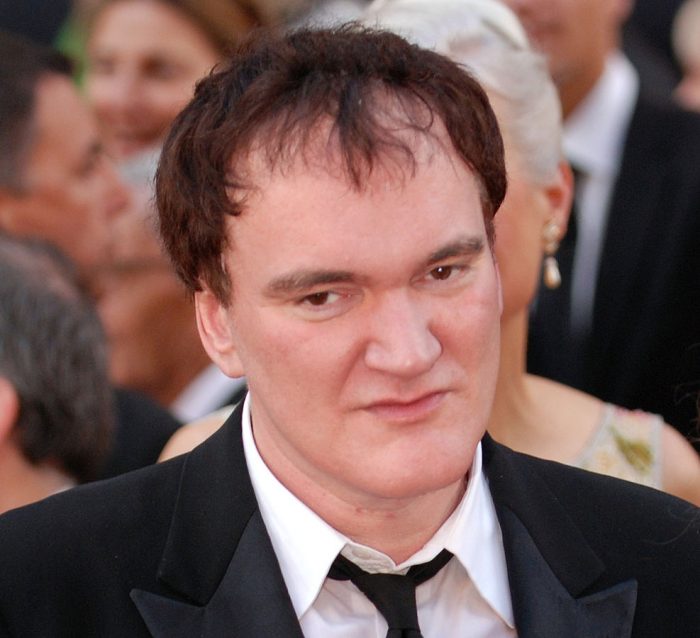
Image via Wikimedia Commons
Earlier this week we told you about this 326-track, 20-hour playlist of music from the films of Martin Scorsese. One of the masters of juxtaposing song with image, Scorsese paved the way for another director with a fine record collection, Quentin Tarantino. And what do you know? There’s a similar Spotify playlist that you can enjoy featuring 100 tracks and running five hours. (If you need Spotify’s software, download it here.)
Tarantino might be more of a music geek, but he just hasn’t made as many films as Scorsese. However, if you came of cineaste age during the 1990s, dollars to donuts you had a CD of the Pulp Fiction soundtrack in your collection. Just like Tarantino resuscitated John Travolta’s career, he took an obscure single–a cover of a Turkish-Arabic-Egyptian melody called “Misirlou” by a once-popular surf guitarist–and made it not just the opening track, but the sound of 1980s filmmaking being shot and stuffed in a trunk. (And guitarist Dick Dale got to have a second career from it.) The soundtrack made surf instrumentals popular again, Urge Overkill relevant, Neil Diamond cool, and inserted a Statler Brothers’ song into the collections of thousands of people who wouldn’t touch country with a ten foot pole.
Prior to this, Reservoir Dogs used both “Little Green Bag” by George Baker and “Stuck in the Middle with You” by Stealers Wheel to great effect, and the soundtrack included the narcoleptic DJ patter by comedian Steven Wright, but it was just an appetizer for the full Pulp Fiction meal.
After that, there’s still flashes of brilliance–Jackie Brown is a safe but excellent collection of mostly ‘70s soul–but the soundtracks by themselves don’t stand up as cultural objects in the post-CD era. Instead, there’s moments like the 5.6.7.8’s “Woo Hoo” and Tomoyasu Hotei’s “Battle without Honor or Humanity” from Kill Bill, and the goosebump-inducing use of David Bowie’s “Cat People” in an otherwise period centric, WWII-set Inglourious Basterds.
In later films, he’s become more of a curator of Ennio Morricone works and other composers of the films he loves, and less of a pop magpie. But then, his films have darkened and deepened, and his soundtrack vinyl collection–which he has collected since a kid–just continues to grow.
In an interview with Billboard magazine, he mentioned how integral his record collection is to his filmmaking process.
I am always looking for some cool song that I could use as a big set piece. I’ll finish work and I’ll go into my record room and I’ll put on some song, and literally, I can see it on the screen. I can project myself into a movie theater and I’m watching the scene onscreen and I’m hearing the music and I’m imagining an audience: either an audience of people I know who are digging it or an audience of people I don’t know who are digging it — they’re always digging it. (laughs) And it keeps reminding me that I’m making a movie.
And Tarantino usually gets the rights to use whatever he pleases because of his fame and the Quentin-bump he gives the artists: “It’s actually quite easy to get the rights now, because I’ll use music that some people haven’t heard that much before,” he says in the same interview. “Then after my movie comes out, it seems like every commercial in the world buys it. They can double or triple and quadruple their income just by the exposure the movie gets it.”
Dive into this playlist and let us know any specific gems you find.
Related Content:
Jim Jarmusch: The Art of the Music in His Films
Hear a Playlist of the 336 Songs Mentioned in Bruce Springsteen’s New Memoir, Born to Run
Quentin Tarantino Explains The Art of the Music in His Films
Ted Mills is a freelance writer on the arts who currently hosts the artist interview-based FunkZone Podcast and is the producer of KCRW’s Curious Coast. You can also follow him on Twitter at @tedmills, read his other arts writing at tedmills.com and/or watch his films here.
Read More...Akira Kurosawa’s Adaptation of Edgar Allan Poe’s The Masque of the Red Death Finally in Production, Coming in 2020
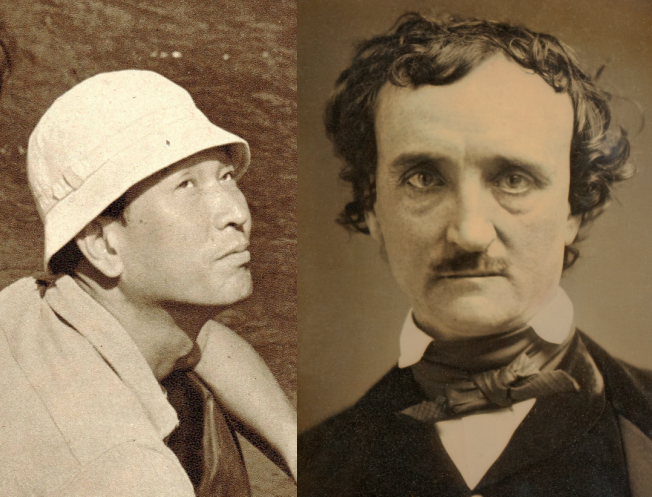
The filmmakers we most respect tend not to stop working until the very end, and so almost always leave pieces of incomplete projects behind. Stanley Kubrick did, giving Steven Spielberg the chance to pick up where his elder colleague left off on the sci-fi drama A.I.: Artificial Intelligence. That film began in the late 1970s as an adaptation of Brian Aldiss’ short story “Supertoys Last All Summer Long,” but over the decades became something more technically complex, and — given Spielberg’s involvement — more emotional. What, now, will emerge from the resurrection of Akira Kurosawa’s The Mask of the Black Death, a similarly unmade adaptation of Edgar Allan Poe’s “The Masque of the Red Death”?
“Chinese studios Huayi Brothers and CKF Pictures will produce the film based on the late Japanese filmmaker’s screenplay,” reported Indiewire’s Yoselin Acevedo last week. “He started penning the film right after his 1975’s Dersu Uzala.
Originally, the project was supposed to be filmed in 1998, but was shelved after Kurosawa suffered a stroke, and later died that same year.” Kurosawa intended to set his version of “The Masque of the Red Death” in Russia, where he’d made Dersu Uzala, and in an early twentieth century when, according to a Cinephilia & Beyond post featuring an English translation of the screenplay, “humanity is faced with a deadly contagion, and people’s characters, resilience and survival are being tested as the society is pushed well into the brinks of despair and possible annihilation.”
“The ‘Red Death,’ ” wrote Poe, “had long devastated the country. No pestilence had ever been so fatal, or so hideous.” A prince of this unnamed land summoned “a thousand hale and light-hearted friends from among the knights and dames of his court, and with these retired to the deep seclusion of one of his castellated abbeys,” lavishly supplied behind its tightly barred doors. “With such precautions the courtiers might bid defiance to contagion. The external world could take care of itself. In the meantime it was folly to grieve, or to think.” But months later, at the stroke of midnight during one of the prince’s masquerade balls, a “masked figure which had arrested the attention of no single individual before” makes itself seen, provoking “a buzz, or murmur, expressive of disapprobation and surprise — then, finally, of terror, of horror, and of disgust.”
One imagines that such a milieu, as anyone who’s seen the ominous revelry on display in Eyes Wide Shut, might have appealed to Kubrick as well. It certainly appealed to prolific “B‑movie” producer Roger Corman, the man responsible for a 1964 adaptation starring Vincent Price and another 25 years later starring Adrian Paul from Highlander. But Kurosawa, a filmmaker who showed a strong thematic interest in the upper classes’ disregard for the rest of society in everything from katana-and-topknots period pieces like Seven Samurai to modern-day crime stories like High and Low, could have done Poe’s chilling Gothic tale special justice. As for whether Huayi Brothers and CKF Pictures can do justice to Kurosawa’s vision, his fans will find out in 2020 — perhaps walled tightly up in their home theaters with his classic pictures until then.
Related Content:
Akira Kurosawa’s Advice to Aspiring Filmmakers: Write, Write, Write and Read
William S. Burroughs Reads Edgar Allan Poe’s “The Masque of the Red Death”
Download The Complete Works of Edgar Allan Poe: Macabre Stories as Free eBooks & Audio Books
Based in Seoul, Colin Marshall writes and broadcasts on cities and culture. He’s at work on a book about Los Angeles, A Los Angeles Primer, the video series The City in Cinema, the crowdfunded journalism project Where Is the City of the Future?, and the Los Angeles Review of Books’ Korea Blog. Follow him on Twitter at @colinmarshall or on Facebook.
Read More...Free Audio: Hear Stories by Jhumpa Lahiri, Margaret Atwood & Authors
Fyi: Penguin Random House and Crown Publishing Group recently produced “Season of Stories,” an eleven-week “serialized reading experience.” It features serialized stories by Jhumpa Lahiri, Margaret Atwood, and other authors. You can stream the episodes, right here. Or you can listen to them through this 60db iPhone app. We will be sure to add these to our collection, 1,000 Free Audio Books: Download Great Books for Free.
If you would like to support the mission of Open Culture, consider making a donation to our site. It’s hard to rely 100% on ads, and your contributions will help us continue providing the best free cultural and educational materials to learners everywhere. You can contribute through PayPal, Patreon, and Venmo (@openculture). Thanks!
Related Content:
The New Yorker’s Fiction Podcast: Where Great Writers Read Stories by Great Writers
Three Raymond Carver Stories, Read by Richard Ford, Anne Enright, and David Means
Listen to 90 Famous Authors & Celebrities Read Great Stories & Poems
Read More...Watch a 5‑Part Animated Primer on Afrofuturism, the Black Sci-Fi Phenomenon Inspired by Sun Ra
We recognize its hallmarks in music especially. It is the province of Sun Ra, George Clinton and Parliament/Funkadelic, Afrika Bambaataa, and, in recent years, Janelle Monae, Andre 3000, Beyoncé, and many other black artists who have updated for the 21st century the styles and sounds of Afrofuturism. Reaching back into an Afrocentric past—with heavy emphasis on Egyptology—and forward to an interstellar future, the genre of Afrofuturism reclaims the terrain of science fiction for people of African descent, serving as an “umbrella term,” as one contemporary Afrofuturist community puts it, “for the Black presence in sci-fi, technology, magic, and fantasy.”
One might be surprised to learn that the term itself did not originate with the visionary founder of its aesthetic. Sun Ra (formerly Herman Poole Blount)—bandleader of the Arkestra and space alien from Saturn—called his space-themed big band music “cosmic jazz” or, sometimes, “phre music—music of the sun.” Instead, “Afrofuturism” was coined by cultural critic Mark Dery in his seminal 1994 essay “Black to the Future,” which included interviews with sci-fi author Samuel R. Delany, critic and musician Greg Tate, and scholar Tricia Rose. Afrofuturism has taken on a variety of meanings, not only in music, but also in art, dance, film, and science fiction writing like that of Delany and Octavia Butler.
But as you’ll learn in the video above, the first in a 5‑part animated series on the genre from Dust, “its roots go back to the late 1930s in Huntsville, Alabama,” the actual birthplace of Sun Ra, where he maintained he was abducted, taken to Saturn (not Jupiter, as the narrator mistakenly says), and told by aliens to “transport black people away from the violence and racism of planet Earth.” The series traces the growth of Sun Ra’s original mission through the cultural touchstones of Lieutenant Uhura, George Clinton, Jimi Hendrix, and Missy Elliott.
Sun Ra died in 1993, the year before Dery invented the name for his generous legacy. “What does it say,” the narrator asks, “about how far we have or have not come if this message still resonates with each new generation?” Dery recently took on the question in a 2016 essay, in which he quotes Tate—now at work on a book on Afrofuturism: “Having ceded the racial ground war to Enlightenment-era imperialism somewhere back in the 17th century, black futurism determined that the fiery realms of the symbolic and the mythic and the rhetorical and the spiritual and the wickedly stylish, sonic, and polyrhythmic would become our culture’s bailiwick, raison d’être, and cultural triumphalist battleground.”
Afrofuturism transforms trauma, the erasure of the black past, and bleak prospects for the future into powerful displays of creative agency. The struggle to claim that agency in the face of imperial violence and plunder continues, Dery argues, but now takes place in the midst of technological developments even a space alien like Sun Ra could not have foreseen. While many of the questions once asked about the humanity of enslaved people have shifted to debates over androids, cyborgs, and other posthuman creations, the conditions for many colonized and marginalized people all over the world have not considerably improved.
As “Afrofuturism is all too aware,” Dery writes, “objects can have inner lives…. Consequently, it is less concerned with knocking the human off its ontological perch than it is in forging alliances with Others of any species, human or posthuman.”
Afrofuturism speaks to our moment because it alone – not the ahistorical, apolitical corporate precogs at TED talks; not the fatuous Hollywood franchises that have nothing to say about our times – offers a mythology of the future present, an explanatory narrative that recovers the lost data of historical memory, confronts the dystopian reality of black life in America, demands a place for people of color among the monorails and the Hugh Ferris monoliths of our tomorrows, insists that our Visions of Things to Come live up to our pieties about racial equality and social justice.
You can see three short episodes of Dust’s Afrofuturism series above, with parts four and five to come. (You will be able to find them all here.) Until then, watch the short Vox video explainer on Afrofuturism below.
Related Content:
Josh Jones is a writer and musician based in Durham, NC. Follow him at @jdmagness
Read More...Leonard Bernstein Introduces 7‑Year-Old Yo-Yo Ma: Watch the Youngster Perform for John F. Kennedy (1962)
Asked to think of a virtuoso cellist, many of us immediately imagine Yo-Yo Ma, not just because of his considerable skill but also because of the sheer length of his residency in popular culture. Though only 61 years old, barely middle-aged by classical musician standards, he’s been famous for well over half a century, starting with his entry into the prestigious child-prodigies-who-perform-for-American-presidents circuit. Seven years after his birth in Paris, Ma’s family relocated to New York, by which time he’d already been at the cello for nearly half his short life. From there, it took him no time at all to command an audience whose members included Dwight D. Eisenhower and John F. Kennedy.
The event, a benefit concert called “The American Pageant of the Arts,” happened on November 29, 1962. Its other guests, a who’s-who of the Cold War cultural scene, included Marian Anderson, Van Cliburn, Robert Frost, Fredric March, Benny Goodman, and Bob Newhart. As master of ceremonies, Leonard Bernstein introduced the evening’s wee entertainers.
“Yo-Yo came to our attention through the great master Pablo Casals, who had recently heard him play the cello. Yo-Yo is, as you may have guessed, Chinese, and has lived up to now in France — a highly international type.” The same could be said of his sister Yeou-Cheng, who accompanies him on the piano in a performance of Jean-Baptiste Bréval’s Concertino No. 3 in A Major.
Three years later, the still extremely young but much more famous Ma would write a letter to the conductor:
Dear Mr. Bernstein,
Do you still remember me? Now I am ten years old. This year I learned with Prof. Leonard Rose three concertos: Saint-Saëns’, Boccherini’s and Lalo’s. Last week my sister and I played in a Christmas Concert in Juilliard School. We are invited to give a joint recital in Brearley School on January 19 1966 at 1:45 p.m.
If you have time, I would be glad to play for you.
Yo-Y0 Ma
Not only did Bernstein remember him, he also, by presenting him as a vision of humanity’s artistic future, ensured that everyone else at The American Pageant of the Arts would as well. “Now here’s a cultural image for you to ponder as you listen,” he said just before letting Yo-Yo and Yeou-Cheng take it away. “A seven-year-old Chinese cellist playing old French music for his new American compatriots.” Did Ma recall those words of decades and decades ago when he formed the Silk Road Ensemble, subject of the recent documentary The Music of Strangers, which brought into the fold musicians from Syria, Mongolia, Japan, Armenia, Galicia, and elsewhere, all to share, mix, and reinterpret the music of one another’s homelands? Now there’s a cultural image for you.
Related Content:
Yo-Yo Ma & the Goat Rodeo Sessions
Collaborations: Spike Jonze, Yo-Yo Ma, and Lil Buck
Leonard Bernstein Demystifies the Rock Revolution for Curious (if Square) Grown-Ups in 1967
Leonard Bernstein’s First “Young People’s Concert” at Carnegie Hall Asks, “What Does Music Mean?”
Based in Seoul, Colin Marshall writes and broadcasts on cities and culture. He’s at work on a book about Los Angeles, A Los Angeles Primer, the video series The City in Cinema, the crowdfunded journalism project Where Is the City of the Future?, and the Los Angeles Review of Books’ Korea Blog. Follow him on Twitter at @colinmarshall or on Facebook.
Read More...Alfred Hitchcock Meditates on Suspense & Dark Humor in a New Animated Video
Back in 1957, while shooting a film tentatively called From Amongst The Dead (it would later be titled Vertigo), Alfred Hitchcock sat down for an interview with Colin Edwards, from Pacifica Radio. The conversation touched on many good themes–how suspense works in his films, the role of dark humor and beyond.
A half century later, Blank on Blank has revived and animated that conversation, thankfully bringing it back to life. You can find many more Blank on Blank reanimations of vintage interviews in our archive, including talks with Patti Smith, Nina Simone, Charles Bukowski, David Foster Wallace and much more.
Looking for free, professionally-read audio books from Audible.com? Here’s a great, no-strings-attached deal. If you start a 30 day free trial with Audible.com, you can download two free audio books of your choice. Get more details on the offer here.
Related Content:
Alfred Hitchcock Reveals The Secret Sauce for Creating Suspense
16 Free Hitchcock Movies Online
Alfred Hitchcock Explains the Plot Device He Called the ‘MacGuffin’
Alfred Hitchcock’s 7‑Minute Master Class on Film Editing
Read More...Support Us
We're hoping to rely on loyal readers, rather than erratic ads. Please click the Donate button and support Open Culture. You can use Paypal, Venmo, Patreon, even Crypto! We thank you!

About Us

Open Culture scours the web for the best educational media. We find the free courses and audio books you need, the language lessons & educational videos you want, and plenty of enlightenment in between.
Advertise With Us

FREE UPDATES!
GET OUR DAILY EMAIL
Get the best cultural and educational resources on the web curated for you in a daily email. We never spam. Unsubscribe at any time.
FOLLOW ON SOCIAL MEDIA

Open Culture editor Dan Colman scours the web for the best educational media. He finds the free courses and audio books you need, the language lessons & movies you want, and plenty of enlightenment in between.
Advertise With Us


