Japanese Craftsman Spends His Life Trying to Recreate a Thousand-Year-Old Sword
Western culture has long used swords, and the smithing thereof, as a signifier of Japanese culture. It evokes revered tradition, perfectionistic craftsmanship, and a capacity for violence equally impulsive and formalized, all of which carry aspects of cliché and stereotype to which Eastward-looking Western artists often fall victim. I think of books like Jay McInerney’s Ransom (“he took up his katana in its polished lacquer scabbard, the weapon made by the great swordsmith Yasukuni of the Soshu Branch of the Sagami School,” etc.), although more seriously unserious creators like Quentin Tarantino, equipping the heroine of Kill Bill with a blade forged by a master named Hattori Hanzō, know how to have fun with it.
Tarantino, true to schlock-cinephile form, named the character in honor of one played by early martial-arts movie star Sonny Chiba, a 16th-century samurai and genuine historical figure. Though he got a lot of use out of his sword (his achievements include helping the shogun Tokugawa Ieyasu rise to rule over a united Japan), the real Hanzō didn’t make them. Still, we need not look back into the mists of history to find a master swordsmith, for they live and forge still today. Take, for example, Korehira Watanabe, subject of the four-minute documentary above, one of Etsy’s Handmade Portraits series.
“Today, there are only 30 people, including me, who are making a living as a sword maker,” says the Hokkaido-based Watanabe. “When I was younger I was making swords just because I loved it, but as I got older I started to think that I need to pass along the aesthetics and soul of the Japanese people through my swords.” This he seems to have accomplished against long odds, and in defiance of his practical-minded family’s wishes. “There are basically no instructions left to make Koto,” swords from the Heian and Kamakura periods which lasted from the year 794 to 1333. “It’s impossible to recreate the sword. However, that’s the kind that attracts me, and I’ve been trying to recreate it for 40 years.”
But as many a master craftsman of any nationality knows, striving to come as close as possible to the impossible holds a certain appeal. It also produces results: “I’ve finally succeeded in making a few similar to Koto,” proclaims Watanabe, but only within the past five years. A good deal of his attention also looks to go not just into shaping swords, but shaping his successor. “I want my disciple to surpass me as a sword maker,” a future for his student, and a future for the craft of swordsmithing itself, that he considers it his duty to ensure. With just a fraction of his dedication to swords — or just a fraction of Tarantino’s dedication to movies — just imagine the kinds of near-impossible we could all achieve.
Related Content:
How Japanese Things Are Made in 309 Videos: Bamboo Tea Whisks, Hina Dolls, Steel Balls & More
The Making of Japanese Handmade Paper: A Short Film Documents an 800-Year-Old Tradition
Watch a Japanese Craftsman Lovingly Bring a Tattered Old Book Back to Near Mint Condition
Based in Seoul, Colin Marshall writes and broadcasts on cities and culture. He’s at work on a book about Los Angeles, A Los Angeles Primer, the video series The City in Cinema, the crowdfunded journalism project Where Is the City of the Future?, and the Los Angeles Review of Books’ Korea Blog. Follow him on Twitter at @colinmarshall or on Facebook.
Read More...Hear 17,000+ Traditional Folk & Blues Songs Curated by the Great Musicologist Alan Lomax
For all its success with steamrolling over entire populations to build highways, factory towns, and office campuses, the U.S. has also, since its earliest days, produced scores of committed ethnologists, musicologists, and other documentarians of human cultural production in all its variety. This cruel paradox has, most generally speaking, left a dual legacy in both the country’s storied violence and its capacity for renewal through the appropriation, transformation, and amalgamation of other cultures.
And we would have no national treasure chest of folk music, art, story, and history to draw from without journeymen collectors like Alan Lomax. Where cultural historians like W.E.B. Dubois, Zora Neale Hurston, Franz Boas, and Margaret Mead lent their findings to revivals in American literature and philosophy, Lomax, along with his contemporary, folklorist Harry Smith, “unlocked the secrets of this kind of music,” as Dylan remarked, for hundreds of budding folk and blues musicians in the forties, fifties, and sixties.
With typically Dylan-like understatement, the phrase “this kind of music” undersells the diversity of Americana in Lomax’s collection, from Celtic Appalachiana to African Caribbeana. Lomax started out recording folk music under the tutelage of his folklorist father, John Lomax. Beginning in 1934, the two travelled the country, “gathering thousands of field recordings of folk musicians throughout the American South, Southwest, Midwest, and Northeast, as well as in Haiti and the Bahamas,” writes the Association for Cultural Equity, which hosts a huge archive of Lomax’s folk recordings. These were released in several popular anthologies of the time and housed at the Library of Congress’s Archive of American Folk Song, for whom the younger Lomax began working in 1937.
Throughout the 30s and 40s, Lomax furiously recorded songs, jokes, stories, interviews, etc. and produced films and radio programs “which brought 1940s New Yorkers blues, flamenco, calypso, and Southern ballad singing, all still relatively unknown genres.” A musician himself (hear him do “Rambling Gambler,” above), Lomax also discovered and promoted a number of folk artists who would be stars. He “exposed national audiences to regional American music and such homegrown talents as Woody Guthrie, Lead Belly, Aunt Molly Jackson, Josh White, the Golden Gate Quartet, Burl Ives, and Pete Seeger.” He made the first recordings of Muddy Waters (then McKinley Morganfield) and recorded seminal sessions and conversations with bluesmen like Memphis Slim, Big Bill Broonzy, and Sonny Boy Williamson.
It’s safe to say that without Lomax’s tireless curating, we would have had no folk and blues revival of the fifties and sixties, and thus, likely, no rock and roll. It’s easy in our cynical and anxiety-ridden current cultural moment to dismiss folklorists like the Lomaxes as pirates who profited from the work of others. But it’s also easy to forget how little opportunity the artists they worked with had to reach the world outside their local circuits, and how little opportunity the wider American public had to hear folk and local artists. In part because of Alan Lomax’s work in the beginnings of the 21st century, we never need to lose touch with the country’s tremendous cultural diversity, an essential feature of the U.S. throughout its history.
A fair amount of controversy roils over the business arrangements that folklorists came to with artists and collaborators like Lead Belly, and there are good historical and political reasons to follow these debates. Ideals of cultural equity did not erase racial and economic realities. But the best of what survives the meetings of Lomax father and son and the hundreds of men and women they encountered in their travels is captured on record, tape, and digital formats, and preserved for future generations to rediscover what the country sounds like outside the feedback loops of corporate media. There are innumerable ways to discover Lomax’s recordings. His own Association for Cultural Equity hosts hundreds of hours of audio and video recordings, available to stream for free at the site or on Youtube. The archive contains over 17,000 folk recordings by Lomax.
And in the Spotify playlist above, we’ve compiled a playlist of Lomax’s commercial releases. In the first two, we hear Lomax himself interpreting various cowboy and western songs. Then a massive album of recordings he made in Haiti after doing graduate work in anthropology (these include recordings of his fellow anthropologist Zora Neale Hurston). We have a compilation of early Delta blues recordings or “Negro Prison Blues,” and an album of popular Italian folk songs like “Funiculi, Funicula” and “Come Back to Sorrento.” Overall it’s a playlist that represents the surprising breadth of Lomax’s interest in “this kind of music”—the kind, as he put it in his “Appeal for Cultural Equity,” made by “each and every branch of the human family.”
Related Content:
Alan Lomax’s Music Archive Houses Over 17,400 Folk Recordings From 1946 to the 1990s
Legendary Folklorist Alan Lomax: ‘The Land Where the Blues Began’
Woody Guthrie at 100: Celebrate His Amazing Life with a BBC Film
Hear Zora Neale Hurston Sing the Bawdy Prison Blues Song “Uncle Bud” (1940)
Josh Jones is a writer and musician based in Durham, NC. Follow him at @jdmagness
Read More...The Last Bookstore: A Short Documentary on Perseverance & the Love of Books
It takes some guts to open an independent, bricks-and-mortar bookstore these days. But that’s what Josh Spencer did. He’s the proprietor of “The Last Bookstore,” the playfully-named shop located in downtown Los Angeles.
The short documentary above takes you into Josh’s world. And it tells the story of perseverance. Straightaway, you discover that Josh is a paraplegic. He survived a terrible accident, battled depression, and spent time living on welfare and food stamps. Then, he persevered. The Last Bookstore flourishes while so many indie bookstores flounder. If you’re in LA, pay The Last Bookstore a visit. Find their location here.
If you would like to support the mission of Open Culture, consider making a donation to our site. It’s hard to rely 100% on ads, and your contributions will help us continue providing the best free cultural and educational materials to learners everywhere. You can contribute through PayPal, Patreon, and Venmo (@openculture). Thanks!
Related Content:
A Secret Bookstore in a New York City Apartment: The Last of a Dying Breed
Test Your Literary Mettle: Take a 50 Question Quiz from The Strand Bookstore
Read More...The Digital Transgender Archive Features Books, Magazines & Photos Telling the History of Transgender Culture
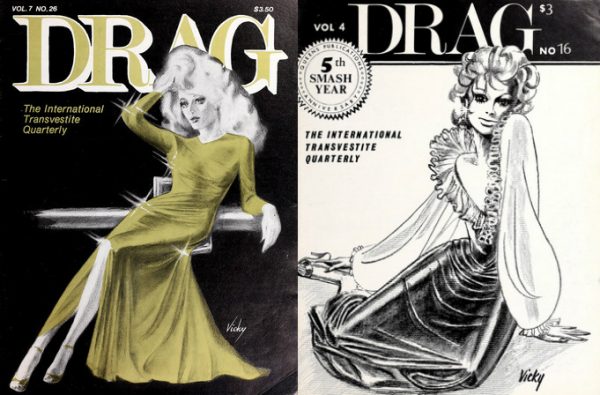
Transgender issues have entered the public conversation in a big way. To those without much direct connection to them, they might all seem to have come up suddenly, with little precedent, within the past few years. But most phenomena that seem to have achieved instant prominence have a rich, if long-hidden, history behind them. In this case, you can now discover a great deal of the history at the new Digital Transgender Archive, an “international collaboration among more than twenty colleges, universities, nonprofit organizations, and private collections” aiming to create “a generative point of entry into the fascinating and expansive world of trans history.”
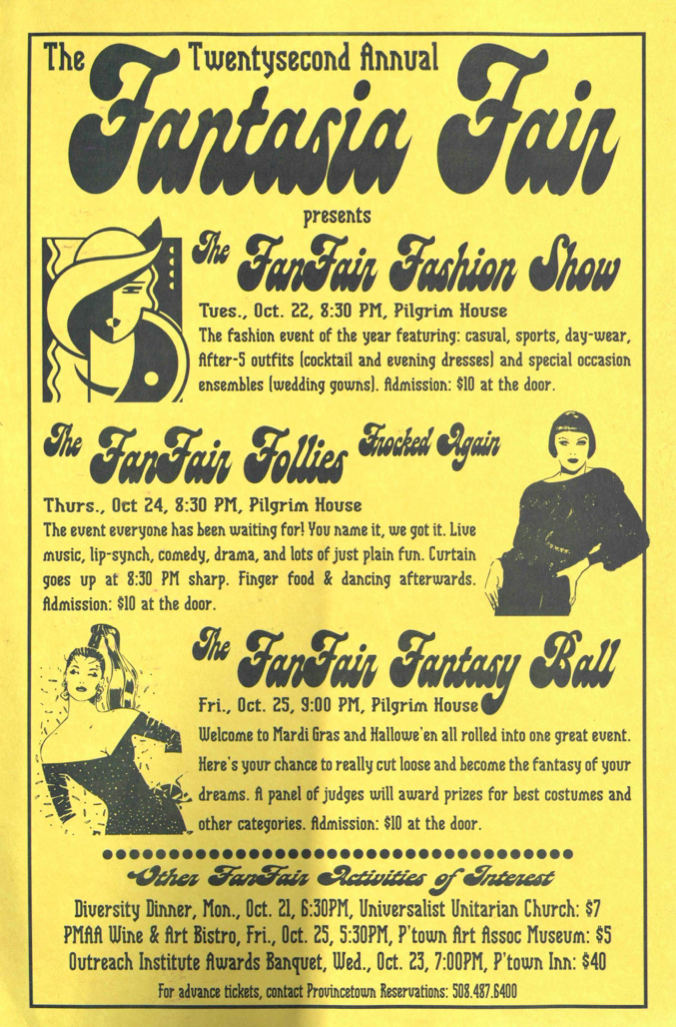
Hyperallergic’s Claire Voon has more on the site’s origins, including words from the project’s leader, College of the Holy Cross English professor K.J Rawson. Its impetus came from the problem that “a lot of trans-related materials were held in dissipated collections, and it wasn’t really clear who had what, why they had it, how it related to other collections, and how it was accessible to researchers.” The Digital Transgender Archive replaces some of the unnecessary arduousness under which those researchers used to labor, providing them with a simple search box or, an ability to browse by collection, institution, geographic location, genre, or topic.

Ranked by the number of the items in the archive, that topic list gives a vivid overview of the sorts of social practices and categories best represented there: crossdressers and crossdressing rank first and second, respectively, followed by the rest of a top-twenty, including drag queens, photography, activists, and actors.

Given the importance of the visual to transgender culture, it should come as no surprise that the Digital Transgender Archive’s growing collection of documents, photographs, periodicals, and “ephemera,” organized all together for the first time, offers plenty of striking material to look at — as well as to introduce the history of a world about which few could openly communicate before now.
via Hyperallergic
Related Content:
Allen Ginsberg Talks About Coming Out to His Family & Fellow Poets on 1978 Radio Show (NSFW)
Based in Seoul, Colin Marshall writes and broadcasts on cities and culture. He’s at work on a book about Los Angeles, A Los Angeles Primer, the video series The City in Cinema, the crowdfunded journalism project Where Is the City of the Future?, and the Los Angeles Review of Books’ Korea Blog. Follow him on Twitter at @colinmarshall or on Facebook.
Read More...Michio Kaku on Why Immigrants Are America’s Secret Weapon: They Compensate for Our Mediocre STEM Education & Keep Prosperity Going
Americans have often found themselves caught up in panics about immigration, like that now driving the campaign to build a wall between us and our third largest trading partner—when more Mexicans are leaving the U.S. than arriving. Then we have the talk of banning an entire world religion, though, of course, we’ve seen this before, lest we forget that the Klan resurged in large part as an anti-Catholic group. All of this misinformation, mistrust, and outright contempt comes at a high cost, including that of any real understanding of how immigration works, and why it works, no matter how vehemently certain organizations fight against it.
The fact is that the U.S. might be a dynamo for capital but not when it comes to what economists crudely call “human capital.” The point applies not only to immigrant workers who do jobs Americans won’t, but also those who do jobs Americans can’t, because, as physicist Michio Kaku argues above, “the United States has the worst educational system known to science.” Were it solely up to U.S. graduates, the scientific establishment and tech economy would collapse, he says, “forget about Google, forget about Silicon Valley. There would be no Silicon Valley.” Instead, U.S. science and tech thrive because of immigrants who come on H‑1B visas, “America’s secret weapon… the genius visa.”
Kaku goes on to press his case with daunting statistics about the number of foreign-born Ph.D. graduates, though he doesn’t say that all of those grads have H‑1Bs. In fact, his position is a highly controversial one. Reliable studies show that many companies abuse the specialized work visa to outsource jobs Americans are fully qualified to do, and to create a class of immigrant workers who earn less than their U.S. counterparts and work under a modified form of indentured servitude. The visa is, after all, “a non-immigrant visa,” points out one critic, “and so has nothing at all to do with staying in the USA, becoming a citizen, or starting a business.” It is, more or less, a guest worker program.
Kaku’s tone can also seem grating, a smarmy reminder of what David H. Freedman calls in The Atlantic “open season on the nonsmart.” Calling American grads “stupid” will not likely endear many of them to his position. Nonetheless, when it comes to science education, it’s hard to argue with his assessments, and with his case for allowing the best minds in the world to come work for American companies (under more equitable conditions). In the Big Think video above, Kaku again presses his argument for the H‑1B as instrumental to a “brain drain” into the United States, feeding its science and tech industries with fresh minds and fresh ideas constantly. His ideas about meritocracy may seem blithe, especially given the material advantages so many guest workers already have before arriving in the States. But in purely descriptive terms, the best U.S. graduates just simply cannot compete with many of their foreign-born colleagues.
Here Kaku’s argument takes a turn in both these videos and shows how the “secret weapon” is one we’ve pointed at ourselves. We can’t continue to depend on “geniuses” from other countries, he says, to prop up our science and technology sectors, especially since the brain drains back out, with H1‑B visa holders frequently leaving, given their temporary status, and establishing companies in their home countries. “In reality,” wrote Mother Jones in 2013, “most of today’s H‑1B workers don’t stick around to become the next Albert Einstein or Sergey Brin.” That year, “the top 10 users of H‑1B visas… were all offshore outsourcing firms… that hired nearly half nearly half of H1‑B workers.” As one expert explained, “The H‑1B worker learns the job and then rotates back to the home country and takes the work with him.”
It’s likely large numbers of those workers feel less and less welcome in the U.S. But it’s also true, as Kaku says, that Americans continue to fall far behind in math and science. There may indeed be few Americans who can fill many of those jobs or continue to push technological innovation forward in the U.S.
Related Content:
Michio Kaku Explains the Physics Behind Absolutely Everything
Colorful Animation Visualizes 200 Years of Immigration to the U.S. (1820-Present)
Portraits of Ellis Island Immigrants Arriving on America’s Welcoming Shores Circa 1907
Noam Chomsky Defines What It Means to Be a Truly Educated Person
Josh Jones is a writer and musician based in Durham, NC. Follow him at @jdmagness
Read More...Stream Iggy Pop’s Two-Hour Radio Tribute to David Bowie
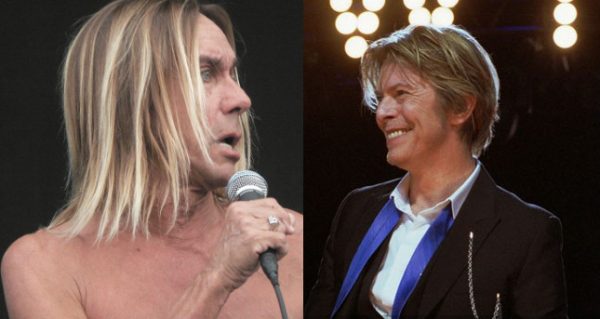
Images of Mr. Bowie & Mr. Pop, via Wikimedia Commons
Briefly noted: Every Friday night, Iggy Pop hosts a radio show, “Iggy Confidential,” on BBC 6 Music. And the latest episode featured Pop paying a two-hour tribute to his friend, David Bowie. Click here, and hear Pop spin his favourite Bowie records and reminisce about their times together. The recording will be available online for the next 26 days.
If you would like to support the mission of Open Culture, consider making a donation to our site. It’s hard to rely 100% on ads, and your contributions will help us continue providing the best free cultural and educational materials to learners everywhere. You can contribute through PayPal, Patreon, and Venmo (@openculture). Thanks!
Related Content:
Hear a Great Radio Documentary on William S. Burroughs Narrated by Iggy Pop
Read More...Philosopher Sam Harris Leads You Through a 26-Minute Guided Meditation
We’ve posted on meditation research lately because it’s so compelling, and meditation music and instructions because so many creative people have found it liberating. But it’s always worth noting that a few meditation skeptics have weighed in with pointed objections to the large claims meditation teachers often make. And yet even after one of the most unsparing critiques of meditation research and teaching, science writer John Horgan still admits that “it might make you feel better, nicer, wiser” and plans to continue meditating in the face of his “perfect contempt for it.”
Another professional skeptic has gone even further along this road. Once spoken of as one of the dreaded “Four Horsemen” of New Atheism, Sam Harris has also long called himself a secular Buddhist, and has written “a guide to spirituality without religion.”
Wading into the politics of meditation means dealing with skeptics like Harris who treat Buddhism as quaint and archaic foolishness that just happened to preserve the scientific technology of mindfulness, and it means sorting through a lot of scientific studies, many of which—as is always the case—have a number fatal flaws in their method. Harris’ scientific claims about mindfulness have come in for their own critiques, from both mystics and secularists.
All of this said, the fact is that, like yoga and many other practices designed to harmonize mind and body, the benefits of meditation, placebo-induced or otherwise, are observable, and the risks entirely negligible. Many skeptical researchers have decided to dive in and try meditation before fully crediting their doubts. And that, supposedly, is the very instruction we find in what is often called the Buddhist “charter for free inquiry,” which tells practitioners to investigate for themselves and take no one’s word for anything, a few hundred years in advance of the British Royal Society’s motto, nullius in verba.
In this spirit, skeptics like Harris have investigated meditation and reported their findings. Many also, like Harris and academic researchers like Oxford psychiatrist Mark Williams, have recorded their own guided mindfulness meditations that correspond in many respects to the original ancient instructions. We’ve previously featured guided meditations from UCLA and a compilation of recorded instructions from new agers and scientists. At the top of the post, you can hear Harris’ very straightforward guided meditation, and further down a shorter version of the same.
In the video above, Harris employs just a little hyperbole in comparing mindfulness to the Large Hadron Collider. His claim that only through this practice can we discover “the self is an illusion” rings false when we think of the many other philosophers who have independently come to the same conclusion, whether as Taoists or Empiricists. But Harris isn’t only making the case for mindfulness meditation’s true correspondence to some fundamental nature of reality, but for its pragmatic usefulness in helping us move through the world with greater skill and peace of mind—reliable outcomes from regular meditation that no one has yet credibly denied.
Related Content:
Lena Dunham Shows Why It’s So Damn Hard to Meditate: A Four-Minute Comedy
Allen Ginsberg Teaches You How to Meditate with a Rock Song Featuring Bob Dylan on Bass
Free Guided Meditations From UCLA: Boost Your Awareness & Ease Your Stress
Stream 18 Hours of Free Guided Meditations
Josh Jones is a writer and musician based in Durham, NC. Follow him at @jdmagness
Read More...Simone de Beauvoir Defends Existentialism & Her Feminist Masterpiece, The Second Sex, in Rare 1959 TV Interview
Given how many academic philosophy departments have banished Existentialism into some primitive wilderness, it seems striking to hear people talk about it as a current phenomenon with a serious, living pedigree and a hip youth vanguard distilling its ideas into pop culture. By the time I’d heard of Albert Camus—by way of The Cure’s early single “Killing an Arab”—the references to the French philosopher and his novel The Stranger were already exotic, and as kitschy as the faux-Middle Eastern guitar line in the song. But in 1959, the hipster existentialist was a phenomenon so widespread that Norman Mailer wrote a scathing essay about the character.
And a Canadian journalist, sitting down to interview Existentialist philosopher Simone de Beauvoir, began by asking her to comment on the “group of noisy, rowdy jazz-loving young people, in the immediate post-war period.” This first wave of 50s Parisian hipsters embraced Sartre, Camus, and Beauvoir right along with Coltrane and Charlie Parker.
Beauvoir dismisses any connection between her kind of Existentialism and that of the rowdy masses except that of physical proximity. Nonetheless, like 90s feminist punk rockers who spread the ideas of third wave feminism, the French and American Beats made Existentialist philosophy cool.
Beauvoir prefers to draw a clear boundary between her work and the next generation’s appropriation. By this time, both Sartre and Camus had disavowed the term Existentialist and had a falling-out over Communism. But Beauvoir uses the term and refers to a “We,” who “think—and it’s one of the most important points in existentialism—that man is the purpose of man, his own future, and the purpose of all his activities.” She draws on stark binary oppositions of “good” and “evil” to explain the “fundamental basis of what you could call our ethics,” and yet, she says, “we don’t ask metaphysical questions.”
If it sounds like Beauvoir is summarizing Sartre, that’s part of what’s going on. The interviewer keeps pressing to understand the “existentialist man’s conception of the world.” She obliges, discussing “Sartrean Existentialism” and his major work Being and Nothingness and entertaining vague questions about atheism and politics. Finally, around 12:15, they begin to talk about the book for which de Beauvoir is best known, The Second Sex, which would go on to inspire 60s feminists like Betty Friedan, Gloria Steinem, and UK collectivist magazine Spare Rib.
Calm and measured throughout the conversation, Beauvoir defends her ideas, including the most provocative, that, as the interviewer paraphrases, “You don’t believe in the existence of a feminine nature. You believe people are first human, before being male or female.” She makes it clear right away that her anti-gender essentialism has roots in an even more fundamental, and very Existentialist, skepticism: “I don’t believe in the existence of a human nature.” All of us, whatever gender we’re taught to identify with, become products of our “place, time, civilisation, and technique etc.” through cultural conditioning, not inner necessity.
The Second Sex, she says, is not a revolt or a protest, but a description of an oppressive set of relations that “currently neither men nor women can just transform… with a magic wand.” Nevertheless, de Beauvoir became increasingly activist as she aged, giving the eloquent interview on “Why I’m a Feminist” in 1975. And above all, the younger generation who picked up piecemeal Sartre also picked up enough of Beauvoir’s work to begin forcing changes in the material conditions she identified as creating gender-based forms of social oppression.
Related Content:
Simone de Beauvoir Tells Studs Terkel How She Became an Intellectual and Feminist (1960)
Download All 239 Issues of Landmark UK Feminist Magazine Spare Rib Free Online
11 Essential Feminist Books: A New Reading List by The New York Public Library
Josh Jones is a writer and musician based in Durham, NC. Follow him at @jdmagness
Read More...
Get a Free Pocket Edition of the U.S. Constitution (Now #2 on the Amazon Bestseller List)

Going into the Democratic National Convention, who would have thought that the speech we’d all remember this week would belong to Khazir Khan, the father of a Muslim-American soldier who died fighting for the United States in Iraq? Khan’s rebuke of Donald Trump’s divisive presidential campaign was stinging, and it came capped with these lines:
Donald Trump, you are asking Americans to trust you with our future. Let me ask you: Have you even read the U.S. Constitution? I will gladly lend you my copy. In this document, look for the words “liberty” and “equal protection of law.”
Have you ever been to Arlington Cemetery? Go look at the graves of the brave patriots who died defending America — you will see all faiths, genders, and ethnicities.
You have sacrificed nothing and no one.
This private citizen succeeded in doing what Hillary Clinton, Bill Clinton, President Obama, Joe Biden and maybe even Michael Bloomberg could not. In his own modest, understated way, he put Trump on the defensive. And when Trump lashed out, you could finally hear the whispers: Have you no sense of decency, Donald, at long last?
Khizr Khan may be to Donald Trump what Joseph Welch was to Joe McCarthy. That would be one positive outcome of Khan’s speech. The other is that sales of the U.S. Constitution (as Electric Literature noted) have gone through the roof. The U.S. Constitution is currently #2 on Amazon’s list of bestselling books, right behind the new Harry Potter book. Fathom that.
You, too, can buy a pocket edition of the Constitution. But why not get it for free? Through November 8, the ACLU is running a promotion which will let you snag a free pocket-sized Constitution–one that can fit in your backpack, glove compartment, or back pocket. It measures 3/12” x 5.5” and features “the full text of the Constitution, the Amendments, including the Bill of Rights, as well as a Know Your Rights series: What to do if you’re stopped by the police.”
Head to this page, and use the coupon code POCKETRIGHTS.
If you would like to support the mission of Open Culture, consider making a donation to our site. It’s hard to rely 100% on ads, and your contributions will help us continue providing the best free cultural and educational materials to learners everywhere. You can contribute through PayPal, Patreon, and Venmo (@openculture). Thanks!
Related Content:
R Crumb, the Father of Underground Comix, Takes Down Donald Trump in a NSFW 1989 Cartoon
J.K. Rowling Defends Donald Trump’s Right to Be “Offensive and Bigoted”
Noam Chomsky on Whether the Rise of Trump Resembles the Rise of Fascism in 1930s Germany
Read More...Hear Wittgenstein’s Tractatus Logico-Philosophicus Sung as a One-Woman Opera
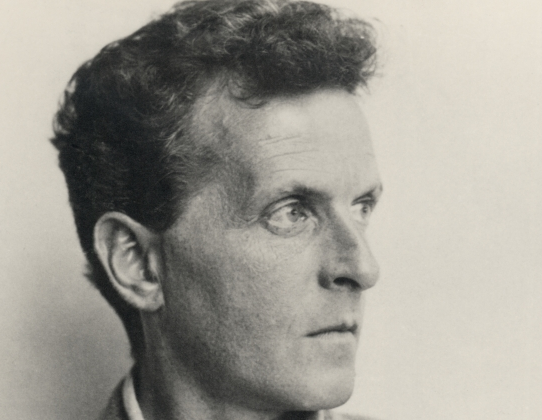
Image by Austrian National Library, via Wikimedia Commons
What is it about Austrian philosophical prodigy Ludwig Wittgenstein’s Tractatus Logico-Philosophicus that so inspires artists? Jasper Johns, the Coen Brothers, Derek Jarman…. Perhaps it’s easy to see his appeal to writers. His succinct philosophy of language contains a groundbreaking claim, for its time, wrote Bertrand Russell in his 1922 introduction: “In order that a certain sentence should assert a certain fact there must… be something in common between the structure of the sentence and the structure of the fact.”
There may be no higher praise for careful, precise language. Recalling the stock advice to “show, don’t tell,” Wittgenstein asserted that whatever bonds together the structure of sentences and the structure of the world, it is only something we can show, not something we can say. In this regard, Wittgenstein also elevated images, and he himself had a keen eye for photography and architecture. Of course, the imaginative, mystical aspect of Wittgenstein’s little book of aphorisms and symbols appeals to musicians and composers as well.
John Cage drew heavily on Wittgenstein’s work and the Tractatus has been adapted by others in musical pieces ranging from the understated and meditative to the comically ridiculous. The adaptation above takes a stark operatic approach. Composed by Balduin Sulzer, the “one woman opera,” as the singer Anna Maria Pammer’s site describes it (in Google translation from German), “drives the meticulousness and insistence of the text on the top.” Drawing on the work of the Second Viennese School, “the basic musical idea comes from the music of the time of origin of the Tractatus, i.e. the time of World War I.”
Wittgenstein has long been associated with Arnold Schoenberg and the Tractatus has been called a “tone poem.” The chilliness, alternating with rapid crescendos, with which Pammer delivers the philosophical libretto recalls the book’s tenor, as well as Wittgenstein’s temperament more generally. Given to violent outbursts and fits of derision, Wittgenstein spent the first part of his life attempting to create perfect systems— “a logically perfect language,” wrote Russell. In between this austere pursuit, he lived just as austerely and sometimes violently. John Cage’s enactment of Wittgenstein’s theories comes closer to the intent of “show don’t tell,” but Sulzer’s adaptation perhaps best dramatizes the mystical ellipses of Wittgenstein’s first major work. If you need Spotify’s free software, download it here.
Related Content:
Ludwig Wittgenstein’s Tractatus Gets Adapted Into an Avant-Garde Comic Opera
In Search of Ludwig Wittgenstein’s Secluded Hut in Norway: A Short Travel Film
The Photography of Ludwig Wittgenstein
Free Online Philosophy Courses
Download 135 Free Philosophy eBooks: From Aristotle to Nietzsche & Wittgenstein
Josh Jones is a writer and musician based in Durham, NC. Follow him at @jdmagness
Read More...Support Us
We're hoping to rely on loyal readers, rather than erratic ads. Please click the Donate button and support Open Culture. You can use Paypal, Venmo, Patreon, even Crypto! We thank you!

About Us

Open Culture scours the web for the best educational media. We find the free courses and audio books you need, the language lessons & educational videos you want, and plenty of enlightenment in between.
Advertise With Us

FREE UPDATES!
GET OUR DAILY EMAIL
Get the best cultural and educational resources on the web curated for you in a daily email. We never spam. Unsubscribe at any time.
FOLLOW ON SOCIAL MEDIA

Open Culture editor Dan Colman scours the web for the best educational media. He finds the free courses and audio books you need, the language lessons & movies you want, and plenty of enlightenment in between.
Advertise With Us


