The Lost Poems of Pablo Neruda: Help Bring Them to the English Speaking World for the First Time
This past weekend, the Chilean government acknowledged what many had long suspected — that, writes NPR, “the Nobel Prize-winning poet Pablo Neruda might have been killed [or, to be more precise, murdered] during the aftermath of the 1973 coup that brought Gen. Augusto Pinochet to power.” Previously the government had maintained that prostate cancer was the cause of death.
If you’re looking for a happier revelation, then I can tell you this: Last year, Chilean archivists “discovered a cache of previously unseen and unpublished poems written by Neruda. The collection—written in notebooks and on scraps of paper in the poet’s own hand—includes a sampling of the ardent love poems for which Neruda is famous.” That’s according to Copper Canyon Press, which has been entrusted by Pablo Neruda’s estate “to bring these lost poems to a North American audience for the first time.” And it will only happen with your help.
Right now, Copper Canyon Press has a Kickstarter campaign underway to raise a total of $50,000. Funds will go towards the production of a beautiful book translated by the award-winning translator and poet Forrest Gander. With 23 days to go, they have so far $32,2215 raised. But there’s still $18,000+ to go, and it would be great if Open Culture readers could help move the needle. Those who support this project will be among the first to read these lost poems in English. And speaking of firsts, don’t miss these related items in our archive: Hear Pablo Neruda Read His Poetry In English For the First Time, Days Before His Nobel Prize Acceptance (1971) and Pablo Neruda’s Historic First Reading in the US (1966) in our archive.
Related Content:
“The Me Bird” by Pablo Neruda: An Animated Interpretation
Poems as Short Films: Langston Hughes, Pablo Neruda and More
Read 10 Short Stories by Gabriel García Márquez Free Online (Plus More Essays & Interviews)
Read More...Edvard Munch’s The Scream Animated to the Psychedelic Sounds of Pink Floyd: The Winter Version
Back in the spring, we featured Romanian animator Sebastian Cosor’s animation of Edvard Munch’s The Scream set to Pink Floyd’s “The Great Gig in the Sky.” But the wintertime has almost come, which necessitates not just a change in the clothes we wear, but a change in the animations of The Scream we watch. Fortunately, Cosor has already put together a seasonally appropriate version of his earlier video, which you can see above.
The setting of Munch’s original Scream painting can, with its depopulated landscape under a hot orange sky, look pretty hellish, even before you notice the agonized fellow writhing in the middle of it. Wouldn’t it feel altogether more pleasant under a snowfall? And the screamer himself — surely he’d give off a jollier vibe if he wore a Santa hat? Cosor has answered these questions and others in this humorous two-minute CGI film, which once again unites 1970s psychedelic rock with late-19th/early-2oth-century Norwegian painting.
Some may consider this a kind of desecration of an important work of art (whether they mean the Norwegian painting or the psychedelic rock), but even those who don’t might harbor one serious objection: isn’t the middle of November a bit early to haul out the Christmas stuff? Fair enough, as the holiday decorations in stores and public places do seem to appear a little earlier each year. But if we can’t make an exception for the case of a festive production as strange as this, for what can we make an exception?
Related Content:
Edvard Munch’s Famous Painting The Scream Animated to the Sound of Pink Floyd’s Primal Music
30,000 Works of Art by Edvard Munch & Other Artists Put Online by Norway’s National Museum of Art
Colin Marshall writes elsewhere on cities, language, Asia, and men’s style. He’s at work on a book about Los Angeles, A Los Angeles Primer, the video series The City in Cinema, and the crowdfunded journalism project Where Is the City of the Future? Follow him on Twitter at @colinmarshall or on Facebook.
Read More...Michio Kaku & Brian Green Explain String Theory in a Nutshell: Elegant Explanations of an Elegant Theory
A few years ago, String Theory seemed the prime candidate for the “long-sought Theory of Everything,” the holy grail of physics that will reveal, writes Jim Holt in The New Yorker, “how the universe began and how it will end… in a few elegant equations, perhaps concise enough to be emblazoned on a T‑shirt.” Popular physicist and science communicator Brian Greene has touted the theory everywhere—in his book The Elegant Universe and PBS series of the same name; in interview after interview, a World Science Festival forum and TED talk…. Given such evangelism, you’d think he’d have his elevator pitch for string theory down pat. And you’d be right. In an io9 Q&A, he defined it in just 14 words: “It’s an attempt to unify all matter and all forces into one mathematical tapestry.”
All of this might make string theory sound simple to understand, even for a lay person like myself. But is it? Well, you will find no shortage of primers online in addition to Greene’s exhaustive explanations. There’s even a “String Theory for Dummies.” If you’d prefer to avoid being insulted by the title of that instructional series, you can also watch the video above of another excellent popular physics communicator, Michio Kaku, explaining string theory, with helpful visual aids, in four minutes flat. He quickly lays out such essential components as the multiverse, the big bang, wormholes, and the cheerful inevitability of the death of the universe. The short talk is excerpted from Kaku’s Floating University presentation “The Universe in a Nutshell,” which you can watch in full here.
For all of Kaku’s references to Einstein and the equations of string theory, however, he doesn’t quite explain to us what those equations are or how and why physicists arrived at them, perhaps because they’re written in a mathematical language that might as well come from an alien dimension as far as non-specialists are concerned. But we can still learn much more about the theory as lay people. Above, watch Greene’s short TED talk on string theory from 2005 for more straight talk on the concepts involved. And as for whether the possibly unfalsifiable theory is still, ten years later, a candidate for the grandly unifying “Theory of Everything,” see his article from this past January in the Smithsonian magazine.
Related Content:
Free Online Physics Courses, a subset of our collection, 1,700 Free Online Courses from Top Universities.
Michio Kaku Explains the Physics Behind Absolutely Everything
What Is Déjà Vu? Michio Kaku Wonders If It’s Triggered by Parallel Universes
Josh Jones is a writer and musician based in Durham, NC. Follow him at @jdmagness
Read More...Dostoevsky Draws Doodles of Raskolnikov and Other Characters in the Manuscript of Crime and Punishment
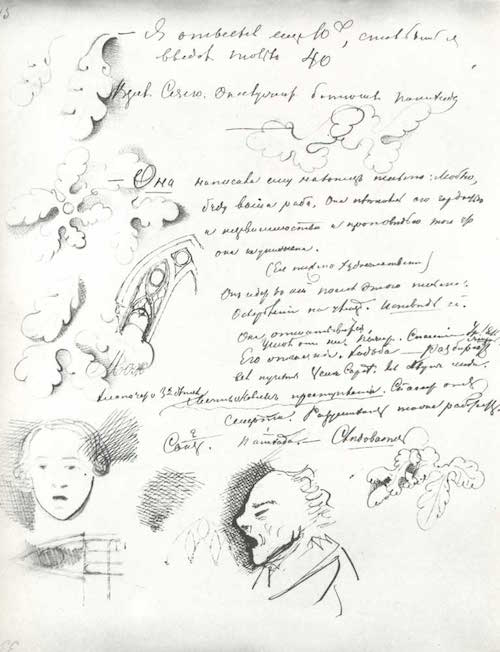
Like many of us, Russian literary great Fyodor Dostoevsky liked to doodle when he was distracted. He left his handiwork in several manuscripts—finely shaded drawings of expressive faces and elaborate architectural features. But Dostoevsky’s doodles were more than just a way to occupy his mind and hands; they were an integral part of his literary method. His novelistic imagination, with all of its grand excesses, was profoundly visual, and architectural.
“Indeed,” writes Dostoevsky scholar Konstantin Barsht, “Dostoevsky was not content to ‘write’ and ‘take notes’ in the process of creative thinking.” Instead, in his work “the meaning and significance of words interact reciprocally with other meanings expressed through visual images.” Barsht calls it “a method of work specific to the writer.” We’ve shared a few of those manuscript pages before, including one with a doodle of Shakespeare.
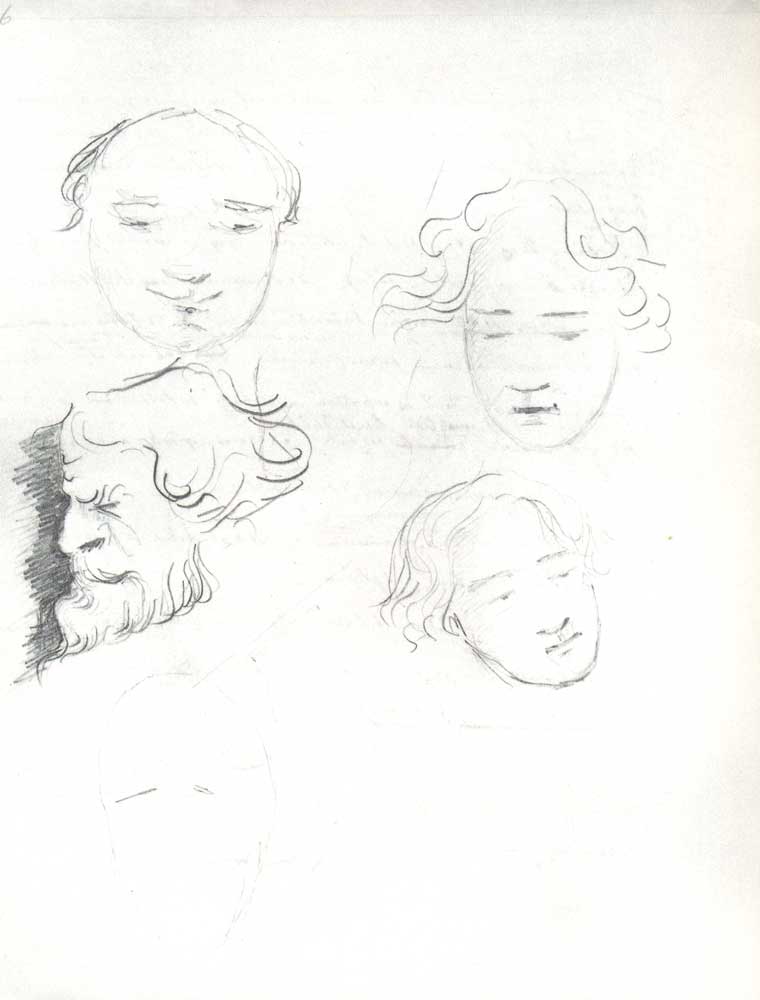
Now we bring you a few more pages of doodles from the author of Crime and Punishment, a novel that, perhaps more so than any of his others, offers such vivid descriptions of its characters that I can still clearly remember the pictures I had of them in my mind the first time I read it in high school.
My visualizations of the angry, desperate student Raskolnikov and the sleazy sociopathic Svidrigailov do not exactly resemble the faces doodled at the the top of the post, but that is how their author saw them, at least in this early, manuscript stage of the novel.
The other faces here may be those of Sonya, police investigator Porfiry Petrovich, recidivist alcoholic father Semyon Marmelodov, and other characters in the novel, though it’s not clear exactly who’s who.
Dostoevsky had much in common with his novel’s protagonist when he began the novel in 1865. Reduced to near-destitution after gambling away his fortune, the writer was also in desperate straits. The story, writes literary critic Joseph Franks, was “originally conceived as a long short story or novella to be written in the first person,” like the feverish novella Notes From the Underground. In Dostoevsky’s manuscript notebooks, “extensive fragments of this original work are to be found here intact.”
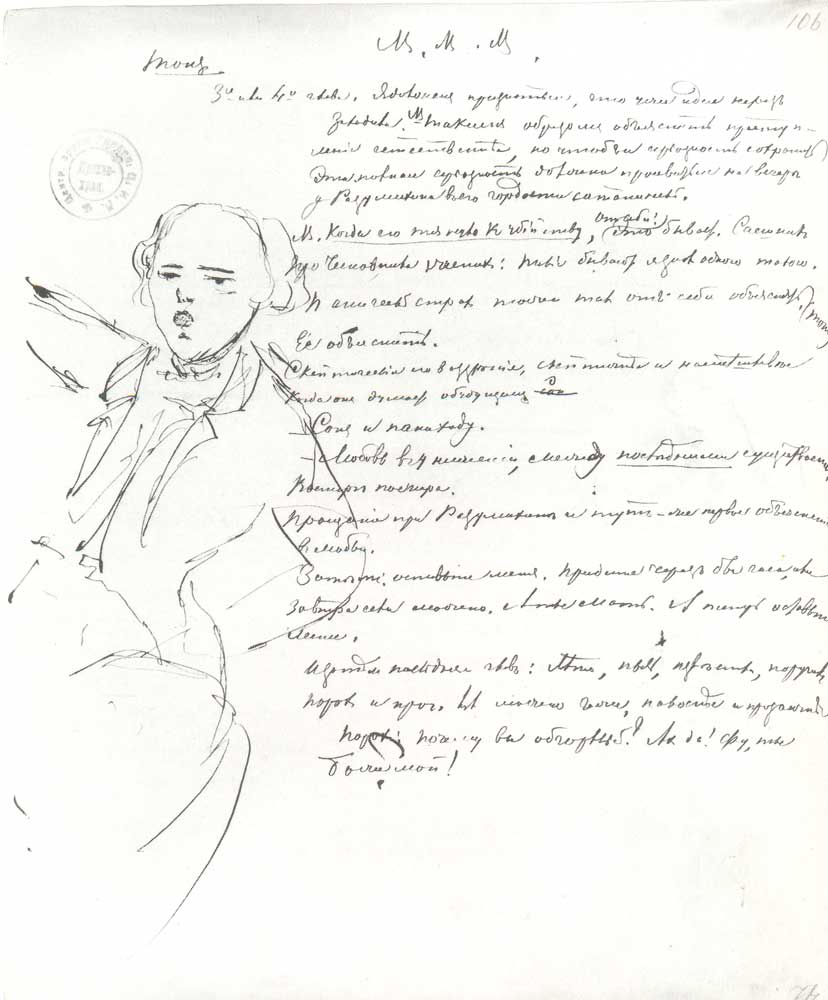
Franks quotes scholar Edward Wasiolek, who published a translation of the notebooks in 1967: “They contain drawings, jottings about practical matters, doodling of various sorts, calculations about pressing expenses, sketches, and random remarks.” In short, “Dostoevsky simply flipped his notebooks open any time he wished to write,” or to practice his calligraphy, as he does on many pages.
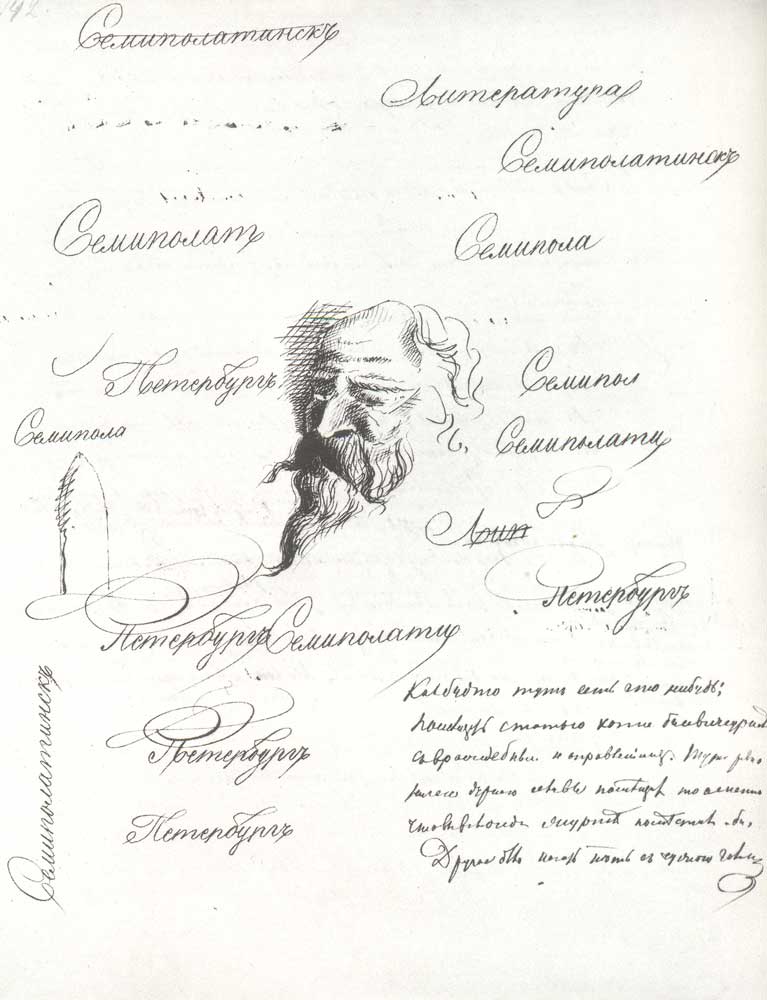
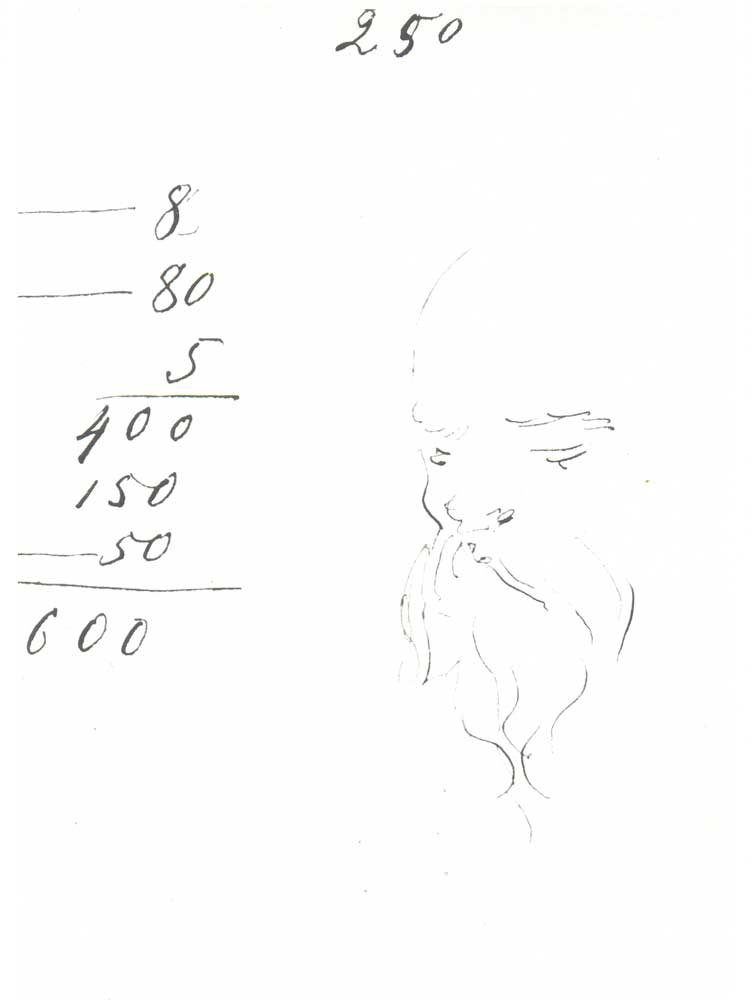
The pages of the Crime and Punishment notebooks resemble all of the manuscript pages of his novels in their ornamental haphazardness. You can see many more examples from novels like The Idiot, The Possessed, and A Raw Youth at the Russian site Culture, including the sketchy self portrait below, next to a few sums that indicate the author’s perpetual preoccupation with his troubled economic affairs.
Related Content:
Fyodor Dostoevsky Draws Elaborate Doodles In His Manuscripts
Dostoevsky Draws a Picture of Shakespeare: A New Discovery in an Old Manuscript
Josh Jones is a writer and musician based in Durham, NC. Follow him at @jdmagness
Read More...The Interior of the Hindenburg Revealed in 1930s Color Photos: Inside the Ill-Fated Airship

We’ve all seen the Hindenburg. Specifically, we’ve all seen it exploding, an incident captured on film on that fateful day of May 6, 1937 — fateful for those aboard, of course, but also fateful for the passenger airship industry, which never recovered from this worst of all possible press. The contemporary rise of Pan American Airlines didn’t help, either, so now, when we want to go to a faraway land, we’ve usually got to take a jet. I happen to be moving to Korea tomorrow, and to get there I simply don’t have the choice of an airship (Hindenburg- class or otherwise) nor have I ever had that choice. I’ve thus never seen the inside of an airship — until today.
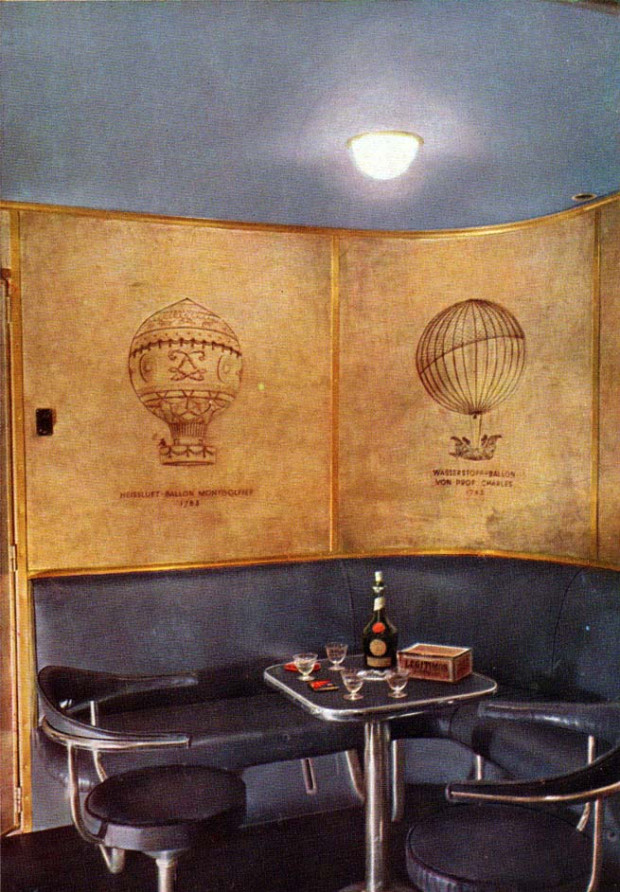
These color images reveal the interior of not just any old 1930s airship but the Hindenburg itself, looking as genteel and well-appointed as you might expect, with accommodations up to and including, somewhere below its hydrogen-filled balloon, a smoking room. It brings to mind Sideshow Bob’s offhand comment on one Simpsons episode lamenting the passage of “the days when aviation was a gentleman’s pursuit, back before every Joe Sweatsock could wedge himself behind a lunch tray and jet off to Raleigh-Durham.” But then, it also brings to mind another episode in which Bart gets a checkbook printed with flipbook-style images of the famous Hindenburg disaster newsreel footage.

That clip, often dubbed with Herbert Morrison’s “Oh, the humanity!” reportorial narration, has familiarized us with the last large passenger airship’s exterior, but these images of its interior have had less exposure. For more, have a look at Airships.net: a Dirigible and Zeppelin History Site, which offers a wealth of detail on the Hindenburg’s passenger decks, control car, flight instrument, flight controls, crew areas, and keel.

The more you learn about airships, the more intriguing a form of travel they seem — until you learn about all the other disasters that preceded the Hindenburg, anyway. And that aside, given its top speed of 84 miles per hour, it would take a similarly retro airship at least seven times longer to get me to Korea than a jet, so I guess I’ll have to stick with the airlines for now.

Related Content:
An Animated History Of Aviation: From da Vinci’s Sketches to Apollo 11
The Miracle of Flight, the Classic Early Animation by Terry Gilliam
Colin Marshall writes elsewhere on cities, language, Asia, and men’s style. He’s at work on a book about Los Angeles, A Los Angeles Primer, the video series The City in Cinema, and the crowdfunded journalism project Where Is the City of the Future? Follow him on Twitter at @colinmarshall or on Facebook.
Read More...Hear the Writing of French Theorists Jacques Derrida, Jean Baudrillard & Roland Barthes Sung by Poet Kenneth Goldsmith

Jacques Derrida, Jean Baudrillard, Roland Barthes… to my freshman ears, the names of these French theorists sounded like passwords to an occult world of strange and forbidding ideas. I started college in the mid-90s, when English departments gleefully claimed poststructuralism as their birthright. Academic campaigns against the fuzzy logic of these thinkers had not yet gathered much steam, though conservative culture warriors were already on the warpath against postmodernism. Very shortly after my introduction to French poststructuralist thought, analytical positivists launched formidable campaigns to banish critical theory to the margins.
The backlash against obscurantist theory made a good case, with public shamings like the “Sokal Hoax” and Philosophy and Literature’s Bad Writing Contest. Such displays made the work of many European philosophers and their adherents seem indeed—as Noam Chomsky said of Derrida, Slavoj Žižek, and Jacques Lacan—like so much vacuous “posturing.” But as potent as these critiques may be, I’ve never cared much for them; they seem to miss the point of more creative kinds of theory, which is not, I think (as philosophy professor Eric Schwitzgebel alleges) “intellectual authoritarianism and cowardice,” but instead an exploratory attempt to expand the rigid boundaries of language and cognition, and to enact the meanderings of discursive thought in prose that captures its “errantry” (to take a term from Martiniquan poet, novelist, and academic Edouard Glissant.)
In any case, the debate was not new at all, but only a later iteration of the old Continental/Analytic divide that has long pitted exponents of Anglophone clarity against the sometimes awkward prose of thinkers like Kant and Hegel. And I happen to think that Kant, Hegel, and, yes, even later Continentals like Derrida—despite the deliberate obscurity of their writing—are interesting thinkers who deserve to be read. They even deserve to be sung, badly, by poets—namely by conceptual poet Kenneth Goldsmith, who is also founding editor of Ubuweb, senior editor of PennSound, and onetime host of a radio show on gloriously weird, free-form radio station WFMU.
With his natty sense of style and serious appreciation for absurdity, Goldsmith has sung to listeners the work of Walter Benjamin, Ludwig Wittgenstein, and Sigmund Freud; he has given us an avant-garde musical rendition of Harry Potter; and he has turned selections of Theodor Adorno’s grim Minima Moralia into 80s hardcore punk. Now, we bring you more of Goldsmith’s musical interventions: his goofball singing of Derrida over an icy minimalist composition by Anton Webern (top); of Baudrillard over a lounge-pop instrumental by Francis Lai (middle); and of Roland Barthes over the Allman Brothers (above).
As an added bonus, if you can call it that, hear Goldsmith warble Marxist theorist Frederic Jameson over Coltrane, just above. Do these ridiculous musical exercises make these thinkers any easier to digest? I doubt it. But they do seem to say to the many haters of critical theory and postmodern French philosophy, “hey, lighten up, will ya?”
Related Content:
Noam Chomsky Slams Žižek and Lacan: Empty ‘Posturing’
John Searle on Foucault and the Obscurantism in French Philosophy
30 Minutes of Harry Potter Sung in an Avant-Garde Fashion by UbuWeb’s Kenneth Goldsmith
Theodor Adorno’s Critical Theory Text Minima Moralia Sung as Hardcore Punk Songs
Josh Jones is a writer and musician based in Durham, NC. Follow him at @jdmagness
Read More...An Animated Kurt Vonnegut Visits NYU, Riffs, Rambles, and Blows the Kids’ Minds (1970)
Kurt Vonnegut never graduated from college, but that didn’t stop him from visiting college classrooms, or from giving commencement speeches (nine of which were published last year in a volume called If This Isn’t Nice, What Is?: Advice to the Young). If you’ve experienced a Vonnegut speech, you know he had a tendency to riff and ramble. But he also entertained and educated. Above, the latest video from Blank on Blank captures the essence of a Vonnegut classroom visit, animating a talk the author gave to a class at NYU on November 8, 1970. Topics include: the paranoia that goes into writing and the exhaustion it brings about, his childhood in Indiana, the death of his parents, and his odd concept for a new short story called “The Big Space Fuc%,” which features a warhead filled with sperm. It leaves the kids a little stunned.
The full talk originally aired on WBAI 99.5 FM New York and now resides in the Pacifica Radio Archives. You can listen to the full, unedited tape below.
Looking for free, professionally-read audio books from Audible.com? For example, John Malkovich reading Breakfast of Champions? Or James Franco reading Slaughterhouse-Five? Here’s a great, no-strings-attached deal. If you start a 30 day free trial with Audible.com, you can download two free audio books of your choice. Get more details on the offer here.
Related Content:
Kurt Vonnegut Diagrams the Shape of All Stories in a Master’s Thesis Rejected by U. Chicago
Hear Kurt Vonnegut Read Slaughterhouse-Five,Cat’s Cradle & Other Novels
Kurt Vonnegut Creates a Report Card for His Novels, Ranking Them From A+ to D
Read More...The Emily Bronte Sand Sculpture

Creative commons image by Tim Green on Flickr Commons
In the town of Bradford, near Leeds in the UK, they’ve imported more than 30 tons of sand to build nine sand sculptures across the city, as part of what’s called the Discovering Bradford project. Above, you can see one that caught our eye, thanks to the Vintage Anchor twitter stream. It’s a life-size sand sculpture of Emily Brontë, created by Jamie Wardley, an artist who belongs to the collective, Sand in Your Eye. Brontë was born in Thornton, a short hop, skip and a jump away from Bradford. For more culturally-inspired sand creations, see the Relateds below.
via Vintage Anchor/Keighley News
Related Content
Lewis Carroll’s Classic Story, Alice’s Adventures in Wonderland, Told in Sand Animation
Read More...Two Guitar Effects That Revolutionized Rock: The Invention of the Wah-Wah & Fuzz Pedals
In the late 50s, a fearful, racist backlash against rock and roll, coupled with money-grubbing corporate payola, pushed out the blues and R&B that drove rock’s sound. In its place came easy listening orchestration more palatable to conservative white audiences. As sexy electric guitars gave way to string and horn sections, the comparatively aggressive sound of rock and roll seemed so much a passing fad that Decca’s senior A&R man rejected the Beatles’ demo in 1962, telling Brian Epstein, “guitar groups are on their way out.”
But it wasn’t only the blues, R&B, and doo wop revivalism of British Invasion bands that saved the American art form. It was also the often unintentional influence of audio engineers who—with their incessant tinkering and a number of happy accidents—created new sounds that defined the countercultural rock and roll of the 60s and 70s. Ironically, the two technical developments that most characterized those decades’ rock guitar sounds—the wah-wah and fuzz pedals—were originally marketed as ways to imitate strings, horns, and other non-rock and roll instruments.
As you’ll learn in the documentary above, Cry Baby: The Pedal that Rocks the World, the wah-wah pedal, with its “waka-waka” sound so familiar from “Shaft” and 70s porn soundtracks, officially came into being in 1967, when the Thomas Organ company released the first incarnation of the effect. But before it acquired the brand name “Cry Baby” (still the name of the wah-wah pedal manufactured by Jim Dunlop), it went by the name “Clyde McCoy,” a backward-looking bit of branding that attempted to market the effect through nostalgia for pre-rock and roll music. Clyde McCoy was a jazz trumpet player known for his “wah-wah” muting technique on songs like “Sugar Blues” in the 20s, and the pedal was thought to mimic McCoy’s jazz-age effects. (McCoy himself had nothing to do with the marketing.)
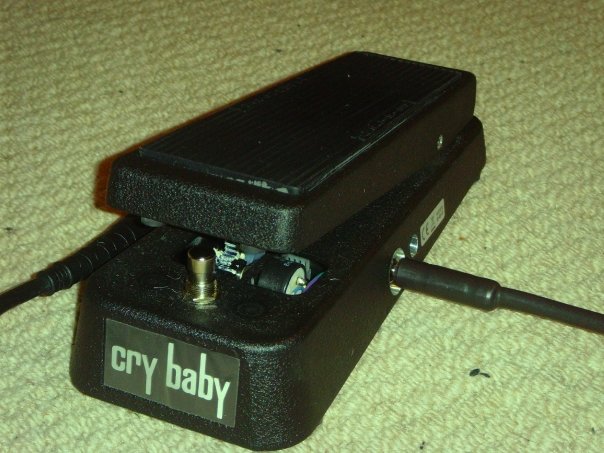
Nonetheless the development of the wah-wah pedal came right out of the most current sixties’ technology made for the most current of acts, the Beatles. Increasingly drowned out by screaming crowds in larger and larger venues, the band required louder and louder amplifiers, and British amp company Vox obliged, creating the 100-watt “Super Beatle” amp in 1964 for their first U.S. tour. As Priceonomics details, when Thomas Organ scored a contract to manufacture the amps stateside, a young engineer named Brad Plunkett was given the task of learning how to make them for less. While experimenting with the smooth dial of a rotary potentiometer in place of an expensive switch, he discovered the wah-wah effect, then had the bright idea to combine the dial—which swept a resonant peak across the upper mid-range frequency—with the foot pedal of an organ.
The rest, as the cliché goes, is history—a fascinating history at that, one that leads from Elvis Presley studio guitarist Del Casher, to Frank Zappa, Clapton and Hendrix, and to dozens of 70s funk guitarists and beyond.
Art Thompson, editor of Guitar Player Magazine, notes in the star-studded Cry Baby documentary that prior to the invention of the wah-wah pedal, guitarists had a limited range of effects—tape delay, tremolo, spring reverb, and fuzz. Only one of these effects, however, was then available in pedal form, and that pedal, Gibson’s Maestro Fuzz-Tone, would also revolutionize the sound of sixties rock. But as you can hear in the short 1962 demonstration record above for the Maestro Fuzz-Tone, the fuzz effect was also marketed as a way of simulating other instruments: “Organ-like tones, mellow woodwinds, and whispering reeds,” says the announcer, “booming brass, and bell-clear horns.”
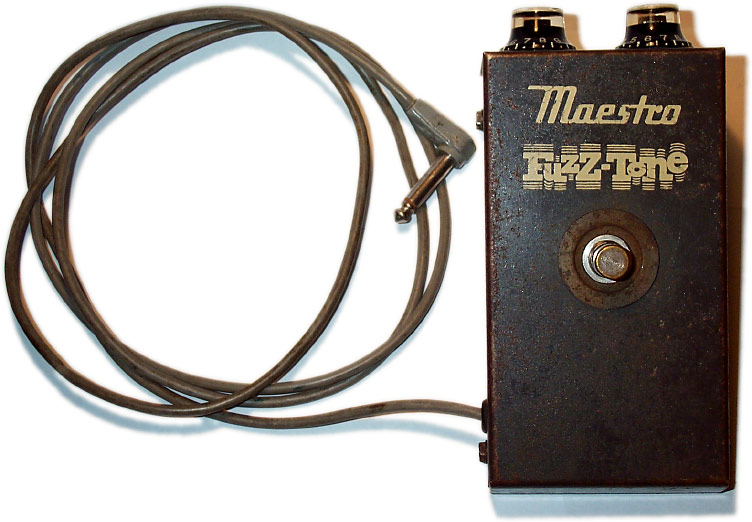
In fact, Keith Richards, in the Stones’ “(I Can’t Get No) Satisfaction”—the song credited with introducing the Maestro’s sound to rock and roll in 1965—originally recorded his fuzzed-out guitar part as a placeholder for a horn section. “But we didn’t have any horns,” he wrote in his autobiography, Life; “the fuzz tone had never been heard before anywhere, and that’s the sound that caught everybody’s attention.”
The assertion isn’t strictly true. While “Satisfaction” brought fuzz to the forefront, the effect first appeared, by accident, in 1961, with “a faulty connection in a mixing board,” writes William Weir in a history of fuzz for The Atlantic. Fuzz, “a term of art… came to define the sound of rock guitar,” but it first appeared in “the bass solo of country singer Marty Robbins on ‘Don’t Worry,’” an “otherwise sweet and mostly acoustic tune.” At the time, engineers argued over whether to leave the mistaken distortion in the mix. Luckily, they opted to keep it, and listeners loved it. When Nancy Sinatra asked engineer Glen Snoddy to replicate the sound, he recreated it in the form of the Maestro.
Guitarists had experimented deliberately with similar distortion effects since the very beginnings of rock and roll, cutting through their amp’s speakers—like Link Wray in his menacing classic instrumental “Rumble”—or pushing small, tube-powered amplifiers past their limits. But none of these experiments, nor the pedals that later emulated them, sound like the fuzz pedal, which achieves its buzzing effect by severely clipping the guitar’s signal. Later iterations from other manufacturers—the Tone Bender, Big Muff, and Fuzz Face—have acquired their own cache, in large part because of Jimi Hendrix’s heavy use of various fuzz pedals throughout his career. “Like the shop talk of wine enthusiasts,” writes Weir, “discussions among distortion cognoscenti on nuances of tone can baffle outsiders.”
Indeed. Those early experiments with effects pedals now fetch upwards of several thousand dollars on the vintage market. And a recent boom in boutique pedals has sent prices for handcrafted replicas of those original models—along with several innovative new designs—into the hundreds of dollars for a single pedal. (One handmade overdrive, the Klon Centaur, has become the most imitated of modern pedals; originals can go for up to two thousand dollars.) The specialization of effects pedal technology, and the hefty pricing for vintage and contemporary effects alike, can be daunting for beginning guitarists who want to sound like their favorite players. But what early players and engineers figured out still holds true—musical innovation is all about creating original sounds by experimenting with whatever you have at hand.
Cry Baby: The Pedal that Rocks the World has been added to our list of Free Documentaries, a subset of our collection 4,000+ Free Movies Online: Great Classics, Indies, Noir, Westerns, Documentaries & More
via Priceonomics
Related Content:
The “Amen Break”: The Most Famous 6‑Second Drum Loop & How It Spawned a Sampling Revolution
All Hail the Beat: How the 1980 Roland TR-808 Drum Machine Changed Pop Music
A Brief History of Sampling: From the Beatles to the Beastie Boys
Josh Jones is a writer and musician based in Durham, NC. Follow him at @jdmagness
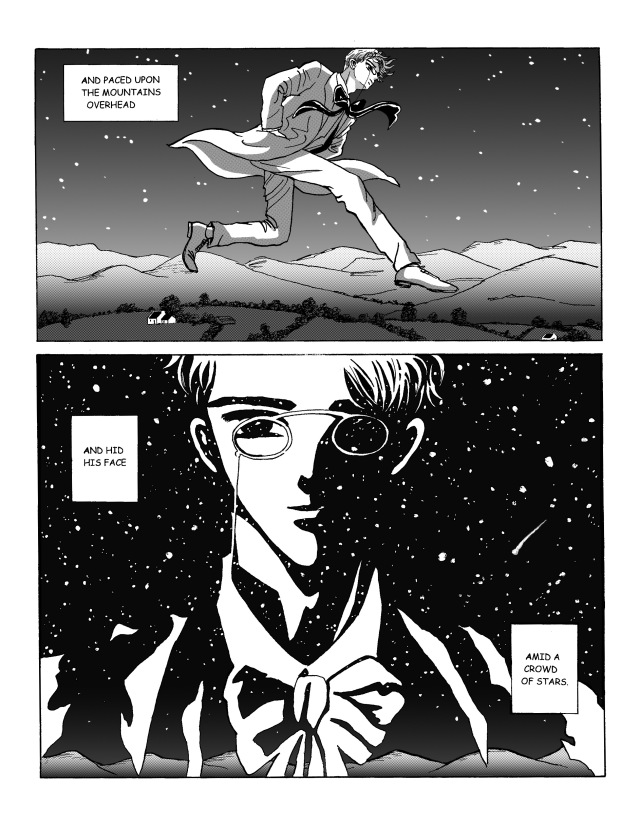
Read More...W.B. Yeats’ Poem “When You Are Old” Adapted into a Japanese Manga Comic
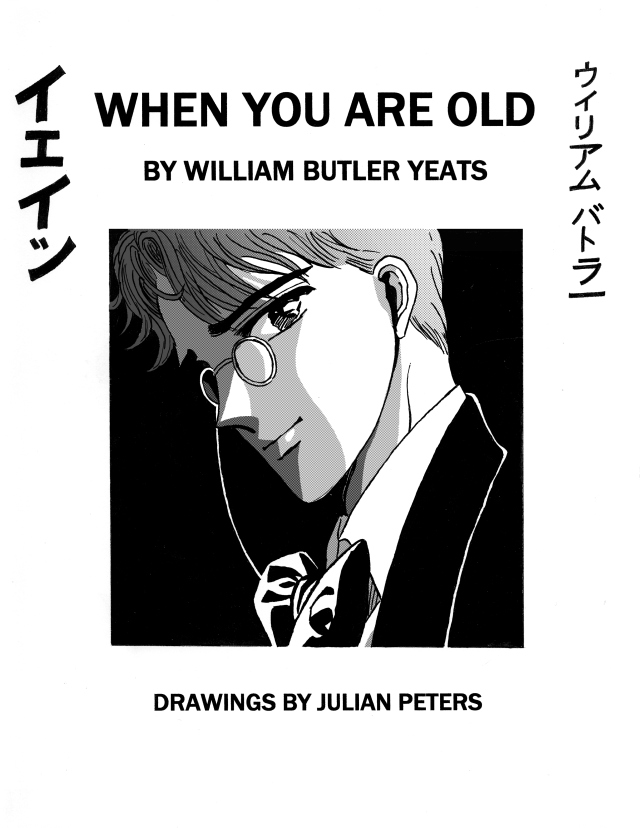
Click on images to view them in a larger format.
Last week we featured Julian Peters’ comic-book adaptation of T.S. Eliot’s “The Love Song of J. Alfred Prufrock.” That might seem like an ambitious enough classic-literature-to-comics adaptation for any artist’s career, but the Montreal-based art history grad student Peters has put himself on a larger mission. If you take a look at his site, you’ll find that he’s also adapted poems by “Italy’s foremost poet of the First World War” Giuseppe Ungaretti, Seamus Heaney’s 1969 poem “The Given Note,” and John Philip Johnson’s “Stairs Appear in a Hole Outside of Town.”
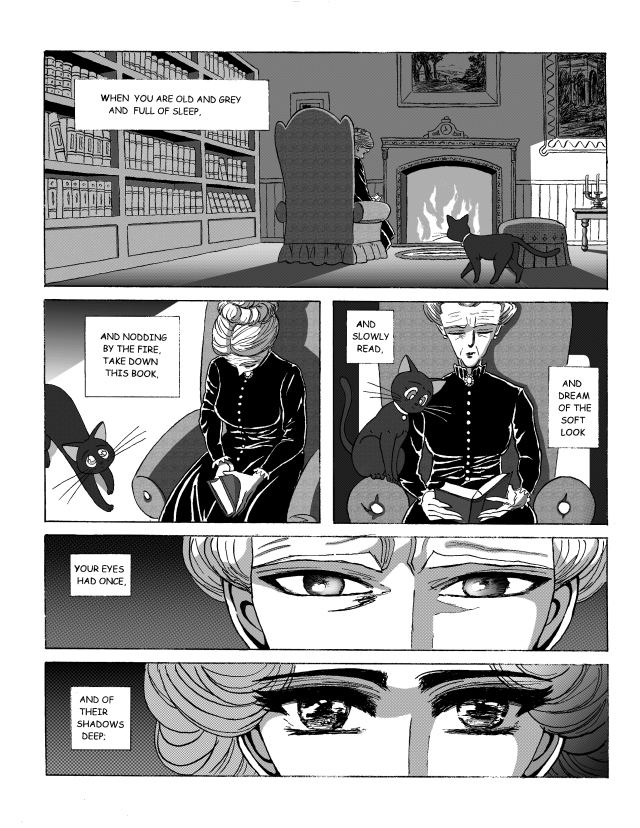
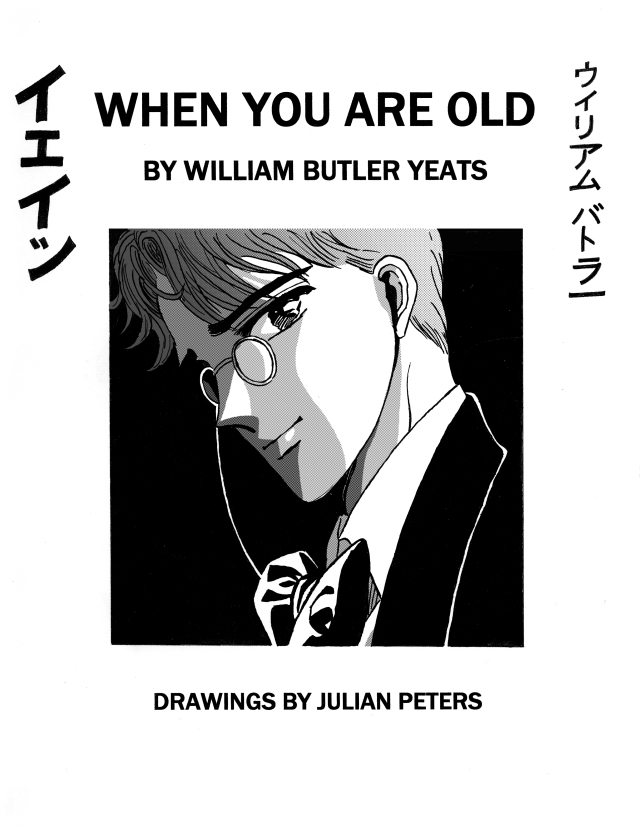
You see here the versatile Peters’ visual interpretation of W.B. Yeats’ “When You Are Old,” a natural choice given his apparent poetic interests, but one drawn in the style of Japanese manga. In adapting Yeats’ words to a lady in the twilight of life, Peters has paid specific tribute to the work of Clamp, Japan’s famous all-female comic-artist collective known for series like RG Veda, Tokyo Babylon, and X/1999.
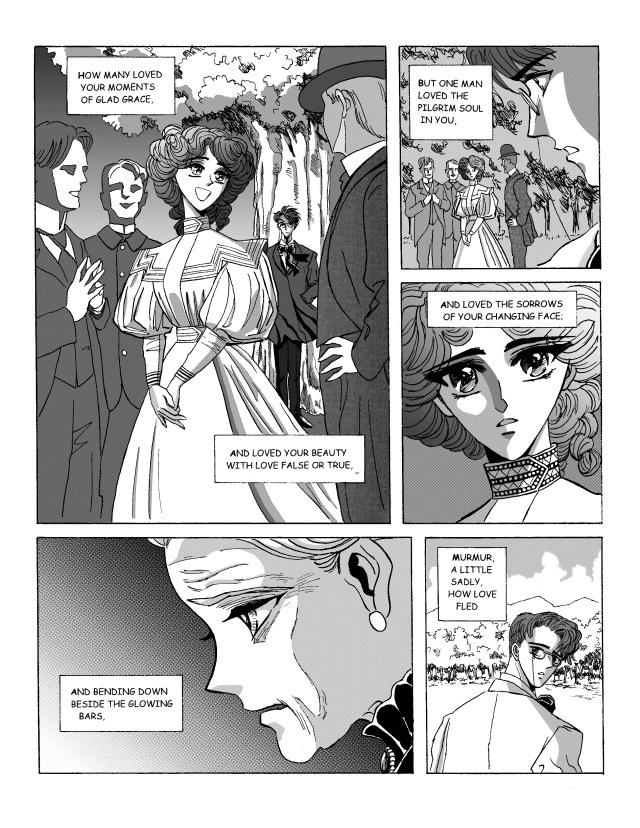
Clamp fans will find that, in three brief pages, Peters touches on quite a few of the aesthetic tropes that have long characterized the collective’s work. (You’ll want to click through to Peters’ own “When You Are Old” page to see an extra illustration that also fits well into the Clamp sensibility.) Yeats fans will no doubt appreciate the chance to see the poet’s work in an entirely new way. I, for one, had never before pictured a cat on the lap of the woman “old and grey and full of sleep” reflecting on the “moments of glad grace” of her youth and the one man who loved her “pilgrim soul,” but now I always will — and I imagine both Yeats and Clamp would approve of that. You can read and hear Yeats’ 1892 poem here. If you click on the images on this page, you can view them in a larger format.
Related Content:
Read the Entire Comic Book Adaptation of T.S. Eliot’s “The Love Song of J. Alfred Prufrock”
Rare 1930s Audio: W.B. Yeats Reads Four of His Poems
Japanese Cartoons from the 1920s and 30s Reveal the Stylistic Roots of Anime
Colin Marshall writes elsewhere on cities, language, Asia, and men’s style. He’s at work on a book about Los Angeles, A Los Angeles Primer, the video series The City in Cinema, and the crowdfunded journalism project Where Is the City of the Future? Follow him on Twitter at @colinmarshall or on Facebook.
Read More...Support Us
We're hoping to rely on loyal readers, rather than erratic ads. Please click the Donate button and support Open Culture. You can use Paypal, Venmo, Patreon, even Crypto! We thank you!

About Us

Open Culture scours the web for the best educational media. We find the free courses and audio books you need, the language lessons & educational videos you want, and plenty of enlightenment in between.
Advertise With Us

FREE UPDATES!
GET OUR DAILY EMAIL
Get the best cultural and educational resources on the web curated for you in a daily email. We never spam. Unsubscribe at any time.
FOLLOW ON SOCIAL MEDIA

Open Culture editor Dan Colman scours the web for the best educational media. He finds the free courses and audio books you need, the language lessons & movies you want, and plenty of enlightenment in between.
Advertise With Us