Are You a Psychopath? Take the Test (And, If You Fail, It’s Not All Bad News)
We’ve all heard the old philosophical scenario known as the trolley problem: as the runaway vehicle of the name careens out of control toward the edge of a cliff, you must choose whether to pull the lever to switch it to another track. The catch: while the trolley would then no longer plunge off that cliff, bringing about the certain deaths of the five people aboard, it would instead kill someone standing on the other track, who will survive if you don’t pull the lever. In a more fraught version of the problem, you must choose not whether to pull a lever, but whether to shove a person of considerable bulk onto the (single) track, stopping the trolley but killing the bulky individual.
In the Big Think video above, Oxford psychologist Kevin Dutton, author of The Wisdom of Psychopaths: What Saints, Spies, and Serial Killers Can Teach Us About Success, uses the trolley problem to illuminate the condition of psychopathy. While non-psychopaths may dither about the first version of the scenario, they eventually come to the conclusion that they prefer one death to five. They have much more of a struggle with the second version, which requires them to actually push the lone stranger to head off those five deaths. Psychopaths, by contrast, experience no such difficulty: the trolley problem, for them, hardly amounts to a problem at all, and Dutton explains, neuroscientifically, why: “Imagine that I were to hook you up to a brain scanner and present you with those two dilemmas. I would see the emotion center of your brain, your amygdala and related brain circuits, the medial orbital frontal cortex for example, light up like a pinball machine.”
And if he’d scanned a psychopath? “Precisely nothing.” All this assumes, of course, that you do not yourself suffer from psychopathy. If you don’t know whether you do, Dutton offers a handy multiple-choice “psychopath challenge” on his site that can give you an idea of the direction your brain may lean. If you’ve got a touch of the old psychopathy, don’t lock yourself away; as Dutton explains in this Time interview, “you don’t need to be violent,” and you can even attain greater success in certain fields than non-psychopathics — especially if you consider vigilantly and unhesitatingly minimizing the death tolls at diverted cliffside trolley tracks a field.
Related Content:
This is Your Brain on Sex and Religion: Experiments in Neuroscience
What Happens When Your Brain is on Alfred Hitchcock: The Neuroscience of Film
The Dalai Lama on the Neuroscience of Compassion
Free Online Psychology Courses
How To Think Like a Psychologist: A Free Online Course from Stanford
Colin Marshall hosts and produces Notebook on Cities and Culture and writes essays on cities, language, Asia, and men’s style. He’s at work on a book about Los Angeles, A Los Angeles Primer. Follow him on Twitter at @colinmarshall or on Facebook.
Read More...Lynda Barry, Cartoonist Turned Professor, Gives Her Old Fashioned Take on the Future of Education
With college tuitions ballooning to the point of implosion, and free educational content proliferating online, the future of education is a scorching hot topic.
So where are we heading?
Coursera and Khan Academy? Video game-based curricula? Experience-driven microlearning?
Or school buildings that moonlight as candy?
So suggested one of the younger participants in a workshop led by the University of Wisconsin’s Assistant Professor of Interdisciplinary Creativity, cartoonist and author Lynda Barry (aka Professor Long-Title).
Barry’s messianic embrace of the arts has proved popular with students of all ages. When the university’s Counterfactual Drawing Board Project invited faculty, staff, and others to consider what the “appearance, purpose, atmosphere and community of the campus” would be like in 100 years time, Barry deliberately widened the pool to include children.
Yes, their innovations tended toward volcano schools that erupt at dismissal, but presumably some of those same children will be in the vanguard when it’s time for initiatives that seem unimaginable now to be implemented. Rome wasn’t built in a day, and all that.
Or as one gimlet-eyed youth put it, in a hundred years “the teachers will all be dead.”
No wonder few adult participants can see past a button-driven, hermetically sealed, digital future wherein every student has a chip implanted in his or her head.
Barry, no stranger to depression, manages to laugh such gloomy forecasts off, despite what they portend for the tactile, handmade ephemera she reveres. A sense of humor—and humanity—is at the core of every educational reform she practices.
Rather than rip each other’s writing to shreds during in-class critiques, her students call each other by outlandish pseudonyms and draw meditative spirals as each others’ work is read aloud. Every reader is assured of a hearty “good!” from the teacher. She wants them to keep going, you see.
Surely there are institutions where this approach might not fly, but why poo-poo it? Isn’t fueling the creative spirit a practical investment in the future?
“It’s there in everybody,” Barry believes. “You have to give people an experience of it, a repeated experience of it that they generate themselves.”
Maybe someday, some kid who hasn’t had the love of learning squelched out of him or her will apply all that creativity toward curing cancer. That’d be great, huh? At worst, that carefully tended spark can give solace in the dark days ahead. As fans of Barry’s work well know, art exists to carry us through times of “sorrow and grief and trouble.”
Related Content:
Cartoonist Lynda Barry Reveals the Best Way to Memorize Poetry
Join Cartoonist Lynda Barry for a University-Level Course on Doodling and Neuroscience
Read More...Google Makes Available 750 Icons for Designers & Developers: All Open Source

If you’re a designer or developer, Kottke.org thought you’d might like to know: “As part of their Material Design visual language, Google has open-sourced a package of 750 icons. More info here.”
Over at Github, you can view a live preview of the icons or download the icon pack now.
Our friends at BoingBoing add, “They’re licensed CC-BY-SA and designed for use in mobile apps and other interactive stuff.” Use them well.
Read More...
Steven Pinker Identifies 10 Breakable Grammatical Rules: “Who” Vs. “Whom,” Dangling Modifiers & More
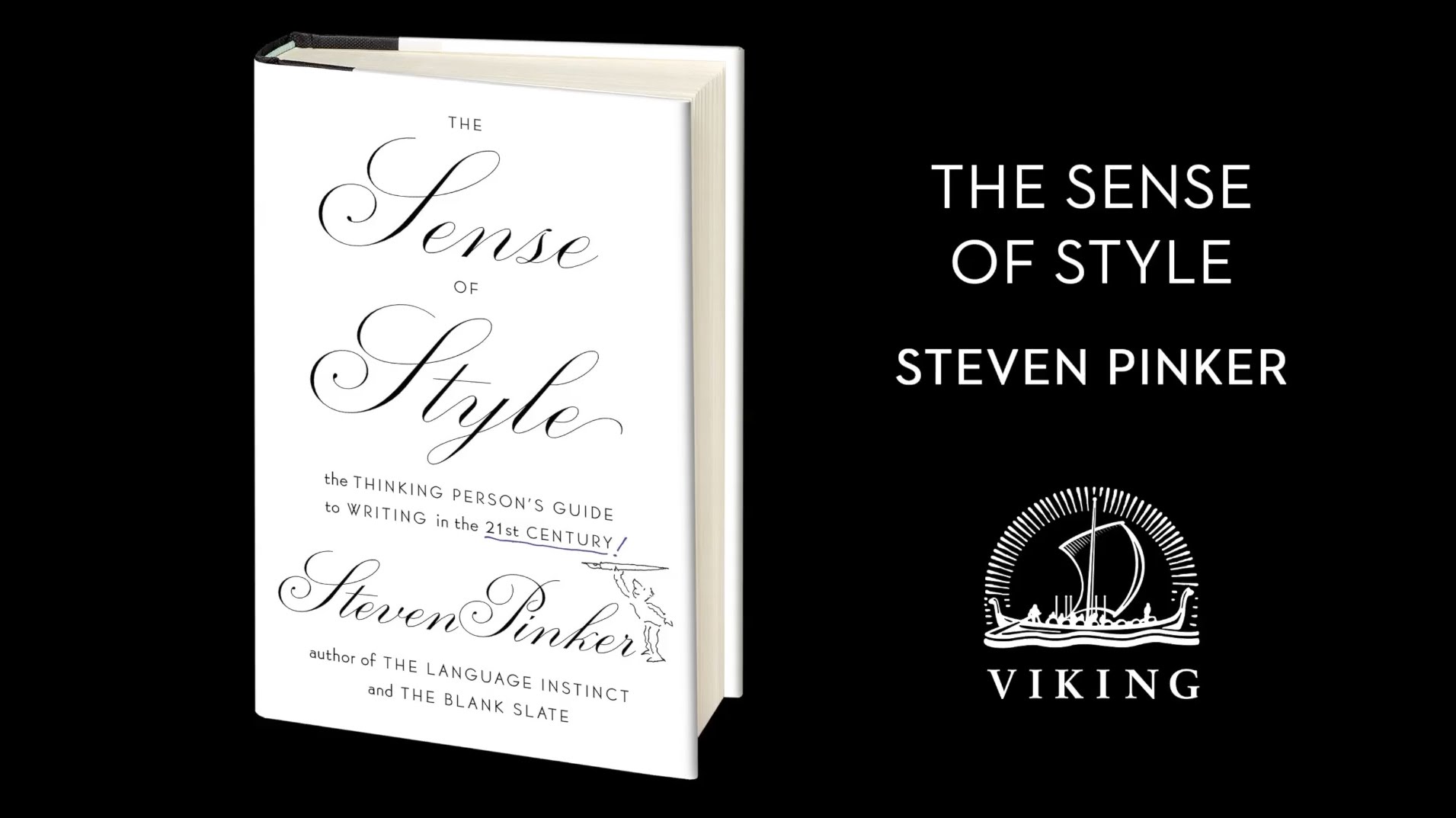
We’ve previously featured Harvard cognitive scientist Steven Pinker discussing writing at a Harvard conference on the subject. In that case, the focus was narrowly on academic writing, which, he has uncontroversially claimed, “stinks.” Now—“not content with just poaching” in the land of the scribes, writes Charles McGrath at The New York Times Sunday Book Review—Pinker has dared to “set himself up as a gamekeeper” with a new book—The Sense of Style: The Thinking Person’s Guide to Writing in the 21st Century. The grandiose title suggests to McGrath that the scientist intends to supplant that most venerable, and most dated, classic writer’s text by Strunk and White. He’s gone from chiding his fellow scholars to writing prescriptions for us all.
But if this seems out of bounds, wait until you hear what he suggests. Instead of issuing even more seemingly arbitrary, burdensome commands, Pinker aims to free us from the tyranny of the senseless in grammar—or, as he calls it in an article at The Guardian, from “folklore and superstition.” Below are five of the ten “common issues of grammar” Pinker selects “from those that repeatedly turn up in style guides, pet-peeve lists, newspaper language columns and irate letters to the editor.” In each case, he explains the absurdity of strict adherence and offers several perfectly reasonable exceptions that require no correction to clarify their meaning.
- Beginning sentences with conjunctions
We have almost certainly all been taught in some fashion or another that this is a no-no. “That’s because teachers need a simple way” to teach children “how to break sentences.” The “rule,” Pinker says, is “misinformation” and “inappropriate for adults.” He cites only two examples here, both using the conjunction “because”: Johnny Cash’s “Because you’re mine, I walk the line,” and the stock parental non-answer, “Because I said so.” And yet (see what I did?), other conjunctions, like “and,” “but,” “yet,” and “so” may also “be used to begin a sentence whenever the clauses being connected are too long or complicated to fit comfortably into a single megasentence.”
- Dangling modifiers
Having taught English composition for several years, and thus having read several hundred scrambled student essays, I find this one difficult to concede. The dangling modifier—an especially easy error to make when writing quickly—too easily creates confusion or downright unintelligibility. Pinker does admit since the subjects of dangling modifiers “are inherently ambiguous,” they might sometimes “inadvertently attract a reader to the wrong choice, as in ‘When a small boy, a girl is of little interest.’” But, he says, this is not a grammatical error. Here are a few “danglers” he suggests as “perfectly acceptable”:
“Checking into the hotel, it was nice to see a few of my old classmates in the lobby.”
“Turning the corner, the view was quite different.”
“In order to contain the epidemic, the area was sealed off.”
- Who and Whom
I once had a student ask me if “whom” was an archaic affectation that would make her writing sound forced and unnatural. I had to admit she had an excellent point, no matter what our overpriced textbook said. In most cases, even if correctly used, whom can indeed sound “formal verging on pompous.” Though they seem straightforward enough, “the rules for its proper use,” writes Pinker, “are obscure to many speakers, tempting them to drop ‘whom’ into their speech whenever they want to sound posh,” and to generally use the word incorrectly. Despite “a century of nagging by prescriptive grammarians,” the distinction between “who” and “whom” seems anything but simple, and so one’s use of it—as with any tricky word or usage—should be carefully calibrated “to the complexity of the construction and the degree of formality” the writing calls for. Put plainly, know how you’re using “whom” and why, or stick with the unobjectionable “who.”
- Very unique
Oftentimes we find the most innocuous-sounding, common sense usages called out by uptight pedants as ungrammatical when there’s no seeming reason why they should be. The phrase “very unique,” a description that may not strike you as excessively weird or backward, happens to be “one of the commonest insults to the sensibility of the purist.” This is because, such narrow thinkers claim, as with other categorical expressions like “absolute” or “incomparable,” something either is or it isn’t, in the same way that one either is or isn’t pregnant: “referring to degrees of uniqueness is meaningless,” says the logic, in the case of absolute adjectives. Of course, it seems to me that one can absolutely refer to degrees of pregnancy. In any case, writes Pinker, “uniqueness is not like pregnancy […]; it must be defined relative to some scale of measurement.” Hence, “very unique,” makes sense, he says. But you should avoid it on aesthetic grounds. “’Very,’” he says, “is a soggy modifier in the best of circumstances.” How about “rather unique?” Too posh-sounding?
- That and which
I breathed an audible sigh on encountering this one, because it’s a rule I find particularly irksome. Of note is that Pinker, an American, is writing in The Guardian, a British publication, where things are much more relaxed for these two relative pronouns. In U.S. usage, “which” is reserved for nonrestrictive—or optional clauses: “The pair of shoes, which cost five thousand dollars, was hideous.” For restrictive clauses, those “essential to the meaning of the sentence,” we use “that.” Pinker takes the example of a sentence in a documentary on “Imelda Marcos’s vast shoe collection.” In such a case, of course, we would need that bit about the price; hence, “The pair of shoes that cost £5,000 was hideous.”
It’s a reasonable enough distinction, and “one part of the rule,” Pinker says, “is correct.” We would rarely find someone writing “The pair of shoes, that cost £5,000…” after all. It probably looks awkward to our eyes (though I’ve seen it often enough). But there’s simply no good reason, he says, why we can’t use “which” freely, as the Brits already do, to refer to things both essential and non-. “Great writers have been using it for centuries,” Pinker points out, citing whoever (or “whomever”) translated that “render unto Caesar” bit in the King James Bible and Franklin Roosevelt’s “a day which will live in infamy.” QED, I’d say. And anyway, “which” is so much lovelier a word than “that.”
See Pinker’s Guardian piece for his other five anti-rules and free yourself up to write in a more natural, less stilted way. That is, if you already have some mastery of basic English. As Pinker rightly observes, “anyone who has read an inept student paper [um-hm], a bad Google translation, or an interview with George W. Bush can appreciate that standards of usage are desirable in many areas of communication.” How do we know when a rule is useful and when it impedes “clear and graceful prose?” It’s really no mystery, Pinker says. “Look it up.” It sounds like his book might help put things into better perspective than most writing guides, however. You can also hear him discuss his accessible and intuitive writing advice in the KQED interview with Michael Krasny above.
Related Content:
Steven Pinker Explains the Neuroscience of Swearing (NSFW)
Steven Pinker: “Dear Humanists, Science is Not Your Enemy”
Josh Jones is a writer and musician based in Durham, NC. Follow him at @jdmagness
Read More...The Electric Rise and Fall of Nikola Tesla: As Told by Technoillusionist Marco Tempest
A couple of years back, Marco Tempest, a technoillusionist from Switzerland, retold the life story of inventor Nikola Tesla using the principles of Tanagra theater, a form of theater popular in Europe nearly a century ago. A good description of this forgotten form of theatre is surprisingly hard to come by. Perhaps the best I encountered comes from this academic web site:
Tanagra Theatres existed in many European cities in the years 1910–1920. The name comes from the figures excavated at Tanagra in the 1890s whose name became synonymous with perfect living miniatures, particularly female. The sideshow illusion consisted of a miniature stage where living actors appeared as real but tiny figures, through an arrangement of plain and concave mirrors. Its development as a sideshow attraction came about as a by-product of research into optical instruments which could better sustain the perception of depth. The use of concave mirrors has a long history in magic but for the Tanagra the stronger light of electricity was essential.
In his presentation, Tempest takes the concepts of Tanagra to a whole new level, combining projection mapping and intricate pop-up art. As you watch the show, you might find yourself intrigued as much by the method as by the story itself. If that’s the case, you will want to watch the “behind-the-scenes” video below. Tempest also gave his presentation at TED. You can watch it here.
Related Content:
Thomas Edison and Nikola Tesla Face Off in “Epic Rap Battles of History”
Electric Photo of Nikola Tesla, 1899
Free Comic Books Turns Kids Onto Physics: Start With the Adventures of Nikola Tesla
Read More...Kevin Spacey Is the Rainforest, Julia Roberts is Mother Nature: Actors Play Nature in Environmental Shorts
When Hollywood’s formidable promotional wing discovered it could announce a movie by not just telling you a big star is in it, but that a big star is it, they had a decades-long field day with the idea that continues, tiresomely, to the present moment. Right now, many of the billboards up around Los Angeles insist upon telling me that “Keanu Reaves is John Wick,” but give it a few weeks and they’ll tell us someone else we know is someone else we don’t (unless, of course, we buy a ticket). Conservation International has taken this marketing trope and spun it into a series of shorts featuring “A‑list” actors, the most famous of the famous, playing the earthly entities with which we should, perhaps, have more familiarity than we do. At the top of the post, Kevin Spacey is the rainforest. Just below, Julia Roberts is Mother Nature. At the bottom, Harrison Ford is the ocean.
“I’m most of this planet,” Ford-as-ocean intones with his signature (and increasingly gruff) gruffness. “I shaped it. Every stream, every cloud, and every raindrop — it all comes back to me.” But as Mother Nature, Roberts makes impressive claims of her own: “I’ve been here for over four and a half billion years — 22,500 times longer than you. I don’t really need people, but people need me.” Not to be outdone, Kevin Spacey’s ever-giving rainforest issues a challenge to us all: “Humans, they’re so smart. So smart. Such big brains and opposable thumbs. They know how to make things — amazing things. Now why would they need an old forest like me anymore? Well, they do breathe air, and I make air. Have they thought about that?”
You can watch the entire series of films, entitled “Nature is Speaking,” on a single Youtube playlist. The rest of the lineup includes Edward Norton as the soil, Penelope Cruz as water (o, hablando en español, como Agua), and Robert Redford as, suitably, the redwood. (You can also see clips from behind the scenes featuring Norton and Ford assuming their elemental roles in the recording studio.) They all combine this considerable amount of vocal star power with equally striking footage of the part of the environment from whom we hear, and sometimes of its destruction. They carry one overall message, which Conversation International has unshyly spelled out: “Nature doesn’t need people. People need nature.” Still, it comes off less heavy-handed than most of the environmental messages I remember from the films of my 1990s youth. If, for the next series, they get Reeves on board (speaking of pieces of my 90s youth), can they find a suitably laid-back element to pair him with? For more information on the campaign, please visit the Nature is Speaking site.
Related Content:
Environment & Natural Resources: Free Online Courses
E.O. Wilson’s Life on Earth Released as a Free eBook and Free Course on iTunes
Harvard Thinks Green: Big Ideas from 6 All-Star Environment Profs
Colin Marshall hosts and produces Notebook on Cities and Culture and writes essays on cities, language, Asia, and men’s style. He’s at work on a book about Los Angeles, A Los Angeles Primer. Follow him on Twitter at @colinmarshall or on Facebook.
Read More...IAI Academy Now Offers Free Courses: From “The Meaning of Life” to “A Brief Guide to Everything”
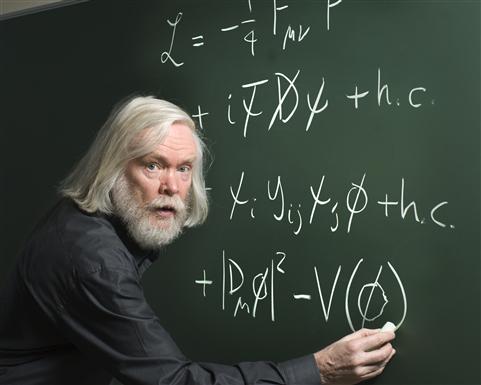
This month, The Institute of Art and Ideas (IAI), an organization committed to fostering “a progressive and vibrant intellectual culture in the UK,” launched IAI Academy — a new online educational platform that features courses in philosophy, science and politics. The initial lineup includes 12 courses covering everything from theoretical physics, the meaning of life, the future of feminism, the often vexed relationship between science and religion, and more.
IAI Academy offers its courses for free. But, like other course providers, they charge a nominal fee (right now about $25) if you would like a Verified Certificate when you’ve successfully completed a course. Here’s the initial lineup:
For more evergreen courses that you can download and enjoy whenever you want, don’t miss our collection, 1,700 Free Online Courses from Top Universities.
For MOOCs being provided in real-time, see our list of MOOCs from Great Universities.
Related Content:
Take First-Class Philosophy Courses Anywhere with Free Oxford Podcasts
Download 100 Free Philosophy Courses and Start Living the Examined Life
Read More...The C.I.A.‘s “Bestiary of Intelligence Writing” Satirizes Spook Jargon with Maurice Sendak-Style Drawings
Ten years in academia gave me a healthy dislike of clichéd jargon, as well as an appreciation for jokes about it. There are a few, like the academic sentence generator and Ph.D. Comics, that capture a bit of what it’s like to go to school and work in higher ed. Corporate drones, of course, have Office Space and Dilbert. But what about the spooks, those nameless, faceless agents who work tirelessly away in the basement of Langley, doing who knows what to whom? Where does the C.I.A. go to laugh at its peculiar brand of hackneyed doublespeak? Not that we were supposed to know this, but perhaps many of them turn to an article called “the Bestiary of Intelligence Writing” in a 1982 copy of internal agency newsletter Studies in Intelligence.
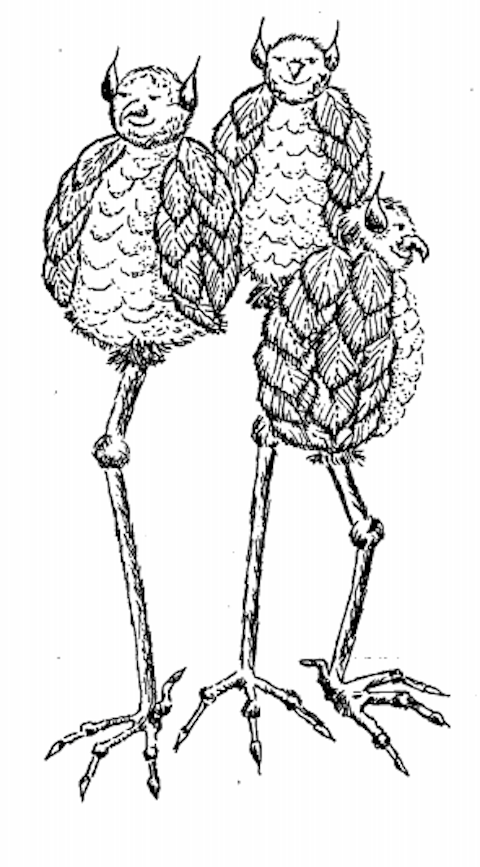
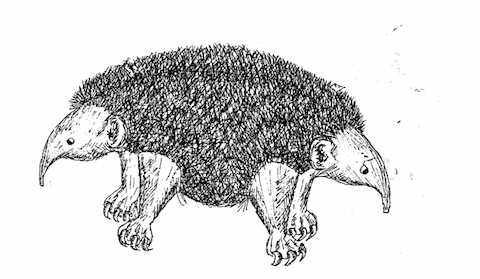
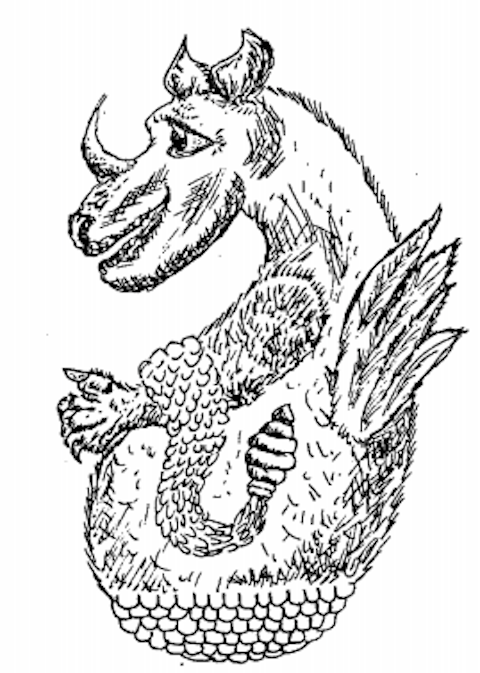
Medium describes this odd piece as a “zoo of fictional fauna,” and like that strange literary form, the medieval European bestiary (often a source of satire and critique), this 17-page article, with footnotes, singles out the most offensive spook buzzwords as though they were cardinal sins—naming 15 members of “the Collection” in all, each one represented by its own Maurice Sendak-like pencil-drawn beast and a description of its habits. The two-headed beast at the top, Multidisciplinary Analysis, is a “hybrid—the fruit of the casual mating of standard forms of Analysis.” Just above, we have Heightened Tensions, “the adult form of Conventional Tensions—Tensions that have acquired stilts by thriving on a rich diet of poverty, malnutrition and especially alienation.” Sounds like rough work, this spy game….
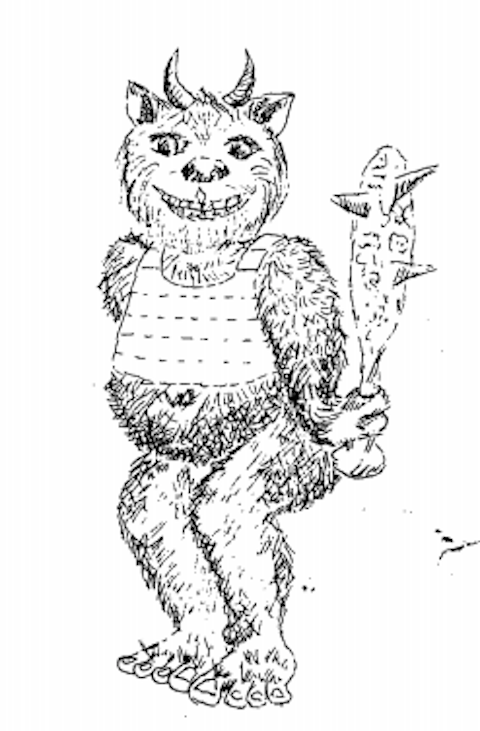
Most of the beasts are cuddly enough, some mischievous, some perhaps deadly. Above, we have Dire Straits and below, Parameters. “The Agency author and artist detailed 15 monsters in all—complete with illustrations,” writes Medium, “Both of their names are redacted in the document. We’ll never know just which CIA agents turned their hand towards snarky political satire.” The document comes to us via a cache of records declassified in a lawsuit filed by former agency employee Jeffry Scudder. We do know that the two anonymous lampoonists were inspired by A Political Bestiary, book by James Kilpatrick, cartoonist Jeff MacNelly, and former senator and presidential candidate Eugene McCarthy. See the full, bone dry article here, and think about the work talk that might drive you to such creative extremes.
Related Content:
The CIA’s Style Manual & Writer’s Guide: 185 Pages of Tips for Writing Like a Spy
How the CIA Secretly Funded Abstract Expressionism During the Cold War
How the CIA Turned Doctor Zhivago into a Propaganda Weapon Against the Soviet Union
Josh Jones is a writer and musician based in Durham, NC. Follow him at @jdmagness.
Read More...The Student of Prague: The Very First Independent Film (1913)
When people talk about “independent cinema” today, they seem, as often as not, to talk about a sensibility — we all know, on some level, what someone means when they tell us they “like indie films.” But the term has its roots, of course, not necessarily in independence of spirit, but in independence from systems. Now that technology has granted all of us the ability, at least in theory, to make any movie we want, this distinction has lost some of its meaning, but between about twenty and eighty years ago, the commercial establishments controlling production, distribution, and screening enjoyed their greatest solidity (and indeed, impenetrability). During that time, making a film independently meant making a fairly specific, often anti-Hollywood statement. But what about before then, when the medium of cinema itself had yet to take its full shape?
Not only does 1913’s The Student of Prague offer an entertaining example of independent film from an era before even Hollywood had become Hollywood, it has a place in history as the first independent film ever released. German writer Hanns Heinz Ewers and Danish director Stellan Rye (not to mention star Paul Wegener, he of the Golem trilogy) collaborated to bring to early cinematic life this 19th-century horror story of the titular student, a down-at-the-heels bon vivant who, besotted with a countess and determined to win her by any means necessary, makes a deal with a devilish sorcerer that will fulfill his every desire. The catch? He summons the student’s reflection out of the mirror and into reality. So empowered, this doppelgänger goes around wreaking havoc. Hardly the ostensibly high-minded material of “indie film” — let alone “foreign film” — from the past half-century or so, but The Student of Prague treats it with respect, arriving at the kind of uncompromising ending that might surprise even modern audiences. If you don’t watch it today, keep it bookmarked for Halloween viewing.
You can find The Student of Prague added to our big film collection, 4,000+ Free Movies Online: Great Classics, Indies, Noir, Westerns, Documentaries & More.
Related Content:
Watch the German Expressionist Film, The Golem, with a Soundtrack by The Pixies’ Black Francis
Watch the Quintessential Vampire Film Nosferatu Free Online as Halloween Approaches
Fritz Lang’s Metropolis: Uncut & Restored
The Power of Silent Movies, with The Artist Director Michel Hazanavicius
Colin Marshall hosts and produces Notebook on Cities and Culture and writes essays on cities, language, Asia, and men’s style. He’s at work on a book about Los Angeles, A Los Angeles Primer. Follow him on Twitter at @colinmarshall or on Facebook.
Read More...6 Hours of Mannequins Flying From Newark to San Francisco
Is there anything worse than flying from Newark to San Francisco? Maybe it’s watching mannequins taking this cross-country flight. Talk about tedium. And yet there’s something a little brilliant about this six hour advertisement from Virgin Airlines — which promises a more inspiring flight. I mean how many six hour advertisements have you seen, let alone ones that have “action” from start to finish? Somewhere, someone’s going to watch this thing all the way through. Maybe it’s you.
If you would like to support the mission of Open Culture, consider making a donation to our site. It’s hard to rely 100% on ads, and your contributions will help us continue providing the best free cultural and educational materials to learners everywhere. You can contribute through PayPal, Patreon, and Venmo (@openculture). Thanks!
Read More...Support Us
We're hoping to rely on loyal readers, rather than erratic ads. Please click the Donate button and support Open Culture. You can use Paypal, Venmo, Patreon, even Crypto! We thank you!

About Us

Open Culture scours the web for the best educational media. We find the free courses and audio books you need, the language lessons & educational videos you want, and plenty of enlightenment in between.
Advertise With Us

FREE UPDATES!
GET OUR DAILY EMAIL
Get the best cultural and educational resources on the web curated for you in a daily email. We never spam. Unsubscribe at any time.
FOLLOW ON SOCIAL MEDIA

Open Culture editor Dan Colman scours the web for the best educational media. He finds the free courses and audio books you need, the language lessons & movies you want, and plenty of enlightenment in between.
Advertise With Us

