Norman Mailer’s 1191-Page Harlot’s Ghost Outlined in One Handwritten Sheet
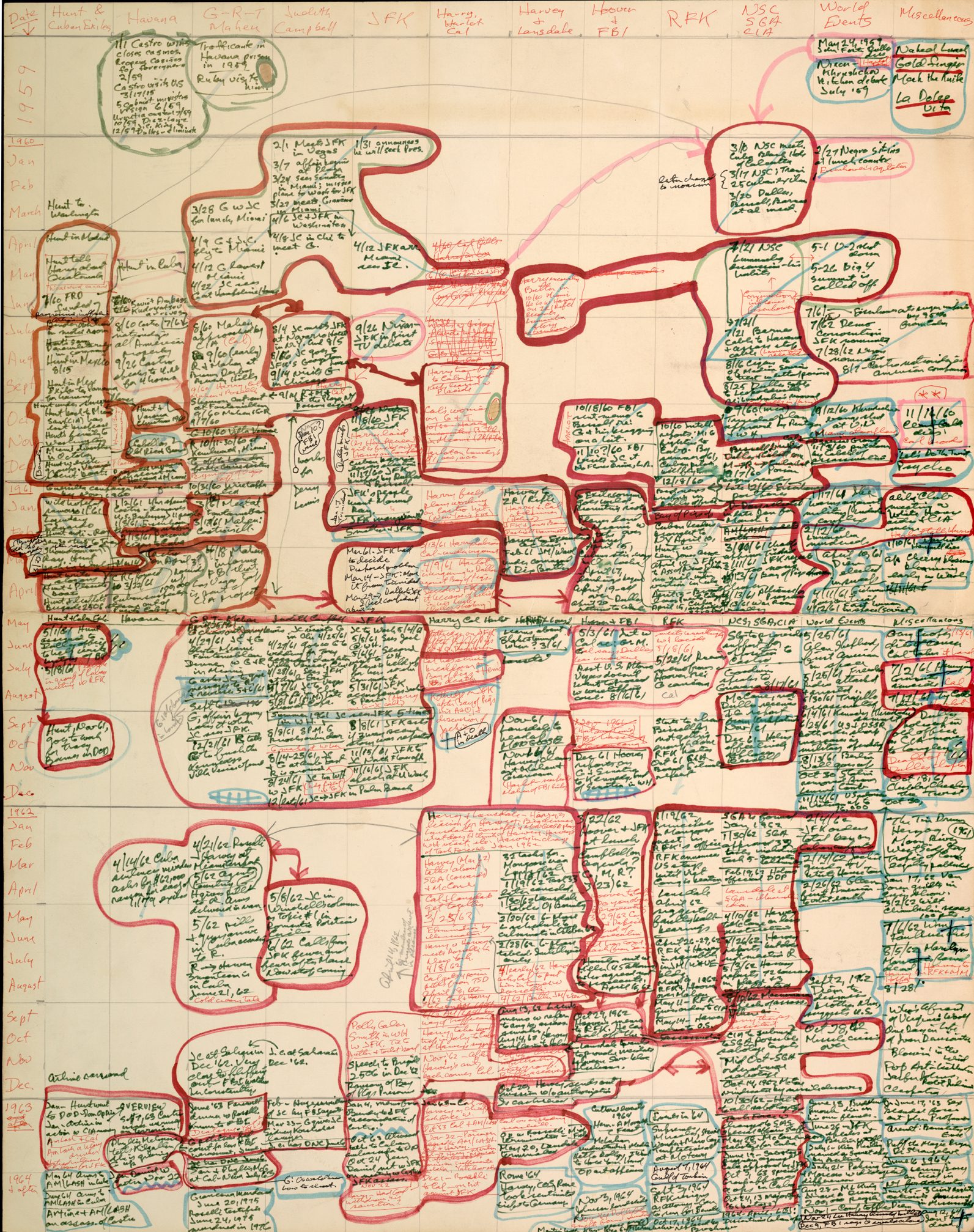
Norman Mailer wrote prolifically, but that didn’t mean cranking out insubstantial volumes. The books whose names we all remember always feel, when we take them down off the shelf, somewhat weightier than we remember: Advertisements for Myself at 532 pages, The Naked and the Dead at 731, The Executioner’s Song at 1072. But the ones with titles which don’t come to mind quite so readily can feel even more physically monumental, and deliberately crafted that way. “Mailer liked to think of his books as his children,” wrote Louis Menand in the author’s 2007 New Yorker obituary, “and, when asked which were his favorites, to name the least critically appreciated” — he answered, “Ancient Evenings and Harlot’s Ghost, great literary pyramids that no one visits any longer.” Ancient Evenings takes place in Egypt, among the actual pyramids, but if you want to visit the much more labyrinthine landmark of Harlot’s Ghost, you’d best take a map. Conveniently, Mailer drew one up himself, in the form of the outline above.
It would never before have seemed possible to me to reduce Mailer’s 1191-page novel of the CIA in the 1960s — a tale of the Mafia, the Cold War, the Cuban Revolution and Missile Crisis, the JFK assassination, and all those events’ attendant complications both real and imagined — to a single sheet, but here we have it. You can click on the image at the top of the post to enlarge it, and then click on the section you’d like to read in detail. Read Harlot’s Ghost with this outline handy, and perhaps you’ll find yourself not on the side of those (Menand included) who dismissed the book upon its publication in 1991, but of those who consider it Mailer’s masterpiece. Christopher Hitchens took the latter position in his own obituary for Mailer, calling the novel “a historic fictionalizing of the national-security state that came very near to realizing the Balzacian ambition that he had conceived for it. What a shame that it was so dismally received by the critics and that he never delivered the second volume of it that he had promised.” And imagine the size and complexity to which Mailer would have grown that book.
via Flavorwire
Related Content:
Norman Mailer & Marshall McLuhan Debate the Electronic Age
Norman Mailer & Gore Vidal Feud on Dick Cavett Show
Norman Mailer: Strong Writer, Weak Actor, Brutally Wrestles Actor Rip Torn
Colin Marshall hosts and produces Notebook on Cities and Culture and writes essays on cities, language, Asia, and men’s style. He’s at work on a book about Los Angeles, A Los Angeles Primer. Follow him on Twitter at @colinmarshall or on Facebook.
Read More...5 Musical Guests Banned From Saturday Night Live: From Elvis Costello to Frank Zappa
A defining television moment of my generation—Sinead O’Connor’s infamous ripping up of a picture of Pope John Paul II on live television after an a cappella performance of Bob Marley’s “War”—was as baffling to most as it was offensive to many. (O’Connor offered many eloquent explanations for the act—mostly ignored.) Not only did this strange form of protest effectively send O’Connor into semi-obscurity for the next twenty years, but it got her permanently banned from Saturday Night Live by producer Lorne Michaels. Michaels, it seems, didn’t so much object to her desecrating the pope’s picture. In fact, he has said he would have been fine with it… if only he’d known it was coming. He has called the moment both “a serious expression of belief” and “on a certain level, a betrayal.”
Michaels has banned many a performer from the show, for many a reason. But most of all, it seems, Lorne Michaels hates surprises. As we’ve previously noted, 23-year-old Elvis Costello pissed Michaels off when he stopped his band during the intro to “Less Than Zero” and launched into “Radio, Radio” instead (above), a song he’d explicitly been told not to play for its critical take on mass media. Unlike O’Connor, Costello would return to SNL when Michaels cooled down, 12 years later, in 1989.
Legendarily brilliant mess The Replacements hit the SNL stage in 1986 after the release of their first major-label album, Tim. They put on a respectably drunken, out-of-tune performance for their first song on the show, “Bastards of Young” (introduced by host Harry Dean Stanton).
So far, so classic ‘Mats. But between this song and the next, “Kiss Me on the Bus” (above), it’s said they drank close to their weight in champagne, and by the time they took the stage again—wearing each other’s clothes and stumbling wildly—they were a completely soused parody of themselves. Funny, right? Lorne Michaels was not amused. Singer Paul Westerberg returned to the show as a solo artist, but the band never received another invitation.
Long before stoner-rappers Cypress Hill got the SNL boot for smoking a joint onstage and trashing their equipment in 1993, abrasive punk band Fear was said to have sparked a riot and caused $200,000 worth of damage to the set during their 1981 Halloween show appearance (above—introduced by host Donald Pleasance). Guests of John Belushi, who agreed to make a return cameo on the show on the condition that Fear come with him, their performances featured typical punk show antics, with rowdy audience members smashing into each other and storming the stage. The N.Y. Post published an absurdly sensational description of the band’s appearance, citing the $200,000 figure and quoting an unnamed “NBC technician” as saying, “this was a life threatening situation. They went crazy. It’s amazing that no one was killed.” Billboard later set the record straight, however. Apparently, the extent of the offense consisted of “somebody… yelling obscenities close to an open mike.” Producer Dick Ebersol cut the performance short, and the show received “all of 12 complaints from viewers.” As for all the supposed mayhem, Fear singer Lee Ving said, “all that happened was that a plug got pulled out and a Halloween pumpkin was destroyed.” Nevertheless, Fear would not be invited back. Read more about that Fear appearance and Belushi’s love of punk rock here.
Belushi figures in the performance of another musician banned from the show—Frank Zappa—who served as both musical guest and the show’s host. Zappa’s pompous attitude alienated most of the cast and crew in his first, and last, SNL appearance in 1978. Nerve names Zappa the second worst host in the show’s history, citing his “suffocating air of smugness and unconcealed contempt for what he’d agreed to do.” During the usually chummy closing credits, “the cast members, obliged to join him onstage, clustered near the edge as if fearing his personality might be contagious.” All but Belushi, who also joined Zappa and band onstage as Samurai Futaba during their third number. As the clips above demonstrate, even SNL’s second worst host could still inject a good bit of wit and energy into a show that’s often wanted for both, not to mention the most well-rehearsed band in both avant-rock performance art and live televised sketch comedy.
Related Content:
The Stunt That Got Elvis Costello Banned From Saturday Night Live
William S. Burroughs on Saturday Night Live, 1981
Josh Jones is a writer and musician based in Durham, NC. Follow him at @jdmagness
Read More...The Lodger: Alfred Hitchcock’s First Truly ‘Hitchcockian’ Movie (1927)
Before Alfred Hitchcock freaked out audiences everywhere by killing off the protagonist halfway through Psycho, before he was praised as a great master of cinema by a bunch of French critics who would themselves go on to become cinematic masters, before the adjective “Hitchcockian” entered the language, Hitchcock was simply a guy struggling to make a go of it as a director.
He started his career in film when he was barely out of his teens in 1919. Hitchcock soon found himself working in the largest and most influential studio in Europe, Germany’s Universum Film AG (UFA). There he not only watched Fritz Lang and F. W. Murnau direct, but he also worked as a writer, art director, assistant director on a number of silent films including The White Shadow (1924) and The Blackguard (1925). Though Hitchcock got his first director’s credit with the 1926 movie The Pleasure Garden, the first movie to truly feel Hitchcockian was The Lodger: A Story of London Fog (1927). You can watch it above.
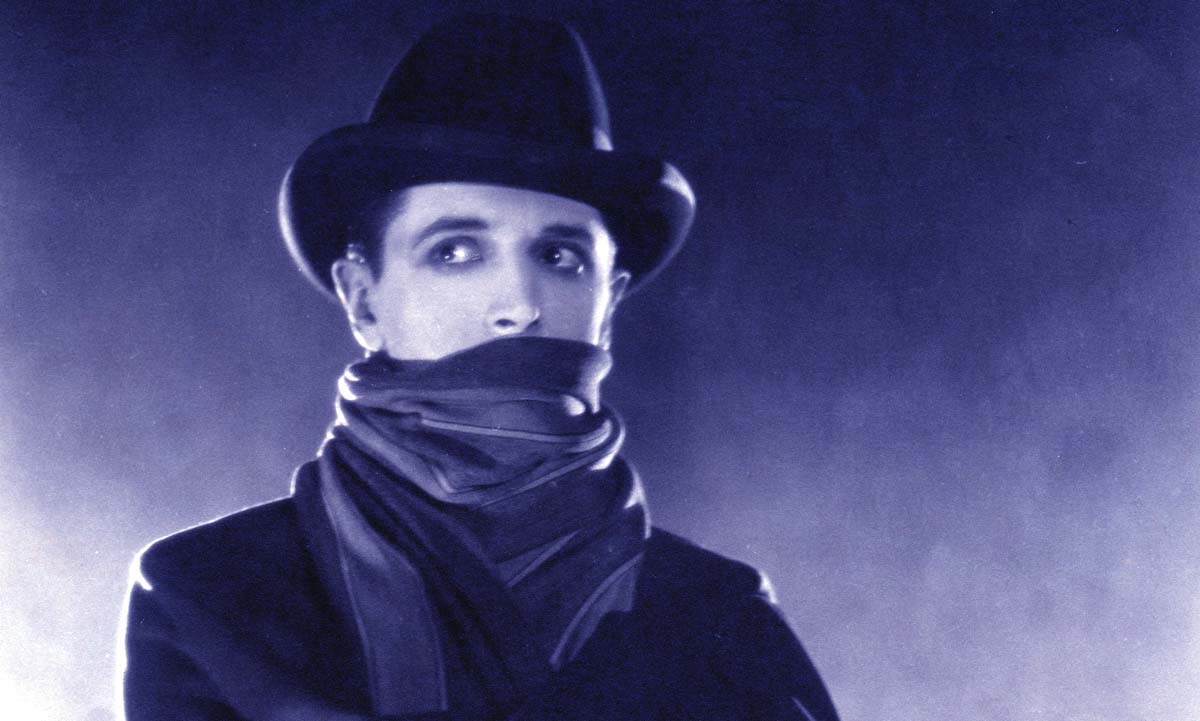
Based on a novel by Marie Belloc Lowndes, The Lodger opens with a blonde woman screaming in terror. She is the victim of a shadowy Jack the Ripper-like serial killer who leaves a calling card announcing himself as ‘The Avenger.’ Cut to Daisy, a blonde model whose parents are jubilant over finally finding a boarder for their spare room. The guy is handsome, mysterious and has a weird thing for blondes. You think he might have something to do with the murders?
For a film that came out decades before Vertigo and Rear Window, The Lodger has just about all of Hitchcock’s cinematic ticks. A fetishistic obsession with blondes? Check. An unsettling mingling of sex and death? Check. A man wrongly accused? Check. The only thing it really lacks is a national landmark as the backdrop of a showy action set piece.
On the other hand, The Lodger feels decidedly German. The claustrophobic lighting, the grotesque shadows and the generally morbid storyline all would be perfectly at home at Universum Film AG. In fact, The Lodger, in terms of story, tone and looks, feels like a cinematic cousin to Fritz Lang’s 1931 early sound masterpiece M.
Of course, Hitchcock was just a young director in 1927. And like many young filmmakers, he had a hard time with his producers. While the book leaves it ambiguous whether or not the lodger is the killer, the handlers of the movie’s star Ivor Novello couldn’t possibly have the actor play a villain and demanded a change to the ending. When Hitch turned in the final movie, Michael Balcon, the movie’s main producer, was unimpressed and almost shelved the flick, and, with it, Hitchcock’s career. But after a little bit of tinkering, the movie was finally released. And when The Lodger became a huge box office hit, Hitchcock’s career was assured.
You can find The Lodger on our list of 23 Free Hitchcock Movies Online, as well as in our collection, 4,000+ Free Movies Online: Great Classics, Indies, Noir, Westerns, Documentaries & More.
Related Content:
Watch The White Shadow, the Recently-Discovered and Earliest-Surviving Hitchcock Film
23 Free Hitchcock Movies Online
The 39 Steps: Hitchcock’s 1935 Classic Online
37 Hitchcock Cameo Appearances Over 50 Years: All in One Video
Jonathan Crow is a Los Angeles-based writer and filmmaker whose work has appeared in Yahoo!, The Hollywood Reporter, and other publications. You can follow him at @jonccrow.
Read More...45 Massive Open Online Courses Getting Started in July: Enroll in a MOOC Today
MOOCs on the beach? Why not. New MOOCs are getting started, even during the dog days of summer. You can find 45 courses getting going this month. They’re all captured on our complete and frequently-updated list of Massive Open Online Courses. As for me, I think I will be finally checking out this University of Rochester course on The Music of the Beatles. It starts on July 6 and runs 6 weeks.
Related Content:
Audio: The Beatles Play Their Final Concert at Candlestick Park, 1966
Guitarist Randy Bachman Demystifies the Opening Chord of ‘A Hard Day’s Night’
MOOCs from Great Universities (Many With Certificates)
Take Free Online Courses at Hogwarts: Charms, Potions, Defense Against the Dark Arts & More
Read More...The Art of Mapping Music: Mike Hamad’s 200 Schematics of Songs by Phish, Pink Floyd & The Dead
Mike Hamad, a music writer for The Hartford Courant, has a deep and abiding love for Phish. He also has a talent for drawing “schematics” or maps that turn the experience of listening to music into something visual. Over at his tumblr SetlistSchematics, you can find nearly 200 schematics of songs (usually performed live) by The Grateful Dead, The Dave Matthews Band, Pink Floyd, and mostly Phish. According to a short profile in The New York Times, Hamad “has a master’s degree in music theory and a Ph.D. in musicology” — his dissertation focused on the tonal relationships in Franz Liszt’s songs — and, somewhere along the way, he developed a tendency to translate music into schematics, a flurry of “arrows, descriptive notes, roman numerals and wavy lines.”

If you’re interested in giving Hamad’s method a try, we suggest lining up some colorful pens and big sheets of paper, and then tuning into these classic Phish concerts found in our archive: Phish Plays the Entirety of the Talking Heads’ Remain in Light (1996) or Phish Plays All of The Rolling Stones’ Classic Album, Exile on Main Street, Live in Concert.
via @NYTimes and h/t Eric
Read More...Wim Wenders Reveals His Rules of Cinema Perfection
Does Wim Wenders, one of my favorite directors, make perfect films? Hardly — and therein, at least for me, lies the appeal. Perfection strikes me as a singularly uninteresting goal for art, and Wenders has made some of the most interesting pieces of motion picture art going for the past thirty years: Wings of Desire; Paris, Texas; Notebook on Cities and Clothes; Tokyo-Ga. Perhaps, it occurs to me, he has achieved his own kind of very specific, inimitable perfection. But if you seek to imitate it nevertheless, have a look at “Wim Wenders’ Rules of Cinema Perfection” above. In this video (actually a kind of spot for Stella Artois, a brand with which the auteur has worked before), we see humorously revealed several of Wenders’ best filmmaking practices: “You need a good title from the beginning,” “Continuity is clearly overrated,” “Try to welcome and incorporate” the unexpected, and “If you like football, don’t shoot during the world championship.”
If you’ve done your reading on Wenders, you can probably tell that the clip draws from a published list of the director’s “50 Golden Rules of Filmmaking.” Other helpful recommendations include “Before you say ‘cut,’ wait five more seconds,” “A ‘beautiful image’ can very well be the worst thing that can happen to a scene,” and “There are no rules.” Will following these if-n0t-rules-then-guidelines turn you into the next Wim Wenders? Unlikely. Will drinking Stella Artois do it? Certainly not. But it could hurt none of us, whatever our creative endeavor of choice, to emulate his willingness on display here to learn from his mistakes (based on his list, I’d say he’s taken his share of hard knocks hiring couples, adapting novels, and working with animals); to share his wisdom; and (maybe most importantly of all) to learn not to take ourselves too seriously. Sure, his detractors tend to accuse him of pretentiousness, but we true fans (who pay close attention even to his commercial acting gigs) know the truth.
via No Film School
Related Content:
Wim Wenders and Celebrated Directors Talk About the Future of Cinema (1982)
Wim Wenders Visits, Marvels at a Japanese Fake Food Workshop
Colin Marshall hosts and produces Notebook on Cities and Culture and writes essays on cities, language, Asia, and men’s style. He’s at work on a book about Los Angeles, A Los Angeles Primer. Follow him on Twitter at @colinmarshall or on Facebook.
Read More...Coudal’s Kubrick Collection: An Online Treasure Trove of Kubrick Ephemera
Last year, the Los Angeles County Museum of Art wrapped up a brilliant, exhaustive exhibition about Stanley Kubrick. It was a veritable cornucopia of Kubrick memorabilia, ranging from grainy black and white photographs he took for Look magazine as a youth, to a creepy plastic Star Child from 2001: A Space Odyssey, to the blood soaked dresses of those hollow-eyed twins in The Shining. The exhibit was a massive success. It’s hard to imagine any other director, with the possible exception of Alfred Hitchcock, who would not only get an exhibit in a major art museum but also be able to pack the hall week after week.
Part of his allure, no doubt, is Kubrick’s carefully-honed public persona – a reclusive genius who controlled every element of his movies, from the font on the opening titles to the design of the poster. His movies, especially his later ones, are dense, deeply-layered works of such complexity that they continue to unpack themselves after multiple viewings. Heck, there’s an entire documentary, Room 237, that presents nine starkly different interpretations of The Shining.
Kubrick’s movies seem designed to appeal to a certain breed of obsessive film geek. So if you count yourself a member of this tribe (as I do) and you didn’t happen to catch LACMA’s exhibit, you’re in luck. The Chicago design firm Coudal Partners has created a whole online treasure trove of Kubrick ephemera. We’ve culled a few cool things from their site.
Above is a cheesy, behind-the-scenes movie for 2001. The 20-minute promo sets up the movie as if it were an episode of The Outer Limits. “It is the year 2001, you’re on your way to a space station for business,” intones the narrator. “This is but one example of what life would be like in 2001.” What follows is a series of interviews with the scientists, experts, and craftsmen involved in creating Kubrick’s vision of the future with only fleeting footage of the filmmaker himself at around the 18-minute marker. Though it does give you a lot more information on the nuts and bolts of the astronauts’ spacesuits, the short movie, one can’t help but think, is setting up the audience for disappointment. It does little to help viewers understand that the first half of 2001 is about the struggles of ape men on the plains of Africa and does even less to address the psychedelic freakout of the movie’s last reel.
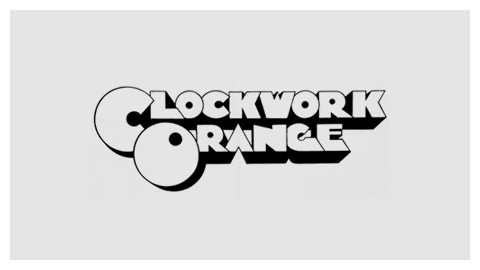
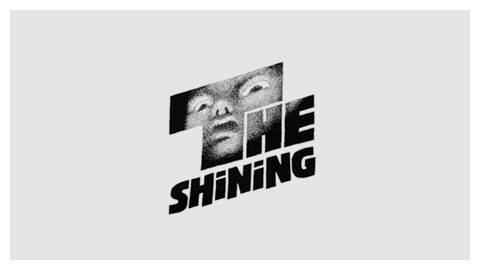
Also found in Coudal’s collection is a site that has compiled all the fonts that Kubrick, a noted typography enthusiast, used in his movies. We’ve posted a couple. He liked Futura and Gothic a lot, apparently. The title card for The Shining was designed by Saul Bass.

And on this site, some genius has created sweaters, ski masks, and doormats from that odd, geometric carpet pattern from The Shining. Pre-orders have sadly closed, but hopefully they’ll start selling them again. I want the cardigan.
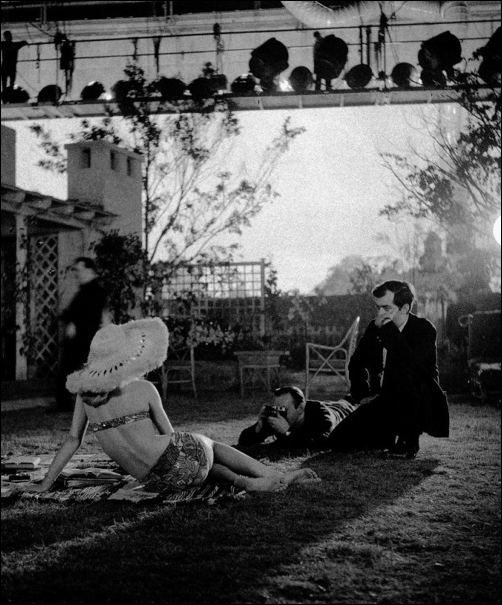
And then there’s this behind-the-scenes shot of the director and Sue Lyon on the set of Lolita accompanied by a quote from Kubrick about the actress.
“From the first, she was interesting to watch—even in the way she walked in for her interview, casually sat down, walked out. She was cool and non-giggly. She was enigmatic without being dull. She could keep people guessing about how much Lolita knew about life.”
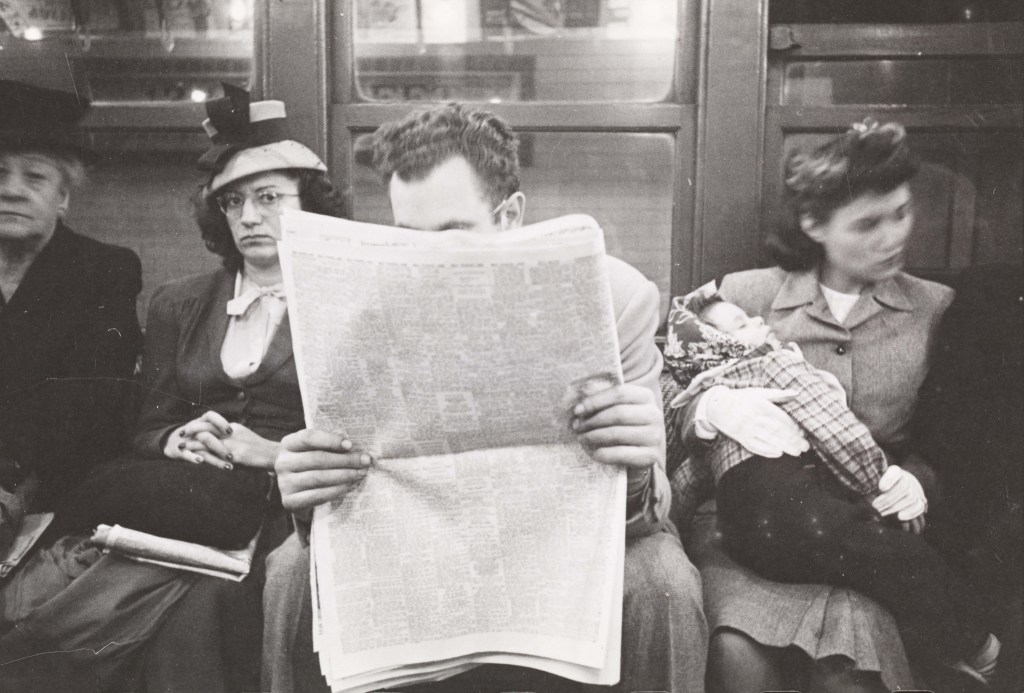
And speaking of photos, here’s a few pictures Kubrick took of the New York subway system back in 1946 for Look magazine. Compare these photos to his earliest movies like Fear and Desire and Killer’s Kiss. Both his early flicks and these pictures have the same gritty immediacy.
There is much, much more there at the Coudal Partners to keep any film nerd and Kubrick maven occupied. Check it out.
Related Content:
Fear and Desire: Stanley Kubrick’s First and Least-Seen Feature Film (1953)
Stanley Kubrick’s Daughter Shares Photos of Herself Growing Up on Her Father’s Film Sets
Stanley Kubrick’s List of Top 10 Films (The First and Only List He Ever Created)
4,000+ Free Movies Online: Great Classics, Indies, Noir, Westerns, Documentaries & More
Jonathan Crow is a Los Angeles-based writer and filmmaker whose work has appeared in Yahoo!, The Hollywood Reporter, and other publications. You can follow him at @jonccrow.
Read More...E.O. Wilson’s Life on Earth Released as a Free eBook and Free Course on iTunes
Yesterday, E.O. Wilson’s Life on Earth was released as a free iBook on iTunes. It features “state-of-the-art digital media animations, video, and interactive modules in a comprehensive 41-chapter text covering standards-based biology curriculum.” Created under the direction of Pulitzer Prize-winning author and Harvard naturalist Edward O.Wilson, Life on Earth can be downloaded in 7 units on iTunes. The free book also comes with a free iTunesU course. In addition to reading assignments, the course “incorporates activities such as field observations, writing assignments, project-based learning exercises,” using apps and other materials. Combining information from the Smithsonian National Museum of Natural History, National Geographic, and the Encyclopedia of Life, the course covers a variety of important themes — citizen science, evolution, climate change, and protecting biodiversity. The first nine chapters of the iTunesU course are available now, and the remaining materials for the 41-chapter course will be released throughout 2014.
The book can be found in our collection, 800 Free eBooks for iPad, Kindle & Other Devices. And the course will be added to our list of Free Online Biology Courses, part of our larger collection: 1,700 Free Online Courses from Top Universities.
h/t @RandyDeutsch
Related Content:
Enter E.O. Wilson’s Encyclopedia of Life: Free Access to All The World’s Knowledge About Life
Read More...
Watch the First Animations of Peanuts: Commercials for the Ford Motor Company (1959–1961)
Bill Watterson, creator of arguably the last great comic strip, Calvin and Hobbes, wrote the following about perhaps the greatest comic strip ever. “Peanuts pretty much defines the modern comic strip, so even now it’s hard to see it with fresh eyes. The clean, minimalist drawings, the sarcastic humor, the unflinching emotional honesty….” Charles Schulz, the artistic force behind Peanuts, funneled a lifetime of loneliness and emotional pain into these spare little drawings, creating a strip that was bleakly funny, philosophical and real. Characters like the socially inept Charlie Brown or the bossy though oddly tragic Lucy connected with audiences in a way that few ever did.
The one way that Watterson and Schulz differed, and differed greatly, was in the area of merchandising. While Watterson famously refused to license any of his characters (those praying/peeing Calvin car decals, it might surprise you to learn, are not officially sanctioned), Schulz licensed his creations far and wide. For those who grew up in the ‘70s, a Snoopy plush toy was simply de rigueur. The Peanuts characters hawked Dolly Madison snack cakes, MetLife insurance, and Wendy’s kids meals. And those sponsorship deals paid spectacularly well. By the time that Schulz died in February 2000 — the night before the final Peanuts strip was to go to print — he had reportedly earned over the course of his life $1.1 billion dollars.
The first instance of Charlie, Snoopy and the gang being corporate spokescharacters happened to be also the first time they were animated. The Ford Motor Company licensed them in 1959 to do TV commercials along with intros to the Tennessee Ernie Ford Show. You can watch them above. Probably the most striking thing about the commercials is that the adults are intelligible, not the incomprehensible muted trumpet bleats of the Peanuts movies.
The spots proved to be such a success that Schulz and animator Bill Meléndez were soon producing half-hour long TV specials, including the Emmy-winning A Charlie Brown Christmas in 1965. In a 1984 interview, Meléndez talked about working with Schulz, who went by the nickname of “Sparky,” for those first Ford spots.
Well, I was doing Ford commercials at J. Walter Thompson when it was decided that Charlie Brown would be the spokesman for the Ford Falcon. I was told Charles Schulz was very shy and reticent about commercializing his strip. So I went to San Francisco and met Sparky and we hit it off. I told him what we did, and he nodded and said, “All right, we’ll try it.” He was very leery of getting involved with “Hollywood types” as he used to call us.
Of course he understands that his drawings are flat, two-dimensional designs, and that, for example, the front view is very different from the side view. They are not three-dimensional characters. You can’t turn them around the way we used to turn the Walt Disney characters, who were designed to be round and three-dimensional. To animate Peanuts characters we have to be more inventive, because we tend not to be realistic. We don’t try to ape real live action as we did in animating Donald Duck and Mickey Mouse.
I imagine Sparky must have been curious about how we were going to do it, but he never gave us any kind of a hint or anything at all about what he wanted. So we showed him how we thought it should move, how we thought they should turn, how we thought they should walk and he accepted everything. From then on we hit it off pretty well.
Related Content:
Gertie the Dinosaur: The Mother of all Cartoon Characters
How Walt Disney Cartoons are Made
Jonathan Crow is a Los Angeles-based writer and filmmaker whose work has appeared in Yahoo!, The Hollywood Reporter, and other publications. You can follow him at @jonccrow.
Read More...Free Download: They Might Be Giants Play Their Entire First Album Live

They Might Be Giants released their eponymous debut album in November, 1986 and it immediately attracted the attention of Village Voice music critic, Robert Christgau, who, in giving the album an “A,” said “the hits just keep on coming in an exuberantly annoying show of creative superabundance”. Almost thirty years later, the band performed the seminal first album live in its entirety during its 2013 world tour. And now, as a special gift to fans old and new, they’re making available a recording of those performances for free. It runs 47 minutes. To get the recording, click the “Free Album Download” button below, and follow the instructions. Or click here.
via Laughing Squid/BoingBoing
Read More...Support Us
We're hoping to rely on loyal readers, rather than erratic ads. Please click the Donate button and support Open Culture. You can use Paypal, Venmo, Patreon, even Crypto! We thank you!

About Us

Open Culture scours the web for the best educational media. We find the free courses and audio books you need, the language lessons & educational videos you want, and plenty of enlightenment in between.
Advertise With Us

FREE UPDATES!
GET OUR DAILY EMAIL
Get the best cultural and educational resources on the web curated for you in a daily email. We never spam. Unsubscribe at any time.
FOLLOW ON SOCIAL MEDIA

Open Culture editor Dan Colman scours the web for the best educational media. He finds the free courses and audio books you need, the language lessons & movies you want, and plenty of enlightenment in between.
Advertise With Us

