How Ray Bradbury Wrote the Script for John Huston’s Moby Dick (1956)
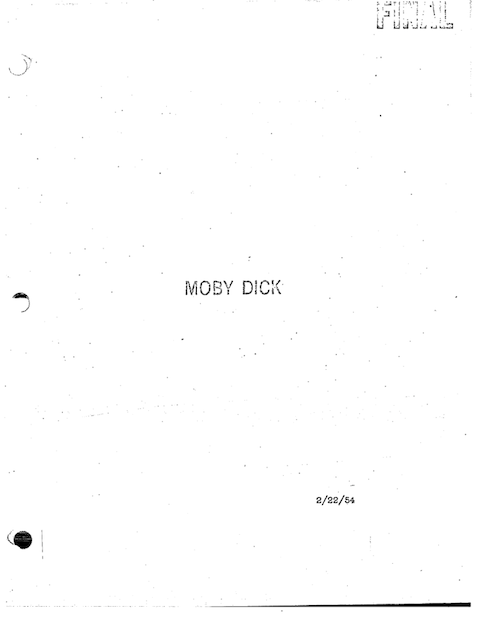
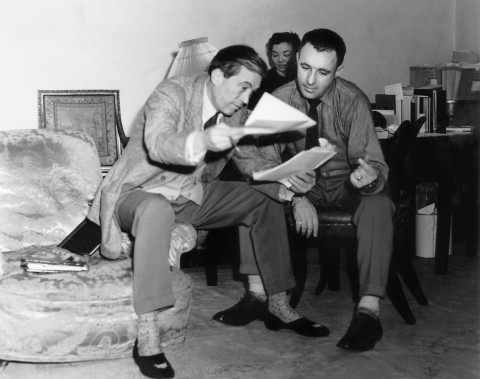
Ray Bradbury, unlike many novelists who choose to reside in Southern California, didn’t support his fiction-writing career by taking screenplay work. With the likes of The Martian Chronicles and Fahrenheit 451 to his name, he didn’t need to, not that it stopped him from adapting certain stories of his own for television and the movies. Only once did the prolific Bradbury undertake to write a screenplay based upon a book he didn’t write. But oh, what a book: Herman Melville’s Moby-Dick, turned into the John Huston-directed 1956 film of almost the same name. Though ultimately stormy — working with Huston, even in the best of times and for the brightest of writers, tended to become an ordeal — the collaboration began auspiciously, with the writer an avowed fan of the filmmaker, and the filmmaker an avowed fan of the writer. Yet neither, ironically, had much time for the Melville novel to which they had dedicated their efforts.
“Have you tried to read that novel?” Bradbury asks his audience in the clip just above. “Oh my god! John Huston didn’t know any more about it than I did. He wanted to play Ahab. Give him a harpoon, and he would’ve done it.” Working on the script in Ireland, Bradbury spent “eight long months of agonizing work, subconscious work,” all of which prepared him for the next decisive moment in this particular writing process: “I got out of bed one morning in London, looked in the mirror, and said, ‘I am Herman Melville!’ I sat down at the typewriter, and in eight hours of passionate, red-hot writing, I finished the screenplay of Moby Dick, and I ran across London, I threw the script in John Huston’s lap, and said, ‘There! It’s done!’ He read it and said, ‘My god, what happened?’ I said, ‘Behold: Herman Melville.’ ”
You can now read the fruits of this act of artistic channeling in a new edition from Subterranean Press featuring an essay by William Touponce, director of the Center for Ray Bradbury Studies at Indiana University-Purdue University Indianapolis. Cinephilia and Beyond has more, including a link to a PDF of Bradbury’s original final script.
Related Content:
Jean-Paul Sartre Writes a Script for John Huston’s Film on Freud (1958)
Ray Bradbury Gives 12 Pieces of Writing Advice to Young Authors (2001)
Ray Bradbury: Literature is the Safety Valve of Civilization
Colin Marshall hosts and produces Notebook on Cities and Culture and writes essays on cities, Asia, film, literature, and aesthetics. He’s at work on a book about Los Angeles, A Los Angeles Primer. Follow him on Twitter at @colinmarshall or on his brand new Facebook page.
Read More...Learn to Draw Butts with Just Five Simple Lines
You know what I say when someone tells me they “can’t” draw?
Pshaw.
Even those who’ve yet to discover the transformative effects of Lynda Barry’s wonderfully corrective Picture This know how to draw something. Very few children make it to adulthood without picking up some simple geometric formula by which a series of ovals, rectangles and lines can be configured to resemble a doggie head or a brave astride his cantering pony.
A couple thousand renderings later, such magic still satisfies, but you might want to consider branching out. May I recommend the teachings of artist and visual storyteller, Karl Gude? This laid-back former Director of Information Graphics at Newsweek can — and will! — teach you how to draw “great butts” with just five lines.
Gude’s command of posterior essentials is downright heady. (I say this as a former artist’s model whose rear end has been misrepresented on paper more times than I’d care to mention.) Who knew that capturing this part of human anatomy could prove so simple? Gude’s easygoing online instruction style may be traceable to some sort of adult beverage (I’m not casting stones…), but his methods are easy enough for a child to master.
Speaking of which, if you want to make a friend for life, share the above video with an actual child, preferably one who claims he or she “can’t” draw. Put a Sharpie in his or her paw, and within five minutes, Gude will have the little twerp cranking out butts of all shapes and sizes. After which, pride of accomplishment may well lead to some of Gude’s more advanced tutorials, like the detailed human eye seen below.
If that proves too challenging, there’s no shame in sticking with the glutes. To my way of thinking, the mindset that allows the artist to keep going when his pencil snaps mid-demonstration is lesson enough.
Related Content:
Join Cartoonist Lynda Barry for a University-Level Course on Doodling and Neuroscience
Saul Bass’ Advice for Designers: Learn to Draw, and Create Beauty Even If Nobody Else Cares
The Anatomical Drawings of Renaissance Man, Leonardo da Vinci
Clever Animation Brings Figure Drawings to Life
Ayun Halliday’s personal motto is Dare to Be Heinie. Follow her @AyunHalliday
Read More...MIT Teaches You How to Speak Italian & Cook Italian Food All at Once (Free Online Course)
At MIT, Dr. Paola Rebusco usually teaches physics to freshmen. But, on behalf of the MIT Experimental Study Group, Rebusco has devised an appealing course — Speak Italian with Your Mouth Full — where she combines teaching two things many people love: learning to speak Italian and cooking Italian food. The course summary reads:
The participants in this seminar will dive into learning basic conversational Italian, Italian culture, and the Mediterranean diet. Each class is based on the preparation of a delicious dish and on the bite-sized acquisition of parts of the Italian language and culture. A good diet is not based on recipes only, it is also rooted in healthy habits and in culture. At the end of the seminar the participants will be able to cook some healthy and tasty recipes and to understand and speak basic Italian.
As Rebusco explains in a short video, this course has the advantage of making the language lessons a little less abstract. It gives students a chance to apply what they’ve learned (new vocabulary words, pronunciations, etc.) in a fun, practical context.
Above, we start you off with the first language lesson in the seminar. It begins where all basic courses start — with how to say your name. Below, you can watch the class learn to cook fresh pasta. Along the way, the course also teaches students how to make espresso, risotto, homemade pizza, bruschetta, and biscotti. Lectures for the course can be found on the MIT web site, YouTube and iTunes. Speak Italian with Your Mouth Full also appears in our collection of Free Foreign Language Lessons and 1200 Free Courses Online. Buon Appetito!
Ingredients & Cooking Instruction:
Food Preparation
Related Content:
A Master List of 700 Free Online Courses From Great Universities
Science & Cooking: Harvard Profs Meet World-Class Chefs in Unique Online Course
David Lynch Teaches You to Cook His Quinoa Recipe in a Weird, Surrealist Video
Read More...Maria Callas Performs at Covent Garden in 1962, Toward the End of Her Brief But Spectacular Career
Maria Callas’s short and storied opera career first took off in Italy in the late 1940s and early 1950s. From there, her distinctive voice — some would call it “ugly,” others, magical — carried the soprano to London, Paris and New York. She’s remembered for her performances in La traviata, Norma and Tosca as much as for her rapid personal and professional decline. By the mid 1950s, her voice began to lose its warmth “becoming thin and acidulous,” some would say. At 40, her singing career was basically over. Then, at 53, she died of a heart attack in Paris, alone and unhappy. Above, we have Callas performing at the Royal Opera House, Covent Garden, on November 4, 1962, basically toward the end of her brief but spectacular career. She was a surprise participant in a gala concert broadcast on British television. Callas would have turned 90 today, an occasion marked by this Google doodle.
Related Content:
Steve Jobs Narrates the First “Think Different” Ad (Where Callas Makes a Cameo Appearance)
Read More...
A Young Jean-Luc Godard Picks the 10 Best American Films Ever Made (1963)
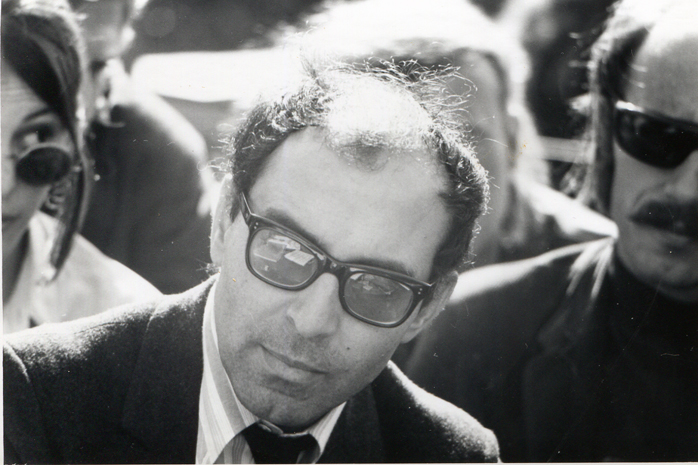
Creative Commons image by Gary Stevens
Like most of the Nouvelle Vague directors who remain interesting today, Jean-Luc Godard has played the role of film critic as often as he has the role of film director. While his cinematic compatriot François Truffaut got his start reviewing movies before he decided to make them, Godard never quite underwent the full conversion; his nonfiction works for the screen include the four-and-a-half-hour Histoire(s) du cinéma, a thoroughly idiosyncratic take on exactly the subject you would think it covers, and even most of his feature films turn back on their medium and “interrogate” it — to use, I suppose, an academic term fallen slightly out of fashion. Then agan, Godard himself has also gone somewhat out of style, not that it drains any of the fascination out of his filmography, and certainly not that it makes his opinons less relevant to fellow cinephiles.
You’ll find a collection of these Godardian judgments in the back pages of Cahiers du cinema, the journal that bred the lion’s share of these French New-Wave critics-turned-filmmakers. On a page of critics’ favorites lists maintained by a certain Eric C. Jonshson, you’ll find Godard’s top-ten rankings, as published by Cahiers du cinema for the years 1956 through 1965.
While he does use these lists to give the occasional (and well-deserved) prop to a colleague — Jean-Pierre Melville’s Deux Hommes dans Manhattan, Alain Resnais’ Hiroshima, mon amour, Truffaut’s Les Quatres cent coups, Claude Chabrol’s Les Cousins, and Agnes Varda’s Du cote de la Cote come in for honors in 1959 alone — he also pays his respects to the stolid virtues of American filmmaking, especially of the sensational variety: Orson Welles’ Mr. Arkadin (#1, 1956), Alfred Hitchcock’s Psycho (#8, 1960), Samuel Fuller’s Schock Corridor (#5, 1965.) He even put together a list of the Ten Best American Sound Films, which runs as follows:
- Scarface (Howard Hawks)
- The Great Dictator (Charles Chaplin)
- Vertigo (Alfred Hitchcock)
- The Searchers (John Ford)
- Singin’ in the Rain (Kelly-Donen)
- The Lady from Shanghai (Orson Welles)
- Bigger Than Life (Nicholas Ray)
- Angel Face (Otto Preminger)
- To Be or Not To Be (Ernst Lubitsch)
- Dishonored (Josef von Sternberg)
I’ve often thought that it takes someone foreign to most clearly view America, and by the same token, it probably takes an outsider to most clearly view mainstream cinema. In this list, Godard characteristically provides both angles at once.
Related content:
Martin Scorsese Reveals His 12 Favorite Movies (and Writes a New Essay on Film Preservation)
Stanley Kubrick’s List of Top 10 Films (The First and Only List He Ever Created)
Colin Marshall hosts and produces Notebook on Cities and Culture and writes essays on cities, Asia, film, literature, and aesthetics. He’s at work on a book about Los Angeles, A Los Angeles Primer. Follow him on Twitter at @colinmarshall or on his brand new Facebook page.
Read More...In Touching Video, Artist Marina Abramović & Former Lover Ulay Reunite After 22 Years Apart
In 2010, Serbian artist Marina Abramović had the honor of being the subject of a popular retrospective at New York’s Museum of Modern Art. Throughout the show, Abramović performed a grueling piece entitled “The Artist Is Present,” sitting in the museum’s atrium and inviting the swelling crowds of viewers to sit directly opposite her, in silent dialogue. Abramović was no stranger to challenging performances. By the time that MoMA staged the retrospective, the then 63-year-old artist had engaged in countless taxing exhibitions, earning her self-given title, “the grandmother of performance art.”
In her first performance at 27, Abramović explored the idea of ritual by playing a knife game on camera, stabbing the surface between her splayed fingers with a knife and occasionally hurting herself; she would then watch a video recording of the violence, and attempt to replicate it. Subsequent performances included her explorations of consciousness through the ingestion of pills for catatonia and depression; another comprised a 1974 incarnation of her MoMA performance, where Abramović sat passively before a table littered with objects for six hours, inviting the audience to put them to use on her person (of this piece, Abramović says, “What I learned was that… if you leave it up to the audience, they can kill you… I felt really violated: they cut up my clothes, stuck rose thorns in my stomach…”)
In 1976, Abramović met Ulay, a West German artist who would become her lover and collaborator for the next twelve years. The duo fell into an impersonal abyss, losing their selfhoods and attempting to become a single entity through arresting performances such as Breathing In/Breathing Out, where they locked mouths and breathed each other’s exhaled breath, eventually filling their lungs with carbon monoxide and falling unconscious. By 1988, their romance had run its course; in typically atypical fashion, the pair decided to part by walking from opposing ends of the Great Wall of China until they met in the middle, and then said goodbye.
On the opening night of Abramović’s retrospective in 2010, the erstwhile lovers were reunited. The video above shows Abramović, sitting and steeling herself for her next silent interlocutor. Ulay approaches, and Abramović, a veteran of such difficult performances, looks up to what may have been the single most unexpected sight of the night, jolting her dignified composure. Their reunion is a deeply tender scene.
Related Content:
John Waters: The Point of Contemporary Art
Jackson Pollock 51: Short Film Captures the Painter Creating Abstract Expressionist Art
Free: The Guggenheim Puts 65 Modern Art Books Online
Ilia Blinderman is a Montreal-based culture and science writer. Follow him at @iliablinderman.
Read More...Slavoj Žižek on the Feel-Good Ideology of Starbucks
Back in 2010, we presented an animated video where Slavoj Žižek, our favorite Slovenian theorist, identified a new trend in modern capitalism. Nowadays, marketers have found a crafty way to rework Max Weber’s Protestant Ethic. They tell us we can achieve personal redemption not through hard work and amassing savings, but by consuming the right products. When you buy eco-friendly products, fair trade goods, or products that yield some kind of charitable dividend, you don’t have to think twice about the cost of your consumerism. Not when you’ve done some good and earned yourself some good capitalist karma.
This line of thinking returns in Žižek’s new film The Pervert’s Guide to Ideology, where, once again, he focuses on one of the world’s most effective marketing operations, Starbucks. This, after having seemingly imbibed a “Venti” or “Trenta” portion of the product.
To drill deeper into Zizek’s thoughts on this subject, see his 30-minute lecture “First as Tragedy, Then as Farce.” For more clips from his new film, see our recent posts:
Slavoj Žižek Examines the Perverse Ideology of Beethoven’s Ode to Joy
Slavoj Žižek’s Pervert’s Guide to Ideology Decodes The Dark Knight and They Live
via Biblioklept
Sergei Eisenstein’s Seminal Battleship Potemkin Gets a Soundtrack by Pet Shop Boys
Like many philistines, my familiarity with Sergei Eisenstein’s silent masterpiece, Battleship Potemkin—hailed by Cracked magazine as the “longest 70 minutes of communist propaganda every first year film school student will ever be forced to watch” —was largely limited to parodies of and homages to its famous “Odessa Steps” sequence.
The original scene is absolutely horrifying. There’s a reason this silent film never gets projected on the back walls of pizza parlors for the entertainment of waiting customers. I can also see why it has spooked various governments. The dramatic trampling of children and shooting of young mothers and old ladies definitely could spur citizens to action. (It’s important to note here that the famous scene is not a factual retelling. Eisenstein, the father of montage, combined a number of incidents, setting them in such a memorable location that this massacre easily passes for a matter of historic record.)
This 1920s clip features a score borrowed from Shostakovich. What might be the effect with a soundtrack supplied by the electronic duo Pet Shop Boys? (Can’t wait to find out? Click here.)
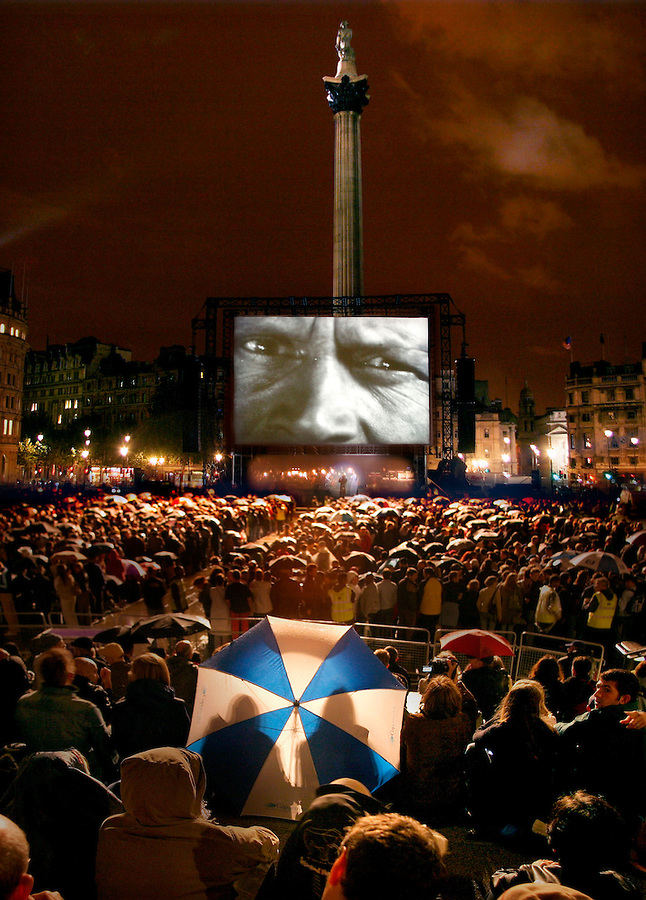
I’m not kidding. In 2004, London’s Institute of Contemporary Arts invited bandmates Neil Tennant and Chris Lowe to compose a new score to be performed with Dresdner Sinfoniker at a screening in Trafalgar Square. To no one’s surprise, they went with an electro-prog sound. What would the filmmaker, who died in 1948, have made of that?
In order to make an educated guess, let’s turn to critic and film historian Roger Ebert, who attended a more modest screening in Three Oaks, Michigan, featuring a live, original soundtrack by local band Concrete. (Who knew composing music for this near 90-year-old film would turn out to be such a thing?) Ebert approved of Concrete’s use of “keyboards, half-heard snatches of speech, cries and choral passages, percussion, martial airs and found sounds… played loud, by musicians who saw themselves as Eisenstein’s collaborators, not his meek accompanists.”
We may not be able to scare up further documentation of Concrete’s work, but you can view the film in its entirety with its Pet Shop Boys score. Their soundtrack is also available for purchase by those who would listen to it on its own merits.
You can find the original Battleship Potemkin here or in our collection of 600 Free Movies Online. And if you’re interested in another remix of a silent classic, please see The Pixies’ Black Francis Creates a Soundtrack for the Famous German Expressionist Film, The Golem
via Metafilter
Related Content:
Watch Ten of the Greatest Silent Films of All Time — All Free Online
The Power of Silent Movies, with The Artist Director Michel Hazanavicius
Ayun Halliday’s most recent book is Peanut, a graphic novel about a girl who fakes a peanut allergy. @AyunHalliday
Read More...Watch the Rolling Stones Write “Sympathy for the Devil”: Scenes from Jean-Luc Godard’s ’68 Film One Plus One
After the Rolling Stones’ partly misguided, partly inspired attempt at psychedelia, Their Satanic Majesties Request, the band found its footing again in the familiar territory of the Delta Blues. But with the 1968 recording of Beggar’s Banquet, they also retained some of the previous album’s experimentation, taken in a more sinister direction on the infamous “Sympathy for the Devil.” In the studio, with the band during those recording sessions, was none other than radical French New Wave director Jean-Luc Godard, who brought his own experimental sensibilities to a project he would call One Plus One, a document of the Stones’ late sixties incarnation—including an increasingly reclusive Brian Jones. Godard punctuates the fascinating studio scenes of the Stones with what Andrew Hussey of The Guardian calls “a series of set pieces—an incoherent stew of Situationism and other Sixties stuff”:
Black Panthers in a disused car park execute white virgins; a bookseller reads aloud from Mein Kampf to Maoist hippies; in the final scene the bloodied corpse of a female urban guerrilla is raised to the Stones’ soundtrack as Godard himself darts about like a demented Jacques Tati waving Red and Black flags. You just don’t find this sort of thing at the local multiplex anymore.
For all of its heavy use of leftist Sixties iconography, its anarchic attempt to fuse “art, power and revolution,” and its fascinating portraiture of rock and roll genius at work, the film crash landed in France, earning the contempt of arch Situationist theorist Guy Debord, who called it “the work of cretins.”
Critics and audiences apparently expected more from Godard in the wake of the abortive May ‘68 student uprising in Paris, and the general neglect of the film meant that Godard missed his chance to, as he put it, “subvert, ruin and destroy all civilised values.”
The film’s producer, Iain Quarrier, also found it disappointing. Without the director’s permission, Quarrier decided to retitle One Plus One with the more commercially-minded Sympathy for the Devil and tack a completed version of that song to the last reel, a move that provoked Godard to punch Quarrier in the face. But not everyone found Godard’s effort off-putting. In a 1970 review, the New York Times’ Roger Greenspun called it “heavily didactic, even instructional…. [T]he prospective text of some ultimate, infinitely complex collectivism.” Greenspun also decried Quarrier’s unauthorized interventions.
In his retrospective take, Andrew Hussey admits that Godard’s political posturing is “bollocks,” but then concludes that One Plus One is “great stuff: a snapshot of a far-off, lost world where rock music is still a redemptive and revolutionary force.” And it’s both—ridiculous and sublime, a powerful crystallization of a moment in time when all the Western world seemed poised to crack open and release something strange and new. Watch the trailer and scenes from Godard’s film above. You can also pick up a copy of the 2018 restoration of the film here.
Related Content:
Jefferson Airplane Wakes Up New York; Jean-Luc Godard Captures It (1968)
Meetin’ WA: Jean-Luc Godard Meets Woody Allen in 26 Minute Film
Jean-Luc Godard’s After-Shave Commercial for Schick
Josh Jones is a writer and musician based in Durham, NC. Follow him at @jdmagness
Read More...A Short, Animated Defense of Toronto’s Great Public Libraries
If you’ve been with Open Culture since our early days, you might remember I Met the Walrus, a short Oscar-nominated film that recalls the time when John Lennon granted an interview to a 14-year-old Beatles’ fan named Jerry Levitan. The animated film (which we still highly recommend) was the visual creation of Josh Ruskin and James Braithwaite, who have now teamed up to create “Our Public Library,” a short animated film that calls attention to the budget cuts that are undermining Toronto’s great public library system. Toronto’s lawmakers will be making key decisions about the fate of the library soon (something hopefully Mayor Rob Ford won’t be involved with, seeing that he seems prefer the pipe and drink to the book). For information on how to help protect Toronto’s public libraries, please visit the web site Our Public Library.
Related Content:
The Digital Public Library of America Launches Today, Opening Up Knowledge for All
A Look Inside Marilyn Monroe’s Personal Library
The Odd Collection of Books in the Guantanamo Prison Library
Read More...Support Us
We're hoping to rely on loyal readers, rather than erratic ads. Please click the Donate button and support Open Culture. You can use Paypal, Venmo, Patreon, even Crypto! We thank you!

About Us

Open Culture scours the web for the best educational media. We find the free courses and audio books you need, the language lessons & educational videos you want, and plenty of enlightenment in between.
Advertise With Us

FREE UPDATES!
GET OUR DAILY EMAIL
Get the best cultural and educational resources on the web curated for you in a daily email. We never spam. Unsubscribe at any time.
FOLLOW ON SOCIAL MEDIA

Open Culture editor Dan Colman scours the web for the best educational media. He finds the free courses and audio books you need, the language lessons & movies you want, and plenty of enlightenment in between.
Advertise With Us


