Eric Clapton’s Favorite Guitar Solo: Duane Allman on Wilson Pickett’s 1968 Cover of the Beatles’ ‘Hey Jude’
Ask a group of guitarists to name their favorite guitar solo, and there’s a pretty good chance someone will mention Eric Clapton’s solo on the live recording of “Crossroads,” from Cream’s 1968 Wheel’s of Fire album. So then, whose solo does Eric Clapton like? On more than one occasion he has singled out Duane Allman’s breakthrough performance on Wilson Pickett’s R & B cover of the Beatles’ “Hey Jude.”
In late 1968 Allman was about 22 years old and had not yet formed the Allman Brothers Band. Eager to make a name for himself, he showed up at Rick Hall’s now-legendary FAME Studios in Muscle Shoals, Alabama, to offer his services as a session guitarist. Hall told Allman he already had more guitar players than he could use. Allman asked if he could just hang around the studio and help out if the need should ever arise. “I mean, this was Duane,” Hall said to Allman’s biographer Randy Poe. “He was hell-bent for stardom and nothing was going to stop him.”
Hall let the young guitarist hang around, and before long he was playing on a few sessions with Clarence Carter. Hall liked what he heard, and Allman’s crucial moment arrived shortly afterward, when the former Stax recording artist Wilson Pickett showed up at the studio unexpectedly. As Poe writes in his book Skydog: The Duane Allman Story,
“Pickett came into the studio,” says Hall, “and I said, ‘We don’t have anything to cut.’ We didn’t have a song. Duane was there, and he came up with an idea. By this time he’d kind of broken the ice and become my guy. So Duane said, ‘Why don’t we cut “Hey Jude”?’ I said, ‘That’s the most preposterous thing I ever heard. It’s insanity. We’re gonna cover the Beatles? That’s crazy!’ And Pickett said, ‘No, we’re not gonna do it.’ I said, ‘Their single’s gonna be Number 1. I mean, this is the biggest group in the world!’ And Duane said, ‘That’s exactly why we should do it — because [the Beatles single] will be Number 1 and they’re so big. The fact that we would cut the song with a black artist will get so much attention, it’ll be an automatic smash.’ That made all the sense in the world to me. So I said, ‘Well, okay. Let’s do it.’
The original Beatles version of “Hey Jude” is over seven minutes long. Pickett was determined to keep his version shorter, to make it suitable for radio play. At four minutes long, it was still more than a minute longer than the average popular song from that era. Most of the extra time is taken up by Allman’s explosive rock and roll-style guitar solo. “From the moment Duane plays the first lick ten seconds into the coda,” writes Poe, “until the song fades out over a minute later, it is entirely his show. The background vocalists are singing those familiar ‘na-na-na-na’s’ — but it’s all for naught. Rick Hall has pushed them so far down in the mix, they are merely ambiance. Absolutely nothing matters but Duane’s guitar.” When it was over, everyone rushed to hear the playback. Hall was so excited he picked up the telephone and called Atlantic Records producer and executive Jerry Wexler, who had sent Pickett to Muscle Shoals. Writes Poe:
Hall cranked up the volume, held the receiver near the speakers, and played the recording all the way through. The guitar player, naturally, blew Jerry Wexler away. “Who is he?” Wexler asked. Hall told Wexler that Pickett called him Sky Man. He said that Sky Man was a hippie from Florida who had talked Pickett into cutting the tune. Wexler persisted. “Who the hell is he?” “Name’s Duane Allman,” Rick replied.
Before Pickett christened Allman “Sky Man,” the guitarist already had a nickname he was fond of: “Dog.” In keeping with it, he always wore a dog collar wrapped around his right boot, like a spur. So the two nicknames were combined, and Allman was known thereafter as “Skydog.”
Although Pickett recorded “Hey Jude” against his will, he liked the result so much he made it the title song of his next album. And right about the time the Beatles’ version was coming down after nine weeks at number one on the American charts, Pickett’s version started going up. It peaked at number 15 on the R & B chart and number 23 on the pop chart. When Clapton first heard Allman’s solo on his car radio, he reportedly pulled over to the side of the road to listen. “I drove home and called Atlantic Records immediately,” Clapton said. “I had to know who that was playing guitar and I had to know now.”
Listen to the full song:
Related Content:
Here Comes The Sun: The Lost Guitar Solo by George Harrison
Guitar Stories: Mark Knopfler on the Six Guitars That Shaped His Career
Read More...Watch Werner Herzog’s From One Second to the Next, an Eye-Opening Film Reveals the Dangers of Texting While Driving
Soon after I started driving, back in high school, I got a mobile phone capable of SMS messaging. As with any technology not yet widespread, it then seemed more novelty than convenience; I hardly knew anybody else with a cellphone, much less with one capable of receiving my messages. But in the intervening dozen years, everyone started texting, and the practice turned from oddity into near-necessity, no matter the time, no matter the place.
Now, having taken for granted the ability to instantly send short messages across the city, country, or world to one another, society has, inevitably, begun to focus on the associated dangers of texting. But few of us have thought quite as hard about them as has Werner Herzog, director of Aguirre, the Wrath of God, Fitzcarraldo, Cave of Forgotten Dreams, and now a documentary against texting while driving. But don’t people already know the dangers? Haven’t public service announcements cautioned them not to do it, and stiff, fee-threatening laws gone on the books across America?
Judging by the sudden popularity of Herzog’s new 35-minute film From One Second to the Next, sponsored by cell service provider AT&T, a German New Wave luminary’s words carry more weight. “I’m not a participant of texting and driving — or texting at all,” many have already quoted him as saying, “but I see there’s something going on in civilization which is coming with great vehemence at us.” Despite not having driven regularly since high school, I do on my rare occasions at the wheel feel that strangely strong temptation to text in motion. Having watched Herzog’s unblinking take on the real-life consequences of doing so — unpayably high medical bills at best, paralysis and death at worst — I don’t see myself giving in next time. Whether or not it similarly effects the students of the 40,000 schools in which it will screen, it marks a vast improvement upon all the murky, heavy-handed cautionary videos I remember from my own driver’s ed days. Perhaps what Herzog did for Bad Lieutenant, he should now do for that classroom classic Red Asphalt.
You can find From One Second to the Next in our collection of 550 Free Movies Online.
Related Content:
Portrait Werner Herzog: The Director’s Autobiographical Short Film from 1986
An Evening with Werner Herzog
Errol Morris and Werner Herzog in Conversation
Werner Herzog Has a Beef With Chickens
Colin Marshall hosts and produces Notebook on Cities and Culture and writes essays on literature, film, cities, Asia, and aesthetics. He’s at work on a book about Los Angeles, A Los Angeles Primer. Follow him on Twitter at @colinmarshall.
Read More...The Origins Project Brings Together Neil DeGrasse Tyson, Richard Dawkins, Lawrence Krauss, Bill Nye, Ira Flatow, and More on One Stage
It often seems, at least to me, that our culture is slowly sliding backward when it comes to science education. As a humanities person, my observations may not count for much, but I do find myself getting nostalgic for popular science communicators like Carl Sagan and Richard Feynman; people who could appear in America’s living room and enthrall even the most hardened and recalcitrant of minds. Sagan’s influence peaked at the dawn of the culture wars, and it doesn’t seem like anyone could fill his shoes.
But several influential science communicators have made significant strides in bringing science to a popular audience in the past few decades. Among them is the very affable astrophysicist Neil DeGrasse Tyson, who takes Sagan’s mantle in the Cosmos reboot on Fox next year. There are media figures like NPR’s Ira Flatow, Bill Nye the Science Guy, sci-fi author Neal Stephenson, and Emmy-award-winning Tracy Day, co-founder of the World Science Festival. Physicist and popular science writer Brian Greene has done excellent work for NOVA, and scientific heavyweights Lawrence Krauss and Richard Dawkins reach millions with popular books and media appearances.
Now imagine all these people on the same stage together, trading stories, jamming, riffing like great jazz musicians, like some Justice League of 21st century science lovers. Well, you don’t have to, because this happened, not on primetime television (alas), but at Arizona State University under the aegis of their “Origins Project,” whose mission is to foster interdisciplinary research, build scientific partnerships, and “raise the profile of origins-related issues and broaden scientific literacy.” Origins Project director Lawrence Krauss MC’ed the March 30th event, and the panel filled a 3,000-seat auditorium for a two-hour session that focuses on “the storytelling of science” (part one at top, part two above).
The event harnesses the slick, entertaining format of TED Talks to demonstrate how cutting-edge research can reach a wide audience eager for a fuller understanding of the physical universe. The first video up top opens with a quote from Michael Shermer: “Humans are pattern-seeking story-telling animals, and we are quite adept at telling stories about patterns, whether they exist or not.” The stories that the members of this exciting panel discussion tell are connected to physical reality through scientific evidence that—without artful and compelling narrative—can seem bewilderingly complex.
Related Content:
Neil deGrasse Tyson Unveils a Dazzling Preview of the New Cosmos
Richard Dawkins Makes the Case for Evolution in the 1987 Documentary, The Blind Watchmaker
Bill Nye, The Science Guy, Says Creationism is Bad for Kids and America’s Future
Josh Jones is a writer and musician based in Washington, DC. Follow him at @jdmagness
Read More...100 Great Sci-Fi Stories by Women Writers (Read 20 for Free Online)

Image by Frankie Fouganthin, via Wikimedia Commons
Since 2009, the organization VIDA: Women in the Literary Arts has sought to bring balance to the representation of female authors in the literary world. As revealed by the 2010 controversy begun by author Jodi Picoult over the gushing treatment Jonathan Franzen’s Freedom received in the New York Times, the disparity, and the bias, are real. Author Jennifer Weiner chimed in as well, writing: “when a man writes about family and feelings, it’s literature with a capital L, but when a woman considers the same topics, it’s romance, or a beach book.” This fracas—involving a number of mostly New York literati and the death of the term “chick lit”—didn’t split evenly down gender lines. Both male and female writers lined up to defend Picoult and Franzen, but it did open up legitimate questions about the old (mostly white) boys club that claims the upper echelons of literary fiction and the brass ring that is the New York Times book review.
What received no notice in the popular media during all this chatter was the place of women writers in genre fiction, which mostly lives outside the gates and rarely gets much notice from the critics (with the exception of a handful of “serious” writers and the Young Adult market). Well, there is a discussion about gender parity in the science fiction world taking place now on the blog of sci-fi critic and writer Ian Sales. Sales curates SF Mistressworks—a blog for women sci-fi writers—and after reviewing a 1975 anthology called Women of Wonder, he asked readers over at his blog to submit their favorite short fiction by women writers. His goal? To collect 100 stories and novellas as a counter to the classic, and almost wholly male-dominated collection, 100 Great Science Fiction Short Short Stories, edited by Isaac Asimov. You can read the full list of 100 over at Sales’ blog. Below, we’ve excerpted those stories that are freely available online. If you’re a science fiction fan and find yourself unable to name more than one or two female authors in the genre (everyone knows, for example, the fabulous Ursula K. Le Guin and Margaret Atwood, pictured above), you might want to take a look at some of the great work you’ve missed out on.
Sales’ list spans several decades and, as he writes, demonstrates “a good spread of styles and themes and approaches across the genre.”
1 ‘The Fate of the Poseidonia’, Clare Winger Harris (1927, short story) online here
12 ‘The New You’, Kit Reed (1962, short story) online here
13 ‘The Putnam Tradition’, Sonya Dorman (1963, short story) online here
16 ‘The Heat Death of the Universe’, Pamela Zoline (1967, short story) online here
24 ‘The Violet’s Embryo’, Angélica Gorodischer (1973, novelette) online here (excerpt)
28 ‘The View from Endless Scarp’, Marta Randall (1978, short story) online here
51 ‘The Road to Jerusalem’, Mary Gentle (1991, short story) online here
71 ‘Captive Girl’, Jennifer Pelland (2006, short story) online here
79 ‘Spider the Artist’, Nnedi Okrafor (2008, short story) online here
81 ‘Eros, Philia, Agape’, Rachel Swirsky (2009, novelette) online here
82 ‘Non-Zero Probabilities’, NK Jemisin (2009, short story) online here
85 ‘Blood, Blood’, Abbey Mei Otis (2010, short story) online here and here
88 ‘Amaryllis’, Carrie Vaughn (2010, short story) online here
89 ‘I’m Alive, I Love You, I’ll See You in Reno’, Vylar Kaftan (2010, short story) online here
91 ‘Six Months, Three Days’, Charlie Jane Anders (2011, short story) online here
93 ‘The Cartographer Bees and the Anarchist Wasps’, E Lily Yu (2011, short story) online here
94 ‘Silently and Very Fast’, Catherynne M Valente (2011, novella) online here, here and here
96 ‘A Vector Alphabet of Interstellar Travel’, Yoon Ha Lee (2011, short story) online here
97 ‘Immersion’, Aliette de Bodard (2012, short story) online here
98 ‘The Lady Astronaut of Mars’, Mary Robinette Kowal (2012, novelette) online here
* Please note: an earlier version of this post was titled “The 100 Best Sci-Fi Stories by Women Writers (Read 20 for Free Online).” As this list’s curator, Ian Sales, points out unequivocally below, this is not meant to be a definitive “best of” in any sense. Our apologies for misreading his intentions.
via Metafilter
Related Content:
Free Science Fiction Classics on the Web: Huxley, Orwell, Asimov, Gaiman & Beyond
Free Philip K. Dick: Download 11 Great Science Fiction Stories
Isaac Asimov Recalls the Golden Age of Science Fiction (1937–1950)
425 Free eBooks: Download to Kindle, iPad/iPhone & Nook
Josh Jones is a writer and musician based in Washington, DC. Follow him at @jdmagness
Read More...David Foster Wallace’s Love of Language Revealed by the Books in His Personal Library
“I didn’t think much of Infinite Jest in the beginning,” writes Jacqueline Munoz, librarian at the University of Texas at Austin’s Harry Ransom Center. But as she read further into Wallace’s seemingly “wordy and unfocused” landmark novel, the author’s mind, and how it dealt with “how unforgiving it is to be human” and how different generations “struggle internally with the same issues,” won her over: “I thought, this man is a genius; I want to know him better.” Many of us Wallace fans harbor the same desire, and now that the Ransom Center has acquired and made available a considerable chunk of the writer’s heavily annotated library, a few more of us can. The books in Wallace’s library, as Munoz puts it, reveal “a philosopher, mathophile, physics buff, grammarian, pop-fiction reader, lit professor, creative writer, and spiritual seeker,” and Maria Bustillos, writing in The Awl back in 2011, traced Wallace’s seemingly strange but ultimately meaningful presence of titles like The Spirituality of Imperfection and The Drama of the Gifted Child.
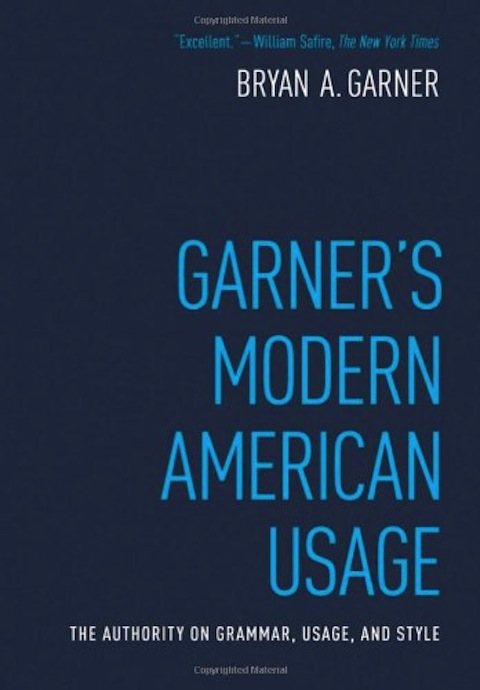
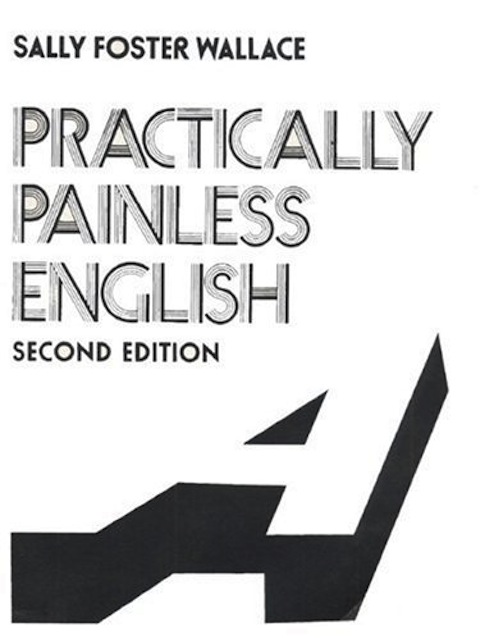
Bustillos’ exploration of Wallace’s proclivity for self-help brings in a volume written by Sally Foster Wallace, David’s mother: a grammar textbook called Practically Painless English, “the only book of English grammar I know of that can hold a candle to the works of the Fowler brothers.” Her book has a place in the Ransom Center’s collection, and anyone who’s read Wallace’s Harper’s article “Tense Present” may smile at its presence, remembering stories of the songs about solecisms and other linguistic misuses his family would sing on car trips. Ostensibly a review of Bryan A. Garner’s A Dictionary of Modern American Usage, a copy of which also made it into the collection, the piece reveals Wallace’s thoroughgoing interest in the mechanics, well-functioning or otherwise, of English. You can follow the thread through several other titles in his possession, including Albert Baugh’s A History of the English Language, John D. Ramage’s Rhetoric: A User’s Guide, all the way to Peter Ladefoged’s Elements of Acoustic Phoenetics. And when you’re done, you will want to keep following the thread a little further by checking out our previous post: David Foster Wallace Breaks Down Five Common Word Usage Mistakes in the English Language.
Related Content:
30 Free Essays & Stories by David Foster Wallace on the Web
David Foster Wallace: The Big, Uncut Interview (2003)
David Foster Wallace’s 1994 Syllabus
Colin Marshall hosts and produces Notebook on Cities and Culture and writes essays on literature, film, cities, Asia, and aesthetics. He’s at work on a book about Los Angeles, A Los Angeles Primer. Follow him on Twitter at @colinmarshall.
Read More...World-Renowned Graphic Designer Milton Glaser Has a Laugh on Old Jews Telling Jokes
Old Jews Telling Jokes: as Youtube series go, this one has a certain conceptual purity. That its videos have become very popular indeed won’t come as a surprise to anyone who grew up in a large Jewish family; you want a joke told right, you go to the top of the family tree. We’ve seen jokes told by dentists, businessmen and even the likes of lawyer and political commentator Alan Dershowitz and former New York City mayor Ed Koch. Above you’ll see “I Want to Have a Monkey,” one of the series’ jokes told by graphic designer and New York magazine co-founder Milton Glaser, creator of logos for DC Comics, the Brooklyn Brewery, and of course, in the form of the universally recognized I ♥ NY, his city. You can learn more about his 60-year design career in the short documentary by Hillman Curtis just below:
Unlike most of the videos’ stars, who stand in front of a standard white background, Glaser tells his jokes in a more interesting setting: his longtime office, of which you’ll see more in Curtis’ documentary. When the Old Jews Telling Jokes crew turned up, they found in this force of graphic design a veritable fount of punchlines. He demonstrates his comedic acumen in eight other episodes: “The Resurrecting Rabbi,” “Magician and a Sledgehammer,” “Two Garmentos,” “Edward R. Murrow,” “Am I Thirsty,” “Elephant and Crocodile,” “I’d Like to Be Castrated,” and “The Parrot.” Here we have another lesson to take from our elders, or at least from this specific elder: you can’t just rise to and remain for decades at the very top of your exotic and challenging field. You’ve also got to have good timing.
Related Content:
The Most “Intellectual Jokes”: Our Favorite Open Culture Reader Submissions
Sketches of Artists by the Late New Media Designer Hillman Curtis
Mickey Mouse In Vietnam: The Lost Anti-War Animation from 1968
Colin Marshall hosts and produces Notebook on Cities and Culture and writes essays on literature, film, cities, Asia, and aesthetics. He’s at work on a book about Los Angeles, A Los Angeles Primer. Follow him on Twitter at @colinmarshall.
Read More...Selling Cool: Lou Reed’s Classic Honda Scooter Commercial, 1984
In the early 1980s the Honda Motor Company was trying to get people to think of its new Honda Elite scooters as a cool way of getting around. To that end, the company enlisted a series of celebrities, including Miles Davis, Grace Jones and Devo, to appear in its ad campaign. The most notable piece in the campaign, by far, was a one-minute TV commercial in 1984 starring former Velvet Underground frontman Lou Reed.
The film was shot in what was then a very rough-and-tumble Lower East Side of Manhattan. Director Steve Horn, hired by the Portland, Oregon-based agency Wieden & Kennedy, underexposed and overdeveloped the film to give it a grainy, documentary appearance. Editor Lawrence Bridges, well-known for his work on Michael Jackson’s “Beat It” video, was hired to piece it all together.
Bridges found the task of setting the images to Reed’s classic 1972 song “Walk on the Wild Side” extremely daunting. The idea of using that song in a commercial seemed like a sacrilege. “The generation being advertised to at that point was probably the most cynical and suspicious toward the medium to date,” writes Bridges at Vimeo, “and, moreover, I had this monumental piece of music that I had to honor. For me, the answer was to make it into an ‘underground’ film.”
Bridges used techniques he had learned from French New Wave films and that he had experimented with in MTV videos. “I got to work and used the junk cuts,” says Bridges, “including flash frames and run outs and whip pans that would normally end up being left on the floor for an assistant to clean up. I did all the things I’d done in music videos, like taking a shot and dividing it randomly in jump cuts, and all other manner of post-production techniques we used in music videos when we had less footage than the length of the actual video.”
When it was finished, Bridges and his colleagues arranged a meeting with a marketing manager from Honda. It was a nerve-racking encounter. “The client was a very shrewd, practical person and I knew that he was averse to conspicuously daring creative work,” says Bridges. “This gritty, almost avant-garde spot, set in pre-gentrified Lower Manhattan with every art film trope you could imagine might have put considerable demands on his charm.” Instead, Bridges recalls, when the commercial was finished playing the man from Honda broke the tension by saying, “We need to be THAT scooter company.”
The spot made a huge splash on Madison Avenue. Its influence could be seen all over the next generation of commercials. But it didn’t sell many scooters. “For all its impact on the advertising industry,” writes Randall Rothenberg in Where the Suckers Moon: The Life and Death of an Advertising Campaign, “the Lou Reed commercial did little for Honda. Young Americans had little interest in scooters, no matter how hip they were made out to be.”
NOTE: To see some of the earlier scooter ads created for Honda by the Los Angeles-based Dailey & Associates, you can follow these links: Devo; Miles Davis; Grace Jones and Adam Ant.
Related Content:
David Lynch’s Surreal Commercials
Fellini’s Fantastic TV Commercials
Ingmar Bergman’s Soap Commercials Wash Away the Existential Despair
Read More...Listening to Proust’s Remembrance of Things Past, (Maybe) the Longest Audio Book Ever Made
I’m impressed by the undertaking. Neville Jason and Naxos Audio Books have completed an unabridged audio version of Proust’s epic, seven-part novel, Remembrance of Things Past. Proust published the first volume, Swann’s Way, one hundred years ago, in 1913, and completed the last volume, Time Regained, fourteen years later, in 1927. By that time, Proust had a masterpiece on his hands — a very long masterpiece. The classic (available in our collection of Free eBooks) spans some 3,000 pages and contains more than 1.5 million words. Until now, Remembrance of Things Past has never been available in an unabridged audio format, perhaps because it would amount to the longest audio book ever made (or something approaching that). But Neville Jason has pulled it off, producing a 151-hour recording that’s now available on Audible.com. Below, we’ve provided seven free audio excerpts (one from each volume), and if you care to sign up for Audible’s 30-Day Free Trial, you can download any one volume for free. NB: Audible is an Amazon.com subsidiary, and we’re a member of their affiliate program. If Proust isn’t your cup of tea, you can find many other great works in our collection of 630 Free Audio Books.
Related Content:
Watch Monty Python’s “Summarize Proust Competition” on the 100th Anniversary of Swann’s Way
Arthur Conan Doyle Fills Out the Questionnaire Made Famous By Marcel Proust (1899)
Read More...The Do’s and Don’ts of Improv Comedy with Liam Neeson, Ricky Gervais, Tina Fey, and Del Close
Attention, all struggling comedians! There’s big money in teaching corporate executives the rules of improvisation. Not to prepare them for a highly lucrative second career on some late night, black box stage, but rather to hone their listening skills, teach them how to work collaboratively, and give them practice communicating in a flexible—and therefore effective—manner.
The above clip from Ricky Gervais and Stephen Merchant’s Life’s Too Short, suggests that actor Liam Neeson might benefit from similar training.
Or are Gervais and Merchant guilty of failing to embrace the Rules of Improv, when Neeson, having solicited a suggestion of “hypochondriac at the doctor’s office” from series star Warwick Davis, announces that he’s contracted full blown AIDS from a starving African prostitute?
Even though it’s obvious that the supremely gifted Neeson is having a laugh, let’s see if we can determine who’s breaking the cardinal rules of improv in this scene.
Comedian Tina Fey has Four Rules of Improv that resonate with both business and funny people:
- The first rule of improvisation is to AGREE.
- The second rule of improv is to not only say YES, say YES, AND.
- The next rule is MAKE STATEMENTS. (Neeson does great in this department)
- THERE ARE NO MISTAKES only OPPORTUNITIES.
Hmm. One thing’s clear. A bad improviser can drag the most gifted practitioners of the form down with him.
The brilliance of the scripted scene recalls late improv guru Del Close’s Eleven Commandments:
- You are all supporting actors.
- Always check your impulses.
- Never enter a scene unless you are NEEDED.
- Save your fellow actor, don’t worry about the piece.
- Your prime responsibility is to support.
- Work at the top of your brains at all times.
- Never underestimate or condescend to your audience.
- No jokes (unless it is tipped in front that it is a joke.)
- Trust… trust your fellow actors to support you; trust them to come through if you lay something heavy on them; trust yourself.
- Avoid judging what is going down except in terms of whether it needs help (either by entering or cutting), what can best follow, or how you can support it imaginatively if your support is called for.
- LISTEN
That’s likely ample rules, though it’s tempting to add:
Never (or perhaps always) pretend to knock on a door by saying “knock knock.”
Never (or perhaps always) pretend to open a shop door by saying “tring.”
Never (or perhaps always) identify a “well known homosexual actor” by name.
And if any corporate clients—or Ricky Gervais—need lessons in how to keep from “corpsing” while delivering funny material, Liam Neeson is for sure the man for the job.
Related Content:
Ricky Gervais Presents “Learn Guitar with David Brent”
“Learn English With Ricky Gervais,” A New Podcast Debuts (NSFW)
Tina Fey Brings Bossypants Tour to Google
Ayun Halliday was a founding member of The No Fun Mud Piranhas, Northwestern University’s Improv Olympic Team. Follow her @AyunHalliday
Read More...Watch the Earliest Known Footage of Louis Armstrong Performing Live in Concert (Copenhagen, 1933)
In October of 1933, Louis Armstrong and his “Harlem Hot Band” arrived in Copenhagen, Denmark for a series of eight shows at the Lyric Park theater. Thousands of fans mobbed the railway station, breaking through police barricades and climbing on top of train cars just to get a glimpse of the great jazz trumpeter as he stepped from his train.
Nowadays the Copenhagen visit is remembered because it was the first time Armstrong was ever filmed in concert. The Danish director Holger Madsen recruited Armstrong to appear in his feature film København, Kalundborg Og -?. Armstrong had made a cameo appearance in a 1931 film called Ex Flame, and on a sound stage the following year in two short films–a Paramount Pictures featurette and a Betty Boop cartoon–but the Copenhagen footage is the earliest of Armstrong playing live with his band.
The performance was filmed on October 21, 1933 at the Lyric Park. There was no audience in the theater during the filming. The shots of people applauding were made at a different time and spliced into the scene. Armstrong and his band play three songs: “I Cover the Waterfront,” “Dinah” and “Tiger Rag.” The nine-man band includes Armstrong on trumpet and vocals, Charles D. Johnson on trumpet, Peter DuCongé on clarinet and alto saxophone, Henry Tyree on alto saxophone, Fletcher Allen on tenor saxophone, Lionel Guimarez on trombone, Justo Baretto on piano, German Arango on bass and Oliver Tines on drums.
Armstrong is brilliant in the film. His exuberant showmanship and virtuosity are striking, and his unmistakable genius for phrasing–the way his trumpet and voice sound like two sides of the same distinctive instrument–remind us of why many people still consider Armstrong the greatest jazz musician of all time.
Related content:
Louis Armstrong and His All Stars Live in Belgium, 1959: The Full Show
Read More...Support Us
We're hoping to rely on loyal readers, rather than erratic ads. Please click the Donate button and support Open Culture. You can use Paypal, Venmo, Patreon, even Crypto! We thank you!

About Us

Open Culture scours the web for the best educational media. We find the free courses and audio books you need, the language lessons & educational videos you want, and plenty of enlightenment in between.
Advertise With Us

FREE UPDATES!
GET OUR DAILY EMAIL
Get the best cultural and educational resources on the web curated for you in a daily email. We never spam. Unsubscribe at any time.
FOLLOW ON SOCIAL MEDIA

Open Culture editor Dan Colman scours the web for the best educational media. He finds the free courses and audio books you need, the language lessons & movies you want, and plenty of enlightenment in between.
Advertise With Us


