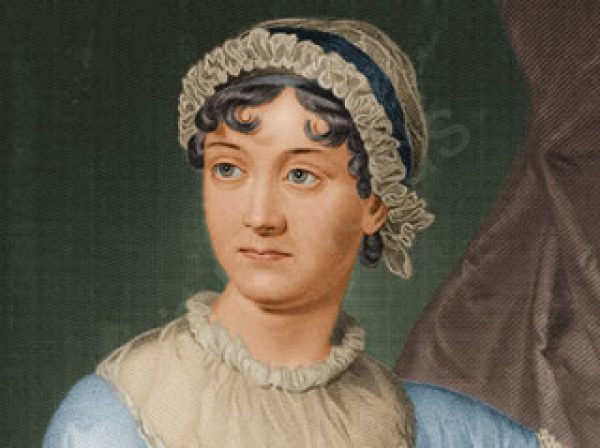
“If I am condemned, I shall be annihilated to nothing: but my ambition is such, as I would either be a world, or nothing.” — Margaret Cavendish (1623–1673)
Project Vox seeks to resurrect their overlooked-to-the-point-of-undiscovered contributions by publishing their long out of print texts, some translated into English for the first time. Biographical information and secondary resources will provide a sense of each philosopher as well as her philosophy.
Eventually, the site will include a forum where teachers can share lesson plans and articles. Male philosophy doctorates currently outnumber their female counterparts by an overwhelming number, but that may change as young women begin to see themselves reflected in the curriculum.
Euler’s conjecture, a theory proposed by Leonhard Euler in 1769, hung in there for 200 years. Then L.J. Lander and T.R. Parkin came along in 1966, and debunked the conjecture in two swift sentences. Their article — which is now open access and can be downloaded here — appeared in the Bulletin of the American Mathematical Society. If you’re wondering what the conjecture and its refutation are all about, you might want to ask Cliff Pickover, the author of 45 books on math and science. He brought this curious document to the web last week.
The “Galaxy Song” first appeared in the 1983 film Monty Python’s The Meaning of Life, and it has been revived in later years — on Monty Python albums, and in Monty Python stage plays. Now the song originally written by Eric Idle has been re-recorded, this time with the lyrics sung by the world-famous physicist Stephen Hawking. The lyrics include a lot of astronomical facts, some now considered outdated by scholars. But that doesn’t take the fun out of the recording.
The song will be available for download on iTunes. (If you live in the UK, find it here.) And it will also be released as a 7″ single. But you can stream it online for free above. Enjoy.
If you would like to sign up for Open Culture’s free email newsletter, please find it here. It’s a great way to see our new posts, all bundled in one email, each day.
If you would like to support the mission of Open Culture, consider making a donation to our site. It’s hard to rely 100% on ads, and your contributions will help us continue providing the best free cultural and educational materials to learners everywhere. You can contribute through PayPal, Patreon, and Venmo (@openculture). Thanks!
This month marks the 90th anniversary of the publication of F. Scott Fitzgerald’s masterpiece, The Great Gatsby. Perhaps no other book so embodies the ideal of the Great American Novel as Gatsby — and yet, when it first came out 90 years ago, it was regarded as a flop. As a headline writer for the New York World put it, “F. SCOTT FITZGERALD’S LATEST A DUD.”
Fitzgerald had a lot riding on Gatsby. He and his wife Zelda were living beyond their means, and he was desperately hoping the book would bring financial security as well as critical respect. On April 10, 1925 he wrote a letter to his editor, Maxwell Perkins:
Dear Max The book comes out today and I am overcome with fears and forebodings. Supposing women didn’t like the book because it has no important woman in it, and critics didn’t like it because it dealt with the rich and and contained no peasants borrowed out of Tess in it and set to work in Idaho? Suppose it didn’t even wipe out my debt to you — why it’ll have to sell 20,000 copies even to do that!
The author’s fears and forebodings were more or less realized. The first print run of 20,870 copies sold slowly. A second run of 3,000 was ordered a few months later, but many of those copies were still gathering dust on the warehouse shelves when Fitzgerald died in 1940. And while a few critics recognized Gatsby’s brilliance, many missed it. H.L. Mencken, for example, praised Fitzgerald’s maturing craftsmanship as a prose stylist but savaged the story itself, calling it “no more than a glorified anecdote.”
It must have cheered the author up, then, to receive letters of praise from several of the most influential writers of his time. Fitzgerald had sent inscribed copies of the book to Edith Wharton, Gertrude Stein and T.S. Eliot — all of whom responded. Of the three, Wharton was the most tepid in her praise, with echoes of Mencken running through her comments:
Dear Mr. Fitzgerald, I have been wandering for the last weeks and found your novel — with it’s friendly dedication — awaiting me here on my arrival, a few days ago. I am touched at your sending me a copy, for I feel that to your generation, which has taken such a flying leap into the future, I must represent the literary equivalent of tufted furniture and gas chandeliers. So you will understand that it is in the spirit of sincere deprecation that I shall venture, in a few days, to offer you in return the last product of my manufactory. Meanwhile, let me say at once how much I like Gatsby, or rather His Book, & how great a leap I think you have taken this time — in advance upon your previous work. My present quarrel with you is only this: that to make Gatsby really Great, you ought to have given us his early career (not from the cradle — but from his visit to the yacht, if not before) instead of a short résumé of it. That would have situated him, and made his final tragedy a tragedy instead of a “fate divers” for the morning papers. But you’ll tell me that’s the old way, and consequently not your way…
Wharton made it clear she thought of Gatsby as a literary advance only in respect to Fitzgerald’s own earlier work. Gertrude Stein allowed only that the new book was “different and older”:
My dear Fitzgerald: Here we are and have read your book and it is a good book. I like the melody of your dedication and it shows that you have a background of beauty and tenderness and that is a comfort. The next good thing is that you write naturally in sentences and that too is a comfort. You write naturally in sentences and one can read all of them and that among other things is a comfort. You are creating the contemporary world much as Thackeray did his in Pendennis and Vanity Fair and this isn’t a bad compliment. You make a modern world and a modern orgy strangely enough it was never done until you did it in This Side of Paradise. My belief in This Side of Paradise was alright. This is as good a book and different and older and that is what one does, one does not get better but different and older and that is always a pleasure. Best of luck to you always, and thanks so much for the very genuine pleasure you have given me.
The strongest and least equivocal praise came from Eliot:
Dear Mr. Scott Fitzgerald, The Great Gatsby with your charming and overpowering inscription arrived the very morning I was leaving in some haste for a sea voyage advised by my doctor. I therefore left it behind and only read it on my return a few days ago. I have, however, now read it three times. I am not in the least influenced by your remark about myself when I say that it has interested and excited me more than any new novel I have seen, either English or American, for a number of years. When I have more time I should like to write to you more fully and tell you exactly why it seems to me such a remarkable book. In fact it seems to me to be the first step that American fiction has taken since Henry James.
Fitzgerald was especially pleased with that last line. “I can’t express just how good your letter made me feel,” he wrote back to Eliot “– it was easily the nicest thing that’s happened to me in connection with Gatsby.”
Backstories of famously accomplished people seem incomplete without some past difficulty or failure to be overcome. In narrative terms, these incidents provide biographies with their dramatic tension. We see Abraham Lincoln rise to the highest office in the land despite the humblest of origins; Albert Einstein rewrites theoretical physics against all academic odds, given his supposed early childhood handicaps. In many cases, these stories are apocryphal, or exaggerated for effect. But whatever their accuracy, they always seem to reflect undeniable character traits of the person in question.
In the case of influential philosopher Jacques Derrida, progenitor of the both beloved and reviled critical theory known as “Deconstruction,” the stories of academic struggle and great mental suffering are well-documented. Furthermore, their details accord perfectly well with the mature thinker who, remarks the site Critical Theory, “can’t answer a simple god-damned question.” The good-natured snark on display in this description more or less sums up the feedback Derrida received during some formative years of schooling while he prepared for his entrance exams to France’s university system in 1951 at the age of 20.
Derrida may have “left as big a mark on humanities departments as any single thinker of the past forty years,” writes The New York Review of Books, but during this period of his life, he failed his exams twice before finally gaining admittance. Once, he “choked and turned in a blank sheet of paper. The same month, he was awarded a dismal 5 out of 20 on his qualifying exam for a license in philosophy.” One essay he submitted on Shakespeare, written in English (above), received a 10 out of 20. The feedback from Derrida’s instructor will sound very familiar to perplexed readers of his work. “Quite unintelligible,” writes the evaluator in one marginal comment. The main comment at the top of the paper reads in part:
In this essay you seem to be constantly on the verge of something interesting but, somewhat, you always fail to explain it clearly. A few paragraphs are indeed totally incomprehensible.
Another examiner—points out the NYRB—left a comment on his work “that has since become a commonplace”:
An exercise in virtuosity, with undeniable intelligence, but with no particular relation to the history of philosophy… Can come back when he is prepared to accept the rules and not invent where he needs to be better informed.
As it turns out, Derrida was not particularly interested in the rules, but in inventing a new method. Even if his “apostasy” caused him great mental anguish—“nausea, insomnia, exhaustion, and despair” (all normal features of any higher educational experience)—it’s probably fair to say he could not do otherwise. Although his intellectual biography, like the history of any revered figure, is unlikely to offer a blueprint for success, there is perhaps at least one lesson we may draw: Whatever the difficulties, you’re probably better off just being yourself.
By the time Charlie Watts’ snare drum cracks into the recently unearthed alternate acoustic take of “Wild Horses,” above, the song has already gathered as much momentum as the album version, its soulful minor chords filling whatever room you happen to be listening to it in. Released with the video above as a teaser for the extras-packed reissue of 1971’s Sticky Fingers, due out this May, the track replaces Mick Taylor’s electric guitar with well-placed acoustic plucking and almost jaunty rhythm playing by Keith. As Jagger belts them out, the lyrics “unzip” across the screen in a tasteful homage to Andy Warhol’s expertly sleazy Sticky Fingers cover art.
Part boast, part lament, it’s no wonder “Wild Horses” is one of the Stones’ most popular tunes. It seems that no matter what gets added, or taken away, from it, the song remains a completely transporting statement of loss and defiance. The song, stripped down to just vocals and acoustic guitars above, is utterly captivating with or without its electric slide swells, honky-tonk piano, and vocal harmonies, a testament to Richards’ skill with country songwriting, much of which he’d picked up while hanging out with former Byrd Gram Parsons.
The song owes much to Parsons’ 1968 “Hickory Wind,” and Parsons even covered “Wild Horses” as a mostly acoustic country ballad in 1970, the year before Sticky Fingers’ release. The Stones recorded the song in 1969, and clearly knew they had something special on their hands immediately afterward. Just above—starting at 0:40—see the band listen back to another stripped down version of the album take at Mussel Shoals studio in footage from the Maysles brothers’ Gimme Shelter.
The sing-along choruses and overall campfire vibe of The Glimmer Twins’ ballad makes it an ideal candidate for unplugged sessions, and the newly-debuted version at the top isn’t the only time The Stones have re-released an alternate acoustic take. Just above, see them live in the studio recording a new version of “Wild Horses” for 1995’s Stripped, an album of mostly-live, often acoustic reworkings of songs like “Street Fighting Man” and “Let It Bleed” and covers of Buddy Holly’s “Not Fade Away” and Dylan’s “Like a Rolling Stone.” Stripped may be an uneven album (hear on Youtube here), but Jagger and Richards’ brilliant imitations of country music—like “Dead Flowers” and, especially, “Wild Horses”—shine as brightly as ever.
When it came to giving advice to writers, Kurt Vonnegut was never dull. He once tried to warn people away from using semicolons by characterizing them as “transvestite hermaphrodites representing absolutely nothing.” And, in a master’s thesis rejected by The University of Chicago, he made the tantalizing argument that “stories have shapes which can be drawn on graph paper, and that the shape of a given society’s stories is at least as interesting as the shape of its pots or spearheads.” In this brief video, Vonnegut offers eight essential tips on how to write a short story:
Use the time of a total stranger in such a way that he or she will not feel the time was wasted.
Give the reader at least one character he or she can root for.
Every character should want something, even if it is only a glass of water.
Every sentence must do one of two things–reveal character or advance the action.
Start as close to the end as possible.
Be a sadist. No matter how sweet and innocent your leading characters, make awful things happen to them–in order that the reader may see what they are made of.
Write to please just one person. If you open a window and make love to the world, so to speak, your story will get pneumonia.
Give your readers as much information as possible as soon as possible. To heck with suspense. Readers should have such complete understanding of what is going on, where and why, that they could finish the story themselves, should cockroaches eat the last few pages.
Vonnegut put down his advice in the introduction to his 1999 collection of magazine stories, Bagombo Snuff Box. But for every rule (well, almost every rule) there is an exception. “The greatest American short story writer of my generation was Flannery O’Connor,” writes Vonnegut. “She broke practically every one of my rules but the first. Great writers tend to do that.”
Now if you want to learn to write with style, that’s another story. And Vonnegut has advice on that too here.
If you would like to sign up for Open Culture’s free email newsletter, please find it here. It’s a great way to see our new posts, all bundled in one email, each day.
If you would like to support the mission of Open Culture, consider making a donation to our site. It’s hard to rely 100% on ads, and your contributions will help us continue providing the best free cultural and educational materials to learners everywhere. You can contribute through PayPal, Patreon, and Venmo (@openculture). Thanks!
Simplicity is not the goal. It is the by-product of a good idea and modest expectations.
Thus spake designer Paul Rand, a man who knew something about making an impression, having created iconic logos for such immediately recognizable brands as ABC, IBM, and UPS.
An example of Rand’s observation, La Linea, aka Mr. Line, a beloved and deceptively simple cartoon character drawn with a single unbroken line, began as a shill for an Italian cookware company. No matter what he manages to get up to in two or three minutes, it’s determined that he’ll eventually butt up against the limitations of his lineal reality.
His chattering, apoplectic response proved such a hit with viewers, that a few episodes in, the cookware connection was severed. Mr. Line went on to become a global star in his own right, appearing in 90 short animations throughout his 15-year history, starting in 1971. Find many of the episodes on Youtube here.
The formula does sound rather simple. Animator Osvaldo Cavandoli starts each episode by drawing a horizontal line in white grease pencil. The line takes on human form. Mr. Line’s a zesty guy, the sort who throws himself into whatever it is he’s doing, whether ogling girls at the beach, playing classical piano or ice skating.
Whenever he bumps up against an obstacle—an uncrossable gap in his baseline, an inadvertently exploded penis—he calls upon the godlike hand of the animator to make things right.
(Bawdy humor is a staple of La Linea, though the visual format keeps things fairly chaste. Innuendo aside, it’s about as graphic as a big rig’s silhouetted mudflap girl.)
Voiceover artist Carlo Bonomi contributes a large part of the charm. Mr. Line may speak with an Italian accent, but his vocal track is 90% improvised gibberish, with a smattering of Lombard dialect. Watch him channel the character in the recording booth, below.
I love hearing him take the even-keeled Cavandoli to task. I don’t speak Italian, but I had the sensation I understood where both players are coming from in the scene below.
Almost all of us have read the story of Anne Frank, but we surely all picture it quite differently. Most of us have seen the photos used on the various covers of The Diary of a Young Girl, and some of us have even gone to Amsterdam and walked through the home in which she wrote it. But now, thanks to the internet, we have access to historical imagery that can help everyone envision the life of Anne Frank a bit more clearly.
Many years ago, we featured the only existing film of Frank, a 20-second clip from July 22, 1941 in which she looks on as a bride and groom pass below her window. Though short, the invaluable footage breathes a surprising amount of life into the cultural image of perhaps the 20th century’s most important diarist.
Even more comes from the 3D tour of her house and hiding place more recently made available online. The tour’s interface, with which anyone who played 1990s graphic adventure games like Myst will feel immediately familiar, gives you a first-person view behind the bookcase which for two years kept the Frank family’s living quarters a secret from Amsterdam’s Nazi occupiers.
The tour’s creators have loaded the digital recreation of the house with different spots that, when clicked, tell in audio of a certain aspect of the Franks’ experience there. The farther we get from the Second World War, the more these events might seem, to students reading about them for the first time, like a piece of capital‑H History disconnected from their own experience. But resources like these keep the story of Anne Frank and its lessons feeling as immediate as they should.
When asked for their favorite Sesame Street segment, many children of the 70s and 80s point to Pinball Number Count. Psychedelic animation, the Pointer Sisters, odd time signatures–what’s not to love? But for the serious Sesame Street buff, the “Jazz Numbers” series above deserves the silver medal. It’s got free jazz, Yellow Submarine-style surrealistic animation, and a vocal from Grace Slick of Jefferson Airplane. How many young parents recognized her distinctive voice, I wonder?
Also known as “Jazzy Spies,” this 1969 series of animations was devoted to the numbers 2 through 10 (there was no film for “one” as it is the loneliest number that you’ll ever do), and was an essential element in Sesame’s Street’s first season. Highlights include the dream-like elevator door sequence of “2,” the Jackson 5 reference in “5,” and the racing fans in “10.”
Slick got involved through her first husband, Jerry Slick, who produced the segments for San Francisco-based animation studio Imagination, Inc. Headed by animator Jeff Hale, the company also produced the Pinball segments, as well as the famous anamorphic “Typewriter Guy,” the Ringmaster, and the Detective Man. (Hale, by the way, has a cameo as Augie “Ben” Doggie in the well-loved Lucas parody Hardware Wars.) He passed away last month at 92.
The delirious music was composed and performed by Columbia jazz artist Denny Zeitlin, who would go on to score the 1979 remake of Invasion of the Body Snatchers. Zeitlin plays both piano and clavinet; accompanying him is Bobby Natanson on drums and Mel Graves on bass. According to Zeitlin, Grace Slick overdubbed her vocals later.
This wasn’t Slick’s first encounter with Jim Henson. In 1968, she and other members of Jefferson Airplane were part of a counterculture documentary called Youth ’68, the trailer for which you can groove on here.
Sesame Street, with all its primary colors, plastic merchandise, and Elmo infestation, may have lost its edge, but these early works show its revolutionary foundations.
Ted Mills is a freelance writer on the arts who currently hosts the FunkZone Podcast. You can also follow him on Twitter at @tedmills and/or watch his films here.
In this short video, Romanian animator Sebastian Cosor brings together two haunting works from different times and different media: The Scream, by Norwegian Expressionist painter Edvard Munch, and “The Great Gigin the Sky,” by the British rock band Pink Floyd.
Munch painted the first of four versions of The Scream in 1893. He later wrote a poem describing the apocalyptic vision behind it:
I was walking along the road with two Friends the Sun was setting — the Sky turned a bloody red And I felt a whiff of Melancholy — I stood Still, deathly tired — over the blue-black Fjord and City hung Blood and Tongues of Fire My Friends walked on — I remained behind – shivering with anxiety — I felt the Great Scream in Nature
Munch’s horrific Great Scream in Nature is combined in the video with Floyd’s otherworldly “The Great Gig in the Sky,” one of the signature pieces from the band’s 1973 masterpiece, Dark Side of the Moon. The vocals on “The Great Gig” were performed by an unknown young songwriter and session singer named Clare Torry.
Torry had been invited by producer Alan Parsons to come to Abbey Road Studios and improvise over a haunting piano chord progression by Richard Wright, on a track that was tentatively called “The Mortality Sequence.” The 25-year-old singer was given very little direction from the band. “Clare came into the studio one day,” said bassist Roger Waters in a 2003 Rolling Stone interview, “and we said, ‘There’s no lyrics. It’s about dying — have a bit of a sing on that, girl.’ ”
Forty-two years later, that “bit of a sing” can still send a shiver down anyone’s spine. For more on the making of “The Great Gig in the Sky,” and Torry’s amazing contribution, see the clip below to hear Torry’s story in her own words.
Follow Open Culture on Facebook and Twitter and share intelligent media with your friends. Or better yet, sign up for our daily email and get a daily dose of Open Culture in your inbox. And if you want to make sure that our posts definitely appear in your Facebook newsfeed, just follow these simple steps.
We're hoping to rely on loyal readers, rather than erratic ads. Please click the Donate button and support Open Culture. You can use Paypal, Venmo, Patreon, even Crypto! We thank you!
Open Culture scours the web for the best educational media. We find the free courses and audio books you need, the language lessons & educational videos you want, and plenty of enlightenment in between.