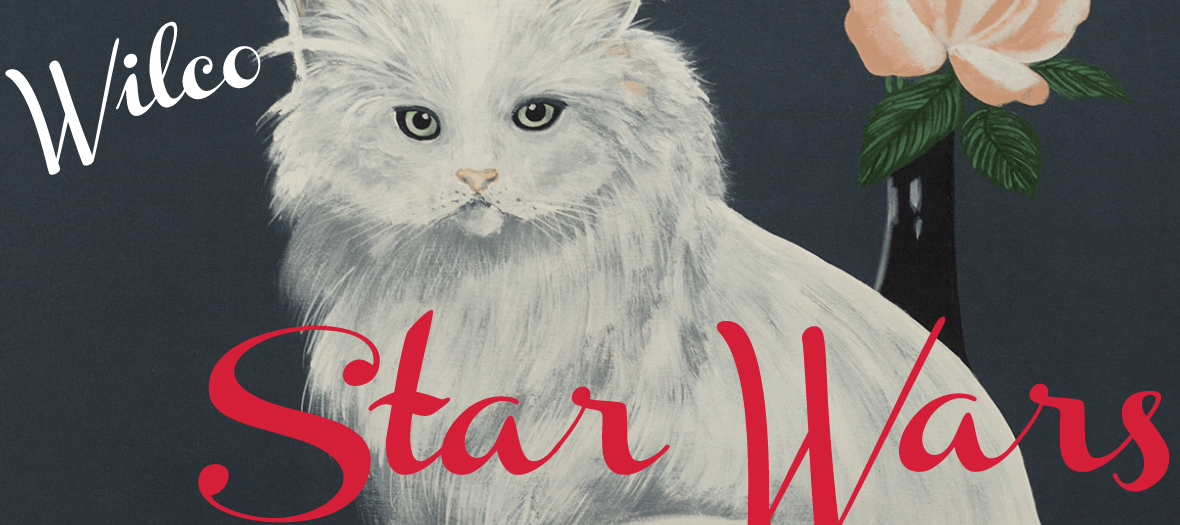
A quick heads up, Wilco just released its ninth studio album, Star Wars. And right now you can download it for free via Wilco’s website. But don’t dilly dally, the free download will only be available for 30 days. On the band’s Instagram account, Jeff Tweedy gave a simple explanation for the unexpected giveaway: “Well, the biggest reason, and I’m not sure we even need any others, is that it felt like it would be fun.” Indeed.
Last week: we highlighted a couple more downloads that will be free for a limited time. Find them below.
Fans of Twin Peaks, the early-1990s television series co-created and in large part directed by David Lynch, have had a lot to get excited about recently. Most prominently, we’ve heard a lot of will-he-or-won’t-he talk about whether Lynch will participate in the show’s much-discussed 21st-century reboot. That has no doubt stoked public interest in Twin Peaks (available on Hulu here), which in some sense has never really died away, even though it went off the air 24 years ago (and by all accounts got pretty lackluster in its second season); some of us, while we wait for the new series, have even engaged in all manner of Twin Peaks-themed writing, art, and even music projects.
Many Australian Twin Peaks fans, while they wait for the new series, made it over to Queensland’s Gallery of Modern Art earlier this year for the exhibitionDavid Lynch: Between Two Worlds. If they went on April 18th, they saw experimental post-punk band Xiu Xiu perform their own interpretation of the Twin Peaks score. “The music of Twin Peaks is everything that we aspire to as musicians and is everything that we want to listen to as music fans,” says Xiu Xiu leader Jamie Stewart. “It is romantic, it is terrifying, it is beautiful, it is unnervingly sexual. The idea of holding the ‘purity’ of the 1950s up to the cold light of a violent moon and exposing the skull beneath the frozen, worried smile has been a stunning influence on us.”
Xiu Xiu, since Stewart formed it in San Jose in 2002, has steadily gained a reputation as, in the words of Vice, “the weirdest band you know.” Part of that has to do with the formal adventurousness of their music itself, and part to do with their invariably disturbing music videos. No wonder, then, that they would feel such an affinity with David Lynch, no stranger to getting called “weird” by audiences and the maker of some unsettling music and music videos himself. Given the potential overlap in their followings, and given that nobody seems to know how many production decisions the new Twin Peaks has yet made, perhaps someone can check and see whether Xiu Xiu might have the time to record its score?
Les Paul, known primarily for the iconic guitar that bears his name, also invented most of the recording technology we still use today, including the use of reverb as a studio effect. But of course he didn’t invent reverberation anymore than he invented the guitar; he just turned both of them electric. Reverb has existed as long as there have been soundwaves, obstacles for them to hit, and ears to hear what happens when they do. In every possible space—landscape, cityscape, and architectural formation—the effect announces itself differently, though we’re seldom aware of it unless we’re in grand, cavernous spaces like a cathedral or mountain gorge.
But musicians and audio engineers like Les Paul have always paid special attention to the way sound manifests in space, as have singers like the gent above, who calls himself the Wikisinger, real name Joachim Müllner. With “no artificial reverb added,” Müllner demonstrates how much environment contributes to the quality of what we hear with a montage of sound and video clips from several—very aesthetically pleasing—locations.
In each place, Müllner sings the same strange song: in a tunnel, an attic, a field before an oil derricks, the nave of a cathedral, and an anechoic chamber—which resembles the interior of an alien spacecraft and produces no reflections whatsoever. Sometimes the effect is subtle, inviting you to lean in and listen more closely; sometimes it’s outsized and operatic.
The filmmaker’s claim to “no artificial reverb” sounds a little slippery after viewing the Wikisinger’s performance since one of the most dramatic clips features his voice, and person, reduplicated several times. And we should keep in mind that no recording technology is perfectly transparent. Microphones and other equipment always add, or subtract, something to the sound. As slick as an advertisement, the short video uses a heavily mediated form to convey the simple idea of natural reverberation. You may, in fact, have seen something just like this not long ago. Before the Wikisinger, there was the Wikidrummer. In another “no reverb added” video above, he snaps, cracks, booms, and crashes through the same beat in garages, open fields, and underpasses. With each abrupt shift in location comes an abrupt shift in the frequency and duration of the sounds, as the full spectrum collides with metal, concrete, asphalt, and open air.
The ways in which sound and space interact can determine the shape of a musical form. This subject has given musician, artist, and theorist of music and art, David Byrne much to think about. As he puts in in a TED talk above, the “nature of the room”—the quality of its reverb—guides the evolution of musical genres and styles. Beginning with the example of CBGBs and like dive bars around the country, he describes how the art punk pioneered by his band the Talking Heads depended on such spaces and “didn’t sound all that great” in places strictly designed for music, like Carnegie Hall. His talk then takes us to some fascinating architectural environments, such as the kinds of rooms Mozart composed and played in. Byrne speaks to the neophytes as well as to the audiophiles among us, and his talk works as a perfect intellectual complement to the sonic and visual adventure on offer in the Wikisinger and –drummer’s videos. Both approaches equally persuade us of the prime significance of that intangible wonder called reverb.
Like many children of the 70s, I was wild for Charles Schulz’s Peanuts, and had the merchandise to prove it. I was a Snoopy girl, for the most part, but not averse to receiving items featuring other characters—Linus, Schroeder, the caustic Lucy, PigPen, and, of course, Charlie Brown. My father was a sucker for the comparatively butch Peppermint Patty, and Marcie, the bespectacled hanger-on who referred to Patty as “Sir.”
But there was one character I don’t remember seeing on any Peanuts swag in 1970s Indiana…. Actually, that’s not accurate. I don’t remember any Shermy sweatshirts. Female second bananas like Violet, the original, i.e. non-Peppermint Patty, and Frieda were also underrepresented, despite the latter’s oft-mentioned naturally curly hair.
The character I’m thinking of never became a major player, but he was notable. Ground-breaking even. Can you guess?
Thats right: Franklin, the only African-American member of the Peanuts gang.
(An African-American toddler, Milo, below, had a 17-strip run in 1977 when Charlie Brown had to skip town after exacting his revenge on the kite-eating tree… That’s it. Poor Franklin.)
Franklin owes his existence, in large part, to Harriet Glickman, a white teacher from LA, who found letter writing one of the few forms of activism in which a mother of three children—all squarely within the Peanuts demographic—could fully participate. Raised by liberal parents to consider herself a global citizen, and to speak out against injustice, she wrote the authors of several leading comic strips in the wake of Dr. Martin Luther King’s assassination in April, 1968. Would the creators of Peanuts and Mary Worth consider introducing a black character into the mix, as a first step on what Glickman foresaw as a “long and tortuous road” toward a future climate of “open friendship, trust and mobility” between the races?
Mary Worth’sAllen Saunders declined, apparently saying that he shared Glickman’s sentiments but feared the syndicate would drop his strip if he followed her suggestion.
Schulz didn’t exactly leap at the chance, either, saying that he was in the same boat as the other sympathetic cartoonists who’d begged off. What he feared wasn’t so much the syndicate’s response, as the suspicion that he might be seen as “patronizing our Negro friends.”
Glickman persisted, asking his permission to share his letter with some of her “Negro friends,” all parents. Perhaps they could offer some thoughts that might induce the cartoonist to say yes.
I’d like to express an opinion as a Negro father of two young boys. We have a situation in America in which racial enmity is constantly portrayed.
Like Glickman, he felt that a “casual day-to-day scene” featuring a non-white character would give his sons and other children of color a chance to see themselves reflected in the strip, while promoting “racial amity” to readers of all races.
Glickman expressed hope that Peanuts would eventually grow to include more than one black child:
Let them be as adorable as the others…but please…allow them a Lucy!
Within weeks of receiving Kelly’s letter, and just over two months into Glickman’s letter-writing campaign, Schulz reached a decision. He wrote Glickman that she should check the paper the week of July 29, 1968.
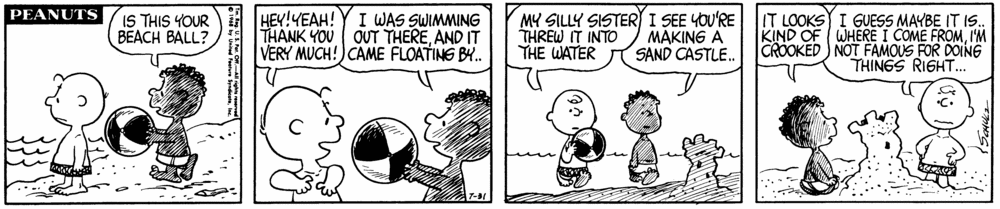
Franklin, his skin tone indicated by closely set diagonal lines, made his debut in a bathing suit, returning Charlie Brown’s runaway beach ball. The encounter took three days to play out, during which Franklin and Charlie Brown form an alliance of vacationing children whose usual playmates are elsewhere. It would seem that the major difference between them is that Franklin’s dad is in Vietnam. Obviously, a lot of thought went into their casual dialogue.
Benign as Franklin was, his presence sparked outrage. Some Southern readers cried foul when he showed up in the same classroom as Marcie and Peppermint Patty. Others felt Franklin wasn’t black enough.
Ultimately Franklin never achieved A‑list status, but he did resonate with certain readers, notably William Bell, a diversity officer working with the Cincinnati Police Department.
Visit Mashable to see reproductions of Glickman and Schulz’s correspondence. And watch the video above to hear more about her upbringing and another comic that featured black characters, Dateline: Danger!, a collaboration between Saunders’ son John and artist Al McWilliams.
After the great director F.W. Murnau died in a car crash in California at the young age of 42, his body was flown back to his native Germany to be buried, and that’s where he has rested since 1931.
Until this week, that is, when somebody made off with the director’s skull.
Reports are sketchy and rely on this report from German news outlet BZ, but, according to police, somebody opened up Murnau’s metal coffin and removed the head from the embalmed corpse. Wax and a candle were found at the scene, suggesting to some that the theft had occult ties.
Murnau is best known for the spookiest Dracula tale ever told in celluloid, 1922’s Nosferatu, which had coffins aplenty. It is also, by the way, free to view above. He also delved into the Satanic with his version of Faust (1926), which features a marching band of skeletons, among other apparitions:
Murnau’s filmography contains a 1920 version of Dr. Jekyll and Mr. Hyde, and The Hunchback and the Dancer from the same year, though both films are lost. The director did tend towards horror, but two of his finest films did not.
The Last Laugh (1924) is a poignant tale about a hotel doorman who can’t bear the shame of being fired, and contains one of cinema’s finest “director ex machina” with an improbable but happy ending. Once Murnau moved to Hollywood, he directed Sunrise (1927), which blended the director’s expressionistic style with a Tinsel Town budget, a tale of a love nearly lost then resurrected. Four years and another three films later, Murnau’s career would be over. He died in a Santa Barbara hospital after a traffic accident by the Rincon–now a famous surfing location–just a few miles from where I now write these words, 84 years later.
Ted Mills is a freelance writer on the arts who currently hosts the FunkZone Podcast. You can also follow him on Twitter at @tedmills, read his other arts writing at tedmills.com and/or watch his films here.
If you would like to support the mission of Open Culture, consider making a donation to our site. It’s hard to rely 100% on ads, and your contributions will help us continue providing the best free cultural and educational materials to learners everywhere. You can contribute through PayPal, Patreon, and Venmo (@openculture). Thanks!
Heavy Metal owes many debts, though it doesn’t always acknowledge them—debts to classical music, through guitarists like Yngwie Malmsteen, to the blues, through Led Zeppelin and Deep Purple, and to jazz, through a host of players, including Black Sabbath’s guitarist Tony Iommi. But while other players have picked up techniques from the jazz idiom like blast beats and sweep picking, Iommi found something else: the motivation to relearn to play the guitar after losing three of the fingertips on his right hand in an industrial accident, on his last day on the job, right before he was to embark on a European tour. He was only 17 years old. Iommi narrates the story himself above in “Fingers Bloody Fingers,” a powerful animated short by illustrator Paul Blow and animator Kee Koo.
After the gruesome accident, Iommi, “extremely depressed,” tragically resigned himself to never play the guitar again — that is, until his factory manager visited him in the hospital and told him the story of Django Reinhardt, the Belgian-Romani swing guitarist who lost two fingers in a terrible fire at age 18, himself just on the verge of stardom and highly sought after by the greatest bandleaders of the day. In the clip above from the French documentary Trois doigts de genie (Three Fingers of Genius), learn how Reinhardt overcame his disability to become one of the most famous guitarists of his day, and see why Iommi was so inspired by his story. “A lesser musician would have given up,” wrote Mike Springer in a previous post, “but Reinhardt overcame the limitation by inventing his own method of playing.” Iommi, of course, did the same, also along the way introducing a lighter gauge of string, which millions of rock guitarists now use.
Reinhardt toured and recorded with his own ensembles and with Duke Ellington and others. Unfortunately precious little footage of him exists, but you can see him above with violinist Stephane Grappelli in their Quintette du Hot Club and in a few other short clips in this post. Once you hear Django’s story of overcoming adversity, and once you hear him play, you’ll understand why he inspired Iommi to push through his own pain and limitations to become one of the most influential guitarists of his generation.
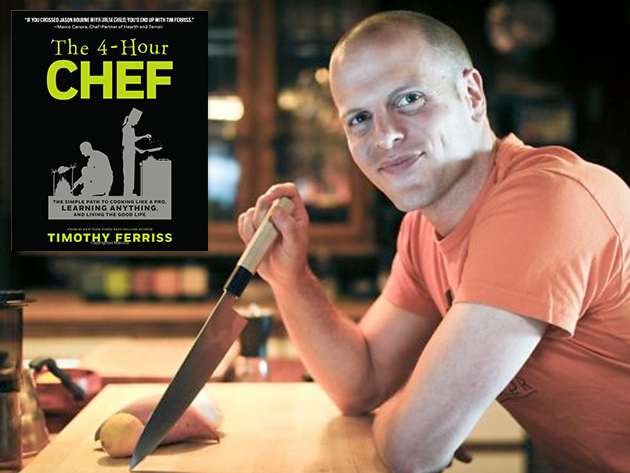
You’ll train inside the kitchen for everything outside the kitchen. Featuring tips and tricks from chess prodigies, world-renowned chefs, pro athletes, master sommeliers, super models, and everyone in between, this “cookbook for people who don’t buy cookbooks” is a guide to mastering cooking and life.
The 4‑Hour Chef is a five-stop journey through the art and science of learning:
1. META-LEARNING. Before you learn to cook, you must learn to learn. META charts the path to doubling your learning potential.
2. THE DOMESTIC. DOM is where you learn the building blocks of cooking. These are the ABCs (techniques) that can take you from Dr, Seuss to Shakespeare.
3. THE WILD. Becoming a master student requires self-sufficiency in all things. WILD teaches you to hunt, forage, and survive.
4. THE SCIENTIST. SCI is the mad scientist and modernist painter wrapped into one. This is where you rediscover whimsy and wonder.
5. THE PROFESSIONAL. Swaraj, a term usually associated with Mahatma Gandhi, can be translated as “self-rule.” In PRO, we’ll look at how the best in the world become the best in the world, and how you can chart your own path far beyond this book.
Or explore the Free Trial Programs offered by Audible.com and Audiobooks.com, both of which give you the chance to download an audiobook for free while trying out their programs.
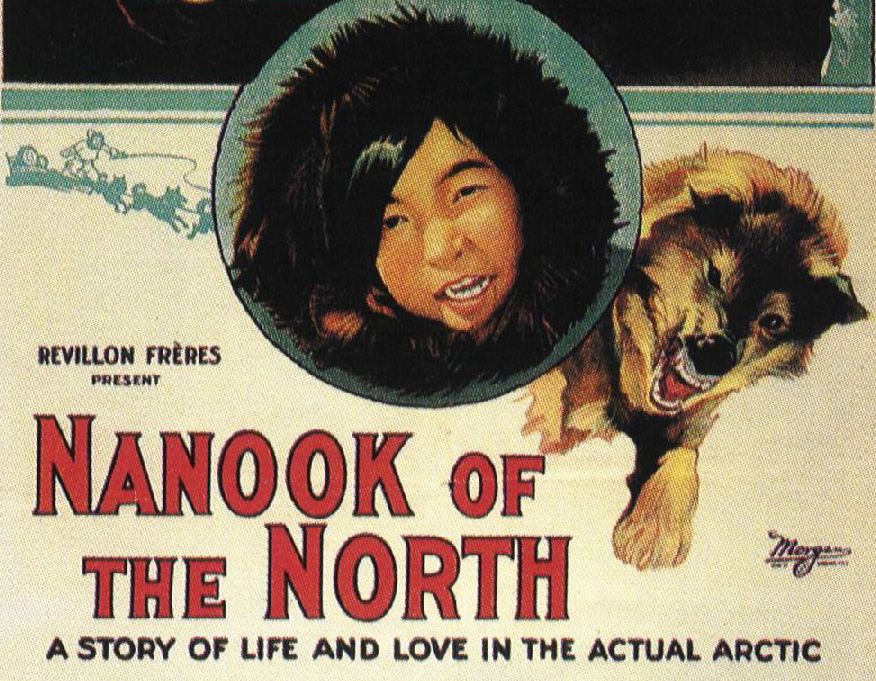
A rudimentary difference between fiction narratives and documentary film is supposed to be that one is created out of the imagination, and the other is a recorded document of real events. Yet if we go right back to the very first feature length documentary, Robert J. Flaherty’s Nanook of the North, we see that the line between fact and fiction was just as wobbly then as now.
A popular success when it was released in 1922, Nanook brought its heroic title character to an audience who knew nothing about the Native tribes of the north. The film shows a way of life that was disappearing as Flaherty, originally an explorer and prospector, began to document it. We see the hardy Inuit Nanook hunting with spears, pulling up to a trading station in a kayak and trading with the white owner. We see his wife and kids, the family building an igloo and bedding down for the night. The film emphasizes as much his self-reliance as it does Nanook’s naivety. And it fully cemented the idea of the Eskimo in popular culture. Nanook became a name as synonymous with the Inuit as Pierre is to the French. Frank Zappa even wrote a song suite about Nanook.
Flaherty was not trained in film, and learned what he could quickly about photography when he decided to shoot footage up north while working for the Canadian Pacific Railway. He accidentally destroyed all of his original footage when he dropped a cigarette on the flammable nitrite film and set about raising money for a reshoot. Without precedent, Flaherty rethought his doc into what we now recognize as classic form: Instead of trying to capture the culture, he chose one man as his main character, an entry into an unknown world.
And in those reshoots we find the line between fiction and fact blurred. Nanook’s real name was Allakariallak, and though he was a hunter, he and his tribe had long ditched the spear for the much more effective gun. Flaherty wanted to represent Inuit life before the European influence, and Allakariallak played along, not just hunting with his spear, but pretending at the trade outpost not to recognize a gramophone.
The scenes inside the igloo were staged for good reason: the camera was too big and the lighting needed would have melted the walls. So Allakariallak and the crew built a cutaway igloo where the family could pretend to bed down for the night. (Oh, and the two women we see were actually Flaherty’s common law wives.)
Flaherty’s legacy was in combining ethnography, travelogue, and showing how people live and work, none of which had been done before in film. Flaherty continued to make documentaries into 1950, including Man of Aran (about life on the Irish isle of the same name) and Tabu, a Polynesian island tale directed by F.W. Murnau, best known for Nosferatu. But none had the impact of this film. When the Library of Congress first started listing films in 1989 for preservation, specifying ones that were “culturally, historically, or aesthetically significant,” Nanook was in the first selection of 25.
The idea of building a living habitat in order to control the action still happens in nature documentaries, and humans readily playing a version of themselves to tell a certain kind of narrative is the basis of all reality TV. Flaherty bent boring truth to get to a different, “essential” truth. Is it better that we believe that Nanook died out on the ice, a victim of the harsh reality of survival on the ice, or to know that he actually died at home from tuberculosis? The qualities that caused controversy upon Nanook’s release aren’t the opposite of documentary, they *are* documentary.
Ted Mills is a freelance writer on the arts who currently hosts the FunkZone Podcast. You can also follow him on Twitter at @tedmills, read his other arts writing at tedmills.com and/or watch his films here.
Yesterday we ran a list of 93 films beloved by Stanley Kubrick, which includes two by Andrei Tarkovsky: 1972’s Solaris and 1986’s The Sacrifice. You expect one auteur to appreciate the work of another — “game recognize game,” to use the modern parlance — but the selection of Solaris makes special sense. Just four years before it, Kubrick had, of course, made his own psychologically and visually-intense cinematic voyage out from Earth into the great beyond, 2001: A Space Odyssey.
The appreciation, alas, wasn’t mutual. “Tarkovsky supposedly made Solaris in an attempt to one-up Kubrick after he had seen 2001 (which he referred to as cold and sterile),” writes Joshua Warren at criterion.com. “Interestingly enough, Kubrick apparently really liked Solaris and I’m sure he found it amusing that it was marketed as ‘the Russian answer to 2001.’ ” Jonathan Crow recently quoted Tarkovsky as saying: “2001: A Space Odyssey is phony on many points, even for specialists. For a true work of art, the fake must be eliminated.”
That pronouncement comes from a 1970, pre-Solaris interview with Tarkovsky by Naum Abramov. The Russian auteur indicts what he sees as 2001’s lack of emotional truth due to its excessive technological invention, effectively declaring that, in his own foray into the realm of science-fiction, “everything would be as it should. That means to create psychologically, not an exotic but a real, everyday environment that would be conveyed to the viewer through the perception of the film’s characters. That’s why a detailed ‘examination’ of the technological processes of the future transforms the emotional foundation of a film, as a work of art, into a lifeless schema with only pretensions to truth.”
Critic Philip Lopate writes that “the media played up the cold-war angle of the Soviet director’s determination to make an ‘anti-2001,’ and certainly Tarkovsky used more intensely individual characters and a more passionate human drama at the center than Kubrick.” And the films do have similarities, from their “leisurely, languid” narratives to their “widescreen mise-en-scène approach that draws on superior art direction” to their “air of mystery that invites countless explanations.” But Lopate argues that the themes of Solaris resemble those of 2001 less than those of Hitchcock’s Vertigo: “the inability of the male to protect the female, the multiple disguises or ‘resurrections’ of the loved one, the inevitability of repeating past mistakes.”
As a lover of both Kubrick and Tarkovsky’s work, I can hardly take sides. Maybe I just need to watch both 2001 and Solaris yet again, one after another, in order to better compare them. (Find Tarkovsky’s films free online here.) And maybe I need to throw Vertigo into the evening as well. Now that’s what I call a triple feature.
Special Collections, University of Vermont Libraries
No matter how much of a political junkie you are, you must surely have had enough of the spectacle that is the 2016 campaign for the presidency. At current count, we are faced with an astounding 15 candidates for the Republican nomination, one of whom is doing his best to revive the ugliest nativism of the 19th century. On the other side of our binary party system, we have only One. Or so it would seem if you were to pay attention to much of the media coverage, which only rarely mentions the handful of other Democratic contenders and mostly ignores the rising tide of support for Bernie Sanders.
The Senator from Vermont has unabashedly referred to himself, throughout his long political career, as a democratic socialist or, on occasion, simply a “socialist”—a word that strikes fear into the heart of many an American, and resonates widely with another portion of the electorate. Debates over what this means rage on. George Will calls Sanders’ socialism a “charade.” Thor Benson in the New Republicaccuses him of playing “loose with the terminology.” The history and current state of “socialism” is so long and complex that no one definition seems to suit. Its political baggage in American discourse, however, is undeniable.
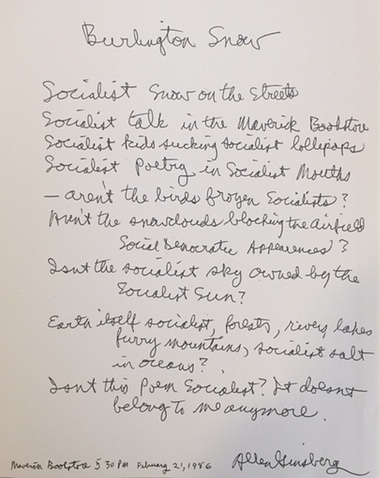
This was just as true in 1986, when Allen Ginsberg wrote a poem in praise of Sanders, then mayor of Burlington, Vermont. Ginsberg playfully draws on the loose associations we have with the word, hammering it home with tongue-in-cheek repetition, then turning reflective.
Socialist snow on the streets Socialist talk in the Maverick bookstore Socialist kids sucking socialist lollipops Socialist poetry in socialist mouths —aren’t the birds frozen socialists? Aren’t the snowclouds blocking the airfield Social Democratic Appearances? Isn’t the socialist sky owned by the socialist sun? Earth itself socialist, forests, rivers, lakes furry mountains, socialist salt in oceans? Isn’t this poem socialist? It doesn’t belong to me anymore.
Calling it “Burlington Snow,” Ginsberg composed the poem—equal parts goofy and sincere—on a visit to the city, one of many pilgrimages made by left-wing writers and artists after Sanders’ string of attempted foreign policy interventions. You can read all about the optimistic socialist—or democratic socialist, or whatever—in Paul Lewis’ Guardian portrait.
We're hoping to rely on loyal readers, rather than erratic ads. Please click the Donate button and support Open Culture. You can use Paypal, Venmo, Patreon, even Crypto! We thank you!
Open Culture scours the web for the best educational media. We find the free courses and audio books you need, the language lessons & educational videos you want, and plenty of enlightenment in between.