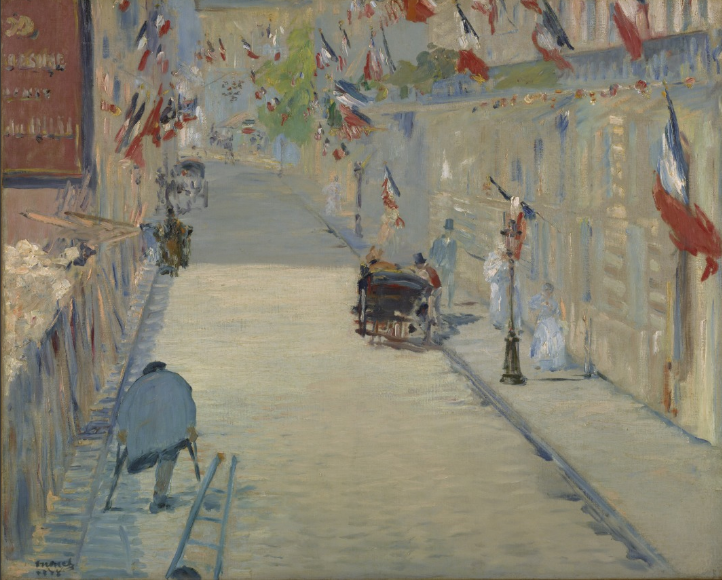
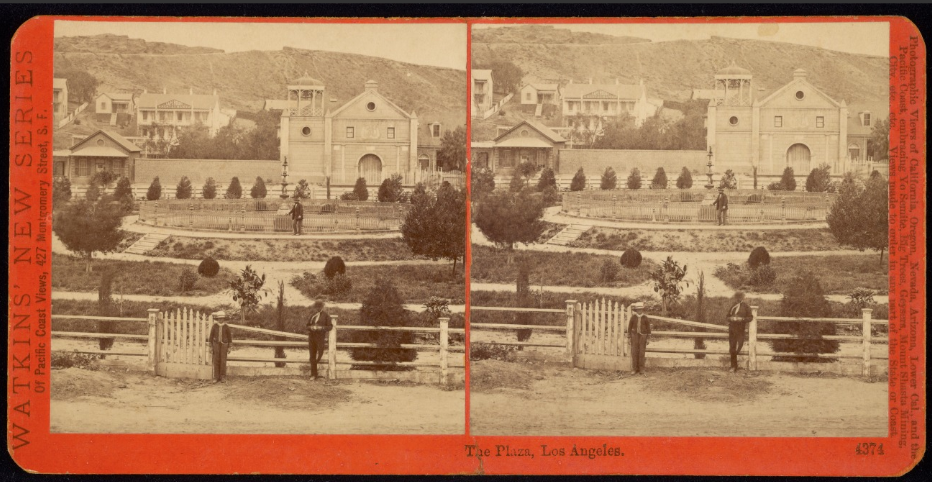
Let’s say you’re a filmmaker shooting a documentary in New York City. You wander through Times Square, through museums, through other destinations, letting your camera roll along the way. Only later do you wonder: Do I need to clear the copyright on the Andy Warhol and Jackson Pollock paintings that came into my camera’s field of view when I was shooting at the MoMA? Or do I need to get clearance on a Miles Davis song that a busker, caught on film, happened to be playing?
When our favorite musicians leave us, whether they die young or live to ripe old age, we’re guaranteed to keep discovering new material from them. Sometimes this happens through the questionable remixing of their unfinished work, and the results can be disappointing, if not downright disrespectful. More often, we’re treated to hours of rough demos, home and concert recordings, and alternate takes. And while these may not always live up to the polished studio versions, they nonetheless open intriguing windows into the creative process of artists we love and admire.
In the case of Kurt Cobain, we’ve heard for a couple of years about unreleased demos for a solo album the Nirvana frontman supposedly had in the works before his suicide in 1994. What might it have sounded like?
Well, it might have sounded something like Cobain’s wife’s band, Hole—or at least like their song “Old Age,” released that same year with the single “Violet.” Cobain wrote the song and recorded his own acoustic demo, which you can hear at the top. Dissatisfied, he gave it away to Courtney Love. Just above, hear another acoustic home demo, “Do Re Mi,” that Hole co-founder Eric Erlandson told Fuse offers a hint of what might have been.
Until, if ever, the actual recordings of Cobain’s planned solo album come out, we can only speculate. But whether or not the notoriously introverted singer would approve, we do have many more acoustic demos and home recordings of songs we know and songs we probably don’t. Many of these appear on the Nirvana box set With the Lights Out, which, in addition to containing “Old Age” and “Do Re Mi,” has acoustic versions of In Utero’s “Rape Me,” “Pennyroyal Tea,” and “All Apologies” (above).
What you won’t hear on the box set is the song above, “Creation,” a home demo Cobain made in the late eighties, using a 4‑track recorder to mix his vocals with a bassline and drumming on suitcases. This track appears on an unofficial 4 CD bootleg set called Nirvana: The Chosen Rejects alongside a good many demo tracks from Cobain’s first band, the obnoxiously-named Fecal Matter, which he formed with future Melvins drummer Dale Crover in Aberdeen, Washington.
“Creation” presages the droning, rhythmic melodicism that became the hallmark of Cobain’s Nirvana songwriting. But as for that sadly aborted solo album, it seems the singer may have been moving into some very eclectic territory indeed. Cobain, says Erlandson, “was headed in a direction that was really cool. It would have been his White Album.” Alas.
Now Exhibit C: It’s a no-bs press release that announced the arrival of the band, and what it’s all about. Written by Tommy Ramone (the drummer who died last summer, but only after outliving all of the other original band members), the one-pager describes The Ramones succinctly:“The Ramones are an original Rock and Roll group of 1975, and their songs are brief, to the point and every one a potential hit single.” And with a little bit of humor. “The Ramones all originate from Forest Hills and kids who grew up there either became musicians, degenerates or dentists. The Ramones are a little of each. Their sound is not unlike a fast drill on a rear molar.”
You can click the press release above to read it in a larger format. Or read the transcript below.
The Ramones are not an oldies group, they are not a glitter group, they don’t play boogie music and they don’t play the blues. The Ramones are an original Rock and Roll group of 1975, and their songs are brief, to the point and every one a potential hit single.
The quartette consists of Johnny, Joey, Dee Dee, and Tommy Ramone, Johnny, the guitarist, plays with such force that his sound has been compared to a hundred howitzers going off. Joey, the lead singer, is an arch villain whose lanky frame stands threatening center stage. Dee Dee is Bass guitar and the acknowledged handsome one of the group, and Tommy is the drummer whose pulsating playing launches the throbbing sound of the band.
The Ramones all originate from Forest Hills and kids who grew up there either became musicians, degenerates or dentists. The Ramones are a little of each. Their sound is not unlike a fast drill on a rear molar.
If you would like to sign up for Open Culture’s free email newsletter, please find it here. It’s a great way to see our new posts, all bundled in one email, each day.
If you would like to support the mission of Open Culture, consider making a donation to our site. It’s hard to rely 100% on ads, and your contributions will help us continue providing the best free cultural and educational materials to learners everywhere. You can contribute through PayPal, Patreon, and Venmo (@openculture). Thanks!
We don’t often think of the Beats as family men, and that’s because the most prominent of them weren’t, except William Burroughs for a time (a tragic story or two for another day). But friends of Ginsberg and Kerouac like Lucien and Francesca Carr and Robert and Mary Frank brought children into the poets’ lives, and you can see them all above, relaxing at the Harmony Bar & Restaurant in New York’s East Village in 1959.
This rare silent footage unites the three Carr and two Frank children in a rare appearance of the Beats together on film. The mustachioed Lucien Carr —a character with his own dark story—can be seen seated next to Kerouac. The Franks, père and mère, were both artists in their own right—London-born Mary a trained dancer, sculptor, and painter, and Robert an important American photographer and documentary filmmaker.
Dangerous Minds speculates that it’s Robert Frank behind the camera, both because we don’t see him in front of it and because Frank would that same year direct the short film Pull My Daisy (above), featuring both Ginsberg and Kerouac and adapted from Kerouac’s play Beat Generation. (Frank apparently denies he shot the footage at the top). Pull My Daisy also includes famous Beats like Gregory Corso, musician David Amram, and Ginsberg’s partner, poet Peter Orlovsky. In a previous post on that film, Open Culture’s Colin Marshall described it as crafted with “great deliberateness, albeit the kind of deliberateness meant to create the impression of thrown-together, ramshackle spontaneity.”
To learn more about the Beats’ appearances on film—as themselves, in character, and through their adapted work, see this excellent filmography. And just above, watch a mash-up of most of those various cinematic appearances in a trailer produced by Cinefamily for the IFC and Sundance series “Beats on Film.”
As you faithful readers of Open Culture know, we love nothing more than when important works of humankind fall into the public domain. According to current United States copyright law, a work stays out of the public domain for 70 years after its author’s death; for corporate “works-for-hire,” 95 years after its publication. This means that, theoretically, new things arrive in the public domain each and every year. Since we’ve just started a new one, what has the public domain gained?
On January 1, 2015, according to Duke University’s Center for the Study of the Public Domain, public-domain readers received “the writings of Rachel Carlson, Ian Fleming, and Flannery O’Connor” — in Canada, that is. As for Europeans, they can now freely enjoy “the works of Antoine de Saint-Exupéry, Wassily Kandinsky, Piet Mondrian, Edvard Munch, and hundreds of others.” But what of the Americans? Alas, “no published works will enter our public domain until 2019,” owing to an extension of U.S. copyright law legislation that pushed up retroactive copyright by 95 years for anything created between 1923 and 1977 — a legal event that may, some whisper, have had the endorsement of a certain corporation in possession of a certain highly lucrative cartoon mouse.
For a sense of what this has cost us, the CSPD has put together a tantalizing list of still-vital works of literature, film, music, and science that could have gone public domain this year, if not for that meddling extension. It includes Chinua Achebe’s Things Fall Apart, Simone de Beauvoir’ Mémoires d’une jeune fille rangée, Graham Greene’s Our Man in Havana, Orson Welles’ Touch of Evil, Jacques Tati’s Mon Oncle, Nathan H. Juran’s Attack of the 50-Foot Woman, Chuck Berry’s “Johnny B. Goode,” Sheb Wooley’s “Purple People Eater.”
To learn more about the art that some parts of the world have newly welcomed into the public domain, see also Hyperallergic’s Public Domain Day post by Allison Meier. Though we could easily feel frustrated by the richness of the material that America has refused, in the words of Justice Louis Brandeis, to let “free as the air to common use,” do remember the existence of a little something we citizens of 2015 like to call the internet. The increasingly few boundaries and little friction with which it has enabled us to connect and communicate will certainly continue to alleviate the cramp regulations like these have put in our style. So even if Americans won’t enjoy a meaningful Public Domain Day for four years yet, I’d say we still have reason to celebrate.
If Peter Shukoff and Lloyd Ahlquist, the makers of Epic Rap Battles of History refuse to say, I will: neither of them.
Instead, it is action director Michael Bay (as embodied by a bewigged Shukoff), who emerges victorious, dropping into the proceedings via helicopter, to spit that moviemaking is all about the “motherfuc&in’ money”! Artistically, he may not have much currency, but there’s no arguing that the Transformers franchise has indeed endowed him with the “socks made of silk money.”
It’s vulgar, and NSFW sans headphones, but as legions of adolescent boys will passionately attest, it has its moments. Watching the behind the scenes, below, reminded me of all the planning that went into this episode, from special effects make up to research and green screen. If the end result is not quite to your taste, at least you can rest assured that it’s by design.
Empathy, compassion and gratitude — these traits don’t usually spring to mind when you think about Darwinism and natural selection. No, your mind more immediately drifts toward anti-social characteristics like competition, survival of the fittest, and selfishness (as in the “selfish gene”). But above, on the first day of 2015, UC Berkeley psychologist Dacher Keltner reminds us that evolution can bring out the best in us, and Darwin recognized that. As Darwin wrote in The Descent of Man, the strengthening of our capacity for “sympathy” played a central role in human evolution:
With mankind, selfishness, experience, and imitation, probably add .… to the power of sympathy; for we are led by the hope of receiving good in return to perform acts of sympathetic kindness to others; and sympathy is much strengthened by habit. In however complex a manner this feeling may have originated, as it is one of high importance to all those animals which aid and defend one another, it will have been increased through natural selection; for those communities, which included the greatest number of the most sympathetic members, would flourish best, and rear the greatest number of offspring.
“Smartphones and laptops seem so ubiquitous to us all,” writes experience designer Jinsoo An. “But in reality, the ubiquitousness we experience every day is based on a series of learned behaviors. Someone once said that, ‘The only intuitive interface is the nipple. Everything else is learned.’ ” This, he points out, holds for the simple magazine as much as it does for the computer mouse — a device which certain generations use even more intuitively than they do anything involving the printed word. But, many computer users found the mouse, just a few years before it achieved ubiquity, hardly intuitive at all. “If you can point, you can use a Macintosh,” insisted an early Apple ad for that innovative desktop computer.
If, convinced, you went on to buy a Mac of your own, and you received with it a printed manual including a section explaining the mechanics of mouse usage. “Every move you make with the mouse moves the pointer in exactly the same way,” goes one of its sentences that would now seem comically unnecessary. “Usually the pointer is shaped like an arrow, but it changes shape depending on what you’re doing.“And for those who found the book too intimidating, Apple also included a cassette tape containing a production called “A Guided Tour of Macintosh,” in which friendly voices explain such important subjects as “Mousing Around,” “What’s the Finder?,” and “Why Do I Have Windows?” to a soundtrack by artists from the powerhouse new-age music label Wyndham Hill.
An’s post includes the audio of this techno-educational journey, and at the top of the post you can watch it synchronized with video of the accompanying application that came onboard the computer. We can all have a good laugh at this sort of thing now that we’ve fully internalized once-confusing concepts like windows, the finder, and the mouse — but isn’t it more startling, in this era when so few people even consider reading manuals that many companies seem to have stopped printing them entirely, to imagine anyone, before they dare use their new computer, popping in a tape?
The common conception of New Year’s resolutions frames them as disposable ideals, not to be taken too seriously or followed through past the first few months of winter; by spring, we all assume, we’ll be right back to our slothful, gluttonous ways. Perhaps the problem lies in the way we approach this yearly ritual. Lists of the most common resolutions tend towards the almost shockingly banal, such that most people’s desires for change are interchangeable with their friends and neighbors and might as well be scripted by greeting card companies. I’d hazard it’s impossible to be passionate about half-thoughts and boilerplate ambition.
But there are those few people who really pour their hearts into it, creating lists so individualized and authentic that the documents expose their inner lives, their hopes, fears, loves, struggles, and deep, personal yearnings and aspirations. One such list that circulates often, and which we featured last year, is this gem from Woody Guthrie circa 1943. It’s so completely him, so much in his voice, that no one else could have written it, even in parody. This year, we direct your attention to the list above, from Marilyn Monroe, written at the end of 1955 when the star was 29.
Already well-known for her acting in such fine films as All About Eve, Gentlemen Prefer Blondes, and The Seven Year Itch, Monroe had recently been accepted to Lee Strasberg’s Actors Studio. As Lists of Note puts it, “judging by this list, she was determined to make the most of her opportunities.” I’m not sure what to make of the odd use of random letters at the beginning of each resolution, but what the list does offer us is a glimpse into Monroe’s deep commitment—despite her feeling that her life was “miserable”—to growing and developing as an actor and a person.
See a full transcript of her list of resolutions below.
Must make effort to do
Must have the dicipline to do the following –
z – go to class – my own always – without fail
x – go as often as possible to observe Strassberg’s other private classes
g – never miss actor’s studio sessions
v – work whenever possible – on class assignments – and always keep working on the acting exercises
u – start attending Clurman lectures – also Lee Strassberg’s directors lectures at theater wing – enquire about both
l – keep looking around me – only much more so – observing – but not only myself but others and everything – take things (it) for what they (it’s) are worth
y – must make strong effort to work on current problems and phobias that out of my past has arisen – making much much much more more more more more effort in my analisis. And be there always on time – no excuses for being ever late.
w – if possible – take at least one class at university – in literature –
o – follow RCA thing through.
p – try to find someone to take dancing from – body work (creative)
t – take care of my instrument – personally & bodily (exercise)
try to enjoy myself when I can – I’ll be miserable enough as it is.
I often say that, if you want to vastly overestimate your own capabilities, you need only do one of two things: (a) get coked out of your mind, or (b) get behind the wheel of a car. But what if the problem runs deeper in humanity than that? Indeed, what if our inability to perceive our own incompetence exactly matches the degree of the incompetence itself? Now, none of us can do everything well, but we’ve all met people who, even well outside of the contexts of drugs or driving, simply cannot grasp the full extent of how much they can’t do well. “The problem with people like this is that they are so stupid,” explains Monty Python’s John Cleese in the clip above, “they have no idea how stupid they are.”
“In order to know how good you are at something requires exactly the same skills as it does to be good at that thing in the first place,” Cleese elaborates, “which means — and this is terribly funny — that if you are absolutely no good at something at all, then you lack exactly the skills you need to know that you are absolutely no good at it.” With that, he gives us an extremely brief introduction to the Dunning–Kruger effect, “a cognitive bias wherein unskilled individuals suffer from illusory superiority, mistakenly rating their ability much higher than is accurate” owing to “a metacognitive inability of the unskilled to recognize their ineptitude” (and, by the same token, of “highly skilled individuals to underestimate their relative competence, erroneously assuming that tasks which are easy for them are also easy for others”).
The effect takes its name from Cornell University researchers Justin Kruger and David Dunning, the latter of whom Cleese, who has spent time at Cornell as a long-term visiting professor (where he has, among other projects, taken part in a talk about creativity, group dynamics and celebrity), counts as a friend. He originally invoked Dunning and Kruger’s “wonderful bit of research” in the video “John Cleese Considers Your Futile Comments,” where he talks back to YouTube commenters on Monty Python videos — in this case, those who mentioned the names of certain political commentators beneath the 1970 sketch “Upperclass Twit of the Year.” “This explains not just Hollywood,” Cleese concludes, “but almost the entirety of Fox News.”
Those of you interested in both cognitive phenomena and conservative American political figures will surely have seen Gates of Heaven and A Brief History of Time documentarian Errol Morris’ most recent film The Unknown Known, a long-form conversation with former U.S. Secretary of Defense Donald Rumsfeld. In the years before its release, Morris wrote a five-part series for the New York Times called “The Anosognosic’s Dilemma,” fueled not just by his fascination with Rumsfeld but with his near-obsession over the Dunning-Kruger effect. In it, he actually interviews Dunning himself, who summarizes the issue thus: “We’re not very good at knowing what we don’t know.”
Dunning even brings up the subject of Rumsfeld first, specifically about his speech on “unknown unknowns” that gave Morris’ movie its title. It goes something like this: ‘There are things we know we know about terrorism. There are things we know we don’t know. And there are things that are unknown unknowns. We don’t know that we don’t know.’ He got a lot of grief for that. And I thought, ‘That’s the smartest and most modest thing I’ve heard in a year.’ ” When Morris followed up, Dunning added that “the notion of unknown unknowns really does resonate with me, and perhaps the idea would resonate with other people if they knew that it originally came from the world of design and engineering rather than Rumsfeld.” Or maybe they could associate it with the Ministry of Silly Walks instead.
If you would like to sign up for Open Culture’s free email newsletter, please find it here. It’s a great way to see our new posts, all bundled in one email, each day.
If you would like to support the mission of Open Culture, consider making a donation to our site. It’s hard to rely 100% on ads, and your contributions will help us continue providing the best free cultural and educational materials to learners everywhere. You can contribute through PayPal, Patreon, and Venmo (@openculture). Thanks!
What is “Philosophy”? Yes, we know, the word comes from the Greek philosophia, which means “the love of wisdom.” This rote etymological definition does little, I think, to enhance our understanding of the subject, though it may describe the motivation of many a student. Like certain diseases, maybe philosophy is a spectrum, a collection of loosely related behaviors. Maybe a better question would be, “what are all the symptoms of this thing we call philosophy?” The medical metaphor is timely. We live in an age when the discipline of philosophy, like many of the humanities, gets treated like a pathology, in universities and in the wider culture. See, for example, popular articles on whether science has rendered philosophy (and religion) obsolete. There seems to be an underlying assumption in our society that philosophy is something to be eradicated, like smallpox.
Perhaps this sort of thing is just an empty provocation; after all, many logical positivists of the early 20th century also claimed to have invalidated large areas of philosophical inquiry by banishing every unclear concept to the dustbin. And yet, philosophy persists, infecting us with its relentless drive to define, inquire, critique, systematize, problematize, and deconstruct.
And of course, in a less technical sense, philosophy infects us with the drive to wonder. Without its tools, I maintain, we would not only lack the basis for understanding the world we live in, but we would also lack important means of imagining, and creating, a better one. If this sounds grandiose, wait till you encounter the thought of Plato, Spinoza, Hegel, Kant, Nietzsche, Kierkegaard, and jazz-futurist Sun Ra—all unaccustomed to thinking small and staying in their lane.
Some philosophers are more circumspect, some more precise, some more literary and imaginative, some more practical and technologically inclined. Like I said, many symptoms, one disease.
We at Open Culture have compiled a list of 140 free philosophy courses from as much of the wide spectrum as we could, spanning such diverse ways of thinking as University of Chicago’s Leo Strauss on Aristotle’s Ethics (Free Online Audio) and Plato’s Laws (Free Online Audio), to Columbia University Buddhist scholar Robert Thurman (Uma’s dad) on “The Central Philosophy of Tibet” (Free Online Audio). We have specific courses on Medical Ethics, taught by Notre Dame’s David Solomon (Free Online Audio) and the University of New Orlean’s Frank Schalow (Free iTunes Audio). We have hugely general courses like “The History of Philosophy Without Any Gaps,” from King’s College’s Peter Adamson (Free Course in Multiple Formats). We have philosophy courses on death, love, religion, film, law, the self, the ancients and the moderns…. See what I mean about the spectrum?
Perhaps philosophy incurs resentment because it roams at large and won’t be packaged into neatly salable—or jailable—units. Perhaps its amorphous nature, its tolerance of uncertainty and doubt, makes some kinds of people uncomfortable. Or perhaps some think it’s too abstruse and difficult to make sense of, or to matter. Not so! Visit our list of 140 philosophy courses and you will surely find a point of entry somewhere. One class will lead to another, and another, and before you know it, you’ll be asking questions all the time, of everything, and thinking rigorously and critically about the answers, and… well, by then it may be too late for a cure.
We're hoping to rely on loyal readers, rather than erratic ads. Please click the Donate button and support Open Culture. You can use Paypal, Venmo, Patreon, even Crypto! We thank you!
Open Culture scours the web for the best educational media. We find the free courses and audio books you need, the language lessons & educational videos you want, and plenty of enlightenment in between.