Orson Welles Trashes Famous Directors: Alfred Hitchcock (“Egotism and Laziness”), Woody Allen (“His Arrogance Is Unlimited”) & More

A bold artist acts first and thinks lat­er. In the case of Orson Welles, one of the bold­est artists pro­duced by 20th-cen­tu­ry Amer­i­ca, that habit also found its way into his speech. This became espe­cial­ly true in the inter­views he gave lat­er in life, when he freely offered his opin­ions, solicit­ed or oth­er­wise, on the work of his fel­low film­mak­ers. The man who made Cit­i­zen Kane did­n’t hes­i­tate to roast, for instance, the Euro­pean auteurs who ascend­ed after his own career in cin­e­ma seemed to stall, and whose work he elab­o­rate­ly sat­i­rized in the posthu­mous­ly released The Oth­er Side of the Wind. His con­sid­ered remarks include the fol­low­ing: “There’s a lot of Bergman and Anto­nioni that I’d rather be dead than sit through.” No, Orson, tell us what you real­ly think.

“Accord­ing to a young Amer­i­can film crit­ic, one of the great dis­cov­er­ies of our age is the val­ue of bore­dom as an artis­tic sub­ject,” Welles says in anoth­er inter­view. If so, Michelan­ge­lo Anto­nioni “deserves to be count­ed as a pio­neer and found­ing father,” a mak­er of movies that amount to “per­fect back­grounds for fash­ion mod­els.” As for Bergman, “I share nei­ther his inter­ests nor his obses­sions. He’s far more for­eign to me than the Japan­ese.” Welles has kinder words for Fed­eri­co Felli­ni, whom he calls “as gift­ed as any­one mak­ing movies today,” but also “fun­da­men­tal­ly very provin­cial.” His pic­tures are “a small-town boy’s dream of the big city,” which is also the source of their charm, but the man him­self “shows dan­ger­ous signs of being a superla­tive artist with lit­tle to say.”

Welles esti­mat­ed the younger Jean-Luc Godard­’s gifts as a direc­tor as “enor­mous. I just can’t take him very seri­ous­ly as a thinker — and that’s where we seem to dif­fer, because he does. And though Godard may admire Woody Allen (him­self an admir­er of Bergman), Welles cer­tain­ly did­n’t: “I hate Woody Allen phys­i­cal­ly, I dis­like that kind of man,” he tells film­mak­er Hen­ry Jaglom. “That par­tic­u­lar com­bi­na­tion of arro­gance and timid­i­ty sets my teeth on edge.” When Jaglom objects that Allen isn’t arro­gant but shy, Welles dri­ves on: “Like all peo­ple with timid per­son­al­i­ties, his arro­gance is unlim­it­ed.” Allen “hates him­self, and he loves him­self, a very tense sit­u­a­tion. It’s peo­ple like me who have to car­ry on and pre­tend to be mod­est,” while, in Allen’s case, “every­thing he does on screen is ther­a­peu­tic.”

Allen has what Welles calls “the Chap­lin dis­ease,” and Welles’ inter­views also fea­ture severe crit­i­cisms of Chap­lin him­self. After ref­er­enc­ing the fact that, unlike his fel­low silent come­di­an Harold Lloyd, Chap­lin did­n’t write all his own jokes but used “six gag­men,” he declares that Mod­ern Times — regard­ed by many as Chap­lin’ mas­ter­piece — “does­n’t have a good moment in it.” Clear­ly Welles felt no more need to pull his punch­es on his elders than he did with the whip­per­snap­pers: John Ford “made very many bad pic­tures,” includ­ing The Searchers (“ter­ri­ble”); Cecil B. DeMille Welles cred­its with giv­ing Mus­soli­ni and Hitler the idea for the fas­cist salute; Elia Kazan will nev­er be for­giv­en for nam­ing names to the House Com­mit­tee on Un-Amer­i­can Activ­i­ties (“it’s just inex­cus­able”); and even Sergei Eisen­stein, father of the mon­tage, is also “the most over­rat­ed great direc­tor of them all.”

You can read more of Welles’ choice words on his col­leagues in cin­e­ma in this thread of inter­view clips post­ed by a Twit­ter user who goes by John Franken­stein­er. It also includes Welles’ assess­ment of Alfred Hitch­cock, who declined into “ego­tism and lazi­ness,” mak­ing films “all lit like tele­vi­sion shows.” Welles sus­pects age-relat­ed cog­ni­tive issues — “I think he was senile a long time before he died,” in part because “he kept falling asleep while you were talk­ing to him” — but he also trash­es the work Hitch­cock did in his prime, such as Ver­ti­goSight & Sound’s last crit­ics poll named that film the great­est of all time, but Welles calls it even worse than Rear Win­dow, about which “every­thing was stu­pid.” But at least all these film­mak­ers, liv­ing and dead, can rest easy know­ing they did­n’t rank as low in Welles’ esti­ma­tion as John Lan­dis, “the ass­hole from Ani­mal House.” Jaglom, believ­ing he can influ­ence Lan­dis and mend their rela­tion­ship, asks what he can do to help. Welles’ sug­ges­tion: “Kill him.”

Relat­ed Con­tent:

Ing­mar Bergman Eval­u­ates His Fel­low Film­mak­ers — The “Affect­ed” Godard, “Infan­tile” Hitch­cock & Sub­lime Tarkovsky

Jorge Luis Borges Reviews Cit­i­zen Kane — and Gets a Response from Orson Welles

Jean-Paul Sartre Reviews Orson Welles’ Mas­ter­work (1945): “Cit­i­zen Kane Is Not Cin­e­ma”

Andrei Tarkovsky Calls Kubrick’s 2001: A Space Odyssey a “Pho­ny” Film “With Only Pre­ten­sions to Truth”

Ter­ry Gilliam on the Dif­fer­ence Between Kubrick & Spiel­berg: Kubrick Makes You Think, Spiel­berg Wraps Every­thing Up with Neat Lit­tle Bows

Based in Seoul, Col­in Mar­shall writes and broad­casts on cities, lan­guage, and cul­ture. His projects include the book The State­less City: a Walk through 21st-Cen­tu­ry Los Ange­les and the video series The City in Cin­e­ma. Fol­low him on Twit­ter at @colinmarshall or on Face­book.

Bob Odenkirk & Errol Morris Create Comedic Shorts to Help You Take Action Against Global Warming: Watch Them Online

My beach house must be some­where around here. I used to be able to see the ocean from it. I should be able to see it from the ocean. Ooo, that looks famil­iar. Lady Lib­er­ty. Ha ha! Hel­looo! All the best to you.     —Admi­ral Hor­a­tio Horn­tow­er

Are there any Bet­ter Call Saul fans among the glob­al warm­ing deniers?

A sce­nario in which one can simul­ta­ne­ous­ly pooh pooh the melt­ing of the polar ice caps and embrace The Thin Blue Line?

Direc­tor Errol Mor­ris and his star, Bob Odenkirk, may not change any minds with their Glob­al Melt­down spots they pro­duced in part­ner­ship with the Insti­tute for the Future, but hope­ful­ly the emphat­ic end cards will stir some fans to action.

The absur­dist 30-sec­ond shorts fea­ture Odenkirk, encrust­ed in epaulets and naval insignia, as the fic­tion­al Horn­tow­er, “an admi­ral of a fleet of one and per­haps the last man on Earth.” Marooned on a small block of ice, he rails against the inex­pert­ly ani­mat­ed wildlife encroach­ing on his domain.

(“You don’t even have the facil­i­ty of lan­guage!” he tells a pen­guin, and lat­er threat­ens a wal­rus that it will “get paint­ed out” of the final cut for “com­plain­ing all the time…”)

Cer­tain­ly a doc­u­men­tar­i­an of Mor­ris’ stature could have tak­en a length­i­er, more seri­ous approach to the sub­ject, but as he notes:

Log­ic rarely con­vinces any­body of any­thing. Cli­mate change has become yet anoth­er vehi­cle for polit­i­cal polar­iza­tion. If Al Gore said the Earth was round there would be polit­i­cal oppo­si­tion insist­ing that the Earth was flat. It’s all so pre­pos­ter­ous, so con­temptible.

Odenkirk also has some out-of-uni­form con­cerns about cli­mate change, as expressed in “Where I Got These Abs,” a 2011 Shouts & Mur­murs piece for The New York­er:

The mid­dle ab on the left (not my left, your left, if you are look­ing at me) is called Ter­rence. It’s a dig­ni­fied ab. It tens­es each time I read an op-ed arti­cle about glob­al warm­ing. The article’s point of view is imma­te­r­i­al; sim­ply being remind­ed that I can do noth­ing to stop the hor­rif­ic future of floods and cat­a­stro­phe gives this ab a taut yank that lingers, burn­ing calo­ries in my well-creased fore­head at the same time. 

Watch all of Mor­ris and Odenkirk’s Admi­ral Horn­tow­er spots, cur­rent­ly total­ing nine, with ten more to come, on Glob­al Melt­down’s YouTube chan­nel.

via Kot­tke

Relat­ed Con­tent:

Cli­mate Change Gets Strik­ing­ly Visu­al­ized by a Scot­tish Art Instal­la­tion

Glob­al Warm­ing: A Free Course from UChica­go Explains Cli­mate Change

NASA Cap­tures the World on Fire

Ayun Hal­l­i­day is an author, illus­tra­tor, the­ater mak­er and Chief Pri­ma­tol­o­gist of the East Vil­lage Inkyzine.  Join her in NYC this Mon­day, Sep­tem­ber 9 for the new season’s kick­off of her book-based vari­ety show, Necro­mancers of the Pub­lic Domain. Fol­low her @AyunHalliday.

The Greatest Cut in Film History: Watch the “Match Cut” Immortalized by Lawrence of Arabia

“I’ve noticed that when peo­ple remem­ber Lawrence of Ara­bia, they don’t talk about the details of the plot,” writes Roger Ebert in his “Great Movies” col­umn on the 1962 David Lean epic. “They get a cer­tain look in their eye, as if they are remem­ber­ing the whole expe­ri­ence, and have nev­er quite been able to put it into words.” Redun­dant though it may sound to speak of a “film of images,” Lawrence of Ara­bia may well mer­it that descrip­tion more than any oth­er motion pic­ture. Its vast images of an even vaster desert, as well as of the tit­u­lar larg­er-than-life Eng­lish­man who turns that desert into the stage of his very exis­tence, were shot on 70-mil­lime­ter film, twice the size of the movies most of us grew up with. To expe­ri­ence them any­where but in a the­ater would be an act of cin­e­mat­ic sac­ri­lege.

The small screen ren­ders illeg­i­ble many of Lawrence of Ara­bia’s most’s mem­o­rable shots: Omar Sharif rid­ing up in the dis­tance through the shim­mer­ing heat, for exam­ple. Oth­ers are such tech­ni­cal and aes­thet­ic achieve­ments that their appre­ci­a­tion demands full-size view­ing: take the assem­bly of two images that comes out of a search for “great­est cut in film his­to­ry.”

It invari­ably comes out along­side the bone and the satel­lite from Stan­ley Kubrick­’s 2001: A Space Odyssey, but Lawrence of Ara­bia’s famous cut more than makes up in sheer sub­lim­i­ty what it lacks in com­par­a­tive his­tor­i­cal sweep. It occurs ear­ly in the film, just after the young British army lieu­tenant Lawrence has received word of his impend­ing trans­fer from Cairo to the Arab Bureau. He lights a cig­ar for Mr. Dry­den, the diplo­mat who arranged the trans­fer, blows it out, and sud­den­ly the sun ris­es over the Ara­bi­an desert.

“If you don’t get this cut, if you think it’s cheesy or showy or over the top, and if some­thing inside you doesn’t flare up and burn at the spec­ta­cle that Lean has con­jured, then you might as well give up the movies,” writes The New York­er’s Antho­ny Lane in his remem­brance of the direc­tor. But Lean did­n’t con­jure it alone: the work of the cut was done by edi­tor Anne V. Coates, who died just last year. “The script had actu­al­ly called for a dis­solve, in which one scene slow­ly fades into anoth­er,” the Wash­ing­ton Post’s Travis M. Andrews writes in a piece on her edit­ing career in gen­er­al and this edit in par­tic­u­lar. “Today, that can be done quick­ly with edit­ing soft­ware. At the time, though, film­mak­ers and edi­tors had to cre­ate the effect by hand, order­ing extra neg­a­tives of the film, which was then often dou­ble exposed and over­laid with each oth­er.”

“We marked a dis­solve, but when we watched the footage in the the­ater, we saw it as a direct cut,” Coates told Justin Chang in Film­Craft: Edit­ing. “David and I both thought, ‘Wow, that’s real­ly inter­est­ing.’ So we decid­ed to nib­ble at it, tak­ing a few frames off here and there.” Ulti­mate­ly, Coates only had to remove two frames to sat­is­fy the per­fec­tion­ist direc­tor. “If I had been work­ing dig­i­tal­ly, I would nev­er have seen those two shots cut togeth­er like that,” she added, throw­ing light on the hid­den advan­tages of old­er edit­ing tech­nol­o­gy, not in terms of price or speed but how it made its users think and see. (Famed edi­tor Wal­ter Murch has writ­ten along the same lines about the ideas gen­er­at­ed by hav­ing to man­u­al­ly roll through many shots to find the right one among them, rather than dig­i­tal­ly jump­ing straight to it.)

Coates had also “con­vinced her boss to check out a cou­ple of these new-fan­gled nou­velle vague films, ‘Chabrol and that sort of thing,’ ” writes The Guardian’s Andrew Collins. “Rather than be affront­ed by their sub­ver­sive jump cuts, Lean was enam­ored, and embraced the French style.” And so it’s in part thanks to the rule-break­ing of the nou­velle vague — which, with Jean-Luc Godard­’s Breath­less released less than two years before, was cer­tain­ly nou­velle — and in part to the lim­i­ta­tions of the edit­ing process in the ear­ly 1960s that we owe this unim­prov­able exam­ple of what, in tech­ni­cal lan­guage, is known as a “match cut” — or more specif­i­cal­ly a “graph­ic match,” in which a con­nec­tion between the visu­al ele­ments of two shots masks the dis­con­ti­nu­ity between them. So is 2001’s sin­gle-frame jump over mil­lions of years of evo­lu­tion, of course. But Lawrence of Ara­bia’s immor­tal match cut is the only one that uses an actu­al match.

Relat­ed Con­tent:

The 100 Most Mem­o­rable Shots in Cin­e­ma Over the Past 100 Years

A Mes­mer­iz­ing Super­cut of the First and Final Frames of 55 Movies, Played Side by Side

The Alche­my of Film Edit­ing, Explored in a New Video Essay That Breaks Down Han­nah and Her Sis­ters, The Empire Strikes Back & Oth­er Films

How the French New Wave Changed Cin­e­ma: A Video Intro­duc­tion to the Films of Godard, Truf­faut & Their Fel­low Rule-Break­ers

Lawrence of Ara­bia Remem­bered with Rare Footage

Based in Seoul, Col­in Mar­shall writes and broad­casts on cities, lan­guage, and cul­ture. His projects include the book The State­less City: a Walk through 21st-Cen­tu­ry Los Ange­les and the video series The City in Cin­e­ma. Fol­low him on Twit­ter at @colinmarshall or on Face­book.

How Marion Stokes, an Activist Librarian, Recorded 30 Years of TV News on 70,000 Video Tapes: It’s All Now Being Digitized and Put Online

“Noth­ing is more impor­tant than tele­vi­sion,” said J.D. Salinger (as imper­son­at­ed, that is, in an episode of Bojack Horse­man). A pas­sive, paci­fy­ing medium—“cool,” as Mar­shall McLuhan called it—TV has also long been an easy tar­get for pun­dit­ry, for many decades before the per­pe­tra­tor du jour, video games. Tele­vi­sion spread igno­rance, was “the drug of the nation,” said Michael Fran­ti, ped­dled fake heroes on “chan­nel zero,” said Pub­lic Ene­my, and would lead to an “elec­tri­cal re-trib­al­iza­tion of the West,” McLuhan pre­dict­ed (and fur­ther explained in this inter­view).

Mar­i­on Stokes set out to do more than any of the men above who made pro­nounce­ments about tele­vi­sion. She ded­i­cat­ed her life to pre­serv­ing the evi­dence, tap­ing tele­vi­sion news for over 33 years, from 1979 “until the day she died,” writes the Inter­net Archive, who now hold Stokes’ “unique 71k+ video cas­sette col­lec­tion” and intend to dig­i­tize all of it. Stokes “was a fierce­ly pri­vate African Amer­i­can social jus­tice cham­pi­on, librar­i­an, polit­i­cal rad­i­cal, TV pro­duc­er, fem­i­nist, Apple Com­put­er super-fan and col­lec­tor like few oth­ers.”

She “ques­tioned the media’s moti­va­tions and rec­og­nized the insid­i­ous inten­tion­al spread of dis­in­for­ma­tion…. Ms. Stokes was alarmed. In a pri­vate her­culean effort, she took on the chal­lenge of inde­pen­dent­ly pre­serv­ing the news record of her times in its most per­va­sive and per­sua­sive form—TV.” She also pre­served three decades of tele­vised cri­tiques of tele­vi­sion. She began mak­ing her archive at the begin­ning of the Iran Hostage Cri­sis on Novem­ber 14, 1979. “She hit record and nev­er stopped,” her son Michael Metelits says in Recorder: The Mar­i­on Stokes Project, “a new­ly released doc­u­men­tary,” reports Atlas Obscu­ra, “about [Stokes] and the archival project that became her life’s work.”

In one remark­able exam­ple of TV cri­tique, at the top, we see William Davi­don, pro­fes­sor of Physics at Haver­ford Col­lege, decry­ing tele­vi­sion for spread­ing igno­rance, social irre­spon­si­bil­i­ty, and pas­sive con­sump­tion, mak­ing peo­ple unable to par­tic­i­pate in the polit­i­cal process. The round­table dis­cus­sion took place on a 1968 episode of Input. A lit­tle over a year lat­er, writes the Inter­net Archive, Davi­don “would take an action of great social con­se­quence,” break­ing into an FBI field office with sev­en oth­ers and steal­ing the evi­dence that “revealed COINTELPRO.” (They were nev­er caught, and Davidon’s role only came out posthu­mous­ly.)

Then known as Mar­i­on Metelits, Stokes co-pro­duced Input, a local Philadel­phia Sun­day morn­ing talk show, with her future hus­band John S. Stokes Jr., and both of them appear on the pro­gram above (both cred­it­ed as rep­re­sent­ing the Well­springs Ecu­meni­cal Cen­ter). The con­ver­sa­tion ranges wide­ly, with Ms. Metelits and Davi­don spirit­ed­ly defend­ing “human poten­tial” against too-rigid sys­tems of clas­si­fi­ca­tion and manip­u­la­tion. There are a few dozen more episodes of Input cur­rent­ly at the Inter­net Archive, with pan­els fea­tur­ing aca­d­e­mics, activists, and cler­gy (such as the episode explain­ing, sort of, the “Well­springs Ecu­meni­cal Cen­ter.”)

It’s a hard-hit­ting, con­tro­ver­sial show for a local broad­cast, and it gives us a detailed view of a range of both pop­u­lar and rad­i­cal posi­tions of the time, includ­ing Stokes’, which we can learn more about in the jour­nals, notes, lists, news­pa­per and mag­a­zine clip­pings, pam­phlets, leaflets, hand­bills, and more she col­lect­ed since 1960, many of which have also been dig­i­tized at the Inter­net Archive. Stokes backed her views with action. She was “sur­veilled by the gov­ern­ment for her ear­ly polit­i­cal activism,” Atlas Obscu­ra writes, and “attempt­ed to defect to Cuba” with her first hus­band Melvin Metelits. She kept her record­ing project pri­vate, “eschewed Tivo” and “nev­er sent an email in her life.”

She also made a small for­tune in Apple stock, which fund­ed her project and “the mas­sive stor­age space she required as the sole force behind it.” Stokes left us no doubt as to why she doc­u­ment­ed thir­ty years of TV news. But those doc­u­ments get to speak for themselves—or they will, at least. Stokes record­ed far more than her own pro­gram, three decades more. And the Inter­net Archive is cur­rent­ly “endeav­or­ing to help make sure” the entire col­lec­tion “is dig­i­tized and made avail­able online to every­one, for­ev­er, for free.”

If tele­vi­sion had, and maybe still has, the pow­er ascribed to it by its many astute crit­ics, then Mar­i­on Stokes’ painstak­ing archive offers an invalu­able means of under­stand­ing how we got to where we are, if not how to change course. Stokes’ col­lec­tion, and the doc­u­men­tary about her life, show “how the news was going to evolve into an addic­tion,” as Owen Gleiber­man writes at Vari­ety. The project took over her life and frac­tured her rela­tion­ships. “Even if you’re obsessed with the inac­cu­ra­cy of TV news, it has still entrapped you, like a two-way mir­ror that won’t let you see the oth­er side.” If the medi­um is the mes­sage, the oth­er side might always be more tele­vi­sion.

via Atlas Obscu­ra

Relat­ed Con­tent:

Hear Mar­shall McLuhan’s The Medi­um is the Mas­sage (1967)

5 Ani­ma­tions Intro­duce the Media The­o­ry of Noam Chom­sky, Roland Barthes, Mar­shall McLuhan, Edward Said & Stu­art Hall

New Archive Makes Avail­able 800,000 Pages Doc­u­ment­ing the His­to­ry of Film, Tele­vi­sion & Radio

Josh Jones is a writer and musi­cian based in Durham, NC. Fol­low him at @jdmagness

Ray Harryhausen’s Creepy War of the Worlds Sketches and Stop-Motion Test Footage

Most of us know The War of the Worlds because of Orson Welles’ slight­ly-too-real­is­tic radio adap­ta­tion, first broad­cast on Hal­loween 1938. But its source mate­r­i­al, H.G. Wells’ 1898 sci­ence-fic­tion nov­el, still fires up the imag­i­na­tion. Its many adap­ta­tions since have tak­en the form of com­ic books, video games, tele­vi­sion series, and more besides. Sev­er­al films have used The War of the Worlds as their basis, includ­ing a high-pro­file one in 2005 direct­ed by Steven Spiel­berg and star­ring Tom Cruise, and more than half a cen­tu­ry before that, George Pal’s first 1953 adap­ta­tion in all its Tech­ni­col­or glo­ry.

In recent years mate­ri­als have sur­faced show­ing us the mid­cen­tu­ry War of the Worlds pic­ture that could have been, one fea­tur­ing the stop-motion crea­ture-cre­ation of Ray Har­ry­hausen.

“Well before CGI tech­nol­o­gy beamed extrater­res­tri­als onto the big screen, stop-motion ani­ma­tion mas­ter Har­ry­hausen brought to life Wells’ vision of a slimy Mar­t­ian with enor­mous bulging eyes, a slob­ber­ing beaked mouth and ‘Gor­gon groups of ten­ta­cles’ in a 16 mm test reel,” writes Den of Geek’s Eliz­a­beth Rayne.

“The result is some­thing that looks like a twist­ed mashup of a Mup­pet and an octo­pus.” Har­ry­hausen had long dreamed of bring­ing The War of the Worlds to the big screen, and any­one who has seen Har­ry­hausen’s work of the 1950s and 60s, as it appears in such films as The 7th Voy­age of Sin­bad and Jason and the Arg­onauts, knows that he was sure­ly the man for this job. He cer­tain­ly had the right spir­it: as his own words put it at the begin­ning of the test-footage clip, “ANY imag­i­na­tive crea­ture or thing can be built and ani­mat­ed con­vinc­ing­ly.”

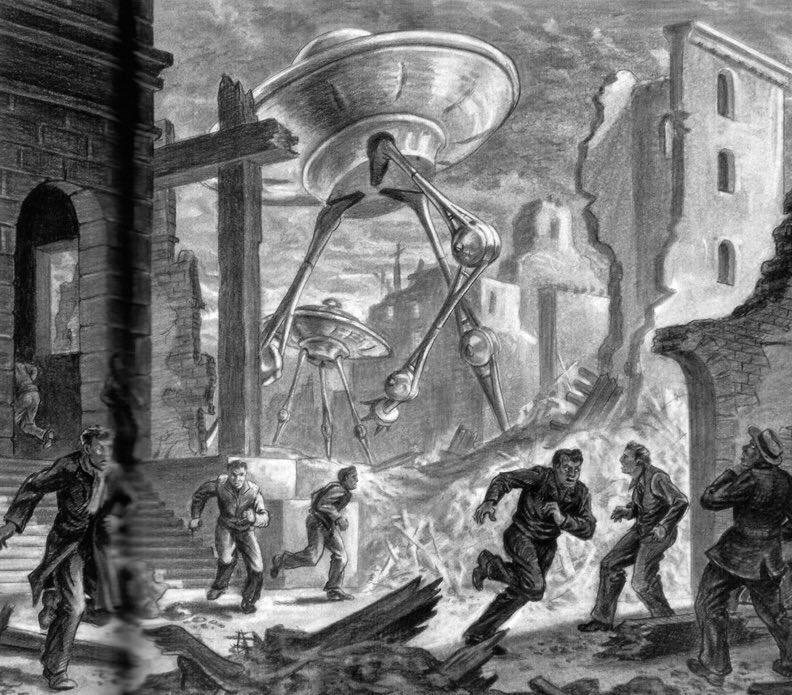
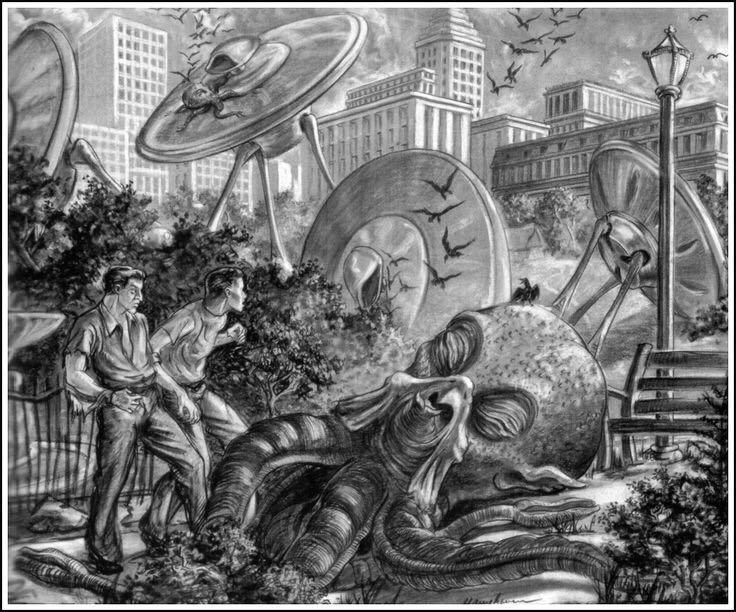
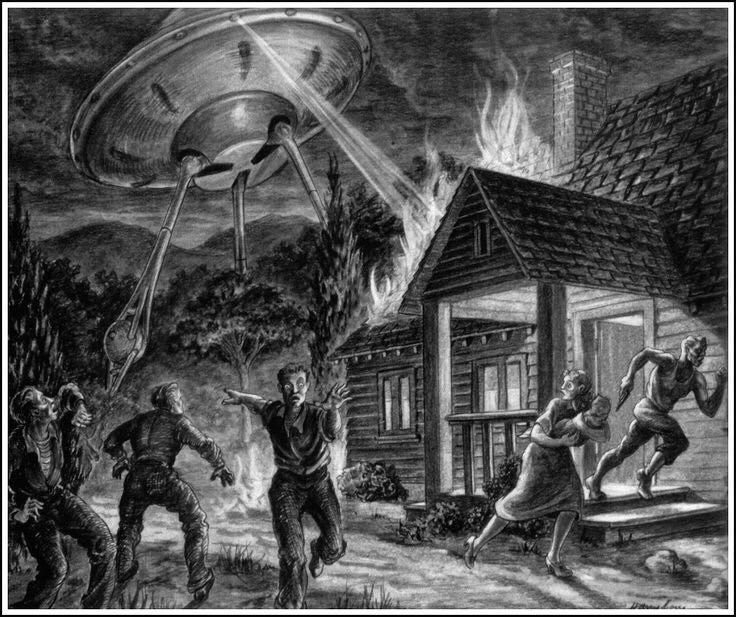
“I actu­al­ly built a Mar­t­ian based on H.G. Wells descrip­tion,” Har­ry­hausen says in the inter­view clip above. “He described the crea­ture that came from the space ship a sort of an octo­pus-like type of crea­ture.” Har­ry­hausen’s also pre­sent­ed his vision with includ­ed sketch­es of the tri­pod invaders lay­ing waste to Amer­i­ca both urban and rur­al. “I took it all around Hol­ly­wood,” he says, but alas, it nev­er quite con­vinced those who kept the gates of the Indus­try in the 1940s.

“We could­n’t raise mon­ey. Peo­ple weren’t that inter­est­ed in sci­ence fic­tion at that time.” Times have changed; the pub­lic has long since devel­oped an unquench­able appetite for sto­ries of human beings and advanced, hos­tile space invaders locked in mor­tal com­bat. But now such a spec­ta­cle would almost cer­tain­ly be real­ized with the inten­sive use of com­put­er-gen­er­at­ed imagery, a tech­nol­o­gy impres­sive in its own way, but one that may nev­er equal the per­son­al­i­ty, phys­i­cal­i­ty, and sheer creepi­ness of the crea­tures that Ray Har­ry­hausen brought painstak­ing­ly to life, one frame at a time, all by hand.

via @41Strange

Relat­ed Con­tent:

The Very First Illus­tra­tions of H.G. Wells’ The War of the Worlds (1897)

Hor­ri­fy­ing 1906 Illus­tra­tions of H.G. Wells’ War of the Worlds: Dis­cov­er the Art of Hen­rique Alvim Cor­rêa

Edward Gorey Illus­trates H.G. Wells’ The War of the Worlds in His Inim­itable Goth­ic Style (1960)

Hear the Prog-Rock Adap­ta­tion of H.G. Wells’ War of the Worlds: The 1978 Rock Opera That Sold 15 Mil­lion Copies World­wide

Hear Orson Welles’ Icon­ic War of the Worlds Broad­cast (1938)

The Mas­cot, a Pio­neer­ing Stop Ani­ma­tion Film by Wla­dys­law Starewicz

Based in Seoul, Col­in Mar­shall writes and broad­casts on cities, lan­guage, and cul­ture. His projects include the book The State­less City: a Walk through 21st-Cen­tu­ry Los Ange­les and the video series The City in Cin­e­ma. Fol­low him on Twit­ter at @colinmarshall or on Face­book.

Werner Herzog Narrates the Existential Journey of a Plastic Bag: Watch a Short Film by Acclaimed Filmmaker Ramin Bahrani


“It’s not what a movie is about,” Roger Ebert famous­ly wrote, “it’s how it is about it.” Sub­ject mat­ter, we might say, sep­a­rates the weak film­mak­ers from the strong: those who require a strik­ing “high con­cept” (killer doll, body switch, Snakes on a Plane) fall into the for­mer group, while those who can make a film about absolute­ly any­thing fall into the lat­ter. It’s safe to say that not every­one is moved by the scene in Amer­i­can Beau­ty where the cam­corder-tot­ing teenag­er wax­es poet­ic about his footage of a plas­tic bag in the wind. But what would sim­i­lar mate­r­i­al look like in the hands of a more assured direc­tor?

For an exam­ple, have a look at Plas­tic Bag, the eigh­teen-minute short above. Every cinephile with an inter­est in Amer­i­can film knows the name of Plas­tic Bag’s direc­tor, Ramin Bahrani. Over the past decade and a half he has emerged as the mak­er of unusu­al­ly pow­er­ful and real­is­tic glimpses of life in his home­land, focus­ing on char­ac­ters like a Pak­istani immi­grant run­ning a New York bagel cart, an orphan work­ing at a chop shop, and a Sene­galese cab dri­ver in North Car­oli­na.

WERNER HERZOG TEACHES FILMMAKING. LEARN MORE.

In its own way, the pro­tag­o­nist and title char­ac­ter of Plas­tic Bag is also at once an out­sider to Amer­i­can life and a fig­ure insep­a­ra­ble from it — and voiced by an insid­er-out­sider of anoth­er kind, the Ger­man film­mak­er Wern­er Her­zog. (Their col­lab­o­ra­tion has con­tin­ued: you may remem­ber Her­zog’s appear­ance in a Bahrani-direct­ed episode of Mor­gan Spur­lock­’s series We the Econ­o­my about a lemon­ade stand.)

Begin­ning his jour­ney at a gro­cery-store check­out counter, he spends his first few hap­py days at the home of his pur­chas­er. But not long after this idyll of ser­vice — car­ry­ing ten­nis balls, being filled with ice to numb a sprain — comes to its inevitable end, he finds him­self deposit­ed into a land­fill. But the wind comes to his res­cue, car­ry­ing him across a series of sub­ur­ban, post-indus­tri­al, and final­ly rur­al land­scapes as he looks des­per­ate­ly for his own­er.

Ulti­mate­ly the bag makes it into places sel­dom seen by human eyes, with a com­bi­na­tion of grav­i­tas and won­der imbued by both Her­zog’s dic­tion and the music of Sig­ur Rós’ Kjar­tan Sveins­son. Watched today, Plas­tic Bag feels more ele­giac than it did when it debuted a decade ago, since which time plas­tic-bag bans have con­tin­ued to spread unabat­ed across the world. How long before not just the hero of Bahrani’s film, but all his poly­eth­yl­ene kind fade from exis­tence — for­got­ten, if not quite decom­posed?

Plas­tic Bag has been added to our col­lec­tion, 4,000+ Free Movies Online: Great Clas­sics, Indies, Noir, West­erns, Doc­u­men­taries & More.

Relat­ed Con­tent:

Wern­er Her­zog, Mor­gan Spur­lock & Oth­er Stars Explain Eco­nom­ic The­o­ry in 20 Short Films

Wern­er Her­zog Nar­rates Poké­mon Go: Imag­ines It as a Mur­der­ous Metaphor for the Bat­tle to Sur­vive

Wern­er Her­zog Reads From Cor­mac McCarthy’s All the Pret­ty Hors­es

Wern­er Her­zog Cre­ates Required Read­ing & Movie View­ing Lists for Enrolling in His Film School

Watch Wern­er Herzog’s Very First Film, Her­ak­les, Made When He Was Only 19-Years-Old (1962)

Start Your Day with Wern­er Her­zog Inspi­ra­tional Posters

Based in Seoul, Col­in Mar­shall writes and broad­casts on cities, lan­guage, and cul­ture. His projects include the book The State­less City: a Walk through 21st-Cen­tu­ry Los Ange­les and the video series The City in Cin­e­ma. Fol­low him on Twit­ter at @colinmarshall or on Face­book.

Pretty Much Pop: A Culture Podcast #8 Discusses Spider-Man: Far From Home and the Function of Super-Hero Films

Mark Lin­sen­may­er, Eri­ca Spyres, and Bri­an Hirt final­ly cov­er a cur­rent film, and of course use it as an entry point in dis­cussing the social func­tion of super-hero films more gen­er­al­ly, how much real­ism or grit­ti­ness is need­ed in such sto­ries, whether to repeat or bypass the ori­gin sto­ry, ever­last­ing fran­chis­es, the use of mul­ti-vers­es as a sto­ry­telling device, exag­ger­at­ing the poten­tial in a sto­ry of new tech­nolo­gies that the audi­ence doesn’t real­ly under­stand, and more.

We touch on oth­er bits of the Mar­vel Uni­verse and the oth­er Spi­der-Man films, the orig­i­nal Amaz­ing Spi­der-Man #13 com­ic that intro­duced Mys­te­rio, The Lion KingWatch­menThe BoysStar TrekElec­tric Dreams, the Rob Lowe “John Smith’s Bach­e­lor Par­ty” scene in Austin Pow­ersthe recur­ring hench­man in Spi­der-Man (actu­al­ly Peter Billings­ley, i.e. Ral­phie in A Christ­mas Sto­ry), and the Exiles com­ic (a Mar­vel team that trav­els between mul­ti-vers­es).

Some arti­cles we looked at for this episode include:

This episode includes bonus con­tent that you can only hear by sup­port­ing the pod­cast at patreon.com/prettymuchpop. This pod­cast is part of the Par­tial­ly Exam­ined Life pod­cast net­work.

Pret­ty Much Pop is the first pod­cast curat­ed by Open Cul­ture. Browse all Pret­ty Much Pop posts or start with the first episode.

Nigerian Teenagers Are Making Slick Sci Fi Films With Their Smartphones

Some­one should real­ly snap up the rights for a movie about The Crit­ics, a col­lec­tive of self-taught teenage film­mak­ers from north­west­ern Nige­ria.

The boys’ ded­i­ca­tion, ambi­tion, and no-bud­get inven­tive­ness calls to mind oth­er film­mak­ing fanat­ics, from the sequestered, home­schooled broth­ers of The Wolf­pack to the fic­tion­al Swed­ing spe­cial­ists of Me and Earl and the Dying Girl and Be Kind, Rewind.

While smart­phones and free edit­ing apps have def­i­nite­ly made it eas­i­er for aspir­ing film­mak­ers to bring their fan­tasies to fruition, it’s worth not­ing that The Crit­ics saved for a month to buy the green fab­ric for their chro­ma key effects.

Their pro­duc­tions are also plagued with the inter­net and pow­er out­ages that are a fre­quent occur­rence in their home base of Kaduna, slow­ing every­thing from the ren­der­ing process to the Youtube visu­al effects tuto­ri­als that have advanced their craft.

To date they’ve filmed 20 shorts on a smart phone with a smashed screen, mount­ed to a bro­ken micro­phone stand that’s found new life as a home­made tri­pod.

Their sim­ple set up will be com­ing in for an upgrade, how­ev­er, now that Nol­ly­wood direc­tor Kemi Adeti­ba has brought their efforts to the atten­tion of a much wider audi­ence, who donat­ed $5,800 in a fundrais­ing cam­paign.

It’s easy to imag­ine the young male demo­graph­ic flock­ing to a fea­ture-length, big-bud­get expan­sion of Z: The Begin­ning. It’s pos­si­ble even the art house crowd could be lured to a sum­mer block­buster whose set­ting is Nige­ria, thir­ty years into the future, a nov­el­ty for those of us unversed in Nol­ly­wood’s prodi­gious out­put.

The post-apoc­a­lyp­tic short, above, took the crew 7 months to film and edit. The stars also inhab­it­ed a num­ber of off­screen roles: stunt coor­di­na­tor, gaffer, prop mas­ter, com­pos­er, con­ti­nu­ity…

What’s next? Ear­li­er this month, Africa News revealed that the boys are busy with a new film whose plot they aren’t at lib­er­ty to reveal. We’re guess­ing a sequel, to go by a not so sub­tle hint fol­low­ing Z’s final cred­its and a mov­ing ded­i­ca­tion to “the ones we’ve lost.”

“Hor­ror, com­e­dy, sci-fi, action, we do all,” The Crit­ics’ pro­claim on their Youtube chan­nel, care­ful­ly cat­e­go­riz­ing their work as “films not skits.” (Their films’ length has thus far been dic­tat­ed by the unpre­dictabil­i­ty of their wifi sit­u­a­tion—Chase, below, is five min­utes long and took two days to ren­der.

“One of the tar­gets we aim for in the years to come is to make the biggest film in Nige­ria and prob­a­bly beyond,” God­win Josi­ahZ’s 19-year-old writer-direc­tor told Chan­nels Tele­vi­sion, Lagos’ 24-hour news chan­nel:

We want to do some­thing crazy, we want to do some­thing great, some­thing that has not been done before, and from what has been going on now, we believe quite well that it is going to hap­pen soon enough.

Watch The Crit­ics’ films and mak­ing-ofs on their Youtube chan­nel.

Sup­port their work with a pledge to their recent­ly launched Patre­on.

via Kot­tke/Africa News

Relat­ed Con­tent:

The Strange and Won­der­ful Movie Posters from Ghana: The Matrix, Alien & More

High School Kids Stage Alien: The Play and You Can Now Watch It Online

Direc­tor Robert Rodriguez Teach­es The Basics of Film­mak­ing in Under 10 Min­utes

Hear Kevin Smith’s Three Tips For Aspir­ing Film­mak­ers (NSFW)

Ayun Hal­l­i­day is an author, illus­tra­tor, the­ater mak­er and Chief Pri­ma­tol­o­gist of the East Vil­lage Inkyzine.  Join her in NYC on Mon­day, Sep­tem­ber 9 for anoth­er sea­son of her book-based vari­ety show, Necro­mancers of the Pub­lic Domain. Fol­low her @AyunHalliday.

« Go BackMore in this category... »
Quantcast