Behold 84 Great Novels Reinterpreted as Modernist Postage Stamps

Ali John­son and Jim Quail of Liv­er­pool-based design stu­dio Dorothy had a hit with their music-based graph­icswhich recast sem­i­nal alter­na­tivepsy­che­del­icelec­tron­ic, and post-punk albums as over­sized postage stamps.

Now, they’ve turned their atten­tion and knack for high­ly con­densed visu­al respons­es to the realms of lit­er­a­ture.

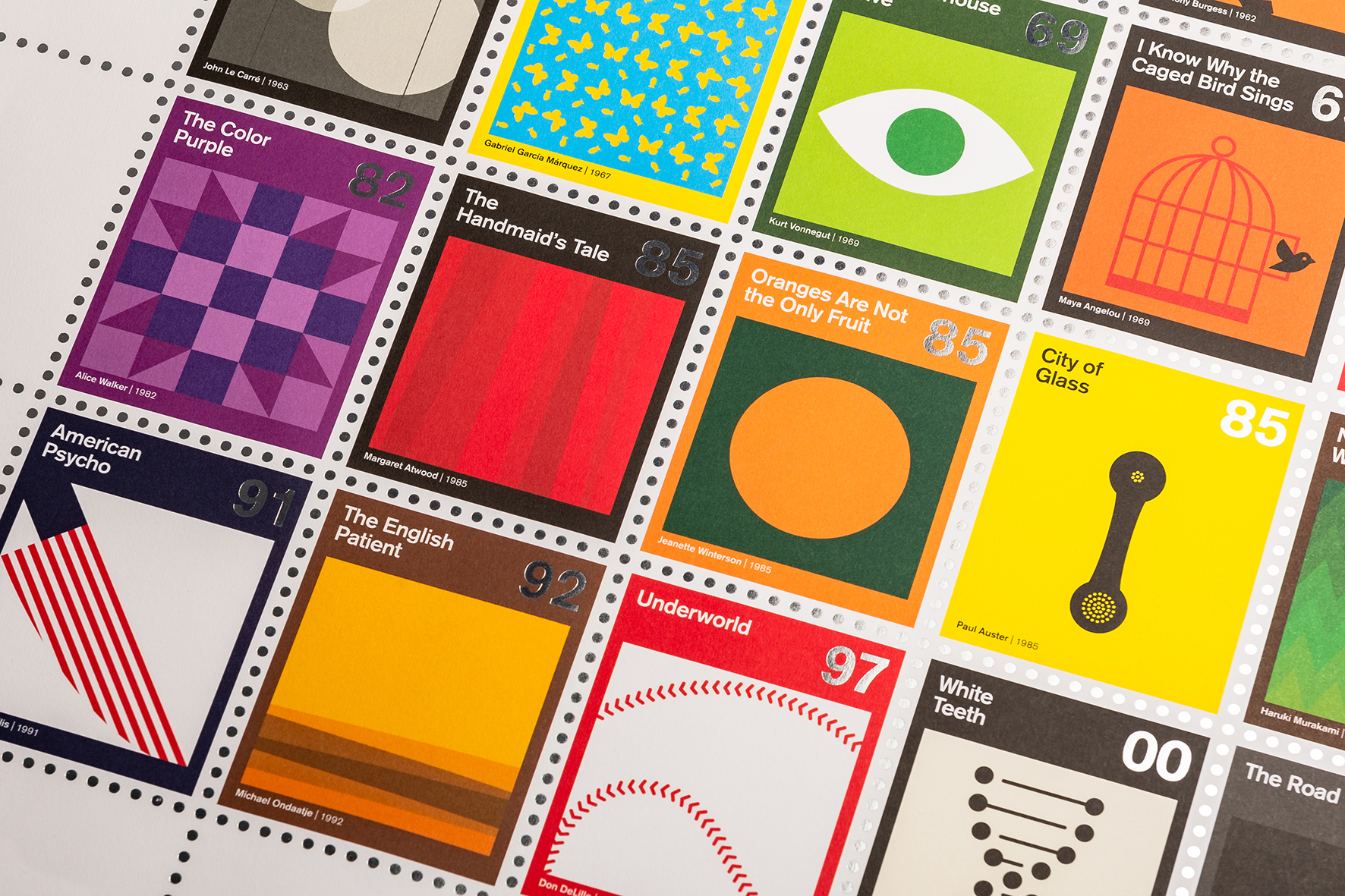
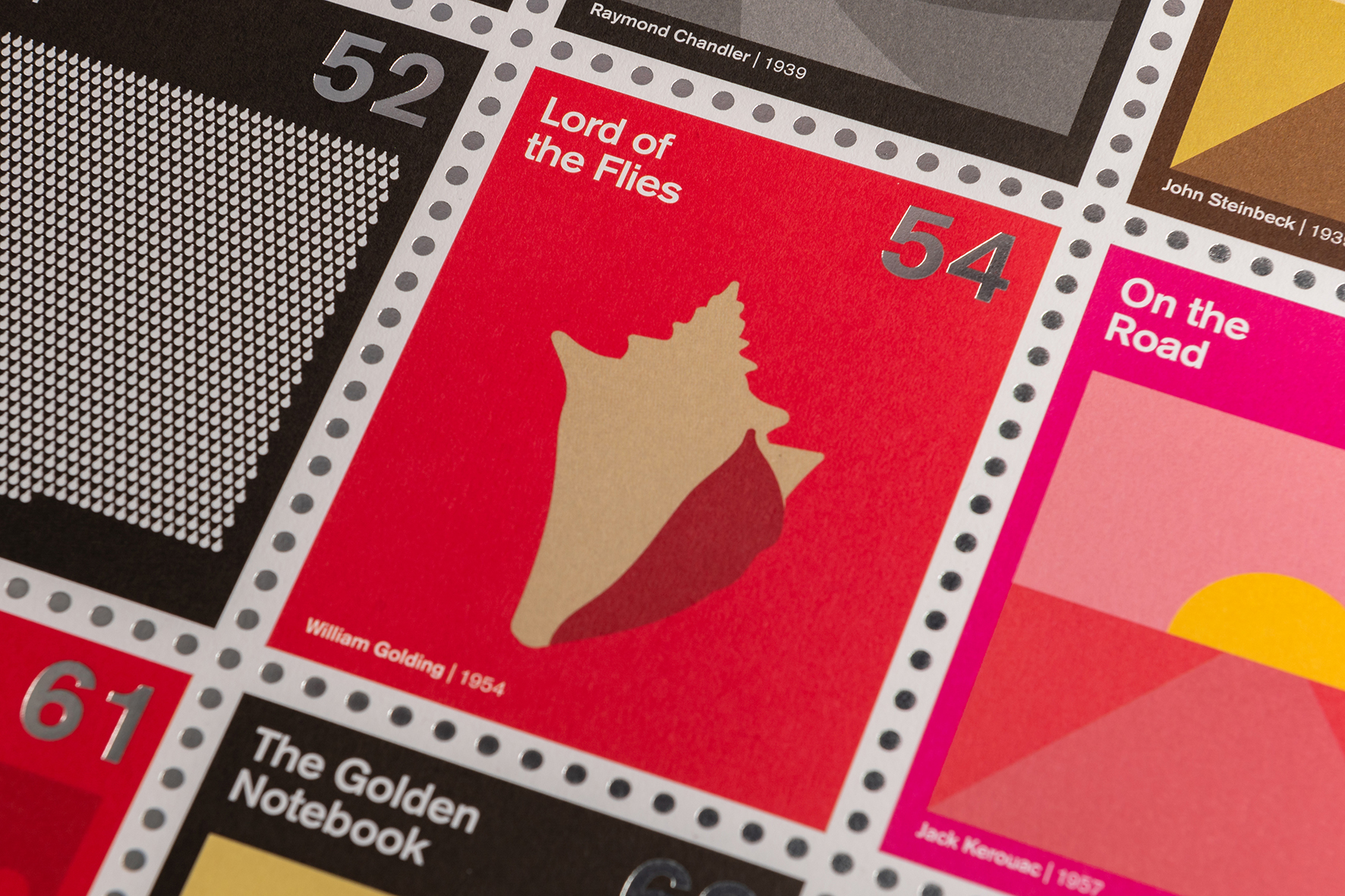
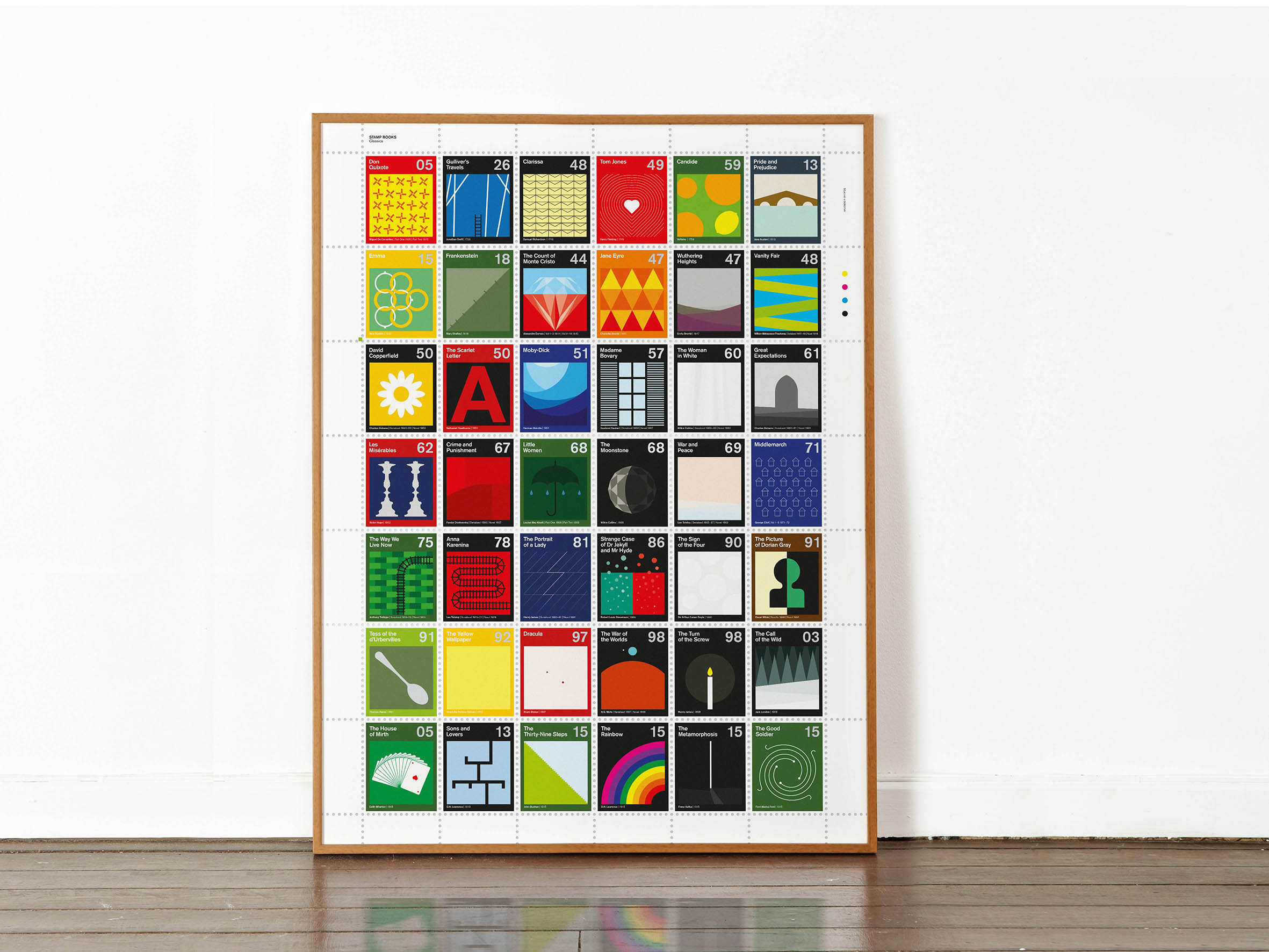
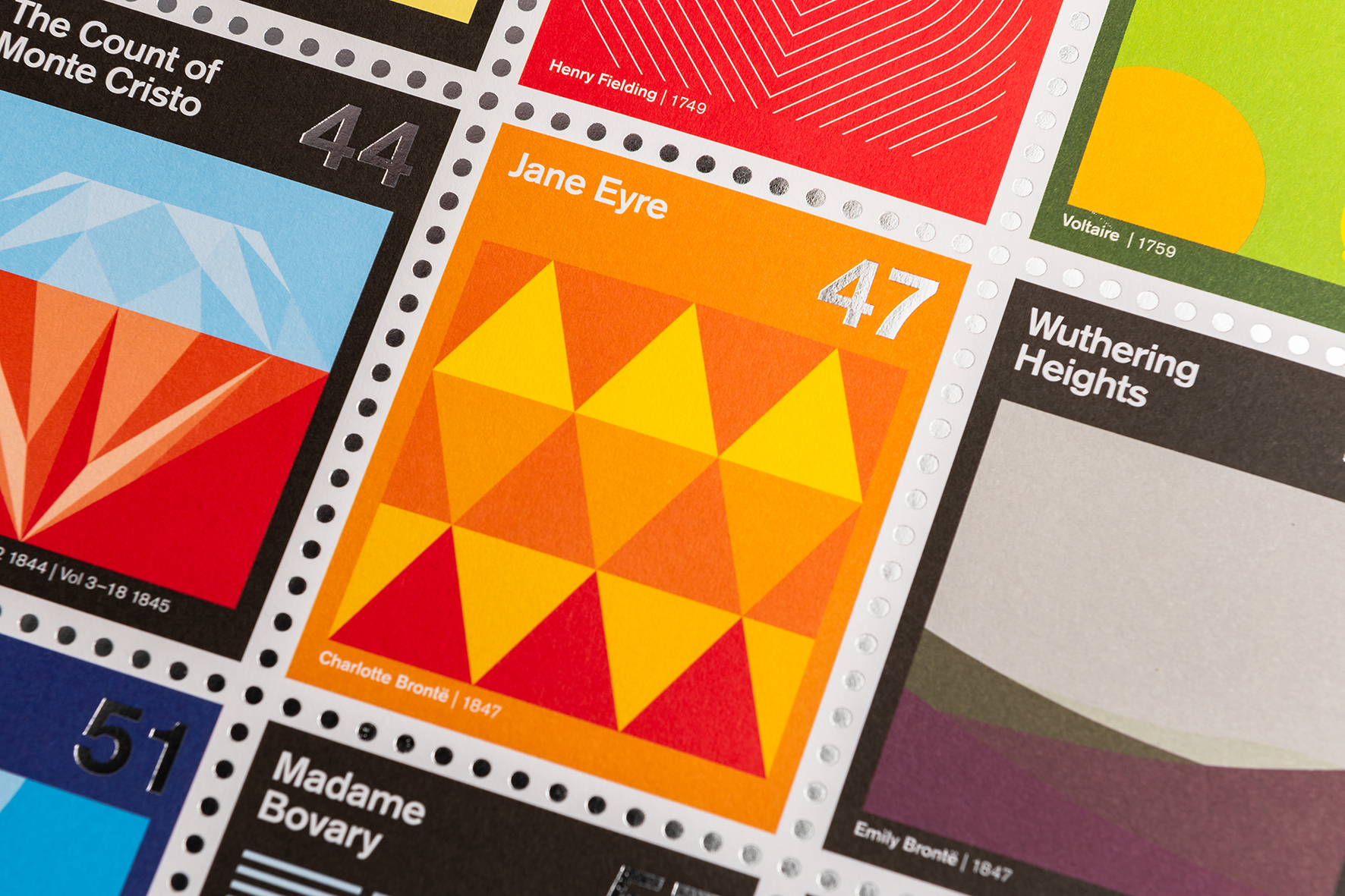
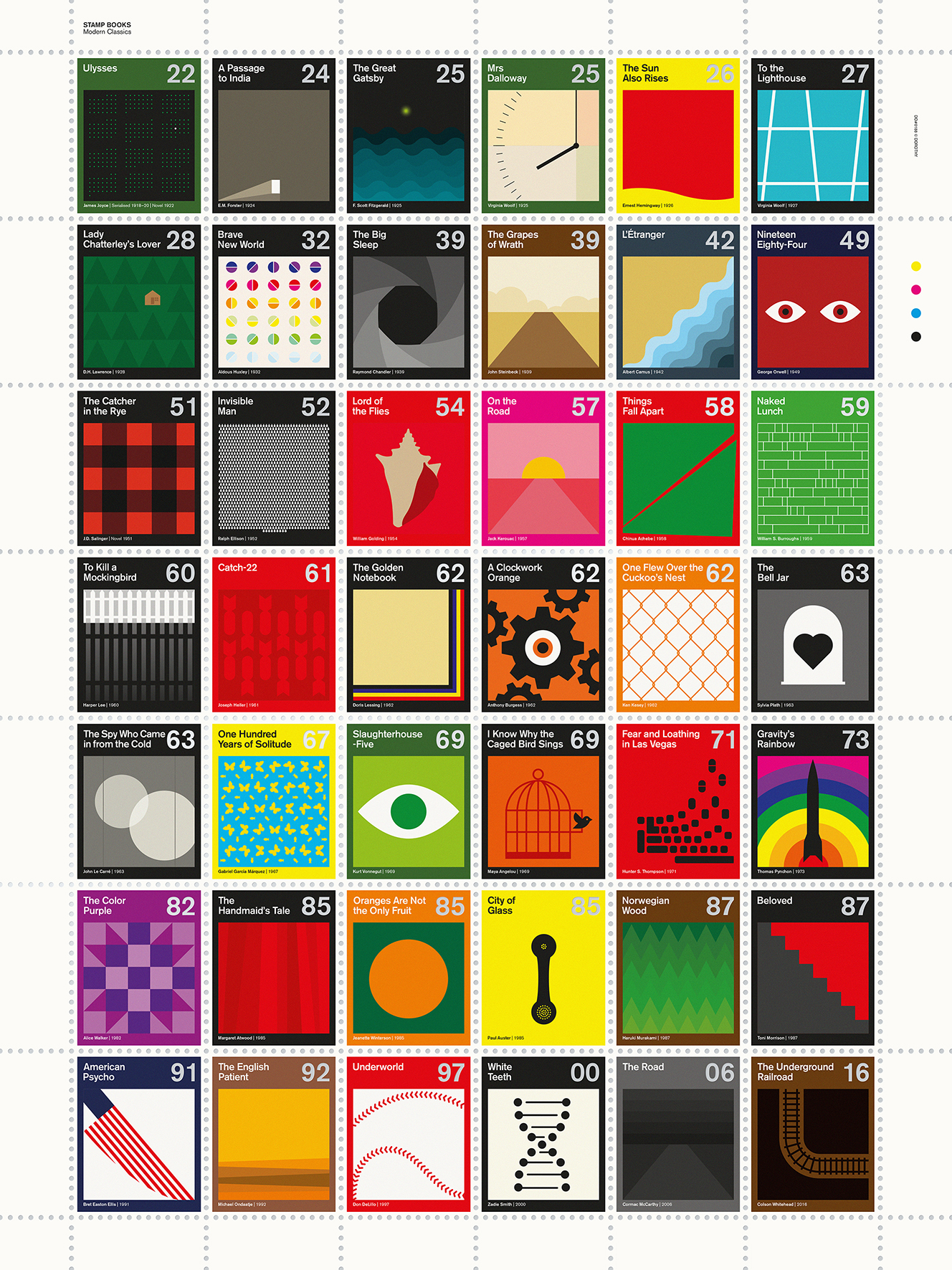
Their Mod­ern Clas­sics col­lec­tion, above, syn­the­sizes 42 titles into some­thing emblem­at­ic and essen­tial.

How many have you read?

How many would you be able to iden­ti­fy based on image alone?

It’s easy to grasp why the hori­zon fig­ures promi­nent­ly in On The RoadThe Grapes of Wrath, and The Road.

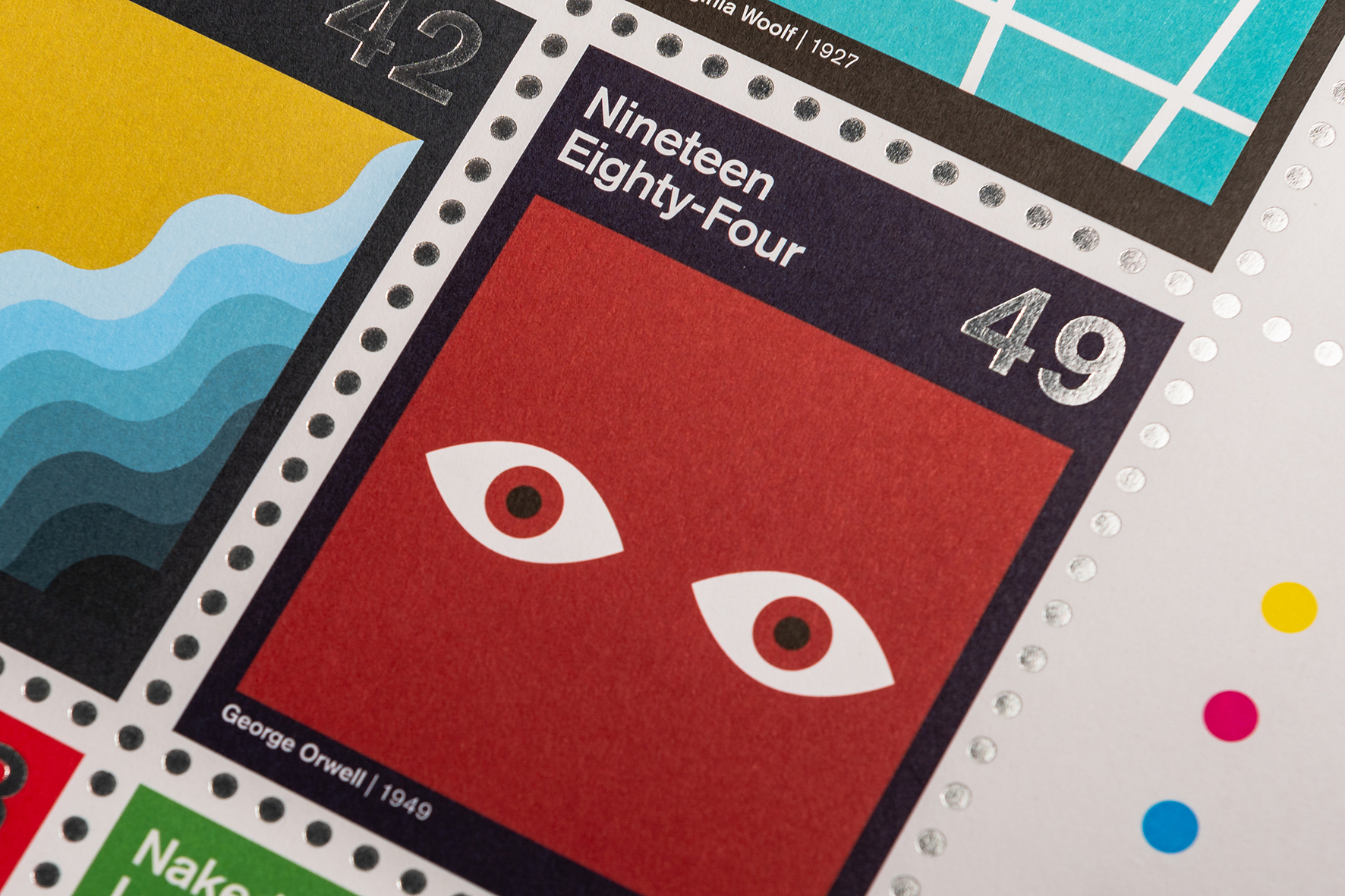
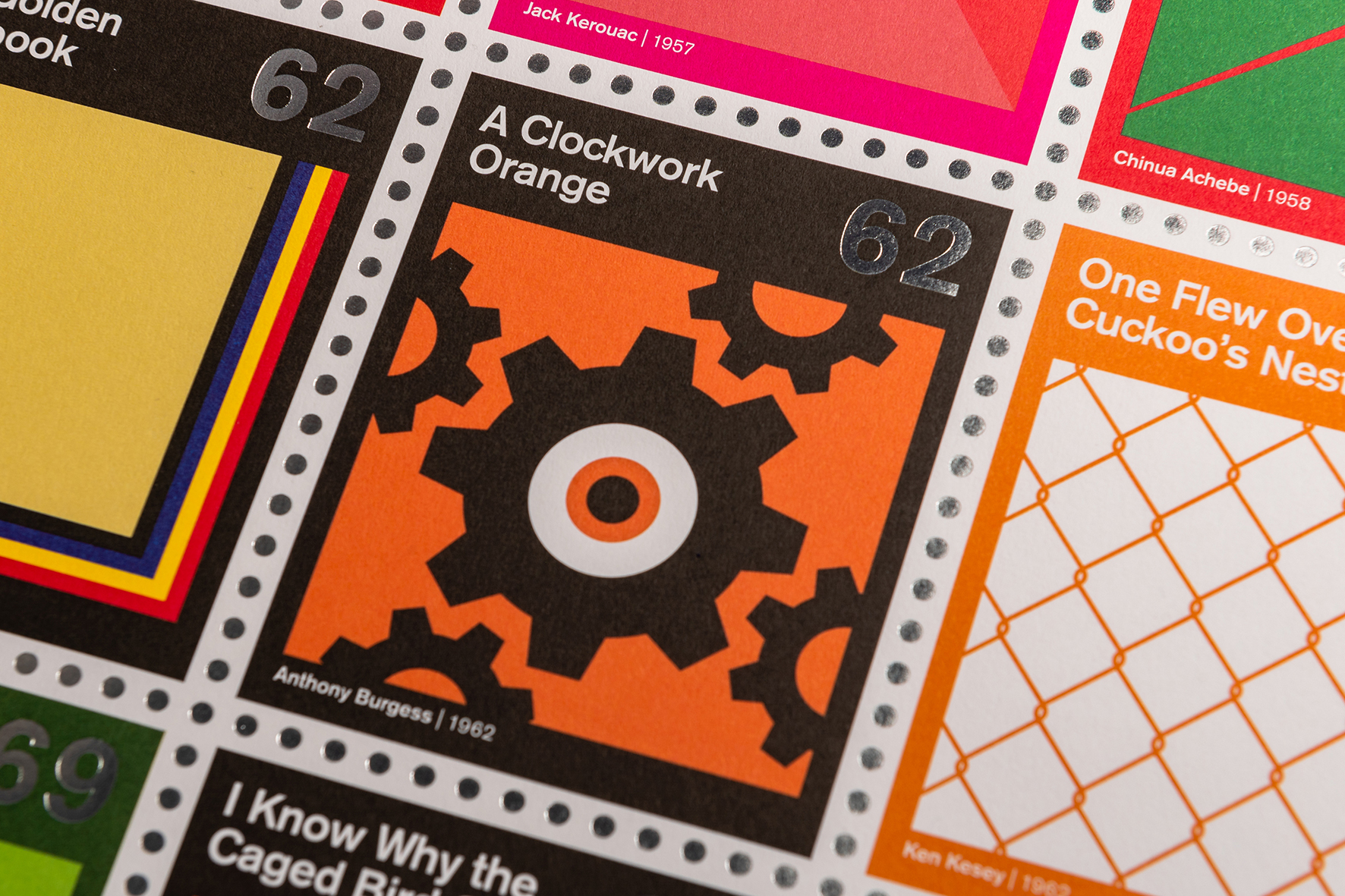
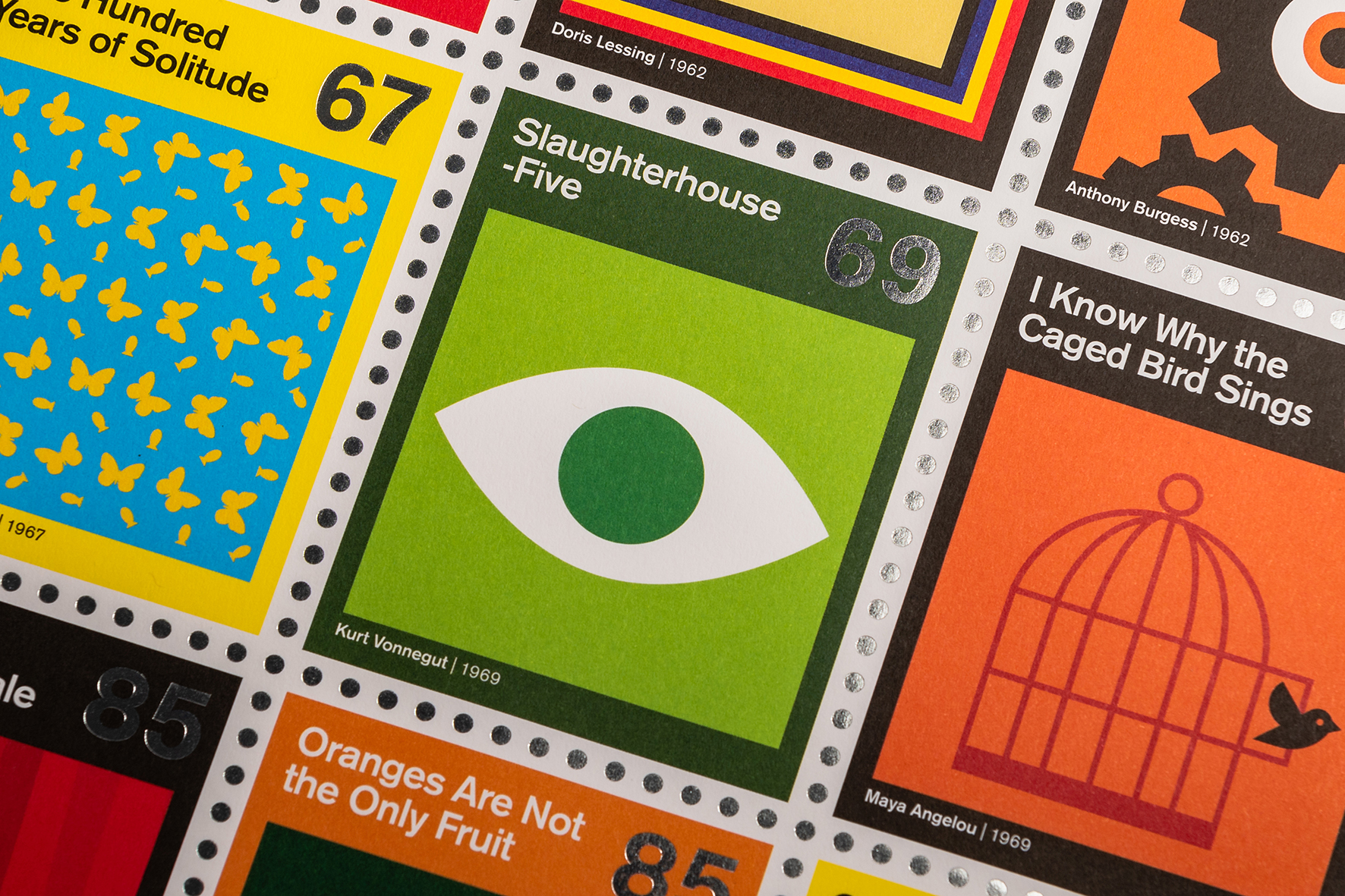
And under­stand­ably, the eyes have it when it comes to 1984A Clock­work Orange, and Slaugh­ter­house-Five.

Else­where, the visu­al rep­re­sen­ta­tions cre­ate con­nec­tions that may take read­ers by sur­prise.

(Stay tuned for a mas­ter’s the­sis that teas­es out the­mat­ic par­al­lels between The Col­or Purple’s quilts and Hold­en Caulfield’s red hunt­ing hat in The Catch­er in the Rye.)

Accord­ing to John­son, she and Quail, avid read­ers both, fell out sev­er­al times over which titles to include (and, by exten­sion, exclude).

Eng­lish teach­ers at mid­dle and high school lev­el will rejoice at the num­ber of syl­labus favorites that made the cut.

Poten­tial stamp-themed cre­ative assign­ments abound.

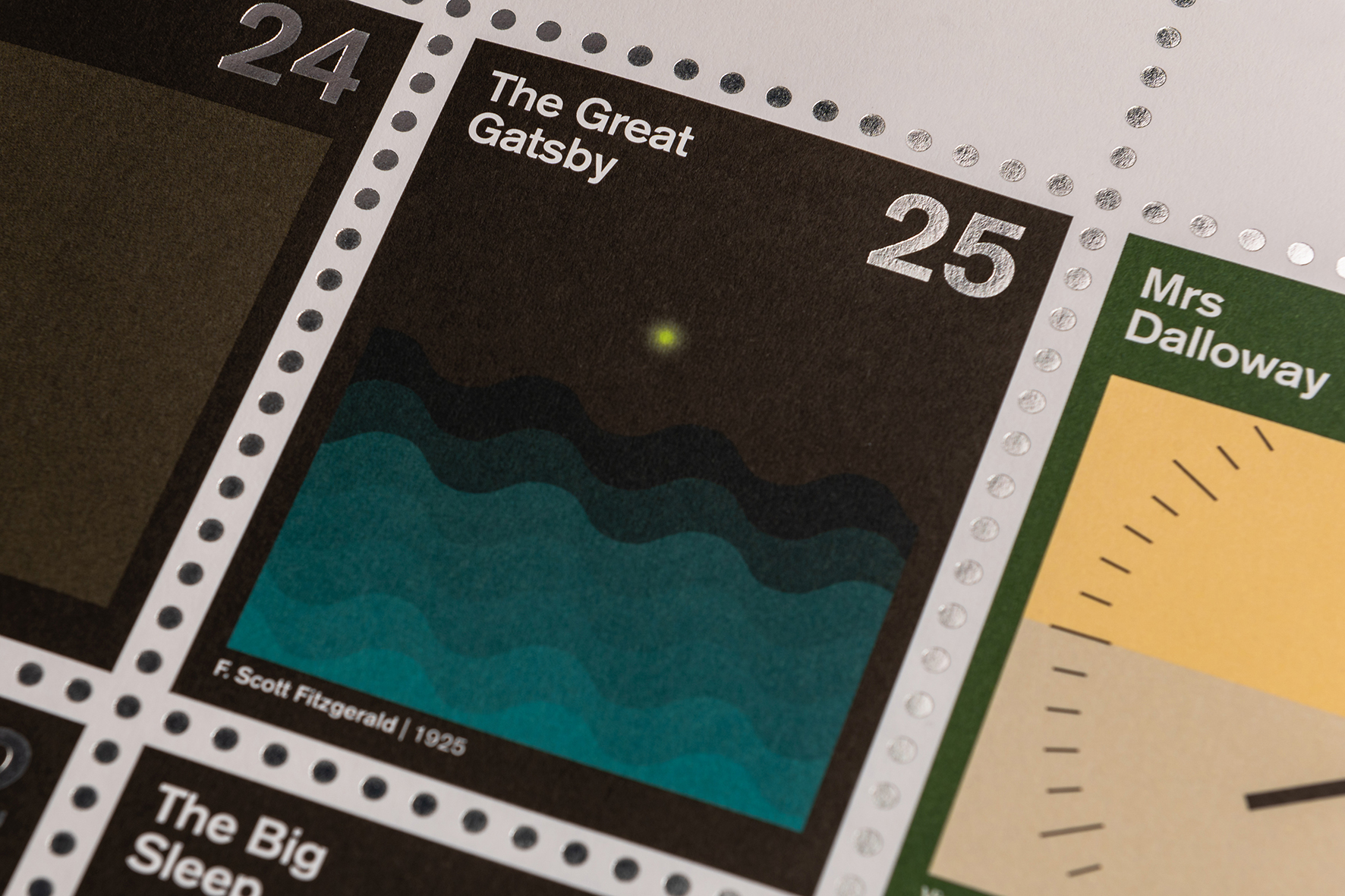
The conch may be an obvi­ous choice for Lord of the Flies, but what of The Great Gats­by’s green light?

Why not the eyes of Doc­tor T. J. Eck­le­burg?

swim­ming pool?

Or one of those beau­ti­ful shirts?

Dis­cuss!

Then make your own stamp!

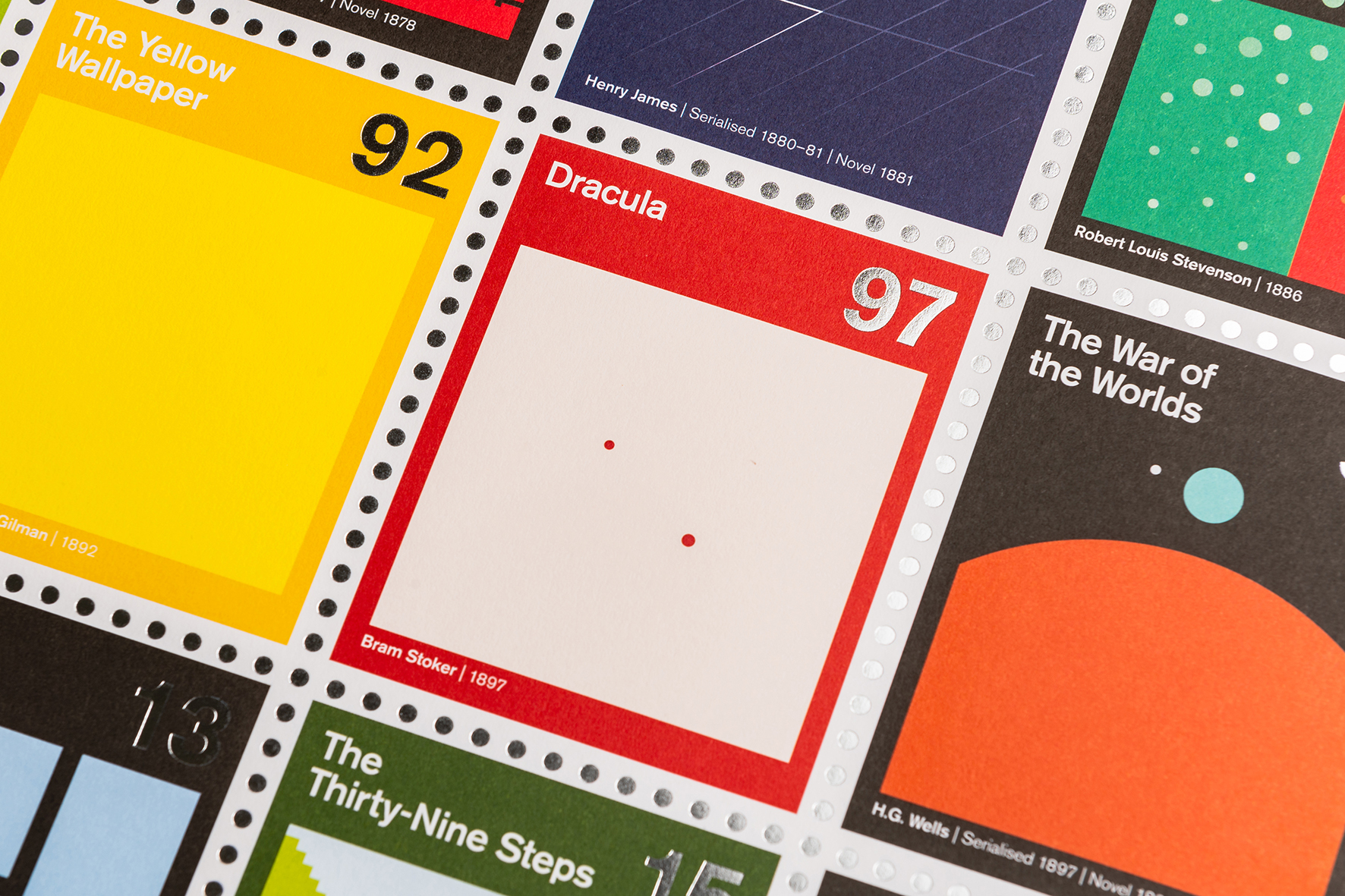
Stu­dents are far less like­ly to be con­ver­sant in the 42 ear­li­er works com­pris­ing Dorothy’s lit­er­ary Clas­sics stamps, though musi­cal and movie adap­ta­tions of Lit­tle WomenDrac­u­la, and Les Mis­er­ables should pro­vide a toe­hold.

Our igno­rance is such, we may need to reread Tess of the d’Urbervilles and Jane Eyre … or at least Google the sig­nif­i­cance of a spoon and all those orange and red tri­an­gles.

(Back in our pre-dig­i­tal youth, Cliff’s Notes were the pre­ferred Philis­tine option…)

Dorothy’s stamp prints of Clas­sics and Mod­ern Clas­sics are avail­able for pur­chase on their web­site.

Relat­ed Con­tent: 

Good Movies as Old Books: 100 Films Reimag­ined as Vin­tage Book Cov­ers

157 Ani­mat­ed Min­i­mal­ist Mid-Cen­tu­ry Book Cov­ers

Clas­sic Songs Re-Imag­ined as Vin­tage Book Cov­ers Dur­ing Our Trou­bled Times: “Under Pres­sure,” “It’s the End of the World as We Know It,” “Shel­ter from the Storm” & More

Ayun Hal­l­i­day is the Chief Pri­maol­o­gist of the East Vil­lage Inky zine and author, most recent­ly, of Cre­ative, Not Famous: The Small Pota­to Man­i­festo.  Fol­low her @AyunHalliday.

Hear Brian Eno’s Contribution to the Soundtrack of David Lynch’s Dune (1984)

Though released just a few weeks ago, Denis Vil­leneu­ve’s Dune seems already to have gar­nered more crit­i­cal acclaim than David Lynch’s 1984 adap­ta­tion of the same mate­r­i­al. This com­par­i­son is, of course, unfair: Lynch was work­ing under dif­fer­ent con­di­tions in a dif­fer­ent time, not to men­tion with a marked­ly dif­fer­ent cin­e­mat­ic sen­si­bil­i­ty. And in fact, Lynch’s ver­sion of the ambi­tious, saga-launch­ing nov­el by Frank Her­bert does have its fans, or at least view­ers will­ing to praise cer­tain of its aspects. Lovers of 1980s music, for exam­ple, val­ue its score com­posed by the vir­tu­osic rock band Toto — with the excep­tion, that is, of a track from Bri­an Eno, Roger Eno, and Daniel Lanois.

Bri­an Eno in par­tic­u­lar is cred­it­ed with pop­u­lar­iz­ing ambi­ent music, and “Prophe­cy Theme,” heard on the Dune sound­track album as well as in the film itself, con­jures up an atmos­phere as effec­tive­ly as any oth­er piece of his work in the genre. “David flew me to Los Ange­les to see Dune,” Eno recalls in New York Times inter­view about his recent­ly released com­pi­la­tion Bri­an Eno (Film Music, 1976–2020), which includes the track.

It wasn’t fin­ished then. And I don’t know whether his inten­tion or his hope was that I would do the whole sound­track, but I didn’t want to, any­way. It was a huge project, and I just didn’t feel like doing it. But I did feel like mak­ing one piece for it, so that’s what I did.”

Dune was indeed a for­mi­da­ble under­tak­ing, and one that ulti­mate­ly proved too big for Lynch. Some fans would argue, even after the suc­cess­ful first install­ment from Vil­leneuve, that it’s too big for any film­mak­er. But the world Her­bert cre­at­ed, one both sweep­ing and uncom­mon­ly detailed, has inspired many a cre­ator to pro­duce impres­sive work for projects both real­ized and unre­al­ized. Per­haps it counts as a missed oppor­tu­ni­ty that the lat­est Dune film, with its appar­ent clean-slate approach to pre­vi­ous attempts at adap­ta­tion, did­n’t com­mis­sion a score from Eno, whose sig­na­ture son­ic tex­tures could nice­ly have com­pli­ment­ed Vil­leneu­ve’s instinct for the sub­lime. But then, a stu­dio can’t go far wrong with Hans Zim­mer either.

Relat­ed Con­tent:

Hear Hans Zimmer’s Exper­i­men­tal Score for the New Dune Film

Bri­an Eno Once Com­posed Music for Win­dows 95; Now He Lets You Cre­ate Music with an iPad App

The Glos­sary Uni­ver­sal Stu­dios Gave Out to the First Audi­ences of David Lynch’s Dune (1984)

The Dune Col­or­ing & Activ­i­ty Books: When David Lynch’s 1984 Film Cre­at­ed Count­less Hours of Pecu­liar Fun for Kids

A Side-by-Side, Shot-by-Shot Com­par­i­son of Denis Villeneuve’s 2020 Dune and David Lynch’s 1984 Dune

Bri­an Eno Reveals His Favorite Film Sound­tracks

Based in Seoul, Col­in Mar­shall writes and broad­casts on cities, lan­guage, and cul­ture. His projects include the Sub­stack newslet­ter Books on Cities, the book The State­less City: a Walk through 21st-Cen­tu­ry Los Ange­les and the video series The City in Cin­e­ma. Fol­low him on Twit­ter at @colinmarshall or on Face­book.

The 10 Paradoxical Traits of Creative People, According to Psychologist Mihaly Csikszentmihalyi (RIP)

Despite decades of research, sci­en­tists still know lit­tle about the source of cre­ativ­i­ty. Nonethe­less, humans con­tin­ue to cre­ate things. Or, at least, we con­tin­ue to be fas­ci­nat­ed by cre­ativ­i­ty; now more than ever, it seems. There may be as many best-sell­ing books on cre­ativ­i­ty as there are on diet­ing or rela­tion­ships. The cur­rent focus on cre­ativ­i­ty isn’t always a net pos­i­tive. Any­one who does cre­ative work may be labeled a “Cre­ative” (used as a noun) at some point in their career. The term lumps all work­ing artists togeth­er, as though their work were inter­change­able deliv­er­ables mea­sured in bill­able hours. The word sug­gests that those who don’t work as “Cre­atives” have no busi­ness in the area of cre­ativ­i­ty. As psy­chol­o­gist Mihaly Csik­szent­mi­ha­lyi put it:

Not so long ago, it was accept­able to be an ama­teur poet…. Nowa­days if one does not make some mon­ey (how­ev­er piti­ful­ly lit­tle) out of writ­ing, it’s con­sid­ered to be a waste of time. It is tak­en as down­right shame­ful for a man past twen­ty to indulge in ver­si­fi­ca­tion unless he receives a check to show for it.

Csik­szent­mi­ha­lyi, who passed away this month, deplored the instru­men­tal­iza­tion of cre­ativ­i­ty. He wrote, Austin Kleon notes, “about the joys of being an ama­teur” — which, in its lit­er­al sense, means being a devot­ed lover. Like Carl Jung, Csik­szent­mi­ha­lyi believed that cre­ation pro­ceeds, in a sense, from falling in love with an activ­i­ty and los­ing our­selves in a state beyond our pre­oc­cu­pa­tions with self, oth­ers, or the past and future. He called this state “flow” and wrote a nation­al best­seller about it while found­ing the dis­ci­pline of pos­i­tive psy­chol­o­gy and co-direct­ing the Qual­i­ty of Life Research Cen­ter at Clare­mont Grad­u­ate Uni­ver­si­ty .

You can see an ani­mat­ed sum­ma­ry of Csikszentmihalyi’s book, Flow: The Psy­chol­o­gy of Opti­mal Expe­ri­ence above (includ­ing a pro­nun­ci­a­tion of Csikszentmihalyi’s name). Cre­ativ­i­ty should not only refer to skills we sell to our employ­ers. It is the prac­tice of doing things that make us hap­py, not the things that make us mon­ey, whether or not those two things are the same. This is a sub­ject close to Austin Kleon’s heart. The writer and design­er has been offer­ing tips for train­ing and hon­ing cre­ativ­i­ty for years, in books like Show Your Work, a guide “not just for ‘cre­atives’!” but for any­one who wants to cre­ate. Like Csik­szent­mi­ha­lyi, he refutes the idea that there’s such a thing as a “cre­ative type.”

Instead, in his book Cre­ativ­i­ty: Flow and the Psy­chol­o­gy of Dis­cov­ery and Inven­tion, Csik­szent­mi­ha­lyi notes that peo­ple who spend their time cre­at­ing exhib­it a list of 10 “para­dox­i­cal traits.”

  1. Cre­ative peo­ple have a great deal of phys­i­cal ener­gy, but they’re also often qui­et and at rest.
  2. Cre­ative peo­ple tend to be smart yet naive at the same time.
  3. Cre­ative peo­ple com­bine play­ful­ness and dis­ci­pline, or respon­si­bil­i­ty and irre­spon­si­bil­i­ty.
  4. Cre­ative peo­ple alter­nate between imag­i­na­tion and fan­ta­sy, and a root­ed sense of real­i­ty.
  5. Cre­ative peo­ple tend to be both extro­vert­ed and intro­vert­ed.
  6. Cre­ative peo­ple are hum­ble and proud at the same time.
  7. Cre­ative peo­ple, to an extent, escape rigid gen­der role stereo­typ­ing.
  8. Cre­ative peo­ple are both rebel­lious and con­ser­v­a­tive.
  9. Most cre­ative peo­ple are very pas­sion­ate about their work, yet they can be extreme­ly objec­tive about it as well.
  10. Cre­ative people’s open­ness and sen­si­tiv­i­ty often expos­es them to suf­fer­ing and pain, yet also to a great deal of enjoy­ment.

We may well be remind­ed of Walt Whitman’s “Do I con­tra­dict myself? Very well then I con­tra­dict myself,” and per­haps it is to Whit­man we should turn to resolve the para­dox. Cre­ativ­i­ty involves the will­ing­ness and courage to become “large,” the poet wrote, to get weird and messy and “con­tain mul­ti­tudes.” Maybe the best way to become a more cre­ative per­son, to lose one­self ful­ly in the act of mak­ing, is to heed Bertrand Russell’s guid­ance for fac­ing death:

[M]ake your inter­ests grad­u­al­ly wider and more imper­son­al, until bit by bit the walls of the ego recede, and your life becomes increas­ing­ly merged in the uni­ver­sal life. An indi­vid­ual human exis­tence should be like a riv­er: small at first, nar­row­ly con­tained with­in its banks, and rush­ing pas­sion­ate­ly past rocks and over water­falls. Grad­u­al­ly the riv­er grows wider, the banks recede, the waters flow more qui­et­ly, and in the end, with­out any vis­i­ble break, they become merged in the sea… 

This elo­quent pas­sage — Csik­szent­mi­ha­lyi might have agreed — express­es the very essence of cre­ative “flow.”

via Austin Kleon

Relat­ed Con­tent: 

Cre­ativ­i­ty, Not Mon­ey, is the Key to Hap­pi­ness: Dis­cov­er Psy­chol­o­gist Mihaly Csikszentmihaly’s The­o­ry of “Flow”

Albert Ein­stein Tells His Son The Key to Learn­ing & Hap­pi­ness is Los­ing Your­self in Cre­ativ­i­ty (or “Find­ing Flow”)

Slavoj Žižek: What Full­fils You Cre­ative­ly Isn’t What Makes You Hap­py

Josh Jones is a writer and musi­cian based in Durham, NC. Fol­low him at @jdmagness

Watch the Rolling Stones’ “Start Me Up” Music Video Re-Enacted by Robots

When Microsoft released Win­dows 95, they did­n’t skimp on the pub­lic­i­ty. Their pro­mo­tion­al cam­paign for the oper­at­ing sys­tem even includ­ed tele­vi­sion spots sound­tracked with the Rolling Stones’ hit “Start Me Up.” The lyrics of its cho­rus neat­ly suit­ed the prod­uct, which came with a re-engi­neered inter­face fea­tur­ing a then-nov­el fea­ture called the Start menu. Though hard­ly new even then, the song did also car­ry faint asso­ci­a­tions with inno­va­tion, hav­ing orig­i­nal­ly been released on August 14, 1981, just two weeks after the launch of a cable chan­nel called MTV. Its music video thus received a great deal of air­play, prov­ing to the pub­lic that the Stones could stay on the cut­ting edge.

By the 1980s, rel­e­vance was by no means guar­an­teed to any band formed in the 1960s. More than proven though the point may be today, the Michael Lind­say-Hogg-direct­ed music video for “Start Me Up” demon­strat­ed that even a group of rock­ers in or near their for­ties could per­form with the same uncon­tain­able vital­i­ty they always had.

Even now, forty years after that, the group’s sur­viv­ing mem­bers show no incli­na­tion to retire, and the high­est tech­nol­o­gy has only just begun to catch up to them. I refer, of course, to Spot, the mod­el of robot dog pre­vi­ous­ly seen here on Open Cul­ture moon­walk­ing and twerk­ing to Bruno Mars’ “Uptown Funk.” In the years since then, it seems he’s learned to move like Jag­ger — as well as Richards, Wyman, Wood, and Watts.

In “Spot Me Up,” four Spot mod­els togeth­er repli­cate about a minute of the “Start Me Up” video. That each robot real­ly does seem to con­vey traces of the per­son­al­i­ty of its par­tic­u­lar Stone — even the one tasked with repli­cat­ing a glance from the late Char­lie Watts, a force of sub­tle­ty behind the drum kit for more than half a cen­tu­ry — speaks to the engi­neer­ing skill mar­shaled by Boston Dynam­ics, the Mass­a­chu­setts Insti­tute of Tech­nol­o­gy spin­off where Spot was invent­ed. Not every­one has warmed to the life­like move­ments of their robots, a line­up that also includes the for­mi­da­ble humanoid Atlas. But dance videos like these serve as a form of pub­lic rela­tions for its prod­ucts, which were designed for not the stage but fac­to­ries, mines, and pow­er plants — places where they can do what any fan of the Stones in the 80s would sure­ly call the dirty work.

Relat­ed Con­tent:

Kei­th Richards Demon­strates His Famous 5‑String Tech­nique (Used on Clas­sic Stones Songs Like “Start Me Up,” “Honky Tonk Women” & More

Watch the Rolling Stones Play “You Can’t Always Get What You Want” While Social Dis­tanc­ing in Quar­an­tine

The Rolling Stones Release a Time­ly Track, “Liv­ing in a Ghost Town”: Their First New Music in Eight Years

The Robots of Your Dystopi­an Future Are Already Here: Two Chill­ing Videos Dri­ve It All Home

Twerk­ing, Moon­walk­ing AI Robots — They’re Now Here

Kraftwerk’s “The Robots” Per­formed by Ger­man First Graders in Adorable Card­board Robot Out­fits

Based in Seoul, Col­in Mar­shall writes and broad­casts on cities, lan­guage, and cul­ture. His projects include the Sub­stack newslet­ter Books on Cities, the book The State­less City: a Walk through 21st-Cen­tu­ry Los Ange­les and the video series The City in Cin­e­ma. Fol­low him on Twit­ter at @colinmarshall or on Face­book.

Hear Hans Zimmer’s Experimental Score for the New Dune Film

If you have not yet seen the first install­ment of Denis Villeneuve’s reimag­in­ing of Dune, you will find no spoil­ers here, though if you’ve read Frank Herbert’s cult clas­sic nov­el and/or seen David Lynch’s film adap­ta­tion (or even the for­get­table TV minis­eries from 20 years ago), you are famil­iar with the sto­ry. You can, how­ev­er, hear Hans Zim­mer’s com­plete sound­track above. If you love it, and if film crit­ic Mick LaSalle is right, you’re in for a treat: “If you like the music here, you’ll prob­a­bly like the movie,” LaSalle writes in a San Fran­cis­co Chron­i­cle review. “If you hate it, you can’t pos­si­bly enjoy Dune.”

The film’s music is relent­less and cre­ates a “sense of some­thing strange and unfa­mil­iar,” mak­ing sure “we nev­er for­get we’re watch­ing an entire­ly alien uni­verse.” Vet­er­an block­buster com­pos­er Hans Zim­mer cre­at­ed this son­ic atmos­phere with stu­dio effects and non­tra­di­tion­al instru­men­ta­tion, though one famil­iar ele­ment remains, as he tells Indiewire:

I kept think­ing, wher­ev­er you are in the future, the instru­ments will change due to tech­nol­o­gy, and we could be far more exper­i­men­tal, but the one thing that remains is the human voice, which there is a lot of.

Those voic­es include that of singer Lisa Ger­rard, for­mer­ly of Dead Can Dance, who “came up with this lan­guage that is all her own. It could be from the future, it could be from a dif­fer­ent world.”

Zimmer’s approach almost mir­rors that of his first big break, the score for 1988’s Rain Man, of which he said in 2008, “The Ray­mond char­ac­ter does­n’t actu­al­ly know where he is. The world is so dif­fer­ent to him. He might as well be on Mars. So, why don’t we just invent our own world music for a world that does­n’t real­ly exist?” Villeneuve’s Dune gives us an entire inter­plan­e­tary civ­i­liza­tion for which to invent music that did­n’t exist before. “I felt like there was a free­dom to get away from a West­ern Orches­tra,” Zim­mer told The New York Times, in a major under­state­ment.

One piece of music, played as the Atrei­des fam­i­ly arrives on Arrakis, involved 30 bag­pipers, record­ed togeth­er in Edin­burgh while social­ly dis­tanced. “Along with syn­the­siz­ers,” writes The New York Times’ Dar­ryn King, “you can hear scrap­ing met­al, Indi­an bam­boo flutes, Irish whis­tles, a jud­der­ing drum phrase that Zim­mer calls an ‘anti-groove,’ seis­mic rum­bles of dis­tort­ed gui­tar” and “a war for that is actu­al­ly a cel­lo.” The result “might be one of Zimmer’s most unortho­dox and most provoca­tive” pieces of work, and a far cry from the music that accom­pa­nied David Lynch’s beau­ti­ful fail­ure of a film in 1984.

Zim­mer claims nev­er to have seen Lynch’s film nor heard the sound­track by soft-rock super­stars Toto, unwill­ing to com­pro­mise the Dune he’d been imag­in­ing since he first read the book. “I’ve been think­ing about Dune for near­ly 50 years,” he says. Lynch has been try­ing to for­get his film for almost as long. The dense, com­pli­cat­ed mess of an adap­ta­tion so con­fused film execs and test audi­ences that the stu­dio added intro­duc­to­ry expo­si­tion, above, and hand­ed out glos­saries to audi­ences at the first screen­ings (though not, pre­sum­ably, flash­lights).

The choice of super­stars Toto, of “Africa” fame, brought audi­ences of Lynch’s film a “lux­u­ri­ant and pecu­liar sound­track,” sup­ple­ment­ed by the Vien­na Sym­pho­ny Orches­tra and a com­po­si­tion by Bri­an Eno. But it also inte­grat­ed famil­iar 80’s rock touch­es (as in “Desert Theme,” above), giv­ing the alien world Lynch imag­ined both a famil­iar son­ic tex­ture and a dat­ed sound. Thir­ty-sev­en years lat­er, sci­ence fic­tion films need no such com­fort­ing appa­ra­tus to make them palat­able. As both Vil­leneuve and Zim­mer real­ized in their work on Dune, a film about a total­ly unfa­mil­iar future civ­i­liza­tion — even one filled with humans who look like us — can look and sound as strange as tech­nol­o­gy and imag­i­na­tion will allow.

Relat­ed Con­tent: 

The Glos­sary Uni­ver­sal Stu­dios Gave Out to the First Audi­ences of David Lynch’s Dune (1984)

The Dune Graph­ic Nov­el: Expe­ri­ence Frank Herbert’s Epic Sci-Fi Saga as You’ve Nev­er Seen It Before

Watch the First Trail­er for Dune, Denis Villeneuve’s Adap­ta­tion of Frank Herbert’s Clas­sic Sci-Fi Nov­el

Why You Should Read Dune: An Ani­mat­ed Intro­duc­tion to Frank Herbert’s Eco­log­i­cal, Psy­cho­log­i­cal Sci-Fi Epic

Josh Jones is a writer and musi­cian based in Durham, NC. Fol­low him at @jdmagness

« Go Back
Quantcast