Quentin Tarantino Reviews Movies: From Dunkirk and King of New York, to Soul Brothers of Kung Fu & More

Some of the most influ­en­tial direc­tors of the French New Wave, like Jean-Luc Godard, François Truf­faut, and Éric Rohmer, first stepped into the world of film as crit­ics. They found their voic­es by pub­lish­ing in the Paris cinephile insti­tu­tion of Cahiers du ciné­ma; a few decades lat­er, Quentin Taran­ti­no found his own by work­ing at the Man­hat­tan Beach cinephile insti­tu­tion of Video Archives. Sto­ries of all the myr­i­ad ways in which he would express his enthu­si­asm for and exper­tise on cin­e­ma there have passed into leg­end. But just like the crit­ics Godard, Truf­faut, and Rohmer, the video-store clerk Taran­ti­no ulti­mate­ly seems to have signed on to the old propo­si­tion that the best response to a work of art is anoth­er work of art.

Taran­ti­no’s endorse­ments of and intro­duc­tions to the work of oth­er direc­tors (for exam­ple, the one he record­ed for Wong Kar-wai’s Chungk­ing Express) have giv­en us a sense of his cin­e­mat­ic taste. So, in an even more telling man­ner, do the ele­ments he steals — by his own admis­sion — from oth­er movies.

A look at the dance scene in Pulp Fic­tion, for exam­ple, reveals a film­mak­er well acquaint­ed with the French New Wave, and even more so with the work of Italia mas­ter Fed­eri­co Felli­ni that came out in the same era. And even if you think you could go head-to-head with Taran­ti­no on mid­cen­tu­ry Euro­pean auteurs, could you match his under­stand­ing of A Man Called TigerFatal Nee­dles vs. Fatal Fists, or Soul Broth­ers of Kung Fu?

Those are just three of the films Taran­ti­no has reviewed at the web site of the New Bev­er­ly Cin­e­ma, the the­ater he owns in Los Ange­les. Pub­lished in a low-pro­file man­ner, these short essays on the kind of 1970s Hong Kong mar­tial-arts pic­tures that right­ful­ly belong on down­town triple-bills (and that Taran­ti­no sure­ly first saw on down­town triple-bills) exude the kind of fan-crit­ic ener­gy that brings to mind bygone days of the inter­net.

Not that Taran­ti­no eschews more recent movies and movie media. In late 2019 and ear­ly 2010, he appeared three times on The Ringer’s The Rewatch­ables pod­cast to share his thoughts on three pic­tures worth see­ing again: Christo­pher Nolan’s Dunkirk from 2017, Tony Scot­t’s Unstop­pable from 2010, and Abel Fer­rara’s King of New York from 1990. Lis­ten and you may just feel like a Video Archive cus­tomer in the 1980s, get­ting rec­om­men­da­tions from an odd­ly per­sua­sive clerk.

Relat­ed Con­tent:

Quentin Taran­ti­no Picks the 12 Best Films of All Time; Watch Two of His Favorites Free Online

Quentin Tarantino’s Hand­writ­ten List of the 11 “Great­est Movies”

An Analy­sis of Quentin Tarantino’s Films Nar­rat­ed (Most­ly) by Quentin Taran­ti­no

Quentin Tarantino’s Copy­cat Cin­e­ma: How the Post­mod­ern Film­mak­er Per­fect­ed the Art of the Steal

Quentin Taran­ti­no Releas­es His First Nov­el: A Pulpy Nov­el­iza­tion of Once Upon a Time in Hol­ly­wood

Based in Seoul, Col­in Mar­shall writes and broad­casts on cities, lan­guage, and cul­ture. His projects include the Sub­stack newslet­ter Books on Cities, the book The State­less City: a Walk through 21st-Cen­tu­ry Los Ange­les and the video series The City in Cin­e­ma. Fol­low him on Twit­ter at @colinmarshall or on Face­book.

Building Without Nails: The Genius of Japanese Carpentry

Tra­di­tion­al Japan­ese car­pen­try impress­es us today, not so much with the tools its prac­ti­tion­ers use as with the ones they don’t: nails, for exam­ple. Or glue, for that mat­ter. Here on Open Cul­ture we’ve pre­vi­ous­ly fea­tured intro­duc­tions to Japan­ese wood join­ery, the art of cut­ting wood in a man­ner such that pieces slide togeth­er and solid­ly inter­lock with­out the aid of any oth­er mate­ri­als. Though it may seem like mag­ic, it’s real­ly just physics — or rather, physics, and engi­neer­ing, and the branch­es of biol­o­gy rel­e­vant to grow­ing the right wood. For the tra­di­tion­al Japan­ese car­pen­ter him­self, it all comes down to exten­sive train­ing and prac­tice.

Tra­di­tion­al Japan­ese car­pen­try need not even be done in Japan. Take Miya Sho­ji, the New York City shop pro­filed in the Chi­na Uncen­sored video above. Under cur­rent own­er Hisao Hana­fusa, who came to the Unit­ed States in 1963, it makes and sells fur­ni­ture craft­ed using canon­i­cal tech­niques, but in ser­vice of par­tic­u­lar pieces quite unlike any found in Japan.

Part of the dif­fer­ence comes from the wood itself: as it would be sourced only local­ly in Japan, so it’s sourced only local­ly in the Unit­ed States. This video shows the felling of a 300-year-old tree, killed by Dutch elm dis­ease, and its trans­for­ma­tion into slabs des­tined to become Miya Sho­ji tables.

There­after, the dry­ing process could take twen­ty years. “By the time the wood hits the cut­ting bench, it is already near­ing the end of its jour­ney.” But the car­pen­ter still has to craft the joints need­ed to hold the fin­ished piece togeth­er “like a three-dimen­sion­al puz­zle” — and with a set of hand tools, at that. The very same tech­niques have been used to con­struct tem­ples in Japan that can stand for a mil­len­ni­um, and indeed go back even deep­er into his­to­ry than that, hav­ing evolved from car­pen­try per­formed in 6th- and 7th-cen­tu­ry Chi­na. Here in the 21st cen­tu­ry, con­nois­seurs of every nation­al­i­ty have come to appre­ci­ate the wabi-sabi aes­thet­ic and tran­scen­dent sim­plic­i­ty of fur­ni­ture so con­struct­ed — a sim­plic­i­ty that sure­ly does­n’t come cheap.

Relat­ed Con­tent:

The Art of Tra­di­tion­al Japan­ese Wood Join­ery: A Kyoto Wood­work­er Shows How Japan­ese Car­pen­ters Cre­at­ed Wood Struc­tures With­out Nails or Glue

See How Tra­di­tion­al Japan­ese Car­pen­ters Can Build a Whole Build­ing Using No Nails or Screws

Japan­ese Car­pen­ters Unearth 100-Year-Old Wood Joiner­ies While Tak­ing Apart a Tra­di­tion­al House

Mes­mer­iz­ing GIFs Illus­trate the Art of Tra­di­tion­al Japan­ese Wood Join­ery — All Done With­out Screws, Nails, or Glue

Watch Japan­ese Wood­work­ing Mas­ters Cre­ate Ele­gant & Elab­o­rate Geo­met­ric Pat­terns with Wood

Free Soft­ware Lets You Cre­ate Tra­di­tion­al Japan­ese Wood Joints & Fur­ni­ture: Down­load Tsug­ite

Based in Seoul, Col­in Mar­shall writes and broad­casts on cities, lan­guage, and cul­ture. His projects include the Sub­stack newslet­ter Books on Cities, the book The State­less City: a Walk through 21st-Cen­tu­ry Los Ange­les and the video series The City in Cin­e­ma. Fol­low him on Twit­ter at @colinmarshall or on Face­book.

Beethoven’s Unfinished Tenth Symphony Gets Completed by Artificial Intelligence: Hear How It Sounds

Few sym­phonies are as well-known as Beethoven’s Ninth, an asser­tion sup­port­ed by the fact that it’s no doubt play­ing in your head even as you read this. Few sym­phonies are less well-known — at least by Beethoven’s stan­dards — than his Tenth, pri­mar­i­ly because he nev­er actu­al­ly got the thing fin­ished. He did make a start on it, how­ev­er, and at his death in 1827 left behind notes and drafts com­posed along­side the Ninth, which had also been com­mis­sioned by the Roy­al Phil­har­mon­ic Soci­ety. Such is Beethoven’s stature that his enthu­si­asts have been spec­u­lat­ing ever since on what his incom­plete sym­pho­ny would sound like if com­plet­ed, employ­ing any tech­niques to do so that their time put at hand.

“In 1988, musi­col­o­gist Bar­ry Coop­er ven­tured to com­plete the first and sec­ond move­ments,” writes Rut­gers Uni­ver­si­ty Art & AI Lab direc­tor Ahmed Elgam­mal at The Con­ver­sa­tion. “He wove togeth­er 250 bars of music from the sketch­es to cre­ate what was, in his view, a pro­duc­tion of the first move­ment that was faith­ful to Beethoven’s vision. Yet the sparse­ness of Beethoven’s sketch­es made it impos­si­ble for sym­pho­ny experts to go beyond that first move­ment.”

When Beethoven’s mile­stone 250th year approached, how­ev­er, the age of arti­fi­cial intel­li­gence was well under­way. To Matthias Röder, the direc­tor of Salzburg’s Kara­jan Insti­tute, unit­ing this tow­er­ing com­pos­er and this promis­ing tech­nol­o­gy had become an irre­sistible propo­si­tion.

Elgam­mal and Röder were just two of the team that came togeth­er to take on the for­mi­da­ble task of engi­neer­ing a form of machine learn­ing capa­ble of help­ing to com­plete Beethoven’s Tenth. The oth­ers includ­ed com­pos­er Wal­ter Wer­zowa (“famous for writ­ing Intel’s sig­na­ture bong jin­gle”), com­pu­ta­tion­al music expert Mark Gotham, and musi­col­o­gist-pianist Robert Levin, who “had pre­vi­ous­ly fin­ished a num­ber of incom­plete 18th-cen­tu­ry works by Mozart and Johann Sebas­t­ian Bach.” Deutsche Telekom pro­vid­ed fund­ing for the project, and also pro­duced the short doc­u­men­tary video on its result above. How­ev­er con­cep­tu­al­ly intrigu­ing, this A.I.-driven musi­cal endeav­or could final­ly be put to the test in only one way: hear­ing it per­formed by a 100-per­cent human orches­tra. As Wer­zowa puts it, look­ing sky­ward, “We hope when he hears it now that he smiles.”

Relat­ed Con­tent:

Stream the Com­plete Works of Bach & Beethoven: 250 Free Hours of Music

Watch Ani­mat­ed Scores of Beethoven’s 16 String Quar­tets: An Ear­ly Cel­e­bra­tion of the 250th Anniver­sary of His Birth

Did Beethoven Use a Bro­ken Metronome When Com­pos­ing His String Quar­tets? Sci­en­tists & Musi­cians Try to Solve the Cen­turies-Old Mys­tery

The Sto­ry of How Beethoven Helped Make It So That CDs Could Play 74 Min­utes of Music

Arti­fi­cial Intel­li­gence Writes a Piece in the Style of Bach: Can You Tell the Dif­fer­ence Between JS Bach and AI Bach?

Based in Seoul, Col­in Mar­shall writes and broad­casts on cities, lan­guage, and cul­ture. His projects include the Sub­stack newslet­ter Books on Cities, the book The State­less City: a Walk through 21st-Cen­tu­ry Los Ange­les and the video series The City in Cin­e­ma. Fol­low him on Twit­ter at @colinmarshall or on Face­book.

Andy Warhol’s Vibrant, Impractical, Illustrated Cookbook from 1959: A Feast for the Eyes


Gor­geous­ly illus­trat­ed cook­books fea­tur­ing sump­tu­ous images of fan­cy desserts and oth­er spe­cial occa­sion food can be quite an intim­i­dat­ing propo­si­tion to self-doubt­ing begin­ners.

The recipes them­selves are daunt­ing, and as every Great British Bak­ing Show view­er learns, watch­ing the top con­tes­tants squirm in advance of co-host Paul Hol­ly­wood’s icy judg­ment, fla­vor can’t save an edi­ble cre­ation that fails as art.

Andy Warhol’s approach to cook­ery appears rather more blithe.

His 1959 cook­book, Wild Rasp­ber­ries — the title is a play on Ing­mar Bergman’s Wild Straw­ber­ries — dis­plays lit­tle inter­est in its read­ers’ cook­ing abil­i­ty… or, for that mat­ter, its authors.

Fan­ci­ful rep­re­sen­ta­tions of such del­i­ca­cies as Gar­doons a la Mous­se­line are pret­ty as a pic­ture… and stress free giv­en that no one is actu­al­ly expect­ed to make them.

Wild Rasp­ber­ries is all about atti­tude… and ambi­tion of a pure­ly social nature.

Warhol’s co-author, inte­ri­or dec­o­ra­tor and soci­ety host­ess Suzie Frank­furt, recalled hatch­ing the idea for this col­lab­o­ra­tion, short­ly after encoun­ter­ing the young artist at New York City’s fabled sweet spot, Serendip­i­ty: “We thought it would be a mas­ter­piece and we’d sell thou­sands. I think we sold 20.”

It’s pos­si­ble the endeav­or was a few decades ahead of its time. We can imag­ine Wild Rasp­ber­ries doing quite well as an impul­sive lifestyle type buy at Urban Out­fit­ters.

Sec­ond­hand copies of a 1997 reprint occa­sion­al­ly resur­face, as do auc­tion lots of the orig­i­nal 34 lith­o­graph sets, hand-col­ored by four school­boys who lived upstairs from Warhol, pri­or to hand-bind­ing by rab­bis on the Low­er East Side.

After con­sign­ing a few copies to Dou­ble­day and Riz­zoli book­stores, Warhol and Frank­furt gave the bulk of the first edi­tion away as Christ­mas presents to friends, who were no doubt well equipped to appre­ci­ate the tongue-in-cheek nature of its “recipes,” hand-let­tered by Warhol’s moth­er, Julia — whose spelling boo-boos were pur­pose­ful­ly allowed to stand.

The instruc­tions eschew crass men­tion of mea­sure­ments or cook­ing times… per­fect for any­one with hired staff, stand­ing reser­va­tions at Upper East Side hot spots, or a social X‑Ray diet reg­i­men.

Instead, read­ers are direct­ed to send the Cadil­lac round to Trad­er Vic’s tiki bar for a suck­ling pig of suf­fi­cient size for a par­ty of 15, or to gath­er morels should they find them­selves hol­i­day­ing in the vicin­i­ty of Nor­mandy.

Salade de Alf Lan­don, a bombe of lob­ster tails named for FDR’s oppo­nent in the 1936 Pres­i­den­tial elec­tion, crowned with aspara­gus tips and hard­boiled plover eggs, seems like it could dou­ble as a fetch­ing cha­peau, espe­cial­ly when paired with one of Warhol’s whim­si­cal fan­ta­sy  for footwear com­pa­ny I. Miller’s week­ly ads in The New York Times.

In fact, near­ly every­thing in this vibrant­ly hand col­ored “cook­book” makes for plau­si­ble mid-cen­tu­ry millinery, from Torte a la Dobosch to an imprac­ti­cal­ly ver­ti­cal arrange­ment of Hard Boiled Eggs.


Wild Rasp­ber­ries may have been a swipe at aspi­ra­tional, host­ess-ori­ent­ed late-50s cook­books, but Green­gages a la Warhol’s ref­er­ence to hyper­local pro­duce would fit right in with with Portlandia’s 21st cen­tu­ry food­ie spoofs.

High and low com­bine to great effect with wink­ing ref­er­ences to Gre­ta Gar­bo and gos­sip colum­nist Dorothy Kil­gallenLucky Whip dessert top­ping, a “Seared Roe­buck,” and store-bought super­mar­ket sponge cake (the lat­ter in Wild Rasp­ber­ries’ most legit-sound­ing recipe, some­thing of an upgrade from the recipe for “cake” Warhol shared in The Phi­los­o­phy of Andy Warhol — a choco­late bar served between slices of bread.

Relat­ed Con­tent: 

MoMA’s Artists’ Cook­book (1978) Reveals the Meals of Sal­vador Dalí, Willem de Koon­ing, Andy Warhol, Louise Bour­geois & More

300 Rarely-Seen, Risqué Draw­ings by Andy Warhol Pub­lished in the New Book, Andy Warhol: Love, Sex, and Desire. Draw­ings (1950–1962)

130,000 Pho­tographs by Andy Warhol Are Now Avail­able Online, Cour­tesy of Stan­ford Uni­ver­si­ty

Ayun Hal­l­i­day is an author, illus­tra­tor, the­ater mak­er and Chief Pri­ma­tol­o­gist of the East Vil­lage Inky zine.  Fol­low her @AyunHalliday.

Watch a Gripping 10-Minute Animation About the Hunt for Nazi War Criminal Adolf Eichmann

In Feb­ru­ary 2018, the Con­fer­ence on Jew­ish Mate­r­i­al Claims Against Ger­many con­duct­ed inter­views with 1,350 Amer­i­can adults, aged 18 and up.

Their find­ings, pub­lished as the Holo­caust Knowl­edge and Aware­ness Study, reveal a sharp decline in Amer­i­cans’ aware­ness of the state-spon­sored exter­mi­na­tion of six mil­lion Jew­ish men, women, and chil­dren by Nazi Ger­many and its col­lab­o­ra­tors.

This knowl­edge gap was par­tic­u­lar­ly pro­nounced among the mil­len­ni­al respon­dents. Six­ty-six per­cent had not heard of Auschwitz — the largest of the Ger­man Nazi con­cen­tra­tion camps and exter­mi­na­tion cen­ters, where over a mil­lion per­ished. Twen­ty-two per­cent of them had not heard of (or were unsure if they had heard of) the Holo­caust.

This is shock­ing to those of us who grew up read­ing The Diary of Anne Frank and attend­ing assem­blies where Holo­caust sur­vivors — often the old­er rel­a­tive of a class­mate — spoke of their expe­ri­ences, rolling up their sleeves to show us the ser­i­al num­bers that had been tat­tooed on their arms upon arrival at Auschwitz.

The study did make the heart­en­ing dis­cov­ery that near­ly all of the respon­dents — 93% — believed that the Holo­caust should be a top­ic of study in the schools, many cit­ing their belief that such an edu­ca­tion will pre­vent a calami­ty of that mag­ni­tude from hap­pen­ing again.

(In defense of mil­len­ni­als, it’s worth not­ing that in the decades since 1977, when more than half of the coun­try tuned in to watch the minis­eries Roots, the Civ­il War and the hor­rors of slav­ery had all but dis­ap­peared from Amer­i­can cur­ricu­lums, a direc­tion the Black Lives Mat­ter move­ment is fight­ing to redress.)

The Holo­caust is such a huge sub­ject that there is a ques­tion of how to intro­duce it, ide­al­ly, in such a way that young peo­ple’s inter­est is sparked toward con­tin­u­ing their edu­ca­tion.

The Dri­ver is Red, Ran­dall Christo­pher’s ani­mat­ed short, above, could make an excel­lent, if some­what unusu­al, start­ing place.

The film’s text is drawn from Israeli Mossad Spe­cial Agent Zvi Aha­roni’s first per­son account of the suc­cess­ful man­hunt that tracked Adolf Eich­mann, a mem­ber of Hein­rich Himm­ler’s inner cir­cle and archi­tect of the Nazi’s “final solu­tion,” to Argenti­na.

This event tran­spired in 1960, fif­teen years after Sovi­et troops lib­er­at­ed Auschwitz.

Aha­roni, voiced by actor Mark Pin­ter, recalls receiv­ing the tip that Eich­mann was liv­ing in Argenti­na under an assumed name, and locat­ing him in a mod­est dwelling on the out­skirts of Buenos Aires.

Film­mak­er Christo­pher builds the ten­sion dur­ing the ensu­ing stake­out with effec­tive, noir-ish, pen­cil sketch­es that take shape before our eyes, map­ping sur­veil­lance points, a cou­ple of hap­py acci­dents, and one har­row­ing moment where Aha­roni feared his for­eign accent might give him away.

There’s more to the sto­ry than can be packed in a four­teen minute film, but those four­teen min­utes are as grip­ping as any tight­ly plot­ted spy movie.

Christo­pher is less inter­est­ed in direct­ing the next James Bond flick than putting Holo­caust edu­ca­tion back on the table for all Amer­i­cans.

2016 New York Times arti­cle about the hand­writ­ten let­ter Eich­mann sent Israeli Pres­i­dent Yitzhak Ben-Zvi, beg­ging for clemen­cy, paved the way for the film by moti­vat­ing Christo­pher to fill in some gaps in his edu­ca­tion with regard to the Holo­caust.

As the then-46-year-old told Leo­rah Gavi­dor of The San Diego Read­er in 2018:

I (felt) so dumb, so igno­rant, being an adult in Amer­i­ca and not know­ing the his­to­ry of it.

My friends, peo­ple I told this sto­ry to, they were fas­ci­nat­ed. They would start lis­ten­ing very care­ful­ly when I start­ed to talk about this Nazi from Ger­many that was found 15 years after the war, halfway around the world. They didn’t know any­thing about it. That’s how I knew I was on to some­thing.

Before the film was com­plet­ed, Christo­pher staged a live read­ing of the script at San Diego’s Ver­ba­tim Books, then passed the mic to Holo­caust sur­vivor Rose Schindler, who told the audi­ence about sur­viv­ing Auschwitz.

As Christo­pher recalled:

Peo­ple were trip­ping. There’s three lines about Tre­blin­ka in the film, and this Nazi war crim­i­nal, and then they see some­one there, with the tat­too on her arm, in front of them, who expe­ri­enced this first­hand.

Mrs. Schindler became a Holo­caust edu­ca­tor in 1972, when her son’s teacher invit­ed her to share her sto­ry with his mid­dle school class­mates.

She is now 91.

via The Atlantic

Relat­ed Con­tent:

Holo­caust in Film and Lit­er­a­ture: A Free Online Course from UCLA 

Holo­caust Sur­vivor Vik­tor Fran­kl Explains Why If We Have True Mean­ing in Our Lives, We Can Make It Through the Dark­est of Times

96-Year-Old Holo­caust Sur­vivor Fronts a Death Met­al Band

100-Year-Old Holo­caust Sur­vivor Helen Fagin Reads Her Let­ter About How Books Save Lives

Ayun Hal­l­i­day is an author, illus­tra­tor, the­ater mak­er and Chief Pri­ma­tol­o­gist of the East Vil­lage Inky zine.  Fol­low her @AyunHalliday

Masterclass Is Running a “Buy One, Share One Free” Deal Giving You Access to 100+ Courses (Available Until September 29)

Heads up: Mas­ter­class is run­ning a Buy One, Share One Free until Sept 29 at 11:59pm PST.

Here’s the gist: If you buy an All-Access pass to their 100+ cours­es, you will receive anoth­er All-Access Pass to give to some­one else at no addi­tion­al charge. An All-Access pass starts at $180 (or $15 per month), and lasts one year. For that fee, you–and a fam­i­ly mem­ber or friend–can watch cours­es cre­at­ed by Annie Lei­bovitz, Neil Gaiman, Mal­colm Glad­well, Wern­er Her­zog, Mar­tin Scors­ese, David Mamet, Jane Goodall, Mar­garet Atwood, Helen Mir­ren, Her­bie Han­cock, Alice Waters, Bil­ly Collins and so many more. The deal is avail­able now.

Note: If you sign up for a Mas­ter­Class course by click­ing on the links in this post, Open Cul­ture will receive a small fee that helps sup­port our oper­a­tion.

A Gigantic Violin Floats Down Venice’s Grand Canal with a String Quartet on Top

It looks like some­thing out of a Felli­ni movie: a string quar­tet float­ing down the canals of Venice on a gigan­tic vio­lin. Not a boat mas­querad­ing as a vio­lin, like when you dress up your pet for Hal­loween and just slap some fun­ny ears and coat on it, but an actu­al 39-foot long vio­lin, made of sev­er­al kinds of wood and met­al by mas­ter boatbuilder/wood sculp­tor Liv­io De Marchi.

“Noah’s Vio­lin,” as it is called, did have a tiny motor inside to pro­pel it, and its trip down the Grand Canal was intend­ed as a por­tent of a post-COVID world. De Marchi told the New York Times that the vio­lin was a “sign of Venice restart­ing,” and like Noah’s Ark, would bring hope after the del­uge.

Musi­cians on board played works by Vival­di, who was also an inspi­ra­tion to the woodworker/boatmaker, and who was like­wise born in Venice. The sur­prise is not so much that a string quar­tet is play­ing on top of the vio­lin, but that it all seems so stur­dy and safe. There are no hand rails or life jack­ets to be seen. (Accord­ing to the Times, wind blew some of the score into the canal, where it was quick­ly res­cued).

De Marchi has made sev­er­al sur­re­al boats, start­ing with a large wood­en repli­ca of a paper ship, a float­ing origa­mi crane, a large high-heeled shoe, and recent­ly an all-wood recre­ation of a Fer­rari that put­tered up and and down the canal.

The vio­lin boat was fol­lowed by crowds in gon­do­las and oth­er tourist boats, float­ed about for an hour, and then was docked, where it was blessed by a priest. A muse­um in Chi­na and an Ital­ian com­pa­ny expressed inter­est in find­ing the vio­lin-boat a home.

Who knows what might hap­pen to it, but why not strap some power­boat motors on it, hire Apoc­a­lyp­ti­ca and let ‘er rip?

Relat­ed Con­tent:

How Venice Works: 124 Islands, 183 Canals & 438 Bridges

A Relax­ing 3‑Hour Tour of Venice’s Canals

The Authen­tic Vivaldi’s The Four Sea­sons: Watch a Per­for­mance Based on Orig­i­nal Man­u­scripts & Played with 18th-Cen­tu­ry Instru­ments

Ted Mills is a free­lance writer on the arts who cur­rent­ly hosts the Notes from the Shed pod­cast and is the pro­duc­er of KCR­W’s Curi­ous Coast. You can also fol­low him on Twit­ter at @tedmills, and/or watch his films here.

View 103 Discovered Drawings by Famed Japanese Woodcut Artist Katsushika Hokusai

When west­ern­ers first dis­cov­ered the work of Japan­ese wood­cut artist Kat­sushi­ka Hoku­sai, it was pri­mar­i­ly through his late-career print The Great Wave off Kana­gawa and the series from which it came, Thir­ty-Six Views of Mount Fuji, after the open­ing of Japan to inter­na­tion­al trade and the mass con­sump­tion of Japan­ese art in the late 19th cen­tu­ry. Impres­sion­ists like Claude Mon­et and Vin­cent van Gogh went wild for Japan­ese prints; Claude Debussy com­posed La mer; artists, arti­sans, and archi­tects on both sides of the Atlantic fell for all things Japon­isme.

Hoku­sai died in 1849 and did not live to see this new­found inter­na­tion­al admi­ra­tion. When he com­plet­ed The Great Wave, he was in his sev­en­ties — a mas­ter of his craft who had him­self absorbed sig­nif­i­cant influ­ence from west­ern painters.

Dur­ing his “for­ma­tive expe­ri­ence of Euro­pean art,” John-Paul Stonard writes at The Guardian, Hoku­sai “learnt from Euro­pean prints brought into Japan by Dutch traders.” He took these lessons in direc­tions all his own, how­ev­er. His Mount Fuji prints “could not have been fur­ther from any­thing being made in Europe at the time.”

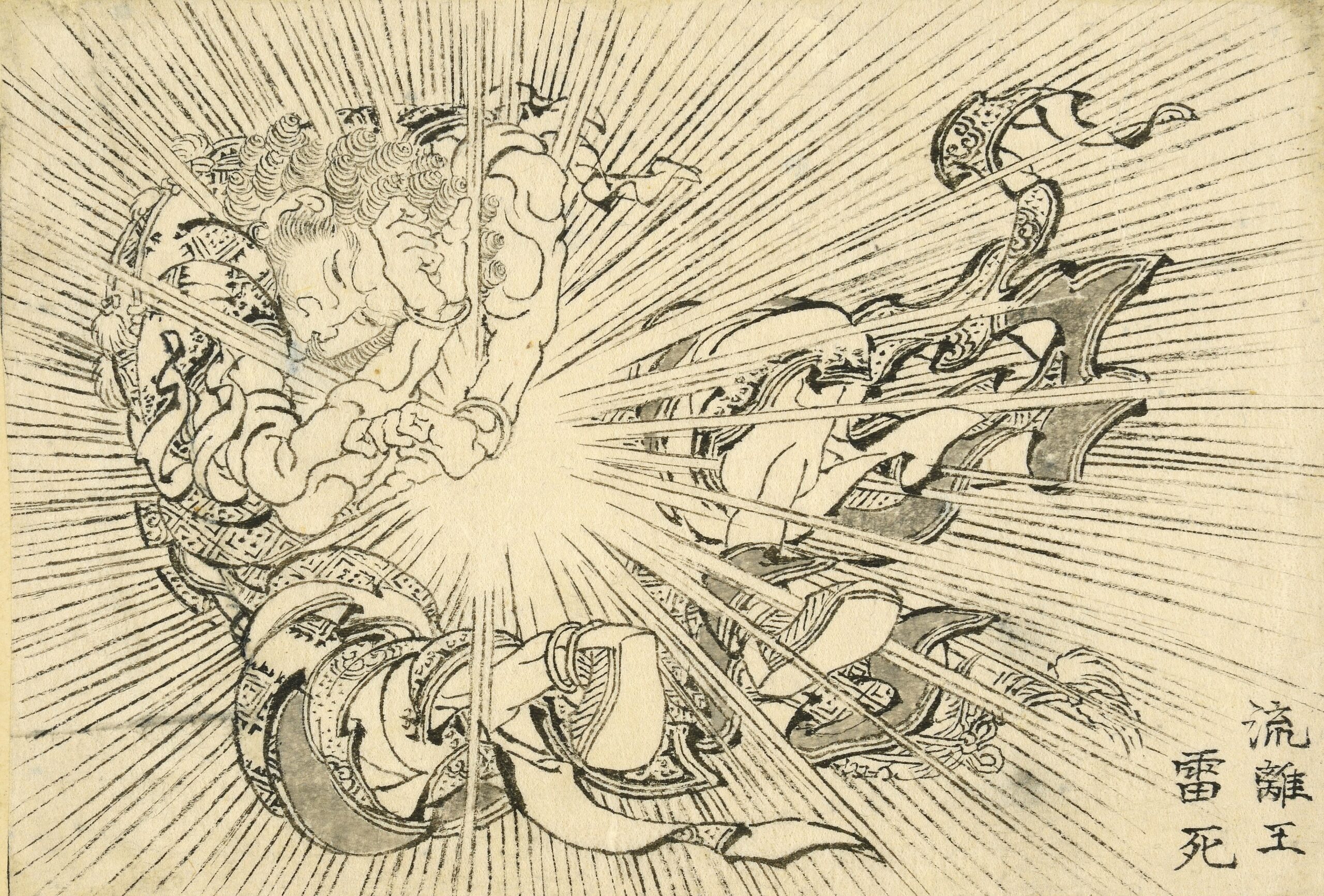
Hoku­sai’s Euro­pean and Amer­i­can enthu­si­asts saw only the barest glimpse of his body of work, which we can now ful­ly appre­ci­ate in exhi­bi­tions in per­son and online. And we can now appre­ci­ate a series of draw­ings that have been hid­den away for over sev­en­ty years and were hard­ly seen at all in the 200 years since their cre­ation. Made for an unpub­lished ency­clo­pe­dia titled Ban­mot­su eon dais­es zu (The Great Pic­ture Book of Every­thing), “The draw­ings were long thought for­got­ten,” Valenti­na Di Lis­cia writes at Hyper­al­ler­gic, “last record­ed at an auc­tion in Paris in 1948 before they resur­faced in 2019.”

Made some­time between 1820 and the 1840s, “the metic­u­lous, post­card-sized works are known as hanshita‑e, a term for the final draw­ings used to carve the key blocks in Japan­ese wood­block print­ing.” These are usu­al­ly destroyed in the process, but since the prints were nev­er made, for rea­sons unknown, “the del­i­cate illus­tra­tions remained intact, mount­ed on cards and stored in a cus­tom-made wood­en box.” The draw­ings depict every­thing from “the typ­i­cal inhab­i­tants of lands in East, South­east, and Cen­tral Asian and beyond” to one of the 33 man­i­fes­ta­tions of the bod­hisatt­va Aval­okiteś­vara, “Drag­on head Kan­non.”

At the top, cura­tor Alfred Haft walks us through his favorite draw­ings from the set, and you can see all 103 of the diminu­tive illus­tra­tions online at the British Muse­um. For­mer­ly owned by the col­lec­tor and Art Nou­veau jew­el­er Hen­ri Vev­er, the prints could have inspired many a west­ern artist, but it seems they were hid­den away and have been seen by very few eyes. Dis­cov­er them your­self for the first time here.

Relat­ed Con­tent: 

The Great Wave Off Kana­gawa by Hoku­sai: An Intro­duc­tion to the Icon­ic Japan­ese Wood­block Print in 17 Min­utes

Thir­ty-Six Views of Mount Fuji: A Deluxe New Art Book Presents Hokusai’s Mas­ter­piece, Includ­ing “The Great Wave Off Kana­gawa”

The Evo­lu­tion of The Great Wave off Kana­gawa: See Four Ver­sions That Hoku­sai Paint­ed Over Near­ly 40 Years

Hokusai’s Icon­ic Print, “The Great Wave off Kana­gawa,” Recre­at­ed with 50,000 LEGO Bricks

Josh Jones is a writer and musi­cian based in Durham, NC. Fol­low him at @jdmagness

« Go BackMore in this category... »
Quantcast