Hear the Brazilian Metal Band Singing in–and Trying to Save–Their Native Language of Tupi-Guarani

The indige­nous lan­guages spo­ken in Brazil num­ber around 170, a tes­ta­ment to the sur­vival of trib­al com­mu­ni­ties near­ly wiped out by colo­nial­ism and com­merce. Yet 40 of those lan­guages have few­er than 100 speak­ers, and many more are declin­ing rapid­ly. For lin­guists, “it’s a fight against time,” Luisi Destri writes at Pesquisa. Researchers esti­mate most, if not all, of these lan­guages could dis­ap­pear with­in 50 to 100 years, and some believe 30 per­cent might fade in the next 15 years.

“Knowl­edge is passed down from gen­er­a­tion to gen­er­a­tion,” says Luciano Stor­to, pro­fes­sor of lin­guis­tics at the Uni­ver­si­ty of São Paulo, “main­ly through nar­ra­tives told by the old­est and most expe­ri­enced to the community’s youngest mem­bers.” What hap­pens when those younger gen­er­a­tions are uproot­ed and leave home. When their elders die with­out pass­ing on their knowl­edge? (What hap­pens to lan­guage in gen­er­al as the lin­guis­tic gene pool shrinks?) These ques­tions weighed on Zhân­dio Aquino in 2004 when he found­ed Brazil­ian met­al band Aran­du Arakuaa.

Aquino has a degree in ped­a­gogy and his band has been invit­ed to play in schools and lec­ture at uni­ver­si­ties. But they do not use indige­nous instru­men­ta­tion and sing in an indige­nous Tupi-Guarani lan­guage as a pure­ly aca­d­e­m­ic exer­cise. Raised in the north­ern state of Tocan­tins and descend­ed from a Guarani-speak­ing tribe, the gui­tarist and singer says, “I [had] very close con­tact with indige­nous cul­ture because of my grand­moth­er and class­mates. When I [began] play­ing in bands, it just felt nat­ur­al to put my back­ground on it.”

When he moved to Brasil­ia in 2004, Aquino searched for like-mind­ed musi­cians and formed what may be the country’s first folk met­al band. While folk met­al as a cat­e­go­ry is hard­ly new (met­al has always incor­po­rat­ed ele­ments of folk music, from its ear­li­est incar­na­tions in Black Sab­bath and Led Zep­pelin to the bleak­est of Scan­di­na­vian black met­al bands), most folk met­al has been Euro­pean (and Pagan or Viking or Pirate), and some of it has allied, sad­ly, with the same fas­cist move­ments that threat­en indige­nous exis­tence.

While Aran­du Arakuaa — the name trans­lates to “cos­mos knowl­edge” — may be one of the first folk met­al bands in Brazil, it isn’t the only one. Along with bands like Aclla, Armah­da, and Tamuya Thrash Tribe, the band is part of a move­ment called the Lev­ante do Met­al Nati­vo, or Native Met­al Upris­ing, a col­lec­tion of musi­cians using native instru­ments, themes, and lan­guages — or all three in the case of Aran­du Arakuaa, who incor­po­rate mara­cas and the gui­tar-like vio­la caipi­ra.

How do acoustic indige­nous folk and the elec­tric crunch and growl of met­al come togeth­er? Hear for your­self in the videos here. Aquino knows Aran­du Arakuaa does­n’t win every­one over at first. “Peo­ple are not indif­fer­ent to our music,” he says. “They will love it or hate it. Most peo­ple think it’s strange at first and then we have to prove that we are good.”

While intel­li­gi­ble lyrics are hard­ly nec­es­sary in met­al, the lan­guage bar­ri­er may turn some lis­ten­ers away. But sub­ti­tled videos help. Aran­du Arakuaa might seem to have a dif­fer­ent focus than most met­al bands, but in songs like “Red Peo­ple,” we hear the rage and the resis­tance to war and depre­da­tion that bands like Black Sab­bath, Iron Maid­en, and Metal­li­ca — all influ­ences on the Brazil­ian band –have chan­neled in their music:

Some of us ran away, we hide in the for­est
We still fight
The red peo­ple still resist­ing, while there is land, while there is for­est
Every­thing became dif­fer­ent
Our spir­its are called demons
Each day less trees, less ani­mals, less his­to­ries, less songs…

Relat­ed Con­tent: 

Native Lands: An Inter­ac­tive Map Reveals the Indige­nous Lands on Which Mod­ern Nations Were Built

The Hu, a New Break­through Band from Mon­go­lia, Plays Heavy Met­al with Tra­di­tion­al Folk Instru­ments and Throat Singing

Josh Jones is a writer and musi­cian based in Durham, NC. Fol­low him at @jdmagness

Hobbes, Locke & Rousseau: An Animated Introduction to Their Political Theories

The phrase “state of nature” doesn’t get much use in phi­los­o­phy these days, but every polit­i­cal philoso­pher must grap­ple with the his­to­ry of the idea — a foun­da­tion­al con­ceit of mod­ern Euro-Amer­i­can thought in the work of Thomas Hobbes, John Locke, and Jean-Jacques Rousseau. These three “con­trac­tu­al­ist” philoso­phers, often grouped togeth­er in syl­labi and select­ed intro­duc­to­ry texts, relied on the notion that humans once exist­ed in an anar­chic state pre­dat­ing civ­il soci­ety, and that this state might be re-dis­cov­er­able in indige­nous ways of life in the Amer­i­c­as. In the three School of Life videos here, you can learn the basics about each of these philoso­phers and their polit­i­cal the­o­ries.

Unlike the Bib­li­cal gar­den of Eden, the state of nature was hard­ly per­fect, at least for Hobbes and Locke, who saw gov­ern­ment as a nec­es­sary medi­a­tor for com­pet­ing self-inter­ests. The kinds of gov­ern­ments they the­o­rized were vast­ly dif­fer­ent from each oth­er — one an absolute monar­chy and the oth­er a cap­i­tal­ist repub­lic. But in each theorist’s pseu­do-pre­his­to­ry, ear­ly humans gave up their inde­pen­dence by mak­ing social con­tracts for pro­tec­tion and mutu­al inter­est. These “con­tracts,” claimed both Hobbes and Locke, were the ori­gin of gov­ern­ments.

Hobbes was the first major thinker to elab­o­rate a ver­sion of this sto­ry, and his descrip­tion of life before gov­ern­ment is well-known: “soli­tary, poor, nasty, brutish, and short.” Because of their painful exis­tence, humans would have sought out a pow­er­ful ruler to pro­tect them. They were right to do so, Hobbes believed, because only a king, as he argued in Leviathan, could pro­vide the pro­tec­tion peo­ple need. It was per­haps no coin­ci­dence that Hobbes worked for a king, his for­mer stu­dent, Charles II, restored to the throne after the Eng­lish Civ­il War that drove Hobbes to his author­i­tar­i­an views, sup­pos­ed­ly.

Despite his defense of divine pow­er, Hobbes stood accused of athe­ism and blas­phe­my for, among oth­er things, writ­ing a sec­u­lar jus­ti­fi­ca­tion for monar­chy that was not based on rev­e­la­tion or the divine right of kings. Like­wise, the first part of John Locke’s Two Trea­tis­es on Gov­ern­ment was a force­ful refu­ta­tion of divine right. But Locke’s ideas of tol­er­a­tion were far more threat­en­ing to the state, which is why he pub­lished anony­mous­ly. In his Sec­ond Trea­tise, he laid out his ver­sion of the state of nature and the social con­tract — ideas drawn in part from trav­el­ogues writ­ten by ear­ly colo­nial adven­tur­ers.

Locke’s the­o­ry of gov­ern­ment is also a the­o­ry of pri­vate prop­er­ty — the right­ful source of polit­i­cal pow­er, he believed — and who should own it. Decades lat­er, Jean-Jacques Rousseau wrote his most salient works, includ­ing a book titled The Social Con­tract, in oppo­si­tion to the inequal­i­ty of Hobbe­sian and Lock­ean states. Rousseau believed in human per­fectibil­i­ty and claimed that gov­ern­ments imposed a “gen­er­al will” on indi­vid­u­als, repress­ing an essen­tial­ly benev­o­lent state of nature in which resources were shared.

Rousseau’s rejoin­der to the myth of vicious sav­agery gave rise to anoth­er: that of the noble sav­age, an appeal­ing image for the rev­o­lu­tion­ar­ies of late-18th cen­tu­ry France and lat­er utopi­an social­ists tasked with the dif­fi­cult project of imag­in­ing an alter­na­tive to polit­i­cal hier­ar­chy. In social con­tract the­o­ry, the imag­ined way for­ward derives from an imag­ined pre­colo­nial past, more “moral fic­tion” than “his­tor­i­cal fact,” as schol­ar Richard Ashcraft argues. Learn more about the myth­i­cal state of nature and the pri­ma­ry the­o­rists of the social con­tract above.

Relat­ed Con­tent: 

Leo Strauss: 15 Polit­i­cal Phi­los­o­phy Cours­es Online

Social and Polit­i­cal Phi­los­o­phy: A Free Online Course 

Intro­duc­tion to Polit­i­cal Phi­los­o­phy: A Free Online Course from Yale Uni­ver­si­ty 

Josh Jones is a writer and musi­cian based in Durham, NC. Fol­low him at @jdmagness

Good with Words: A Series of Writing & Editing Courses from the University of Michigan

We’ve all used words just about as long as we’ve been alive. This obvi­ous truth, alas, has led too many of us into the delu­sion that we’re good with words: that we’re good speak­ers and, even more com­mon­ly and less jus­ti­fi­ably, that we’re good writ­ers. Yet any­one who’s seen or heard much of how words are used in the realms of busi­ness and acad­e­mia — to say noth­ing of per­son­al cor­re­spon­dence — does under­stand, on some lev­el, the true rar­i­ty of these skills. Now, those of us who rec­og­nize the need to shore up our own skills can do so through Good with Words, a spe­cial­iza­tion in writ­ing and edit­ing now offered by the Uni­ver­si­ty of Michi­gan through online edu­ca­tion plat­form Cours­era.

Good with Words com­pris­es indi­vid­ual cours­es on word choice and word order, struc­ture and orga­ni­za­tion, draft­ing, and revis­ing. Here to teach them is Michi­gan Law School Clin­i­cal Assis­tant Pro­fes­sor of Law Patrick Bar­ry, of whose lec­tur­ing style you can get a taste in this Youtube playlist col­lect­ing clips of a writ­ing work­shop held for Michi­gan Law stu­dents in 2014.

In the clip above, he takes on the com­mon prob­lem of ver­bal clut­ter, work­ing from the def­i­n­i­tion orig­i­nal­ly laid out by On Writ­ing Well author William Zinss­er (whose ten writ­ing tips we pre­vi­ous­ly fea­tured here on Open Cul­ture). In oth­er brief views, Bar­ry touch­es on every­thing from the pow­er of descrip­tion and sen­tence flow to facts ver­sus truths and zom­bie nouns.

In one work­shop clip, Bar­ry reminds his stu­dents that, in order to write good sen­tences, they must read good sen­tences. This point bears repeat­ing, and indeed Bar­ry repeats it in his Cours­era course, the rel­e­vant excerpt of which you can view here. “A young writer must read,” he quotes Colum McCann declar­ing in the book Let­ters to a Young Writer. “She must read and read and read. Adven­tur­ous­ly. Promis­cu­ous­ly. Unfail­ing­ly.” But tak­ing a course as well could­n’t hurt, espe­cial­ly when, as with Good with Words, it can be audit­ed for free. (Cours­era also offers a paid option for stu­dents who would like to receive a cer­tifi­cate upon com­plet­ing the spe­cial­iza­tion.) Bar­ry offers plen­ty of exam­ple sen­tences, good and less so, but the true writ­ers among us will nev­er stop look­ing for their own, even after Good with Words’ sug­gest­ed four-month dura­tion is over.

Relat­ed Con­tent:

Free Online Writ­ing & Jour­nal­ism Cours­es

The Craft of Writ­ing Effec­tive­ly: Essen­tial Lessons from the Long­time Direc­tor of UChicago’s Writ­ing Pro­gram

10 Writ­ing Tips from Leg­endary Writ­ing Teacher William Zinss­er

Mar­tin Amis Explains His Method for Writ­ing Great Sen­tences

Jane Austen Used Pins to Edit Her Man­u­scripts: Before the Word Proces­sor & White-Out

Google & Cours­era Launch Career Cer­tifi­cates That Pre­pare Stu­dents for Jobs in 6 Months: Data Ana­lyt­ics, Project Man­age­ment and UX Design

Based in Seoul, Col­in Mar­shall writes and broad­casts on cities, lan­guage, and cul­ture. His projects include the Sub­stack newslet­ter Books on Cities, the book The State­less City: a Walk through 21st-Cen­tu­ry Los Ange­les and the video series The City in Cin­e­ma. Fol­low him on Twit­ter at @colinmarshall or on Face­book.

The Death of Soap Operas (Is Greatly Exaggerated) — Pretty Much Pop: A Culture Podcast #105

Writ­ers Sarahlyn Bruck and Kay­la Dreysse join your host Mark Lin­sen­may­er to dis­cuss how this once very pop­u­lar TV show type has simul­ta­ne­ous­ly become niche, yet has had a tremen­dous influ­ence on cur­rent pres­tige TV as well as real­i­ty shows. We talk about soaps’ sto­ry and struc­ture con­ven­tions, the demands on soap actors and writ­ers, and how chang­ing mar­ket forces and tech­nol­o­gy have affect­ed the genre. How much of a role does sex­ism play in the crit­i­cal dis­missal of soaps?

In addi­tion to the day­time soaps like Gen­er­al Hos­pi­tal and The Bold and the Beau­ti­ful, we touch on night­time soaps like Dal­las, teen soaps like Bev­er­ly Hills 90210, Down­ton Abbey, White Orchid, Break­ing Bad, 24, Gray’s Anato­my, and more.

Get Sarahlyn’s nov­el Day­time Dra­ma and fol­low her at @sarahlynbruck.

We all watched the 2020 doc­u­men­tary The Sto­ry of Soaps, which is avail­able on YouTube. A fun pod­cast Mark lis­tened to some of is A Trip Down Soap Lane.

Oth­er sources that inspired us includ­ed:

Sam­ple the Mup­pets’ fake soap opera that Mark’s intro ref­er­ences.

This episode includes bonus dis­cus­sion you can access by sup­port­ing the pod­cast at patreon.com/prettymuchpop or by choos­ing a paid sub­scrip­tion through Apple Pod­casts. This pod­cast is part of the Par­tial­ly Exam­ined Life pod­cast net­work.

Pret­ty Much Pop: A Cul­ture Pod­cast is the first pod­cast curat­ed by Open Cul­ture. Browse all Pret­ty Much Pop posts.

Superstar Violinist Nigel Kennedy Reinvents Jimi Hendrix’s “Purple Haze”: Watch Two Dynamic Performances

Vio­lin­ists don’t often make the news these days, but when one does, you can be rea­son­ably assured either that a musi­cal con­tro­ver­sy is afoot, or that the vio­lin­ist in ques­tion is Nigel Kennedy. This time, both of those are the case: Kennedy, as The Guardian’s Dalya Alberge reports, “has pulled out of a con­cert at the Roy­al Albert Hall with only days to go after accus­ing the radio sta­tion Clas­sic FM of pre­vent­ing him from per­form­ing a Jimi Hen­drix trib­ute.” At issue is his intent to per­form a ver­sion of Hen­drix’s “Lit­tle Wing,” but even with its “Celtic-sound­ing melody,” that com­po­si­tion was ulti­mate­ly deemed “not suit­able” for the audi­ence.

It seems that Clas­sic FM’s man­age­ment would have pre­ferred Vivaldi’s Four Sea­sons, of which Kennedy record­ed the world’s best-sell­ing ver­sion in 1989. That a clas­si­cal radio sta­tion famous for con­cen­trat­ing its pro­gram­ming on the “hits” and a clas­si­cal per­former famous for delib­er­ate­ly unortho­dox musi­cal turns would fail to see eye-to-eye should not, per­haps, come as a sur­prise.

But then, Kennedy has long dis­played a keen instinct for pub­lic­i­ty and a ten­den­cy to — well, one would say épa­ter les bour­geois, were Hen­drix not now regard­ed as so thor­ough­ly respectable in his own right. As Kennedy sees it, he was “one of the fore­most com­posers of the 20th cen­tu­ry, along with Stravin­sky and Duke Elling­ton.”

The gui­tarist’s exalt­ed sta­tus rests, Kennedy argues, on his hav­ing “brought all types of music togeth­er.” Even in a song like “Pur­ple Haze” — which you can see Kennedy rein­ter­pret with the Pol­ish Cham­ber Orches­tra in 2005, and again at the 2015 Thanks Jim Fes­ti­val in Wro­claw — musi­col­o­gists hear traces of both the Amer­i­can blues and the Mixoly­di­an mode, along with such uncon­ven­tion­al-for-1967 touch­es as the dimin­ished-fifth melod­ic inter­val, long known as the “dia­bo­lus in musi­ca” and the E7♯9 chord, now known as the “Hen­drix chord.” Much of the song only uses two oth­er chords, mak­ing “Pur­ple Haze” the rare three-chord, under-three-minute rock hit that con­tains more than enough sub­stance to inspire an uncon­ven­tion­al­ly mind­ed clas­si­cal musi­cian. But then, try telling that to a pro­gram direc­tor.

Relat­ed Con­tent:

Hear Lost Record­ing of Pink Floyd Play­ing with Jazz Vio­lin­ist Stéphane Grap­pel­li on “Wish You Were Here”

Japan­ese Vio­lin­ist Cov­ers Eddie Van Halen’s “Erup­tion”: Met­al Meets Clas­si­cal Again

Watch Jimi Hendrix’s “Voodoo Chile” Per­formed on a Gayageum, a Tra­di­tion­al Kore­an Instru­ment

Jimi Hendrix’s “Voodoo Child” Shred­ded on the Ukulele

How Sci­ence Fic­tion Formed Jimi Hen­drix

Based in Seoul, Col­in Mar­shall writes and broad­casts on cities, lan­guage, and cul­ture. His projects include the Sub­stack newslet­ter Books on Cities, the book The State­less City: a Walk through 21st-Cen­tu­ry Los Ange­les and the video series The City in Cin­e­ma. Fol­low him on Twit­ter at @colinmarshall or on Face­book.

Why Do People Hate Modern Architecture?: A Video Essay

This month brought the 20th anniver­sary of Sep­tem­ber 11, 2001, which prompt­ed peo­ple around the world to remem­ber all that was lost on that day. The fall­en Twin Tow­ers of Minoru Yamasak­i’s World Trade Cen­ter have only gained sym­bol­ic res­o­nance over the past two decades, despite hav­ing been unloved when they still stood. “They often appeared to New York­ers like a pair of mid­dle fin­gers — to good devel­op­ment, to good eco­nom­ics, to good taste,” writes Gothamist’s Hen­ry Stew­art. “They brought all, high and low, rich and poor, togeth­er to hate.” Some crit­ics of the World Trade Cen­ter made com­plaints root­ed in pol­i­tics, finance, and urban design; most just did­n’t like how the thing looked.

For 28 years, what the World Trade Cen­ter in gen­er­al and its Twin Tow­ers in par­tic­u­lar sym­bol­ized was all that the Amer­i­can pub­lic detest­ed about what it thought of as the out­landish scale, aes­thet­ic drea­ri­ness, and sheer inhu­man­i­ty of “mod­ern archi­tec­ture.” But as Bet­ty Chen of ARTic­u­la­tions points out in the video above, there’s mod­ern archi­tec­ture, and then there’s Mod­ern Archi­tec­ture.

“A tru­ly Mod­ernist design,” she says, “adheres to a strict set of for­mal rules that upholds Mod­ernism’s fun­da­men­tal prin­ci­ple: form fol­lows func­tion.” Such Mod­ernists as Wal­ter Gropius, Lud­wig Mies van der Rohe, and Le Cor­busier sub­scribed to the notion that “archi­tec­tur­al design should be dis­as­so­ci­at­ed from his­toric ref­er­ence, be free of unnec­es­sary orna­men­ta­tion, and be sim­pli­fied to the essen­tials of func­tion.”

As ver­sions of these prin­ci­ples for rebuild­ing a new post­war civ­i­liza­tion — vul­gar­ized ver­sions, some might say — caught on in the mid­dle of the 20th cen­tu­ry, cities around the world set enthu­si­as­ti­cal­ly about putting up “emp­ty box­es of noth­ing­ness.” Or so argued Mod­ern Archi­tec­ture’s detrac­tors, who gained the cul­tur­al upper hand short­ly there­after. “If the first half of the 20th cen­tu­ry is con­sid­ered to be the age of Mod­ern Archi­tec­ture,” says Chen, “then the lat­ter half of the cen­tu­ry can be defined by a con­tin­u­al, unre­lent­ing assault on Mod­ern Archi­tec­ture.” That assault includ­ed the demo­li­tion of anoth­er of Yamasak­i’s mid-cen­tu­ry projects, the Pruitt-Igoe hous­ing com­plex, which began on March 16, 1972. Though car­ried out with­out mur­der­ous intent, it did involve a notable death: the death, as archi­tect Charles Jencks famous­ly declared, of archi­tec­tur­al Mod­ernism itself.

Relat­ed Con­tent:

Every­thing You Ever Want­ed to Know About the Beau­ty of Bru­tal­ist Archi­tec­ture: An Intro­duc­tion in Six Videos

The World Accord­ing to Le Cor­busier: An Ani­mat­ed Intro­duc­tion to the Most Mod­ern of All Archi­tects

How the Rad­i­cal Build­ings of the Bauhaus Rev­o­lu­tion­ized Archi­tec­ture: A Short Intro­duc­tion

A Quick Ani­mat­ed Tour of Icon­ic Mod­ernist Hous­es

Watch 50+ Doc­u­men­taries on Famous Archi­tects & Build­ings: Bauhaus, Le Cor­busier, Hadid & Many More

1,300 Pho­tos of Famous Mod­ern Amer­i­can Homes Now Online, Cour­tesy of USC

Based in Seoul, Col­in Mar­shall writes and broad­casts on cities, lan­guage, and cul­ture. His projects include the Sub­stack newslet­ter Books on Cities, the book The State­less City: a Walk through 21st-Cen­tu­ry Los Ange­les and the video series The City in Cin­e­ma. Fol­low him on Twit­ter at @colinmarshall or on Face­book.

Cartoonist Lynda Barry Teaches You How to Make a Visual Daily Diary

Car­toon­ist and edu­ca­tor Lyn­da Barry is a favorite here at Open Cul­ture.

We’re always excit­ed to share exer­cis­es from her books and intel on her class­es at the Uni­ver­si­ty of Wis­con­sin, but noth­ing beats the warmth and humor of her live instruc­tion… even when it’s deliv­ered vir­tu­al­ly.

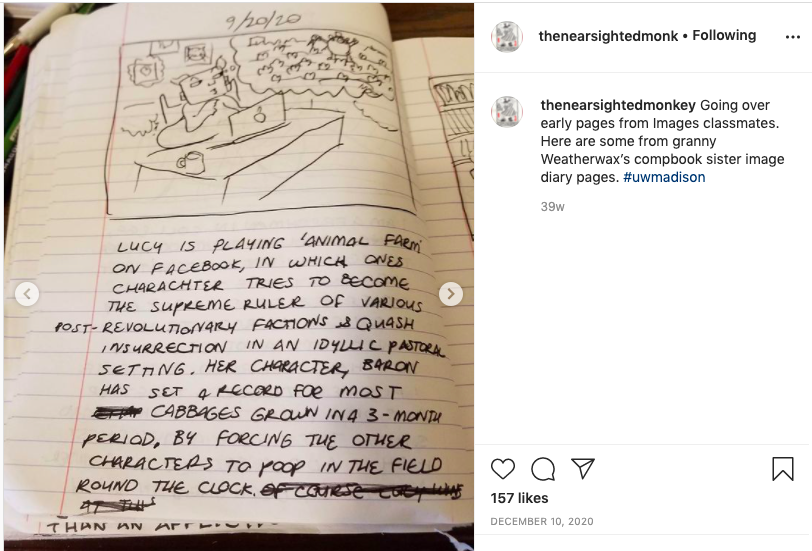
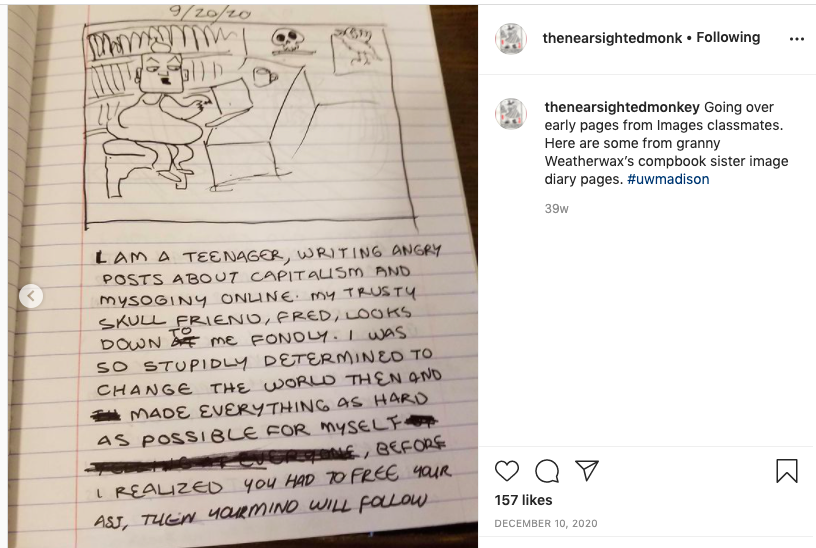
Last week, she took to Insta­gram to inform the four­teen lucky U of W stu­dents enrolled in her fall Mak­ing Comics class to pre­pare for a new way of keep­ing their required dai­ly diaries, using a tech­nique she calls “sis­ter images.”

Those of us at home can play along, above.

Grab a com­po­si­tion book, or two blank sheets of paper, and a black felt tip pen. (Even­tu­al­ly you’ll need a timer, but not today.)

Rather than describe the ten-minute writ­ing and draw­ing exer­cise in advance, we encour­age you to jump right in, con­fi­dent that teacher Bar­ry would approve.

There are plen­ty of resources out there for those who want to learn how to out­linescript, and sto­ry­board comics.

Bar­ry aims to tap a deep­er vein of cre­ativ­i­ty with exer­cis­es that help stu­dents embrace the unknown.

The sis­ter diary’s pur­pose, she says, is to “let our hands lead the way in terms of fig­ur­ing out our sto­ries.”

Whether or not you seek to make comics, it’s an engag­ing way to doc­u­ment your life. You can also imple­ment the sis­ter diary tech­nique for dis­cov­er­ing more about char­ac­ters in your fic­tion­al work.

You’ll also pick up some bonus tips on draw­ing back­grounds, using all caps, allot­ting enough space with­in a pan­el for full body ren­der­ings, and stay­ing in the moment should you find your­self at a tem­po­rary loss.


Relat­ed Con­tent: 

Watch Car­toon­ist Lyn­da Barry’s Two-Hour Draw­ing Work­shop

Car­toon­ist Lyn­da Bar­ry Teach­es You How to Draw

Take a Road Trip Across Amer­i­ca with Car­toon­ist Lyn­da Bar­ry in the 90s Doc­u­men­tary, Grandma’s Way Out Par­ty

Ayun Hal­l­i­day is an author, illus­tra­tor, the­ater mak­er and Chief Pri­ma­tol­o­gist of the East Vil­lage Inky zine.  Fol­low her @AyunHalliday

The Recording Secrets of Nirvana’s Nevermind Revealed by Producer Butch Vig

Peo­ple fig­ured out that I’d tapped into some­thing in mak­ing that record; a lot of labels came call­ing because they want­ed to see if I could bring that mag­ic to what­ev­er artists they had. But I found it sor­ta annoy­ing in some ways, because peo­ple thought I had a for­mu­la, that I could take a folk artist or a blues gui­tarist and make them sound like Nir­vana.

The pop cul­tur­al phe­nom­e­non of Nirvana’s Nev­er­mind caught every­one involved by sur­prise — from the band, to the label, to Butch Vig, just then mak­ing a name for him­self as a 90s alt-rock super­pro­duc­er by releas­ing Nev­er­mind and Smash­ing Pumpkin’s Gish the same year and help­ing define the sound of gui­tar rock for the 90s. “It was per­fect tim­ing com­ing out when there was a shift in music and it felt like a rev­o­lu­tion,” Vig tells Spin. “Despite being a great record, it would not have the same cul­tur­al impact” if it were released today.

Vig offers a few rea­sons why it’s dif­fi­cult for an album to have the same influ­ence. “Every­thing is so instant that it’s hard to build up some mys­tique. When you real­ly want some­thing but can’t quite get your hands on it, that makes it all the more pow­er­ful.”

Fans could even­tu­al­ly get their hands on the album with­out much trou­ble in 1991. (Gef­fen orig­i­nal­ly shipped only 46,521 copies in the U.S. in antic­i­pa­tion of low sales); but they couldn’t get enough of Kurt Cobain, who became a com­mod­i­ty before social media turned every­one into an aspir­ing com­mod­i­ty, a role con­tem­po­rary stars like Bil­lie Eil­ish now talk about open­ly in terms of the toll it takes on men­tal health.

Revis­it­ing Nev­er­mind on its 30th anniver­sary offers an occa­sion to dis­cuss what made the album, the band, and Cobain so major­ly appeal­ing at the time. It also gives us a chance to talk about what hap­pens when media com­pa­nies and record labels seize on a unique event and dri­ve it right into the ground. These are worth­while dis­cus­sions, but if we’re talk­ing to Butch Vig — super­pro­duc­er and founder and drum­mer of 90s jug­ger­naut Garbage — our time is bet­ter spent ask­ing the ques­tion he’s best poised to answer: what, exact­ly, made Nev­er­mind such a great album? What did Vig hear behind the mix­ing desk that has so cap­ti­vat­ed lis­ten­ers for 30 years?

In the videos here, you can see Vig — with com­men­tary from sur­viv­ing Nir­vana mem­bers Krist Novosel­ic and Dave Grohl — demon­strate how sev­er­al tracks came togeth­er, and how he enhanced and expand­ed the sound of the trio with­out need­ing to do much to make them sound absolute­ly huge. As he tells Ker­rang in a recent inter­view, when the band first hired him:

A cou­ple days lat­er, a cas­sette showed up in the mail, with a hand­writ­ten let­ter, and I put it on and heard Kurt going, ​Hey Butch, it’s Kurt, we’re excit­ed to come and rock out with you. We’re going to play a cou­ple of new songs, and we’ve got Dave Grohl, and he’s the great­est drum­mer in the world.’ And then I hear the gui­tar intro to …Teen Spir­it, and when Dave hit the drums, it just com­plete­ly destroyed every­thing.… I thought, “Wow these songs are great,” even though the record­ing qual­i­ty on that cas­sette was hor­ri­ble.

The mag­ic was always in the songs, whether cap­tured on a boom box or the stu­dio gear of Gef­fen records after the band left their indie label Sub Pop. (It’s worth lis­ten­ing to the Sub Pop founders tell their sto­ry on the How I Built This pod­cast.) Hear Vig talk about how he bot­tled it above, and see more of his Nev­er­mind mak­ing-of pro­duc­tion videos here.

Relat­ed Con­tent:

How Nirvana’s Icon­ic “Smells Like Teen Spir­it” Came to Be: An Ani­mat­ed Video Nar­rat­ed by T‑Bone Bur­nett Tells the True Sto­ry

Watch Nir­vana Go Through Rehearsals for Their Famous MTV Unplugged Ses­sions: “Pol­ly,” “The Man Who Sold the World” & More (1993)

Nir­vana Refus­es to Fake It on Top of the Pops, Gives a Big “Mid­dle Fin­ger” to the Tra­di­tion of Bands Mim­ing on TV (1991)

Josh Jones is a writer and musi­cian based in Durham, NC. Fol­low him at @jdmagness

« Go BackMore in this category... »
Quantcast