The Metropolitan Museum of Art Restores the Original Colors to Ancient Statues

The idea that the human species can be neat­ly brack­et­ed into racial groups based on super­fi­cial char­ac­ter­is­tics like skin, hair, and eye col­or only devel­oped in the 18th cen­tu­ry, and main­ly took root as a pseu­do-sci­en­tif­ic jus­ti­fi­ca­tion for slav­ery and colo­nial­ism. Cen­tral to that idea was the Clas­si­cal Ide­al of Beau­ty, a stan­dard sup­pos­ed­ly set by Greek and Roman stat­u­ary from antiq­ui­ty. As beliefs in region­al suprema­cy in West­ern Europe trans­formed in the mod­ern era into “White” suprema­cy, the stark white­ness of antique stat­u­ary became a spe­cif­ic point of pride. But ancient peo­ple did not think in terms of race, and ancient sculp­tors nev­er intend­ed their cre­ations to stand around in pub­lic with­out col­or. “For the ancient Greeks and Romans,” Elaine Velie writes at Hyper­al­ler­gic, “white mar­ble was not con­sid­ered the final prod­uct, but rather a blank can­vas.”

As Met­ro­pol­i­tan Muse­um of Art cura­tor Seán Hem­ing­way says, “White suprema­cists have latched onto this idea of white sculp­ture — it’s not true but it serves their pur­pos­es.” Art his­to­ri­ans and con­ser­va­tors have known for decades that stat­ues from antiq­ui­ty were once cov­ered in paint, sil­ver and gild­ing, a process known as poly­chromy. Over time, the col­ors dulled, fad­ed, then dis­ap­peared, leav­ing behind only the faintest traces.

Hus­band-and-wife research team Vinzenz Brinkmann and Ulrich Koch-Brinkmann have spent over 40 years study­ing poly­chromy and recon­struct­ing ancient sculp­tures as they would have appeared to their first view­ers. “Their Gods in Col­or exhi­bi­tion has been tour­ing since 2003,” Velie writes, “and their repli­cas have been includ­ed in muse­ums around the world.”

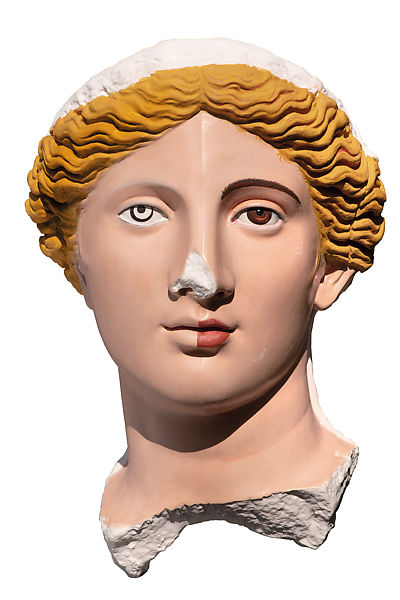
Now four­teen of those recon­struc­tions, as well as a cou­ple dozen more cre­at­ed by Met con­ser­va­tors, sci­en­tists, and cura­tors, are scat­tered through­out the Met’s sculp­ture halls, with a small upstairs gallery ded­i­cat­ed to an exhib­it. The exhi­bi­tion explains how researchers deter­mined the stat­ues’ col­ors, “the result of a wide array of ana­lyt­i­cal tech­niques, includ­ing 3D imag­ing and rig­or­ous art his­tor­i­cal research,” writes the Met. As Art­net notes, the “rich­ly col­ored ver­sion of the Met’s Archa­ic-peri­od Sphinx finial,” which you can see at the top of the post, “serves as the cen­ter­piece of the show” – one of the only pieces placed adja­cent to its orig­i­nal so that vis­i­tors can com­pare the two (using an Aug­ment­ed Real­i­ty app to do so; see video above).

Chro­ma: Ancient Sculp­ture in Col­or, which opened on July 5th, dis­abus­es us of old ideas about the blank white­ness of antiq­ui­ty, but that’s hard­ly its only intent. As it does today, col­or “helped con­vey mean­ing in antiq­ui­ty.” The col­ors of ancient stat­ues were not sim­ply dec­o­ra­tive sur­faces – they were inte­gral to the pre­sen­ta­tion of these works. Now, col­or can again be part of how we under­stand and appre­ci­ate clas­si­cal stat­u­ary. And the full accep­tance of poly­chromy in major col­lec­tions like the Met can begin to put to rest false notions about a clas­si­cal devo­tion to white­ness as some ide­al of per­fec­tion. Learn more about the 40 recon­struc­tions in the exhi­bi­tion at the Met here, and learn more about poly­chromy and ancient uses of col­or at the links below.

via Hyper­al­ler­gic

Relat­ed Con­tent:

Roman Stat­ues Weren’t White; They Were Once Paint­ed in Vivid, Bright Col­ors

How Ancient Greek Stat­ues Real­ly Looked: Research Reveals Their Bold, Bright Col­ors and Pat­terns

The Met Dig­i­tal­ly Restores the Col­ors of an Ancient Egypt­ian Tem­ple, Using Pro­jec­tion Map­ping Tech­nol­o­gy

Josh Jones is a writer and musi­cian based in Durham, NC. Fol­low him at @jdmagness

The Homes of 2020 Imagined in 1989: Wireless Audio Systems, Smart Heating, Windows That Turn Into TVs & More

Many trends in archi­tec­ture and home design have come and gone over the past thir­ty years, and some have not spread as far as they might have. The green archi­tec­tur­al move­ment in much of Asia, for exam­ple, in which sky­scrap­ers prac­ti­cal­ly drip with grow­ing things, has­n’t caught on in con­gest­ed cities in the West, and per­haps it nev­er will. Grant­ed, few urban areas have such con­cerns about air qual­i­ty as cities in Chi­na where green build­ings have tak­en hold recent­ly — where 2/3rds of the pop­u­la­tion is slat­ed to live in cities by 2050; and where a mas­sive pop­u­la­tion boom in the last twen­ty years has required four to five mil­lion new build­ings. But even if we don’t live in a bur­geon­ing city with an urgent man­date to reduce car­bon emis­sions for basic pub­lic health, it’s time for brand-new build­ing stan­dards every­where.

The cre­ators of the 1989 BBC episode of Tomor­row’s World had a sense of envi­ron­men­tal urgency, though it was­n’t first on their list of home improve­ments for the build­ings of 2020. After casu­al­ly won­der­ing whether the homes of the future will “pro­tect the envi­ron­ment,” pre­sen­ter Judith Hann turns things over to Chris­tine McNul­ty of the Applied Futures project, who sur­veyed peo­ple to learn “what peo­ple would want from their homes.” What will they want? “All the ben­e­fits of mod­ern tech­nol­o­gy” with few of the draw­backs, such as the unwieldy box­es and tan­gled wires that con­sti­tut­ed audio sys­tems of yore (archa­ic-look­ing here even by 1989 stan­dards).

We got what we want­ed: audio/visual sys­tems can inte­grate seam­less­ly into our homes, with blue­tooth and wire­less and unob­tru­sive com­po­nents. We are liv­ing in a gold­en age of con­sumer enter­tain­ment. We are also liv­ing in a glo­ri­ous time of home automa­tion, which co-host Howard Sta­ble­ford intro­duces in the next seg­ment. Sta­ble­ford shows how we will be able to walk from room to room and have lights turn off and on as we go, tech­nol­o­gy cur­rent­ly avail­able at your local big box store. Lat­er, David But­ton of Pilk­ing­ton Glass intro­duces futur­is­tic tech that could change win­dows or walls into a TV, some­thing we do not see in homes today and for which few con­sumers seem to clam­or.

Final­ly, in the last two seg­ments, we get to pro­jec­tions about ener­gy man­age­ment and smart heat­ing. “Homes are going to have to change,” says Sta­ble­ford, to meet what McNul­ty calls “enor­mous pres­sure to cut down on our burn­ing of fos­sil fuels.” Hann intro­duces build­ing mate­ri­als that could “bring heat­ing bills down to zero.” Sta­ble­ford returns to the idea of automa­tion for ener­gy effi­cient “smart heat­ing.” There is no men­tion of the need for cool­ing homes in a rapid­ly warm­ing world, espe­cial­ly in parts reach­ing aver­age tem­per­a­tures inhos­pitable to human life. 1989 had a pret­ty good read on what we would want in our indi­vid­ual homes, but it could not fore­see how those desires would over­run care for the one home we share.

Relat­ed Con­tent:

Buck­min­ster Fuller, Isaac Asi­mov & Oth­er Futur­ists Make Pre­dic­tions About the 21st Cen­tu­ry in 1967: What They Got Right & Wrong

How Pre­vi­ous Decades Pre­dict­ed the Future: The 21st Cen­tu­ry as Imag­ined in the 1900s, 1950s, 1980s, and Oth­er Eras

In 1922, a Nov­el­ist Pre­dicts What the World Will Look Like in 2022: Wire­less Tele­phones, 8‑Hour Flights to Europe & More

Josh Jones is a writer and musi­cian based in Durham, NC. Fol­low him at @jdmagness

“Downton Abbey” and the Allure of Historical Drama — Pretty Much Pop: A Culture Podcast #127

 width=

We dis­cuss the appeal of this Julian-Fel­lowes-penned British his­tor­i­cal dra­ma in light of the new film. Is this real­ly “a new era” or just more of the same, and is that bad?

Your Pret­ty Much Pop host Mark Lin­sen­may­er is joined by return­ing guest Jon Lam­ore­aux (host of The Hus­tle music pod­cast), plus a cou­ple: for­mer news­cast­er Cor­rinne MacLeod (whom Mark SCANDOLOUSLY went on one date with at age 12) and her hus­band, the pho­tog­ra­ph­er Michael MacLeod.

We talk about the excel­lent cast­ing and how such a big cast gets jug­gled, the appeal of this par­tic­u­lar his­tor­i­cal set­ting, rev­o­lu­tions against the class sys­tem in the show, and the soapy plots. How can a film give us enough of such a big cast? We also touch on The Gild­ed Age, Bridger­ton, Howard’s End, Gos­ford Park, The Great, Poldark, and more.

A few rel­e­vant arti­cles we looked at include:

Hear more Pret­ty Much Pop, includ­ing recent episodes on Jack­ass, This Is Us, and The Expanse. Sup­port the show at patreon.com/prettymuchpop or by choos­ing a paid sub­scrip­tion through Apple Pod­casts. This pod­cast is part of the Par­tial­ly Exam­ined Life pod­cast net­work.

Pret­ty Much Pop: A Cul­ture Pod­cast is the first pod­cast curat­ed by Open Cul­ture. Browse all Pret­ty Much Pop posts.

John Waters’ Comical & Inspiring Commencement Speech: “You Too Can Fail Upwards” (2022)

John Waters has­n’t made a movie in quite some time, but that does­n’t mean he’s gone qui­et. In fact he’s remained as vis­i­ble a cul­tur­al fig­ure as ever by work­ing in oth­er forms: writ­ing a new nov­el, act­ing on tele­vi­sion, deliv­er­ing com­mence­ment address­es. His ded­i­ca­tion to that last pur­suit is such that he even kept it up in 2020, at the height of the COVID-19 pan­dem­ic. That year he deliv­ered his com­mence­ment speech for New York’s School of Visu­al Arts not at Radio City Music Hall, as sched­uled, but in front of a green screen in Bal­ti­more — which, of course, only enriched the Waters­esque sen­si­bil­i­ty of the pro­ceed­ings.

Hav­ing been forced into the role of “vir­tu­al keynote speak­er,” Waters made up for it this year by deliv­er­ing, in per­son, a make-up com­mence­ment address for the SVA class­es of both 2020 and 2021. And he did it onstage at Radio City, a venue “known for fam­i­ly movies and the Rock­ettes. What the hell am I doing here?” As usu­al in this phase of his career, Waters express­es sur­prise to find him­self in the role of elder states­man.

“In 2020, the School of Visu­al Arts gave me an hon­orary degree for, I guess, caus­ing trou­ble,” he says. “This year, the Nation­al Film Reg­istry — yes, that’s part of the Library of Con­gress, the U.S. Gov­ern­ment, for god’s sake — select­ed my film Pink Flamin­gos, which New York mag­a­zine once called ‘beyond pornog­ra­phy,’ to its annu­al list of 25 cul­tur­al­ly his­toric films.”

Safe to say that, half a cen­tu­ry after its release, Waters’ most noto­ri­ous motion pic­ture does­n’t repel the estab­lish­ment as it once did. And indeed, here in the 2020s, how can an artist get trans­gres­sive at all? Waters has much encour­age­ment and advice for young peo­ple in search of new bound­aries to vio­late. “Out­sider old mas­ter paint­ings, nar­ra­tive abstract expres­sion­ism, impen­e­tra­ble pop, dec­o­ra­tive min­i­mal­ism, non-con­cep­tu­al­ism, video folk art, appro­pri­at­ed NFT”: these are just a few of the artis­tic ven­tures not yet attempt­ed that could turn their pop­u­lar­iz­ers into cul­tur­al phe­nom­e­na. “You too can fail upwards, if you try,” Waters insists, but you’ve got to do it with a sense of humor. “Mock your­self first. Then you can be as crazi­ly right­eous as you want.”

Relat­ed con­tent:

John Waters’ RISD Grad­u­a­tion Speech: Real Wealth Is Life With­out A*Holes

David Byrne’s Grad­u­a­tion Speech Offers Trou­bling and Encour­ag­ing Advice for Stu­dents in the Arts

An Anti, Anti-Smok­ing Announce­ment from John Waters

David Lynch Gives Uncon­ven­tion­al Advice to Grad­u­ates in an Unusu­al Com­mence­ment Address

John Waters Talks About His Books and Role Mod­els in a Whim­si­cal Ani­mat­ed Video

Based in Seoul, Col­in Mar­shall writes and broad­casts on cities, lan­guage, and cul­ture. His projects include the Sub­stack newslet­ter Books on Cities, the book The State­less City: a Walk through 21st-Cen­tu­ry Los Ange­les and the video series The City in Cin­e­ma. Fol­low him on Twit­ter at @colinmarshall, on Face­book, or on Insta­gram.

The First Photographs Taken by the Webb Telescope: See Faraway Galaxies & Nebulae in Unprecedented Detail


Late last year we fea­tured the amaz­ing engi­neer­ing of the James Webb Space Tele­scope, which is now the largest opti­cal tele­scope in space. Capa­ble of reg­is­ter­ing phe­nom­e­na old­er, more dis­tant, and fur­ther off the vis­i­ble spec­trum than any pre­vi­ous device, it will no doubt show us a great many things we’ve nev­er seen before. In fact, it’s already begun: ear­li­er this week, NASA’s God­dard Space Flight Cen­ter released the first pho­tographs tak­en through the Webb tele­scope, which “rep­re­sent the first wave of full-col­or sci­en­tif­ic images and spec­tra the obser­va­to­ry has gath­ered, and the offi­cial begin­ning of Webb’s gen­er­al sci­ence oper­a­tions.”

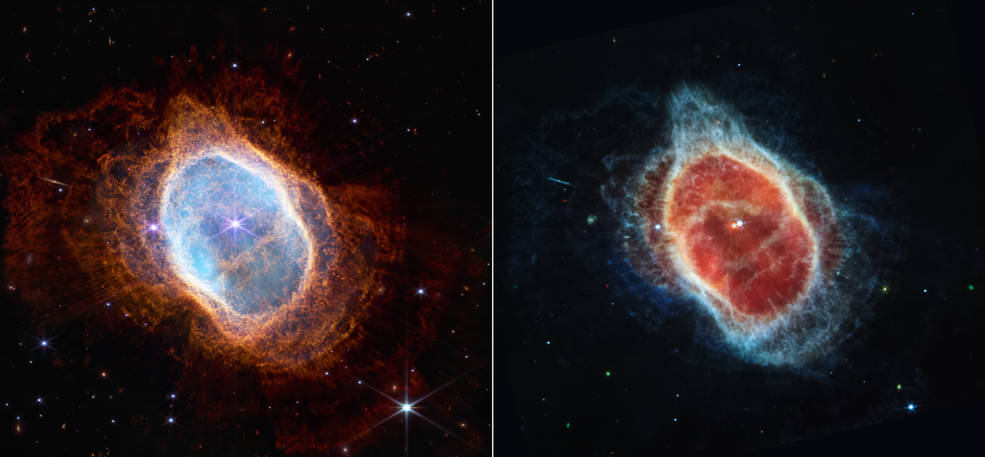
The areas of out­er space depict­ed in unprece­dent­ed detail by these pho­tos include the Cari­na Neb­u­la (top), the South­ern Ring Neb­u­la (2nd image on this page), and the galaxy clus­ters known as Stephan’s Quin­tet (the home of the angels in It’s a Won­der­ful Life) and SMACS 0723 (bot­tom).

That last, notes Petapix­el’s Jaron Schnei­der, “is the high­est res­o­lu­tion pho­to of deep space that has ever been tak­en,” and the light it cap­tures “has trav­eled for more than 13 bil­lion years.” What this com­pos­ite image shows us, as NASA explains, is SMACS 0723 “as it appeared 4.6 bil­lion years ago” — and its “slice of the vast uni­verse cov­ers a patch of sky approx­i­mate­ly the size of a grain of sand held at arm’s length by some­one on the ground.”

All this can be a bit dif­fi­cult to get one’s head around, at least if one is pro­fes­sion­al­ly involved with nei­ther astron­o­my nor cos­mol­o­gy. But few imag­i­na­tions could go un-cap­tured by the rich­ness of the images them­selves. Sharp, rich in col­or, var­ied in tex­ture — and in the case of the Cari­na Neb­u­la or “Cos­mic Cliffs,” NASA adds, “seem­ing­ly three-dimen­sion­al” — they could have come straight from a state-of-the-art sci­ence-fic­tion movie. In fact they out­do even the most advanced sci-fi visions, as NASA’s Earth­rise out­did even the uncan­ni­ly real­is­tic-in-ret­ro­spect views of the Earth from space imag­ined by Stan­ley Kubrick and his col­lab­o­ra­tors in 2001: A Space Odyssey.

But these pho­tos are the fruits of a real-life jour­ney toward the final fron­tier, one you can fol­low in real time on NASA’s “Where Is Webb?” track­er. “Webb was designed to spend the next decade in space,” writes Colos­sal’s Grace Ebert. “How­ev­er, a suc­cess­ful launch pre­served sub­stan­tial fuel, and NASA now antic­i­pates a trove of insights about the uni­verse for the next twen­ty years.” That’s quite a long run by the cur­rent stan­dards of space explo­ration — but then, by the scale of space and time the Webb tele­scope has new­ly opened up, even 100 mil­len­nia is the blink of an eye.

Relat­ed con­tent:

The Amaz­ing Engi­neer­ing of James Webb Tele­scope

How to Take a Pic­ture of a Black Hole: Watch the 2017 Ted Talk by Katie Bouman, the MIT Grad Stu­dent Who Helped Take the Ground­break­ing Pho­to

How Sci­en­tists Col­orize Those Beau­ti­ful Space Pho­tos Tak­en By the Hub­ble Space Tele­scope

The Very First Pic­ture of the Far Side of the Moon, Tak­en 60 Years Ago

The First Images and Video Footage from Out­er Space, 1946–1959

The Beau­ty of Space Pho­tog­ra­phy

Based in Seoul, Col­in Mar­shall writes and broad­casts on cities, lan­guage, and cul­ture. His projects include the Sub­stack newslet­ter Books on Cities, the book The State­less City: a Walk through 21st-Cen­tu­ry Los Ange­les and the video series The City in Cin­e­ma. Fol­low him on Twit­ter at @colinmarshall, on Face­book, or on Insta­gram.

The German Cast of Hamilton Sings the Title Track, “Alexander Hamilton” in German

Lin-Manuel Miran­da’s Hamil­ton is com­ing to Ham­burg in Octo­ber 2022. And this video gives audi­ences a taste of what awaits them: The title track “Alexan­der Hamil­ton” sung in Ger­man. Enjoy…

If you would like to sign up for Open Culture’s free email newslet­ter, please find it here. It’s a great way to see our new posts, all bun­dled in one email, each day.

If you would like to sup­port the mis­sion of Open Cul­ture, con­sid­er mak­ing a dona­tion to our site. It’s hard to rely 100% on ads, and your con­tri­bu­tions will help us con­tin­ue pro­vid­ing the best free cul­tur­al and edu­ca­tion­al mate­ri­als to learn­ers every­where. You can con­tribute through Pay­Pal, Patre­on, and Ven­mo (@openculture). Thanks!

via Metafil­ter

Relat­ed Con­tent

“Alexan­der Hamil­ton” Per­formed with Amer­i­can Sign Lan­guage

Lin-Manuel Miran­da Breaks Down How He Wrote Hamilton‘s Big Hit, “My Shot”

Watch Lin-Manuel Miran­da Per­form the Ear­li­est Ver­sion of Hamil­ton at the White House, Six Years Before the Play Hit the Broad­way Stage (2009)

A Whiskey-Fueled Lin-Manuel Miran­da Reimag­ines Hamil­ton as a Girl on Drunk His­to­ry

What Americans Ate for Breakfast & Dinner 200 Years Ago: Watch Re-Creations of Original Recipes

For all the oth­er faults of the 2020s, most of human­i­ty now enjoys culi­nary vari­ety the likes of which it has nev­er before known. Two cen­turies ago, the selec­tion was con­sid­er­ably nar­row­er. Back then the Unit­ed States of Amer­i­ca, yet to become the high­ly devel­oped leader of “the free world,” remained for the most part a fair­ly hard­scrab­ble land. This comes through in a book like Democ­ra­cy in Amer­i­ca, which Alex­is de Toc­queville wrote after trav­el­ing across the coun­ty in the 1830s — or on a Youtube chan­nel like Ear­ly Amer­i­can, which re-cre­ates life as lived by Amer­i­cans of decades before then.

Not long ago, Ear­ly Amer­i­can’s view­er­ship explod­ed. This seems to have owed to cook­ing videos like the one at the top of the post, “A Reg­u­lar Folks’ Sup­per 200 Years Ago.” The menu, on this imag­ined March day in 1820 Mis­souri, includes beef, mashed turnips, car­rots, rolls, and boiled eggs: not a bad-look­ing spread, as it turns out, though its fla­vors may leave some­thing to be desired for the twen­ty-first-cen­tu­ry palate.

Many of Ear­ly Amer­i­can’s new com­menters, writes chan­nel co-cre­ator Jus­tine Dorn, are telling her “to add this sea­son­ing and this and that,” but “then it would no longer be loy­al to the actu­al orig­i­nal recipe, which is why you all are here to begin with.”

In the case of the reg­u­lar folks’ sup­per, its recipes come straight from an 1803 vol­ume called The Fru­gal House­wife. As for the john­ny­cakes fea­tured in “Mak­ing a Work­ing Class Break­fast in 1820,” you’ll find their recipe in Amelia Sim­mons’ Amer­i­can Cook­ery from 1796, the first known cook­book writ­ten by an Amer­i­can. The meal also includes a yeast­less bread for which no prop­er recipe exists. How­ev­er, Dorn writes, “there are sev­er­al men­tions of work­ing class peo­ple who baked bread with­out yeast in the auto­bi­ogra­phies of trav­el­ers in the eigh­teenth and ear­ly nine­teenth cen­turies. Because of this we know that it was a com­mon prac­tice.”

Made from a mod­i­fied fam­i­ly recipe passed down since the 1750s, this yeast­less bread looks appeal­ing enough, espe­cial­ly toast­ed over the fire and served with apple but­ter. But we must acknowl­edge that tastes have changed over the cen­turies. “I am not claim­ing that this food is good,” Dorn writes. “Some­times it isn’t. A lot of the foods and sea­son­ings that we take for grant­ed today were very hard to get back then or were only sea­son­al­ly avail­able.” But with sea­son­al, “local­ly sourced” ingre­di­ents in vogue these days, it’s worth exam­in­ing what, 200 years ago, real­ly went into a sim­ple Indi­an meal pud­ding or an ear­ly mac­a­roni and cheese — albeit one pre­pared, in true 2020s fash­ion, ASMR-style.

Relat­ed Con­tent:

The First Amer­i­can Cook­book: Sam­ple Recipes from Amer­i­can Cook­ery (1796)

Tast­ing His­to­ry: A Hit YouTube Series Shows How to Cook the Foods of Ancient Greece & Rome, Medieval Europe, and Oth­er Places & Peri­ods

An Archive of 3,000 Vin­tage Cook­books Lets You Trav­el Back Through Culi­nary Time

A Data­base of 5,000 His­tor­i­cal Cookbooks–Covering 1,000 Years of Food History–Is Now Online

Archive of Hand­writ­ten Recipes (1600 – 1960) Will Teach You How to Stew a Calf’s Head and More

10,000 Vin­tage Recipe Books Are Now Dig­i­tized in The Inter­net Archive’s Cook­book & Home Eco­nom­ics Col­lec­tion

Real Inter­views with Peo­ple Who Lived in the 1800s

Based in Seoul, Col­in Mar­shall writes and broad­casts on cities, lan­guage, and cul­ture. His projects include the Sub­stack newslet­ter Books on Cities, the book The State­less City: a Walk through 21st-Cen­tu­ry Los Ange­les and the video series The City in Cin­e­ma. Fol­low him on Twit­ter at @colinmarshall, on Face­book, or on Insta­gram.

Listen to Earth.fm, a Free Archive of Natural Soundscapes That Can Re-Connect You with Nature & Improve Your Wellbeing

“Just lis­ten. Silence is the poet­ics of space. What it means to be in a place…. Silence isn’t the absence of some­thing, but the pres­ence of every­thing.” – acoustic ecol­o­gist Gor­don Hemp­ton

The study of acoustic ecol­o­gy does­n’t get much main­stream atten­tion. But if you’ve been a read­er of Open Cul­ture, you’ve like­ly come across a post about pre­serv­ing nat­ur­al sounds by stream­ing record­ings of the world’s many envi­ron­ments. These projects all, in one way or anoth­er, con­tribute to goals artic­u­lat­ed by Cana­di­an com­pos­er and writer R. Mur­ray Schafer, the “self-declared father” of acoustic ecol­o­gy, which involves the study, con­ser­va­tion, and appre­ci­a­tion of envi­ron­men­tal sound.

As Neil Clarke notes at Earth.fm, Schaf­fer­’s com­plex dis­ci­pline can seem dif­fi­cult to grasp, as it “strad­dles ‘acoustics, archi­tec­ture, lin­guis­tics, music, psy­chol­o­gy, soci­ol­o­gy and urban plan­ning.’ ” Maybe all we need to know to appre­ci­ate the goals of Earth.fm — anoth­er excel­lent entry in a grow­ing list of nat­ur­al-sound stream­ing sites – comes through in Clarke’s descrip­tion of Schaffer’s World Sound­scape Project (WSP):

It was hoped that, even­tu­al­ly, the WSP would be able to cre­ate a bal­ance “between the human com­mu­ni­ty and its son­ic envi­ron­ment.” To this end, lis­ten­ing and “ear-clean­ing” prac­tices, includ­ing “sound­walks” – a walk­ing med­i­ta­tion where a high son­ic aware­ness is main­tained – were designed to increase indi­vid­u­als’ con­scious­ness of the sounds around them. By prompt­ing engage­ment with the real­i­ties of con­tem­po­rary sound­scapes, lis­ten­ers were intend­ed to gain aware­ness of their part in these sound­scapes’ cre­ation, and there­fore appre­ci­ate their respon­si­bil­i­ty towards them.

Schaf­fer began record­ing sound­scapes (a word he coined) in Van­cou­ver in the ear­ly 70s. Since then, his work has inspired and com­ple­ment­ed that of oth­er field recordists/acoustic theorists/sound archivists like Bernie Krauss and Gor­don Hemp­ton. Although the ear­ly acoustic ecol­o­gists could not have fore­seen stream­ing media, it has with­out a doubt become for many of us a dom­i­nant vehi­cle for sound in our dai­ly lives, includ­ing sounds of the nat­ur­al world.

With­out an appre­ci­a­tion for the sounds of nat­ur­al silence (which we know, since John Cage, does not mean absolute qui­et), our under­stand­ing of rain­forests, deserts, and oceans as liv­ing, breath­ing real­i­ties can become dulled, just as much as we lose touch with the green spaces out­side our win­dows. Recon­nect­ing through sound has the dual effect of calm­ing our inner states and attun­ing us more close­ly to the out­er world as it is, with­out the dis­trac­tions of record­ed music and video laid over­top.

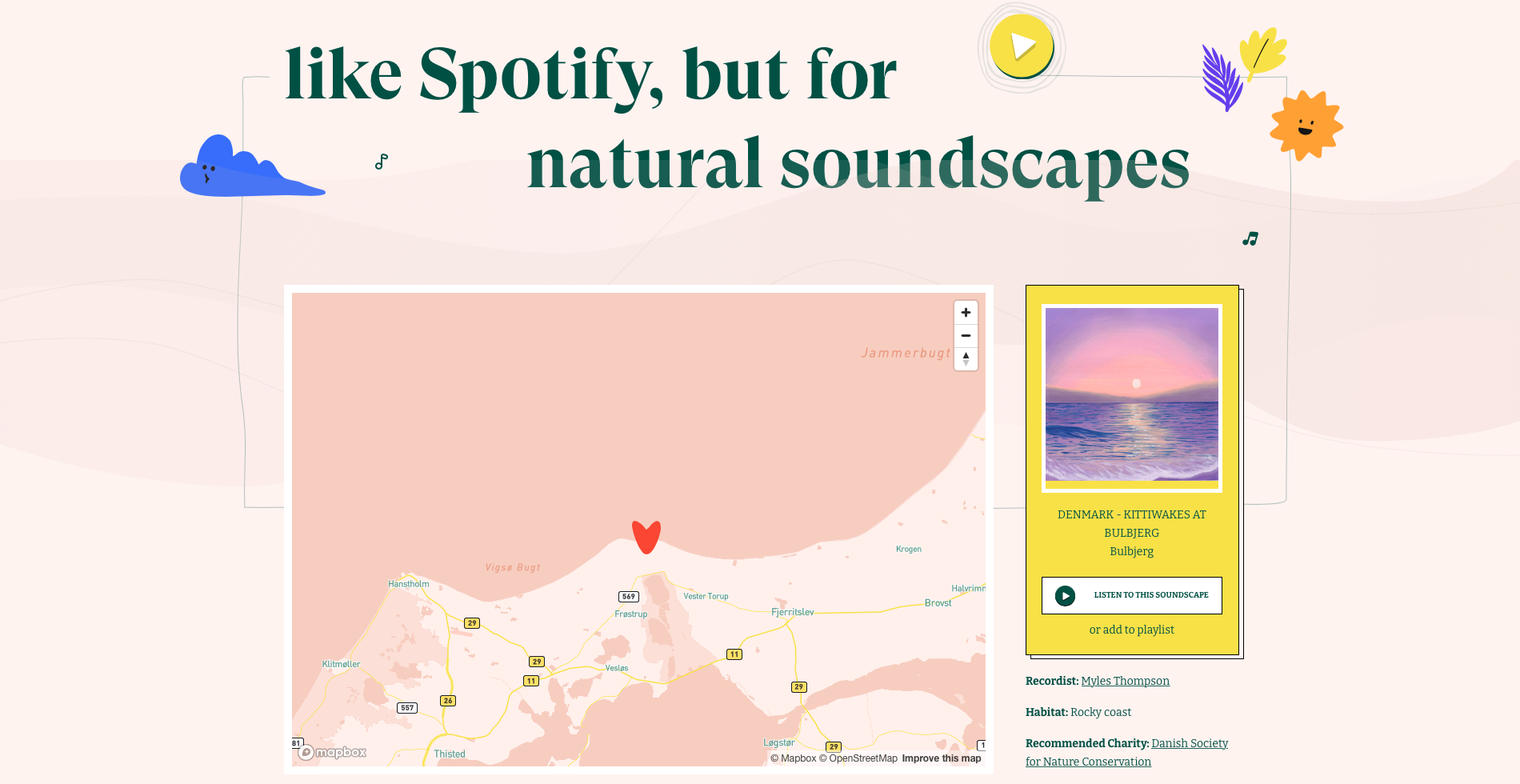
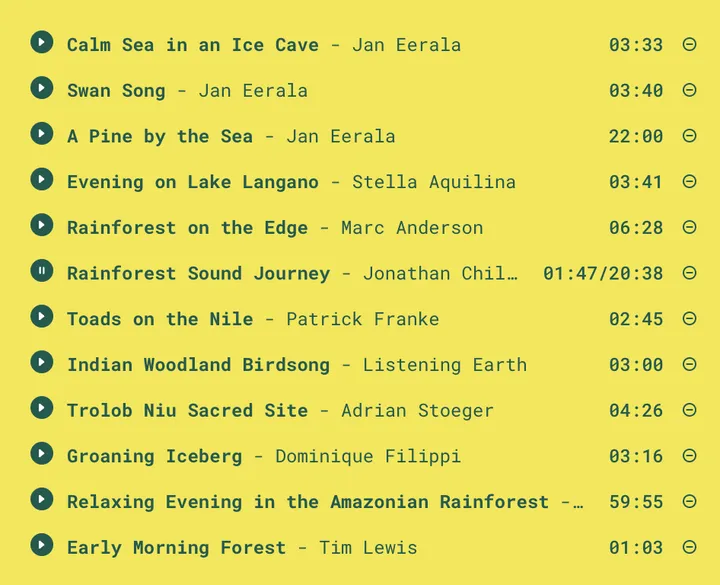
Billing itself as “like Spo­ti­fy, but for nat­ur­al sound­scapes,” Earth.fm, offers not a rival stream­ing ser­vice, but an alter­na­tive in which users can make their own playlists, The Verge explains, “zip­ping from Brazil to Egypt in a mat­ter of min­utes.” New sounds are added every three days. “You can lis­ten to bird species in Malaysia or India or for­est sounds in Ghana. The sounds are gath­ered from numer­ous con­trib­u­tors who have expe­ri­ence record­ing the nat­ur­al world in places includ­ing Brazil, Spain, Nor­way, New Zealand, and the Unit­ed King­dom.”

We can intu­it Earth.fm’s mis­sion not only as ther­a­peu­tic and preser­va­tion­ist but also as an eth­i­cal attempt to approach the cri­sis stream­ing media has intro­duced in the arts. Human-made sounds (or “anthro­pophy”) are just as much a part of our envi­ron­ment as those made by frogs, rivers, and ante­lope. Our con­stant, often mind­less stream­ing, how­ev­er — made pos­si­ble by infi­nite dig­i­tal repos­i­to­ries and cheap (for now) ener­gy — can be seen as a form of noise pol­lu­tion, and a sig­nif­i­cant con­trib­u­tor to ener­gy over­con­sump­tion.

The ethics of stream­ing must account for the impact on the beings (in this case, us) who make these sounds. Big Tech com­mod­i­fi­ca­tion of music requires a “vast con­ver­sa­tion,” argues an essay on the Earth.fm site, that includes “the for­mat’s impact on those at the heart of this whole under­tak­ing: those who cre­ate music.” By impli­ca­tion, Earth.fm and oth­er sites that stream acoustic record­ings of nat­ur­al sounds (like those in the links below), offer an eth­i­cal alter­na­tive to music stream­ing — one that recon­nects us, Eliz­a­beth Wadding­ton writes on the site, to “the music of a chang­ing world.” Learn more about Earth.fm’s activ­i­ties here.

Relat­ed Con­tent:

Free: Down­load the Sub­lime Sights & Sounds of Yel­low­stone Nation­al Park

Sounds of the For­est: A Free Audio Archive Gath­ers the Sounds of Forests from All Over the World

Tune Into Tree.fm: An Online Radio Sta­tion That Streams the Sooth­ing Sounds of Forests from Around the World

Josh Jones is a writer and musi­cian based in Durham, NC. Fol­low him at @jdmagness

« Go BackMore in this category... »
Quantcast