In 1958, Mao Zedong launched the Great Leap Forward. Eight years later, he announced the beginning of the Great Proletarian Cultural Revolution. Between those two events, of course, came the Great Chinese Famine, and historians now view all three as being “great” in the same pejorative sense. Though Chairman Mao may not have understood the probable consequences of policies like agricultural collectivization and ideological purification, he did understand the importance of his own image in selling those policies to the Chinese people: hence the famous 1966 photo of him swimming across the Yangtze River.
By that point, “the Chinese leader who had led a peasant army to victory in the Chinese Civil War and established the communist People’s Republic of China in 1949 was getting old.” So says Coleman Lowndes in the Vox Darkroom video above. Worse, Mao’s Great Leap Forward had clearly proven calamitous. The Chairman “needed to find a way to seal his legacy as the face of Chinese communism and a new revolution to lead.” And so he repeated one of his earlier feats, the swim across the Yangtze he’d taken in 1956. Spread far and wide by state media, the shot of Mao in the river taken by his personal photographer illustrated reports that he’d swum fifteen kilometers in a bit over an hour.
This meant “the 72-year-old would have shattered world speed records,” a claim all in a day’s work for propagandists in a dictatorship. But those who saw photograph wouldn’t have forgotten what happened the last time he took such a well-publicized dip in the Yangtze. “Experts feared that Mao was on the verge of kicking off another disastrous period of turmoil in China. They were right.” The already-declared Great Proletarian Cultural Revolution, now widely known as the Cultural Revolution, saw millions of Chinese youth — ostensibly radicalized by the image of their beloved leader in the flesh — organize into “the fanatical Red Guards,” a paramilitary force bent on extirpating, by any means necessary, the “four olds”: old culture, old ideology, old customs, and old traditions.
As with most attempts to usher in a Year Zero, Mao’s final revolution wasted little time becoming an engine of chaos. Only his death ended “a decade of destruction that had elevated the leader to god-like levels and resulted in over one million people dead.” The Chinese Communist’s Party has subsequently condemned the Cultural Revolution but not the Chairman himself, and indeed his swim remains an object of yearly commemoration. “Had Mao died in 1956, his achievements would have been immortal,” once said CCP official Chen Yun. “Had he died in 1966, he would still have been a great man but flawed. But he died in 1976. Alas, what can one say?” Perhaps that, had the aging Mao drowned in the Yangtze, Chinese history might have taken a happier turn.
Based in Seoul, Colin Marshall writes and broadcasts on cities, language, and culture. His projects include the Substack newsletterBooks on Cities, the book The Stateless City: a Walk through 21st-Century Los Angeles and the video series The City in Cinema. Follow him on Twitter at @colinmarshall, on Facebook, or on Instagram.
The 2022 Oscar winner for Best Picture was CODA, a story about a musically inclined girl with a deaf family. Kambri Crews, herself a CODA and author of a much darker story about this called Burn Down the Ground, joins your Pretty Much Pop host Mark Linsenmayer, writer Sarahlyn Bruck, and jack-of-many-intellectual-trades Al Baker to talk about how deaf culture interacts with film.
Films tend to show deafness as tragic, which is not necessarily how the deaf community views themselves. We talk about balancing the demands of a story, how real life works, and the need for positive representation. Also, deaf bowling!
In addition to CODA, we talk about The Sound of Metal, A Quiet Place, Children of a Lesser God, Mr. Holland’s Opus, See No Evil Hear No Evil, Eternals, Drive My Car, and more.
Note that this discussion was recorded in May but got bumped with all the shows wrapping up at that time and summer movies launching.
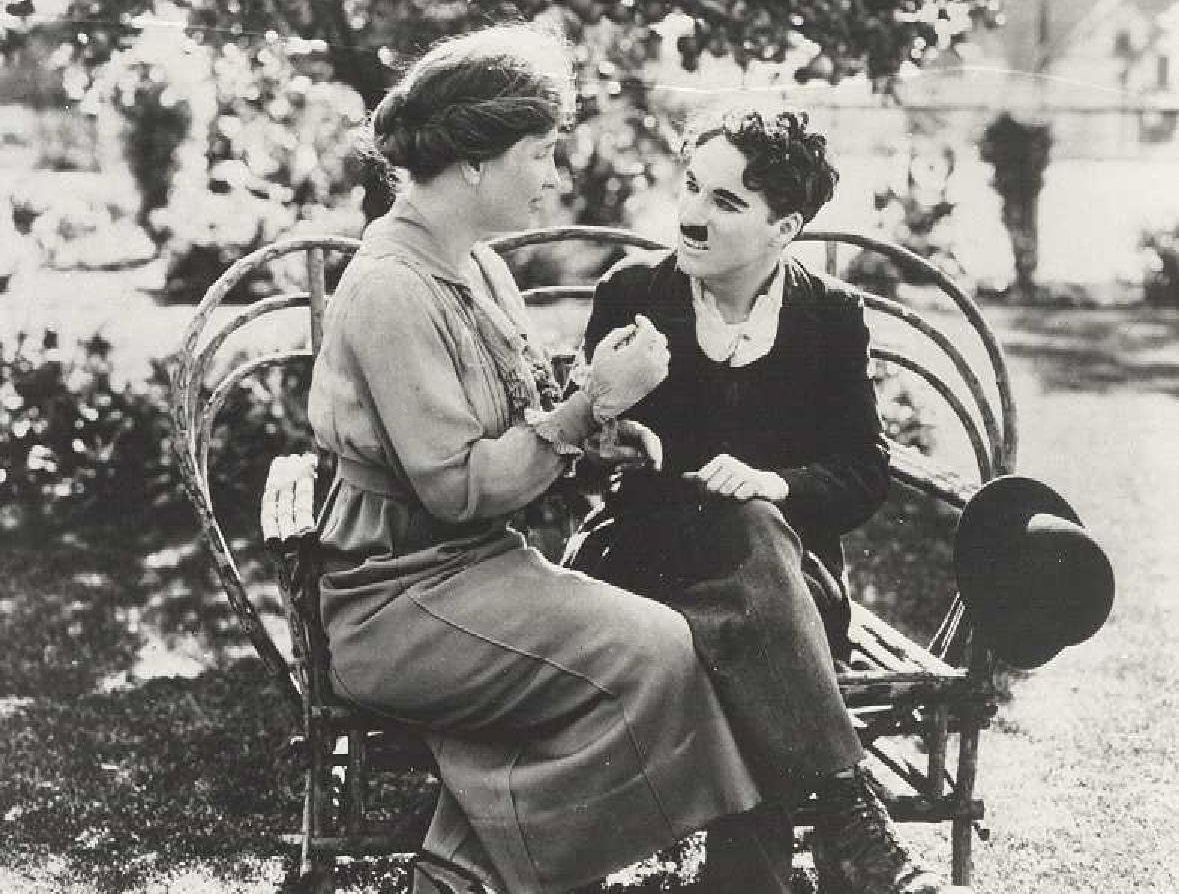
Charlie Chaplin had many high-profile fans in his day, including some of the luminaries of the early twentieth century. We could perhaps be forgiven for assuming that the writer and activist Hellen Keller was not among them, given the limitations her condition of deafness and blindness — or “deafblindness” — would naturally place on the enjoyment of film, even the silent films in which Chaplin made his name. But making that assumption would be to misunderstand the driving force of Keller’s life and career. If the movies were supposedly unavailable to her, then she’d make a point of not just watching them, but befriending their biggest star.
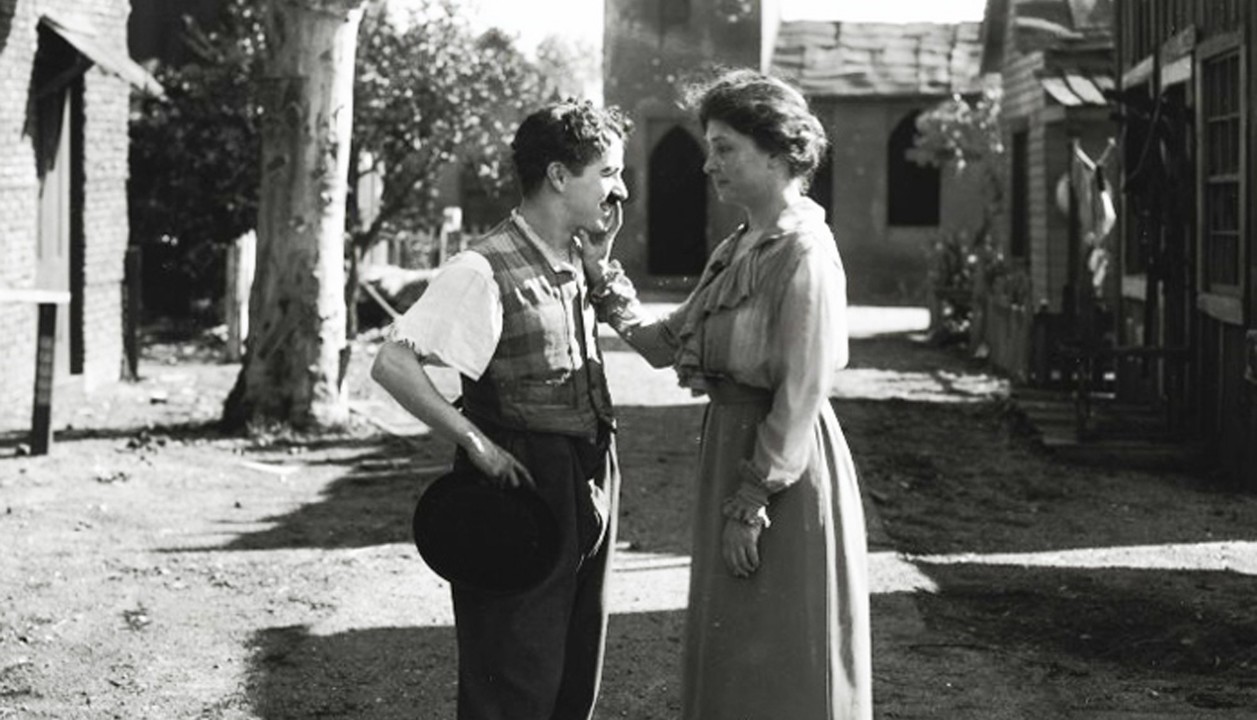
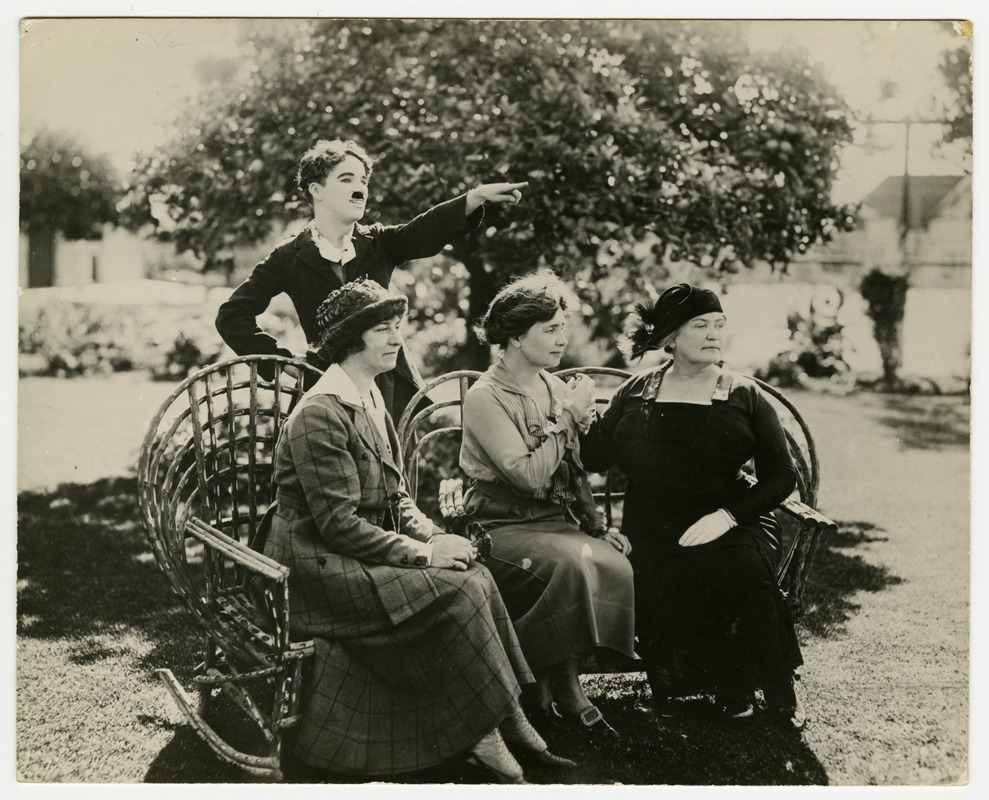
Keller met Chaplin in 1919 at his Hollywood studio, during the filming of Sunnyside. This, as biographers have revealed, was not one of the smoothest-going periods in the comedian-auteur’s life, but that didn’t stop him from enjoying his time with Keller, and even learning from her.
In her 1928 autobiography Midstream, she would remember that he’d been “shy, almost timid,” and that “his lovely modesty lent a touch of romance to the occasion that might otherwise have seemed quite ordinary.” The pictures that have circulated of the meeting, seen here, include one of Keller teaching Chaplin the tactile sign-language alphabet she used to communicate.
It was also the means by which, with the assistance of companion Anne Sullivan, she followed the action of Chaplin’s films A Dog’s Life and Shoulder Arms when they were screened for her that evening. When Keller and Chaplin met again nearly thirty years later, he sought her feedback on the script for his latest picture, Monsieur Verdoux. “There is no language for the terrifying power of your message that sears with sarcasm or rends apart coverts of social hypocrisy,” Keller later wrote to Chaplin. A politically charged black comedy about a bigamist serial killer bearing little resemblance indeed to the beloved Little Tramp, Monsieur Verdoux met with critical and commercial failure upon its release. The film has since been re-evaluated as a subversive masterwork, but it was perhaps Keller who first truly saw it.
Based in Seoul, Colin Marshall writes and broadcasts on cities, language, and culture. His projects include the Substack newsletterBooks on Cities, the book The Stateless City: a Walk through 21st-Century Los Angeles and the video series The City in Cinema. Follow him on Twitter at @colinmarshall, on Facebook, or on Instagram.
Damien Hirst is into NFTs. Some will regard this as a reflection on the artist, and others a reflection on the technology. Whether you take those reflections to be positive or negative reveals something about your own concept of how the art world, the business world, and the digital world intersect. So will your reaction to The Currency, Hirst’s just-completed art project and technological experiment. Launched in July of last year, it produced 10,000 unique non-fungible tokens “that were each associated with corresponding artworks the British artist made in 2016,” as Artnet’s Caroline Goldstein writes. “The digital tokens were sold via a lottery system for $2,000.”
Hirst also laid down an unprecedented condition: he announced “that his collectors would have to make a choice between the physical artwork and its digital version, and set a one-year deadline — asking them, in effect, to vote for which had more lasting value.” For each buyer who chooses the original work, Hirst would assign its NFT to an inaccessible address, the closest thing to destroying it. And for each buyer who chooses the NFT, Hirst would throw the paper version onto a bonfire. The final numbers, as Hirst tweeted out at the end of last month, came to “5,149 physicals and 4,851 NFTs (meaning I will have to burn 4,851 corresponding physical Tenders).” Hirst also retained 1,000 copies for himself.
“In the beginning I had thought I would definitely choose all physical,” Hirst explains. “Then I thought half-half and then I felt I had to keep all my 1,000 as NFTs and then all paper again and round and round I’ve gone, head in a spin.” In the end he went wholly digital, having decided that “I need to show my 100 percent support and confidence in the NFT world (even though it means I will have to destroy the corresponding 1000 physical artworks).” Perhaps this was a victory of Hirst’s neophilia, but then, those instincts have served him well before: few living artists have managed to draw such public fascination, enamored or hostile, for so many years straight — let alone such formidable sale prices, and not just for his stuffed shark.
“I’ve never really understood money,” Hirst says to Stephen Fry in the video above. (You can watch an extended version of their conversation here.) “All these things — art, money, commerce — they’re all ethereal,” ultimately based on nothing more than “belief and trust.” Returning to the techniques of his early “spot paintings” — those he made himself before farming the task out to steadier-handed assistants — and minting the results into unique digital objects for sale was perhaps an attempt to get his head around the even less intuitive concept of the NFT. All told, The Currency brought in about $89 million in revenue. More telling will be the price of its tokens on the secondary market, where they’re changing hands at the moment for around $7,000: a price impossible properly to evaluate for now, and thus not without the thrilling ambiguity of certain modern artworks.
Based in Seoul, Colin Marshall writes and broadcasts on cities, language, and culture. His projects include the Substack newsletterBooks on Cities, the book The Stateless City: a Walk through 21st-Century Los Angeles and the video series The City in Cinema. Follow him on Twitter at @colinmarshall, on Facebook, or on Instagram.
These women’s contributions to the movement were considerable, but Krasner and deKooning spent much of their careers overshadowed by celebrated husbands — fellow Abstract Expressionists Jackson Pollock and Willem de Kooning.
The New York-based Abstract Expressionism deposed Paris as the center of the art world, and was the most macho of movements. Krasner, Frankenthaler, and Elaine de Kooning often heard their work described as “feminine”, “lyrical”, or “delicate”, the implication being that it was somehow less than.
Hans Hofmann, an Abstract Expressionist who ran the 8th Street atelier where Krasner studied after training at Cooper Union, the Art Students League, and the National Academy of Design, and working for the WPA’s Federal Art Project, once praised one of her canvases by saying, “This is so good you would not believe it was done by a woman.”
Payne and Shurvell detail how the sociable Krasner, already established in the NYC art scene, shared important contacts with Pollock, with whom she became romantically entangled shortly after their work was shown alongside Picasso’s, Matisse’s , and Georges Braque’s in the pivotal 1942 French and American Painting exhibition at the McMillen Gallery.
She was an energetic promoter of his work, and a cheerleader when he flagged.
They married and moved to Long Island in an unsuccessful bid to put the kibosh on his drinking and extracurricular affairs. He commandeered a barn on the property for his studio, while she made do with a bedroom.
While Pollock ranged around large canvases laid on the barn floor, famously splattering, Krasner produced a Little Image series on a table, sometimes applying paint straight from the tube.
MoMA’s description of an untitled Little Image in their collection states:
Krasner likened these symbols to Hebrew letters, which she had studied as a child but could no longer read or write. In any case, she said, she was interested in creating a language of private symbols that did not communicate any one specific meaning.”
After Pollock died in a car crash while driving under the influence — his mistress survived — Krasner claimed the barn studio for her own practice.
It was a transformative move. Her work not only grew larger, it was informed by the full-body gestures that went into its creation.
Ten years later, she got her first solo show in New York, and MoMA gave her a retrospective in 1984, six months before her death.
In a wildly entertaining 1978 interview on Inside New York’s Art World, below, Krasner recalls how early on, her gender didn’t factor into how her work was received.
I start in high school, and it’s only women artists, all women. Then I’m at Cooper Union, woman’s art school, all women artists and even when I’m on WPA later on, there’s no — you know, there’s nothing unusual about being a woman and being an artist. It’s considerably later that all this begins to happen, specifically when the seat moves from Paris, which was the center, and shifts into New York, and I think that period is known as Abstract Expressionism, where we now have galleries, price, money, attention. Up ’til then it’s a pretty quiet scene. That’s when I’m first aware of being a woman and “a situation” is there.
Elaine de Kooning was an abstract portraitist, an art critic, a political activist, a teacher, and “the fastest brush in town”, but these accomplishments were all too often viewed as less of an achievement than being Mrs. Willem de Kooning, the female half of an Abstract Expressionist “it couple.”
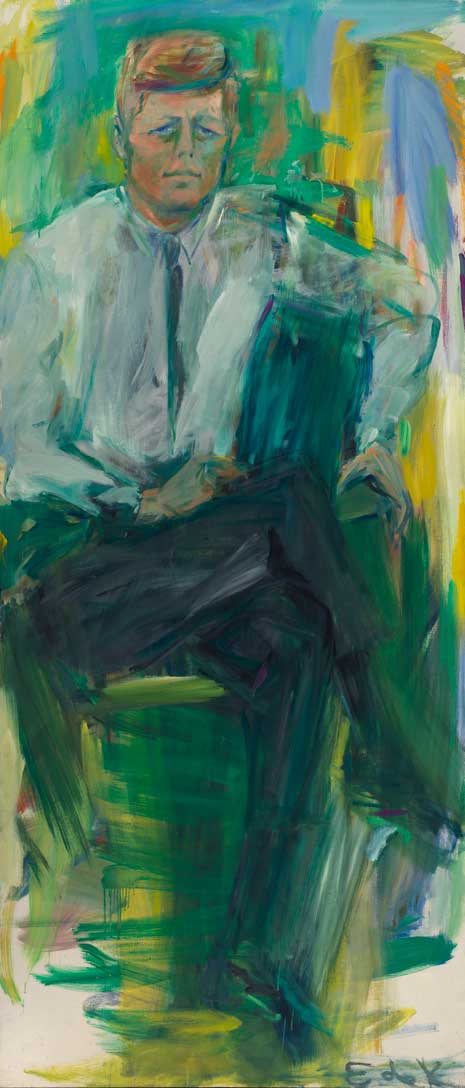
Great Art Cities Explained suggests that the twenty year period in which she and Willem were estranged — they reconciled when she was in her late 50s — was one of personal and artistic growth. She took inspiration from the bullfights she witnessed on her travels, turned a lusty female gaze on male subjects, and was commissioned to paint President Kennedy’s official portrait:
All my sketches from life as he talked on the phone, jotted down notes, read papers, held conferences, had to be made very quickly, catching features and gestures, half for memory, even as I looked, because he never sat still. It was not so much that he seemed restless, rather, he sat like an athlete or college boy, constantly shifting in his chair. At first this impression of youthfulness was a hurdle, as was the fact that he never sat still.
Like Krasner and Elaine de Kooning, Helen Frankenthaler was also part of an Abstract Expressionist golden couple, but fortune decreed she would not play a distant second fiddle to husband Robert Motherwell .
This surely owes something to her pioneering development of the “soak-stain” technique, wherein she poured turpentine-thinned oil paint directly onto unprimed canvas, laid flat.
Soak-stain pre-dated her marriage.
After a visit to Frankenthaler’s studio, where they viewed her landmark Mountains and Sea, above, abstract painters Kenneth Noland and Morris Louis also adopted the technique, as well as her penchant for broad, flat expanses of color — what became known as Color Field Painting.
Like Pollock, Frankenthaler scored a LIFE Magazine spread, though as Art She Says observes, not all LIFE artist profiles were created equal:
The dialogue between these two spreads appears to be a tale of socially-determined masculine energy and feminine composure. Though Pollock’s dominant stance is a key part of his artistic praxis, the issue is not that he is standing while she is sitting. Rather, it is that, with Pollock, we are allowed to glimpse into the intimate sides of his tortured and groundbreaking practice. In stark opposition, Parks’ images of Frankenthaler reinforce our need to see women artists as highly curated, polished figures who are as complete as the masterpieces that they produce. Even if those works appear highly abstracted and visceral, each stroke is perceived, at some level, to represent a calculated, perfected moment of visual enlightenment.
Thirteen minutes was an awful long time for The Ramones, since they could play an entire album of songs in a quarter of an hour. Thus, when Ramones fan Mark Gilman snuck a Super‑8 sound camera into the Grenada Theater in Kansas City in July of 1978 to secretly film the band, he managed to capture an awful lot of The Ramones on film before he was forced to shut it down. The band, as you can see above, was in top form.
I exaggerate a little.… Ramones albums are longer than this film clip. Their self-titled 1976 debut is over twice the length at 29 minutes, which is still three or four minutes shy of the shortest LPs of the time (back when albums only meant vinyl). Into that almost-half-hour, the ultimate 70s New York punk band crammed 14 songs, at an average of two minutes each: no solos, no filler, no extended intros, outros, or remixes.…
That’s exactly what we see above: mops of hair and a sweaty, leather-and-denim-clad wall of pure, dumb rock ’n’ roll, played blisteringly fast with maximum attitude. It’s quality, audience-level footage of about half a classic Ramones show, which usually spanned around 30 minutes: no banter, chatter, tuning up, requests, or encores. This is what you came for, and this — full-on assault of bubblegum melodies, thudding chants of “I wanna” and “I don’t wanna” played with chainsaw precision — is what you get.
Musically, songs like “Now I Wanna Sniff Some Glue” were already in the band’s repertoire, but the songs were plagued by erratic tempos, blown notes, and other sorted sonic miscues. Between-song bickering also marred the band’s earliest shows. For a second, Dee Dee and Tommy seem like they’re almost ready to come to blows when they can’t agree on what song to play next.
“I didn’t like them at all,” Melnick remembers. “It was pretty raw. They were stopping and starting and fighting. They could barely play.” They didn’t meet a devil at a crossroads in the years between these early gigs and their 1978 live album It’s Alive (recorded at London’s Rainbow Theatre on the last day of the year as the band finished a 1977 UK tour). They played a hell of a lot of gigs, and pushed themselves hard for a rock stardom they’d never really achieve until their founding members died.
Allmusic’s Mark Deming describes the band in 1978 as “relentless.… a big-block hot rod thrown in to fifth gear” and calls their live album of the time “one of the best and most effective live albums in the rock canon.” Watch them play “I Wanna Be Well” at the Rainbow Theatre, just above, and catch a rare bit of stage banter from Joey regarding the previous night’s chicken vindaloo.
Dumplings are so delicious and so venerable, it’s understandable why more than one country would want to claim authorship.
As cultural food historian Miranda Brown discovers in her TED-Ed animation, dumplings are among the artifacts found in ancient tombs in western China, rock hard, but still recognizable.
Scholar Shu Xi sang their praises over 1,700 years ago in a poem detailing their ingredients and preparation. He also indicated that the dish was not native to China.
Lamb stuffed dumplings flavored with garlic, yogurt, and herbs were an Ottoman Empire treat, circa 1300 CE.
The 13th-century Mongol invasions of Korea resulted in mass casualties , but the silver lining is, they gave the world mandoo.
The Japanese Army’s brutal occupation of China during World War II gave them a taste for dumplings that led to the creation of gyoza.
Eastern European pelmeni, pierogi and vareniki may seem like variations on a theme to the uninitiated, but don’t expect a Ukrainian or Russian to view it that way.
Is the history of dumplings really just a series of bloody conflicts, punctuated by periods of relative harmony wherein everyone argues over the best dumplings in NYC?
Brown takes some mild potshots at cuisines whose dumplings are closer to dough balls than “plump pockets of perfection”, but she also knows her audience and wisely steers clear of any positions that might lead to playground fights.
Relax, kids, however your grandma makes dumplings, she’s doing it right.
It’s hard to imagine sushi master Naomichi Yasuda dialing his opinions down to preserve the status quo.
A purist — and favorite of Anthony Bourdain — Chef Yasuda is unwavering in his convictions that there is one right way, and many wrong ways to eat and prepare sushi.
He’s far from priggish, instructing customer Joseph George, for VICE Asia MUNCHIES in the proper handling of a simple piece of sushi after it’s been lightly dipped, fish side down, in soy sauce:
Don’t shake it. Don’t shake it! Shaking is just to be finished at the men’s room.
Other takeaways for sushi bar diners:
Use fingers rather than chopsticks when eating maki rolls.
Eating pickled ginger with sushi is “very much bad manners”
Roll sushi on its side before picking it up with chopsticks to facilitate dipping
The temperature interplay between rice and fish is so delicate that your experience of it will differ depending on whether a waiter brings it to you at a table or the chef hands it to you across the counter as soon as it’s assembled.
Explore TED-Ed’s Brief History of Dumplings lesson here.
Many of us avoid turning on the oven during a heatwave, but how do we feel about making cookies in a Dutch Oven heaped with glowing embers?
Justine Dorn, co-creator with other half, Ron Rayfield, of the Early American YouTube channel, strives to recreate 18th and early 19th century desserts in an authentic fashion, and if that means whisking egg whites by hand in a 100 degree room, so be it.
“Maybe hotter,” she wrote in a recent Instagram post, adding:
It’s hard work but still I love what I do. I hope that everyone can experience the feeling of being where you belong and doing what you know you were born to do. Maybe not everyone will understand your reasoning but if you are comfortable and happy doing what you do then continue.
Her historic labors have an epic quality, but the recipes from aged cookbooks are rarely complex.
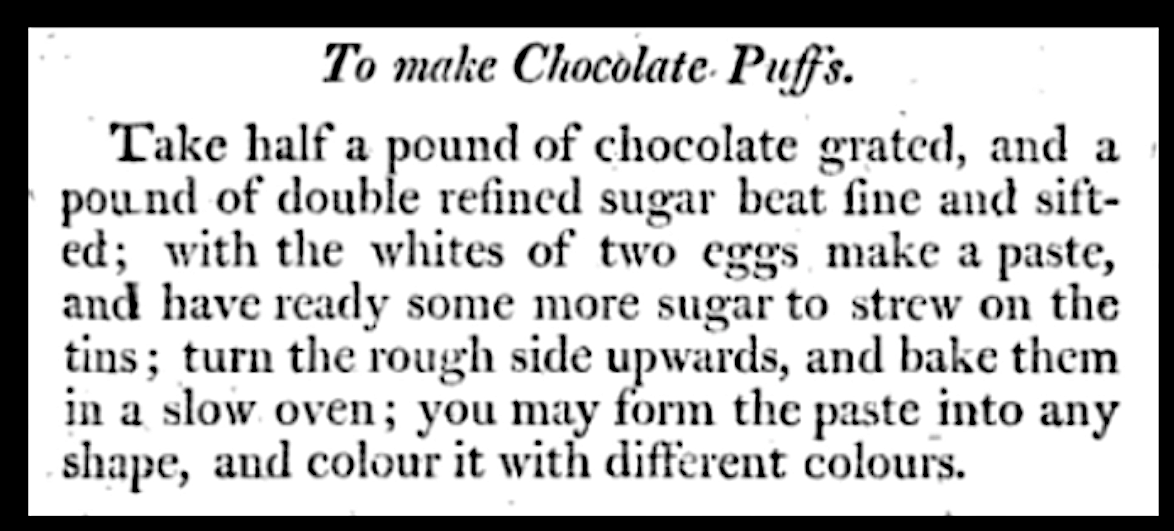
The gluten free chocolate cookies from the 1800 edition of The Complete Confectioner have but three ingredients — grated chocolate, caster sugar, and the aforementioned egg whites — cooked low and slow on parchment, to create a hollow center and crispy, macaron-like exterior.
Unlike many YouTube chefs, Dorn doesn’t translate measurements for a modern audience or keep things moving with busy editing and bright commentary.
Her silent, lightly subtitled approach lays claim to a previously unexplored corner of autonomous sensory meridian response — ASMR Historical Cooking.
The sounds of crackling hearth, eggs being cracked into a bowl, hot embers being scraped up with a metal shovel turn out to be compelling stuff.
So were the cookies, referred to as “Chocolate Puffs” in the original recipe.
Dorn and Rayfield have a secondary channel, Frontier Parrot, on which they grant themselves permission to respond verbally, in 21st century vernacular, albeit while remaining dressed in 1820s Missouri garb.
“I would pay a man $20 to eat this whole plate of cookies because these are the sweetest cookies I’ve ever come across in my life,” Dorn tells Rayfield on the Frontier Parrot Chat and Chew episode, below. “They only have three ingredients, but if you eat more than one you feel like you’re going to go into a coma — a sugar coma!”
He asserts that two’s his limit and also that they “sound like hard glass” when knocked against the table.
Early Americans would have gaped at the indulgence on display above, wherein Dorn whips up not one but three cake recipes in the space of a single episode.
The plum cakes from the Housekeeper’s Instructor (1791) are frosted with an icing that Rayfield identifies on a solo Frontier Parrot as 2 cups of sugar whipped with a single egg white.
“We suffered for this icing,” Dorn revealed in an Instagram post. “SUFFERED. Ya’ll don’t know true pain until you whip icing from hand using only egg whites and sugar.”
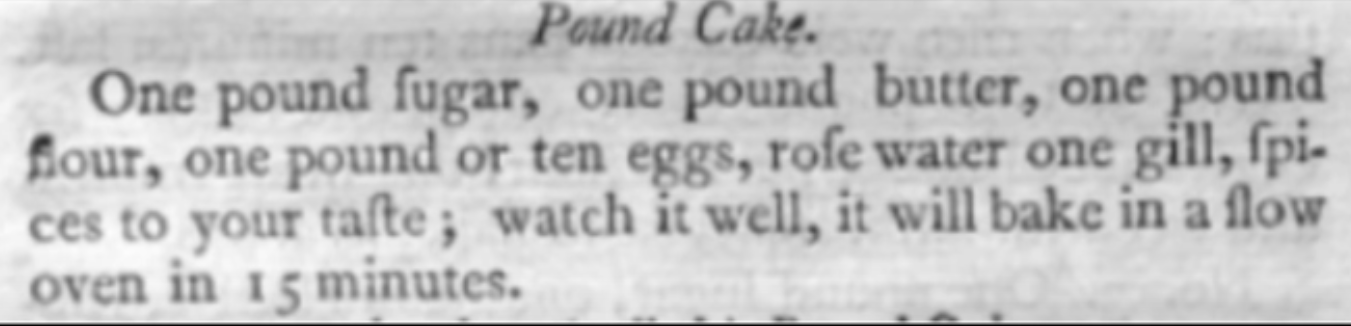
The flat little pound cakes from 1796’s American Cookery call for butter rubbed with rosewater.
We're hoping to rely on loyal readers, rather than erratic ads. Please click the Donate button and support Open Culture. You can use Paypal, Venmo, Patreon, even Crypto! We thank you!
Open Culture scours the web for the best educational media. We find the free courses and audio books you need, the language lessons & educational videos you want, and plenty of enlightenment in between.