The Library of Congress Makes Thousands of Fabulous Photos, Posters & Images Free to Use & Reuse

The his­to­ry of the ven­er­a­ble Library of Con­gress demon­strates the vast impor­tance that the founders of the U.S. accord­ed to read­ing and study­ing. It may be one of the country’s most durable insti­tu­tions, “the old­est fed­er­al cul­tur­al insti­tu­tion in the nation,” it pro­claims. While par­ti­san ran­cor, war, and vio­lence recur, the LoC has stolid­ly held an ever-increas­ing­ly diverse col­lec­tion of arti­facts sit­ting peace­ful­ly along­side each oth­er on sev­er­al hun­dred miles of shelves, a mon­u­ment to the life of the mind that ought to get more atten­tion.

Tout­ing itself as “the largest library in the world,” its col­lec­tions “are uni­ver­sal, not lim­it­ed by sub­ject, for­mat, or nation­al bound­ary, and include research mate­ri­als from all parts of the world and in more than 450 lan­guages.”

Its first mate­ri­als were, of course, books—including over six-thou­sand books pur­chased from Thomas Jefferson’s pri­vate col­lec­tion after the British burned the orig­i­nal library down in 1814. Now, it “adds approx­i­mate­ly 12,000 items to the col­lec­tion dai­ly,” in every pos­si­ble for­mat one can imag­ine.

And since its dig­i­tal col­lec­tions came online, any­one, any­where in the world can call up these vast resources with an inter­net con­nec­tion and a few clicks. Though we tend to take such things for grant­ed in our fer­vid­ly dis­tract­ed times, a lit­tle reflec­tion should remind us of how incred­i­ble that is. But before we wax too rhap­sod­ic, let’s remem­ber there’s a busi­ness end to the LoC and it’s called the U.S. Copy­right Office, that guardian of intel­lec­tu­al prop­er­ty that both ensures cre­ators can prof­it from their labors and pre­vents the free and open use of so many enrich­ing mate­ri­als long after those cre­ators have need of them.

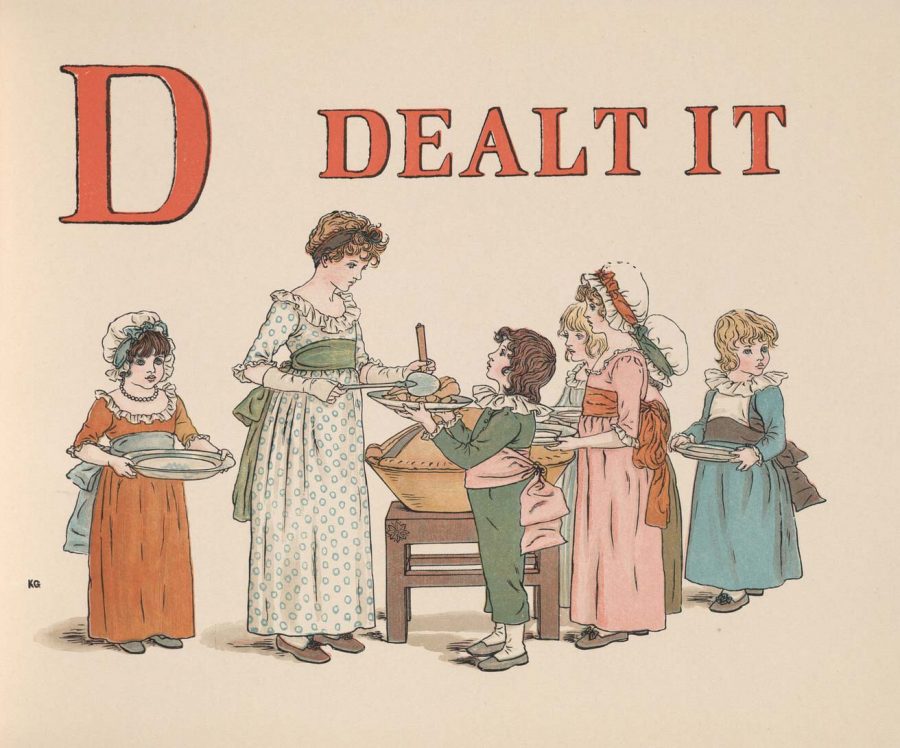
But the Library has done its dig­i­tal users a ser­vice in this regard as well, with its “Free to Use and Reuse Sets,” a siz­able col­lec­tion of images that the Library “believes… is either in the pub­lic domain, has no known copy­right, or has been cleared by the copy­right own­er for pub­lic use.” (The use of the word “believes” seems to leave room for doubt, but if you got it with per­mis­sion from the LoC, you’re prob­a­bly safe.) Need pho­tographs of Abra­ham Lincoln—and scans of his speech­es, let­ters, and “duel­ing instruc­tions”—for that book you’re writ­ing? You’re cov­ered with this gallery. Need a col­lec­tion of clas­sic chil­dren’s books for your web­site (or your read­ing plea­sure)? Here you go.

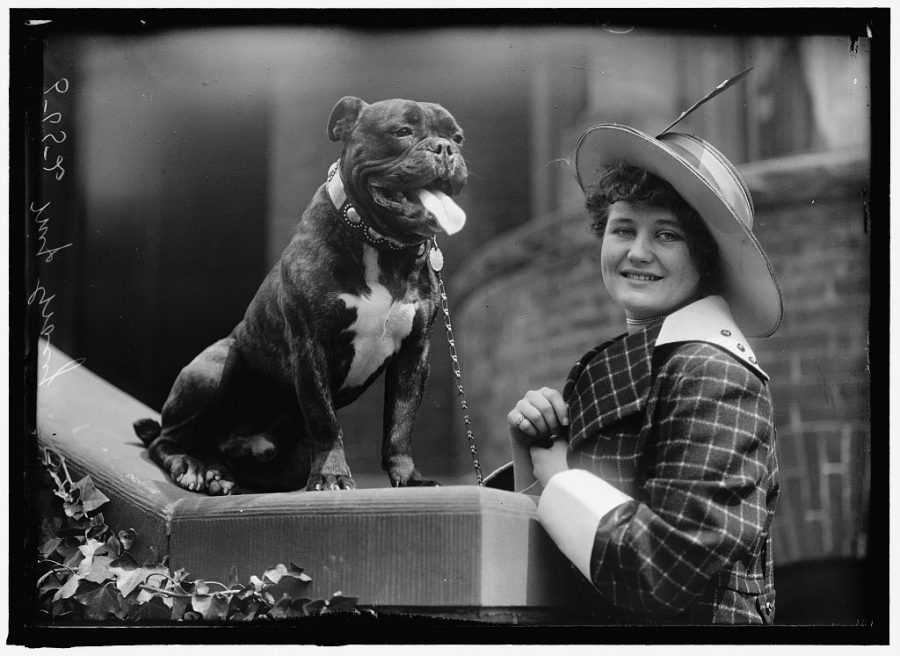
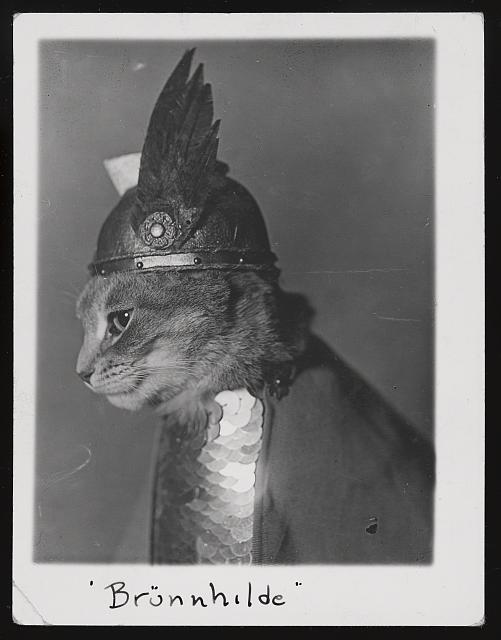
From the graph­ic genius of vin­tage WPA and trav­el posters to icon­ic jazz por­traits by William Got­tlieb to base­ball cards to end­less­ly quaint and quirky Amer­i­can road­side attrac­tions to pic­tures of dogs and their peo­ple… you nev­er know when you might need such images, but when you do you now know where to find them. Want to know what’s in the set called “Not an Ostrich”? A valkyrie cat named Brunnhilde, for one thing, and much more here.
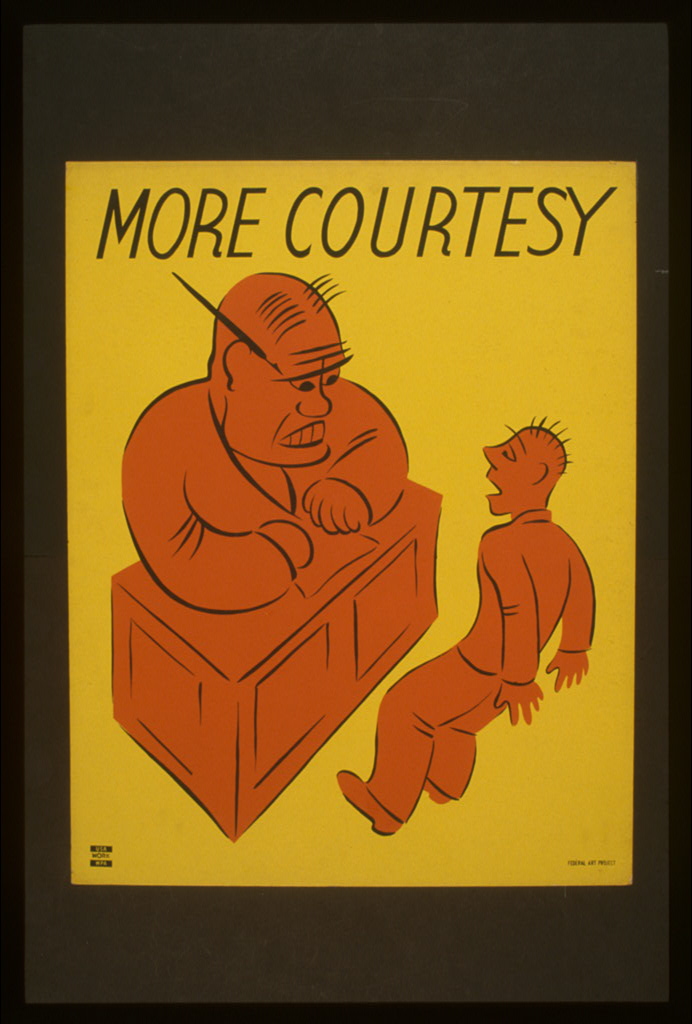
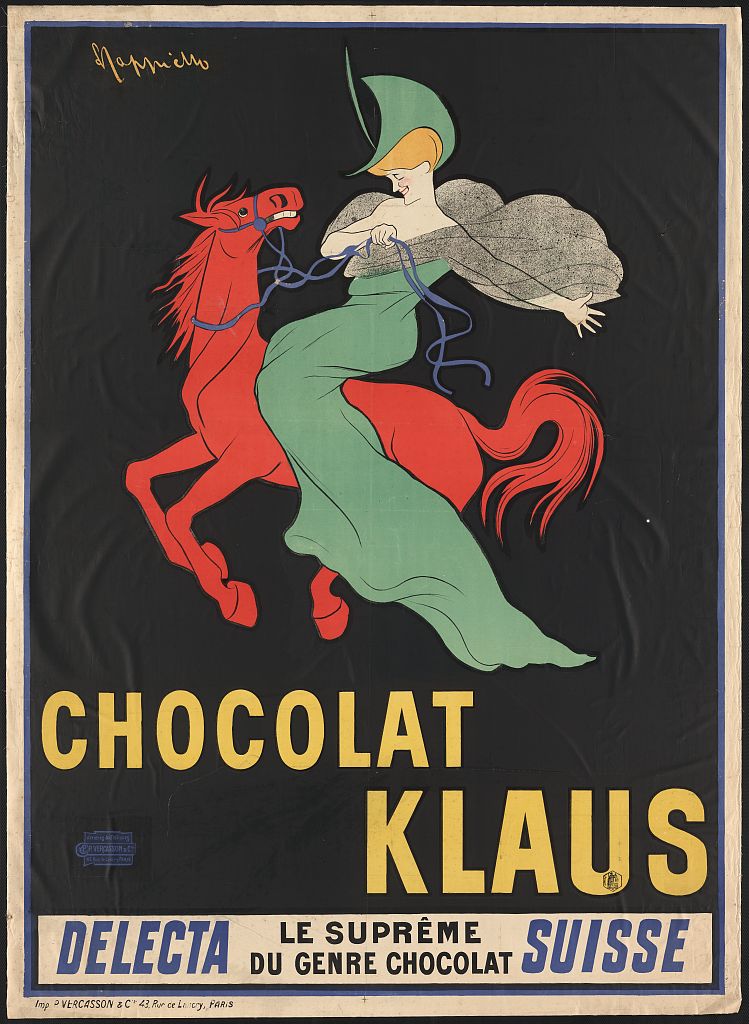
The Library cur­rent­ly high­lights its “Poster Parade”—a set of posters from the 1890s to the 1960s fea­tur­ing “trav­el, com­mer­cial prod­ucts, war pro­pa­gan­da, enter­tain­ment, and more”—in col­lab­o­ra­tion with Poster House, a muse­um open­ing in New York next year. These range from delec­table art nou­veau ads to shouty broad­sides telling you to drink your milk, brush your teeth, or have “More Cour­tesy.” Sen­si­ble pre­scrip­tions, but we also need more knowl­edge, study, and thought. Start at the LoC’s Dig­i­tal Col­lec­tions here and har­vest your free to use and reuse images here.

If you would like to sup­port the mis­sion of Open Cul­ture, con­sid­er mak­ing a dona­tion to our site. It’s hard to rely 100% on ads, and your con­tri­bu­tions will help us con­tin­ue pro­vid­ing the best free cul­tur­al and edu­ca­tion­al mate­ri­als to learn­ers every­where. You can con­tribute through Pay­Pal, Patre­on, and Ven­mo (@openculture). Thanks!

Relat­ed Con­tent:

The Library of Con­gress Makes 25 Mil­lion Records From Its Cat­a­log Free to Down­load

Large Archive of Han­nah Arendt’s Papers Dig­i­tized by the Library of Con­gress: Read Her Lec­tures, Drafts of Arti­cles, Notes & Cor­re­spon­dence

Get­ty Images Makes 35 Mil­lion Pho­tos Free to Use Online

Josh Jones is a writer and musi­cian based in Durham, NC. Fol­low him at @jdmagness.
 

The World’s Largest Collection of Tibetan Buddhist Literature Now Online

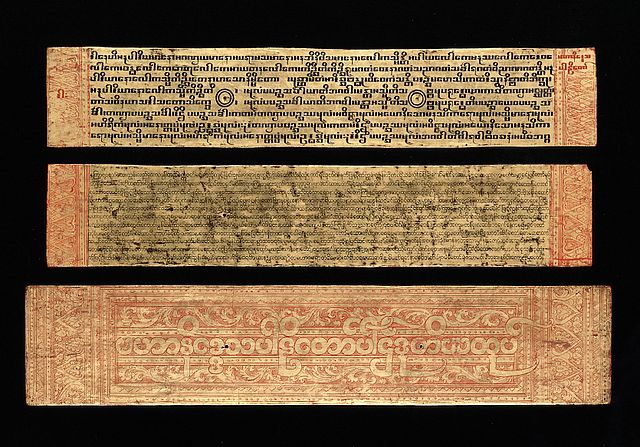
FYI: The Bud­dhist Dig­i­tal Resource Cen­ter (BDRC) and Inter­net Archive (IA) announced ear­li­er this month “that they are mak­ing a large cor­pus of Bud­dhist lit­er­a­ture avail­able via the Inter­net Archive. This col­lec­tion rep­re­sents the most com­plete record of the words of the Bud­dha avail­able in any lan­guage, plus many mil­lions of pages of relat­ed com­men­taries, teach­ings and works such as med­i­cine, his­to­ry, and phi­los­o­phy.” In a press release from the Inter­net Archive, Chokyi Nyi­ma Rin­poche, a respect­ed teacher of Tibetan Bud­dhism, expressed grat­i­tude that the teach­ings of the Bud­dha have been made avail­able online. “We can share the entire body of lit­er­a­ture with every Tibetan who can use it. These texts are sacred, and should be free.” It should be not­ed that the texts aren’t writ­ten in Eng­lish, but rather the authors’ native tongue.

If you would like to sup­port the mis­sion of Open Cul­ture, con­sid­er mak­ing a dona­tion to our site. It’s hard to rely 100% on ads, and your con­tri­bu­tions will help us con­tin­ue pro­vid­ing the best free cul­tur­al and edu­ca­tion­al mate­ri­als to learn­ers every­where. You can con­tribute through Pay­Pal, Patre­on, and Ven­mo (@openculture). Thanks!

Relat­ed Con­tent:

Take Harvard’s Intro­duc­to­ry Course on Bud­dhism, One of Five World Reli­gions Class­es Offered Free Online

Free Online Course: Robert Thurman’s Intro­duc­tion to Tibetan Bud­dhism (Record­ed at Colum­bia U)

The Dalai Lama’s Intro­duc­tion to Bud­dhism

Bud­dhism 101: A Short Intro­duc­to­ry Lec­ture by Jorge Luis Borges

Free Online Reli­gion Cours­es 

How Bud­dhism & Neu­ro­science Can Help You Change How Your Mind Works: A New Course by Best­selling Author Robert Wright


by | Permalink | Make a Comment ( 2 ) |

The Lenny Bruce Archive: Brandeis Digitally Preserves the Legacy of the Pathbreaking Comedian

Edgy, smart, aggres­sive, unapolo­get­i­cal­ly Jew­ish, Lenny Bruce mixed Yid­dishisms, hip­ster slang, col­or­ful terms for var­i­ous sex acts, and social, polit­i­cal, and reli­gious satire in a high-wire impro­visato­ry act he thought of as “ver­bal jazz.” Mar­ket­ed as a “sick come­di­an,” Bruce got his start play­ing strip clubs, and end­ed up—bitter, defeat­ed, black­list­ed, and addicted—ranting and read­ing court tran­scripts from his var­i­ous obscen­i­ty tri­als. It was a sad end to a bril­liant and too-short career.

When Bruce died of an over­dose at 40, “his wid­ow and their daugh­ter,” Kit­ty, “start­ed archiv­ing all that he had left behind,” notes NPR. Now that archive resides at Bran­deis Uni­ver­si­ty, acquired in 2014 by librar­i­an for archives and spe­cial col­lec­tions Sarah Schoe­mak­er. An episode of The Kitchen Sis­ters Present pod­cast called “The Keep­ers” tells the sto­ry of that col­lec­tion, kept for decades in Kitty’s attic, with back­up copies in Michi­gan and L.A. in case of fire. “10 lin­ear feet” of mate­r­i­al, as Kit­ty Bruce remem­bers it.

The sto­ry of that archive involves not only Bruce’s daugh­ter and Shoe­mak­er but also one of Bruce’s biggest cham­pi­ons, Hugh Hefn­er, his daugh­ter Christie, and his lawyer Mar­tin Gar­bus. It also fea­tures Steve Krief, who wrote the first Ph.D. the­sis on Bruce. When Krief vis­it­ed Kit­ty in Penn­syl­va­nia, she told him “you know what I don’t know what I’m going to do with my father’s things. They’re going to get destroyed.” Krief advised her to call Hefn­er, who even­tu­al­ly made a dona­tion to Bran­deis to fund the archive.

Some of the mate­r­i­al, the col­lec­tion notes, “has been pre­vi­ous­ly released in edit­ed form. Most of these record­ings are of Lenny Bruce’s stand-up com­e­dy per­for­mances…. Some of the record­ings are of a per­son­al nature, such as the ‘phone let­ters’ and pri­vate con­ver­sa­tions between Bruce and his friends and fam­i­ly.” At the collection’s site, you can hear frus­trat­ing­ly short, 10-sec­ond clips of sev­er­al rou­tines, but to hear the tapes in full, you need to con­tact the uni­ver­si­ty and set up an in-per­son appoint­ment. But the archive is ful­ly open to the pub­lic, and Bruce’s con­sid­er­able lega­cy is secure. Note: you can hear some longer record­ings on this page: Click here and then scroll down.

It’s a lega­cy that real­ly should be bet­ter known. Bruce con­sid­ered him­self “a sol­dier fight­ing for the Con­sti­tu­tion” and against gov­ern­ment cen­sor­ship. With­out him, it’s hard to imag­ine the careers of George Car­lin or Richard Pry­or ever hap­pen­ing, and he even left his imprint on Amer­i­can lit­er­a­ture, as Gar­bus tells it. At his obscen­i­ty tri­al in New York, for which he was giv­en two years pro­ba­tion, a sen­tence only over­turned after his death, Philip Roth sat in the court­room. Roth lat­er said that with­out Bruce, he couldn’t have writ­ten Portnoy’s Com­plaint.

“Lenny broke down so many bar­ri­ers,” says Gar­bus, and though his humor may seem tame today—though his com­e­dy still holds up—in the ear­ly 1960s few peo­ple dared to say the things he did, the way he did. Bruce railed against the hyp­o­crit­i­cal puri­tanism of Amer­i­can cul­ture and paid a heavy price for telling truths we might take for grant­ed now—and many we still don’t want to hear. (See Dustin Hoff­man doing one of Bruce’s more seri­ous bits above in a clip from the 1974 Bob Fos­se biopic Lenny.) Browse the con­tents of the Lenny Bruce Audio Files here and learn more about Bruce’s life and influ­ence at his offi­cial web­site.

Relat­ed Con­tent:

Thank You, Mask Man: Lenny Bruce’s Lone Ranger Com­e­dy Rou­tine Becomes a NSFW Ani­mat­ed Film (1968)

George Car­lin Per­forms His “Sev­en Dirty Words” Rou­tine: His­toric and Com­plete­ly NSFW

Bill Hicks’ 12 Prin­ci­ples of Com­e­dy

Josh Jones is a writer and musi­cian based in Durham, NC. Fol­low him at @jdmagness

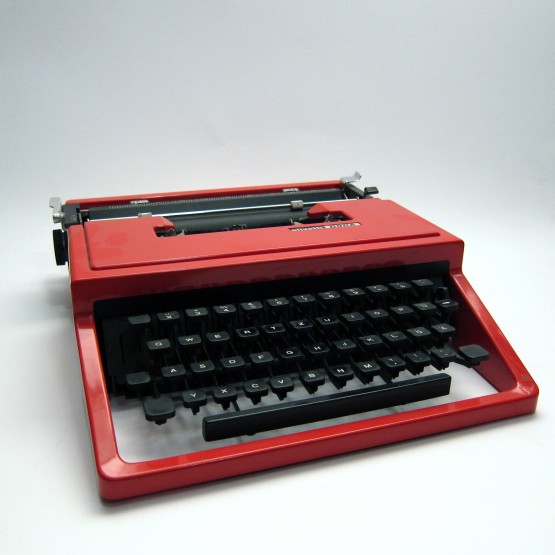
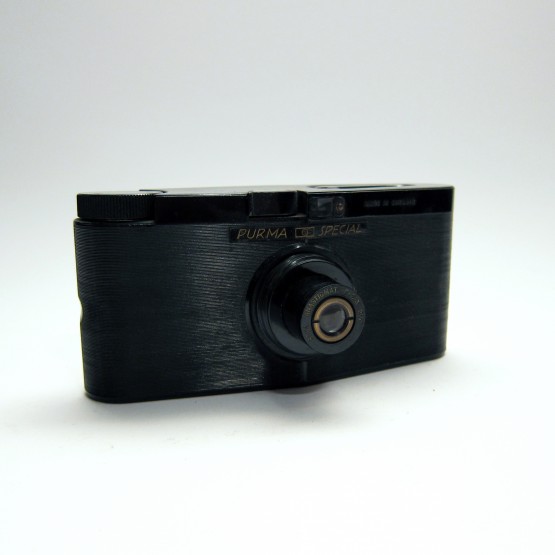
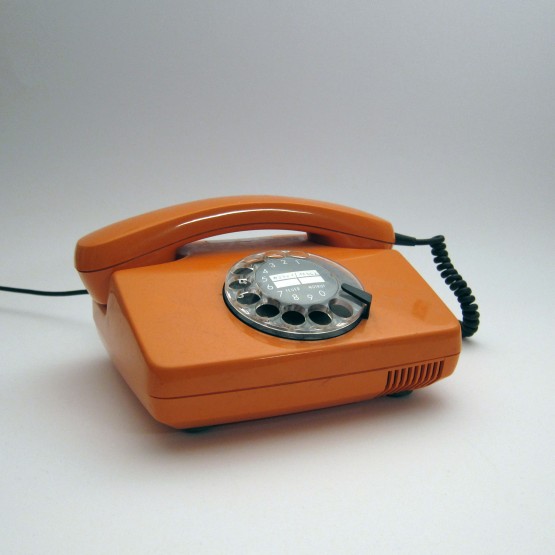
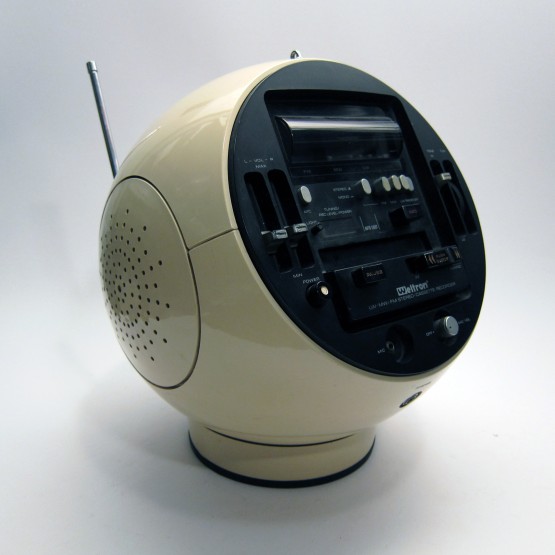
Conserve the Sound, an Online Museum Preserves the Sounds of Past Technologies–from Typewriters, Electric Shavers and Cassette Recorders, to Cameras & Classic Nintendo

The unmis­tak­able zip and whirr of a rotary phone, the ungod­ly squeal of dial-up modems, the sat­is­fy­ing thunk of a car­tridge in a clas­sic Nin­ten­do con­sole, a VCR rewind­ing, the click-clack sound of a Walk­man’s but­tons…. I date myself in say­ing that these sounds imme­di­ate­ly send me back to var­i­ous moments in my child­hood with Prous­t­ian immer­sion. The sense of smell is most close­ly linked to mem­o­ry, but hear­ing can­not be far behind giv­en how sound embeds itself in time, and most espe­cial­ly the sounds of tech­nolo­gies, which are by nature fat­ed for obso­les­cence. A muse­um-qual­i­ty aura sur­rounds the Walk­man and the first iPods. These are tri­umphs of con­sumer design, but only one of them makes dis­tinc­tive mechan­i­cal nois­es.

As ana­log recedes, it can seem that noisy tech in gen­er­al becomes more and more dat­ed. It is hard to hear the rub­bing of thumbs and fin­gers across screens and touch­pads. Voice com­mands make but­tons and switch­es redun­dant. How much tech from now will one day fea­ture in Con­serve the Sound, the “online muse­um for van­ish­ing and endan­gered sounds”?

Its col­lec­tion gives the impres­sion of a bygone age, quaint in its dozens of exam­ples of mechan­i­cal inge­nu­ity. The visu­al jux­ta­po­si­tion of hand­held film cam­eras, type­writ­ers, car win­dow han­dles, elec­tric shavers, boom box­es, stop­watch­es, and so on has the effect of mak­ing these things seem all of a piece, assort­ed arti­facts in a great hall of won­ders called “the Sound the 20th Cen­tu­ry.”

At the top of the site’s “Sound” page, time­line nav­i­ga­tion allows users to vis­it every decade from the 1910s to the 2000s, a cat­e­go­ry that con­tains only two objects. Oth­er dis­plays are more plen­ti­ful, and col­or­ful. The 1960s, for exam­ple show­cas­es the incred­i­bly sexy red Schreib­mas­chine Olivet­ti Dora fur­ther up. It sounds as sleek and sophis­ti­cat­ed as it looks. The vir­tu­al dis­play case of the 30s holds the sounds of a twin-engine pro­peller plane and a hand­ful of beau­ti­ful mov­ing and still cam­eras, like the Fotokam­era Pur­ma Spe­cial above. It also fea­tures the hum­ble and endur­ing library stamp, a sound I pine for as I slide books under the self-check­out laser scan­ner at my local branch.

Giv­en just the few images here, you can already see that Con­serve the Sound is as much a feast for the eyes as for the ears, each object lov­ing­ly pho­tographed against an aus­tere white back­ground. In order for the full nos­tal­gic effect to work, how­ev­er, you need to vis­it these pages and hit “play.” It even mag­i­cal­ly works with objects from before our times, giv­en how promi­nent­ly their sounds fea­ture in film and audio record­ings that define the peri­ods. You’ve like­ly also noticed how many of these prod­ucts are of Euro­pean ori­gin, and many of them, like the robot­ic head of the Kas­set­ten­reko­rder Wel­tron Mod­el 2004, are per­haps unfa­mil­iar to many con­sumers from else­where in the world.

Con­serve the Sound is a Euro­pean project, fund­ed by the Film & Medi­en­s­tiftung NRW in Ger­many, thus its selec­tion skews toward Euro­pean-made prod­ucts. But the sound of a fan or an adding machine in Ger­many is the sound of a fan or adding machine in Chile, Chi­na, Kenya, or Nebras­ka. See a trail­er for the project at the top of the post, and below, one of the many inter­views in which Ger­man pub­lic fig­ures, schol­ars, librar­i­ans, tech­ni­cians, and stu­dents answer ques­tions about their mnemon­ic asso­ci­a­tions with tech­no­log­i­cal sound. In this inter­view, radio pre­sen­ter Bian­ca Hau­da describes one of her favorite old sounds from a favorite old machine, a 1970s portable cas­sette recorder.

via WFMU

Relat­ed Con­tent:

The British Library’s “Sounds” Archive Presents 80,000 Free Audio Record­ings: World & Clas­si­cal Music, Inter­views, Nature Sounds & More

Bri­an Eno Once Com­posed Music for Win­dows 95; Now He Lets You Cre­ate Music with an iPad App

Cor­nell Launch­es Archive of 150,000 Bird Calls and Ani­mal Sounds, with Record­ings Going Back to 1929

Josh Jones is a writer and musi­cian based in Durham, NC. Fol­low him at @jdmagness

New Web Site Showcases 700,000 Artifacts Dug Up from the Canals of Amsterdam, Some Dating Back to 4300 BC

Ams­ter­dam has many plea­sures to offer, not least boat­ing through its hun­dred-kilo­me­ter net­work of canals. First laid out in the ear­ly 17th cen­tu­ry, they con­sti­tute a rich his­to­ry les­son in and of them­selves. But Ams­ter­dam is also, of course, a mod­ern city with mod­ern infra­struc­ture, such as a metro sys­tem with a new line set to open this month. Ams­ter­dammers have been wait­ing for that line for fif­teen years now, and the rea­sons for the pro­longed con­struc­tion have to do with the old canals, or rather part of the Riv­er Ams­tel that feeds them.

Bor­ing the tun­nels entailed drain­ing the riv­er, and drain­ing the riv­er turned out to offer anoth­er his­to­ry les­son, and a much deep­er one than expect­ed. “It is not often that a riverbed, let alone one in the mid­dle of a city, is pumped dry and can be sys­tem­at­i­cal­ly exam­ined,” says the web site Below the Sur­face. “The exca­va­tions in the Ams­tel yield­ed a del­uge of finds, some 700,000 in all: a vast array of objects, some bro­ken, some whole, all jum­bled togeth­er.”

The unin­tend­ed archae­o­log­i­cal ben­e­fit of drain­ing the riv­er amounts to “a mul­ti-faceted pic­ture of dai­ly life in the city of Ams­ter­dam. Every find is a frozen moment in time, con­nect­ing the past and the present. The pic­ture they paint of their era is extreme­ly detailed and yet entire­ly ran­dom due to the chance of objects or remains sink­ing down into the riverbed and being retrieved from there.” At Below the Sur­face you can browse the exten­sive cat­a­log of all these arti­facts, the old­est of which date to around 4300 BC, more than five and a half mil­len­nia before the found­ing of Ams­ter­dam itself.

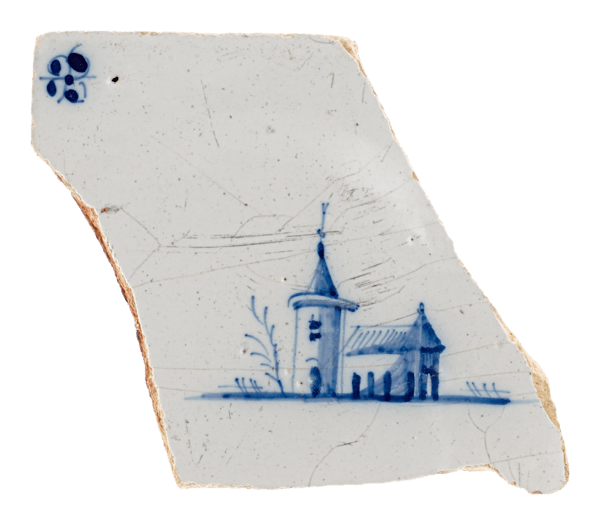
Below the Sur­face’s col­lec­tion is orga­nized into ten dif­fer­ent cat­e­gories includ­ing “inte­ri­ors and acces­sories,” “crafts and indus­try,” “arms and armor,” “com­mu­ni­ca­tion and exchange,” and “games and recre­ation.” On your dig­i­tized object-based his­tor­i­cal jour­ney there, you’ll encounter objects from all of those realms of human life across time, from 13th-cen­tu­ry coins, 15th-cen­tu­ry keys, 18th-cen­tu­ry tiles, and 20th-cen­tu­ry med­i­cine tins. To we humans of the 21st cen­tu­ry, in the Nether­lands or else­where, some of these might look sur­pris­ing­ly con­tem­po­rary — or at least not near­ly as ancient as a mobile phone from the 1990s. Enter Below the Sur­face here.

via Hyper­al­ler­gic

Relat­ed Con­tent:

The Rijksmu­se­um Puts 125,000 Dutch Mas­ter­pieces Online, and Lets You Remix Its Art

16th-Cen­tu­ry Ams­ter­dam Stun­ning­ly Visu­al­ized with 3D Ani­ma­tion

Flash­mob Recre­ates Rembrandt’s “The Night Watch” in a Dutch Shop­ping Mall

20,000 Endan­gered Archae­o­log­i­cal Sites Now Cat­a­logued in a New Online Data­base

Based in Seoul, Col­in Mar­shall writes and broad­casts on cities and cul­ture. His projects include the book The State­less City: a Walk through 21st-Cen­tu­ry Los Ange­les and the video series The City in Cin­e­ma. Fol­low him on Twit­ter at @colinmarshall or on Face­book.

A Big Digital Archive of Independent & Alternative Publications: Browse/Download Radical Periodicals Printed from 1951 to 2016

The con­sol­i­da­tion of big media in print, TV, and inter­net has had some seri­ous­ly dele­te­ri­ous effects on pol­i­tics and cul­ture, not least of which has been the major depen­dence on social media as a means of mass com­mu­ni­ca­tion. While these plat­forms give space to voic­es we may not oth­er­wise hear, they also flat­ten and mon­e­tize com­mu­ni­ca­tion, spread abuse and dis­in­for­ma­tion, force the use of one-size-fits-all tools, and cre­ate the illu­sion of an open, demo­c­ra­t­ic forum that obscures the gross inequities of real life.

Today’s media land­scape stands in stark con­trast to that of the mid-to-late twen­ti­eth cen­tu­ry, when inde­pen­dent and alter­na­tive press­es flour­ished, dis­sem­i­nat­ing art, poet­ry, and rad­i­cal pol­i­tics, and offer­ing cus­tom plat­forms for mar­gin­al­ized com­mu­ni­ties and dis­senters. While the future of inde­pen­dent media seems, today, unclear at best, a look back at the indie press­es of decades past may show a way for­ward.

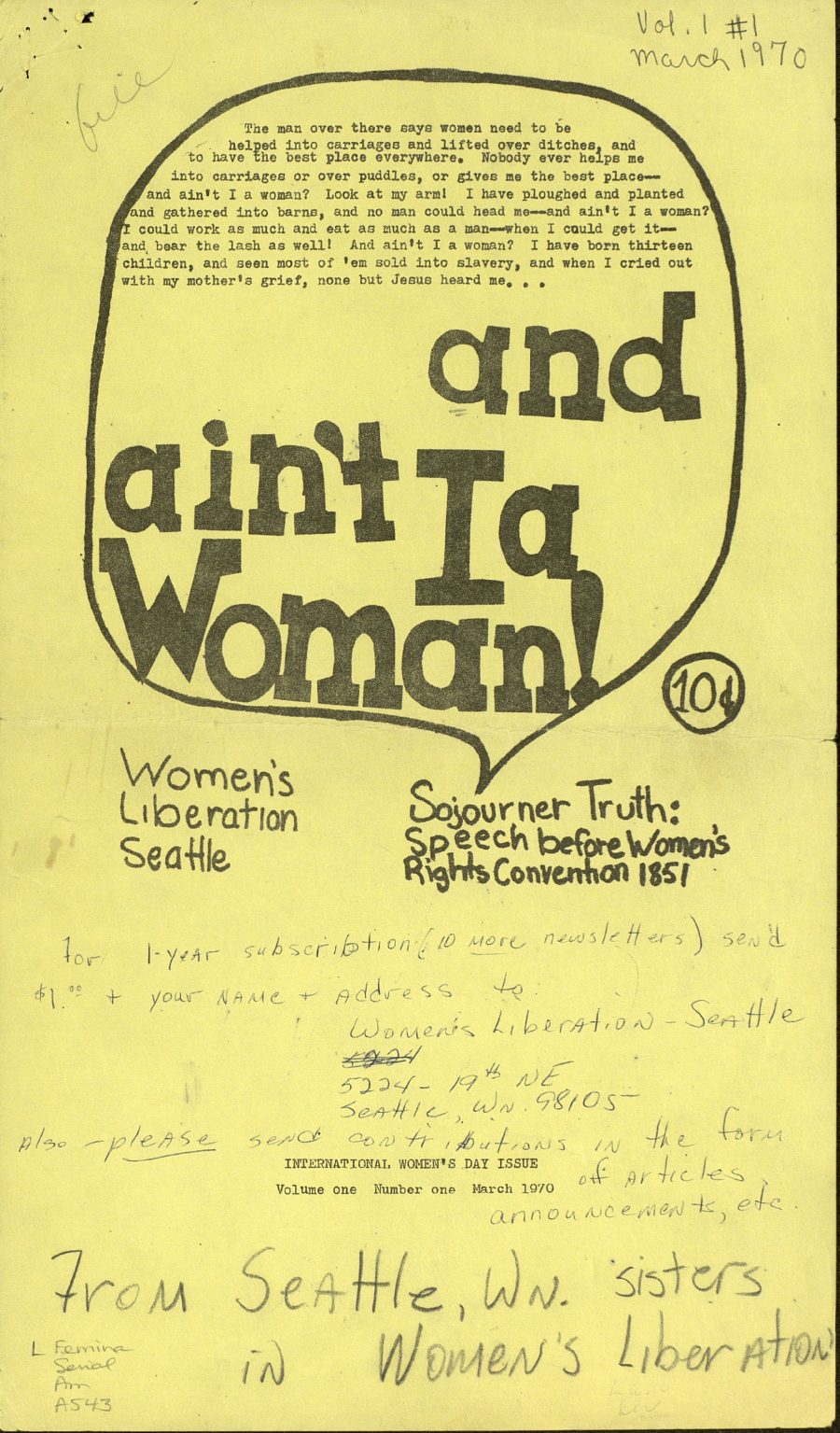
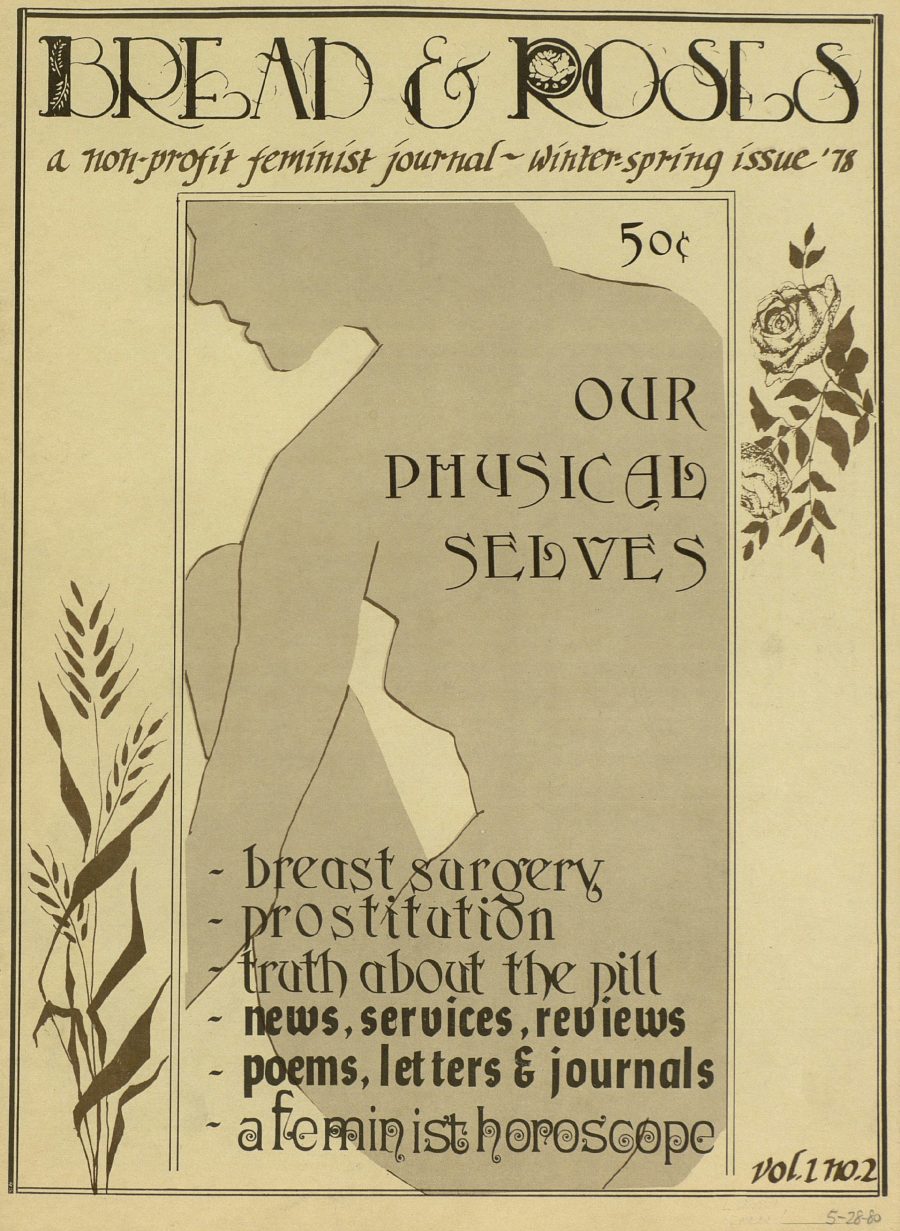
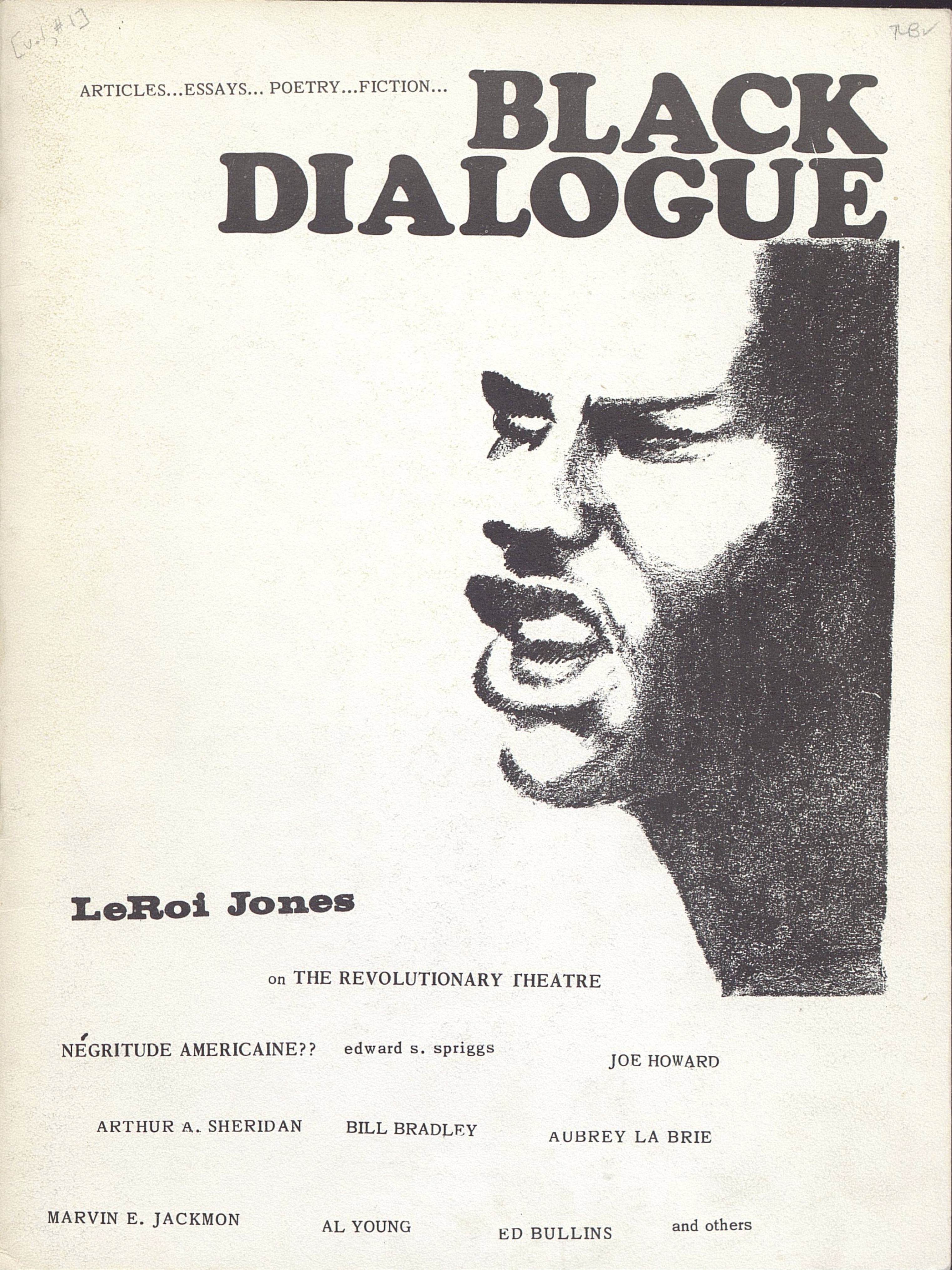
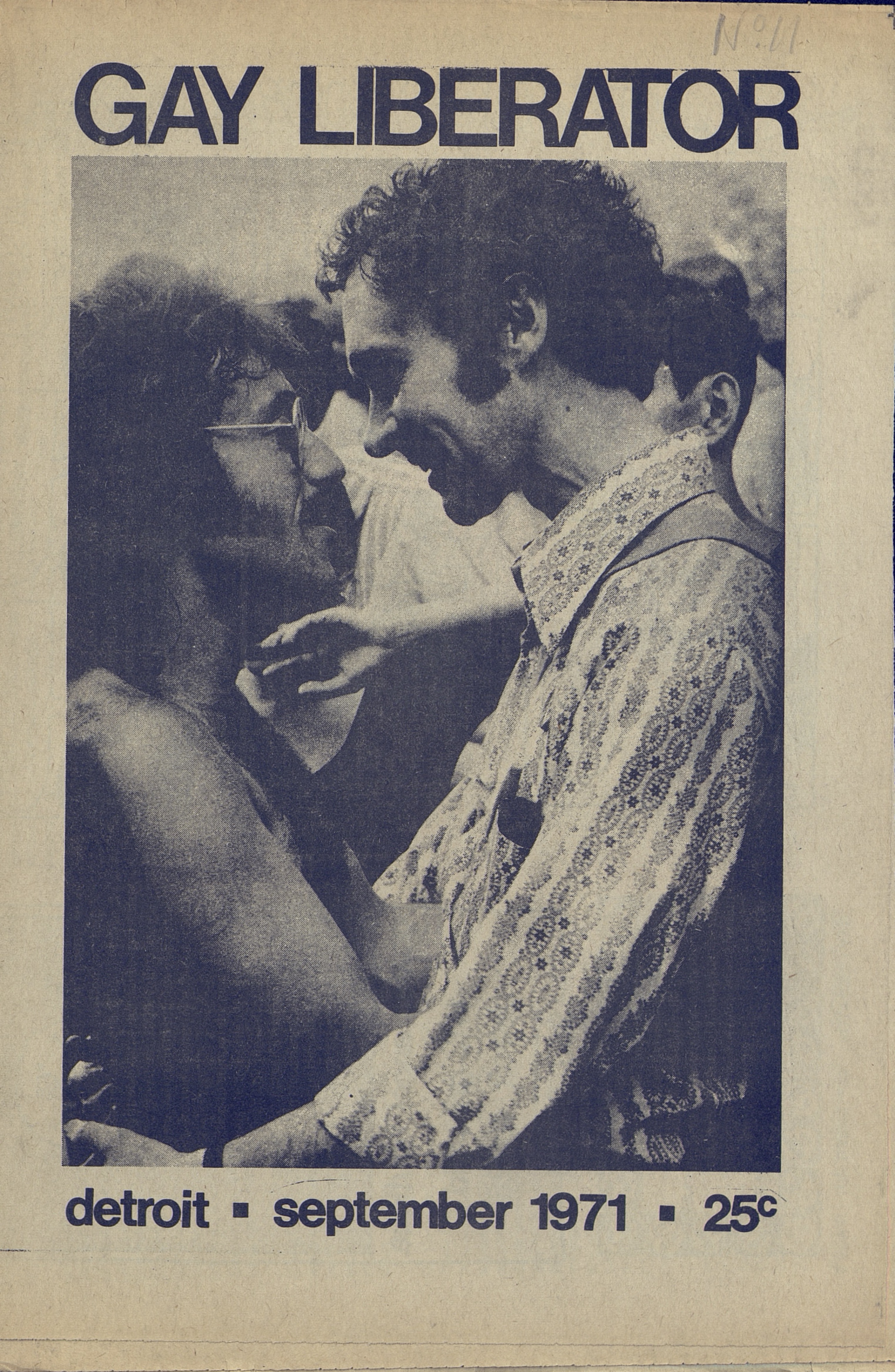
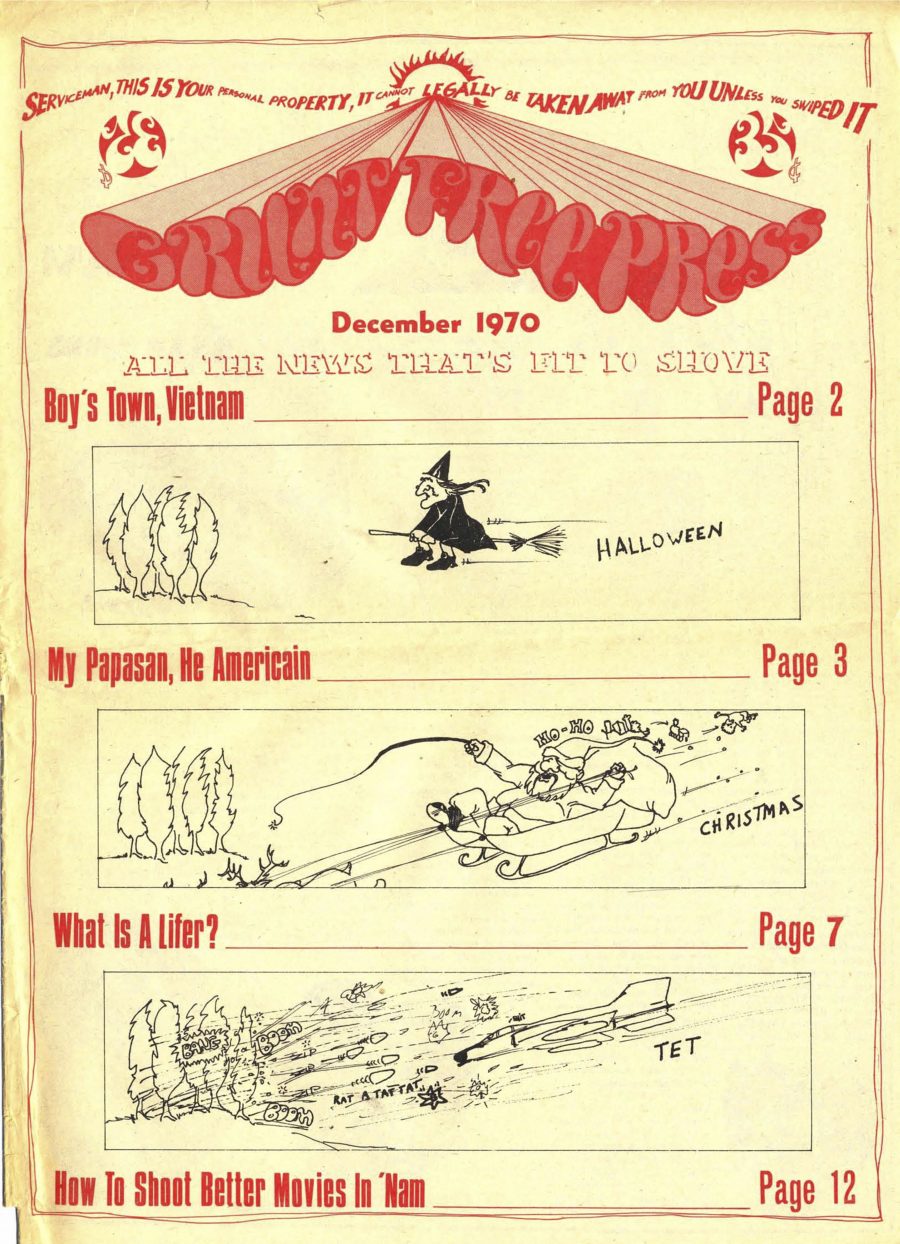
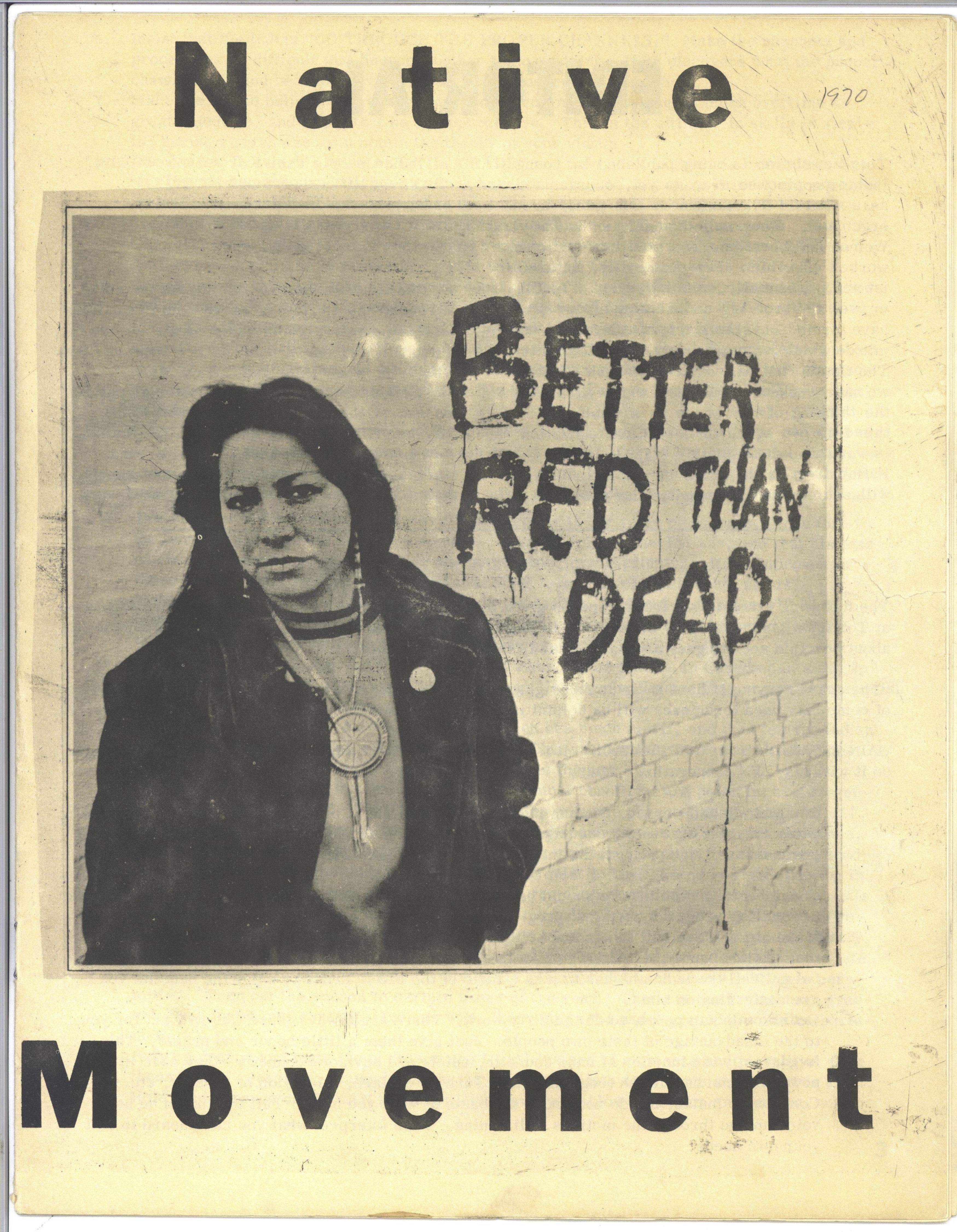
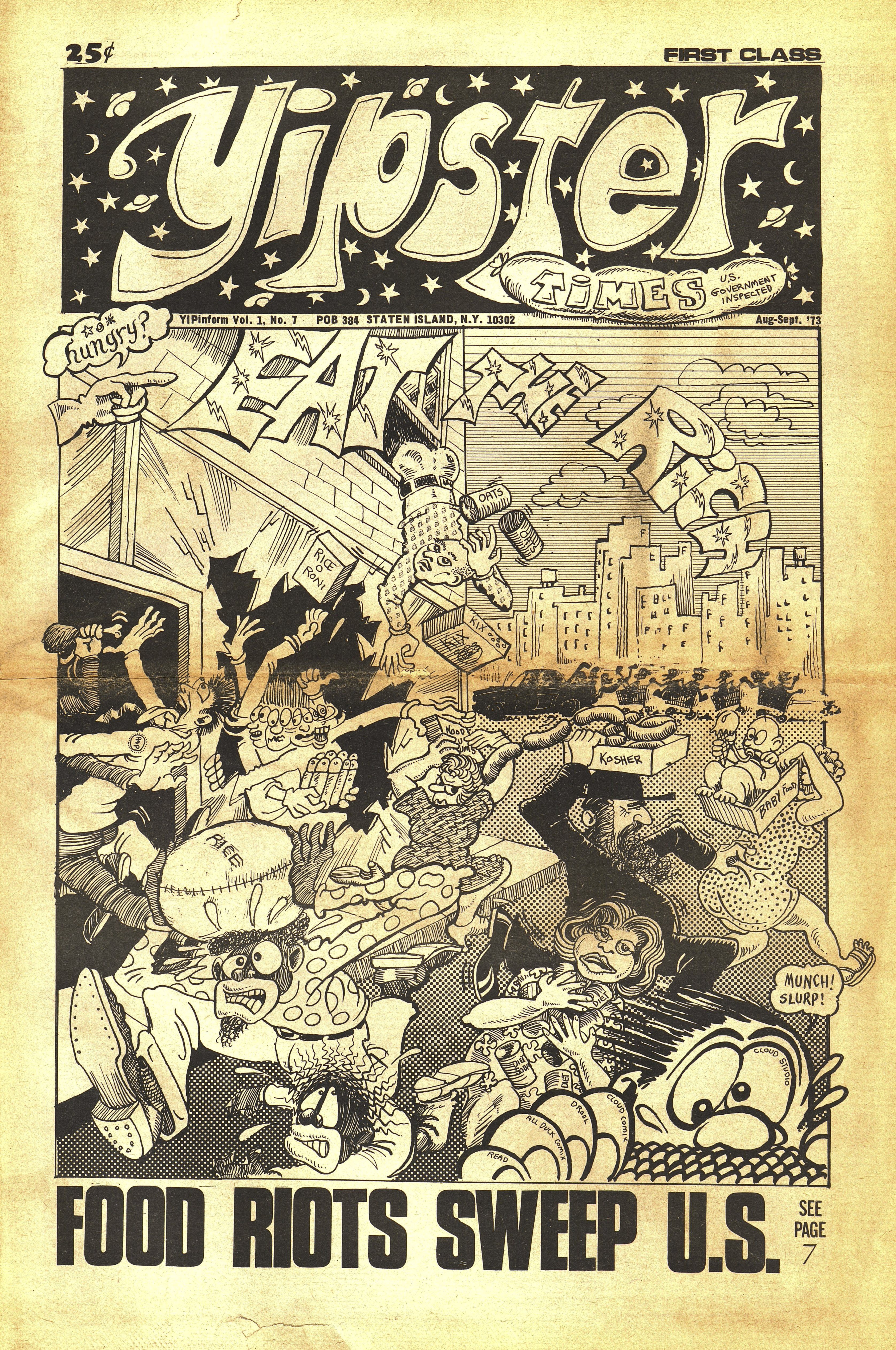
Para­dox­i­cal­ly, the same tech­nol­o­gy that threat­ens to impose a glob­al mono­cul­ture also enables us to archive and share thou­sands of unique arti­facts from more het­ero­dox ages of com­mu­ni­ca­tion. One stel­lar exam­ple of such an archive, Inde­pen­dent Voic­es—“an open access col­lec­tion of an alter­na­tive press”—stores sev­er­al hun­dred dig­i­tized copies of peri­od­i­cals “pro­duced by fem­i­nists, dis­si­dent GIs, cam­pus rad­i­cals, Native Amer­i­cans, anti-war activists, Black Pow­er advo­cates, His­pan­ics, LGBT activists, the extreme right-wing press and alter­na­tive lit­er­ary mag­a­zines dur­ing the lat­ter half of the 20th cen­tu­ry.”

These pub­li­ca­tions come from the spe­cial col­lec­tions of sev­er­al dozen libraries and indi­vid­u­als and span the years 1951 to 2016. While exam­ples from recent years show that alter­na­tive print pub­li­ca­tions haven’t dis­ap­peared, the rich­est, most his­tor­i­cal­ly res­o­nant exam­ples tend to come from the 60s and 70s, when the var­i­ous strains of the coun­ter­cul­ture formed col­lec­tive move­ments and aes­thet­ics, often pow­ered by easy-to-use mimeo­graph machines.

As Geor­gia State Uni­ver­si­ty his­to­ri­an John McMil­lian says, the “hun­dreds of rad­i­cal under­ground news­pa­pers” that pro­lif­er­at­ed dur­ing the Viet­nam war “edu­cat­ed and politi­cized young peo­ple, helped to shore up activist com­mu­ni­ties, and were the movement’s pri­ma­ry means of inter­nal com­mu­ni­ca­tion.” These pub­li­ca­tions, notes The New York­er’s Louis Menand, rep­re­sent “one of the most spon­ta­neous and aggres­sive growths in pub­lish­ing his­to­ry.”

With pub­li­ca­tions from the era like And Ain’t I a WomanBread & Ros­es, Black Dia­logue, Gay Lib­er­a­tor, Grunt Free Press, Native Move­ment, and The Yip­ster Times, Inde­pen­dent Voic­es show­cas­es the height of coun­ter­cul­tur­al activist pub­lish­ing. These are only a smat­ter­ing of titles on offer. Each issue is archived in a high-res­o­lu­tion, down­load­able PDF, per­fect for brush­ing up on your gen­er­al knowl­edge of sec­ond-wave fem­i­nism or 60s Black Pow­er; sourc­ing schol­ar­ship on the devel­op­ment of rad­i­cal, alter­na­tive press over the past six­ty years; or find­ing mate­r­i­al to inspire the future of indie media, what­ev­er form it hap­pens to take. Enter the Inde­pen­dent Voic­es archive here.

Relat­ed Con­tent:  

Down­load 834 Rad­i­cal Zines From a Rev­o­lu­tion­ary Online Archive: Glob­al­iza­tion, Punk Music, the Indus­tri­al Prison Com­plex & More

Down­load 50+ Issues of Leg­endary West Coast Punk Music Zines from the 1970–80s: Dam­age, Slash & No Mag

Enter the Pulp Mag­a­zine Archive, Fea­tur­ing Over 11,000 Dig­i­tized Issues of Clas­sic Sci-Fi, Fan­ta­sy & Detec­tive Fic­tion

Josh Jones is a writer and musi­cian based in Durham, NC. Fol­low him at @jdmagness


Discover an Archive of Taped New York City-Area Punk & Indie Concerts from the 80s and 90s: The Pixies, Sonic Youth, The Replacements & Many More

“For decades now,” John Coulthart writes at Dan­ger­ous Minds, “Hobo­ken has been on an implaca­ble course of gen­tri­fi­ca­tion… to the point that scruffy and leg­endary music venues can’t hack it there any­more.” One could replace “Hobo­ken” with the name of vir­tu­al­ly any US city that once host­ed a sem­i­nal live venue. You live long enough, you see the world com­plete­ly change, and all the punk and indie clubs shut down or moved to Brook­lyn. The 21st cen­tu­ry has giv­en us cities few indie artists or their fans can afford, even as it also gives us high-speed inter­net, huge servers, cheap web host­ing, and hard dri­ves that can hold ter­abytes of dig­i­tal music.

But at least the club shows of the past can live on in incred­i­bly awe­some archives like The McKen­zie Tapes, “a col­lec­tion of live audio record­ings from some of the New York City-area’s most promi­nent music venues of the 1980s and 1990s.”

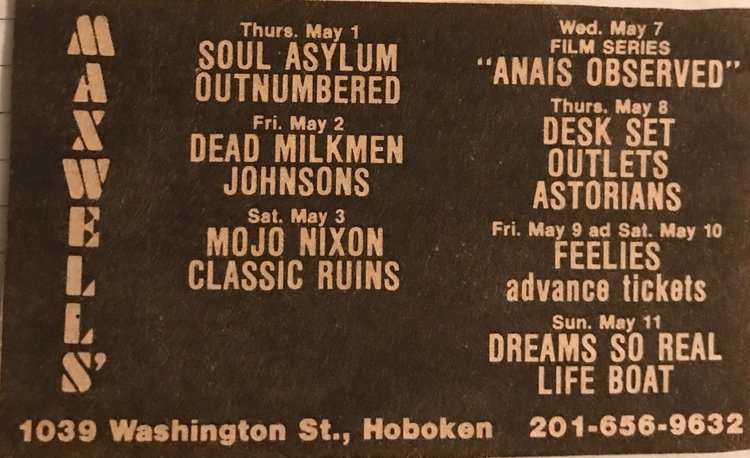
Record­ed by David McKen­zie, a for­mer employ­ee of leg­endary Hobo­ken venue Maxwell’s and con­sum­mate con­cert-goer, the taped gigs come from such venues as The Ritz, Tramps, Irv­ing Plaza, The Roxy, the Cat Club, Bow­ery Ball­room, CBGB’s, the Knit­ting Fac­to­ry, and, of course, Maxwell’s.

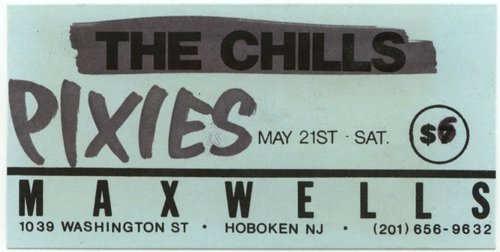
Too many leg­endary bands to list in full show up here: some major high­lights include The Replace­ments at the Ritz in 1986, right after the release of Tim. (See them at the top in a sound­check at Maxwell’s that same year); the Pix­ies at Maxwell’s in 1988, play­ing songs from their just-released water­shed Surfer Rosa; Son­ic Youth on back-to-back nights at CBGB’s in 88, play­ing Day­dream Nation the month before record­ing the album. Hüsker Dü, Wire, John Spencer Blues Explo­sion, The Fall, The Feel­ies, Afghan Whigs, Mud­honey, Vio­lent Femmes, Mojo Nixon—the shows are a who’s who of punk and indie from the last two decades of the cen­tu­ry, with appear­ances from 70s leg­ends like Pat­ti Smith and Tom Ver­laine.

Sprin­kled through­out are sur­pris­es like a 1989 per­for­mance from Sun Ra and his Inter­galac­tic Arkestra at Maxwell’s and gigs by blues stal­warts T Mod­el Ford and R.L. Burn­side, as well as the occa­sion­al out­lier show abroad. The project is the work of Jer­sey City record col­lec­tor, archivist, event pro­duc­er, and pod­cast­er Tom Gal­lo, friend of David McKen­zie, and he has done an excel­lent job of pre­serv­ing not only the music from McKenzie’s tapes, but images of the tapes themselves—with hand-writ­ten band names and song titles and black-and-white Xerox­ed covers—as well as Vil­lage Voice list­ings of the gigs and occa­sion­al tick­et stubs, setlists, and live pho­tos.

Don’t expect much in the way of sound quality—that’s part of the charm of a taped show. These are raw doc­u­ments of the cas­sette age, a time come and gone, nev­er to come again. We might not mourn its pass­ing, but something—a spir­it of exper­i­men­tal, noisy, tune­ful, angry, rau­cous, lo-fi, ana­log indie fun—seems to have dis­ap­peared along with it. All of these dig­i­tized tapes are down­load­able. Put ’em on your phone and relive the glo­ry days, or dis­cov­er these trea­sures from the recent past for the first time at The McKen­zie Tapes here.

via Dan­ger­ous Minds

Relat­ed Con­tent:

A His­to­ry of Alter­na­tive Music Bril­liant­ly Mapped Out on a Tran­sis­tor Radio Cir­cuit Dia­gram: 300 Punk, Alt & Indie Artists

A Mas­sive 800-Track Playlist of 90s Indie & Alter­na­tive Music, in Chrono­log­i­cal Order

Stream a Mas­sive Col­lec­tion of Indie, Noise Indus­tri­al Mix­tapes from the 80s and 90s

Josh Jones is a writer and musi­cian based in Durham, NC. Fol­low him at @jdmagness

A New Massive Helen Keller Archive Gets Launched: Take a Digital Look at Her Photos, Letters, Speeches, Political Writings & More

Take an innocu­ous state­ment like, “we should teach chil­dren about the life of Helen Keller.” What rea­son­able, com­pas­sion­ate per­son would dis­agree? Hers is a sto­ry of tri­umph over incred­i­ble adver­si­ty, of per­se­ver­ance and friend­ship and love. Now, take a state­ment like, “we should teach chil­dren the polit­i­cal writ­ing of Helen Keller,” and you might see brawls in town halls and school board meet­ings. This is because Helen Keller was a com­mit­ted social­ist and seri­ous polit­i­cal thinker, who wrote exten­sive­ly to advo­cate for eco­nom­ic coop­er­a­tion over com­pe­ti­tion and to sup­port the caus­es of work­ing peo­ple. She was an activist for peace and jus­tice who opposed war, impe­ri­al­ism, racism, and pover­ty, con­di­tions that huge num­bers of peo­ple seem devot­ed to maintaining—both in her life­time and today.

Keller’s mov­ing, per­sua­sive writ­ing is elo­quent and uncom­pro­mis­ing and should be taught along­side that of oth­er great Amer­i­can rhetori­cians. Con­sid­er, for exam­ple, the pas­sage below from a let­ter she wrote in 1916 to Oswald Vil­lard, then Vice-Pres­i­dent of the NAACP:

Ashamed in my very soul I behold in my own beloved south-land the tears of those who are oppressed, those who must bring up their sons and daugh­ters in bondage to be ser­vants, because oth­ers have their fields and vine­yards, and on the side of the oppres­sor is pow­er. I feel with those suf­fer­ing, toil­ing mil­lions, I am thwart­ed with them. Every attempt to keep them down and crush their spir­it is a betray­al of my faith that good is stronger than evil, and light stronger than dark­ness…. My spir­it groans with all the deaf and blind of the world, I feel their chains chaf­ing my limbs. I am dis­en­fran­chised with every wage-slave. I am over­thrown, hurt, oppressed, beat­en to the earth by the strong, ruth­less ones who have tak­en away their inher­i­tance. The wrongs of the poor endure ring fierce­ly in my soul, and I shall nev­er rest until they are lift­ed into the light, and giv­en their fair share in the bless­ings of life that God meant for us all alike.

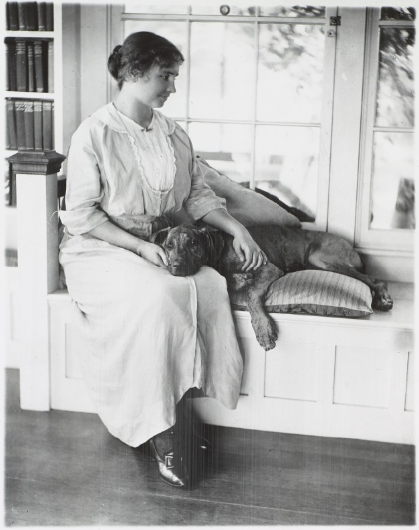
It is dif­fi­cult to choose any one pas­sage from the let­ter because the whole is writ­ten with such expres­sive feel­ing. This is but one doc­u­ment among many hun­dreds in the new Helen Keller archive at the Amer­i­can Foun­da­tion for the Blind (AFB), which has dig­i­tized let­ters, essays, speech­es, pho­tographs, and much more from Keller’s long, tire­less career as a writer and pub­lic speak­er. Fund­ed by the Nation­al Endow­ment for the Human­i­ties, the archive includes over 250,000 dig­i­tal images of her work from the late 19th cen­tu­ry to well into the 20th. There are many films of Keller, pho­tos like that of her and her dog Sieglinde at the top, a col­lec­tion of her cor­re­spon­dence with Mark Twain, and much more.

In addi­tion to Keller’s own pub­lished and unpub­lished work, the archive con­tains many let­ters to and about her, press clip­pings, infor­ma­tive AFB blog posts, and resources for stu­dents and teach­ers. The site aims to be “ful­ly acces­si­ble to audi­ences who are blind, deaf, hard-of-hear­ing, low vision, or deaf­blind.” On the whole, this project “presents an oppor­tu­ni­ty to encounter this renowned his­tor­i­cal fig­ure in a new, dynam­ic, and excit­ing way,” as AFB writes in a press release. “For exam­ple, despite her fame, rel­a­tive­ly few peo­ple know that Helen Keller wrote 14 books as well as hun­dreds of essays and arti­cles on a broad array of sub­jects rang­ing from ani­mals and atom­ic ener­gy to Mahat­ma Gand­hi.”

And, of course, she was a life­long advo­cate for the blind and deaf, writ­ing and speak­ing out on dis­abil­i­ty rights issues for decades. Indeed, it’s dif­fi­cult to find a sub­ject in which she did not take an inter­est. The archive’s sub­ject index shows her writ­ing about games, sports, read­ing, shop­ping, swim­ming, trav­el, archi­tec­ture and the arts, edu­ca­tion, law, gov­ern­ment, world reli­gions, roy­al­ty, women’s suf­frage, and more. There were many in her time who dis­missed Keller’s unpop­u­lar views, call­ing her naïve and claim­ing that she had been duped by nefar­i­ous actors. The charge is insult­ing and false. Her body of work shows her to have been an extra­or­di­nar­i­ly well-read, wise, cos­mopoli­tan, sen­si­tive, self-aware, and hon­est crit­i­cal thinker.

Two years after the NAACP let­ter, Keller wrote an essay called “Com­pe­ti­tion,” in which she made the case for “a bet­ter social order” against a cen­tral con­ceit of cap­i­tal­ism: that “life would not be worth while with­out the keen edge of com­pe­ti­tion,” and that with­out it “men would lose ambi­tion, and the race would sink into dull same­ness.” Keller advances her coun­ter­ar­gu­ment with vig­or­ous and inci­sive rea­son­ing.

This whole argu­ment is a fal­la­cy. What­ev­er is worth while in our civ­i­liza­tion has sur­vived in spite of com­pe­ti­tion. Under the com­pet­i­tive sys­tem the work of the world is bad­ly done. The result is waste and ruin [….] Prof­it is the aim, and the pub­lic good is a sec­ondary con­sid­er­a­tion. Com­pe­ti­tion sins against its own pet god effi­cien­cy. In spite of all the strug­gle, toil and fierce effort the result is a depress­ing state of des­ti­tu­tion for the major­i­ty of mankind. Com­pe­ti­tion diverts man’s ener­gies into use­less chan­nels and degrades his char­ac­ter. It is immoral as well as inef­fi­cient, since its com­mand­ment is “Thou shalt com­pete against thy neigh­bor.” Such a rule does not fos­ter Truth­ful­ness, hon­esty, con­sid­er­a­tion for oth­ers. [….] Com­peti­tors are indif­fer­ent to each oth­er’s wel­fare. Indeed, they are glad of each oth­er’s fail­ure because they find their advan­tage in it. Com­pas­sion is dead­ened in them by the neces­si­ty they are under of nul­li­fy­ing the efforts of their fel­low-com­peti­tors.

Keller refused to become cyn­i­cal in the face of seem­ing­ly inde­fati­ga­ble greed, cru­el­ty, and hypocrisy. Though not a mem­ber of a main­stream church (she belonged to the obscure Chris­t­ian sect of Swe­den­bor­gian­ism), she exhort­ed Amer­i­can Chris­tians to live up to their professions—to fol­low the exam­ple of their founder and the com­mand­ments of their sacred text. In an essay writ­ten after World War I, she argued mov­ing­ly for dis­ar­ma­ment and “the vital issue of world peace.” While mak­ing a num­ber of log­i­cal argu­ments, Keller prin­ci­pal­ly appeals to the com­mon ethos of the nation’s dom­i­nant faith.

This is pre­cise­ly where we have failed, call­ing our­selves Chris­tians we have fun­da­men­tal­ly bro­ken, and taught oth­ers to break most patri­ot­i­cal­ly, the com­mand­ment of the Lord, “Thou shalt not kill” [….] Let us then try out Chris­tian­i­ty upon earth—not lip-ser­vice, but the teach­ing of Him who came upon earth that “all men might have life, and have it more abun­dant­ly.” War strikes at the very heart of this teach­ing.

We can hear Helen Keller’s voice speak­ing direct­ly to us from the past, diag­nos­ing the ills of her age that look so much like those of our own. “The mytho­log­i­cal Helen Keller,” writes Kei­th Rosen­thal, “has apt­ly been described as a sort of ‘plas­ter saint;’ a hol­low, emp­ty ves­sel who is lit­tle more than an apo­lit­i­cal sym­bol for per­se­ver­ance and per­son­al tri­umph.” Though she embod­ied those qual­i­ties, she also ded­i­cat­ed her entire life to care­ful obser­va­tion of the world around her, to writ­ing and speak­ing out on issues that mat­tered, and to car­ing deeply about the wel­fare of oth­ers. Get to know the real Helen Keller, in all her com­plex­i­ty, fierce intel­li­gence, and fero­cious com­pas­sion, at the Amer­i­can Foun­da­tion for the Blind’s exhaus­tive dig­i­tal archive of her life and work.

Relat­ed Con­tent:

Mark Twain & Helen Keller’s Spe­cial Friend­ship: He Treat­ed Me Not as a Freak, But as a Per­son Deal­ing with Great Dif­fi­cul­ties

Helen Keller Writes a Let­ter to Nazi Stu­dents Before They Burn Her Book: “His­to­ry Has Taught You Noth­ing If You Think You Can Kill Ideas” (1933)

Watch Helen Keller & Teacher Annie Sul­li­van Demon­strate How Helen Learned to Speak (1930)

Josh Jones is a writer and musi­cian based in Durham, NC. Fol­low him at @jdmagness

« Go BackMore in this category... »
Quantcast