Andy Warhol did for art what the World Wrestling Federation (WWF) did for wrestling. He made it a spectacle. He made it something the “everyman” could enjoy. He infused it with celebrity. And, some would say, he cheapened it too.
Looking back, it makes perfect sense that Warhol frequented wrestling shows at Madison Square Garden during the 1970s and 80s. And here we have him appearing on camera at The War to Settle the Score, a WWF event that aired on MTV in 1985. Hulk Hogan battled “Rowdy” Roddy Piper in the main event. But, the sideshow included (let’s get in the Hot Tub Time Machine) the likes of Cyndi Lauper, Mr. T, and Andy too.
If you’re familiar with the 1980s professional wrestling script, you know that Mean Gene Okerlund conducted backstage and ringside interviews with the wrestlers, giving them the chance to pound their chests and gas off. When Okerlund turned to Warhol and asked for his hot take on the Hogan/Piper match, Warhol couldn’t muster very much. “I’m speechless.” “I just don’t know what to say.” And, before you know it, his one minute of professional wrestling fame was over. Just like that.…
It would surprise none of us to encounter a young artist looking to cast off his past and make his mark on the culture in a place like Williamsburg. But in the case of Man Ray, Williamsburg was his past. One must remember that the Brooklyn of today bears little resemblance to the Brooklyn of the early twentieth century in which the famed avant-gardist grew up. Back then, he was known as Emmanuel Radnitzky, the son of immigrant garment workers. It was after he took up the art life in Manhattan that he met the gallerist Alfred Stieglitz, forming an association that would begin his transformation from aspiring painter into form-changing photographer.
Inspired by Marcel Duchamp’s Nude Descending a Staircase, No. 2 after seeing it at the epoch-making 1913 Armory Show, Ray befriended the artist himself. Despite its considerable language barrier, this relationship gave him a way into the liberating realms of surrealism in general and Dada in particular. “The movement’s refusal to be defined or codified gave Ray the rationale to leave his former life and head to Paris, where he could complete his reinvention unfettered by his past,” says James Payne in the new Great Art Explained video above. It was this relocation — almost as dramatic, in those days, as going from Brooklyn to Manhattan — that offered him the chance to become a major artistic figure.
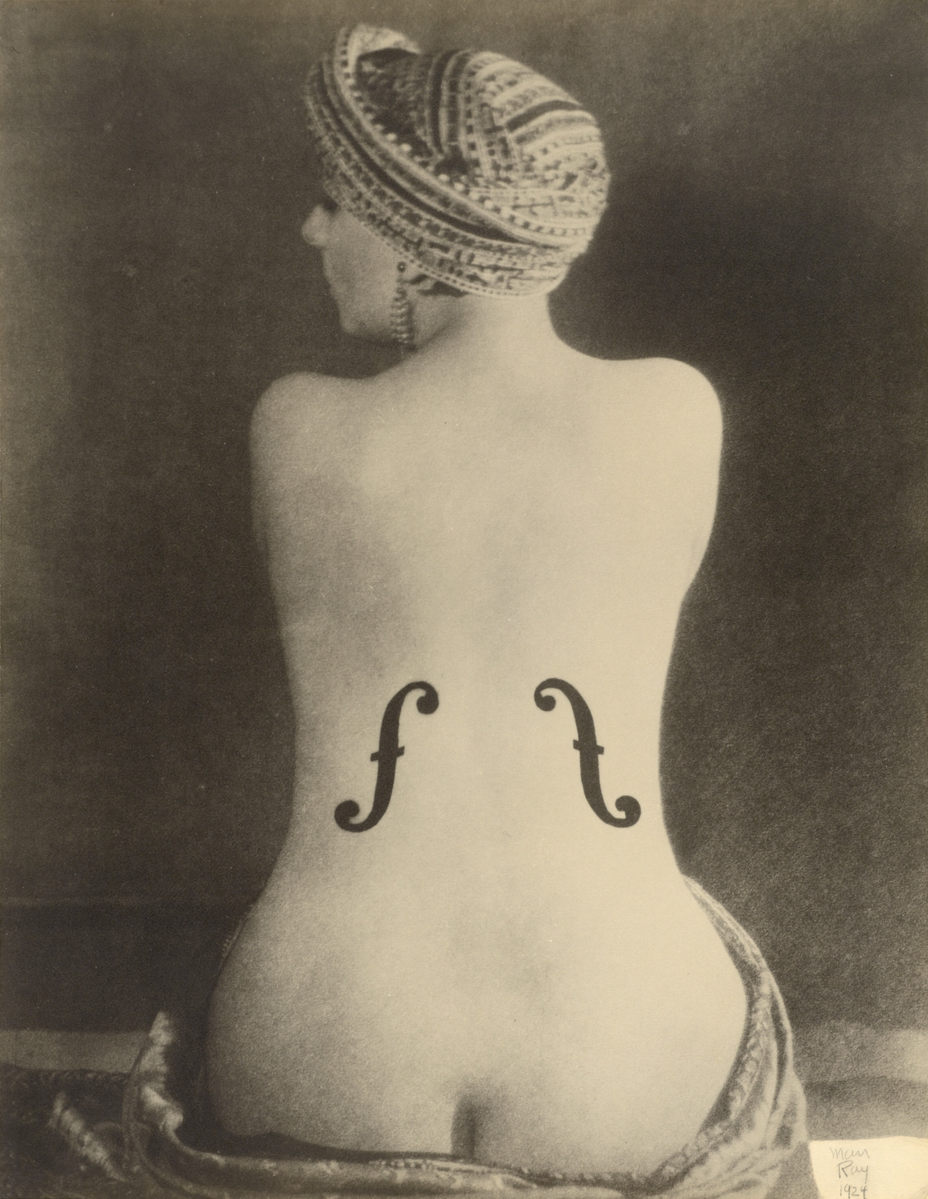
Soon after settling in Montparnasse, Ray “made an accidental rediscovery of the camera-less photogram, which he called ‘Rayographs.’ ” This technique, which involved placing objects on photosensitive paper and then exposing the arrangement to light, produced images that were “dubbed pure Dada creations” and “played a significant role in redefining photography as a medium capable of abstraction and conceptual depth.” It was in that same part of town that he entered into an artistic and romantic partnership with Alice Prin, more widely known as Kiki de Montparnasse — and even more widely known, a century later, as Le Violon d’Ingres, which in 2022 became the most expensive photograph ever sold.
The $12.4 million sale price of Le Violon d’Ingres is rather less interesting than the story behind it, which involves not just Ray and Kiki’s life together, but also a process of technical experimentation whose result “perfectly embodies the surrealist interest in challenging traditional representations and blending everyday objects with the human form.” Tame though it may look in the era of Photoshop (to say nothing of AI-generated imagery), the picture’s convincing placement of violin-style sound holes on Kiki’s classically presented body suggested to its viewers that photography had non-documentary possibilities never before imagined — certainly not in Williamsburg, anyway.
Based in Seoul, Colin Marshall writes and broadcasts on cities, language, and culture. His projects include the Substack newsletterBooks on Cities and the book The Stateless City: a Walk through 21st-Century Los Angeles. Follow him on Twitter at @colinmarshall or on Facebook.
We may appreciate living in an era that doesn’t require us to travel across the world to know what a particular work of art looks like. At the same time, we may instinctively understand that regarding a work of art in its original form feels different than regarding even the most faithful reproduction. That includes the ten-billion-pixel scan, previously featured here on Open Culture, of Johannes Vermeer’s Girl with a Pearl Earring — which happens to be the very same painting used in a recent scientific study that investigates exactly why it feels so much more interesting to look at art in a museum rather than on a screen or a page.
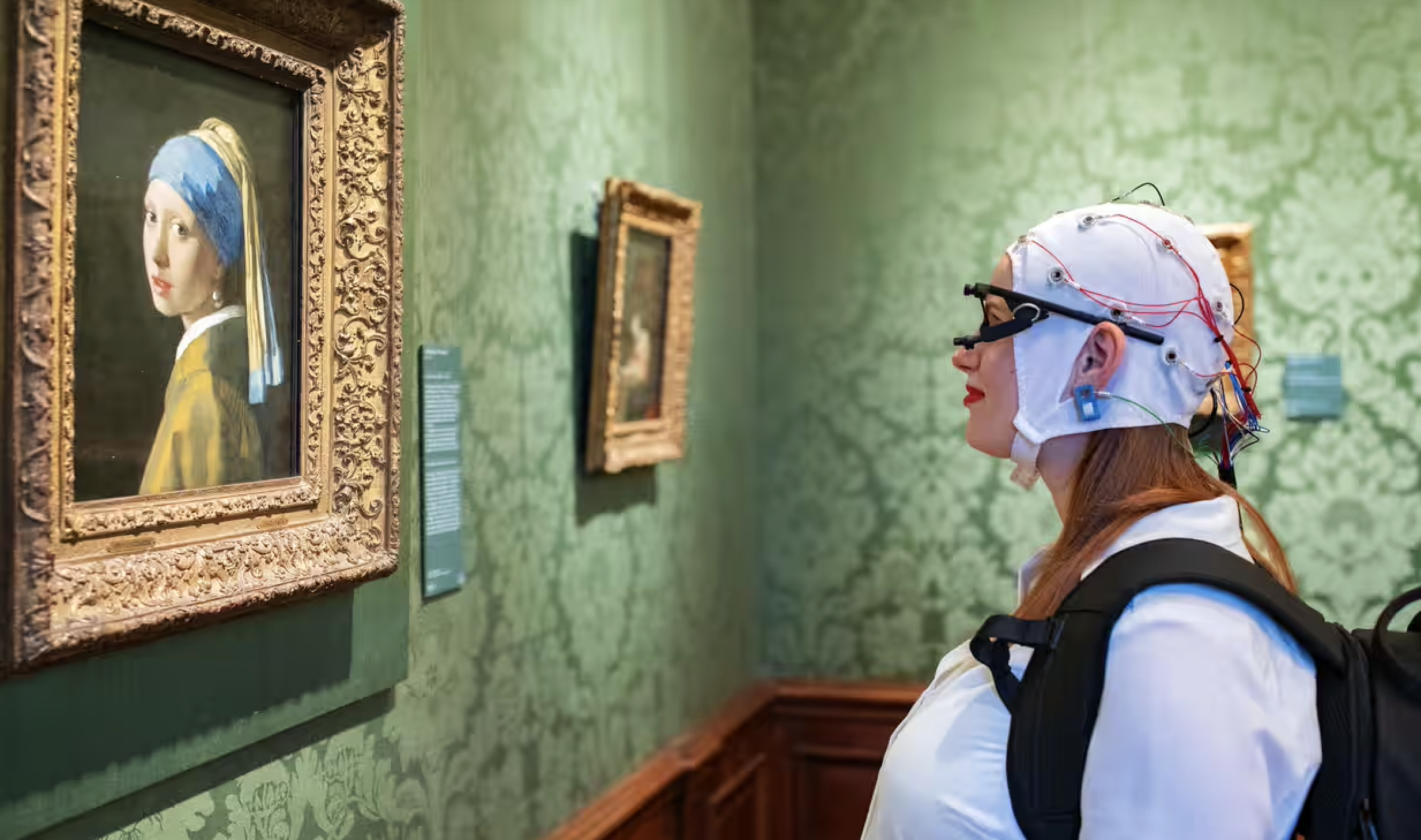
The study was commissioned by the Mauritshuis, which owns Vermeer’s most famous painting. “Researchers used electroencephalograms (EEGs) to reveal that real artworks, including Girl with a Pearl Earring, elicit a powerful positive response much greater than the response to reproductions,” says the museum’s press release.
“The secret behind the attraction of the ‘Girl’ is also based on a unique neurological phenomenon. Unlike other paintings, she manages to ‘captivate’ the viewer, in a ‘sustained attentional loop.’ ” This process most clearly stimulates a part of the brain called the precuneus, which is “involved in one’s sense of self, self-reflection and episodic memories.”
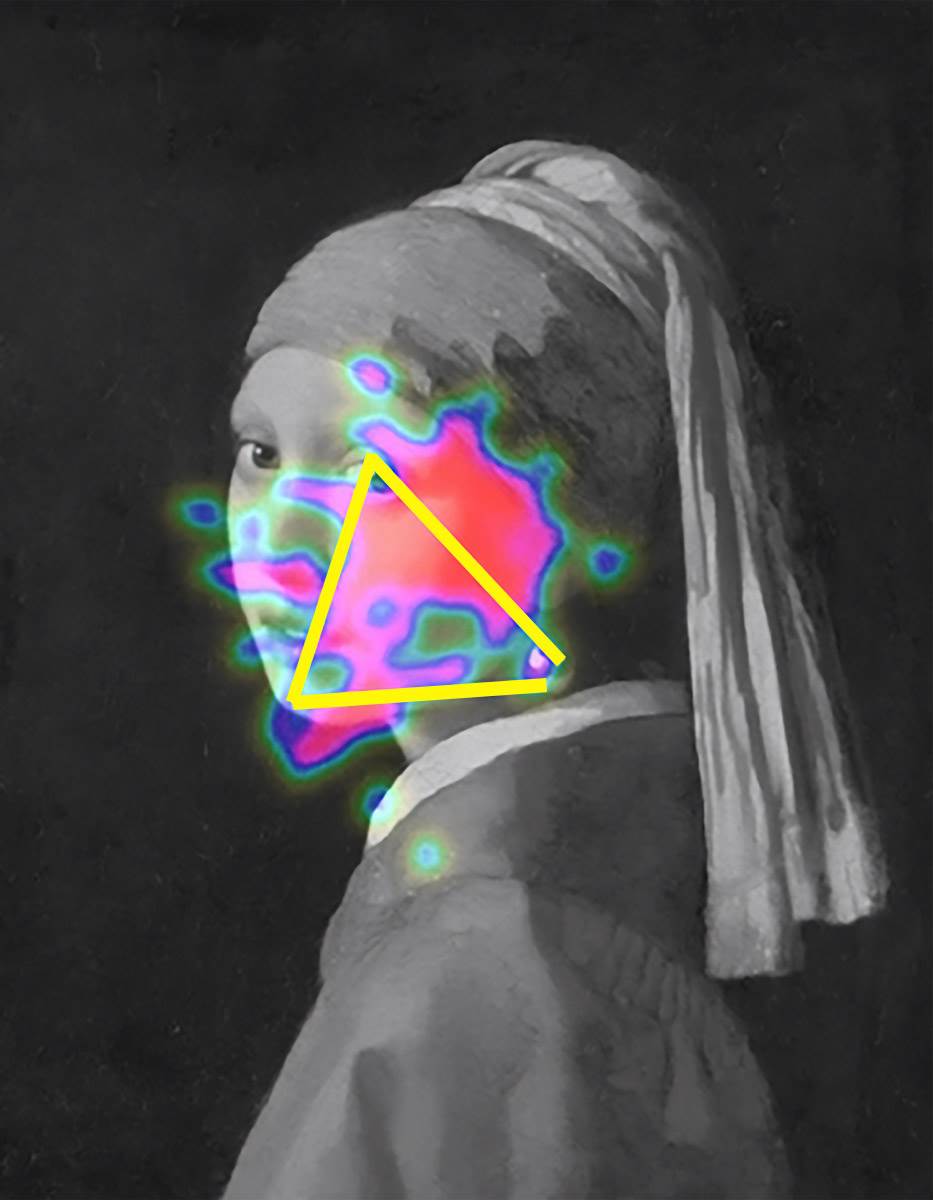
Girl with a Pearl Earring wasn’t the only painting used in the study, but it produced by far the greatest measurable difference in the viewers’ neurological reaction. The others, which included Rembrandt’s Self-Portrait (1669) and Van Honthorst’s Violin Player, lack the distinctively prominent human features that encourage additional looking: “As with most faces, visitors look first at the Girl’s eyes and mouth, but then their attention shifts to the pearl, which then guides the focus back to the eyes and mouth, then to the pearl, and so on.” Museumgoers wearing electroencephalogram-reading headsets may not be quite what Walter Benjamin had in mind when he put his mind to defining the “aura” of an original artwork — but they have, these 90 or so years later, lent some scientific support to the idea.
Based in Seoul, Colin Marshall writes and broadcasts on cities, language, and culture. His projects include the Substack newsletterBooks on Cities and the book The Stateless City: a Walk through 21st-Century Los Angeles. Follow him on Twitter at @colinmarshall or on Facebook.
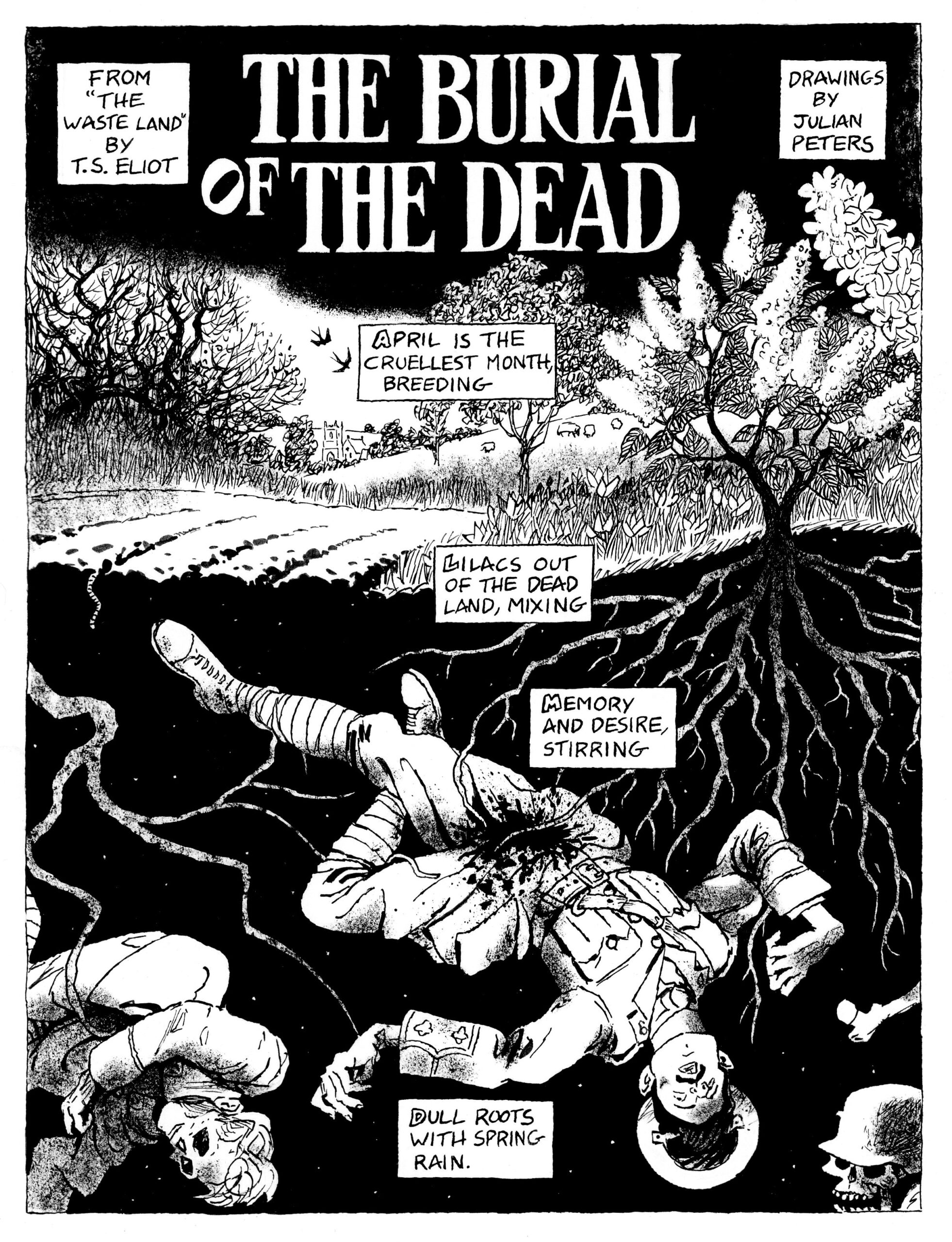
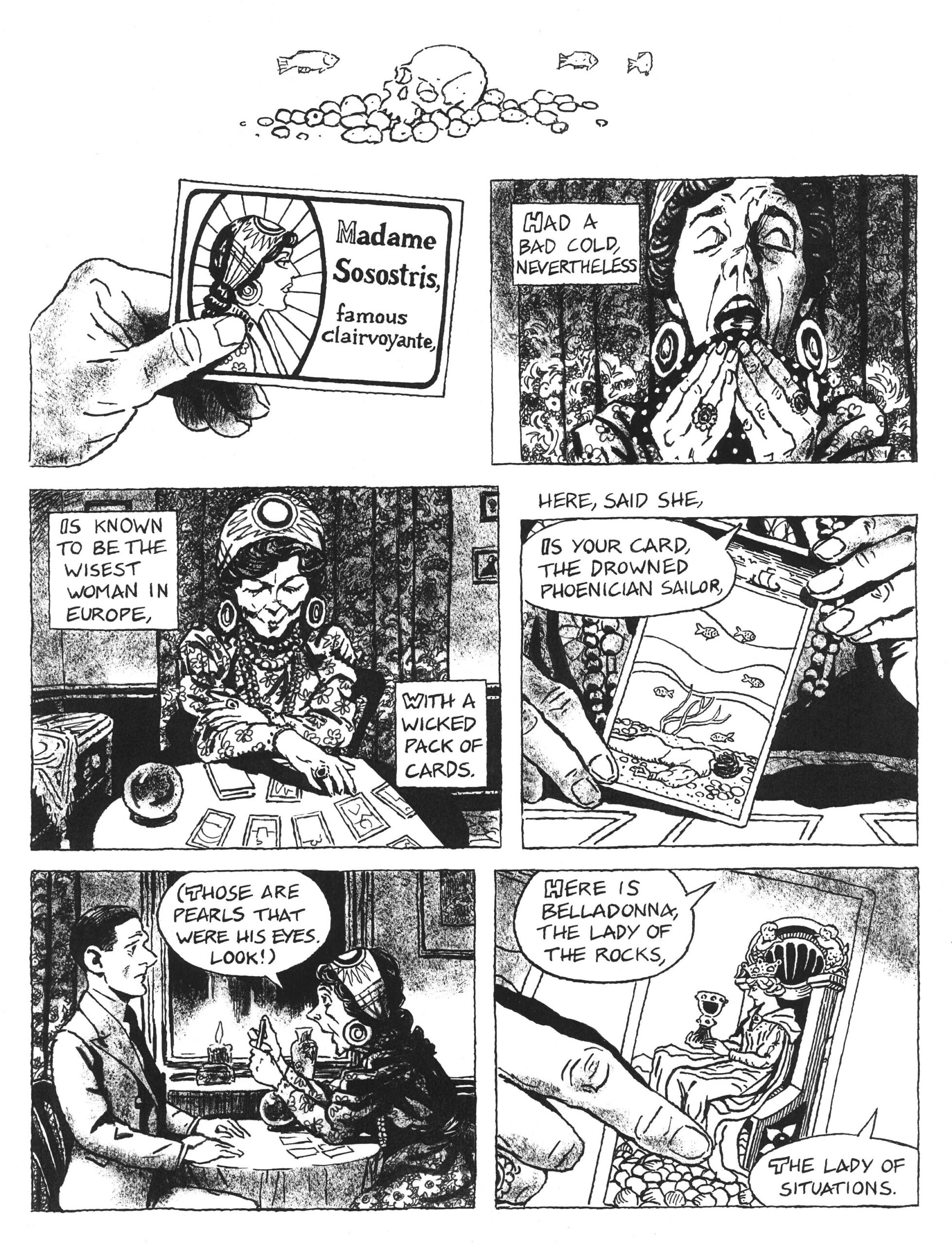
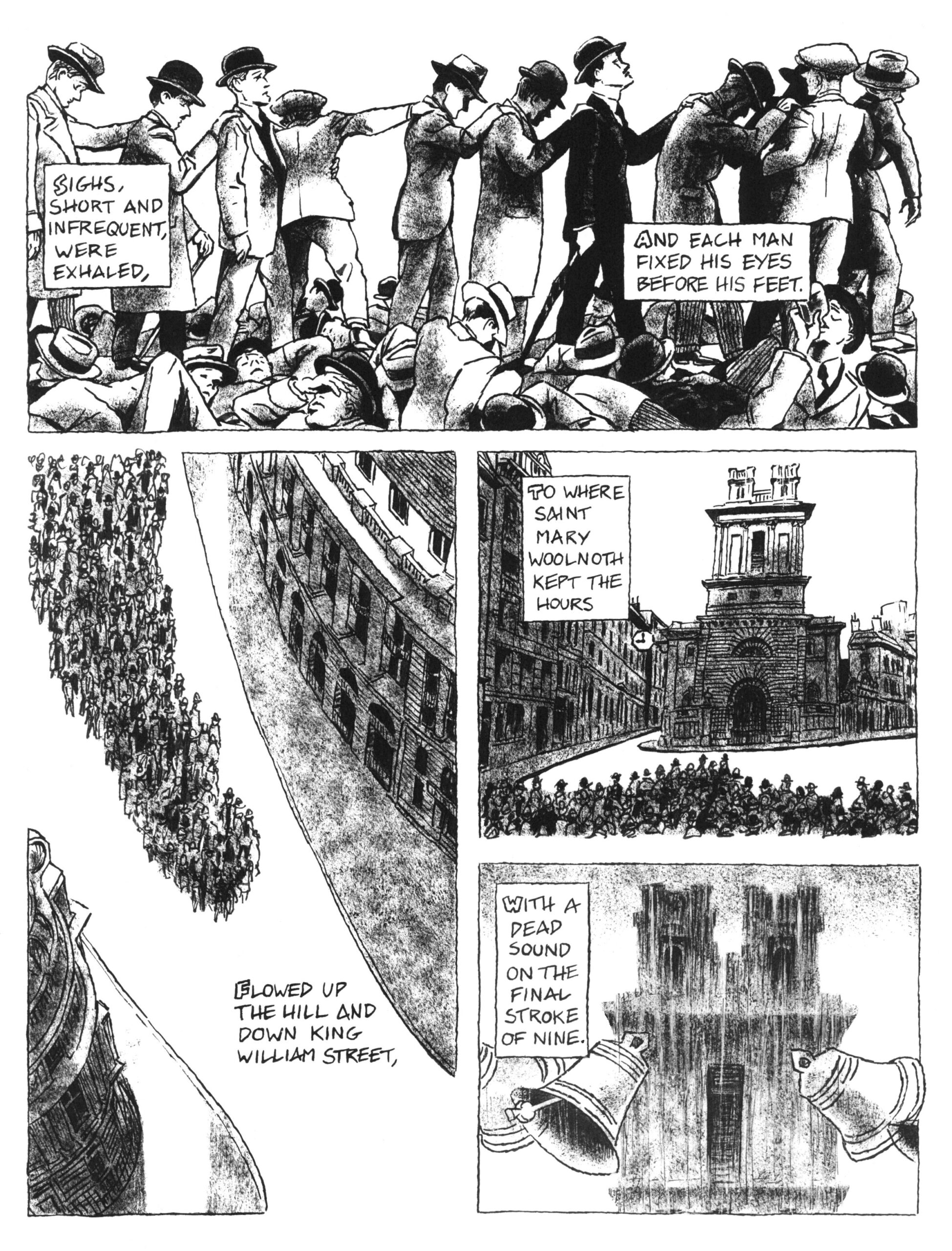
The phrase “April is the cruelest month” was first printed more than 100 years ago, and it’s been in common circulation almost as long. One can easily know it without having the faintest idea of its source, let alone its meaning. This is not, of course, to call T. S. Eliot’s The Waste Land an obscure work. Despite having met with a derisive, even hostile initial reception, it went on to draw acclaim as one of the central English-language poems of the twentieth century, to say nothing of its status as an achievement within the modernist movement. But how, here in the twenty-first century, to read it afresh?
It’s an adaptation, to be precise, of the first of The Waste Land’s five sections, “The Burial of the Dead,” which opens on a First World War battlefield — at least in Peters’ adaptation, which puts the first line “April is the cruelest month” into the context of nightmarish imagery of bloodshed and death — and ends in a workaday London likened to Dante’s hell.
The Waste Land presents a tempting but daunting opportunity to an illustrator, filled as it is with vivid evocations of place and appearances by intriguing characters (including, in this section, “Madame Sosostris, famous clairvoyante”), and characterized as it is by extensive literary quotation and sudden shifts of context. But Peters has made a bold start of it, and anyone who reads his adaptation of “The Burial of the Dead” will be waiting for his adaptations of “A Game of Chess” through “What the Thunder Said.” Though much-scrutinized over the past century, Eliot’s modernist masterpiece (hear Eliot read it here) still tends to confound first-time readers. To them, I always advise considering poetry a visual medium, an idea whose possibilities Peters continues to explore on a much more literal level. Explore it here.
Based in Seoul, Colin Marshall writes and broadcasts on cities, language, and culture. His projects include the Substack newsletterBooks on Cities and the book The Stateless City: a Walk through 21st-Century Los Angeles. Follow him on Twitter at @colinmarshall or on Facebook.
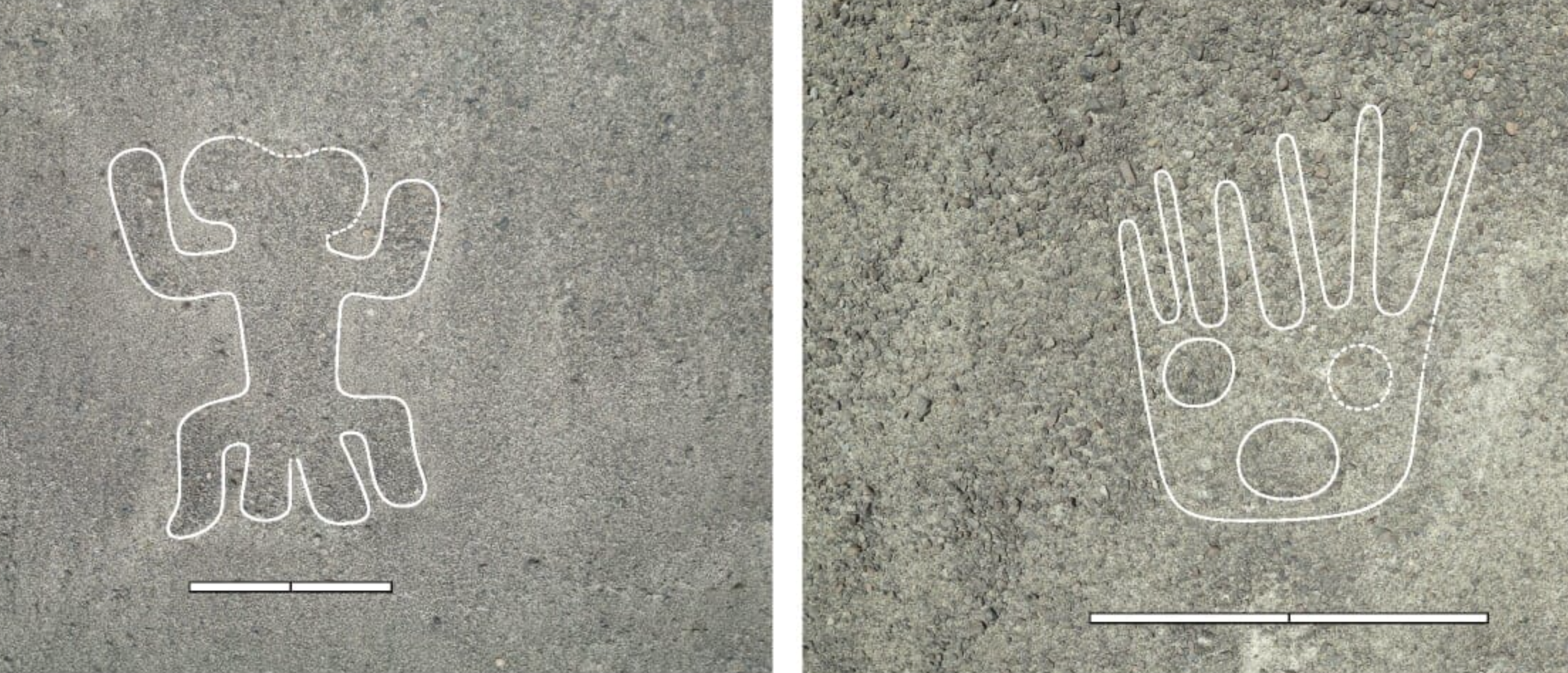
If you visit one tourist site in Peru, it will almost certainly be the ruined Incan city of Machu Picchu. If you visit another, it’ll probably be the Nazca Desert, home to many large-scale geoglyphs made by pre-Inca peoples between 500 BC and 500 AD. Many of these “Nazca lines” are literally that, running across the desert floor in an abstract fashion, but others are figurative, depicting human beings, flora, fauna, and various less easily categorizable chimeras. The preservative effects of the climate kept many of these designs identifiable by the time moderns discovered them in 1927, and thanks to artificial-intelligence technology, researchers are finding new ones still today.
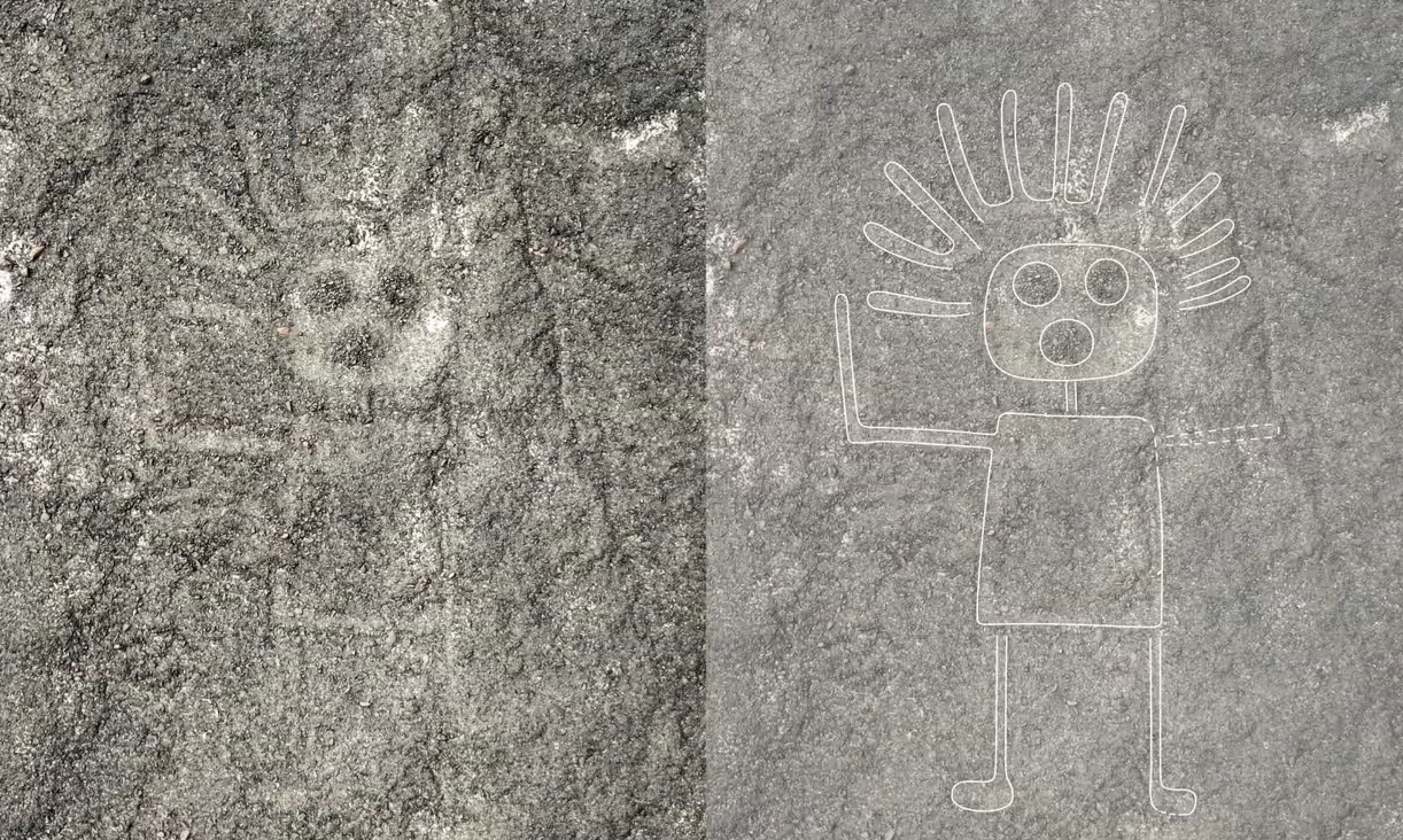
“A team from the Japanese University of Yamagata’s Nazca Institute, in collaboration with IBM Research, discovered 303 previously unknown geoglyphs of humans and animals, all smaller in size than the vast geometric patterns that date from AD 200–700 and stretch across more than 400 sq km of the Nazca plateau,” writes the Guardian’s Dan Collyns.
“The use of AI combined with low-flying drones revolutionized the speed and rate at which the geoglyphs were discovered, according to a research paper published this week in the Proceedings of the National Academy of Sciences,” and many more Nazca lines could remain to be identified with these methods.
The newly identified geoglyphs “include birds, plants, spiders, humanlike figures with headdresses, decapitated heads and an orca wielding a knife,” writes CNN’s Katie Hunt. She also cites hypotheses about why the original creators of these figures did the painstaking work of displacing stone after stone to create images mostly invisible to the human eye: it’s possible that “they formed a sacred space that was perhaps a place of pilgrimage. Other theories propose they played a part in calendars, astronomy, irrigation or for movement, such as running or dancing, or communication.” Some of them, surely, were meant only for the eyes of the gods, and so it may stand to reason that only our modern gods of artificial intelligence have been able to reveal them.
Based in Seoul, Colin Marshall writes and broadcasts on cities, language, and culture. His projects include the Substack newsletterBooks on Cities and the book The Stateless City: a Walk through 21st-Century Los Angeles. Follow him on Twitter at @colinmarshall or on Facebook.
Even those of us not particularly well-versed in art history have heard of a painting style called fauvism — and probably have never considered what it has to do with fauve, the French word for a wild beast. In fact, the two have everything to do with one another, at least in the sense of how certain critics regarded certain artists in the early twentieth century. One of the most notable of those artists was Henri Matisse, who since the end of the nineteenth century had been exploring the possibilities of his decision to “lean into the dramatic power of color,” as Evan “Nerdwriter” Puschak puts it in the new video above.
It was Matisse’s unconventional use of color, emotionally powerful but not strictly realistic, that eventually got him labeled a wild beast. Even before that, in his famous 1904 Luxe, Calme et Volupté, which has its origins in a stay in St. Tropez, you can “feel Matisse forging his own path. His colors are rebelling against their subjects. The painting is anarchic, fantastical. It’s pulsing with wild energy.” He continued this work on a trip to the southern fishing village of Collioure, “and even after more than a century, the paintings that resulted “still retain their defiant power; the colors still sing with the daring, the creative recklessness of that summer.”
In essence, what shocked about Matisse and the other fauvists’ art was its substitution of objectivity with subjectivity, most noticeably in its colors, but in subtler elements as well. As the years went on — with support coming from not the establishment but far-sighted collectors — Matisse “learned how to use color to define form itself,” creating paintings that “expressed deep, primal feelings and rhythms.” This evolution culminated in La Danse, whose “shocking scarlet” used to render “naked, dancing, leaping, spinning figures who are less like people than mythological satyrs” drew harsher opprobrium than anything he’d shown before.
But then, “you can’t expect the instantaneous acceptance of something radically new. If it was accepted, it wouldn’t be radical.” Today, “knowing the directions that modern art went in, we now can appreciate the full significance of Matisse’s work. We can be shocked at it without being scandalized.” And we can recognize that he discovered a universally resonant aesthetic that most of his contemporaries didn’t understand — or at least it seems that way to me, more than a century later and on the other side of the world, where his art now enjoys such a wide appeal that it adorns the iced-coffee bottles at convenience stores.
Based in Seoul, Colin Marshall writes and broadcasts on cities, language, and culture. His projects include the Substack newsletterBooks on Cities and the book The Stateless City: a Walk through 21st-Century Los Angeles. Follow him on Twitter at @colinmarshall or on Facebook.
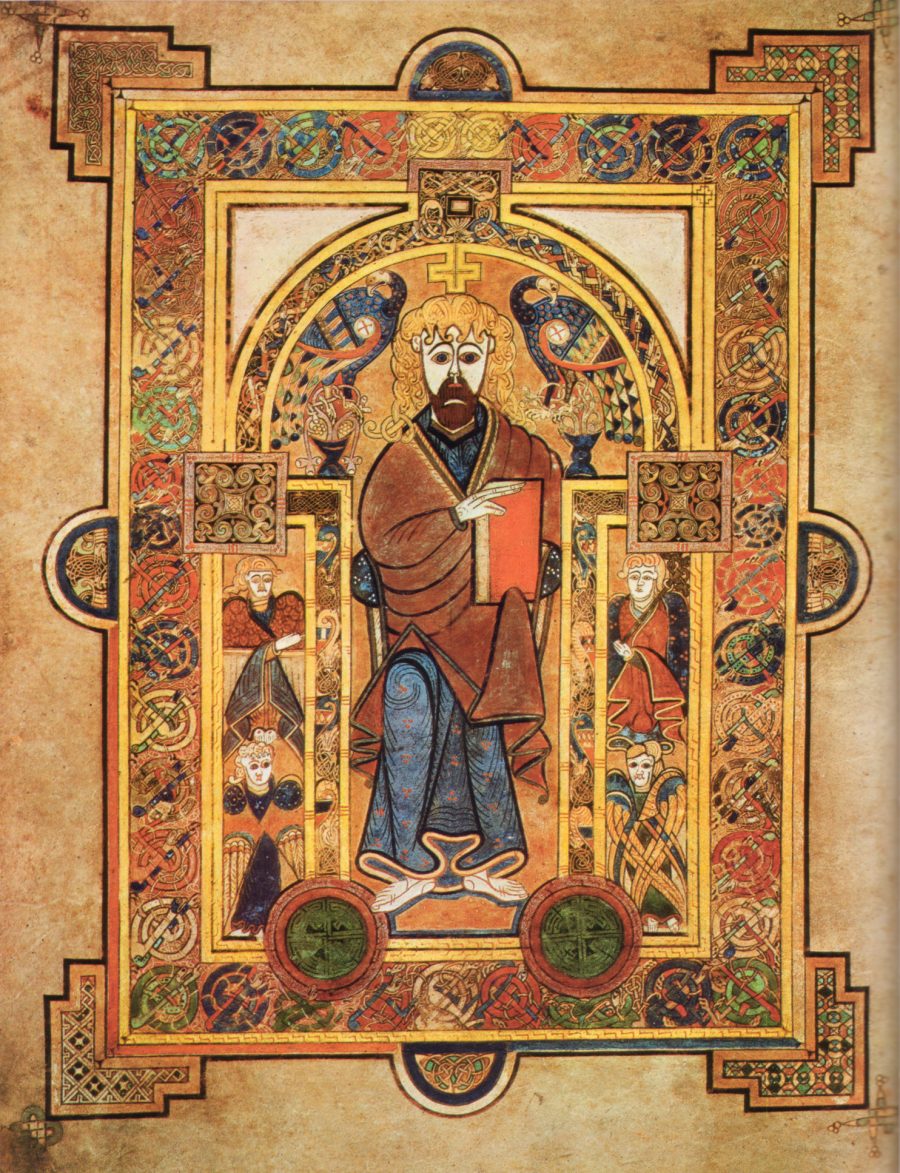
If you know nothing else about medieval European illuminated manuscripts, you surely know the Book of Kells. “One of Ireland’s greatest cultural treasures” comments Medievalists.net, “it is set apart from other manuscripts of the same period by the quality of its artwork and the sheer number of illustrations that run throughout the 680 pages of the book.” The work not only attracts scholars, but almost a million visitors to Dublin every year. “You simply can’t travel to the capital of Ireland,” writes Book Riot’s Erika Harlitz-Kern, “without the Book of Kells being mentioned. And rightfully so.”
The ancient masterpiece is a stunning example of Hiberno-Saxon style, thought to have been composed on the Scottish island of Iona in 806, then transferred to the monastery of Kells in County Meath after a Viking raid (a story told in the marvelous animated film The Secret of Kells). Consisting mainly of copies of the four gospels, as well as indexes called “canon tables,” the manuscript is believed to have been made primarily for display, not reading aloud, which is why “the images are elaborate and detailed while the text is carelessly copied with entire words missing or long passages being repeated.”
Its exquisite illuminations mark it as a ceremonial object, and its “intricacies,” argue Trinity College Dublin professors Rachel Moss and Fáinche Ryan, “lead the mind along pathways of the imagination…. You haven’t been to Ireland unless you’ve seen the Book of Kells.” This may be so, but thankfully, in our digital age, you need not go to Dublin to see this fabulous historical artifact, or a digitization of it at least, entirely viewable at the online collections of the Trinity College Library. (When you click on the previous link, make sure you scroll down the page.) The pages, originally captured in 1990, “have recently been rescanned,” Trinity College Library writes, using state-of-the-art imaging technology. These new digital images offer the most accurate high-resolution images to date, providing an experience second only to viewing the book in person.”
What makes the Book of Kells so special, reproduced “in such varied places as Irish national coinage and tattoos?” asks Professors Moss and Ryan. “There is no one answer to these questions.” In their free online course on the manuscript, these two scholars of art history and theology, respectively, do not attempt to “provide definitive answers to the many questions that surround it.” Instead, they illuminate its history and many meanings to different communities of people, including, of course, the people of Ireland. “For Irish people,” they explain in the course trailer above, “it represents a sense of pride, a tangible link to a positive time in Ireland’s past, reflected through its unique art.”
But while the Book of Kells is still a modern “symbol of Irishness,” it was made with materials and techniques that fell out of use several hundred years ago, and that were once spread far and wide across Europe, the Middle East, and North Africa. In the video above, Trinity College Library conservator John Gillis shows us how the manuscript was made using methods that date back to the “development of the codex, or the book form.” This includes the use of parchment, in this case calf skin, a material that remembers the anatomical features of the animals from which it came, with markings where tails, spines, and legs used to be.
The Book of Kells has weathered the centuries fairly well, thanks to careful preservation, but it’s also had perhaps five rebindings in its lifetime. “In its original form,” notes Harlitz-Kern, the manuscript “was both thicker and larger. Thirty folios of the original manuscript have been lost through the centuries and the edges of the existing manuscript were severely trimmed during a rebinding in the nineteenth century.” It remains, nonetheless, one of the most impressive artifacts to come from the age of the illuminated manuscript, “described by some,” says Moss and Ryan, “as the most famous manuscript in the world.” Find out why by seeing it (virtually) for yourself and learning about it from the experts above.
George Clooney may be better regarded as an actor than as a director, but his occasional work in the latter capacity reveals an admirable interest in lesser-dramatized chapters of American history. His films have found their material in everything from the early years of the NFL to the racial strife in Levittown to even The Gong Show creator Chuck Barris’ dubious past as a CIA assassin. A decade ago, he directed The Monuments Men, whose ensemble cast – including Matt Damon, Bill Murray, John Goodman, and Clooney himself — play Allied soldiers tasked with recovering the many works of art stolen by the Nazis during World War II.
The Monuments Men is based, if loosely, on real events; hence the inclusion of a few of its clips in the new Great Art Explained video above. In it, gallerist-Youtuber James Payne gets into the subject of how the Nazis plundered Europe’s cultural treasures through one painting in particular: one of daring Expressionist Egon Schiele’s Boats Mirrored in the Water series, whose whereabouts remain unknown.
Before the war, it had been in the art collection of the Vienna cabaret star Franz Friedrich “Fritz” Grünbaum. Unlike Schiele’s portraits, none of the Boats Mirrored in the Water were sufficiently offensive to be labeled “degenerate art.” They were nonetheless subject to the organized theft that the regime called “Aryanization.”
In 1956, long after the Nazis had sent Grünbaum and his wife to their deaths, 80 percent of their collection came up for auction in Switzerland. How it got there, we don’t know, though it ended up dispersed far and wide, to both institutions and individuals. The Boats Mirrored in the Water in question was recorded as having been sold again, in 1990, to an unidentified private collector, and it hasn’t been seen since. That may not be a Hollywood ending, but the art-repatriating work of the real Monuments Men continues today; not so long ago, a German court even awarded a once-Aryanized portrait by Schiele’s idol Gustav Klimt to the son of its original owner. It’s not impossible that the missing boat Schiele painted in Trieste over a century ago will see the light of day once again.
Based in Seoul, Colin Marshall writes and broadcasts on cities, language, and culture. His projects include the Substack newsletterBooks on Cities and the book The Stateless City: a Walk through 21st-Century Los Angeles. Follow him on Twitter at @colinmarshall or on Facebook.
We're hoping to rely on loyal readers, rather than erratic ads. Please click the Donate button and support Open Culture. You can use Paypal, Venmo, Patreon, even Crypto! We thank you!
Open Culture scours the web for the best educational media. We find the free courses and audio books you need, the language lessons & educational videos you want, and plenty of enlightenment in between.