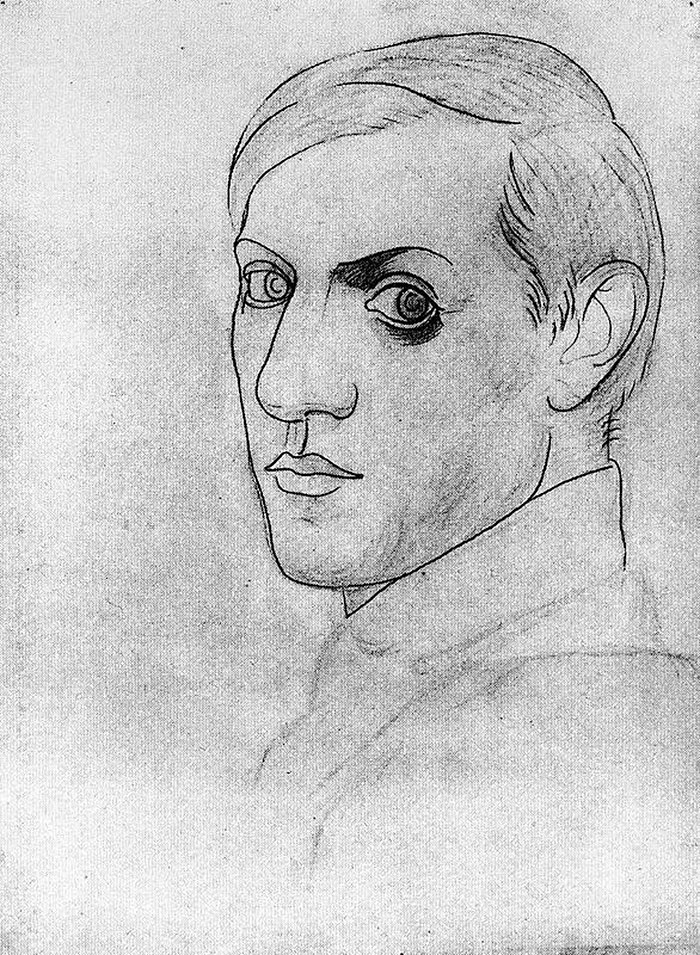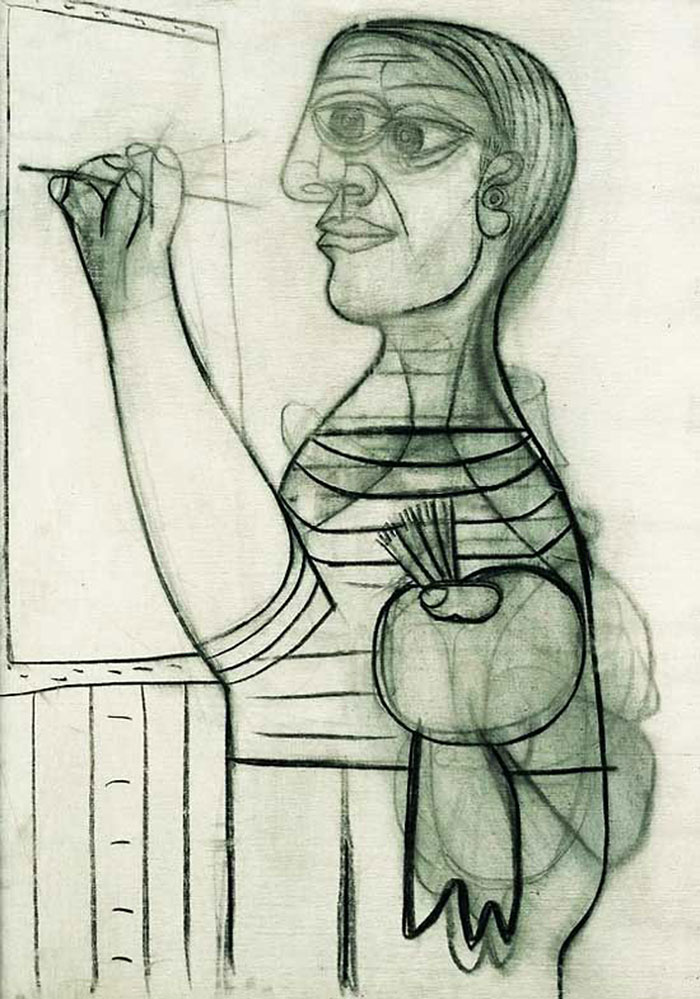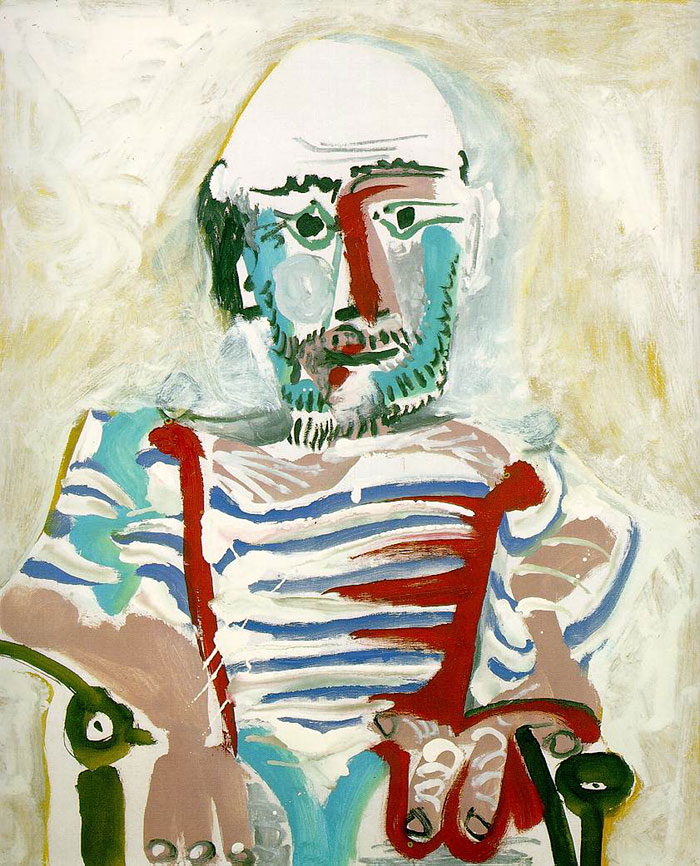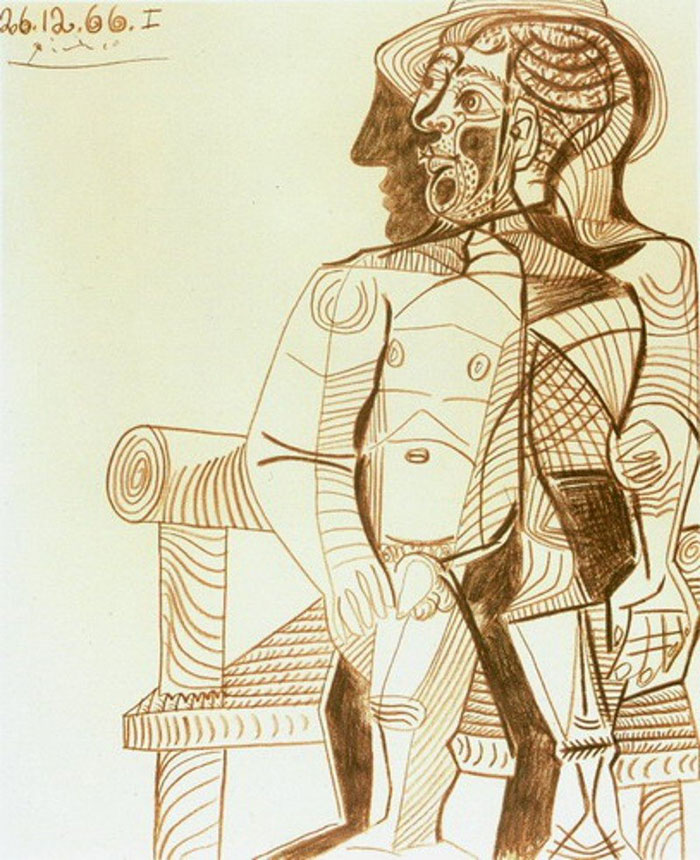
Behold The Drawings of Franz Kafka (1907–1917)

Run­ner 1907–1908

Runner 1907-1908

UK-born, Chica­go-based artist Philip Har­ti­gan has post­ed a brief video piece about Franz Kaf­ka’s draw­ings. Kaf­ka, of course, wrote a body of work, most­ly nev­er pub­lished dur­ing his life­time, that cap­tured the absur­di­ty and the lone­li­ness of the new­ly emerg­ing mod­ern world: In The Meta­mor­pho­sis, Gre­gor trans­forms overnight into a giant cock­roach; in The Tri­al, Josef K. is charged with an unde­fined crime by a mad­den­ing­ly inac­ces­si­ble court. In sto­ry after sto­ry, Kaf­ka showed his pro­tag­o­nists get­ting crushed between the pin­cers of a face­less bureau­crat­ic author­i­ty on the one hand and a deep sense of shame and guilt on the oth­er.

On his deathbed, the famous­ly tor­tured writer implored his friend Max Brod to burn his unpub­lished work. Brod ignored his friend’s plea and instead pub­lished them – nov­els, short sto­ries and even his diaries. In those diaries, Kaf­ka doo­dled inces­sant­ly – stark, graph­ic draw­ings infused with the same angst as his writ­ing. In fact, many of these draw­ings have end­ed up grac­ing the cov­ers of Kafka’s books.

“Quick, min­i­mal move­ments that con­vey the typ­i­cal despair­ing mood of his fic­tion” says Har­ti­gan of Kafka’s art. “I am struck by how these sim­ple ges­tures, these zigza­gs of the wrist, con­tain an econ­o­my of mark mak­ing that even the most expe­ri­enced artist can learn some­thing from.”

In his book Con­ver­sa­tions with Kaf­ka, Gus­tav Janouch describes what hap­pened when he came upon Kaf­ka in mid-doo­dle: the writer imme­di­ate­ly ripped the draw­ing into lit­tle pieces rather than have it be seen by any­one. After this hap­pened a cou­ple times, Kaf­ka relent­ed and let him see his work. Janouch was aston­ished. “You real­ly didn’t need to hide them from me,” he com­plained. “They’re per­fect­ly harm­less sketch­es.”

Kaf­ka slow­ly wagged his head to and fro – ‘Oh no! They are not as harm­less as they look. These draw­ing are the remains of an old, deep-root­ed pas­sion. That’s why I tried to hide them from you…. It’s not on the paper. The pas­sion is in me. I always want­ed to be able to draw. I want­ed to see, and to hold fast to what was seen. That was my pas­sion.”

Check out some of Kafka’s draw­ings below. Or def­i­nite­ly see the recent­ly-pub­lished edi­tion, Franz Kaf­ka: The Draw­ings. It’s the “first book to pub­lish the entire­ty of Franz Kafka’s graph­ic out­put, includ­ing more than 100 new­ly dis­cov­ered draw­ings.”

Horse and Rid­er 1909–1910

Horse and Rider 1909-1910

Three Run­ners 1912–1913

Three Runners 1912-1913

The Thinker 1913

The Thinker 1913

Fenc­ing 1917

Fencing 1917

If you would like to sign up for Open Culture’s free email newslet­ter, please find it here. It’s a great way to see our new posts, all bun­dled in one email, each day.

If you would like to sup­port the mis­sion of Open Cul­ture, con­sid­er mak­ing a dona­tion to our site. It’s hard to rely 100% on ads, and your con­tri­bu­tions will help us con­tin­ue pro­vid­ing the best free cul­tur­al and edu­ca­tion­al mate­ri­als to learn­ers every­where. You can con­tribute through Pay­Pal, Patre­on, and Ven­mo (@openculture). Thanks!

Relat­ed Con­tent:

Franz Kaf­ka Says the Insect in The Meta­mor­pho­sis Should Nev­er Be Drawn; and Vladimir Nabokov Draws It Any­way

Vladimir Nabokov’s Delight­ful But­ter­fly Draw­ings

The Art of William Faulkn­er: Draw­ings from 1916–1925

The Draw­ings of Jean-Paul Sartre

Flan­nery O’Connor’s Satir­i­cal Car­toons: 1942–1945

Jonathan Crow is a Los Ange­les-based writer and film­mak­er whose work has appeared in Yahoo!, The Hol­ly­wood Reporter, and oth­er pub­li­ca­tions. You can fol­low him at @jonccrow.

How Édouard Manet Became “the Father of Impressionism” with the Scandalous Panting, Le Déjeuner sur l’herbe (1863)

Édouard Manet’s Le Déje­uner sur l’herbe (1863) caused quite a stir when it made its pub­lic debut in 1863. Today, we might assume that the con­tro­ver­sy sur­round­ing the paint­ing had to do with its con­tain­ing a nude woman. But, in fact, it does not con­tain a nude woman — at least accord­ing to the analy­sis pre­sent­ed by gal­lerist-Youtu­ber James Payne in his new Great Art Explained video above. “The woman in this paint­ing is not nude,” he explains. “She is naked.” Where­as “the nude is posed, per­fect, ide­al­ized, the naked is just some­one with no clothes on,” and, in this par­tic­u­lar work, her faint­ly accusato­ry expres­sion seems to be ask­ing us, “What are you look­ing at?”

Here on Open Cul­ture, we’ve pre­vi­ous­ly fea­tured Manet’s even more scan­dalous Olympia, which was first exhib­it­ed in 1865. In both that paint­ing and Déje­uner, the woman is based on the same real per­son: Vic­torine Meurent, whom Manet used more fre­quent­ly than any oth­er mod­el.

“A respect­ed artist in her own right,” Meurent also “exhib­it­ed at the Paris Salon six times, and was induct­ed into the pres­ti­gious Société des Artistes Français in 1903.” That she got on that path after a work­ing-class upbring­ing “shows a for­ti­tude of mind and a strength of char­ac­ter that Manet need­ed for Déje­uner.” But what­ev­er per­son­al­i­ty she exud­ed, her non-ide­al­ized nudi­ty, or rather naked­ness, could­n’t have changed art by itself.

Manet gave Meuren­t’s exposed body an artis­tic con­text, and a max­i­mal­ly provoca­tive one at that, by putting it on a large can­vas “nor­mal­ly reserved for his­tor­i­cal, reli­gious, and mytho­log­i­cal sub­jects” and mak­ing choic­es — the vis­i­ble brush­strokes, the stage-like back­ground, the obvi­ous clas­si­cal allu­sions in a clear­ly mod­ern set­ting — that delib­er­ate­ly empha­size “the arti­fi­cial con­struc­tion of the paint­ing, and paint­ing in gen­er­al.” What under­scores all this, of course, is that the men sit­ting with her all have their high­ly eigh­teen-six­ties-look­ing clothes on. Manet may have changed the rules, open­ing the door for Impres­sion­ism, but he still reminds us how much of art’s pow­er, what­ev­er the peri­od or move­ment, comes from sheer con­trast.

Relat­ed Con­tent:

The Scan­dalous Paint­ing That Helped Cre­ate Mod­ern Art: An Intro­duc­tion to Édouard Manet’s Olympia

Édouard Manet Illus­trates Edgar Allan Poe’s “The Raven,” in a French Edi­tion Trans­lat­ed by Stephane Mal­lar­mé (1875)

A Quick Six Minute Jour­ney Through Mod­ern Art: How You Get from Manet’s 1862 Paint­ing The Lun­cheon on the Grass to Jack­son Pol­lock­’s 1950s Drip Paint­ings

Watch Icon­ic Artists at Work: Rare Videos of Picas­so, Matisse, Kandin­sky, Renoir, Mon­et, Pol­lock & More

The Muse­um of Mod­ern Art (MoMA) Puts Online 90,000 Works of Mod­ern Art

Great Art Explained: Watch 15 Minute Intro­duc­tions to Great Works by Warhol, Rothko, Kahlo, Picas­so & More

Based in Seoul, Col­in Marshall writes and broad­casts on cities, lan­guage, and cul­ture. His projects include the Sub­stack newslet­ter Books on Cities, the book The State­less City: a Walk through 21st-Cen­tu­ry Los Ange­les and the video series The City in Cin­e­ma. Fol­low him on Twit­ter at @colinmarshall or on Face­book.

Watch Iconic Artists at Work: Rare Videos of Picasso, Matisse, Kandinsky, Renoir, Monet, Pollock & More

Claude Mon­et, 1915:

We’ve all seen their works in fixed form, enshrined in muse­ums and print­ed in books. But there’s some­thing spe­cial about watch­ing a great artist at work. Over the years, we’ve post­ed film clips of some of the great­est artists of the 20th cen­tu­ry caught in the act of cre­ation. Today we’ve gath­ered togeth­er eight of our all-time favorites.

Above is the only known film footage of the French Impres­sion­ist Claude Mon­et, made when he was 74 years old, paint­ing along­side a lily pond in his gar­den at Giverny. The footage was shot in the sum­mer of 1915 by the French actor and drama­tist Sacha Gui­t­ry for his patri­ot­ic World War I‑era film, Ceux de Chez Nous, or “Those of Our Land.” For more infor­ma­tion, see our pre­vi­ous post, “Rare Film: Claude Mon­et at Work in His Famous Gar­den at Giverny, 1915.”

Pierre-Auguste Renoir, 1915:

You may nev­er look at a paint­ing by the French Impres­sion­ist Pierre-Auguste Renoir in quite the same way after see­ing the footage above, which is also from Sacha Gui­t­ry’s Ceux de Chez Nous. Renoir suf­fered from severe rheuma­toid arthri­tis dur­ing the last decades of his life. By the time this film was made in June of 1915, the 74-year-old Renoir was phys­i­cal­ly deformed and in con­stant pain. The painter’s 14-year-old son Claude is shown plac­ing the brush in his father’s per­ma­nent­ly clenched hand. To learn more about the footage and about Renoir’s ter­ri­ble strug­gle with arthri­tis, be sure to read our post, “Aston­ish­ing Film of Arthrit­ic Impres­sion­ist Painter, Pierre-Auguste Renoir (1915).”

Auguste Rodin, 1915:

The footage above, again by Sacha Gui­t­ry, shows the French sculp­tor Auguste Rodin in sev­er­al loca­tions, includ­ing his stu­dio at the dilap­i­dat­ed Hôtel Biron in Paris, which lat­er became the Musée Rodin. The film was made in late 1915, when Rodin was 74 years old. For more on Rodin and the Hôtel Biron, please see: “Rare Film of Sculp­tor Auguste Rodin work­ing at his Stu­dio in Paris (1915).”

Wass­i­ly Kandin­sky, 1926:

In 1926, film­mak­er Hans Cürlis took the rare footage above of the Russ­ian abstract painter Wass­i­ly Kandin­sky apply­ing paint to a blank can­vas at the Galerie Neu­mann-Nieren­dorf in Berlin. Kandin­sky was about 49 years old at the time, and teach­ing at the Bauhaus. To learn more about Kandin­sky and to watch a video of actress Helen Mir­ren dis­cussing his work at the Muse­um of Mod­ern Art in New York, see our post, “The Inner Object: See­ing Kandin­sky.”

Hen­ri Matisse, 1946:

The French artist Hen­ri Matisse is shown above when he was 76 years old, mak­ing a char­coal sketch of his grand­son, Ger­ard, at his home and stu­dio in Nice. The clip is from a 26-minute film made by François Cam­paux for the French Depart­ment of Cul­tur­al Rela­tions. To read a trans­la­tion of Matis­se’s spo­ken words and to watch a clip of the artist work­ing on one of his dis­tinc­tive paper cut-outs, go to “Vin­tage Film: Watch Hen­ri Matisse Sketch and Make His Famous Cut-Outs (1946).”

Pablo Picas­so, 1950:

In the famous footage above, Span­ish artist Pablo Picas­so paints on glass at his stu­dio in the vil­lage of Val­lau­ris, on the French Riv­iera. It’s from the 1950 film Vis­ite à Picas­so (A Vis­it with Picas­so) by Bel­gian film­mak­er Paul Hae­saerts. Picas­so was about 68 years old at the time. You can find the full 19-minute film here.

Jack­son Pol­lock, 1951:

In the short film above, called Jack­son Pol­lock 51, the Amer­i­can abstract painter talks about his work and cre­ates one of his dis­tinc­tive drip paint­ings before our eyes. The film was made by Hans Namuth when Pol­lock was 39 years old. To learn about Pol­lock and his fate­ful col­lab­o­ra­tion with Namuth, see “Jack­son Pol­lock: Lights, Cam­era, Paint! (1951).”

Alber­to Gia­comet­ti, 1965:

The Swiss artist Alber­to Gia­comet­ti is most famous for his thin, elon­gat­ed sculp­tures of the human form. But in the clip above from the 1966 film Alber­to Gia­comet­ti by the Swiss pho­tog­ra­ph­er Ernst Schei­deg­ger, Gia­comet­ti is shown work­ing in anoth­er medi­um as he paints the foun­da­tion­al lines of a por­trait at his stu­dio in Paris. The footage was appar­ent­ly shot in 1965, when Gia­comet­ti was about 64 years old and had less than a year to live. To learn about Gia­comet­ti’s approach to draw­ing and to read a trans­la­tion of the Ger­man nar­ra­tion in this clip, be sure to see our post, “Watch as Alber­to Gia­comet­ti Paints and Pur­sues the Elu­sive ‘Appari­tion,’ (1965).”

Relat­ed Con­tent:

1922 Pho­to: Claude Mon­et Stands on the Japan­ese Foot­bridge He Paint­ed Through the Years

Helen Mir­ren Tells Us Why Wass­i­ly Kandin­sky Is Her Favorite Artist (And What Act­ing & Mod­ern Art Have in Com­mon)

When Hen­ri Matisse Was 83 Years Old, He Couldn’t Go to His Favorite Swim­ming Pool, So He Cre­at­ed a Swim­ming Pool as a Work of Art

by | Permalink | Make a Comment ( 1 ) |

Why the Short-Lived Calvin and Hobbes Is Still One of the Most Beloved & Influential Comic Strips

If you know more than a few mil­len­ni­als, you prob­a­bly know some­one who reveres Calvin and Hobbes as a sacred work of art. That com­ic strip’s cul­tur­al impact is even more remark­able con­sid­er­ing that it ran in news­pa­pers for only a decade, from 1985 to 1995: bare­ly an exis­tence at all, by the stan­dards of the Amer­i­can fun­ny pages, where the likes of Garfield has been lazi­ly crack­ing wise for 45 years now. Yet these two exam­ples of the com­ic-strip form could hard­ly be more dif­fer­ent from each oth­er in not just their dura­tion, but also how they man­i­fest in the world. While Garfield has long been a mar­ket­ing jug­ger­naut, Calvin and Hobbes cre­ator Bill Wat­ter­son has famous­ly turned down all licens­ing inquiries.

That choice set him apart from the oth­er suc­cess­ful car­toon­ists of his time, not least Charles Schulz, whose work on Peanuts had inspired him to start draw­ing comics in the first place. Calvin and Hobbes may not have its own toys and lunch­box­es, but it does reflect a Schulz­ian degree of thought­ful­ness and per­son­al ded­i­ca­tion to the work. Like Schulz, Wat­ter­son eschewed del­e­ga­tion, cre­at­ing the strip entire­ly by him­self from begin­ning to end. Not only did he exe­cute every brush­stroke (not a metaphor, since he actu­al­ly used a brush for more pre­cise line con­trol), every theme dis­cussed and expe­ri­enced by the tit­u­lar six-year-old boy and his tiger best friend was root­ed in his own thoughts.

“One of the beau­ties of a com­ic strip is that peo­ple’s expec­ta­tions are nil,” Wat­ter­son said in an inter­view in the twen­ty-tens. “If you draw any­thing more sub­tle than a pie in the face, you’re con­sid­ered a philoso­pher.” How­ev­er mod­est the medi­um, he spent the whole run of Calvin and Hobbes try­ing to ele­vate it, ver­bal­ly but even more so visu­al­ly. Or per­haps the word is re-ele­vate, giv­en how his increas­ing­ly ambi­tious Sun­day-strip lay­outs evoked ear­ly-twen­ti­eth-cen­tu­ry news­pa­per fix­tures like Lit­tle Nemo and Krazy Kat, which sprawled lav­ish­ly across entire pages. Even if there could be no return­ing to the bygone gold­en age of the com­ic strip, he could at least draw inspi­ra­tion from its glo­ries.

Iron­i­cal­ly, from the per­spec­tive of the twen­ty-twen­ties, Wat­ter­son­’s work looks like an arti­fact of a bygone gold­en age itself. In the eight­ies and nineties, when even small-town news­pa­pers could still com­mand a robust read­er­ship, the comics sec­tion had a cer­tain cul­tur­al weight; Wat­ter­son has spo­ken of the car­toon­ist’s prac­ti­cal­ly unmatched abil­i­ty to influ­ence the thoughts of read­ers on a dai­ly basis. In my case, the influ­ence ran espe­cial­ly deep, since I became a Calvin and Hobbes-lov­ing mil­len­ni­al avant la let­tre while first learn­ing to read through the Sun­day fun­nies. It took no time at all to mas­ter Garfield, but when I start­ed get­ting Calvin and Hobbes, I knew I was mak­ing progress; even when I did­n’t under­stand the words, I could still mar­vel at the sheer exu­ber­ance and detail of the art.

Calvin and Hobbes also attract­ed enthu­si­asts of oth­er gen­er­a­tions, not least among oth­er car­toon­ists. Joel Allen Schroed­er’s doc­u­men­tary Dear Mr. Wat­ter­son fea­tures more than a few of them express­ing their admi­ra­tion for how he raised the bar, as well as for how his work con­tin­ues to enrap­ture young read­ers. Its time­less­ness owes in part to its lack of top­i­cal ref­er­ences (in con­trast to, say, Doones­bury, which I remem­ber always being the most for­mi­da­ble chal­lenge in my days of incom­plete lit­er­a­cy), but also to its under­stand­ing of child­hood itself. Like Stephen King, a cre­ator with whom he oth­er­wise has lit­tle in com­mon, Wat­ter­son remem­bers the exot­ic, often bizarre tex­tures real­i­ty can take on for the very young.

He also remem­bers that child­hood is not, as J. M. Coet­zee once put it, “a time of inno­cent joy, to be spent in the mead­ows amid but­ter­cups and bun­ny-rab­bits or at the hearth­side absorbed in a sto­ry­book,” but in large part “a time of grit­ting the teeth and endur­ing.” Being six years old has its plea­sures, to be sure, but it also comes with strong dos­es of tedi­um, pow­er­less­ness, and futil­i­ty, which we tend not to acknowl­edge as adults. Calvin and Hobbes showed me, as it’s shown so many young read­ers, that there’s a way out: not through stu­dious­ness, not through polite­ness, and cer­tain­ly not through fol­low­ing the rules, but through the pow­er of the imag­i­na­tion to re-enchant dai­ly life. If it gets you sent to your room once in a while, that’s a small price to pay.

Relat­ed con­tent:

How to Make Comics: A Four-Part Series from the Muse­um of Mod­ern Art

George Herriman’s Krazy Kat, Praised as the Great­est Com­ic Strip of All Time, Gets Dig­i­tized as Ear­ly Install­ments Enter the Pub­lic Domain

17 Min­utes of Charles Schulz Draw­ing Peanuts

The Dis­ney Artist Who Devel­oped Don­ald Duck & Remained Anony­mous for Years, Despite Being “the Most Pop­u­lar and Wide­ly Read Artist-Writer in the World”

The Comi­clo­pe­dia: An Online Archive of 14,000 Com­ic Artists, From Stan Lee and Jack Kir­by, to Mœbius and Hergé

Based in Seoul, Col­in Marshall writes and broad­casts on cities, lan­guage, and cul­ture. His projects include the Sub­stack newslet­ter Books on Cities, the book The State­less City: a Walk through 21st-Cen­tu­ry Los Ange­les and the video series The City in Cin­e­ma. Fol­low him on Twit­ter at @colinmarshall or on Face­book.

23 Minutes of Charles Schulz Drawing Peanuts

Any­one can learn to draw the cast of Peanuts, but few can do it every day for near­ly half a cen­tu­ry. The lat­ter, as far as we know, amounts to a group of one: Charles Schulz, who not only cre­at­ed that world-famous com­ic strip but drew it sin­gle-hand­ed through­out its entire run. He was, as a nine­teen-six­ties CBS pro­file put it, “a one-man pro­duc­tion team: writer, humorist, social crit­ic.” That clip opens the video above, which com­piles footage of Schulz draw­ing Peanuts while mak­ing obser­va­tions on the nature of his craft. “When you draw a com­ic strip, if you’re going to wait for inspi­ra­tion, you’ll nev­er make it,” he says. “You have to become pro­fes­sion­al enough at this so that you can almost delib­er­ate­ly set down an idea at will.”

Schulz’s ded­i­ca­tion to his work may have been an inborn trait, but he did­n’t find his way to that work only through his par­tic­u­lar abil­i­ties. His par­tic­u­lar inabil­i­ties also played their part: “I stud­ied art in a cor­re­spon­dence course, because I was afraid to go to art school,” he says in a lat­er BBC seg­ment.

“I could­n’t see myself sit­ting in a room where every­one else in the room could draw much bet­ter than I.” With bet­ter writ­ing skills, “per­haps I would have tried to become a nov­el­ist, and I might have become a fail­ure.” With bet­ter draw­ing skills, “I might have tried to become an illus­tra­tor or an artist. I would’ve failed there. But my entire being seems to be just right for being a car­toon­ist.”

In draw­ing, he also found a medi­um of thought. “The real­ly prac­ti­cal way of get­ting an idea, when you have noth­ing real­ly to draw, is just tak­ing a blank piece of paper and maybe draw­ing one of the char­ac­ters in a famil­iar pose, like Snoopy sleep­ing on top of the dog­house,” he says. Then, you might nat­u­ral­ly “imag­ine what would hap­pen if, say, it began to snow. And so you’d doo­dle in a few snowflakes, some­thing like that. Per­haps you would be led to won­der what would hap­pen if it snowed very hard, and the snow cov­ered him up com­plete­ly.” If you con­tin­ue on to draw, say, Snoopy­’s loy­al friend Wood­stock being sim­i­lar­ly snowed in, you’re well on your way to a com­plete strip. Now do it 17,897 times, and maybe you’ll qual­i­fy for Schulz’s league.

Relat­ed con­tent:

Charles Schulz Draws Char­lie Brown in 45 Sec­onds and Exor­cis­es His Demons

Hayao Miyazaki’s Sketch­es Show­ing How to Draw Char­ac­ters Run­ning: From 1980 Edi­tion of Ani­ma­tion Mag­a­zine

Umber­to Eco Explains the Poet­ic Pow­er of Charles Schulz’s Peanuts

Hergé Draws Tintin in Vin­tage Footage (and What Explains the Character’s Endur­ing Appeal)

Car­toon­ists Draw Their Famous Car­toon Char­ac­ters While Blind­fold­ed (1947)

The Endur­ing Appeal of Schulz’s Peanuts — Pret­ty Much Pop: A Cul­ture Pod­cast #116

Based in Seoul, Col­in Marshall writes and broad­casts on cities, lan­guage, and cul­ture. His projects include the Sub­stack newslet­ter Books on Cities, the book The State­less City: a Walk through 21st-Cen­tu­ry Los Ange­les and the video series The City in Cin­e­ma. Fol­low him on Twit­ter at @colinmarshall or on Face­book.

Goethe’s Theory of Colors: The 1810 Treatise That Inspired Kandinsky & Early Abstract Painting

I doubt I need to list for you the many titles of the 18th cen­tu­ry Ger­man savant and poly­math Johann Wolf­gang von Goethe, but allow me to add one or two that were new to me, at least: col­or the­o­rist (or phe­nom­e­nol­o­gist of col­or) and prog­en­i­tor of abstract expres­sion­ism. As a fas­ci­nat­ing Book­tryst post informs us, Goethe’s book on col­or, Zur Far­ben­lehre (The­o­ry of Col­ors), writ­ten in 1810, dis­put­ed the New­ton­ian view of the sub­ject and for­mu­lat­ed a psy­cho­log­i­cal and philo­soph­i­cal account of the way we actu­al­ly expe­ri­ence col­or as a phe­nom­e­non. In his account, Goethe describes how he came by his views:

Along with the rest of the world, I was con­vinced that all the col­ors are con­tained in the light; no one had ever told me any­thing dif­fer­ent, and I had nev­er found the least cause to doubt it, because I had no fur­ther inter­est in the sub­ject.

But how I was aston­ished, as I looked at a white wall through the prism, that it stayed white! That only where it came upon some dark­ened area, it showed some col­or, then at last, around the win­dow sill all the col­ors shone… It did­n’t take long before I knew here was some­thing sig­nif­i­cant about col­or to be brought forth, and I spoke as through an instinct out loud, that the New­ton­ian teach­ings were false.

Schopen­hauer would lat­er write that “[Goethe] deliv­ered in full mea­sure what was promised by the title of his excel­lent work: data toward a the­o­ry of colour. They are impor­tant, com­plete, and sig­nif­i­cant data, rich mate­r­i­al for a future the­o­ry of colour.” It was a the­o­ry, Schopen­hauer admits, that does not “[fur­nish] us with a real expla­na­tion of the essen­tial nature of colour, but real­ly pos­tu­lates it as a phe­nom­e­non, and mere­ly tells us how it orig­i­nates, not what it is.”

Anoth­er lat­er philo­soph­i­cal inter­preter of Goethe, Lud­wig Wittgen­stein—a thinker great­ly inter­est­ed in visu­al perception—also saw Goethe’s work as oper­at­ing very dif­fer­ent­ly than New­ton’s optics—not as a sci­en­tif­ic the­o­ry but rather as an intu­itive schema. Wittgen­stein remarked that Goethe’s work “is real­ly not a the­o­ry at all. Noth­ing can be pre­dict­ed by means of it. It is, rather, a vague schemat­ic out­line, of the sort we find in [William] James’s psy­chol­o­gy. There is no exper­i­men­tum cru­cis for Goethe’s the­o­ry of colour.”

Yet a third lat­er Ger­man genius, Wern­er Heisen­berg, com­ment­ed on the influ­ence of Zur Far­ben­lehre, writ­ing that “Goethe’s colour the­o­ry has in many ways borne fruit in art, phys­i­ol­o­gy and aes­thet­ics. But vic­to­ry, and hence influ­ence on the research of the fol­low­ing cen­tu­ry, has been New­ton’s.”


I’m not fit to eval­u­ate the rel­a­tive mer­its of Goethe’s the­o­ry, or lack there­of, ver­sus New­ton’s rig­or­ous work on optics. Whole books have been writ­ten on the sub­ject. But what­ev­er his inten­tions, Goethe’s work has been well-received as a psy­cho­log­i­cal­ly accu­rate account that has also, through his text and many illus­tra­tions you see here, had sig­nif­i­cant influ­ence on twen­ti­eth cen­tu­ry painters also great­ly con­cerned with the psy­chol­o­gy of col­or, most notably Wass­i­ly Kandin­sky, who pro­duced his own “schemat­ic out­line” of the psy­cho­log­i­cal effects of col­or titled Con­cern­ing the Spir­i­tu­al in Art, a clas­sic of mod­ernist aes­thet­ic the­o­ry. As is usu­al­ly the case with Goethe, the influ­ence of this sin­gle work is wider and deep­er than he prob­a­bly ever fore­saw.

You can find an afford­able ver­sion of Goethe’s The­o­ry of Col­ors on Ama­zon. Or find scans of the book at Archive.org.

Note: This post orig­i­nal­ly appeared on our site in 2013. We have updat­ed the post with new images and links.

Relat­ed Con­tent:

The Book of Colour Con­cepts: A New 800-Page Cel­e­bra­tion of Col­or The­o­ry, Includ­ing Works by New­ton, Goethe, and Hilma af Klint

A 900-Page Pre-Pan­tone Guide to Col­or from 1692: A Com­plete Dig­i­tal Scan

An Ani­mat­ed Intro­duc­tion to Goethe, Germany’s “Renais­sance Man”

Har­ry Clarke’s 1926 Illus­tra­tions of Goethe’s Faust: Art That Inspired the Psy­che­del­ic 60s

Watch Goethe’s Haunt­ing Poem, “Der Erlkönig,” Pre­sent­ed in an Art­ful Sand Ani­ma­tion

Josh Jones is a writer and musi­cian based in Durham, NC. Fol­low him at @jdmagness

The Beautiful Art of Making Japanese Calligraphy Ink Out of Soot & Glue

Found­ed in 1577, Kobaien remains Japan’s old­est man­u­fac­tur­er of sumi ink sticks. Made of soot and ani­mal glue, the ink stick—when ground against an ink­stone, with a lit­tle water added—produces a beau­ti­ful black ink used by Japan­ese cal­lig­ra­phers. And, often, a 200-gram ink stick from Kobaien can cost over $1,000.

How can soot and ani­mal glue com­mand such a high price? As the Busi­ness Insid­er video above shows, there’s a fine art to mak­ing each ingredient—an art honed over the cen­turies. Watch­ing the arti­sans make the soot alone, you imme­di­ate­ly appre­ci­ate the com­plex­i­ty beneath the appar­ent sim­plic­i­ty. When you’re done watch­ing how the ink gets made, you’ll undoubt­ed­ly want to watch the arti­sans mak­ing cal­lig­ra­phy brush­es, an art form that has its own fas­ci­nat­ing his­to­ry. Enjoy!

Relat­ed Con­tent 

Down­load 215,000 Japan­ese Wood­block Prints by Mas­ters Span­ning the Tradition’s 350-Year His­to­ry

Learn Cal­lig­ra­phy from Lloyd Reynolds, the Teacher of Steve Jobs’ Own Famous­ly Inspir­ing Cal­lig­ra­phy Teacher

The Mod­el Book of Cal­lig­ra­phy (1561–1596): A Stun­ning­ly Detailed Illu­mi­nat­ed Man­u­script Cre­at­ed over Three Decades

3,000 Illustrations of Shakespeare’s Complete Works from Victorian England, Presented in a Digital Archive

knightcover3

“We can say of Shake­speare,” wrote T.S. Eliot—in what may sound like the most back­hand­ed of com­pli­ments from one writer to another—“that nev­er has a man turned so lit­tle knowl­edge to such great account.” Eliot, it’s true, was not over­awed by the Shake­speare­an canon; he pro­nounced Ham­let “most cer­tain­ly an artis­tic fail­ure,” though he did love Cori­olanus. What­ev­er we make of his ambiva­lent, con­trar­i­an opin­ions of the most famous author in the Eng­lish lan­guage, we can cred­it Eliot for keen obser­va­tion: Shakespeare’s uni­verse, which can seem so sprawl­ing­ly vast, is actu­al­ly sur­pris­ing­ly spare giv­en the kinds of things it most­ly con­tains.

Ophelia ckham18

This is due in large part to the visu­al lim­i­ta­tions of the stage, but per­haps it also points toward an author who made great works of art from hum­ble mate­ri­als. Look, for exam­ple, at a search cloud of the Bard’s plays.

You’ll find one the front page of the Vic­to­ri­an Illus­trat­ed Shake­speare Archive, cre­at­ed by Michael John Good­man, an inde­pen­dent researcher, writer, edu­ca­tor, cura­tor and image-mak­er. The cloud on the left fea­tures a galaxy com­posed main­ly of ele­men­tal and arche­typ­al beings: “Ani­mals,” “Cas­tles and Palaces,” “Crowns,” “Flo­ra and Fau­na,” “Swords,” “Spears,” “Trees,” “Water,” “Woods,” “Death.” One thinks of the Zodi­ac or Tarot.

Roman Forum ckcor4

This par­tic­u­lar search cloud, how­ev­er, does not rep­re­sent the most promi­nent terms in the text, but rather the most promi­nent images in four col­lec­tions of illus­trat­ed Shake­speare plays from the Vic­to­ri­an peri­od. Goodman’s site hosts over 3000 of these illus­tra­tions, tak­en from four major UK edi­tions of Shake­speare’s Com­plete Works pub­lished in the mid-19th cen­tu­ry. The first, pub­lished by edi­tor Charles Knight, appeared in sev­er­al vol­umes between 1838 and 1841, illus­trat­ed with con­ser­v­a­tive engrav­ings by var­i­ous artists. Knight’s edi­tion intro­duced the trend of spelling Shakespeare’s name as “Shakspere,” as you can see in the title page to the “Come­dies, Vol­ume I,” at the top of the post. Fur­ther down, see two rep­re­sen­ta­tive illus­tra­tions from the plays, the first of Ham­let’s Ophe­lia and sec­ond Cori­olanus’ Roman Forum, above.

Tempest kmtemp41

Part of a wave of “ear­ly Vic­to­ri­an pop­ulism” in Shake­speare pub­lish­ing, Knight’s edi­tion is joined by one from Ken­ny Mead­ows, who con­tributed some very dif­fer­ent illus­tra­tions to an 1854 edi­tion. Just above, see a Goya-like illus­tra­tion from The Tem­pest. Lat­er came an edi­tion illus­trat­ed by H.C. Selous in 1864, which returned to the for­mal, faith­ful real­ism of the Knight edi­tion (see a ren­der­ing of Hen­ry V, below), and includes pho­tograu­vure plates of famed actors of the time in cos­tume and an appen­dix of “Spe­cial Wood Engraved Illus­tra­tions by Var­i­ous Artists.”

Henry V hcseloushv4

The final edi­tion whose illus­tra­tions Good­man has dig­i­tized and cat­a­logued on his site fea­tures engrav­ings by artist John Gilbert. Also pub­lished in 1864, the Gilbert may be the most expres­sive of the four, retain­ing real­ist pro­por­tions and mise-en-scène, yet also ren­der­ing the char­ac­ters with a psy­cho­log­i­cal real­ism that is at times unsettling—as in his fierce por­trait of Lear, below. Gilbert’s illus­tra­tion of The Tam­ing of the Shrew’s Kathe­ri­na and Petru­chio, fur­ther down, shows his skill for cre­at­ing believ­able indi­vid­u­als, rather than broad arche­types. The same skill for which the play­wright has so often been giv­en cred­it.

Lear

But Shake­speare worked both with rich, indi­vid­ual char­ac­ter stud­ies and broad­er, arche­typ­al, mate­r­i­al: psy­cho­log­i­cal real­ism and mytho­log­i­cal clas­si­cism. What I think these illus­trat­ed edi­tions show us is that Shake­speare, who­ev­er he (or she) may have been, did indeed have a keen sense of what Eliot called the “objec­tive cor­rel­a­tive,” able to com­mu­ni­cate com­plex emo­tions through “a skill­ful accu­mu­la­tion of imag­ined sen­so­ry impres­sions” that have impressed us as much on the can­vas, stage, and screen as they do on the page. The emo­tion­al expres­sive­ness of Shakespeare’s plays comes to us not only through elo­quent verse speech­es, but through images of both the stark­ly ele­men­tal and the unique­ly per­son­al.

Taming Of jgtos81

Spend some time with the illus­trat­ed edi­tions on Goodman’s site, and you will devel­op an appre­ci­a­tion for how the plays com­mu­ni­cate dif­fer­ent­ly to the dif­fer­ent artists. In addi­tion to the search clouds, the site has a head­er at the top for each of the four edi­tions. Click on the name and you will see front and back mat­ter and title pages. In the pull-down menus, you can access each indi­vid­ual play’s dig­i­tized illus­tra­tions by type—“Histories,” “Come­dies,” and “Tragedies.” All of the con­tent on the site, Good­man writes, “is free through a CC license: users can share on social media, remix, research, cre­ate and just do what­ev­er they want real­ly!”

Update: This post orig­i­nal­ly appeared on our site in 2016. Since then, Good­man has been reg­u­lar­ly updat­ing the Vic­to­ri­an Illus­trat­ed Shake­speare Archive with more edi­tions, giv­ing it more rich­ness and depth. These edi­tions include “one pub­lished by John Tallis, which fea­tures famous actors of the time in char­ac­ter.” This also includes “the first ever com­pre­hen­sive full-colour treat­ment of Shakespeare’s plays with the John Mur­doch edi­tion.” The archive, Good­man tells us, “now con­tains ten edi­tions of Shakespeare’s plays and is fair­ly com­pre­hen­sive in how peo­ple were expe­ri­enc­ing Shake­speare, visu­al­ly, in book form in the 19th Cen­tu­ry.”

Relat­ed Con­tent:

Take a Vir­tu­al Tour of Shakespeare’s Globe The­atre in Lon­don

Watch Very First Film Adap­ta­tions of Shakespeare’s Plays: King John, The Tem­pest, Richard III & More (1899–1936)

Read All of Shakespeare’s Plays Free Online, Cour­tesy of the Fol­ger Shake­speare Library

Fol­ger Shake­speare Library Puts 80,000 Images of Lit­er­ary Art Online, and They’re All Free to Use

Josh Jones is a writer and musi­cian based in Durham, NC. Fol­low him at @jdmagness

by | Permalink | Make a Comment ( 1 ) |

« Go BackMore in this category... »
Quantcast