Grandma Moses Started Painting Seriously at Age 77, and Soon Became a Famous American Artist

As an artis­tic child grow­ing up on a farm in the 1860s and ear­ly 1870s, Anna Mary Robert­son (1860–1961) used ground ochre, grass, and berry juice in place of tra­di­tion­al art sup­plies. She was so lit­tle, she referred to her efforts as “lamb­scapes.” Her father, for whom paint­ing was also a hob­by, kept her and her broth­ers sup­plied with paper:

He liked to see us draw pic­tures, it was a pen­ny a sheet and last­ed longer than can­dy.

She left home and school at 12, serv­ing as a full-time, live-in house­keep­er for the next 15 years. She so admired the Cur­ri­er & Ives prints hang­ing in one of the homes where she worked that her employ­ers set her up with wax crayons and chalk, but her duties left lit­tle time for leisure activ­i­ties.

Free time was in even short­er sup­ply after she mar­ried and gave birth to ten chil­dren — five of whom sur­vived past infan­cy. Her cre­ative impulse was con­fined to dec­o­rat­ing house­hold items, quilt­ing, and embroi­der­ing gifts for fam­i­ly and friends.

At the age of 77 (cir­ca 1937), wid­owed, retired, and suf­fer­ing from arthri­tis that kept her from her accus­tomed house­hold tasks, she again turned to paint­ing.

Set­ting up in her bed­room, she worked in oils on masonite prepped with three coats of white paint, draw­ing on such youth­ful mem­o­ries as quilt­ing bees, hay­ing, and the annu­al maple sug­ar har­vest for sub­ject mat­ter, again and again.

Thomas’ Phar­ma­cy in Hoosick Falls, New York exhib­it­ed some of her out­put, along­side oth­er local wom­en’s hand­i­crafts. It failed to attract much atten­tion, until art col­lec­tor Louis J. Cal­dor wan­dered in dur­ing a brief sojourn from Man­hat­tan and acquired them all for an aver­age price tag of $4.

The next year (1939), Mrs. Moses, as she was then known, was one of sev­er­al “house­wives” whose work was includ­ed in the Muse­um of Mod­ern Art’s exhib­it “Con­tem­po­rary Unknown Amer­i­can Painters”.  The empha­sis was def­i­nite­ly on the untaught out­sider. In addi­tion to occu­pa­tion, the cat­a­logue list­ed the non-Cau­casian artists’ race…

In short order, Anna Mary Robert­son Moses had a solo exhi­bi­tion in the same gallery that would give Gus­tav Klimt and Egon Schiele their first Amer­i­can one-per­son shows, Otto Kallir’s Galerie St. Eti­enne.

In review­ing the 1940 show, the New York Her­ald Tri­bune’s crit­ic cit­ed the folksy nick­name (“Grand­ma Moses”) favored by some of the artist’s neigh­bors. Her whole­some rur­al bonafides cre­at­ed an unex­pect­ed sen­sa­tion. The pub­lic flocked to see a table set with her home­made cakes, rolls, bread and prize-win­ning pre­serves as part of a Thanks­giv­ing-themed meet-and-greet with the artist at Gim­bels Depart­ment Store the fol­low­ing month.

As crit­ic and inde­pen­dent cura­tor Judith Stein observes in her essay “The White Haired Girl: A Fem­i­nist Read­ing”:

In gen­er­al, the New York press dis­tanced the artist from her cre­ative iden­ti­ty. They com­man­deered her from the art world, fash­ion­ing a rich pub­lic image that brimmed with human interest…Although the artist’s fam­i­ly and friends addressed her as “Moth­er Moses” and “Grand­ma Moses” inter­change­ably, the press pre­ferred the more famil­iar and endear­ing form of address. And “Grand­ma” she became, in near­ly all sub­se­quent pub­lished ref­er­ences. Only a few pub­li­ca­tions by-passed the new locu­tion: a New York Times Mag­a­zine fea­ture of April 6, 1941; a Harper’s Bazaar arti­cle; and the land­mark They Taught Them­selves: Amer­i­can Prim­i­tive Painters of the 20th Cen­tu­ry, by the respect­ed deal­er and cura­tor Sid­ney Janis, referred to the artist as “Moth­er Moses,” a title that con­veyed more dig­ni­ty than the col­lo­qui­al diminu­tive “Grand­ma.”

But “Grand­ma Moses” had tak­en hold. The avalanche of press cov­er­age that fol­lowed had lit­tle to do with the pro­bity of art com­men­tary. Jour­nal­ists found that the artist’s life made bet­ter copy than her art. For exam­ple, in a dis­cus­sion of her debut, an Art Digest reporter gave a charm­ing, if sim­pli­fied, account of the gen­e­sis of Moses’ turn to paint­ing, recount­ing her desire to give the post­man “a nice lit­tle Christ­mas gift.” Not only would the dear fel­low appre­ci­ate a paint­ing, con­clud­ed Grand­ma, but “it was eas­i­er to make than to bake a cake over a hot stove.” After quot­ing from Genauer and oth­er favor­able reviews in the New York papers, the report con­clud­ed with a folksy sup­po­si­tion: “To all of which Grand­ma Moses per­haps shakes a bewil­dered head and repeats, ‘Land’s Sakes’.” Flip­pant­ly deem­ing the artist’s achieve­ments a mark­er of social change, he not­ed: “When Grand­ma takes it up then we can be sure that art, like the bobbed head, is here to stay.”

Urban sophis­ti­cates were besot­ted with the plain­spo­ken, octo­ge­nar­i­an farm wid­ow who was scan­dal­ized by the “extor­tion prices” they paid for her work in the Galerie St. Eti­enne. As Tom Arthur writes in a blog devot­ed to New York State his­tor­i­cal mark­ers:

New York­ers found that, once wartime gaso­line rationing end­ed, Eagle Bridge made a nice excur­sion des­ti­na­tion for a week­end trip. Local res­i­dents were usu­al­ly will­ing to talk to out­siders about their local celebri­ty and give direc­tions to her farm. There they would meet the artist, who was a delight to talk to, and either buy or order paint­ings from her. Songwriter/impresario Cole Porter became a reg­u­lar cus­tomer, order­ing sev­er­al paint­ings every year to give to friends around Christ­mas. 

In the two-and‑a half decades between pick­ing her paint­brush back up and her death at the age of 101, she pro­duced over 1600 images, always start­ing with the sky and mov­ing down­ward to depict tidy fields, well kept hous­es, and tiny, hard work­ing fig­ures com­ing togeth­er as a com­mu­ni­ty. In the above doc­u­men­tary she alludes to oth­er artists known to depict­ing “trou­ble”… such as live­stock bust­ing out of their enclo­sures.

She pre­ferred to doc­u­ment scenes in which every­one was seen to be behav­ing.

Remark­ably, MoMA exhib­it­ed Grand­ma Moses’ work at the same time as Picasso’s Guer­ni­ca.

In a land and in a life where a woman can grow old with fear­less­ness and beau­ty, it is not strange that she should become an artist at the end. — poet Archibald MacLeish

Hmm.

Read Judith Stein’s fas­ci­nat­ing essay in its entire­ty here.

See more of Grand­ma Moses’ work here, and her por­trait on TIME mag­a­zine in 1953.

Relat­ed Con­tent

How Leo Tol­stoy Learned to Ride a Bike at 67, and Oth­er Tales of Life­long Learn­ing

The Long Game of Cre­ativ­i­ty: If You Haven’t Cre­at­ed a Mas­ter­piece at 30, You’re Not a Fail­ure

What Does It Take to Be a Great Artist?: An Aging Painter Reflects on His Cre­ative Process & Why He Will Nev­er Be a Picas­so

Free Art & Art His­to­ry Cours­es

- Ayun Hal­l­i­day is the Chief Pri­ma­tol­o­gist of the East Vil­lage Inky zine and author, most recent­ly, of Cre­ative, Not Famous: The Small Pota­to Man­i­festo.  Fol­low her @AyunHalliday.
The Ghosts and Monsters of Hokusai: See the Famed Woodblock Artist’s Fearsome & Amusing Visions of Strange Apparitions

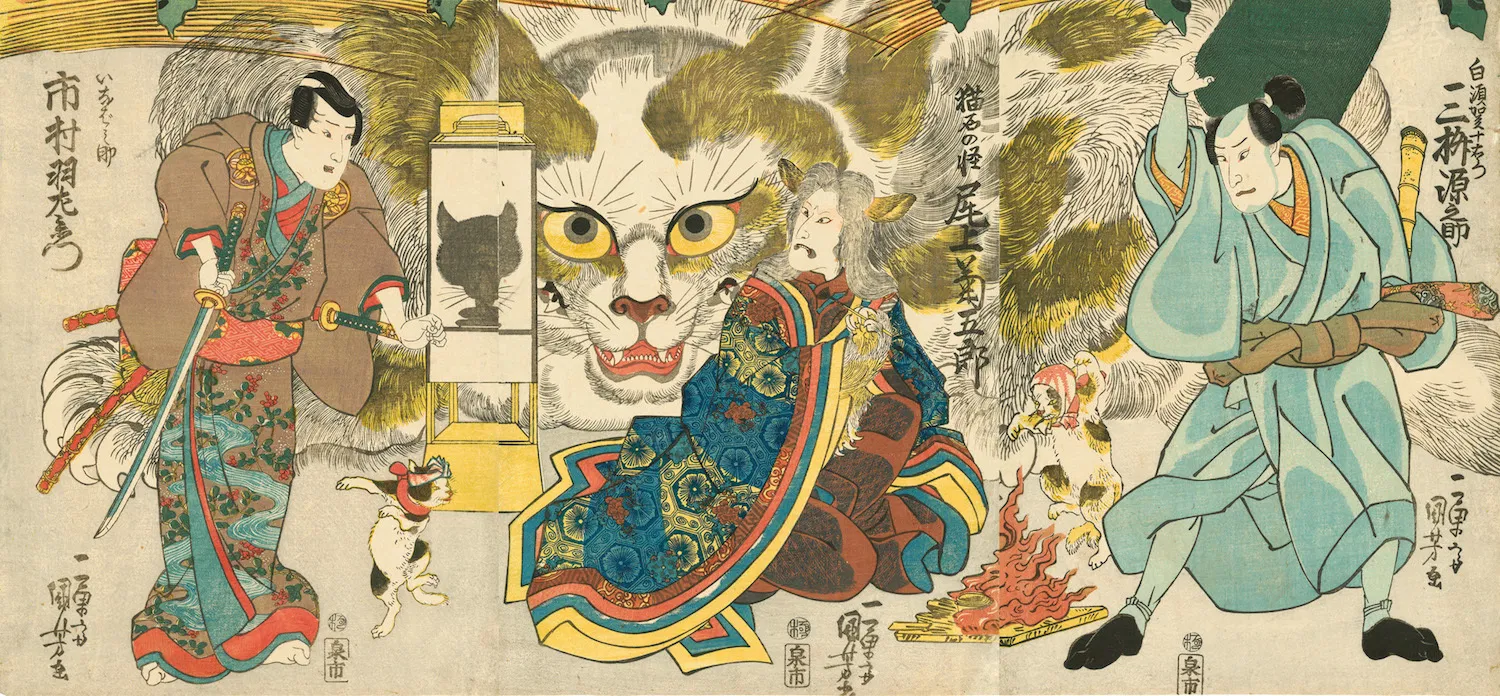
When Hal­loween comes around this year, con­sid­er play­ing a round of hyaku­mono­gatari. You’ll need to assem­ble a hun­dred can­dles before­hand, but that’s the easy part; you and your friends will also need to know just as many ghost sto­ries. In ear­ly nine­teenth-cen­tu­ry Japan, “par­tic­i­pants would sit in a can­dlelit room and take turns telling fright­en­ing tales. After each one was shared, a can­dle would be extin­guished until there was no light left, in the room. It was then that the yōkai [“strange appari­tions”) would appear.” So says Youtu­ber Hochela­ga (who’s pre­vi­ous­ly cov­ered the Bib­li­cal apoc­a­lypse and long-ago pre­dic­tions of the future) in the video above, “The Ghosts of Hoku­sai.”

We all know the name of Kat­sushi­ka Hoku­sai, the most wide­ly renowned mas­ter of the tra­di­tion­al Japan­ese wood­block-print art called ukiyo‑e. In a life­time span­ning the mid-eigh­teenth to the mid-nine­teenth cen­tu­ry, Hochela­ga notes, Hoku­sai cre­at­ed around 30,000 unique pieces of art, includ­ing The Great Wave off Kana­gawa, part of Thir­ty-Six Views of Mount Fuji.

But before exe­cut­ing that tri­umphant late series, Hoku­sai made his own Hyaku­mono­gatari (lit­er­al­ly, “hun­dred tales”) — or rather, he ren­dered in his dis­tinc­tive style five of those tra­di­tion­al ghost sto­ries’ trag­ic, grotesque, and often humor­ous pro­tag­o­nists.

These char­ac­ters are yōkai, those “weird and mys­te­ri­ous beings” that “inhab­it super­nat­ur­al Japan.” They “come in all shapes and sizes, from friend­ly house­hold spir­its to fierce demons,” includ­ing the Oya­jirome, who lit­er­al­ly has an eye in the back of his head, and the Ushi-oni, “one part bull, one part crab, and the rest night­mare fuel.”  Hoku­sai’s inter­est tend­ed toward yōkai who had once been nor­mal humans: the neglect­ed wife of a samu­rai whose spir­it became trapped in a lantern, the mur­dered kabu­ki actor whose skele­tal remains emerged from a swamp to hunt down his killers.

You can read more about these yōkai, and take a look at Hoku­sai’s depic­tions of them, at the Pub­lic Domain Review and Thoughts on Papyrus. Soon after Hoku­sai’s death Japan opened to the world, begin­ning its trans­for­ma­tion into a state of hyper­moder­ni­ty. But tales of yōkai still have a cer­tain influ­ence on the Japan­ese cul­tur­al imag­i­na­tion, as evi­denced by the Miyoshi Mononoke Muse­um in Hiroshi­ma. Japan has been more or less closed once again these past cou­ple of years, but once it re-opens, why not make a trip to col­lect a few scary mono­gatari for your­self?

Relat­ed con­tent:

The First Muse­um Ded­i­cat­ed to Japan­ese Folk­lore Mon­sters Is Now Open

The Great Wave Off Kana­gawa by Hoku­sai: An Intro­duc­tion to the Icon­ic Japan­ese Wood­block Print in 17 Min­utes

Thir­ty-Six Views of Mount Fuji: A Deluxe New Art Book Presents Hokusai’s Mas­ter­piece, Includ­ing The Great Wave Off Kana­gawa

The Evo­lu­tion of The Great Wave off Kana­gawa: See Four Ver­sions That Hoku­sai Paint­ed Over Near­ly 40 Years

View 103 Dis­cov­ered Draw­ings by Famed Japan­ese Wood­cut Artist Kat­sushi­ka Hoku­sai

Down­load 215,000 Japan­ese Wood­block Prints by Mas­ters Span­ning the Tradition’s 350-Year His­to­ry

Based in Seoul, Col­in Mar­shall writes and broad­casts on cities, lan­guage, and cul­ture. His projects include the Sub­stack newslet­ter Books on Cities, the book The State­less City: a Walk through 21st-Cen­tu­ry Los Ange­les and the video series The City in Cin­e­ma. Fol­low him on Twit­ter at @colinmarshall, on Face­book, or on Insta­gram.

An Online Archive of Beautiful, Early 20th Century Japanese Postcards

The world thinks of Japan as hav­ing trans­formed itself utter­ly after its defeat in the Sec­ond World War. And indeed it did, into what by the nine­teen-eight­ies looked like a gleam­ing, tech­nol­o­gy-sat­u­rat­ed con­di­tion of ultra-moder­ni­ty. But the stan­dard ver­sion of moder­ni­ty, as con­ceived of in the ear­ly 20th cen­tu­ry with its trains, tele­phones, and elec­tric­i­ty, came to Japan long before the war did. “Between 1900 and 1940, Japan was trans­formed into an inter­na­tion­al, indus­tri­al, and urban soci­ety,” writes Muse­um of Fine Arts Boston cura­tor Anne Nishimu­ra Morse. “Post­cards — both a fresh form of visu­al expres­sion and an impor­tant means of adver­tis­ing — reveal much about the dra­mat­i­cal­ly chang­ing val­ues of Japan­ese soci­ety at the time.”

These words come from the intro­duc­to­ry text to the MFA’s 2004 exhi­bi­tion “Art of the Japan­ese Post­card,” curat­ed from an archive you can vis­it online today. (The MFA has also pub­lished it in book form.) You can browse the vin­tage Japan­ese post­cards in the MFA’s dig­i­tal col­lec­tions in themed sec­tions like archi­tec­ture, women, adver­tis­ing, New Year’s, Art Deco, and Art Nou­veau.

These rep­re­sent only a tiny frac­tion of the post­cards pro­duced in Japan in the first decades of the twen­ti­eth cen­tu­ry, when that new medi­um “quick­ly replaced the tra­di­tion­al wood­block print as the favored tableau for con­tem­po­rary Japan­ese images. Hun­dreds of mil­lions of post­cards were pro­duced to meet the demands of a pub­lic eager to acquire pic­tures of their rapid­ly mod­ern­iz­ing nation.”

The ear­li­est Japan­ese post­cards “were dis­trib­uted by the gov­ern­ment in con­nec­tion with the Rus­so-Japan­ese War (1904–5), to pro­mote the war effort. Almost imme­di­ate­ly, how­ev­er, many of Japan’s lead­ing artists — attract­ed by the infor­mal­i­ty and inti­ma­cy of the post­card medi­um — began to cre­ate stun­ning designs.” The work of these artists is col­lect­ed in a ded­i­cat­ed sec­tion of the online archive, where you’ll find post­cards by the com­mer­cial graph­ic-design pio­neer Sug­uira Hisui; the French-edu­cat­ed, high­ly West­ern-influ­enced Asai Chi; the mul­ti­tal­ent­ed Ota Saburo, known as the illus­tra­tor of Kawa­ba­ta Yasunar­i’s The Scar­let Gang of Asakusa; and Nakaza­wa Hiromit­su, cre­ator of the “div­er girl” long well-known among Japan­ese-art col­lec­tors.

Sur­pris­ing­ly, Nakaza­wa’s div­er girl (also known as the “mer­maid,” but most cor­rect­ly as “Hero­ine Mat­suza­ke” of a pop­u­lar play at the time) seems not to have been among the pos­ses­sions of cos­met­ics bil­lion­aire and art col­lec­tor Leonard A. Laud­er, who donat­ed more than 20,000 Japan­ese selec­tions from his vast post­card col­lec­tion to the MFA. “In 1938 or ’39, a boy of five or six, or maybe sev­en, was so enthralled by the beau­ty of a post­card of the Empire State Build­ing that he took his entire five-cent allowance and bought five of them,” writes the New York­er’s Judith H. Dobrzyn­s­ki. The young­ster thrilling to the paper image of a sky­scraper was, of course, Laud­er — who could­n’t have known how much, in that moment, he had in com­mon with the equal­ly moder­ni­ty-intox­i­cat­ed peo­ple on the oth­er side of the world.

via Flash­bak

Relat­ed con­tent:

Adver­tise­ments from Japan’s Gold­en Age of Art Deco

Vin­tage 1930s Japan­ese Posters Artis­ti­cal­ly Mar­ket the Won­ders of Trav­el

Glo­ri­ous Ear­ly 20th-Cen­tu­ry Japan­ese Ads for Beer, Smokes & Sake (1902–1954)

An Eye-Pop­ping Col­lec­tion of 400+ Japan­ese Match­box Cov­ers: From 1920 through the 1940s

View 103 Dis­cov­ered Draw­ings by Famed Japan­ese Wood­cut Artist Kat­sushi­ka Hoku­sai

Down­load 2,500 Beau­ti­ful Wood­block Prints and Draw­ings by Japan­ese Mas­ters (1600–1915)

Based in Seoul, Col­in Mar­shall writes and broad­casts on cities, lan­guage, and cul­ture. His projects include the Sub­stack newslet­ter Books on Cities, the book The State­less City: a Walk through 21st-Cen­tu­ry Los Ange­les and the video series The City in Cin­e­ma. Fol­low him on Twit­ter at @colinmarshall, on Face­book, or on Insta­gram.

Stunningly Elaborate Ottoman Calligraphy Drawn on Dried Leaves


The study of Islam­ic cal­lig­ra­phy is “almost inex­haustible,” begins Ger­man-born Har­vard pro­fes­sor Annemarie Schim­mel’s Cal­lig­ra­phy and Islam­ic Cul­ture, “giv­en the var­i­ous types of Ara­bic script and the exten­sion of Islam­ic cul­ture” through­out the Ara­bi­an Penin­su­la, Per­sia, Africa, and the Ottoman Empire. The first cal­li­graph­ic script, called Ḥijāzī, alleged­ly orig­i­nat­ed in the Hijaz region, birth­place of the Prophet Muham­mad him­self. Anoth­er ver­sion called Kūfī, “one of the ear­li­est extant Islam­ic scripts,” devel­oped and flour­ished in the “Abbasid Bagh­dad,” Anchi Hoh writes for the Library of Con­gress, “a major cen­ter of cul­ture and learn­ing dur­ing the clas­si­cal Islam­ic age.”

Despite the long and ven­er­a­ble his­to­ry of cal­lig­ra­phy around the Islam­ic world, there is good rea­son for the say­ing that the Qur’an was “revealed in Mec­ca, recit­ed in Egypt, and writ­ten in Istan­bul.” The Ottomans refined Ara­bic cal­lig­ra­phy to its high­est degree, bring­ing the art into a “gold­en age… unknown since the Abbasid era,” Hoh writes.

“Ottoman cal­lig­ra­phers adopt­ed [mas­ter Abbasid cal­lig­ra­ph­er] Ibn Muqlah’s six styles and ele­vat­ed them to new peaks of beau­ty and ele­gance.” One of the peaks of this refine­ment can be seen here in these del­i­cate­ly pre­served dead leaves cov­ered with gold­en Ara­bic script.

This par­tic­u­lar appli­ca­tion of the art is, need­less to say, “dif­fi­cult and del­i­cate work,” say the notes on one such leaf in Sin­ga­pore’s Asian Civil­i­sa­tion Muse­um:

The leaf has to be dried, and the tis­sue has to be removed slow­ly so as to leave the skele­tal mem­brane. The sten­cil of the com­po­si­tion is placed behind the leaf and the gold ink with gum Ara­bic is applied over it. This art of pro­duc­ing cal­lig­ra­phy of a dried leaf, is one that was prac­tised most wide­ly in Ottoman Turkey dur­ing the 19th cen­tu­ry. Dur­ing this peri­od, Ottoman cal­lig­ra­phers were inter­est­ed in pro­duc­ing com­po­si­tions which took the shape of fruits, ani­mals and even inan­i­mate objects like ships and hous­es.

The exam­ples here come from a Twit­ter thread by Bayt Al Fann, an artist col­lec­tive “explor­ing art & cul­ture inspired by Islam­ic tra­di­tion.” There you can find many more elab­o­rate exam­ples and trans­la­tions and descrip­tions of the cal­li­graph­ic script — gen­er­al­ly vers­es from the Qur’an, Hadith prayers, and poet­ry. Learn much more about Islam­ic cal­lig­ra­phy in Schim­mel’s book; in her Met­ro­pol­i­tan Muse­um of Art bul­letin “Islam­ic Cal­lig­ra­phy” with Bar­bara Riv­ol­ta (free here); and in Hoh’s three-part Library of Con­gress series here. And find out how Turk­ish cal­lig­ra­phers like Nick Mer­denyan and Sal­i­ha Aktaş have rein­vent­ed the art in the 21st cen­tu­ry.…

via MetaFil­ter

Relat­ed Con­tent:

Learn Cal­lig­ra­phy from Lloyd Reynolds, the Teacher of Steve Jobs’ Own Famous­ly Inspir­ing Cal­lig­ra­phy Teacher

The Mod­el Book of Cal­lig­ra­phy (1561–1596): A Stun­ning­ly Detailed Illu­mi­nat­ed Man­u­script Cre­at­ed over Three Decades

Free: Down­load Thou­sands of Ottoman-Era Pho­tographs That Have Been Dig­i­tized and Put Online

Josh Jones is a writer and musi­cian based in Durham, NC. Fol­low him at @jdmagness

Why Does This Lady Have a Fly on Her Head?: A Curious Look at a 15th-Century Portrait

In the Nation­al Gallery there hangs a por­trait of an unknown woman, paint­ed by an unknown artist around 1470 some­where in south­west­ern Ger­many. This may sound like an art­work of lit­tle note, but it does boast one high­ly con­spic­u­ous mark of dis­tinc­tion: a house­fly. It’s not that the por­traitist was in such thrall to real­ism that he includ­ed an insect that hap­pened to drop into the sit­ting; at first glance, the fly looks as if it belongs to our real­i­ty, and has alight­ed on the can­vas itself.  Why would a painter, pre­sum­ably com­mis­sioned at the con­sid­er­able expense of the sit­ter’s fam­i­ly, include such a seem­ing­ly bizarre detail? Nation­al Gallery cura­tor Francesca Whitlum-Coop­er offers answers in the video below.

“It’s a joke,” says Whitlum-Coop­er. “And it’s a joke that works on dif­fer­ent lev­els, because on the one hand, the fly has been tricked into think­ing this is a real head­dress,” fooled by the painter’s mas­tery of that most dif­fi­cult col­or for light and shad­ow, white.

“But obvi­ous­ly there’s a dou­ble joke, because we, look­ing at it, think, ‘Oh my gosh, there’s a fly on that paint­ing!’ ” It is our very instinct to shoo the bug away that tells us “we’ve been duped, because actu­al­ly, every­thing here is two-dimen­sion­al. This is just paint. And the skill of the artist is that they’ve been able to take that paint, and brush, and a bit of wood, and con­jure it into some­thing that feels so life­like, we do believe — even just for a sec­ond — that’s a fly sit­ting on that pic­ture.”

Five cen­turies lat­er the joke still works, though it could well be more than a joke. One the­o­ry put forth here and there in the com­ments holds that the fly func­tions as a reminder of imper­ma­nence, of decay, of mor­tal­i­ty. If so, it sug­gests that the sub­ject of this por­trait may already have been dead by the time of its paint­ing, a notion sup­port­ed by the sym­bol­ic weight of the for­get-me-nots in her hand. (One com­menter even argues that the artist is none oth­er than the famed Albrecht Dür­er, and that the woman depict­ed is his late moth­er.) Though it may not rank among the great works of art, this mys­te­ri­ous image nev­er­the­less shares with them the qual­i­ty of mul­ti­va­lence. The fly could be a gag, and it could be a memen­to mori — but why not both?

Relat­ed Con­tent:

19th-Cen­tu­ry Skele­ton Alarm Clock Remind­ed Peo­ple Dai­ly of the Short­ness of Life: An Intro­duc­tion to the Memen­to Mori

A Restored Ver­meer Paint­ing Reveals a Por­trait of a Cupid Hid­den for Over 350 Years

What Made Botticelli’s The Birth of Venus a Rev­o­lu­tion­ary Paint­ing

The Genius of Albrecht Dür­er Revealed in Four Self-Por­traits

What Makes the Mona Lisa a Great Paint­ing: A Deep Dive

Down­load 35,000 Works of Art from the Nation­al Gallery, Includ­ing Mas­ter­pieces by Van Gogh, Gau­guin, Rem­brandt & More

Based in Seoul, Col­in Mar­shall writes and broad­casts on cities, lan­guage, and cul­ture. His projects include the Sub­stack newslet­ter Books on Cities, the book The State­less City: a Walk through 21st-Cen­tu­ry Los Ange­les and the video series The City in Cin­e­ma. Fol­low him on Twit­ter at @colinmarshall, on Face­book, or on Insta­gram.

Explore a Big Archive of Vintage Early Comics: 1700–1929

The pop­u­lar­i­ty of graph­ic nov­els (and more than a few extreme­ly lucra­tive super­hero movie fran­chis­es) have con­ferred respectabil­i­ty on comics.

Hand­some reis­sues of such stun­ning ear­ly works as Win­sor McKay’s Lit­tle Nemo in Slum­ber­land, George Herriman’s Krazy Kat, and Frank King’s Walt and Skeez­ix sug­gest that read­ers’ appetite for vin­tage comics extends deep­er and fur­ther back than mere nos­tal­gia for the Sun­day fun­nies of their youth.

Artist Andy Bleck’s Andy’s Ear­ly Comics Archive is an excel­lent resource for those seek­ing to dis­cov­er ear­ly exam­ples of the form that have yet to be reis­sued in a col­lect­ed edi­tion. (Fair warn­ing: reflect­ing the atti­tudes of the time, the col­lec­tion does inevitably con­tains some racist imagery. Such imagery won’t be on dis­play in this post.)

Bleck, the cre­ator of Konky Kru, a beau­ti­ful­ly sim­ple, word­less series, as well as sev­er­al self-pub­lished mini comics, takes a historian’s inter­est in his sub­ject, begin­ning with the William Hog­a­rth engrav­ings A Harlot’s Progress from 1730:

The famous ‘pro­gres­sions’ by Hog­a­rth were not actu­al­ly comics. The images don’t lead into and don’t inter­act with each oth­er. Each shows a dis­tinct, sep­a­rate stage of a longer sto­ry. How­ev­er, because of their great pop­u­lar­i­ty, they estab­lished the very notion of telling enter­tain­ing sto­ries with a series of pic­tures and so became a high­ly influ­en­tial step­ping stone for future devel­op­ments.

He also cites the influ­ence of British polit­i­cal car­toons, Chi­nese wood­cuts, illus­trat­ed fairy tales and nurs­ery rhymes, and Hein­rich Hoff­man­n’s Struwwelpeter, a book that ter­ri­fied chil­dren into behav­ing by depict­ing the mon­strous con­se­quences befalling those who failed to do so.

Iron­i­cal­ly, Franz Joseph Goez’s Lenar­do und Blan­dine, an actu­al graph­ic nov­el­ette from 1783, “prob­a­bly had lit­tle influ­ence:”

 It was too ahead of its time as far as the com­ic struc­ture is con­cerned. In con­tent, it was delight­ful­ly very much of its time, full of out­ra­geous melo­dra­ma.

Things con­tin­ued to evolve in the sec­ond half of the 19th-cen­tu­ry, with pic­ture broad­sheets for chil­dren, such as the ones star­ring Wil­helm Busch’s wild­ly pop­u­lar Max and Moritz. (See an Eng­lish trans­la­tion here.)

Bleck traces the birth of mod­ern comics, whose sto­ry­telling vocab­u­lary con­tin­ues today, to the begin­ning of the 20th cen­tu­ry, with Amer­i­can news­pa­per strips and par­tic­u­lar­ly, the Sun­day fun­nies:

The news­pa­per for­mat was much larg­er and cheap­er, pro­vid­ing a lot more emp­ty space to fill. The audi­ence was less sophis­ti­cat­ed, but (pos­si­bly because of this) more open to a par­tic­u­lar type of exper­i­men­ta­tion, despite the dumb and low­brow humor… these Amer­i­can Sun­day pages became the breed­ing ground for some­thing new. Weird­er, rougher, slap­dashier. Also eas­i­er, for chil­dren, but not child­ish. More pop­u­lar. More … some­thingi­er.

Maybe it was that new type of human being, the urban immi­grant, who was most pre­pared and eager to pay for all this new visu­al goings on.

Andy’s Ear­ly Comics Archive can be searched chrono­log­i­cal­ly, or alpha­bet­i­cal­ly by artist’s name. Enter here.

Relat­ed Con­tent 

Read The Very First Com­ic Book: The Adven­tures of Oba­di­ah Old­buck (1837)

Down­load Over 22,000 Gold­en & Sil­ver Age Com­ic Books from the Com­ic Book Plus Archive

Down­load 15,000+ Free Gold­en Age Comics from the Dig­i­tal Com­ic Muse­um

- Ayun Hal­l­i­day is the Chief Pri­ma­tol­o­gist of the East Vil­lage Inky zine and author, most recent­ly, of Cre­ative, Not Famous: The Small Pota­to Man­i­festo.  Fol­low her @AyunHalliday.
 

The Sistine Chapel: A $22,000 Art-Book Collection Features Remarkable High-Resolution Views of the Murals of Michelangelo, Botticelli & Other Renaissance Masters

Michelan­ge­lo did­n’t want to paint the ceil­ing of the Sis­tine Chapel. Hav­ing con­sid­ered him­self more of a sculp­tor than a painter — and, giv­en his skill with stone, not with­out cause — he felt that tak­ing on such an ambi­tious project could bring him to ruin. But one does not sim­ply turn down a job offer from the Vat­i­can, and espe­cial­ly not when one is among the most respect­ed artists in six­teenth-cen­tu­ry Italy. In the event, Michelan­ge­lo proved equal to the task, or rather, much more than equal: he com­plet­ed his ceil­ing fres­coes in 1512 for Pope Julius II, and 23 years lat­er was com­mis­sioned again by Pope Paul III to paint the Last Judg­ment over the altar.

Long before Michelan­ge­lo touched a brush to the Sis­tine Chapel’s ceil­ing, a team of painters includ­ing San­dro Bot­ti­cel­li, Pietro Perug­i­no, and Pin­turic­chio had already adorned the build­ing’s inte­ri­or with fres­coes depict­ing the lives of Moses and Jesus Christ.

Tak­en togeth­er, the Sis­tine Chapel has long been regard­ed as one of the great­est achieve­ments in West­ern art, if not the great­est of them all. Hence the six mil­lion tourists who vis­it­ed it each year before COVID-19; hence, more recent­ly, the painstak­ing care that has gone into the pro­duc­tion of The Sis­tine Chapel, a three-vol­ume at-book set that brings the build­ing’s Bib­li­cal visions as close as any earth­ly read­er cold hope to see them.


The fruit of a half-decade-long col­lab­o­ra­tion between the Vat­i­can and two pub­lish­ers, Call­away Arts & Enter­tain­ment and Scrip­ta Maneant, The Sis­tine Chapel demand­ed 65 nights of con­sec­u­tive work from its pho­tog­ra­phers, who shot 270,000 high-res­o­lu­tion images. Cap­tur­ing the mas­ter­works on the walls and ceil­ing down to the tex­tures of their paint and brush­strokes neces­si­tat­ed climb­ing up on scaf­fold­ing, just as Michelan­ge­lo him­self famous­ly did to make his con­tri­bu­tions in the first place. Lim­it­ed by the Vat­i­can to a print run of 1,999 copies, the set is now avail­able for pur­chase at Abe­Books, though it will cost you $22,000. In a sense that’s a small price to pay, for as Goethe put it, “with­out hav­ing seen the Sis­tine Chapel one can form no appre­cia­ble idea of what one man is capa­ble of achiev­ing.” Find The Sis­tine Chapel book col­lec­tion here.

Relat­ed Con­tent:

Take a 3D Vir­tu­al Tour of the Sis­tine Chapel, St. Peter’s Basil­i­ca and Oth­er Art-Adorned Vat­i­can Spaces

Michelangelo’s David: The Fas­ci­nat­ing Sto­ry Behind the Renais­sance Mar­ble Cre­ation

New Video Shows What May Be Michelangelo’s Lost & Now Found Bronze Sculp­tures

Michelangelo’s Hand­writ­ten 16th-Cen­tu­ry Gro­cery List

The Sis­tine Chapel of the Ancients: Archae­ol­o­gists Dis­cov­er 8 Miles of Art Paint­ed on Rock Walls in the Ama­zon

Based in Seoul, Col­in Mar­shall writes and broad­casts on cities, lan­guage, and cul­ture. His projects include the Sub­stack newslet­ter Books on Cities, the book The State­less City: a Walk through 21st-Cen­tu­ry Los Ange­les and the video series The City in Cin­e­ma. Fol­low him on Twit­ter at @colinmarshall or on Face­book.

The Woman Who Theorized Color: An Introduction to Mary Gartside’s New Theory of Colours (1808)

“I shall only say that those ladies who study the rules of the art, secure a nev­er-ceas­ing source of plea­sure to them­selves, which is always at their own com­mand.… while those who pur­sue the prac­ti­cal part alone, can make no progress when­ev­er their teacher or copy is with­drawn.” 

The his­to­ry of col­or the­o­ry is a sto­ry we tell based on avail­able facts. Like many his­to­ries, it has most­ly been a sto­ry by and about men. Isaac New­ton’s exper­i­ments with optics inspired the broad­er inquiry. Johann Wolf­gang von Goethe’s 1810 The­o­ry of Col­ors set a stan­dard — visu­al­ly and philo­soph­i­cal­ly — for books about col­or in the fol­low­ing cen­turies. A series of less­er-known names sur­round them, to the founders of col­or monop­o­list Pan­tone and beyond.

Maybe the sto­ry would be dif­fer­ent if Mary Gart­side’s work had been more read­i­ly avail­able to her con­tem­po­raries and suc­ces­sors. Gart­side, an Eng­lish water­col­or teacher and painter of botan­i­cal sub­jects, pub­lished An Essay on Light and Shade in 1805, and an expand­ed edi­tion, An Essay on a New The­o­ry of Colours in 1808. The obscure study con­sti­tutes “one of the rarest and most unusu­al books about col­or ever pub­lished,” says Alexan­dra Loske, cura­tor at Brighton’s Roy­al Pavil­ion and her­self a his­to­ri­an of col­or.

Loske found that Gart­side is “one of the only nine­teenth-cen­tu­ry women to have com­posed ‘the­o­ret­i­cal trea­tis­es on colour,’ ” as Pub­lic Domain Review writes, “near­ly a cen­tu­ry before Emi­ly Noyes Van­der­poel pub­lished her Col­or Prob­lems (1902).”

Gart­side wrote in con­ver­sa­tion with New­ton and in cri­tique of “eigh­teenth-cen­tu­ry the­o­ries pro­posed by Ger­ard de Lairesse and William Her­schel.” Gart­side’s book antic­i­pates Goethe and James Sower­by’s 1809 A New Elu­ci­da­tion of Colours and draws “par­al­lel con­clu­sions” about “the eye of the behold­er as the cen­tre and ori­gin of colour per­cep­tion.”

Gart­side dressed her phi­los­o­phy in what Ann Berming­ham calls “the very mod­esty of the genre” of water­col­or paint­ing guides, the writ­ing of which con­sti­tut­ed a respectable out­let for women, where crit­i­cal thought was not. The author ges­tures toward this state of affairs in her intro­duc­tion, stat­ing that she does not “offer my opin­ion unasked,” and not­ing emphat­i­cal­ly she can only teach “to the best of my knowl­edge.” Her knowl­edge turns out to be con­sid­er­able. More­over, Pub­lic Domain Review writes, her “hand col­ored illus­tra­tions for the Essay, unique to each vol­ume, have been deemed some of the ear­li­er exam­ples of abstrac­tion in paint­ing.”

Indeed, Gart­side’s detailed instruc­tions on the prac­ti­cal appli­ca­tion of the­o­ry seem to presage the abstrac­tions of Vasi­ly Kandin­sky, who brought his per­son­al meta­physics to the for­mu­lae in the 1923 book Con­cern­ing the Spir­i­tu­al in ArtUnlike the Roman­tics of her time — and like the Mod­ernists of two hun­dred years lat­er — Gart­side de-empha­sized indi­vid­ual genius while stress­ing the impor­tance of the­o­ret­i­cal under­stand­ing. Only through a knowl­edge of col­or the­o­ry and psy­chol­o­gy, she writes bold­ly, could one achieve “com­mand” of the art and make it their own, as she sure­ly did in her illus­tra­tions. Joseph Litts points out in an essay for Mate­r­i­al Mat­ters:

Gart­side used her medi­um of water­col­or paint­ing to engage with con­tem­po­rary debates on col­or. Her under­stand­ing of col­or and col­or the­o­ry is the sig­nif­i­cant con­tri­bu­tion of her book. She recasts both Isaac Newton’s the­o­ry of pris­mat­ic col­or and Sir William Herschel’s the­o­ry of radi­al col­or by cre­at­ing a “col­or ball” that wraps the chro­mat­ic prism into a con­tin­u­al spec­trum. Such a col­or ball antic­i­pates Goethe’s attempts to put col­or into wheels, a shift from ear­li­er grid rep­re­sen­ta­tions.

Though Gart­side would not claim the man­tle of genius for her­self or her read­ers (and she avoids fuzzy talk of inspi­ra­tion, the mus­es, and so forth), we may place her con­fi­dent­ly in the com­pa­ny of great col­or the­o­rists and illus­tra­tors. And we might also see how her work shows an approach not tak­en, or not tak­en until a cou­ple cen­turies lat­er.

“There is no oth­er exam­ple of a rep­re­sen­ta­tion of colour sys­tems,” Loske writes, “that is as inven­tive and rad­i­cal as Gart­side’s colour blots.” Learn more about Loske’s dis­cov­ery of Gart­side’s work in Kel­ly Grover’s BBC essay “The Women Who Rede­fined Colour.” See more of Gart­side’s water­col­ors at the Pub­lic Domain Review.

Relat­ed Con­tent:

A Vision­ary 115-Year-Old Col­or The­o­ry Man­u­al Returns to Print: Emi­ly Noyes Vanderpoel’s Col­or Prob­lems

The Vibrant Col­or Wheels Designed by Goethe, New­ton & Oth­er The­o­rists of Col­or (1665–1810)

Goethe’s Col­or­ful & Abstract Illus­tra­tions for His 1810 Trea­tise, The­o­ry of Col­ors: Scans of the First Edi­tion

Josh Jones is a writer and musi­cian based in Durham, NC. Fol­low him at @jdmagness

« Go BackMore in this category... »
Quantcast