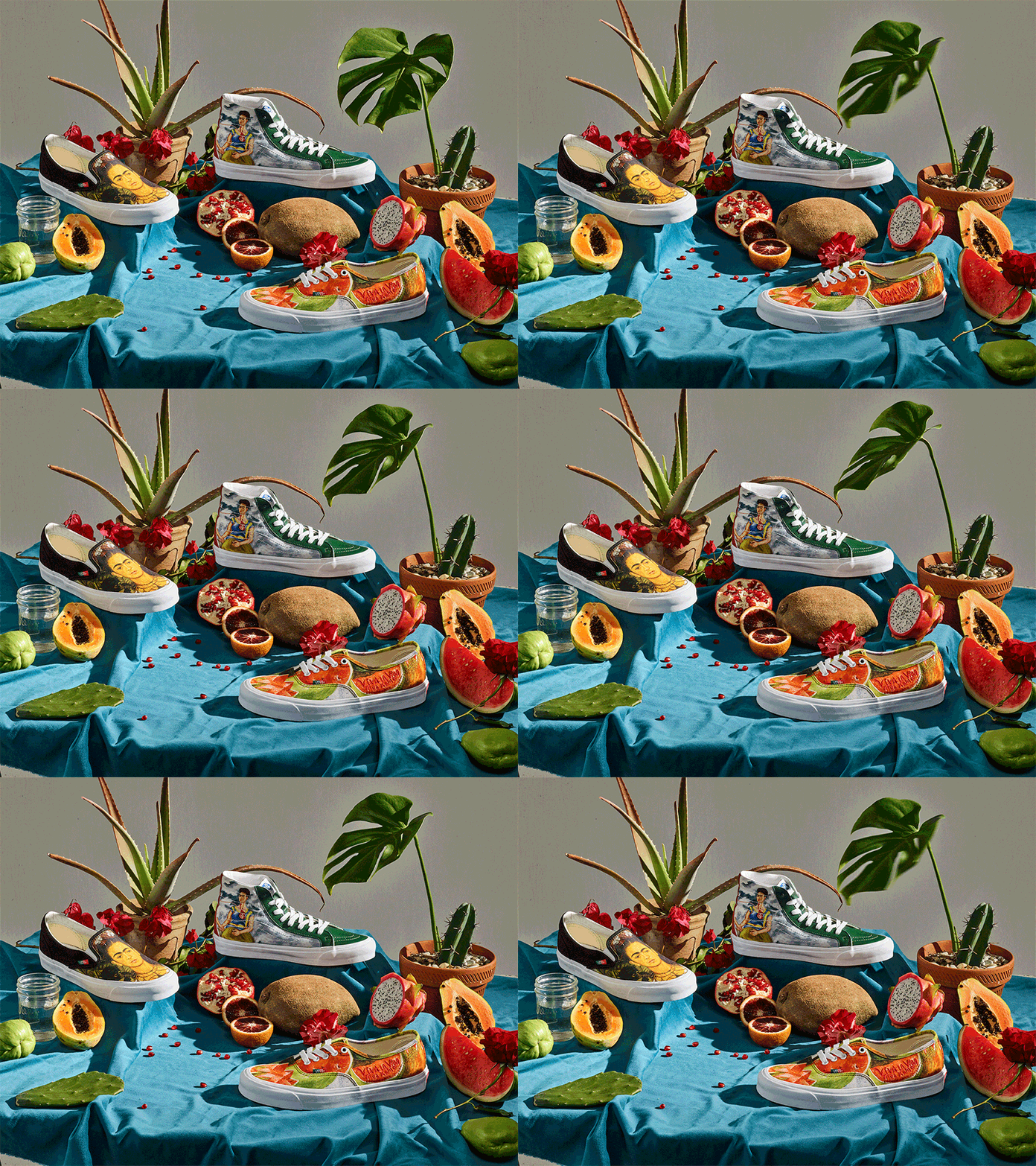
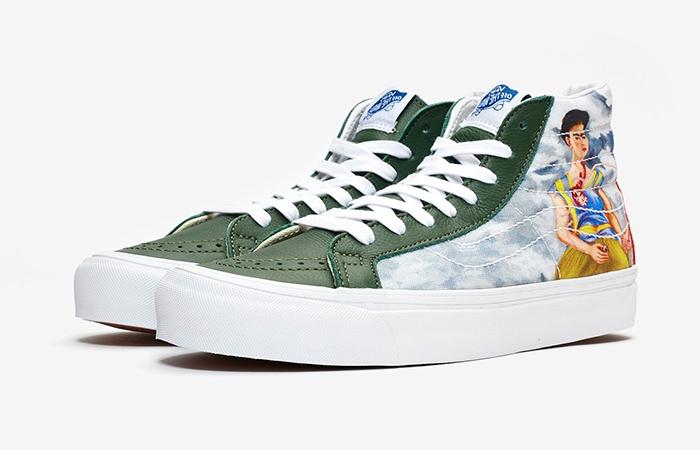
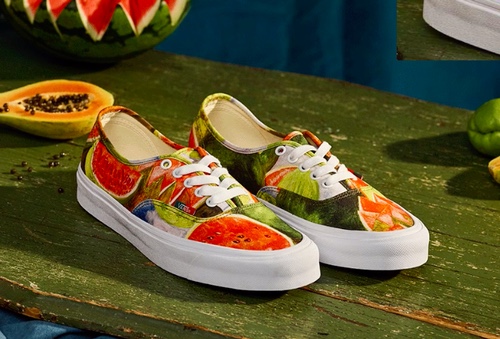
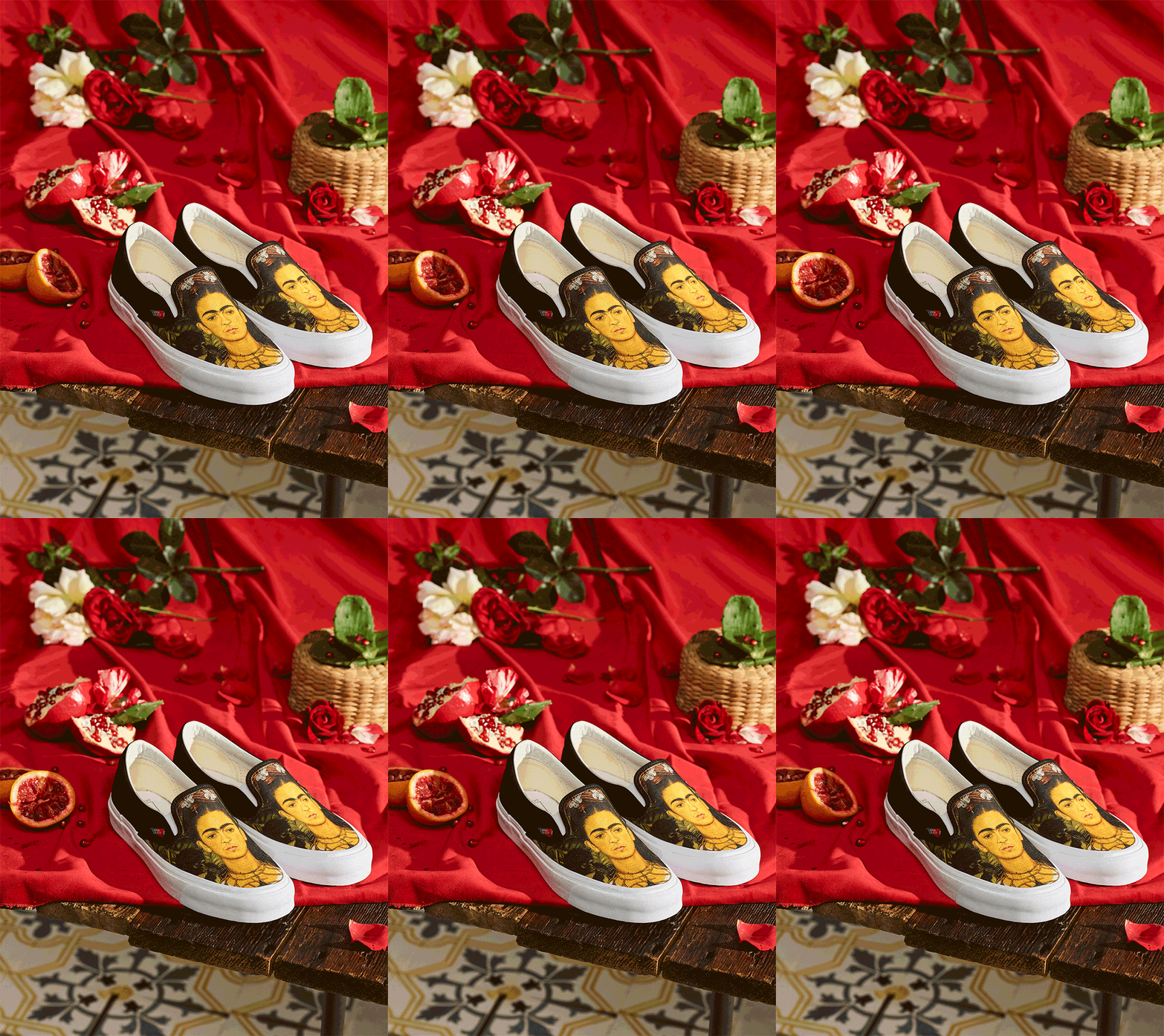
Taking its cue from Doc Marten’s Museum Collection, Vans is releasing three shoes inspired by some of the painter’s most iconic works, 1939’s The Two Fridas, 1940’s Self-Portrait with Thorn Necklace and Hummingbird, and—for those who prefer a more subtly Frida-inspired shoe, 1954’s refreshingly fruity Viva la Vida.
T.S. Eliot asks in the opening stanzas of his Choruses from the Rock, “where is the knowledge we have lost in information?” The passage has been called a pointed question for our time, in which we seem to have lost the ability to learn, to make meaningful connections and contextualize events. They fly by us at superhuman speeds; credible sources are buried between spurious links. Truth and falsehood blur beyond distinction.
But there is another feature of the 21st century too-often unremarked upon, one only made possible by the rapid spread of information technology. Vast digital archives of primary sources open up to ordinary users, archives once only available to historians, promising the possibility, at least, of a far more egalitarian spread of both information and knowledge.
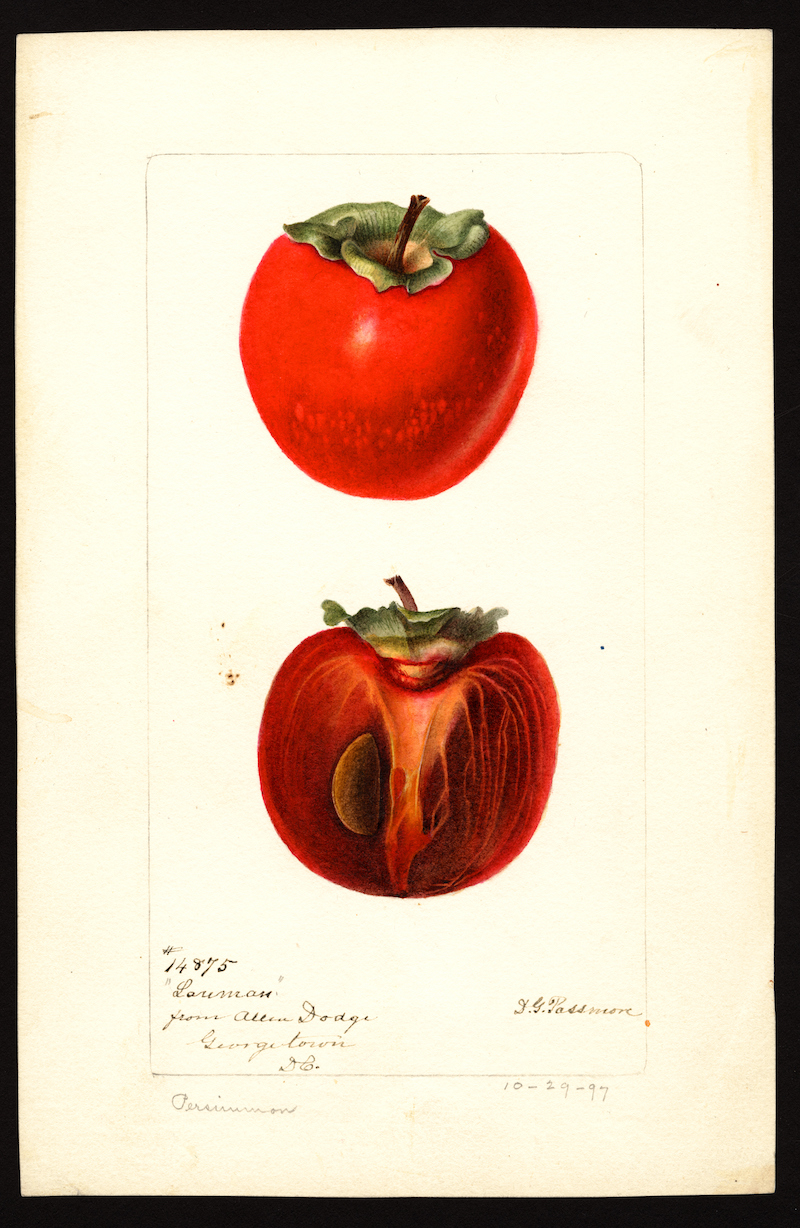
Those archives include the USDA Pomological Watercolor Collection, “over 7,500 paintings, drawings, and wax models commissioned by the USDA between 1886 and 1942,” notes Chloe Olewitz at Morsel. The word “pomology,” “the science and practice of growing fruit,” first appeared in 1818, and the degree to which people depended on fruit trees and fruit stores made it a distinctively popular science, as was so much agriculture at the time.
But pomology was growing from a domestic science into an industrial one, adopted by “farmers across the United States,” writes Olewitz, who “worked with the USDA to set up orchards to serve emerging markets” as “the country’s most prolific fruit-producing regions began to take shape.” Central to the government agency’s growing pomological agenda was the recording of all the various types of fruit being cultivated, hybridized, inspected, and sold from both inside the U.S. and all over the world.
Prior to and even long after photography could do the job, that meant employing the talents of around 65 American artists to “document the thousands and thousands of varieties of heirloom and experimental fruit cultivars sprouting up nationwide.” The USDA made the full collection public after Electronic Frontier Foundation activist Parker Higgins submitted a Freedom of Information Act request in 2015.
Higgins saw the project as an example of “the way free speech issues intersect with questions of copyright and public domain,” as he put it. Historical government-issued fruit watercolors might not seem like the obvious place to start, but they’re as good a place as any. He stumbled on the collection while either randomly collecting information or acquiring knowledge, depending on how you look at it, “challenging himself to discover one new cool public domain thing every day for a month.”
It turned out that access to the USDA images was limited, “with high resolution versions hidden behind a largely untouched paywall.” After investing $300,000, they had made $600 in fees in five years, a losing proposition that would better serve the public, the scholarly community, and those working in-between if it became freely available.
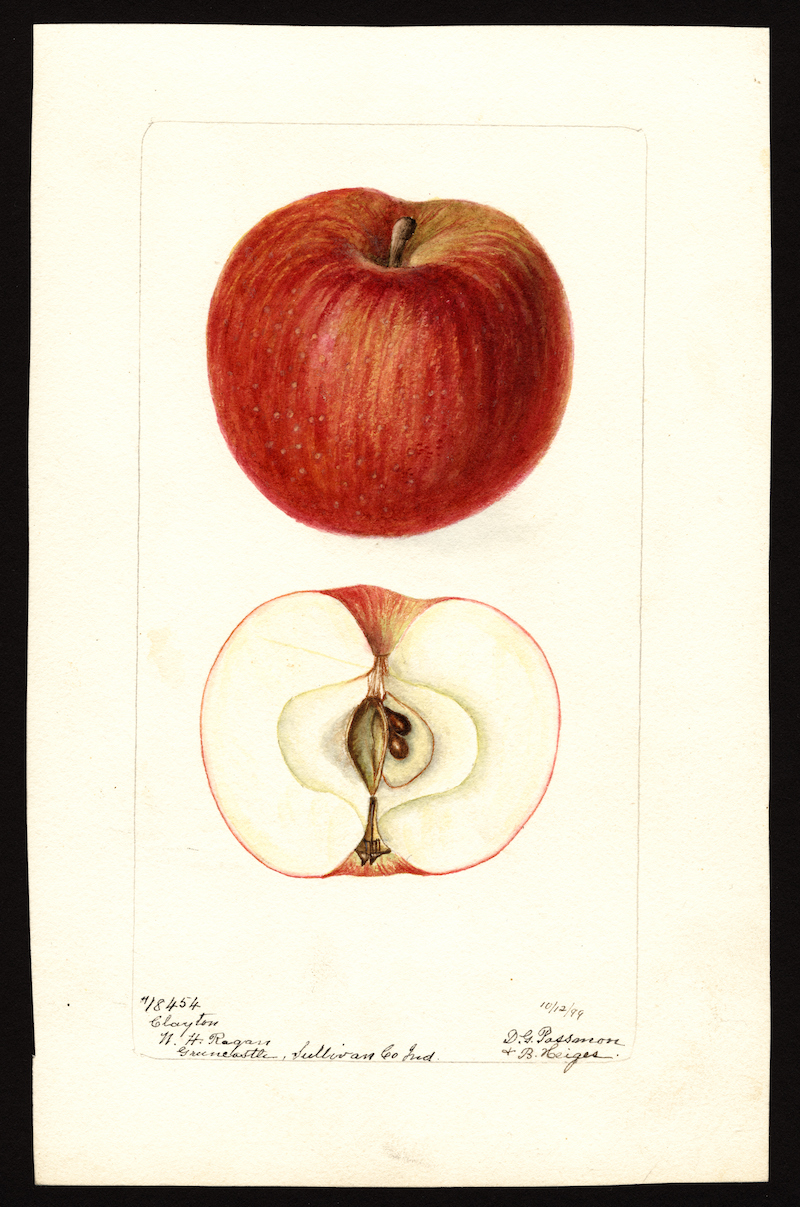
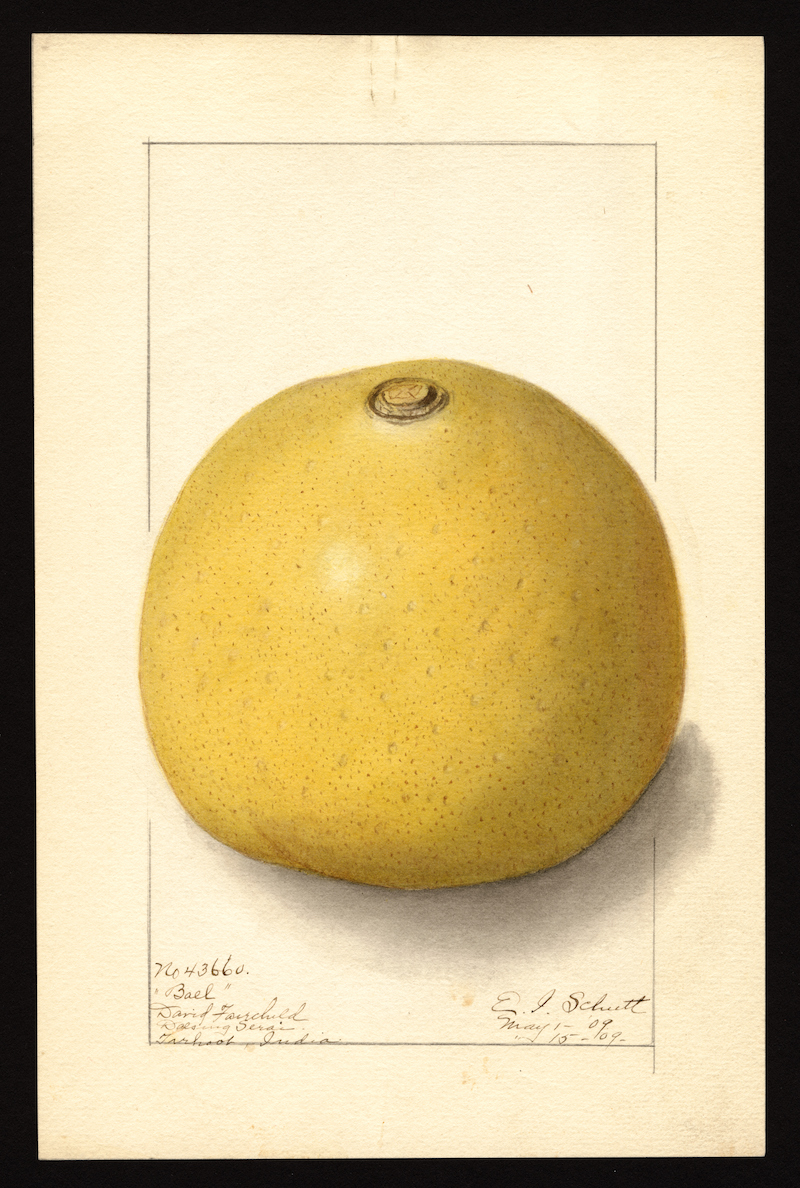
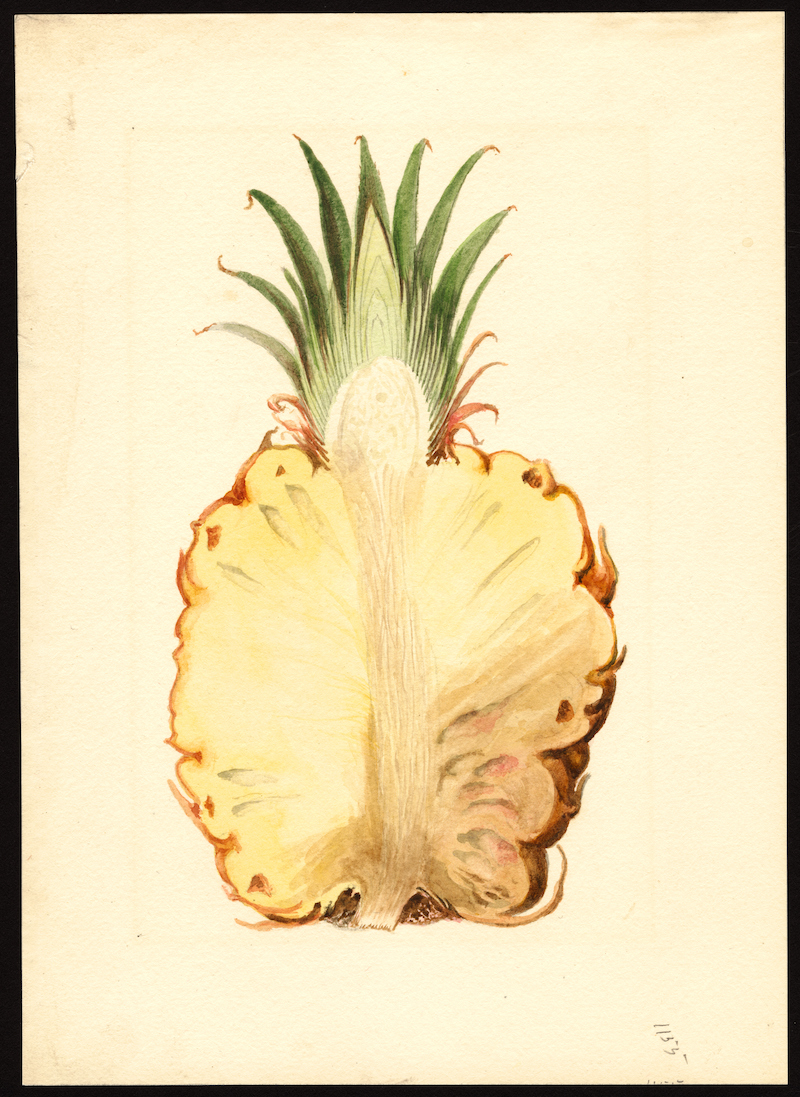
You can explore the entirety of this tantalizing collection of fruit watercolors, ranging in quality from the workmanlike to the near sublime, and from unsung artists like James Marion Shull, who sketched the Cuban pineapple above, Ellen Isham Schutt, who brings us the Aegle marmelos, commonly called “bael” in India, further up, and Deborah Griscom Passmore, whose 1899 Malus domesticus, at the top, describes a U.S. pomological archetype.
It’s easy to see how Higgins could become engrossed in this collection. Its utilitarian purpose belies its simple beauty, and with 3,800 images of apples alone, one could get lost taking in the visual nuances—according to some very prolific naturalist artists—of just one fruit alone. Higgins, of course, created a Twitter bot to send out random images from the archive, an interesting distraction and also, for people inclined to seek it out, a lure to the full USDA Pomological Watercolor Collection.
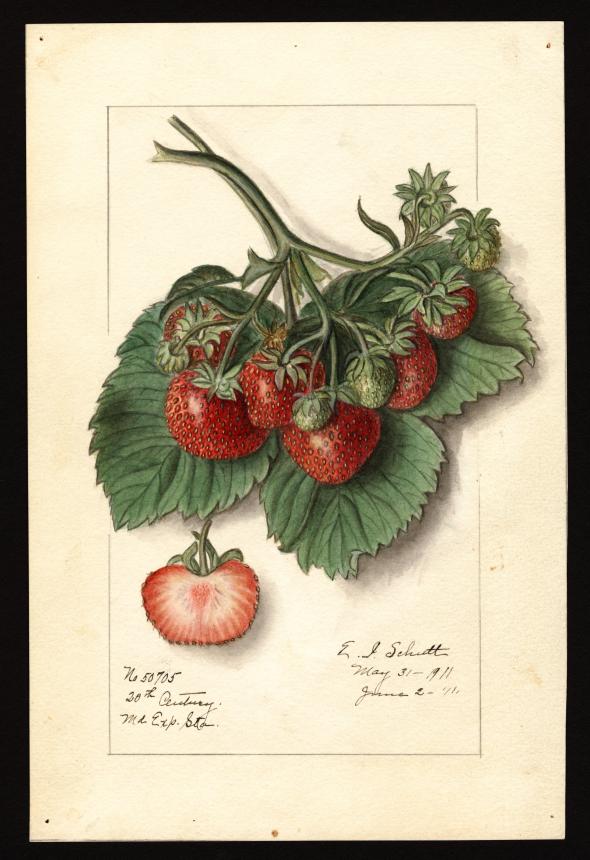
At what point does an exploration of these images tip from information into knowledge? It’s hard to say, but it’s unlikely we would pursue either one if that pursuit didn’t also include its share of pleasure. Enter the USDA’s Pomological Watercolor Collection here to new and download over 7,500 high-resolution digital images like those above.
The seemingly never-ending era of female artists laboring in the shadows cast by their male colleagues is coming to a close.
Ditto the tyranny of the male gaze.
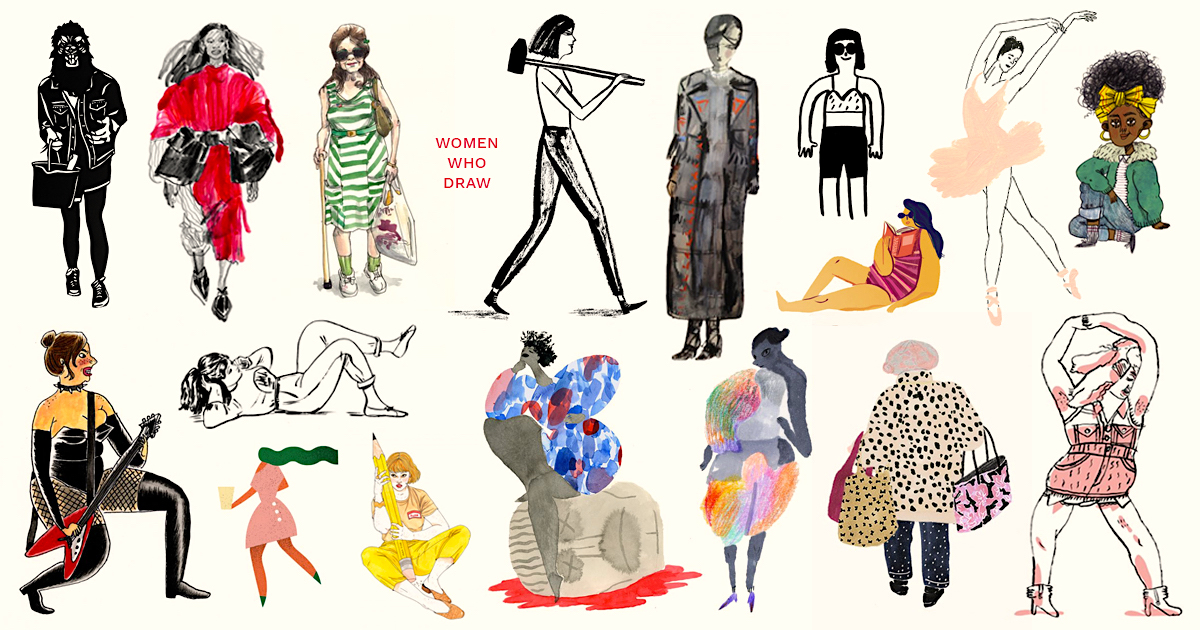
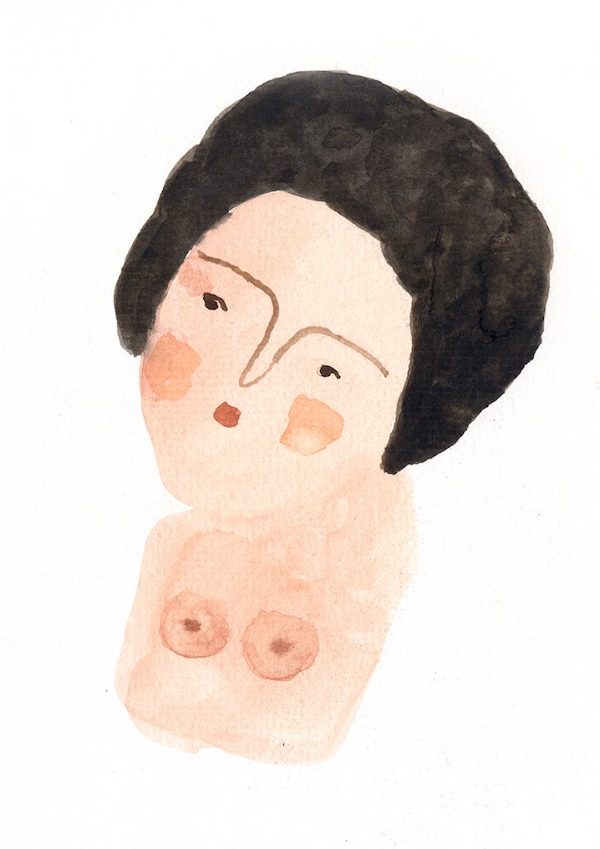
Women Who Draw, a database of over 5,000 professional artists, offers a thrillingly diverse panoply of female imagery, all created, as the site’s name suggests, by artists who identify as women.
Launched by illustrators Julia Rothman and Wendy MacNaughton in response to a dismaying lack of gender parity among cover artists of a prominent magazine—in 2015, men were responsible for 92%—the site aims to channel work to female artists by boosting visibility.
To that end, each illustrator tossing her hat in the ring is required to upload an illustration of a woman, ideally a full body view, on a white background.
The result is an astonishing range of styles, from an international cast of creators.
Not surprisingly, the majority of contributors are based on the East Coast of the United States, but given the site’s mission to promote female illustrators of color, as well as LBTQ+ and other less visible groups, expect to see growing numbers from Africa, the Caribbean, the Middle East, and Central and South America.
In addition to indicating their location, artists can checklist their religion, orientation, and ethnicity/race. (Those who would check“white” or “straight” should be prepared to accept that those categories are tabled as “WWD encourages people to seek out underrepresented groups of women.”)
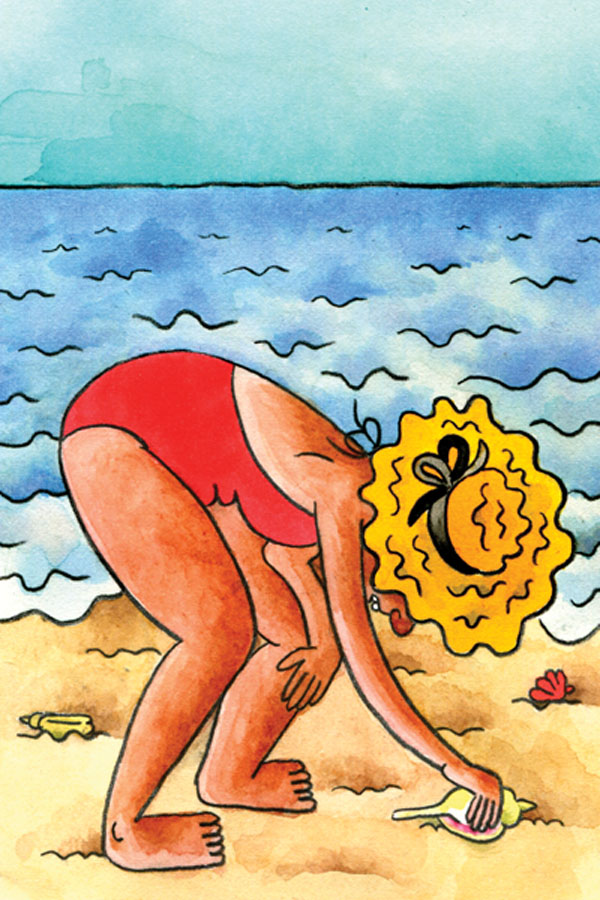
Bean counting aside, the personalities of individual contributors shine through.
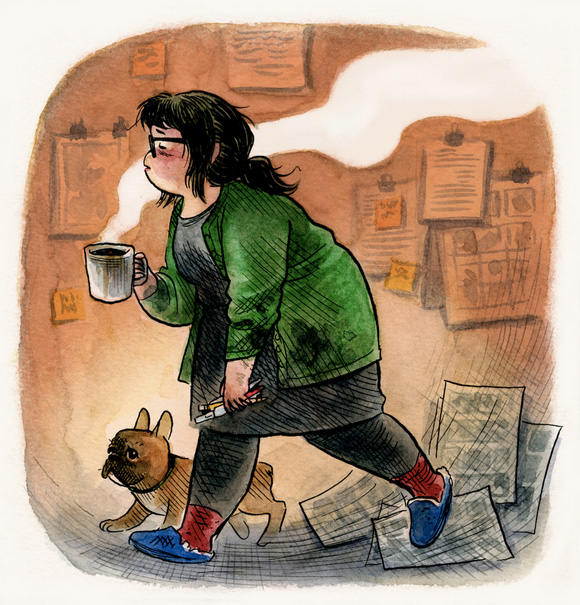
Some, like Paris-based American Laura Park, choose explicit self-portraiture.
Final words of encouragement from Lindsey Andrews, Assistant Art Director for the Penguin Young Readers Design Group:
Just keep putting your work out there in any form you can think of. Update your various social platforms regularly. Mail postcards of your work. Send emails. Network when you can. But, mainly, do what you love. Even if you have a portfolio full of commissioned pieces, I still like to see what you create when you get to create whatever you want. Also, let me know your process!
Perhaps no artist in modern history, save Andy Warhol, has been so well documented, and self-documented, as Frida Kahlo, or has used documentary methods, surrealist and otherwise, to so unflinchingly confront ideas about disability, gender, sexuality, national identity, and relationships. These qualities make her the perfect celebrity artist for our times, but unlike the average 21st century star making art out of self-presentation, Kahlo’s voice has never been heard, though she lived in a time almost as saturated with mass media—of the radio, TV, and film variety—as our own.
That is, perhaps, until now, with the unearthing of what the National Sound Library of Mexico believes to be a recording of her voice, “taken from a pilot episode of 1955 radio show El Bachiller [“The Bachelor”],” writes Steph Harmon at The Guardian. The show “aired after her death in 1954,” likely the following year. Though the program does not introduce her by name, the presenter does refer to her as recently deceased, and she does read an essay about her husband Diego Rivera, which happens to be written by Frida Kahlo. The case seems fairly conclusive.
Previously the little evidence of what she sounded like came from written descriptions, such as French photographer Gisèle Freund’s characterization of her voice as “melodious and warm.” Hear for yourself what is very likely the recorded voice of Frida Kahlo in the audio above. In her typically florid yet unsparing style she paints a verbal portrait of Rivera full of unflattering physical detail and layers of emotion and admiration. In one English translation, she calls him “a huge, immense child, with a friendly face and a sad gaze.
Rivera’s “high, dark, extremely intelligent and big eyes rarely hold still. They almost pop out of their sockets because of their swollen and protuberant eyelids—like a toad’s.” His huge eyes seem “built especially for a painter of spaces and crowds.” The Mexican muralist, she says is like “an inscrutable monster.” These are the words of a writer, we must remember, who was passionately in love with her subject, but who did not pretend to ignore his physical oddities. As she had practiced loving herself, she loved and admired Rivera because of his unique appearance, not in spite of it.
Researchers are making continuing efforts to verify that the voice on the recoding is Kahlo and searching through about 1,300 other episodes of the show, recorded for Televisa Radio, to find out if there are any more recordings of her. Given Frida’s flamboyant persona and minor art stardom in her lifetime, it’s hard to imagine we won’t hear more of her, if this is in fact her, as other archives reveal their secrets.
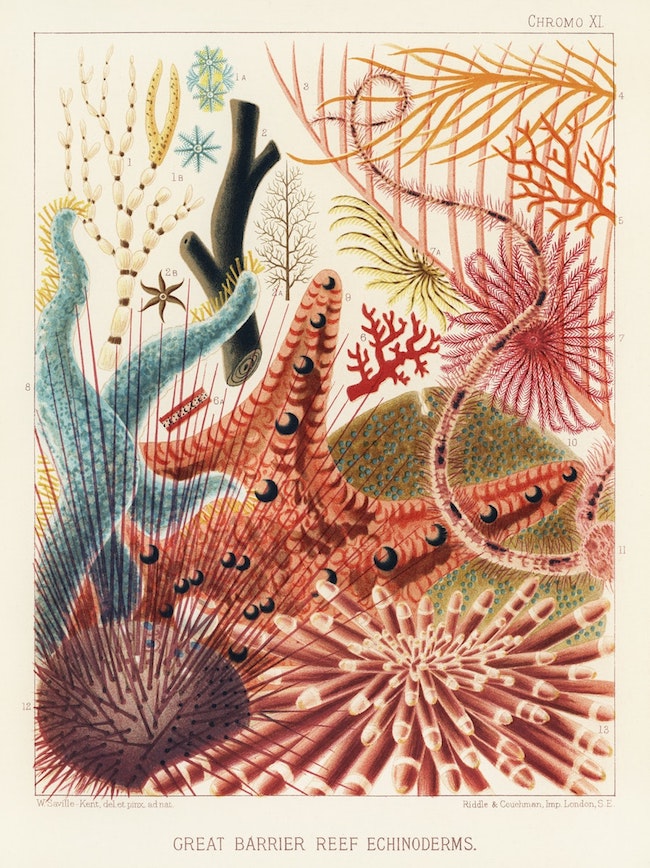
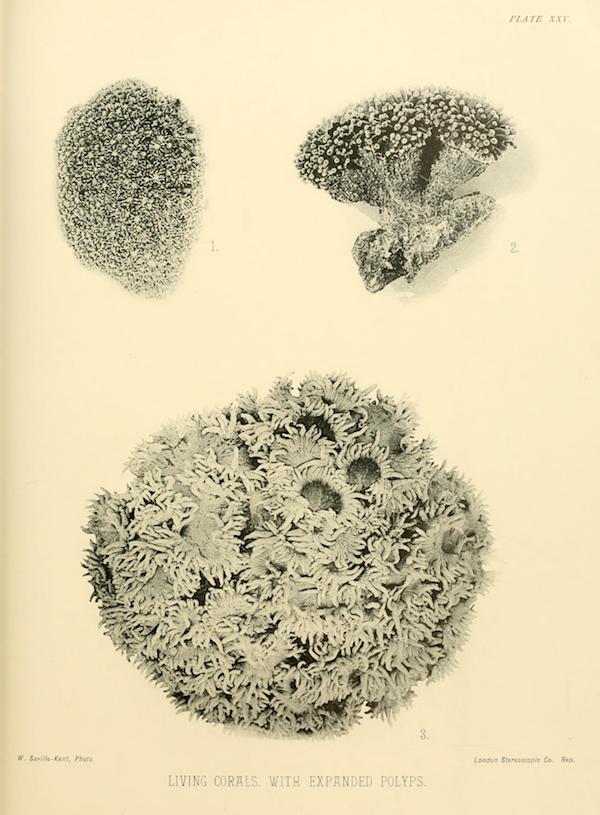
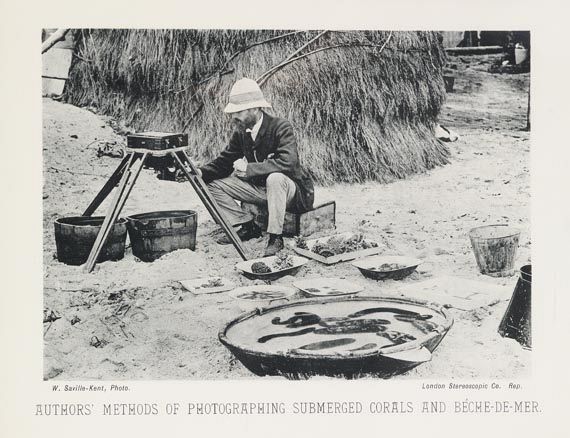
Saville-Kent, a naturalist whose work in various British aquariums eventually led to a gig rebuilding depleted Tasmanian oyster beds, fell hard for the colorful fish, bêche-de-mer, corals, sponges, turtles, and other marine species he encountered in Australia.
He photographed the Great Barrier Reef while serving in Queensland as Commissioner of Fisheries. 48 of his images were published in the aforementioned book, offering readers an unprecedented armchair tour of a coral reef, albeit in black and white.
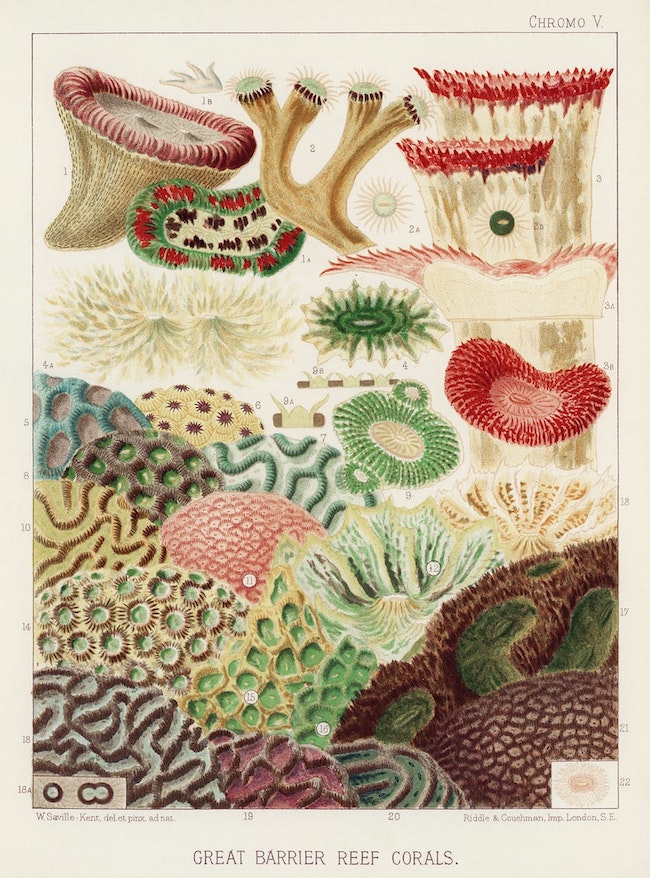
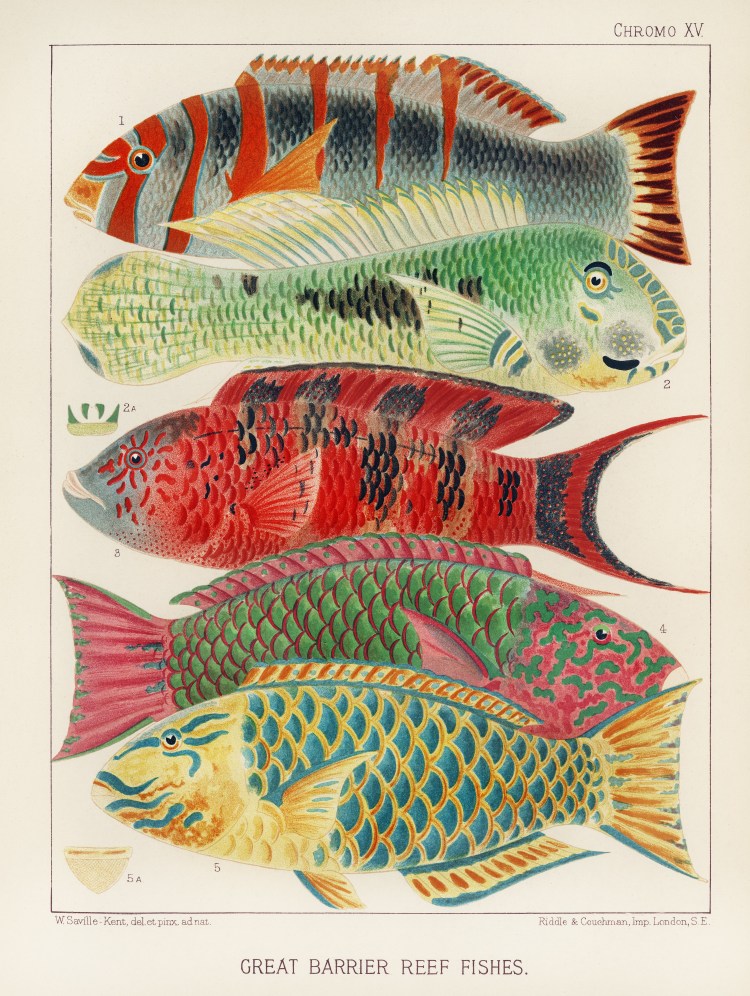
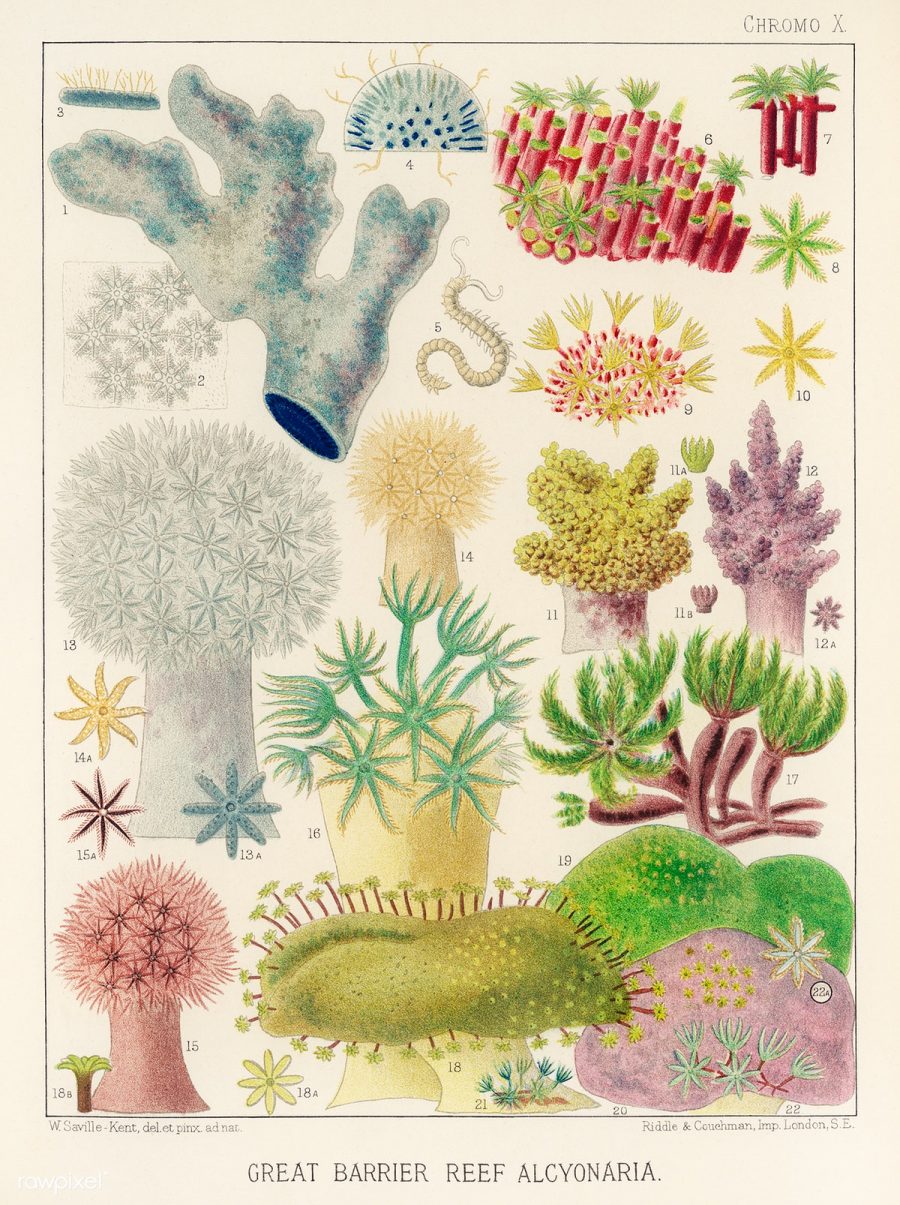
While Saville-Kent definitely achieved his goal of furthering the public’s awareness of the reef, he also upstaged himself by including 16 color lithographs inspired by his original watercolors.
These plates, by London-based lithographers Riddle and Couchman—whose work usually ran toward portraits of well-born gentlemen—exude a lively Seussian appeal.
Saville-Kent’s carefully captured fish, echinoderms, and anemones literally pale in comparison to the bright specimens the lithographers, who presumably lacked his firsthand experience of the forms they were depicting, brought to such vibrant life in the back of the book.
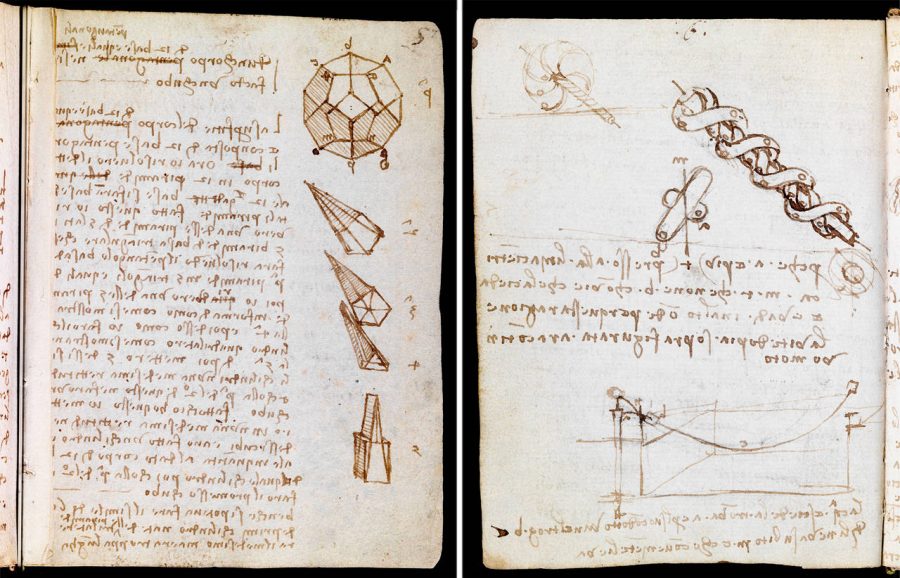
It may seem like a bizarre question, but indulge me for a moment: could it be possible that the most famous artist of the Renaissance and maybe in all of art history, Leonardo da Vinci, is an underrated figure? Consider the fact that until relatively recently, a huge amount of his work—maybe a majority of his drawings, plans, sketches, notes, concepts, theories, etc.—has been unavailable to all but specialized scholars who could access (and read) his copious notebooks, spanning the most productive period of his career.
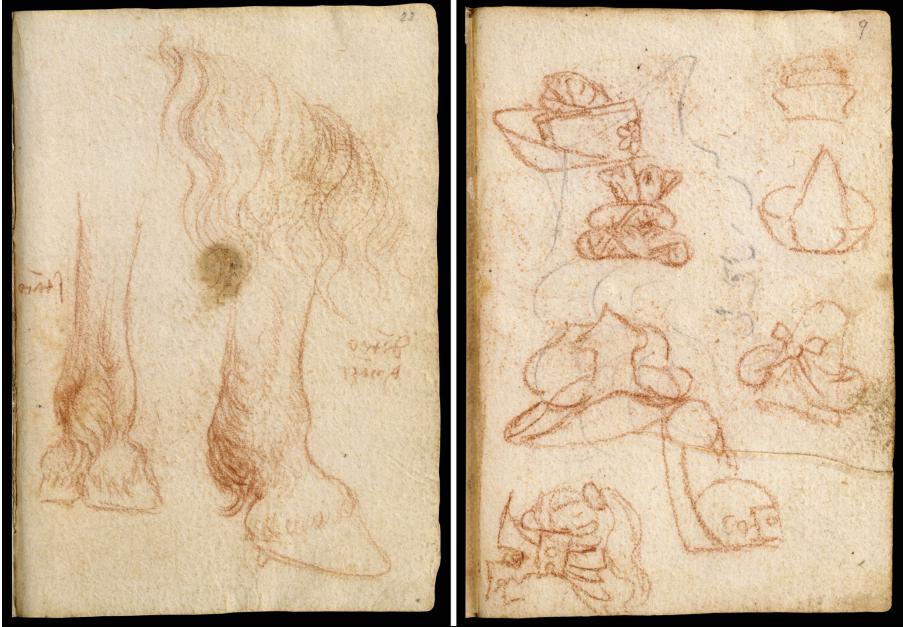
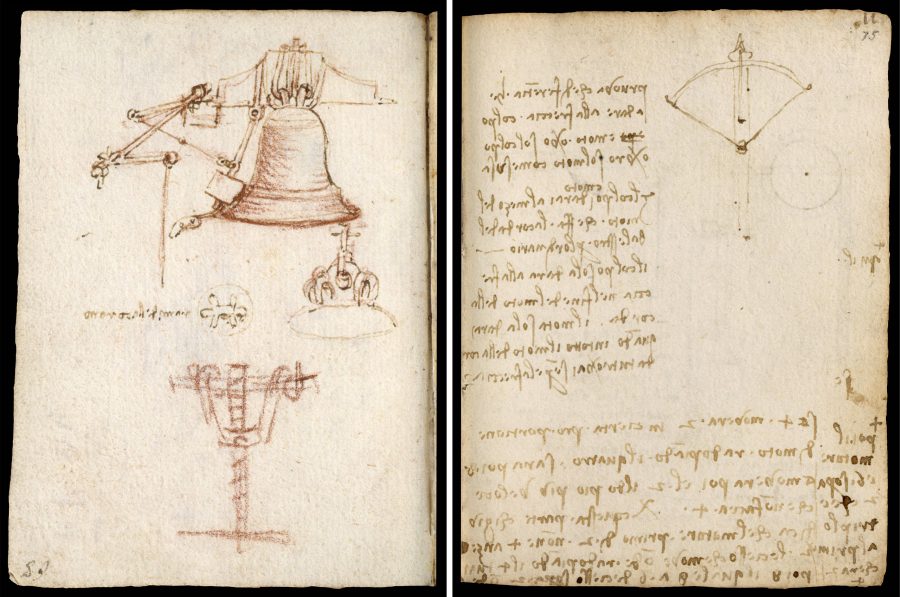
“Leonardo seems to have begun recording his thoughts in notebooks from the mid-1480s,” writes the Victoria & Albert Museum (the V&A), “when he worked as a military and naval engineer for the Duke of Milan. None of Leonardo’s predecessors, contemporaries or successors used paper quite like he did—a single sheet contains an unpredictable pattern of ideas and inventions.” He worked on loose sheets, which were later bound together in books, or codices, by the artists who inherited them. As we have been reporting, these notebook collections have been coming available online in open, high-resolution digital versions.
Now the V&A has announced that all three of its Leonardo codices, called the Forster Codices after the collector who bequeathed them to the museum, are available to view “in amazing detail.” Click here to see Codex Forster 1, Codex Forster 2, and Codex Forster 3. Here we see further evidence that Leonardo was a supreme draughtsman. As Claudio Giorgione, curator at the Leonardo da Vinci National Science and Technology Museum in Milan, points out, “Leonardo was not the only one to draw machines and to do scientific drawings, many other engineers did that,” and many artists as well. “But what Leonardo did better than others is to make a revolution of the technical drawing,” almost defining the field with his meticulous attention to detail.
What’s more, notes University of Oxford Professor Martin Kemp, “while other artists might have been probing some aspects of anatomy—muscles, bones, tendons—Leonardo took the study to a new level.” Such a level, in fact, that he “can be regarded as the father of bioengineering,” argues John B. West in the American Journal of Physiology.
Little attention has been paid to [Leonardo] as a physiologist. But he was an outstanding engineer, and he was one of the first people to apply the principles of engineering to understand the function of animals including humans.
Giorgione warns against seeing Leonardo as a prophetic visionary for his innovations. He was not a man out of time; “the artist engineer is a known figure in Renaissance Italy.” But he perfected the tools and methods of this dual profession with such restless ingenuity and skill that we still find it astonishing over 500 years later. His lengthy explanations of these exceptional technical drawings are written, naturally, in his famous mirror writing.
Of Leonardo’s odd writing system, we may learn something new as well, though we may find this part, at least, a little disappointing. As the V&A points out, his idiosyncratic method might not have been so unique after all, or have been a sophisticated device for Leonardo to hide his ideas from competitors and future curious readers. It might have come about “because he was left-handed and may have found it easier to write from right to left…. Writing masters at the time would have made demonstrations of mirror writing, and his letter-shapes are in fact quite ordinary.”
Nothing else about the man seems to warrant that description. See all three Forster Codices the Victoria & Albert Museum site here: Codex Forster 1, Codex Forster 2, and Codex Forster 3. And see one codex from the collection, as the V&A announced on Twitter, live in person at the British Library’s Leonardo da Vinci: A Mind in Motion exhibit.
In Good Omens—the six-episode adaptation of Terry Pratchett and Neil Gaiman’s satirical fantasy about the Biblical end of the world—a running joke relies on the viewer’s offhand knowledge of the Velvet Underground’s significance. A refined, rare bookshop-owning angel calls the band “bebop” and has no idea who they are or what they sound like, a forgivable sin in the 70s, but seriously out of touch decades later in the 21st century.
The scheming supernatural agent should probably know that the Lou Reed (and briefly Nico)-fronted, Andy Warhol-managed late-1960s-70s experimental New York art rock band had an outsized influence on human affairs. Bridging a divide no one even knew existed between beat poetry, avant-garde jazz, psychedelic garage rock, doo-wop, and European folk music, the band is anecdotally credited with launching thousands of others—having as much impact, perhaps, on modern rock as Charlie Parker had on modern jazz.
Warhol could not have known any of this when he decided to sponsor and promote the Velvet Underground in 1966. He only managed the band for a year, in what seemed like both a stunt and a performance art project, part of his traveling multimedia show Exploding Plastic Inevitable, which he calls “the biggest discotheque in the world” in the 1966 interview above. Warhol acted, and the band reacted, shaping themselves around his provocations. He projected high-contrast films at them onstage, they put on sunglasses. He pushed deadpan German model and singer Nico on them, they wrote and recorded what some consider the greatest debut album in history.
Warhol couldn’t have known how any of it would pan out, but in hindsight his patronage can seem like a prescient, almost metaphysical, act of cultural subversion—and the work of a guileless savant compelled by vague intuitions and whims. He preferred to give off the latter impression, then let critics infer the former. Warhol explains that he has abandoned painting and started managing the band because “I hate objects, and I hate to go to museums and see pictures of the world, because they look so important and they don’t really mean anything.”
Few people doubt the management of his public persona was at least partially calculated. But so much of it clearly wasn’t—as evidenced by his own exhaustive recording of every detail of his life. Despite the amount of calculation ascribed to him, a quality the interviewer awkwardly tries to ask him about, he seems to have been stupefied about his own motivations much of the time, beyond the fact that he strongly liked and disliked certain simple things—Elvis, Campbell’s Soup, obscure blonde femme fatales. At other times, Warhol issued aphorisms as cryptic and profound as an ancient sage or post-war critical theorist.
Was the Velvet Underground more like Warhol’s uncomplicated love of cheeseburgers and Batman or more like his sophisticated deconstruction of film, media, and fashion, or are these not mutually exclusive ways of looking at his work? The question may not really concern music historians, for whom Warhol’s early influence was formative, but maybe musically marginal. But if we think of him as a motive force behind the band’s look and early sound—a kind of conscious creative reagent—we might be curious about what he meant by it, if anything.
We're hoping to rely on loyal readers, rather than erratic ads. Please click the Donate button and support Open Culture. You can use Paypal, Venmo, Patreon, even Crypto! We thank you!
Open Culture scours the web for the best educational media. We find the free courses and audio books you need, the language lessons & educational videos you want, and plenty of enlightenment in between.