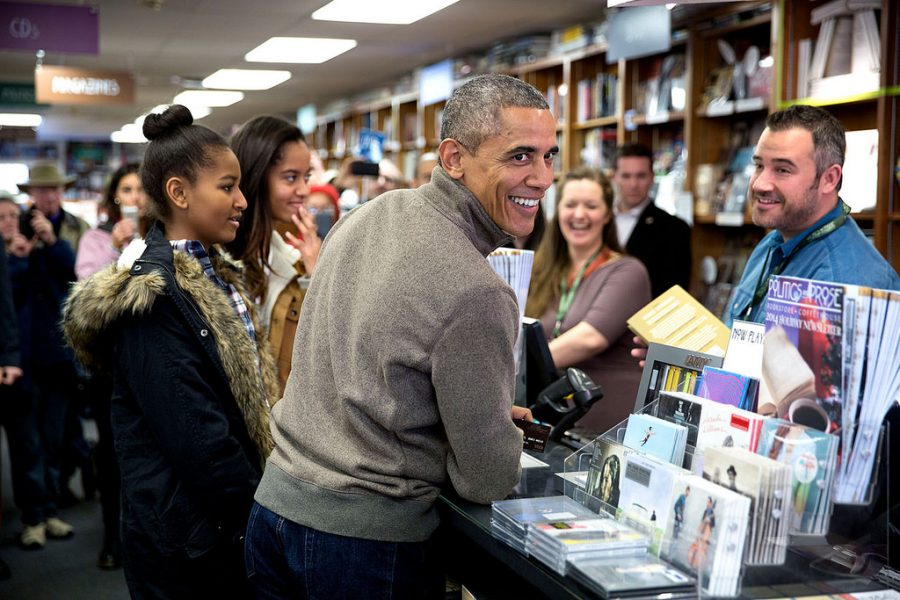
As the current president grinds his ax on Twitter, the former one reads and reflects. Yesterday, Barack Obama posted on Facebook his summer reading list, a mix of novels, memoirs, and instructive non-fiction. He writes:
One of my favorite parts of summer is deciding what to read when things slow down just a bit, whether it’s on a vacation with family or just a quiet afternoon. This summer I’ve been absorbed by new novels, revisited an old classic, and reaffirmed my faith in our ability to move forward together when we seek the truth. Here’s what I’ve been reading:
Tara Westover’s Educatedis a remarkable memoir of a young woman raised in a survivalist family in Idaho who strives for education while still showing great understanding and love for the world she leaves behind.
With the recent passing of V.S. Naipaul, I reread A House for Mr Biswas, the Nobel Prize winner’s first great novel about growing up in Trinidad and the challenge of post-colonial identity.
Factfulness by Hans Rosling, an outstanding international public health expert, is a hopeful book about the potential for human progress when we work off facts rather than our inherent biases.
POTUS’ previous lists of recommended books can be found in the Relateds below.
If you would like to support the mission of Open Culture, consider making a donation to our site. It’s hard to rely 100% on ads, and your contributions will help us continue providing the best free cultural and educational materials to learners everywhere. You can contribute through PayPal, Patreon, and Venmo (@openculture). Thanks!
Nobody can doubt that we can live in an age of screen-reading, nor that it has brought a few problems along with its considerable conveniences. To name just one of those problems, each of us reads on our own screen, and each screen reproduces the information fed into it to display differently. A color, for instance, might well not look quite the same to any given reader of an e‑book as it did to the designer who originally chose it. This imbues with a new relevance the old dorm-room philosophical question of whether what I call “blue” really looks the same as what you call “blue,” and at least the more controllable nature of old-fashioned print books takes the issue of screen variation out of the equation.
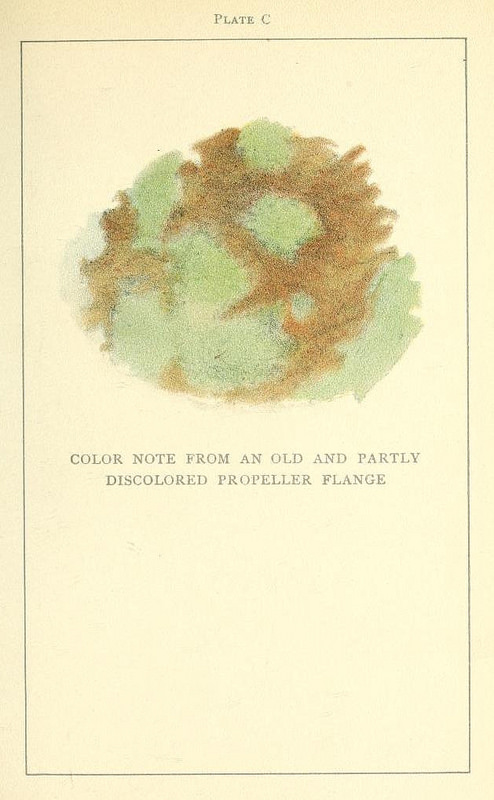
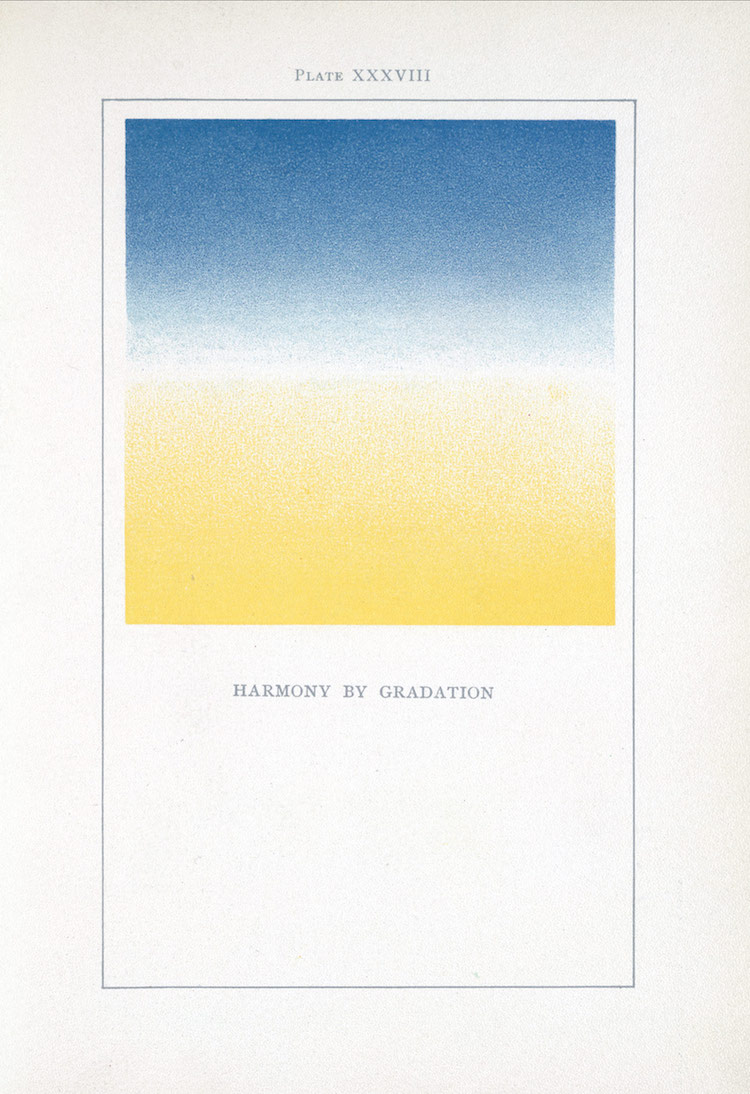
Hence the value in bringing back to print certain visually-oriented books, even when we can already read them on our screens. This goes especially for volumes like Emily Noyes Vanderpoel’s Color Problems: a Practical Manual for the Lay Student of Color, which deals directly with issues of color in the physical world and its representation. Vanderpoel, an artist and historian, first published the book “under the guise of flower painting and decorative arts, subjects that were appropriate for a woman of her time,” writes Colossal’s Kate Sierzputowski. But “the study provided an extensive look at color theory ideas of the early 20th century,” and one whose techniques proved silently influential over time. “Many of the included studies predict design and art trends that wouldn’t occur for several decades, such as a concentric square format that predates Joseph Albers’s Homage to the Square by fifty years.”
You can read a digitized version of Color Problems at the Internet Archive (or embedded right above), but know that publisher The Circadian Press and Sacred Bones Records recently raised well over $200,000 on Kickstarter to republish the book in its full paper glory. “With this new edition we have taken meticulous measures to reproduce the original artifact at an affordable price,” says the project’s about page. “Working with the Historical Society that Emily Noyes Vanderpoel helped establish, we are the first to invest the time, money, and love it takes to replicate this brilliant collection of color studies accurately. Using the most current digital methods and archival printing production, we aim to finally do justice to Vanderpoel’s forgotten legacy as visionary and pioneer.”
This new edition will also feature an introduction by design scholar Alan P. Bruton meant to “reflect on her incredible body of work from the vantage point of 21st century art history and women’s movements, helping to illustrate that Vanderpoel remains one of the most important, underrated, and contemporarily relevant artists of her time and of the last century.” Had Vanderpoel published ColorProblems thirty years later, writes John F. Ptak in his examination of the book, “we’d call it some sort of constructivist/constructionist art form. But since the artwork in the book comes a decade before the first non-representational artwork in human history (or so), I don’t know exactly what to call it.” Its republication will allow generations of new readers, seeing it in the way Vanderpoel intended it to be seen, to come to conclusions like Ptak’s: “I still do not know what this book is trying to tell me, but I do know that it is remarkable.”
Based in Seoul, Colin Marshall writes and broadcasts on cities and culture. His projects include the book The Stateless City: a Walk through 21st-Century Los Angeles and the video series The City in Cinema. Follow him on Twitter at @colinmarshall or on Facebook.
It’s unusual to encounter a pop-up book for sale in a thrift store.
Their enthusiastic child owners tend to work them so hard, that eventually even sentimental value is trashed.
Stuck slider bars and torn flaps scotch the element of surprise.
Scenes that once sprang to crisp attention can barely manage a flaccid 45° angle.
One good yank and Cinderella’s coach gives way forever, leaving an unsightly crust of dried glue.
Their natural tendency toward obsolescence only serves to make author Ellen G. K. Rubin’s international collection of more than 9000 pop-up and moveable books all the more astonishing.
The Popuplady—an honorific she sports with pride—would like to correct three commonly held beliefs about the objects of her highly specialized expertise:
They are not a recent phenomenon. One item in her collection dates back to 1547.
They were not originally designed for use by children (as a 1933 flip book with photo illustrations on how women can become better sexual partners would seem to indicate.)
They were once conceived of as excellent educational tools in such weighty subjects as mathematics, astronomy, medicine… and, as mentioned above, the boudoir.
A Yale trained physician’s assistant, she found that her hobby generated much warmer interest at social events than her daily toil in the area of bone marrow transplants.
And while paper engineering may not be not brain surgery, it does require high levels of artistry and technical prowess. It galls Rubin that until recently, paper engineers went uncredited on the books they had animated:
Paper engineers are the artists who take the illustrations and make them move. They are puppetmasters, but they hand the strings to us, the reader.
As seen in Atlas Obscura’s video, above, Rubin’s collection includes a moving postage stamp, a number of wheel-shaped volvelles, and a one-of-a-kind elephant-themed mini-book her friend, paper engineer, Edward H. Hutchins, created from elephant dung paper she found on safari.
She has curated or served as consultant for a number of pop-up exhibitions at venues including the Brooklyn Public Library, the Biennes Center of the Literary Arts and the Smithsonian’s National Museum of American History. See a few more examples from her collection, which were displayed as part of the latter’s Paper Engineering: Fold, Pull, Pop & Turn exhibition here.
Even by the extreme standards of dystopian fiction, the premise of Ray Bradbury’s Fahrenheit 451can seem a little absurd. Firemen whose job is to set fires? A society that bans all books? Written less than a decade after the fall of the Third Reich, which announced its evil intentions with book burnings, the novel explicitly evokes the kind of totalitarianism that seeks to destroy culture—and whole peoples—with fire. But not even the Nazis banned all books. Not a few academics and writers survived or thrived in Nazi Germany by hewing to the ideological orthodoxy (or at least not challenging it), which, for all its terrifying irrationalism, kept up some semblance of an intellectual veneer.
The novel also recalls the Soviet variety of state repression. But the Party apparatus also allowed a publishing industry to operate, under its strict constraints. Nonetheless, Soviet censorship is legendary, as is the survival of banned literature through self-publishing and memorization, vividly represented by the famous line in Mikhail Bulgokov’s The Master and Margarita, “Manuscripts don’t burn.”
Bulgakov, writes Nathaniel Rich at Guernica, is saying that “great literature… is fireproof. It survives its critics, its censors, and even the passage of time.” Bulgakov wrote from painful experience. When his diary was discovered by the NKVD in 1929, then returned to him, he “promptly burned it.” Sometime afterward, during the long composition of his posthumously published novel, he burned the manuscript, then later reconstructed it from memory.
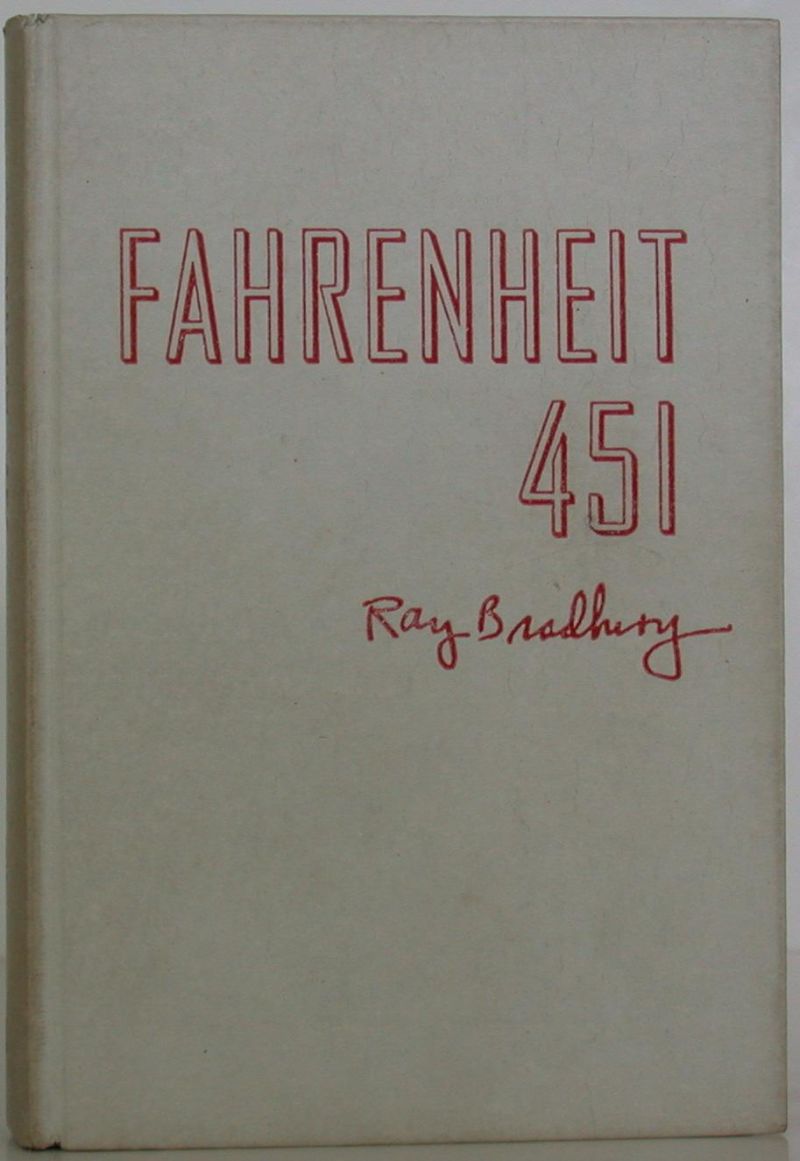
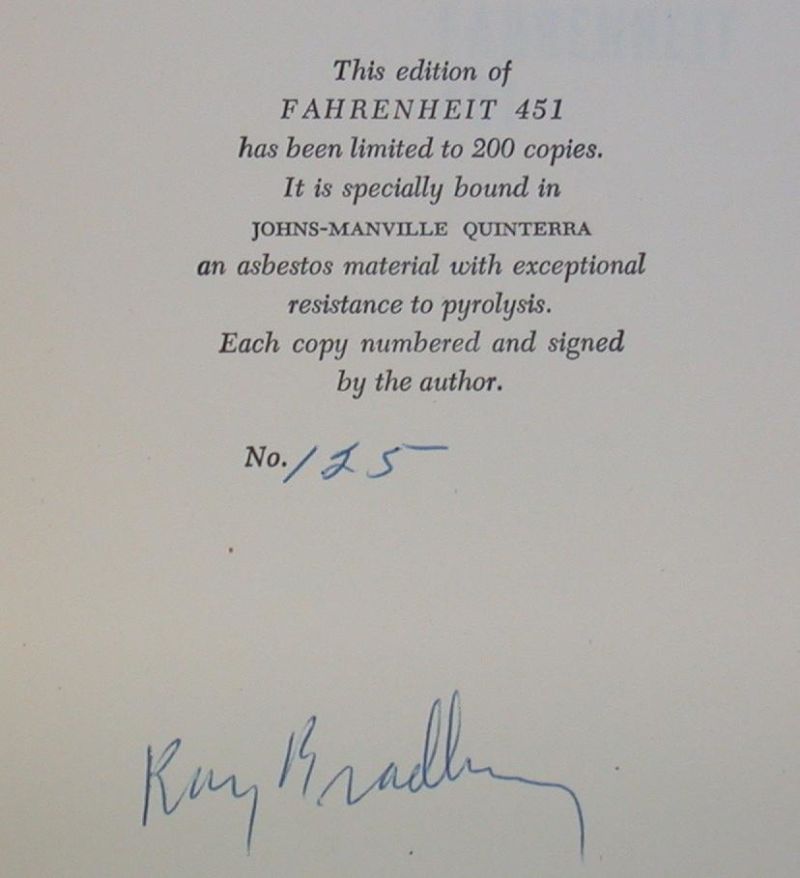
These examples bring to mind the exiled intellectuals in Bradbury’s novel, who have memorized whole books in order to one day reconstruct literary culture. Europe’s totalitarian regimes provide essential background for the novel’s plot and imagery, but its key context, Bradbury himself noted in a 1956 radio interview, was the anti-Communist paranoia of the U.S. in the early 1950s. “Too many people were afraid of their shadows,” he said, “there was a threat of book burning. Many of the books were being taken off the shelves at that time.” Reading the novel as a chilling vision of a future when all books are banned and burned makes the artifact pictured above particularly poignant—an edition of Fahrenheit 451 bound in fireproof asbestos.
Released in 1953 by Ballantine in a limited run of two-hundred signed copies, the books were “bound in Johns-Manville Qinterra,” notes Lauren Davis at io9, “a chrysolite asbestos material.” Now the fireproof covers, with their “exceptional resistance to pyrolysis,” are “much sought after by collectors” and go for upwards of $20,000. A fireproof Fahrenheit 451, on the one hand, can seem a little gimmicky (its pages still burn, after all). But it’s also the perfect manifestation of a literal interpretation of the novel as a story about banning and book burning. All of us who have read the novel have likely read it this way, as a vision of a repressive totalitarian nightmare. As such, it feels like a product of mid-twentieth century fears.
Rather than fearing mass book burnings, we seem, in the 21st century, on the verge of being washed away in a sea of information (and dis- and mis-information). We are inundated with writing—in print and online—such that some of us despair of ever finding time to read the accumulating piles of books and articles that daily surround us, physically and virtually. But although books are still published in the millions, with sales rising, falling, then rising again, the number of people who actually read seems in danger of rapidly diminishing. And this, Bradbury also said, was his real fear. “You don’t have to burn books to destroy a culture,” he claimed, “just get people to stop reading them.”
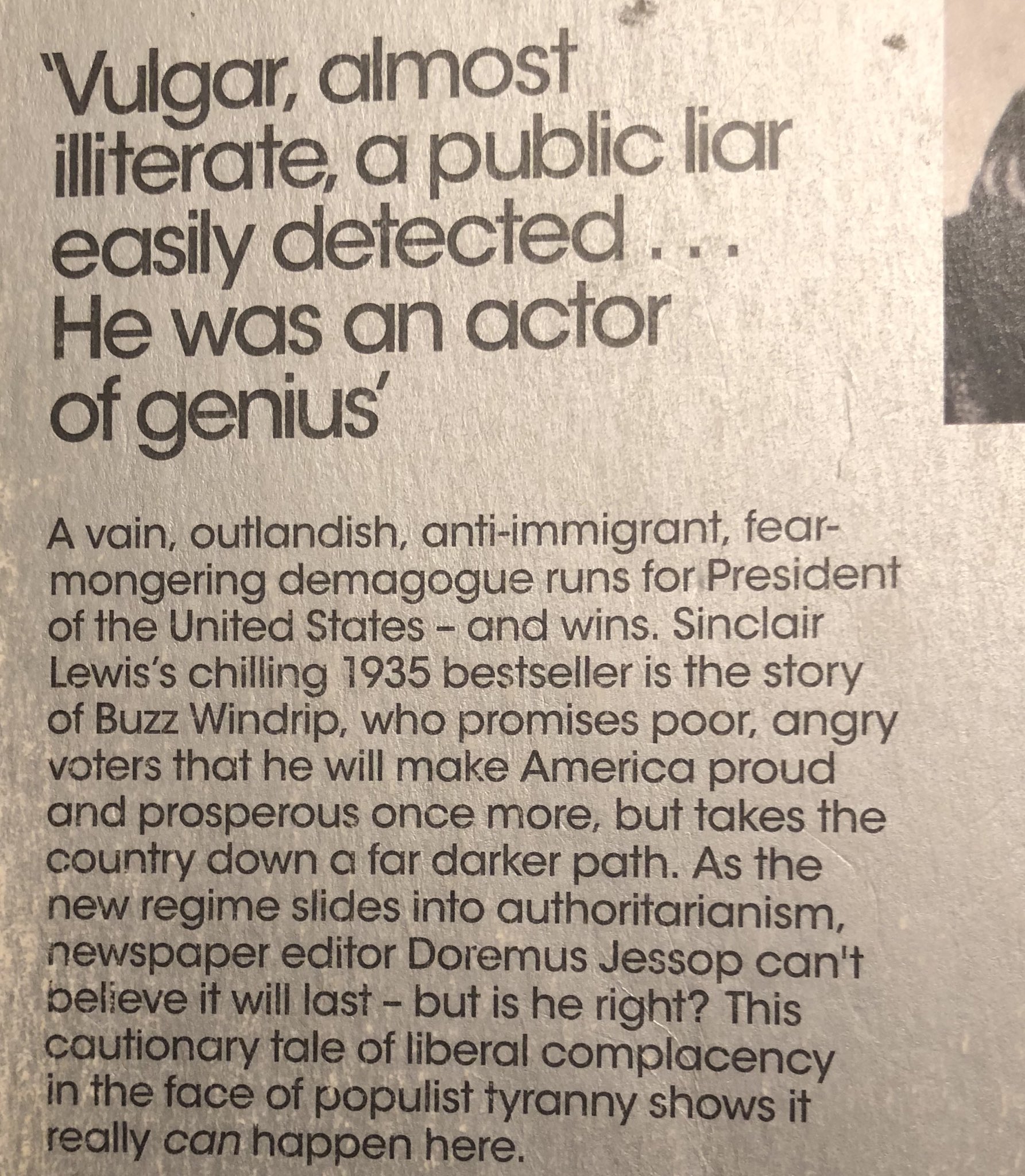
We’ve misread Fahrenheit 451, Bradbury told us in his later years. It is an allegory, a symbolic representation of a grossly dumbed-down society, hugely oppressive and destructive in its own way. The firemen are not literal government agents but symbolic of the forces of mass distraction, which disseminate “factoids,” lies, and half-truths as substitutes for knowledge. The novel, he said, is actually about people “being turned into morons by TV.” Add to this the proliferating amusements of the online world, video games, etc. and we can see Bradbury’s Fahrenheit 451not as a dated representation of 40s fascism or 50s repression, but as a too-relevant warning to a distractible society that devalues and destroys education and factual knowledge even as we have more access than ever to literature of every kind.
If you would like to support the mission of Open Culture, consider making a donation to our site. It’s hard to rely 100% on ads, and your contributions will help us continue providing the best free cultural and educational materials to learners everywhere. You can contribute through PayPal, Patreon, and Venmo (@openculture). Thanks!
You can lead the I‑generation to a bookstore, but can you make them read?
Perhaps, especially if the volume has an eye-catching cover image that bleeds off the edge.
If nothing else, they can be enlisted to provide some stunning free publicity for the titles that appeal to their highly visual sense of creative play. (An author’s dream!)
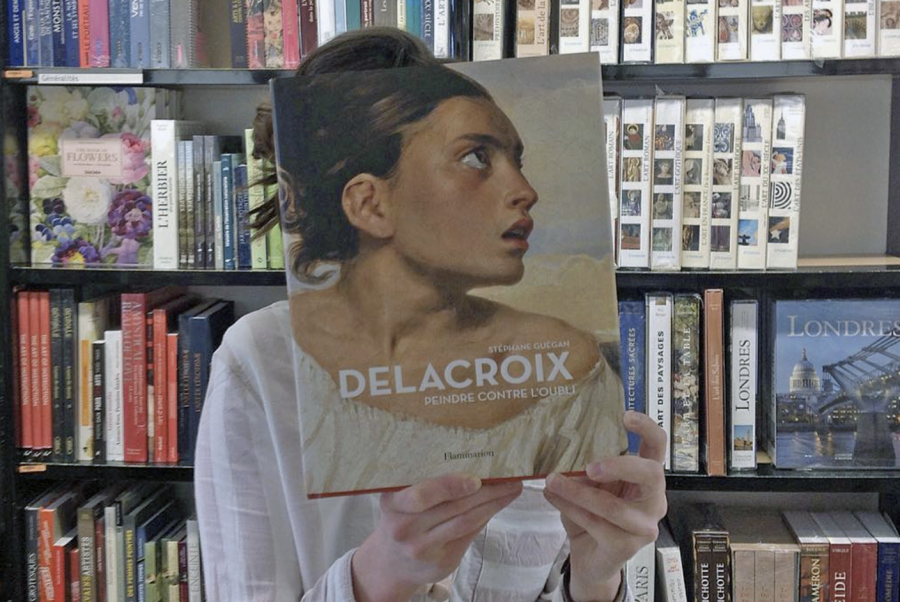
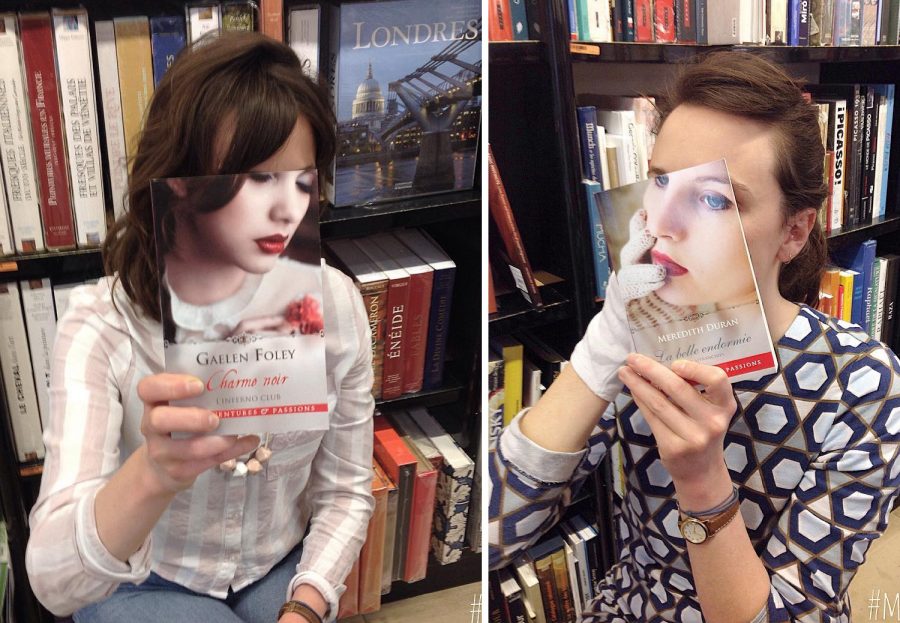
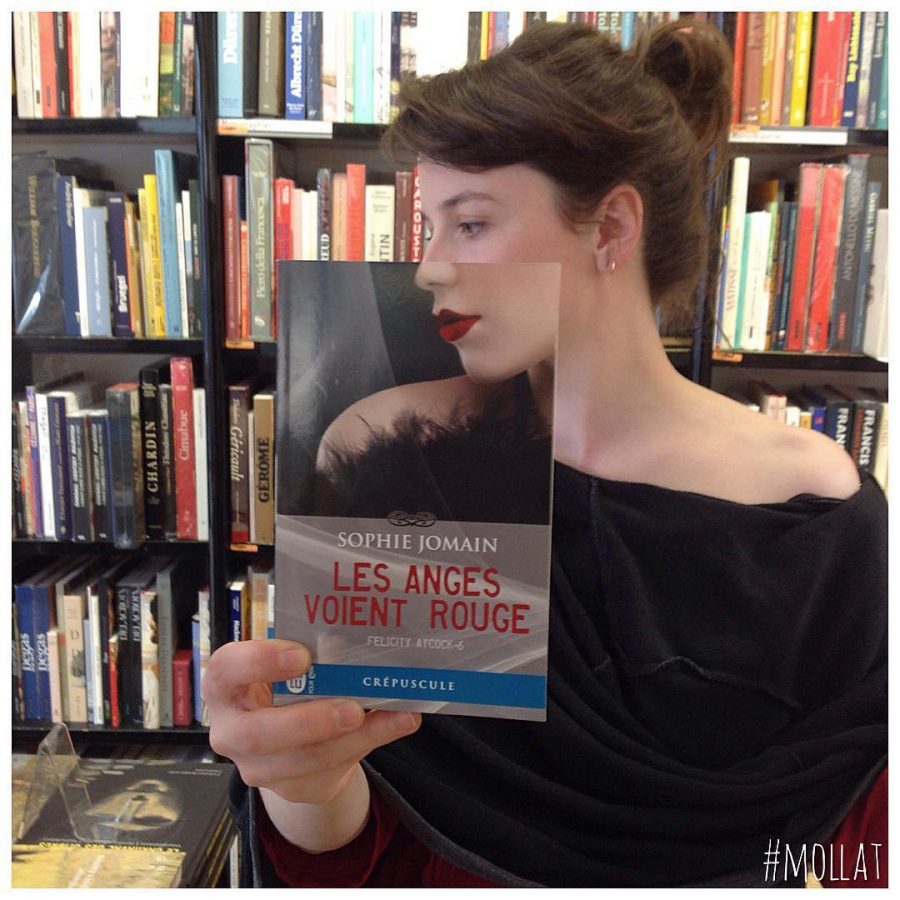
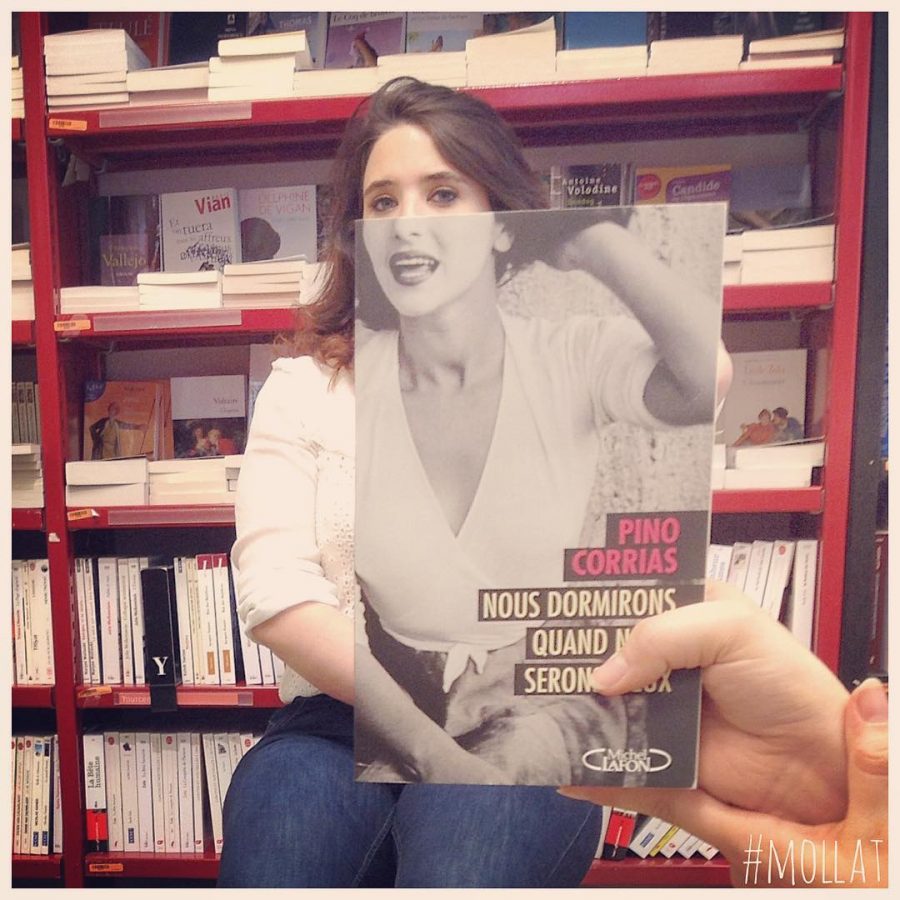
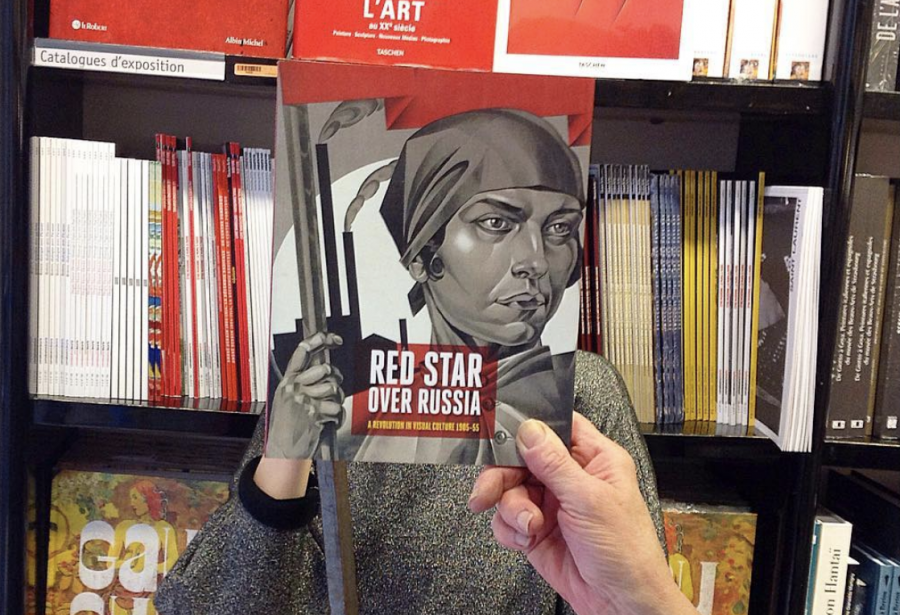
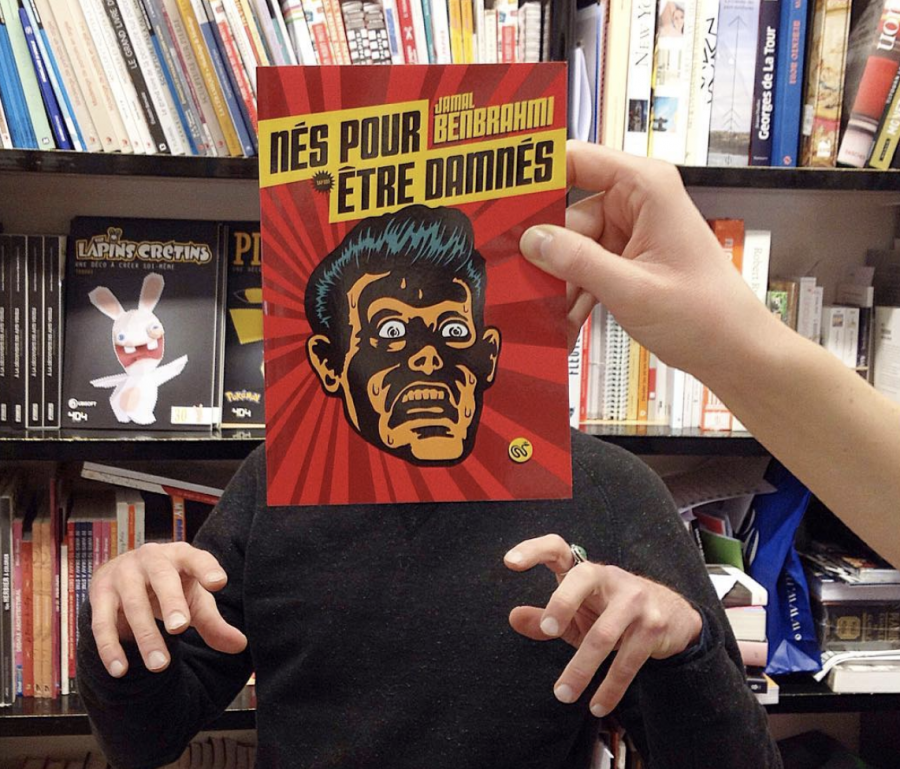
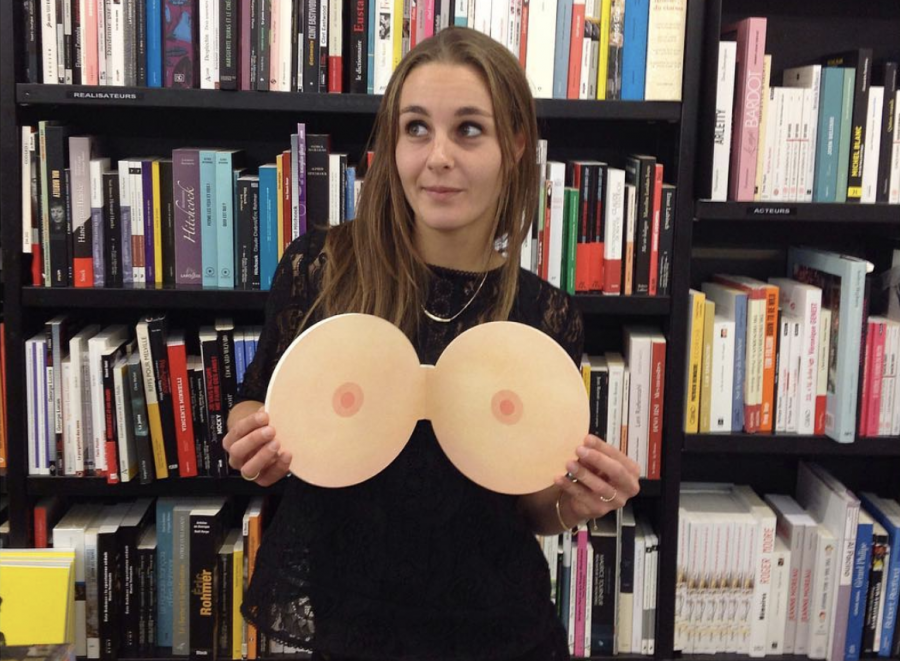
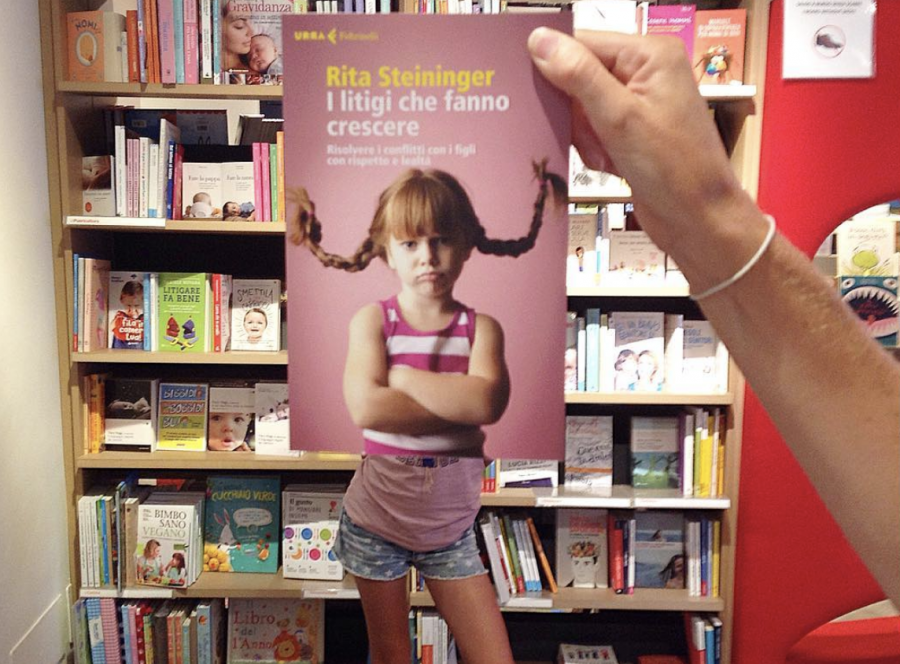
France’s first indie bookstore, Bordeaux’s Librairie Mollat, is reeling ‘em in with Book Face, an irresistible selfie challenge that harkens back to DJ Carl Morris’ Sleeveface project, in which one or more people are photographed “obscuring or augmenting any part of their body or bodies with record sleeve(s), causing an illusion.”
The results are proliferating on the store’s Instagram, as fetching young things (and others) apply themselves to finding the best angles and costumes for their lit-based Trompe‑l’œil masterstrokes.
…even the ones that don’t quite pass the forced perspective test have the capacity to charm.
…and not every shot requires intense pre-production and precision placement.
Hopefully, we’ll see more kids getting into the act soon. In fact, if some youngsters of your acquaintance are expressing a bit of boredom with their vacances d’été, try turning them loose in your local bookstore to identify a likely candidate for a Book Face of their own.
(Remember to support the bookseller with a purchase!)
Back stateside, some librarians shared their pro tips for achieving Book Face success in this 2015 New York Times article. The New York Public Library’s Morgan Holzer also cites Sleeveface as the inspiration behind #BookfaceFriday, the hashtag she coined in hopes that other libraries would follow suit.
Ayun Halliday is an author, illustrator, theater maker and Chief Primatologist of the East Village Inky zine. In honor of her son’s 18th birthday, she invites you to Book Face your baby using The Big Rumpus, her first book, for which he served as cover model. Follow her @AyunHalliday.
Why keep a dream journal? There’s probably amusing befuddlement and even a kind of roundabout enlightenment to be had in looking back over one’s subconscious visions, so vivid during the night, that vanish so soon after waking. But now we have another, more compelling reason to write down our dreams: Vladimir Nabokov did it. This we know from the recently published Insomniac Dreams, a collection of the entries from the Lolitaand Pale Fireauthor’s dream journal — written, true to his compositional method, on index cards— edited and contextualized by Nabokov scholar Gennady Barabtarlo.
“On October 14, 1964, in a grand Swiss hotel in Montreux where he had been living for three years, Vladimir Nabokov started a private experiment that lasted till January 3 of the following year, just before his wife’s birthday (he had engaged her to join him in the experiment and they compared notes),” writes Barabtarlo in the book’s first chapter, which you can read online. “Every morning, immediately upon awakening, he would write down what he could rescue of his dreams. During the following day or two he was on the lookout for anything that seemed to do with the recorded dream.”
He wanted to “test a theory according to which dreams can be precognitive as well as related to the past. That theory is based on the premise that images and situations in our dreams are not merely kaleidoscoping shards, jumbled, and mislabeled fragments of past impressions, but may also be a proleptic view of an event to come.” That notion, writes Dan Piepenbring at the New Yorker, “came from J. W. Dunne, a British engineer and armchair philosopher who, in 1927, published An Experiment with Time, arguing, in part, that our dreams afforded us rare access to a higher order of time.” The book’s fan base included such other literary notables as James Joyce, T.S. Eliot, and Aldous Huxley.
Nabokov had his own take on Dunne’s theory: “The waking event resembling or coinciding with the dream event does so not because the latter is a prophecy,” he writes on the first notecard in the stack produced by his own three-month experiment with time, “but because this would be the kind of dream that one might expect to have after the event.” But Nabokov’s dream data seem to have provided little in the way in absolute proof of what he called “reverse memory.” In the strongest example, a dream about eating soil samples at a museum precedes his real-life viewing of a television documentary about the soil of Senegal. And as Barabtarlo points out, the dream “distinctly and closely followed two scenes” of a short story Nabokov had written 25 years before.
And so we come to the real appeal of Insomniac Dreams: Nabokov’s skill at rendering evocative and memorable images in language — or rather, in his polyglot case, languages – as well as dealing with themes of time and memory. You can read a few samples at Lithub involving not just soil but sexual jealousy, a lecture hastily scrawled minutes before class time, the Red Army, and “a death-sign consisting of two roundish golden-yellow blobs with blurred edges.” They may bring to mind the words of the narrator of Ada, the novel Nabokov published the following year, who in his own consideration of Dunne guesses that in dreams, “some law of logic should fix the number of coincidences, in a given domain, after which they cease to be coincidences, and form, instead, the living organism of a new truth.”
Based in Seoul, Colin Marshall writes and broadcasts on cities and culture. His projects include the book The Stateless City: a Walk through 21st-Century Los Angeles and the video series The City in Cinema. Follow him on Twitter at @colinmarshall or on Facebook.
We remember Catch-22, more than half a century after its publication, as a rollicking satire of American military culture in wartime. But those of us who return to Joseph Heller’s debut novel, a cult favorite turned bestseller turned pillar of the modern canon, find a much more complex piece of work. Heller began writing the manuscript in 1953, while still employed as a copywriter at a small advertising agency. The project grew in ambition over the next eight years he spent working on it, eventually in collaboration with editor Robert Gottlieb and its other advocates at Simon & Schuster, the publisher that had bought it.
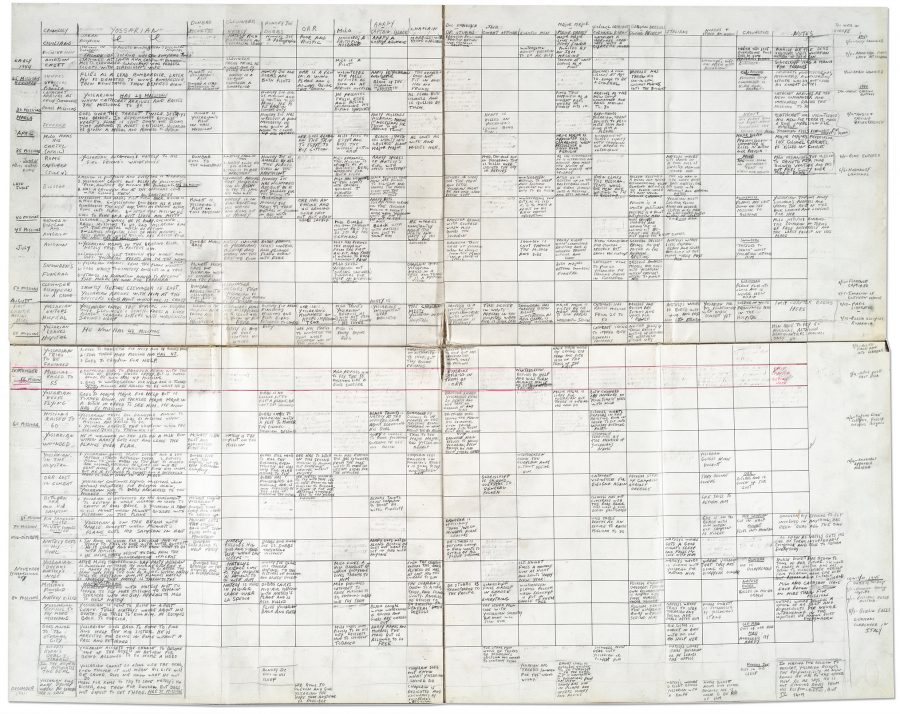
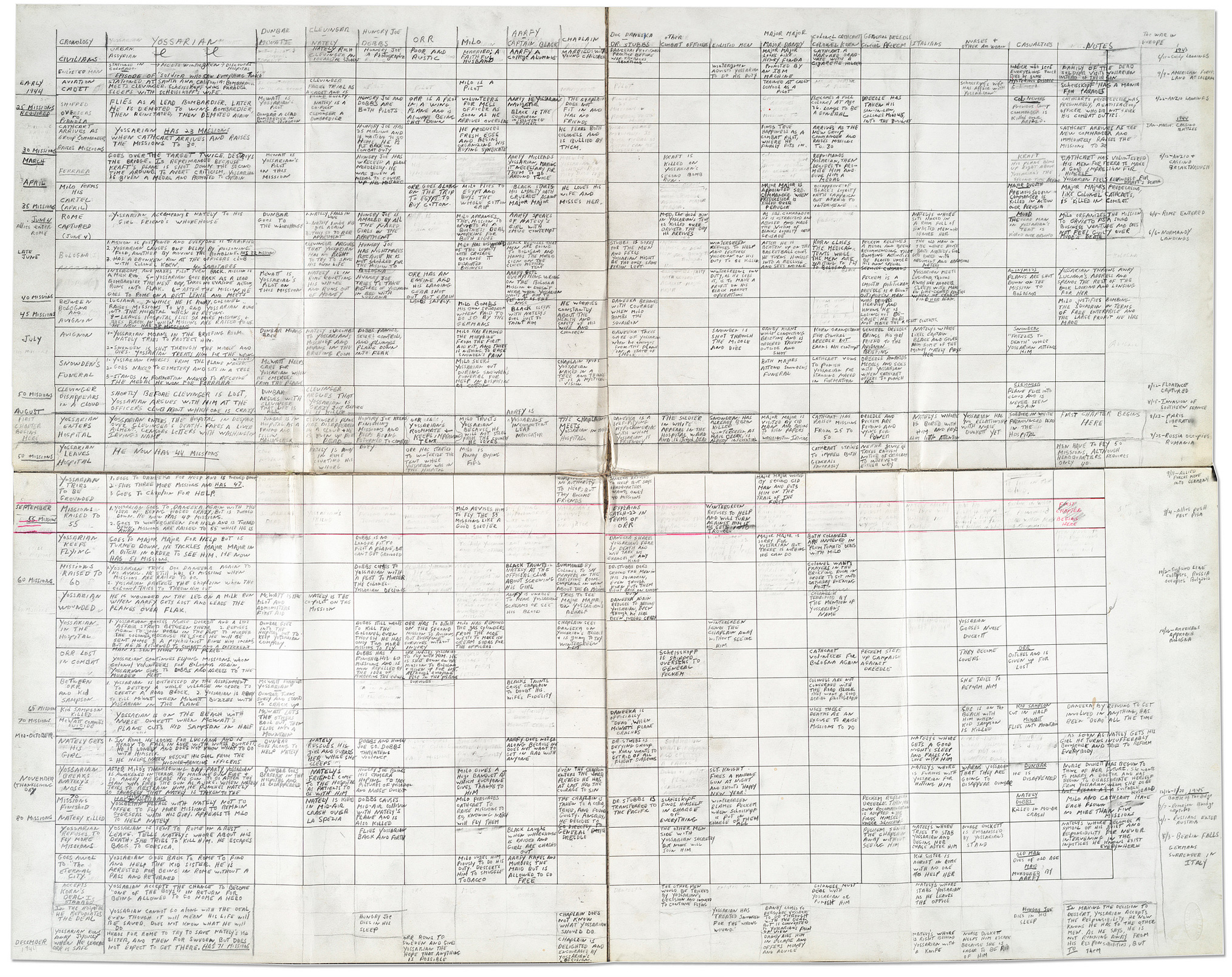
When Catch-22 finally went into print, one of those advocates, an advertising manager named Nina Bourne, launched an aggressive one-woman campaign to get copies into the hands of all the influential readers of the day. “You are mistaken in calling it a novel,” replied Evelyn Waugh. “It is a collection of sketches — often repetitious — totally without structure.” But the book’s apparently free-form narrative, full of and often turning on puns and seemingly far-fetched associations, had actually come as the product of a deceptive compositional rigor. As one piece of evidence we have Heller’s handwritten outline above. (You can also find a more easily legible version here.)
The outline’s grid presents the events of the story in chronological order, as the novel itself certainly doesn’t. The rows of its vertical axis run from early 1944 at the top to December 1944 at the bottom, and the columns of its horizontal axis lists the book’s major characters. They include the protagonist John Yossarian, Air Force bombardier; the “poor and rustic” Orr; Colonel Cathcart, a “Harvard graduate with a cigarette holder,” and Major Major, who “looks like Henry Fonda.” Within this matrix Heller kept track of what should happen to which characters when, at the time of which events of the real war.
The descriptions of events sketched on the outline range from the broadly comic (“Chaplain spies Yossarian naked in a tree and thinks it is a mystical vision”) to the cynical (“Milo justifies bombing the squadron in terms of free enterprise and the large profit he has made”) to the straightforwardly brutal (“Snowden is shot through the middle and dies”). Their placement together in the same neutral space reflects the single quality that, perhaps more than any other, brought upon the novel such a wide range of reactions and earned it a lasting place in not just American literature but American culture. Look at all the aspects of war straight on, it reminds us still today, and the total picture — bloody and senseless for the individual participant, though not without its minor triumphs and laughs — looks something like absurdist art.
Based in Seoul, Colin Marshall writes and broadcasts on cities and culture. His projects include the book The Stateless City: a Walk through 21st-Century Los Angeles and the video series The City in Cinema. Follow him on Twitter at @colinmarshall or on Facebook.
We're hoping to rely on loyal readers, rather than erratic ads. Please click the Donate button and support Open Culture. You can use Paypal, Venmo, Patreon, even Crypto! We thank you!
Open Culture scours the web for the best educational media. We find the free courses and audio books you need, the language lessons & educational videos you want, and plenty of enlightenment in between.