Watch 15 Films by Designers Charles & Ray Eames

If you’re read­ing this, chances are good that you live in the mod­ern world, or at least vis­it it from time to time. But what do I mean by “mod­ern”? It’s a too-broad term that always requires a def­i­n­i­tion. Some­times, for brevity’s sake, we set­tle for list­ing the names of artists who brought moder­ni­ty into being. When it comes to the tru­ly mod­ern in indus­tri­al design, we get two names in one—the hus­band and wife team of Charles and Ray Eames.

The design world, at least in the U.S., may have been slow­er to catch up to oth­er mod­ernist trends in the arts. That changed dra­mat­i­cal­ly when sev­er­al Euro­pean artists like Wal­ter Gropius immi­grat­ed to the coun­try before, dur­ing and after World War II. But the Amer­i­can Eames left per­haps the most last­ing impact of them all.

The first home they designed and built togeth­er in 1949 as part of the Case Study House Pro­gram became “a mec­ca for archi­tects and design­ers from both near and far,” notes the Eames Office site. “Today it is con­sid­ered one of the most impor­tant post-war res­i­dences any­where in the world.” “Famous for their icon­ic chairs,” writes William Cook at the BBC, the stream­lined objets that “trans­formed our idea of mod­ern fur­ni­ture,” they were also “graph­ic and tex­tile design­ers, archi­tects and film­mak­ers.”

The Eames’ film lega­cy may be less well-known than their rev­o­lu­tions in inte­ri­or design. We’ve all seen or inter­act­ed with innu­mer­able ver­sions of Eames-inspired designs, whether we knew it or not. The pair stat­ed their desire to make uni­ver­sal­ly use­ful cre­ations in their suc­cinct mis­sion state­ment: “We want to make the best for the most for the least.” They meant it. “What works good,” said Ray, “is bet­ter than what looks good because what works good lasts.”

When design “works good,” the Eames under­stood, it might be attrac­tive, or pure­ly func­tion­al, but it will always be acces­si­ble, unob­tru­sive, com­fort­able, and prac­ti­cal. We might notice its con­tours and won­der about its prin­ci­ples, but it works equal­ly well, and maybe bet­ter, if we do not. The Eames films explain how one accom­plish­es such design. “Between 1950 and 1982,” the Eames “made over 125 short films rang­ing from 1–30 min­utes in length,” notes the Eames Office site, declar­ing: “The Eames Films are the Eames Essays.”

If this state­ment has pre­pared you for dry, didac­tic short films filled with jar­gon, pre­pare to be sur­prised by the breadth and depth of the Eames’ curios­i­ty and vision. Here, we have com­piled some of the Eames films, and you can see many, many more (15 in total) with the playlist embed­ded at the bot­tom of the post. At the top, see a brief intro­duc­tion the design­ers’ films. Then, fur­ther down, we have the “bril­liant tour of the uni­verse” that is 1977’s Pow­ers of Ten; 1957’s Day of the Dead, their explo­ration of the Mex­i­can hol­i­day; and 1961’s “Sym­me­try,” one of five shorts in a col­lec­tion made for IBM called Math­e­mat­i­ca Peep Shows.

Just above, see the Eames short House, made after five years of liv­ing in their famed Case Study House #8. The design on dis­play here shows how the Eames “brought into the world a new kind of Cal­i­forn­ian indoor-out­door Mod­ernism,” as Col­in Mar­shall wrote in a recent post here on famous archi­tects’ homes. Their house is “a kind of Mon­dri­an paint­ing made into a liv­able box filled with an idio­syn­crat­ic arrange­ment of arti­facts from all over the world.” Unlike most of the Eames designs, the Case Study house was nev­er put into pro­duc­tion, but in its ele­gant sim­plic­i­ty, we can see all of the cre­ative impuls­es the Eames brought to their redesign of the mod­ern world.

See many more of the Eames filmic essays in this YouTube playlist. There are 15 in total.

Relat­ed Con­tent:

Watch Pow­ers of Ten and Let Design­ers Charles & Ray Eames Take You on a Bril­liant Tour of the Uni­verse

How the Icon­ic Eames Lounge Chair Is Made, From Start to Fin­ish

Vis­it the Homes That Great Archi­tects Designed for Them­selves: Frank Lloyd Wright, Le Cor­busier, Wal­ter Gropius & Frank Gehry

Josh Jones is a writer and musi­cian based in Durham, NC. Fol­low him at @jdmagness

How Bicycles Can Revolutionize Our Lives: Case Studies from the United States, Netherlands, China & Britain

A two- (and three- and one-) wheeled rev­o­lu­tion is upon us. Dubbed “micro-mobil­i­ty” by start-up mar­keters and influ­encers, the trend incor­po­rates all sorts of per­son­al means of trans­port. While the buzz may hov­er around elec­tric scoot­ers and skate­boards, the faith­ful bicy­cle still leads the pack, as it has for over a hun­dred years. And advocates—who bike as their pri­ma­ry means of exer­cise, com­mut­ing, and run­ning dai­ly errands—are chal­leng­ing the ortho­dox­ies of car cul­ture.

As an avid cyclist myself, who bikes as often as I can for gro­ceries and oth­er errands, I will admit to a strong bias in their favor. But even I’ve been chal­lenged and sur­prised by what I’ve learned from bik­ing advo­cates like Liz Can­ning, pro­duc­er and nar­ra­tor of a new doc­u­men­tary film, Moth­er­load, a por­trait of the many peo­ple who have cho­sen to use car­go bikes instead of cars for near­ly every­thing.

The film is remark­able for the ordi­nar­i­ness of its sub­jects. As one car­go cyclist, Brent Pat­ter­son of Buf­fa­lo, New York, says, “I’m not an ath­lete. I’m not super­hu­man. I’m just a com­plete­ly nor­mal per­son like you.” The Pat­ter­son fam­i­ly “sold its car,” notes Out­side mag­a­zine, “and trav­els by car­go bike year-round, even in snow­storms.” Anoth­er car­go cyclist in the film, Emi­ly Finch, “carts all six of her kid­dos around on two wheels.” We see car­go cyclists around the world, using bikes as emer­gency trans­port haulers and dai­ly gro­cery-get­ters.

Most of the Amer­i­cans pro­filed live in bike-friend­ly com­mu­ni­ties like Marin Coun­ty, Cal­i­for­nia or Port­land, Ore­gon. But oth­ers, like the Pat­ter­sons, do not, “and not all are as com­fort­ably off as Can­ning,” who retired as a com­mer­cial film­mak­er to raise her kids in bike-friend­ly Fair­fax, CA. “Some had to sell their car or take out a no-inter­est loan in order to afford a car­go bike.” No one seems to have regret­ted the deci­sion.

Read­ers who hail from, or have lived in, places in the world where bike-reliance is the norm may scoff at the pre­sumed nov­el­ty of the idea in Canning’s film. But at one time, even the Netherlands—home of the ubiq­ui­tous Bak­fi­ets—was almost as car-cen­tric as most of the U.S., as Amer­i­can Dan Kois writes in a New York­er essay about how he learned to become bike com­muter in the Nether­lands.

I had assumed that Dutch people’s adept­ness at bik­ing was the result of gen­er­a­tions of inces­sant cycling. In fact, after the Sec­ond World War, the Nether­lands had, like the U.S., become dom­i­nat­ed by cars. Cycling paths were over­tak­en by roads, and neigh­bor­hoods in Ams­ter­dam were razed to make room for high­ways. Between 1950 and 1970, the num­ber of cars in the coun­try explod­ed from about a hun­dred thou­sand to near­ly two and a half mil­lion. Dur­ing that same peri­od, bike use plum­met­ed; in Ams­ter­dam, the per­cent­age of trips made by bike fell from eighty to twen­ty.

That all changed when young activists and par­ents, espe­cial­ly mothers—like the bik­ing moth­ers in Moth­er­load—began protest­ing high num­bers of traf­fic deaths. They took to the streets on their bikes, block­ing traf­fic, run­ning for office, and pres­sur­ing city offi­cials to make infra­struc­ture and pub­lic space safe and accom­mo­dat­ing for bikes. Now, there are more bikes than peo­ple in the Nether­lands, and cars co-exist on roads full of cyclists of all ages and class­es, on their way to work, school, and every­where else.

Dutch dri­vers “look out for cyclists,” writes Kois. “After all, near­ly all of those dri­vers are cyclists them­selves,” using the car for a brief, nec­es­sary out­ing before they get back on their bikes for most every­thing else. Next to Kois’ first-per­son account of his few-months-long sojourn through Delft, we have the glob­al tes­ti­mo­ny of the Bicy­cle Archi­tec­ture Bien­nale, a “show­case of cut­ting edge and high pro­file build­ing designs that are facil­i­tat­ing bicy­cle trav­el and trans­form­ing com­mu­ni­ties around the world.” The exhibits, writes Karen Wong at David Byrne’s Rea­sons to Be Cheer­ful, “point the way to a two-wheeled utopia.”

BYCS, the group respon­si­ble for this well-curat­ed exhi­bi­tion, come from Ams­ter­dam. The projects they fea­ture, how­ev­er, are in Lon­don and Chong­min and Cheng­du, Chi­na. The car­go cyclists in Moth­er­load, and the fero­cious activism of cyclists in places like New York City, despite tremen­dous “bike­lash,” may show Amer­i­cans they don’t need to look abroad to see how bikes could slow­ly dis­place cars as Amer­i­cans’ vehi­cles of choice in some parts of the coun­try. But learn­ing from how oth­er places have reimag­ined their infra­struc­ture could prove nec­es­sary for last­ing change.

Many Amer­i­cans can­not imag­ine life with­out their cars, even if they also have garages full of bikes. Some lash out at cyclists as a threat to their way of life. The coun­try is enor­mous (though we do most dri­ving local­ly); cars serve as modes of transport—for human, plant, ani­mal, and every­thing else—and also as escape pods and sta­tus sym­bols. Canning’s film shows us ordi­nary Amer­i­can men and women get­ting the gump­tion to trade some com­fort and secu­ri­ty for lives of minor adven­ture and eco­log­i­cal sim­plic­i­ty. (And a good many of them still have cars if they need them.)

We also see, in exhi­bi­tions like that pre­viewed in the video above how design prin­ci­ples and pol­i­cy can help make such choic­es eas­i­er and safer for every­one to make. Can­ning point­ed­ly frames her argu­ment in Moth­er­load around cycling’s rad­i­cal his­to­ry. “100 years before the bicy­cle saved me,” she says in the film’s offi­cial trail­er at the top, “it lib­er­at­ed the poor, empow­ered the suf­fragettes, and trans­formed soci­ety faster than any inven­tion in human his­to­ry. It could hap­pen again.”

via Out­side

Relat­ed Con­tent:

The First 100 Years of the Bicy­cle: A 1915 Doc­u­men­tary Shows How the Bike Went from Its Clunky Birth in 1818, to Its Endur­ing Design in 1890

The Art & Sci­ence of Bike Design: A 5‑Part Intro­duc­tion from the Open Uni­ver­si­ty

How Leo Tol­stoy Learned to Ride a Bike at 67, and Oth­er Tales of Life­long Learn­ing

Josh Jones is a writer and musi­cian based in Durham, NC. Fol­low him at @jdmagness

The Glorious Poster Art of the Soviet Space Program in Its Golden Age (1958–1963)

How do you sell a gov­ern­ment pro­gram that spends tens of mil­lions of dol­lars on research and devel­op­ment for space trav­el? While the aver­age tax­pay­er may love the idea of brav­ing new fron­tiers, far few­er are apt to vote for fund­ing sci­en­tif­ic research, the space program’s osten­si­ble rea­son for being.

Dur­ing the Cold War, how­ev­er, when the biggest break­throughs in space flight occurred, sell­ing the pro­gram didn’t involve sophis­ti­cat­ed meth­ods, only the broad­est themes of hero­ism, patri­o­tism, futur­ism, and, in more or less sub­tle ways, mil­i­tarism. The appeal to sci­ence always went hand-in-hand with an appeal to the sub­lime­ly aus­tere beau­ty of the heav­ens (which we’d hate to lose to the oth­er guys.)

All of these were strate­gies NASA uti­lized, and then some. In addi­tion to plant­i­ng a U.S. flag on the moon, they deliv­ered the first col­or image of Earth from space. On the ground, they enlist­ed artists like Andy Warhol, Nor­man Rock­well, and Lau­rie Ander­son and actors like Star Trek’s Nichelle Nichols to sell the pro­gram.

Recent­ly, NASA has seemed to be in a reflec­tive mood, from its anti­quar­i­an prepa­ra­tions for the 50th anniver­sary of the moon land­ing to its ad cam­paign of retro posters that resem­ble not only vin­tage sci-fi book jack­ets and movie ads, but also the futur­is­tic social real­ism of their for­mer Sovi­et rivals.

There’s almost some­thing of an admis­sion in NASA’s retro posters: we may have won the “space race,” but it wasn’t win­ner take all. There were some things the Sovi­ets just did better—and when it came to mak­ing space trav­el look like the most mon­u­men­tal­ly hero­ic and excit­ing thing ever, they excelled, as you can see in this ear­ly col­lec­tion of Sovi­et space posters from 1958–1963.

There’s some­thing for, well, not every­one, but for men, women, young, old, young adults. Sci-fi geeks and mod­el builders, peo­ple cel­e­brat­ing the new year, chil­dren cel­e­brat­ing the new year, a gag­gle of young stu­dents who some­how all look just like Mary Tyler Moore. The artists are not celebri­ties, they’re fel­low work­ers who “fore­saw a Utopia in space,” writes Flash­bak.

The Com­mu­nists would bring peace and pros­per­i­ty not only to the peo­ple of Earth but also to the tech­nol­o­gy-enabled, God-free Great Beyond. The artists cre­at­ed Sovi­et Space posters, vivid, ener­gis­ing and inspir­ing visions of the rosy-fin­gered dawn of tomor­row. They’re ter­rif­ic.

They’re maybe even more ter­rif­ic when we con­sid­er that ordi­nary cit­i­zens didn’t have much say, at all, in the fund­ing and direc­tion of the U.S.S.R.’s space pro­gram. (Whether Amer­i­can cit­i­zens did is anoth­er ques­tion.) It was impor­tant that Sovi­ets know, how­ev­er, that “We will open the dis­tant worlds!” as one poster reads, and, as the six­ties teenage cig­a­rette ad on a train above pro­claims, “In the 20th cen­tu­ry, the rock­ets race to the stars, the trains are going to the lands of achieve­ments!”

The num­ber of posters here is but a smat­ter­ing of those post­ed on All about Rus­sia (here and here) and Flash­bak. Each poster has its own enchant­i­ng qual­i­ty: emu­lat­ing the pro­pa­gan­da of the 1930s; turn­ing indus­tri­al labor­ers into anony­mous tow­er­ing heroes; and reach­ing some very heavy met­al heights of bom­bast, as in the ad above, which declares, “Glo­ry to the con­querors of the uni­verse!”

One poster super­im­pos­es the beam­ing faces of four cos­mo­nauts, lined up like Kraftwerk, over a scene of four rock­ets leav­ing the earth. “Gagarin, Titov, Niko­laev, Popoviich—the mighty knights of our days.” (I’m not sure how that pun works in Russ­ian.) The Sovi­ets could also pro­claim “Glo­ry to the first woman cos­mo­naut!,” Valenti­na Tereshko­va, who became the first woman to fly in space in 1963.

The Sovi­et space pro­gram deserves plen­ty of recog­ni­tion for its many his­toric firsts, and also for the wild­ly enthu­si­as­tic opti­mism of its ad cam­paigns. They sold grand ideas about the explo­ration and, yes, con­quest of space (and “the uni­verse”) with the same verve and pop­ulist appeal as U.S. com­pa­nies sold cars, cig­a­rettes, and wash­ing machines. Glo­ry to the unsung Mad Men of the Sovi­et space poster!

Relat­ed Con­tent:

Sovi­et Artists Envi­sion a Com­mu­nist Utopia in Out­er Space

NASA Enlists Andy Warhol, Annie Lei­bovitz, Nor­man Rock­well & 350 Oth­er Artists to Visu­al­ly Doc­u­ment America’s Space Pro­gram

Down­load 14 Free Posters from NASA That Depict the Future of Space Trav­el in a Cap­ti­vat­ing­ly Retro Style

Watch Inter­plan­e­tary Rev­o­lu­tion (1924): The Most Bizarre Sovi­et Ani­mat­ed Pro­pa­gan­da Film You’ll Ever See

Josh Jones is a writer and musi­cian based in Durham, NC. Fol­low him at @jdmagness

Songs by Joni Mitchell Re-Imagined as Pulp Fiction Book Covers & Vintage Movie Posters

I wish I had more sense of humor

Keep­ing the sad­ness at bay

Throw­ing the light­ness on these things

Laugh­ing it all away 

                           — Joni Mitchell, “Peo­ple’s Par­ties”

Joni Mitchell has been show­ered with trib­utes of late, many of them con­nect­ed to her all-star 75th birth­day con­cert last Novem­ber.

The silky voiced Seal, who cred­its Mitchell with inspir­ing him to become a musi­cian, soar­ing toward heav­en on “Both Sides Now”…

“A Case Of You” as a duet for fel­low New­port Folk Fes­ti­val alums Kris Kristof­fer­son and Bran­di Carlile….

Cha­ka Khan inject­ing a bit of funk into “Help Me,” a tune she’s been cov­er­ing for 20 some years

They’re mov­ing and beau­ti­ful and sen­si­tive, but giv­en that Mitchel­l’s the one behind the immor­tal lyric “laugh­ing and cry­ing, you know it’s the same release…,” shouldn’t some­one aim for the fun­ny bone? Mix things up a lit­tle?

Enter Todd Alcott, who’s been delight­ing us all year with his “mid-cen­tu­ry mashups,” an irre­sistible com­bi­na­tion of vin­tage paper­back cov­ers, celebri­ty per­son­ae, and icon­ic lyrics from the annals of rock and pop.

His homage to “Help Me,” above, is decid­ed­ly on brand. The lurid 1950s EC hor­ror com­ic-style graph­ics con­fer a dishy naugh­ti­ness that was—no disrespect—rather lack­ing in the orig­i­nal.

Per­haps Mitchell would approve of these mon­keyshines?

A 1991 inter­view with Rolling Stone’s David Wild sug­gests that she would have at some point in her life:

When I was a kid, I was a real good-time Char­lie. As a mat­ter of fact, that was my nick­name. So when I first start­ed mak­ing all this sen­si­tive music, my old friends back home could not believe it. They didn’t know – where did this depressed per­son come from? Along the way, I had gone through some pret­ty hard deals, and it did intro­vert me. But it just so hap­pened that my most intro­vert­ed peri­od coin­cid­ed with the peak of my suc­cess.

Alcott hon­ors the intro­vert by ren­der­ing “Both Sides Now” as an angsty-look­ing vol­ume of 60s-era poet­ry from the imag­i­nary pub­lish­ing house Clouds.

Big Yel­low Taxi” car­ries Alcott from the book­shelf to the realm of the movie poster.

The lyrics are def­i­nite­ly the star here, but it’s fun to note just how much mileage he gets out of the float­ing text box­es that were a strange­ly ran­dom-feel­ing fea­ture of the orig­i­nal.

Also “Ladies of the Canyon” is a great pro­duc­er’s cred­it. Giv­en Alcott’s own screen­writ­ing cred­its on IMDB, per­haps we could con­vince him to mash a bit of Joni’s sen­si­bil­i­ty into some of Paul Schrader’s grimmest Taxi Dri­ver scenes…

That said, it’s worth remem­ber­ing that Alcot­t’s cre­ations are lov­ing trib­utes to the artists who mat­ter most to him. As he told Open Cul­ture:

Joni Mitchell is one of the most crim­i­nal­ly under­val­ued Amer­i­can song­writ­ers of the 20th cen­tu­ry, and that now that I live in LA, every time I dri­ve through Lau­rel Canyon I think about her and that whole absurd­ly fer­tile scene in the late 1960s, when artists could afford to live in Lau­rel Canyon and Joni Mitchell was hang­ing out with Neil Young and Charles Man­son.

See all of Todd Alcott’s work here. (Please note that this is his offi­cial sales site… beware of imposters sell­ing quick­ie knock-offs of his designs on eBay and Face­book.) Find oth­er posts fea­tur­ing his work in the Relat­eds below.

Relat­ed Con­tent:

See Clas­sic Per­for­mances of Joni Mitchell from the Very Ear­ly Years–Before She Was Even Named Joni Mitchell (1965/66)

Bea­t­les Songs Re-Imag­ined as Vin­tage Book Cov­ers and Mag­a­zine Pages: “Dri­ve My Car,” “Lucy in the Sky with Dia­monds” & More

Clas­sic Songs by Bob Dylan Re-Imag­ined as Pulp Fic­tion Book Cov­ers: “Like a Rolling Stone,” “A Hard Rain’s A‑Gonna Fall” & More

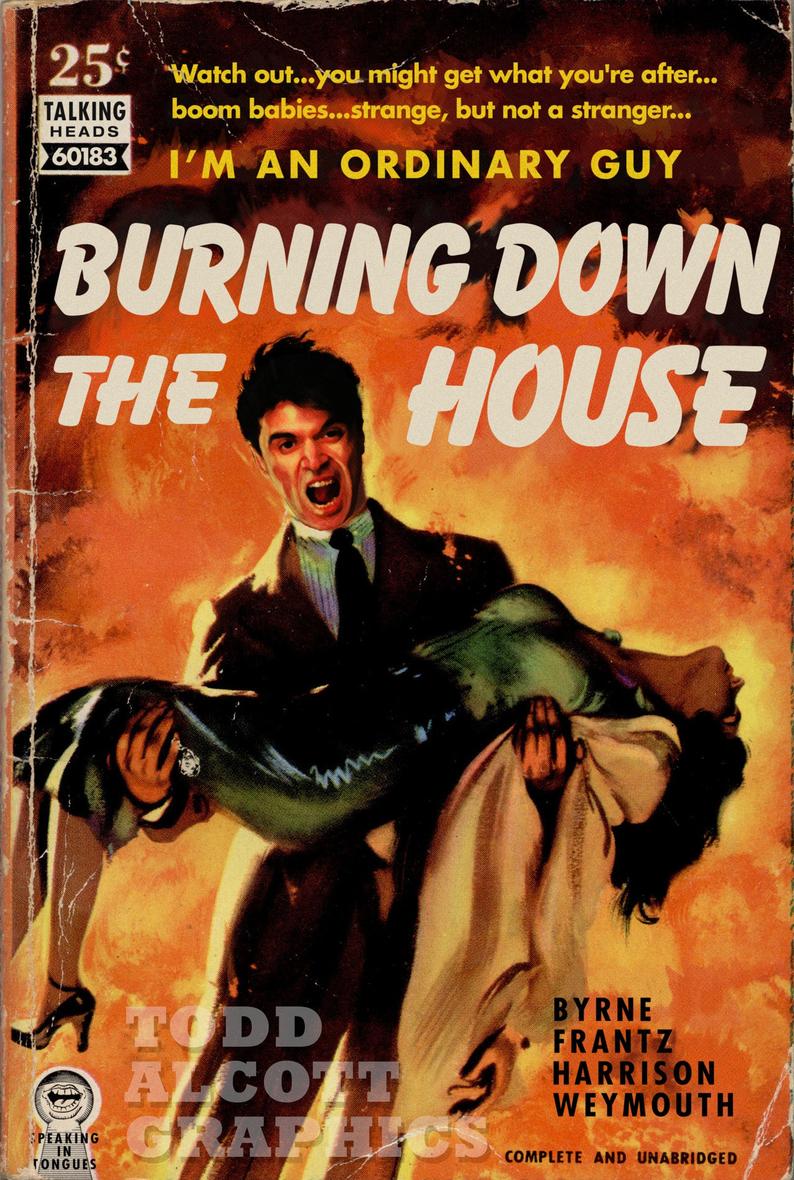
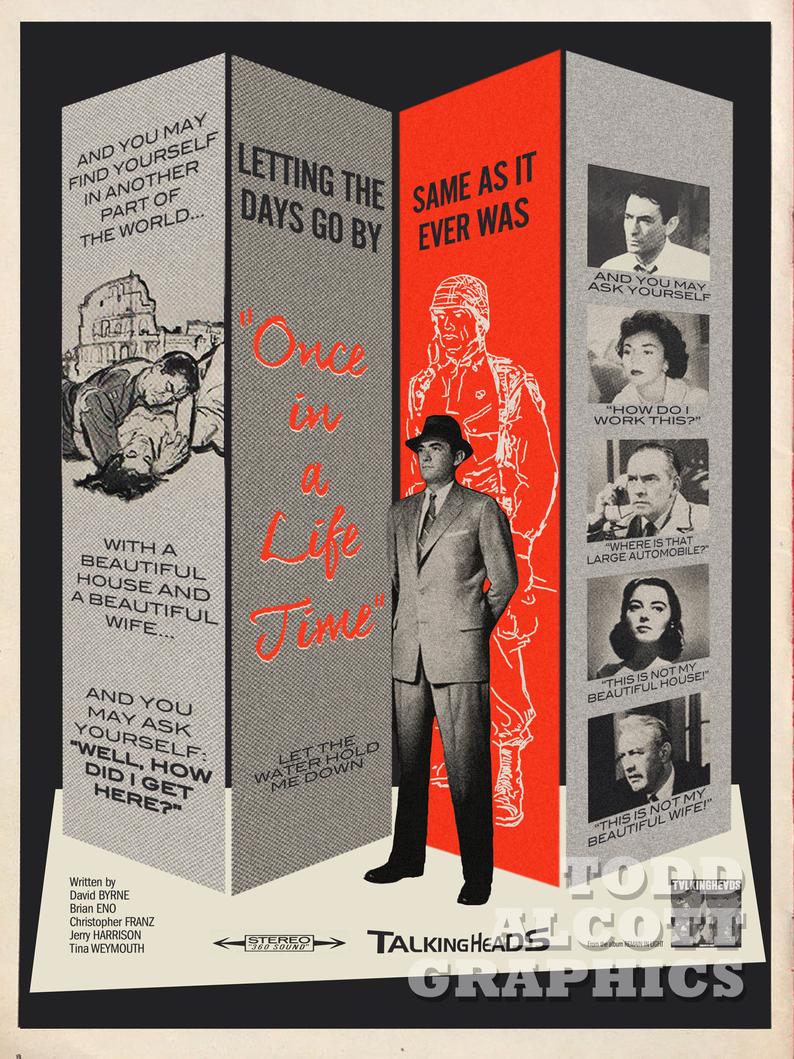
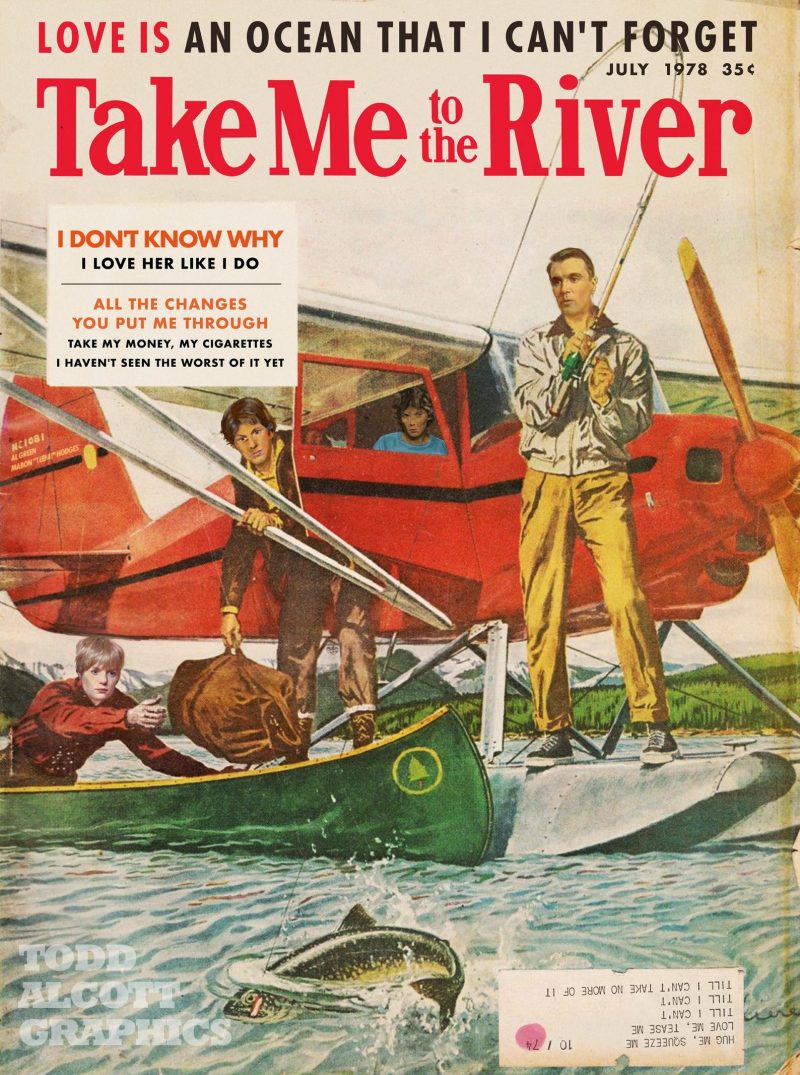
Songs by David Bowie, Elvis Costel­lo, Talk­ing Heads & More Re-Imag­ined as Pulp Fic­tion Book Cov­ers

Ayun Hal­l­i­day is an author, illus­tra­tor, the­ater mak­er and Chief Pri­ma­tol­o­gist of the East Vil­lage Inkyzine.  Join her in NYC on Mon­day, Sep­tem­ber 9 for a new sea­son of her book-based vari­ety show, Necro­mancers of the Pub­lic Domain. Fol­low her @AyunHalliday.

 

Beatles Songs Re-Imagined as Vintage Book Covers and Magazine Pages: “Drive My Car,” “Lucy in the Sky with Diamonds” & More

What makes the Bea­t­les the best-known rock band in his­to­ry? None can deny that they com­posed songs of unsur­passed catch­i­ness, a qual­i­ty demon­strat­ed as soon as those songs hit the air­waves. But the past 55 or so years have shown us that they also pos­sess an endur­ing pow­er to inspire: how many begin­ning musi­cians, fired up by their enjoy­ment of the Bea­t­les, play their first notes each day? The trib­utes to the music of the Bea­t­les keep com­ing in non-musi­cal forms as well: take, for exam­ple, these Bea­t­les songs turned into vin­tage book cov­ers and mag­a­zine pages by screen­writer and self-described “graph­ic-arts prankster” Todd Alcott.

“ ‘Dri­ve My Car’ re-imag­ines the clas­sic 1965 Bea­t­les song as a clas­sic 1965 adver­tise­ment for an actu­al car,” Alcott writes of the work at the top of the post, “mash­ing up the image from an ad for a 1966 Chevro­let Cor­vair with the lyrics from the song.”

Below that, “Lucy in the Sky with Dia­monds” makes of that num­ber a mass-mar­ket book cov­er “in the style of Erich von Daniken’s clas­sic 1970s alien-vis­i­ta­tion book Char­i­ots of the Gods?” Below, Alcot­t’s inter­pre­ta­tion of “Tomor­row Nev­er Knows” per­fect­ly re-cre­ates the look (and, with that vis­i­ble cov­er wear, the feel) of a heady 1960s sci­ence-fic­tion nov­el.

Tomor­row Nev­er Knows does sound like a plau­si­ble piece of spec­u­la­tive fic­tion from that era, but Alcott has made use of much more than these songs’ titles. Even casu­al Bea­t­les fans will notice how much of their lyri­cal con­tent he man­ages to work into his designs, for which the 1967 Nation­al Enquir­er cov­er pas­tiche he put togeth­er for the 1967 sin­gle “A Day in the Life” (“com­plete with pho­tos of Tory Browne, the Guin­ness heir about whom the song was writ­ten”) offered an espe­cial­ly rich oppor­tu­ni­ty. Just when the Bea­t­les broke up in real life, the era of the new-age self-help book began, and after see­ing what Alcott did with “Hel­lo Good­bye” using the dis­tinc­tive visu­al brand­ing of that pub­lish­ing trend, you’ll won­der why no one cashed in on such a com­bi­na­tion at the time.

You can see all of Alcot­t’s Bea­t­les book cov­er and mag­a­zine page designs, and buy prints of them in var­i­ous sizes, over at Etsy. Oth­er selec­tions include “Rocky Rac­coon” as an 1880s dime nov­el (pub­lish­ers of which includ­ed a firm named Bea­dles) and “Rev­o­lu­tion” as a Sovi­et his­to­ry book. Open Cul­ture read­ers will know Alcott from his pre­vi­ous for­ays into retro music-to-book graph­ic design, which took the songs of David Bowie, Bob Dylan, Radio­head and oth­ers and re-imag­ined them as sci-fi nov­els, pulp-fic­tion mag­a­zines, and oth­er arti­facts of print cul­ture from times past. In the case of the Bea­t­les, Alcot­t’s for­mi­da­ble skill at evok­ing a high­ly spe­cif­ic era of recent his­to­ry with an image under­scores, by con­trast, the time­less­ness of the songs that inspired them.

Relat­ed Con­tent:

A Short Film on the Famous Cross­walk From the Bea­t­les’ Abbey Road Album Cov­er

How The Bea­t­les’ Sgt. Pepper’s Lone­ly Hearts Club Band Changed Album Cov­er Design For­ev­er

Songs by David Bowie, Elvis Costel­lo, Talk­ing Heads & More Re-Imag­ined as Pulp Fic­tion Book Cov­ers

Clas­sic Songs by Bob Dylan Re-Imag­ined as Pulp Fic­tion Book Cov­ers: “Like a Rolling Stone,” “A Hard Rain’s A‑Gonna Fall” & More

Clas­sic Radio­head Songs Re-Imag­ined as a Sci-Fi Book, Pulp Fic­tion Mag­a­zine & Oth­er Nos­tal­gic Arti­facts

Pulp Cov­ers for Clas­sic Detec­tive Nov­els by Dashiell Ham­mett, Arthur Conan Doyle, Agatha Christie & Ray­mond Chan­dler

Based in Seoul, Col­in Mar­shall writes and broad­casts on cities, lan­guage, and cul­ture. His projects include the book The State­less City: a Walk through 21st-Cen­tu­ry Los Ange­les and the video series The City in Cin­e­ma. Fol­low him on Twit­ter at @colinmarshall, on Face­book, or on Insta­gram.

The 1855 Map That Revolutionized Disease Prevention & Data Visualization: Discover John Snow’s Broad Street Pump Map

No, he didn’t help defeat an implaca­ble zom­bie army intent on wip­ing out all life. But Eng­lish obste­tri­cian John Snow seems as impor­tant as the sim­i­lar­ly-named Game of Thrones hero for his role in per­suad­ing mod­ern med­i­cine of the germ the­o­ry of dis­ease. Dur­ing the 1854 out­break of cholera in Lon­don, Snow con­vinced author­i­ties and crit­ics that the dis­ease spread from a con­t­a­m­i­nat­ed water pump on Broad Street, lead­ing to the now-leg­endary info­graph­ic map above show­ing the inci­dences of cholera clus­tered around the pump.

Snow’s per­sis­tence result­ed in the removal of the han­dle from the Broad Street pump and has been cred­it­ed with end­ing an epi­dem­ic that claimed 500 lives. The Broad Street pump map has become “an endur­ing fea­ture of the folk­lore of pub­lic health and epi­demi­ol­o­gy,” write the authors of an arti­cle pub­lished in The Lancet. They also point out that, con­trary to pop­u­lar retellings, the “map did not give rise to the insight” that the pump and its germ-cov­ered han­dle caused the out­break. “Rather it tend­ed to con­firm the­o­ries already held by the var­i­ous inves­ti­ga­tors.”

Snow him­self pub­lished a pam­phlet in 1849 called “On the Mode of Com­mu­ni­ca­tion of Cholera” in which he argued that “cholera is com­mu­ni­cat­ed by the evac­u­a­tions from the ali­men­ta­ry canal.” As he remind­ed read­ers of The Edin­burgh Med­ical Jour­nal in an 1856 let­ter, in that same year, “Dr William Budd pub­lished a pam­phlet ‘On Malig­nant Cholera’ in which he expressed views sim­i­lar to my own.” Germ the­o­ry had a long, dis­tin­guished his­to­ry already, and Snow and his con­tem­po­raries made sound, evi­dence-based argu­ments for it.

But their posi­tion “large­ly went ignored by the med­ical estab­lish­ment,” notes Randy Alfred at Wired, “and was opposed by a local water com­pa­ny near one Lon­don out­break.” The accept­ed, main­stream sci­en­tif­ic opin­ion held that all dis­ease was spread through “mias­ma,” or bad air. Pol­lu­tion, it was thought, must be the cause. After the pump handle’s removal, Snow pub­lished an 1855 mono­graph on water­borne dis­eases. This was the first pub­lic appear­ance of the leg­endary map—after the removal of the han­dle.

Help­ing to inform Snow’s map, anoth­er inves­ti­ga­tor, parish priest Hen­ry White­head had “con­clud­ed that it was the wash­ing of soiled dia­pers into drains which flowed to the com­mu­nal cesspool that con­t­a­m­i­nat­ed the pump and start­ed the out­break,” writes Atlas Obscu­ra. White­head, a for­mer crit­ic of germ the­o­ry, lat­er point­ed out that the removal of the pump han­dle didn’t actu­al­ly stop the epi­dem­ic, which, he said, “had already run its course” by that point.

Nonethe­less, Snow and oth­er pro­po­nents of the the­o­ry were vin­di­cat­ed, White­head had to admit, and Snow’s inter­ven­tion “had prob­a­bly every­thing to do with pre­vent­ing a new out­break.” The sim­ple, yet sophis­ti­cat­ed data visu­al­iza­tion would lead to rad­i­cal new ways of con­cep­tu­al­iz­ing dis­ease out­breaks, help­ing to stop or pre­vent who knows how many epi­demics before they killed hun­dreds or thou­sands. Snow’s map also deserves cred­it for giv­ing “data jour­nal­ists a mod­el of how to work today.”

It was hard­ly the first or only data visu­al­iza­tion of cholera out­breaks of the time. “As ear­ly as the 1830s,” Visu­al Cap­i­tal­ist points out, “geo­g­ra­phers began using spa­cial analy­sis to study cholera epi­demi­ol­o­gy.” But Snow’s was by far the most influ­en­tial, and effec­tive, of them all. In his TED talk above, jour­nal­ist Steven John­son (author of The Ghost Map:The Sto­ry of Lon­don’s Most Ter­ri­fy­ing Epi­dem­ic and How It Changed Sci­ence, Cities, and the Mod­ern World) tells the sto­ry of how the out­break, and Snow’s the­o­ry and map, “helped cre­ate the world that we live in today, and par­tic­u­lar­ly the kind of city that we live in today.”

Read a Q&A with John­son here; head over to The Guardian’s Data Blog to see Snow’s visu­al­iza­tion recre­at­ed over a mod­ern, satel­lite-view map of Lon­don and the Soho neigh­bor­hood of the famous Broad Street pump; and learn more about Snow and dead­ly cholera out­breaks in the crowd­ed Euro­pean cities of the ear­ly 19th cen­tu­ry at the John Snow Archive and Research Com­pan­ion online.

Relat­ed Con­tent:

Flo­rence Nightin­gale Saved Lives by Cre­at­ing Rev­o­lu­tion­ary Visu­al­iza­tions of Sta­tis­tics (1855)

Napoleon’s Dis­as­trous Inva­sion of Rus­sia Detailed in an 1869 Data Visu­al­iza­tion: It’s Been Called “the Best Sta­tis­ti­cal Graph­ic Ever Drawn”

The Art of Data Visu­al­iza­tion: How to Tell Com­plex Sto­ries Through Smart Design

Josh Jones is a writer and musi­cian based in Durham, NC. Fol­low him at @jdmagness

Napoleon’s Disastrous Invasion of Russia Detailed in an 1869 Data Visualization: It’s Been Called “the Best Statistical Graphic Ever Drawn”

It’s tempt­ing to asso­ciate data visu­al­iza­tions with Pow­er­Point and online graph­ics, which have enabled an unheard-of capac­i­ty for dis­sem­i­nat­ing full-col­or images. But the form reach­es much fur­ther back in his­to­ry. Fur­ther back, even, than the front pages of USA Today and glossy side­bars of Time and
Newsweek. In 1900, for exam­ple, W.E.B. Du Bois made impres­sive use of sev­er­al full-col­or data visu­al­iza­tions for the First Pan-African Con­fer­ence in Lon­don, with no access what­so­ev­er to desk­top pub­lish­ing soft­ware or a laser print­er.

Almost fifty years before Du Bois turned sta­tis­tics into swirls of col­or and shape, Flo­rence Nightin­gale used her lit­tle-known graph­ic design skills to illus­trate the caus­es of dis­ease in the Crimean War and John Snow (not Jon Snow) illus­trat­ed his rev­o­lu­tion­ary Broad Street Pump cholera the­o­ry with a famous info­graph­ic street map.

Around this same time, anoth­er data visu­al­iza­tion pio­neer, Charles Joseph Minard, pro­duced some of the most high­ly-regard­ed info­graph­ics ever made, includ­ing the 1869 illus­tra­tion above of Napoleon’s march to, and retreat from, Moscow in the War of 1812. View it in a large for­mat here.

Made fifty years after the event, when Minard was 80 years old, the map has been called by the bible of data visu­al­iza­tion studies—Edward Tufte’s The Visu­al Dis­play of Quan­ti­ta­tive Infor­ma­tion—“prob­a­bly the best sta­tis­ti­cal graph­ic ever drawn.” Over at thoughtbot.com, Joanne Cheng sums up the con­text, if you need­ed a his­tor­i­cal refresh­er: “The year is 1812 and Napoleon is doing pret­ty well for him­self. He has most of Europe under his con­trol, except for the UK.”

Angered by Czar Alexander’s refusal to sup­port a UK trade embar­go to weak­en their defens­es, Napoleon “gath­ers a mas­sive army of over 400,000 to attack Rus­sia.” The cam­paign was dis­as­trous: over­con­fi­dent advances on Moscow turned into dev­as­tat­ing win­ter­time retreats dur­ing which the Grande Armée only “nar­row­ly escaped com­plete anni­hi­la­tion.” So, how does Minard’s 1869 Tableau Graphique tell this grand sto­ry of hubris and icy car­nage? And, Cheng asks, “what makes it so good?”

Cheng breaks Minard’s series of jagged lines and shapes down into more con­ven­tion­al XY axis line graphs to show how he coor­di­nat­ed a huge amount of infor­ma­tion, includ­ing the loca­tions (by lon­gi­tude) of dif­fer­ent groups of Napoleon’s troops at dif­fer­ent points in time, their direc­tion, and the pre­cip­i­tous­ly falling tem­per­a­tures in the stages of retreat. He drew from a list of the best his­tor­i­cal sources he could con­sult at the time, turn­ing dense prose into the spare, clean lines that set data sci­en­tists’ hearts a‑flutter.

Minard began his career in a much more rec­og­niz­ably 19-cen­tu­ry design field, build­ing bridges, dams, and canals across Europe for the first few decades of the 1800s. As a civ­il engi­neer “he had the good for­tune to take part in almost all the great ques­tions of pub­lic works which ush­ered in our cen­tu­ry,” not­ed an obit­u­ary pub­lished in Annals of Bridges and Roads the year after Minard’s death in 1870. “And dur­ing the twen­ty years of retire­ment, always au courant of the tech­ni­cal and eco­nom­ic sci­ences, he endeav­ored to pop­u­lar­ize the most salient results.”

He did so by ven­tur­ing out­side the sub­ject of engi­neer­ing, while using the “inno­v­a­tive tech­niques he had invent­ed for the pur­pose of dis­play­ing flows of peo­ple” on paper, writes Michael Sand­berg at DataViz. In order to tell the trag­ic tale” of Napoleon’s crush­ing defeat “in a sin­gle image,” Minard imag­ined the event as a dynam­ic phys­i­cal struc­ture.

Minard’s chart shows six types of infor­ma­tion: geog­ra­phy, time, tem­per­a­ture, the course and direc­tion of the army’s move­ment, and the num­ber of troops remain­ing. The widths of the gold (out­ward) and black (return­ing) paths rep­re­sent the size of the force, one mil­lime­tre to 10,000 men. Geo­graph­i­cal fea­tures and major bat­tles are marked and named, and plum­met­ing tem­per­a­tures on the return jour­ney are shown along the bot­tom.

This was hard­ly Minard’s first info­graph­ic. In fact, he made “scores of oth­er graph­ics and charts,” Nation­al Geo­graph­ic writes, “as well as near­ly 50 maps. He pio­neered sev­er­al impor­tant the­mat­ic map­ping tech­niques and per­fect­ed oth­ers, such as using flow lines on a map.” (See oth­er exam­ples of his work at Nation­al Geographic’s site.) Minard may not be much remem­bered for his infra­struc­ture, but his abil­i­ty, as his obit­u­ar­ist wrote, to turn “the dry and com­pli­cat­ed columns of sta­tis­ti­cal data” into “images math­e­mat­i­cal­ly pro­por­tioned” has made him a leg­end in data sci­ence his­to­ry cir­cles.

Again, view Minard’s visu­al­iza­tion of Napoleon’s failed inva­sion in a large for­mat here.

Relat­ed Con­tent:

Flo­rence Nightin­gale Saved Lives by Cre­at­ing Rev­o­lu­tion­ary Visu­al­iza­tions of Sta­tis­tics (1855)

W.E.B. Du Bois Cre­ates Rev­o­lu­tion­ary, Artis­tic Data Visu­al­iza­tions Show­ing the Eco­nom­ic Plight of African-Amer­i­cans (1900)

Napoleon’s Eng­lish Lessons: How the Mil­i­tary Leader Stud­ied Eng­lish to Escape the Bore­dom of Life in Exile

Josh Jones is a writer and musi­cian based in Durham, NC. Fol­low him at @jdmagness

The First Museum Dedicated Exclusively to Poster Art Opens Its Doors in the U.S.: Enter the Poster House

How times have changed since our late 80s col­lege days. Under­grads do research online, upload assign­ments to a serv­er, stream music, down­load affir­ma­tive sex­u­al con­sent con­tracts, and turn to Face­book when it’s time to find a ride home for the hol­i­days.

But one aspect of the col­le­giate lifestyle remains unchanged.

They still fes­toon their dorm rooms with posters—the actu­al paper arti­cle, affixed to the walls with blue put­ty, a care­ful­ly curat­ed col­lec­tion of taste and aspi­ra­tion.

As Cait Munro writes in Refin­ery 29:

Fresh­man, already scram­bling to find and loud­ly artic­u­late an iden­ti­ty, can leave the poster sale with two or three plas­tic tubes hous­ing scrolls that rep­re­sent the very essence of their new, par­ent-free, on-cam­pus selves. Posters become an afford­able, demon­stra­ble expres­sion of who they are as a per­son — or, in the tra­di­tion of peo­ple eager to leave behind their home­town selves, who they want to be.

Legions of style blogs have decreed that these posters should be giv­en the heave-ho along with the plas­tic milk crate shelv­ing, come grad­u­a­tion.

Per­son­al­ly, I would rather gaze upon the tat­tered repro­duc­tion of the first paint­ing that spoke to me at the Art Insti­tute of Chica­go than any­thing the design experts float as an accept­ably grown up alter­na­tive.

Is Alphonse Mucha’s Byzan­tine 1896 ad for Job rolling papers some­how unwor­thy because legions of dewy eyed under­grads have giv­en it a peren­ni­al place of unframed hon­or?

The dri­ving forces behind the new­ly opened Poster House in New York City would say no. The first Amer­i­can muse­um ded­i­cat­ed exclu­sive­ly to poster art, its cura­tors cast a wide net through the form’s 160 year his­to­ry, whether the end goal of the work was war bond sales, pub­lic health edu­ca­tion, or straight-up box office sales. As the Poster House writes:

For a poster to suc­ceed, it must com­mu­ni­cate. By com­bin­ing the pow­er of images and words, posters speak to audi­ences quick­ly and per­sua­sive­ly. Blend­ing design, adver­tis­ing, and art, posters clear­ly reflect the place and time in which they were made.

What did the best-sell­ing poster of actress Far­rah Faw­cett in a red tank suit say to—and about—teenage boys in 1976? What did it say about Amer­i­can val­ues and gen­der norms in that Bicen­ten­ni­al year? Why no posters of Bet­sy Ross?

How does the offi­cial poster for Juras­sic Park, above, com­pare to the hand-paint­ed, pre­sum­ably unau­tho­rized image used to mar­ket it to audi­ences in Ghana?

(End­less grat­i­tude to illus­tra­tor and mon­ster movie fan Aeron Alfrey for bring­ing this and oth­er Ghan­ian spins on Amer­i­can film releas­es to our atten­tion.)

Some posters have remark­able stay­ing pow­er, reap­pear­ing in a num­ber of guis­es. Wit­ness Rosie the Riv­et­er and James Mont­gomery Flagg’s Uncle Sam-themed WWI recruit­ment poster, to say noth­ing of the Barack Oba­ma “Hope” poster by Shep­ard Fairey, the poster that launched a thou­sand par­o­dies, most­ly dig­i­tal, but even so.

To learn more about vis­it­ing Poster House, its inau­gur­al Alphonse Mucha exhib­it and upcom­ing events such as Drink and Draw, click here.

via Hyper­al­ler­gic

Relat­ed Con­tent:

The Film Posters of the Russ­ian Avant-Garde

10,000 Clas­sic Movie Posters Get­ting Dig­i­tized & Put Online by the Har­ry Ran­som Cen­ter at UT-Austin: Free to Browse & Down­load

Chill­ing and Sur­re­al Pro­pa­gan­da Posters from the NSA Are Now Declas­si­fied and Put Online

40,000 Film Posters in a Won­der­ful­ly Eclec­tic Archive: Ital­ian Tarkovsky Posters, Japan­ese Orson Welles, Czech Woody Allen & Much More

The Library of Con­gress Makes Thou­sands of Fab­u­lous Pho­tos, Posters & Images Free to Use & Reuse

Vin­tage 1930s Japan­ese Posters Artis­ti­cal­ly Mar­ket the Won­ders of Trav­el

100 Great­est Posters of Film Noir

Ayun Hal­l­i­day is an author, illus­tra­tor, the­ater mak­er and Chief Pri­ma­tol­o­gist of the East Vil­lage Inkyzine.  Fol­low her @AyunHalliday.
 

« Go BackMore in this category... »
Quantcast