Dress Like an Intellectual Icon with Japanese Coats Inspired by the Wardrobes of Camus, Sartre, Duchamp, Le Corbusier & Others

If you fol­low men’s style in the 21st cen­tu­ry, you know that the same names tend to come up as ref­er­ences again and again, from actors like Cary Grant and Steve McQueen to busi­ness­men like Gian­ni Agnel­li and roy­al­ty like Prince Charles. But what if we looked to oth­er, less con­ven­tion­al realms of cul­ture for inspi­ra­tion on what to wear and, more impor­tant­ly, how to wear it? Over the past few years, Japan­ese label Cohérence has done just that, design­ing coats mod­eled after those worn by the likes of Albert Camus, Jean-Paul Sartre, Mar­cel Duchamp, and Le Cor­busier — and improv­ing upon them with new mate­ri­als and details.

“I love Dada and Sur­re­al­ism, jazz music, writ­ers con­nect­ed to the Lost Gen­er­a­tion, and New Wave cin­e­ma. Along with the art and cul­ture, there were also the clothes – the heav­ier fab­rics and fuller sil­hou­ettes,” says Cohérence design­er Ken­taro Nak­ago­mi as quot­ed by men’s style blog­ger Derek Guy of Die, Work­wear! “They were clas­sic, but also mod­ern at the same time.”

If it strikes you as odd that a Japan­ese oper­a­tion would ded­i­cate itself to the styles of par­tic­u­lar cul­tur­al moments in the West, know that mod­ern Japan has quite a his­to­ry of not just repli­cat­ing them but rein­vent­ing them, told most recent­ly by W. David Marx in his book Ame­to­ra: How Japan Saved Amer­i­can Style. Amer­i­cans, thus far, haven’t con­sti­tut­ed a major pres­ence in Cohérence’s col­lec­tions, though the jazz sax­o­phon­ist, clar­inetist, and com­pos­er Sid­ney Bechet did inspire a Bal­macaan.

Though French­men (also includ­ing The Lit­tle Prince author Antoine de Saint-Exupéry and writer-artist-film­mak­er Jean Cocteau) dom­i­nate the label’s list of inspi­ra­tions, it has also made sev­er­al coats in hon­or of Léonard Tsug­uharu Fou­ji­ta, the Japan­ese painter and print­mak­er who in the ear­ly 20th cen­tu­ry brought the artis­tic tech­niques of his ances­tral home­land to his adopt­ed home­land of France. In a way, Fou­ji­ta stands as a sym­bol of the whole project, premised as it is on the union of clas­si­cism and moder­ni­ty as well as exchange between Japan and Europe. And were he around today, Fou­ji­ta, like Cohérence, would sure­ly also have made good use of Insta­gram.

Relat­ed Con­tent:

Recall­ing Albert Camus’ Fash­ion Advice, Noam Chom­sky Pans Glenn Greenwald’s Shiny, Pur­ple Tie

Google Cre­ates a Dig­i­tal Archive of World Fash­ion: Fea­tures 30,000 Images, Cov­er­ing 3,000 Years of Fash­ion His­to­ry

1930s Fash­ion Design­ers Pre­dict How Peo­ple Would Dress in the Year 2000

Vin­tage Lit­er­ary T‑Shirts

Based in Seoul, Col­in Mar­shall writes and broad­casts on cities and cul­ture. His projects include the book The State­less City: a Walk through 21st-Cen­tu­ry Los Ange­les and the video series The City in Cin­e­ma. Fol­low him on Twit­ter at @colinmarshall or on Face­book.

Doc Martens Now Come Adorned with William Blake’s Art, Thanks to a Partnership with Tate Britain


On a recent trip to Port­land, I found myself at the city’s flag­ship Pearl Dis­trict Dr. Martens’ store and was instant­ly trans­port­ed back to much younger days when I scrimped and saved to buy my first pair of “Docs” at the local DC punk bou­tique. Big and clunky, the boots and shoes have been asso­ci­at­ed with out­sider and alter­na­tive cul­ture for decades (and, sad­ly, through no fault of their own, with neo-Nazis, as a recent Port­land con­tro­ver­sy remind­ed). The brand has since applied its “Air­Wair” sole to styles much less evoca­tive of leather-clad punks, but the originals–the eight-eye “1460” boot and three-eye “1461” shoe–will for­ev­er retain their icon­ic sta­tus, in the clas­sic col­ors of black and “oxblood” red.

“Orig­i­nal­ly a mod­est work-boot that was even sold as a gar­den­ing shoe,” as the company’s his­to­ry tells it, the near­ly inde­struc­tible footwear first achieved cult sta­tus in work­ing-class British sub­cul­tures in the ear­ly days of “glam, punk, Two Tone, and ear­ly goth.”

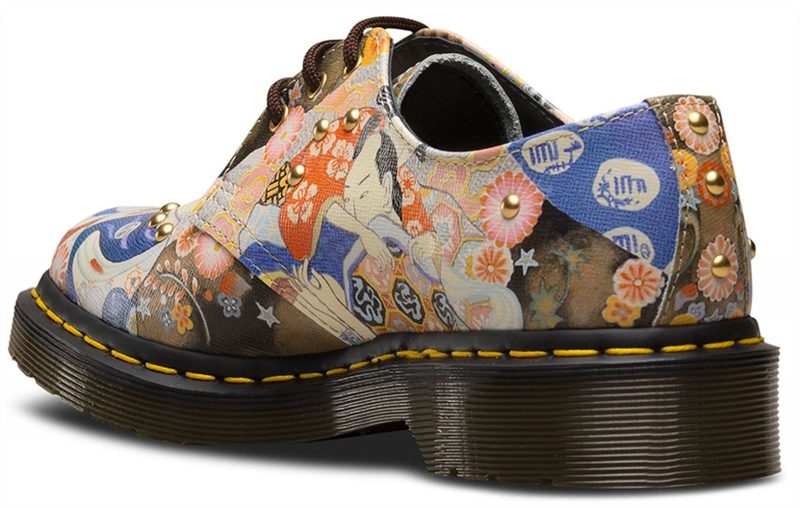
The flam­boy­ance of the Dr. Martens’ clien­tele gave it license to exper­i­ment with unortho­dox styles, like shiny patent leather in eye-pop­ping col­ors, an ani­mal print series and, most recent­ly, an artist series, fea­tur­ing 1460s and 1461s cov­ered in leather repro­duc­tions of paint­ings by artists like Hierony­mus Bosch, Gian­ni­co­la Di Pao­lo, and William Hog­a­rth (unfor­tu­nate­ly all sold out on their web­site).

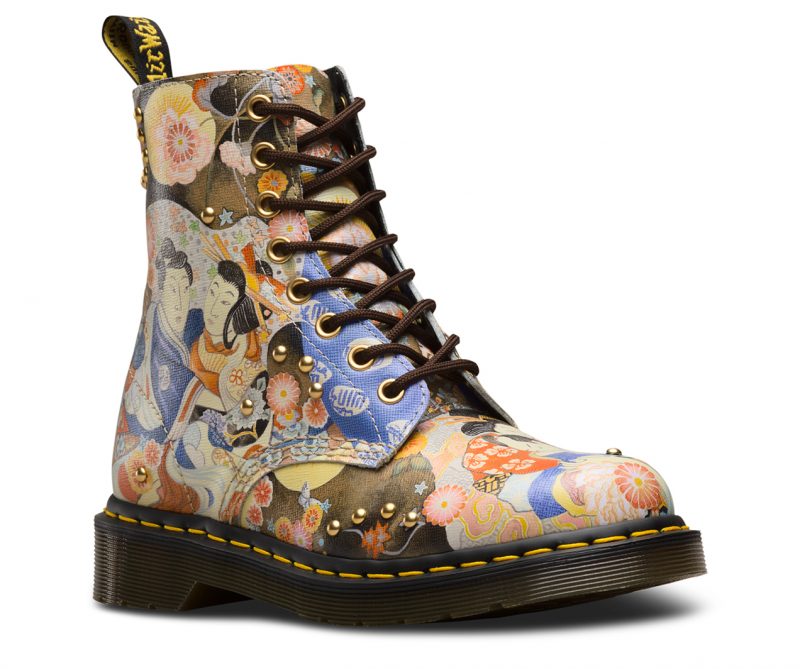
One of the recent addi­tions to this pan­theon seems like a per­fect fit: the William Blake Docs, offer­ing your “choice of gnos­tic kicks for a night out,” as Dan­ger­ous Minds quips. A part­ner­ship with Tate Britain, the boot ver­sion is wrapped in Blake’s Satan Smit­ing Job with Sore Boils (c. 1826) and the shoe dis­plays The House of Death (c. 1795). See both paint­ings below.

Like anoth­er new addi­tion to the artist series—with art­work from J.M.W. Turn­er—the Blake Dr. Martens draw on the work of a vio­lent­ly orig­i­nal Eng­lish artist with solid­ly work­ing-class roots. Unlike his con­tem­po­rary Turn­er, Blake spent most of his days in obscu­ri­ty, cre­at­ing a DIY visu­al and poet­ic mythol­o­gy rich enough to counter the reli­gious and philo­soph­i­cal hege­mo­ny of the day, which was a total­ly punk rock thing to do in the 18th cen­tu­ry.

“I must cre­ate a sys­tem, or be enslaved by anoth­er man’s,” Blake wrote. Does the stamp­ing of his icon­o­clas­tic art­work on a cul­tur­al­ly icon­ic, com­mer­cial­ly suc­cess­ful boot (and shoe, and leather satchel, and T‑shirt) mean that he’s been absorbed into exact­ly the kind of sys­tem he spent his life oppos­ing? Isn’t that just punk’s eter­nal dilem­ma.…

See a short film from Tate Britain cel­e­brat­ing their col­lab­o­ra­tion with Dr. Martens at the shoemaker’s web­site and see much more William Blake in the Relat­ed Con­tent links below.

If you want to snag your own William Blake Dr. Martens, you can find the 3‑Eye Oxfords and 1460 Boot on Ama­zon.

via Dan­ger­ous Minds

Relat­ed Con­tent:

William Blake’s Hal­lu­ci­na­to­ry Illus­tra­tions of John Milton’s Par­adise Lost

William Blake’s Mas­ter­piece Illus­tra­tions of the Book of Job (1793–1827)

William Blake’s Last Work: Illus­tra­tions for Dante’s Divine Com­e­dy (1827)

Josh Jones is a writer and musi­cian based in Durham, NC. Fol­low him at @jdmagness

The Genius of Harry Beck’s 1933 London Tube Map–and How It Revolutionized Subway Map Design Everywhere

The sub­way is a mar­vel of engi­neer­ing, and so is the mod­ern sub­way map.

For the first 25 years of its exis­tence, Lon­don Under­ground rid­ers relied on a map that reflect­ed the actu­al dis­tance between sta­tions, as well as rivers, parks, and oth­er above­ground phe­nom­e­na.

As design­er Michael Bierut observes in the video at the top, the rad­i­cal­ly revised approach it final­ly adopt­ed in 1933 proved so intu­itive and easy to use, it remains the uni­ver­sal tem­plate for mod­ern sub­way maps.

The brain­child of Har­ry Beck, a young drafts­man in the Lon­don Under­ground Sig­nals Office, the new map is more accu­rate­ly a dia­gram that pri­or­i­tized rid­ers’ needs.

He did away with all above­ground ref­er­ences save the Thames, and replot­ted the sta­tions at equidis­tant points along col­or-cod­ed straight lines.

This innovation—for which he was paid about $8—helped rid­ers to glean at a glance where to make the sub­ter­ranean con­nec­tions that would allow them to trav­el from point A to point B.

The for­mer senior cura­tor of Lon­don Trans­port Muse­um, Anna Ren­ton, said in an inter­view with The Verge that Beck’s design may have helped per­suade city dwellers to make the leap to sub­urbs ser­viced by the Under­ground “by mak­ing them look clos­er to the cen­ter, and show­ing how easy it was to com­mute.”

It’s not Beck’s fault if ser­vice falls short of his map’s effi­cient ide­al, par­tic­u­lar­ly on nights and week­ends, when track work and ser­vice advi­sories abound, ren­der­ing such com­mutes a night­mare.

The appeal of sub­way map-themed sou­venirs is also a tes­ta­ment to the visu­al appeal of Beck’s orig­i­nal design, espe­cial­ly giv­en that such pur­chas­es are not lim­it­ed to tourists.

Relat­ed Con­tent:

Ani­mat­ed GIFs Show How Sub­way Maps of Berlin, New York, Tokyo & Lon­don Com­pare to the Real Geog­ra­phy of Those Great Cities

A Won­der­ful Archive of His­toric Tran­sit Maps: Expres­sive Art Meets Pre­cise Graph­ic Design

The Roman Roads of Britain Visu­al­ized as a Sub­way Map

Ayun Hal­l­i­day is an author, illus­tra­tor, the­ater mak­er and Chief Pri­ma­tol­o­gist of the East Vil­lage Inky zine.  Join her in NYC on Mon­day, April 23 for the third install­ment of her lit­er­ary-themed vari­ety show, Necro­mancers of the Pub­lic Domain. Fol­low her @AyunHalliday.

Behold the MusicMap: The Ultimate Interactive Genealogy of Music Created Between 1870 and 2016

A Pan­do­ra for the adven­tur­ous anti­quar­i­an, the high­ly under­rat­ed site Radiooooo gives users stream­ing music from all over the world and every decade since 1900. While it offers an aur­al feast, its lim­it­ed inter­face leaves much to be desired from an edu­ca­tion­al stand­point. On the oth­er end of the audio-visu­al spec­trum, clever dia­grams like those we’ve fea­tured here on elec­tron­ic music, alter­na­tive, and hip hop show the detailed con­nec­tions between all the major acts in these gen­res, but all they do so in silence.

Now a new inter­ac­tive info­graph­ic built by Bel­gian archi­tect Kwin­ten Crauwels brings togeth­er an ency­clo­pe­dic visu­al ref­er­ence with an exhaus­tive musi­cal archive. Though it’s miss­ing some of the fea­tures of the resources above, the Musicmap far sur­pass­es any­thing of its kind online—“both a 23and me-style ances­tral tree and a thor­ough dis­am­bigua­tion of just about every extant genre of music,” writes Fast Com­pa­ny.

Or as Frank Jacobs explains at Big Think, Crauwels’ goal is “to pro­vide the ulti­mate geneal­o­gy of pop­u­lar music gen­res, includ­ing their rela­tions and his­to­ry.”

With over 230 gen­res in all—linked togeth­er in intri­cate webs of influ­ence, mapped in a zoomable visu­al inter­face that orga­nizes them all at macro and micro lev­els of descrip­tion, and linked to explana­to­ry arti­cles and rep­re­sen­ta­tive playlists (drawn from YouTube)—the project is almost too com­pre­hen­sive to believe, and its degree of sophis­ti­ca­tion almost too com­plex to sum­ma­rize con­cise­ly (though Jacobs does a good job of it). The Musicmap spans the years 1870–2016 and cov­ers 22 major cat­e­gories (with Rock fur­ther bro­ken into six and “World” into three).

In an oval around the col­or­ful sky­scraper-like “super-gen­res” are decades, mov­ing from past to present from top to bot­tom. Zoom into the “super-gen­res” and find “a spider’s web of links with­in and between the dif­fer­ent hous­es” of sub­gen­res. “Those links can indi­cate parent­age or influ­ence, but also a back­lash (i.e. as ‘anti-links’).” Click­ing on the name of each sub­genre reveals “a short syn­op­sis and a playlist of rep­re­sen­ta­tive songs.” These two func­tions, in turn, link to each oth­er, allow­ing users to click through in a more Wikipedia-like way once they’ve entered the minu­ti­ae of the Musicmap’s con­tents.

The map not only draws con­nec­tions between sub­gen­res but also between their rel­a­tives in oth­er “super-gen­res” (learn about the rela­tion­ship, for exam­ple, between folk rock and clas­sic met­al). On the left side of the screen is a series of but­tons that reveal an intro­duc­tion, method­ol­o­gy, abstract, sev­er­al nav­i­ga­tion­al func­tions, a glos­sary of musi­cal terms, and a bib­li­og­ra­phy (called “Acknowl­edg­ments”). Aside from visu­al­ly reduc­ing all the way down to the lev­el of indi­vid­ual bands with­in each sub­genre, which could become a lit­tle dizzy­ing, it’s hard to think of any­thing seri­ous­ly lack­ing here.

Any­thing we might find fault with might be changed in the near future. Although Crauwels spent almost ten years on research and devel­op­ment, first con­ceiv­ing of the project in 2008, the cur­rent site “is still ver­sion 1.0 of Music map. In lat­er ver­sions, the playlists will be expand­ed, per­haps even com­mu­ni­ty-gen­er­at­ed.” Crauwels also wants to sync up with Spo­ti­fy. Although not a musi­cian him­self, he is as pas­sion­ate about music as he is about design and edu­ca­tion, mak­ing him very like­ly the per­fect per­son to take on this task, which he admits can nev­er be com­plet­ed.

Crauwels does not cur­rent­ly seem to have plans to mon­e­tize his map. His stat­ed motives are altru­is­tic, in the same pub­lic ser­vice spir­it as Radiooooo. “Musicmap,” he says, “believes that knowl­edge about music gen­res is a uni­ver­sal right and should be part of basic edu­ca­tion.” At the moment, the edu­ca­tion here only applies to pop­u­lar music, although enough of it to acquire a grad­u­ate-lev­el his­tor­i­cal knowl­edge base.

The four cat­e­gories at the top of the map—the strange­ly named “Util­i­ty” (which includes hymns, mil­i­tary march­es, musi­cals, and sound­tracks), Folk, Clas­si­cal, and World—are zoomable but do not have click­able links or playlists. Giv­en Crauwels’ com­pletist instincts, this may well change in future updates. In the TED talk above, see him tell the sto­ry of how he cre­at­ed Musicmap, a DIY effort that came out of his frus­tra­tion that noth­ing like it exist­ed, so he had to cre­ate it him­self.

Enter the Musicmap here and try not to get lost for sev­er­al hours.

via Big Think

Relat­ed Con­tent:

Radiooooo: A Musi­cal Time Machine That Lets You Hear What Played on the Radio in Dif­fer­ent Times & Places

Radio Gar­den Lets You Instant­ly Tune into Radio Sta­tions Across the Entire Globe

The His­to­ry of Hip Hop Music Visu­al­ized on a Turntable Cir­cuit Dia­gram: Fea­tures 700 Artists, from DJ Kool Herc to Kanye West

A His­to­ry of Alter­na­tive Music Bril­liant­ly Mapped Out on a Tran­sis­tor Radio Cir­cuit Dia­gram: 300 Punk, Alt & Indie Artists

A Mas­sive 800-Track Playlist of 90s Indie & Alter­na­tive Music, in Chrono­log­i­cal Order

Josh Jones is a writer and musi­cian based in Durham, NC. Fol­low him at @jdmagness

The Museum of Failure: A Living Shrine to New Coke, the Ford Edsel, Google Glass & Other Epic Corporate Fails

All suc­cess­ful prod­ucts are alike; every unsuc­cess­ful prod­uct is unsuc­cess­ful in its own way. Or so a mod­ern-day Tol­stoy might find him­self inspired to write after a vis­it to the Muse­um of Fail­ure, a mov­able feast of flops which began last year in Hels­ing­borg, Swe­den and has now opened its doors on Hol­ly­wood Boule­vard in Los Ange­les. The Don­ald Trump board game, Apple’s New­ton, Noki­a’s N‑Gage, Ford’s Edsel, Col­gate Beef Lasagne, Harley-David­son Cologne, New Coke, Google Glass: these and oth­er shin­ing exam­ples of fail­ure appear in the videos about the muse­um at the top of the post and just below.


Con­sid­ered today, many of these prod­ucts, whether well-known or thor­ough­ly obscure, look hilar­i­ous­ly ill-con­ceived. But the Muse­um of Fail­ure’s founder, a psy­chol­o­gist named Samuel West, does have high praise for some of the prod­ucts he’s col­lect­ed in his insti­tu­tion.

As you’ll find out on a vis­it there, though, they’ve all got at least one fatal flaw — a design prob­lem, bad tim­ing, mis­judg­ment of the mar­ket, falling into the cracks of exist­ing offer­ings — that drove con­sumers away. You can’t say that any of them did­n’t take a risk, but risks, by their very nature, burn out more often than they pay off.

“Why do I have all these fail­ures?” asks West in his TED Talk. “The point of hav­ing the muse­um is that we can learn from these fail­ures. I want us to start to admit our fail­ures as com­pa­nies, as indi­vid­u­als, so we can learn from it.” Amer­i­ca’s rel­a­tive lack of cul­tur­al stigma­ti­za­tion of fail­ure often gets cit­ed among the rea­sons for the coun­try’s rep­u­ta­tion for inno­va­tion and eco­nom­ic dynamism, but there, as any­where else, an increased will­ing­ness not just to fail but to bet­ter under­stand the nature of indi­vid­ual fail­ures would­n’t go amiss. Noth­ing suc­ceeds like suc­cess, so the say­ing goes, but the fas­ci­na­tion that has built around the Muse­um of Fail­ure so far sug­gests that we have much to gain from its oppo­site as well.

Relat­ed Con­tent:

Hear Thomas Edison’s Creepy Talk­ing Dolls: An Inven­tion That Scared Kids & Flopped on the Mar­ket

Blade Run­ner: The Pil­lar of Sci-Fi Cin­e­ma that Siskel, Ebert, and Stu­dio Execs Orig­i­nal­ly Hat­ed

Why Do So Many Peo­ple Adore The Room, the Worst Movie Ever Made? A Video Explain­er

Meet the World’s Worst Orches­tra, the Portsmouth Sin­fo­nia, Fea­tur­ing Bri­an Eno

Paulo Coel­ho on The Fear of Fail­ure

“Try Again. Fail Again. Fail Bet­ter”: How Samuel Beck­ett Cre­at­ed the Unlike­ly Mantra That Inspires Entre­pre­neurs Today

Based in Seoul, Col­in Mar­shall writes and broad­casts on cities and cul­ture. His projects include the book The State­less City: a Walk through 21st-Cen­tu­ry Los Ange­les and the video series The City in Cin­e­ma. Fol­low him on Twit­ter at @colinmarshall or on Face­book.

IDEO.org’s Free Design Course on Prototyping Starts Today

A quick fyi: IDEO.org, the non-prof­it arm of the famous Cal­i­for­nia design firm IDEO, is launch­ing a free 4‑week course on Pro­to­typ­ing.

As you might recall, we fea­tured sev­er­al months back A Crash Course in Design Think­ing from Stanford’s Design School. If that piqued your inter­est in design and design think­ing, then IDEO.org’s course might hold appeal.

Design Kit: Pro­to­typ­ing will help you learn how to build pro­to­types in “a low-cost and risk-averse way to get your ideas into the hands of the peo­ple you’re try­ing to change.” Run­ning from March 12 through April 17, the course will teach you best prac­tices for pro­to­typ­ing prod­ucts, ser­vices, inter­ac­tions, and envi­ron­ments.

More free cours­es can be found in our col­lec­tion, 1,700 Free Online Cours­es from Top Uni­ver­si­ties.

If you would like to sign up for Open Culture’s free email newslet­ter, please find it here. It’s a great way to see our new posts, all bun­dled in one email, each day.

If you would like to sup­port the mis­sion of Open Cul­ture, con­sid­er mak­ing a dona­tion to our site. It’s hard to rely 100% on ads, and your con­tri­bu­tions will help us con­tin­ue pro­vid­ing the best free cul­tur­al and edu­ca­tion­al mate­ri­als to learn­ers every­where. You can con­tribute through Pay­Pal, Patre­on, and Ven­mo (@openculture). Thanks!

Relat­ed Con­tent:

Down­load 20 Free eBooks on Design from O’Reilly Media

Saul Bass’ Advice for Design­ers: Make Some­thing Beau­ti­ful and Don’t Wor­ry About the Mon­ey

Bauhaus, Mod­ernism & Oth­er Design Move­ments Explained by New Ani­mat­ed Video Series

Mil­ton Glaser’s 10 Rules for Life & Work: The Cel­e­brat­ed Design­er Dis­pens­es Wis­dom Gained Over His Long Life & Career

Buckminster Fuller’s Collaboration with The North Face Culminates with a New Geodesic Dome Tent, the Geodome 4

Most any­one who reg­u­lar­ly spends time in nature knows the name The North Face. For fifty years now, the com­pa­ny has fur­nished out­doors­men and out­door­swomen with not just appar­el but much else of the equal­ly rugged gear they might con­ceiv­ably need to go hik­ing, camp­ing, or per­ma­nent­ly off the grid. Some of their prod­uct designs have remained basi­cal­ly the same through the decades, while oth­ers have changed dra­mat­i­cal­ly. Even ear­ly in the com­pa­ny’s life it knew that a bet­ter tent, for instance, would get the out­doorsy world beat­ing a path to its door: hence its engage­ment of no less a design thinker than R. Buck­min­ster Fuller.

Bruce Hamil­ton, who worked for the com­pa­ny from 1970 to 1989, recent­ly wrote a few posts (part one, part two, part three) telling the sto­ry of the North Face/Buckminster Fuller con­nec­tion. It began in his first year on the job, when the com­pa­ny’s own­er Hap Klopp asked a friend whose fam­i­ly had con­nec­tions to Fuller to send the already world-famous archi­tect-sys­tems the­o­rist-inven­tor a let­ter. Describ­ing The North Face as “a small com­pa­ny that pro­duces what I believe to be the finest equip­ment present­ly avail­able,” the friend asked Fuller for ideas on how to improve the “archa­ic designs” then used to con­struct tents. “I have thought a great deal in the past about your sub­ject of the com­pact, light­weight, back-pack­able envi­ron­ment con­trol­ling device,” Fuller replied. “I am accept­ing your chal­lenge.”

Hamil­ton, a fan of Fuller’s work, had already been think­ing about how to use the prin­ci­ples of the light but stur­dy tri­an­gle-and-dome-based “tenseg­ri­ty struc­tures” Fuller so often wrote and (as in the clip above) talked about. One day Hamil­ton showed Klopp a mod­el of a Ful­ler­ian geo­des­ic sphere, and “it was at that moment that he con­nect­ed me with Bucky and with his dri­ve to bring a new tent to life.” The result, the Oval Inten­tion tent, first appeared in The North Face’s Fall 1975 cat­a­log, accom­pa­nied by a pho­to of Hamil­ton relax­ing inside one and a typ­i­cal­ly sweep­ing quote from Fuller him­self: “It is no aes­thet­ic acci­dent that nature encased our brains and regen­er­a­tive organs in com­pound­ly curvi­lin­ear struc­tures. There are no cubi­cal heads, eggs, nuts, or plan­ets.”

The North Face kept incor­po­rat­ing Fuller’s ideas into their tents, and they ham­mered out the terms of  direct col­lab­o­ra­tion on a new mod­el in 1983, a month before Fuller died. Judg­ments about oth­er tenseg­ri­ty struc­tures — geo­des­ic dome homes, for exam­ple — have var­ied over the years, but the Oval Inten­tion lives on in the form of the new Geodome 4. “Thanks to the most spa­tial­ly effi­cient shape in archi­tec­ture, it can with­stand winds of up to 60 mph as the force is spread even­ly across the struc­ture whilst even pro­vid­ing enough height for a six-foot per­son to stand com­fort­ably inside,” writes Arch­dai­ly’s Ella Thorns. “The extreme­ly effi­cient design has allowed the tent to weigh not much more than 11kg and com­prise of 5 main poles and the equa­tor for fast and easy assem­bly and stor­age.”

If this already has you excit­ed about your improved prospects for more geo­met­ri­cal­ly and struc­tural­ly effi­cient camp­ing on the sur­face of our Space­ship Earth, do be warned: at the moment The North Face has only made the Geodome 4 avail­able in Japan (see its Japan­ese page here), and with a price tag equiv­a­lent to $1,635 at that. Even so, one hopes that Bucky — as Hamil­ton and many of the oth­ers who knew him called him — looks on with pride from whichev­er space­ship he now finds him­self aboard.

via Arch Dai­ly

Relat­ed Con­tent:

The Life & Times of Buck­min­ster Fuller’s Geo­des­ic Dome: A Doc­u­men­tary

Watch an Ani­mat­ed Buck­min­ster Fuller Tell Studs Terkel All About “the Geo­des­ic Life”

Bet­ter Liv­ing Through Buck­min­ster Fuller’s Utopi­an Designs: Revis­it the Dymax­ion Car, House, and Map

Design­er Cre­ates Origa­mi Card­board Tents to Shel­ter the Home­less from the Win­ter Cold

Based in Seoul, Col­in Mar­shall writes and broad­casts on cities and cul­ture. His projects include the book The State­less City: a Walk through 21st-Cen­tu­ry Los Ange­les and the video series The City in Cin­e­ma. Fol­low him on Twit­ter at @colinmarshall or on Face­book.

Enter the Cover Art Archive: A Massive Collection of 800,000 Album Covers from the 1950s through 2018

When I get to mut­ter­ing in my beard about kids today, the sub­ject oft turns to dig­i­tal music and how every­thing sounds the same and looks the same and “what ever hap­pened to album cov­ers, man….” I mean I know they still exist, but they’re ter­ri­ble, right? Shiny thumb­nail-sized after­thoughts with no more pur­pose than can­dy in a shop win­dow dis­play? I will admit it, and not with­out some cha­grin, I’ve always thought that who­ev­er designed Tay­lor Swift’s 1989 had a can­ny sense of the deriv­a­tive as a qual­i­ty one should wear proud­ly on one’s sleeve—it’s evoca­tive!, in a fun way, not in the way of her most recent, severe­ly Teu­ton­ic cov­er incar­na­tion.

So, it’s not all bad, because there’s one good Tay­lor Swift album cov­er. But then album art has nev­er been all good. Far from it. I remem­ber album cov­ers like this and this and these being the norm. And then there’s … well you’ve prob­a­bly seen these jaw-drop­ping mon­strosi­ties from the dis­tant past….

Maybe the tru­ly awful album cov­er is as rare a trea­sure as the tru­ly great one. Maybe the album cov­er is as it always was, despite so rarely appear­ing in a phys­i­cal form: some­times an inspired work of art, some­times a half-assed, tossed-off mar­ket­ing job, some­times a half-baked, so-bad-its-good (or not) con­cept, com­plete­ly unre­lat­ed to the music.

It can some­times seem like all we have left is nos­tal­gia, but nos­tal­gia can be done well, as in 1989 (even if that record’s cov­er does evoke, in part, an image from Joni Mitchell’s weird stint in black­face). Or it can be done bad­ly, as in Justin Timberlake’s wide­ly dis­liked 2018 Man of the Woods, which makes a lame art­sy attempt to dress up the fact that it’s kin­da rip­ping off 1989 four years lat­er. I do not know how to eval­u­ate Miley Cyrus’ var­i­ous Mia­mi Vice-themed cov­ers for her album Bangerz, which came out in the same year as 1989, except to say, good for her for going all the way with this, like, why hold back?

Oth­er recent album cov­ers mime the style of decades past with real swag­ger, like Swedish folk sis­ter duo First Aid Kit’s Heart-inspired Ruins cov­er, at the top, fea­tur­ing one of many retro 70s fonts that have returned of late, as easy to read in thumb­nail images as they were on 8‑track tapes. The cov­er of Lon­don artist Arlo’s 2017 sin­gle “Safe” has its obvi­ous 80s Duran Duran pas­tel and mar­ble swirl deco trends down, taste­ful­ly and know­ing­ly applied.

You can do your own cul­tur­al anthro­pol­o­gy of the album cov­er, from 2018’s era of eye can­dy glam­or, and the recent creative—and not-so-creative—repurposing of the past, to the gen­uine arti­cles from the 50s, 60s, 70s, 80s, and 90s at the Cov­er Art Archive, a joint project of the Inter­net Archive and MusicBrainz, an “open music ency­clo­pe­dia that col­lects music meta­da­ta and makes it avail­able to the pub­lic.

The col­lec­tion now num­bers in the sev­er­al  hun­dred thousands—upwards of 800,000, accord­ing to its results counter—but some of the uploads are not yet com­plete with images. You are invit­ed to con­tribute and help make this amaz­ing resource even more com­pre­hen­sive. “To get start­ed,” the MusicBrainz blog writes, “log in with your MusicBrainz account (or cre­ate a new onefind your favorite release and then click on the cov­er art tab to view the exist­ing pieces of art and/or upload new ones.”

You may find, as you browse and com­pare gen­res and eras, that per­haps the album cov­er is in decline, or you may find that it is alive and well, still an inno­v­a­tive form despite the mas­sive shift in modes of pro­duc­tion. At least aged British met­al band Sax­on, a true orig­i­nal, still keeps it real, fur­ther up, with the cov­er of their 22nd album, 2018’s Thun­der­bolt. Many of Sax­on’s prog­e­ny have con­tin­ued in the tra­di­tion of high fan­ta­sy met­al cov­er art.

Some things will nev­er return. There’ll nev­er be anoth­er Diary of a Mad­man, that’s for sure, or anoth­er Ozzy. But the in-your-face soft-focus gar­ish­ness of the 80s, and the styles of near­ly every oth­er decade, live on, to take a phrase from Child­ish Gambino’s 2013 out­ing, Because the Inter­net.

Enter the Cov­er Art archive and start search­ing by year, artist, and oth­er para­me­ters here.

Relat­ed Con­tent:

Film­mak­er Michel Gondry Brings Clas­sic Album Cov­ers to Life in a Visu­al­ly-Packed Com­mer­cial: Pur­ple Rain, Beg­gars Ban­quet, Nev­er­mind & More

Ralph Steadman’s Evolv­ing Album Cov­er Designs: From Miles Davis & The Who, to Frank Zap­pa & Slash (1956–2010)

How The Bea­t­les’ Sgt. Pepper’s Lone­ly Hearts Club Band Changed Album Cov­er Design For­ev­er

Josh Jones is a writer and musi­cian based in Durham, NC. Fol­low him at @jdmagness

« Go BackMore in this category... »
Quantcast