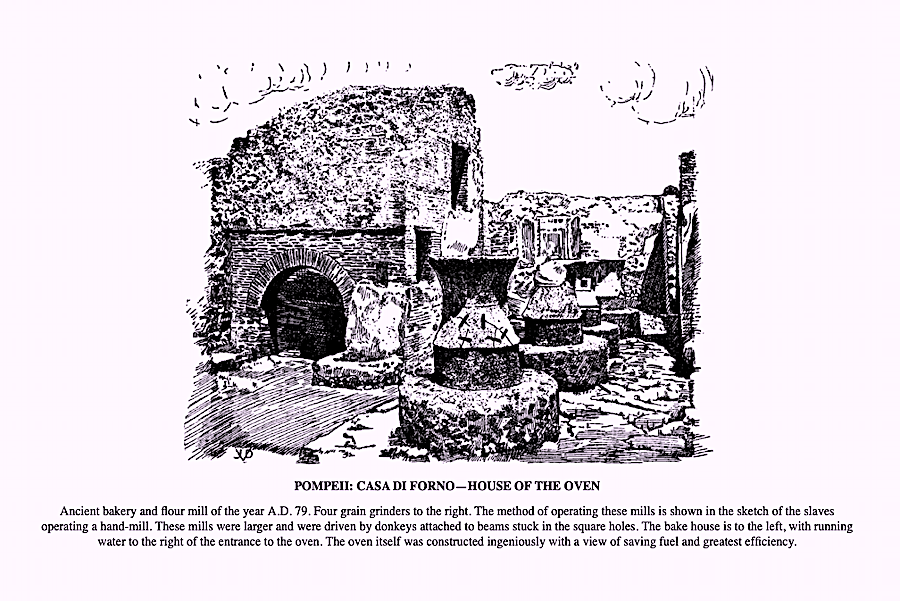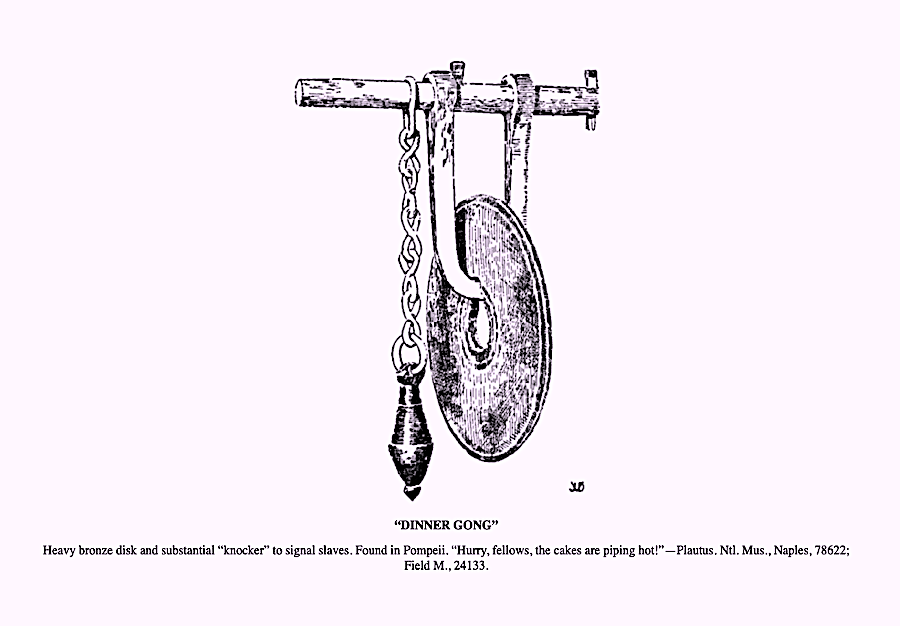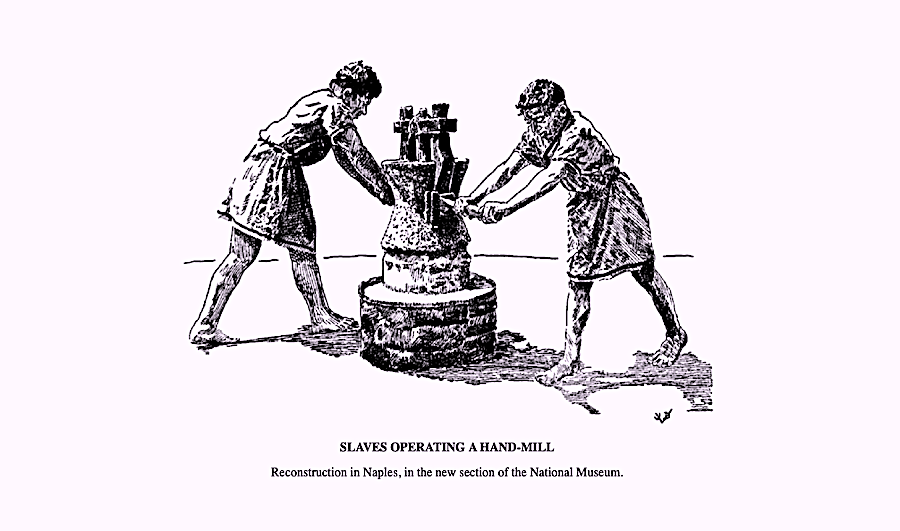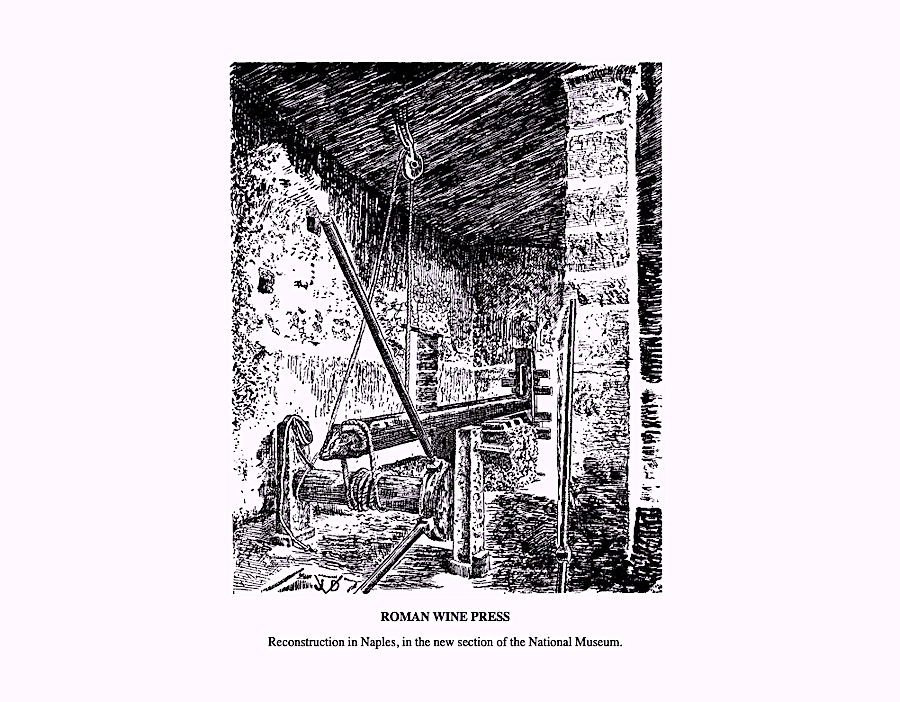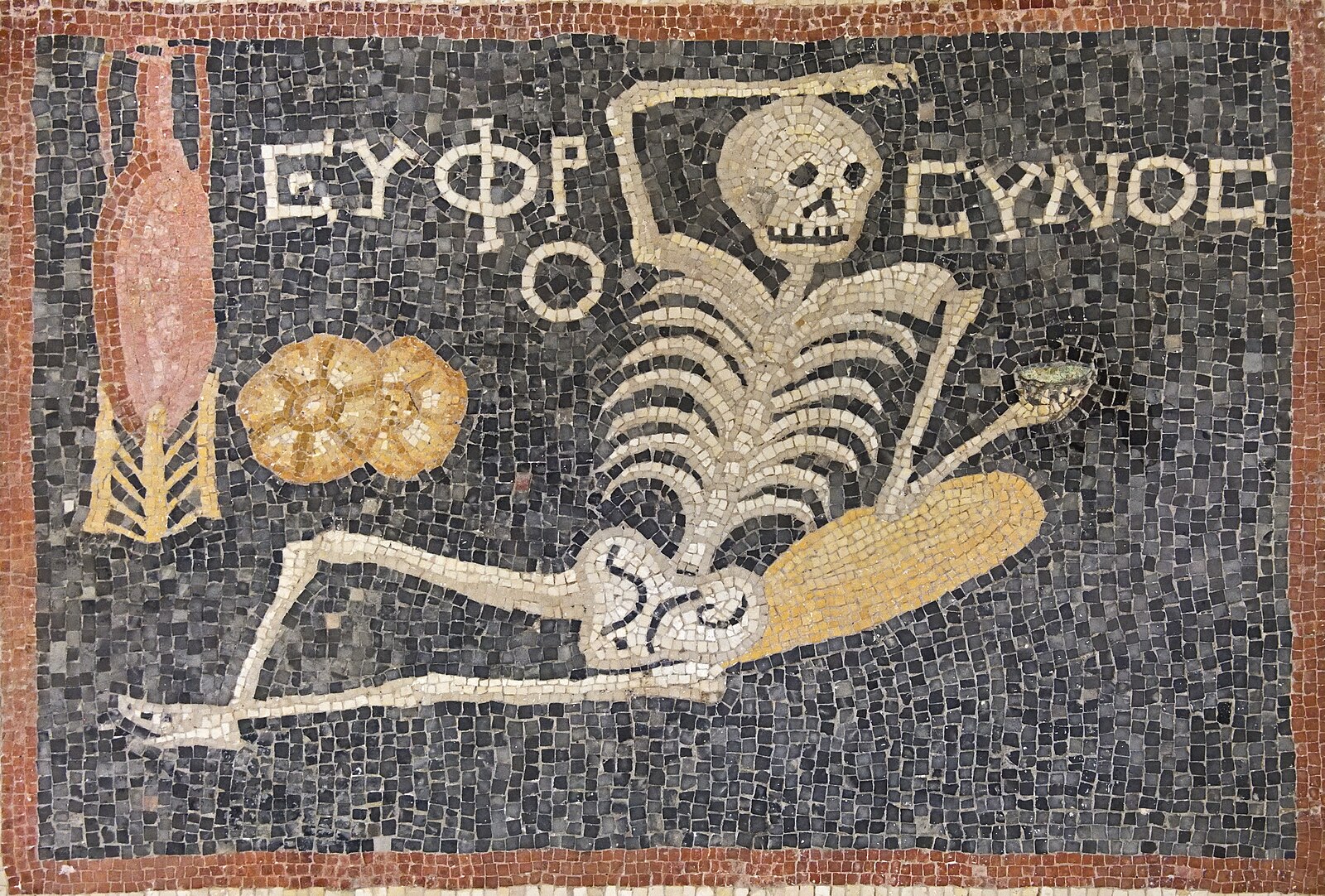
Above, we have the Alulu Beer Receipt. Written in cuneiform on an old clay tablet, the 4,000-year-old receipt documents a transaction. A brewer, named Alulu, delivered “the best” beer to a recipient named Ur-Amma, who apparently also served as the scribe. The Mesopotamians drank beer daily. And while they considered it a staple of everyday life, they also regarded it as a divine gift—something that contributed to human happiness and well-being.
Wherever in the world you grew up, you probably grew up with an inaccurate idea of Chinese food. For Americans, it can come as a shock to hear that such familiar dishes as chop suey and General Tso’s chicken are unknown in China itself. By the same token, almost every country in the world has developed its own concept of “Chinese food” geared, sometimes outlandishly, to local tastes. But it could be said that the average Chinese person in China also has a skewed idea of their national cuisine, because they see it through the lens of their own regional cuisine — of which, according to the Chinese Cooking Demystified video above, there are at least 63.
In just 40 minutes, the channel’s co-host Chris Thomas broadly explains all of those cuisines, from the six eaten in Guangdong alone to the various fusions available in the vast-unto-itself region of Inner Mongolia.
Along the way, he highlights such representative dishes as beer fish, blood duck, “steamed double stinky,” lion’s head meatball, braised donkey sandwich, “ol’ buddy noodles,” lamp-shaped rice cake, hairy tofu, and “everybody’s favorite, penis fish.” Of course, quite a few of the items in between will seem more familiar to viewers who’ve never deliberately sought out “authentic” Chinese food: even Peking duck, it turns out, belongs in that category.
Still, the flavors of the Peking duck you can get in Beijing surely beat out those of the versions available in, say, Denver. If you want to taste them, as Thomas explains at the video’s end, “you should travel to mainland China. Is it the easiest place in the world to travel to? No. If you don’t know Chinese, the language barrier can get intense” (though you might consider starting to learn it with the resources we’ve rounded up here on Open Culture). But “if you want easy, go to Disneyland”; if you want to experience “mind-numbing culinary diversity,” it’s time to start planning your eating journey through the Middle Kingdom — and there are hundreds more Chinese Cooking Demystified videos available to make you hungry.
Note: Chinese Cooking Demystified has a related post on their Substack. Titled “63 Chinese Cuisines: the Complete Guide,” the post features helpful maps and commentary. It’s worth checking out.
Based in Seoul, Colin Marshall writes and broadcasts on cities, language, and culture. His projects include the Substack newsletterBooks on Cities and the book The Stateless City: a Walk through 21st-Century Los Angeles. Follow him on the social network formerly known as Twitter at @colinmarshall.
Andrew Huberman–the host of the influential Huberman Lab podcast–has gotten a lot of mileage out of his recommended morning routine. His routine emphasizes the importance of getting sunlight within 30–60 minutes of waking; also engaging in light physical activity; hydrating well; and avoiding coffee for the first 90–120 minutes. In his words:
I highly recommend that everybody delay their caffeine intake for 90 to 120 minutes after waking. However painful it may be to eventually arrive at that 90 to 120 minutes after waking, you want, and I encourage you, to clear out whatever residual adenosine is circulating in your system in that first 90 to 120 minutes of the day. Get that sunlight exposure, get some movement to wake up, and then, and only then, start to ingest caffeine because what you’ll do if you delay caffeine intake until 90 to 120 minutes after waking is you will avoid the so-called afternoon crash.
And if you drink caffeine at any point throughout the day, really try and avoid any caffeine, certainly avoid drinking more than a hundred milligrams of caffeine after 4:00 p.m and probably even better to limit your last caffeine intake to 3:00 p.m. or even 2:00 p.m.
For many, this isn’t exactly a welcome piece of advice. And you naturally wonder how the advice sits with James Hoffmann, author of The World Atlas of Coffee, who has developed a robust YouTube channel where he explores the ins and outs of making coffee. In the video above, Hoffmann explores the research supporting Huberman’s advice, all with the goal of determining whether Huberman is ruining (or improving) our early waking hours.
Playing video games, road-tripping across America, binge-listening to podcasts, chatting with artificial intelligence: these are a few of our modern pleasures not just unknown to, but unimaginable by, humanity in the Middle Ages. Yet medieval people were, after all, people, and as Terence put it more than a millennium before their time, humani nil a me alienum puto. For us moderns, it’s a common blunder to regard distant eras through the lens of our own standards and expectations, which prevents us from truly understanding how our listeners lived and thought. But perhaps we can begin from a considerable patch of common ground: medievals, too, liked their sex and booze.
Such are the points emphasized by medieval historian Eleanor Janega in these episodes of History Hit, which examine the more-than-age-old enjoyments in which people indulged between antiquity and modernity. Our received image of Europe in the Middle Ages may be one of Church-dominated, dankly pleasure-free societies, but Janega and historian of sexuality Kate Lister point out that, strict though the religious dictates may have been about sexual activity and other matters besides, many simply ignored them. (And though they may have lacked access to daily hot showers, we can rest assured that they were much more concerned with how they smelled than we might imagine.) In any case, reproduction was one thing, and courtly love — or indeed commercial love — quite another.
As Billy Crystal famously joked, “Women need a reason to have sex. Men just need a place.” In the Middle Ages, the place was often a problem for women as well as men, but also for nobles as well as commoners (though some royalty did enjoy the benefit of a curtain around their four-poster bed, which afforded at least the illusion of privacy). It seems to have been much easier to find somewhere to drink, according to Janega’s episode about alcohol. In it, she visits a fine example of “the humble pub,” where even medieval Brits would go to drink their ale, beer not yet having been invented — and to tell their stories, a practice that would become so deeply ingrained in the culture as to provide a formal foundation for the Canterbury Tales. Even if Chaucer, as a pub-owner interviewee reminds us, invented English literature as we know it, we should bear in mind that sex hardly began with Wife of Bath.
Based in Seoul, Colin Marshall writes and broadcasts on cities, language, and culture. His projects include the Substack newsletterBooks on Cities and the book The Stateless City: a Walk through 21st-Century Los Angeles. Follow him on Twitter at @colinmarshall or on Facebook.
174 years after his death, Honoré de Balzac remains an extremely modern-sounding wag. Were he alive today, he’d no doubt be pounding out his provocative observations in a coffice, a café whose free wifi, lenient staff, and abundant electrical outlets make it a magnet for writers.
One has a hunch Starbucks would not suffice…
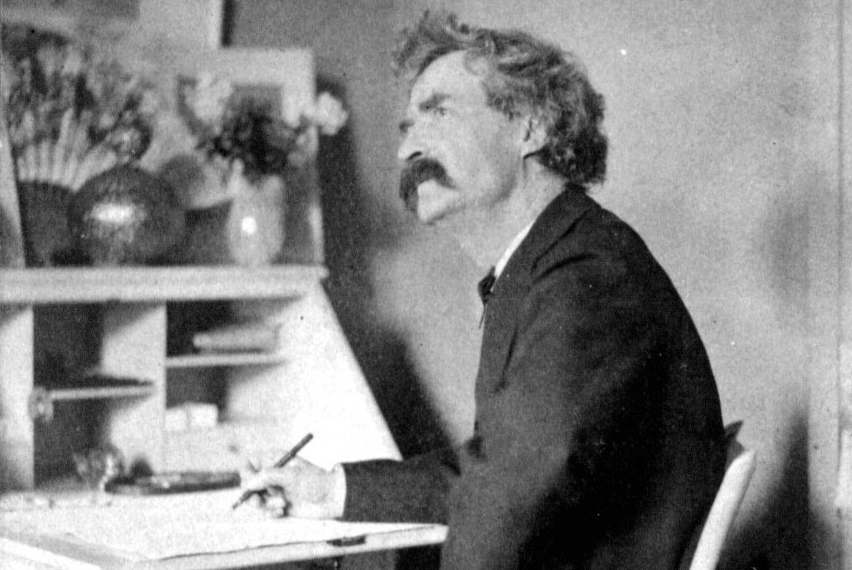
Judging by his humorous essay, “The Pleasures and Pains of Coffee,” Balzac would seek out a place that stays open past midnight, and the strongest, most arcane brewing methods. The Bucket of Black Snakes was his Green Fairy. He was that most cunning of addicts, sometimes imbibing up to 50 cups of coffee a day, carefully husbanding his binges, knowing just when to pull back from the edge in order to prolong his vice.
Coffee — he called it a “great power in [his] life” — made possible a grueling writing schedule that had him going to bed at six, rising at 1am to work until eight in the morning, then grabbing forty winks before putting in another seven hours.
It takes more than a couple of cappuccinos to maintain that kind of pace. Whenever a reasonable human dose failed to stimulate, Balzac would begin eating coffee powder on an empty stomach, a “horrible, rather brutal method” that he recommended “only to men of excessive vigor, men with thick black hair and skin covered with liver spots, men with big square hands and legs shaped like bowling pins.”
Apparently it got the job done. He cranked out eighty-five novels in twenty years and died at 51. The cause? Too much work and caffeine, they like to say. Other speculated causes of death include hypertension, atherosclerosis, and even syphilis.
Image via Journal of Archaeological Science: Reports
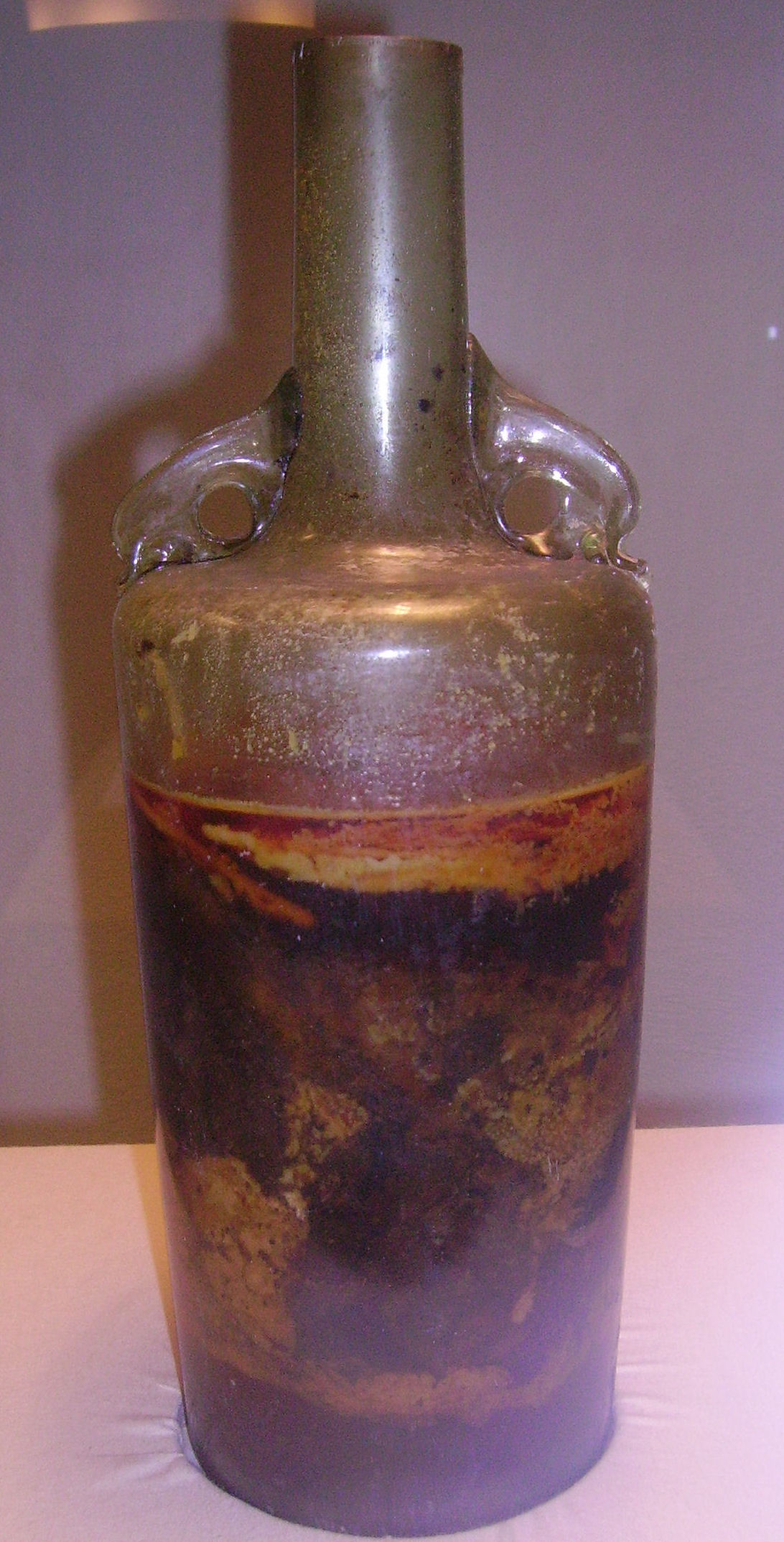
Back in 2017, we featured the oldest unopened bottle of wine in the world here on Open Culture. Found in Speyer, Germany, in 1867, it dates from 350 AD, making it a venerable vintage indeed, but one recently outdone by a bottle first discovered five years ago in Carmona, near Seville, Spain. “At the bottom of a shaft found during construction work,” an excavation team “uncovered a sealed burial chamber from the early first century C.E. — untouched for 2,000 years,” writes Scientific American’s Lars Fischer. Inside was “a glass urn placed in a lead case was filled to the brim with a reddish liquid,” only recently determined to be wine — and therefore wine about three centuries older than the Speyer bottle.
You can read about the relevant research in this new paper published in the Journal of Archaeological Science: Reports by chemist José Rafael Ruiz Arrebola and his team. “The wine from the Carmona site was no longer suitable for drinking, and it had never been intended for that purpose,” writes Fischer.
“The experts found bone remains and a gold ring at the bottom of the glass vessel. The burial chamber was the final resting place for the remains of the deceased, who were cremated according to Roman custom.” Only through chemical analysis were the researchers finally able to determine that the liquid was, in fact, wine, and thus to put together evidence of the arrangement’s being an elaborate sendoff for a Roman-era oenophile.
Though the funerary ritual “involved two men and two women,” says CBS News, the remains in the wine came from only one of the men. This makes sense, as, “according to the study, women in ancient Rome were prohibited from drinking wine.” What a difference a couple of millennia make: today the cultural image slants somewhat female, especially in the case of white wine, which, despite having “acquired a reddish hue,” the liquid unearthed in Carmona was chemically determined to be. With the summer now getting into full swing, this story might inspire us to beat the heat by putting a bottle of our favorite Chardonnay, Riesling, or Pinot Grigio in the refrigerator — a convenience unimagined by even the wealthiest wine-loving citizens of the Roman Empire.
Based in Seoul, Colin Marshall writes and broadcasts on cities, language, and culture. His projects include the Substack newsletterBooks on Cities and the book The Stateless City: a Walk through 21st-Century Los Angeles. Follow him on Twitter at @colinmarshall or on Facebook.
Americans doing “e‑mail jobs” and working in the “laptop class” tend to make much of the quantity of coffee they require to keep going, or even to get started. In that sense alone, they have something in common with Civil War soldiers. “Union soldiers were given 36 pounds of coffee a year by the government, and they made their daily brew everywhere and with everything: with water from canteens and puddles, brackish bays and Mississippi mud,” write NPR’s Kitchen Sisters. “The Confederacy, on the other hand, was decidedly less caffeinated. As soon as the war began, the Union blockaded Southern ports and cut off the South’s access to coffee.”
Smithsonian National Museum of American History curator Jon Grinspan tells of how “desperate Confederate soldiers would invent makeshift coffees,” roasting “rye, rice, sweet potatoes or beets until they were dark, chocolaty and caramelized. The resulting brew contained no caffeine, but at least it was something warm and brown and consoling.” (See video at bottom of the post.) The stark caffeination differential that resulted must count as one of many factors that led to the Union’s ultimate victory. Part of what kept their coffee supplies robust was imports from Liberia, the African republic that had been established earlier in the nineteenth century by freed American slaves.
“The Union’s ability to purchase and distribute coffee from Liberia, alongside other sources, was helping the army’s morale,” writes Bronwen Everill at Smithsonian.com. “In December 1862, one soldier wrote that ‘what keeps me alive must be the coffee.’ ” Meanwhile, a northern general famously gave this advice to other generals: “If your men get their coffee early in the morning, you can hold.” Many harrowing battles later, “at the Confederate surrender at Appomattox in April 1865, Michigan soldier William Smith noted that the Confederate soldiers present were licking their lips hopefully, with ‘a keen relish for a cup of Yankee coffee.’ ” (Johnny Reb had presumably acquired this taste between those battles, when soldiers from both sides would meet and exchange goods.)
The Civil War in Four Minutes video above explains the coffee-drinking Yankee’s habits in more detail. “If there was an early morning march, the first order of business was to boil water and make coffee,” says actor-historian Douglas Ullman Jr. “If there was a halt along the march, the first order of business when the march stopped was to get that hot water going to drink more coffee.” Soldiers would keep their coffee and meager sugar rations in the same bag in order to ensure “the tiniest hint of sugar in every drop. Think about that the next time you order your caramel soy macchiato.” But such beverages were still a long way off after the Civil War, which gave way to the era of what we now call the Wild West — and with it, the heyday of cowboy coffee.
Based in Seoul, Colin Marshall writes and broadcasts on cities, language, and culture. His projects include the Substack newsletterBooks on Cities and the book The Stateless City: a Walk through 21st-Century Los Angeles. Follow him on Twitter at @colinmarshall or on Facebook.
In 2013, the food writer Cheryl Lu-Lien Tan stumbled across an article in the Boston Globe describing a trove of digitized documents from Ernest Hemingway’s home in Cuba that had been recently donated to the John F. Kennedy Presidential Library and Museum, home of Hemingway’s personal archives. One line in the article caught her eye: “And the more mundane, like his instructions to the household staff, including how to prepare his hamburgers: ground beef, onions, garlic, India relish, and capers, cooked so the edges were crispy but the center red and juicy.”
Tan, a Hemingway fan and the author of A Tiger in the Kitchen: A Memoir of Food and Family, set out to find the recipe and try it. She reported her experiences on the Paris Review Daily blog. “I had made burgers before, countless times on countless evenings,” Tan writes. “This one was different; I wasn’t making just any burger — I was attempting to recreate Hemingway’s hamburger. And it had to be just right.”
Here is Papa’s favorite recipe for pan-fried hamburgers, as reported by Tan:
Ingredients–
1 lb. ground lean beef
2 cloves, minced garlic
2 little green onions, finely chopped
1 heaping teaspoon, India relish
2 tablespoons, capers
1 heaping teaspoon, Spice Islands sage
Spice Islands Beau Monde Seasoning — 1/2 teaspoon
Spice Islands Mei Yen Powder — 1/2 teaspoon
1 egg, beaten in a cup with a fork
About 1/3 cup dry red or white wine
1 tablespoon cooking oil
What to do–
Break up the meat with a fork and scatter the garlic, onion and dry seasonings over it, then mix them into the meat with a fork or your fingers. Let the bowl of meat sit out of the icebox for ten or fifteen minutes while you set the table and make the salad. Add the relish, capers, everything else including wine and let the meat sit, quietly marinating, for another ten minutes if possible. Now make your fat, juicy patties with your hands. The patties should be an inch thick, and soft in texture but not runny. Have the oil in your frying pan hot but not smoking when you drop in the patties and then turn the heat down and fry the burgers about four minutes. Take the pan off the burner and turn the heat high again. Flip the burgers over, put the pan back on the hot fire, then after one minute, turn the heat down again and cook another three minutes. Both sides of the burgers should be crispy brown and the middle pink and juicy.
Spice Islands stopped making Mei Yen Powder several years ago, according to Tan. You can recreate it, she says, by mixing nine parts salt, nine parts sugar and two parts MSG. “If a recipe calls for 1 teaspoon of Mei Yen Powder,” she writes, “use 2/3 tsp of the dry recipe (above) mixed with 1/8 tsp of soy sauce.”
Hemingway’s widow, Mary, published the same basic recipe in 1966 in the sixth volume of the Woman’s Day Encyclopedia of Cookery. The one-pound of beef was intended for only two servings. For more on Hemingway’s hamburger recipe and his culinary tastes, including a fascinating list of gourmet foods he had shipped from New York to his home in Cuba, be sure to read Tan’s article at the Paris Review.
We're hoping to rely on loyal readers, rather than erratic ads. Please click the Donate button and support Open Culture. You can use Paypal, Venmo, Patreon, even Crypto! We thank you!
Open Culture scours the web for the best educational media. We find the free courses and audio books you need, the language lessons & educational videos you want, and plenty of enlightenment in between.