What is Electronic Music?: Pioneering Electronic Musician Daphne Oram Explains (1969)

Sur­vey the British pub­lic about the most impor­tant insti­tu­tion to arise in their coun­try after World War II, and a lot of respon­dents are going to say the Nation­al Health Ser­vice. But keep ask­ing around, and you’ll soon­er or lat­er encounter a few seri­ous elec­tron­ic-music enthu­si­asts who name the BBC Radio­phon­ic Work­shop. Estab­lished in 1958 to pro­vide music and sound effects for the Bee­b’s radio pro­duc­tions — not least the doc­u­men­taries and dra­mas of the artis­ti­cal­ly and intel­lec­tu­al­ly ambi­tious Third Pro­gramme — the unit’s work even­tu­al­ly expand­ed to work on tele­vi­sion shows as well. One could scarce­ly imag­ine Doc­tor Who, which debuted in 1963, with­out the Radio­phon­ic Work­shop’s son­ic aes­thet­ic.

By the end of the nine­teen-six­ties, the Radio­phon­ic Work­shop had been cre­at­ing elec­tron­ic music and inject­ing it into the lives of ordi­nary lis­ten­ers and view­ers for more than a decade. Even so, that same pub­lic did­n’t nec­es­sar­i­ly pos­sess a clear under­stand­ing of what, exact­ly, elec­tron­ic music was. Hence this explana­to­ry BBC tele­vi­sion clip from 1969, which brings on Radio­phon­ic Work­shop head Desmond Briscoe as well as com­posers John Bak­er, David Cain, and Daphne Oram (pre­vi­ous­ly fea­tured here on Open Cul­ture).

Hav­ing long since built her own stu­dio, Oram also demon­strates her own tech­niques for cre­at­ing and manip­u­lat­ing sound, few of which will look famil­iar to fans of elec­tron­ic music in our dig­i­tal cul­ture today.

Even in 1969, none of Oram’s tools were dig­i­tal in the way we now under­stand the term. In fact, the work­ing process shown in this clip was so thor­ough­ly ana­log as to involve paint­ing the forms of sound waves direct­ly onto slides and strips of film. She craft­ed sounds by hand in this way not pure­ly due to tech­ni­cal lim­i­ta­tion, but because exten­sive expe­ri­ence had shown her that it pro­duced more inter­est­ing results: “if one does it by pure­ly elec­tron­ic means, one tends to get fixed on one vibra­tion, one fre­quen­cy of vibra­to, which becomes dull.” Believ­ing that “music should be a pro­jec­tion of a thought process in the mind of a human being,” Oram expressed reser­va­tions about a future in which com­put­ers pump out “music by the yard”: a future that, these 55 years lat­er, seems to have arrived.

Relat­ed con­tent:

Daphne Oram Cre­at­ed the BBC’s First-Ever Piece of Elec­tron­ic Music (1957)

Meet Delia Der­byshire, the Dr. Who Com­pos­er Who Almost Turned The Bea­t­les’ “Yes­ter­day” Into Ear­ly Elec­tron­i­ca

Meet Four Women Who Pio­neered Elec­tron­ic Music: Daphne Oram, Lau­rie Spiegel, Éliane Radigue & Pauline Oliv­eros

Hear Elec­tron­ic Lady­land, a Mix­tape Fea­tur­ing 55 Tracks from 35 Pio­neer­ing Women in Elec­tron­ic Music

New Doc­u­men­tary Sis­ters with Tran­sis­tors Tells the Sto­ry of Elec­tron­ic Music’s Female Pio­neers

Hear Sev­en Hours of Women Mak­ing Elec­tron­ic Music (1938–2014)

Based in Seoul, Col­in Marshall writes and broad­casts on cities, lan­guage, and cul­ture. His projects include the Sub­stack newslet­ter Books on Cities and the book The State­less City: a Walk through 21st-Cen­tu­ry Los Ange­les. Fol­low him on Twit­ter at @colinmarshall or on Face­book.

Jean-Paul Sartre Rejects the Nobel Prize in Literature in 1964: “It Was Monstrous!”

In a 2013 blog post, the great Ursu­la K. Le Guin quotes a Lon­don Times Lit­er­ary Sup­ple­ment col­umn by a “J.C.,” who satir­i­cal­ly pro­pos­es the “Jean-Paul Sartre Prize for Prize Refusal.” “Writ­ers all over Europe and Amer­i­ca are turn­ing down awards in the hope of being nom­i­nat­ed for a Sartre,” writes J.C., “The Sartre Prize itself has nev­er been refused.” Sartre earned the hon­or of his own prize for prize refusal by turn­ing down the Nobel Prize in Lit­er­a­ture in 1964, an act Le Guin calls “char­ac­ter­is­tic of the gnarly and counter-sug­gestible Exis­ten­tial­ist.” As you can see in the short clip above, Sartre ful­ly believed the com­mit­tee used the award to white­wash his Com­mu­nist polit­i­cal views and activism.

But the refusal was not a the­atri­cal or “impul­sive ges­ture,” Sartre wrote in a state­ment to the Swedish press, which was lat­er pub­lished in Le Monde. It was con­sis­tent with his long­stand­ing prin­ci­ples. “I have always declined offi­cial hon­ors,” he said, and referred to his rejec­tion of the Legion of Hon­or in 1945 for sim­i­lar rea­sons. Elab­o­rat­ing, he cit­ed first the “per­son­al” rea­son for his refusal

This atti­tude is based on my con­cep­tion of the writer’s enter­prise. A writer who adopts polit­i­cal, social, or lit­er­ary posi­tions must act only with the means that are his own—that is, the writ­ten word. All the hon­ors he may receive expose his read­ers to a pres­sure I do not con­sid­er desir­able. If I sign myself Jean-Paul Sartre it is not the same thing as if I sign myself Jean-Paul Sartre, Nobel Prize win­ner.

The writer must there­fore refuse to let him­self be trans­formed into an insti­tu­tion, even if this occurs under the most hon­or­able cir­cum­stances, as in the present case.

There was anoth­er rea­son as well, an “objec­tive” one, Sartre wrote. In serv­ing the cause of social­ism, he hoped to bring about “the peace­ful coex­is­tence of the two cul­tures, that of the East and the West.” (He refers not only to Asia as “the East,” but also to “the East­ern bloc.”)

There­fore, he felt he must remain inde­pen­dent of insti­tu­tions on either side: “I should thus be quite as unable to accept, for exam­ple, the Lenin Prize, if some­one want­ed to give it to me.”

As a flat­ter­ing New York Times arti­cle not­ed at the time, this was not the first time a writer had refused the Nobel. In 1926, George Bernard Shaw turned down the prize mon­ey, offend­ed by the extrav­a­gant cash award, which he felt was unnec­es­sary since he already had “suf­fi­cient mon­ey for my needs.” Shaw lat­er relent­ed, donat­ing the mon­ey for Eng­lish trans­la­tions of Swedish lit­er­a­ture. Boris Paster­nak also refused the award, in 1958, but this was under extreme duress. “If he’d tried to go accept it,” Le Guin writes, “the Sovi­et Gov­ern­ment would have prompt­ly, enthu­si­as­ti­cal­ly arrest­ed him and sent him to eter­nal silence in a gulag in Siberia.”

These qual­i­fi­ca­tions make Sartre the only author to ever out­right and vol­un­tar­i­ly reject both the Nobel Prize in Lit­er­a­ture and its siz­able cash award. While his state­ment to the Swedish press is filled with polite expla­na­tions and gra­cious demur­rals, his filmed state­ment above, excerpt­ed from the 1976 doc­u­men­tary Sartre by Him­self, minces no words.

Because I was polit­i­cal­ly involved the bour­geois estab­lish­ment want­ed to cov­er up my “past errors.” Now there’s an admis­sion! And so they gave me the Nobel Prize. They “par­doned” me and said I deserved it. It was mon­strous!

Sartre was in fact par­doned by De Gaulle four years after his Nobel rejec­tion for his par­tic­i­pa­tion in the 1968 upris­ings. “You don’t arrest Voltaire,” the French Pres­i­dent sup­pos­ed­ly said. The writer and philoso­pher, Le Guin points out, “was, of course, already an ‘insti­tu­tion’” at the time of the Nobel award. Nonethe­less, she says, the ges­ture had real mean­ing. Lit­er­ary awards, writes Le Guin—who her­self refused a Neb­u­la Award in 1976 (she’s won sev­er­al more since)—can “hon­or a writer,” in which case they have “gen­uine val­ue.” Yet prizes are also award­ed “as a mar­ket­ing ploy by cor­po­rate cap­i­tal­ism, and some­times as a polit­i­cal gim­mick by the awarders [….] And the more pres­ti­gious and val­ued the prize the more com­pro­mised it is.” Sartre, of course, felt the same—the greater the hon­or, the more like­ly his work would be coopt­ed and san­i­tized.

Per­haps prov­ing his point, a short, nasty 1965 Har­vard Crim­son let­ter had many, less flat­ter­ing things than Le Guin to say about Sartre’s moti­va­tions, call­ing him “an ugly toad” and a “poor los­er” envi­ous of his for­mer friend Camus, who won in 1957. The let­ter writer calls Sartre’s rejec­tion of the prize “an act of pre­ten­sion” and a “rather inef­fec­tu­al and stu­pid ges­ture.” And yet it did have an effect. It seems clear at least to me that the Har­vard Crim­son writer could not stand the fact that, offered the “most cov­et­ed award” the West can bestow, and a heap­ing sum of mon­ey besides, “Sartre’s big line was, ‘Je refuse.’”

Relat­ed Con­tent:

Albert Camus Wins the Nobel Prize & Sends a Let­ter of Grat­i­tude to His Ele­men­tary School Teacher (1957)

Jean-Paul Sartre & Albert Camus: Their Friend­ship and the Bit­ter Feud That End­ed It

Hear Albert Camus Deliv­er His Nobel Prize Accep­tance Speech (1957)

Josh Jones is a writer and musi­cian based in Durham, NC. Fol­low him at @jdmagness

The Steampunk Clocks of 19th-Century Paris: Discover the Ingenious System That Revolutionized Timekeeping in the 1880s

A mid­dle-class Parisian liv­ing around the turn of the twen­ti­eth cen­tu­ry would have to bud­get for ser­vices like not just water or gas, but also time. Though elec­tric clocks had been demon­strat­ed, they were still a high-tech rar­i­ty; installing one in the home would have been com­plete­ly out of the ques­tion. If you want­ed to syn­chro­nize time­keep­ing across an entire major city, it made more sense to use a proven, reli­able, and much cheap­er infra­struc­ture: pipes full of com­pressed air. Paris’ pneu­mat­ic postal sys­tem had been in ser­vice since 1866, and in 1877, Vien­na had demon­strat­ed that the same basic tech­nol­o­gy could be used to run clocks.

“The idea was to have a mas­ter clock in the cen­ter of Paris that would send out a pulse each minute to syn­chro­nize every clock around the city,” writes Ewan Cun­ning­ham at Pri­mal Neb­u­la, on a com­pan­ion page to the Pri­mal Space video above.

“The clocks wouldn’t have to be pow­ered, the bursts of air would sim­ply move all the clocks in the sys­tem for­ward at the same time. As for the mas­ter clock itself, it was kept in time by “anoth­er super accu­rate clock that was updat­ed dai­ly using obser­va­tions of stars and plan­ets” at the Paris Obser­va­to­ry. Just five years after its first imple­men­ta­tion in 1880, this sys­tem had made pos­si­ble the instal­la­tion of thou­sands of “Popp clocks” (named for its Aus­tri­an inven­tor Vic­tor Popp) in “hotels, train sta­tions, hous­es, schools and pub­lic streets.”

In 1881, the vis­it­ing engi­neer Jules Albert Berly wrote of these “numer­ous clocks stand­ing on grace­ful light iron pil­lars in the squares, at the cor­ners of streets, and in oth­er con­spic­u­ous posi­tions about the city,” also not­ing those “through­out their hotels were, what is unusu­al with hotel clocks, keep­ing accu­rate time.” Apart from the great flood of 1910, which “stopped time” across Paris, this pneu­mat­ic time-keep­ing sys­tem seems to have remained in steady ser­vice for near­ly half a cen­tu­ry, until its dis­con­tin­u­a­tion in 1927. But even now, near­ly a cen­tu­ry late, some of the sites where Popp clocks once stood are still iden­ti­fi­able — and thus wor­thy sites of pil­grim­age for steam­punk fans every­where.

Relat­ed Con­tent:

Paris Had a Mov­ing Side­walk in 1900, and a Thomas Edi­son Film Cap­tured It in Action

How Big Ben Works: A Detailed Look Inside London’s Beloved Vic­to­ri­an Clock Tow­er

The Clock That Changed the World: How John Harrison’s Portable Clock Rev­o­lu­tion­ized Sea Nav­i­ga­tion in the 18th Cen­tu­ry

Clocks Around the World: How Oth­er Lan­guages Tell Time

How Clocks Changed Human­i­ty For­ev­er, Mak­ing Us Mas­ters and Slaves of Time

Watch Scenes from Belle Époque Paris Vivid­ly Restored with Arti­fi­cial Intel­li­gence (Cir­ca 1890)

Based in Seoul, Col­in Marshall writes and broad­casts on cities, lan­guage, and cul­ture. His projects include the Sub­stack newslet­ter Books on Cities and the book The State­less City: a Walk through 21st-Cen­tu­ry Los Ange­les. Fol­low him on Twit­ter at @colinmarshall or on Face­book.

Ancient Egyptian Pyramids May Have Been Built with Water: A New Study Explore the Use of Hydraulic Lifts

Image by Charles Sharp, via Wiki­me­dia Com­mons

The com­pelling but less-than-straight­for­ward ques­tion of how the ancient Egyp­tians built the pyra­mids has inspired all man­ner of the­o­ry and spec­u­la­tion, ground­ed to vary­ing degrees in phys­i­cal real­i­ty. Sheer man­pow­er must have played a large part, and it’s cer­tain­ly not beyond the realm of pos­si­bil­i­ty that var­i­ous sim­ple machines were involved. But in cer­tain cas­es, could the machines have been less sim­ple than we imag­ine today? Such is the pro­pos­al advanced in a paper recent­ly pub­lished in PLOS ONE, “On the Pos­si­ble Use of Hydraulic Force to Assist with Build­ing the Step Pyra­mid of Saqqara.”

“The Step Pyra­mid was built around 2680 BCE, part of a funer­ary com­plex for the Third Dynasty pharaoh Djos­er,” writes Ars Tech­ni­ca’s Jen­nifer Ouel­lette. “It’s locat­ed in the Saqqara necrop­o­lis and was the first pyra­mid to be built, almost a ‘pro­to-pyra­mid’ that orig­i­nal­ly stood some 205 feet high,” as against the more wide­ly known Great Pyra­mid of Giza, which reached 481 feet.

Accord­ing to the paper’s first author Xavier Lan­dreau, head of the French research insti­tute Pale­otech­nic, his team’s inten­sive research on “the water­sheds to the west of the Saqqara plateau” led to “the dis­cov­ery of “struc­tures they believe con­sti­tut­ed a dam, a water treat­ment facil­i­ty, and a pos­si­ble inter­nal hydraulic lift sys­tem with­in the pyra­mid,” which could have been used to move heavy lime­stone.

Not every Egypt expert is con­vinced. As the Uni­ver­si­ty of Cam­bridge’s Judith Bun­bury puts it to Ouel­lette, “there is evi­dence that Egyp­tians used oth­er kinds of hydraulic tech­nolo­gies around that time, but there is no evi­dence of any kind of hydraulic lift sys­tem.” At Smithsonian.com, Will Sul­li­van rounds up oth­er skep­ti­cal reac­tions, includ­ing that of Uni­ver­si­ty of Toron­to archae­ol­o­gist Oren Siegel, who “tells Sci­ence News that the pro­posed dam could not have held enough water from occa­sion­al rain to main­tain a hydraulic sys­tem.” Clear­ly, the view of the Step Pyra­mid tak­en by Lan­dreau and his researchers will require more con­crete sup­port, as it were, before being accept­ed into the main­stream. But it’s still a good deal more plau­si­ble than, say, the some­how per­sis­tent notion that mem­bers of an advanced space­far­ing civ­i­liza­tion came to give the ancient Egyp­tians a hand.

Relat­ed con­tent:

Who Built the Egypt­ian Pyra­mids & How Did They Do It?: New Arche­o­log­i­cal Evi­dence Busts Ancient Myths

How Did They Build the Great Pyra­mid of Giza?: An Ani­mat­ed Intro­duc­tion

What the Great Pyra­mids of Giza Orig­i­nal­ly Looked Like

Isaac New­ton The­o­rized That the Egypt­ian Pyra­mids Revealed the Tim­ing of the Apoc­a­lypse: See His Burnt Man­u­script from the 1680s

How Did Roman Aque­ducts Work?: The Most Impres­sive Achieve­ment of Ancient Rome’s Infra­struc­ture, Explained

Based in Seoul, Col­in Marshall writes and broad­casts on cities, lan­guage, and cul­ture. His projects include the Sub­stack newslet­ter Books on Cities and the book The State­less City: a Walk through 21st-Cen­tu­ry Los Ange­les. Fol­low him on Twit­ter at @colinmarshall or on Face­book.

The World’s First Medieval Electronic Instrument: The EP-1320 Lets You Play the Sounds of Hurdy-Gurdies, Lutes, Gregorian Chants & More

At this time of the year, the Swedish island of Got­land puts on Medeltidsveck­an, or “Medieval Week,” the coun­try’s largest his­tor­i­cal fes­ti­val. Accord­ing to its offi­cial About page, it offers its vis­i­tors the chance to “watch knights on horse­back, drink some­thing cold, take a craft­ing course, prac­tice archery, lis­ten to a con­cert or pic­nic along the beach, while wait­ing for some ruin show or per­for­mance in some moat!” If next year’s Medeltidsveck­an incor­po­rates elec­tron­ic-music ses­sions as well, it will sure­ly be thanks to inspi­ra­tion from the EP-1320 sam­pler, or instru­men­tal­is elec­tron­icum, just released by Swedish elec­tron­ics com­pa­ny Teenage Engi­neer­ing.

Billed as “the world’s first medieval elec­tron­ic instru­ment,” the EP-1320 is mod­eled on Teenage Engi­neer­ing’s suc­cess­ful EP-133 drum sampler/composer, but pre-loaded with a selec­tion of playable musi­cal instru­ments from the Mid­dle Ages, from frame drums, bat­tle toms, and coconut horse hooves to bag­pipes, bowed harps, and, yes, hur­dy-gur­dies.

Users can also evoke a com­plete medieval world — or at least a cer­tain idea of one, not untaint­ed by fan­ta­sy — with swords, live­stock, witch­es, “row­dy peas­ants,” and “actu­al drag­ons.” To get a sense of how it works, have a look at the video at the top of the post from B&H Pho­to Video Pro Audio, which offers a run­down of its many tech­ni­cal and aes­thet­ic fea­tures.

“Even the design of the sam­pler and music com­pos­er looks medieval, from the font style all over the board” — often used to label but­tons and oth­er con­trols in Latin, or Latin of a kind — “to the col­or, pre­sen­ta­tion, pack­ag­ing, and imagery,” writes Design­boom’s Matthew Bur­gos. “The elec­tron­ic instru­ment is portable too, and the design team includes a quilt­ed hard­cov­er case, t‑shirt, key­chain, and a vinyl record fea­tur­ing songs and sam­ples.” Clear­ly, the EP-1320 isn’t just a piece of nov­el­ty stu­dio gear, but a sym­bol of its own­er’s appre­ci­a­tion for the trans­po­si­tion of all things medieval into our mod­ern dig­i­tal world. It’s worth con­sid­er­ing as a Christ­mas gift for the elec­tron­ic-music cre­ator in your life; just imag­ine how they could use it to rein­ter­pret the clas­sic songs of the hol­i­day sea­son with not just lutes, trum­pets, and citoles at their com­mand, but “tor­ture-cham­ber reverb” as well.

via Kot­tke

Relat­ed con­tent:

Meet the Hur­dy Gur­dy, the Hand-Cranked Medieval Instru­ment with 80 Mov­ing Parts

Hear Nirvana’s “Smells Like Teen Spir­it” Per­formed in Clas­si­cal Latin

With Medieval Instru­ments, Band Per­forms Clas­sic Songs by The Bea­t­les, Red Hot Chili Pep­pers, Metal­li­ca & Deep Pur­ple

The Medieval Ban Against the “Devil’s Tri­tone”: Debunk­ing a Great Myth in Music The­o­ry

The Flute of Shame: Dis­cov­er the Instrument/Device Used to Pub­licly Humil­i­ate Bad Musi­cians Dur­ing the Medieval Peri­od

A Brief His­to­ry of Sam­pling: From the Bea­t­les to the Beast­ie Boys

Based in Seoul, Col­in Marshall writes and broad­casts on cities, lan­guage, and cul­ture. His projects include the Sub­stack newslet­ter Books on Cities and the book The State­less City: a Walk through 21st-Cen­tu­ry Los Ange­les. Fol­low him on Twit­ter at @colinmarshall or on Face­book.

What It Takes to Pass “the Knowledge,” the “Insanely Hard” Exam to Become a London Taxicab Driver

Any­one who’s fol­lowed the late Michael Apt­ed’s Up doc­u­men­taries knows that becom­ing a Lon­don cab dri­ver is no mean feat. Tony Walk­er, one of the series’ most mem­o­rable par­tic­i­pants, was select­ed at the age of sev­en from an East End pri­ma­ry school, already dis­tin­guished as a char­ac­ter by his ener­getic man­ner, clas­sic cock­ney accent, and enthu­si­as­ti­cal­ly expressed ambi­tion to become a jock­ey. By 21 Up, how­ev­er, he’d got off the horse and into a taxi­cab — or was aim­ing to do so, hav­ing immersed him­self in the stud­ies required for the nec­es­sary licens­ing exams. For many non-British view­ers, this con­sti­tut­ed an intro­duc­tion to what’s known as “the Knowl­edge,” the for­mi­da­ble test­ing process licensed Lon­don taxi­cab dri­vers have under­gone since 1865.

The Great Big Sto­ry video at the top of the post pro­vides an intro­duc­tion to this “insane­ly hard test,” which demands the mem­o­riza­tion of 320 routes around Lon­don, involv­ing 25,000 streets and roads, with­in a six-mile radius of Trafal­gar Square. “Its rig­ors have been likened to those required to earn a degree in law or med­i­cine,” writes Jody Rosen in a 2014 New York Time Style Mag­a­zine piece on the Knowl­edge.

“It is with­out ques­tion a unique intel­lec­tu­al, psy­cho­log­i­cal and phys­i­cal ordeal, demand­ing unnum­bered thou­sands of hours of immer­sive study.” For the Tony Walk­ers of the world, it has also long offered a route to sta­ble, well-com­pen­sat­ed, and even pres­ti­gious work: every­one, regard­less of social class, acknowl­edges the exper­tise of Lon­don that the black-taxi­cab dri­ver pos­sess­es.

In recent years, those clas­sic black cabs have faced great­ly inten­si­fied com­pe­ti­tion from rideshare and “mini­cab” ser­vices, whose dri­vers aren’t required to pass the Knowl­edge. Instead, they rely on the same thing the rest of us do: GPS-enabled devices that auto­mat­i­cal­ly com­pute the route between point A and point B. Though one would imag­ine this tech­nol­o­gy hav­ing long since ren­dered the Knowl­edge redun­dant, the flow of aspi­rants to the sta­tus of black-cab dri­ver has­n’t dried up entire­ly. Take Tom the Taxi Dri­ver, a full-fledged Lon­don cab­bie who’s also mil­len­ni­al enough to have elab­o­rate tat­toos and his own Youtube chan­nel, on which he explains not just the expe­ri­ence of dri­ving a taxi in Lon­don, but also of tak­ing the tests to do so, which involve plot­ting Point-A-to-Point‑B routes ver­bal­ly, on the spot.

The ques­tion of whether the Knowl­edge beats the GPS is set­tled on the chan­nel of anoth­er, sim­i­lar­ly named Eng­lish Youtu­ber: Tom Scott, who in the video above, dri­ves one route through Lon­don using his mobile phone while Tom the Taxi Dri­ver does anoth­er of the same length while con­sult­ing only his own men­tal map of the city. This mod­ern-day John Hen­ry show­down is less inter­est­ing for its out­come than for what we see along the way: Tom the Taxi Dri­ver’s per­cep­tion and expe­ri­ence of Lon­don dif­fer con­sid­er­ably from that of Tom the non-taxi dri­ver, and as neu­ro­sci­en­tif­ic research has sug­gest­ed, that dif­fer­ence is prob­a­bly reflect­ed in the phys­i­cal nature of his brain.

“The pos­te­ri­or hip­pocam­pus, the area of the brain known to be impor­tant for mem­o­ry, is big­ger in Lon­don taxi dri­vers than in most peo­ple, and that a suc­cess­ful Knowl­edge candidate’s pos­te­ri­or hip­pocam­pus enlarges as he pro­gress­es through the test,” writes Rosen. The appli­cants’ hav­ing to mas­ter fine-grained detail both geo­graph­ic and his­tor­i­cal (over a peri­od of near­ly three years on aver­age) also under­scores that “the Knowl­edge stands for, well, knowl­edge — for the Enlight­en­ment ide­al of ency­clo­pe­dic learn­ing, for the human­ist notion that dili­gent intel­lec­tu­al endeav­or is ennobling, an end in itself.” For any of us, habit­u­al­ly offload­ing the men­tal work of not just wayfind­ing but remem­ber­ing, cal­cu­lat­ing, and much else besides onto apps may well induce a kind of men­tal obe­si­ty, one we can only fight off by mas­ter­ing the Knowl­edge of our own pur­suits, what­ev­er those pur­suits may be.

Relat­ed con­tent:

The Growth of Lon­don, from the Romans to the 21st Cen­tu­ry, Visu­al­ized in a Time-Lapse Ani­mat­ed Map

The Old­est Known Footage of Lon­don (1890–1920) Fea­tures the City’s Great Land­marks

“The Won­der­ground Map of Lon­don Town,” the Icon­ic 1914 Map That Saved the World’s First Sub­way Sys­tem

Meet Madame Inès Decour­celle, One of the Very First Female Taxi Dri­vers in Paris (Cir­ca 1908)

Based in Seoul, Col­in Marshall writes and broad­casts on cities, lan­guage, and cul­ture. His projects include the Sub­stack newslet­ter Books on Cities and the book The State­less City: a Walk through 21st-Cen­tu­ry Los Ange­les. Fol­low him on Twit­ter at @colinmarshall or on Face­book.

How Olivetti Designed the First Personal Computer in History, the Programma 101 (1965)

If you were to come across an Olivet­ti Pro­gram­ma 101, you prob­a­bly would­n’t rec­og­nize it as a com­put­er. With its 36 keys and its paper-strip print­er, it might strike you as some kind of over­sized adding machine, albeit an unusu­al­ly hand­some one. But then, you’d expect that qual­i­ty from Olivet­ti, a com­pa­ny best remem­bered for its enor­mous­ly suc­cess­ful type­writ­ers that now occu­py prime space in muse­ums of twen­ti­eth-cen­tu­ry design. Among its less­er-known prod­ucts, at least out­side its native Italy, are its com­put­ers, a line that began with main­frames in the mid-nine­teen-fifties and end­ed with IBM PC clones in the nineties, reach­ing the height of its inno­va­tion with the Pro­gram­ma 101 in 1965.

The Pro­gram­ma 101 is also known as the P101 or the Per­ot­ti­na, a name derived from that of its inven­tor, engi­neer Pier Gior­gio Per­ot­to. “I dreamed of a friend­ly machine to which you could del­e­gate all those menial tasks which are prone to errors,” he lat­er said, “a machine that could qui­et­ly learn and per­form tasks, that could store sim­ple data and instruc­tions, that could be used by any­one, that would be inex­pen­sive and the size of oth­er office prod­ucts which peo­ple used.”

To real­ize that vision required not just a tech­ni­cal effort but also an aes­thet­ic one, which fell to the young archi­tect and indus­tri­al design­er Mario Belli­ni, who had fol­lowed his col­league (and lat­er Mem­phis Group founder) Ettore Sottsass into con­sult­ing work for Olivet­ti.

All this work took place at a time of cri­sis for the com­pa­ny. Fol­low­ing the death of its head Adri­ano Olivet­ti in 1960, writes Opin­ion­at­ed Design­er, it “got into severe finan­cial dif­fi­cul­ties after buy­ing the giant US Under­wood com­pa­ny, and the elec­tron­ics divi­sion was sold off to Gen­er­al Elec­tric ear­ly in 1965.” Olivet­ti’s son Rober­to had already “giv­en the go-ahead in 1962 for the devel­op­ment of a small ‘desk-top’ com­put­er.” In order “to avoid their project being swal­lowed up by GE, Perotto’s team changed some of the spec­i­fi­ca­tions of the 101 to make it appear to be a ‘cal­cu­la­tor’ rather than a ‘com­put­er’ which meant the project could stay with Olivet­ti.” Yet on a tech­ni­cal lev­el, the Per­ot­ti­na remained very much a com­put­er indeed.

In addi­tion to sub­trac­tion, mul­ti­pli­ca­tion, and divi­sion, “it could also per­form log­i­cal oper­a­tions, con­di­tion­al and uncon­di­tion­al jumps, and print the data stored in a reg­is­ter, all through a cus­tom-made alphanu­mer­ic pro­gram­ming lan­guage,” writes Ric­car­do Bian­chi­ni at Inex­hib­it. In the video above, enthu­si­ast Wladimir Zaniews­ki demon­strates its capa­bil­i­ties with a sim­ple alphanu­mer­ic lunar-lan­der game: a his­tor­i­cal­ly apt project, since NASA bought ten of them for use in plan­ning the Apol­lo 11 moon land­ing. Yet even more impor­tant was the device’s com­par­a­tive­ly down-to-earth achieve­ment of being, in Bian­chini’s words, “an unin­tim­i­dat­ing object every­one could use, even at home. In that sense, there is no doubt that the Olivet­ti Pro­gram­ma 101 tru­ly is the first per­son­al com­put­er in his­to­ry.”

Relat­ed con­tent:

Watch the World’s Old­est Work­ing Dig­i­tal Com­put­er — the 1951 Har­well Deka­tron — Get Fired Up Again

Dis­cov­ered: The User Man­u­al for the Old­est Sur­viv­ing Com­put­er in the World

How British Code­break­ers Built the First Elec­tron­ic Com­put­er

When Kraftwerk Issued Their Own Pock­et Cal­cu­la­tor Syn­the­siz­er — to Play Their Song “Pock­et Cal­cu­la­tor” (1981)

How France Invent­ed a Pop­u­lar, Prof­itable Inter­net of Its Own in the 80s: The Rise and Fall of Mini­tel

Based in Seoul, Col­in Marshall writes and broad­casts on cities, lan­guage, and cul­ture. His projects include the Sub­stack newslet­ter Books on Cities and the book The State­less City: a Walk through 21st-Cen­tu­ry Los Ange­les. Fol­low him on Twit­ter at @colinmarshall or on Face­book.

An Introduction to The Babylonian Map of the World–the Oldest Known Map of the World

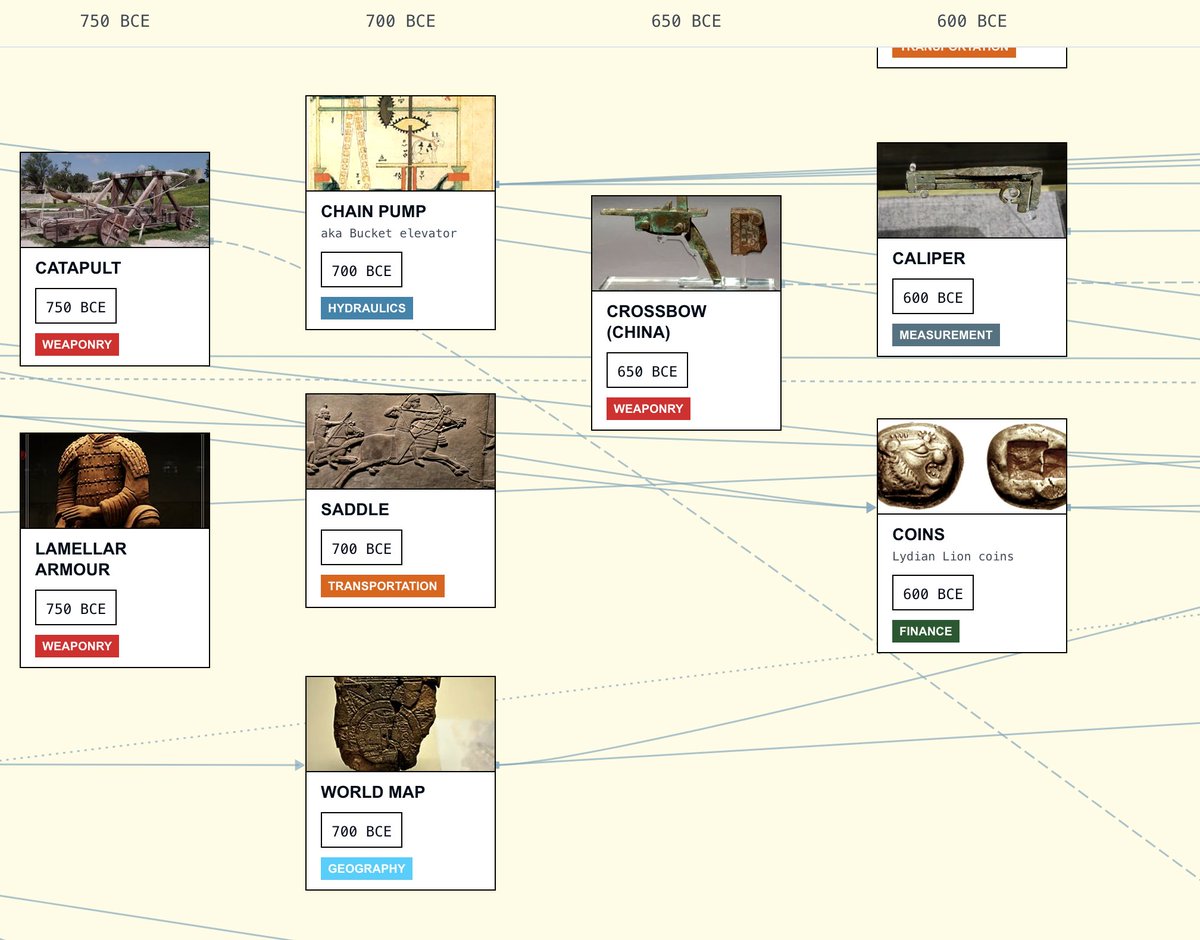
Tak­ing a first glance at the Baby­lon­ian Map of the World, few of us could rec­og­nize it for what it is. But then again, few of us are any­thing like the British Muse­um Mid­dle East depart­ment cura­tor Irv­ing Finkel, whose vast knowl­edge (and abil­i­ty to share it com­pelling­ly) have made him a view­er favorite on the insti­tu­tion’s Youtube chan­nel. In the Cura­tor’s Cor­ner video above, he offers an up-close view of the Baby­lon­ian Map of the World — or rather, the frag­ment of the clay tablet from the eighth or sev­enth cen­tu­ry BC that he and oth­er experts have deter­mined con­tains a piece of the old­est map of the known world in exis­tence.

“If you look care­ful­ly, you will see that the flat sur­face of the clay has a dou­ble cir­cle,” Finkel says. With­in the cir­cle is cuneiform writ­ing that describes the shape as the “bit­ter riv­er” that sur­rounds the known world: ancient Mesopotamia, or mod­ern-day Iraq.

Inside the cir­cle lie rep­re­sen­ta­tions of both the Euphrates Riv­er and the mighty city of Baby­lon; out­side it lie a series of what schol­ars have deter­mined were orig­i­nal­ly eight tri­an­gles. “Some­times peo­ple say they are islands, some­times peo­ple say they are dis­tricts, but in point of fact, they are almost cer­tain­ly moun­tains,” which stand “far beyond the known world” and rep­re­sent, to the ancient Baby­lo­ni­ans, “places full of mag­ic, and full of mys­tery.”

Com­ing up with a coher­ent expla­na­tion of the map itself hinged on the dis­cov­ery, in the nine­teen-nineties, of one of those tri­an­gles orig­i­nal­ly thought to have been lost. This owes to the enthu­si­asm of a non-pro­fes­sion­al, a stu­dent in Finkel’s cuneiform night class­es named Edith Hors­ley. Dur­ing one of her once-a-week vol­un­teer shifts at the British Muse­um, she set aside a par­tic­u­lar­ly intrigu­ing clay frag­ment. As soon as Finkel saw it, he knew just the arti­fact to which it belonged. After the piece’s reat­tach­ment, much fell into place, not least that the map pur­port­ed to show the dis­tant loca­tion of the beached (or rather, moun­tained) ark built by “the Baby­lon­ian ver­sion of Noah” — the search for which con­tin­ues these nine or so mil­len­nia lat­er.

Relat­ed con­tent:

Ancient Maps that Changed the World: See World Maps from Ancient Greece, Baby­lon, Rome, and the Islam­ic World

When a Medieval Monk Crowd­sourced the Most Accu­rate Map of the World, Cre­at­ing “the Google Earth of the 1450s”

The Largest Ear­ly Map of the World Gets Assem­bled for the First Time: See the Huge, Detailed & Fan­tas­ti­cal World Map from 1587

The World Map That Intro­duced Sci­en­tif­ic Map­mak­ing to the Medieval Islam­ic World (1154 AD)

How Did Car­tog­ra­phers Cre­ate World Maps before Air­planes and Satel­lites? An Intro­duc­tion

The Evo­lu­tion of the World Map: An Inven­tive Info­graph­ic Shows How Our Pic­ture of the World Changed Over 1,800 Years

Based in Seoul, Col­in Marshall writes and broad­casts on cities, lan­guage, and cul­ture. His projects include the Sub­stack newslet­ter Books on Cities and the book The State­less City: a Walk through 21st-Cen­tu­ry Los Ange­les. Fol­low him on Twit­ter at @colinmarshall or on Face­book.

« Go BackMore in this category... »
Quantcast