The Only Surviving Script Written by Shakespeare Is Now Online

Four years ago, when the world com­mem­o­rat­ed the 400th anniver­sary of William Shakespeare’s death, some marked the event with ref­er­ence to a dra­mat­ic work hard­ly anyone’s ever read, and few­er have ever seen per­formed. Called The Booke of Sir Thomas More, “this late 16th or ear­ly 17th-cen­tu­ry play,” the British Library notes, “is not always includ­ed among the Shake­speare­an canon, and it was not until the 1800s that it was even asso­ci­at­ed with the Bard of Avon.”

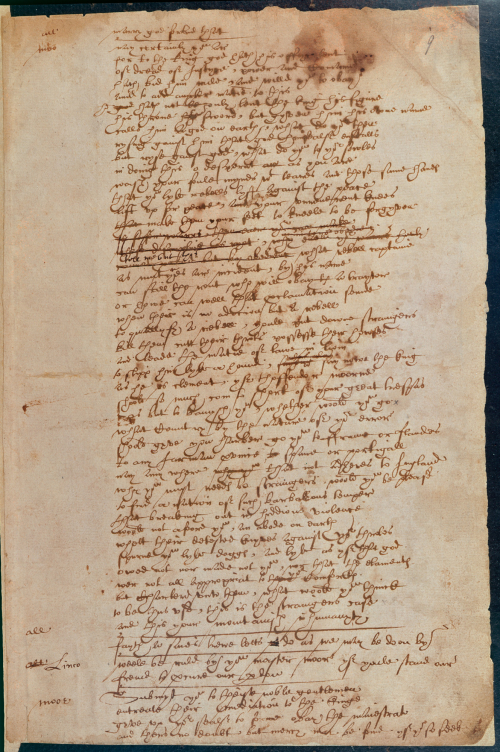
Since then, Sir Thomas More has become famous, at least among lit­er­ary schol­ars, as the only sur­viv­ing exam­ple of Shakespeare’s hand­writ­ing next to his will. It also became briefly inter­net famous in 2016 when Sir Ian McK­ellen reprised the title role he first played in 1964 for a dra­mat­ic read­ing in Lon­don that spoke elo­quent­ly, cen­turies lat­er, to the moment. The play itself is the work of sev­er­al drama­tists, and the orig­i­nal text, from some­time between 1590 and 1605, is a patch­work of pages of inser­tions and six dif­fer­ent scrib­al hands, Shakespeare’s very like­ly among them.

That same year, the British Library put a scan of the Shake­speare-penned pages of the play online and put the phys­i­cal man­u­script on dis­play in an exhib­it called Shake­speare in Ten Acts. Now, they have uploaded the full, scanned man­u­script to their Dig­i­tized Man­u­scripts page and you can view it here. “In these pages we can per­haps see the mas­ter play­wright at work, mus­ing, com­pos­ing and cor­rect­ing his text: a win­dow into Shake­speare’s dra­mat­ic art, as it were.” We can hear what McK­ellen calls the “human empa­thy” in a speech “sym­bol­ic and won­der­ful… so much at the heart of Shakespeare’s human­i­ty.”

The speech, which McK­ellen dis­cuss­es above, has the human­ist More pas­sion­ate­ly address­ing a mob who are attempt­ing to vio­lent­ly deport French protes­tant refugees. More did indeed address a riot­ing mob on May 1, 1517, what came to be known as “Evil May Day” (he was lat­er exe­cut­ed in 1535 for trea­son when he refused to back Hen­ry VIII against the Catholic Church). The play, which shows his actions as espe­cial­ly hero­ic, was cen­sored by Edwin Tilney, Mas­ter of the Rev­els, and nev­er per­formed until McK­ellen took the role. (He has joked that he may be “the last actor who can say ‘I cre­at­ed a part writ­ten by William Shake­speare.’”)

Read a tran­scrip­tion of the full, 147-line More speech thought to be by Shake­speare, and writ­ten in his own hand, at Quartz. “Prov­ing that More’s words were indeed writ­ten by Shake­speare is not straight­for­ward,” the British Library notes, though schol­ars have gen­er­al­ly agreed on the author­ship since the late 19th cen­tu­ry, based on evi­dence you can read about here. But “in their keen sym­pa­thy for the plight of the alien­at­ed and dis­pos­sessed,” these lines “seem to pre­fig­ure the insights of great dra­mas of race such as The Mer­chant of Venice and Oth­el­lo.”

One can see, giv­en Shake­speare’s sym­pa­thy for social out­siders, why he would be drawn to More’s speech, or why he might have been hand­picked among oth­er drama­tists at the time to write the philosopher’s broad-mind­ed plea for tol­er­ance. See the full man­u­script of The Booke of Sir Thomas More here at the British Library’s Dig­i­tized Man­u­scripts.

Relat­ed Con­tent:

Ian McK­ellen Reads a Pas­sion­ate Speech by William Shake­speare, Writ­ten in Defense of Immi­grants

What Shakespeare’s Hand­writ­ing Looked Like

What Shake­speare Sound­ed Like to Shake­speare: Recon­struct­ing the Bard’s Orig­i­nal Pro­nun­ci­a­tion

Josh Jones is a writer and musi­cian based in Durham, NC. Fol­low him at @jdmagness

Behold Octavia Butler’s Motivational Notes to Self

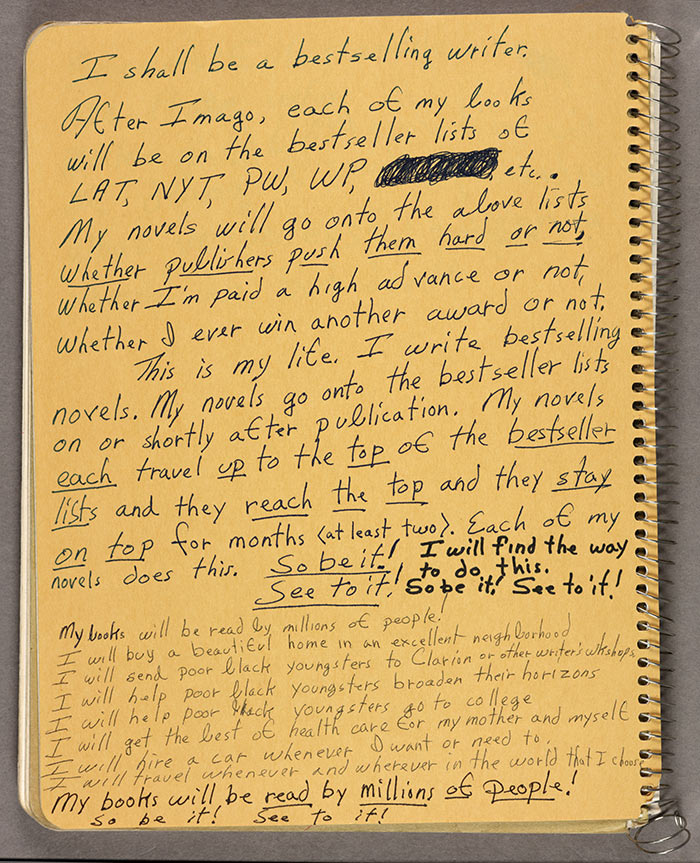
Hand­writ­ten notes on the inside cov­er of one of Octavia E. Butler’s com­mon­place books, 1988

I was attract­ed to sci­ence fic­tion because it was so wide open. I was able to do any­thing and there were no walls to hem you in and there was no human con­di­tion that you were stopped from exam­in­ing. —Octavia E. But­ler

Like many authors, the late Octavia E. But­ler took up writ­ing at a young age.

At 11, she was churn­ing out tales about hors­es and romance.

At 12, she saw Dev­il Girl from Mars, and fig­ured (cor­rect­ly) she could tell a bet­ter sto­ry than that, using 2 fin­gers to peck out sto­ries on the Rem­ing­ton type­writer her moth­er bought at her request.

At 13, she found a copy of The Writer mag­a­zine aban­doned on a bus seat, and learned that it was pos­si­ble to sub­mit her work for pub­li­ca­tion.

After a decade’s worth of rejec­tion slips, she sold her first two sto­ries, thanks in part to her asso­ci­a­tion with the Clar­i­on Sci­ence Fic­tion Writ­ing Work­shop, which she became involved with on the rec­om­men­da­tion of her men­tor, sci­ence fic­tion writer Har­lan Elli­son.

She went on to become the first sci­ence fic­tion writer to receive a pres­ti­gious MacArthur “genius” award, gar­ner­ing mul­ti­ple Hugo and Neb­u­la awards for her work.

An aster­oid is named after her, as is a moun­tain on Pluto’s moon.

Hailed as the Moth­er of Afro Futur­ism, she won the PEN Amer­i­can Cen­ter life­time achieve­ment award in writ­ing.

But pro­fes­sion­al suc­cess nev­er cloud­ed her view of her­self as the 10-year-old writer who was unsure if library-lov­ing black kids like her would be allowed inside a book­store.

Iden­ti­fy­ing as a writer helped her move beyond her crip­pling shy­ness and dyslex­ia. As she wrote in an auto­bi­o­graph­i­cal essay, “Pos­i­tive Obses­sion”:

I believed I was ugly and stu­pid, clum­sy, and social­ly hope­less. I also thought that every­one would notice these faults if I drew atten­tion to myself. I want­ed to dis­ap­pear. Instead, I grew to be six feet tall. Boys in par­tic­u­lar seemed to assume that I had done this grow­ing delib­er­ate­ly and that I should be ridiculed for it as often as pos­si­ble.

I hid out in a big pink notebook—one that would hold a whole ream of paper. I made myself a uni­verse in it. There I could be a mag­ic horse, a Mar­t­ian, a telepath….There I could be any­where but here, any time but now, with any peo­ple but these.

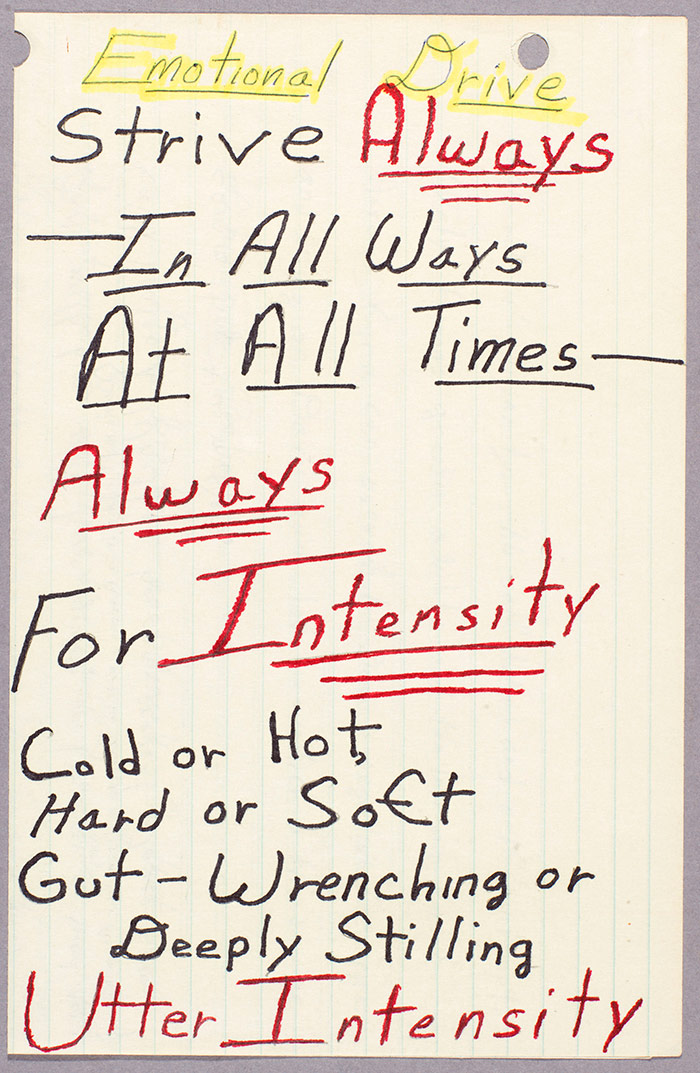
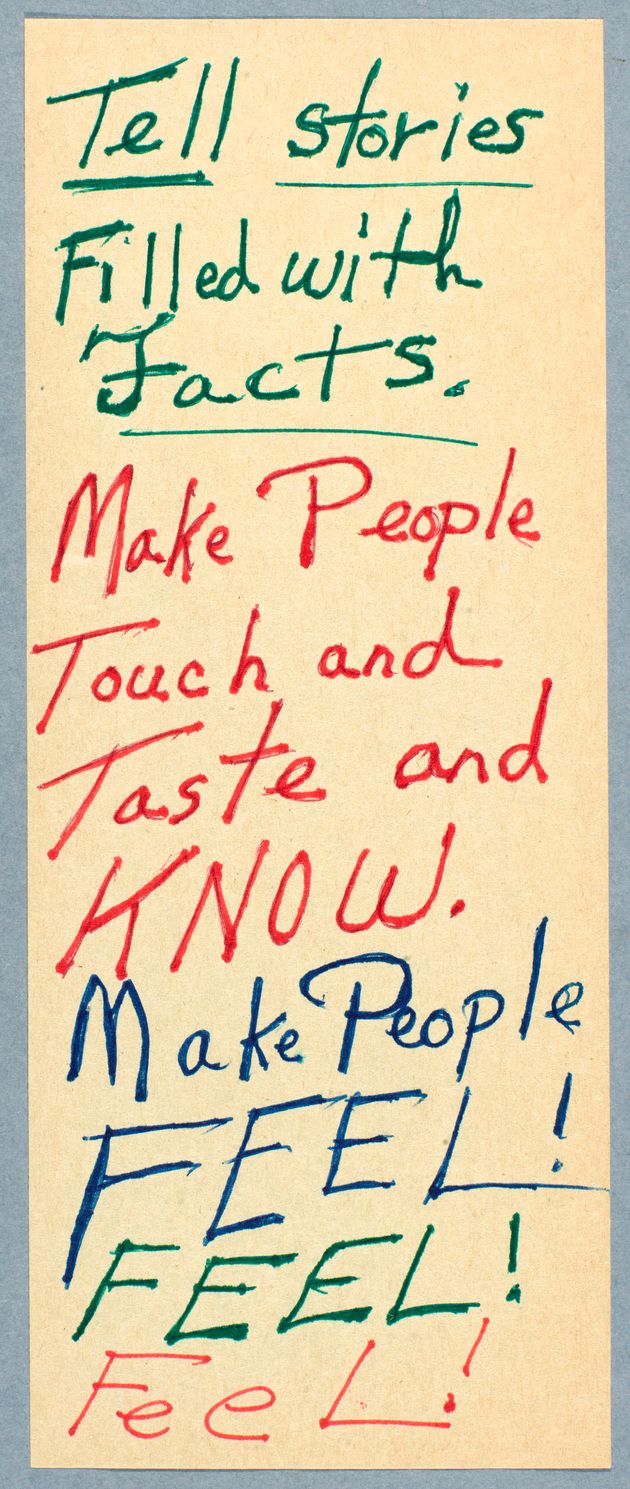
She devel­oped a life­long habit of cheer­ing her­self on with moti­va­tion­al notes, writ­ing them in her jour­nals, on lined note­book paper, in day plan­ners and on repur­posed pages of an old wall cal­en­dar.

She held her­self account­able by writ­ing out demand­ing sched­ules to accom­pa­ny her lofty, doc­u­ment­ed goals.

And though she wea­ried of the con­stant invi­ta­tions to serve on lit­er­ary pan­els devot­ed to sci­ence fic­tion writ­ers of col­or, at which she’d be asked the same ques­tions she’d answered dozens of times before, she was res­olute about pro­vid­ing oppor­tu­ni­ties for young black writ­ers … and read­ers, who found reflec­tions of them­selves in her char­ac­ters. As she remarked in an inter­view with The New York Times

When I began writ­ing sci­ence fic­tion, when I began read­ing, heck, I wasn’t in any of this stuff I read. The only black peo­ple you found were occa­sion­al char­ac­ters or char­ac­ters who were so fee­ble-wit­ted that they couldn’t man­age any­thing, any­way. I wrote myself in, since I’m me and I’m here and I’m writ­ing.

Her brand of sci­ence fic­tiona label she often tried to duck, iden­ti­fy­ing her­self on her busi­ness card sim­ply as “writer”serves as a lens for con­sid­er­ing con­tem­po­rary issues: sex­u­al vio­lence, gun vio­lence, cli­mate change, gen­der stereo­types, the prob­lems of late-stage cap­i­tal­ism, the plight of undoc­u­ment­ed immi­grants, and, not least, racism.

She side­stepped utopi­an sci­ence fic­tion, believ­ing that imper­fect humans are inca­pable of  form­ing a per­fect soci­ety. “Nobody is per­fect,” she told Vibe:

One of the things I’ve dis­cov­ered even with teach­ers using my books is that peo­ple tend to look for ‘good guys’ and ‘bad guys,’ which always annoys the hell out of me. I’d be bored to death writ­ing that way. But because that’s the only pat­tern they have, they try to fit my work into it.

Learn more about the life and work of Octavia E. But­ler (1947–2006) here.

I shall be a best­selling writer. After Ima­go, each of my books will be on the best­seller lists of LAT, NYT, PW, WP, etc. My nov­els will go onto the above lists whether pub­lish­ers push them hard or not, whether I’m paid a high advance or not, whether I ever win anoth­er award or not.

This is my life. I write best­selling nov­els. My nov­els go onto the best­seller lists on or short­ly after pub­li­ca­tion. My nov­els each trav­el up to the top of the best­seller lists and they reach the top and they stay on top for months . Each of my nov­els does this.

So be it! I will find the way to do this. See to it! So be it! See to it!

My books will be read by mil­lions of peo­ple!

I will buy a beau­ti­ful home in an excel­lent neigh­bor­hood

I will send poor black young­sters to Clar­i­on or oth­er writer’s work­shops

I will help poor black young­sters broad­en their hori­zons

I will help poor black young­sters go to col­lege

I will get the best of health care for my moth­er and myself

I will hire a car when­ev­er I want or need to.

I will trav­el when­ev­er and wher­ev­er in the world that I choose

My books will be read by mil­lions of peo­ple!

So be it! See to it!

via Austin Kleon

Relat­ed Con­tent: 

Why Should We Read Pio­neer­ing Sci-Fi Writer Octavia But­ler? An Ani­mat­ed Video Makes the Case

Octavia Butler’s 1998 Dystopi­an Nov­el Fea­tures a Fascis­tic Pres­i­den­tial Can­di­date Who Promis­es to “Make Amer­i­ca Great Again”

Watch a 5‑Part Ani­mat­ed Primer on Afro­fu­tur­ism, the Black Sci-Fi Phe­nom­e­non Inspired by Sun Ra

Ayun Hal­l­i­day is an author, illus­tra­tor, the­ater mak­er and Chief Pri­ma­tol­o­gist of the East Vil­lage Inky zine. Fol­low her @AyunHalliday.


Martin Amis Explains His Method for Writing Great Sentences

Why does Mar­tin Amis writes sen­tences well? As a nov­el­ist, he nat­u­ral­ly has a high degree of pro­fes­sion­al inter­est in the mat­ter. But why does he write sen­tences so well? One might put forth the influ­ence of his father Kings­ley Amis, author of Lucky Jim, an endur­ing con­tender for the title of the fun­ni­est nov­el in the Eng­lish lan­guage. But giv­en how sel­dom one acclaimed nov­el­ist sires anoth­er — an event, in fact, near­ly unheard of — the her­i­tabil­i­ty of lit­er­ary tal­ent remains unknow­able. As for the direct influ­ence of Amis père on Amis fils, we can almost entire­ly rule it out: not only did Kings­ley nev­er encour­age Mar­tin to fol­low in his foot­steps, only once did he offer any kind of writer­ly advice.

“We sat in high-bour­geois splen­dor, my father and I,” writes the younger Amis in his mem­oir Expe­ri­ence, “hav­ing a pre-lunch drink and talk­ing about his first pub­lished sto­ry, ‘The Sacred Rhi­no of Ugan­da’ (1932: he was ten).” The father-son dia­logue runs as fol­lows:

— It was awful in all the usu­al ways. And full of false quan­ti­ties. Things like: ‘Rag­ing and curs­ing in the blaz­ing heat …’

— What’s wrong with that? I mean I can see it’s old fash­ioned …

— You can’t have three ings like that.

— Can’t you?

— No. It would have to be: ‘Rag­ing and curs­ing in the … intol­er­a­ble heat.’

You couldn’t have three ings like that. And some­times you couldn’t even have two. The same went for -ics, -ives, -lys and -tions. And the same went for all pre­fix­es too.

43 years lat­er, Mar­tin Amis would find him­self in the role of lit­er­ary advice-giv­er, deliv­er­ing his father’s prin­ci­ple of writ­ing onstage at the Chica­go Human­i­ties Fes­ti­val. The process of imbu­ing every sen­tence with “min­i­mum ele­gance and eupho­ny,” he says in the clip above (drawn from a longer inter­view view­able here) involves “say­ing the sen­tence, sub­vo­cal­iz­ing it in your head until there’s noth­ing wrong with it. This means not repeat­ing in the same sen­tence suf­fix­es and pre­fix. If you’ve got a con­found, you can’t have a con­form. If you’ve got invi­ta­tion, you can’t have exe­cu­tion. You can’t repeat those, or an -ing, or a -ness: all that has to be one per sen­tence. I think the prose will give a sort of plea­sure with­out you being able to tell why.”

Clear­ly writ­ing a sen­tence that has “noth­ing wrong with it” goes well beyond adher­ing to the rules of spelling and gram­mar. And even after you’ve elim­i­nat­ed all ungain­ly rep­e­ti­tion, you may still have con­sid­er­able work to do before the sen­tence ris­es to a stan­dard worth uphold­ing. There are oth­er ques­tions to ask: do you, for exam­ple, tru­ly pos­sess each and every one of the words you’ve used, not just in mean­ing but sound and rhythm? In order to do so, Amis rec­om­mends acquaint­ing your­self more inti­mate­ly with the dic­tio­nary and the­saurus. If all this makes the task of the aspir­ing writer sound need­less­ly daunt­ing, fol­low instead the much sim­pler advice Amis pro­vides in the clip just above: “Get to the end of the nov­el, then wor­ry, because you’ve got some­thing in front of you that you can work on. Save the anx­i­ety for the end.”

Relat­ed Con­tent:

Mar­tin Amis Explains How to Use a The­saurus to Actu­al­ly Improve Your Writ­ing

Nor­man Mail­er & Mar­tin Amis, No Strangers to Con­tro­ver­sy, Talk in 1991

Writ­ing Tips by Hen­ry Miller, Elmore Leonard, Mar­garet Atwood, Neil Gaiman & George Orwell

V.S. Naipaul Cre­ates a List of 7 Rules for Begin­ning Writ­ers

Nietzsche’s 10 Rules for Writ­ing with Style (1882)

5 Won­der­ful­ly Long Lit­er­ary Sen­tences by Samuel Beck­ett, Vir­ginia Woolf, F. Scott Fitzger­ald & Oth­er Mas­ters of the Run-On

Based in Seoul, Col­in Mar­shall writes and broad­casts on cities, lan­guage, and cul­ture. His projects include the book The State­less City: a Walk through 21st-Cen­tu­ry Los Ange­les and the video series The City in Cin­e­ma. Fol­low him on Twit­ter at @colinmarshall, on Face­book, or on Insta­gram.

Why James Baldwin’s Writing Stays Powerful: An Artfully Animated Introduction to the Author of Notes of a Native Son

Every writer hopes to be sur­vived by his work. In the case of James Bald­win, the 32 years since his death seem only to have increased the rel­e­vance of the writ­ing he left behind. Con­sist­ing of nov­els, essays, and even a chil­dren’s book, Bald­win’s body of work offers dif­fer­ent points of entry to dif­fer­ent read­ers. Many begin with with Go Tell it on the Moun­tain, the semi-auto­bi­o­graph­i­cal debut nov­el in which he mounts a cri­tique of the Pen­te­costal Church. Oth­ers may find their gate­way in Bald­win’s fic­tion­al treat­ment of desire and love under adverse cir­cum­stances: among men in Paris in Gio­van­ni’s Room, for exam­ple, or teenagers in Mem­phis in If Beale Street Could Talk. But unlike most nov­el­ists, Bald­win’s name con­tin­ues to draw just as many acco­lades — if not more of them — for his non­fic­tion.

Those look­ing to read Bald­win’s essays would do well to start with his first col­lec­tion of them, 1955’s Notes of a Native Son. In assem­bling pieces he orig­i­nal­ly pub­lished in mag­a­zines like Harper’s and the Par­ti­san Review, the book reflects the impor­tance to the young Bald­win of what would become the major themes of his career, like race and expa­tri­ate life.

Though res­i­dent at dif­fer­ent times in Turkey, Switzer­land, and (right up until his dying day) France, he nev­er took his eyes off his home­land of the Unit­ed States of Amer­i­ca for long. Nor, in fact, did the Unit­ed States of Amer­i­ca take its eyes off him. “Over the course of the 1960s,” says Ford­ham Uni­ver­si­ty polit­i­cal sci­ence pro­fes­sor Christi­na Greer in the ani­mat­ed TED-Ed intro­duc­tion to Bald­win above, “the FBI amassed almost 2,000 doc­u­ments” as they inves­ti­gat­ed his back­ground and activ­i­ties.

That the U.S. gov­ern­ment saw Bald­win as so polit­i­cal­ly dan­ger­ous is rea­son enough to read his books. But as one of Amer­i­ca’s most promi­nent men of let­ters, he could hard­ly be writ­ten off as a sim­ple fire­brand. Though known for his inci­sive views of white and black Amer­i­ca, he believed that every­one, what­ev­er their race, “was inex­tri­ca­bly enmeshed in the same social fab­ric,” that “peo­ple are trapped in his­to­ry, and his­to­ry is trapped in them.” As he found recep­tive audi­ences for his argu­ments in print and on tele­vi­sion, “his fac­ul­ty with words led the FBI to view him as a threat.” But that very fac­ul­ty with words — insep­a­ra­ble, as in all the great­est essay­ists, from the astute­ness of the per­cep­tions they express — has assured him a still-grow­ing read­er­ship in the 21st cen­tu­ry. Con­tend­ing with the most volatile social and polit­i­cal issues of his time cer­tain­ly did­n’t low­er Bald­win’s pro­file, but any giv­en page of his prose sug­gests that what­ev­er he’d cho­sen to write about, we’d still be read­ing him today.

Relat­ed Con­tent:

Great Cul­tur­al Icons Talk Civ­il Rights: James Bald­win, Mar­lon Bran­do, Har­ry Bela­fonte & Sid­ney Poiti­er (1963)

James Bald­win Bests William F. Buck­ley in 1965 Debate at Cam­bridge Uni­ver­si­ty

James Baldwin’s One & Only, Delight­ful­ly Illus­trat­ed Children’s Book, Lit­tle Man Lit­tle Man: A Sto­ry of Child­hood (1976)

James Bald­win: Wit­ty, Fiery in Berke­ley, 1979

Chris Rock Reads James Baldwin’s Still Time­ly Let­ter on Race in Amer­i­ca: “We Can Make What Amer­i­ca Must Become”

Based in Seoul, Col­in Mar­shall writes and broad­casts on cities, lan­guage, and cul­ture. His projects include the book The State­less City: a Walk through 21st-Cen­tu­ry Los Ange­les and the video series The City in Cin­e­ma. Fol­low him on Twit­ter at @colinmarshall, on Face­book, or on Insta­gram.

Why Should We Read Melville’s Moby-Dick? A TED-Ed Animation Makes the Case

Her­man Melville’s Moby-Dick is a major 19th epic and a “Great Amer­i­can Nov­el” that rou­tine­ly appears on best-of-all-time lists next to Homer and Dante. This grand lit­er­ary judg­ment descends from ear­ly 20th cen­tu­ry crit­ics who res­cued the nov­el from obscu­ri­ty after decades of scorn and neglect. When the book first appeared in 1851, no one knew what to make of Melville’s cos­mic whal­ing revenge tale. Reviews were high­ly mixed, sales dis­mal, the book flopped.

This Moby-Dick revival hap­pened to coin­cide with a peri­od of mod­ernist exper­i­men­ta­tion with nar­ra­tive struc­ture in the work of writ­ers like James Joyce and Vir­ginia Woolf. Sud­den­ly, Moby-Dick didn’t seem so strange any­more. More like a bril­liant, pro­to-mod­ernist tragedy. But if you expect straight­for­ward sea­far­ing adven­ture, as the ani­mat­ed TED-Ed les­son above by Sascha Mor­rell points out, it’s a hard slog. The exhaus­tive lessons on whales and whal­ing, chap­ter-length solil­o­quies, lan­guage so dense, col­or­ful, and allu­sive.… Leonard Woolf became so frus­trat­ed in a 1929 review, he called the book’s prose “the most exe­crable Eng­lish.”

Melville wrote bad sen­tences, Woolf pro­nounced. “His sec­ond great­est vice is rant or rhetoric…. I can­not see the slight­est point in this kind of bom­bast, and, when it raves on for page after page, I almost pitch the book into the waste-paper bas­ket and swear that I will not read anoth­er line, how­ev­er many peo­ple vouch for the author’s genius.” This con­trar­i­an­ism sounds an awful like Vir­ginia Woolf’s take on Joyce’s Ulysses. Like that book, Moby-Dick inspires wide­spread guilt among those who have been told they should read it, but who can’t bring them­selves to fin­ish or even begin.

Who was right: Melville’s ear­ly crit­ics and read­ers (and Leonard Woolf)? Or the mil­lions who have since seen in the nov­el some­thing pro­found and prophet­ic, though no one can say exact­ly what that is? Why should we read Moby-Dick? For many, many rea­sons, but most of all the lan­guage. The word “rich” doesn’t begin to describe the lay­er­ing of images: “A moun­tain sep­a­rat­ing two lakes,” Mor­rell says in a strik­ing exam­ple, “a room papered floor to ceil­ing with bridal satins, the lid of an immense snuff box. These seem­ing­ly unre­lat­ed images take us on a tour of a sperm whale’s head.”

The sym­bols them­selves invite us into oth­er cryp­tic alle­gories. Chap­ter 99, “The Dou­bloon,” com­petes with Achilles’ shield in The Ili­ad for metaphor­ic den­si­ty, yet like a mod­ernist nov­el, it frag­ments into mul­ti­ple per­spec­tives, each one exam­in­ing ideas of cur­ren­cy, con­quest, myth, rit­u­al, etc., as Ahab bul­lies and pro­vokes the crew into inter­pret­ing a coin nailed to the Pequod’s mast.

If the White Whale be raised, it must be in a month and a day, when the sun stands in some one of these signs. I’ve stud­ied signs, and know their marks; they were taught me two score years ago, by the old witch in Copen­hagen. Now, in what sign will the sun then be? The horse-shoe sign; for there it is, right oppo­site the gold. And what’s the horse-shoe sign? The lion is the horse-shoe sign- the roar­ing and devour­ing lion. Ship, old ship! my old head shakes to think of thee.

What Woolf saw as exces­sive bom­bast seems to me more like form mir­ror­ing func­tion. Melville writes sen­tences that must echo over the squalls and talk through mad­den­ing lulls that bring on strange hal­lu­ci­na­tions. Like Joyce’s, his lan­guage mir­rors the dis­cur­sive tics of Ahab and Ish­mael’s modes of thought—nautical, the­o­log­i­cal, polit­i­cal, soci­o­log­i­cal, myth­ic, his­toric, nat­u­ral­ist, sym­bol­ist: explo­rations into a bloody, cru­el, eco­log­i­cal­ly dev­as­tat­ing enter­prise that dri­ves its dement­ed captain—violently obsessed with a great white beast that has crip­pled and enraged him—to wreck the ship and kill every­one aboard except our nar­ra­tor.

Learn about Melville and Moby-Dick in the addi­tion­al resources at the TED-Ed les­son page.

Relat­ed Con­tent:   

Hear Moby Dick Read in Its Entire­ty by Til­da Swin­ton, Stephen Fry, John Waters & Oth­ers

How to Mem­o­rize an Entire Chap­ter from “Moby Dick”: The Art and Sci­ence of Remem­ber­ing Every­thing

An Illus­tra­tion of Every Page of Her­man Melville’s Moby Dick

A View From the Room Where Melville Wrote Moby Dick (Plus a Free Celebri­ty Read­ing of the Nov­el)

Josh Jones is a writer and musi­cian based in Durham, NC. Fol­low him at @jdmagness

Haruki Murakami Will Host a Radio Show & Help Listeners “Blow Away Some of the Corona-Related Blues”

Image by Ilana Simon

Char­ac­ters in Haru­ki Murakami’s books see emo­tions in col­ors and hear them in sounds—the sounds, specif­i­cal­ly, of The Bea­t­les, Shostakovich, Sarah Vaugh­an, and thou­sands more folk, pop, rock, clas­si­cal, and jazz artists in the novelist’s immense record col­lec­tion. We must occa­sion­al­ly sus­pend some dis­be­lief as read­ers, not only in the fan­tas­tic ele­ments in Murakami’s work, but in char­ac­ters who seem to know almost as much as the author does about music, who are always ready with ref­er­ences to deep cuts. Muraka­mi “is not (quite) a musi­cian,” writes Dre Dimu­ra at Fly­pa­per, “but he has a greater com­mand of music as an art form than most musi­cians I know, myself includ­ed. How is that pos­si­ble?”

Dimura’s expla­na­tion touch­es on aspects of Murakami’s life we’ve cov­ered before at Open Cul­ture: his long­stand­ing pas­sion for jazz, and time spent as the own­er of a jazz bar before he became a nov­el­ist; his pen­chant for lis­ten­ing to music in his study for hours and hours on end as he under­takes his marathon writ­ing ses­sions.

Muraka­mi has not only shared his ency­clo­pe­dic musi­cal knowl­edge through fic­tion­al char­ac­ters; he also hopes to turn his mas­sive col­lec­tion of approx­i­mate­ly 10,000 records into a pub­lic archive, along with all his books and papers: “a place,” he says, “of open inter­na­tion­al exchanges for lit­er­a­ture and cul­ture.”

Four decades after his jazz club days, Muraka­mi again became a DJ in 2018 when he took to the air­waves to play sev­er­al 55-minute sets called Muraka­mi Radio on Tokyo FM. Now, amidst the uncer­tain­ty and anx­i­ety of COVID-19 lock­downs, he will again play records for his fans in Japan on a show this Fri­day called Stay Home Spe­cial. “I’m hop­ing that the pow­er of music can do a lit­tle to blow away some of the coro­na-virus relat­ed blues that have been pil­ing up.”

Muraka­mi isn’t being Pollyan­nish about the “pow­er of music.” The phrase may be cliché, but fans know from read­ing his books how music plays a sig­nif­i­cant role in even the most mun­dane of social inter­ac­tions, the kind we’d come to take for grant­ed before the virus spread around the world. The author offers music as a friend­ly over­ture. In a char­ac­ter­is­tic image, he wrote before his first radio broad­cast in 2018:

It has been my hob­by to col­lect records and CDs since my child­hood, and thanks to that, my house is inun­dat­ed with such things. How­ev­er, I have often felt a sense of guilt toward the world while lis­ten­ing to such amaz­ing music and hav­ing a good time alone. I thought it may be good to share such good times with oth­er peo­ple while chat­ting over a glass of wine or a cup of cof­fee.

Though he’s been char­ac­ter­ized as a nov­el­ist of iso­la­tion, and is “regard­ed as a recluse in Japan,” Muraka­mi sees the need to make deep con­nec­tions these days. And he rec­og­nizes music’s pow­er to cre­ate shared emo­tion­al spaces, the kind of thing it seems so hard to find in our new frag­ment­ed, quar­an­tined lives.

Relat­ed Con­tent:

Haru­ki Muraka­mi Announces an Archive That Will House His Man­u­scripts, Let­ters & Col­lec­tion of 10,000+ Vinyl Records

A Dream­i­ly Ani­mat­ed Intro­duc­tion to Haru­ki Muraka­mi, Japan’s Jazz and Base­ball-Lov­ing Post­mod­ern Nov­el­ist

Haru­ki Murakami’s Pas­sion for Jazz: Dis­cov­er the Novelist’s Jazz Playlist, Jazz Essay & Jazz Bar

A 3,350-Song Playlist of Music from Haru­ki Murakami’s Per­son­al Record Col­lec­tion

Josh Jones is a writer and musi­cian based in Durham, NC. Fol­low him at @jdmagness

The Shakespeare and Company Project Digitizes the Records of the Famous Bookstore, Showing the Reading Habits of the Lost Generation

Great writ­ers don’t come out of nowhere, even if some of them might end up there. They grow in gar­dens tend­ed by oth­er writ­ers, read­ers, edi­tors, and pio­neer­ing book­sellers like Sylvia Beach, founder and pro­pri­etor of Shake­speare and Com­pa­ny. Beach opened the Eng­lish-lan­guage shop in Paris in 1919. Three years lat­er, she pub­lished James Joyce’s Ulysses, “a feat that would make her—and her book­shop and lend­ing library—famous,” notes Prince­ton University’s Shake­speare and Com­pa­ny Project. (Infa­mous as well, giv­en the obscen­i­ty charges against the nov­el in the U.S.)

Just as the pub­li­ca­tion of Allen Ginsberg’s Howl put Lawrence Ferlinghetti’s City Lights at the cen­ter of the Beat move­ment, so Joyce’s mas­ter­piece made Shake­speare and Com­pa­ny a des­ti­na­tion for aspir­ing Mod­ernists.

The shop was already “the meet­ing place for a com­mu­ni­ty of expa­tri­ate writ­ers and artists now known as the Lost Gen­er­a­tion.” Along with Joyce, there gath­ered Ernest Hem­ing­way, Ezra Pound, and Gertrude Stein, all of whom not only bought books but bor­rowed them and left a hand­writ­ten record of their read­ing habits.

Through a large-scale dig­i­ti­za­tion project of the Sylvia Beach papers at Prince­ton, the Shake­speare and Com­pa­ny Project will “recre­ate the world of the Lost Gen­er­a­tion. The Project details what mem­bers of the lend­ing library read and where they lived, and how expa­tri­ate life changed between the end of World War I and the Ger­man Occu­pa­tion of France.” Dur­ing the thir­ties, Beach began to cater more to French-speak­ing intel­lec­tu­als. Among lat­er log­books we’ll find the names Aimé Césaire, Jacques Lacan, and Simone de Beau­voir. Beach closed the store for good in 1941, the sto­ry goes, rather than sell a Nazi offi­cer a copy of Finnegans Wake.

Princeton’s “trove of mate­ri­als reveals, among oth­er things,” writes Lithub, “the read­ing pref­er­ences of some of the 20th century’s most famous writ­ers,” it’s true. But not only are there many famous names; the library logs also record “less famous but no less inter­est­ing fig­ures, too, from a respect­ed French physi­cist to the woman who start­ed the musi­col­o­gy pro­gram at the Uni­ver­si­ty of Cal­i­for­nia.” Shake­speare and Com­pa­ny became the place to go for thou­sands of French and expat patrons in Paris dur­ing some of the city’s most leg­en­dar­i­ly lit­er­ary years.

“Eng­lish-lan­guage books are expen­sive,” if you’ve arrived in the city in the 1920s, the Project explains—“five to twen­ty times the price of French books.” Eng­lish-lan­guage hold­ings at oth­er libraries are lim­it­ed. Read­ers, and soon-to-be famous writ­ers, go to Shake­speare and Com­pa­ny to bor­row a copy of Moby Dick or pick up the lat­est New York­er.

You find Shake­speare and Com­pa­ny on a nar­row side street, just off the Car­refour de l’Odéon. You step inside. The room is filled with books and mag­a­zines. You rec­og­nize a framed por­trait of Edgar Allan Poe. You also rec­og­nize a few framed Whit­man man­u­scripts. Sylvia Beach, the own­er, intro­duces her­self and tells you that her aunt vis­it­ed Whit­man in Cam­den, New Jer­sey and saved the man­u­scripts from the waste­bas­ket. Yes, this is the place for you.

The lend­ing library had dif­fer­ent mem­ber­ship plans (you can learn about them here) and kept care­ful records with codes indi­cat­ing the sta­tus of each bor­row­er. These records are still being dig­i­tized and the Project is ongo­ing. It does not offi­cial­ly launch until next month. But at the moment, you can: “Search the lend­ing library mem­ber­shipBrowse the lend­ing library cardsRead about join­ing the lend­ing libraryDown­load a pre­lim­i­nary export of Project data. In June, you will be able to search and browse the lend­ing library’s books, track the cir­cu­la­tion of your favorite novels—and dis­cov­er new ones.”

See how these lit­er­ary com­mu­ni­ties shaped and reshaped them­selves around what would become “the most famous book­store in the world.”

via Lithub

Relat­ed Con­tent:

James Joyce Picked Drunk­en Fights, Then Hid Behind Ernest Hem­ing­way

7 Tips From Ernest Hem­ing­way on How to Write Fic­tion

Gertrude Stein Gets a Snarky Rejec­tion Let­ter from Pub­lish­er (1912)

Josh Jones is a writer and musi­cian based in Durham, NC. Fol­low him at @jdmagness

William Blake Illustrates Mary Wollstonecraft’s Work of Children’s Literature, Original Stories from Real Life (1791)

Most of us know Mary Woll­stonecraft as the author of the 1792 pam­phlet A Vin­di­ca­tion of the Rights of Women, and as the moth­er of Franken­stein author Mary Shel­ley. Few­er of us may know that two years before she pub­lished her foun­da­tion­al fem­i­nist text, she wrote A Vin­di­ca­tion of the Rights of Men, a pro-French Rev­o­lu­tion, anti-monar­chy argu­ment that first made her famous as a writer and philoso­pher. Per­haps far few­er know that Woll­stonecraft began her career as a pub­lished author in 1787 with Thoughts on the Edu­ca­tion of Daugh­ters (though she had yet to raise chil­dren her­self), a con­duct man­u­al for prop­er behav­ior.

A huge­ly pop­u­lar genre dur­ing the first Indus­tri­al Rev­o­lu­tion, con­duct man­u­als bore a mis­cel­la­neous char­ac­ter, incul­cat­ing a bat­tery of mid­dle-class rules, beliefs, and affec­ta­tions through a mix of ped­a­gogy, alle­go­ry, domes­tic advice, and devo­tion­al writ­ing. Young women were instruct­ed in the prop­er way to dress, eat, pray, laugh, love, etc., etc.

It may seem from our per­spec­tive that a rad­i­cal fire­brand like Woll­stonecraft would shun this sort of thing, but her mor­al­iz­ing was typ­i­cal of mid­dle-class women of her time, even of pio­neer­ing writ­ers who sup­port­ed rev­o­lu­tions and women’s polit­i­cal and social equal­i­ty.

Wollstonecraft’s assump­tions about class and char­ac­ter come into relief when placed against the views of anoth­er famous con­tem­po­rary, far more rad­i­cal fig­ure, William Blake, who was then a strug­gling, most­ly obscure poet, print­er, and illus­tra­tor in Lon­don. In 1791, he received a com­mis­sion to illus­trate a sec­ond edi­tion of Wollstonecraft’s third book, a fol­low-up of sorts to her Thoughts on the Edu­ca­tion of Daugh­ters. The 1788 work—Orig­i­nal Sto­ries from Real Life; with Con­ver­sa­tions, Cal­cu­lat­ed to Reg­u­late the Affec­tions, and Form the Mind to Truth and Good­ness—is a more focused book, using a series of vignettes woven into a frame sto­ry.

The two chil­dren in the nar­ra­tive, 14-year-old Mary and 12-year-old Car­o­line, receive lessons from their rel­a­tive Mrs. Mason, who instructs them on a dif­fer­ent virtue and moral fail­ing in each chap­ter by using sto­ries and exam­ples from nature. The two pupils “are moth­er­less,” notes the British Library, “and lack the good habits they should have absorbed by exam­ple. Mrs. Mason intends to rec­ti­fy this by being with them con­stant­ly and answer­ing all their ques­tions.” She is an all-know­ing gov­erness who explains the world away with a phi­los­o­phy that might have sound­ed par­tic­u­lar­ly harsh to Blake’s ears.

For exam­ple, in the chap­ter on phys­i­cal pain, Mary is stung by sev­er­al wasps. After­ward, her guardian begins to lec­ture her “with more than usu­al grav­i­ty.”

I am sor­ry to see a girl of your age weep on account of bod­i­ly pain; it is a proof of a weak mind—a proof that you can­not employ your­self about things of con­se­quence. How often must I tell you that the Most High is edu­cat­ing us for eter­ni­ty?… Chil­dren ear­ly feel bod­i­ly pain, to habit­u­ate them to bear the con­flicts of the soul, when they become rea­son­able crea­tures. This is say, is the first tri­al, and I like to see that prop­er pride which strives to con­ceal its suf­fer­ings…. The Almighty, who nev­er afflicts but to pro­duce some good end, first sends dis­eases to chil­dren to teach them patience and for­ti­tude; and when by degrees they have learned to bear them, they have acquired some virtue.

Blake like­ly found this line of rea­son­ing off-putting, at the least. His own poems “were not children’s lit­er­a­ture per se,” writes Stephanie Metz at the Uni­ver­si­ty of Tennessee’s Roman­tic Pol­i­tics project, “yet their sim­plis­tic lan­guage and even some of their con­tent responds to the char­ac­ter­is­tics of didac­tic fic­tion and children’s poet­ry.” Blake wrote express­ly to protest the ide­ol­o­gy found in con­duct man­u­als like Wollstonecraft’s: “He calls atten­tion to society’s abuse of chil­dren in a num­ber of dif­fer­ent ways, show­ing how soci­ety cor­rupts their inher­ent inno­cence and imag­i­na­tion while also fail­ing to care for their phys­i­cal and emo­tion­al needs.”

For Blake, children’s big emo­tions and active imag­i­na­tions made them supe­ri­or to adults. “Sev­er­al of his poems,” Metz writes, “show the ways in which children’s innate nature has already been taint­ed by their par­ents and oth­er soci­etal forms of author­i­ty, such as the church.” Giv­en his atti­tudes, we can see why “mod­ern inter­preters of the illus­tra­tions for Orig­i­nal Sto­ries have detect­ed a pic­to­r­i­al cri­tique” in Blake’s ren­der­ing of Wollstonecraft’s text, as the William Blake Archive points out. Blake “appears to have found her moral­i­ty too cal­cu­lat­ing, ratio­nal­is­tic, and rigid. He rep­re­sents Wollstonecraft’s spokesper­son, Mrs. Mason, as a dom­i­neer­ing pres­ence.”

Nonethe­less, as always, Blake’s work is more than com­pe­tent. The style for which we know him best emerges in some of the prints. We see it, for exam­ple, in the chis­eled face, bulging eyes, and well-mus­cled arms of the stand­ing fig­ure above. For the most part, how­ev­er, he keeps in check his exu­ber­ant desire to cel­e­brate the human body. “Only a year ear­li­er,” writes Brain Pick­ings, “Blake had fin­ished print­ing and illu­mi­nat­ing the first few copies of his now-leg­endary Songs of Inno­cence and Expe­ri­ence.” Two of the songs “were inspired by Wollstonecraft’s trans­la­tion of C.G. Salzmann’s Ele­ments of Moral­i­ty, for which Blake had done sev­er­al engrav­ings.”

If he had mis­giv­ings about illus­trat­ing Wollstonecraft’s Orig­i­nal Sto­ries, we must infer them from his illus­tra­tions. But plac­ing Blake’s most famous book of poet­ry next to Wollstonecraft’s pious, didac­tic works of moral instruc­tion pro­duces some jar­ring con­trasts, show­ing how two tow­er­ing lit­er­ary fig­ures from the time (though not both at the time) con­ceived of child­hood, social class, edu­ca­tion, and moral­i­ty in vast­ly dif­fer­ent ways. Learn more about Blake’s illus­tra­tions at Brain Pick­ings, read an edi­tion of Woll­stonecraft’s Orig­i­nal Sto­ries here, and see all of Blake’s illus­tra­tions at the William Blake Archive.

via Brain Pick­ings

Relat­ed Con­tent:

Enter an Archive of William Blake’s Fan­tas­ti­cal “Illu­mi­nat­ed Books”: The Images Are Sub­lime, and in High Res­o­lu­tion

William Blake’s Mas­ter­piece Illus­tra­tions of the Book of Job (1793–1827)

William Blake’s Hal­lu­ci­na­to­ry Illus­tra­tions of John Milton’s Par­adise Lost

Josh Jones is a writer and musi­cian based in Durham, NC. Fol­low him at @jdmagness

« Go BackMore in this category... »
Quantcast