The portrait is your mirror. It’s you. —August Sander
A picture is worth a thousand words, and compelling portraits that speak eloquently to a critical moment in history often earn many more than that.
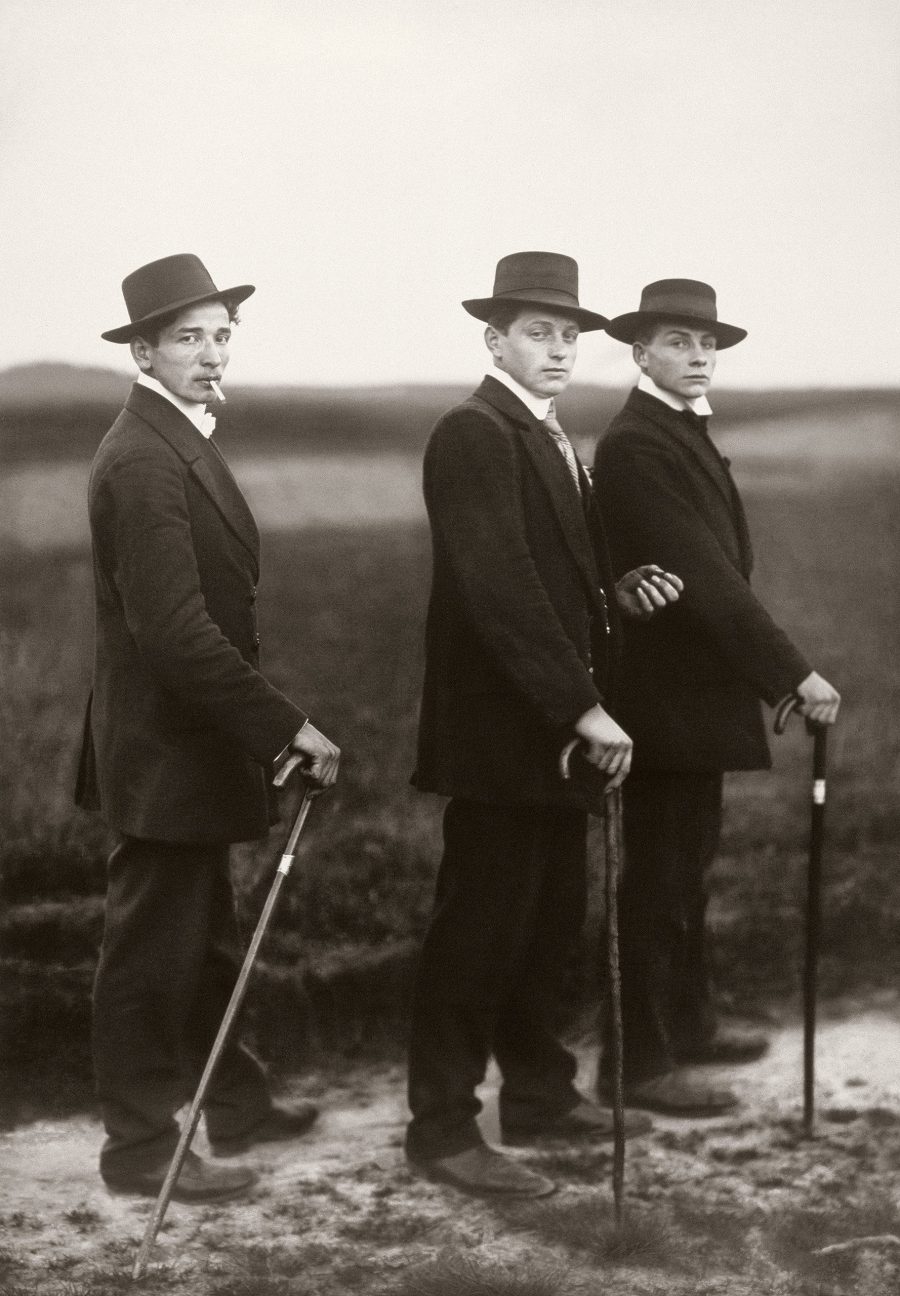
The descriptive title (the piece is alternatively referred to as Young Farmers) offers some clues, as does the date.
The subjects’ youth and location—a remote village in the German Westerwald—suggest, correctly as it turns out, that they would soon be bound for what Green terms “another dance,” WWI.
Green has learned far more about the people in his favorite photo since he covered it in a 2‑minute segment for his vlogbrothers channel below.
Much of the shorter video’s narration carries over to the Art Assignment script, but this time, Green has the help of “a community of problem solvers” who contributed research that fleshed out the narrative.
We now know the young farmers’ identities, actual occupations, what they did in the war, and their eventual fate.
Ditto their connection to photographer Sanders, who lugged his equipment on foot to the remote mountain path the friends would be traveling in finery made possible by the Second Industrial Revolution.
A consummate storyteller, Greene makes a meal out of what he has learned.
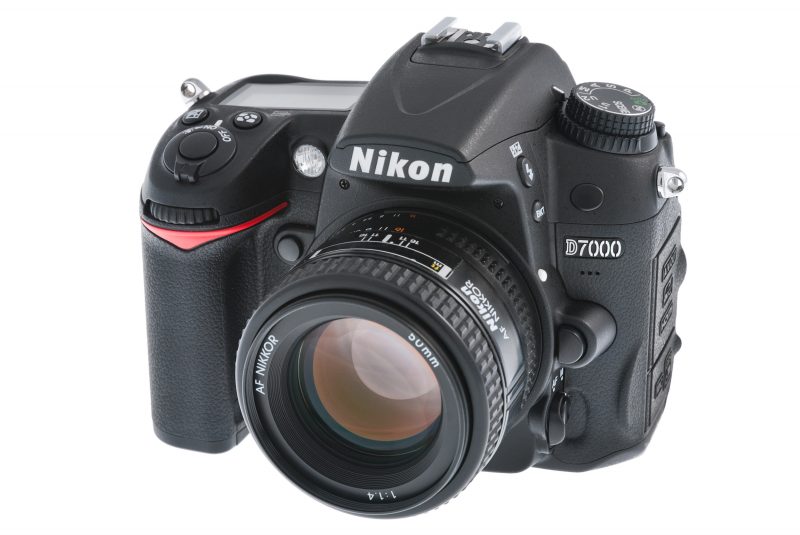
A quick heads up. Through the end of April, Nikon has made its curriculum of online photography courses free. Normally priced at $15-$50 per course, this 10-course offering covers Fundamentals of Photography, Dynamic Landscape Photography, Macro Photography, Photographing Children and Pets, and more. Sign up for the courses here.
If you would like to support the mission of Open Culture, consider making a donation to our site. It’s hard to rely 100% on ads, and your contributions will help us continue providing the best free cultural and educational materials to learners everywhere. You can contribute through PayPal, Patreon, and Venmo (@openculture). Thanks!
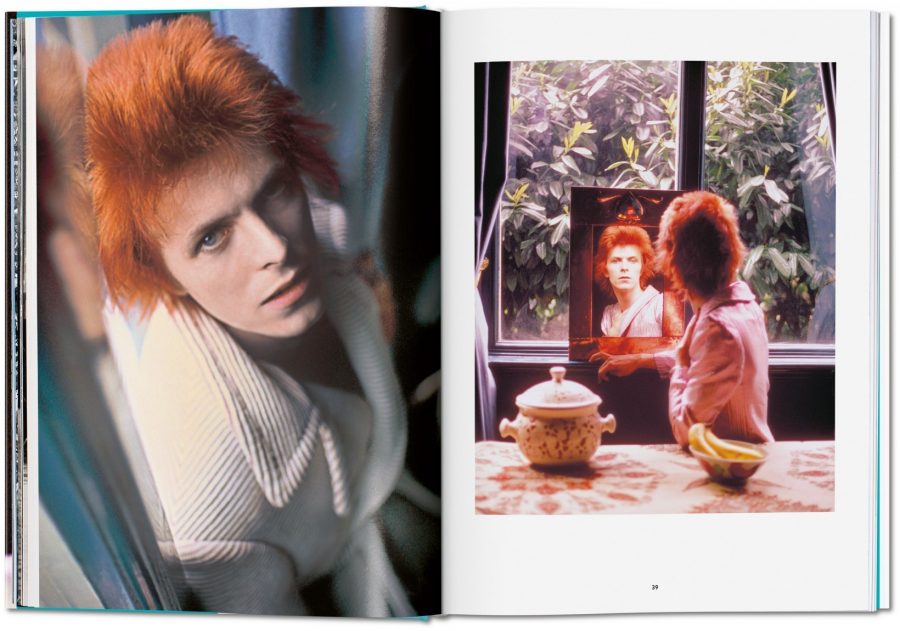
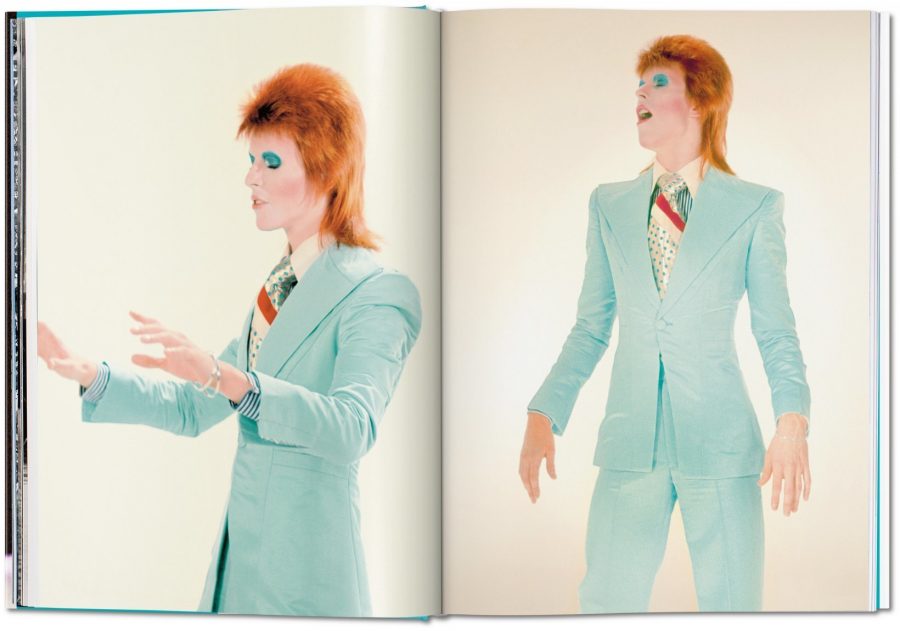
Great rock photographers of the seventies often captured their subjects at their moodiest, as in Pennie Smith’s pensive tour photos of the Clash, or Kevin Cummins’ stark, sometimes explosive photos of Joy Division. These were bands best shot in black and white. Punk looked back to the rock of the fifties in its high-contrast simplicity. But the early seventies belonged to glam—or, more accurately, belonged to Ziggy Stardust, a character who demanded to be captured in full-color.
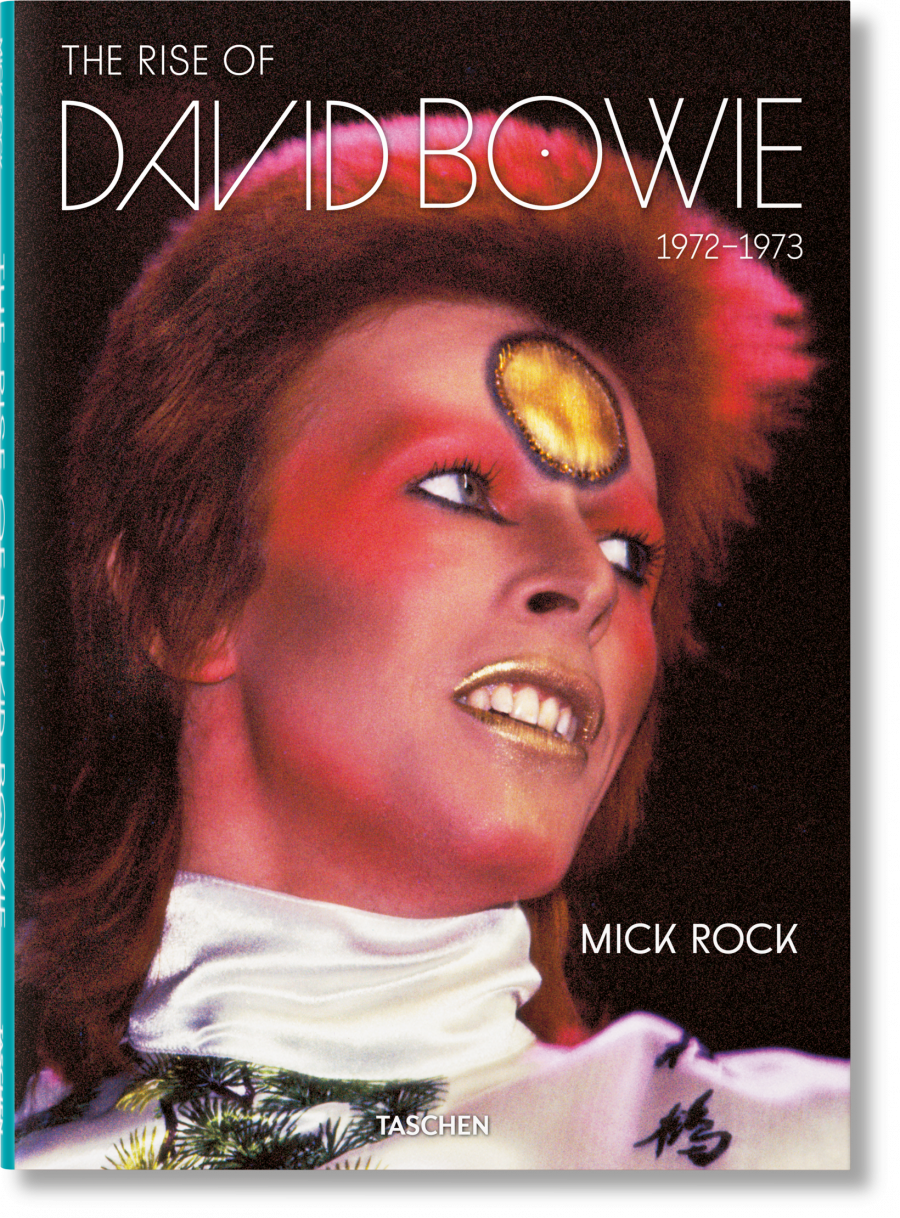
Mick Rock was just the photographer to frame the alien space rock opera in brilliant reds, greens, and blues. Ziggy was several parts T‑Rex swagger and riffage, Sun Ra outer-space persona, Lindsay Kemp kabuki mime, and Bauhaus-inspired costuming.
Getting all of this in his shots of Bowie as Ziggy earned Rock the nickname “the man who shot the seventies.” His “career took off alongside Bowie’s,” writes Kristen Richard at Mental Floss, “and between 1972 and 1973, Rock was the musician’s go-to photographer and videographer.”
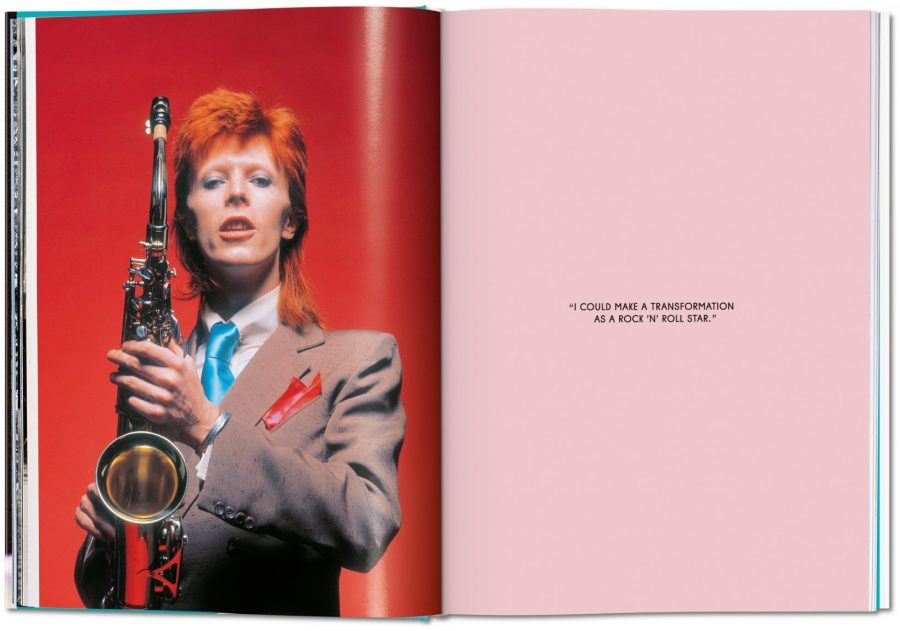
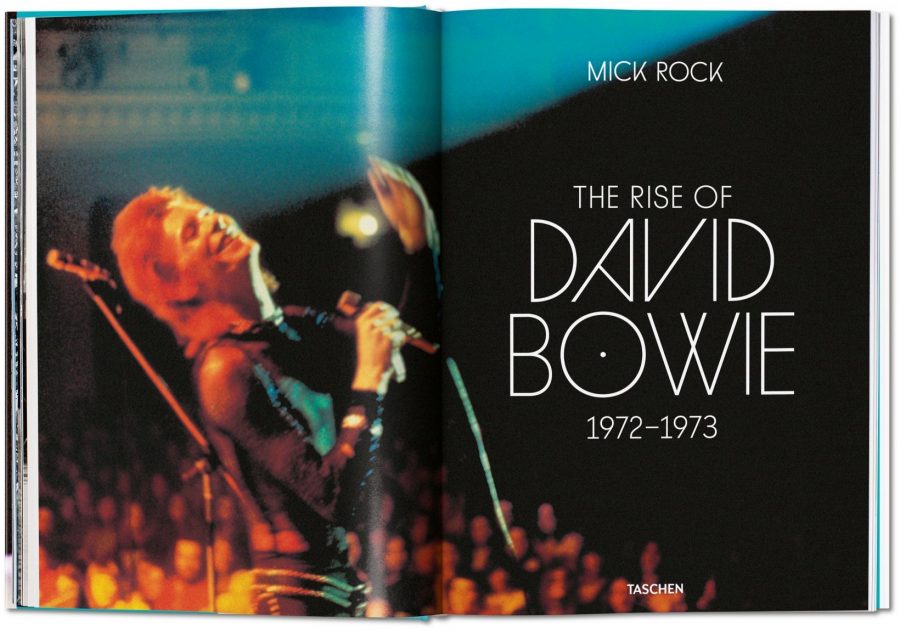
More than that, Rock is almost as responsible for Ziggy Stardust’s rise as Bowie himself, given the way his photos spread the mythos through print media of the time and became iconic digital images that still define Bowie’s career. When we think of Ziggy Stardust, it’s more than likely we are thinking of an image shot by Mick Rock. Bowie’s “creative partner” compiled his photographs in 2015, “with Bowie’s blessing,” and they will soon be published in a new, 300-page book by Taschen.
“You’ll find photographs of Bowie both on stage and behind the scenes,” Richard notes, “giving fans an up-close look at the transformative performer’s life on the road as he honed his daring new persona.” That persona upended what it meant to be a rock star, and opened doors for others to push into new performative territory. “Rock’s glam imagery toyed with the idea of masculinity,” writes Christopher Mosley of a recent exhibition in Dallas. For example, the photographer “avoided a tough-guy image with the group Queen by encouraging singer Freddie Mercury to pose in a manner similar to that of an old still of German silent film star, Marlene Dietrich.”
Neither Mercury nor Bowie needed permission to challenge rock’s heteronormativity, but Rock drew out of them the perfect poses to turn their stage personas into superheroes. No rock star before Bowie had ever looked so gorgeously otherworldly, an image we remember thanks in large part to Mick Rock. Order a copy of The Rise of David Bowie, 1972–1973 here.
The average person believes implicitly that the photograph cannot falsify. Of course, you and I know that this unbounded faith in the integrity of the photograph is often rudely shaken, for, while photographs may not lie, liars may photograph. —Lewis Wickes Hine, “Social Photography: How the Camera May Help in the Social Uplift” (1909)
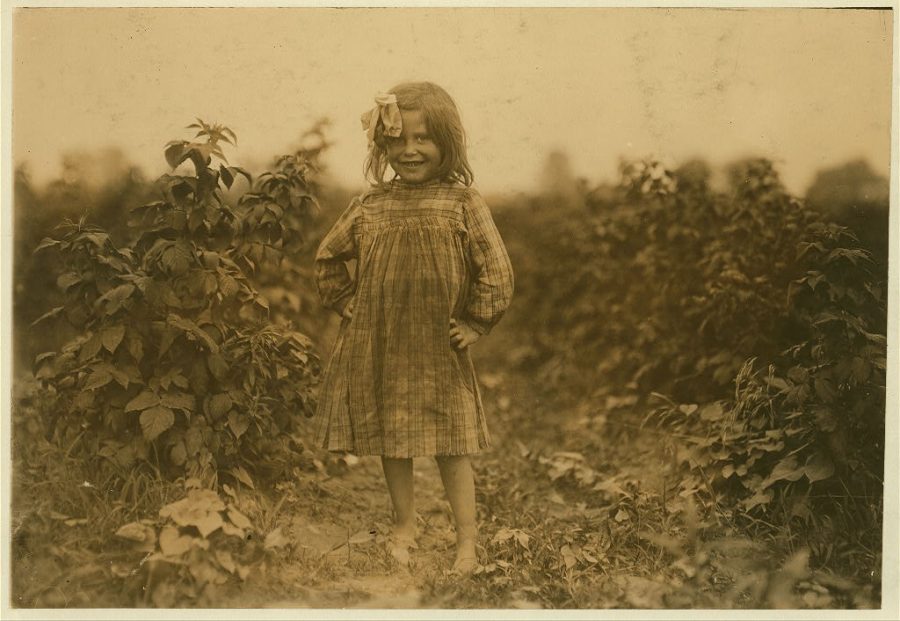
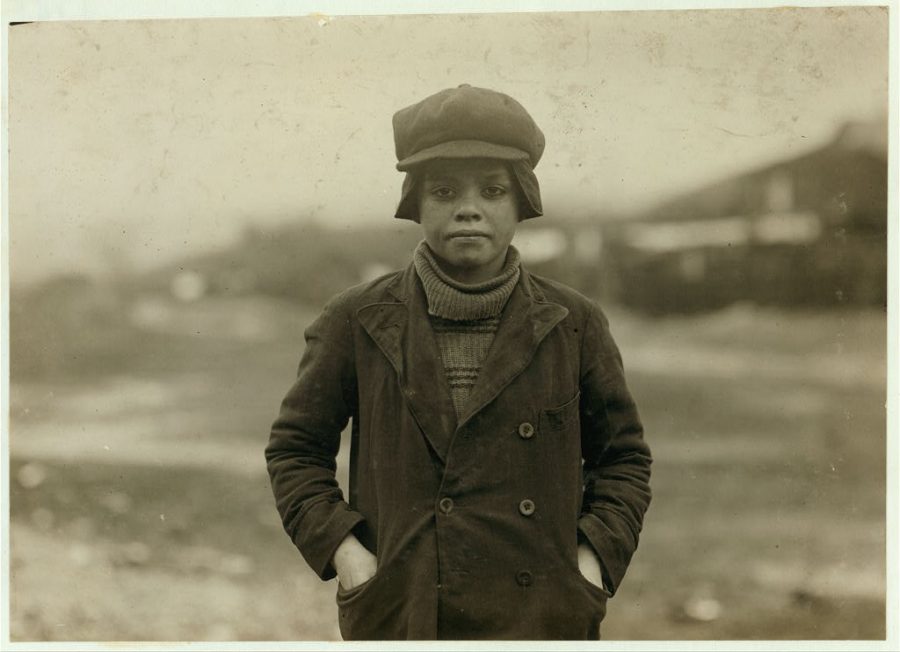
Long before Brandon Stanton’s wildly popular Humans of New York project tapped into the public’s capacity for compassion by combining photos of his subjects with some telling narrative about their lives, educator and sociologist Lewis Wickes Hine was using his camera as a tool to pressure the public into demanding an end to child labor in the United States.
In a time when the US Federal Census reported that one in five children under the age of 16—over 1.75 million—was gainfully employed, Hines traversed the country under the auspices of the National Child Labor Committee, gathering information and making portraits of the underage workers.
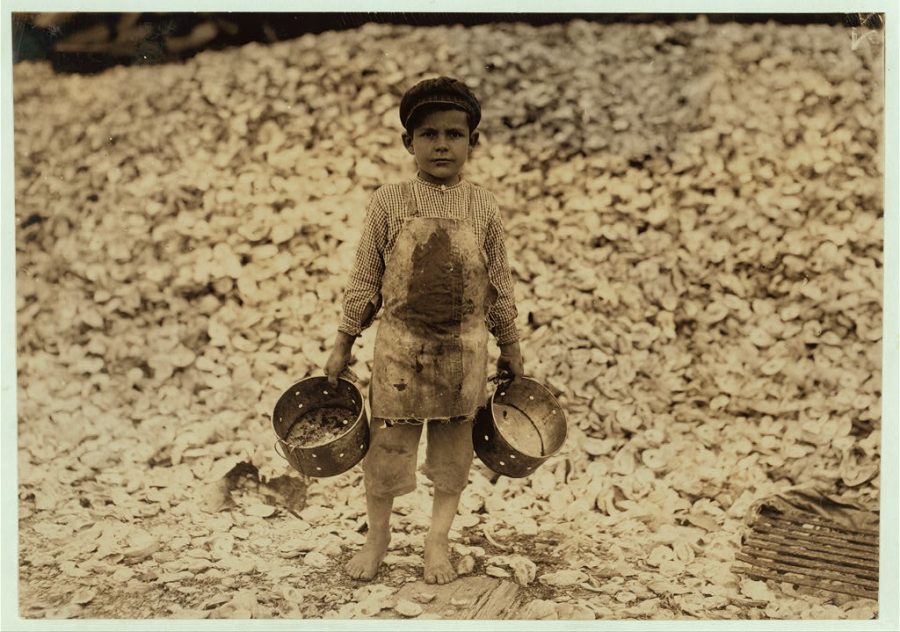
His images, made between 1911 and 1916, introduced viewers to young boys breaking up coal in Pennsylvania mines, tiny Louisiana oyster shuckers and Maine sardine cutters, child pickers in Kentucky tobacco fields and Massachusetts cranberry bogs, and newsboys in a number of cities.
Their employers actively recruited kids from poor families, wagering that they would perform repetitive, often dangerous tasks for a pittance, with little chance of unionizing.
Hine was a scrupulous documentarian, labeling each photo with crucial information gleaned from conversations with the child pictured therein: name, age, location, occupation, wages, and—horrifically—any workplace injuries.
As the Vox Darkroom segment, above, explains, Hine’s formal compositions lent additional power to his images of smudged child workers posing in their places of employment. Shallow depth of field to ensure that the viewer’s eyes would not become absorbed in the background, but rather engage with those of his subject.
But it was the accompanying narratives, which he referred to variously as “picture stories” or “photo-interpretations,” that he credited with really getting through to the hearts and minds of an indifferent public.
The text prevented viewers from easily brushing the children off as anonymous, scruffy urchins.
Here for instance is “Manuel, the young shrimp-picker, five years old, and a mountain of child-labor oyster shells behind him. He worked last year. Understands not a word of English. Dunbar, Lopez, Dukate Company. Location: Biloxi, Mississippi.”
“Laura Petty, a 6 year old berry picker on Jenkins farm, Rock Creek near Baltimore, Md. ‘I’m just beginnin.’ Picked two boxes yesterday. (2 cents a box).”
“Angelo Ross, 142 Panama Street, Hughestown Borough, a youngster who has been working in Breaker #9 Pennsylvania Co. for four months, said he was 13 years old, but very doubtful. He has a brother, Tony, probably under 14 working. Location: Pittston, Pennsylvania.”
Hine correctly figured that the combination of photo and biographical information was a “lever for the social uplift.”
Once the pictures were published in Progressive magazines, state legislatures came under immense pressure to impose minimum age requirements in the workplace, effectively ending child labor, and returning many former workers to school.
Ayun Halliday is an author, illustrator, theater maker and Chief Primatologist of the East Village Inky zine. Join her in NYC this March, when her company, Theater of the Apes, presents the world premiere of Tony Award winner Greg Kotis’ new low-budget, guitar-driven musical, I AM NOBODY. Follow her @AyunHalliday.
But we can take heart that one store of common wealth has majorly expanded recently, and will continue to grow each year since January 1, 2019—Public Domain Day—when hundreds of thousands of works from 1923 became freely available, the first time that happened in 21 years. This year saw the release of thousands more works into the public domain from 1924, and so it will continue ad infinitum.
And now—as if that weren’t enough to keep us busy learning about, sharing, adapting, and repurposing the past into the future—the Smithsonian has released 2.8 million images into the public domain, making them searchable, shareable, and downloadable through the museum’s Open Access platform.
This huge release of “high resolution two- and three-dimensional images from across its collections,” notes Smithsonian Magazine, “is just the beginning. Throughout the rest of 2020, the Smithsonian will be rolling out another 200,000 or so images, with more to come as the Institution continues to digitize its collection of 155 million items and counting.”
There are those who would say that these images always belonged to the public as the holdings of a publicly-funded institution sometimes called “the nation’s attic.” It’s a fair point, but shouldn’t take away from the excitement of the news. “Smithsonian” as a conveniently singular moniker actually names “19 museums, nine research centers, libraries, archives, and the National Zoo,” an enormous collection of art and historic artifacts.
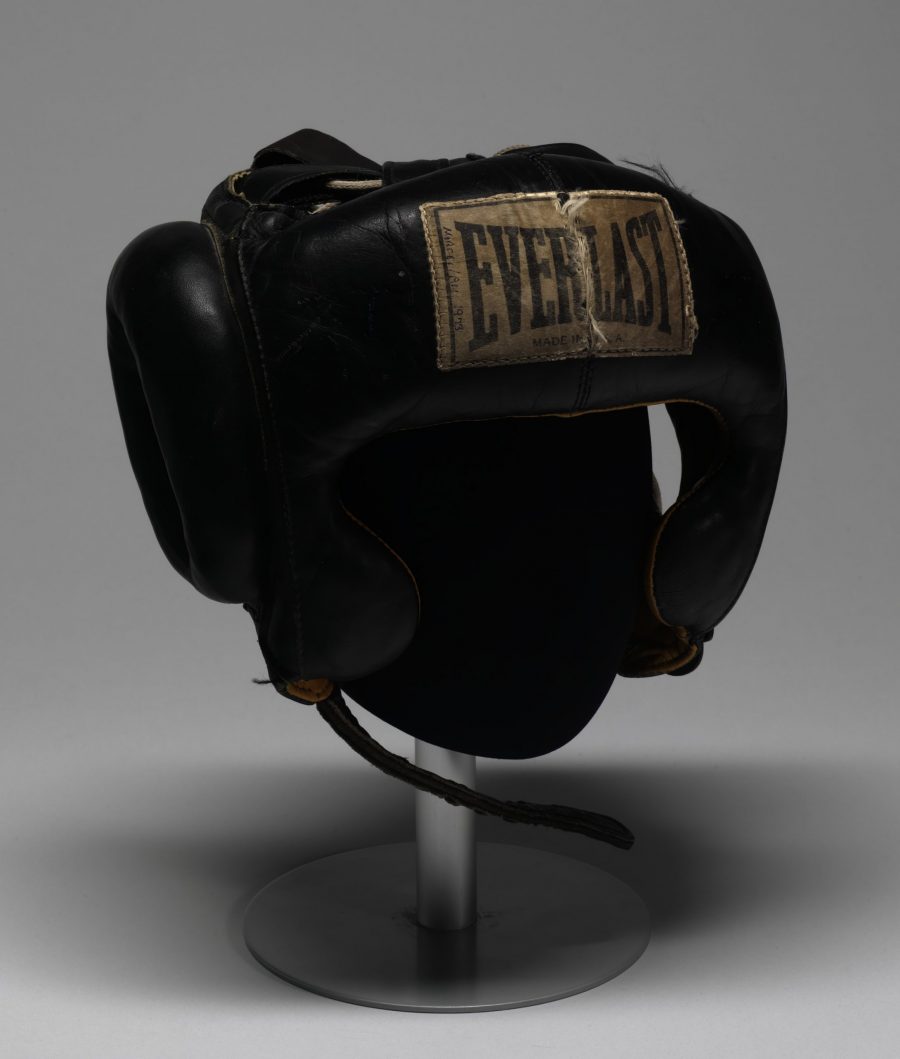
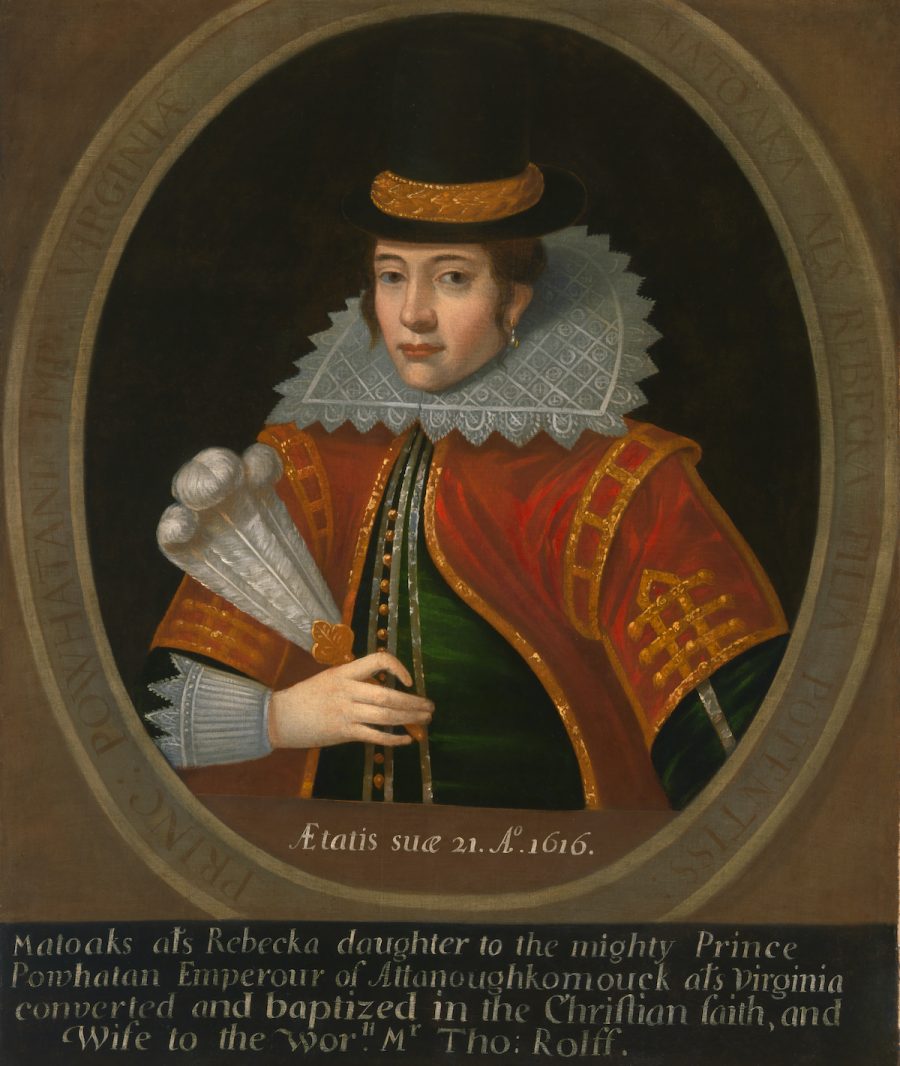
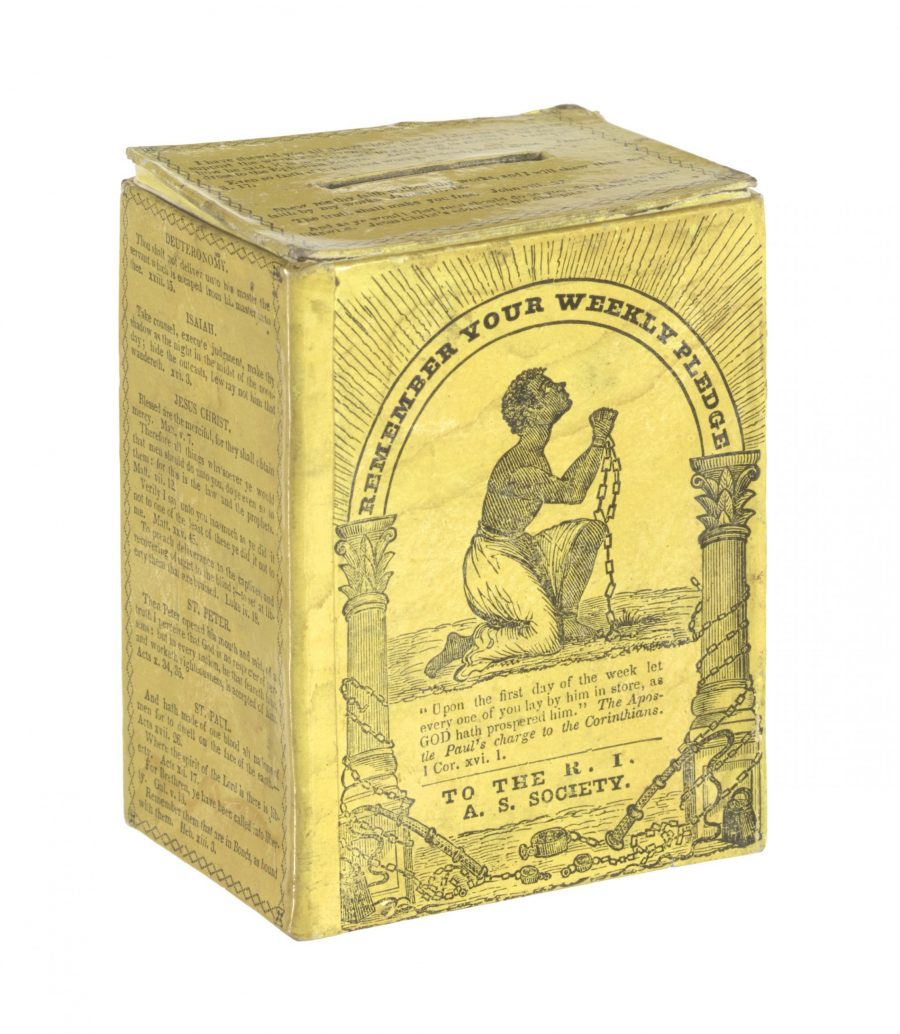
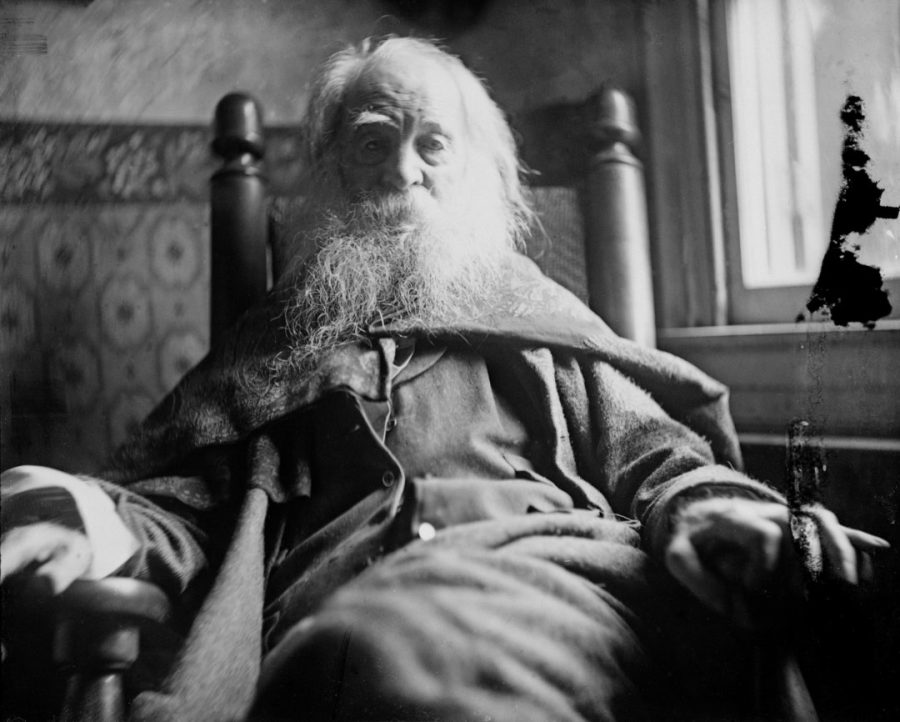
That’s quite a lot to sift through, but if you don’t know what you’re looking for, the site’s highlights will direct you to one fascinating image after another, from Mohammad Ali’s 1973 headgear to the historic Elizabethan portrait of Pocahontas, to the collection box of the Rhode Island Anti-Slavery Society owned by William Lloyd Garrison’s family, to Walt Whitman in 1891, as photographed by the painter Thomas Eakins, to just about anything else you might imagine.
Enter the Smithsonian’s Open Access archive here and browse and search its millions of newly-public domain images, a massive collection that may help expand the definition of common knowledge.
No photograph symbolizes American victory more recognizably than Joe Rosenthal’s Pulitzer Prize-winning Raising the Flag on Iwo Jima. Taken on February 23, 1945, it shows six U.S. Marines raising their country’s flag during the battle — a bloody one even by the standards of the Second World War — for control of that Japanese island. The Soviet Union had an equivalent image: Yevgeny Khaldei’sRaising a Flag over the Reichstag, which shows a Russian soldier raising the Soviet flag on the roof of the former German parliament on May 2, 1945, during the Battle of Berlin. The similarities are obvious, but the difference isn’t: the Soviet photo was faked.
To be more specific, Khaldei’s picture was “staged,” and “parts of it were altered before it was published.” So says Vox’s Coleman Lowndes in the video above, which reveals all the pre-Photoshop image manipulation — a specialty of Soviet propagandists even then — performed on Raising a Flag over the Reichstag.
“Khaldei superimposed some black smoke from another photo and manipulated the contrast to give the scene a little more drama,” which in itself may be an understandable choice. But he also erased the wristwatch of one of the soldiers brought in to pose with the flag, a detail you might not notice even holding the original and the doctored version side by side. As Lowndes explains, “The soldier supporting the flag-bearer was wearing two watches, suggesting he had been looting, a stain that didn’t fit the image of Soviet heroism that Stalin wanted.”
A look at the preceding few years of the war goes some way to explaining this. Germany had brutally invaded Russia in 1941, instilling in Russia a thirst for revenge that began to seem satiable when the tables began to turn on Germany the following year. In and on their way to Germany, the Red Army, too, committed crimes against the civilians in their path, looting surely being among the least of them. Raising a Flag over the Reichstag does its job in capturing a moment of Soviet victory, but as Lowndes says, “it also captures, and then conceals, a story of vengeance and mutual brutality, of murder, organized destruction, and pillaging, all culminating in this iconic moment.” And the more iconic the moment, the more potentially revelatory its details — even more so in the case of false ones.
Based in Seoul, Colin Marshall writes and broadcasts on cities, language, and culture. His projects include the book The Stateless City: a Walk through 21st-Century Los Angeles and the video series The City in Cinema. Follow him on Twitter at @colinmarshall or on Facebook.
Like gothic script in heavy metal, the fisheye album cover photo seems like a naturally occurring feature of certain psychedelic strains of music. But it has a history, as does the fisheye photograph itself. The Vox video above begins in 1906 with Johns Hopkins scientist and inventor Robert Wood, a somewhat eccentric professor of optical physics who wanted to duplicate the way fish see the world: “the circular picture,” he wrote, “would contain everything within an angle of 180 degrees in every direction, i.e. a complete hemisphere.”
Rather than putting them to underwater use, later scientists employed Wood’s ideas in astronomical observation. Their next stop was the professional photography market: the first mass-produced fisheye lens, made by Nikon, cost $27,000 in 1957. From academic journals to the pages of Life magazine: mass media brought fisheye photography into popular culture. An affordable, consumer-grade lens in 1962 brought it within the reach of the masses. For the way it compresses angles, the fisheye lens “was, and always has been, a handy tool to capture tight quarters, as well as huge spaces.”
The fisheye lens suited the Beatles phenomenon perfectly, compressing backstage hallways and stadium-sized crowds into the same hypnotically circular dimensions. “Perhaps its greatest strength was making rock stars appear larger than life.”
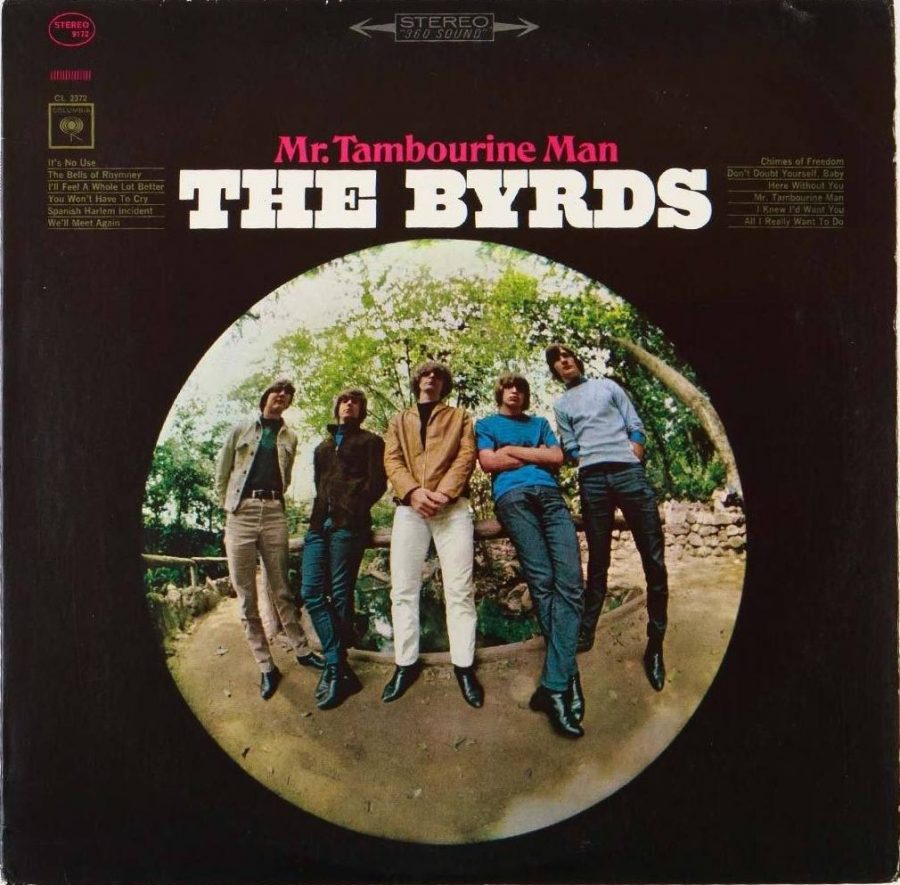
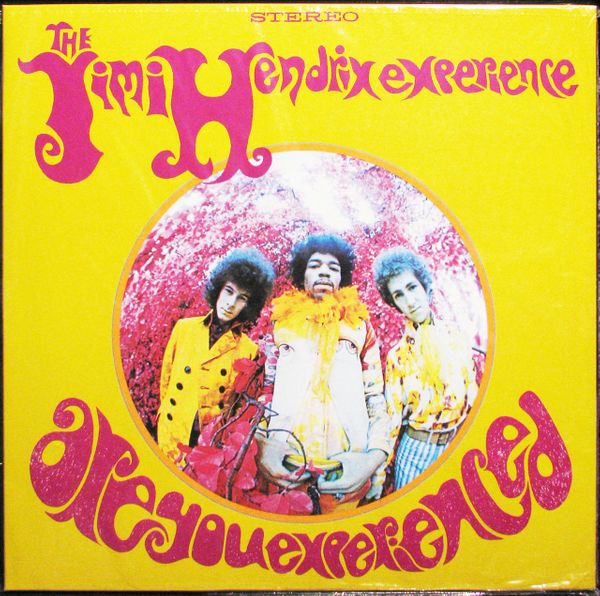
The fisheye photo “reflected the trippiness of the psychedelic era.” Although one of the earliest uses on an album cover was Sam Rivers’ Fuschia Swing Song, it soon adorned the Byrds Mr. Tambourine Man and—of course—the cover of Jimi Hendrix’s Are You Experienced. The iconic band photo of the Experience, taken by graphic designer Karl Ferris, inspired hundreds of psychedelic imitators.
Ferris thought of the fisheye photo with reference, again, not to the ocean but the stars: Hendrix’s music, he said, was “so far out that it seemed to come from outer space.” In order to introduce the band to audiences who hadn’t heard of them yet, he conceived of them as a “group traveling through space in a Biosphere on their way to bring their otherworldly space music to earth.” Inseparable from space travel after NASA’s many fisheye photos of the Apollo missions, the fisheye album cover contains entire worlds in a single droplet, and promises to transport us to the outer reaches of sound.
No matter how many cultural icons you’ve met, Annie Leibovitz has almost certainly met more of them. Not only has she met them, she’s talked with them, spent long stretches of time with them, told them what to do, and even looked into the nature of their very being — which is to say, she’s photographed them. Having put in her crosshairs the likes of John Lennon, Michael Jackson, Christopher Hitchens, and Barack Obama, one would assume Leibovitz has lost entirely the ability to be intimidated by any personage, no matter how august. But then, she didn’t have to address any of the aforementioned figures as “Your Majesty.”
“Back in 2007, Leibovitz was hired to shoot a set of portraits of the Queen at Buckingham Palace in preparation for a state visit to the United States,” writes Petapixel’s Michael Zhang. “The photographer and her 11 assistants spent 3 weeks preparing for the 30-minute photo shoot.” For the Queen’s part, preparation included “the full regalia of the ancient Order of the Garter, complete with tiara,” putting on all of which took 15 minutes longer than planned.
But when she got the Queen seated, Leibovitz — perhaps figuring that, if a casual manner works with pop stars and presidents, it might work even better with royalty — suggested that “it will look better without the crown.” It would look better, she suggested, “less dressy.” “Less dressy?” the Queen snaps back in a kind of irritated astonishment. “What do you think this is?”
Leibovitz, to her credit, remains unfazed, even when informed that the tiara can’t go back on once it’s been taken off. You can see it happen in the Dutch TV clip above, which takes its footage from the BBC documentary A Year with the Queen. Despite the pressure, the portraits came out well, as did the second series Leibovitz shot of the Queen in 2016. These more recent photographs were taken under less strict conditions. “I was told how relaxed she was at Windsor, and it was really true,” says Leibovitz in the accompanying Vanity Fair story. “You get the sense of how at peace she was with herself, and very much enthralled with her family.” At the Queen’s request, the pictures included her family members both human and corgi, all arranged according to her own ideas. If she tires of her current job, she may have a promising future in portrait photography ahead of her.
We're hoping to rely on loyal readers, rather than erratic ads. Please click the Donate button and support Open Culture. You can use Paypal, Venmo, Patreon, even Crypto! We thank you!
Open Culture scours the web for the best educational media. We find the free courses and audio books you need, the language lessons & educational videos you want, and plenty of enlightenment in between.