Lou Reed Concert Film Berlin Streaming Free Online for the Next Week

Last laughs can be sweet, and accord­ing to music jour­nal­ist, Antho­ny DeCur­tis, his friend, the late Lou Reed, “rev­eled” in the crit­i­cal drub­bing that greet­ed his 3rd solo album, 1973’s Berlin.

Not imme­di­ate­ly, how­ev­er.

Berlin, which fol­lowed hard on the heels of Reed’s wide­ly adored Trans­former, had a painful, pro­tract­ed deliv­ery.

This was due in part due to RCA execs get­ting cold feet about releas­ing Reed’s grim con­cept record as a dou­ble album. This neces­si­tat­ed a lot of prun­ing, a week before dead­line.

Pro­duc­er Bob Ezrin, who had plant­ed the idea for a con­cept album based on a track from Reed’s epony­mous first solo effort, was detox­ing in the hos­pi­tal, and thus not present for the final mas­ter­ing.

But much of the hell lead­ing to Berlin’s release was a hell of Reed’s own mak­ing.

His depen­dence on drugs and alco­hol ham­pered the writ­ing process, as per Reed’s first wife, Bet­tye Kro­n­stad, who filed for divorce mid­way through the process.

If you want a glimpse of what that marriage’s final days might have been like, look to Berlin.

Kro­n­stad was dis­tressed to find many pri­vate details from their rela­tion­ship on dis­play in the trag­ic rock opera. There was some fic­tion­al­iza­tion, but Reed also put his thumb on the scales when it suit­ed him, in songs like “The Kids,” which recast Kronstad’s late moth­er in a par­tic­u­lar­ly unfair way.

Reed once took a shot at the album’s crit­i­cal recep­tion, sug­gest­ing that peo­ple didn’t like it because its depic­tion of a mis­er­able cou­ple, whose union is marred by infi­deli­ty, domes­tic abuse, addic­tion, and sui­cide, was “too real”:

It’s not like a TV pro­gram where all the bad things that hap­pen to peo­ple are tol­er­a­ble. Life isn’t like that. And nei­ther is the album.

Some­times he bluffed:

I have nev­er been inter­est­ed in crit­i­cal recep­tions, decep­tions, hel­los, good­byes, huz­zahs, hur­rahs. I don’t read them, so I don’t care.

At oth­er times, he raged:

There are peo­ple I’ll nev­er for­give for the way they fucked me over with Berlin. The way that album was over­looked was the biggest dis­ap­point­ment I ever faced.

In a more vul­ner­a­ble mood, he admit­ted:

Berlin was a big flop and it made me very sad. The way that album was over­looked was prob­a­bly the biggest dis­ap­point­ment I ever faced. I pulled the blinds shut at that point, and they’ve remained closed.

Unsur­pris­ing­ly, his ear­ly plans for stag­ing a the­atri­cal com­pan­ion piece to the album, with pos­si­ble par­tic­i­pa­tion by Andy Warhol, were shelved.

34 years lat­er…

Cue direc­tor Julian Schn­abelthe Brook­lyn Youth Cho­rus, and St. Ann’s Ware­house, the New York City venue that had pre­vi­ous­ly co-com­mis­sioned Songs for Drel­la, a musi­cal Warhol trib­ute by Reed and John Cale.

In 2006, Reed took cen­ter­stage in Brook­lyn for a 5‑night the­atri­cal run of Berlin that also fea­tured a 35-piece ensem­ble, orig­i­nal gui­tarist Steve Hunter, and dreamy videos by the director’s daugh­ter, Lola, star­ring Emmanuelle Seign­er as an abstract sketch of the doomed pro­tag­o­nist, Car­o­line.

The result­ing con­cert film, which St. Ann’s Ware­house is stream­ing for free through Novem­ber 29, proved far more pop­u­lar with crit­ics than the 1973 record had been. (Three years pri­or to the St Ann’s stag­ing, Rolling Stone upgrad­ed its orig­i­nal opin­ion of the album from career end­ing dis­as­ter to 344th Great­est Album of All Time.)

Stephen Holden’s glow­ing New York Times review of the film made mul­ti­ple men­tion of angels and demons, as is per­haps to be expect­ed when a work com­bines Lou Reed, a Sid and Nan­cy-ish romance, a children’s choir, and the ethe­re­al voice of Anohni, late of Antony and the John­sons.

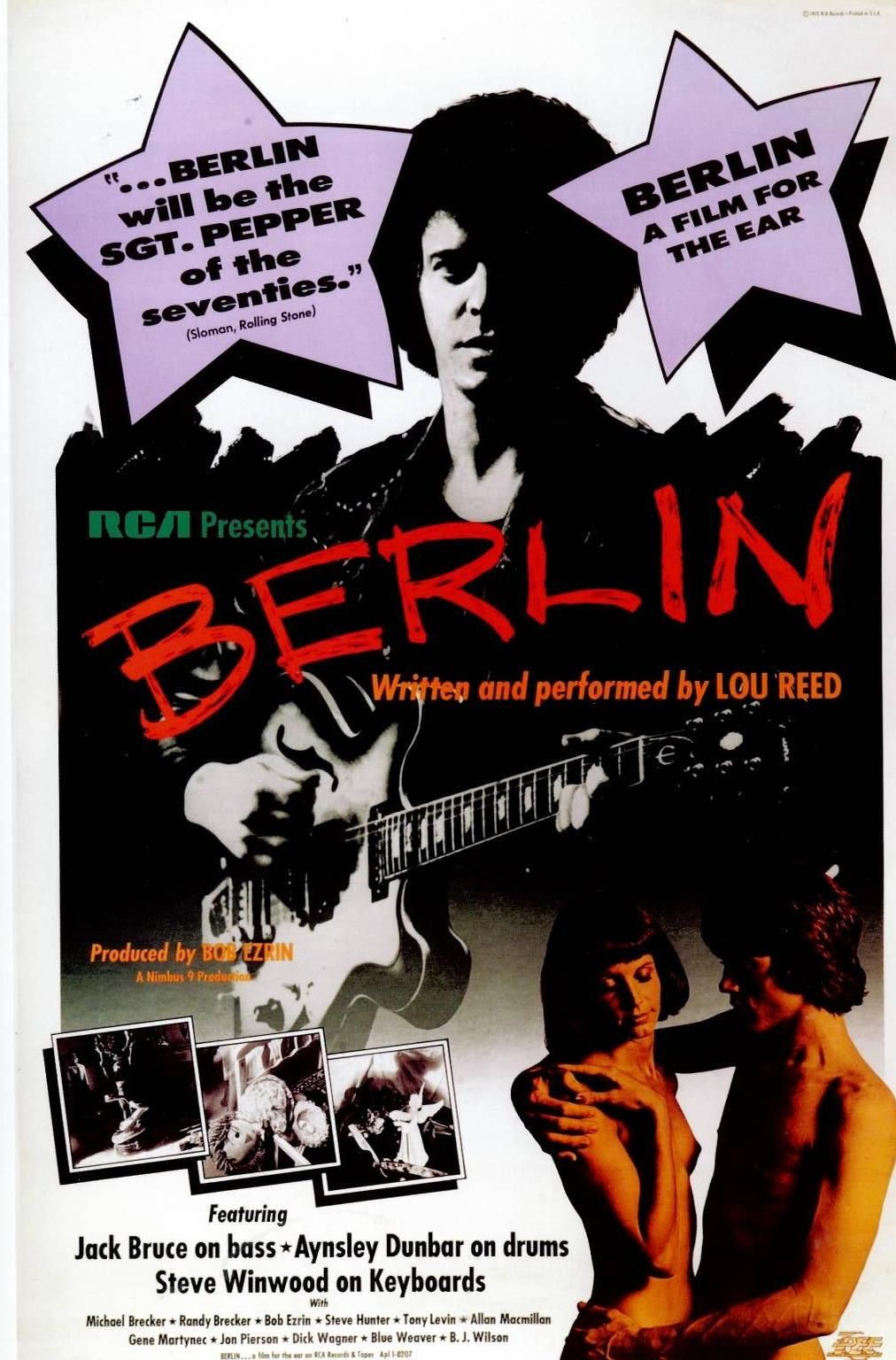
Read­ers, see for your­self, and let us know—did RCA’s pro­mo­tion­al poster for the orig­i­nal album get some­thing right near­ly 50 years ago? Is this “a film for the ears?”
Lis­ten to the orig­i­nal 1973 album and the live con­cert ver­sion at St. Ann’s for free on Spo­ti­fy.

Stream Julian Schnabel’s Lou Reed’s Berlin, Live at St. Ann’s Ware­house here through Novem­ber 29.

Relat­ed Con­tent: 

Lou Reed Sings “Sweet Jane” Live, Julian Schn­abel Films It (2006)

Lou Reed’s Mix­tape for Andy Warhol Dis­cov­ered by Cor­nell Uni­ver­si­ty Pro­fes­sor: Fea­tures 12 Pre­vi­ous­ly Unre­leased Songs

Lou Reed Cre­ates a List of the 10 Best Records of All Time

Ayun Hal­l­i­day is an author, illus­tra­tor, the­ater mak­er and Chief Pri­ma­tol­o­gist of the East Vil­lage Inky zine.  Fol­low her @AyunHalliday.

When ABBA Wrote Music for the Cold War-Themed Musical, Chess: “One of the Best Rock Scores Ever Produced for the Theatre” (1984)

Chess is amaz­ing. The sim­plic­i­ty of its char­ac­ters and plot (cap­ture the king!) can be appre­ci­at­ed and under­stood by chil­dren; the com­plex­i­ty of its tac­tics can con­sume an adult life. Despite its medieval origins—and stumpers for us mod­erns like the strate­gic impor­tance of a bish­op on the battlefield—chess remains as much a potent alle­go­ry for pow­er and its tac­tics as it was 1,500 years ago in India when it was called “chat­u­ran­ga.” 

The game has inspired great works of lit­er­a­ture, film, and arguably every cre­ative move made by Mar­cel Duchamp. So why not a musi­cal? A musi­cal with a Cold War-era chess bat­tle between a Bob­by Fis­ch­er-like char­ac­ter and a Russ­ian grand­mas­ter loose­ly based on Boris Spassky, with music by the guys from ABBA and lyrics by Tim Rice?

The dra­ma is inher­ent, both with­in the game itself and its geopo­lit­i­cal sig­nif­i­cance in 1984, the year the con­cept album above debuted in advance of the show’s first Euro­pean tour, a fundrais­ing maneu­ver also employed before the open­ing of much bet­ter-known Rice shows like Jesus Christ Super­star and Evi­ta. While Andrew Lloyd Web­ber may be an excel­lent stage com­pos­er, though not to everyone’s taste, par­ti­sans of Mam­ma Mia! might agree with crit­ic William Hen­ry, who wrote at Time that Chess, the musi­cal is “one of the best rock scores ever pro­duced for the the­atre.”

The show itself, Hen­ry wrote, was “dif­fi­cult, demand­ing and reward­ing” and pushed “the bound­aries of the form.” Accord­ing to a site doc­u­ment­ing its his­to­ry:

Chess at Lon­don’s Prince Edward The­atre was a love sto­ry set amid a world cham­pi­onship chess match, the ten­sions of the Cold War, and a media cir­cus. It ran for three years. When the Berlin Wall fell, a rad­i­cal­ly altered ver­sion of the show was pre­sent­ed on Broad­way and failed.

The new ver­sion, with lyrics by Richard Nel­son, ran for only two months. Its unpop­u­lar­i­ty did not tar­nish the rep­u­ta­tion of Chess, which was revived to great acclaim sev­er­al times after­ward. The show may not have had the wide­spread cul­tur­al res­o­nance of Hamil­ton or the grav­i­tas of Nixon in Chi­na, but Chess has inspired devo­tion among musi­cal fans, rank­ing sev­enth in a recent BBC lis­ten­er poll on the top ten essen­tial musi­cals. It is now, 34 years after its Lon­don debut, run­ning in Moscow, in a Russ­ian trans­la­tion, with “rewrites,” notes MetaFil­ter user Shakhmaty, “that human­ize its KGB antag­o­nist.”

Chess pro­duced the hit “I Know Him So Well,” a duet by Elaine Paige and Bar­bara Dick­son that “held the Num­ber One spot on the UK sin­gles charts for 4 weeks and won the Ivor Nov­el­lo Award as the Best Sell­ing Sin­gle,” Ice the Site writes. A VHS video appeared in 1985 fea­tur­ing the per­form­ers on the album singing that song and oth­ers from the show like “One Night in Bangkok” (above), which also became a “world­wide smash.”

Like Mam­ma Mia!, Chess is a med­ley, of sorts— in this case of musi­cal styles rather than great­est pop hits. A con­tem­po­rary New York Times review called the con­cept album “a sump­tu­ous­ly record­ed… grandiose pas­tiche that touch­es half a dozen bases, from Gilbert and Sul­li­van to late Rodgers and Ham­mer­stein, from Ital­ian opera to trendy syn­the­siz­er-based pop, all of it lav­ish­ly arranged for the Lon­don Sym­pho­ny Orches­tra with splashy elec­tron­ic embell­ish­ments.” Hear the full album the top of the post, read a sum­ma­ry of the show’s plot here, and see Tim Rice and ABBA’s Bjorn Ulvaeus pro­mote the show in 1986 on a British morn­ing show just above.

Relat­ed Con­tent: 

When John Cage & Mar­cel Duchamp Played Chess on a Chess­board That Turned Chess Moves Into Elec­tron­ic Music (1968)

A Beau­ti­ful Short Doc­u­men­tary Takes You Inside New York City’s Last Great Chess Store

Gar­ry Kas­parov Now Teach­ing an Online Course on Chess

Josh Jones is a writer and musi­cian based in Durham, NC. Fol­low him at @jdmagness

When Edward Gorey Created Set Designs & Tony Award-Winning Costumes for a Broadway Production of Dracula (1977)

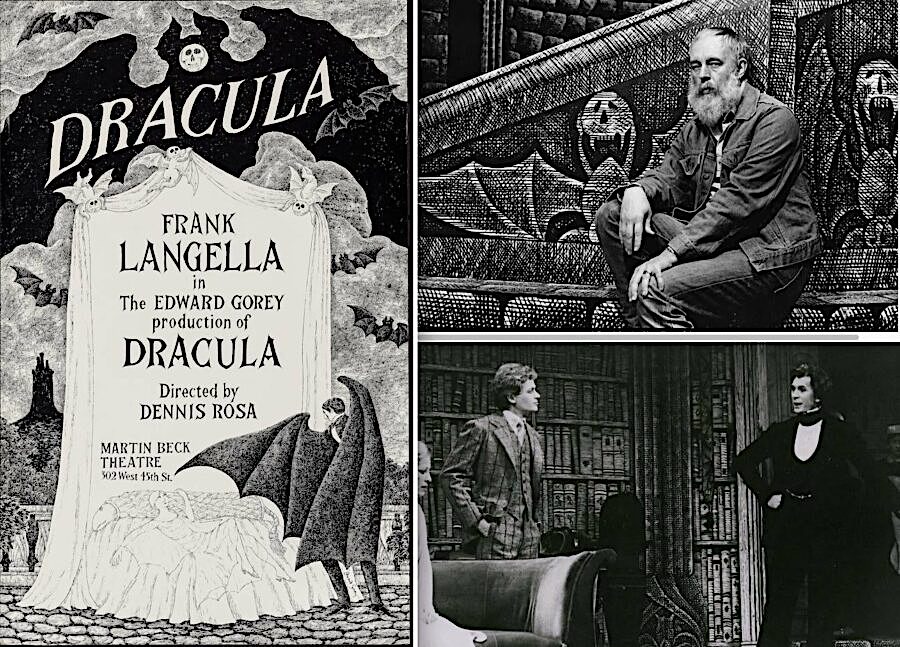
Edward Gorey and Hal­loween go togeth­er as well as Drac­u­la and Hal­loween. Bring the three togeth­er (well, it’s almost Hal­loween), and you’ve got a tri­umvi­rate of clas­sic, wicked, scary fun. The align­ment of these dark stars first occurred, Olivia Rutigliano writes at CrimeReads, when a Gorey-designed pro­duc­tion of Drac­u­lapre­miered on Broad­way at the Mar­tin Beck The­ater on Octo­ber 20th, 1977, just in time for Hal­loween.” Star­ring Frank Lan­gel­la in the title role, “the pro­duc­tion was a smash,” and Gorey, who designed the sets, cos­tumes, posters, play­bills, and mer­chan­dise, won a Tony the fol­low­ing year.

To hear Gorey tell it, in Episode 4 of “Goreytelling,” an ani­mat­ed series of pre­vi­ous­ly unheard record­ed inter­views with the reclu­sive writer/illustrator, he was “only too con­scious of not being a real set design­er or a real cos­tume design­er or a real any­thing…. I designed it the only way I could.” His seem­ing pain over the whole thing extends to the play itself. “I don’t know what any­body saw in it, exact­ly,” he says, “but it was a big hit.”

The play was first staged in 1973, and for years, Gorey says, each time a the­ater com­pa­ny decid­ed to put it on, he was called up to con­sult. He duti­ful­ly turned up each time, scowl­ing glum­ly and won­der­ing why. When it final­ly hit Broad­way, he saw two-thirds of a rehearsal and left “jaun­diced.” The final prod­uct left an even more sour taste. It was, he says, “absurd,” but very lucra­tive. As for the Tony, he says iron­i­cal­ly, the award turned out to be “the cross I had to bear,” an embar­rass­ing acco­lade for cos­tumes he deemed unwor­thy of the hon­or.

Rutigliano deems the set designs “gor­geous… three giant tableaux, in his famil­iar inky, metic­u­lous style” and fea­tures a few pho­tographs from a pro­duc­tion in Hous­ton. We would not expect oth­er­wise from Gorey, who was always him­self and always a pro­fes­sion­al. The sets have lived on in photos—some fea­tur­ing Lan­gel­la, some his suc­ces­sor, Raul Julia—in minia­ture mod­els, and in the brief but sort-of com­pelling pro­duc­tion of “Drac­u­la: Star­ring Edward Gorey’s Toy The­atre,” just below. Gorey also cre­at­ed an illus­trat­ed edi­tion of Drac­u­la in 1996.

“It should be not­ed,” Goreyana writes, “that all the sets for Drac­u­la were hand paint­ed by tal­ent­ed scene shop artists. Every cross hatched line on the walls, fur­ni­ture, and floor had to be recre­at­ed to size by hand.” This is indeed impres­sive, and Gorey is prob­a­bly right: the sets, which he also seemed to loathe, were prob­a­bly more deserv­ing of the Tony than the cos­tumes. “The over­all aes­thet­ic,” says Rutigliano, “match­es the peri­od of the orig­i­nal Broad­way run, the 1920s.” (The pro­duc­tion won anoth­er Tony for Most Inno­v­a­tive Revival.)

The orig­i­nal the­ater adap­ta­tion was com­mis­sioned by Bram Stoker’s wid­ow, Flo­rence, “as part of her copy­right cru­sade against F.W. Murnau’s Nos­fer­atu.” It debuted in Eng­land in 1924, then pre­miered on Broad­way in 1927 with a then-unknown Bela Lugosi. “This pro­duc­tion would be adapt­ed, in turn, by the direc­tor Tod Brown­ing into the famous 1931 Drac­u­la film.” Gorey him­self may have hat­ed it, but the play he so metic­u­lous­ly brought back to life in the 70s descend­ed, in a way, in a long, ven­er­a­ble, undead line, from the orig­i­nal Drac­u­la him­self.

via CrimeReads

Relat­ed Con­tent: 

Edward Gorey Talks About His Love Cats & More in the Ani­mat­ed Series, “Goreytelling”

When Edward Gorey Designed Book Cov­ers for Clas­sic Nov­els: See His Iron­ic-Goth­ic Take on Dick­ens, Con­rad, Poe & More

Hor­ror Leg­end Christo­pher Lee Reads Bram Stoker’s Drac­u­la

Watch Nos­fer­atu, the Sem­i­nal Vam­pire Film, Free Online (1922)

Josh Jones is a writer and musi­cian based in Durham, NC. Fol­low him at @jdmagness

David Byrne’s American Utopia: A Sneak Preview of Spike Lee’s New Concert Film

First came the album and tour in 2018. Then the Broad­way show in 2019. And now the lat­est incar­na­tion of David Byrne’s Amer­i­can Utopia–the con­cert film direct­ed by Spike Lee. Debut­ing on HBO Max on Octo­ber 17th, this Spike Lee joint shows David Byrne “joined by an ensem­ble of 11 musi­cians, singers, and dancers from around the globe, invit­ing audi­ences into a joy­ous dream­world where human con­nec­tion, self-evo­lu­tion, and social jus­tice are para­mount.” If the movie is any­thing like the tour, it will be sub­lime. For now, we’ll whet your appetite with the sneak pre­view above.

If you would like to sign up for Open Culture’s free email newslet­ter, please find it here. It’s a great way to see our new posts, all bun­dled in one email, each day.

If you would like to sup­port the mis­sion of Open Cul­ture, con­sid­er mak­ing a dona­tion to our site. It’s hard to rely 100% on ads, and your con­tri­bu­tions will help us con­tin­ue pro­vid­ing the best free cul­tur­al and edu­ca­tion­al mate­ri­als to learn­ers every­where. You can con­tribute through Pay­Pal, Patre­on, and Ven­mo (@openculture). Thanks!

Relat­ed Con­tent:

David Byrne Launch­es Rea­sons to Be Cheer­ful, an Online Mag­a­zine Fea­tur­ing Arti­cles by Byrne, Bri­an Eno & More

David Byrne Curates a Playlist of Great Protest Songs Writ­ten Over the Past 60 Years: Stream Them Online

David Byrne: How Archi­tec­ture Helped Music Evolve

by | Permalink | Make a Comment ( 1 ) |

Pretty Much Pop: A Culture Podcast #53 Explores the Hamilton Phenomenon

Your hosts Eri­ca Spyres, Mark Lin­sen­may­er, and Bri­an Hirt are joined by Broad­way actor Sam Simahk (Carousel, The King and I, My Fair Lady) to dis­cuss this unique con­ver­gence of musi­cal the­ater, rap, and his­tor­i­cal dra­ma. Does Hamil­ton deserve its acco­lades? We cov­er the re-emer­gence of stage music as pop music, live vs. filmed vs. film-adapt­ed musi­cals, cre­ators star­ring in their shows, race-inclu­sive cast­ing, and the pol­i­tics sur­round­ing the show.

Some arti­cles we looked at includ­ed:

Learn more at prettymuchpop.com. This episode includes bonus dis­cus­sion includ­ing Sam that you can only hear by sup­port­ing the pod­cast at patreon.com/prettymuchpop. This pod­cast is part of the Par­tial­ly Exam­ined Life pod­cast net­work.

Pret­ty Much Pop: A Cul­ture Pod­cast is the first pod­cast curat­ed by Open Cul­ture. Browse all Pret­ty Much Pop posts.

Lin-Manuel Miranda Breaks Down How He Wrote Hamilton’s Big Hit, “My Shot”

The cur­rent moment has forced the orig­i­nal cast and crew of Lin-Manuel Miranda’s mas­sive hit musi­cal Hamil­ton to revis­it and reeval­u­ate the sto­ry it tells about America’s found­ing. As Miran­da him­self told The Root’s Ton­ja Renée Stid­hum, “All of these guys are com­plic­it in the bru­tal prac­tice of slav­ery, slav­ery is the third line of our show… that is just a pre­req­ui­site for the sto­ry we’re telling.” But he didn’t first set out to write his­to­ry. “Orig­i­nal­ly, this was a con­cept album. I want­ed to write a hip hop album, so I was nev­er pic­tur­ing the guys on the stat­ues that are being torn down right now. I was pic­tur­ing, ‘What are the voic­es that are best suit­ed to tell the sto­ry.’”

Debut­ing in more opti­mistic times, when the coun­try had its first Black pres­i­dent, Hamil­ton declared, says Leslie Odom, Jr. (who played Aaron Burr) that “if this his­to­ry belongs to all of us… then we’re going to take it and we’re going to say it and use our own words to tell it!” Con­tro­ver­sy and cri­tique aside, there’s no deny­ing Miranda’s tremen­dous gifts as a drama­tist and song­writer, on dis­play not only in Hamil­ton but in the Moana sound­track.

How does he do it? Rid­ing the wave of renewed Hamil­ton fan­dom after the Dis­ney release of the orig­i­nal cast film, Miran­da recent­ly sat down with Rot­ten Toma­toes to dis­cuss his process. When he gets to Hamil­ton, he gives us a detailed break­down of “My Shot,” which, he says, took him a year to write.

“It was not only writ­ing Hamil­ton’s ‘I want’ song,” says Miran­da, “although it cer­tain­ly is that. It was also prov­ing my the­sis that Hamilton’s intel­lect is what allows him to pro­pel through the nar­ra­tive of the sto­ry.” The play’s pro­tag­o­nist proves his intel­lec­tu­al wor­thi­ness by mas­ter­ing and mak­ing his own the styles of Miranda’s favorite rap­pers, from Big Pun to Jay Z to Big­gie to Mobb Deep. “I’m grab­bing from the influ­ences and pay­ing homage to those influ­ences. …I’m lit­er­al­ly call­ing on the ances­tors of this flow. …The ‘Whoah’ sec­tion, I’ll just say, is based on the AOL start­up sound because I want­ed it to feel like …his words are con­nect­ing with the world.”

Whether or not any of Hamil­ton’s younger view­ers have ever heard the AOL start­up sound, the detail reveals how Miranda’s mind works. His cre­ations emerge from a matrix of ref­er­ences and allu­sions, each one cho­sen for its spe­cif­ic rela­tion to the sto­ry. Many of these call­backs go over the audience’s heads, but they still have their intend­ed effect, cre­at­ing ten­sion in “the dens­est cou­plets that I could write,” Miran­da says. The mes­sage in “My Shot,” with­in the con­text of the musi­cal itself, is that “Hamil­ton is the future with­in this group of friends.” But the mes­sage of Hamil­ton has noth­ing to do with the 18th cen­tu­ry and every­thing to do with the 21st. Per­haps its most sub­ver­sive idea is that the high­est lead­er­ship in the U.S. might just as well look like Hamil­ton as Hamil­ton. See Miran­da and the Hamil­ton cast per­form “My Shot” at the White House just below.

via Laugh­ing Squid

Relat­ed Con­tent:

Watch Lin-Manuel Miran­da Per­form the Ear­li­est Ver­sion of Hamil­ton at the White House, Six Years Before the Play Hit the Broad­way Stage (2009)

A Whiskey-Fueled Lin-Manuel Miran­da Reimag­ines Hamil­ton as a Girl on Drunk His­to­ry

The Mup­pets Sing the First Act of Hamil­ton

Josh Jones is a writer and musi­cian based in Durham, NC. Fol­low him at @jdmagness

The Muppets Sing the First & Second Acts of Hamilton

Or, at least it’s one fine impres­sion of the Mup­pets.

Here’s the cast and find Act II down below:

Alexan­der Hamil­ton — Ker­mit the Frog
Aaron Burr — The Great Gonzo
Eliza Schuyler — Miss Pig­gy
Mar­quis de LaFozette — Fozzie Bear
George Wash­ing­ton — Sam the Eagle
Angel­i­ca Schuyler — Camil­la the Chick­en
John Lau­rens — Beaker
Her­cules Mul­li­gan — Rowlf the Dog
King George III — Ani­mal
Peg­gy Schuyler — Jan­ice
Samuel Seabury — The Swedish Chef
Charles Lee — Elmo
Con­gres­sion­al Del­e­gates — Floyd and Zoot
Crazy Patri­ot — Crazy Har­ry
Statler and Wal­dorf — Them­selves

via Boing­Bo­ing

Relat­ed Con­tent:

Hamil­ton Mania Inspires the Library of Con­gress to Put 12,000 Alexan­der Hamil­ton Doc­u­ments Online

Watch Lin-Manuel Miran­da Per­form the Ear­li­est Ver­sion of Hamil­ton at the White House, Six Years Before the Play Hit the Broad­way Stage (2009)

Lin-Manuel Miran­da & Emi­ly Blunt Take You Through 22 Clas­sic Musi­cals in 12 Min­utes

A Whiskey-Fueled Lin-Manuel Miran­da Reimag­ines Hamil­ton as a Girl on Drunk His­to­ry

by | Permalink | Make a Comment ( 3 ) |

Watch Free Plays from Shakespeare’s Globe Theatre: Romeo & Juliet, Macbeth & More

As depress­ing arti­cles about the upcom­ing Sum­mer of COVID-19 begin to pro­lif­er­ate, our hopes for beach days, con­cert series, and sum­mer camp begin to dim.

Here in New York City, the Pub­lic Theater’s announce­ment that it is can­celling the upcom­ing sea­son of its famed Shake­speare in the Park was met with under­stand­able sad­ness.

You don’t have to like Shake­speare to enjoy the rit­u­al of enter­ing Cen­tral Park short­ly after dawn, pre­pared to sit online for sev­er­al hours await­ing noon’s free tick­et dis­tri­b­u­tion, then return­ing to the Dela­corte lat­er that night with snacks and sweater and wine.

Per­form­ing a quick Inter­net search to brush up on the plot can enhance the expe­ri­ence, but—and I saw this as some­one whose degree includ­ed a met­ric heinieload of The Bard—it can be equal­ly sat­is­fy­ing to spend the final acts enjoy­ing an impromp­tu, al fres­co nap.

Bonus points if a rac­coon runs across the stage at some point.

Alas all this must be denied us in the sum­mer of 2020, but it’s still with­in our pow­er to repli­cate that sum­mer feel­ing in advance of the equinox, using the past pro­duc­tions that London’s Globe The­atre is screen­ing on its YouTube chan­nel as our start­ing place.

First up is Romeo & Juli­et from 2009, star­ring Ellie Kendrick and Adetomi­wa Edun, though accord­ing to the Inde­pen­dent’s Michael Coveney, the show belongs to Pen­ny Lay­den as the Nurse:

Far removed from the fuss­ing tra­di­tion of com­ic gar­ruli­ty and the Patri­cia Rout­ledge fac­tor, Lay­den plays her as a scrubbed, mid­dle-aged, sen­si­ble woman car­ry­ing a his­to­ry of sad­ness. The bawdy assault on her by Philip Cum­bus’s melan­choly Mer­cu­tio is both shock­ing and plau­si­ble, and she retains her qui­et dig­ni­ty while at the same time mourn­ing its sac­ri­fice.

Back to New York City…

Pri­or to start­ing your screen­ing, you’ll want to approx­i­mate a seat at the Dela­corte (which, like the Globe, is authen­ti­cal­ly cir­cu­lar in shape). I rec­om­mend a met­al fold­ing chair.

Sprin­kle a table­spoon or so of water onto the seat if you want to pre­tend it rained all after­noon lead­ing up to the per­for­mance.

Def­i­nite­ly have some wine to pour into a plas­tic cup.

Slather your­self in insect repel­lent.

Silence your cell phone.

If your housemate’s cell phone goes off mid-per­for­mance, feel free to tsk and sssh and roll your eyes. Hon­est­ly, how hard is it to com­ply with the famil­iar instruc­tions of the house manager’s speech?

At inter­mis­sion, stand out­side your own bath­room door for at least 15 min­utes before let­ting your­self into a “stall” to use the facil­i­ties.

Doze all you want to…. arrange for your house­mate to tsk and sssh at you from an appro­pri­ate dis­tance, should your snor­ing become audi­ble.

You have until Sun­day, May 3 to stum­ble sleep­i­ly away from the screen, and pre­tend you’re wan­der­ing to the sub­way with 1799 oth­er New York­ers.

Then make plans to wake up at 5:30 and sit on the floor with a ther­mos of cof­fee for sev­er­al hours, hop­ing that they won’t run out of tick­ets for The Two Noble Kins­men before you make it to the top of the line.

(Spoil­er alert: they won’t.)

Oth­ers in the Globe’s free series:

Mac­Beth, May 11 until UK schools reopen

The Winter’s Tale (2018), May 18 — May 31

The Mer­ry Wives of Wind­sor (2019), June 1 — June 14

A Mid­sum­mer Night’s Dream (2013), June 15 — 28

Click­ing the red “dis­cov­er more” lozenge beneath each show’s pho­to on the Globe Watch’s land­ing page will lead you to a wealth of sup­port­ing mate­ri­als, from pre-show chats with the Globe’s Post-Doc­tor­al Research Fel­low Will Tosh to pho­tos, arti­cles, and a stu­dent chal­lenge specif­i­cal­ly tai­lored to the times we find our­selves liv­ing through now.

Sub­scribe to the Globe’s YouTube chan­nel to receive reminders.

Donate to the Globe here.

Amer­i­cans can make a tax-deductible dona­tion to The Pub­lic The­ater here.

via My Mod­ern Met

Relat­ed Con­tent:

Take a Vir­tu­al Tour of Shakespeare’s Globe The­atre in Lon­don

A 68 Hour Playlist of Shakespeare’s Plays Being Per­formed by Great Actors: Giel­gud, McK­ellen & More

A Free Shake­speare Col­or­ing Book: While Away the Hours Col­or­ing in Illus­tra­tions of 35 Clas­sic Plays

Ayun Hal­l­i­day is an author, illus­tra­tor, the­ater mak­er and Chief Pri­ma­tol­o­gist of the East Vil­lage Inky zine.  Depend­ing on how long this thing goes on, she may look into giv­ing Pen­ny Lay­den a run for the mon­ey by live-stream­ing her solo show, NURSE. Fol­low her @AyunHalliday.

« Go BackMore in this category... »
Quantcast