You’ve heard it in shopping malls. You’ve heard it in elevators. No doubt you’ve even heard it on the telephone, while waiting on hold. But you’ve never heard Antonio Vivaldi’s The Four Seasons like this before.
On August 8, the flamboyant British violinist Nigel Kennedy and members of his Poland-based Orchestra of Life joined with the Palestine Strings ensemble at the Royal Albert Hall in London for a very unorthodox performance of the Baroque classic for a BBC Proms broadcast. With musicians drawn mostly from the West Bank and East Jerusalem, the Palestine Strings is an orchestra of the Edward Said National Conservatory of Music, a school founded in the Israeli-occupied territories in 1993 and named in 2004 for Said, the influential Palestinian-born writer, theorist and music aficionado who died the previous year.
The 17 members of the Palestine Strings who traveled to London ranged from 13 to 23 years old. They wore black-and-white checkered keffiyehs over their suits and dresses as a show of national pride. In the performance (shown above in its entirety), Kennedy and his collaborators followed the basic outline of Vivaldi’s four-concerto suite, but made frequent excursions into jazz and Arabic music. As Helen Wallace writes at BBC Music Magazine:
Into a basic rhythm section set-up — the irresistible bassist Yaron Stavi and Krzysztof Dziedzic on subtle percussion without drum kit, the gently agile pianist Gwilym Simcock providing a perfect continuo foil to Kennedy’s manic sawing — he wove spaces into which the young Palestinian soloists could stand and improvise in mesmerising Arabic style. These were especially successful in the apprehensive slow movement of Summer, where the shepherd boy fears the imminent storm: sinuous, silky-toned melismas from violin, viola and voice rang out, projecting like melancholy muezzin calls into the hall, and suiting perfectly Vivaldi’s open structure.
It wasn’t all good: “It Don’t Mean a Thing” cropped up in Summer apropos of nothing, while Spring opened with infuriating, Shirley Bassey-style crescendos on the final notes of every phrase. Kennedy’s own solos were pretty rough at times. At one point in Autumn he lost the thread completely and had to stop and ask the leader where they were. But he led the concertante episodes with such charm and wit, adding in birds at spring time, and delivering Winter’s aria like the purest folk air, you had to forgive the excesses.
The Quentin Tarantino Archives, which bills itself, perhaps not hyperbolically, as the “web’s biggest and most popular website about Quentin Tarantino and his movies,” has posted an exclusive — a list of the filmmaker’s favorite movies of 2013, through the month of September.
1. Afternoon Delight (Jill Soloway)
2. Before Midnight (Richard Linklater)
3. Blue Jasmine (Woody Allen)
4. The Conjuring (James Wan)
5. Drinking Buddies (Joe Swanberg)
6. Frances Ha (Noah Baumbach)
7. Gravity (Alfonso Cuarón)
8. Kick Ass 2 (Jeff Wadlow)
9. The Lone Ranger (Gore Verbinski)
10. This Is The End (Seth Rogen, Evan Goldberg)
There you have the films that touched Tarantino over the past nine months. But are you wondering about the longer term? The past 25 years? The entire history of cinema? If so, see:
“Is there anything sadder than an Esperantist?” a friend once jokingly asked me. “Two Esperantists” might seem the natural response, but hey, at least they could talk to each other. Speakers of Esperanto, the best-known constructed language, have wound up as the butt of more than a few jokes since the tongue’s inventor Ludwig Lazarus Zamenhof first made his utopian linguistic creation public in 1887, intending it as a tool to unite a fractious, nationalistic mankind. (A noble origin, balanced by such less-noble uses such as that William Shatner horror movie.) Yet Esperanto has actually enjoyed singular success, by the standards of constructed languages. In the five-minute TED Ed lesson above (and the expanded one at TED Ed’s own site), linguist John McWhorter tells us about the invention of other, lesser-known “conlangs,” including Elvish, Klingon, Dothraki, and Na’vi. If you’ve never heard any of those spoken, don’t feel unworthy; maybe you just haven’t sufficiently explored constructed worlds like those in which Game of Thrones, Avatar, Star Trek, and The Lord of the Ringstake place.
McWhorter makes a special point of Elvish since, in constructing it for use in The Lord of theRings’ Middle-Earth, J.R.R. Tolkien made a linguistic effort with little precedent in modern literature. He took the pains, in fact, to construct not just a plausible Elvish language but a plausible set of Elvish languages. “Tolkien charted out ancient and newer versions of Elvish. When the first Elves awoke at Cuiviénen, in their new language the word for people was kwendi, but in the language of one of the groups that moved away, Teleri, over time kwendi became pendi. Just like real languages, conlangs like Elvish split off into many. When the Romans transplanted Latin across Europe, French, Spanish, and Italian were born.” Hence, in our reality, a variety of words for hand like main, manus, and mano, and in Tolkien’s reality, a variety of words for people like kwendi, pendi, and kindi. But Elvish now finds itself surpassed in grammatical complexity and breadth of vocabulary by the likes of Klingon, Dothraki, and Na’vi, whose fans have put as much energy into expanding them as their creators. And those interested in similarly robust “real” conlangs — i.e., those not built for a fictional realm, but for ours — might take a look at Ithkuil, whose creator John Quijada was recently profiled in the New Yorker by Joshua Foer. You’ll also not want to miss this past post on Open Culture where Tolkien Reads Poems from The Fellowship of the Ring, in Elvish and English (1952). Or just listen to the reading below.
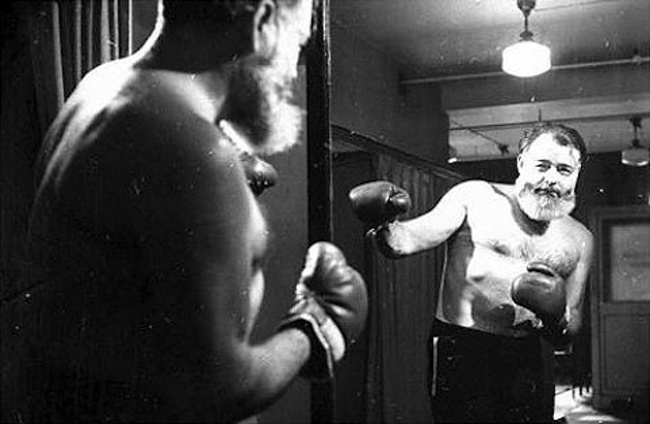
In a 1954 interview in the Paris Review, Ralph Ellison said of one of his literary heroes: “When [Ernest Hemingway] describes something in print, believe him; believe him even when he describes the process of art in terms of baseball or boxing; he’s been there.” I read this thinking that Ellison might be a bit too credulous. Hemingway, after all, has provoked no end of eye-rolling for his legendary machismo, bravado, and maybe several dozen other Latin descriptors for masculine foolhardiness and bluster. As for his “boxing,” we would be wise not to believe him. He may have “been there,” but the real boxers he encountered, and tried to spar with, would never testify he knew what he was doing
Ernest Hemingway wasn’t a boxer so much as he was a “boxer”… a legend in his own mind, a romantic. Hemingway’s friend and sometime sparring partner, novelist Morley Callaghan tells it this way: “we were two amateur boxers. The difference between us was that he had given time and imagination to boxing; I had actually worked out a lot with good fast college boxers.” Or, as the author of an article on the Fine Books & Collections site has it, “Hemingway was lost in the romance of a sport that has no romance to those seriously pursuing it; the romance strictly belongs to spectators.”
As a spectator with pretentions to greatness in the sport, Papa was prone to overestimating his abilities, at the expense of his actual skill as a writer. As he would tell Josephine Herbst, without a hint of irony, “my writing is nothing, my boxing is everything.”
Click for larger image
How did the pros evaluate his self-professed ability? Jack Dempsey, who spent time in Paris in the ‘20s being feted and fawned over, had this to say of Hemingway’s aspirations:
There were a lot of Americans in Paris and I sparred with a couple, just to be obliging…. But there was one fellow I wouldn’t mix it with. That was Ernest Hemingway. He was about twenty-five or so and in good shape, and I was getting so I could read people, or anyway men, pretty well. I had this sense that Hemingway, who really thought he could box, would come out of the corner like a madman. To stop him, I would have to hurt him badly, I didn’t want to do that to Hemingway. That’s why I never sparred with him.
Given Hemingway’s penchant for self-delusion in this matter, he may have interpreted this as Dempsey’s capitulation to his obvious prowess. An even more scathing critique of Hemingway’s bullying… I mean boxing skill … comes to us via Booktryst’s Stephen J. Gertz, who proffers an amusing dissection of the letter above, an unpublished correspondence Hemingway sent in 1943 to George Brown, the writer’s “trainer, coach, friend, and factotum.” Brown, it seems, was kindly, or prudent, enough to encourage his employer in his delusions. However, Gertz writes, “the reality was that anyone who had even the slightest idea of what they were doing in the ring could take Hemingway, who was notorious for foolishly trying to actually fight trained boxers.” He’s lucky, then, that Dempsey practiced such judicious restraint. If not, we may never have seen any fiction from Hemingway after he tried to go a round or two with the champ.
How to be creative? There’s no simple answer to that question, and no shortage of people offering answers. Comic genius John Cleese will tell you it’s all about creating “oases for childlike play.” Filmmaker David Lynch finds a great source of creativity in meditation. Novelist Amy Tan sees creativity flowing from a kind of cosmic empathy (gotta watch the video to see what I mean). And Stanford educator Tina Seelig offers her own set of answers in a recent book, MOOC, and a TED Talk.
Now let us give you a little more food for thought. The latest episode of PBS’ Off Book video series features four figures — an author, cognitive psychologist, filmmaker, and computer scientist — all trying to put their fingers on the elusive things that make creativity happen. Their thoughts and advice are varied. But if you put them all together, you may make strides in your own creative life.
Wallace Carlson, a pioneering animator who created films like Dreamy Dud: He Resolves Not to Smoke (1915), joined Bray Studios in 1917, where, among other things, he produced a film called How Animated Cartoons Are Made. According to Cartoon Research, a site dedicated to cartoon history, the film offers perhaps the earliest and truest look at how cartoons were made nearly a century ago. And it’s all done with some charm and wit. You can find the nine-minute short added to the Animation section of our collection of 575 Free Movies Online. Meanwhile, if old-time animation fascinates you, you’ll want to watch How Walt Disney Cartoons Are Made, a 1939 production that takes you inside the making of Snow White (1937).
If you would like to support the mission of Open Culture, consider making a donation to our site. It’s hard to rely 100% on ads, and your contributions will help us continue providing the best free cultural and educational materials to learners everywhere. You can contribute through PayPal, Patreon, and Venmo (@openculture). Thanks!
A new study published this week in Scienceconcludes that you may get something unexpected from reading great literary works: more finely-tuned social and emotional skills. Conducted by Emanuele Castano and David Comer Kidd (researchers in the psych department at the New School for Social Research), the study determined that readers of literary fiction (as opposed to popular fiction or non-fiction) find themselves scoring better on tests measuring empathy, social perception and emotional intelligence. In some cases, it took reading literary fiction for only a few minutes for test scores to improve.
The New York Times has a nice overview of the study, where, among other things, it features a quote by Albert Wendland, an English professor at Seton Hall, who puts the relationship between literature and social intelligence into clear terms: “Reading sensitive and lengthy explorations of people’s lives, that kind of fiction is literally putting yourself into another person’s position — lives that could be more difficult, more complex, more than what you might be used to in popular fiction. It makes sense that they will find that, yeah, that can lead to more empathy and understanding of other lives.”
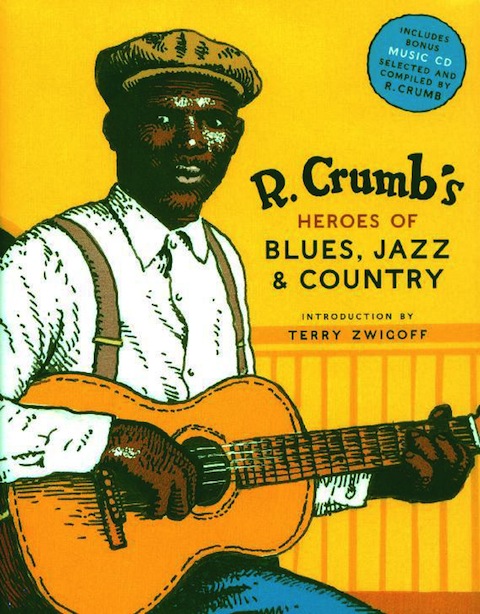
It was one of my favorite gifts of Christmas 2006. No, all apologies to everyone who bought me thoughtful gewgaws, but it was, without a doubt, the favorite. A humble, unassuming package contained a veritable encyclopedia of Americana: over one hundred portraits of jazz, blues, and country artists from the golden eras of American music, all drawn by a foremost antiquarian of pre-WWII music, R. Crumb. Beside each portrait—some made with Crumb’s exaggerated proportions and thick-lined shading, some softer and more realist—was a brief, one-paragraph bio, just enough to situate the singer, player, or band within the pantheon.
Though a fan of this sort of thing may think that it could get no better, glued to the back cover was a slipcase containing a CD with 21 tracks—seven from each genre. A quick scan showed a few familiar names: Skip James, Charlie Patton, Jelly Roll Morton. Then there were such unknown entities as Memphis Jug Band, Crockett’s Kentucky Mountaineers, and East Texas Serenaders, culled from Crumb’s enormous, library-size archive of rare 78s. Joy to the world.
Crumb’s Heroes of Blues, Jazz & Country began in the 80s with a series of illustrated trading cards, as you can see in the video above (which only covers the blues and jazz corners of the triangle). The first cards, “Heroes of the Blues,” came attached to old-time reissues from the Yazoo record company. Eventually expanding the cards to include jazz and country, working in each category from old photos or newsreel footage, Crumb covered quite a lot of musico-historical ground. Archivists and authors Stephen Calt, David Jasen, and Richard Nevins wrote the short blurbs. Finally Yazoo, rather than issuing the cards individually with each record, combined them into boxed sets.
The book—which validates my sense that this music belongs together cheek by jowl, even if some of its partisans can’t stand each other’s company—evolved through a painstaking process in which Crumb redrew and recolored the original illustrations from the printed trading cards (the original artwork having disappeared). You can follow one step of that process in a detailed description of Crumb’s conversion of the blues cards to a silkscreened poster. Crumb’s process is as thorough as his period knowledge. But Crumb fans know that the comic artist’s reverence for Americana goes beyond his collecting and extends to his own version of kitchen-sink bluegrass, blues, and jazz. Listen to Crumb on the banjo above with his Cheap Suit Serenaders. And if anyone feels like getting me a Christmas present this year, I’d like a copy of their record Chasin Rainbows. On vinyl of course.
The Second World War was waged over six long years on every continent save South America and Antarctica. Seventy-some years later, the daily shifts of the European Theater’s front lines can be tracked in under seven minutes, thanks to a mysterious, map-loving animator known variously as Emperor Tigerstar or Kaiser Tigerstar (the latter accounts for the helmet-wearing kitten gracing the upper corner of his World War I time-lapse).
The power-shifting colors (blue for Allies, red for Axis) are mesmerizing, as is a relentless timer ticking off the days between Germany’s invasion of Poland on September 1, 1939 and VE Day, May 8, 1945. Royalty-free music by Kevin MacLeod and audio samples ranging from Hitler and Mussolini’s declarations of war to Roosevelt’s Day of Infamy speech add import.
Careful reading of his blog reveals a diehard history buff with a weakness for metal music, wholesome CGI movies, and statistics.
He’s also a workaholic. His YouTube channel boasts a boggling assortment of map animations. This in addition to an alternate YouTube channel where he remaps history in response to his own “what if” type prompts. Somehow he finds the time to preside over The Blank Atlas, a site whose members contribute unlabeled, non-copyrighted maps available for free public download. And he may well be a brony, as evidenced by the video he was purportedly working on this summer, World War II: As Told by Ponies.
Ayun Halliday didn’t know she’d be keeping things fresh by failing to listen to a single second of 8th grade Geography. Follow her @AyunHalliday
You’ll almost certainly recognize the piece itself. But what have we on the screen? Clearly each block represents a sound from the piano, but what do their colors signify? “Each pitch class (C, C‑sharp, D, D‑sharp, etc.) has its own color, and the colors are chosen by mapping the musician’s ‘circle of fifths’ to the artist’s ‘color wheel,’ ” Malinowski writes in the FAQ below the video, linking to a more detailed explanation of the process on his site. He also recommends watching not just the Youtube version, improved its resolution though he has, but the newer iPad version: “Because the iPad can support 60 frames per second (instead of the usual 30), the scrolling is silky smooth (the way it’s supposed to be), and you can watch it at night, in the dark, in bed. You can get the video here.” The Music Animation Machine creator also addresses perhaps the most important question about this piece, originally titled Promenade Sentimentale, which has both signified and elicited so much emotion over the past century: “Is it just me, or does this piece make everyone cry?” Malinowski’s reply: “Maybe not everyone, but lots of people…”
Ever wonder how famous philosophers from the past spent their many hours of tedium between paradigm-smashing epiphanies? I do. And I have learned much from the biographical morsels on “Daily Routines,” a blog about “How writers, artists, and other interesting people organize their days.” (The blog has also now yielded a book, Daily Rituals: How Artists Work.) While there is much fascinating variety to be found among these descriptions of the quotidian habits of celebrity humanists, one quote found on the site from V.S. Pritchett stands out: “Sooner or later, the great men turn out to be all alike. They never stop working. They never lose a minute. It is very depressing.” But I urge you, be not depressed. In these précis of the mundane lives of philosophers and artists, we find no small amount of meditative leisure occupying every day. Read these tiny biographies and be edified. The contemplative life requires discipline and hard work, for sure. But it also seems to require some time indulging carnal pleasures and much more time lost in thought.
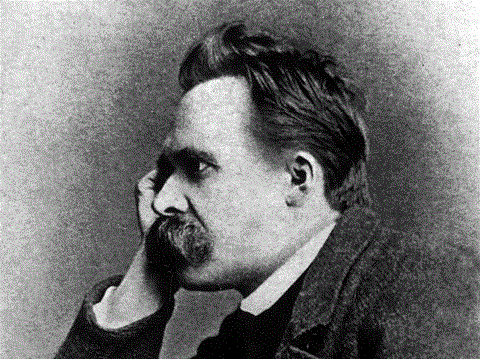
Let’s take Friedrich Nietzsche (above). While most of us couldn’t possibly reach the great heights of iconoclastic solitude he scaled—and I’m not sure that we would want to—we might find his daily balance of the kinetic, aesthetic, gustatory, and contemplative worth aiming at. Though not featured on Daily Routines, an excerpt from Curtis Cate’s eponymous Nietzsche biography shows us the curious habits of this most curious man:
With a Spartan rigour which never ceased to amaze his landlord-grocer, Nietzsche would get up every morning when the faintly dawning sky was still grey, and, after washing himself with cold water from the pitcher and china basin in his bedroom and drinking some warm milk, he would, when not felled by headaches and vomiting, work uninterruptedly until eleven in the morning. He then went for a brisk, two-hour walk through the nearby forest or along the edge of Lake Silvaplana (to the north-east) or of Lake Sils (to the south-west), stopping every now and then to jot down his latest thoughts in the notebook he always carried with him. Returning for a late luncheon at the Hôtel Alpenrose, Nietzsche, who detested promiscuity, avoided the midday crush of the table d’hôte in the large dining-room and ate a more or less ‘private’ lunch, usually consisting of a beefsteak and an ‘unbelievable’ quantity of fruit, which was, the hotel manager was persuaded, the chief cause of his frequent stomach upsets. After luncheon, usually dressed in a long and somewhat threadbare brown jacket, and armed as usual with notebook, pencil, and a large grey-green parasol to shade his eyes, he would stride off again on an even longer walk, which sometimes took him up the Fextal as far as its majestic glacier. Returning ‘home’ between four and five o’clock, he would immediately get back to work, sustaining himself on biscuits, peasant bread, honey (sent from Naumburg), fruit and pots of tea he brewed for himself in the little upstairs ‘dining-room’ next to his bedroom, until, worn out, he snuffed out the candle and went to bed around 11 p.m.
This comes to us via A Piece of Monologue, who also provide some photographs of Nietzsche’s favorite Swiss vistas and his austere accommodations. No doubt this life, however lonely, led to the production of some of the most world-shaking philosophical texts ever produced, perhaps rivaled in the nineteenth century only by the work of the prodigious Karl Marx.
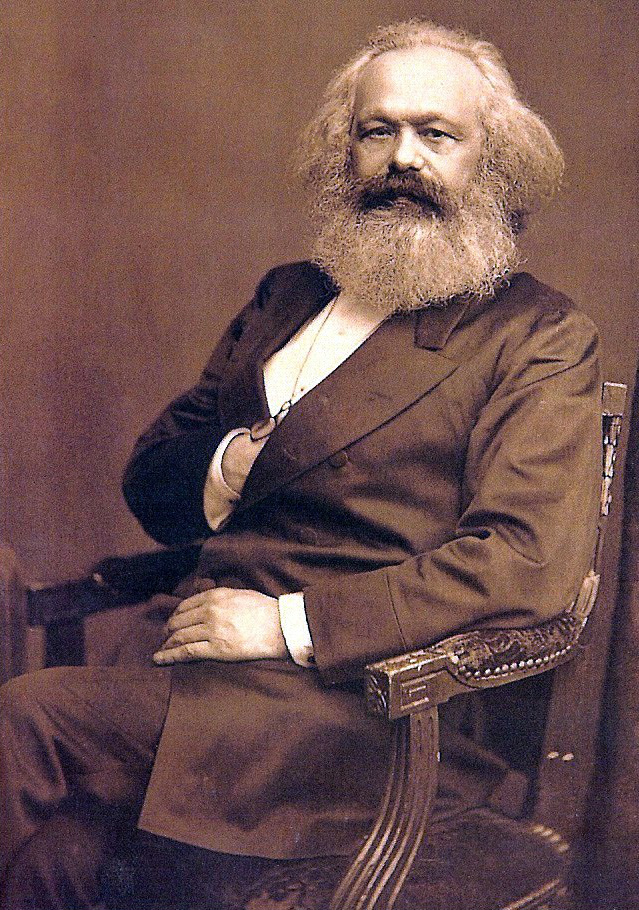
So how did Marx’s daily life compare to the morose and monkish Nietzsche? According to Isaiah Berlin, Marx also had his daily habits, though not quite so well-balanced.
His mode of living consisted of daily visits to the British Museum reading-room, where he normally remained from nine in the morning until it closed at seven; this was followed by long hours of work at night, accompanied by ceaseless smoking, which from a luxury had become an indispensable anodyne; this affected his health permanently and he became liable to frequent attacks of a disease of the liver sometimes accompanied by boils and an inflammation of the eyes, which interfered with his work, exhausted and irritated him, and interrupted his never certain means of livelihood. “I am plagued like Job, though not so God-fearing,” he wrote in 1858.
Marx’s money worries contributed to his physical complaints, surely, as much as Nietzsche’s social anxiety did to his. Not all philosophers have had such dramatic emotional lives, however.
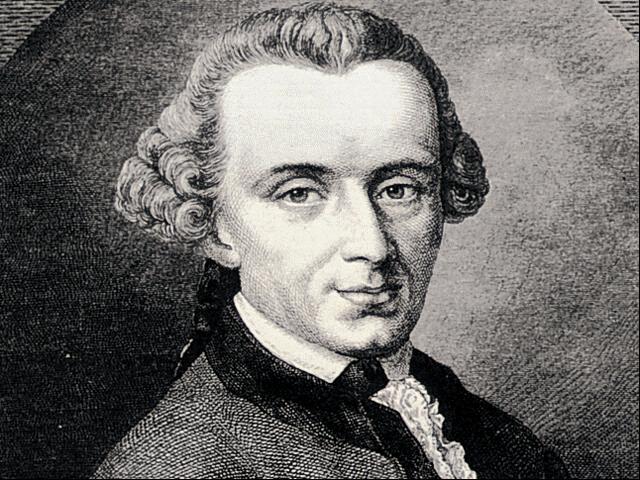
Smoking plays a significant role as a daily aid, for good or ill, in the daily lives of many philosophers, such as that of giant of 18th century thought, Immanuel Kant. But Kant suffered from neither penury nor some severe case of unrequited love. He seems, indeed, to have been a rather dull person, at least in the biographical sketch below by Manfred Kuehn.
His daily schedule then looked something like this. He got up at 5:00 A.M. His servant Martin Lampe, who worked for him from at least 1762 until 1802, would wake him. The old soldier was under orders to be persistent, so that Kant would not sleep longer. Kant was proud that he never got up even half an hour late, even though he found it hard to get up early. It appears that during his early years, he did sleep in at times. After getting up, Kant would drink one or two cups of tea — weak tea. With that, he smoked a pipe of tobacco. The time he needed for smoking it “was devoted to meditation.” Apparently, Kant had formulated the maxim for himself that he would smoke only one pipe, but it is reported that the bowls of his pipes increased considerably in size as the years went on. He then prepared his lectures and worked on his books until 7:00. His lectures began at 7:00, and they would last until 11:00. With the lectures finished, he worked again on his writings until lunch. Go out to lunch, take a walk, and spend the rest of the afternoon with his friend Green. After going home, he would do some more light work and read.
For all of their various complaints and ailments, throughout their most productive years these highly productive writers embraced Gustave Flaubert’s maxim, “Be regular and orderly in your life, so that you may be violent and original in your work.” I have always believed that these are words to live and work by, with the addition of a little vice or two to spice things up.
If you would like to support the mission of Open Culture, consider making a donation to our site. It’s hard to rely 100% on ads, and your contributions will help us continue providing the best free cultural and educational materials to learners everywhere. You can contribute through PayPal, Patreon, and Venmo (@openculture). Thanks!
We're hoping to rely on loyal readers, rather than erratic ads. Please click the Donate button and support Open Culture. You can use Paypal, Venmo, Patreon, even Crypto! We thank you!
Open Culture scours the web for the best educational media. We find the free courses and audio books you need, the language lessons & educational videos you want, and plenty of enlightenment in between.