The Story of Francis Ford Coppola’s Four-Decade-Struggle to Make Megalopolis
This past summer, out came a trailer for Megalopolis, the movie Francis Ford Coppola has spent half of his life trying to make. It took the bold approach of opening with quotes from reviews of his previous pictures, and not positive ones: when it was first released, Rex Reed called Apocalypse Now “an epic piece of trash,” and even The Godfather was “diminished by its artsiness,” at least according to Pauline Kael. But film-criticism enthusiasts smelled something fishy right away, and it took only the barest degree of research to discover that not only had Reed and Kael (who liked The Godfather, as did most everyone else) never used those phrases, none of the quotes in the trailer were real.
All this evidence of critics perpetually failing to grasp Coppola’s visions seems to have been fabricated with an artificial-intelligence system. This was a piece of bad press Megalopolis could’ve done without, stories of its troubled production having been circulating for months. But then, Coppola has endured much worse in his long filmmaking career, like the hellish, enormously prolonged shooting of Apocalypse Now, or the fire-sale of Zoetrope, the studio he founded, after the box-office disaster of One From the Heart. That he was able to get Megalopolis into production, let alone complete it, counts as something of a triumph in itself.
The Be Kind Rewind video above recounts the story behind Megalopolis, in essence “a story about Coppola himself, informed by his own ambitions, setbacks, times of fortune, and times of loss.” When he completed the first full draft of the script in 1984, he could have had no idea of what lay in store for the project in the decades ahead, not least its numerous derailments by his own personal and professional crises as well as large-scale disasters like 9/11 and COVID-19. The result, at a cost of $120 million Coppola raised by selling off part of his winery, is a spectacle that meditates on civilization, modernity, and utopia that, even this early in its release, has drawn reactions of astonishment, derision, and — most commonly — flat-out mystification.
The film “alternates grandiose rhetoric about government and the modern city with borderline screwball comedy, quotes Marcus Aurelius and other ancient thinkers, papers over story gaps with sonorous narration by cast member Laurence Fishburne, and fills the screen with superimpositions, split-screen mosaics, and images that aren’t meant to be taken literally,” writes Rogerebert.com’s Matt Zoller-Seitz. “Movies like this only seem ‘indulgent’ because we’re so deep into the era where everything has to be unmitigated fan service, the cinematic equivalent of cooking the Whopper exactly how the customer dreamed about ordering it.” Megalopolis is, in Be Kind Rewind’s final analysis, “the apotheosis of auteurism, unrestrained spectacle that amplifies Coppola’s best and worst instincts on a massive scale.” Personally, I can’t wait to see it.
Related content:
Francis Ford Coppola Breaks Down His Most Iconic Films: The Godfather, Apocalypse Now & More
Francis Ford Coppola’s Handwritten Casting Notes for The Godfather
George Lucas Shoots a Cinema Verité-Style Documentary on Francis Ford Coppola (1969)
Dementia 13: The Film That Took Francis Ford Coppola From Schlockster to Auteur
Is America Declining Like Ancient Rome?
Based in Seoul, Colin Marshall writes and broadcasts on cities, language, and culture. His projects include the Substack newsletter Books on Cities and the book The Stateless City: a Walk through 21st-Century Los Angeles. Follow him on Twitter at @colinmarshall or on Facebook.
Read More...The Doctor Who Theme Reimagined as a Jacques Brel-esque Jazz Tune
Written by Ron Grainer, and then famously arranged and recorded by Delia Derbyshire in 1963, the Doctor Who theme song has been adapted and covered many times, and even referenced by Pink Floyd. In the hands of comedian Bill Bailey, the song comes out a little differently–a little like a Belgian Jacques Brel-esque jazz creation. This recording of “Docteur Qui” apparently comes from the DVD Bill Bailey’s Remarkable Guide to the Orchestra. Enjoy…
If you would like to support the mission of Open Culture, consider making a donation to our site. It’s hard to rely 100% on ads, and your contributions will help us continue providing the best free cultural and educational materials to learners everywhere. You can contribute through PayPal, Patreon, and Venmo (@openculture). Thanks!
Related Content
The Fascinating Story of How Delia Derbyshire Created the Original Doctor Who Theme
Two Documentaries Introduce Delia Derbyshire, the Pioneer in Electronic Music
How Doctor Who First Started as a Family Educational TV Program (1963)
A Detailed, Track-by-Track Analysis of the Doctor Who Theme Music
Read More...Twin Peaks Actually Explained: A 4‑Hour Video Essay Demystifies It All
I don’t know about you, but my YouTube algorithms can act like a nagging friend, suggesting a video for days until I finally give in. Such was the case with this video essay with the tantalizing title: “Twin Peaks ACTUALLY EXPLAINED (No, Really)”.
First of all, before, during, and after 2017’s Twin Peaks The Return, theories were as inescapable as the cat memes on the Twin Peaks Facebook groups. After the mind-blowing Episode 8, they went into overdrive, including the bonkers idea that the final two episodes were meant to be watched *overlaid* on each other. And I highlighted one in-depth journey through the entire three decades of the Lynch/Frost cultural event for this very site.
So when I finally clicked on the link I balked immediately: Four and a half hours? Are you kidding me? (You might be saying the very thing to yourself now.) But just like the narrator says, bear with me. Over the week, I watched the entire thing in 30-minute segments, not because it was grueling, but because time is precious and there is a lot to chew over. By the end, I was recommending the video to friends only to find some of them were already deep inside Twin Perfect’s analysis.
So here we are, with me highly encouraging you to invest the time (providing you have watched all three seasons of Twin Peaks and Fire Walk With Me), but also not wanting to ruin some of Twin Perfect’s theories, which he lays out like a prosecutor, walking us through a general theory of Lynch.
However, I will make a few points:
- In 2019, we posted a video in which Lynch explains both the Unified Field Theory and Transcendental Meditation. There are at least two major sequences that Twin Perfect suggests reflect the Unified Field.
- Lynch’s obsession with electricity and fire is essential to the theory.
- The One-Armed Man’s quote “I mean it as it is, as it sounds,” doubles as Lynch’s approach: Twin Perfect does a masterful job showing many, many examples where Lynch is directly explaining his use of metaphor and symbol to us. Sometimes that is straight into the camera.
- We now know why Season Three featured a three-minute shot of a man sweeping up peanuts from a bar floor.
- I’ve always felt that The Return was an exploration of the dangers of nostalgia, and this essay confirmed it for me. There was something missing at the center of the Third Season, indeed.
- Twin Perfect reads all quotes from the director in a mock-Lynch voice. For some this will grate; for me it was A BEAUTIFUL THING (wiggly finger gesture).
Twin Perfect puts much more effort into this than most graduate students:
I have been working on this video for two years, writing and researching and editing. I’ve been reading and watching and listening to every creator interview and AMA, every DVD extra and featurette, every TV special, every fan theory, blog, and podcast — any and all Twin Peaks-related posts I could find — trying to hone and polish my script to be the best I thought it could possibly be. I focus-grouped my video with people, challenging them to poke as many holes in my arguments as they could so that I could better illustrate my ideas. I tried my best to create something others would find of value, something that would add to the ongoing mystery and spark new discussions about my favorite series.
Are there some problems with the theory? Sure. But for every “I don’t know, man,” I said to myself, he immediately followed it up with something spot on. I think he deserves that MFA in Twin Peaks Studies.
So brew up some strong coffee and cut yourself a slice of cherry pie, and get stuck in.
Related Content:
David Lynch Directs a Mini-Season of Twin Peaks in the Form of Japanese Coffee Commercials
David Lynch Draws a Map of Twin Peaks (to Help Pitch the Show to ABC)
Watch an Epic, 4‑Hour Video Essay on the Making & Mythology of David Lynch’s Twin Peaks
Ted Mills is a freelance writer on the arts., You can also follow him on Twitter at @tedmills.
Read More...Do All Roads Lead to Philosophy on Wikipedia?: They Do About 97.3% of the Time
Pull up the Wikipedia page for Mariya Takeuchi’s “Plastic Love,” the 1984 single now known for re-popularizing the genre of Japanese “city pop.” Then click the first of its links (not related to the language of the article itself), which leads to Takeuchi’s own page. If you keep following that same procedure, you’ll continue on to City Pop, then Japanese Pop Music, then Popular Music. Keep drilling down, and you’ll pass the very concepts of music and sound, then enter the realms of physics, the scientific method, logical propositions, and the philosophy of language. This is one example provided by the video above from YouTuber Not David, which investigates whether all roads on Wikipedia eventually lead to philosophy.
There is, of course, a Wikipedia page about this, called “Getting to Philosophy.” “Following the first hyperlink in the main text of an English Wikipedia article, and then repeating the process for subsequent articles, usually leads to the Philosophy article,” it says. “In February 2016, this was true for 97% of all articles on Wikipedia (including this one).” As for the rest, they “lead to an article without any outgoing wikilinks, to pages that do not exist, or get stuck in loops.” This is actually the case with the path starting from “Plastic Love,” after Philosophy of Language goes in circles around concepts, abstraction, and logic itself, never quite reaching Philosophy proper.
Or at least that’s what happened for me today; it could go differently tomorrow, or even a few seconds from now. Ever since Wikipedia went live in 2001, its main difference from other encyclopedias has been that it’s constantly changing, and the rate of that change has only increased over time. The “philosophy game,” as Not David calls it, is at all times subject to breakage, but also to un-breakage. At normal times, Orange Juice to Philosophy takes thirteen steps, Apple Juice to Philosophy takes fifteen steps; both the Calgary Flames and Edmonton Oilers lie sixteen steps from Philosophy. But things go haywire if someone goes and, say, re-orders the links on the Awareness article so Psychology comes first.
These things happen: Wikipedia is, after all, the encyclopedia that anyone can edit. And as you can see (at least as of this writing), Awareness now links first to Philosophy again. These changes play havoc with the efforts of anyone trying to map out the connections between one part of Wikipedia and another, as Not David does in this video. But they don’t alter the fundamental principles of network design, which his analysis illuminates. As with the corpus callosum, which connects the two hemispheres of the human brain, Philosophy is less important for what directly connects to it than for its own function as a connector. And indeed, haven’t philosophers always wanted to know how everything fits together?
Related content:
An Interactive Visualization of the Stanford Encyclopedia of Philosophy
A Data Visualization of Modern Philosophy, 1950–2018
Listen to Wikipedia: A Web Site That Turns Every Wikipedia Edit Into Ambient Music in Real Time
Introduction to Philosophy: A Free Course
Based in Seoul, Colin Marshall writes and broadcasts on cities, language, and culture. His projects include the Substack newsletter Books on Cities and the book The Stateless City: a Walk through 21st-Century Los Angeles. Follow him on Twitter at @colinmarshall or on Facebook.
Read More...Every Frame a Painting Returns to YouTube & Explores Why the Sustained Two-Shot Vanished from Movies
Video essayists don’t normally retire; in most cases, they just drift into inactivity. Hence the surprise and even dismay of the internet’s cinephiles when Tony Zhou and Taylor Ramos declared the end of their respected channel Every Frame a Painting in 2016. We here at Open Culture had featured their analyses of everything from the work of auteurs like Martin Scorsese, Jackie Chan, and Michael Bay to how classical art inspired celebrated shots to the thoughts and feelings of editors to the use of Vancouver in film. Now, nearly eight years after their last such video essay, Zhou and Ramos have returned to YouTube.
The new Every Frame a Painting video explains the technique of the sustained two-shot, and, as IndieWire’s Sarah Shachat writes, “charts — in under six minutes — the technological and industrial trends that have put it more or less in favor with filmmakers and its utility in contemporary filmmaking as a showcase for two actors’ chemistry. This is standard. Zhou, who narrates the series, still can’t avoid feeling like an unseen character within the essay and also the film school TA we all wish we had.” What’s more, it incorporates footage from Zhou and Ramos’ own short film “The Second” to more directly approach the filmmaking challenge of “needing to change coverage plans for an outdoor scene when you’re losing the light.”
As implied by its name, a two-shot contains two actors, and a sustained two-shot continues unbroken for the length of a dialogue between them. We don’t see so many of them in recent pictures, Zhou explains, because they were created in a time when “film was expensive, so it encouraged filmmakers to rehearse more and conserve their takes.” Now, “digital is cheaper, so people don’t really pick one angle and shoot it; they cover a scene from as many angles as possible,” reconstructing it out of bits and pieces in the editing room. Acting styles have also changed since the old-Hollywood days, with all their “gesturing and moving around” that increased the two-shot’s visual interest.
Yet today’s filmmakers ignore the power of this disused form at their peril: “The sustained two-shot is the composition that best allows two performers to play off each other, and try as you might, you cannot replicate this feeling with editing.” And indeed, it’s only one of the effective elements of twentieth-century film that have only become more difficult to replicate amid the practically endless array of options afforded by digital tools and media. One hopes that Zhou and Ramos will cover a variety of them in Every Frame a Painting’s limited-run comeback — and even more so, that they’ll put them to good use in their own narrative filmmaking careers.
Related content:
The Most Beautiful Shots in Cinema History: Scenes from 100+ Films
Based in Seoul, Colin Marshall writes and broadcasts on cities, language, and culture. His projects include the Substack newsletter Books on Cities and the book The Stateless City: a Walk through 21st-Century Los Angeles. Follow him on Twitter at @colinmarshall or on Facebook.
Read More...A Digital Archive Features Hundreds of Audio Cassette Tape Designs, from the 1960s to the 1990s
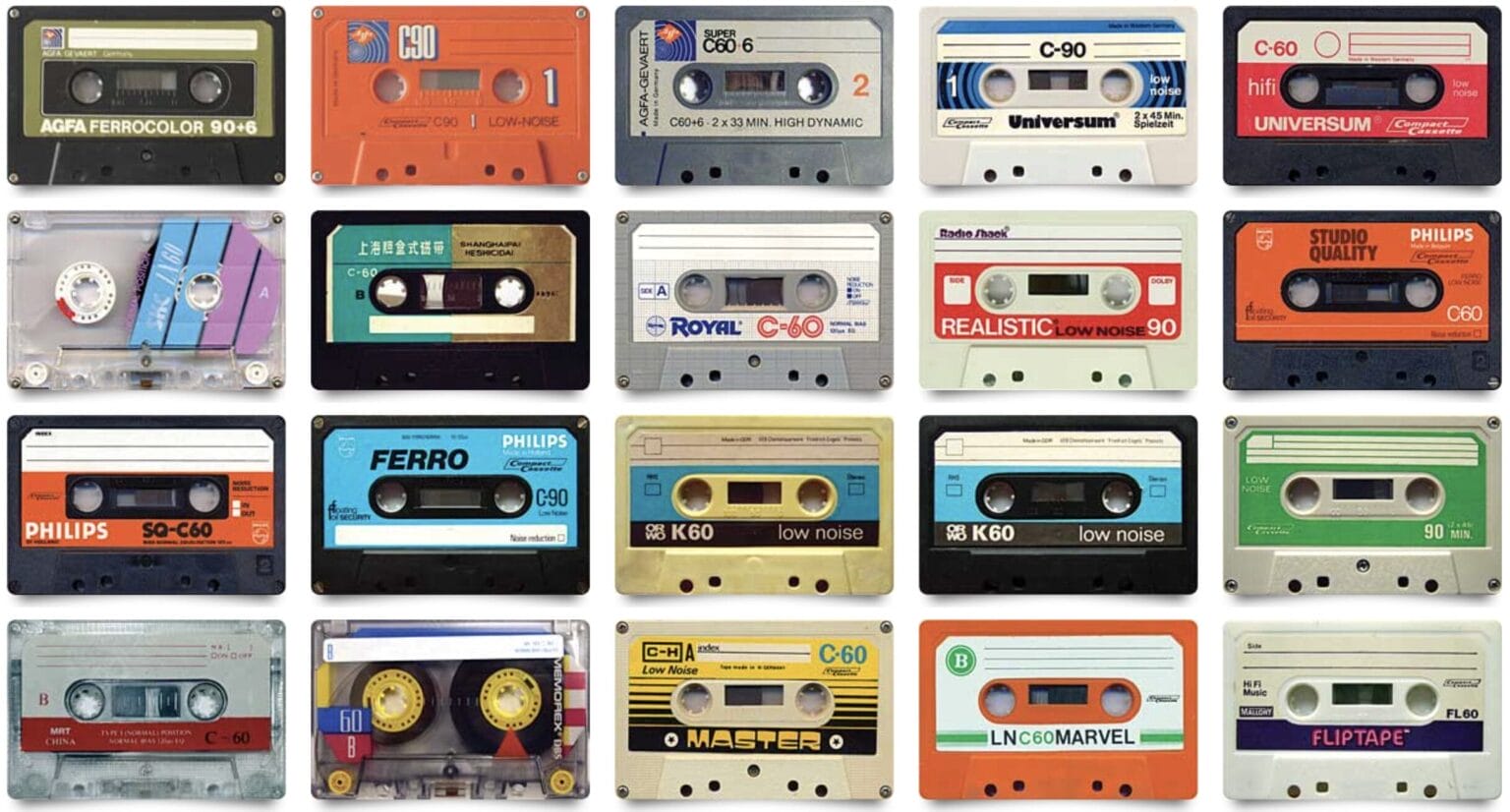
Audio cassette tapes first appeared on the market in the early nineteen-sixties, but it would take about a decade before they came to dominate it. And when they did, they’d changed the lives of many a music-lover by having made it possible not just to listen to their albums of choice on the go, but also to collect and trade their own custom-assembled listening experiences. By the eighties, blank tapes had become a household necessity on the order of batteries or toilet paper for such consumers — and just as with those frequently replenished products, everyone seemed to have their favorite brand.
Some preferred tapes from Philips, which developed the format of the Compact Cassette in the first place. Others had their pick from Fuji, BASF, Sony, Radio Shack, Scotch (which also made tape of the sticky variety), and a host of other brands besides.
Even some members of post-cassette generations recognize the old tagline “Is it live or is it Memorex?” or Maxell’s “Blown Away Guy” in his scarf and LC2. If you’re old enough to have done taping of your own, you don’t need a logo to recognize your brand; you’ll know it as soon as you spot the design of the cassette itself in the online archive at tapedeck.org.
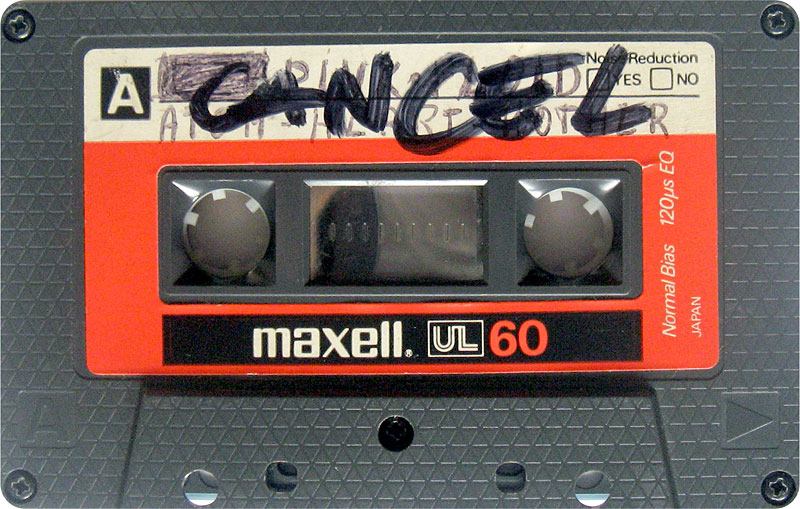
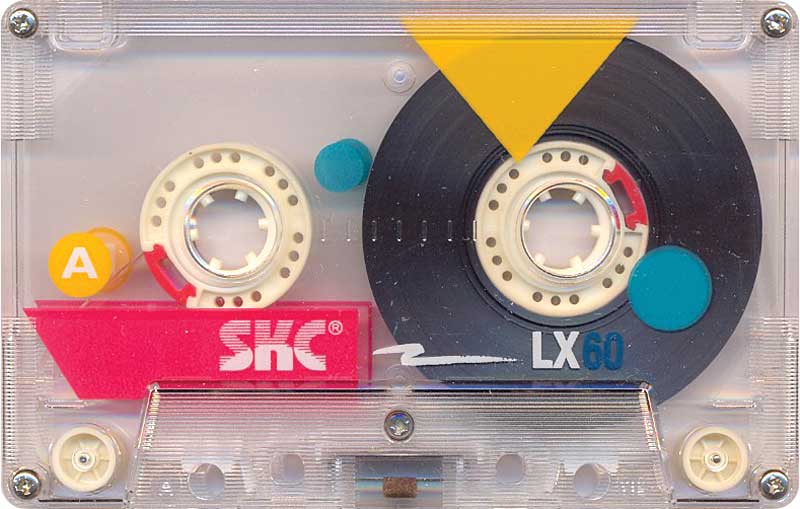
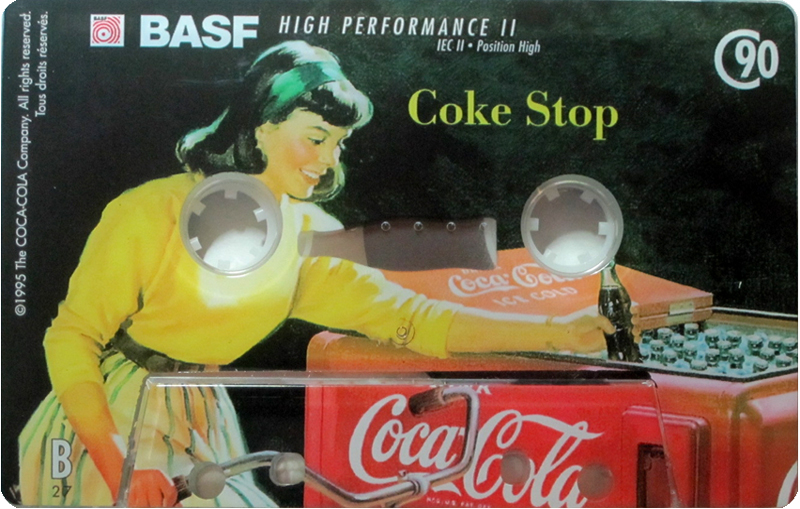
“I built tapedeck.org to showcase the amazing beauty and (sometimes) weirdness found in the designs of the common audio tape cassette,” writes the site’s creator Oliver Gelbrich. “There’s an amazing range of designs, starting from the early 60’s functional cassette designs, moving through the colorful playfulness of the 70’s audio tapes to amazing shape variations during the 80s and 90s.” You can browse the ever-expanding collection by brand, running time, color, and even tape coating: chrome, ferro, ferrochrome, and metal, by whose differences audiophiles set great store.
Somewhat improbably, in this age where even home CD-burning has been displaced by near-instantaneous streaming and downloading of digital music, the cassette tape has made something of a comeback. The near-mythological allure of the mixtape has only grown in recent years, during which artists both minor and major have put out cassette releases — and in some cases, cassette-only releases. This seems to be happening around the world: a few weeks ago, while strolling an art-school neighborhood in Seoul, where I live, I passed a coffee shop that offered its young customers rentals of both tapes and Walkman-style players on which to listen to them. As another generation-transcending slogan has it, everything old is new again.
via Colossal
Related content:
Based in Seoul, Colin Marshall writes and broadcasts on cities, language, and culture. His projects include the Substack newsletter Books on Cities and the book The Stateless City: a Walk through 21st-Century Los Angeles. Follow him on Twitter at @colinmarshall or on Facebook.
Read More...20 Mesmerizing Videos of Japanese Artisans Creating Traditional Handicrafts
In Japanese “tewaza” means “hand technique” or “handcraft” and, in this YouTube playlist of 20 short films, various artisanal techniques are explored and demonstrated by Japanese masters in the field. For those who are both obsessed with Japanese art and watching things get made, these videos are catnip. There’s very little spoken, except a few quotes from the makers themselves, and gentle music plays over shots of delicate, intricate, and confident handiwork.
Watch the video up top, a look at how a small group of men forge a Sakai knife. (Yes, we keep expecting the music to turn into the Laura Palmer’s Theme too.) No words are necessary in this exacting demonstration, and just check out the wood-like grain in the metal.
And the names of these goods denote the towns of origin–Sakai is just outside Osaka, and is one of Japan’s main seaports and, yes, known for its knives.
Other videos show the making of handmade washi paper from Mino; stunning gold leaf production from Kanazawa; paper lantern making from Gifu; decorated wallpaper from Ueno; a Kumano writing brush, and very delicate bamboo weaving from Beppu that looks so precise it’s like it’s made by machine, but no, this is all in the eye.
The YouTube channel that has produced these videos, Aoyama Square, is a literal one-stop shop in Tokyo for all the kinds of crafts seen in the videos, and is a member of the Japanese national association that promotes and keeps these skills and mini-industries alive. So is this one long ad for a large crafts emporium? Well, could be. Do we still want to buy some of that beautiful lacquerware from Echizen? Oh yes, very much so.
Related Content:
How Japanese Things Are Made in 309 Videos: Bamboo Tea Whisks, Hina Dolls, Steel Balls & More
The Beautiful Art of Making Japanese Calligraphy Ink Out of Soot & Glue
Watch a Japanese Craftsman Lovingly Bring a Tattered Old Book Back to Near Mint Condition
Ted Mills is a freelance writer on the arts who currently hosts the FunkZone Podcast. You can also follow him on Twitter at @tedmills, read his other arts writing at tedmills.com and/or watch his films here.
Read More...What is Electronic Music?: Pioneering Electronic Musician Daphne Oram Explains (1969)
Survey the British public about the most important institution to arise in their country after World War II, and a lot of respondents are going to say the National Health Service. But keep asking around, and you’ll sooner or later encounter a few serious electronic-music enthusiasts who name the BBC Radiophonic Workshop. Established in 1958 to provide music and sound effects for the Beeb’s radio productions — not least the documentaries and dramas of the artistically and intellectually ambitious Third Programme — the unit’s work eventually expanded to work on television shows as well. One could scarcely imagine Doctor Who, which debuted in 1963, without the Radiophonic Workshop’s sonic aesthetic.
By the end of the nineteen-sixties, the Radiophonic Workshop had been creating electronic music and injecting it into the lives of ordinary listeners and viewers for more than a decade. Even so, that same public didn’t necessarily possess a clear understanding of what, exactly, electronic music was. Hence this explanatory BBC television clip from 1969, which brings on Radiophonic Workshop head Desmond Briscoe as well as composers John Baker, David Cain, and Daphne Oram (previously featured here on Open Culture).
Having long since built her own studio, Oram also demonstrates her own techniques for creating and manipulating sound, few of which will look familiar to fans of electronic music in our digital culture today.
Even in 1969, none of Oram’s tools were digital in the way we now understand the term. In fact, the working process shown in this clip was so thoroughly analog as to involve painting the forms of sound waves directly onto slides and strips of film. She crafted sounds by hand in this way not purely due to technical limitation, but because extensive experience had shown her that it produced more interesting results: “if one does it by purely electronic means, one tends to get fixed on one vibration, one frequency of vibrato, which becomes dull.” Believing that “music should be a projection of a thought process in the mind of a human being,” Oram expressed reservations about a future in which computers pump out “music by the yard”: a future that, these 55 years later, seems to have arrived.
Related content:
Daphne Oram Created the BBC’s First-Ever Piece of Electronic Music (1957)
Hear Seven Hours of Women Making Electronic Music (1938–2014)
Based in Seoul, Colin Marshall writes and broadcasts on cities, language, and culture. His projects include the Substack newsletter Books on Cities and the book The Stateless City: a Walk through 21st-Century Los Angeles. Follow him on Twitter at @colinmarshall or on Facebook.
Read More...Ray Bradbury Explains Why Literature is the Safety Valve of Civilization (in Which Case We Need More Literature!)
Ray Bradbury had it all thought out. Behind his captivating works of science fiction, there were subtle theories about what literature was meant to do. The retro clip above takes you back to the 1970s and it shows Bradbury giving a rather intriguing take on the role of literature and art. For the author of Fahrenheit 451 and The Martian Chronicles, literature has more than an aesthetic purpose. It has an important sociological/psychoanalytic role to play. Stories are a safety valve. They keep society collectively, and us individually, from coming apart at the seams. Which is to say–if you’ve been following the news lately–we need a helluva lot more literature these days. And a few new Ray Bradburys.
If you would like to support the mission of Open Culture, consider making a donation to our site. It’s hard to rely 100% on ads, and your contributions will help us continue providing the best free cultural and educational materials to learners everywhere. You can contribute through PayPal, Patreon, and Venmo (@openculture). Thanks!
Related Content
Read More...J. G. Ballard Demystifies Surrealist Paintings by Dalí, Magritte, de Chirico & More
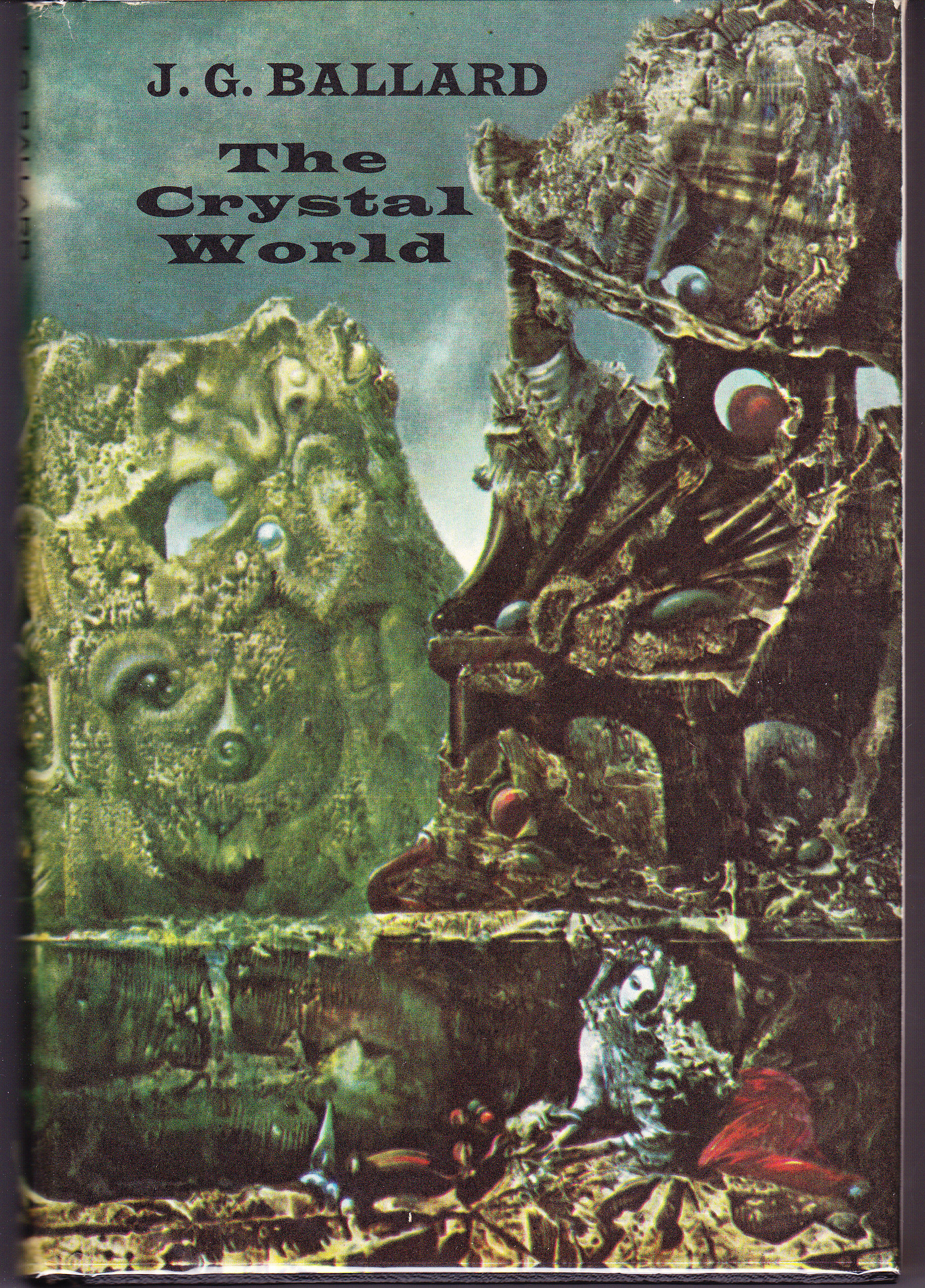
Before his signature works like The Atrocity Exhibition, Crash, and High-Rise, J. G. Ballard published three apocalyptic novels, The Drowned World, The Burning World, and The Crystal World. Each of those books offers a different vision of large-scale environmental disaster, and the last even provides a clue as to its inspiration. Or rather, its original cover does, by using a section of Max Ernst’s painting The Eye of Silence. “This spinal landscape, with its frenzied rocks towering into the air above the silent swamp, has attained an organic life more real than that of the solitary nymph sitting in the foreground,” Ballard writes in “The Coming of the Unconscious,” an article on surrealism written shortly after The Crystal World appeared in 1966.
First published in an issue of the magazine New Worlds (which also contains Ballard’s take on Chris Marker’s La Jetée), the piece is ostensibly a review of Patrick Waldberg’s Surrealism and Marcel Jean’s The History of Surrealist Painting, but it ends up delivering Ballard’s short analyses of a series of paintings by various surrealist masters.
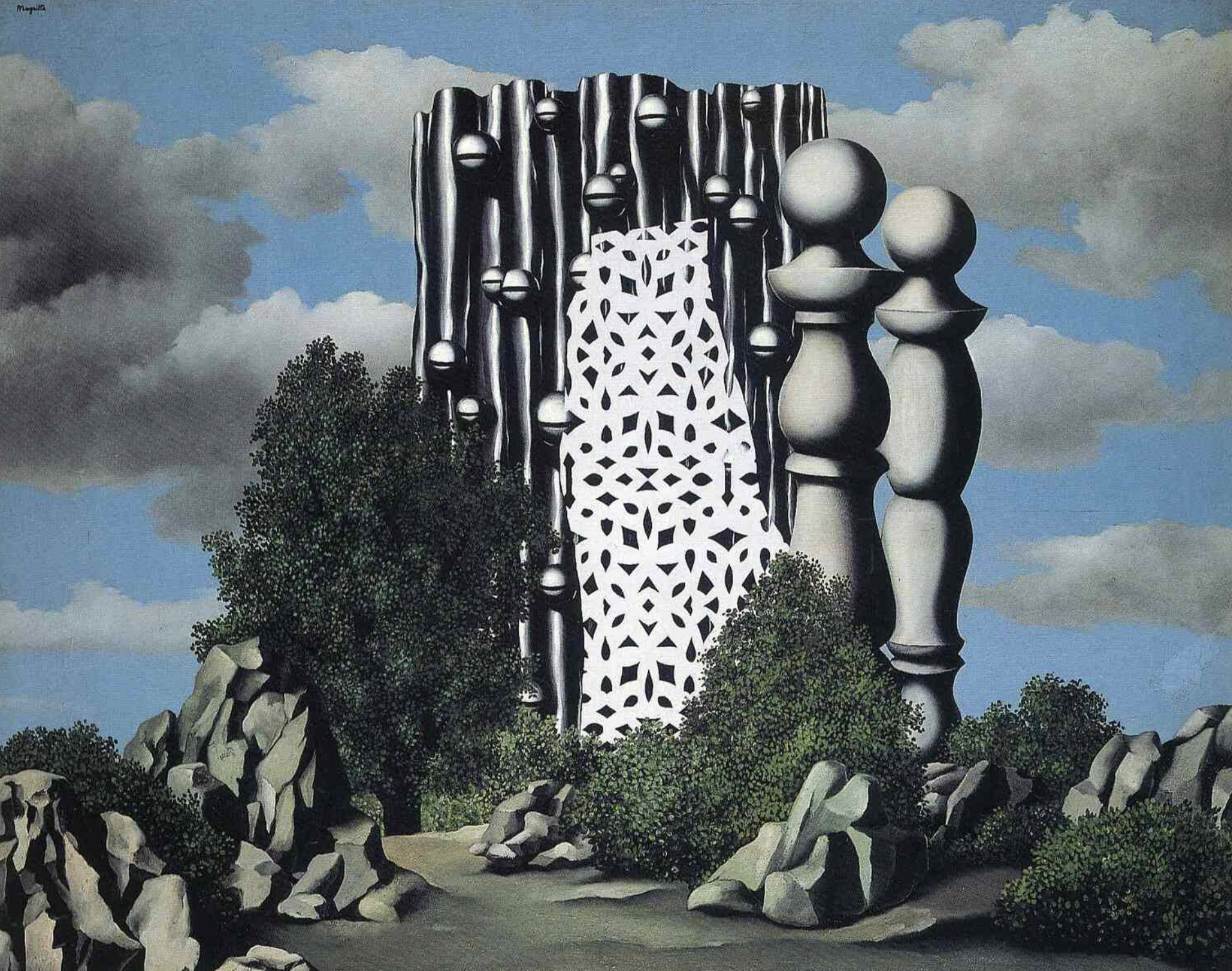
The Eye of Silence shows the landscapes of our world “for what they are — the palaces of flesh and bone that are the living facades enclosing our own subliminal consciousness.” The “terrifying structure” at the center of René Magritte’s The Annunciation is “a neuronic totem, its rounded and connected forms are a fragment of our own nervous systems, perhaps an insoluble code that contains the operating formulae for our own passage through time and space.”
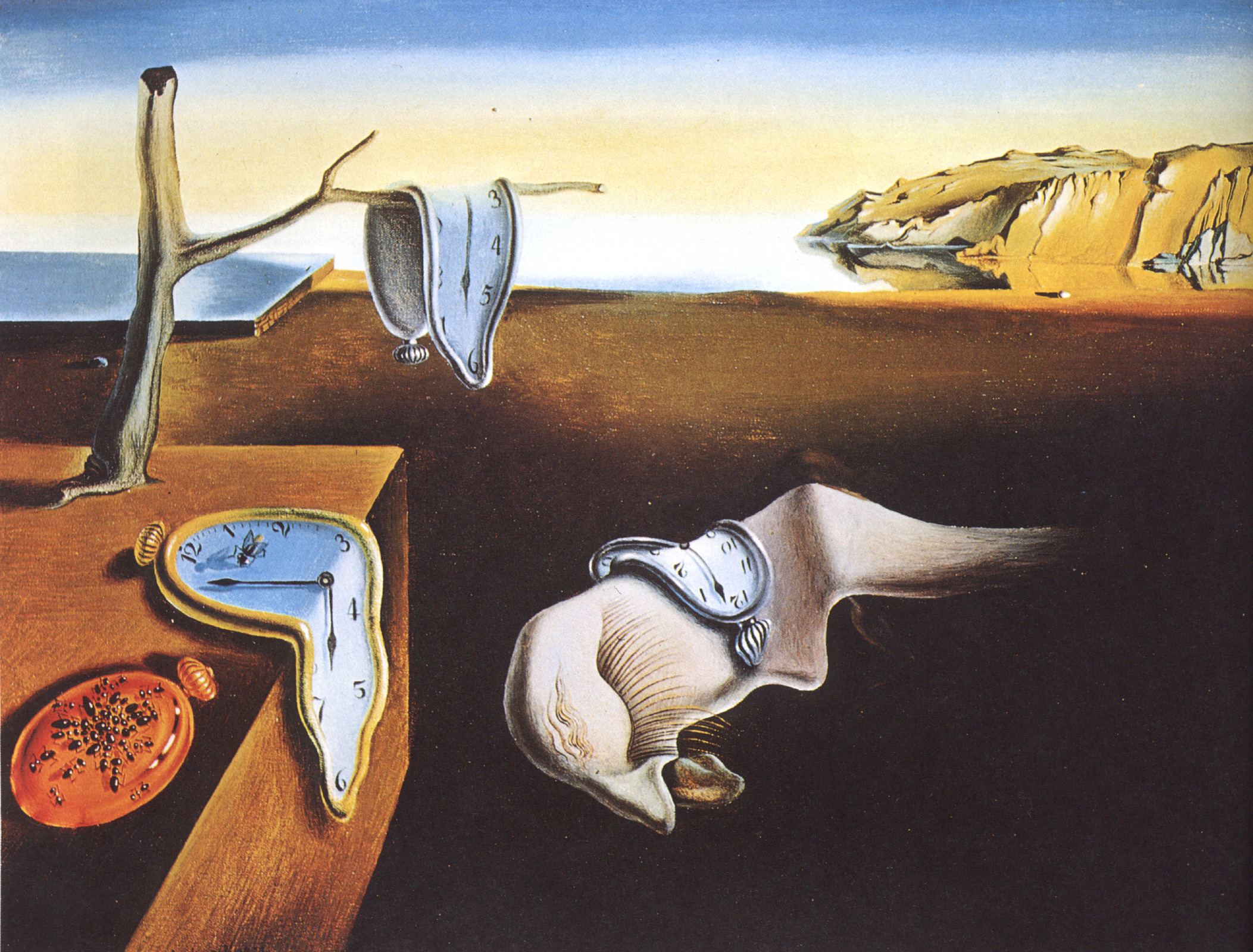
In Giorgio de Chirico’s The Disquieting Muses, “an undefined anxiety has begun to spread across the deserted square. The symmetry and regularity of the arcades conceals an intense inner violence; this is the face of catatonic withdrawal”; its figures are “human beings from whom all transitional time has been eroded.” Another work depicts an empty beach as “a symbol of utter psychic alienation, of a final stasis of the soul”; its displacement of beach and sea through time “and their marriage with our own four-dimensional continuum, has warped them into the rigid and unyielding structures of our own consciousness.” There Ballard writes of no less familiar a canvas than The Persistence of Memory by Salvador Dalí, whom he called “the greatest painter of the twentieth century” more than 40 years after “The Coming of the Unconscious” in the Guardian.
A decade thereafter, that same publication’s Declan Lloyd theorizes that the experimental billboards designed by Ballard in the fifties (previously featured here on Open Culture) had been textual reinterpretations of Dalí’s imagery. Until the late sixties, Ballard says in a 1995 World Art interview, “the Surrealists were very much looked down upon. This was part of their attraction to me, because I certainly didn’t trust English critics, and anything they didn’t like seemed to me probably on the right track. I’m glad to say that my judgment has been seen to be right — and theirs wrong.” He understood the long-term value of Surrealist visions, which had seemingly been obsolesced by World War II before, “all too soon, a new set of nightmares emerged.” We can only hope he won’t be proven as prescient about the long-term habitability of the planet.
Related content:
Sci-Fi Author J.G. Ballard Predicts the Rise of Social Media (1977)
J. G. Ballard’s Experimental Text Collages: His 1958 Foray into Avant-Garde Literature
An Introduction to Surrealism: The Big Aesthetic Ideas Presented in Three Videos
Based in Seoul, Colin Marshall writes and broadcasts on cities, language, and culture. His projects include the Substack newsletter Books on Cities and the book The Stateless City: a Walk through 21st-Century Los Angeles. Follow him on Twitter at @colinmarshall or on Facebook.
Read More...Support Us
We're hoping to rely on loyal readers, rather than erratic ads. Please click the Donate button and support Open Culture. You can use Paypal, Venmo, Patreon, even Crypto! We thank you!

About Us

Open Culture scours the web for the best educational media. We find the free courses and audio books you need, the language lessons & educational videos you want, and plenty of enlightenment in between.
Advertise With Us
FREE UPDATES!
GET OUR DAILY EMAIL
Get the best cultural and educational resources on the web curated for you in a daily email. We never spam. Unsubscribe at any time.
FOLLOW ON SOCIAL MEDIA
Open Culture editor Dan Colman scours the web for the best educational media. He finds the free courses and audio books you need, the language lessons & movies you want, and plenty of enlightenment in between.
Advertise With Us

