When William S. Burroughs Appeared on Saturday Night Live: His First TV Appearance (1981)
Though he never said so directly, we might expect that Situationist Guy Debord would have included Saturday Night Live in what he called the “Spectacle”—the mass media presentation of a totalizing reality, “the ruling order’s nonstop discourse about itself, its never-ending monologue of self-praise.” The slickness of TV, even live comedy TV, masks carefully orchestrated maneuvers on the part of its creators and advertisers. In Debord’s analysis, nothing is exempted from the spectacle’s consolidation of power; it co-opts everything for its purposes. Even seeming contradictions within the spectacle—the skewering of political figures, for example, to their seeming displeasure—serve the purposes of power: The spectacle, wrote Debord, “is the opposite of dialogue.”
So I wonder, what he might have made of the appearance of cult writer and Beat pioneer William S. Burroughs on the comedy show in 1981? Was Burroughs—a mastermind of the counterculture—co-opted by the powers that be? The author of Junkie, Naked Lunch, and Cities of the Red Night also appeared in a Nike ad and several films and music videos, becoming a “presence in American pop culture,” writes R.U. Sirius in Everybody Must Get Stoned.
David Seed notes that Burroughs “is remembered by many members of the intelligentsia and glitterati as dinner partner for the likes of Andy Warhol, David Bowie, and Mick Jagger,” though he had “been a model for the political and social left.” Had he been neutered by the 80s, his outrageously anarchist sentiments turned to radical kitsch?
Or maybe Burroughs disrupted the spectacle, his droning, monotonous delivery giving viewers of SNL exactly the opposite of what they were trained to expect. The appearance was his widest exposure to date (immediately afterward, he moved from New York to Lawrence, Kansas). One of the show’s writers convinced producer Dick Ebersol to put Burroughs on. In rehearsal, writes Burroughs’ biographer Ted Morgan, Ebersol “found Burroughs ‘boring and dreadful,’ and ordered that his time slot be cut from six to three and a half minutes. The writers, however, conspired to let his performance stand as it was, and on November 7, he kicked off the show sitting behind a desk, the lighting giving his face a sepulchral gauntness.”
In the grainy video above, Burroughs reads from Naked Lunch and cut-up novel Nova Express, bringing the sadistic Dr. Benway into America’s living rooms, as the audience laughs nervously. Sound effects of bombs and strains of the national anthem play behind him as he reads. It stands as perhaps one of the strangest moments in live television. “Burroughs had positioned himself as the Great Outsider,” writes Morgan, “but on the night of November 7 he had reached the position where the actress Lauren Hutton could introduce him to an audience of 100 million viewers as America’s greatest living writer.” I’m sure Burroughs got a kick out of the description. In any case, the clip shows us a SNL of bygone days that occasionally disrupted the usual state of programming, as when it had punk band Fear on the show.
Perhaps Burroughs’ commercial appearances also show us how the counterculture gets co-opted and repackaged for middle-class tastes. Then again, one of the great ironies of Burroughs’ life is that he both began and ended it as “a true member of the midwestern tax-paying middle class.” The following year in Lawrence, Kansas, he “caught up on his correspondence.” One student in Montreal wrote, imagining him in “a male whorehouse in Tangier.” Burroughs replied, “No… I live in a small house on a tree-lined street in Lawrence, Kansas, with my beloved cat Ruski. My hobbies are hunting, fishing, and pistol practice.” Did Burroughs, who spent his life destroying mass culture with cut-ups and curses, sell out—as he once accused Truman Capote of doing—by becoming a celebrity?
Perhaps we should let him answer the charge. In answer to a fan from England who called him “God,” Burroughs wrote, “You got me wrong, Raymond, I am but a humble practitioner of the scrivener’s trade. God? Not me. I don’t have the qualifications. Old Sarge told me years ago: ‘Don’t be a volunteer, kid.’ God is always trying to foist his lousy job not someone else. You gotta be crazy to take it. Just a Tech Sergeant in the Shakespeare Squadron.” Burroughs may have used his celebrity status to his literary advantage, and used it to pay the bills and work with artists he admired and vice-versa, but he never saw himself as more than a writer (and perhaps lay magician), and he abjured the hero worship that made him a cult figure.
Note: An earlier version of this post appeared on our site in 2016.
Related Content
Beat Writer William S. Burroughs Spreads Counterculture Cool on Nike Sneakers, 1994
The “Priest” They Called Him: A Dark Collaboration Between Kurt Cobain & William S. Burroughs
Read More...Google Unveils a Digital Marketing & E‑Commerce Certificate: 7 Courses Will Help Prepare Students for an Entry-Level Job in 6 Months

Several years ago, Google launched a series of Career Certificates that will “prepare learners for an entry-level role in under six months.” Their first certificates focused on Project Management, Data Analytics, User Experience (UX) Design, IT Support and IT Automation. And they have since released a certificate dedicated to Digital Marketing & E‑Commerce, which incorporates training on leveraging AI to enhance marketing strategies and e‑commerce operations.
Offered on the Coursera platform, the Digital Marketing & E‑Commerce Professional Certificate consists of seven courses, all collectively designed to help students “develop digital marketing and e‑commerce strategies; attract and engage customers through digital marketing channels like search and email; measure marketing analytics and share insights; build e‑commerce stores, analyze e‑commerce performance, and build customer loyalty.” The courses include:
- Foundations of Digital Marketing and E‑commerce
- Attract and Engage Customers with Digital Marketing
- From Likes to Leads: Interact with Customers Online
- Think Outside the Inbox: Email Marketing
- Assess for Success: Marketing Analytics and Measurement
- Make the Sale: Build, Launch, and Manage E‑commerce Stores
- Satisfaction Guaranteed: Develop Customer Loyalty Online
In total, this program “includes over 190 hours of instruction and practice-based assessments, which simulate real-world digital marketing and e‑commerce scenarios that are critical for success in the workplace.” Along the way, students will learn how to use tools and platforms like Canva, Constant Contact, Google Ads, Google Analytics, Hootsuite, HubSpot, Mailchimp, Shopify, and Twitter. The courses also focus on some timely AI topics–like how to kickstart marketing strategy ideas with AI, or use AI to help you understand your audience.
You can start a 7‑day free trial and explore the courses. If you continue beyond that, Google/Coursera will charge $49 USD per month. That translates to about $300 after 6 months.
Explore the Digital Marketing & E‑Commerce Professional Certificate.
Note: Open Culture has a partnership with Coursera. If readers enroll in certain Coursera courses and programs, it helps support Open Culture.
Read More...The Story of How Quentin Tarantino Became a Filmmaker and Created Pulp Fiction, as Told by Quentin Tarantino
For a film, explained a young Quentin Tarantino in one interview, “the real test of time isn’t the Friday that it opens. It’s how the film is thought of thirty years from now.” It just so happens that Pulp Fiction, which made Tarantino the most celebrated director in America practically on its opening day, came out thirty years ago last fall. That provided the occasion for the video essay from YouTuber Dodford above, which tells the story of how Tarantino became a filmmaker, assembled for the most part out of Tarantino’s own words — and in the not-quite-linear chronology with which people still associate him.
As Tarantino’s body of work has grown, it’s come to seem less defined by such sliced-and-diced timelines, or even by the obsessions with pop culture or graphic violence the media tended to exaggerate when first he rose to fame. “They thought it was far more violent than it was,” he says of the public reaction to his first feature Reservoir Dogs in a Charlie Rose interview from which this video draws. He could take that as a testament to his understanding of cinema, a form that draws its power just as often from what it doesn’t show as what it does.
Tarantino began cultivating that understanding early, throughout his movie-saturated childhood and his stint as a video-store clerk in Manhattan Beach. Contrary to popular belief, however, Video Archives didn’t make him a movie expert: “I was already a movie expert; that’s how I got hired.” It was during that period that he commenced work on My Best Friend’s Birthday, which he meant to be his first film. Though he never completed it even after three years of work, he did notice the artistic development evident in a comparison between its amateurish early scenes and its more effective later ones.
That failed project turned out to be “the best film school a person could possibly have,” and it prepared him to seize the opportunities that would come later. After writing and selling the script for True Romance, he was in a position to work on Reservoir Dogs, which eventually made it to production thanks to the interest of Harvey Keitel, who would play Mr. White. When that picture got attention at Sundance and became an indie hit, Tarantino went off on a European sojourn, ostensibly in order to work on his next script — and to figure out how to beat “the dreaded sophomore curse,” something with which he’d had much second-hand experience as a disappointed moviegoer.
The fruit of those labors, a crime-story anthology called Pulp Fiction, first seemed, incredibly, to promise little box-office potential. But one senses that Tarantino knew exactly what he had, because he knew his audience. It’s not that he’d commissioned intensive market research, but that, as he once put it, “It’s me; I’m the audience.” And so he’s remained over the past three decades, drawing ever closer to completing what, as he’s often said, will ultimately constitute a ten-picture filmography. Actually stopping there would, of course, risk the disappointment of his many fans, who only want more. But when a filmmaker keeps at it too long, as the cinephile in Tarantino well understands, he runs the far more dire risk of disappointing himself.
Related content:
Quentin Tarantino Explains How to Write & Direct Movies
My Best Friend’s Birthday, Quentin Tarantino’s 1987 Debut Film
An Analysis of Quentin Tarantino’s Films Narrated (Mostly) by Quentin Tarantino
Quentin Tarantino & Roger Avary Rewatch Cult-Classic Movies on Their New Video Archives Podcast
Why Quentin Tarantino Will Only Make 10 Movies
Based in Seoul, Colin Marshall writes and broadcasts on cities, language, and culture. His projects include the Substack newsletter Books on Cities and the book The Stateless City: a Walk through 21st-Century Los Angeles. Follow him on the social network formerly known as Twitter at @colinmarshall.
Read More...
Explore the Newly-Launched Public Domain Image Archive with 10,000+ Free Historical Images
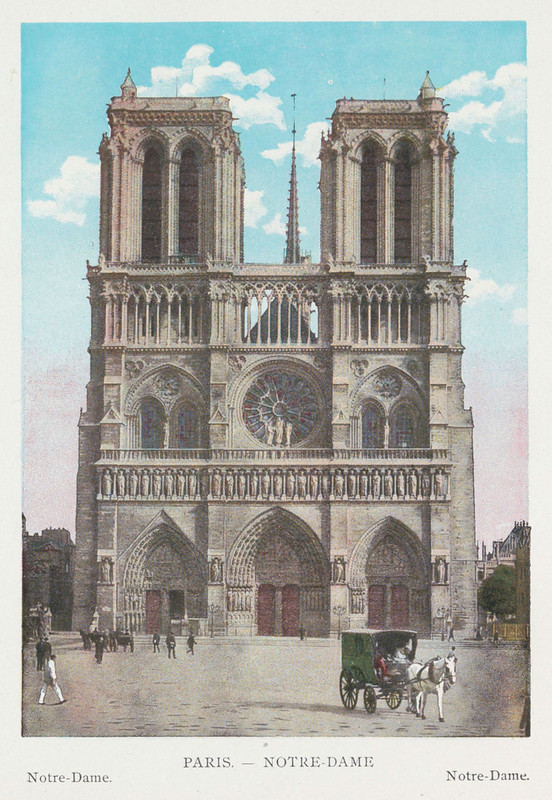
We’ve often featured the work of the Public Domain Review here on Open Culture, and also various searchable copyright-free image databases that have arisen over the years. It makes sense that those two worlds would collide, and now they’ve done so in the form of the just-launched Public Domain Image Archive (PDIA). The Public Domain Review invites us to use the site to “explore our hand-picked collection of 10,046 out-of-copyright works, free for all to browse, download, and reuse” — and note that the number will grow, given that “this is a living database with new images added every week.”
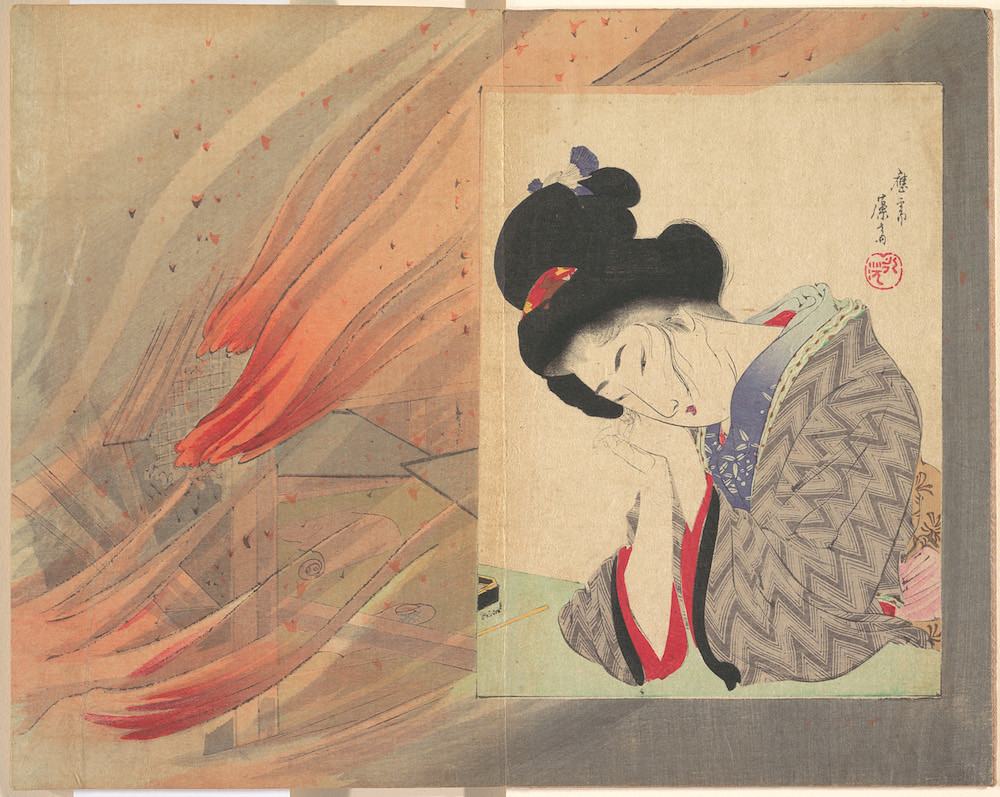
As with any portal of this kind, you can browse by category tags, the selection of which includes everything from architecture to decorations to occultism to war. But if you’d like to get a sense of the sheer formal, aesthetic, cultural, and historical variety of the PDIA, you might consider taking a first look through its “infinite view,” which allows you to scroll in all directions through a limitless labyrinth of copyright-free wonders: advertisements, Biblical scenes, old-time sportsmen, outer-space photos, mushrooms, medieval musical creatures, letterforms, and, well, labyrinths.
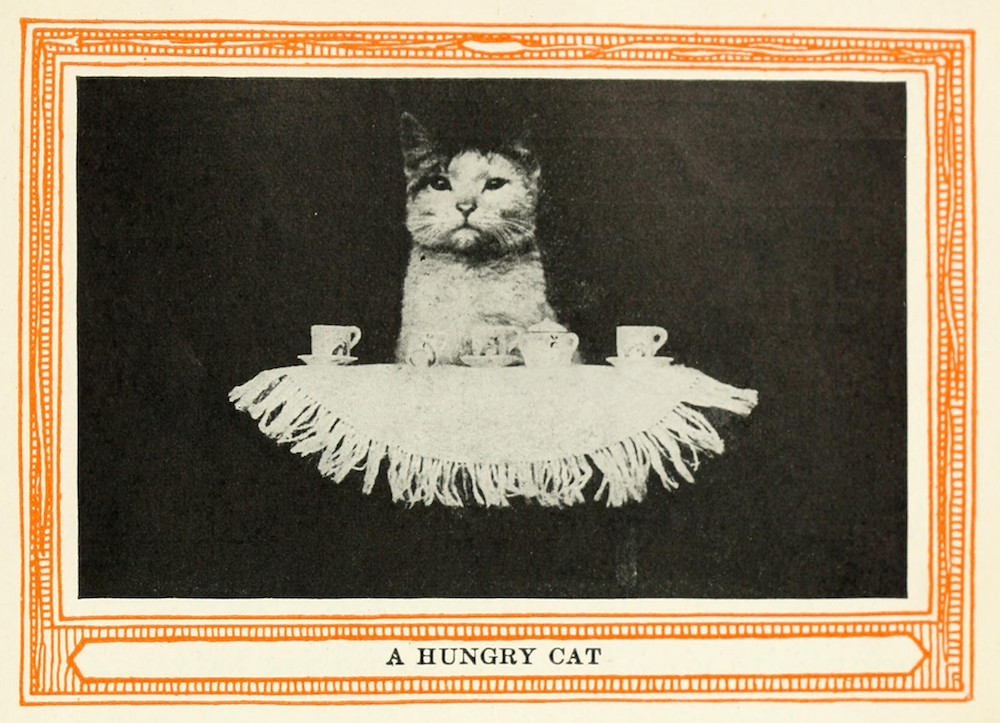
You might also recognize items you’ve seen here on Open Culture before, like the nature drawings of Ernst Haeckel, the modern art-lampooning children’s book The Cubies’ ABC, or the ghosts and monsters illustrated by ukiyo‑e master Hokusai. The PDIA provides more context than some public-domain image archives, even linking to relevant Public Domain Review posts, where you can read about such topics as Emily Noyes Vanderpoel’s color analysis charts (which also inspired a post of ours), the end of books (as predicted in 1894), and even “Cats and Captions before the Internet Age.” Having fallen into the public domain, all this material is, of course, available to use for any purpose you like — including just satisfying your own curiosity.
Related comments:
A Search Engine for Finding Free, Public Domain Images from World-Class Museums
Public.Work: A Smoothly Searchable Archive of 100,000+ “Copyright-Free” Images
Sea-Serpents, Vampires, Pirates & More: The Public Domain Review’s Second Book of Essays
Based in Seoul, Colin Marshall writes and broadcasts on cities, language, and culture. His projects include the Substack newsletter Books on Cities and the book The Stateless City: a Walk through 21st-Century Los Angeles. Follow him on the social network formerly known as Twitter at @colinmarshall.
Read More...Why the Tavern Scene in Quentin Tarantino’s Inglourious Basterds Is a Master Class in Filmmaking
Ideally, a viewer should be able to identify the work of a particular auteur from any one scene that the auteur has directed. In reality, it’s not always possible to do so, even in the work of filmmakers with highly idiosyncratic styles. But in the case of Quentin Tarantino, it would probably be more difficult not to recognize his scenes. Some of them have propagated so far through popular culture that they have a life apart from the films themselves: the dance in Pulp Fiction, say, or more recently, the opening of Inglourious Basterds, a picture that, to video essayists looking to explicate Tarantino’s distinctive genius, offers a particular abundance of material.
In the new video above, YouTuber Lancelloti selects a different scene from Inglourious Basterds to declare a “modern masterpiece” in itself. It takes place in a basement tavern in Nazi-occupied northern France, where three of the titular black-ops “Basterds,” disguised as German officers, meet Bridget von Hammersmark, a German movie star turned undercover Allied agent.
As one might expect, the tension starts high, gets higher, and eventually explodes in a chaotic bloodbath: not an easy sequence to pull off effectively, but one that Tarantino and his collaborators arrange with consummate skill, using a host of techniques not necessarily visible on the first viewing — or even the first few viewings.
Lancelloti highlights how the scene gradually reveals its tight space and the many figures who occupy it; uses dialogue to reflect core themes of identity and nationality; creates sympathy even for villain-coded German soldiers; keeps shifting the balance of power; injects unpredictability into the action; foreshadows the ways in which events will eventually go wrong; and hints in many ways at the presence of the character who will light up the tinder box. Of course, no director could make all this happen single-handedly, and few directors would be conscious of all these elements at work in the first place. But given all we’ve learned about Tarantino over the years, he’s surely one of them.
Related Content:
A Deep Study of the Opening Scene of Quentin Tarantino’s Inglourious Basterds
An Analysis of Quentin Tarantino’s Films Narrated (Mostly) by Quentin Tarantino
How Quentin Tarantino Remixes History: A Brief Study of Once Upon a Time… in Hollywood
Quentin Tarantino’s World War II Reading List
Based in Seoul, Colin Marshall writes and broadcasts on cities, language, and culture. His projects include the Substack newsletter Books on Cities and the book The Stateless City: a Walk through 21st-Century Los Angeles. Follow him on the social network formerly known as Twitter at @colinmarshall.
Read More...Unlock AI’s Potential in Your Work and Daily Life: Take a Popular Course from Google
Generative AI is rapidly becoming an essential tool for streamlining work and solving complex challenges. However, knowing how to use GenAI effectively isn’t always obvious. That’s where Google Prompting Essentials comes in. This course will teach you to write clear and specific instructions—known as prompts—for AI. Once you can prompt well, you can unlock generative AI’s potential more fully.
Launched in April, Google Prompting Essentials has become the most popular GenAI course offered on Coursera. The course itself is divided into four modules. First, “Start Writing Prompts Like a Pro” will teach you a 5‑step method for crafting effective prompts. (Watch the video from Module 1 above, and more videos here.) With the second module, “Design Prompts for Everyday Work Tasks,” you will learn how to use AI to draft emails, brainstorm ideas, and summarize documents. The third module, “Speed Up Data Analysis and Presentation Building,” teaches techniques for uncovering insights in data, visualizing results, and preparing presentations. The final module, “Use AI as a Creative or Expert Partner,” explores advanced techniques such as prompt chaining and multimodal prompting. Plus, you will “create a personalized AI agent to role-play conversations and provide expert feedback.”
Offered on the Coursera platform, Google Prompting Essentials costs $49. Once you complete the course, you will receive a certificate from Google to share with your network and employer. Better yet, you will understand how to make GenAI a more useful tool in your life and work. Enroll here.
Note: Open Culture has a partnership with Coursera. If readers enroll in certain Coursera courses and programs, it helps support Open Culture.
Read More...Scientists Discover that Ancient Egyptians Drank Hallucinogenic Cocktails from 2,300 Year-Old Mug
If ZZ Top have a favorite ancient Egyptian deity, that deity is surely Bes, whom the New York Times’ Alexander Nazaryan quotes curator and scholar Branko van Oppen de Ruiter as calling “a beer drinker and a hell-raiser.” In a paper published last month in Scientific Reports, Van Oppen and fifteen collaborators call the rowdy but apparently benevolent Bes “one of the most fascinating and wildly popular figures of ancient Egyptian religion,” and he’s come to modern public attention thanks to the subject of that paper: a 2,000-year-old cup molded in the shape of his head that has tested positive for traces of psychedelic substances — as well as alcohol and bodily fluids.
Their analysis of the mug, a 3D model of which you can examine above, “yielded evidence of two plants known to have hallucinogenic properties: Syrian rue and the blue water lily,” writes Nazaryan, and it also bore traces of “a fermented alcoholic liquid derived from fruit,” then sweetened with pine nuts, honey, and licorice.
Those were the sorts of ingredients ancient Egyptians had at hand to make the medicine go down — if medicine it was. Nazaryan quotes digital archaeologist Davide Tanasi, whose lab performed the research, citing the traces of substances like blood and breast milk as underscoring that “this is a magical potion,” rather than one intended as purely curative.
Bes, as Van Oppen and his collaborators write, “emerged from the magical realm of the world of demons as a guardian figure,” and by the Roman Imperial age “sporadically acquired divine worship.” He “provided protection from danger, while simultaneously averting harm” — and also “had a certain regenerative importance contributing to the fulfillment and happiness of family life in all facets of reproduction, from virility and sexuality, via fertility and fecundity, to childbirth and growth.” Hence the speculation that women hoping to become pregnant would drink the potion from his head in order to take a psychedelic journey that would set them on the path to motherhood. That’s hardly the most efficient means to the end, as we’d see it today, but given the birthrates of increasingly many societies across the world, we moderns may find ourselves in need of Bes’ assistance yet.
Related content:
The Drugs Used by the Ancient Greeks and Romans
Did Psychedelic Mushrooms Appear in Medieval Christian Art?: A Video Essay
Humans First Started Enjoying Cannabis in China Circa 2800 BC
The Romans Stashed Hallucinogenic Seeds in a Vial Made From an Animal Bone
Algerian Cave Paintings Suggest Humans Did Magic Mushrooms 9,000 Years Ago
Based in Seoul, Colin Marshall writes and broadcasts on cities, language, and culture. His projects include the Substack newsletter Books on Cities and the book The Stateless City: a Walk through 21st-Century Los Angeles. Follow him on the social network formerly known as Twitter at @colinmarshall.
Read More...Discover Hannah Arendt’s Syllabus for Her 1974 Course on “Thinking”
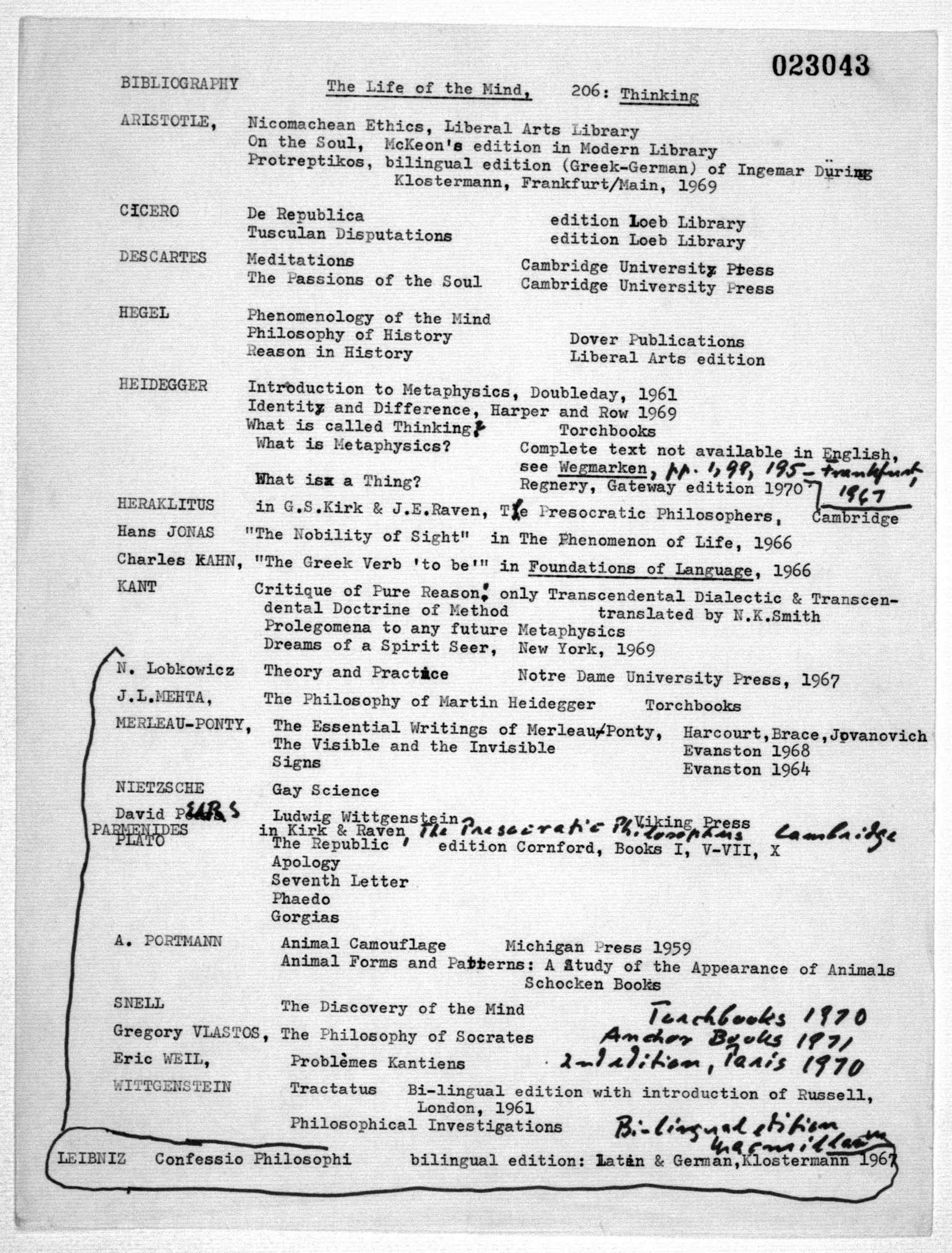
If you’ve read one work of Hannah Arendt’s, it’s probably Eichmann in Jerusalem, her account of the trial of the eponymous Nazi official — and the source of her much-quoted phrase “the banality of evil.” That book came out in 1963, at which time Arendt still had a dozen productive years left. In fact, at the time of her sudden death in 1975, she had in her typewriter the first page of what would have been the third volume of her final work, The Life of the Mind. In its two completed volumes, she investigates the nature of thought and action, a preoccupation with the relationship between thinking and morality having been fired up within her at the Eichmann trial.
“The Life of the Mind” also appears atop the syllabus, recently posted by Arendt biographer Samantha Rose Hill, for “206: Thinking,” a class Arendt taught in 1974 at the New School for Social Research. Encompassing a range of philosophers from Aristotle, Cicero, and Plato to Nietzsche, Wittgenstein, and Heidegger (a figure with whom she could claim a more intimate familiarity than most), it seems to have offered a reasonably thorough survey of the figures we think of when we think of thinking itself.
Arendt had apparently adapted some of the content from the 1973–1974 Gifford Lectures she had delivered in Aberdeen, which themselves condensed material from her courses on “Basic Moral Propositions,” “Thinking,” “The History of the Will,” and “Kant’s Critique of Judgment.”
Arendt’s teaching at the New School, in “Thinking” and other courses like “Philosophy of the Mind,” sheds a bit of light on what would have gone into the unwritten third volume of The Life of the Mind, or at least into the arc of the trilogy as a whole. Volumes one and two, drafts of which she put into circulation among her graduate students, were called Thinking and Willing; the third was to have been Judging, by far the thorniest mental activity of the set. It would be worth hearing from former New School students of the mid-seventies who retain any classroom memories of what she had to say on the subject. As for the rest of us, we can at least still do all the reading for “Thinking,” then judge for ourselves. You can find the syllabus on the Library of Congress website.
Related content:
Take Hannah Arendt’s Final Exam for Her 1961 Course “On Revolution”
Hannah Arendt Explains How Totalitarian Regimes Arise–and How We Can Prevent Them
Watch Hannah Arendt’s Final Interview (1973)
Based in Seoul, Colin Marshall writes and broadcasts on cities, language, and culture. His projects include the Substack newsletter Books on Cities and the book The Stateless City: a Walk through 21st-Century Los Angeles. Follow him on the social network formerly known as Twitter at @colinmarshall.
Read More...Google Creates a Career Certificate That Prepares Students for Cybersecurity Jobs in 6 Months
In 2023, Google launched several online certificate programs designed to help students land an entry-level job, without necessarily having a college degree. This includes a certificate program focused on Cybersecurity, a field that stands poised to grow as companies become more digital and face mounting cyberattacks.
Offered on Coursera’s educational platform, the new Google Cybersecurity Professional Certificate features eight online courses, which will collectively help students learn how to:
- Understand the importance of cybersecurity practices and their impact for organizations.
- Identify common risks, threats, and vulnerabilities, as well as techniques to mitigate them.
- Protect networks, devices, people, and data from unauthorized access and cyberattacks using Security Information and Event Management (SIEM) tools.
- Gain hands-on experience with Python, Linux, and SQL.
The Cybersecurity Professional Certificate also now includes six new videos that explain how to use AI in cybersecurity. The videos cover everything from using artificial intelligence to help identify bugs and system vulnerabilities, to refining code and prioritizing alerts with AI.
Students can take individual courses in these professional certificate programs for free. (Above, you can watch a video from the first course in the cybersecurity certificate program, entitled “Foundations of Cybersecurity.”) However, if you would like to receive a certificate, Coursera will charge $49 per month (after an initial 7‑day free trial period). That means that the Cybersecurity Professional Certificate, designed to be completed in 6 months, will cost roughly $300 in total.
Once students complete the cybersecurity certificate, they can add the credential to their LinkedIn profile, resume, or CV. As a perk, students in the U.S. can also connect with 150+ employers (e.g., American Express, Colgate-Palmolive, T‑Mobile, Walmart, and Google) who have pledged to consider certificate holders for open positions. According to Coursera, this certificate can prepare students to become an entry-level “cybersecurity analyst and SOC (security operations center) analyst.”
You can start a 7‑day free trial of the Cybersecurity Professional Certificate here. Alternatively, if you sign up for Coursera Plus, whose price has been reduced by 40% until December 2, 2024, you can enroll in the cybersecurity certificate program at no charge. Find out more here.
Note: Open Culture has a partnership with Coursera. If readers enroll in certain Coursera courses and programs, it helps support Open Culture.
Read More...The Evolution of Cinema: Watch Nearly 140 Years of Film History Unfold in 80 Minutes
The video above from YouTuber Alex Day includes clips from about 500 movies, and you’ve almost certainly seen more than a few of them. Battleship Potemkin, Dumbo, Rear Window, Dr. No, The Godfather, E. T. the Extra-Terrestrial, Top Gun, Braveheart, Gladiator, Inception: we’re not talking about obscurities here. Whether or not you count them among your personal favorites, these motion pictures have all become near-universally known for good (and/or Oscar-related) reasons, some of which may come back to mind as you watch the history of cinema visually retold through a feature-length string of their especially recognizable scenes.
Though genre pictures dominate, “I have not selected those films that marked the development of a genre or film stream,” Day writes. “I have selected the most popular and better known ones by people. That’s why I’ve included so many American movies and less of other countries, because a lot of the most famous movies throughout history are from the U.S.” (Hence, for example, the absence of Hideo Nakata’s influential piece of “J‑horror” Ringu and the presence of Ringu, its Hollywood remake from a few years later.) No matter where in the world you happen to be, a reference to Rocky, Back to the Future, or Home Alone — or any work of Steven Spielberg, a major presence in the video — can go a surprisingly long way.
No matter how popular these movies are, it would be the rare viewer indeed who could claim familiarity with each and every one of them. Almost inevitably, the experience of watching this video turns into a game of seen-it-or-not, which sheds light on the most intensive periods of your life in filmgoing. For my part, I must have watched almost every movie included from around the turn of the millennium, when I was just coming of age as a cinephile (and when even mainstream cinema, coincidentally or otherwise, was in an especially inventive period). It recently gave me pause to hear that American Psycho is now being remade — but then, having come out nearly a quarter-century ago, it’s presumably settled into its place in cinema history.
Related content:
The Most Beautiful Shots in Cinema History: Scenes from 100+ Films
The History of the Movie Camera in Four Minutes: From the Lumiere Brothers to Google Glass
Hollywood: Epic Documentary Chronicles the Early History of Cinema
Cinema History by Titles & Numbers
Based in Seoul, Colin Marshall writes and broadcasts on cities, language, and culture. His projects include the Substack newsletter Books on Cities and the book The Stateless City: a Walk through 21st-Century Los Angeles. Follow him on Twitter at @colinmarshall or on Facebook.
Read More...Support Us
We're hoping to rely on loyal readers, rather than erratic ads. Please click the Donate button and support Open Culture. You can use Paypal, Venmo, Patreon, even Crypto! We thank you!

About Us

Open Culture scours the web for the best educational media. We find the free courses and audio books you need, the language lessons & educational videos you want, and plenty of enlightenment in between.
Advertise With Us
FREE UPDATES!
GET OUR DAILY EMAIL
Get the best cultural and educational resources on the web curated for you in a daily email. We never spam. Unsubscribe at any time.
FOLLOW ON SOCIAL MEDIA
Open Culture editor Dan Colman scours the web for the best educational media. He finds the free courses and audio books you need, the language lessons & movies you want, and plenty of enlightenment in between.
Advertise With Us

