What Is a Zen Koan? An Animated Introduction to Eastern Philosophical Thought Experiments
If you know anything at all about Zen, you know the famous question about the sound of one hand clapping. While the brain teaser did indeed originate with a Zen master, it does not fully represent the nature of the koan. Between the 9th and 13th centuries, when Chan Buddhism, as Zen was known in China, flourished, koans became widely-used, explains the TED-Ed animated video above, as objects of meditation. “A collection of roughly one thousand, seven hundred bewildering philosophical thought experiments,” koans were ostensibly tools to practice living with the unexplainable mysteries of existence.
The name, notes the lesson, “originally gong-an in Chinese, translates to ‘public record or case.’ But unlike real-world court cases, koans were intentionally incomprehensible.” Koans are “Surprising, surreal, and frequently contradicted themselves.” The lessons in ambiguity and paradox have their analogue, perhaps, in certain trains of thought in Medieval Catholic philosophy or the idealism of thinkers like George Berkeley, who might have first come up with the one about the tree falling in the forest.
But is the purpose of the koan simply to break the brain’s reliance on reason? It was certainly used this way. Zen Master Eihei Dogen, founder of Japanese Soto Zen traveled to China to study under the Chan Masters, and later criticized this kind of koan practice and other aspects of Chan, though he also collected 300 koans himself and they became integral to Soto tradition. Koans are not just absurdist zingers, they are, as the name says, cases—little stories, often about two monks in some kind of teacher and student relationship. Many of the students and teachers in these stories were patriarchs of Chan.
Like the sayings and doings of other religious patriarchs in other world religions, these “cases” have been collected with copious commentary in books like The Blue Cliff Record and The Book of Serenity. They show in snapshots the transmission of the teaching directly from teacher to student, rather than through sacred texts or rituals (hundreds of koans, rules, and rituals notwithstanding). That they are puzzling and ambiguous does not mean they are incomprehensible. Many seem more or less like fables, such as the oft-told story of the monk who carries a beautiful woman across a mud patch, then chastises his younger companion for bringing it up miles down the road.
Other koans are like Greek philosophical dialogues in miniature, such as the story in which two monks argue about the nature of a flag waving in the wind. A third steps in, Socrates-like, with a seemingly “right” answer that transcends both of their positions. The longevity of these vignettes lies in their subtlety—surface meanings only hint at what the stories are up to. Koans force those who take up their study to struggle with uncertainty and irresolution. They also frequently undermine the most common expectation that the teacher knows best.
Often posed as a kind of oblique verbal combat between teacher and student, koans include extremely harsh, even violent teachers, or teachers who seem to admit defeat, tacitly or otherwise, when a student gets the upper hand, or when both confront the speechless awe of not knowing. Attitudes of respect, reverence, humility, candor, and good humor prevail. Perhaps under all koan practice lies the idea of skillful means—the appropriate action to take in the moment, which can only be known in the moment.
In his short, humorous discussion of Zen koans above, Alan Watts tells the story of a Zen student who tricks his master and hits him with his own stick. The master responds with approval of the student’s tactics, but the koan does not suggest that everyone should do the same. That, as Dogen would argue, would be to have an idea about reality, rather than a wholly-engaged response to it. Whatever else koans show their students, they point again and again to this central human dilemma of thinking about living—in the past, present, or future—versus actually experiencing our lives.
Related Content:
The World’s Largest Collection of Tibetan Buddhist Literature Now Online
Josh Jones is a writer and musician based in Durham, NC. Follow him
Read More...150 Renowned Secular Academics & 20 Christian Thinkers Talking About the Existence of God
Of the many books released over the past couple decades about the existence or nonexistence of God (and there were a lot) one of the best comes from philosopher and novelist Rebecca Goldstein. Her 2010 36 Arguments for the Existence of God is not, however, a work of popular theology or anti-theology; it is fiction, a satire of academia, the publishing world, the Judaism she left behind, and the bubble of hype that once inflated around so-called “new atheism.”
In a book within the book, Goldstein’s hero, Cass Seltzer strikes it big with his own popular knockdown of religion, The Varieties of Religious Illusion, which ends with 36 refutations of arguments for God in the appendix, which itself provides the appendix for Goldstein’s book. If this sounds complicated, there’s no reason it shouldn’t be. Conversations about God, for hundreds of years the biggest topic in Western philosophy, should not be reduced to syllogisms and stereotypes.
Yet oversimplifying the big questions is what many pop atheist books do, Goldstein suggests. Seltzer’s book arrives when there is “a glut of godlessness” in bookstores. Such books “were selling well,” writes Goldstein, “sometimes edging out cookbooks and memoirs written by household pets to rise to the top of the best-seller list.” The two deep thinkers and religious critics Seltzer self-consciously draws on in his title make his project seem all the more ironically trivial:
First had come the book, which he had entitled The Varieties of Religious Illusion, a nod to both William James’s The Varieties of Religious Experience and to Sigmund Freud’s The Future of An Illusion. The book had brought Cass an indecent amount of attention. Time Magazine, in a cover story on the so-called new atheists, had ended by dubbing him “the atheist with a soul.”
By embedding arguments for the existence of God in each of the books 36 chapters, Goldstein implies “the joke—or sort of joke,” as Janet Maslin writes at The New York Times, “is that Cass’s conundrum-filled life illustrates and affirms thoughts of the divine even as his appendix repudiates them.” Dwelling persistently on an idea grants it the very validity one argues it should not have, perhaps.
This does seem to be an effect of certain hard-nosed atheist writing, as Nietzsche recognized very well. “I am afraid we are not rid of God,” he once lamented, “because we still have faith in grammar.” Religious ideas are embedded in the structure of the language; language itself seems to have metaphysical properties. It is like ectoplasm, slippery, opaque, made of metaphors both living and dead. It both enables and thwarts all attempts at certainty.
Goldstein’s creative approach to the God debate stands out for its ambivalence and humor. (See her discuss faith, fiction, and reason with her partner, Harvard psychologist Steven Pinker, in the video at the top of the post.) In the compilations here, Goldstein and 149 more renowned academics offer their agnostic or atheist thoughts on God. Some are less nuanced, some lean more heavily on statistics, physics, and math; many come from the theoretical sciences and from analytic and moral philosophy. Some are sympathetic to religion, some are contemptuous. A wide breadth of intellectual perspectives is represented here.
Yet other than Goldstein and a handful of other prominent women, the selections skew almost entirely male (rather like the characters in most religious scriptures), and skew almost entirely white European and North American. We can do what we like with this information. It should not prejudice us against the finest thinkers in the compilation, which includes several Nobel Prize winning scientists, famous philosophers, Richard Feynman, Oliver Sacks, and Noam Chomsky, as well as a few figures who have recently become infamous for alleged sexual harassment, racism, and far worse.
But we might wish the less engaging contributors to this discussion had given way to a greater diversity of perspectives, not only from other cultures, but from the arts and humanities. On the other side of the coin, we have a smaller list of 20 Christian academics addressing the question of God, below. These include respected scientists like Francis Collins and John Polkinghorne and many well-regarded (and some not so) Christian philosophers. The lineup is entirely male, and also includes an apologist accused of faking his academic credentials and an apologist turned right-wing propagandist who was convicted and jailed for fraud. At the very least, these details might call into question their intellectual honesty.
Here again, maybe some of these selections should have been better vetted in favor of the many women in philosophy, theology, science, etc. But there are voices worth hearing here, from professing intellectuals who can keep the questions open even while in a state of belief, a skill even rarer in the world than in this collection of Christian scientists, scholars, and apologists.
Related Content:
Atheism: A Rough History of Disbelief, with Jonathan Miller
Does God Exist? Christopher Hitchens Debates Christian Philosopher William Lane Craig
In His Latest Film, Slavoj Žižek Claims “The Only Way to Be an Atheist is Through Christianity”
Atheist Ira Glass Believes Christians Get the Short End of the Media Stick
Josh Jones is a writer and musician based in Durham, NC. Follow him at @jdmagness
Read More...
An Animated History of Dogs, Inspired by Keith Haring
That quivering teacup Chihuahua…
The long-suffering Labrador whose child-friendly reputation has led to a lifetime of ear tugging and tail pulling…
The wheezing French bulldog, whose owner has outfitted with a full wardrobe of hoodies, tutus, rain slickers, and pajamas…
All descended from wolves.
As anthropologist and science educator David Ian Howe explains in the animated TED-Ed lesson, A Brief History of Dogs, above, at first glance, canis lupus seemed an unlikely choice for man’s best friend.
For one thing, the two were in direct competition for elk, reindeer, bison, and other tasty prey wandering Eurasia during the Pleistocene Epoch.
Though both hunted in groups, running their prey to the point of exhaustion, only one roasted their kills, creating tantalizing aromas that drew bolder wolves ever-closer to the human camps.
The ones who willingly dialed down their wolfishness, making themselves useful as companions, security guards and hunting buddies, were rewarded come suppertime. Eventually, this mutually beneficial tail wagging became full on domestication, the first such animal to come under the human yoke.
The intense focus on purebreds didn’t really become a thing until the Victorians began hosting dog shows. The push to identify and promote breed-specific characteristics often came at a cost to the animals’ wellbeing, as Neil Pemberton and Michael Worboys point out in BBC History Magazine:
…the improvement of breeds towards ‘perfection’ was controversial. While there was approval for the greater regularity of type, many fanciers complained that standards were being set on arbitrary, largely aesthetic grounds by enthusiasts in specialist clubs, without concern for utility or the health of the animal. This meant that breeds were changing, and not always for the better. For example, the modern St Bernard was said to be a beautiful animal, but would be useless in Alpine rescue work.
Cat-fanciers, rest assured that the opposition received fair and equal coverage in a feline-centric TED-Ed lesson, published earlier this year.
And while we applaud TED-Ed for sparking our curiosity with its “Brief History of” series, covering topics as far ranging as cheese, numerical systems, goths, video games, and tea, surely we are not the only ones wondering why the late artist Keith Haring isn’t thanked or name checked in the credits?
Every canine-shaped image in this animation is clearly descended from his iconic barking dog.
While we can’t explain the omission, we can direct readers toward Jon Nelson’s great analysis of Haring’s relationship with dogs in Get Leashed:
They’re symbolic of unanswered questions, prevalent in the 80s: “Can I do this?” “Is this right?” “What are you doing?” “What is happening?” Dogs stand by people, barking or dancing along, sometimes in precarious scenarios, even involved in some of Haring’s explicitly sexual work. Dogs are neither approving nor disapproving of what people do in the images; their mouth angle is neutral or even happy. In some cases, human bodies wear a dog’s head, possibly stating that we know only our own enjoyment, unaware, like a dog, of life’s next stage or the consequences of our actions.
Visit Ethnocynology, David Ian Howe’s Instagram page about the ancient relationship between humans and dogs.
Related Content:
Photos of Famous Writers (and Rockers) with their Dogs
Ayun Halliday is an author, illustrator, theater maker and Chief Primatologist of the East Village Inky zine. Join her in New York City April 15 for the next installment of her book-based variety show, Necromancers of the Public Domain. Follow her @AyunHalliday.
Read More...It’s Official: The “Nones”– People Who Profess No Religion–Are Now as Big as Catholics & Evangelicals in the United States
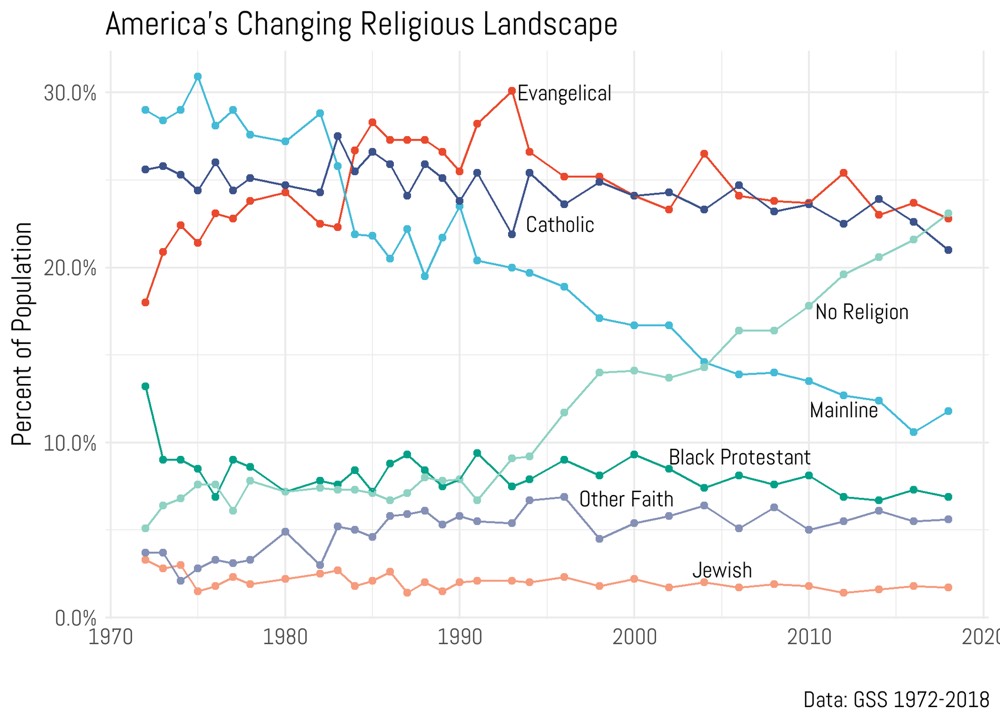
The usual irregularities and shenanigans notwithstanding, the voting patterns of the U.S. electorate may undergo a sea change in the coming decades as the numbers of people who identify as non-religious continue to rise. One of the biggest demographic stories of the last few decades, the rise of the “nones” has been interpreted as a threat and as an inevitable reckoning for corrupt and scandal-ridden institutions driving millions of people out of churches across the country.
Politics and social issues are hardly the only reasons, though they poll second in list from a 2017 Pew survey. At number one is “I question a lot of religious teachings,” at number three, the slightly more vague “I don’t like religious organizations.” It’s maybe a surprise that nonbelief in God appears all the way at number four. Which speaks to an important point.
Not all of those exiting the pews have renounced their faith or converted to another, but huge numbers have joined the ranks of those who claim “no religion” in survey and polling data. Their numbers are now equivalent to Catholics and evangelicals, the two religious groups most in decline behind mainline Protestant churches. Political scientist Ryan P. Burge of Eastern Illinois University is not surprised. “It’s been a constant steady increase for 20 years now,” he says, pointing to data from a General Social Survey visualized in the graph above.
The last decade has seen the sharpest upturn yet, with “nones” now estimated at 23.1 percent of the population. If this rise—and subsequent plateaus and declines in the major religious groups surveyed (and the batch of non-Judeo-Christian “Other Faith”s dismissively lumped together)—continues, the shift could be dramatic. In 2014, 78% of the unaffiliated, according to Pew polling, were raised in and walked away from a religion. The shift in identity among young people tends to correlate with a shift in politics.
The “rising tide of religiously unaffiliated voters,” writes Jack Jenkins at Religion News Service, is “a group that a 2016 PRRI analysis found skews young and liberal.” It’s one that might offset the oversized influence of white evangelicals, who now make up 26% of the electorate and 22.5% of the population.
Any such conclusions should be drawn with several caveats. “Evangelicals punch way above their weight,” says Burge. “They turn out a bunch at the ballot box. That’s largely a function of the fact that they’re white and they’re old.” And, he might have added, many are in less economically precarious straits than their children and grandchildren, more susceptible to mass media messaging, and less prone, by design, to finding their vote suppressed. A 2016 PRRI report noted that “religiously unaffiliated Americans do not vote in the same percentages as evangelicals, and are often underrepresented at the polls.”
Additionally, and most importantly to point out any time these numbers come up: “the nones” is an entirely overdetermined category full of people who agree on little, but they’re not signing up for any church committees any time soon for a handful of loosely-related reasons. If herding atheists, only one part of this group, is like herding cats, trying to corral 23% of the population without any shared creed or specific ideology is corralling an even less predictable menagerie. We need to know far more about what people affirm, as well as what they deny, if we want a clearer picture of where the country’s politics—if not its government or policies—might be headed.
via Kottke
Related Content:
A Visual Map of the World’s Major Religions (and Non-Religions)
Animated Map Shows How the Five Major Religions Spread Across the World (3000 BC – 2000 AD)
Does Democracy Demand the Tolerance of the Intolerant? Karl Popper’s Paradox
Josh Jones is a writer and musician based in Durham, NC. Follow him at @jdmagness
Read More...Isaac Asimov’s Guide to the Bible: A Witty, Erudite Atheist’s Guide to the World’s Most Famous Book
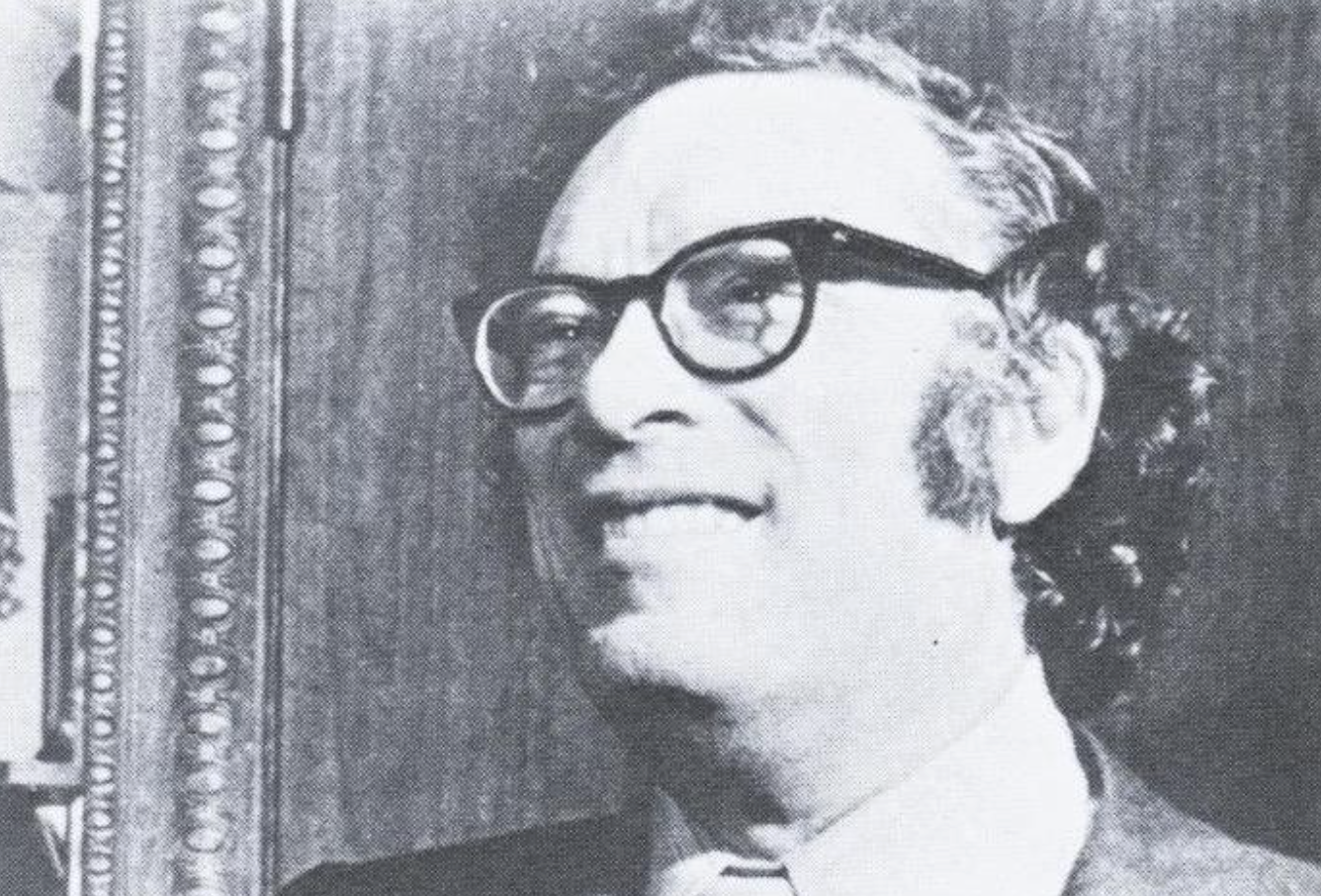
Rochester Institute of Technology, via Wikimedia Commons
Everyone should read the Bible, and—I’d argue—should read it with a sharply critical eye and the guidance of reputable critics and historians, though this may be too much to ask for those steeped in literal belief. Yet fewer and fewer people do read it, including those who profess faith in a sect of Christianity. Even famous atheists like Christopher Hitchens, Richard Dawkins, and Melvyn Bragg have argued for teaching the Bible in schools—not in a faith-based context, obviously, but as an essential historical document, much of whose language, in the King James, at least, has made major contributions to literary culture. (Curiously—or not—atheists and agnostics tend to score far higher than believers on surveys of religious knowledge.)
There is a practical problem of separating teaching from preaching in secular schools, but the fact remains that so-called “biblical illiteracy” is a serious problem educators have sought to remedy for decades. Prominent Shakespeare scholar G.B. Harrison lamented it in the introduction to his 1964 edited edition, The Bible for Students of Literature and Art. “Today most students of literature lack this kind of education,” he wrote, “and have only the haziest knowledge of the book or of its contents, with the result that they inevitably miss much of the meaning and significance of many works of past generations. Similarly, students of art will miss some of the meaning of the pictures and sculptures of the past.”
Though a devout Catholic himself, Harrison’s aim was not to proselytize but to do right by his students. His edited Bible is an excellent resource, but it’s not the only book of its kind out there. In fact, no less a luminary, and no less a critic of religion, than scientist and sci-fi giant Isaac Asimov published his own guide to the Bible, writing in his introduction:
The most influential, the most published, the most widely read book in the history of the world is the Bible. No other book has been so studied and so analyzed and it is a tribute to the complexity of the Bible and eagerness of its students that after thousands of years of study there are still endless books that can be written about it.
Of those books, the vast majority are devotional or theological in nature. “Most people who read the Bible,” Asimov writes, “do so in order to get the benefit of its ethical and spiritual teachings.” But the ancient collection of texts “has a secular side, too,” he says. It is a “history book,” though not in the sense that we think of the term, since history as an evidence-based academic discipline did not exist until relatively modern times. Ancient history included all sorts of myths, wonders, and marvels, side-by-side with legendary and apocryphal events as well as the mundane and verifiable.
Asimov’s Guide to the Bible, originally published in two volumes in 1968–69, then reprinted as one in 1981, seeks to demystify the text. It also assumes a level of familiarity that Harrison did not expect from his readers (and did not find among his students). The Bible may not be as widely-read as Asimov thought, even if sales suggest otherwise. Yet he does not expect that his readers will know “ancient history outside the Bible,” the sort of critical context necessary for understanding what its writings meant to contemporary readers, for whom the “places and people” mentioned “were well known.”
“I am trying,” Asimov writes in his introduction, “to bring in the outside world, illuminate it in terms of the Biblical story and, in return, illuminate the events of the Bible by adding to it the non-Biblical aspects of history, biography, and geography.” This describes the general methodology of critical Biblical scholars. Yet Asimov’s book has a distinct advantage over most of those written by, and for, academics. Its tone, as one reader comments, is “quick and fun, chatty, non-academic.” It’s approachable and highly readable, that is, yet still serious and erudite.
Asimov’s approach in his guide is not hostile or “anti-religious,” as another reader observes, but he was not himself friendly to religious beliefs, or superstitions, or irrational what-have-yous. In the interview above from 1988, he explains that while humans are inherently irrational creatures, he nonetheless felt a duty “to be a skeptic, to insist on evidence, to want things to make sense.” It is, he says, akin to the calling believers feel to “spread God’s word.” Part of that duty, for Asimov, included making the Bible make sense for those who appreciate how deeply embedded it is in world culture and history, but who may not be interested in just taking it on faith. Find an old copy of Asimov’s Guide to the Bible at Amazon.
Related Content:
Introduction to the Old Testament: A Free Yale Course
Christianity Through Its Scriptures: A Free Course from Harvard University
Josh Jones is a writer and musician based in Durham, NC. Follow him at @jdmagness
Read More...Download Original Bauhaus Books & Journals for Free: A Digital Celebration of the Founding of the Bauhaus School 100 Years Ago
In 1919, German architect Walter Gropius founded Bauhaus, the most influential art school of the 20th century. Bauhaus defined modernist design and radically changed our relationship with everyday objects. Gropius wrote in his manifesto Programm des Staatlichen Bauhauses Weimar that “There is no essential difference between the artist and the artisan.” His new school, which featured faculty that included the likes of Paul Klee, László Moholy-Nagy, Josef Albers and Wassily Kandinsky, did indeed erase the centuries-old line between applied arts and fine arts.
Bauhaus architecture sandblasted away the ornate flourishes common with early 20th century buildings, favoring instead the clean, sleek lines of industrial factories. Designer Marcel Breuer reimagined the common chair by stripping it down to its most elemental form.
Herbert Bayer reinvented and modernized graphic design by focusing on visual clarity. Gunta Stölzl, Marianne Brandt and Christian Dell radically remade such diverse objects as fabrics and tea kettles.
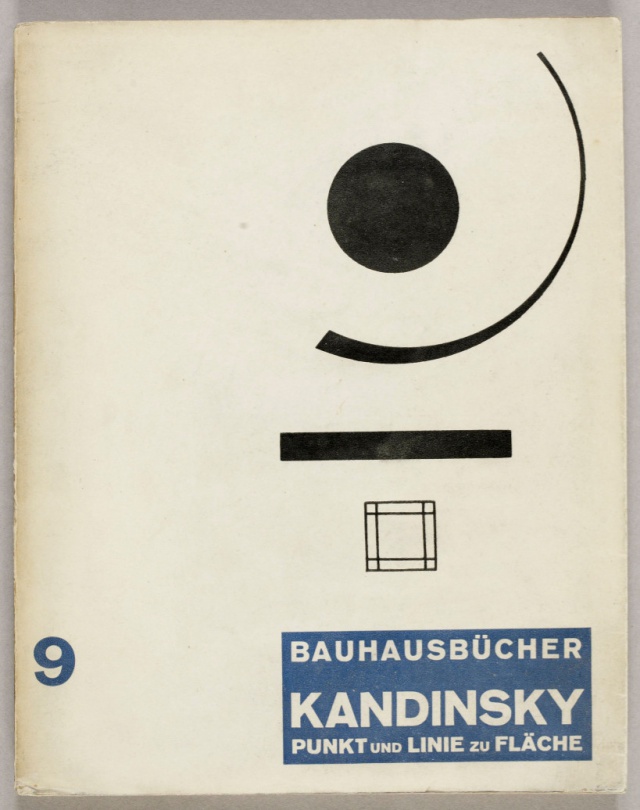
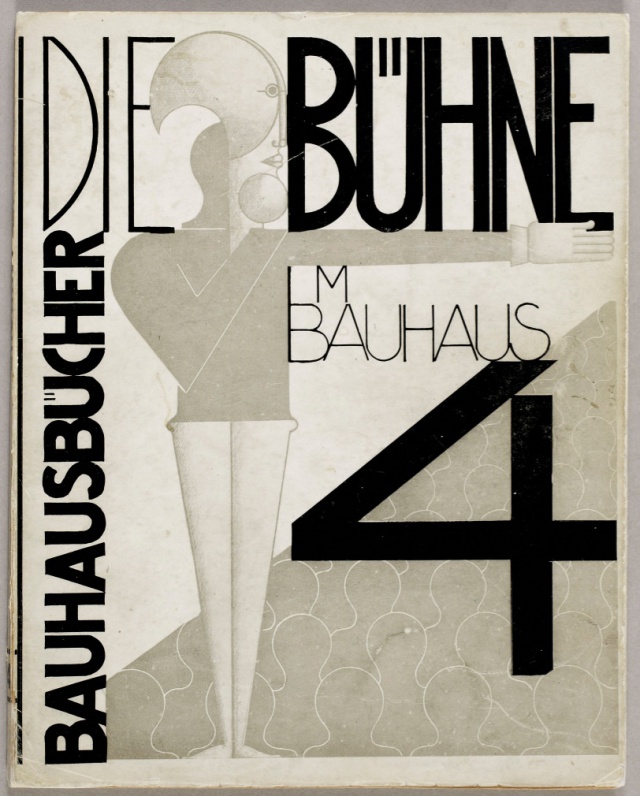
Nowadays, of course, getting one of those Bauhaus tea kettles, or even an original copy of Gropius’s manifesto, would cost a small fortune. Fortunately for design nerds, typography mavens and architecture enthusiasts everywhere, the good folks over at Monoskop have posted online a whole set of beautifully designed publications from the storied school.
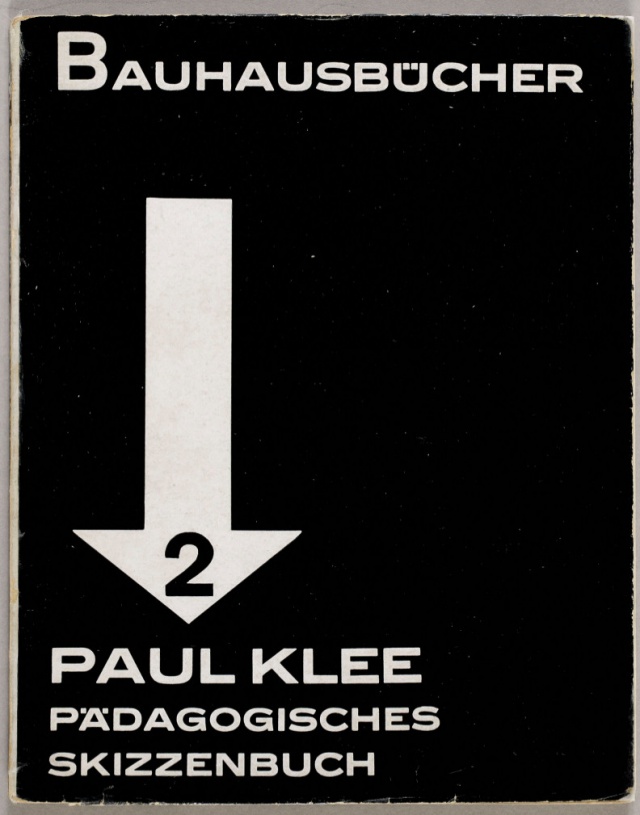
Click here to pick out individual works or here to just get all of them. Sadly, though, you can’t download a teakettle.
The list of Books in the Monoskop Bauhaus archive includes:
- 1. Walter Gropius (ed.), Internationale Architektur, Munich: Albert Langen, 1925.
- 2. Paul Klee, Pädagogisches Skizzenbuch, Munich: Albert Langen, 1925, 50 pp.
- Pedagogical Sketchbook, intro. & trans. Sibyl Moholy-Nagy, New York: Frederick A. Praeger, 1953 (in English)
- Παιδαγωγικό Σημειωματάριο, trans. Β. Λαγοπούλου, 1976. (in Greek)
- Pedagogikheskie eskizy, trans. N. Druzhkovoy, 2005. (in Russian)
- 3. Adolf Meyer (ed.), Ein Versuchshaus des Bauhauses in Weimar, Munich: Albert Langen, 1924.
- 4. Die Bühne am Bauhaus, Munich: Albert Langen, 1925.
- The Theater of the Bauhaus, trans. Arthur S. Wensinger, Middletown, Conn.: Wesleyan University Press, 1961. (in English)
- 5. Piet Mondrian, Neue Gestaltung, Neoplastizimus, Nieuwe Beelding, Munich: Albert Langen, 1925.
- 6. Theo van Doesburg, Grundbegriffe der neuen gestaltenden Kunst, Munich: Albert Langen, 1925.
- Principles of Neo-Plastic Art, London: Lund Humphries, 1969. (in English)
- 7. Walter Gropius (ed.), Neue Arbeiten der Bauhauswerkstäffen, Munich: Albert Langen, 1925.
- 8. L. Moholy-Nagy, Malerei, Fotografie, Film, Munich: Albert Langen, 1925, 115 pp; 2nd ed., 1927, 140 pp. Incl. “Dynamik der Gross-Stadt.”
- Painting Photography Film, trans. Janet Seligman, London: Lund Humphries, 1969. (in English)
- 9. Kandinsky, Punkt und Linie zu Fläche: Beitrag zur Analyse der malerischen Elemente, Munich: Albert Langen, 1926.
- Point and Line to Plane: Contribution to the Analysis of the Pictorial Elements, trans. Howard Dearstyne and Hilla Rebay, New York: Solomon R. Guggenheim Foundation, 1947, 200 pp. (in English)
- 10. J.J.P. Oud, Holländische Architektur, Munich: Albert Langen, 1929.
- 11. Kasimir Malewitsch, Die gegenstandslose Welt, Munich: Albert Langen, 1927.
- 12. Walter Gropius, Bauhausbauten Dessau, Munich: Albert Langen, 1930.
- 13. Albert Gleizes, Kubismus, Munich: Albert Langen, 1928.
- 14. László Moholy-Nagy, Von Material zur Architektur, Munich: Albert Langen, 1929, 241 pp; facsimile repr., Mainz and Berlin: Florian Kupferberg, 1968.
- The New Vision: From Material to Architecture, trans. Daphne M. Hoffman, New York: Breuer Warren and Putnam, 1930; exp.rev.ed. as The New Vision and Abstract of an Artist, New York: George Wittenborn, 1947, 92 pp. (in English)
And here are some key Bauhaus journals:
- bauhaus 1 (1926). 5 pages, 42 cm. Download (23 MB).
- bauhaus: zeitschrift für bau und gestaltung 2:1 (Feb 1928). Download (17 MB).
- bauhaus: zeitschrift für gestaltung 3:1 (Jan 1929). Download (17 MB).
- bauhaus: zeitschrift für gestaltung 3:2 (Apr-Jun 1929). Download (15 MB).
- bauhaus: zeitschrift für gestaltung 3:3 (Jul-Sep 1929). Download (16 MB).
- bauhaus: zeitschrift für gestaltung 2 (Jul 1931). Download (15 MB).
Get more in the Monoskop Bauhaus archive.
Note: An earlier version of this post appeared on our site in 2015. We’re bringing it back to celebrate the founding of the Bauhaus school 100 years ago–on April 1, 1919.
Related Content:
Harvard Puts Online a Huge Collection of Bauhaus Art Objects
Jonathan Crow is a Los Angeles-based writer and filmmaker whose work has appeared in Yahoo!, The Hollywood Reporter, and other publications. You can follow him at @jonccrow. And check out his blog Veeptopus, featuring lots of pictures of vice presidents with octopuses on their heads. The Veeptopus store is here.
Read More...The Venice Time Machine: 1,000 Years of Venice’s History Gets Digitally Preserved with Artificial Intelligence and Big Data
Along with hundreds of other seaside cities, island towns, and entire islands, historic Venice, the floating city, may soon sink beneath the waves if sea levels continue their rapid rise. The city is slowly tilting to the East and has seen historic floods inundate over 70 percent of its palazzo- and basilica-lined streets. But should such tragic losses come to pass, we’ll still have Venice, or a digital version of it, at least—one that aggregates 1,000 years of art, architecture, and “mundane paperwork about shops and businesses” to create a virtual time machine. An “ambitious project to digitize 10 centuries of the Venetian state’s archives,” the Venice Time Machine uses the latest in “deep learning” technology for historical reconstructions that won’t get washed away.
The Venice Time Machine doesn’t only proof against future calamity. It also sets machines to a task no living human has yet to undertake. Most of the huge collection at the State Archives “has never been read by modern historians,” points out the narrator of the Nature video at the top.
This endeavor stands apart from other digital humanities projects, Alison Abbott writes at Nature, “because of its ambitious scale and the new technologies it hopes to use: from state-of-the-art scanners that could even read unopened books, to adaptable algorithms that will turn handwritten documents into digital, searchable text.”
In addition to posterity, the beneficiaries of this effort include historians, economists, and epidemiologists, “eager to access the written records left by tens of thousands of ordinary citizens.” Lorraine Daston, director of the Max Planck Institute for the History of Science in Berlin describes the anticipation scholars feel in particularly vivid terms: “We are in a state of electrified excitement about the possibilities,” she says, “I am practically salivating.” Project head Frédéric Kaplan, a Professor of Digital Humanities at the École polytechnique fédérale de Lausanne (EPFL), compares the archival collection to “’dark matter’—documents that hardly anyone has studied before.”
Using big data and AI to reconstruct the history of Venice in virtual form will not only make the study of that history a far less hermetic affair; it might also “reshape scholars’ understanding of the past,” Abbott points out, by democratizing narratives and enabling “historians to reconstruct the lives of hundreds of thousands of ordinary people—artisans and shopkeepers, envoys and traders.” The Time Machine’s site touts this development as a “social network of the middle ages,” able to “bring back the past as a common resource for the future.” The comparison might be unfortunate in some respects. Social networks, like cable networks, and like most historical narratives, have become dominated by famous names.
By contrast, the Time Machine model—which could soon lead to AI-created virtual Amsterdam and Paris time machines—promises a more street-level view, and one, moreover, that can engage the public in ways sealed and cloistered artifacts cannot. “We historians were baptized with the dust of archives,” says Daston. “The future may be different.” The future of Venice, in real life, might be uncertain. But thanks to the Venice Time Machine, its past is poised take on thriving new life. See previews of the Time Machine in the videos further up, learn more about the project here, and see Kaplan explain the “information time machine” in his TED talk above.
Related Content:
How Venice Works: 124 Islands, 183 Canals & 438 Bridges
Josh Jones is a writer and musician based in Durham, NC. Follow him at @jdmagness
Read More...Does Playing Music for Cheese During the Aging Process Change Its Flavor? Researchers Find That Hip Hop Makes It Smellier, and Zeppelin’s “Stairway to Heaven” Makes It Milder
Humans began making cheese seven millennia ago: plenty of time to develop an enormous variety of textures, flavors, and smells, and certainly more than enough to get creative about the methods of generating even greater variety. But it seems to have taken all that time for us to come around to the potential of music as a flavoring agent. “Exposing cheese to round-the-clock music could give it more flavor and hip hop might be better than Mozart,” report Reuters’ Denis Balibouse and Cecile Mantovani, citing the findings of Cheese in Sound, a recent study by Swiss cheesemaker Bert Wampfler and researchers at Bern University of the Arts.
“Nine wheels of Emmental cheese weighing 10 kilos (22 pounds) each were placed in wooden crates last September to test the impact of music on flavor and aroma,” write Balibouse and Mantovani. The hip hop cheese heard A Tribe Called Quest’s “Jazz (We’ve Got),” the classical cheese Mozart’s “Magic Flute,” the rock cheese Led Zeppelin’s “Stairway to Heaven,” and so on.
Three other wheels heard simple low, medium, and high sonic frequencies, and one control cheese heard nothing at all. But perhaps “heard” is the wrong word: each maturing cheese received its music not through speakers but “mini transmitters to conduct the energy of the music into the cheese.”
That may make more plausible the results that came out when a culinary jury performed a blind taste test of all the cheeses and found that they really did come out with different flavors. According to the project’s press release, a “sensory consensus analysis carried out by food technologists from the ZHAW Zurich University of Applied Sciences” concluded that “the cheeses exposed to music had a generally mild flavor compared to the control test sample” and that “the cheese exposed to hip hop music displayed a discernibly stronger smell and stronger, fruitier taste than the other samples.”

Or, as Smithsonian.com’s Jason Daley summarizes the findings, A Tribe Called Quest “gave the cheese an especially funky flavor, while cheese that rocked out to Led Zeppelin or relaxed with Mozart had milder tests.” Cheese-lovers intrigued by the possibilities implied here would be forgiven for thinking it all still sounds a bit too much like those CD sets that claimed a baby’s intelligence could be increased by playing them Mozart in the womb. But if Cheese in Sound’s results hold up to further scrutiny, maybe those parents — at least those parents hoping for a funkier child — should have been playing them hip hop all along.
Related Content:
An Animated History of Cheese: 10,000 Years in Under Six Minutes
How to Break Open a Big Wheel of Parmesan Cheese: A Delightful, 15-Minute Primer
Leo Tolstoy’s Family Recipe for Mac ‘N’ Cheese
Based in Seoul, Colin Marshall writes and broadcasts on cities, language, and culture. His projects include the book The Stateless City: a Walk through 21st-Century Los Angeles and the video series The City in Cinema. Follow him on Twitter at @colinmarshall or on Facebook.
Read More...David Lynch Teaches an Online Course on Film & Creativity
How many of us became David Lynch fans while first watching one of his films? And how many of those fans also left filled with the desire to make a film themselves? Though the long-circulating term “Lynchian” puts a name to Lynch’s distinctively stimulating and disturbing cinematic style, it increasingly seems that no filmmaker, no matter how skilled, can quite pull off that style but Lynch himself. But even if you can never be the man who directed the likes of Eraserhead, Blue Velvet, and Mulholland Drive (and co-created the similarly inimitable television series Twin Peaks), you can still learn a great deal about filmmaking from him that you can’t learn from anyone else.
Now online education company MasterClass has made some of his knowledge easily accessible in the form of their new course “David Lynch Teaches Creativity and Film.” In Lynch’s world — unlike Hollywood in general — you can’t make a film without creativity. But of what does creativity consist? “Ideas are everything,” says Lynch in the trailer for his MasterClass above. “We’re nothing without an idea. So I go where the ideas lead.” He has long liked to make an analogy with fishing: you put a piece of bait on a hook, cast your line out into the world, and wait for an idea to bite. Different idea-fishing methods work for different people, and Lynch has spoken of his success with drinking a milkshake at Bob’s Big Boy every day for seven years, and even more so with decade after decade of twice-daily meditation.
However you fish for ideas, “you don’t know when they’re going to come or what will trigger them. Lo and behold, on a lucky day, bingo, you’ll catch an idea, and… party time.” Lynch also drops an unexpectedly practical piece of advice to do with all this in the trailer: “If you want to make a feature-length film, all you need to do is get 70 ideas.” Then you take those 70 ideas, write them on cards, and put the cards in order — and not necessarily in a narratively conventional order. “In cinema, I don’t like rules,” Lynch says, a statement that will surprise neither his boosters nor his detractors. He covers that territory in the eleventh lesson of his MasterClass, which explains the difference between “restrictions that stifle creativity from those that actually help you to think outside the box.” Other lessons get into “how to approach a blank page,” “how to identify and recognize the right performer for a part,” and “how David handles the pressures of the set while protecting a creative space for the cast and crew.”
A final “bonus chapter” offers Lynch’s views on transcendental meditation, a practice that has taught him “to approach life and work with deeper awareness” and “enjoy the ‘doing’ of almost any activity.” That sets “David Lynch Teaches Creativity and Film” apart from the other filmmaking courses Masterclass offers, taught by such an intellectually and aesthetically varied set of luminaries as Martin Scorsese, Ken Burns, Jodie Foster, Spike Lee, and Werner Herzog. You can take all of those, and any other Masterclass besides, with the site’s “all-access pass,” or just this one course for $90. And even if you don’t, you’d do pretty well to take with you into your filmmaking career the words by which Lynch himself has clearly lived: “Never give up final cut and total creative freedom.” For a complete list of Masterclass courses, click here.
FYI: If you sign up for a MasterClass course by clicking on the affiliate links in this post, Open Culture will receive a small fee that helps support our operation.
Related Content:
An Animated David Lynch Explains Where He Gets His Ideas
The Surreal Filmmaking of David Lynch Explained in 9 Video Essays
David Lynch Presents the History of Surrealist Film (1987)
David Lynch Teaches Typing: A New Interactive Comedy Game
Based in Seoul, Colin Marshall writes and broadcasts on cities, language, and culture. His projects include the book The Stateless City: a Walk through 21st-Century Los Angeles and the video series The City in Cinema. Follow him on Twitter at @colinmarshall or on Facebook.
Read More...Christopher Hitches Makes the Case for Paying Reparations for Slavery in the United States
There may be no more heretical figure from the last several decades for both the current mainstream political left and right than the late Christopher Hitchens. He has maintained contrarian positions that range from vexing to enraging for nearly every orthodoxy. Contrarianism can seem his one singular consistency in a slide from “socialist to neocon” and some very imperialist views on war, race, culture, and religion. But his one true allegiance, he would say, was to “the principles of free inquiry” and Enlightenment thought.
Hitchens inquired freely and often, and he was a supremely polished rhetorician who had mastered the art of making arguments, regardless of whether he was persuaded by them himself. It may seem surprising that a crusader against “the race card in American politics” and “the perils of identity politics,” would make the case for reparations for slavery. But he does so in a 2001 Oxford-style debate at Boston University, a forum that requires no personal allegiance to the position.
This context aside, Hitchens’ argument is compelling on its own merits. “It matters not what you think,” he says in a classically liberal formula in his introductory remarks above, “it matters how you think.” He starts with an argument from analogy: with the repatriation of the Elgin Marbles, sections of the Parthenon taken from Greece in the 18th century. The acquisition of these artifacts was “an original crime,” says Hitchens, “a desecration of a great historic culture…. It was a theft, a rape, a taking, perpetrated by the strong upon the weak.”
This was, he says, “by the way… all done at the same time as the British fleet… was also the military guarantor of the slave trade.” Not every crime committed by the British Empire could be made good, but “this one could. Restitution could be made.” Upon publishing a book making this case for returning the Greek stones, Hitchens says he was “immediately impressed by the torrent of bad faith arguments in which I was doused… the irrelevant, the non-sequitur, the generalization.” Likewise, when the subject of reparations comes up, Hitches says he hears “a constant whine and drone” of bad faith.
To laughs from the audience, he cheekily calls counterarguments a “white whine.” On the subject of reparations, white Americans display “a rather nasty combination of self pity and self hatred,” he says, the workings of a “bad conscience.” He weaves his scorn for self-interest and flimsy reasoning into an extended analogy with looted artifacts in the British museum. Curiously, he does not seem to argue that Britain make restitution to the descendants of looted people, an obvious conclusion of his arguments for the U.S. But perhaps it comes up in the full debate from which these remarks come, just below.
Related Content:
Josh Jones is a writer and musician based in Durham, NC. Follow him at @jdmagness
Read More...Support Us
We're hoping to rely on loyal readers, rather than erratic ads. Please click the Donate button and support Open Culture. You can use Paypal, Venmo, Patreon, even Crypto! We thank you!

About Us

Open Culture scours the web for the best educational media. We find the free courses and audio books you need, the language lessons & educational videos you want, and plenty of enlightenment in between.
Advertise With Us
FREE UPDATES!
GET OUR DAILY EMAIL
Get the best cultural and educational resources on the web curated for you in a daily email. We never spam. Unsubscribe at any time.
FOLLOW ON SOCIAL MEDIA
Open Culture editor Dan Colman scours the web for the best educational media. He finds the free courses and audio books you need, the language lessons & movies you want, and plenty of enlightenment in between.
Advertise With Us


