Bill Gates Recommends Books for the Holidays
For the holiday season, Bill Gates has selected five book titles that you’ll hopefully enjoy reading. Here they are, listed in his own words:
An American Marriage, by Tayari Jones. My daughter Jenn recommended that I read this novel, which tells the story of a black couple in the South whose marriage gets torn apart by a horrible incident of injustice. Jones is such a good writer that she manages to make you empathize with both of her main characters, even after one makes a difficult decision. The subject matter is heavy but thought-provoking, and I got sucked into Roy and Celestial’s tragic love story.
These Truths, by Jill Lepore. Lepore has pulled off the seemingly impossible in her latest book: covering the entire history of the United States in just 800 pages. She’s made a deliberate choice to make diverse points of view central to the narrative, and the result is the most honest and unflinching account of the American story I’ve ever read. Even if you’ve read a lot about U.S. history, I’m confident you will learn something new from These Truths.
Growth, by Vaclav Smil. When I first heard that one of my favorite authors was working on a new book about growth, I couldn’t wait to get my hands on it. (Two years ago, I wrote that I wait for new Smil books the way some people wait for the next Star Wars movie. I stand by that statement.) His latest doesn’t disappoint. As always, I don’t agree with everything Smil says, but he remains one of the best thinkers out there at documenting the past and seeing the big picture.
Prepared, by Diane Tavenner. As any parent knows, preparing your kids for life after high school is a long and sometimes difficult journey. Tavenner—who created a network of some of the best performing schools in the nation—has put together a helpful guidebook about how to make that process as smooth and fruitful as possible. Along the way, she shares what she’s learned about teaching kids not just what they need to get into college, but how to live a good life.
Why We Sleep, by Matthew Walker. I read a couple of great books this year about human behavior, and this was one of the most interesting and profound. Both Jenn and John Doerr urged me to read it, and I’m glad I did. Everyone knows that a good night’s sleep is important—but what exactly counts as a good night’s sleep? And how do you make one happen? Walker has persuaded me to change my bedtime habits to up my chances. If your New Year’s resolution is to be healthier in 2020, his advice is a good place to start.
Previous books recommended by Gates can be found in the relateds below.
Related Content:
Bill Gates Names 5 Books You Should Read This Summer
Bill Gates Recommends Five Books for Summer 2017
5 Books Bill Gates Wants You to Read This Summer (2016)
Bill Gates, Book Critic, Names His Top 5 Books of 2015
Read More...160,000 Pages of Glorious Medieval Manuscripts Digitized: Visit the Bibliotheca Philadelphiensis
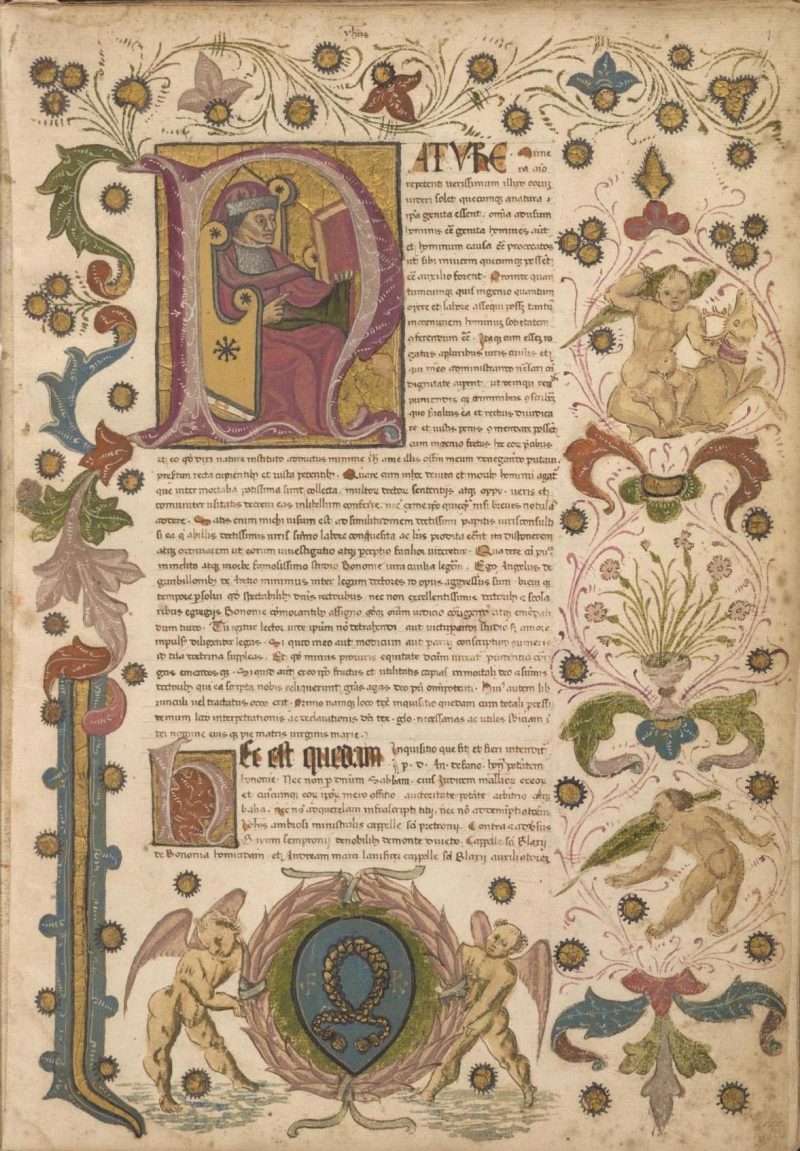
We might think we have a general grasp of the period in European history immortalized in theme restaurant form as “Medieval Times.” After all, writes Amy White at Medievalists.net, “from tattoos to video games to Game of Thrones, medieval iconography has long inspired fascination, imitation and veneration.” The market for swordplay, armor, quests, and sorcery has never been so crowded.
But whether the historical period we call medieval (a word derived from medium aevum, or “middle age”) resembled the modern interpretations it inspired presents us with another question entirely—a question independent and professional scholars can now answer with free, easy reference to “high-resolution images of more than 160,000 pages of European medieval and early modern codices”: richly illuminated (and amateurishly illustrated) manuscripts, musical scores, cookbooks, and much more.
The online project, called Bibliotheca Philadelphiensis, houses its digital collection at the Internet Archive and represents “virtually all of the holdings of PACSCL [Philadelphia Area Consortium of Special Collections Libraries],” a wealth of documents from Princeton, Bryn Mawr, Villanova, Swarthmore, and many more college and university libraries, as well as the American Philosophical Society, National Archives at Philadelphia, and other august institutions of higher learning and conservation.
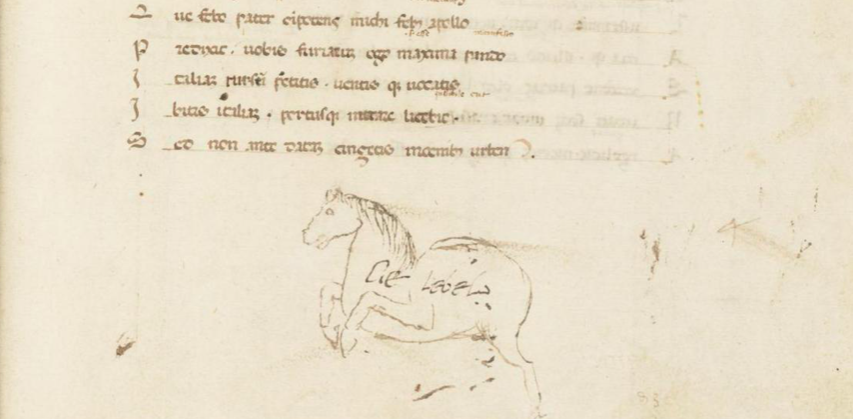
Lehigh University “contributed 27 manuscripts amounting to about 5,000 pages,” writes White, including “a 1462 handwritten copy of Virgil’s Aeneid with penciled sketches in the margins” (see above). There are manuscripts from that period like the Italian Tractatus de maleficiis (Treatise on evil deeds), a legal compendium from 1460 with “thirty-one marginal drawings in ink” showing “various crimes (both deliberate and accidental) being committed, from sword-fights and murders to hunting accidents and a hanging.”
The Tractatus’ drawings “do not appear to be the work of a professional artist,” the notes point out, though it also contains pages, like the image at the top, showing a trained illuminator’s hand. The Bibliotheca Philadelphiensis archive includes 15th and 16th-century recipes and extracts on alchemy, medical texts, and copious Bibles and books of prayer and devotion. There is a 1425 edition of Chaucer’s Canterbury Tales in Middle English (lacking the prologue and several tales).
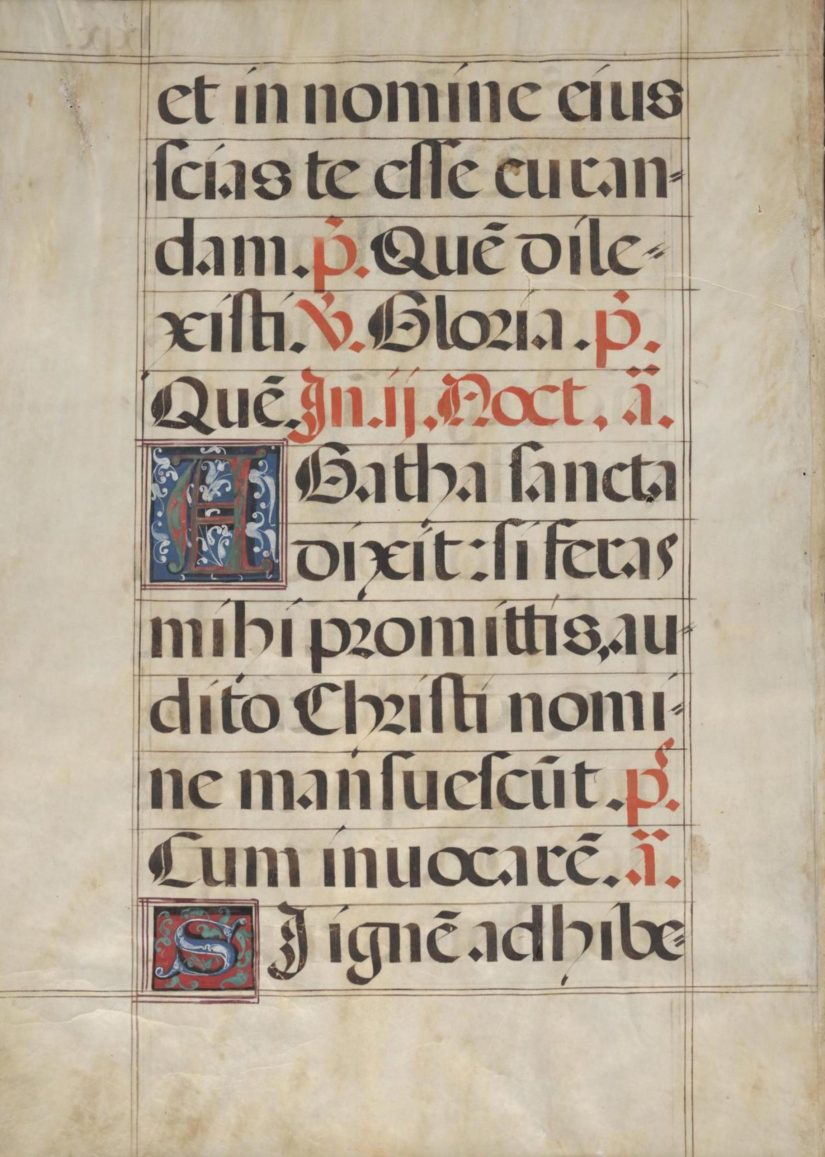
These may all seem of recent vintage, relatively speaking, for a medieval archive, but the collection reaches back to the 9th century, with hundreds of documents, like the 1000 AD music manuscript above, from a far earlier time. “Users can view, download and compare manuscripts in nearly microscopic detail,” notes White. “It is the nation’s largest regional online collection of medieval manuscripts,” a collection scholars can draw on for centuries to come to learn what life was really like—at least for the few who could read and write—in Medieval Times.
via Medievalists.net
Related Content:
Why Knights Fought Snails in Illuminated Medieval Manuscripts
The Medieval Masterpiece, the Book of Kells, Is Now Digitized & Put Online
A Free Yale Course on Medieval History: 700 Years in 22 Lectures
Josh Jones is a writer and musician based in Durham, NC. Follow him at @jdmagness
Read More...Lynda Barry’s New Book Offers a Master Class in Making Comics
In the same way you don’t have to like the way your liver looks for it to be able to function, you don’t have to like the way your drawings look for them to start to work. —Lynda Barry
Want to feel more alive in the world?
Get back in touch with your inner four-year-old artist, using methods put forward by artist, educator, and g*ddamn national treasure Lynda Barry.
Making Comics, the latest book from the University of Wisconsin associate professor, MacArthur Genius, and Omega Institute faculty member, bypasses standardized professional skills such as inking, storyboarding, and lettering, in order to foment a deeper emotional connection between cartoonist and comic.
First things first, you can draw. Stop saying you can’t. You can.
Stop saying your drawings look like they were made by a four-year-old.
In Barry’s experience, the unfettered drawings of four-year-old artists are something to aim for.
As author and comics historian Chris Gavaler notes in his Pop Matters review:
Making Comics is a love letter to every child who ever picked up a crayon and started making marks with unselfconscious intensity. Those children include her college students. Like her readers, some arrive at class with artistic training and some arrive with none at all. The latter arrive having long forgotten the uninhibited style of image-making they understood instinctively as children. Finding each of those children is Barry’s mission, and she is very very good at it.
Barry, who is childless, is keenly attuned to the sort of playful assignments that hold immediate appeal for children of all ages.
And she doles out instructions on a need to know basis, disarming the self-doubt and excuse-making that plague adult students who are presented with the big picture too early in the process.
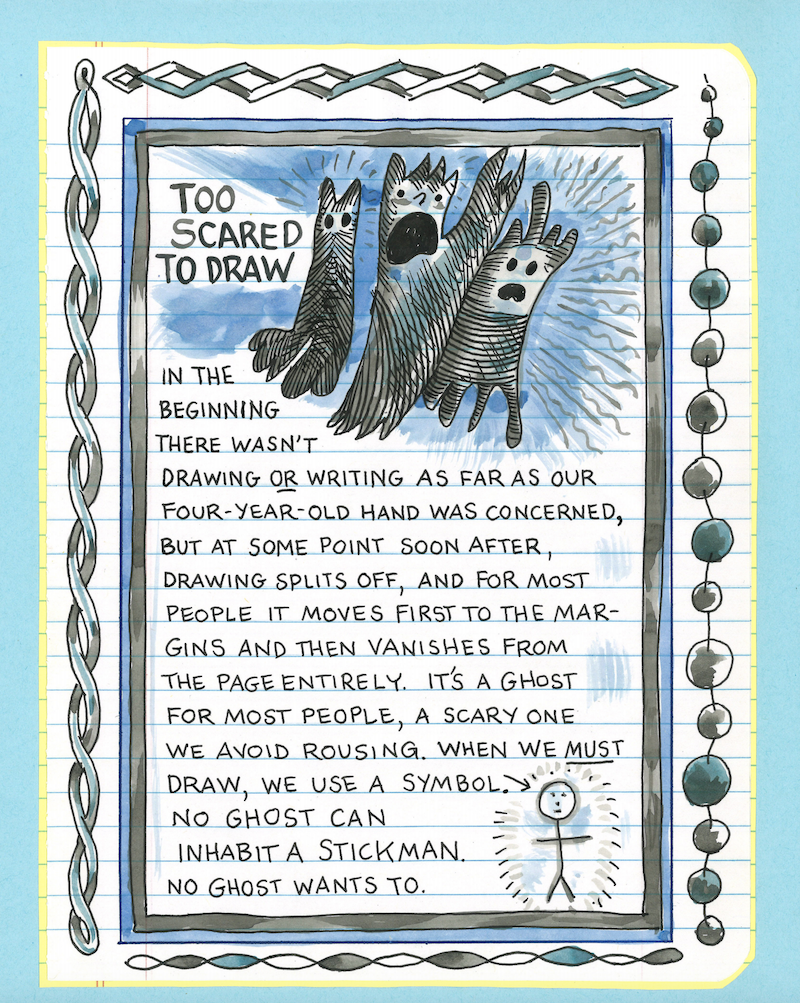
In Making Comics, exercises include drawing with eyes closed, drawing with the non-dominant hand, two-handed drawing, simultaneous partner drawing, Exquisite Corpse, and transforming scribbles and coffee stains by teasing out whatever image they may suggest.
Barry also conveys precise instructions with regard to speed and materials, knowing that those can close as many windows as they open.
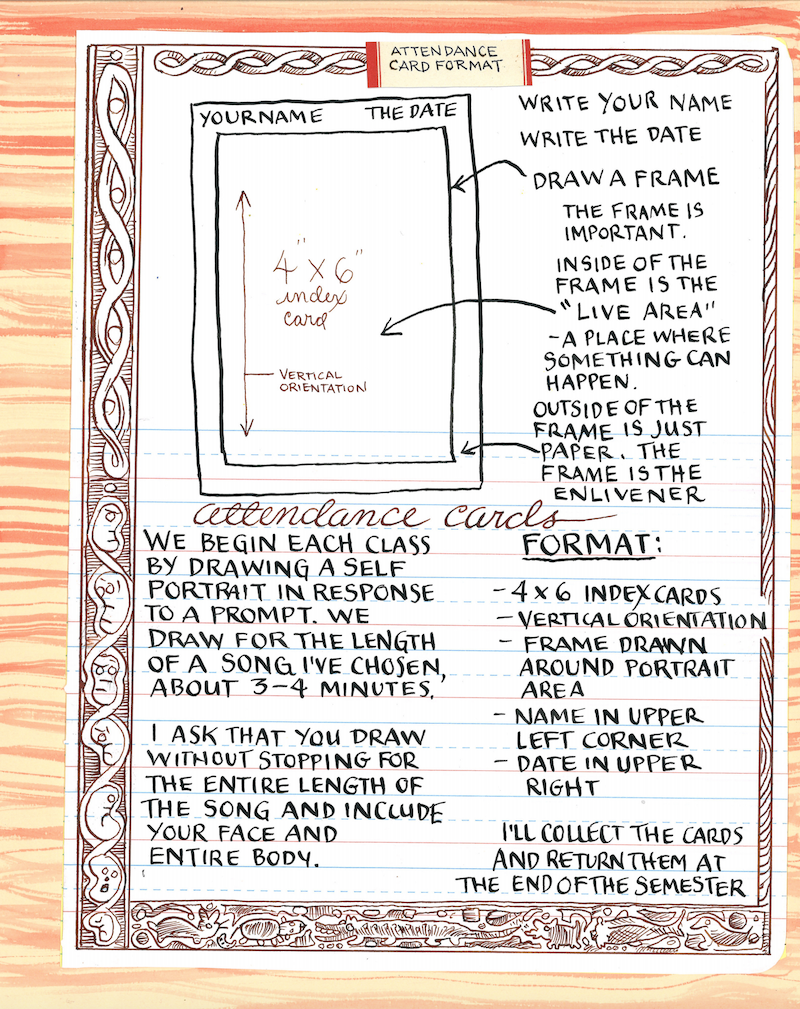
She’s battling the stifling impulse toward perfection, the impossible standards that cause so many to turn away from making pictures and stories as they mature.
Don’t sweat it! More rock, less talk! Unleash the monsters of your id! Invite unforeseen ghosts into the frame!
As Barry says:
….there are two working languages in human life. One is sort of top of the mind, what we’re conscious of. The other is this unconscious stuff that we might not know about or have access to. The way we access it is usually through this thing we call ‘the arts.’ Unfortunately, that has gotten removed from the regular daily experience of human life. What I’m trying to do is to show that there is a way that they can come together, and that you can make things in a way that makes you actually feel alive and present.
Read an excerpt of Lynda Barry’s Making Comics. Or purchase your own copy of Making Comics here.
Video at the top of the page courtesy of Art Book Walk-throughs & Reviews.
Related Content:
Cartoonist Lynda Barry Teaches You How to Draw
Ayun Halliday is an author, illustrator, theater maker and Chief Primatologist of the East Village Inky zine. Join her in NYC on Monday, December 9 when her monthly book-based variety show, Necromancers of the Public Domain celebrates Dennison’s Christmas Book (1921). Follow her @AyunHalliday.
Read More...Watch the Serpentine Dance, Created by the Pioneering Dancer Loie Fuller, Performed in an 1897 Film by the Lumière Brothers
Whatever their views on copyright, artists and inventors of all kinds can agree on one thing: all dread having their ideas stolen without so much as a footnote of credit. Such thefts have led to tanked careers, lifelong resentments, homicidal rivalries, and lawsuits to fill libraries. They have allowed many a thief to prosper and many an injured party to surrender.
But not legendary modern dance pioneer Loie Fuller.
“Short, plump, and thirty years old,” the dancer from Illinois arrived in Paris in 1892, fresh off the “mid-level vaudeville” circuit, writes Rhonda K. Garelick at Public Domain Review, and bent on proving herself to Édouard Marchand, director of the Folies-Bergère. She scored an interview within days of her arrival.
Alighting from her carriage in front of the theater, she stopped short at the sight of the large placard depicting the Folies’ current dance attraction: a young woman waving enormous veils over her head, billed as the “serpentine dancer.” “Here was the cataclysm, my utter annihilation,” Fuller would later write, for she had come to the Folies that day precisely to audition her own, new “serpentine dance,” an art form she had invented in the United States.
The imposter, an American named Maybelle Stewart, had seen Fuller perform in New York and had lifted her act and taken it to Paris. Rather than succumb to rage or despair, Fuller sat through the matinee performance and was moved from a cold sweat to renewed confidence. “The longer she danced,” she wrote, “the calmer I became.” After Stewart left the stage, Fuller ascended in her serpentine costume and auditioned for Marchand, who agreed to take her on and fire Stewart.
The story gets stranger. The show had been promoted with Stewart’s name, and so, to avoid bad publicity, Fuller agreed to perform the first two nights as Stewart, “dancing her own imitation of Stewart’s imitation of the serpentine dance,” a “triple-layer simulation,” Garelick writes, “worthy of an essay by Jean Baudrillard”—and emblematic of a career in dance marked by “self-replication, mirrored images, and identity play.”
Thus did the woman named Loie Fuller (born Mary-Louise Fuller), begin “what was to become an unbroken thirty-year reign as one of Europe’s most wildly celebrated dancers.” Fuller was “the only female entertainer to have her own pavilion” at the 1900 Exposition Universelle, writes Natalie Lemie at Artsy. “Henri de Toulouse-Lautrec featured her in a number of prints; Auguste Rodin commissioned a series of photographs of the dancer with plans to sculpt her; and the Lumière brothers released a film about her in 1897.”
Fuller’s dance personified Art Nouveau, expressing its elegant, flowing lines in her billowing silk gowns, which she moved by means of bamboo sewn into her sleeves. As she danced “colored lights were projected onto the flowing fabric, and as she twirled, she seemed to metamorphose into elements from the natural world: a flower, a butterfly, a tongue of flame.” Everyone came to see her. The Folies, which “typically attracted working class patrons,” now had aristocratic newcomers lining up outside.
See the serpentine dance that launched her career at the top in the Lumière Brothers’ 1897 film and below it in a colorized excerpt, with the bewitching music of Sigur Ros added for effect. Other films and clips here from other early cinema pioneers show the medium’s embrace of Fuller’s choreography. Ironically, none of this footage, it seems, shows Fuller herself, but only her imitators. “Unfortunately none of the surviving films seem to contain a performance by the original dancer/choreographer,” notes cinema history channel Magical Motion Museum, “despite some of them carrying her name in the title or otherwise crediting her as the dancer.”
Her name carried a lot of weight. Fuller was not only a celebrated dancer, but also a manager, producer, and lighting designer with “over a dozen patents related to her costumes and innovations in stage lighting.” (She was so interested in the “luminous properties” of radium that she sought out and “befriended its discoverers, Pierre and Marie Curie.”) By 1908, however, she had left behind some of these elaborate stage effects to focus on “natural dancing’—dance inspired by nature, which was the forerunner of modern dance.”
And she had taken on a young dancer in her company named Isadora Duncan, often referred to as the “Mother of Modern Dance.” Fuller deserves credit, too, but she didn’t seem to care about this overmuch. She was, notes Oberlin College dance professor Ann Cooper Albright, “way more interested in making things happen than creating a name for herself.” Fame came as a byproduct of her creativity rather than its sought-after reward. She was still renowned after she left the stage, and given a retrospective at The Louvre in 1924.
Fuller continued to work behind the scenes after the Art Nouveau movement gave way to new modernisms and supported and inspired younger artists until her death in 1928. Her work deserves a prominent place in the history of modern dance, but Fuller herself “was—and remains—elusive,” Lemie writes, “something of a phantom.” Others might have stolen, borrowed, or imitated the serpentine dance, but Lois Fuller became it, going beyond competition and into a realm of magic.
Related Content:
The Graceful Movements of Kung Fu & Modern Dance Revealed in Stunning Motion Visualizations
Josh Jones is a writer and musician based in Durham, NC. Follow him at @jdmagness
Read More...Art Class Instead Of Jail: New Program Lets Young Offenders Take Free Art Classes Rather Than Spend Time in the Criminal System
Art saves lives, and art can also save an individual from the stigma of an arrest record, provided that the arrest is for one of 15 non-violent misdemeanors.
Project Reset, a museum-based early diversion program in three of New York City’s five boroughs, aims to reframe the way youthful (and not so youthful) offenders see themselves, by considering an artwork via a collective interpretive process, before using it as the inspiration for a collage or oil pastel-based project of their own.
The stakes are higher and far more personal than they are on the average public school field trip. Upon completion of a class ranging from 2.5 to 4 hours, the participant’s record is wiped clean and their assigned court date is rendered moot.
Rather than being herded through a number of galleries, participants zero in on a single work.
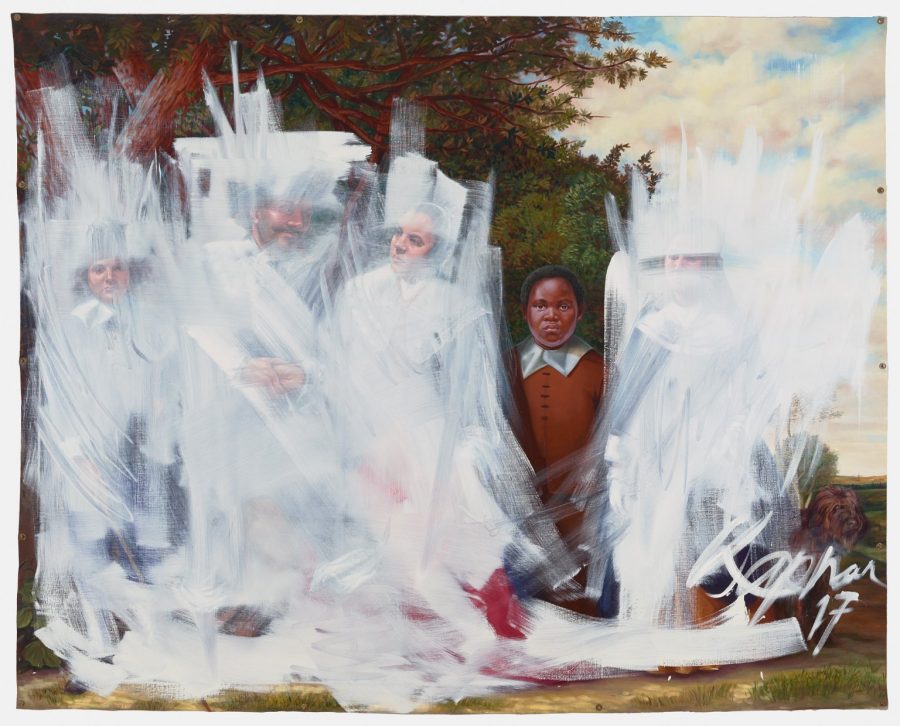
At the Brooklyn Museum, participants in the under-25 age range get a crash course in Shifting the Gaze, Titus Kaphar’s intentional palimpsest, in which all the figures in a replica of Frans Hals’ Family Group in a Landscape are whited out so viewers may focus in on the only character of color, a young boy who appears to be a family servant.
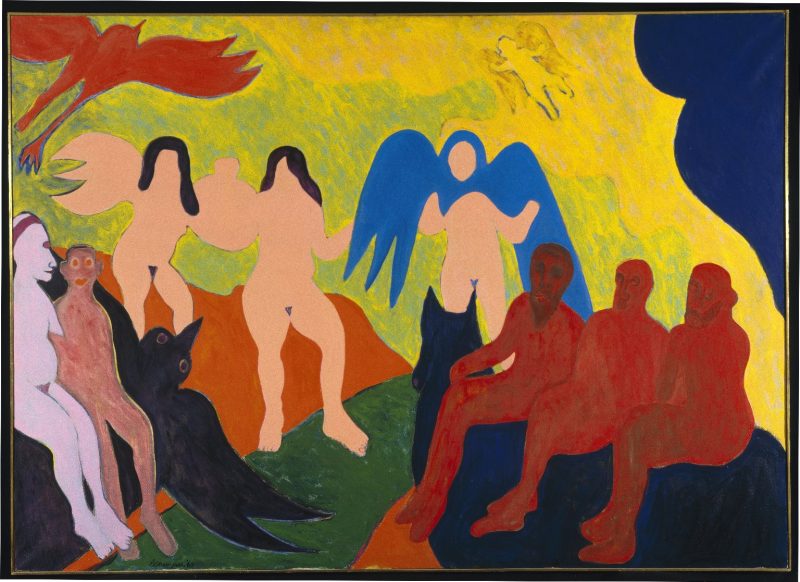
Older participants undertake a similarly deep dive on The Judgement by Bob Thompson, an African American artist who was inspired by the constant interplay between good and evil.
While this may strike some as a cushy punishment, it’s a legitimate attempt to acquaint participants with the very real impact their actions could have on future plans—including college admissions and job applications.
Manhattan District Attorney, Cyrus Vance Jr., one of Project Reset’s architects, shared a non-partisan fiscal take with City Lab’s Rebecca Bellan that may persuade naysayers who feel the program rewards budding criminals by giving them an easy out:
If you jump subway turnstiles in Manhattan, you never go to jail. You can do it 100 times and no court is ever going to send you to jail. So we spend about $2,200 to process a theft of services arrest for a $2.75 fare. Our justice system falls most heavily on communities of color, and we really need to rethink how we approach these cases, both to get better outcomes, but also to reduce the impact which is very often viewed as targeted and unfair on particular communities.

Above is a list of the non-violent misdemeanors that can channel first timers toward the aptly named Project Reset.
Related Content:
Wonderfully Offbeat Assignments That Artist John Baldessari Gave to His Art Students (1970)
The Art Institute of Chicago Puts 44,000+ Works of Art Online: View Them in High Resolution
Ayun Halliday is an author, illustrator, theater maker and Chief Primatologist of the East Village Inky zine. Join her in NYC for her monthly book-based variety show, Necromancers of the Public Domain. Follow her @AyunHalliday.
Read More...A Flowchart of Philosophical Novels: Reading Recommendations from Haruki Murakami to Don DeLillo
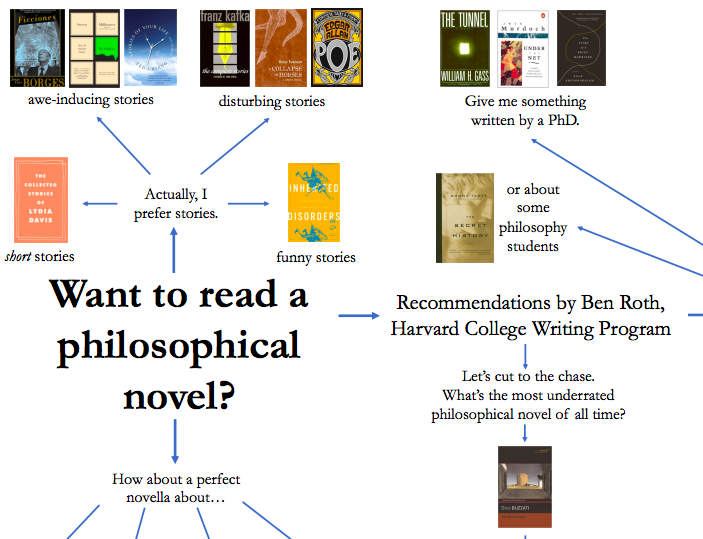
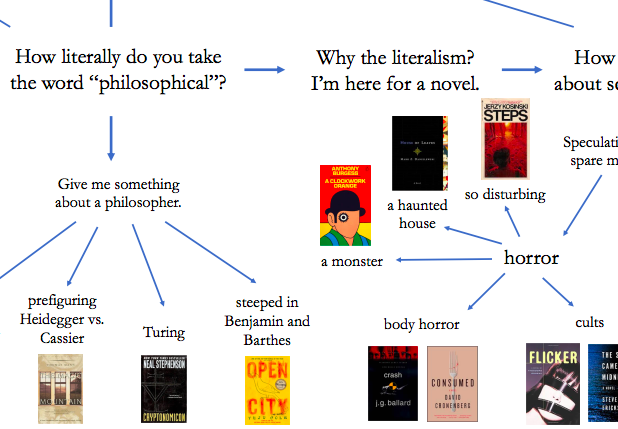
Do you want to read a philosophical novel? Sure, we all do. But the question of exactly what kind of philosophical novel you want to read, let alone which individual book, isn’t quite so easily answered. But now a professional has come to the rescue: “Ben Roth, a philosopher who teaches in the Harvard College Writing Program, has put together a kind of flowchart recommending philosophical novels and stories,” reports Daily Nous’ Justin Weinberg. “With categories like ‘about a philosopher,’ ‘by a Ph.D.,’ ‘horror,’ ‘the complications of history,’ and many more, the chart is pretty big.”
The choices you make in navigating it could land you on the work of a writer from one of a variety of countries, one of several eras, and one of a capacious range of definitions of “philosophical.” If you take the word in the sense of a novel’s being about or steeped in the work of a particular philosopher, Roth recommends books like Thomas Bernhard’s Correction (Wittgenstein) and Teju Cole’s Open City (Benjamin and Barthes). Elsewhere on the map he also includes novels written by philosophically credentialed academics like William Gass, Iris Murdoch, and Anuk Arudpragasam.
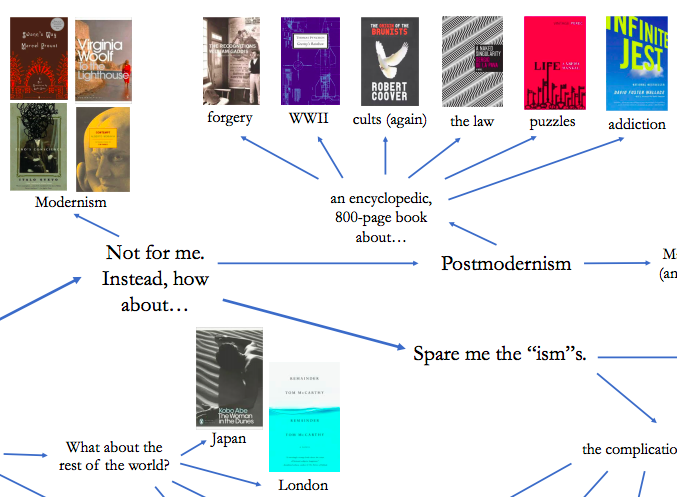
If you prefer novels where “fiction writers drop into straight essayistic mode,” Roth offers a choice between the easy mode of Milan Kundera’s The Unbearable Lightness of Being and the hard mode of Robert Musil’s The Man Without Qualities. (If you just wanted to read about a bunch of philosophy students, well, there’s always Donna Tartt’s The Secret History.)
To those who go in for more “novelly novels,” as Geoff Dyer (a known Bernhard enthusiast and author of some pretty philosophical fiction himself) memorably put it, Roth presents more forks in the road: Would you like to read science fiction? Existentialism? Postmodernism? A book free of ‑isms entirely, or anyway as free as possible?
Your answers to those questions and others could have you reading anything from J.G. Ballard’s Crash (“body horror”) to Jean-Paul Sartre’s Nausea (“mid-century French classic”) to David Foster Wallace’s Infinite Jest (postmodern, encyclopedic, on addiction). Other choices may lead you to selections less obviously involved with philosophy: J.M. Coetzee’s Waiting for the Barbarians, or Virginia Woolf’s To the Lighthouse, Haruki Murakami’s Hard-Boiled Wonderland and the End of the World. Of course, you may not want to read a philosophical novel at all: you may want to read philosophical short stories, in which case Roth recommends such form-defining figures as Edgar Allan Poe, writer of “disturbing stories”; Lydia Davis, writer of “short stories” (emphasis his); and Jorge Luis Borges, writer of “awe-inducing stories.”
Borges and quite a few other names on Roth’s philosophical-novel flowchart also appear in critic David Auerbach’s “Inquest on Left-Brained Literature,” a revealing look at the authors read by “engineers with a literary bent.” Both also include Don DeLillo, whose work Auerbach characterizes as making “heavy use of phantasmagoria, complemented by very sophisticated narrative construction,” and “simple, visceral, classical themes approached in [a] flashy, novel way.” Roth, for his part, describes DeLillo’s White Noise as his “favorite book ever.” Elsewhere on the flowchart, to the philosophical literature enthusiast who’s read everything he offers “the most underrated philosophical novel of all time,” Dino Buzzati’s The Tartar Steppe. No, I haven’t heard of it either, but I have to admit that it keeps good company.
Related Content:
Jorge Luis Borges Selects 74 Books for Your Personal Library
R. Crumb Illustrates Jean-Paul Sartre’s Nausea: Existentialism Meets Underground Comics
44 Essential Movies for the Student of Philosophy
Based in Seoul, Colin Marshall writes and broadcasts on cities, language, and culture. His projects include the book The Stateless City: a Walk through 21st-Century Los Angeles and the video series The City in Cinema. Follow him on Twitter at @colinmarshall or on Facebook.
Read More...Martin Luther King Jr. Explains the Importance of Jazz: Hear the Speech He Gave at the First Berlin Jazz Festival (1964)
Martin Luther King Jr.’s dream of full inclusion for Black Americans still seems painfully unreal fifty years after his death. By most significant measures, the U.S. has regressed. De facto housing and school segregation are entrenched (and worsening since the 60s and 70s in many cities); voting rights erode one court ruling at a time; the racial wealth gap has widened significantly; and open displays of racist hate and violence grow more worrisome by the day.
Yet the movement was not only about winning political victories, though these were surely the concrete basis for its vision of liberation. It was also very much a cultural struggle. Black artists felt forced by circumstances to choose whether they would keep entertaining all-white audiences and pretending all was well. “There were no more sidelines,” writes Ashawnta Jackson at JSTOR Daily. This was certainly the case for that most American of art forms, jazz. “Jazz musicians, like any other American, had the duty to speak to the world around them, and to oppose the brutal conditions for Black Americans.”
Many of those musicians could not stay silent after the murder of Emmett Till, the 16th Street Baptist Church bombing in Birmingham, and a string of other highly publicized and horrific attacks. Jazz was changing. As Amiri Baraka wrote in a 1962 essay, “the musicians who played it were loudly outspoken about who they thought they were. ‘If you don’t like it, don’t listen’ was the attitude.” That attitude came to define post-Civil Rights Black American culture, a defiant turn away from appeasing white audiences and ignoring racism.
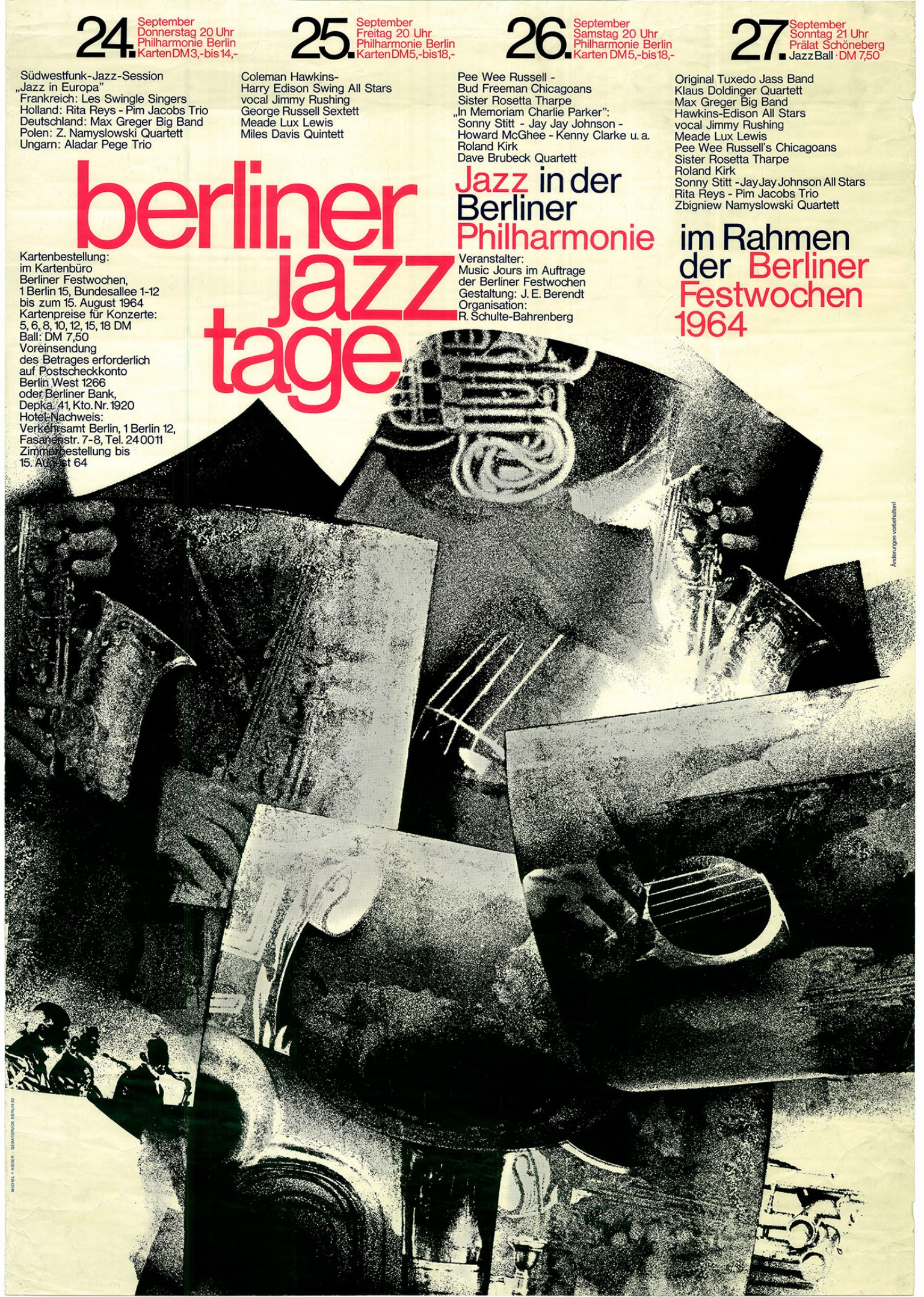
As jazz musicians embraced the movement, so the movement embraced jazz. While King himself is usually associated with the gospel singers he loved, he had a deep respect for jazz as a form that spoke of “some new hope or sense of triumph.” Jazz, wrote King in his opening address for the 1964 Berlin Jazz Festival, “is triumphant music…. When life itself offers no order and meaning, the musician creates an order and meaning from the sounds of the earth which flow through his instrument. It is no wonder that so much of the search for identity among American Negroes was championed by Jazz musicians.”
Jazz not only gave order to chaotic, “complicated urban existence,” it also provided critical emotional support for the Movement.
Much of the power of our Freedom Movement in the United States has come from this music. It has strengthened us with its sweet rhythms when courage began to fail. It has calmed us with its rich harmonies when spirits were down.
King’s take on jazz paralleled his articulations of the movement’s goals—he always understood that the particular struggles of Black Americans had specific historical roots, and required specific political remedies. But ultimately, he believed that everyone should be treated with dignity and respect, and have access to the same opportunities and the same protections under the law.
Jazz is exported to the world. For in the particular struggle of the Negro in America there is something akin to the universal struggle of modern man. Everybody has the Blues. Everybody longs for meaning. Everybody needs to love and be loved. Everybody needs to clap hands and be happy. Everybody longs for faith.
Jazz music, said King, “is a stepping stone towards all of these.” Wrought “out of oppression,” it is music, he said, that “speaks for life,” even in the midst of what could seem like death and defeat. Read King’s full address at WCLK 91.9. And at the top of the post, hear the speech read by San Francisco Bay Area artists for a 2012 celebration on King’s birthday.
The 1964 Berlin Jazz Festival (poster above) was the first in the illustrious annual event. See many other stunning posters from the series here.
via JSTOR Daily
Related Content:
Read More...Treasures in the Trash: A Secret Museum Inside a New York City Department of Sanitation Garage
Like many New Yorkers, retired sanitation worker Nelson Molina has a keen interest in his fellow citizens’ discards.
But whereas others risk bedbugs for the occasional curbside score or dumpster dive as an enviro-political act, Molina’s interest is couched in the curatorial.
The bulk of his collection was amassed between 1981 and 2015, while he was on active duty in Carnegie Hill and East Harlem, collecting garbage in an area bordered by 96th Street, Fifth Avenue, 106th Street, and First Avenue.
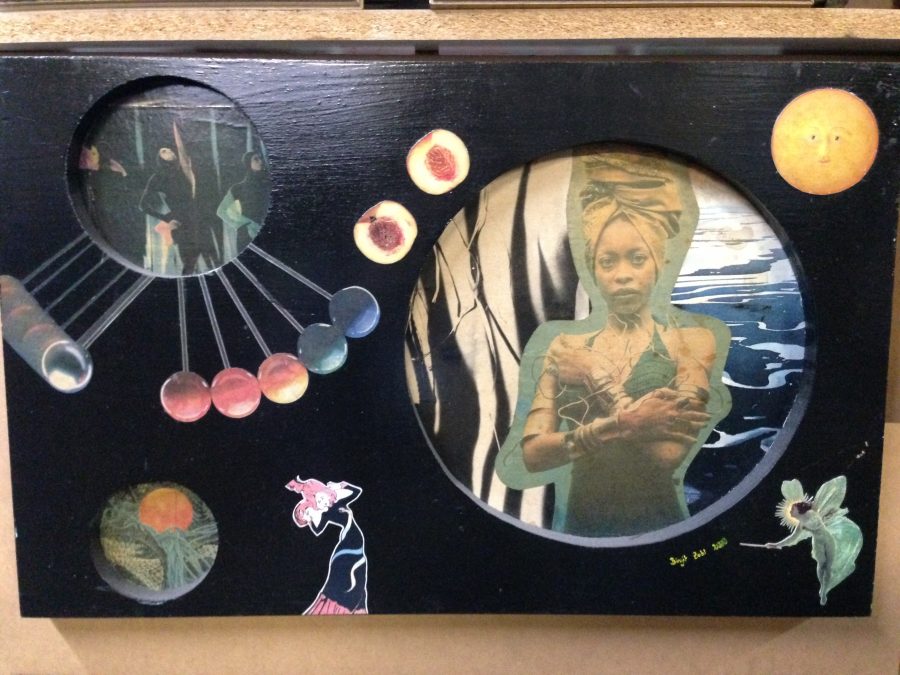
At the end of every shift, he stashed the day’s finds at the garage. With the support of his coworkers and higher ups, his hobby crept beyond the confines of his personal area, filling the locker room, and eventually expanding across the massive second floor of Manhattan East Sanitation Garage Number 11, at which point it was declared an unofficial museum with the unconventional name of Treasures in the Trash.
Because the museum is situated inside a working garage, visitors can only access the collection during infrequent, specially arranged tours. Hunter College’s East Harlem gallery and the City Reliquary have hosted traveling exhibits.
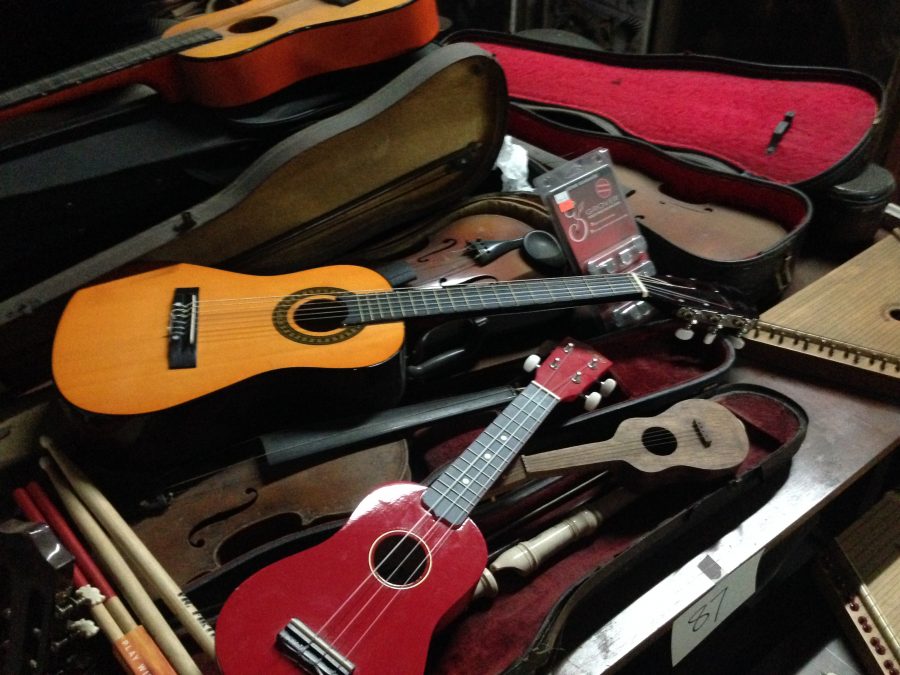
The Foundation for New York’s Strongest (a nickname originally conferred on the Department of Sanitation’s football team) is raising funds for an offsite museum to showcase Molina’s 45,000+ treasures, along with exhibits dedicated to “DSNY’s rich history.”
Molina’s former coworkers marvel at his unerring instinct for knowing when an undistinguished-looking bag of refuse contains an object worth saving, from autographed baseballs and books to keepsakes of a deeply personal nature, like photo albums, engraved watches, and wedding samplers.
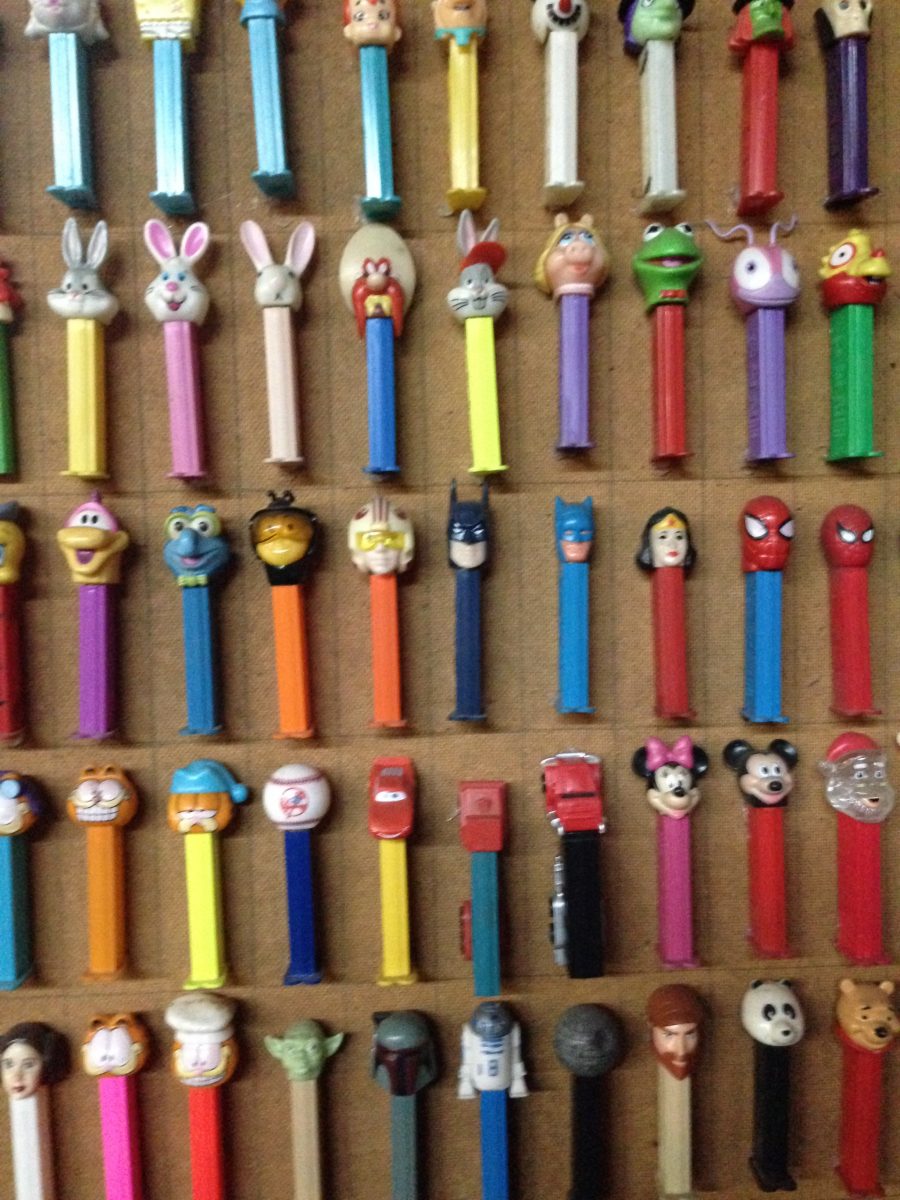
There’s also a fair amount of seemingly disposable junk—obsolete consumer technology, fast food toys, and “collectibles” that in retrospect were mere fad. Molina displays them en masse, their sheer numbers becoming a source of wonder. That’s a lot of Pez dispensers, Tamagotchis, and plastic Furbees that could be cluttering up a landfill (or Ebay).
Some of the items Molina singles out for show and tell in Nicolas Heller’s documentary short, at the top, seem like they could have considerable resell value. One man’s trash, you know…
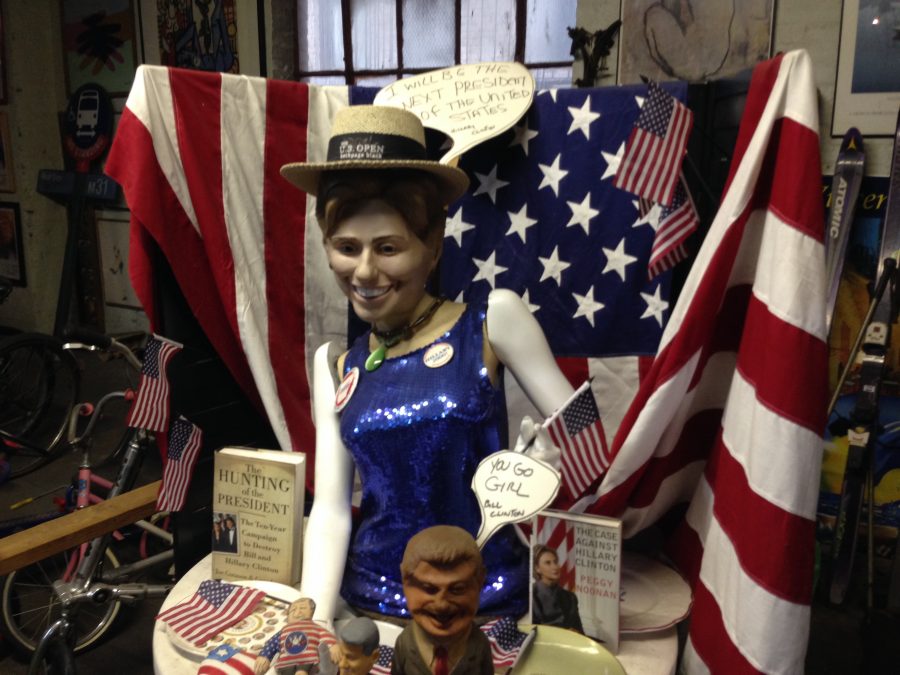
But city sanitation workers are prohibited from taking their finds home, which may explain why Department of Sanitation employees (and Molina’s wife) have embraced the museum so enthusiastically.
Even though Molina retired after raising his six kids, he continues to preside over the museum, reviewing treasures that other sanitation workers have salvaged for his approval, and deciding which merit inclusion in the collection.
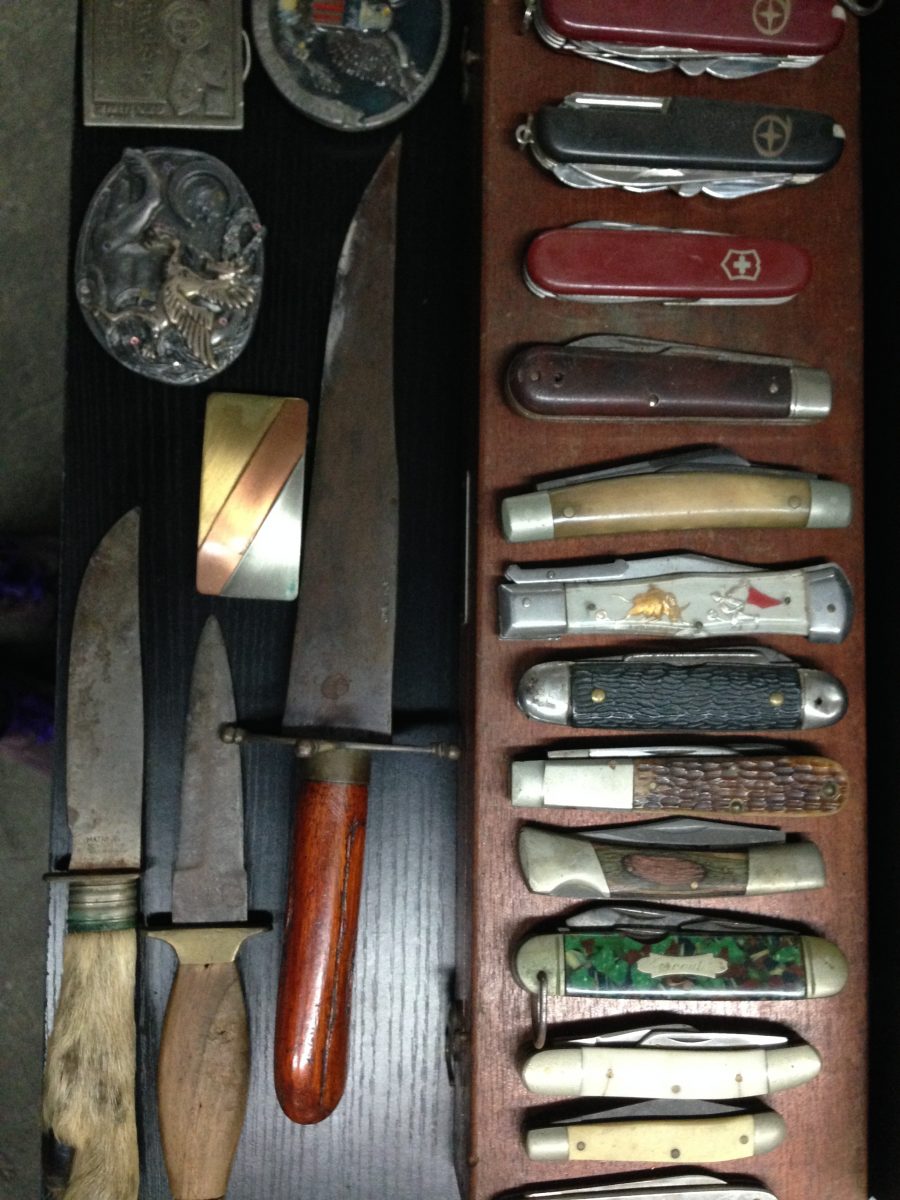
Preservation is in his blood, having been raised to repair rather than discard, a practice he used to put into play at Christmas, when he would present his siblings with toys he’d rescued and resurrected.
This thrifty ethos accounts for a large part of the pleasure he takes in his collection.
As to why or how his more sentimental or historically significant artifacts wound up bagged for curbside pickup, he leaves the speculation to visitors of a more narrative bent.
Sign up for updates or make a donation to the Foundation for New York’s Strongest’s campaign to rehouse the collection in an open-to-the-public space here.
To inquire about the possibility of upcoming tours, email the NYC Department of Sanitation at to***@******yc.gov.
Photos of Treasures in the Trash by Ayun Halliday, © 2018
Related Content:
Ayun Halliday is an author, illustrator, theater maker and Chief Primatologist of the East Village Inky zine. Although she lives and works inside Nelson Molina’s former pick up zone, she has yet to see any of her discards on display. Join her in NYC on Monday, October 7 when her monthly book-based variety show, Necromancers of the Public Domain celebrates the art of Aubrey Beardsley. Follow her @AyunHalliday.
Read More...The Women of Rock: Discover an Oral History Project That Features Pioneering Women in Rock Music
If you’ve wondered why projects celebrating women in the history of rock are needed, maybe all you need to do is listen to women in rock. Stories of boys’ clubs in the industry, from record labels to journalists to fandoms, are ubiquitous, which is why so many voices are pushed to the margins, say rock historians like Tanya Pearson, director of the Women of Rock oral history project.
Marginalization happens not only on stages and studios but at the level of memory and preservation. “Canons influence how we remember the past,” Pearson writes. “Rock journalism, media, and scholarship perpetuates a one sided, androcentric rock narrative…. Women do not easily fit and so they continue to be underrepresented. If they are represented at all, they are not given the same level of attention or granted the same access to audience as their male counterparts.”
Women of Rock, a “collection of digital interviews and written transcripts housed at the Sophia Smith Collection at Smith college,” focuses “primarily on artists who have been left out of the popular rock narratives.”
Pearson and her volunteer collaborators hope that “by creating space for women, trans, and gender nonconforming artists to share their personal and professional histories” the project can “contribute to their personal and professional histories and accurate popular rock narratives.”
Pearson created the project while an undergraduate at Smith, finding herself “frustrated by the scant details available about her favorite musicians,” writes Sharon Hannon at Please Kill Me. “The main reason I started this project,” she tells Hannon, “was that it’s something I wish I had access to when I was 13 or 14,” a time in her life when she was “desperately searching for representation.” The problem wasn’t that women like her did not exist in rock, but that she couldn’t find out much about them.
The site’s current roster of interviewees is an interesting and impressive mix. It includes women who have been integral to punk, indie, and alternative rock—like Lydia Lunch (further up), Nina Gordon and Louise Post of Veruca Salt, Alice Bag, Shirley Manson, Julie Cafritz, Melissa Auf der Mauer, Kristin Hersh, Mary Timony, Kira Rosseler, JD Samson, Amanda Palmer, and Exene Cervanka. (Sadly, Kim Shattuck of the Muffs, who passed away recently, isn’t featured.) And there are lesser-known artists who deserve a much wider audience, like Brie (Howard) Darling, a member of the criminally underrated Fanny, and whose full interview you can see below.
All of these women have stories to tell about surviving in a “male dominated business” as Tracy Bonham says in the trailer at the top of the post. Stories about “the patriarchal system,” as Shirley Manson says in her interview further up, “that allows men to thrive” and pushes women out. All of these musicians also tell us stories about themselves—their childhoods, influences, struggles, and passions, leaving behind a record in which future women rockers and rock historians among the current generation of 13- and 14-year-old kids can see themselves.
See the project’s YouTube channel for more full interviews and interview clips and visit the Women of Rock site for more.
Related Content:
New Web Project Immortalizes the Overlooked Women Who Helped Create Rock and Roll in the 1950s
How Joan Jett Started the Runaways at 15 and Faced Down Every Barrier for Women in Rock and Roll
Josh Jones is a writer and musician based in Durham, NC. Follow him at @jdmagness.
Read More...Watch Robert Hunter (RIP), Grateful Dead Lyricist, Perform His Legendary Songs “Bertha,” “Sugaree,” “Box of Rain,” “Friend of the Devil” & More
Even if you aren’t a fan, a mention of the Grateful Dead will conjure hirsute Jerry Garcia and band, lit by psychedelic lasers from without, hallucinogens from within. You’ll recall the Dead’s logo, the skull with a lightning bolt in its crown; you’ll remember tie-dye shirts with rose-crowned skeletons on them; you’ll see again those grinning, dancing bears your college roommate stuck all over her laptop and on the back of her beat-up 30-year-old Toyota.
You might call to mind these pictures with more or less fondness, but you need never to have heard a single song or have stepped into the parking lot of a Dead show to have imbibed all of the band’s iconic imagery.
Deadheads, however, will see these many signifiers as windows onto a richly textured extended universe, one filled with lore and trivia, and inhabited by-behind-the-scenes creatives who built the band’s look, stage show, and folk-occult mythology.
The Dead were at the center, but their legacy would never have carried such weight without Owsley Stanley, for example, nicknamed “Bear”—who inspired the dancing (actually, marching) bears and came up with the skull and lightning bolt (both drawn by artist Bob Thomas). Stanley also bankrolled the Dead with money from his LSD empire, built their “wall of sound” system, and served as producer, sound engineer, and all-around generative force.
No less critical to the band’s existence was Robert Hunter, the lyricist who penned the words to “Truckin’,” “Dark Star,” “Casey Jones,” “Uncle John’s Band,” “Terrapin Station,” “Ripple,” “Jack Straw,” “Friend of the Devil,” “Box of Rain,” “Touch of Grey,” and other songs central to their huge live and studio catalogue, including favorites like “Bertha,” a live-only tune “probably” about “some vaguer connotation of birth, death and reincarnation. Cycle of existences, some kind of such nonsense like that.”
So Hunter told an interviewer about “Bertha”’s origin, adding for clarification, “but then again, it might not be. I don’t remember.” The lyricist, who died yesterday, wrote “dreamlike variations on the American folk tradition,” notes Neil Genzlinger at The New York Times—songs that “meshed seamlessly with the band’s casual musical style, helping to define the Grateful Dead as a counterculture touchstone.”
Hunter earned the admiration not only of the band and its legions of fans, but also of fellow songwriters like Bob Dylan, who thought of Hunter as a peer and often collaborated with him. “He’s got a way with words and I do, too,” Dylan told Rolling Stone. “We both write a different type of song than what passes today for songwriting.” Like Dylan, Hunter worked in a mystical vein, “with a boundless knowledge of subjects running the gamut from classic literature to street life,” notes The Washington Post.
Hunter was a natural storyteller who wrote “authoritatively about everyone from card sharks and hustlers to poor dirt farmers and free-spirited lovers.” His narratives provided the Dead with a cohesive “weird American” folk center to anchor their free-form musical experimentation: a base to return to and exclaim, as Hunter famously wrote in “Truckin’,” “what a long, strange trip it’s been.” Though he was himself a musician, “proficient in a number of instruments including guitar, violin, cello, and trumpet,” he never appeared onstage with the band in all their 30 years.
He preferred to stand in the wings or “sit anonymously in the audience.” Like Stanley, he intended his creative efforts for the Grateful Dead, not the Grateful Dead featuring Robert Hunter. But that doesn’t mean he never took the stage to play those legendary songs—only that he waited until a couple decades after the band’s last gig. Here, you can see Hunter play fan favorite “Bertha” (top), and several other of his beloved Dead songs: “Sugaree,” “Scarlet Begonias,” “Box of Rain,” “Brown Eyed Women,” “Ripple,” and “Friend of the Devil.”
These performances come from appearances at the Stafford Palace Theater and Nashville’s Ryman Auditorium in 2013 and the Newport Folk Festival in 2014, before niche audiences who knew very well who Robert Hunter was. But while his name may never be as well-known in popular culture as the many artists he collaborated with and wrote for, Hunter nonetheless left an impression on American culture that will not soon fade away.
Related Content:
Josh Jones is a writer and musician based in Durham, NC. Follow him at @jdmagness
Read More...Support Us
We're hoping to rely on loyal readers, rather than erratic ads. Please click the Donate button and support Open Culture. You can use Paypal, Venmo, Patreon, even Crypto! We thank you!

About Us

Open Culture scours the web for the best educational media. We find the free courses and audio books you need, the language lessons & educational videos you want, and plenty of enlightenment in between.
Advertise With Us
FREE UPDATES!
GET OUR DAILY EMAIL
Get the best cultural and educational resources on the web curated for you in a daily email. We never spam. Unsubscribe at any time.
FOLLOW ON SOCIAL MEDIA
Open Culture editor Dan Colman scours the web for the best educational media. He finds the free courses and audio books you need, the language lessons & movies you want, and plenty of enlightenment in between.
Advertise With Us

