Watch Nirvana Perform “Smells Like Teen Spirit,” Just Days After the Release of Nevermind (1991)
It’s hard to imagine a time when Nirvana’s “Smells Like Teen Spirit” didn’t belong to all of us. One day it didn’t exist. And then one day it did, and for so many of us who heard that churning opening chord, that was it. Maybe it took one listen, or five, but it was clear this song was going to mean something. And as the autumn of 1991 wore on, it would take on the weight of many things—expectations of a new generation, a new decade, the end of hair metal, the beginning of grunge, the return of rock, or just as correctly, rock’s last gasp.
The song was released to radio stations in August, issued as a single on September 10, 1991, and then officially released on September 24, 1991. But “Smells Like Teen Spirit” really broke a month later, when MTV premiered it on 120 Minutes. Then the band watched as it became a daytime MTV hit, then a hit on every rock radio playlist, from “modern rock” to “college rock” and all the marketing divisions in between.
The above video shows the band playing the song before any of this happened, just two days after the release of Nevermind. As Jason Kottke said on his site when he posted this, “There’s a freight train bearing down on those boys and they don’t even know it.”
The performance comes from a gig at The Moon in New Haven, Connecticut (see it all above), the band playing on a small stage, with such a low ceiling that bassist Krist Novoselic looks like he’s going to bang his head on the ceiling. The audience is one huge mosh pit, all male, it seems, and you can smell the sweat and stale beer through the screen. Did the crowd know they were seeing a band on the cusp? Is it too much to read into that yelp from the audience, during the second quiet passage, that they’re witnessing a finely constructed hit, the kind of loud-soft dynamic that would be copied and echoed through the nineties.
By April of the following year the song would be so popular Weird Al Yankovic would have made his parody version (one of his best). And soon Kurt Cobain would be swallowed by fame, seeing only a few ways out of his predicament. But here they are for a brief moment in time, perhaps thinking that there would be more clubs like The Moon, just a bit bigger, maybe just a bit smaller, on the horizon.
Related Content:
Nirvana’s Last Concert: Audio/ Video Recorded on March 1, 1994
Kurt Cobain’s Home Demos: Early Versions of Nirvana Hits, and Never-Released Songs
Nirvana Plays in a Radio Shack, the Day After Recording its First Demo Tape (1988)
Ted Mills is a freelance writer on the arts who currently hosts the FunkZone Podcast. You can also follow him on Twitter at @tedmills, read his other arts writing at tedmills.com and/or watch his films here.
Read More...Robin Williams Uses His Stand-Up Comedy Genius to Deliver a 1983 Commencement Speech
Law school graduates always ask themselves the same question: after all this, what have I learned? The commencement speaker at University of California, Hastings College of Law’s class of 1983 told them exactly what they’d learned. “You’ve learned to hear at twice the speed of sound, listening to the criminal law lectures of Amy Wilson,” he said, to loud applause and laughter. And “who will ever forget professor Rudy Schlesinger? They say the man is a wonderful combination of Walter Brennan and Otto Preminger.” He then launches into not just an impression of the professor calling on one of his students, but the student as well.
Few commencement speakers can keep their audience in stitches, much less throw out a wide range of cultural references at the same time — and do all the voices. Robin Williams could, and while the students to whom he delivered the ten-minute talk above receive it as a tour de force, the rest of us can study it as an example of how to craft a speech with your audience in mind. Not only did the young San Franciscan comedian, then just out of his career-making role on Mork & Mindy, quickly establish his local credibility (at one point referring to the school as “UC Tenderloin”), he filled his remarks, swerving from high to low and dialect to dialect, with jokes only a Hastings student would get.
“ ‘He spent several days on campus preparing,’ remembers one alumna,” according to the video’s notes, “and offered up flawless, hilarious parodies of both students and faculty members as part of a message about the value of education and the importance of the legal system in society.” Hastings’ graduating classes get to choose their own commencement speakers, and 1983’s chose Williams with virtual unanimity. Knowing his comic persona from television, movies, and stand-up, they surely knew he’d turn up and make them laugh. But how many could have imagined that he would so handily demonstrate that knowledge is, indeed, power? All of them can now rest assured that Williams, who died two years ago today, has become the most in-demand speaker in that great San Francisco Civic Audtorium in the sky.
Related Content:
Robin Williams & Bobby McFerrin Sing Fun Cover of The Beatles’ “Come Together”
Based in Seoul, Colin Marshall writes and broadcasts on cities and culture. He’s at work on a book about Los Angeles, A Los Angeles Primer, the video series The City in Cinema, the crowdfunded journalism project Where Is the City of the Future?, and the Los Angeles Review of Books’ Korea Blog. Follow him on Twitter at @colinmarshall or on Facebook.
Read More...James Joyce: An Animated Introduction to His Life and Literary Works
So maybe you didn’t take a class on James Joyce’s Ulysses in college with a wizened professor from Dublin who explained in excruciating detail, week after week, why the famed modernist writer is the greatest novelist that ever lived and also some kind of secular sage and conduit of the collective genius of humanity. Maybe your encounter with Joyce began and ended with a few stories from Dubliners or with the thinly veiled memoir, A Portrait of an Artist as a Young Man. In that case, you may wonder why he inspires such cult-like devotion, even to the point of having his own holiday, Bloomsday, in which, Jonathan Goldman writes, “academics and professionals mingle with obsessives and cranks”—many of either camp-dressed in period garb, quoting Ulysses from memory, and re-enacting major scenes from the novel.
If you don’t know Joyce at all, or haven’t read Ulysses, there’s no time like the present to discover why you should. In his short School of Life animated video above, Alain de Botton lays out just a few of the reasons for the Joyce-worship, including the writer’s “devotion to some crucial themes” like “the idea of the grandeur of ordinary life” and “his determination to portray what actually goes on through our heads moment by moment, what we now know, partly thanks to him, as the ‘stream-of-consciousness.’” That phrase did not originate with Joyce, however, but with William James in the 1890s and his description of the collective characteristics of “personal consciousness.”
But since Joyce’s literary use of interior monologues that mimic the random associations of thought, we use “stream-of-consciousness” to mean “the presentation of thoughts and sense impressions in a lifelike fashion.” The “lifelikeness” of Joyce’s approach explains its appeal to so broad a range of readers, and its influence upon so many writers. Ulysses may principally be a novel about Dublin, as are all of Joyce’s books, but it also retells the epic story of the Odyssey, a “pinnacle of high culture,” Botton pronounces, through the workaday meanderings, routines, and distractions of ordinary, undistinguished people.
Ancient literature like Homer gives us great men of action—archetypes ruled by fate—and the Victorian novel Joyce replaced offers extremes of aristocracy and destitution. In Ulysses, shopkeepers, bartenders, seamstresses, students, and advertising men become three-dimensional, psychologically real actors in a historical drama, simply by being who they are. Ulysses’ protagonist, Leopold Bloom, is “very unlike a traditional hero, but he is representative of our average, unimpressive, fragile, but still rather likeable everyday selves.”
The novel’s catalogue of Bloom’s thoughts and actions over the course of an unexceptional day communicate to us that “the apparently little things that happen in daily life… aren’t really little things at all. If we look at them through the right lens, they are revealed as beautiful, serious, deep and fascinating. Our own lives are just as fascinating as those of the traditional heroes.” We must also note, however, that Ulysses makes huge demands on its reader. As one early reviewer of the novel wrote, “few intuitive, sensitive visionaries may understand and comprehend ‘Ulysses’… without going through a course of training or instruction.” Like Dante’s Divine Comedy, which greatly influenced Joyce, Ulysses is laden with local and historical references, poetic allusions, and arcane philosophical and theological debates… one may need a Virgil to finish the tour.
If we’re speculating about Joyce’s intentions in giving us ordinary characters through extraordinary literary means, they may have been less didactic than pedagogical. Yes, we can see our ordinary selves—the shape and form of our “personal consciousness”—looking back at us from Ulysses’ pages. To use a current buzzword, Joyce was a “master of literary mindfulness.” We must become better, more patient and diligent readers to appreciate the epic scope of human interiority in his best known novel. In that regard, Joyce teaches us not only to think of ourselves as heroes, but also to move through our seemingly banal modern environment with the same level of curiosity, excitement, and awe that moves us through the world of Odysseus. They are ultimately, he suggests, the same world.
Related Content:
The Very First Reviews of James Joyce’s Ulysses: “A Work of High Genius” (1922)
James Joyce’s Dublin Captured in Vintage Photos from 1897 to 1904
Carl Jung Writes a Review of Joyce’s Ulysses and Mails It To The Author (1932)
Free Online Literature Courses
Josh Jones is a writer and musician based in Durham, NC. Follow him at @jdmagness
Read More...Malcolm Gladwell Asks Hard Questions about Money & Meritocracy in American Higher Education: Stream 3 Episodes of His New Podcast
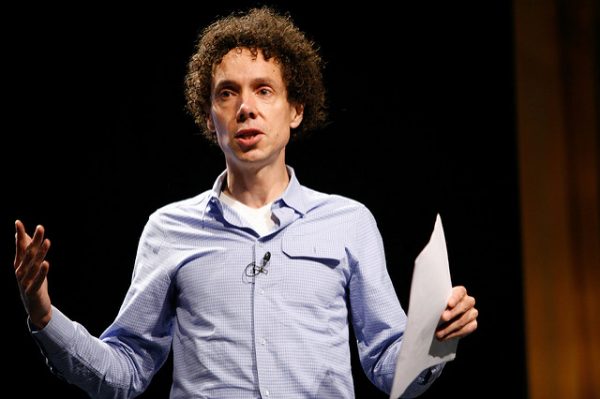
Image by Kris Krüg, via Flickr Commons
Malcolm Gladwell’s Revisionist History podcast kicked off this summer and in his very first episode, he took on the question of how women have broken into male-dominated fields, and the many reasons that so often hasn’t happened. Having set this tone, Gladwell asks in a more recent inquiry—a three-part series spanning Episodes 4 through 7—a similar question about what we might call meritocracy in education, a value fundamental to liberal democracy, however that’s interpreted. As Gladwell puts it in “Carlos Doesn’t Remember,” “This is what civilized societies are supposed to do: to provide opportunities for people to make the most of their ability. So that if you’re born poor, you can move up. If you work hard, you can improve your life.”
Over some sentimental, homespun orchestration, Gladwell points out that Americans have told ourselves that this is our birthright, “that every kid can become president.” We have seen ourselves this way despite the fact that at the country’s origin, higher offices were solely the property of propertied men, a small minority even then. Lest we forget, for all their good intentions, Ben Franklin’s Poor Richard’s Almanack and later collection, “The Way to Wealth,” were written as satires, “relentlessly scathing social and political commentary,” writes Jill Lepore, that mock wishful thinking and exaggerated ambition even as they offer helpful hints for organized, diligent living. Americans, the more cynical of us might think, have always believed impossible things, and the myth of meritocracy is one of them.
But Gladwell, skimming past the cultural history, wants to genuinely ask the question, “is it true? Is the system geared to serve the poor smart kid, or the rich smart kid?” Apart from our beliefs and political ideologies, what can we really say about what he calls, in economics terms, “the rate of capitalization” in the U.S.? This number, Gladwell explains, measures “the percentage of people in any group who are able to reach their potential.” Better than “its GDP, or its growth rate, or its per-capita income,” a society’s capitalization rate, he says, allows us to judge “how successful and just” a country is—and in the case of the U.S. in particular, how much it lives up to its ideals.
The first episode in the series (Episode 4 of the podcast, stream it above) introduces us to Gladwell’s first subject, Carlos, a very bright high school student in Los Angeles, and Eric Eisner, a retired entertainment lawyer who devotes his time to scouting out talented kids from low income families and helping them get into private schools. Eisner did exactly that for Carlos, finding him a place in an upscale private Brentwood school in the fifth grade. Early in Gladwell’s interview with Carlos, the question of what James Heckman at Boston Review identifies as the “non-cognitive characteristics” that inhibit social success comes up. These are as often “physical and mental health” and the soft skills of social interaction as they are access to something as seemingly mundane as a pair of tennis shoes that fit.
Carlos, a “really, really gifted kid,” Gladwell reiterates, cannot make it into and through the complicated social system of private school without Eisner, who bought him new tennis shoes, and who provides other material and social forms of support for the students he mentors. Students like Carlos, Gladwell argues, need not only mentors, but patrons in the mold of an ancient Roman patrician: “not just any advocate: a high-powered guy with lots of connections, who can get you in and watch over you.” The key to class mobility, in other words, lies with the arbitrary noblesse oblige of those who have already made it, generally with some considerable advantages of their own. The remainder of the episode explores the obvious and non-obvious problems with this modern-day patronage system.
In “Food Fight,” the next part of the mini-series on “capitalization,” Gladwell and his colleagues open the door on the world of prestigious liberal arts colleges’ dining services, starting at Bowdoin College in Maine, a place where the food services are “in a whole different class.” Bowdoin’s excellent food, Gladwell argues, represents a “moral problem.” To help us understand, he makes a direct comparison with Bowdoin’s elite competitor, Vassar College, whose student dining is more in line with what most of us experienced at college; in one student’s understated phrase, there’s “room for improvement.” What the food comparison illustrates is this: when many elite institutions doubled their financial aid budgets a decade or so ago to increase enrollment of low-income students, other budget lines, so Vassar’s president claims, took such a hit that food, facilities, and other services suffered.
Vassar’s current president transformed the student body from primarily full-tuition-paying students to primarily students “who pay very little.” The egalitarian move means the college must lean too heavily on its endowment and on the paying students. Gladwell doesn’t delve into what we’ve also been hearing about for at least the last decade: as institutions like Vassar accept and fund increasing numbers of low-income students, other schools charged legally with providing for the public good, like the University of California system, have raised tuition to levels unaffordable to thousands of prospective students.
Colleges across the country may have raised tuition rates to their current astronomical levels in part to better fund poorer applicants, but they have also faced stiff criticism for spending huge amounts on athletics, building projects, and exorbitant administrative salaries. The food comparison presents us with an either/or scenario, but the moral problem inhabits a much grayer reality than Gladwell acknowledges. Likewise, in the story of Carlos, we come to understand why smart kids from poor neighborhoods face so many impediments once they arrive at elite institutions. But we don’t hear about why so many poor kids fail to achieve at all due to what what Heckman calls “the principle source of inequality today”—children born into poverty begin life at a severe disadvantage from the very start, leading to social divisions of the “skilled and unskilled” even in early childhood.
We do get a broader picture in the final episode in the series, “My Little Hundred Millions,” in which Gladwell looks into another moral problem: In the story of Henry Rowan, who in the early ‘90s donated $100 million to a tiny university in New Jersey, we see a stark contrast to the way most philanthropists operate, almost as a rule making their generous gifts to elite, already wealthy schools like Harvard, Stanford, and Yale. This system of philanthropy perpetuates inequality in higher education and keeps elite institutions elite, even as—in places like Vassar—it gives them the reserve capital they need to fund lower-income students. Like any complex institutional system with a long, tangled history of exclusion and privilege, higher education in the U.S. offers us a very good model for studying inequality.
To hear Gladwell’s full assessment of meritocracy or “capitalization,” you’ll need to listen to the full series as it builds on each example to make its larger point. Each episode’s webpage also includes links to reference documents and featured books so that you can continue the investigation on your own, correcting for the podcast’s blind spots and biases. What Gladwell’s series does well, as do many of his pop sociological bestsellers, is give us concrete examples that run up against many of our abstract preconceptions. It’s an interesting approach—structuring an extended look at exceptionalism and its problems around three exceptional cases. But it is these cases, with all their complications and complexity, that often get lost in over-generalized discussions about higher education and the myths and realities of social mobility.
Related Content:
Malcolm Gladwell Has Launched a New Podcast, Revisionist History: Hear the First Episode
Malcolm Gladwell: Taxes Were High and Life Was Just Fine
Malcolm Gladwell: What We Can Learn from Spaghetti Sauce
Josh Jones is a writer and musician based in Durham, NC. Follow him at @jdmagness
Read More...The Philosophy of Bruce Lee Gets Explored in a New Podcast

Years ago, we featured a wonderful clip showing Bruce Lee, only 24 years old, auditioning for a part in the 1960s TV show, “The Green Hornet.” In the clip, Lee puts on a remarkable display of his martial arts skills, all while explaining the philosophy that guides his moves. The actor, who studied philosophy in college, looks at the camera and explains the relationship between kung fu and a glass of water. He says: “water is the softest substance in the world,… but yet it can penetrate the hardest rock or anything, granite, you name it. So, every kung fu man is trying to do that,… to be soft like water, and flexible and adapt itself to the opponent.”
That’s a good prompt to tell you about the brand new podcast that explores the philosophy of Bruce Lee, who died in 1973. Launched by his daughter Shannon Lee, each episode promises to “dig deep into Bruce’s philosophy to provide guidance and action on cultivating your truest self.” As the podcast moves along, it will help you find wisdom in Lee’s pronouncements, like: “Empty your mind, be formless, shapeless like water. Now you put water into a cup, it becomes the cup, you put water into a bottle, it becomes the bottle, you put it in a teapot, it becomes the teapot. Now water can flow or it can crash. Be water, my friend.” By now, you’re starting to see, Lee had a thing for water.
You can get the podcast via iTunes and Stitcher. Below, stream one of the first episodes that delves into his philosophy.
Related Content
Bruce Lee Auditions for The Green Hornet (1964)
Watch 10-Year-Old Bruce Lee in His First Starring Role (1950)
Bruce Lee’s Only Surviving TV Interview, 1971: Lost and Now Found
Kung Fu & Martial Arts Movies Online
Read More...Stream a Massive Collection of Indie, Noise Industrial Mixtapes from the 80s and 90s

They’ll never be worth as much as the alleged box of first edition Superman comics left in my father’s room when he shipped out to sea, allegedly given to the dump by his mother, though she forever denied it; but those overstuffed boxes full of cheap mixtapes from the late 80s and 90s in my closet have to be worth something, right? If only to the internet… the Internet Archive, a more specific place, and yes, it’s the one that hosts the Wayback Machine, preserver of webpages no one updates or, really, visits anymore.
But this is not a sad story about what happened to Web 1.0! But a happy one about where your mixtapes will go, because they are needed. Just as a recent generation decided to bypass the sixties and go back to the sources of Hendrix and CSNY so future hipsters of today ignore oughties retreads and return to the world just before the internet. They go full antiquarian with it, with authentic period costumes and period-era equipment, which means they often sound terrible. They need cassettes to get it right.

The cassette has already made its way back in a big way, reintroducing the sound of early synthpop, industrial music, DIY indie rock, and a genre called “tape experimentation” that encompasses anything from avant-garde musique concrète to the latest production of spliced together cassette tape. The sound of decaying tape—a soup of hiss and muffled, warped, out-of-tune copies of songs—birthed dark, sludgy metal and perfectly captured the soundtracks of horror movies. And, imperfectly, the sound of everything else. These were “the days when the audio cassette was the standard method of music sharing… generally the mid-eighties through early-nineties,” points out The Noise-Arch Archive, which hosts just such a collection, on just such a (digitized) medium. 30 gigs of tape hiss.
One needs a reliable guide like, say, Tom Waits, to understand how weird depression-era music was. This archive makes significant headway in conveying the same information about the Bush (the first) and Clinton (the first) years. One need only listen to Church of the Tapeslice / Timesplice at the top, as much as that’s possible, to get a flavor of how. It’s a mélange of Frank Zappa-like sound collage, Residents-like sardonic absurdity, Devo-like black humor, and free-form-the-DJ-is-really-stoned-level goofiness you’ve heard at least once late night on your college radio station. But they aren’t all this off-putting, and they aren’t all this approachable either.
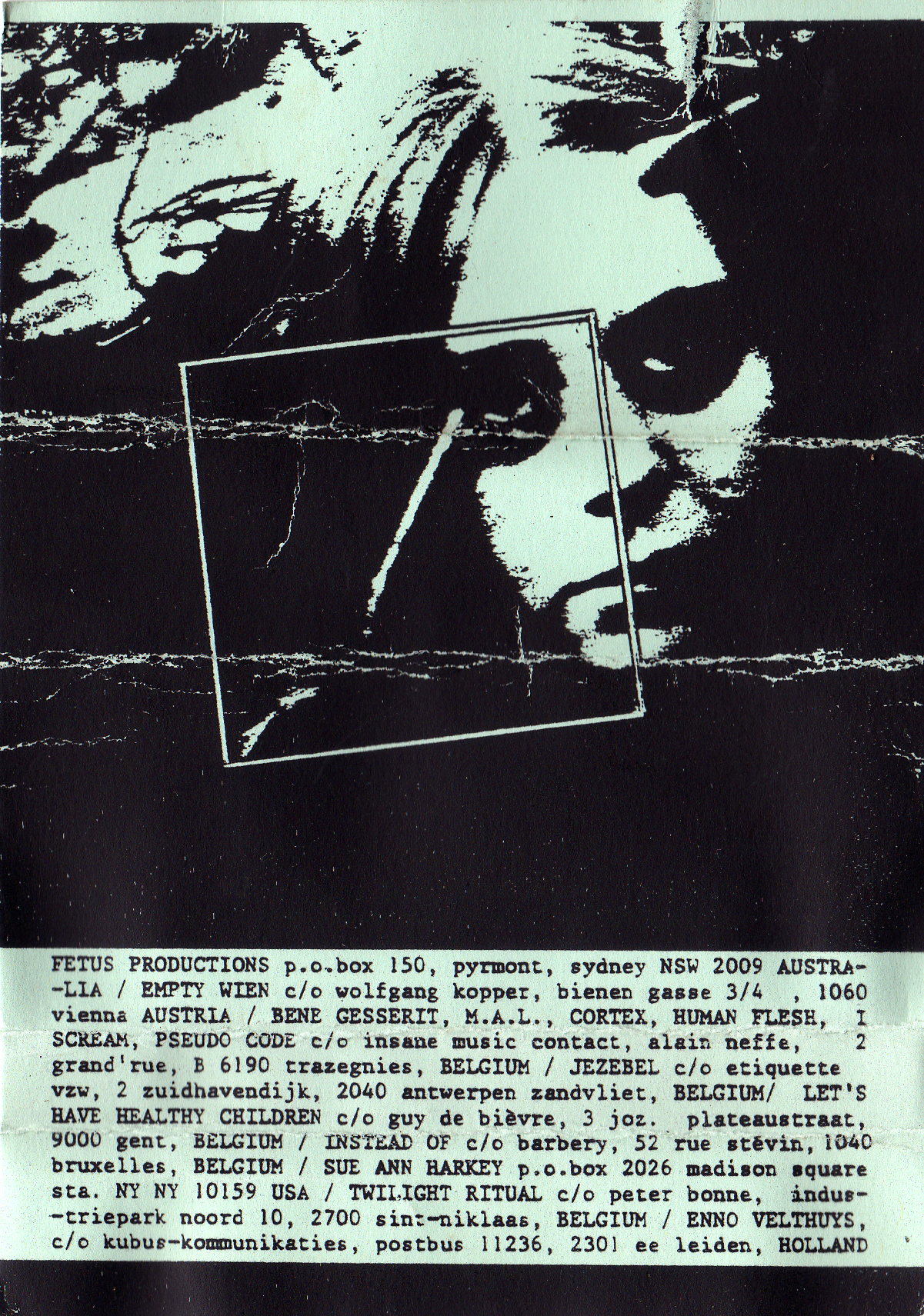
Psychomania, further up, lives up to its name. It opens innocently enough, with some sort of nondescriptly tribal ditty, lilting, if unsettling. Then the mix shifts into full giallo mode, the loud, punishing synths and descending harmonies of doom that comprise the scores of “Spaghetti Slashers.” Expect the obscure of the obscure in every tape in this collection. “Much of this material defies category,” Noise-Arch advises, “and has therefore not been given one.” Much of it sounds like something you might recognize, only a few uncanny removes from your point of reference.
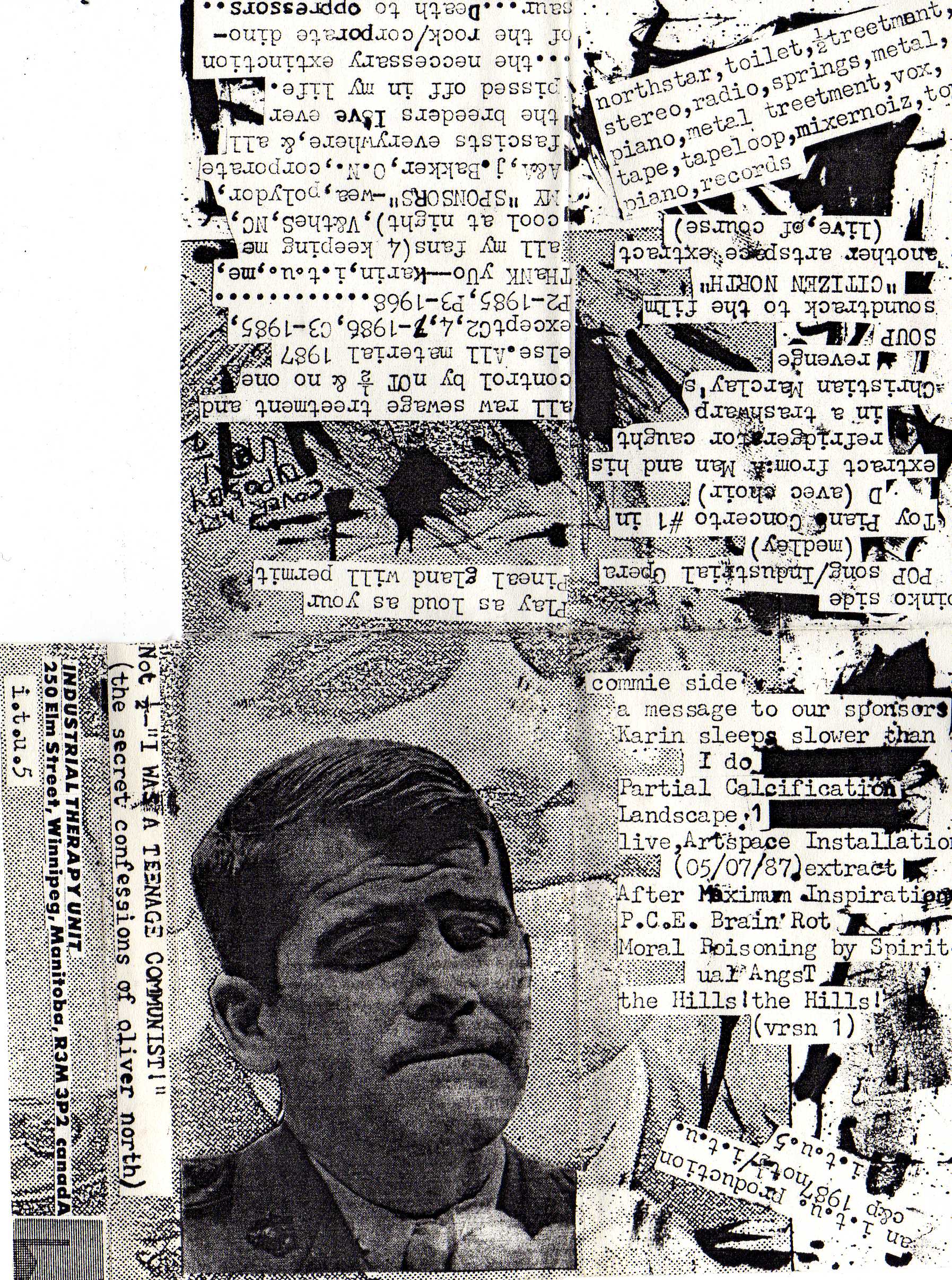
The collection above—its barely legible cover describes a compilation from “Fetus Productions” in Australia—opens with some really off-kilter electro-lounge music and progresses into a full-on synthpop opera. None of this music, obviously, should be missed. Nor the music stored in important archives currently occupying my closet. I’ll never sell it. Because who wants a bunch of worn-out crappy plastic tapes? It’s what’s on them that we need to preserve. Even the hard-to-love slacker nonsense of I Was a Teenage Communist (The Secret Confessions of Oliver North). Enter The Noise-Arch Archive here.
Related Content:
A Massive 800-Track Playlist of 90s Indie & Alternative Music, in Chronological Order
Josh Jones is a writer and musician based in Durham, NC. Follow him at @jdmagness
Read More...The Digital Transgender Archive Features Books, Magazines & Photos Telling the History of Transgender Culture
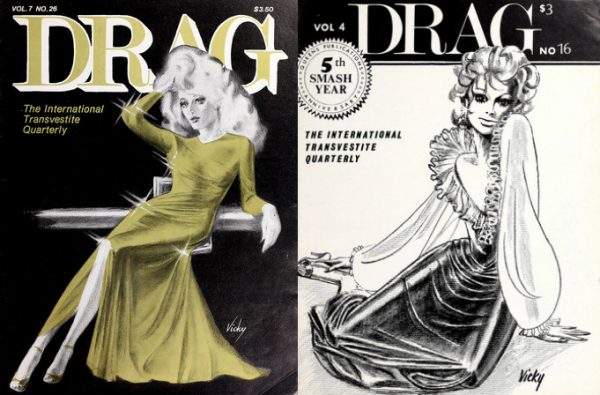
Transgender issues have entered the public conversation in a big way. To those without much direct connection to them, they might all seem to have come up suddenly, with little precedent, within the past few years. But most phenomena that seem to have achieved instant prominence have a rich, if long-hidden, history behind them. In this case, you can now discover a great deal of the history at the new Digital Transgender Archive, an “international collaboration among more than twenty colleges, universities, nonprofit organizations, and private collections” aiming to create “a generative point of entry into the fascinating and expansive world of trans history.”
Hyperallergic’s Claire Voon has more on the site’s origins, including words from the project’s leader, College of the Holy Cross English professor K.J Rawson. Its impetus came from the problem that “a lot of trans-related materials were held in dissipated collections, and it wasn’t really clear who had what, why they had it, how it related to other collections, and how it was accessible to researchers.” The Digital Transgender Archive replaces some of the unnecessary arduousness under which those researchers used to labor, providing them with a simple search box or, an ability to browse by collection, institution, geographic location, genre, or topic.

Ranked by the number of the items in the archive, that topic list gives a vivid overview of the sorts of social practices and categories best represented there: crossdressers and crossdressing rank first and second, respectively, followed by the rest of a top-twenty, including drag queens, photography, activists, and actors.

Given the importance of the visual to transgender culture, it should come as no surprise that the Digital Transgender Archive’s growing collection of documents, photographs, periodicals, and “ephemera,” organized all together for the first time, offers plenty of striking material to look at — as well as to introduce the history of a world about which few could openly communicate before now.
via Hyperallergic
Related Content:
Allen Ginsberg Talks About Coming Out to His Family & Fellow Poets on 1978 Radio Show (NSFW)
Based in Seoul, Colin Marshall writes and broadcasts on cities and culture. He’s at work on a book about Los Angeles, A Los Angeles Primer, the video series The City in Cinema, the crowdfunded journalism project Where Is the City of the Future?, and the Los Angeles Review of Books’ Korea Blog. Follow him on Twitter at @colinmarshall or on Facebook.
Read More...Watch “Traffic Stop,” an Emmy-Nominated, Animated Film About a Traffic Stop Gone Horribly Wrong
As the Black Lives Matter movement has come to occupy a greater swath of America’s attention span, a conversation has arisen around the pitfalls of allyship, a term that lends itself to discussions of gender and disability, as well as race.
Simply put, the self-proclaimed allies are members of a more privileged majority, eager to lend support through word and deed.
Unfortunately, their enthusiasm often turns them into microphone hogs in what activist Princess Harmony Rodriguez has referred to as “ally theater.”
A number of would-be allies confuse humility with the seeking of brownie points. If they really got it, those at the center of the movement say, they would not expect members of the minority to rearrange their to-do lists to bring them up to speed on what it’s like to be a person of color (or a transgendered person or a disabled person).
Would-be allies are therefore advised to step out of the spotlight, stuff a sock in it, and educate themselves, by working to find existing essays and narratives, authored by those with whom they would be in solidarity.
Human nature ensures that tempers will flare and hurt feelings will be aired. The horrifying social ill that gave rise to the movement—the shooting of unarmed black men by those charged with protecting the whole of the public—is elbowed offstage, so that a phenomenon such as allyship can be the number one topic of debate on college campuses, websites, and social media.
“Traffic Stop,” above, provides a rare moment of racial accord, stemming from yet another ghastly tale of police brutality.
The short animation was born of a conversation recorded by Alex Landau and Patsy Hathaway in a StoryCorps booth, a massive oral history project designed to attract a wide diversity of participants.
Landau is African-American.
His adoptive mother, Hathaway, is white.
Those who would classify adopting a child of another race as “allyship” must concede that, if so, it is certainly of no casual stripe.
The events of January 15, 2009, when Denver police stopped the 19-year-old Landau and a white friend for making an illegal left turn, caused Hathaway to rethink the colorblind worldview she had espoused while raising her son.
“I thought that love would conquer all and skin color really didn’t matter,” Hathaway tells Landau. “I had to learn the really hard way when they almost killed you.”
Had the attack happened a few years later, Landau’s friend might have managed to document the proceedings with a cell phone, despite the handcuffs that were placed on him after a bag of marijuana was found in his pocket.
Instead, this animation, and the grisly graphic photo that follows of Landau’s face prior to receiving 45 stitches, will have to suffice. His recollection of the laughter and racial epithets directed his way as he lay bleeding on the ground are stomach-churners, too.
Like his mother, Landau’s childhood perception of an all-inclusive, benevolent world was shattered. They mourned it together when they were reunited in the emergency room on the night of the ill-fated traffic stop.
Look and listen.
Then, if you are ready to wade into thornier territory, read the hundreds of comments viewers have posted on youtube.
Ultimately, the City of Denver awarded Landau a $795,000 settlement, while the Denver Police Department, citing a lack of evidence, cleared all three officers of misconduct. Follow up articles from 2011 and 2013 are available here and here.
Traffic Stop was animated by Gina Kamentsky & Julie Zammarchi (read an interview with them here). It was recently nominated for an Emmy award last week.
Related Content:
Pepper Spraying Peaceful Protestors Continues; This Time at UC Davis
Ayun Halliday is an author, illustrator, and Chief Primatologist of the East Village Inky zine. Follow her @AyunHalliday.
Read More...What Are the Most Stolen Books? Bookstore Lists Feature Works by Murakami, Bukowski, Burroughs, Vonnegut, Kerouac & Palahniuk
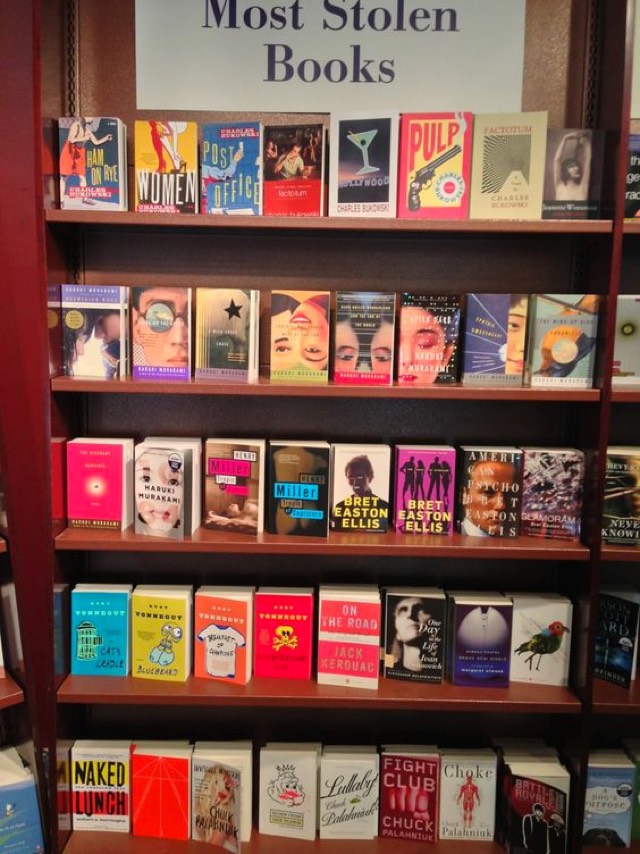
In 1971, Abbie Hoffman published his countercultural how-to/”hip Boy Scout handbook,” Steal This Book. Since then, millions of people have queued up to pay for it. Did they misread the very clear instruction in the title? Or did most of Hoffman’s readers think of it as another Yippie hoax, not to be taken any more seriously than Pigasus, the 145-pound pig Hoffman and his merry band of pranksters nominated for president in 1968? Seems to me Hoffman was dead serious about the pig, and about his call for shoplifting, or “inventory shrink.”
Nevertheless, millions of people have needed no unambiguous prodding from the Andy Kaufman of political theater to steal millions of other books from shops worldwide, to the detriment of publishers and booksellers and the edification of penurious readers. The books most stolen from bookstores happen to also be those that might best appeal to the kind of radical anarcho-hippies Hoffman addressed, including Jack Kerouac’s On the Road and anything by Bukowski and Burroughs.
Also high on the list is Haruki Murakami’s The Wind-Up Bird Chronicle, not a novel we necessarily associate with dumpster-divers and boxcar-hoppers, but one of many Murakamis book thieves have taken to lifting nonetheless. Kurt Vonnegut ranks highly, including his very popular Cat’s Cradle and Breakfast of Champions. Other favorite authors include hyper-masculine seers of societal decadence, Chuck Palahniuk and Brett Easton Ellis.
How do we know this? One source is simply an image, above, tweeted out by Vintage/Anchor Books—a photo of a “Most Stolen Books” shelf at an unnamed bookstore. We might assume whichever store it is has all the evidence it needs from a consistently shrinking inventory of these titles. And another major bookstore confirms much of the anonymous shelf above.
Melissa MacAulay at The Editing Company blog writes that during a part-time gig at Canadian giant Indigo books, Palahniuk’s Fight Club ended up behind the counter. Readers looking for a copy instead found “a small sign directing you to ‘please ask for assistance.’” In addition to Palahniuk, Indigo’s big three most stolen authors are Murakami, Kurt Vonnegut, and Bukowski, who tops out as the “reigning king of ‘Shoplift Lit.’”
In yet another “Most Stolen” list, blogger Candice Huber—inspired by Markus Zusak’s 2013 novel The Book Thief—undertook her own informal research and came up with similar results, with Bukowski and Burroughs in the top spot and Kerouac at number two. “All of the books listed,” notes Kottke, “are by men and most by ‘manly’ men” (whatever that means). See her list, with commentary, below.
Anything by Charles Bukowski or William S. Burroughs. Book sellers tend to keep books by these authors behind the counter because they get swiped so often.
On the Road by Jack Kerouac. If you notice a theme here, Bukowski, Burroughs, and Kerouac books all share, shall I put it bluntly, content of sex and drugs. It seems that those most likely to commit a reckless act (stealing) are also interested in reading about reckless acts.
Graphic Novels. The majority of book thieves are young, white males, and this is what they read.
The Great Gatsby by F. Scott Fitzgerald. Which was actually one of the most commonly stolen books long before the movie came out.
Various Selections from Ernest Hemingway, including A Moveable Feast and The Sun Also Rises.
Naked and Me Talk Pretty One Day by David Sedaris. David Sedaris? Really?
The New York Trilogy by Paul Auster. I wouldn’t have thought this was the stuff of the five-finger discount.
Steal this Book did not crack the top seven, though it did receive honorable mention, along with Hunter S. Thompson’s Fear and Loathing in Las Vegas, Jeffrey Eugenides’ The Virgin Suicides, Paulo Coelho’s The Alchemist, and “anything by Martin Amis.” Having been a poor college student myself once (not that I lifted my books!), and having taught many a cash-strapped undergrad, I’d assume a good number of the missing Fitzgeralds and Hemingways left bookstores in the hands of thieves bearing syllabi.
A 2009 Guardian list gives us an entirely different image of British book thieves with a penchant for boxer Lenny McLean’s memoirs, Yolanda Celbridge’s “modern S&M classic” The Taming of Trudi, comic books Tintin and Asterix, Banksy’s coffee table book Wall and Piece, and Harry Potter. Hoffman comes in at number six.
When it comes to books stolen from libraries, on the other hand, Huber points out this dynamic: “library theft leans more toward the practical than the popular, whereas bookstore theft leans toward the popular.” The top seven here include expensive art books, The Bible, The Guinness Book of World Records, textbooks/reference books/exam prep books, and, naturally, books on university reading lists. Also, Sports Illustrated Swimsuit Edition and “other racy books/magazines”—many stolen, perhaps, to avoid the embarrassment of prying librarian eyes.
We do not assume that you, dear upstanding reader, have ever stolen a book, or anything else. And yet, did you find anything on these lists surprising? (I thought Henry Miller might make the cut.…) What books would you expect to see stolen often that didn’t appear? What about a list of “most borrowed” (and maybe never returned) books from friends/acquaintances/family/roommates? Let us know your thoughts below.
Related Content:
The 20 Most Influential Academic Books of All Time: No Spoilers
28 Important Philosophers List the Books That Influenced Them Most During Their College Days
The 10 Greatest Books Ever, According to 125 Top Authors (Download Them for Free)
Josh Jones is a writer and musician based in Durham, NC. Follow him at @jdmagness
Read More...Walt Whitman Gives Advice to Aspiring Young Writers: “Don’t Write Poetry” & Other Practical Tips (1888)
Some of the best, most succinct writing advice I ever received came from the great John McPhee, via one of his former students: “Writing is paying attention.” What do you see, hear, taste, etc.? Questions of style, syntax, and punctuation come later. Obsess over them before you’ve learned to pay attention, and you’ll have nothing of interest to write about. And in order to notice what you’re noticing, you’ve got to record it; so keep a notebook with you at all times to jot down overheard expressions, thrilling sights and insights, dramatic chance encounters… hoarding material, all the time.
Amongst the tidal wave of advice you’ll encounter when you first begin to write—much of it contradictory and some of little practical benefit—you’d have a hard time finding anyone who disagrees with McPhee. Not even Walt Whitman, who embraced contrariness and contradiction like no other American writer, thus becoming all the more an honest reflection of the nation. Few writers spent more time noticing than Whitman, who seemingly recorded everything he saw and heard on his travels. “I heard what the talkers were talking,” he proclaimed, “I perceive after all so many uttering tongues.” Whitman—as a project called HarvardX Neuroscience dubs him—was a “poet of perception.”
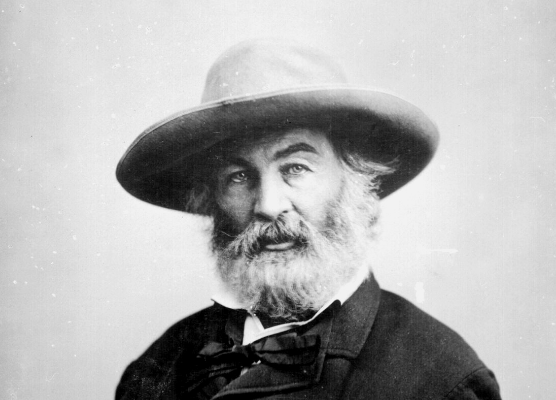
But he was also a hard-headed realist with a bent toward the utilitarian and a scrappy resourcefulness that made him an artistic survivor. Whitman contained multitudes, not only in his poetry but in his writing advice. When editors of The Signal, newspaper of The College of New Jersey, asked the poet in 1888 to advise young scholars on the “literary life,” he obliged, giving the paper a brief interview in which the “gray-haired, handsome, aged poet of Camden” proffered the following (condensed in list form below):
1. Whack away at everything pertaining to literary life—mechanical part as well as the rest. Learn to set type, learn to work at the ‘case’, learn to be a practical printer, and whatever you do learn condensation.
2. To young literateurs I want to give three bits of advice: First, don’t write poetry; second ditto; third ditto. You may be surprised to hear me say so, but there is no particular need of poetic expression. We are utilitarian, and the current cannot be stopped.
3. It is a good plan for every young man or woman having literary aspirations to carry a pencil and a piece of paper and constantly jot down striking events in daily life. They thus acquire a vast fund of information. One of the best things you know is habit. Again, the best of reading is not so much in the information it conveys as the thoughts it suggests. Remember this above all. There is no royal road to learning.
Whitman’s advice contains sound, practical tips on what we might today call “professionalization.” Should we take his admonishment against writing poetry seriously? Why not? For a good portion of his life, Whitman earned a living “whacking away,” as he liked to say often, at more utilitarian forms of writing, from reportage to an advice column. Whitman took seriously his role as a voice of working people and perhaps saw this interview as an occasion to address them.
Whitman’s “seething rejection of poetry,” writes Nicole Kukawski in the Walt Whitman Quarterly Review, should not surprise us; it is “simply part of his attack on conventionality in all respects… poetry can never be ‘utilitarian’—in no way can it reach the masses for their benefit.” Unlike our day, poetry was ubiquitous in late nineteenth century America, part of an entrenched, highly conventional polite discourse. Who knows, maybe a Whitman of the early 21st century would feel very differently on this point. Surely we could use a great deal more “poetic expression” these days.
Whitman’s final piece of advice accords fully with John McPhee’s—and several hundred other writers and teachers. But in Whitman’s estimation, noticing, and acquiring “a vast fund of information,” was not only essential to the literary life but also key to pursuing an “individualistic,” real-world self-education. “One subject about which Whitman did not contradict himself,” writes Kukawski, “was his consistent belief that the scholar should learn by encountering life instead of reading books alone.” There may be no better exemplar of that philosophy in American letters than Walt Whitman himself.
via Austin Kleon
Related Content:
Walt Whitman’s Poem “A Noiseless Patient Spider” Brought to Life in Three Animations
Josh Jones is a writer and musician based in Durham, NC. Follow him at @jdmagness
Read More...Support Us
We're hoping to rely on loyal readers, rather than erratic ads. Please click the Donate button and support Open Culture. You can use Paypal, Venmo, Patreon, even Crypto! We thank you!

About Us

Open Culture scours the web for the best educational media. We find the free courses and audio books you need, the language lessons & educational videos you want, and plenty of enlightenment in between.
Advertise With Us
FREE UPDATES!
GET OUR DAILY EMAIL
Get the best cultural and educational resources on the web curated for you in a daily email. We never spam. Unsubscribe at any time.
FOLLOW ON SOCIAL MEDIA
Open Culture editor Dan Colman scours the web for the best educational media. He finds the free courses and audio books you need, the language lessons & movies you want, and plenty of enlightenment in between.
Advertise With Us

