The BBC Creates Step-by-Step Instructions for Knitting the Iconic Dr. Who Scarf: A Document from the Early 1980s
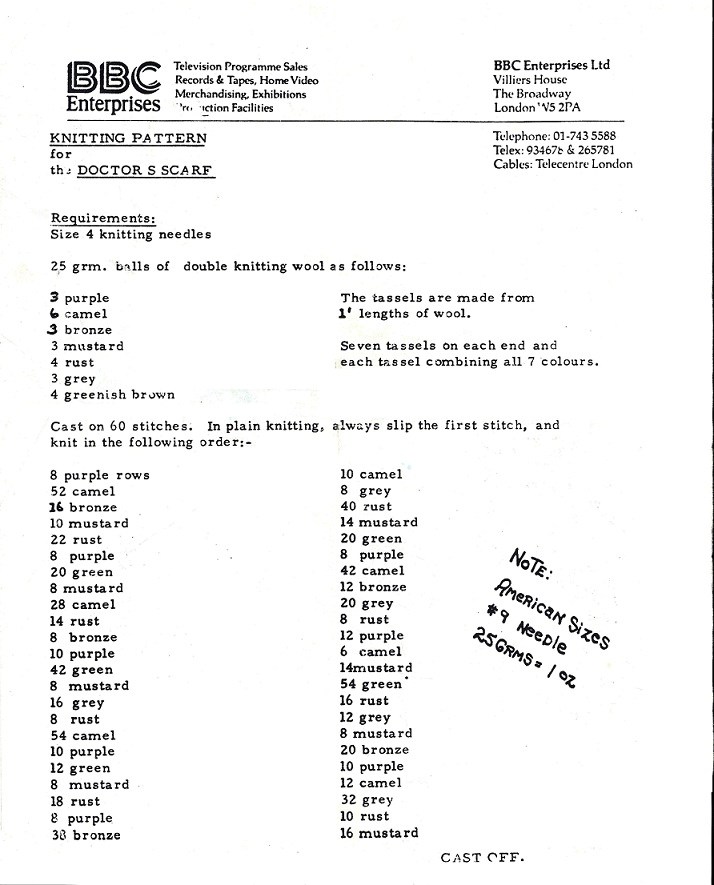
When Jon Pertwee reincarnated into Tom Baker in 1974, the Fourth Doctor of the popular sci-fi show Doctor Who ditched the foppish look of velvet jackets and frilly shirts, and went for the “Romantic adventurer” style, with floppy felt hat, long overcoats and, most iconically, his multicolored scarf.
Fan legend has it that costume designer James Acheson picked up a load of multi-color wool and asked knitter Begonia Pope to create a scarf, and Pope, perhaps mishearing, used *all* the wool, resulting in a scarf that ran 12 feet long. The mistake was perfect, and suddenly many UK grandmothers were being asked by their grandchildren to recreate their hero’s look.
The above memo isn’t dated, but comes from sometime in the early ‘80s when the BBC sent detailed instructions to a fan’s mother on making the scarf. (Click here, then click again, to view the document in a larger format.) The colors include camel, rust, bronze, mustard, grey, green and purple and should be knitted with size four needles (that’s #9 US size). The requests must have come regularly, because a similar memo is reprinted from many years later to another fan’s family.
The original scarf only lasted a few episodes, then was altered, replaced, and subtly changed as the show went on. There were stunt scarves for stand-ins.
Come Season 18, costume designer June Hudson rethought the entire costume and streamlined the colors to three: rust, wine, and purple, to match the Doctor’s more swashbuckling look. It also became the longest scarf of the series, some 20 feet.
The following year, the Doctor reincarnated again into a cricket-jumper and striped trouser-wearing young blonde man. The Scarf Years were over.
For a very in-depth look at the scarves, including Pantone color references and wool brands, there is nothing better than DoctorWhoScarf.com. So, get knitting, Who-vians!
Related Content:
How Doctor Who First Started as a Family Educational TV Program (1963)
The Fascinating Story of How Delia Derbyshire Created the Original Doctor Who Theme
Ted Mills is a freelance writer on the arts who currently hosts the FunkZone Podcast. You can also follow him on Twitter at @tedmills, read his other arts writing at tedmills.com and/or watch his films here.
Read More...Beautiful 19th Century Maps of Dante’s Divine Comedy: Inferno, Purgatory, Paradise & More
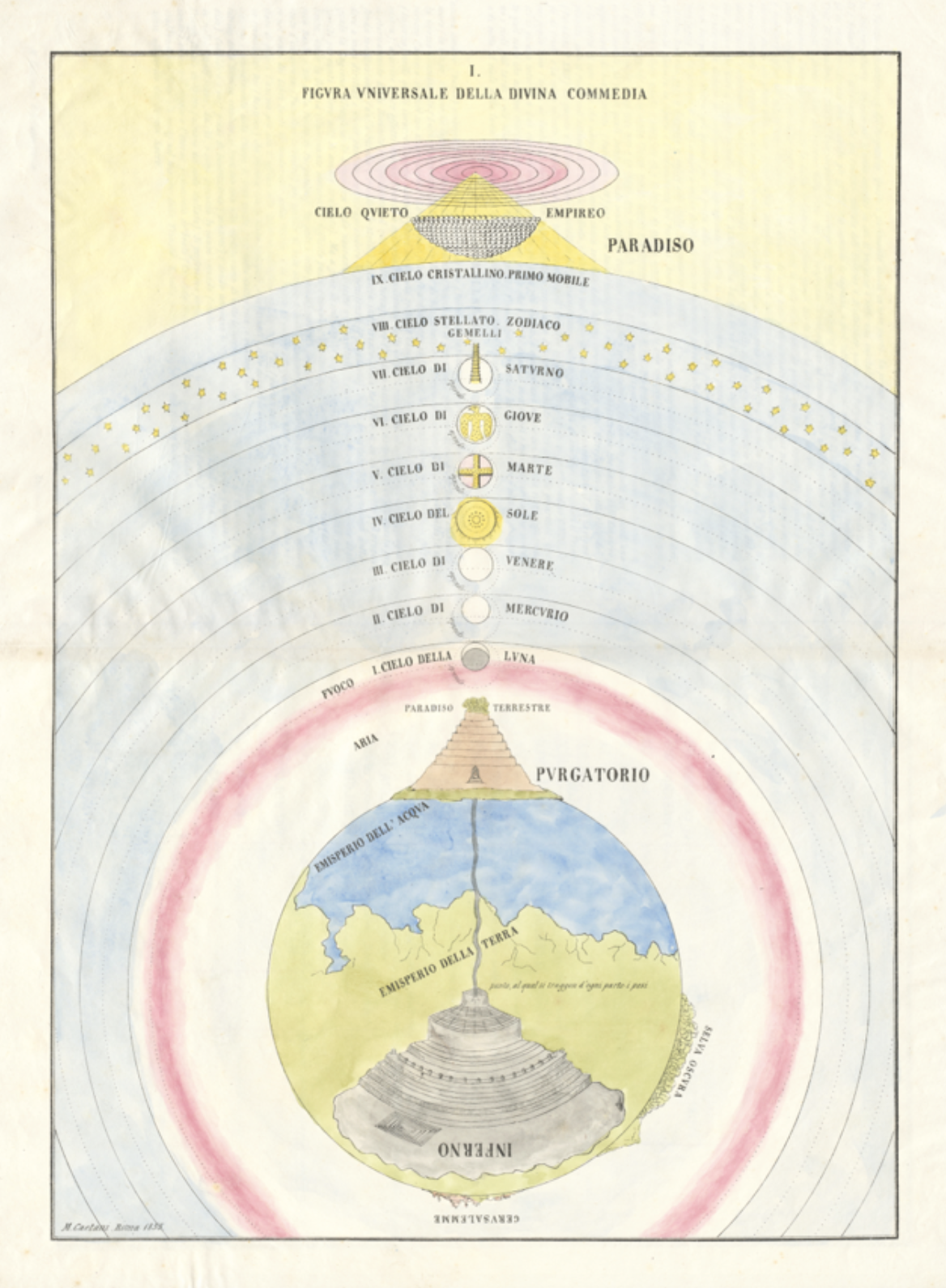
Even the least religious among us speak, at least on occasion, of the circles of hell. When we do so, we may or may not be thinking of where the concept originated: Dante’s Divina Commedia, or Divine Comedy. We each imagine the circles in our own way — usually filling them with sinners and punishments inspired by our own distastes — but some of Dante’s earlier readers did so with a seriousness and precision that may now seem extreme. “The first cosmographer of Dante’s universe was the Florentine polymath Antonio Manetti,” writes the Public Domain Review’s Hunter Dukes, who “concluded that hell was 3246 miles wide and 408 miles deep.” A young Galileo suggested that “the Inferno’s vaulted ceiling was supported by the same physical principles as Brunelleschi’s dome.”
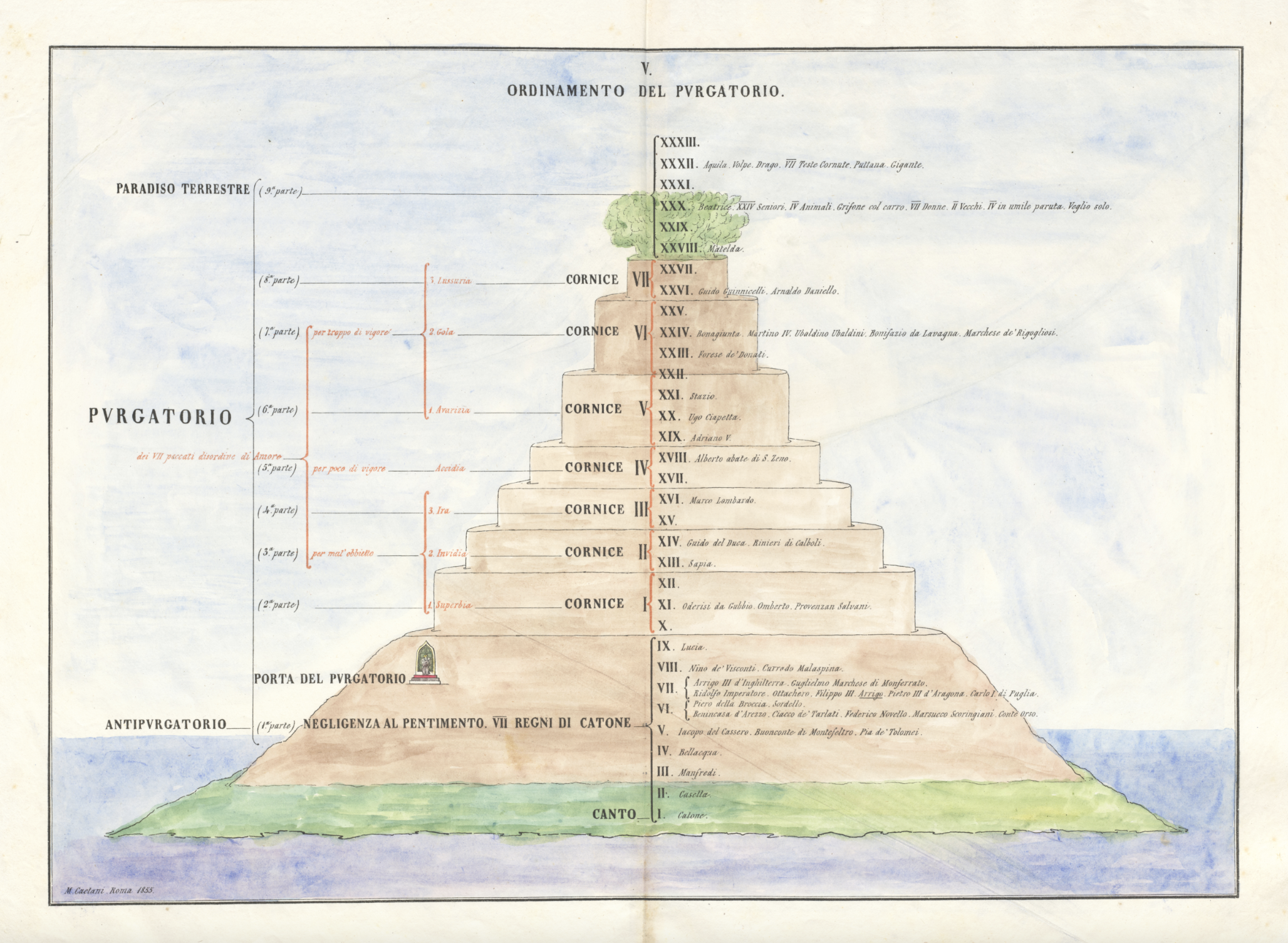
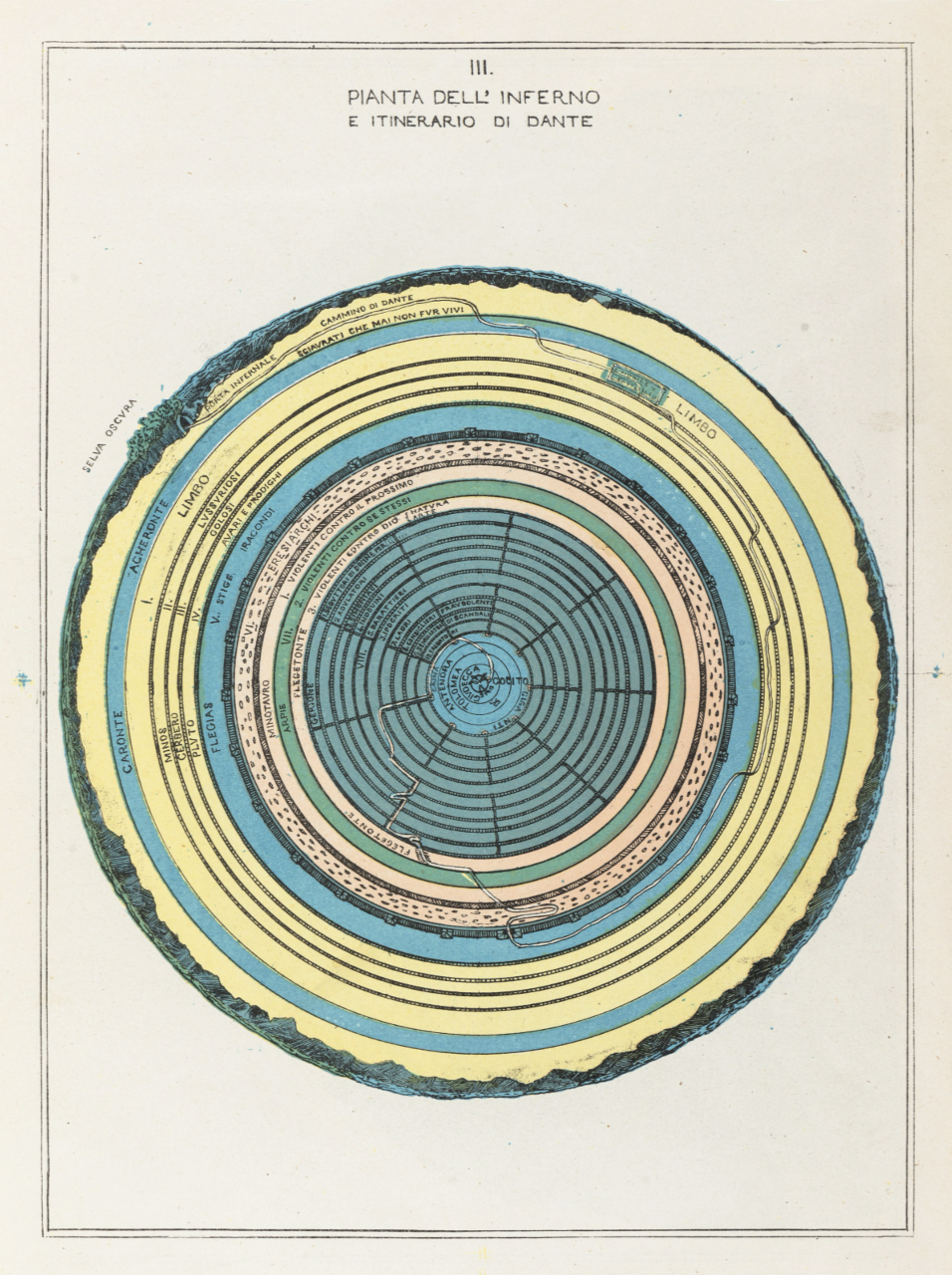
In 1855, the aristocrat sculptor-politician-Dante scholar Michelangelo Caetani published his own precise artistic renderings of not just the Inferno, but also the Purgatorio and Paradiso, in La materia della Divina commedia di Dante Alighieri dichiarata in VI tavole, or The Divine Comedy of Dante Alighieri Described in Six Plates.
“The first plate offers an overview of Dante’s cosmography, leading from the lowest circle of the Inferno up through the nine heavenly spheres to Empyrean, the highest level of Paradise and the dwelling place of God,” writes Dukes. “The Inferno is visualized with a cutaway style,” its circles “like geological layers”; terraced like a wedding cake, “Purgatory is rendered at eye level, from the perspective of some lucky soul sailing by this island-mountain.”
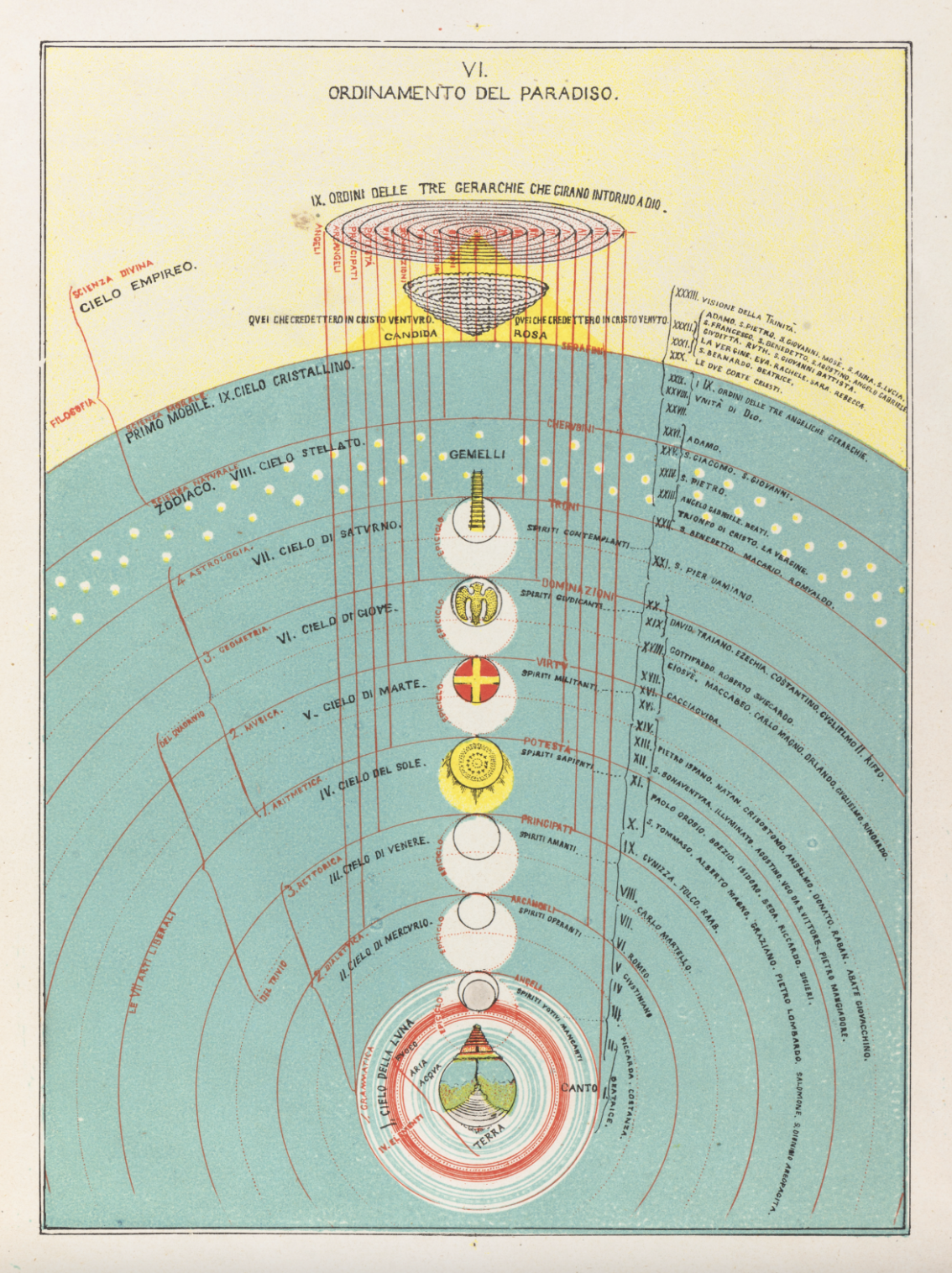
In Paradise, “the Inferno and Purgatory are now small blips on the page, worlds left behind, encircled by Mercury, Venus, Saturn, and the other heavenly spheres.” At the very top is “the candida rosa, an amphitheater structure reserved for the souls of heaven” where “Dante leaves behind Beatrice, his true love and guide, to come face-to-face with God and the Trinity.” You can examine these and other illustrations at the Public Domain Review or Cornell University Library’s digital collections, which adds that they come from “a second version of this work produced by Caetani using the then-novel technology of chromolithography” in 1872, “produced in a somewhat smaller format by the monks at Monte Cassino” — a crew who could surely be trusted to believe in the job.
Related content:
A Digital Archive of the Earliest Illustrated Editions of Dante’s Divine Comedy (1487–1568)
Dante’s Divine Comedy: A Free Course from Columbia University
Based in Seoul, Colin Marshall writes and broadcasts on cities, language, and culture. His projects include the Substack newsletter Books on Cities and the book The Stateless City: a Walk through 21st-Century Los Angeles. Follow him on the social network formerly known as Twitter at @colinmarshall.
Read More...Jean-Michel Basquiat’s Creative Process: A Look Inside the Books & Techniques That Allowed His Art to Flow
The story of Jean-Michel Basquiat has its unfortunate aspects: not just his premature death, but also the aggressive marketing of his work and persona in the years leading up to it. He became a vogue artist of the eighties in part because he could be taken as an unfiltered voice of the street, crafting his outsider-artistic visions on pure, untutored impulse. But despite genuinely having come from a poor, troubled background — and lived according to what seems to have been a strong anti-academic inclination — Basquiat’s professional development was much more serious and deliberate than many of his buyers could have imagined.
“At the beginning of his career, Basquiat went out and bought two books,” says the narrator of the Make Art Not Content video above, “two books that would inform all of his work.” One was Henry Dreyfuss’ Symbol Sourcebook: An Authoritative Guide to International Graphic Symbols, which “would end up providing source material for almost all of the 1,500 drawings and 600 paintings that he left behind.”
The other was Robert Farris Thompson’s Flash of the Spirit: Afro-American Art & Philosophy, which gave him a “guiding ideology” to get him past the inevitable artistic roadblocks: he could always return to “the under-representation of black art in the established art world,” and “when you have a message, art comes out of you easily.”
But Basquiat also had the advantage of being able to work very quickly indeed, which is what brought him to the attention of Andy Warhol: “When one of the most prolific artists of all time is jealous of your speed, you know you’re doing something right.” Thinking too much interrupts your flow, but if you create as fast as you can, thoughts won’t have a chance to intrude. And remember, “most of the flow that you will have while making art will come from all the things you are doing when you are not making art.” Sadly, Basquiat died before the age of the internet — but if he hadn’t, you can bet he’d be spending his downtime absorbing something more interesting than social media.
Related Content:
The Revolutionary Paintings of Jean-Michel Basquiat: A Video Essay
The Story of Jean-Michel Basquiat’s Rise in the 1980s Art World Gets Told in a New Graphic Novel
The Odd Couple: Jean-Michel Basquiat and Andy Warhol, 1986
Based in Seoul, Colin Marshall writes and broadcasts on cities, language, and culture. His projects include the Substack newsletter Books on Cities and the book The Stateless City: a Walk through 21st-Century Los Angeles. Follow him on the social network formerly known as Twitter at @colinmarshall.
Read More...
14 Self-Portraits by Pablo Picasso Show the Evolution of His Style: See Self-Portraits Moving from Ages 15 to 90
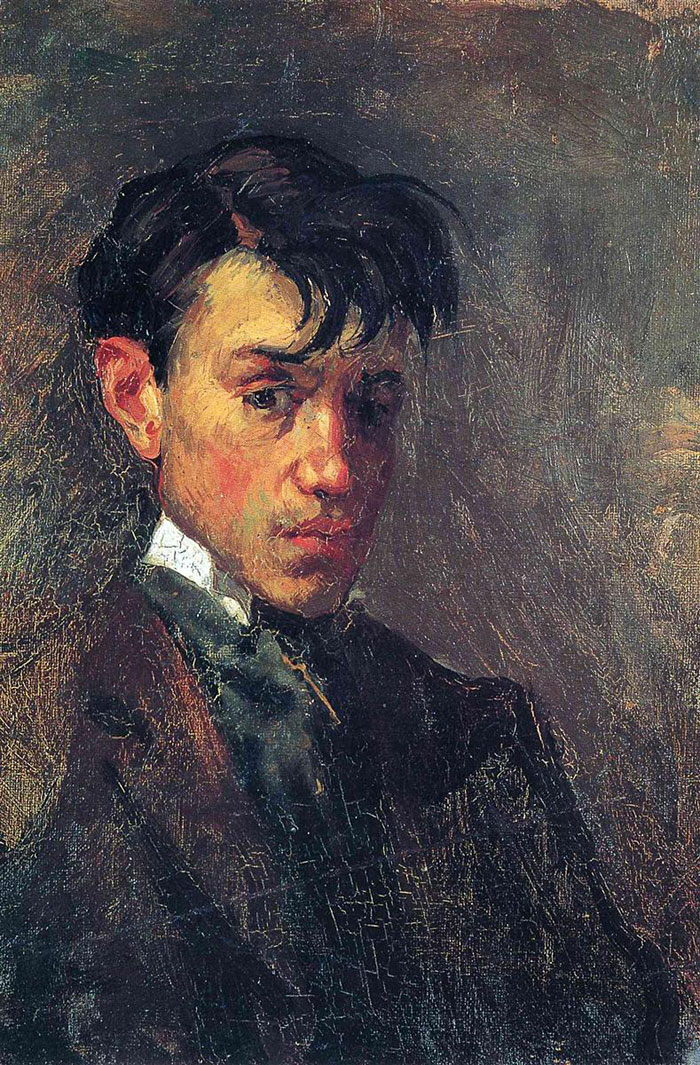
15 years old (1896)
It’s possible to look at Pablo Picasso’s many formal experiments and periodic shifts of style as a kind of self-portraiture, an exercise in shifting consciousness and trying on of new aesthetic identities. The Spanish modernist made a career of sweeping dramatic gestures, announcements to the world that he was going to be a different kind of artist now, and everyone had better catch up. Even in his most abstract periods, his work radiated with an emotional energy as outsized as the man himself.
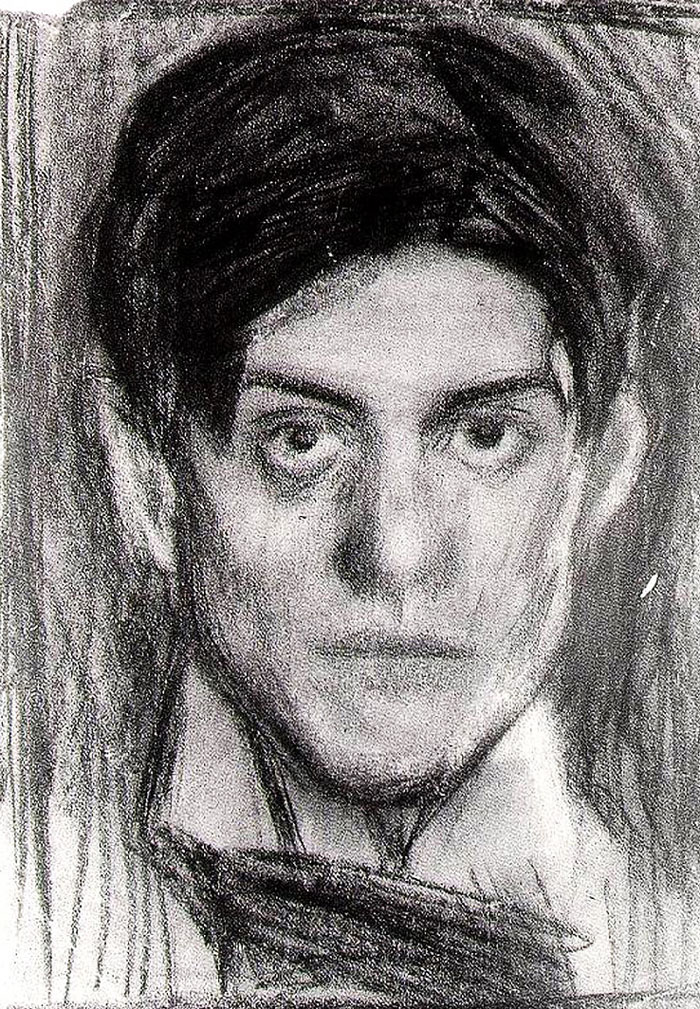
18 years old (1900)
Picasso’s animus and vitality even permeate his least inviting painting, Les Demoiselles d’Avignon, a brothel scene with five geometrical women, two with African and Iberian masks; “a painting of nudes in which there is scarcely a curve to be seen,” writes The Guardian’s Jonathan Jones, “elbows sharp as knives, hips and waists geometrical silhouettes, triangle breasts.” The 1907 self-portrait of Picasso at age 25 (below) comes from this period, when the artist began his radical Cubist break with everything that had gone before.
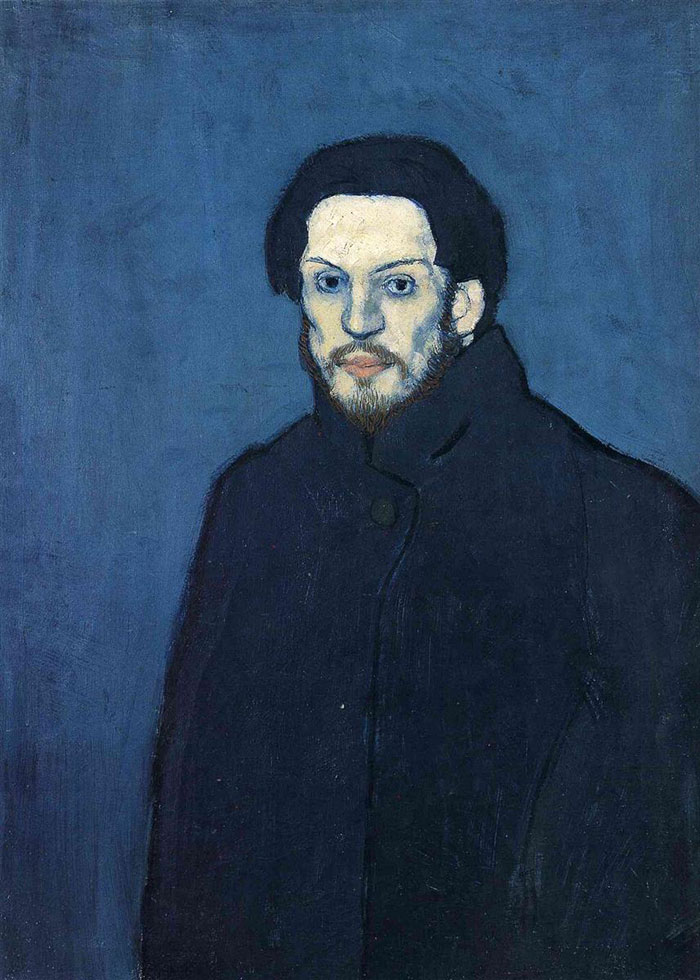
20 years old (1901)
An older version Les Demoiselles d’Avignon contained a male figure, “a stand-in for the painter himself.” Even when he did not appear, at least not in a final version, in his own work, Picasso saw himself there: his moods, his heightened perceptions of reality as he imagined it.
The somber Blue Period paintings, with their moodiness and “themes of poverty, loneliness, and despair,” correspond with his mourning over the suicide of a friend, Catalan artist Carlos Casagemas. The Picasso in the 1901 portrait further up looks gaunt, broken, decades older than his 20 years. In the 1917 drawing further down, however, the artist at 35 looks out at us with a haughty, smooth-cheeked youthful gaze.
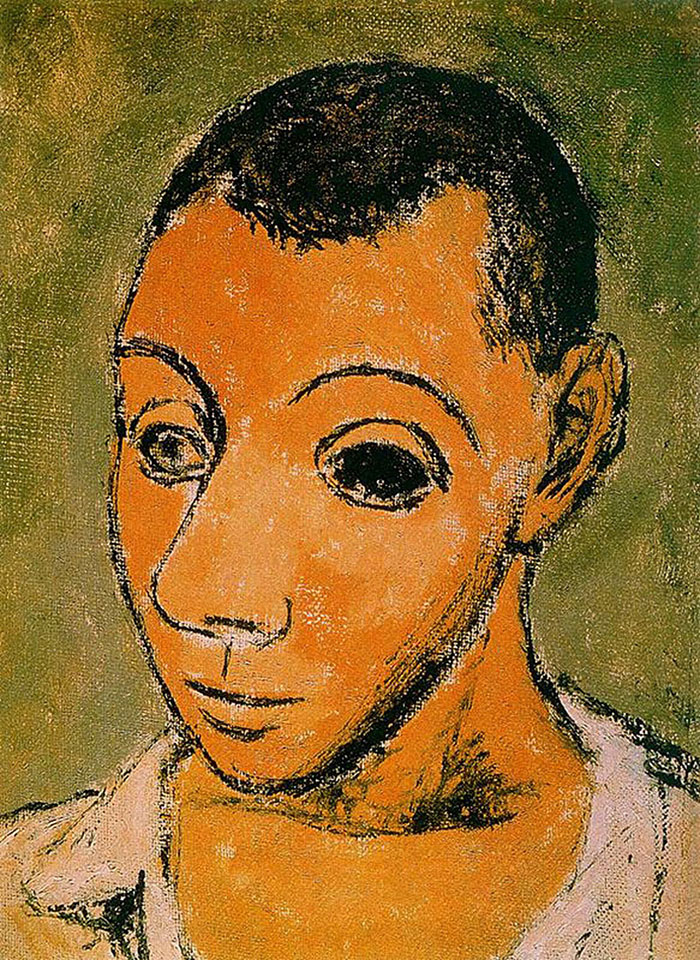
24 years old (1906)
During this time, as World War I ended, he had begun to design sets for Diaghilev’s famed Ballets Russes, where he met his wife, ballerina Olga Khokhlova, and moved in comfortable circles, though he was himself desperate for money. Each portrait delivers us a different Picasso, as he sheds one mask and puts on another. Tracing his creative evolution through his portraiture means never moving in a straight line. But we do see his demeanor soften and round progressively over time in his portraits. He seems to grow younger as he ages.
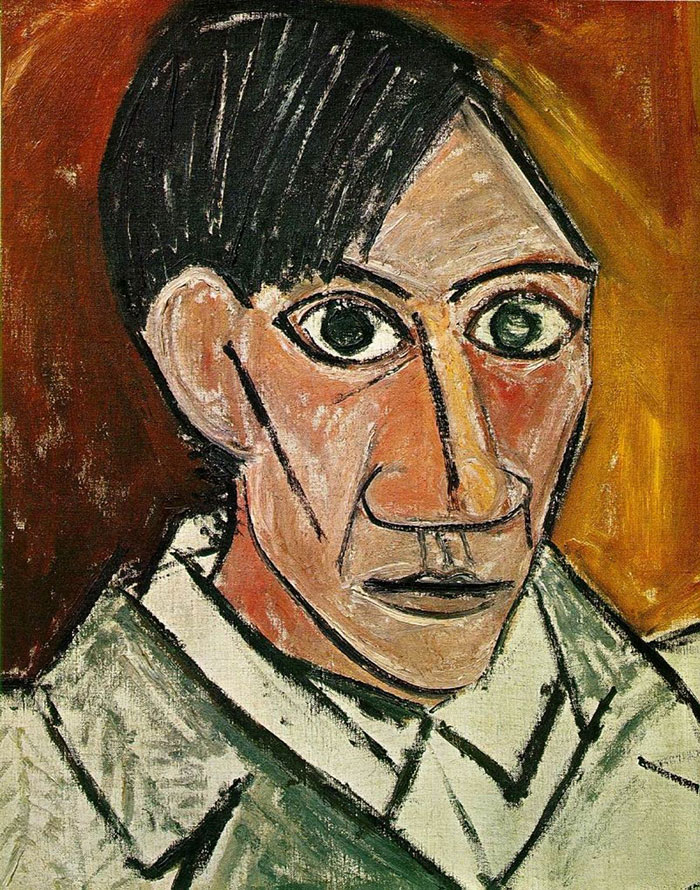
25 years old (1907)
The severe youth of 15, further up, brooding, world-weary, and already an accomplished draughtsman and painter; the grimly serious romantic at 18, above—these Picassos give way to the wide-eyed maturity of the artist at 56 in 1938, at 83, 89, and 90, in 1972, the year before his death. That year he produced an intriguing series of eclectic self-portraits unlike anything he had done before. See these and many others throughout his life below.
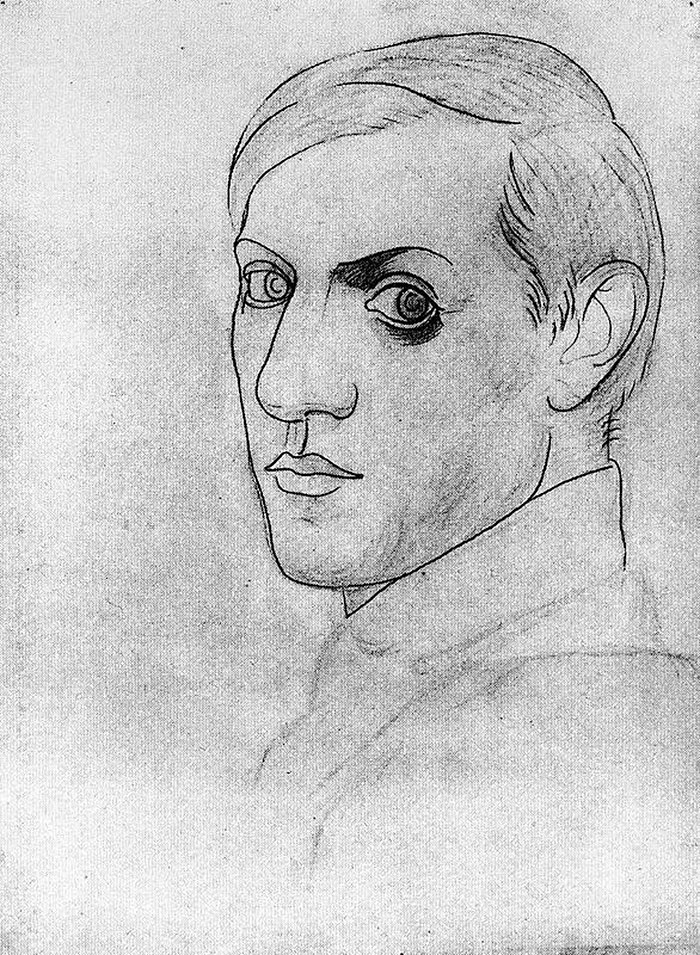
35 years old (1917)
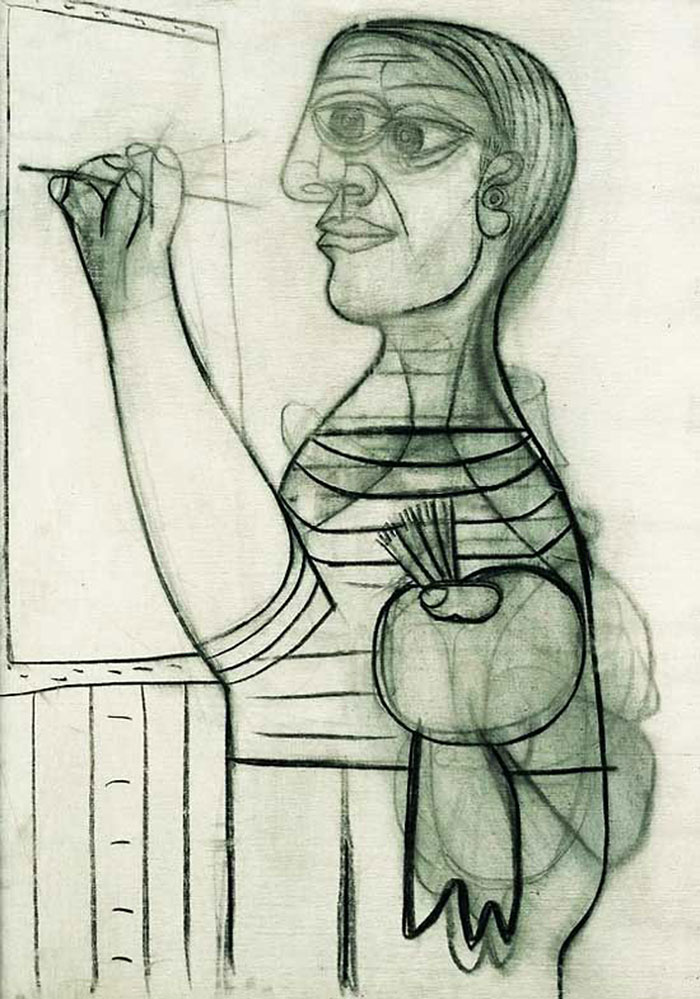
56 years old (1938)
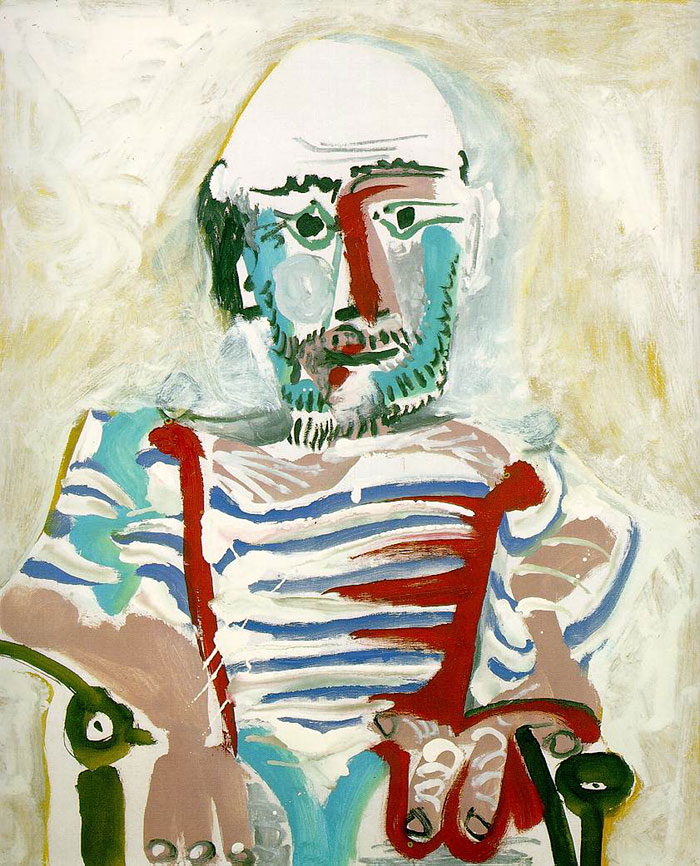
83 years old (1965)
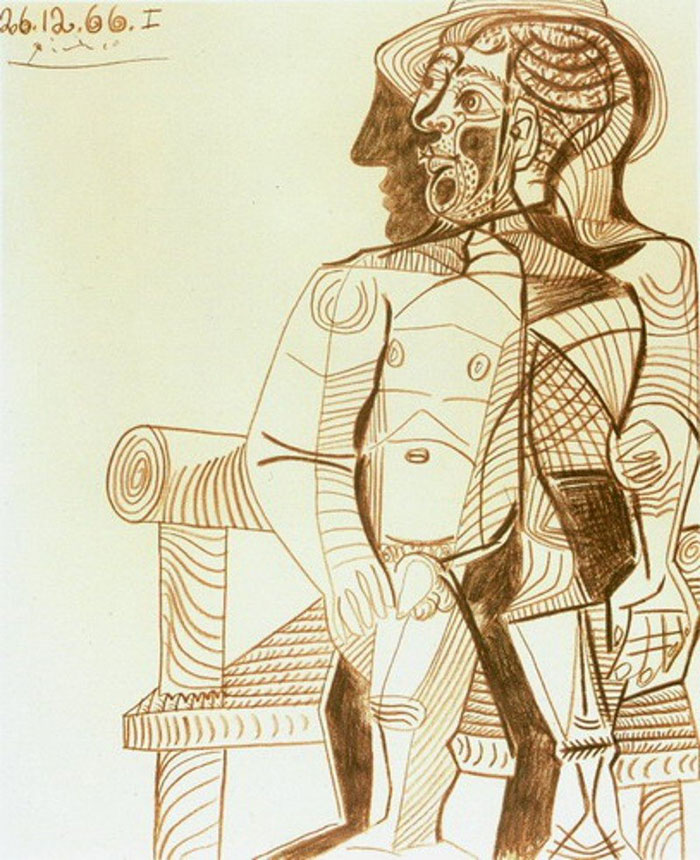
85 years old (1966)
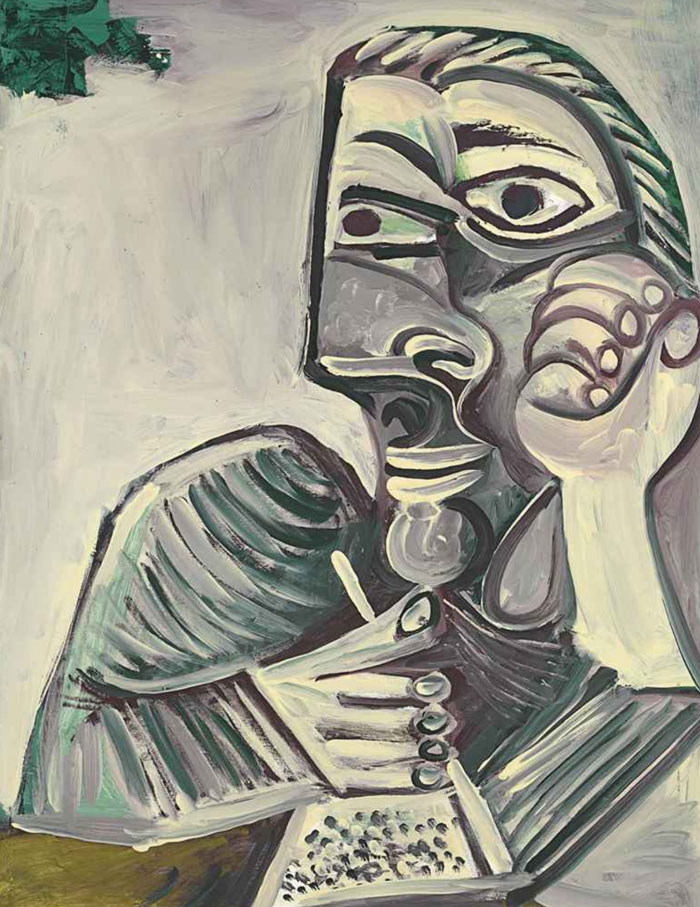
89 years old (1971)
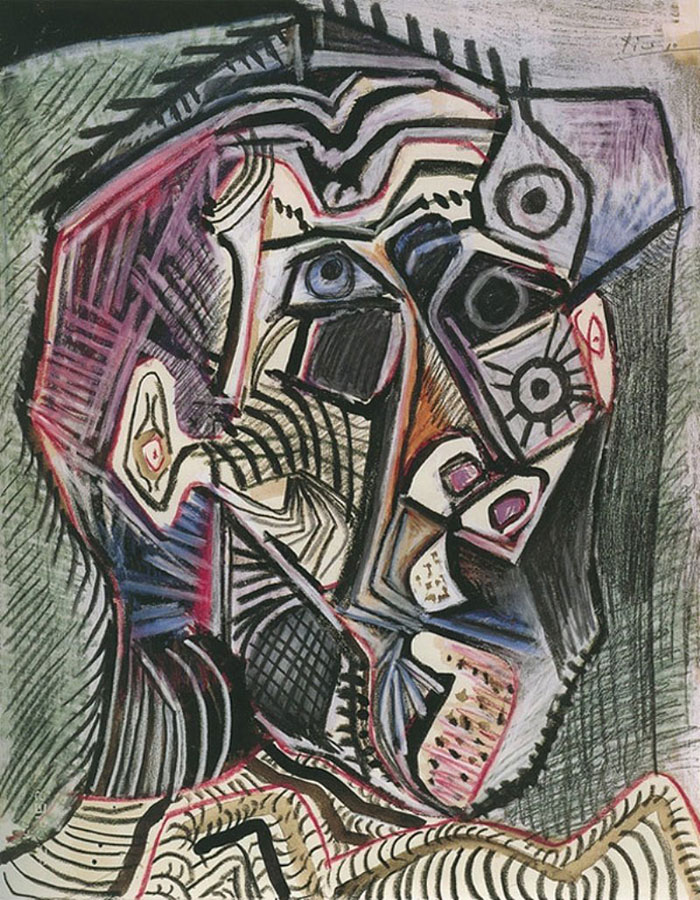
90 years old (June 28, 1972)

90 years old (June 30, 1972)
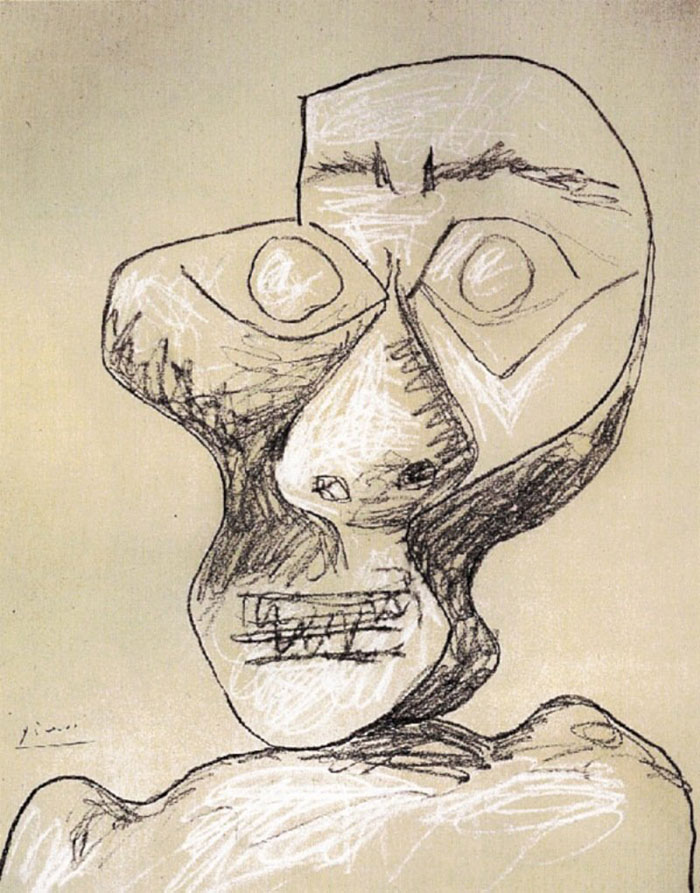
90 years old (July 2, 1972)
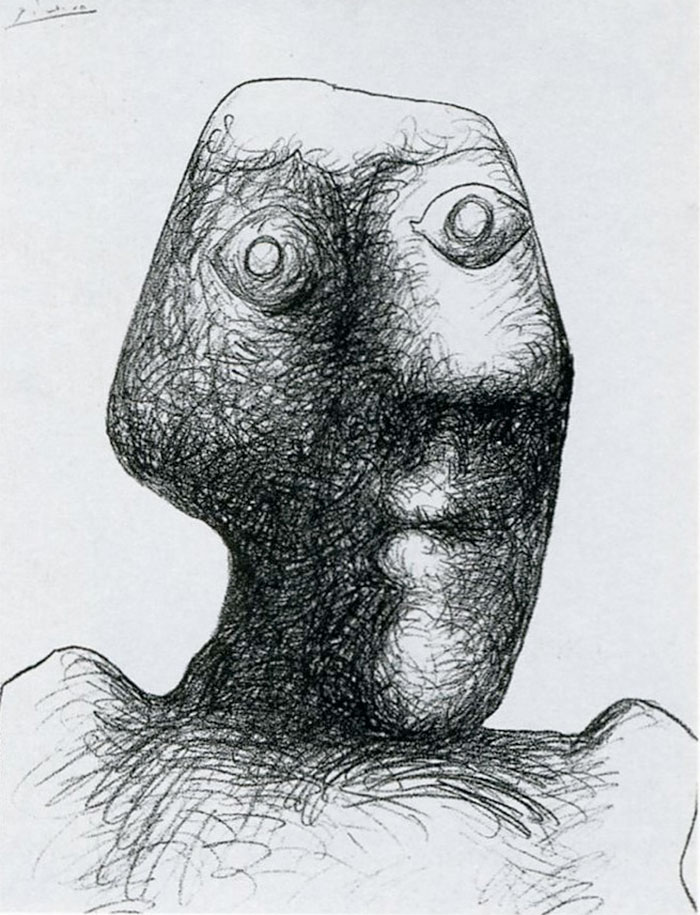
90 years old (July 3, 1972)
Related Content:
Thousands of Pablo Picasso’s Works Now Available in a New Digital Archive
15-Year-Old Picasso Paints His First Masterpiece, “The First Communion”
Josh Jones is a writer and musician based in Durham, NC. Follow him at @jdmagness
Read More...
How the Ancient Romans Traveled Without Maps
In an age when many of us could hardly make our way to an unfamiliar grocery store without relying on a GPS navigation system, we might well wonder how the Romans could establish and sustain their mighty empire without so much as a proper map. That’s the question addressed by the Historia Militum video above, “How Did Ancient People Travel Without Maps?” Or more to the point, how did they travel without scaled maps — that is, ones “in which the map’s distances were proportional to their actual size in the real world,” like almost all those we consult on our screens today?
The surviving maps from the ancient Roman world tend not to take great pains adhering to true geography. Yet as the Roman Empire expanded, laying roads across three continents, more and more Romans engaged in long-distance travel, and for the most part seem to have arrived at their intended destinations.
To do so, they used not maps per se but “itineraries,” which textually listed towns and cities along the way and the distance between them. By the fourth century, “all main Roman roads along with 225 stopping stations were compiled in a document called the Itinerarium Antonini, the Itinerary of Emperor Antonius Pius.”
This highly practical document includes mostly roads that “passed through large cities, which provided better facilities for housing, shopping, bathing, and other traveler needs.” With this information, “a traveler could copy the specific distances and stations they needed to reach their destination.” Still today, some seventeen centuries later, “most people wouldn’t use a paper scaled map for travel, but would instead break their journey down into a list of subway stations, bus stops, and intersections.” And if you were to attempt to drive across Europe, making a modern-day Roman Empire road trip, you’d almost certainly rely on the distances and points of interest provided by the synthesized voice reading aloud from the vast Itinerarium Antonini of the twenty-first century.
Related content:
A Map Showing How the Ancient Romans Envisioned the World in 40 AD
Download 131,000 Historic Maps from the Huge David Rumsey Map Collection
Based in Seoul, Colin Marshall writes and broadcasts on cities, language, and culture. His projects include the Substack newsletter Books on Cities and the book The Stateless City: a Walk through 21st-Century Los Angeles. Follow him on Twitter at @colinmarshall.
Read More...Google Creates a Career Certificate That Prepares Students for Cybersecurity Jobs in 6 Months
In 2023, Google launched several online certificate programs designed to help students land an entry-level job, without necessarily having a college degree. This includes a certificate program focused on Cybersecurity, a field that stands poised to grow as companies become more digital and face mounting cyberattacks.
Offered on Coursera’s educational platform, the new Google Cybersecurity Professional Certificate features eight online courses, which will collectively help students learn how to:
- Understand the importance of cybersecurity practices and their impact for organizations.
- Identify common risks, threats, and vulnerabilities, as well as techniques to mitigate them.
- Protect networks, devices, people, and data from unauthorized access and cyberattacks using Security Information and Event Management (SIEM) tools.
- Gain hands-on experience with Python, Linux, and SQL.
The Cybersecurity Professional Certificate also now includes six new videos that explain how to use AI in cybersecurity. The videos cover everything from using artificial intelligence to help identify bugs and system vulnerabilities, to refining code and prioritizing alerts with AI.
Students can take individual courses in these professional certificate programs for free. (Above, you can watch a video from the first course in the cybersecurity certificate program, entitled “Foundations of Cybersecurity.”) However, if you would like to receive a certificate, Coursera will charge $49 per month (after an initial 7‑day free trial period). That means that the Cybersecurity Professional Certificate, designed to be completed in 6 months, will cost roughly $300 in total.
Once students complete the cybersecurity certificate, they can add the credential to their LinkedIn profile, resume, or CV. As a perk, students in the U.S. can also connect with 150+ employers (e.g., American Express, Colgate-Palmolive, T‑Mobile, Walmart, and Google) who have pledged to consider certificate holders for open positions. According to Coursera, this certificate can prepare students to become an entry-level “cybersecurity analyst and SOC (security operations center) analyst.”
You can start a 7‑day free trial of the Cybersecurity Professional Certificate here. Alternatively, if you sign up for Coursera Plus, whose price has been reduced by 40% until December 2, 2024, you can enroll in the cybersecurity certificate program at no charge. Find out more here.
Note: Open Culture has a partnership with Coursera. If readers enroll in certain Coursera courses and programs, it helps support Open Culture.
Read More...Discover the CIA’s Simple Sabotage Field Manual: A Timeless Guide to Subverting Any Organization with “Purposeful Stupidity” (1944)
I’ve always admired people who can successfully navigate what I refer to as “Kafka’s Castle,” a term of dread for the many government and corporate agencies that have an inordinate amount of power over our permanent records, and that seem as inscrutable and chillingly absurd as the labyrinth the character K navigates in Kafka’s last allegorical novel. Even if you haven’t read The Castle, if you work for such an entity—or like all of us have regular dealings with the IRS, the healthcare and banking system, etc.—you’re well aware of the devilish incompetence that masquerades as due diligence and ties us all in knots. Why do multi-million and billion dollar agencies seem unable, or unwilling, to accomplish the simplest of tasks? Why do so many of us spend our lives in the real-life bureaucratic nightmares satirized in The Office and Office Space?
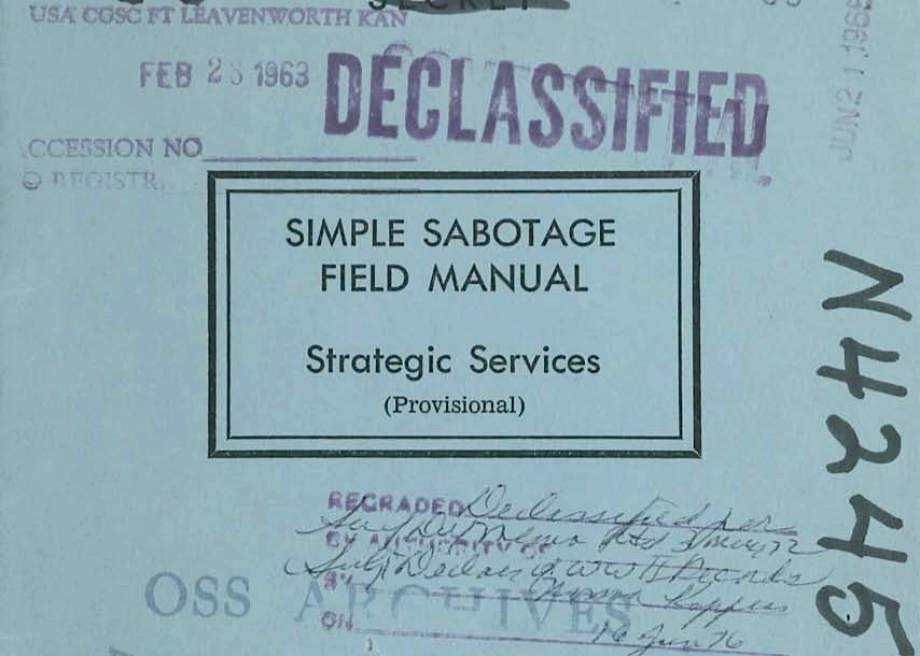
One answer comes via Laurence J. Peter’s 1969 satire The Peter Principle—which offers the theory that managers and executives get promoted to the level of their incompetence—then, David Brent-like, go on to ruin their respective departments. The Harvard Business Review summed up disturbing recent research confirming and supplementing Peter’s insights into the narcissism, overconfidence, or actual sociopathy of many a government and business leader. But in addition to human failings, there’s another possible reason for bureaucratic disorder; the conspiracy-minded among us may be forgiven for assuming that in many cases, institutional incompetence is the result of deliberate sabotage from both above and below. The ridiculous inner workings of most organizations certainly make a lot more sense when viewed in the light of one set of instructions for “purposeful stupidity,” namely the once top-secret Simple Sabotage Field Manual, written in 1944 by the CIA’s precursor, the Office of Strategic Services (OSS).
Now declassified and freely available on the CIA website, the manual that the agency describes as “surprisingly relevant” was once distributed to OSS officers abroad to assist them in training “citizen-saboteurs” in occupied countries like Norway and France. Such people, writes Rebecca Onion at Slate, “might already be sabotaging materials, machinery, or operations of their own initiative,” but may have lacked the devious talent for sowing chaos that only an intelligence agency can properly master. Genuine laziness, arrogance, and mindlessness may surely be endemic. But the Field Manual asserts that “purposeful stupidity is contrary to human nature” and requires a particular set of skills. The citizen-saboteur “frequently needs pressure, stimulation or assurance, and information and suggestions regarding feasible methods of simple sabotage.”
You can read the full document here. Or find an easy-to-read version on Project Gutenberg here. To get a sense of just how “timeless”—according to the CIA itself—such instructions remain, see the abridged list below, courtesy of Business Insider. You will laugh ruefully, then maybe shudder a little as you recognize how much your own workplace, and many others, resemble the kind of dysfunctional mess the OSS meticulously planned during World War II.
Organizations and Conferences
- Insist on doing everything through “channels.” Never permit short-cuts to be taken in order to expedite decisions.
- Make “speeches.” Talk as frequently as possible and at great length. Illustrate your “points” by long anecdotes and accounts of personal experiences.
- When possible, refer all matters to committees, for “further study and consideration.” Attempt to make the committee as large as possible — never less than five.
- Bring up irrelevant issues as frequently as possible.
- Haggle over precise wordings of communications, minutes, resolutions.
- Refer back to matters decided upon at the last meeting and attempt to re-open the question of the advisability of that decision.
- Advocate “caution.” Be “reasonable” and urge your fellow-conferees to be “reasonable” and avoid haste which might result in embarrassments or difficulties later on.
Managers
- In making work assignments, always sign out the unimportant jobs first. See that important jobs are assigned to inefficient workers.
- Insist on perfect work in relatively unimportant products; send back for refinishing those which have the least flaw.
- To lower morale and with it, production, be pleasant to inefficient workers; give them undeserved promotions.
- Hold conferences when there is more critical work to be done.
- Multiply the procedures and clearances involved in issuing instructions, pay checks, and so on. See that three people have to approve everything where one would do.
Employees
- Work slowly
- Work slowly.
- Contrive as many interruptions to your work as you can.
- Do your work poorly and blame it on bad tools, machinery, or equipment. Complain that these things are preventing you from doing your job right.
- Never pass on your skill and experience to a new or less skillful worker.
Note: This post originally appeared on our site in December 2015.
Related Content:
The CIA’s Style Manual & Writer’s Guide: 185 Pages of Tips for Writing Like a Spook
Josh Jones is a writer and musician based in Durham, NC. Follow him at @jdmagness
Read More...Explore the World’s First 3D Replica of St. Peter’s Basilica, Made with AI
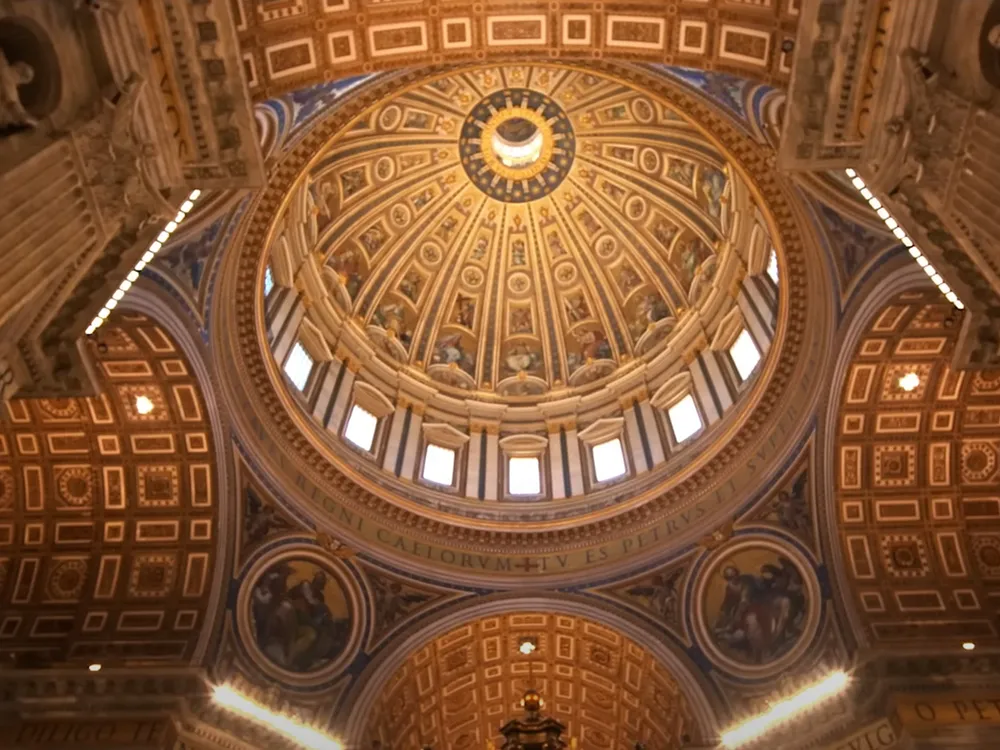
In the trailer below for the world’s first 3D replica of St. Peter’s Basilica, Yves Ubelmann speaks of using “AI for Good,” which isn’t just an ideal, but also the name of a lab at Microsoft. Microsoft and Ubelman’s digital-preservation company Iconem were two of the participants in that ambitious project, along with the Vatican itself. Pope Francis, writes AP’s Nicole Winfield, “has called for the ethical use of AI and used his annual World Message of Peace this year to urge an international treaty to regulate it, arguing that technology lacking human values of compassion, mercy, morality and forgiveness were too great.”
What better show of good faith in the technology than to allow AI to be used to bring the center of the faith Pope Francis represents to the world? In the nearly 400 years since its completion, of course, the world has always come to the current St. Peter’s Basilica, and will continue to do so.
The 3D-replica project “has been launched ahead of the Vatican’s 2025 Jubilee, a holy year in which more than 30 million pilgrims are expected to pass through the basilica’s Holy Door, on top of the 50,000 who visit on a normal day,” Winfield writes. But no matter where in the world you happen to be, you can virtually enter St. Peter’s Basilica right now, and spend as long as you like, admiring the basilica itself, the cupola, Bernini’s St. Peter’s Baldachin, and Michelangelo’s Pietà, among other features.

However important (and attention-drawing) artificial intelligence was as a tool in the creation of this ultra-precise “digital twin” of St. Peter’s Basilica, the four-week process of capturing every detail of the real structure that could be captured also necessitated the use of drones, lasers, and cameras taking more than 400,000 digital photos. The “AI for Good Lab contributed advanced tools that refined the digital twin with millimeter-level accuracy, and used AI to help detect and map structural vulnerabilities like cracks and missing mosaic tiles,” says Microsoft’s site. “The Vatican oversaw the collaboration, ensuring the preservation of the Basilica as a cultural, spiritual, and historically significant site for years to come.”
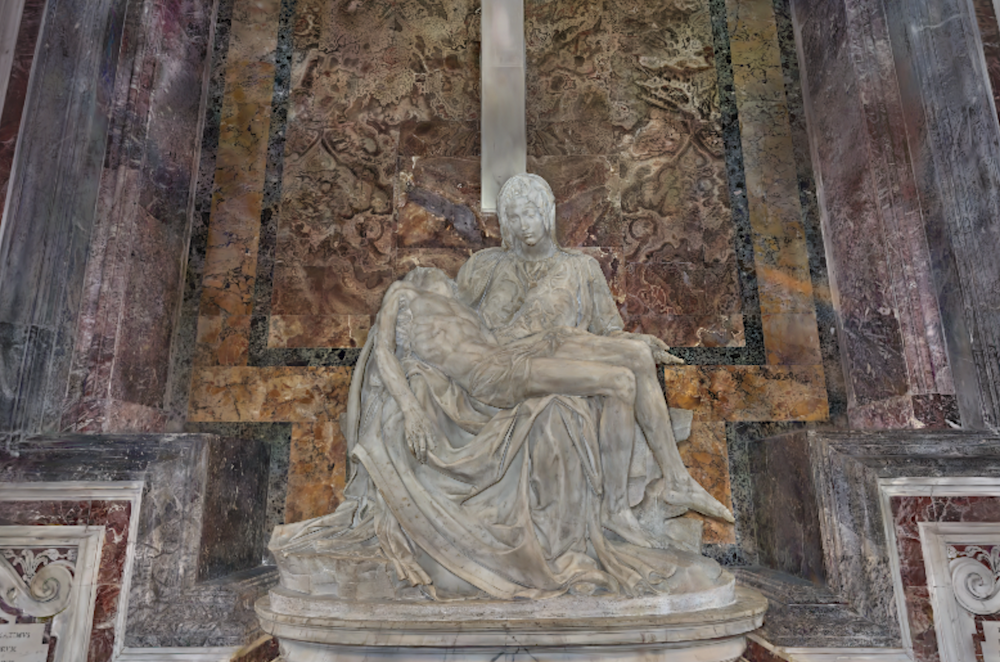
It makes a certain sense to apply the highest technology of our time for the benefit of a building known as the greatest architectural marvel of its time. But in order to better appreciate the kind of knowledge that will be revealed by the 22 petabytes of information that went into the digital model (which offers its own guided tour) we’d do well to immerse ourselves first in what was already known about St. Peter’s Basilica. For a brief introduction to the conception and evolution of this grand church as it stands today, we could do much worse than architecture-and-history YouTuber Manuel Bravo’s video “St Peter’s Basilica Explained.” If you watch it, don’t be surprised if you find yourself tempted to engage in prolonged exploration of the model — or indeed, to book a visit to the real thing. Enter the digital St. Peter’s here.
Related content:
Rome Reborn: A New 3D Virtual Model Lets You Fly Over the Great Monuments of Ancient Rome
Based in Seoul, Colin Marshall writes and broadcasts on cities, language, and culture. His projects include the Substack newsletter Books on Cities and the book The Stateless City: a Walk through 21st-Century Los Angeles. Follow him on Twitter at @colinmarshall.
Read More...Bertrand Russell’s Ten Commandments for Living Virtuously (1930)
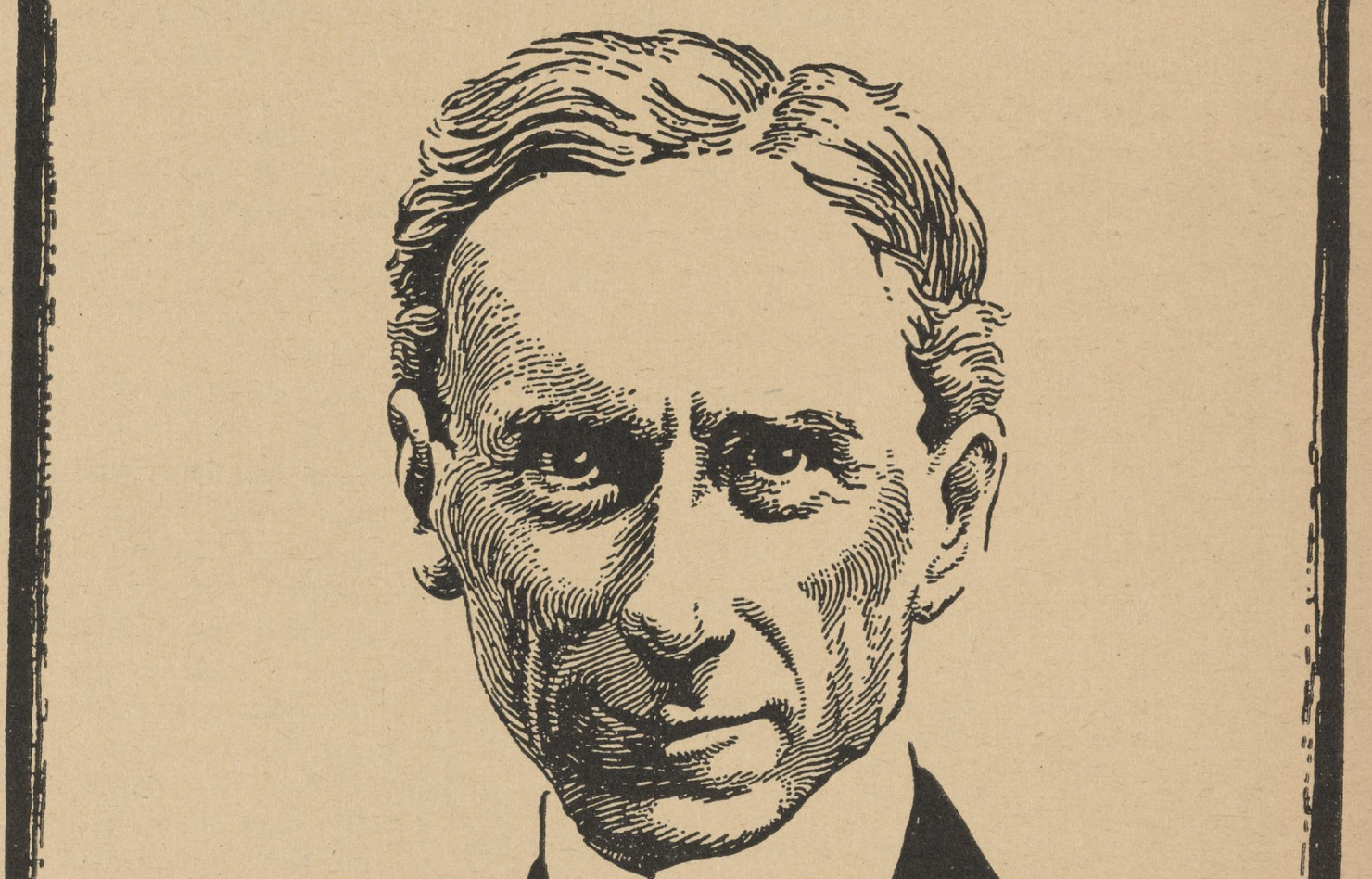
Image by J. F. Horrabin, via Wikimedia Commons
Bertrand Russell may have lived his long life concerned with big topics in logic, mathematics, politics, and society, but that didn’t keep him from thinking seriously about how to handle his own day-to-day relationships. That hardly means he handled every such relationship with perfect aplomb: take note of his three divorces, the first of which was formalized in 1921, the year he married his lover Dora Black. Possessed of similar bohemian-reformer ideals — and, before long, two children — the couple founded the experimental Beacon Hill School in 1927, intent on encouraging their young pupils’ development as not just thinkers-in-training but full human beings.
A few years later, Russell published his personal “ten commandments” in a culture magazine called Everyman, and you can read it in full in this 1978 issue of the Russell Society News. (Go to page 5.)
“Everybody, I suppose, has his own list of virtues that he tries to practice, and, when he fails to practice them, he feels shame quite independently of the opinion of others, so far at any rate as conscious thought is concerned,” he writes by way of introduction. “I have tried to put the virtues that I should wish to possess into the form of a decalogue,” which is as follows:
- Do not lie to yourself.
- Do not lie to other people unless they are exercising tyranny.
- When you think it is your duty to inflict pain, scrutinize your reasons closely.
-
When you desire power, examine yourself closely as to why you deserve it.
- When you have power, use it to build up people, not to constrict them.
- Do not attempt to live without vanity, since this is impossible, but choose the right audience from which to seek admiration.
- Do not think of yourself as a wholly self-contained unit.
-
Be reliable.
-
Be just.
- Be good-natured.
In the full text, Russell elaborates on the thinking behind each of these virtues. “When you wish to believe some theological or political doctrine which will increase your income, you will, if you are not very careful, give much more weight to the arguments in favor than to those against”: hence the importance of not lying to yourself. When it comes to lying to others, not only should governments tell the truth to their subjects, “parents should tell the truth to their children, however inconvenient this may seem.” And families as in states, “those who are intelligent but weak cannot be expected to forego the use of their intelligence in their conflicts with those who are stupid but strong.”
Russell’s fifth commandment also applies to relationships between the old and the young, since “those who deal with the young inevitably have power, and it is easy to exercise this power in ways pleasing to the educator rather than useful to the child.” And by his eighth commandment, he means “to suggest a whole set of humdrum but necessary virtues, such as punctuality, keeping promises, adhering to plans involving other people, refraining from treachery even in its mildest forms.” Alas, “modern education, in lessening the emphasis on discipline, has, I think, failed to produce reliable human beings where social obligations are concerned.”
This “prescriptive emphasis — notably the stress placed on the merits of some humble virtues — may have been influenced then by his practical experience of progressive education,” writes The Collected Papers of Bertrand Russell editor Andrew Bone. But Russell still revised his decalogue long after he left the Beacon Hill School in 1932, with world events of the subsequent decades inspiring him to use it in the service of what he regarded as a liberal worldview. One version broadcast on the BBC in 1951 includes such commandments as “Do not feel absolutely certain of anything,” “Find more pleasure in intelligent dissent than passive agreement,” and “Do not use power to suppress opinions you think pernicious, for if you do the opinions will suppress you” — all of which more of the last few generations of students could have done well to internalize.
Related content:
Bertrand Russell’s 10 Commandments for Living in a Healthy Democracy
Bertrand Russell: Authority and the Individual (1948)
Bertrand Russell & Buckminster Fuller on Why We Should Work Less, and Live and Learn More
Philosopher Bertrand Russell Talks About the Time When His Grandfather Met Napoleon
Christopher Hitchens Creates a Revised List of The 10 Commandments for the 21st Century
Based in Seoul, Colin Marshall writes and broadcasts on cities, language, and culture. His projects include the Substack newsletter Books on Cities and the book The Stateless City: a Walk through 21st-Century Los Angeles. Follow him on Twitter at @colinmarshall or on Facebook.
Free: 356 Issues of Galaxy, the Groundbreaking 1950s Science Fiction Magazine
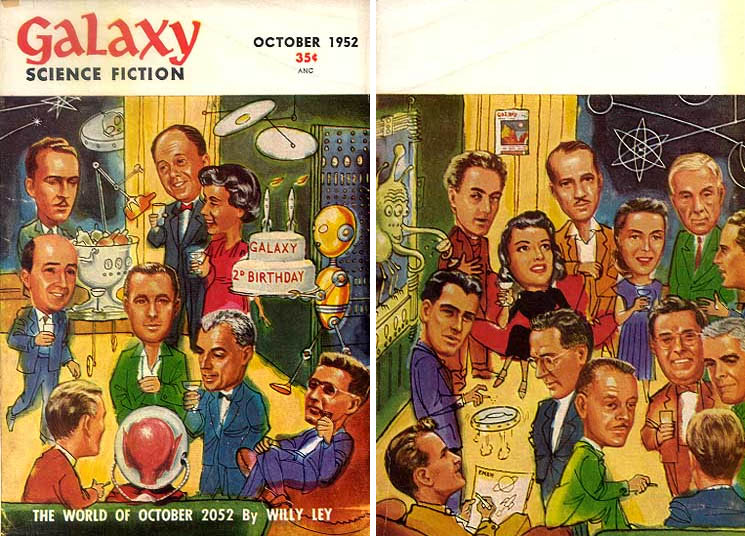
Along with Astounding Science Fiction and The Magazine of Fantasy and Science Fiction, Galaxy Magazine was one of the most important science fiction digests in 1950s America. Ray Bradbury wrote for it–including an early version of his masterpiece Fahrenheit 451–as did Robert A. Heinlein, Isaac Asimov, Frederik Pohl, Theodore Sturgeon, Cordwainer Smith, Jack Vance, and numerous others.
Now a fairly decent collection of issues (356 in total) is available for your perusal at archive.org for absolutely free. It’s not complete yet, but it’s close.
When Galaxy appeared in October 1950, it promised a kind of science fiction different from the space operas of previous decades. As an “annual report” written by publisher H.L. Gold proclaimed,
…other publishers thought the idea of offering mature science fiction in an attractive, adult format was downright funny. They knew what sold–shapely female endomorphs with bronze bras, embattled male mesomorphs clad in muscle, and frightful alien monsters in search of a human soul.
And while Astounding Science Fiction was focused on technology–suited for an America that had fundamentally changed since WWII–H.L. Gold’s Galaxy focused on ideas, humor, satire, psychology and sociology. It also had one of the best pay rates in the industry, and offered some of its writers exclusive contracts. And the writers responded in kind and followed their own obsessions–although Gold often pitched ideas.
(Ironically, though immersed in stories of inner and outer space, Gold was an acute agoraphobe, and stayed in his apartment, communicating by phone.)
After a wobbly start graphics-wise, Gold hired Ed Emshwiller in 1951 to paint covers, whose often humorous style (e.g. this Christmas issue below) suited the humor inside the issue.
Confident in their stable of writers, Galaxy produced the wonderful birthday cover at the top, featuring caricatures of everybody from Bradbury to Asimov. There’s also a guide to see who’s who.
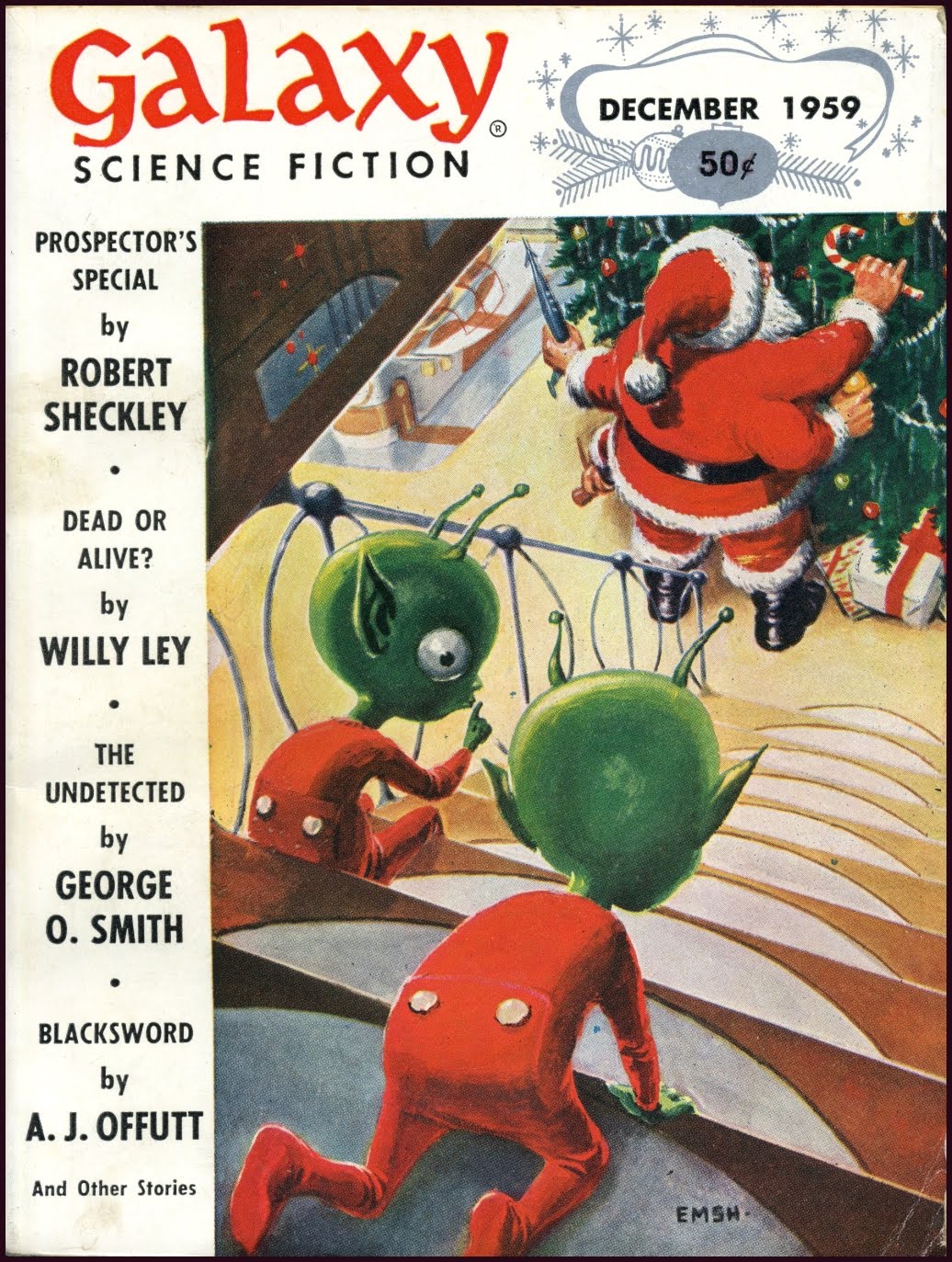
A series of editors–including Frederik Pohl–took over from Gold after a car accident in 1961, and by 1977–eight years after Pohl’s departure–the magazine was on its decline. There were more iterations, reprints, anthologies, and online versions, but the essential run is here. And those first ten years changed American science fiction forever, paving the way for experimental writers like Philip K. Dick and William Gibson.
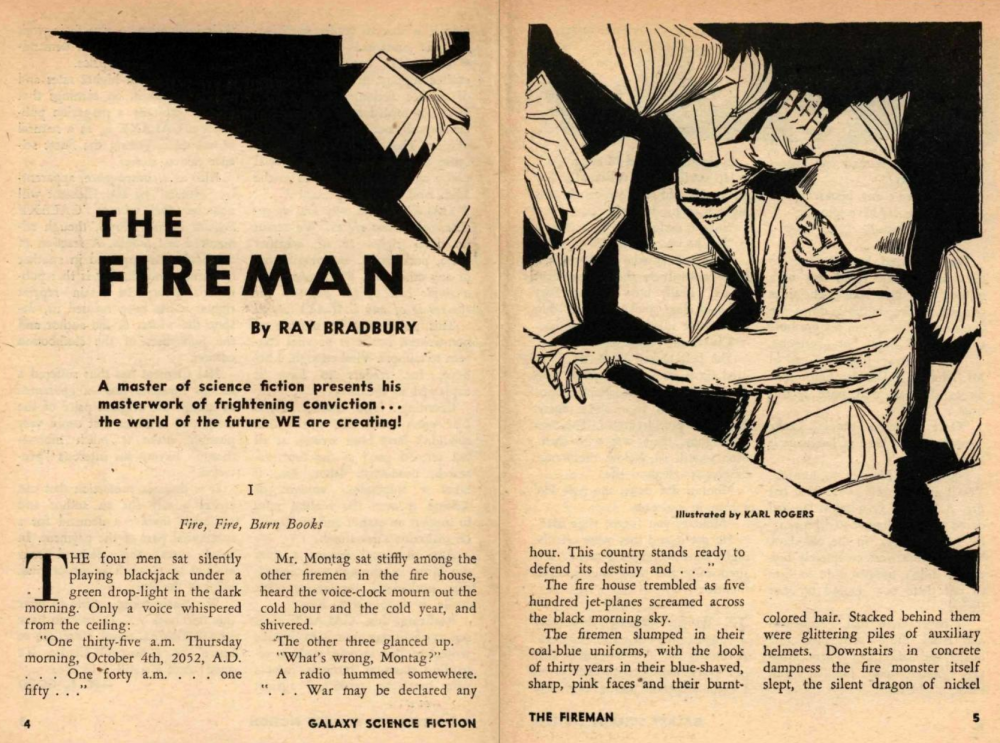
You could start with the Ray Bradbury story (“The Fireman”) we told you about, or Robert A. Heinlein’s “The Puppet.”
Related Content:
The Encyclopedia of Science Fiction: 17,500 Entries on All Things Sci-Fi Are Now Free Online
Isaac Asimov’s Foundation Trilogy: Hear the 1973 Radio Dramatization
X Minus One: Hear Classic Sci-Fi Radio Stories from Asimov, Heinlein, Bradbury & Dick
Ted Mills is a freelance writer on the arts who currently hosts the artist interview-based FunkZone Podcast and is the producer of KCRW’s Curious Coast. You can also follow him on Twitter at @tedmills, read his other arts writing at tedmills.com and/or watch his films here.
Read More...Support Us
We're hoping to rely on loyal readers, rather than erratic ads. Please click the Donate button and support Open Culture. You can use Paypal, Venmo, Patreon, even Crypto! We thank you!

About Us

Open Culture scours the web for the best educational media. We find the free courses and audio books you need, the language lessons & educational videos you want, and plenty of enlightenment in between.
Advertise With Us
FREE UPDATES!
GET OUR DAILY EMAIL
Get the best cultural and educational resources on the web curated for you in a daily email. We never spam. Unsubscribe at any time.
FOLLOW ON SOCIAL MEDIA
Open Culture editor Dan Colman scours the web for the best educational media. He finds the free courses and audio books you need, the language lessons & movies you want, and plenty of enlightenment in between.
Advertise With Us



