Introducing 200 Free Educational Resources for K‑12 Students: Spread the Word & Tell Us Your Favorites
 We got busy during the Thanksgiving holiday and put together a long-planned collection of free educational resources for K‑12 students and their parents and teachers. We’re just getting started with the list, and we’re hoping you could help make it better with your own suggestions. Right now the collection features 200 helpful resources, including free video lessons/tutorials; free mobile apps; free audiobooks, ebooks and textbooks; quality YouTube channels; free foreign language lessons; test prep materials; and free web resources in academic subjects such as literature, history, science and computing. We hope you make good use of it with your families. We hope you tell a friend. And, right now, we hope you’ll tell us what great resources we’re missing. We’d really appreciate it if you would send us your thoughts.
You can start browsing here: 200 Free K‑12 Educational Resources: Video Lessons, Web Sites, Apps & More.
You can find this list in the future by clicking on K‑12 Resources in the top navigation bar.
Read More...Watch The Mind of a Chef, the Unconventional Travel-Cooking Show Online (for a Limited Time)
Earlier this month, PBS premiered The Mind of a Chef, a 16-episode series that features narrator Anthony Bourdain taking viewers inside the mind of the award-winning Korean-American chef David Chang. In the series premiere above, David “dissects the roots of his passion for ramen dishes and tsukemen on a trip to Japan,” giving you an overview of the famous noodle and taking you right to a ramen factory. If the first episode, um, whets your appetite, then you’ll want to spend time with nine other episodes from the series. They’re now posted online for a limited time, courtesy of PBS, and they each run about 20 minutes. But don’t dilly dally, some will go offline on November 30.
via Kottke
Related Content:
Wim Wenders Visits, Marvels at a Japanese Fake Food Workshop
Woody Allen Lives the “Delicious Life” in Early-80s Japanese Commercials
Read More...The Coen Brothers Make a TV Commercial — Ridiculing “Clean Coal”
When famous movie directors shoot television spots, they usually focus on the merits of a particular product: Wim Wenders and Stella Artois, Wes Anderson and the Hyundai Azera, Jean-Luc Godard and Schick aftershave. Above, you’ll see one by Joel and Ethan Coen meant not to endorse but to oppose. Premised on the notion that the name “clean coal” masks a not-especially-clean technology, “Clean Coal Clean” dishes it out against the coal industry — “the most trusted name in coal” — with a satirical pastiche of household cleaning spray commercials. I’ll say this: if any pair of filmmakers can get me to watch a video about the politics of coal, the guys behind Raising Arizona, Barton Fink, and A Serious Man can. The clip just below offers a look into the production of another “Clean Coal Clean” parody commercial, and a rare chance to see the Coen brothers at work.
Marla Dickerson in the Los Angeles Times provides background on this “latest salvo in the media battle between the coal industry and environmentalists over the role that carbon fuels should play in the United States’ energy future.” Dickerson quotes a coal spokesman on how the “the industry spent more than $50 billion since the 1970s installing pollution-control equipment and designing plants that are more efficient.” She also lays out the environmentalists’ argument: “the coal industry’s marketing campaign has left Americans with the impression that such ‘clean coal” technology already exists. Such a breakthrough has yet to be developed,” she quotes the Sierra Cub’s coal campaign director as saying, “and may never be at a cost that makes economic sense.” Of course, not even a genius auteur — not even two of them — can make up your mind on this issue. But with these spots, the Coen brothers and the Alliance for Climate Protection reiterate an invaluable point: whether about household cleaners or energy sources, never believe the hype.
Related content:
Wes Anderson’s New Commercials Sell the Hyundai Azera
Fellini’s Fantastic TV Commercials
David Lynch’s Surreal Commercials
Jean-Luc Godard’s After-Shave Commercial for Schick
Colin Marshall hosts and produces Notebook on Cities and Culture. Follow him on Twitter at @colinmarshall.
Read More...Khan Academy Releases New App for iPhone & iPod Touch, Giving You Mobile Access to 3600 Videos
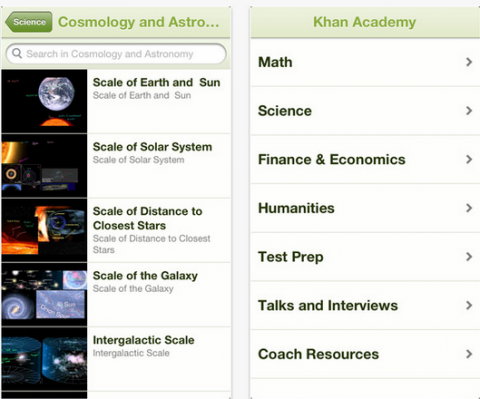 Non-profit Khan Academy, an organization dedicated to “providing a free world-class education for anyone anywhere,” does so primarily through online video courses and lectures. The over 3600 videos are free and access is open to anyone (anywhere), allowing K‑12 students to study math, science, computer science, finance & economics, humanities, and test prep. The organization was founded in 2006 by MIT and Harvard grad Salman Khan, who began by tutoring relatives and friends in Bangladesh while he worked as a hedge fund analyst in the States. His videos became so in-demand that he decided to quit his job and distribute them full-time, funded by donations from individuals and major donors like the Bill and Melinda Gates Foundation.
While there is a healthy amount of skepticism about the efficacy of Khan’s methods, there’s no shortage of demand for the kind of instruction he offers to students all over the world. To further meet that demand, Khan Academy has just released an app for iPhone and iPod Touch. Unlike the app released this past March for the iPad, the iPhone version does not allow interactivity. Users can view videos but cannot, as with the iPad app, download playlists, read subtitles, and log progress, making this version “more for consumption rather than full interaction.” Nevertheless, and whether critics like it or not, this represents a further step for distance learning, as education increasingly moves out of the classroom and into the handheld devices of networks of students no longer restricted by geography or physical mobility.
The app has been added to our brand-spanking new collection: 200 Free K‑12 Educational Resources: Video Lessons, Web Sites, Apps & More
Via Makeuseof
Josh Jones is a doctoral candidate in English at Fordham University and a co-founder and former managing editor of Guernica / A Magazine of Arts and Politics.
Read More...200 Free Kids Educational Resources: Video Lessons, Apps, Books, Websites & More
This collection provides a list of free educational resources for K‑12 students (kindergarten through high school students) and their parents and teachers. Please tell us if we’re missing something valuable.
Below you will find free video lessons/tutorials; free mobile apps; free audiobooks, ebooks and textbooks; quality YouTube channels; free foreign language lessons; test prep materials; and free web resources in academic subjects like literature, history, science and computing.
Home Schooling Resources
- Free Zoom Artistic Backgrounds: If you would like to customize your Zoom background, you can find free art from Hayao Miyazaki’s Studio Ghibli (the makers of Princess Mononoke, Spirited Away, etc.) You can also get free art from world class museums. Instructions for customizing the background can be found here.
- Free Online Resources for Schools: A collection of resources curated by SchoolChoiceWeek.com. It covers communication platform resources, math and science resources, social studies resources and more.
- School Kit: A New Zealand organization provides free activities to NZ teachers and classrooms, using basic materials.
- Khan Academy: Khan Academy has created guides designed to help parents and teachers navigate remote learning.
- Google Teach From Home: A central hub of information, tips, training and tools from across Google for Education to help teachers keep teaching, even when they aren’t in the classroom.
- Google Learn at Home: Google has partnered with Khan Academy and other learning creators to bring parents & families resources and activities to make the coming days as educational and fun as possible. These resources won’t replace any homework assigned by teachers — but they can complement that work.
- How Schools Can Start Teaching Online in a Short Period of Time: Free Tutorials from the Stanford Online High School.
- Netflix Educational Documentaries: During the COVID-19 crisis, Netflix made some of its educational documentaries free to stream online. The list notably includes David Attenborough’s nature series Our Planet and Abstract, which looks at the art of design. Many of these documentaries are still free today.
- New York Public Library Resources: Need some good book recommendations? Read aloud suggestions? NYPL has your reading needs covered for kids of all ages. See sections for Ages 0–5, Kids, Teens, and Adults.
- Scholastic Learn at Home: Day-to-day projects to keep kids reading, thinking and learning. Goes from PreK to 9th grade.
- Free Online Drawing Lessons for Kids, Led by Favorite Artists & Illustrators: During the COVID-19 crisis, some well known illustrators (Mo Willems, Wendy McNaughton, Wendy, etc.) offered free drawing lessons for kids. These lessons are still free today.
- The National Constitution Center: This organization is offering daily live constitutional conversations for middle school, high school, and college students, available through Zoom, and accessible on home computer, laptop, or phone.
Free Audio Books, eBooks and Textbooks
- Free Audio Books: Our collection of 450 free audio books includes many children’s classics. The Wizard of Oz, Grimm’s Fairy Tales, The Adventures of Huckleberry Finn and Mark Twain, The Chronicles of Narnia by C.S. Lewis, The Swiss Family Robinson, Gulliver’s Travels, Anne of Green Gables, Aesop’s Fables, The Wizard of Oz series, and much more. You can download audio files straight to your computer or mobile device.
- Free eBooks: This collection includes many children’s classics in ebook format. You generally have the option to download these texts to your Kindle, iPad, Nook or computer. Video tutorials are included on the page. You may also want to visit our resource: Download 20 Popular High School Books Available as Free eBooks & Audio Books.
- Bartleby.com: Gives you access to free online classics of reference, literature, and nonfiction, including Strunk & White’s Elements of Style, The World Factbook, The Oxford Shakespeare, and The King James Bible.
- Calibre: Download free e‑book software that will manage your electronic library, convert e‑books from one format to another, and give you online access to free e‑books. We have more on it here.
- CK-12: This non-profit provides “open textbooks” for K‑12 students all over the world. It offers free high-quality, standards-aligned, open content in the STEM subjects (science, technology, engineering, and mathematics).
- Historic Children’s Books: The University of Florida’s Baldwin Library of Historical Children’s Literature has digitized 6,000 books. They’re free to read online from cover to cover. You can find other collections by The Library of Congress and UCLA.
- International Children’s Digital Library: Provides free access to high-quality children’s books from around the world in different languages, including Arabic, Afrikaans, Danish, English, Farsi and beyond. Start browsing the library here.
- Librivox: A favorite of ours, Librivox provides free audio books from the public domain. You will find 5000+ books in their catalogue.
- OER Commons: Free, adaptable, openly licensed textbooks and supplemental resources.
- Project Gutenberg: The mother of all ebook sites hosts 40000 free ebooks, and makes them accessible for Kindle, Android, iPad, and iPhone.
- The Harvard Classics: Harvard’s influential president, Charles W. Eliot, said that if you spent just 15 minutes a day reading the right books, you could give yourself a proper liberal education. He published a 51-volume series, now known as The Harvard Classics, and they’re available free online. Ideal for the older student.
- Free Textbook Collection: Our site provides a meta collection of free textbooks available on the web. It covers everything from Art History to Biology, Math, Physics, and Psychology.
- RadioLab for Kids: Kid-friendly stories curated by Radiolab. All in one bingeable spot.
- Watch Stars Read Classic Children’s Books: Betty White, James Earl Jones, Rita Moreno & Many More: Storyline Online streams imaginatively produced videos featuring celebrated actors including Viola Davis, Allison Janney, Chris Pine, Wanda Sykes, Justin Theroux, and Betty White reading children’s books alongside creatively produced illustrations.
Foreign Languages
- Open Culture Foreign Language Collection: This list created by Open Culture offers free lessons in 40 different languages. You can generally download the mp3/podcasts to your devices.
- Duolingo — Learn 30+ languages online with bite-size lessons based on science.
- Destinos: An Introduction to Spanish: This video instructional series for high school and college classrooms teaches Spanish speaking and listening skills. Produced by WGBH Boston.
- Deutsch – warum nicht?: An extensive collection of introductory German lessons put together by Deutsche Welle. Part 1, Part 2, Part 3 and Part 4.
- French in Action: Become fluent in French by exploring French culture in this well-known video series for high school and college classrooms. Produced by Yale University and WGBH Boston with Wellesley College.
- Ma France: The BBC offers 24 video lessons that will teach you French.
- Real Chinese: Presented by the BBC. A lively introduction to Mandarin Chinese presented in 10 short parts with video clips from the Real Chinese TV series.
- Talk Italian: A lively introduction to Italian presented by the BBC.
- WatchKnowLearn: This site has aggregated YouTube videos that will teach students new languages.
Video Lessons/Tutorials
- Free Courses: Our collection, 1,700 Free Online Courses from Top Universities, contains countless video lectures from courses offered by top universities. Some material can be useful for high school students, or their teachers.
- Khan Academy: The site famously features K‑12 video tutorials created by Sal Khan and team. It currently gives students access to thousands of video tutorials that explain the ins-and-outs of algebra, geometry, trigonometry, calculus, statistics, finance, physics, economics and more. Videos can also be accessed via YouTube, or on the Khan Academy’s website.
- Crash Courses: Created by author John Green, this YouTube channel provides crash courses in physics, philosophy, games, economics, U.S. government and politics, astronomy, anatomy & physiology, world history, computer science, biology, literature, ecology, chemistry, psychology, U.S. history and more.
- Learner.org: Run by The Annenberg Foundation, Learner.org hosts multimedia resources for teachers, students and lifelong learners. You can browse their general collection of educational videos here. Selected collections are cataloged below.
- MIT-K12: Taking a page from Khan, MIT is now producing ”short videos teaching basic concepts in science and engineering” for K‑12 students. The videos are generally created by MIT students. You can sort the videos by topic and grade level. Find versions of these videos on iTunes.
- NeoK12: Designated a “Great Site for Kids” by the American Library Association, this site provides educational videos, lessons, quizzes and educational games for K‑12 students in various subject areas, such as science, math, health, social studies and English.
- The Kid Should See This: This blog aggregates interesting, kid-friendly videos focusing on science, art, technology, and more. The videos weren’t necessarily made for kids, but kids can get a lot out of them. That’s the premise of the site.
- TED-Ed: The maker of TED Talks now provides carefully curated educational videos or “lessons worth sharing.” Topics range from Literature and Language, to Mathematics, to Science and Technology.
- Schoolhouse Rock: Animated musical educational short films that aired during the Saturday morning children’s programming on the U.S. television network ABC. The topics covered included grammar, science, economics, history, mathematics, and civics
- WatchKnowLearn: This site has indexed over 33,000 educational videos from YouTube and placed them into a directory of over 3,000 categories. The videos are available without registration or fees to teachers in the classroom and to students at home 24/7.
- YouTube EDU: A curated collection of educational videos from sources ranging from Sesame Street to Harvard. Created by YouTube itself.
Art & Visual Culture (Web Resources)
- A Virtual Tour of 30 World Class Museums and 2 Million Works of Art: The page gives you access to collections of digitized art from 30 world class museums. It features more than 2 million works of art.
- Google Art Project: A new tool that gives you access to more than 1,000 works of art appearing in 17 great museums across the world. Using Google’s Street View technology, you can now tour collections at 184 museums world wide, including the MoMA and Met in New York City, the Uffizi Gallery in Florence, the Hermitage in St. Petersburg, the Van Gogh Museum, and the Rijksmuseum in Amsterdam.
- ArtThink: Created by the San Francisco Museum of Modern Art, this site offers theme-based activities in visual arts, language arts, history and social studies. The site lets students investigate artists’ work, lives, and their historical context.
- Free Coloring Books from World-Class Libraries & Museums:World class museums and libraries have made free coloring books available for download.
- SmartHistory: Smarthistory provides an extensive collection of audio and video introductions to works of art found in standard art history survey texts. (See our post “An Introduction to 100 Important Paintings with Videos Created by Smarthistory.”) You can find a complete collection of their videos on YouTube
Hold Me Closer, Tony Danza and Other Misheard Lyrics for Your Listening Pleasure
As the Ramones so memorably didn’t sing, “Twenty-twenty-twenty-four hours to go…I want a piece of bacon.” Substitute ham, and you’ve got yourself Collective Cadenza’s History of Misheard Lyrics, Opus No. 13. The classically trained performers are nothing if not game. The visual aids are ridiculously on message. The goal? A one-take musical compendium of pop’s most commonly misapprehended phrases. (Prior projects include subjecting “What a Wonderful World” to sixteen musical genres and a lovely History of Lyrics That Aren’t Lyrics.)
With all the current debate over the real world worthiness of expensive college educations, it’s reassuring to see recent Julliard grads helping themselves to the crown once sported by Mr. Jaws and Dr. Demento.
And now, readers, it’s your turn to shake it like a polar bear ninja. Was your favorite aural fail acknowledged above? Or will you be using the space below to demand its inclusion in a follow up?
Read More...The Moon Disaster That Wasn’t: Nixon’s Speech In Case Apollo 11 Failed to Return
Enduring conspiracy theories aside, the 1969 moon landing (above) was a rousing success for the government space program known as NASA. After a decade-long space race, during which it seemed to all observers that the Soviets had the edge, the U.S. landed Apollo 11–carrying Neil Armstrong and Buzz Aldrin–at the Sea of Tranquility on July 20, 1969. Nixon was president, the Vietnam War and its opposition raged, and Leonid Brezhnev helmed a stagnant Soviet empire.
On the great list of Cold War what-ifs, the near-miss of the Bay of Pigs is surely number one. But for all the space nerds out there, this one ranks pretty high: What if Aldrin and Armstrong never made it back? This was, of course, a distinct possibility, and one that the Nixon administration prepared for. While we were told during this last presidential election that Mitt Romney failed to write a concession speech, William Safire, speechwriter for Richard Nixon, did write a speech in the event that Apollo 11 couldn’t make the return trip. The speech, entitled IN EVENT OF MOON DISASTER, is a something of a terse and poignant masterpiece. Below is an excerpt of Safire’s brief, hypothetical address:
These two men are laying down their lives in mankind’s most noble goal: the search for truth and understanding.
They will be mourned by their families and friends; they will be mourned by the nation; they will be mourned by the people of the world; they will be mourned by a Mother Earth that dared send two of her sons into the unknown.
In their exploration, they stirred the people of the world to feel as one; in their sacrifice, they bind more tightly the brotherhood of man.
In ancient days, men looked at the stars and saw their heroes in the constellations. In modern times, we do much the same, but our heroes are epic men of flesh and blood.
Others will follow, and surely find their way home. Man’s search will not be denied. But these men were the first, and they will remain the foremost in our hearts.
For every human being who looks up at the moon in the nights to come will know that there is some corner of another world that is forever mankind.
Would the space program have continued had these two brave pioneers died on the moon? Certainly. But this moment of triumph would instead be remembered—like the Challenger disaster of 1986—as a moment of great loss and a very serious setback for our forays into outer space.
Read the full speech here at Letters of Note.
Josh Jones is a doctoral candidate in English at Fordham University and a co-founder and former managing editor of Guernica / A Magazine of Arts and Politics.
Related Content:
Dark Side of the Moon: A Mockumentary on Stanley Kubrick and the Moon Landing Hoax
First Orbit: Celebrating 50th Anniversary of Yuri Gagaran’s Space Flight
Read More...Watch the World’s Oldest Working Digital Computer — the 1951 Harwell Dekatron — Get Fired Up Again
The next time you feel frustrated with your aging personal computer, just watch the video above. In these fifty seconds, the National Museum of Computing fires up the Harwell Dekatron, also known as the Wolverhampton Instrument for Teaching Computation — or, naturally, the WITCH. Holder of the title of the world’s oldest working original digital computer, the WITCH, first built in 1951, went into retirement from Wolverhampton’s Staffordshire Technical College in 1973. A three-year restoration of the computer — all two-and-a-half tons, 828 flashing Dekatron valves, and 480 relays of it — began in 2008. Now, having just finished returning the machine to tip-top shape, they’ve actually booted it up, as you can see. “In 1951 the Harwell Dekatron was one of perhaps a dozen computers in the world,” The National Museum of Computing’s press release quotes its trustee Kevin Murrell as saying, “and since then it has led a charmed life surviving intact while its contemporaries were recycled or destroyed.”
The Harwell Atomic Energy Research Establishment provided the Dekatron its first tasks, cranking out calculations formerly done by hand. When it passed into obsolescence there in 1957, Staffordshire Technical College took the massive computer off Harwell’s hands, and there it became the WITCH, used for teaching purposes over the next sixteen years. When it outlived even its educational use, the WITCH went on display at the Birmingham Museum of Science and Industry, and finally to dismantlement and storage. Now it offers a whirring, clattering, flashing, retro-technological spectacle to new generations of computer enthusiasts. Some of them may be shocked to learn that, by virtue of sheer age, it doesn’t adhere to some of the very qualities of digital computing they take for granted: it doesn’t calculate in binary code, but decimal code, hence the name “Dekatron.” Though its practical applications would seem limited in the modern world, rest assured that some young hobbyist is even now pondering how to get the thing onto the web.
h/t: BoingBoing
Related content:
A Short History of Romanian Computing: From 1961 to 1989
Colin Marshall hosts and produces Notebook on Cities and Culture. Follow him on Twitter at @colinmarshall.
Read More...William S. Burroughs’ “The Thanksgiving Prayer,” Shot by Gus Van Sant
“Thanksgiving Day, Nov. 28, 1986” first appeared in print in Tornado Alley, a chapbook published by William S. Burroughs in 1989. Two years later, Gus Van Sant (Good Will Hunting, My Own Private Idaho, Milk) shot a montage that brought the poem to film, making it at least the second time the director adapted the beat writer to film.
If you’ve seen Burroughs use Shakepseare’s face for target practice, or if you’ve watched The Junky’s Christmas, you’ll know that he wasn’t kind to convention or tradition. And there are no prisoners taken here, as you’ll see above. Now time for a little Thanksgiving dinner.…
h/t BoingBoing
Related Content:
Gus Van Sant Adapts William S. Burroughs: An Early 16mm Short
William S. Burroughs Reads His First Novel, Junky
Read More...11,215 Free Grateful Dead Concert Recordings in the Internet Archive
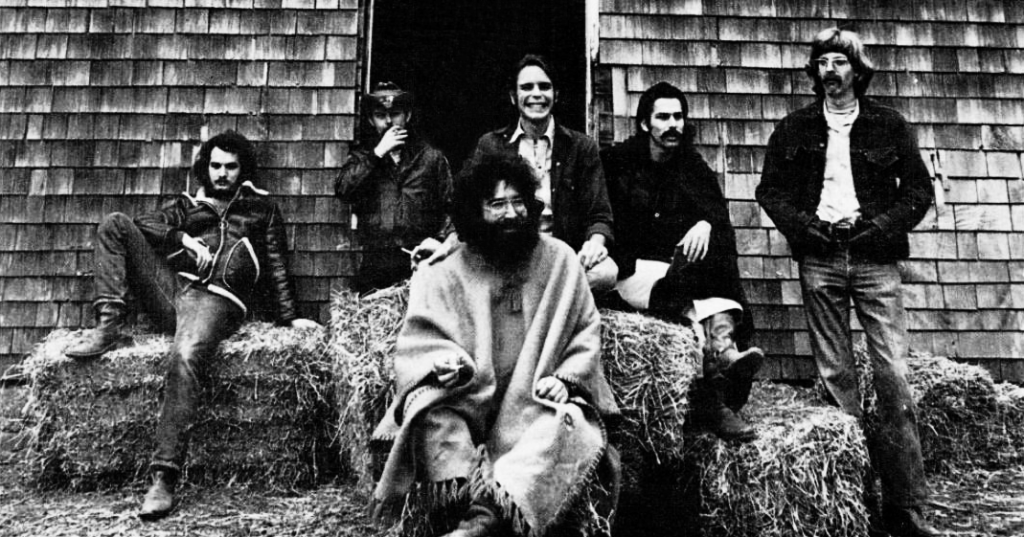
Image via Wikimedia Commons
Even resolute non-Deadheads have been passing around “Deadhead,” Nick Paumgarten’s recent New Yorker piece on “the vast recorded legacy of the Grateful Dead.” Like much of the most interesting magazine journalism, the article digs deep into and provides a primer on a subculture that goes deep. Casual Dead listeners know there exists a large and dedicated body of fervently un-casual Dead listeners, the fans who may have followed the band around on its touring days but now collect every last one of its recorded performances, official, unofficial, or otherwise. “It was denser, feverish, otherworldly,” Paumgarten describes his first experience hearing a Dead bootleg. “If you took an interest, you’d copy a few tapes, listen to those over and over, until they began to make sense, and then copy some more. Before long, you might have a scattershot collection, with a couple of tapes from each year. It was all Grateful Dead, but because of the variability in sonic fidelity, and because the band had been at it for twenty years, there were many different flavors and moods. Even the compromised sound quality became a perverse part of the appeal. Each tape seemed to have its own particular note of decay, like the taste of the barnyard in a wine or a cheese.”
Do you aspire to join those Paumgarten calls “the tapeheads, the geeks, the throngs of workaday Phil Schaaps, who approach the band’s body of work with the intensity and the attention to detail that one might bring to birding, baseball, or the Talmud”? If so, the internet, and specifically the Internet Archive’s Grateful Dead collection, has cranked the barrier to entry way down. Its 11,215 free Grateful Dead recordings should keep you busy for some time. “You can browse the recordings by year, so if you click on, say, 1973 you will see links to two hundred and ninety-four recordings, beginning with four versions of a February 9th concert at Stanford and ending with several versions of December 19th in Tampa,” writes Paumgarten. “Most users merely stream the music; it’s a hundred cassette trays, in the Cloud.” If you need a break from these concerts, in all their variable-fidelity glory, listen to Paumgarten talk matters Dead with music critic Sasha Frere-Jones on the New Yorker Out Loud podcast (listen here). And if you find the Dead not quite to your taste — guitarist Jerry Garcia famously compared their dedicated niche audience to “people who like licorice” — why not move on to the Fugazi archive?
Related content:
Bob Dylan and The Grateful Dead Rehearse Together in Summer 1987. Listen to 74 Tracks.
NASA & Grateful Dead Drummer Mickey Hart Record Cosmic Sounds of the Universe on New Album
UC Santa Cruz Opens a Deadhead’s Delight: The Grateful Dead Archive is Now Online
Colin Marshall hosts and produces Notebook on Cities and Culture. Follow him on Twitter at @colinmarshall.
Read More...Support Us
We're hoping to rely on loyal readers, rather than erratic ads. Please click the Donate button and support Open Culture. You can use Paypal, Venmo, Patreon, even Crypto! We thank you!

About Us

Open Culture scours the web for the best educational media. We find the free courses and audio books you need, the language lessons & educational videos you want, and plenty of enlightenment in between.
Advertise With Us

FREE UPDATES!
GET OUR DAILY EMAIL
Get the best cultural and educational resources on the web curated for you in a daily email. We never spam. Unsubscribe at any time.
FOLLOW ON SOCIAL MEDIA

Open Culture editor Dan Colman scours the web for the best educational media. He finds the free courses and audio books you need, the language lessons & movies you want, and plenty of enlightenment in between.
Advertise With Us


