Can Modern-Day Italians Understand Latin? A YouTuber Puts It to the Test on the Streets of Rome
Of all the Romance languages, none is more Romantic than Italian, at least in the sense that it has changed the least in its long descent from Latin to its current form. Whether the Italian spoken in recent centuries has a particularly close resemblance to Latin is another question, and one American Youtuber Luke Ranieri investigates on the streets of Rome itself in the video above. In order to find out whether modern-day Italians can understand ancient Latin, he approaches unsuspecting Romans and asks them for directions in that language, speaking it fluently and just as their ancestors would have back in the first century.
So, can Romans understand Latin? “Yes,” Ranieri concludes, “but they don’t always enjoy it.” Most of the individuals he addresses claim that they can’t understand him at first. But as the conversation continues — in Latin on one side, Italian on the other — it becomes clear that they can indeed figure out what he wants to know.
“Italians are almost universally exposed only to the traditional Italian pronunciation of Latin (called the pronuncia scolastica), otherwise known as the Ecclesiastical Pronunciation,” Ranieri notes in a comment. But “in this video, I am using the Restored Classical Pronunciation of Latin as it was pronounced in Rome two thousand years ago.”
He may have had better luck at the Vatican and the Colosseum, but the Italians he meets in Rome do rise to this challenge, more or less, though few do it without hemming, hawing, and of course, attempting to use English. For the language of England has, one could argue, risen to play the same role in wide swaths of our world that Latin once played across the Roman Empire. This situation has its advantages, but in the heart of many a language-lover it also inspires some regrets. Though full of Latinate vocabulary, English arguably falls short of the beauty of the genuine Romance languages. And even the most obstinate Anglophone has to admit that, compared to Latin, English lacks something: a certain gravitas, let us say.
Related content:
Learn Latin, Old English, Sanskrit, Classical Greek & Other Ancient Languages in 10 Lessons
What Ancient Latin Sounded Like, And How We Know It
Based in Seoul, Colin Marshall writes and broadcasts on cities, language, and culture. His projects include the Substack newsletter Books on Cities, the book The Stateless City: a Walk through 21st-Century Los Angeles and the video series The City in Cinema. Follow him on Twitter at @colinmarshall or on Facebook.
Read More...Hear the Beatles’ ‘Blackbird’ Sung in the Indigenous Mi’kmaq Language
To raise awareness of her native language, 16-year-old Emma Stevens sang a version of The Beatles’ 1968 classic “Blackbird” in the Mi’kmaq language, an Eastern Algonquian language spoken by nearly 11,000 in Canada and the United States. A member of the Eskasoni First Nation, the Nova Scotia student sang lyrics that were painstakingly translated by Katani Julian, a teacher who works in language revitalization. Julian told WBUR. “My language is very different from other ones.” “There’s a lot of syllables in ours. And there’s a lot of long words that translate into something really easy in English.”
You can find the lyrics below and the song above.
Pu’tliskiej wapinintoq
Kina’masi telayja’timk
tel pitawsin
eskimatimu’sipnek nike’ mnja’sin
Pu’tliskiej wapinintoq
Ewlapin nike’ nmiteke
tel pkitawsin
eskimatimu’sipnek nike’ seya’sin
Pu’tliskiej…layja’si
ta’n wasatek poqnitpa’qiktuk
Pu’tliskiej…layja’si
ta’n wasatek poqnitpa’qiktuk
Pu’tliskiej wapinintoq
Kina’masi telayja’timk
tel pitawsin
eskimatimu’sipnek nike’ mnja’sin
eskimatimu’sipnek nike’ mnja’sin
eskimatimu’sipnek nike’ mnja’sin
——————————————————–
Boo-dull-ees-kee-edge wobbin-in-toq
Kee-na-ma-see dell-I-jaw-dimk
dell-bit-ow-sin
ess-gum-mud-dum-oo-sup-neg nike’ mn-jaw-sin
Boo-dull-ees-kee-edge wobbin-in-toq
ew-la-bin nike’ num-mid-deh-geh
dell-bit-ow-sin
ess-gum-mud-dum-oo-sup-neg say-ya-sin
Boo-dull-ees-kee-edge, lie-jaw-see
don wassa-deg poq-nit-ba’q‑ik-tuk
Boo-dull-ees-kee-edge, lie-jaw-see
don wassa-deg poq-nit-ba’q‑ik-tuk
Boo-dull-ees-kee-edge wobbin-in-toq
Kee-na-ma-see dell-I-jaw-dimk
dell-bit-ow-sin
ess-gum-mud-dum-oo-sup-neg nike’ mn-jaw-sin
ess-gum-mud-dum-oo-sup-neg nike’ mn-jaw-sin
ess-gum-mud-dum-oo-sup-neg nike’ mn-jaw-sin
If you would like to support the mission of Open Culture, consider making a donation to our site. It’s hard to rely 100% on ads, and your contributions will help us continue providing the best free cultural and educational materials to learners everywhere. You can contribute through PayPal, Patreon, and Venmo (@openculture). Thanks!
Related Content
Paul McCartney Explains How Bach Influenced “Blackbird”
Read More...Wes Anderson Visits a Paris Video Store and Highlights the Films He Loves: Kurosawa, Truffaut, Buñuel & More
Wes Anderson lives at least part-time in Paris, a situation whose advantages include the ability to frequent JM Vidéo, one of the very few cinephile-oriented video-rental shops still in business. His apartment is on rue Daguerre, which would make it a bit of a trek — across the Seine and then some — to get there. Still, he made it out to JM to shoot the video above, the latest installment of a series from French Youtube channel Konbini in which famous auteurs (here on Open Culture, we’ve previously featured episodes staring David Cronenberg and Terry Gilliam) pick their favorites off the shelves. Anyone who’s seen Anderson’s work will have a sense of his love of movies, but seldom have we had the chance to see him speak so enthusiastically about them.
Anderson’s JM journey begins and ends in Japan. He calls Shōhei Imamura’s Vengeance Is Mine “a great, very long, sort of serial killer movie” and names Akira Kurosawa’s Drunken Angel as one source of music for his own animated film Isle of Dogs. There follow works from Luis Buñuel, Rouben Mamoulian (who seems to have been a particularly powerful fount of inspiration), musicals like The Pajama Game and Meet Me in St. Louis, and John Sturges’ Western Bad Day at Black Rock (whose title sequence he lifted for his latest picture, Asteroid City).
He also pulls out a series of French films: The Fire Within by Louis Malle, The Big Risk by Claude Sautet, Playtime by Jacques Tati, Vagabond by Agnès Varda (herself a onetime rue Daguerre resident), The Crime of Monsieur Lange by Jean Renoir, and The Man Who Loved Women by François Truffaut.
Other of Anderson’s selections involve his collaborators: his production designer Adam Stockhausen worked on Steven Spielberg’s Cold War thriller Bridge of Spies, his director of photography Robert Yeoman worked on Gus Van Sant’s Drugstore Cowboy. Finding Mel Stuart’s Willy Wonka and the Chocolate Factory prompts him to discuss his own upcoming Roald Dahl adaptation, a short film for Netflix (current owner of Dahl’s work) called The Wonderful Story of Henry Sugar. Not long thereafter he comes around to the anime section, where he expresses his appreciation for Isao Takahata’s feature Only Yesterday and Hideaki Anno’s series Neon Genesis Evangelion. He imagines the possibility of “someone becoming a Neon Genesis Evangelion fanatic and making it their religion”; the fact that he hasn’t seen the actuality suggests that, however international his life and work have become, he has yet to spend time in Mexico.
Related content:
David Cronenberg Visits a Video Store & Talks About His Favorite Movies
Wes Anderson Names 12 of His Favorite Art Films
Terry Gilliam Visits a Video Store & Talks About His Favorite Movies and Actors
Books in the Films of Wes Anderson: A Supercut for Bibliophiles
Based in Seoul, Colin Marshall writes and broadcasts on cities, language, and culture. His projects include the Substack newsletter Books on Cities, the book The Stateless City: a Walk through 21st-Century Los Angeles and the video series The City in Cinema. Follow him on Twitter at @colinmarshall or on Facebook.
Read More...Explore Exquisite Kimono Designs from 19th-Century Japan
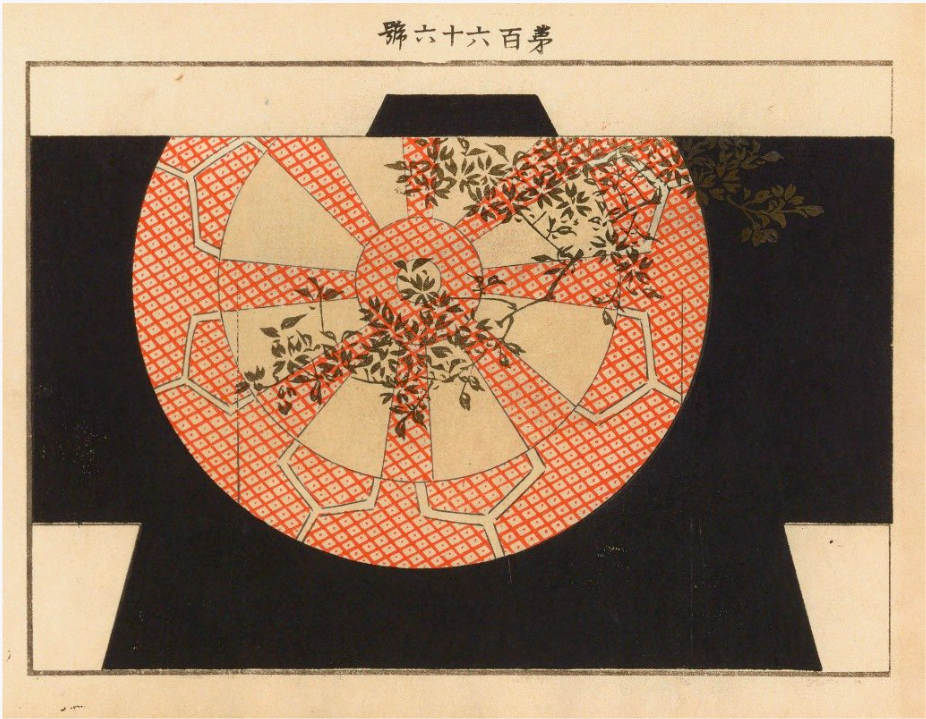
Japan’s 19th-century kimonos blur the lines between art and fashion.
Meiji era customers could browse hinagata-bon, traditionally bound pattern books, on visits to drapers and fabric merchants. These colorful volumes offered a glamorous update of the Edo period’s black-and-white kimono pattern books.
Aspiring designers also studied hinagata-bon, as many of the designs featured within were the work of celebrated artists.
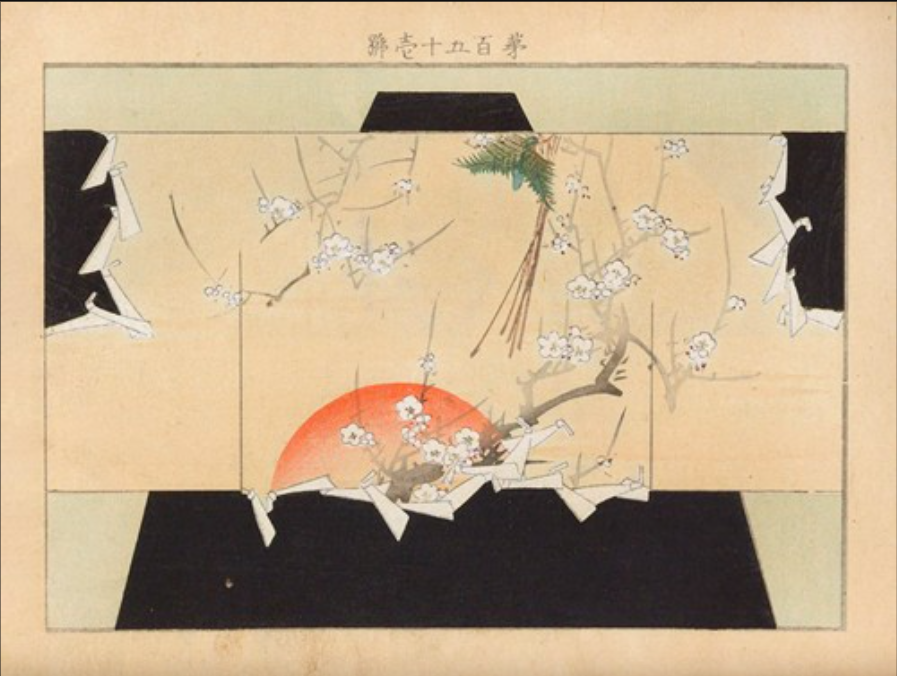
Each page featured a standard kimono outline in a back or side view, embellished with the proposed design. These range from traditional floral motifs to bold landscapes to striking geometric patterns, some arresting, some discreet.
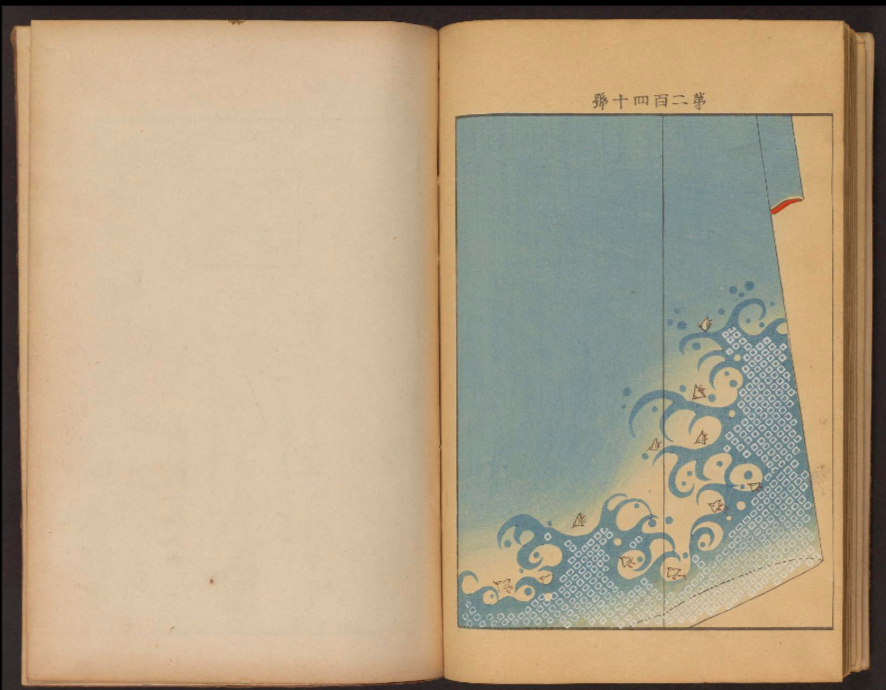
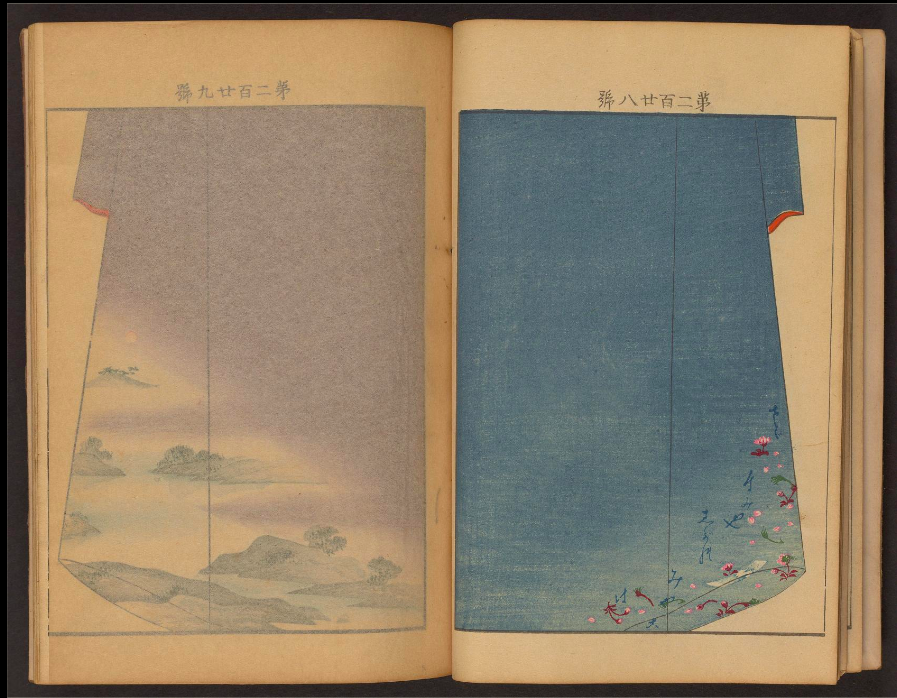
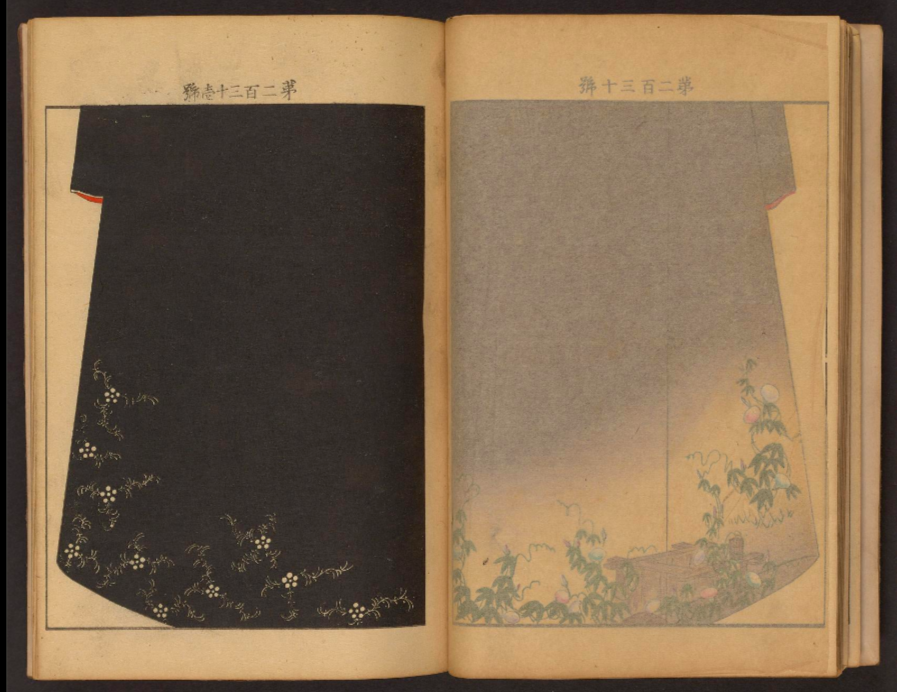
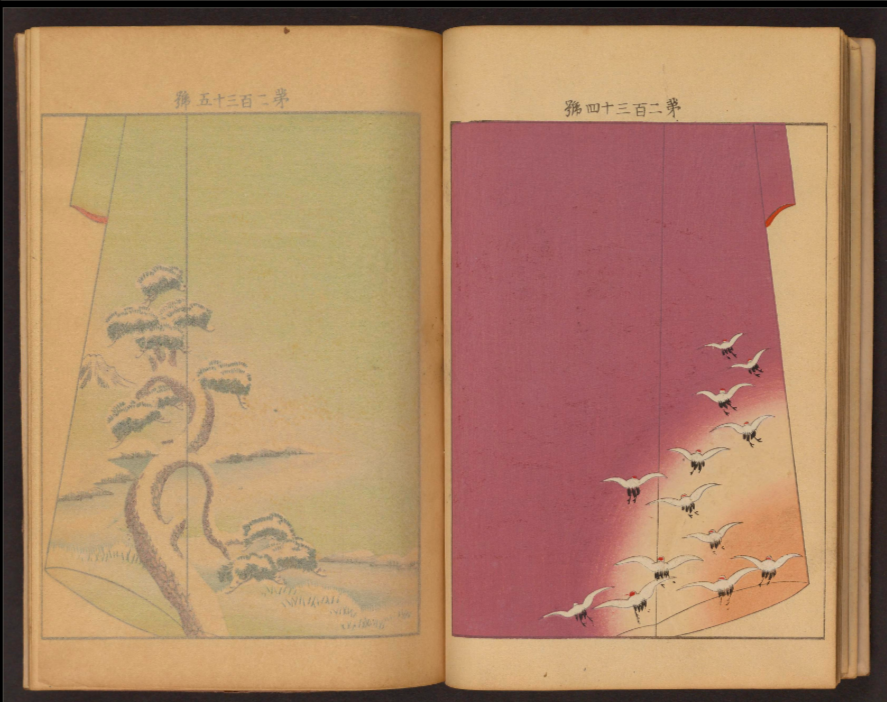
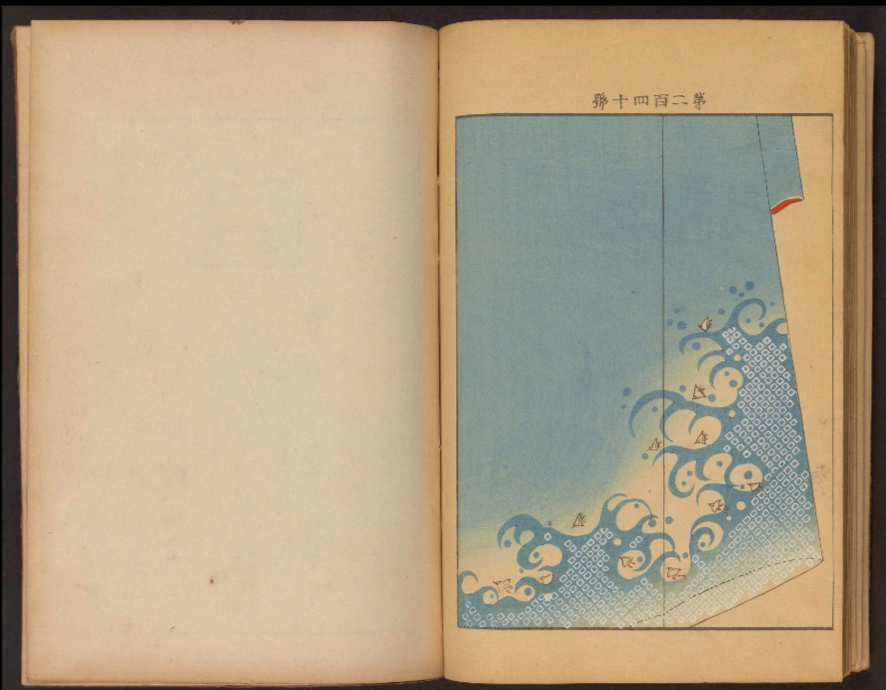
As Hunter Dukes observes in the Public Domain Review, the Meiji era ushered in a period of technological advancement. Representatives of the Japanese textile industry ventured abroad, embracing and adapting dying processes they saw practiced in the United States and Europe. The ability to stencil pastes of chemical dye onto silk helped to industrialize the kimono-making process. People who previously couldn’t have afforded such a garment could now choose from a variety of designs.
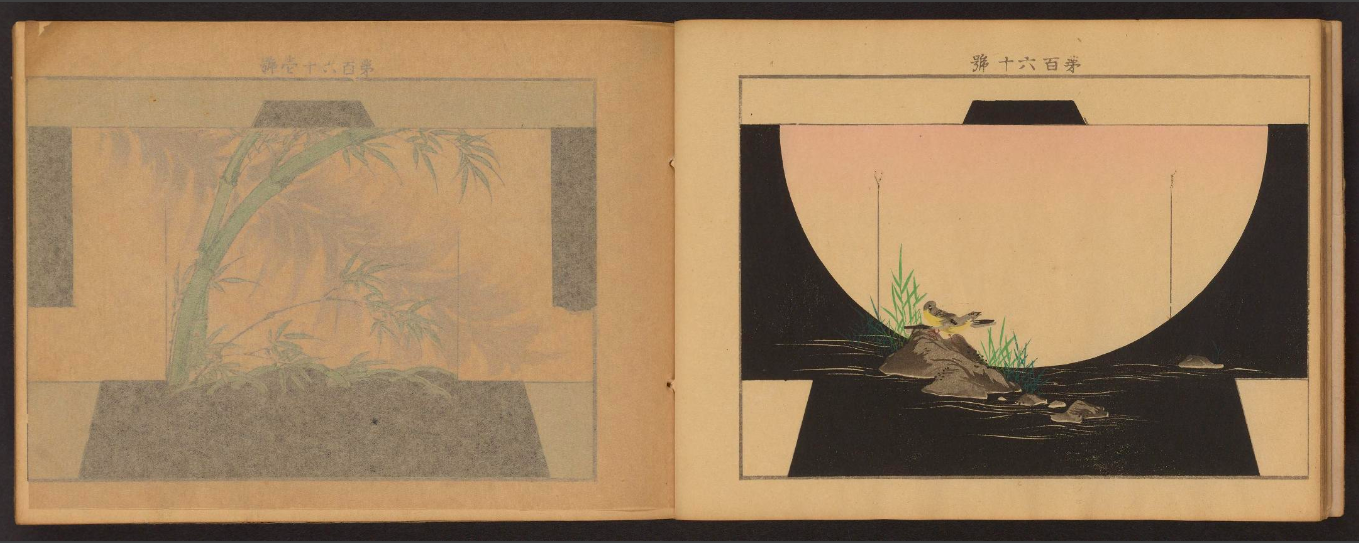
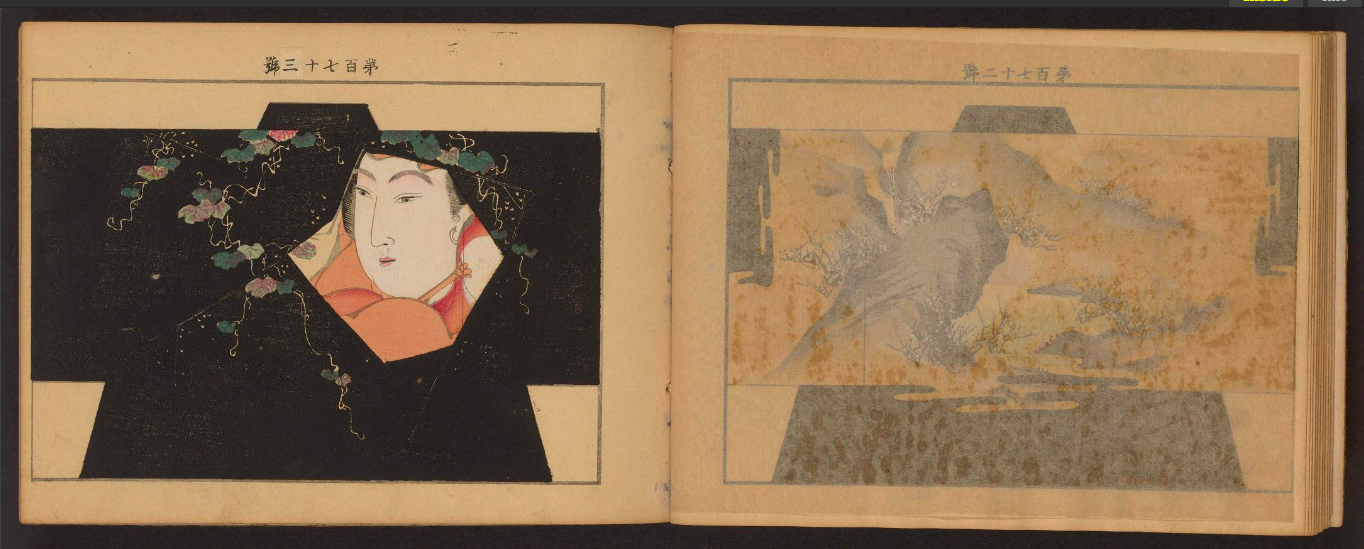
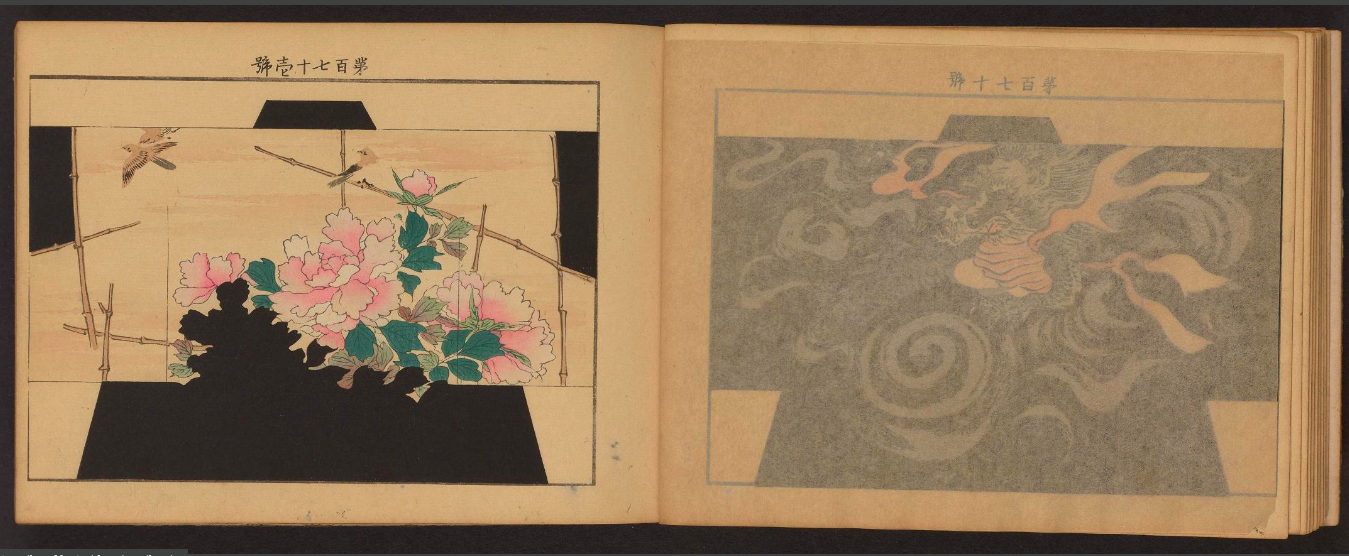
The explosion in kimono production spurred demand for fresh designs. Publishers began to release hinagata-bon annually. Previous years’ pattern books were of little interest to sophisticated customers clamoring for the latest fashions.
Unlike today’s disposable fashion mags, however, the pattern books’ high aesthetic and production quality saved them from destruction.
In her 1924 book, Block Printing and Book Illustration in Japan, author Louise Norton Brown wrote that cast-off hinagata-bon could be “found in all the secondhand book shops of Japan … (where they were) comparatively inexpensive.”
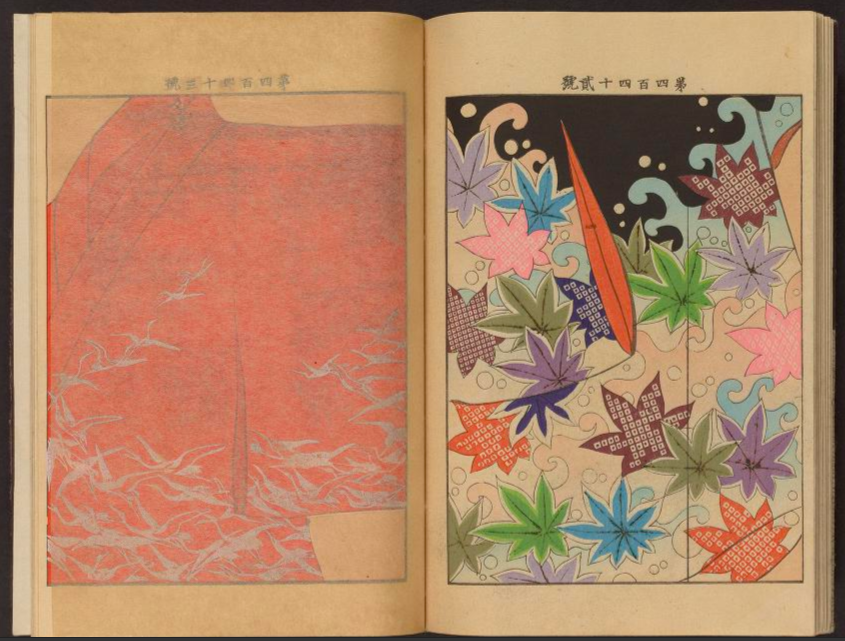
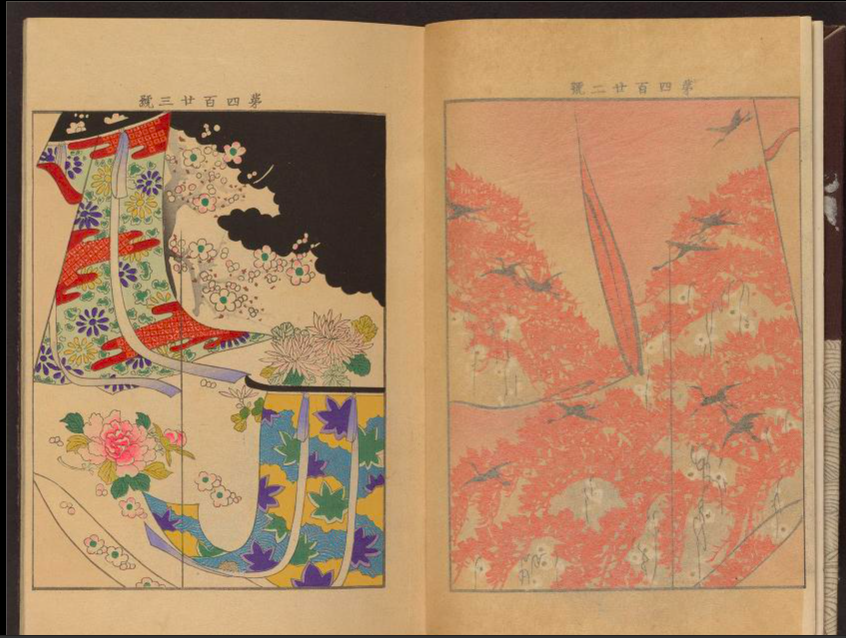
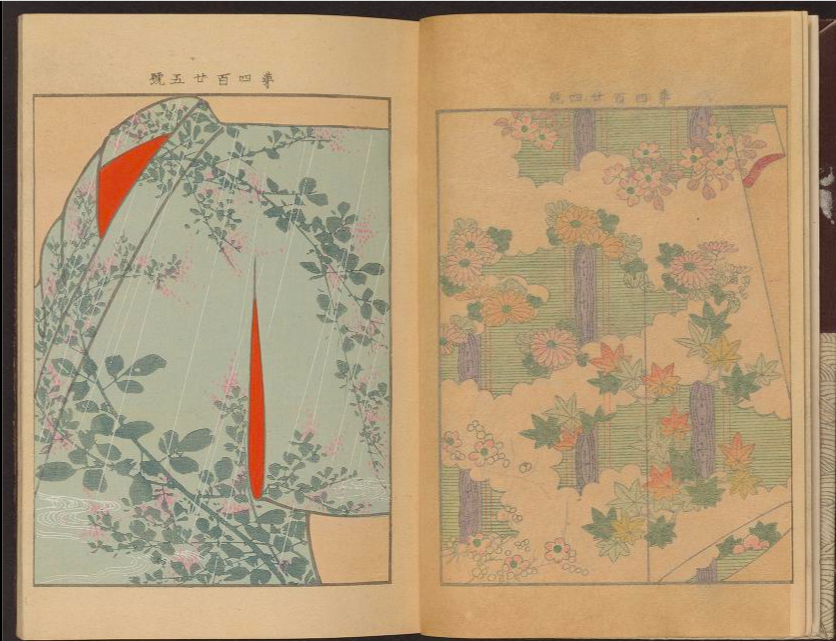
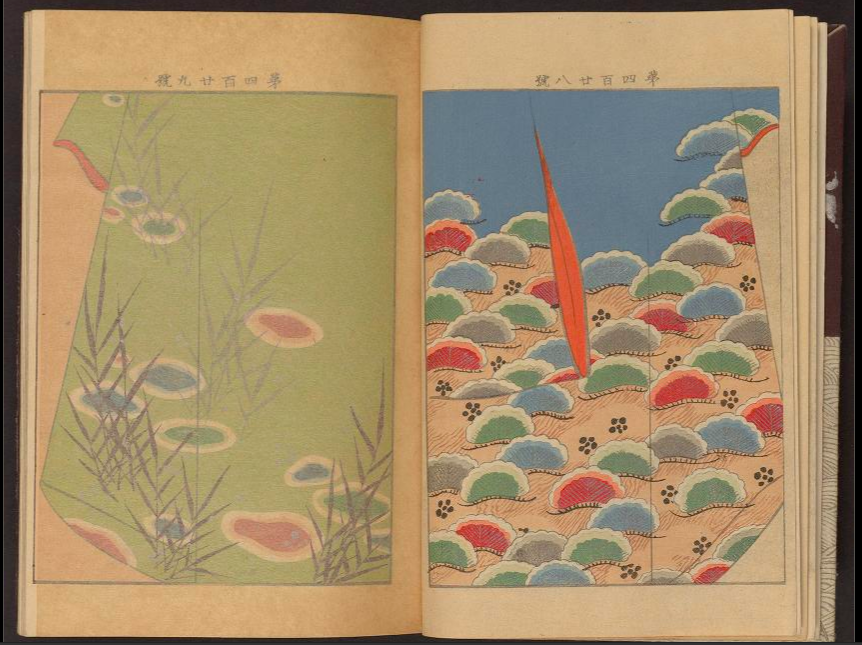
These days, you can find Meiji era pattern books in a number of world class institution’s collections including the Metropolitan Museum of Art, the British Library, the Art Institute of Chicago, and The Smithsonian National Museum of Asian Art, which digitized the kimono designs by Seiko Ueno featured in this post.
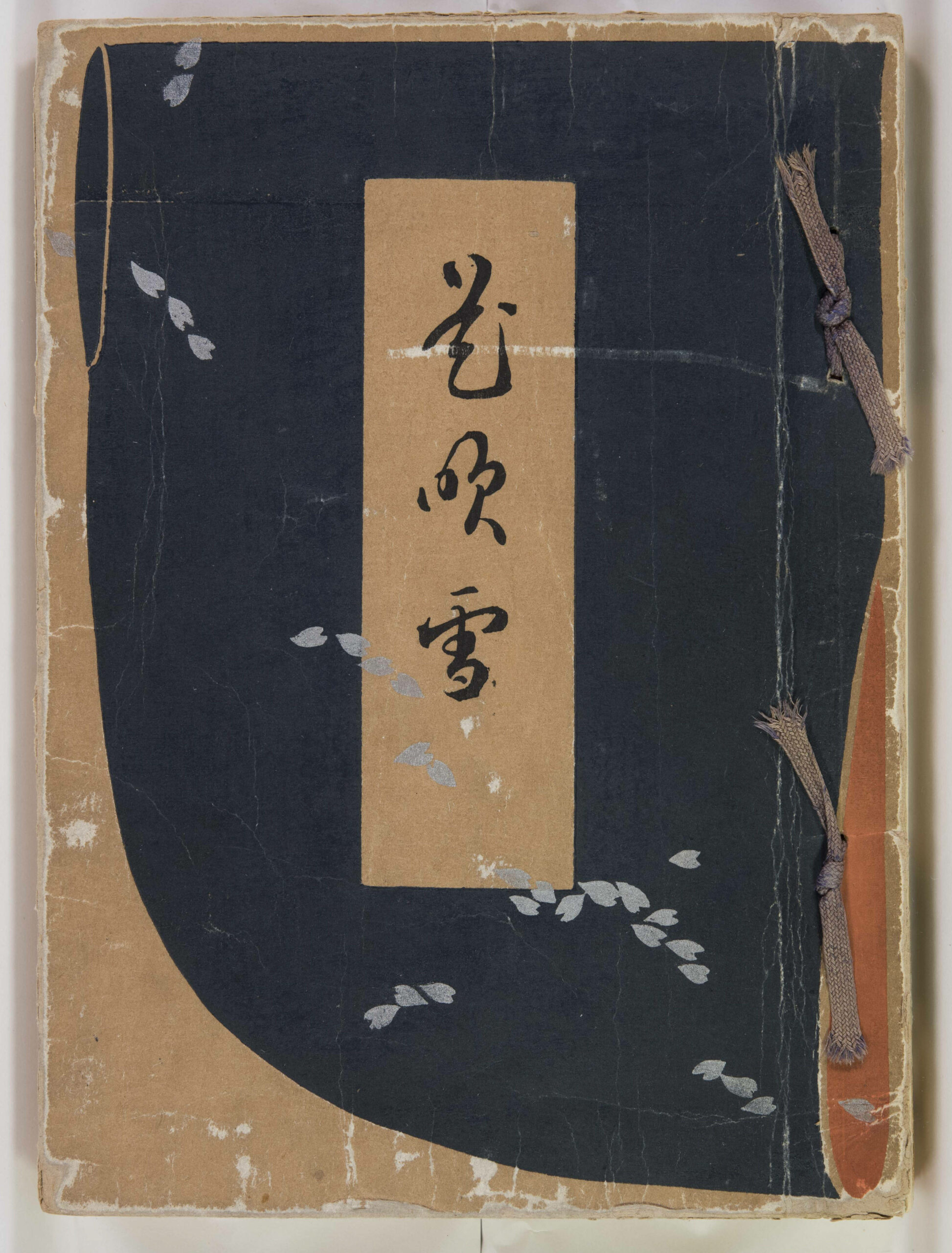
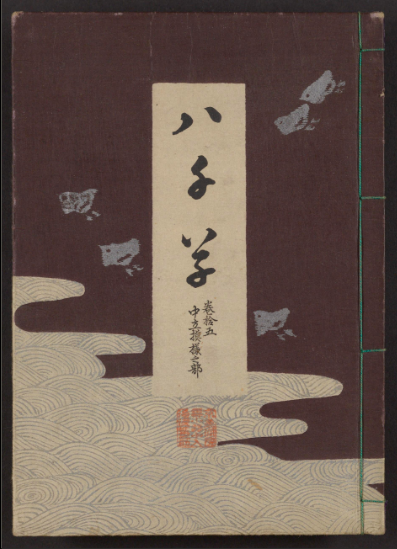
Explore four Meiji era kimono pattern books here.
Related Content
– Ayun Halliday is the Chief Primatologist of the East Village Inky zine and author, most recently, of Creative, Not Famous: The Small Potato Manifesto and Creative, Not Famous Activity Book. Follow her @AyunHalliday.
Read More...How Much of What You See Is Actually a Hallucination?: An Animated TED-Ed Lesson
All of us have, at one time or another, been accused of not seeing what’s right in front of us. But as a close examination of our biological visual system reveals, none of us can see what’s right in front of us. “Our eyes have blind spots where the optic nerve blocks part of the retina,” says the narrator of the new animated TED-Ed video above. “When the visual cortex processes light into coherent images, it fills in these blind spots with information from the surrounding area. Occasionally we might notice a glitch, but most of the time, we’re none the wiser.” This absence of genuine information in the very center of our vision has long circulated in the standard set of fascinating facts.
What’s less well known is that these same neurological processes have made the blind see — or rather, they’ve induced in the blind an experience subjectively indistinguishable from seeing. It’s just that the things they “see” don’t exist in reality.
Take the case of an elderly woman named Rosalie, with which the video opens. On one otherwise normal day at the nursing home, “her room suddenly burst to life with twirling fabrics. Through the elaborate drapings, she could make out animals, children, and costumed characters,” even though she’d lost her sight long before. “Rosalie had developed a condition known as Charles Bonnet Syndrome, in which patients with either impaired vision or total blindness suddenly hallucinate whole scenes in vivid color.”
This leads us to the counterintuitive finding that you don’t need sight to experience visual hallucinations. (You do need to have once had sight, which gives the brain visual memories on which to draw later.) But “even in people with completely unimpaired senses, the brain constructs the world we perceive from incomplete information.” Take that gap in the middle of our visual field, which the brain fills with, in effect, a hallucination, albeit not one of the elaborate, sometimes overwhelming kinds induced by “recreational and therapeutic drugs, conditions like epilepsy and narcolepsy, and psychiatric disorders like schizophrenia.” At the end of the lesson, the narrator suggests that interested viewers seek out the work of neurologist-writer Oliver Sacks, which deals extensively with what opens gaps between reality and our perceptions — and which we here at Open Culture are always prepared to recommend.
Related content:
A Beautiful 1870 Visualization of the Hallucinations That Come Before a Migraine
This is What Oliver Sacks Learned on LSD and Amphetamines
Based in Seoul, Colin Marshall writes and broadcasts on cities, language, and culture. His projects include the Substack newsletter Books on Cities, the book The Stateless City: a Walk through 21st-Century Los Angeles and the video series The City in Cinema. Follow him on Twitter at @colinmarshall or on Facebook.
Read More...Frederick Douglass’s Fiery 1852 Speech, “The Meaning of July 4th for the Negro,” Read by James Earl Jones
Every year on this day, Frederick Douglass’s fiery, uncompromising 1852 speech, “The Meaning of July 4th for the Negro,” gets a new hearing, and takes on added resonance in the context of contemporary politics. It has never ceased to speak directly to those for whom the celebrations can seem like a hollow mockery of freedom and independence. The American holiday commemorates the adoption of the Declaration of Independence—next to the Constitution, the U.S.A.’s most cherished founding document, and a text, for all its rhetorical elegance, which cannot escape the irony that it was written by a slaveholder for an emerging slave nation.
Slavery had always been a contentious subject among the colonists. And yet the American Revolution was a war waged for the full freedom and enfranchisement of only a very few white men of property. Not only were black people excluded from the nation’s freedoms, but so too were conquered Native American nations, and in great part, poor white men and women who could not vote—though they were not chained in perpetual servitude as human chattel, with little hope of liberty for themselves or their descendants.
Douglass gave the speech in Rochester, NY, seventy-six years after the first July 4th and at a time when the country was riven with irreconcilable tensions between abolitionists, free-soilers, and the slaveholding South. The Compromise of 1850 and the Fugitive Slave Act—at least, in hindsight—made the impending Civil War all but inevitable. The speech reveals the celebration as a sham for those who were or had been enslaved, and who could not consider themselves American citizens regardless of their status (as Supreme Court Chief Justice Roger B. Taney would affirm five years later.)
Just above, you can hear a powerful reading of Douglass’s speech by James Earl Jones, delivered as part of Howard Zinn’s Voices of a People’s History of the United States. Read an excerpt of the speech below.
What, to the American slave, is your Fourth of July? I answer: a day that reveals to him, more than all other days of the year, the gross injustice and cruelty to which he is a constant victim. To him, your celebration is a sham; your boasted liberty, an unholy license; your national greatness, swelling vanity; your sounds of rejoicing are empty and heartless; your denunciation of tyrants, brass fronted impudence; your shouts of liberty and equality, hollow mockery; your prayers and hymns, your sermons and thanksgivings, with all your religious parade and solemnity, are, to Him, mere bombast, fraud, deception, impiety, and hypocrisy—a thin veil to cover up crimes that would disgrace a nation of savages. There is not a nation of the earth guilty of practices more shocking and bloody than are the people of these United States at this very hour.
Douglass’s speech condemned the “scorching irony” of American independence even after the Civil War, as racist terrorism and Jim Crow destroyed the promise of Reconstruction. In our present time, writes Pulitzer Prize-winning author and professor Isabel Wilkerson, amidst the rash of high profile police killings and an ensuing lack of justice, events “have forced us to confront our place in a country where we were enslaved for far longer than we have been free. Forced us to face the dispiriting erosion that we have witnessed in recent years—from the birther assaults on a sitting black president to the gutting of the Voting Rights Act that we had believed was carved in granite.” We might add to this list the resumption of the failed “War on Drugs” and the federal government’s announcements that it would do little to safeguard civil rights nor to investigate and prosecute the surge of white supremacist violence.
And yet the “self evident” mythology of American freedom and equality—and of American innocence—remains potent and seductive to many people in the country. As the conservative think tank American Enterprise Institute put it a few days ago, “The birth of the United States was unique because it was a nation founded not on blood or ethnicity, but on ideas.” To this ahistorical fiction, which manages to erase the founders’ own statements on race, the colonization of indigenous lands, and even the bloody Revolutionary War in its strangely desperate zeal to sweep the past away, Douglass would reply: “The feeling of the nation must be quickened; the conscience of the nation must be roused; the propriety of the nation must be startled; the hypocrisy of the nation must be exposed; and the crimes against God and man must be proclaimed and denounced.”
Note: This post originally appeared on our site in 2017.
If you would like to support the mission of Open Culture, consider making a donation to our site. It’s hard to rely 100% on ads, and your contributions will help us continue providing the best free cultural and educational materials to learners everywhere. You can contribute through PayPal, Patreon, and Venmo (@openculture). Thanks!
Related Content:
The Civil War & Reconstruction: A Free Course from Yale University
Visualizing Slavery: The Map Abraham Lincoln Spent Hours Studying During the Civil War
Josh Jones is a writer and musician based in Durham, NC. Follow him at @jdmagness
Read More...How Stanley Kubrick Adapted Stephen King’s The Shining into a Cinematic Masterpiece
For most of us, the title The Shining first calls to mind the Stanley Kubrick film, not the Stephen King novel from which it was adapted. Though it would be an exaggeration to say that the former has entirely eclipsed the latter, the enormous difference between the works’ relative cultural impact speaks for itself — as does the resentment King occasionally airs about Kubrick’s extensive reworking of his original story. At the center of both versions of The Shining is a winter caretaker at a mountain resort who goes insane and tries to murder his own family, but in most other respects, the experience of the two works could hardly be more different.
How King’s The Shining became Kubrick’s The Shining is the subject of the video essay above from Tyler Knudsen, better known as CinemaTyler, previously featured here on Open Culture for his videos on such auteurs as Robert Wiene, Jean Renoir, and Andrei Tarkovsky (as well as a seven-part series on Kubrick’s own 2001: A Space Odyssey). It begins with Kubrick’s search for a new idea after completing Barry Lyndon, which involved opening book after book at random and tossing against the wall any and all that proved unable to hold his attention. When it became clear that The Shining, the young King’s third novel, wouldn’t go flying, Kubrick enlisted the more experienced novelist Diane Johnson to collaborate with him on an adaptation for the screen.
Almost all of Kubrick’s films are based on books. As Knudsen explains it, “Kubrick felt that there aren’t many original screenwriters who are a high enough caliber as some of the greatest novelists,” and that starting with an already-written work “allowed him to see the story more objectively.” In determining the qualities that resonated with him, personally, “he could get at the core of what was good about the story, strip away the clutter, and enhance the most brilliant aspects with a profound sense of hindsight.” In no case do the transformative effects of this process come through more clearly than The Shining: Kubrick and Johnson reduced King’s almost 450 dialogue- and flashback-filled pages to a resonantly stark two and a half hours of film that has haunted viewers for four decades now.
“I don’t think the audience is likely to miss the many and self-consciously ‘heavy’ pages King devotes to things like Jack’s father’s drinking problem or Wendy’s mother,” Kubrick once said. Still, anyone can hack a story down: the hard part is knowing what to keep, and even more so what to intensify for maximum effect. Knudsen lists off a host of choices Kubrick and Johnson considered (including showing more Native American imagery, which should please fans of Bill Blakemore’s analysis in “The Family of Man”) but ultimately rejected. The result is a film with an abundance of visual detail, but only enough narrative and character detail to facilitate Kubrick’s aim of “using the audience’s own imagination against them,” letting them fill in the gaps with fears of their own. While his version of The Shining evades nearly all clichés, it does demonstrate the truth of one: less is more.
Related content:
How Stanley Kubrick Made 2001: A Space Odyssey: A Seven-Part Video Essay
Stanley Kubrick’s The Shining Reimagined as Wes Anderson and David Lynch Movies
The Shining and Other Complex Stanley Kubrick Films Recut as Simple Hollywood Movies
Based in Seoul, Colin Marshall writes and broadcasts on cities, language, and culture. His projects include the Substack newsletter Books on Cities, the book The Stateless City: a Walk through 21st-Century Los Angeles and the video series The City in Cinema. Follow him on Twitter at @colinmarshall or on Facebook.
Read More...3,900 Pages of Paul Klee’s Personal Notebooks Are Now Online, Highlighting His Bauhaus Teachings (1921–1931)
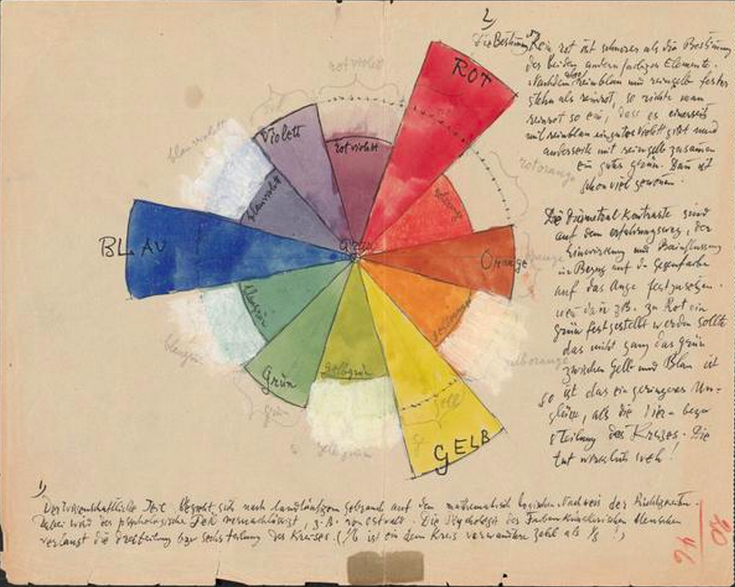
Paul Klee led an artistic life that spanned the 19th and 20th centuries, but he kept his aesthetic sensibility tuned to the future. Because of that, much of the Swiss-German Bauhaus-associated painter’s work, which at its most distinctive defines its own category of abstraction, still exudes a vitality today.
And he left behind not just those 9,000 pieces of art (not counting the hand puppets he made for his son), but plenty of writings as well, the best known of which came out in English as Paul Klee Notebooks, two volumes (The Thinking Eye and The Nature of Nature) collecting the artist’s essays on modern art and the lectures he gave at the Bauhaus schools in the 1920s.
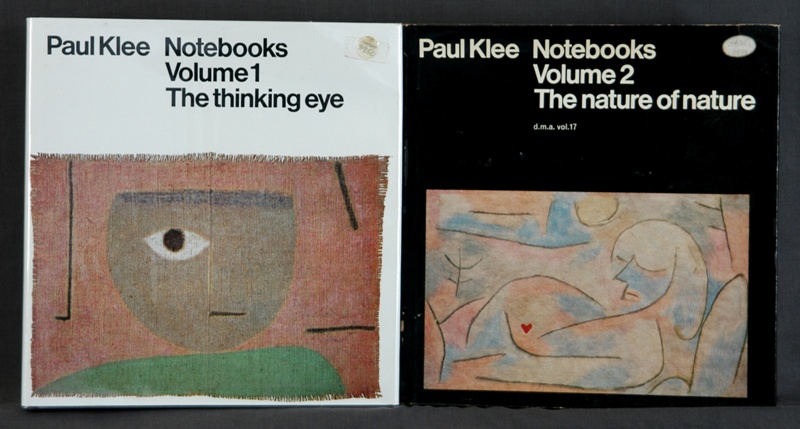
“These works are considered so important for understanding modern art that they are compared to the importance that Leonardo’s A Treatise on Painting had for Renaissance,” says Monoskop. Their description also quotes critic Herbert Read, who described the books as “the most complete presentation of the principles of design ever made by a modern artist – it constitutes the Principia Aesthetica of a new era of art, in which Klee occupies a position comparable to Newton’s in the realm of physics.”
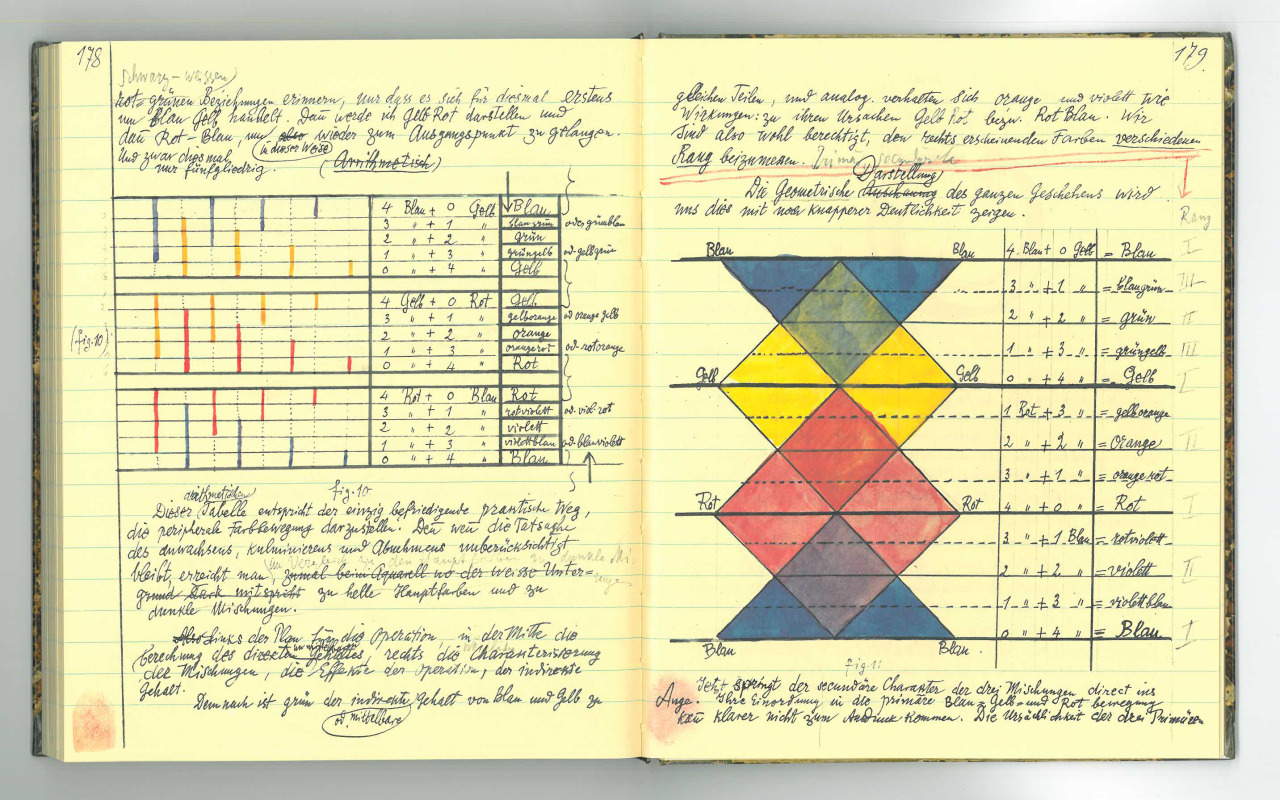
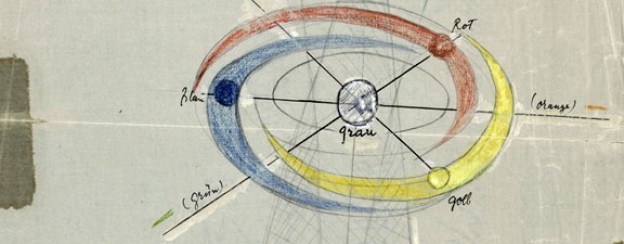
More recently, the Zentrum Paul Klee made available online almost all 3,900 pages of Klee’s personal notebooks, which he used as the source for his Bauhaus teaching between 1921 and 1931. If you can’t read German, his extensively detailed textual theorizing on the mechanics of art (especially the use of color, with which he struggled before returning from a 1914 trip to Tunisia declaring, “Color and I are one. I am a painter”) may not immediately resonate with you. But his copious illustrations of all these observations and principles, in their vividness, clarity, and reflection of a truly active mind, can still captivate anybody — just as his paintings do.
If you would like to support the mission of Open Culture, consider making a donation to our site. It’s hard to rely 100% on ads, and your contributions will help us continue providing the best free cultural and educational materials to learners everywhere. You can contribute through PayPal, Patreon, and Venmo (@openculture). Thanks!
Note: An earlier version of this post appeared on our site in 2016.
Related Content:
The Homemade Hand Puppets of Bauhaus Artist Paul Klee
Based in Seoul, Colin Marshall writes and broadcasts on cities, language, and style. He’s at work on a book about Los Angeles, A Los Angeles Primer, the video series The City in Cinema, the crowdfunded journalism project Where Is the City of the Future?, and the Los Angeles Review of Books’ Korea Blog. Follow him on Twitter at @colinmarshall or on Facebook.
Read More...The Rarest Sounds Across All Human Languages: Learn What They Are, and How to Say Them
When first we start learning a new foreign language, any number of its elements rise up to frustrate us, even to dissuade us from going any further: the mountain of vocabulary to be acquired, the grammar in which to orient ourselves, the details of pronunciation to get our mouths around. In these and all other respects, some languages seem easy, some hard, and others seemingly impossible — those last outer reaches being a specialty of Youtuber Joshua Rudder, creator of the channel NativLang. In the video above, he not only presents us with a few of the rarest sounds — or phonemes, to use the linguistic term — in any language, he also shows us how to make them ourselves.
Several African languages use the phoneme gb, as seen twice in the name of the Ivorian dance Gbégbé. “You might be tempted to go all French on it,” Rudder says, but in fact, you should “bring your tongue up to the soft palate” to make the g sound, and at the same time “close and release your lips” to add the b sound.
Evidently, Rudder pulls it off: “Haven’t heard a foreigner say the gb sound right!” says a presumably African commenter below. From there, the phonemic world tour continues to the bilabial trilled africate and pharyngeals used by the Pirahã people of the Amazon and the whistles used on one particular Canary Island — something like the whistled language of Oaxaca, Mexico previously featured here on Open Culture.
Rudder also includes Oaxaca in his survey, but he finds an entirely different set of rare sounds used in a river town whose residents speak the Mazatec language. “For every one normal vowel you give ’em,” he explains, “they have three for you”: one “modal” variety, one “breathy,” and one “creaky.” He ends the video where he began, in Africa, albeit in a different region of Africa, where he finds some of the rarest phonemes, albeit ones we also might have expected: bilabial clicks, whose speakers “close their tongue against the back of their mouth and also close both lips, but don’t purse them.” Then, “using the tongue, they suck a pocket of air into that enclosed area. Finally, they let go of the lips and out pops a” — well, better to hear Rudder pronounce it. If you can do the same, consider yourself one step closer to readiness for a Khoekhoe immersion course.
Related content:
Speaking in Whistles: The Whistled Language of Oaxaca, Mexico
What English Would Sound Like If It Was Pronounced Phonetically
Why Do People Talk Funny in Old Movies?, or The Origin of the Mid-Atlantic Accent
Was There a First Human Language?: Theories from the Enlightenment Through Noam Chomsky
Based in Seoul, Colin Marshall writes and broadcasts on cities, language, and culture. His projects include the Substack newsletter Books on Cities, the book The Stateless City: a Walk through 21st-Century Los Angeles and the video series The City in Cinema. Follow him on Twitter at @colinmarshall or on Facebook.
Read More...A Brief History of Japanese Art: From Prehistoric Pottery to Yayoi Kusama in Half an Hour
The earliest known works of Japanese art date from the Jōmon period, which lasted from 10,500 to 300 BC. In fact, the period’s very name comes from the patterns its potters created by pressing twisted cords into clay, resulting in a predecessor of the “wave patterns” that have been much used since. In the Heian period, which began in 794, a new aristocratic class arose, and with it a new form of art: Yamato‑e, an elegant painting style dedicated to the depiction of Japanese landscapes, poetry, history, and mythology, usually on folding screens or scrolls (the best known of which illustrates The Tale of Genji, known as the first novel ever written).
This is the beginning of the story of Japanese art as told in the half-hour-long Behind the Masterpiece video above. It continues in 1185 with the Kamakura period, whose brewing sociopolitical turmoil intensified in the subsequent Nanbokucho period, which began in 1333. As life in Japan became more chaotic, Buddhism gained popularity, and along with that Indian religion spread a shift in preferences toward more vital, realistic art, including celebrations of rigorous samurai virtues and depictions of Buddhas. In this time arose the form of sumi‑e, literally “ink picture,” whose tranquil monochromatic minimalism stands in the minds of many still today for Japanese art itself.
Japan’s long history of fractiousness came to an end in 1568, when the feudal lord Oda Nobunaga made decisive moves that would result in the unification of the country. This began the Azuchi-Momoyama period, named for the castles occupied by Nobunaga and his successor Toyotomi Hideyoshi. The castle walls were lavishly decorated with large-scale paintings that would define the Kanō school. Traditional Japan itself came to an end in the long, and military-governed Edo period, which lasted from 1615 to 1868. The stability and prosperity of that era gave rise to the best-known of all classical Japanese art forms: kabuki theatre, haiku poetry, and ukiyo‑e woodblock prints.
With their large market of merchant-class buyers, ukiyo‑e artists had to be prolific. Many of their works survive still today, the most recognizable being those of masters like Utamaro, Hokusai, and Hiroshige. Here on Open Culture, we’ve previously featured Hokusai’s series Thirty-Six Views of Mount Fuji as well as its famous installment The Great Wave Off Kanagawa. As Japan opened up to the west from the middle of the nineteenth century, the various styles of ukiyo‑e became prime ingredients of the Japonisme trend, which extended the influence of Japanese art to the work of major Western artists like Degas, Manet, Monet, van Gogh, and Toulouse-Lautrec.
The Meiji Restoration of 1868 opened the long-isolated Japan to world trade, re-established imperial rule, and also, for historical purposes, marked the country’s entry into modernity. This inspired an explosion of new artistic techniques and movements including Yōga, whose participants rendered Japanese subject matter with European techniques and materials. Born early in the Shōwa era but still active in her nineties, Yayoi Kusama now stands (and in Paris, at enormous scale in statue form) as the most prominent Japanese artist in the world. The rich psychedelia of her work belongs obviously to no single culture or tradition — but then again, could an artist of any other country have come up with it?
Related content:
How to Paint Like Yayoi Kusama, the Avant-Garde Japanese Artist
The Entire History of Japan in 9 Quirky Minutes
The History of Western Art in 23 Minutes: From the Prehistoric to the Contemporary
Based in Seoul, Colin Marshall writes and broadcasts on cities, language, and culture. His projects include the Substack newsletter Books on Cities, the book The Stateless City: a Walk through 21st-Century Los Angeles and the video series The City in Cinema. Follow him on Twitter at @colinmarshall or on Facebook.
Read More...Support Us
We're hoping to rely on loyal readers, rather than erratic ads. Please click the Donate button and support Open Culture. You can use Paypal, Venmo, Patreon, even Crypto! We thank you!

About Us

Open Culture scours the web for the best educational media. We find the free courses and audio books you need, the language lessons & educational videos you want, and plenty of enlightenment in between.
Advertise With Us
FREE UPDATES!
GET OUR DAILY EMAIL
Get the best cultural and educational resources on the web curated for you in a daily email. We never spam. Unsubscribe at any time.
FOLLOW ON SOCIAL MEDIA
Open Culture editor Dan Colman scours the web for the best educational media. He finds the free courses and audio books you need, the language lessons & movies you want, and plenty of enlightenment in between.
Advertise With Us

