The Life of Prince in a 24-Page Comic Book: A New Release
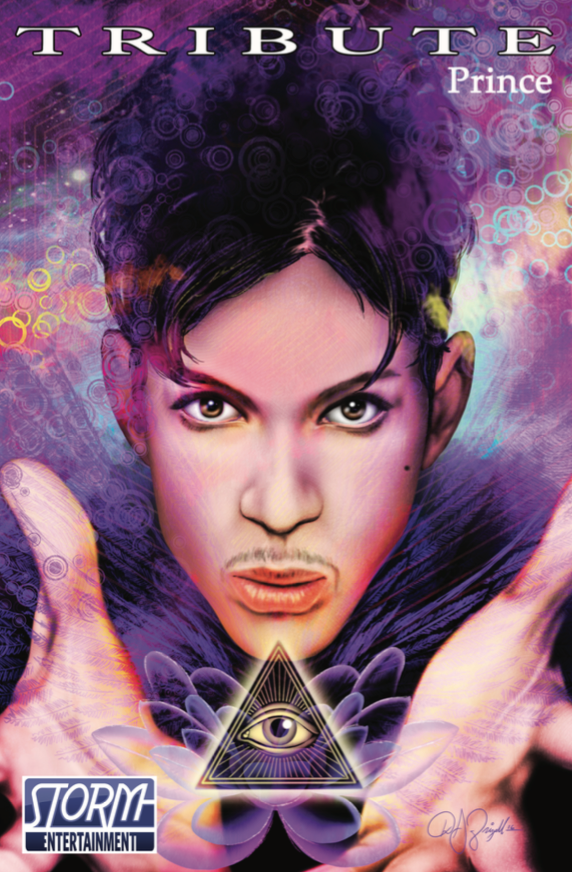
Since Prince’s death in April, writers have been trying to sum up a life lived that was both very private and yet also felt like it existed in our DNA. Much like Bowie, the Prince we knew was the one we shared and we saw and we sang. So how to get that life into a 24 page comic book?
Released June 7th on Prince’s birthday, Tribute: Prince is a primer on the musician’s life and passing written by Michael L. Frizell and illustrated by Spanish artist Ernesto Lovera. The comic actually dates from 2013, when it was released as Fame: Prince, but Italian illustrator Vincenzo Sansone has concluded the story of his life with three extra pages now added to the tale, which alludes to Prince’s opioid use, his demanding schedule, and the public reaction to his passing.
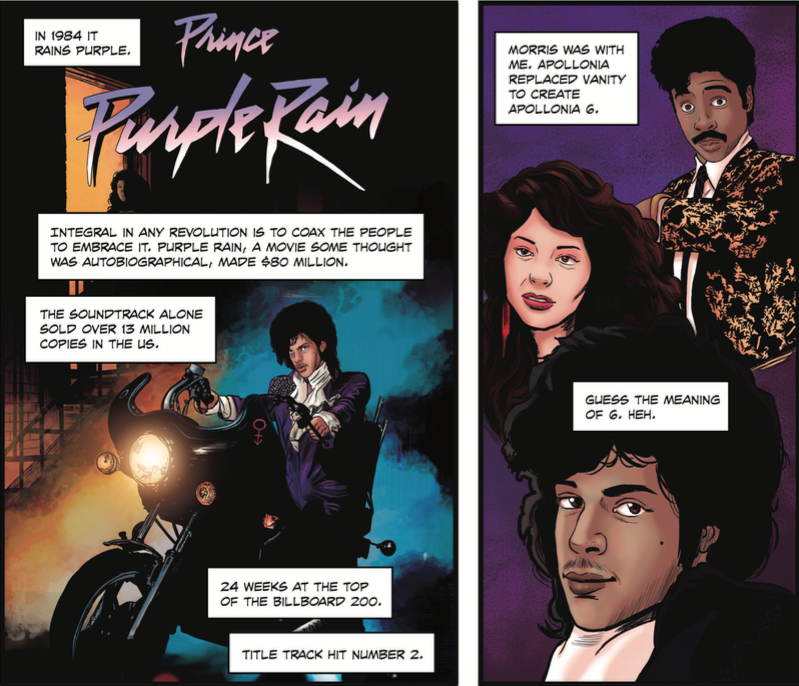
Frizell starts the tale from a fan’s perspective, as a teen girl in 1984, secretly enjoying his music, hiding the fact from her parents. The story then jumps back to Prince’s childhood, his struggle to get a recording contract, and his explosive fame. Readers will spot numerous allusions to Prince’s lyrics in the text, as well. Frizell has also written issues of Tribute about David Bowie and Motley Crüe, and said in a promo statement, “The subjects of [Prince’s] songs spoke to me in ways I didn’t understand until I was older, but the dark poetry of them compelled me to keep listening. To this day, my iPod is full of his work and I listen to it as I write.”
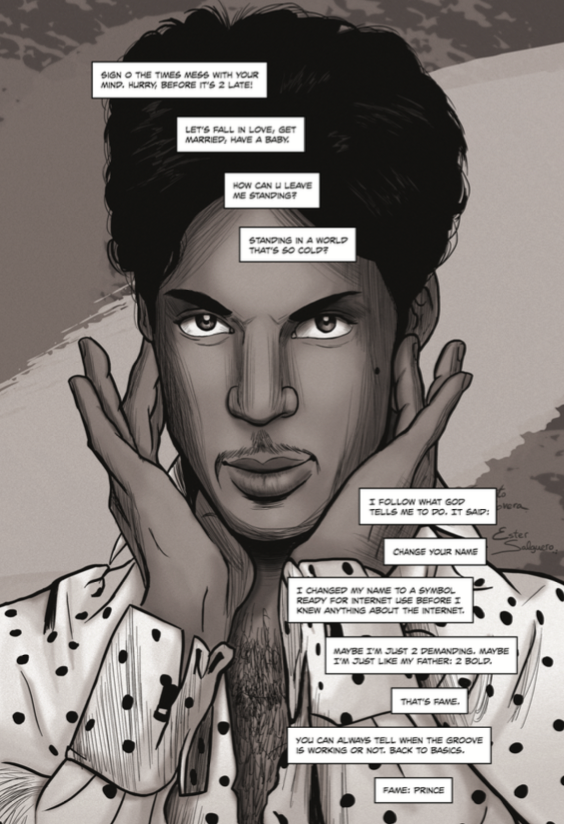
The single issue comic is available online and in stores and comes with three different covers by David Frizell, Vincenzo Sansone, and Pablo Martinena. It runs $3 or $4. If you have Kindle Unlimited plan, you can get it for free.
Related content:
Hear Amanda Palmer’s Cover of “Purple Rain,” a Gorgeous Stringfelt Send-Off to Prince
Ted Mills is a freelance writer on the arts who currently hosts the artist interview-based FunkZone Podcast. You can also follow him on Twitter at @tedmills, read his other arts writing at tedmills.com and/or watch his films here.
Read More...Download a Complete, Cover-to-Cover Parody of The New Yorker: 80 Pages of Fine Satire
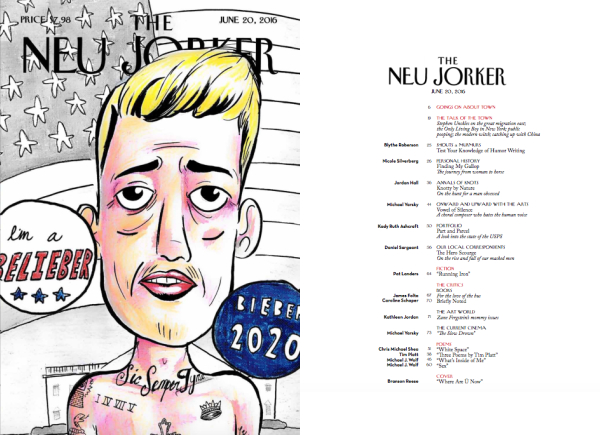
From Andrew Lipstein & James Folta comes The Neu Jorker, a great parody of the high-brow magazine, The New Yorker. The table of contents, the contributor bios, the cartoons, the ads, the articles–they’re all imitated in a nearly pitch perfect way, just taken one degree further into the realm of slight absurdity. Download The Neu Jorker in high-res formats via Dropbox and Scribd, and you’ll see what I mean.
On page 4 of the magazine, Lipstein and Volta write, “The Neu Jorker was a labor of love… Not a single cent was spent or made on this project. We’ve done our share of research on fair use and parody law (a solid Wikipedia skim), and are pretty sure we’re good, but we do hope that the magazine-not-to-be-named understands that this is somewhere between satire, parody, and homage.” We’re hoping, too, that David Remnick and the lawyers at Conde Nast will appreciate the effort that went into this 80 page, cover-to-cover parody.
Contributors to The Neu Jorker come from The Onion, ClickHole, The New Yorker, the Late Show with David Letterman, the Late Show with Stephen Colbert, McSweeney’s, the Upright Citizens Brigade and various other funny places.
Download the parody here. And speaking of The New Yorker, just a quick reminder that Malcolm Gladwell has launched a podcast called “Revisionist History” today. You can hear the first episode here.
via Metafilter/AV Club
If you would like to support the mission of Open Culture, consider making a donation to our site. It’s hard to rely 100% on ads, and your contributions will help us continue providing the best free cultural and educational materials to learners everywhere. You can contribute through PayPal, Patreon, and Venmo (@openculture). Thanks!
Related Content:
Malcolm Gladwell Has Launched a New Podcast, Revisionist History: Hear the First Episode
The New Yorker’s Fiction Podcast: Where Great Writers Read Stories by Great Writers
Read More...100,000 Free Art History Texts Now Available Online Thanks to the Getty Research Portal
“I have always imagined that Paradise will be a kind of library,” Jorge Luis Borges famously wrote. Were he alive today, he might well regard the internet as becoming more paradisiacal all the time, at least in the sense that it keeps not just generating new texts, but absorbing existing ones and making them available free to readers.
And while his well-known story “The Library of Babel” envisions a magical or extremely high-tech library containing all possible texts (which the internet has started to make a reality), recent additions to the vast library of the internet have done him one better by incorporating not just pages of letters, but intricately designed and lavishly illustrated art texts as well.
Take the Getty Research Portal, which has just, for its fourth anniversary, unveiled a new design and a total volume count surpassing 100,000. “In assembling a virtual corpus of digitized texts on art, architecture, material culture, and related fields from numerous partners, the Portal aspires to offer a more expansive collection than any single library could provide,” writes project content specialist Annie Rana at the Getty’s blog The Iris. “Furthermore, with these freely downloadable materials, scholars and researchers can now be in possession of copies of rare books and other titles without having to travel to far-flung locales.”
More than twenty institutions now share their collections at the Getty Research Portal: recent joiners include the Art Institute of Chicago’s Ryerson and Burnham Libraries, the Bibliotheca Hertziana-Max Planck Institute for Art History in Rome, the Herzog August Bibliothek in Wolfenbüttel, the Menil Library Collection in Houston, the Solomon R. Guggenheim Museum Library and Archives in New York, and the Warburg Institute Library in London. But wait, says Rana, there’s more, or at least more on the way: “Dialogues with art libraries and institutions in India, Iran, and Japan are in the works as the project also looks to increase international coverage.”
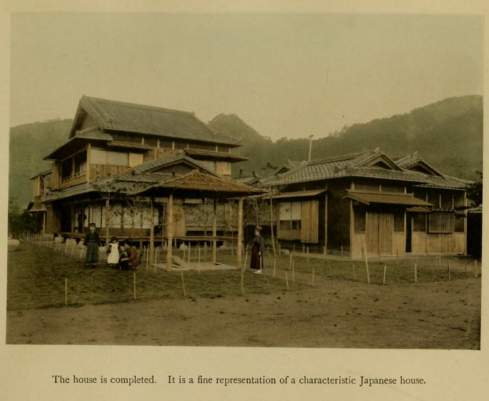
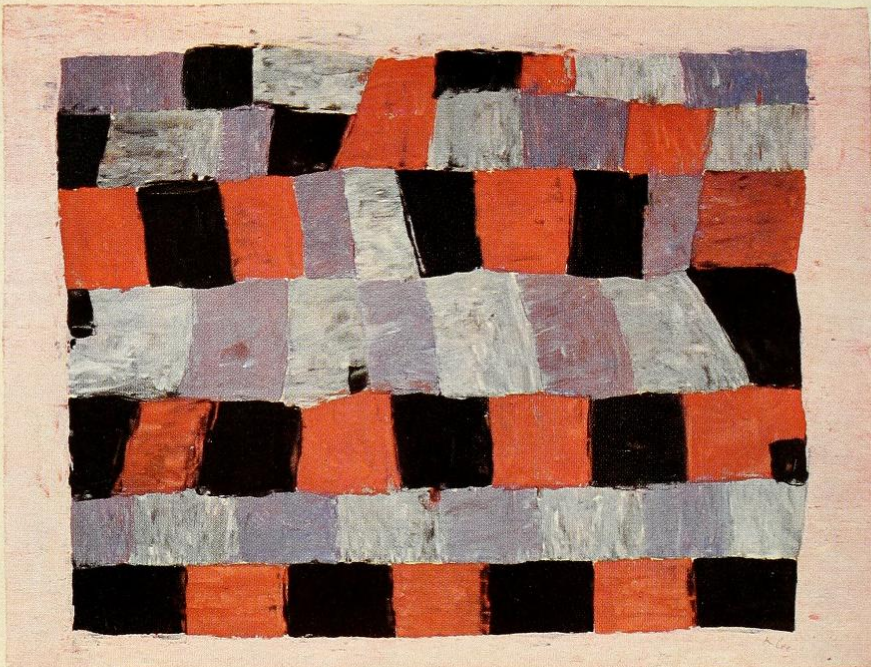
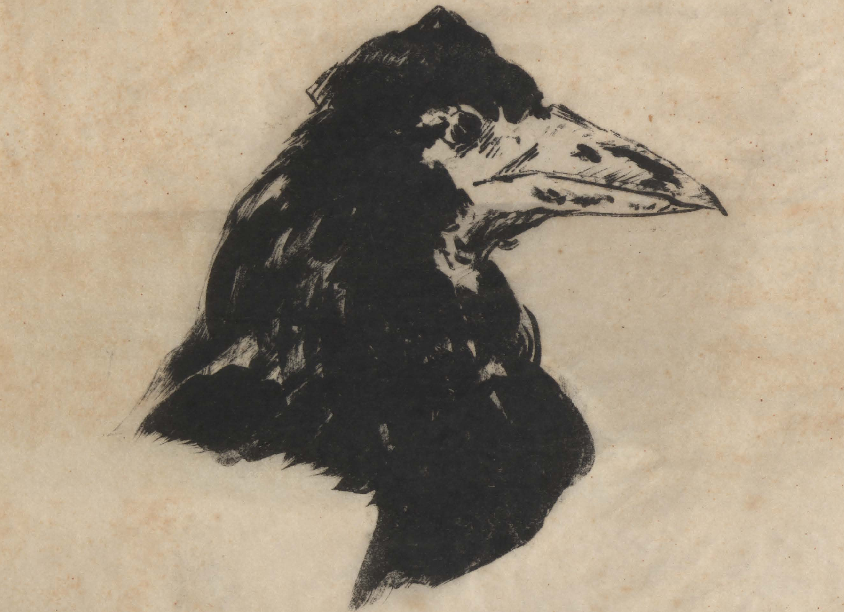
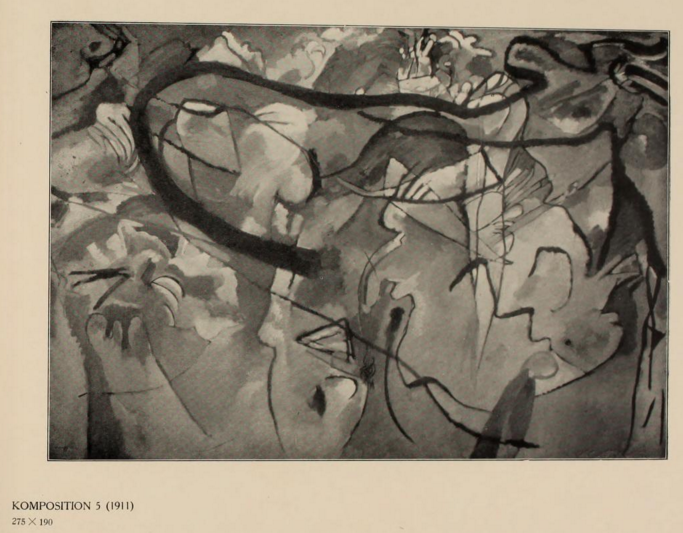
Still, the selection of items looks quite international already. The post highlights a few items of high potential interest to Open Culture readers, such as Edgar Allen Poe’s The Raven illustrated by Edouard Manet and translated into French by Stéphane Mallarmé, as well as a monograph on, an exhibition catalog about the work of, and writings by the Russian abstract painter and art theorist Wassily Kandinsky. But even though the Getty Research Portal seems only to have plans to grow larger and larger, everyone browsing through it will surely find something suited to their artistic interests, from Paul Klee (top) to Roy Lichtenstein to Japanese architecture and everything in between; you have only to step through the portal to find it.
Related Content:
1.8 Million Free Works of Art from World-Class Museums: A Meta List of Great Art Available Online
815 Free Art Books from World Class Museums: The Met, the Guggenheim, the Getty & LACMA
Download 448 Free Art Books from The Metropolitan Museum of Art
The Guggenheim Puts 109 Free Modern Art Books Online
Download Over 250 Free Art Books From the Getty Museum
Google Puts Over 57,000 Works of Art on the Web
Based in Seoul, Colin Marshall writes and broadcasts on cities, language, and style. He’s at work on a book about Los Angeles, A Los Angeles Primer, the video series The City in Cinema, the crowdfunded journalism project Where Is the City of the Future?, and the Los Angeles Review of Books’ Korea Blog. Follow him on Twitter at @colinmarshall or on Facebook.
Read More...Explore Harvard’s Iconic Spaces with 360° Interactive Videos
For me, nothing captures those occasional feelings of post-graduate yearning like “I Wish I Could Go Back to College,” a N‑quite-SFW track from the Broadway musical, Avenue Q.
With all due respect, it feels like the five members of Harvard University’s just-graduated Class of 2016 sharing their recollections in the interactive 360° video project, Harvard Students Say Farewell, left a few crucial details out. (Note: Youtube 360 videos only work in Chrome, Firefox, Internet Explorer, or Opera browsers.)
It’s completely safe for prospective parents, not a keg or condom wrapper in sight. (The project is hosted on Harvard’s official Youtube channel.)
Unsurprisingly, Harvard appears to have been the participants’ universal first choice of college. Hasty Pudding performer, Joshuah Campbell, above, a self-described “Black kid from the country,” confides that it was the only place he applied to.
He may have arrived wondering how he would fit in, but four years later, his grubby dorm room is one of the “iconic” Harvard locations viewers can explore digitally as he briefly reflects upon his experience.
That’s about as down and dirty as this series gets. The human subjects seem to have been selected with an eye toward diversity and humility, rather than the clenched Boston Brahmin jaw that once defined the institution.
Meanwhile, the libraries, quads, and theaters through which this new breed of Harvard men and women wander attest to the place’s ongoing exclusivity.
Sreeja Kalapurakkel, above, a member of the Harvard South Asian Dance Company, knew what she was getting into, as a student at a respected Boston secondary school. Shortly after graduation, she sung Harvard’s praises somewhat more frankly on her Facebook page:
Each day of my time at Harvard was filled with everything that makes life beautiful: darkness, struggle, despair, loneliness, friendship, hope, perseverance, light. Every experience, every lesson, every friend transformed me into someone more human and gave me something new to fight for.
Harvard, like every other college in the land, has relaxed its policy on ending a sentence in a preposition.
Ana-Maria Constantin arrived sight unseen from her native Romania to pull us out onto the deck of the Smithsonian Astrophysical Observatory.
On to the locker room! Hockey captain Kyle Criscuolo joins the Detroit Red Wings, reflecting that Harvard student athletes enjoy no special treatment. In future, the university may want to require them to listen to Will Stephen’s lecture, “How to Sound Smart in a TED Talk.” Criscuolo sounds sincere, but also stiff, as if reading from a sheet of paper, or the digital equivalent thereof.
(Thereof is an adverb, by the way. Not a preposition. I checked.)
Harvard Art Museums Student Board member Rachel Thompson paints herself so meekly, I’m tempted to check with her freshman year roommate. Was she really so filled with self doubt? I’ve always assumed Harvard acceptance letters would puff the recipient up. Good lord, imagine the effect the rejection letters must have!
Use a mouse to explore the immersive environment on your computer, or the YouTube app to navigate on a mobile device. Use a virtual reality headset and the Harvard Crimson staff’s vocabulary list to enhance the experience even more.
The complete playlist is here.
Related Content:
Harvard Presents Free Courses with the Open Learning Initiative
NPR Launches Database of Best Commencement Speeches Ever
The Harvard Classics: Download All 51 Volumes as Free eBooks
Ayun Halliday is an author, illustrator, Chief Primatologist of the East Village Inky zine, and a Northwestern University grad. Follow her @AyunHalliday
Read More...Hear a BBC Radio Drama of Dostoyevsky’s The Brothers Karamazov: Streaming Free for a Limited Time
A quick heads up: For the next two weeks, you can stream a BBC Radio 4 dramatization of Fyodor Dostoyevsky’s final novel, The Brothers Karamazov. Published between January 1879 and November 1880, the philosophical novel has influenced generations of readers–certainly me, maybe you, and then some other notable figures like Einstein, Wittgenstein, Heidegger, Freud and more. The radio dramatization is truncated, just 5 hours, whereas most complete versions run 34 hours. (Find those in our collection of Free Audio Books. Or get a professionally-read version on Audible.com, by checking out Audible’s 30-day free trial program.) Below, you can find the installments of the BBC radio drama.
- Episode 1: Russia, 1880: The unpredictable Fyodor Karamazov and his sons are reunited to discuss Dmitry’s inheritance. Stars Roy Marsden.
- Episode 2: As Alyosha attends to dying Father Zosima, relations between Dmitry and his father turn ever more dangerous. Stars Paul Hilton.
- Episode 3: Following a violent encounter at the Karamazov home, Dmitry flees the town in search of Grushenka. Stars Paul Hilton.
- Episode 4: As Dmitry goes on trial for murder, Alyosha desperately seeks proof of his innocence. Stars Paul Hilton and Carl Prekopp.
- Episode 5: Following Ivan’s dramatic appearance at his brother’s trial, Katerina prepares to deal Dmitry a fatal blow. Stars Paul Hilton.
If you would like to support the mission of Open Culture, consider making a donation to our site. It’s hard to rely 100% on ads, and your contributions will help us continue providing the best free cultural and educational materials to learners everywhere. You can contribute through PayPal, Patreon, and Venmo (@openculture). Thanks!
Related Content:
800 Free eBooks for iPad, Kindle & Other Devices
Fyodor Dostoyevsky’s Life & Literature Introduced in a Monty Python-Style Animation
Fyodor Dostoevsky Draws Elaborate Doodles In His Manuscripts
Free Online Literature Courses
Read More...The First Biopic of Edgar Allan Poe: 1909 Film by D.W. Griffith Shows the Horror Master Writing “The Raven”
The film industry knows that moviegoers love watching geniuses at work, and they may have known it for more than a century, ever since the release of 1909’s Edgar Allan Poe above. The seven-minute silent short, made for the centenary of the titular literary figure’s birth (and subtitled, back in those days before the word biopic, “a Picture Story Founded on Events in His Career”) depicts the 19th-century pioneer of psychological horror composing his best-known work, “The Raven,” even as his wife lays dying of tuberculosis. In real life, the young Virginia Eliza Clemm Poe passed away two years after the poem’s publication, but D.W. Griffith, like a true craftsman of his medium, knew the potential for extra drama when he saw it.
Griffith, who did hundreds of such shorts in the late 1900s and early 1910s, would of course go on to direct two of the most innovative and influential works in cinema history: 1915’s The Birth of a Nation and the following year’s Intolerance. But just before that, in 1914, he further pursued his interest in Poe with a feature called The Avenging Conscience: or, Thou Shalt Not Kill, moving beyond a simple depiction of the author and his working process (or at least his working process as interpreted through the distinctive dramatic style of early silent film) to draw direct inspiration from the work itself.
Even if you’ve never actually read any of Poe’s writing, you’ll surely have absorbed enough of “The Raven” (even if just from The Simpsons) to quote it now and again, just as you’ll surely have heard enough about his 1843 story “The Tell-Tale Heart” to know the plot has something to do with a man tormented by his guilty conscience — and so you’ll probably know which story Griffith chose for this early example of adaptation even before you see its first title card. Just as the filmmaker uses striking light and shadow to evoke Poe’s inner world in the earlier film, here he, in the words of Edgar Allan Poe author Kevin J. Hayes, “brilliantly replicates Poe’s psychological tension in visual terms.”
Griffith’s second Poe film incorporates not just the stuff of his work, but more of the stuff of his life as well: “Some aspects of the plot, in which the central character is an orphan as well as an author, are also reminiscent of Poe’s life,” writes Hayes in The Cambridge Companion to Edgar Allan Poe. “The story includes echoes of other writing including ‘Three Sundays in a Week,’ ‘The Pit and the Pendulum,’ ‘The Black Cat,’ and ‘Annabel Lee,’ ” all “spun together in a story of love, murder, and vengeance, which nonetheless ends happily.” Which brings us to another piece of common cinematic wisdom, apparently known as well by Griffith as by any of his Hollywood successors: everybody loves a happy ending — apparently, once they get in front of the silver screen, even readers of Edgar Allan Poe.
Both films will be added to our collection of Silent Films, a subset of our meta collection, 4,000+ Free Movies Online: Great Classics, Indies, Noir, Westerns, Documentaries & More.
Related Content:
Download The Complete Works of Edgar Allan Poe: Macabre Stories as Free eBooks & Audio Books
Edgar Allan Poe & The Animated Tell-Tale Heart
Edgar Allan Poe Animated: Watch Four Animations of Classic Poe Stories
The Mystery of Edgar Allan Poe’s Death: 19 Theories on What Caused the Poet’s Demise
Based in Seoul, Colin Marshall writes and broadcasts on cities, language, and style. He’s at work on a book about Los Angeles, A Los Angeles Primer, the video series The City in Cinema, the crowdfunded journalism project Where Is the City of the Future?, and the Los Angeles Review of Books’ Korea Blog. Follow him on Twitter at @colinmarshall or on Facebook.
Read More...Get a Fly-on-the-Wall View of John Lennon Recording & Arranging His Classic Song, “Imagine” (1971)
In a recent interview, the perennially cheerful Paul McCartney talked candidly about his depression after the Beatles’ 1970 breakup, a revelation that may have come as a surprise to some people given Sir Paul’s general level of, well, cheer. But, “you would be too if it happened to you,” said McCartney, admitting that he “took to the bevvies… to a wee dram” (and making even a drinking problem sound upbeat). Where McCartney admits he struggled to find his footing again musically, two of his estranged bandmates released solo-career-defining albums just months after the Beatles’ official demise—George Harrison’s All Things Must Pass and John Lennon’s Imagine.
Lennon, of course, had his own post-Beatles issues with substance abuse and depression. But in 1971 he had kicked a heroin habit, embraced primal therapy, and was in top musical form. Not only did Imagine, the album, go double platinum, but fans and critics consider “Imagine,” the song, one of the finest Lennon ever wrote. In the footage above, we see Lennon during the early Imagine recording sessions at his home studio at Tittenhurst Park. Lennon plays the new title track for the album’s musicians for the first time, records his vocals and piano, and discusses the mix and arrangement with Phil Spector and Yoko Ono.
The clip comes from the 2000 documentary Gimme Some Truth: The Making of John Lennon’s Imagine Album, which captures the intimacy of those recording sessions, as Lennon and his band eat and talk together before going into the studio. George Harrison appears often to record guitar parts for several songs; the band jams and horses around; Allen Ginsberg and Miles Davis show up and Davis plays basketball with Lennon; and Yoko and John discuss design and album photography.
Later that year, Lennon and Yoko appeared on The Dick Cavett Show to promote the song and album and premier the “Imagine” film above. As in nearly all of his solo work, Ono acted both as Lennon’s muse and his collaborator, inspiring Imagine’s “How” and “Oh Yoko” and co-writing “Oh My Love.” She is rarely given credit, however, for inspiring—and co-writing—“Imagine.” The song owes much to Ono’s “good-naturedly defiant little book,” Grapefruit, “part irreverent activity book for grown-ups,” writes Maria Popova, “part subversive philosophy for life,” complete with whimsical drawings very much like the kind Lennon himself made and published in his own books of silly verse.
But while critics and Lennon fans overlook Yoko’s role in “Imagine”’s composition, Lennon later admitted it “should be credited as a Lennon/Ono song. A lot of it—the lyric and the concept—came from Yoko, but in those days I was a bit more selfish, a bit more macho, and I sort of omitted her contribution, but it was right out of Grapefruit.” The album cover did, however, quote “Cloud piece,” one of the many meditative poems Lennon drew from: “Imagine the clouds dripping. Dig a hole in your garden to put them in.”
In the short making-of clip at the top, Lennon tells the room, after playing a raw rendition of “Imagine” solo on piano, “that’s the one I like best.” The song’s utopianism strongly contrasts with the righteous anger and bitterness Lennon gave vent to in other songs on Imagine, including “How Do You Sleep?,” in which, he told Playboy in 1980, “I used my resentment and withdrawing from Paul and The Beatles, and the relationship with Paul.” Early editions of the LP even included a postcard photo of Lennon holding a pig, mocking the cover of McCartney’s underrated Ram. McCartney expressed his post-Beatles’ anger in a few minor lyrical jabs; Lennon responded with unsubtle vitriol. But many of Imagine’s songs—celebrations of love, protests against war, and the visionary title track—point away from the past and toward the future, or what little of it remained for Lennon.
Related Content:
John Lennon & Yoko Ono’s Two Appearances on The Dick Cavett Show in 1971 and 72
John Lennon’s “Imagine” & Paul McCartney’s “Yesterday” Adapted into Smart, Moving Webcomics
Hear John Lennon’s Final Interview, Taped on the Last Day of His Life (December 8, 1980)
Josh Jones is a writer and musician based in Durham, NC. Follow him at @jdmagness
Read More...A Complete Digitization of the 1960s Magazine Avant Garde: From John Lennon’s Erotic Lithographs to Marilyn Monroe’s Last Photos
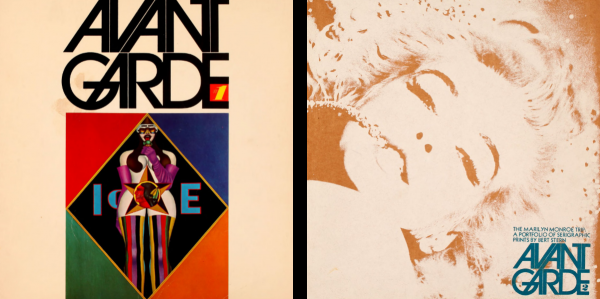
Briefly noted: Avant Garde magazine had a relatively short run. It produced only 16 issues between January 1968 and July 1971. But it left its mark, influencing tastemakers within the arts world, and it’s now been properly digitized for posterity.
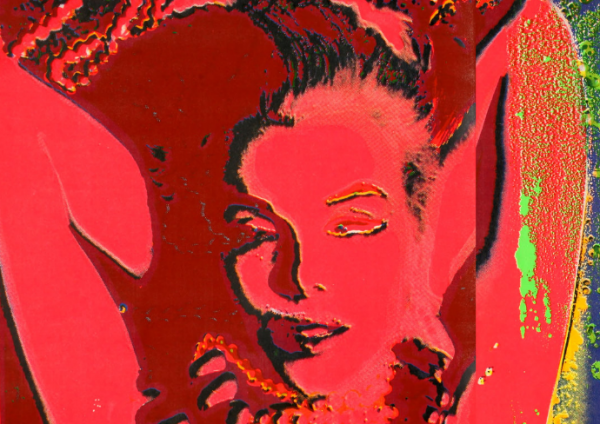
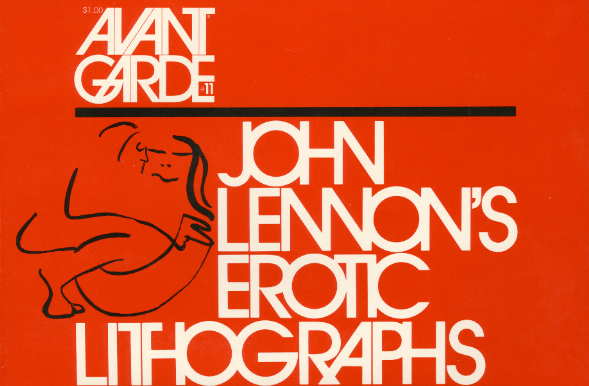
A collaboration between Ralph Ginzburg (editor) and Herb Lubalin (art director), Avant Garde is partly remembered for its radical politics and embrace of erotic content. (Issue #5 launched a “No More War” poster competition; Issue #11 featured John Lennon and Yoko Ono’s erotic lithographs; Issue #2 presented phantasmagoric versions of Bert Stern’s semi-nude photos of Marilyn Monroe.)
But probably the greatest legacy of the magazine is the logo Lubalin designed, which gave birth to the Avant Garde typeface that still lives today. (Get more on that here.)
All 16 issues were scanned by the Internet Archive, and put online by Mindy Seu. You can read Avant Garde in all of its digital glory here.
If you would like to support the mission of Open Culture, consider making a donation to our site. It’s hard to rely 100% on ads, and your contributions will help us continue providing the best free cultural and educational materials to learners everywhere. You can contribute through PayPal, Patreon, and Venmo (@openculture). Thanks!
Related Content:
Extensive Archive of Avant-Garde & Modernist Magazines (1890–1939) Now Available Online
2,200 Radical Political Posters Digitized: A New Archive
Read More...The Battle to Finish a PhD: World War I Soldier Completes His Dissertation in the Trenches (1916)
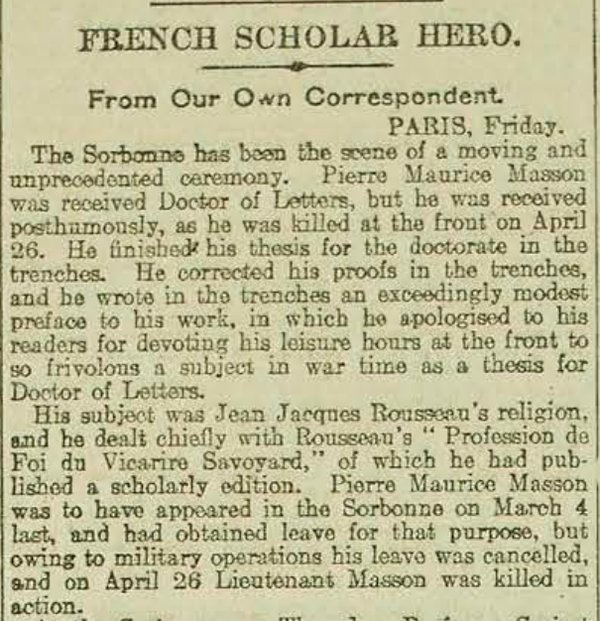
Connie Ruzich, a WWI poetry blogger, recently highlighted on Twitter a historic newspaper clipping that will put the travails of academe into perspective. Getting a Ph.D. is always hard. But hard is relative.
Case in point…
100 years ago, Pierre Maurice Masson, a young scholar, found himself fighting in north-eastern France. Drafted in 1914, Masson rose through the military ranks, moving from sergeant, to sub-lieutenant, to lieutenant. Meanwhile, in the discomfort of the trenches, he continued working on his doctoral thesis–a long dissertation on the religious training of Jean-Jacques Rousseau. By the spring of 1916, he had completed the text, corrected the proofs, and drafted an introduction (of course, that comes last). Finally, he announced to friends, “The monster is ready!” And he sought a leave of absence to return to the Sorbonne to receive his doctorate.
Alas, that didn’t happen. The newspaper clip above tells the rest of the poignant story.
You can read Masson’s posthumously published thesis, La formation religieuse de Rousseau, free online.
If you would like to support the mission of Open Culture, consider making a donation to our site. It’s hard to rely 100% on ads, and your contributions will help us continue providing the best free cultural and educational materials to learners everywhere. You can contribute through PayPal, Patreon, and Venmo (@openculture). Thanks!
Related Content:
The Illustrated Guide to a Ph.D.
Serial Entrepreneur Damon Horowitz Says “Quit Your Tech Job and Get a Ph.D. in the Humanities”
Read More...The Essential Elements of Film Noir Explained in One Grand Infographic

What makes film noir film noir? Like Supreme Court justice Potter Stewart making his famous pronouncement on obscenity, we can honestly claim to know it when we see it. But what elements, exactly, do we only see converge in the high, undisputed levels of the film noir canon? Designer Melanie Patrick and writer Adam Frost have, at the behest of the British Film Institute, come up with a handy infographic (click here to view it in a larger format) that explains and visualizes the particulars of the “shadowy world of one of classic Hollywood’s most beloved subgenres.”
First, film noir needs the right cast of characters, including an investigator with “relative integrity” like Sam Spade or Philip Marlowe, a criminal (“usually a murderer”), one “bad, beautiful” woman, and another “good, bland” woman. These characters should come from a script based on a piece of American pulp fiction such as The Maltese Falcon or Double Indemnity, ideally adapted by a European émigré director like Fritz Lang or Billy Wilder and replete with heavy drinking and smoking, “stolen money or valuables,” and obsessions with the past, all wrapped up in a bleak, convoluted story that plays out in an urban setting by night.
The heyday of film noir lasted from the early 1940s to the late 1950s, right in the middle of the tyranny of the Motion Picture Production Code, better known as the Hays Code, which, in limiting “the amount of sex and violence that could be shown on screen,” forced filmmakers to get creative and convey dramatic tension primarily with lighting and composition. It also meant that the finest film noir made maximally effective use of its dialogue, producing such immortally snappy exchanges as the one in Murder My Sweet when Philip Marlowe shoots back to a woman who announces she finds men very attractive, “I imagine they meet you halfway.” The infographic above also highlights the importance of a stylish poster and a startling tagline, ultimately arriving at the name of the sole film that possesses every element of film noir — and hence “the noiriest film ever.”
All this comes as the fruit of research into “around 100 of the most highly regarded film noirs,” and the infographic’s creators have made some of their data available to view on a Google spreadsheet. Should you now feel like conducting a film-noir investigation of your own, we can offer you a few leads, including the five essential rules of film noir, Roger Ebert’s ten essential characteristics of film noir, “noirchaeologist” Eddie Muller’s list of 25 noir films that will stand the test of time, a collection of film noir’s 100 greatest posters, and of course, our collection of 60 film noir movies free to watch online. But stay alert; if we’ve learned one thing from watching film noir, it’s that investigations, no matter the relative integrity with which you conduct them, don’t always go as planned.
Thanks to Melanie for letting us feature her work!
Related Content:
25 Noir Films That Will Stand the Test of Time: A List by “Noirchaelogist” Eddie Muller
The 5 Essential Rules of Film Noir
Roger Ebert Lists the 10 Essential Characteristics of Noir Films
100 Greatest Posters of Film Noir
Based in Seoul, Colin Marshall writes and broadcasts on cities, language, and style. He’s at work on a book about Los Angeles, A Los Angeles Primer, the video series The City in Cinema, the crowdfunded journalism project Where Is the City of the Future?, and the Los Angeles Review of Books’ Korea Blog. Follow him on Twitter at @colinmarshall or on Facebook.
Read More...Support Us
We're hoping to rely on loyal readers, rather than erratic ads. Please click the Donate button and support Open Culture. You can use Paypal, Venmo, Patreon, even Crypto! We thank you!

About Us

Open Culture scours the web for the best educational media. We find the free courses and audio books you need, the language lessons & educational videos you want, and plenty of enlightenment in between.
Advertise With Us

FREE UPDATES!
GET OUR DAILY EMAIL
Get the best cultural and educational resources on the web curated for you in a daily email. We never spam. Unsubscribe at any time.
FOLLOW ON SOCIAL MEDIA

Open Culture editor Dan Colman scours the web for the best educational media. He finds the free courses and audio books you need, the language lessons & movies you want, and plenty of enlightenment in between.
Advertise With Us


