The John Lennon Sketchbook, a Short Animation Made of Lennon’s Drawings
In 1986, Yoko Ono commissioned the Oscar-winning animator John Canemaker to bring to life the drawings and doodles of John Lennon (1940–1980), culminating in the release of a short film called The John Lennon Sketchbook. Almost 30 years later, that film has now been officially released on YouTube.
A product of Liverpool’s art schools, John Lennon drew throughout his life, illustrating two of his books with playful drawings, and drawing Christmas Cards for Oxfam, just to cite two examples. You can see Lennon’s visual talents on full display in The John Lennon Sketchbook, a short animation that is pretty whimsical and fun — until the very end, when Lennon seemingly predicts his own violent death in the audio recording that serves as the film’s soundtrack.
The John Lennon Sketchbook will be added to the Animation section of our larger collection, 4,000+ Free Movies Online: Great Classics, Indies, Noir, Westerns, Documentaries & More.
If you would like to support the mission of Open Culture, consider making a donation to our site. It’s hard to rely 100% on ads, and your contributions will help us continue providing the best free cultural and educational materials to learners everywhere. You can contribute through PayPal, Patreon, and Venmo (@openculture). Thanks!
Related Content:
I Met the Walrus: An Animated Film Revisiting a Teenager’s 1969 Interview with John Lennon
The Beatles: Why Music Matters in Two Animated Minutes
John Lennon Illustrates Two of His Books with Playful Drawings (1964–1965)
Bed Peace Revisits John Lennon & Yoko Ono’s Famous Anti-Vietnam Protests
Read More...An Animated Ayn Rand Dispenses Terrible Love Advice to Mike Wallace (1959)
In the past, the good folks over at Blank on Blank have turned rarely-seen interviews with the likes of Ray Bradbury and John Coltrane into brilliant little animated shorts. This week, their latest installment is on Ayn Rand.
Rand, of course, is the mind behind Objectivism, the patron saint of laissez faire capitalism, and the author of such unwieldy tomes as The Fountainhead and Atlas Shrugged. Among Wall Street bankers, Washington conservatives and insufferable college sophomores, Rand is a revered figure. Former vice presidential candidate Paul Ryan and presidential candidate Rand Paul are both acknowledged followers. Former Federal Reserve head Alan Greenspan was Rand’s protégé. To a lot of other people, of course, her theories are little more than a shrill justification of sociopathy, an empathy-challenged vision of social interaction that flies in the face of basic ideas of human decency.
The interview dates back to a 1959 interview by Mike Wallace (see the original here) who grills Rand on her concept of love and happiness, which leads to this exchange:
Ayn Rand: I say that man is entitled to his own happiness. And that he must achieve it himself. But that he cannot demand that others give up their lives to make him happy. And nor should he wish to sacrifice himself for the happiness of others. I hold that man should have self-esteem.
Mike Wallace: And cannot man have self-esteem if he loves his fellow man? Christ, every important moral leader in man’s history, has taught us that we should love one another. Why then is this kind of love in your mind immoral?
Ayn Rand: It is immoral if it is a love placed above oneself. It is more than immoral, it’s impossible. Because when you are asked to love everybody indiscriminately. That is to love people without any standard. To love them regardless of whether they have any value or virtue, you are asked to love nobody.
Watching the piece, I kept hearing the title of Raymond Carver’s brilliant short story run through my mind, “What We Talk About When We Talk About Love.” (Hear Carver read that story here.) My sense is that her version of love is very different from mine. Watch the full animated video above.
Jonathan Crow is a Los Angeles-based writer and filmmaker whose work has appeared in Yahoo!, The Hollywood Reporter, and other publications. You can follow him at @jonccrow. And check out his blog Veeptopus, featuring pictures of vice presidents with octopuses on their heads. The Veeptopus store is here.
Related Content:
Flannery O’Connor: Friends Don’t Let Friends Read Ayn Rand (1960)
Ayn Rand Adamantly Defends Her Atheism on The Phil Donahue Show (Circa 1979)
The Outspoken Ayn Rand Interviewed by Mike Wallace (1959)
Ayn Rand Trashes C.S. Lewis in Her Marginalia: He’s an “Abysmal Bastard”
Read More...The Animated Franz Kafka Rock Opera
“The Franz Kafka Rock Opera” comes from Season 1 of a 1999 video series called Home Movies. In this episode, we find the character Dwayne writing a rock opera based on Kafka’s famous novella The Metamorphosis. It’s not Tommy or Quadrophenia — two of the greatest rock operas ever made. But it does, true to form, feature lyrics and song. You can watch a segment of the rock opera above.
· Kafka Song #1: Introduction
He is Franz Kafka!
Franz Kafka!
Be careful if you get him pissed…
Franz! Franz Kafka!
He’ll smite you with metaphor fists!
Writing all he can, he’s just a man
A warrior of words taking a stand
He is Franz Kafka!
Spoken: Oh look, but there he is, what will he say?
I’m a lonely German…a lonely German from Prague!
Kafka! Kafka! Kafka!· Kafka Song #2: Turning into a bug
I don’t know what’s wrong with me I think I’m turning into a bug
I see double what I see I think I’m turning into a bug
I ain’t got no self-esteem I think I’m turning into a bug
Bet you fifty dollars I’m a man, I’m a scholar and I’m turning into a bug
Momma like a daddy like a baby like a baby like I’ll turn into a bug
Yeah! Yeah!
He is Franz Kafka!· Kafka Song #3: Living like a bug ain’t easy
Living like a bug ain’t easy
My old clothes don’t seem to fit me
I got little tiny bug feet
I don’t really know what bugs eat
Don’t want no one stepping on me
Now I’m sympathizing with fleas
Living like a bug ain’t easy…· Kafka Song #4: Ending
Spoken: Welcome to heaven Franz! My name is God! I think you’re going to like it here!
He is Franz Kafka!· Louis, Louis End Rap
Well, I’m, curing disease
Helping blind people read
Don’t drink that milk without talking to me (Oh yeah!)
I’m saving those who can’t see with their eyes
Don’t mess with me you’ll get pasteurized!
Yeah! Come on! Come on! Louis Louis in the house! Break it down!
(Jason does a human beatbox)· Kafka End Song
Right now he can
He’s just a man
A warrior of words
Taking a stand
He grew up very poor
He’s steel, it’s to the core
Born in 1883 died in 1924
He is Franz Kafka!
Related Content:
Franz Kafka’s Kafkaesque Love Letters
Vladimir Nabokov Makes Editorial Tweaks to Franz Kafka’s Novella The Metamorphosis
The Art of Franz Kafka: Drawings from 1907–1917
Read More...Watch War and Peace: The Splendid, Epic Film Adaptation of Leo Tolstoy’s Grand Novel (1969)
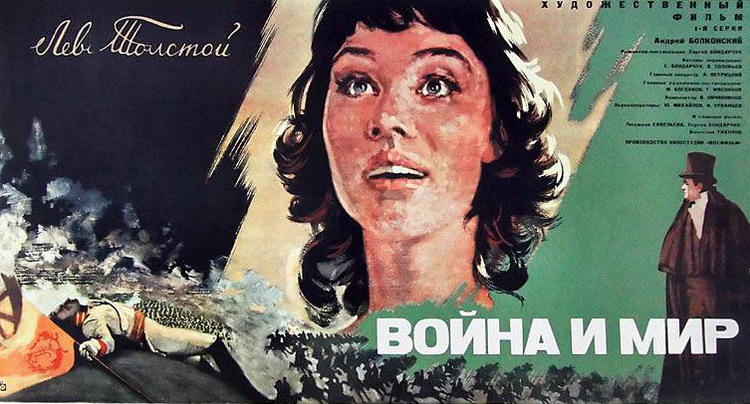
There’s an old axiom that mediocre books make great movies and great books make for lousy movies. Mario Puzo’s bestseller The Godfather is a straightforward potboiler but Francis Ford Coppola spun it into one of the best films ever made. In contrast, F. Scott Fitzgerald’s The Great Gatsby has beguiled multiple ambitious, misguided filmmakers into making cinematic duds.
Hollywood’s 1956 adaptation of Leo Tolstoy’s famously massive tome War and Peace proved that axiom to be true. Director King Vidor, who generally speaking is no slouch when it comes to directing epics, just couldn’t translate the novel’s sweep and depth. Moreover, the film’s leads, Audrey Hepburn and Henry Fonda, just seemed miscast. New York Times critic Bosley Crowther described the movie as “oddly mechanical and emotionally sterile.”
The movie was also an affront to Russian nationalism. After all, Tolstoy’s novel is not just another historical epic; it is a cultural lodestone for what is “Russian-ness.” It is, as Rosemary Edmonds, a translator of the 1963 edition of the book called, the “Iliad and the Odyssey of Russia.” The Soviet film industry couldn’t let some half-baked Hollywood flick end up being the sole cinematic adaptation of the book. Making an adaptation was, as a bunch of Soviet filmmakers wrote in an open letter, “a matter of honor for the Soviet cinema industry.”
After decades of making stolid propaganda pieces that more often than not involved tractors, the Soviet film industry was fired up to make a work that was faithful to Tolstoy and yet have artistic merit as a movie – a tall order. As the director and star of the Russian version of War and Peace, Sergei Bondarchuk, put it: “Our duty is to introduce the future viewer to the origins of sublime art, to make the innermost mysteries of the novel, War and Peace, visually tangible, to inform a feeling of fullness of life, of the joy of human experience.”
The Soviet government marshaled a staggering amount of effort and expense to realize this film. Never underestimate the will of a totalitarian dictatorship with an axe to grind. Production started in 1961 and lasted six years. More than forty different museums contributed costumes and set dressing to the production, including things like chandeliers, silverware and furniture. The Department of Agriculture contributed 900 horses. The Red Army had 12,000 troops play as extras during the climactic Battle of Borodino sequence. Bondarchuk suffered two near-fatal heart attacks during production.
All that money and effort paid off. The resulting movie was one of the most lavish, spectacular films ever made. And at 451 minutes, it’s also one of the longest. (It was released in the USSR as four separate movies.)
Along the way, Bondarchuk pulled off the impossible – the movie is actually good, mirroring the breadth and depth of the novel. War and Peace won all sorts of awards including an Oscar for Best Foreign language movie. As a young Roger Ebert raved back in 1969:
“War and Peace” is the definitive epic of all time. It is hard to imagine that circumstances will ever again combine to make a more spectacular, expensive, and — yes — splendid movie. Perhaps that’s just as well; epics seem to be going out of favor, replaced instead by smaller, more personal films. Perhaps this greatest of the epics will be one of the last, bringing the epic form to its ultimate statement and at the same time supplying the epitaph.
You can watch the film above, thanks to Mosfilm. It comes complete with subtitles.
Bondarchuk’s War and Peace, which you can also purchase online, is listed in our collection, 4,000+ Free Movies Online: Great Classics, Indies, Noir, Westerns, Documentaries & More.
Related Content:
Rare Recording: Leo Tolstoy Reads From His Last Major Work in Four Languages, 1909
Vintage Footage of Leo Tolstoy: Video Captures the Great Novelist During His Final Days
Leo Tolstoy’s Family Recipe for Macaroni and Cheese
Jonathan Crow is a Los Angeles-based writer and filmmaker whose work has appeared in Yahoo!, The Hollywood Reporter, and other publications. You can follow him at @jonccrow. And check out his blog Veeptopus, featuring pictures of vice presidents with octopuses on their heads. The Veeptopus store is here.
Read More...The Well-Tempered Clavier: Download an Open Version of J.S. Bach’s Masterpiece
In 2012, the Japanese-German classical musician Kimiko Ishizaka made available to the world an open version of J.S. Bach’s Goldberg Variations performed on a Bösendorfer 290 Imperial piano in Berlin. Funded by a Kickstarter campaign, the recording was released under a Creative Commons Zero license, which essentially put the music straight into the public domain.
Yesterday we discovered, thanks to one of our readers, Ishizaka’s follow-up to The Open Goldberg Variations — The Open Well-Tempered Clavier, Book 1. Also Kickstarter-funded and released under a Creative Commons license, her new production puts 48 Preludes and Fugues into the commons. Explaining the importance of The Well-Tempered Clavier, Alexandre Prokoudine writes over at Libre Graphics World:
Among classical music connoisseurs, the Well-Tempered Clavier Book 1 (WTC, or “the 48” for short) is widely regarded as one of the most influential works by J.S. Bach. Here is why.
For a long time instruments used to be tuned in such intervals between notes that transposition (playing a melody in a key different from the originally intended one) usually produced a melody that was clearly out of tune. Finding the right intervals was an interesting mathematical problem to solve, and it was done in the 17th century by Andreas Werckmeister.
So while J.S. Bach didn’t invent well-tempered tuning, the 48 was his major, if not defining contribution to making it popular, as the 48 was pretty much The Music Theory Bible for generations of composers…
Historical value aside, the 48 is simply beautiful and elegantly sophisticated music (with score laid out in up to four voices, yet played by a single musician). If this is the first time you are listening to WTC, I officially envy you, because are about to discover something very special.
You can get the Open Well-Tempered Clavier as a free download here (please read the instructions on the page), or stream it above. You can also support the artist and purchase the download for a fee of your choice, or buy a CD version over on Amazon.
As for what you can expect from Kimiko Ishizaka next, look out for a recording of the Chopin Préludes on a Pleyel piano — the same piano Chopin played himself all those years ago.
Related Content:
Download the Complete Organ Works of J.S. Bach for Free
The Open Goldberg Variations: J.S. Bach’s Masterpiece Free to Download
Glenn Gould Explains the Genius of Johann Sebastian Bach (1962)
The Genius of J.S. Bach’s “Crab Canon” Visualized on a Möbius Strip
JS Bach’s The Well-Tempered Clavier Artistically Animated with Pulsing Neon Lights
Read More...Download the Complete Organ Works of J.S. Bach for Free
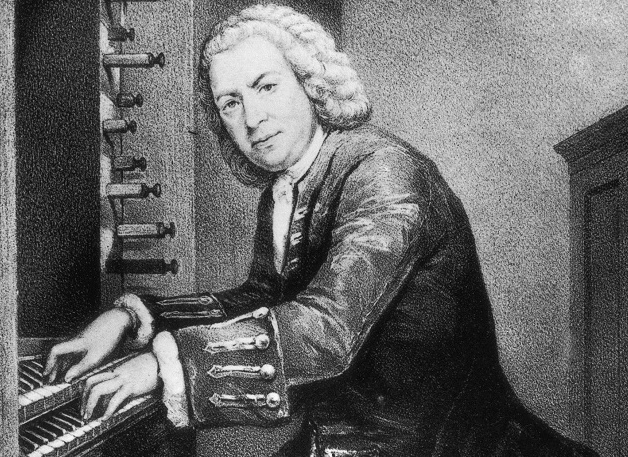
“The best proof we have that life is good is that to each of us, on the day we are born, comes the music of Johann Sebastian Bach,” writes J.M. Coetzee in Diary of a Bad Year. “It comes as a gift, unearned, unmerited, for free.” While the respected novelist voiced that thought, as he often does, through a highly opinionated protagonist, I can’t help but suspect that author and character to some extent agree on this. Some of us discover Bach right away, in childhood; others do it much later. And whether or not we’ve earned or merited his music, it now comes to us more freely than ever.
Take, for example, Bach’s complete organ works, which you can download at no cost from Block M Records. Performing them all, we have University of Michigan’s Dr. James Kibbie — “on original baroque organs in Germany,” no less.
They’ve organized the collections, released under a Creative Commons license, into a complete catalog (that you can also search)—with downloadable groups (from trio sonatas and concerti to the Schübler Chorales and the Orgelbüchlein), as well as a list of evergreen familiar masterworks (such as the Toccata and Fugue in D Minor and the Passacaglia in C Minor). They’ve made it easy to access and enjoy an important part of Bach’s wide, hugely influential, and endlessly enduring body of work. The question of whether life is ultimately good you’ll have to settle for yourself, but you can easily start gathering the evidence right here.
Related Content:
The Open Goldberg Variations: J.S. Bach’s Masterpiece Free to Download
Glenn Gould Explains the Genius of Johann Sebastian Bach (1962)
The Genius of J.S. Bach’s “Crab Canon” Visualized on a Möbius Strip
Beethoven’s “Ode to Joy” Movingly Flashmobbed in Spain
Colin Marshall writes on cities, language, Asia, and men’s style. He’s at work on a book about Los Angeles, A Los Angeles Primer, and the video series The City in Cinema. Follow him on Twitter at @colinmarshall or on Facebook.
Read More...High School Teacher Reads Allen Ginsberg’s Explicit Poem “Please Master” and Loses His Job
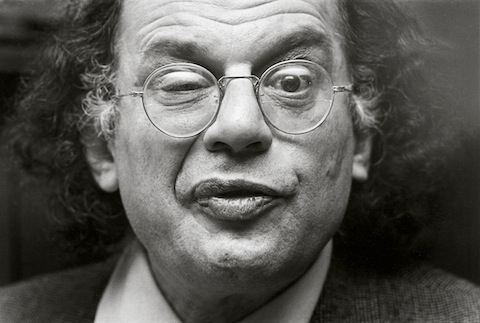
Image by Michiel Hendryckx.
Although the boundaries of what should pass for free speech in high school English classrooms will be forever in debate, most everyone would agree some boundaries must exist. But what of the speech of famous authors? Of towering figures of 20th century poetry? Should their speech be subject to review? What of an English teacher who allows the most risqué Beat poem you’ve ever heard to be read aloud in class by the poet himself, Allen Ginsberg, via an online video (perhaps this one)? Award-winning English teacher David Olio, a beloved 19-year veteran, did just that when a student asked to share Ginsberg’s ecstatic, and very explicit, poem “Please Master” with the class.
After complaints from several students, the school administration suspended Olio, then forced him to resign. Whether or not this decision was just is a debate that extends beyond the scope of this post. The variables are many, as Slate’s sympathetic Mark Joseph Stern admits, including the fact that Olio did not exactly prepare his students for what was to come, nor give them the opportunity to opt out. The high school seniors—on the threshold of adulthood and some already with one foot in college—may not have had their “emotional health” endangered, as Olio’s termination letter alleged, but it’s little wonder some of them found the material shocking.
Ginsberg’s poem, which you can hear him read above, describes a “fantasized sexual encounter between Ginsberg and Neal Cassady, the inspiration for the Dean Moriarty character in Jack Kerouac’s On the Road.” It is graphic, writes Stern, but “not obscene.” Instead—in its allusions to St. Teresa’s angelic visitation in a “profane description of anal sex as a nearly divine act”—Ginsberg’s poem is “dangerous because it juxtaposes tenderness with masochism; dangerous because it rapturously celebrates a vision of same-sex intimacy we are only supposed to whisper about.” Read the poem, listen to Ginsberg read it, and judge for yourself.
Of course, this is hardly the first time Ginsberg’s work has caused controversy. His Beat epic “Howl” (1955), with its sexually charged lines, irked the U.S. government, who seized copies of the poem and put its publisher, poet and City Lights’ bookseller Lawrence Ferlinghetti, on trial for obscenity. Well over sixty years later, Ferlinghetti has written in defense of David Olio. We can safely assume that Ginsberg, who died in 1997, also would approve. And while we have every right to be shocked by Ginsberg’s poem, or not, and find the decision to fire Olio warranted, or not, I tend to agree with Stern when he writes “if every English teacher were that enthusiastic about his subject, America would be a much more literate, educated and interesting place.”
Related Content:
The First Recording of Allen Ginsberg Reading “Howl” (1956)
Allen Ginsberg Reads a Poem He Wrote on LSD to William F. Buckley
Allen Ginsberg Talks About Coming Out to His Family & Fellow Poets on 1978 Radio Show (NSFW)
Josh Jones is a writer and musician based in Durham, NC. Follow him at @jdmagness.
Read More...MIT Creates Amazing Self-Folding Origami Robots & Leaping Cheetah Robots
Last Thursday, MIT released two staggeringly cool videos. And I don’t think I’m being hyperbolic in saying that. Above we have a robotic cheetah that’s “trained” to “see and jump over hurdles as it runs — making this the first four-legged robot to run and jump over obstacles autonomously.” The cheetah knows when to jump by using LIDAR — “a visual system that uses reflections from a laser to map terrain.” MIT News has more on the tech behind this creation.
Making almost equally big news is another MIT invention — a miniature origami robot that self-folds, walks, swims, and degrades. As the electrical engineering website IEEE Spectrum explains:
The unfolded robot, which is made of a magnet and PVC sandwiched between laser-cut structural layers (polystyrene or paper), weighs just 0.31 g and measures 1.7 cm on a side. Once placed on a heating element, the PVC contracts, and where the structural layers have been cut, it creates folds.…
Once you’re done messing around, you can drive the robot into a tank of acetone and it will entirely dissolve.
One day, if things go according to plan, these creatures will become small enough to perform important medical tasks within your body, and then when they’re done, poof, they’ll be gone. And you’ll have an MIT researcher partly to thank.
If you would like to support the mission of Open Culture, consider making a donation to our site. It’s hard to rely 100% on ads, and your contributions will help us continue providing the best free cultural and educational materials to learners everywhere. You can contribute through PayPal, Patreon, and Venmo (@openculture). Thanks!
Related Content:
MIT Teaches You How to Speak Italian & Cook Italian Food All at Once (Free Online Course)
Junot Díaz’s Syllabi for His MIT Writing Classes, and the Novels on His Reading List
Free Online Engineering Courses
Read More...
Watch Alfred Hitchcock Make Cameo Appearances in 37 of His Films
It may sound redundant, but to many people a Hitchcock film would not be a Hitchcock film without Hitchcock. By this I mean not only Hitchcock’s masterful command of light and shadow, camera movement, and editing, but also the brief, witty appearances of the man himself, in front of the camera.
Of course we have the droll intro of the great director’s own TV show, with his silhouette sliding into a cartoon of his jowly profile. We also have the chance to spot him nearly everywhere else in his body of work since he appears—as a bystander or as some form of comic relief—in 37 of his films: from 1927’s The Lodger to 1976’s Family Plot. In this last cameo, as you can see below, he appears again in silhouette.
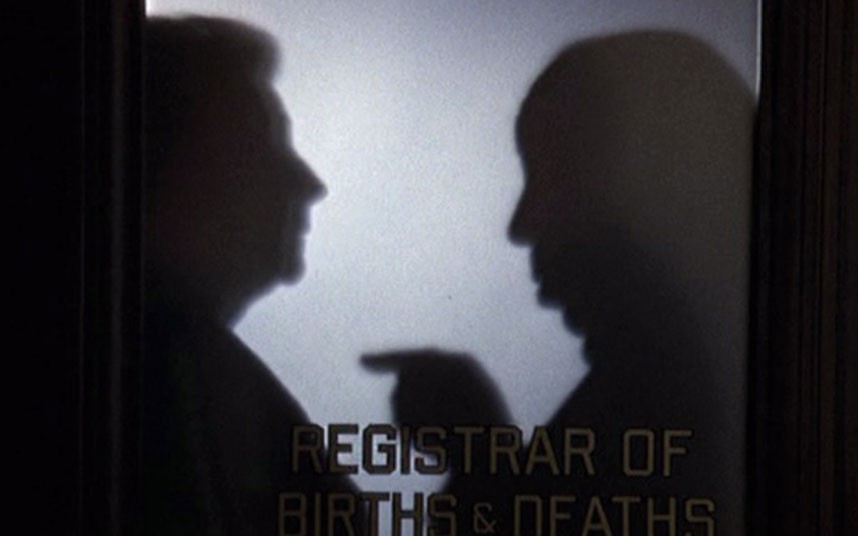
At the top of the post, you can watch a supercut of all 37 of these cameos. And see a complete list, with descriptions, at Wikipedia. AMC’s Tim Dirks tells us of “two recurring themes” in Hitchcock’s film appearances: “(1) Hitchcock often carried a musical instrument, and (2) Hitchcock often used public transportation (buses, trains, etc.), and was seen as a casual passer-by in the crowd in the public place (train stations, at an airport, etc.). Most of the cameos appeared early in the film, and often there was a bit of mild humor in the appearance.” Though they may seem narcissistic, Hitchcock promised the cameos were for the sake of his fans, who certainly appreciated the recurring trademark. “I always give a little thought to my appearances,” said the director in a 1966 interview, “and come on as early as possible—don’t want to hold them in suspense!”
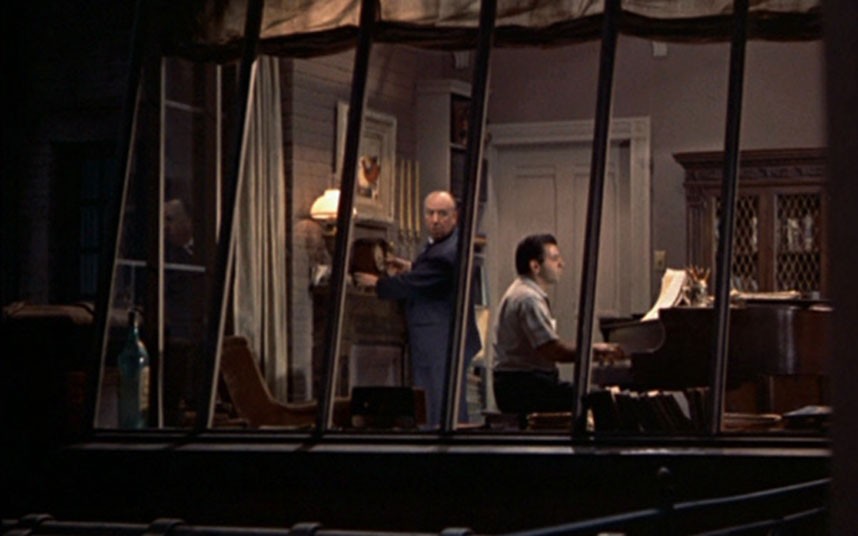
The Hitchcock cameos began by accident, writes MysteryNet, when, “short an actor in one of his first films, Hitchcock took it upon himself to play the small part.” In this movie, The Lodger (watch it online), Hitchcock actually appears twice—as a newsroom clerk and again later in a crowd. He would make two appearances in three more films: Suspicion, Rope, and Under Capricorn. Most of his cameos are very brief, some shot at a distance, and others with his back to the camera. To spot Hitchcock in your favorite of his films [you can watch 23 for free in our collection of Free Hitchcock films], see AMC’s complete list, which features thumbnails and approximations of how many minutes into the film he appears. Also don’t miss The Telegraph’s comprehensive gallery of stills of Hitchcock’s cameos, like that of his Rear Window appearance above.
Related Content:
23 Free Hitchcock Movies Online
1000 Frames of Hitchcock: See Each of Alfred Hitchcock’s 52 Films Reduced to 1,000 Artistic Frames
Alfred Hitchcock’s Rules for Watching Psycho (1960)
Josh Jones is a writer and musician based in Durham, NC. Follow him at @jdmagness
Read More...Parvati Saves the World: Watch a Remix of Bollywood Films That Combats Rape in India
Sexual violence in India has been in the spotlight ever since a 23-year-old medical student was gang raped and murdered on a bus in New Delhi in 2012. The crime was so flagrant and so brutal that the country recoiled in shock. Students and activists descended into the streets of Delhi to protest.
Filmmaker Ram Devineni realized just how entrenched the problem is in Indian culture when he spoke with a cop during one of those protests. As he told the BBC,“I was talking to a police officer when he said something that I found very surprising. He said ‘no good girl walks alone at night.’
The Indian government rushed legislation that would increase the prison term for rape along with criminalizing other crimes against women like stalking. Yet, a string of other high-profile rapes, including a few against foreign tourists, show that this is a continuing problem, one that wasn’t going to be solved with a few laws.
“I realized that rape and sexual violence in India was a cultural issue,” said Devineni. “And that it was backed by patriarchy, misogyny and people’s perceptions.”
So Devineni decided to try and change India’s culture with one of the most powerful weapons out there: art.
Inspired by Hindu mythology, Devineni and a couple collaborators created a graphic novel about Priya, a rape survivor who appeals for help to Parvati, the Goddess of power and beauty. By the end of the comic, Priya confronts her attackers while riding a tiger.
As a continuation of the project, Devineni created Parvati Saves the World, a similar story pieced together from some amazingly kitschy Bollywood epics from the 1970s. He described the project as being “like DJ Spooky’s remix of Birth of a Nation but this focuses on sexual violence.”
In the film, Priya once again appeals to Parvati after getting attacked, this time by the friend of a prideful king. When Parvati confronts the king, he tries to assault her. This is a bad move. Her husband is the God Shiva, AKA “the Destroyer,” AKA someone you really don’t want to tick off. As punishment, he brings fire and death on heaven and earth. Realizing that violence isn’t the answer, Parvati goes to Earth to become “a beacon of hope for oppressed women everywhere.”
You can watch Parvati Saves the World in three parts above. You can learn more about Devineni’s mission at The Creator’s Project.
Related Content:
Bertrand Russell’s Improbable Appearance in a Bollywood Film (1967)
Ravi Shankar Gives George Harrison a Sitar Lesson … and Other Vintage Footage
George Harrison’s Mystical, Fisheye Self-Portraits Taken in India (1966)
Jonathan Crow is a Los Angeles-based writer and filmmaker whose work has appeared in Yahoo!, The Hollywood Reporter, and other publications. You can follow him at @jonccrow. And check out his blog Veeptopus, featuring pictures of vice presidents with octopuses on their heads. The Veeptopus store is here.
Read More...Support Us
We're hoping to rely on loyal readers, rather than erratic ads. Please click the Donate button and support Open Culture. You can use Paypal, Venmo, Patreon, even Crypto! We thank you!

About Us

Open Culture scours the web for the best educational media. We find the free courses and audio books you need, the language lessons & educational videos you want, and plenty of enlightenment in between.
Advertise With Us

FREE UPDATES!
GET OUR DAILY EMAIL
Get the best cultural and educational resources on the web curated for you in a daily email. We never spam. Unsubscribe at any time.
FOLLOW ON SOCIAL MEDIA

Open Culture editor Dan Colman scours the web for the best educational media. He finds the free courses and audio books you need, the language lessons & movies you want, and plenty of enlightenment in between.
Advertise With Us

