Jordan Peele as Auteur of the Film Nope — Pretty Much Pop: A Culture Podcast #131
Jordan Peele’s launch from a solid comedy base with Comedy Central’s Key & Peele show to the unexpected horror film Get Out was so impressive that he’s generated a huge amount of good will that allows him to play the full-on auteur with huge budgets. Did that pay off with his third film, the monster movie Nope?
Your Pretty Much Pop host Mark Linsenmayer is joined by Lawrence Ware (philosophy prof. and entertainment writer), Sarahlyn Bruck (novelist and writing prof.), and Nicole Pometti (media artist and podcaster) to second guess Peele’s various creative decisions.
A few articles we reviewed include:
- “Jordan Peele and Keke Palmer Look to the Sky” by Gerrick Kennedy
- “Jordan Peele Talks Being A Black Auteur And Disproving Myths Of Representation In Hollywood” by Dino-Ray Ramos
- “The Bloody History Behind Those Moving Pictures in Nope” by Jason Bailey
- “Jordan Peele’s Nope, Explained” by Alissa Wilkinson
- “Jordan Peele’s Nope Calls Back to This Greek Myth” by Rebecca Radillo
- “Jupe is the biggest tragedy in Nope, a movie full of tragedies” by Tasha Robinson
Follow us @law_writes, @sarahlynbruck, @remakespodcast, @MarkLinsenmayer.
Hear more Pretty Much Pop. Support the show and hear bonus talking for this and nearly every other episode at patreon.com/prettymuchpop or by choosing a paid subscription through Apple Podcasts. This podcast is part of the Partially Examined Life podcast network.
Pretty Much Pop: A Culture Podcast is the first podcast curated by Open Culture. Browse all Pretty Much Pop posts.
Read More...Vienna’s Albertina Museum Puts 150,000 Digitized Artworks Into the Public Domain: Klimt, Munch, Dürer, and More

Though it may not figure prominently into the average whirlwind Eurail trip across the continent, Vienna’s role in the development of European culture as we know it can hardly be overstated. Granted, the names of none of its cultural institutions come mind as readily as those of the Prado, the Uffizi Gallery, or the Louvre. But as museums go, Vienna more than holds its own, both inside and outside the neighborhood aptly named the Museumsquartier — and not just in the physical world, but online as well. Recently, the Albertina Museum in Vienna put into the public domain 150,000 of its digitized works, all of which you can browse on its web site.
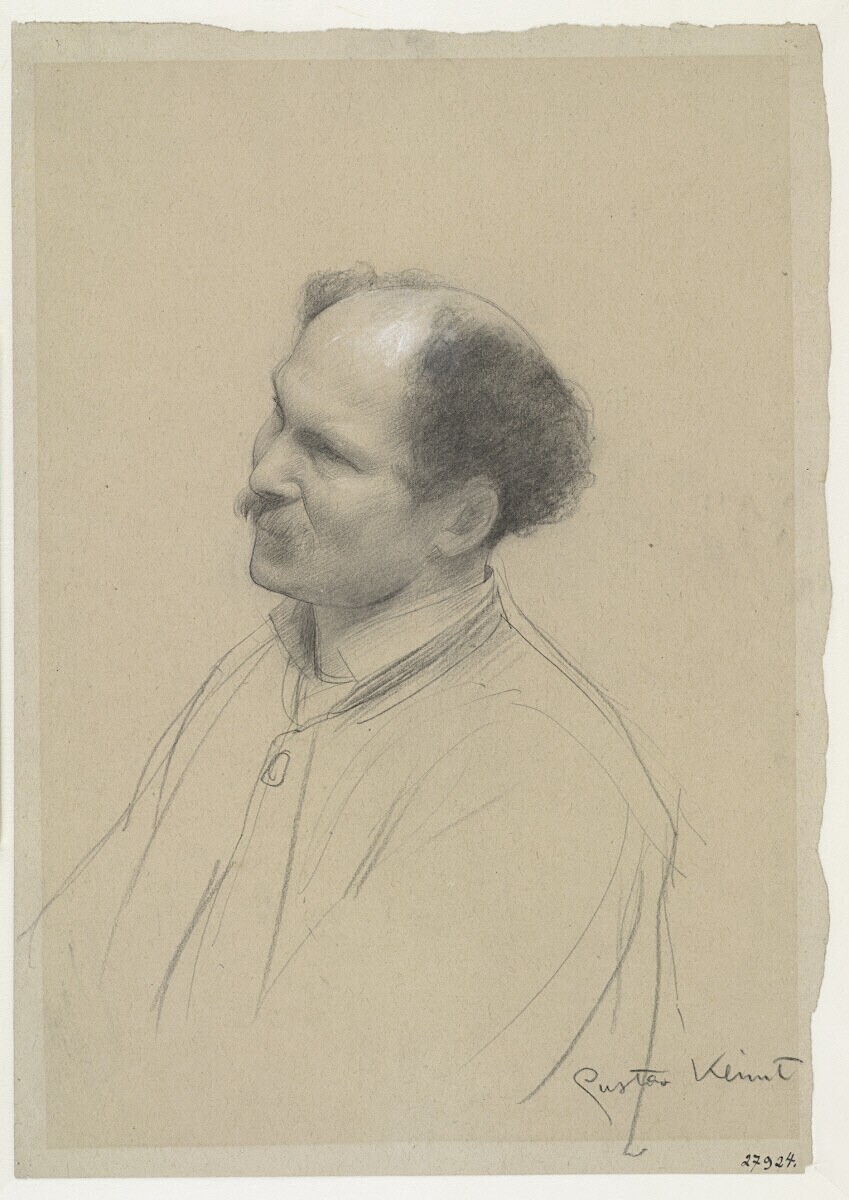
“Considered to have one of the best collections of drawings and prints in the world,” says Medievalists.net, the Albertina boasts “a large collection of works by Albrecht Dürer (1471–1528), a German artist who was famous for his woodcut prints and a variety of other works.” Here on Open Culture we’ve previously featured the genius of Dürer as revealed by his famed self-portraits. We’ve also featured visual exegeses of the art of Vienna’s own Gustav Klimt as well as Edvard Munch, two more recent European artists of great (and indeed still-growing) repute, works from both of whom you’ll find available to download in the Albertina’s online archive.
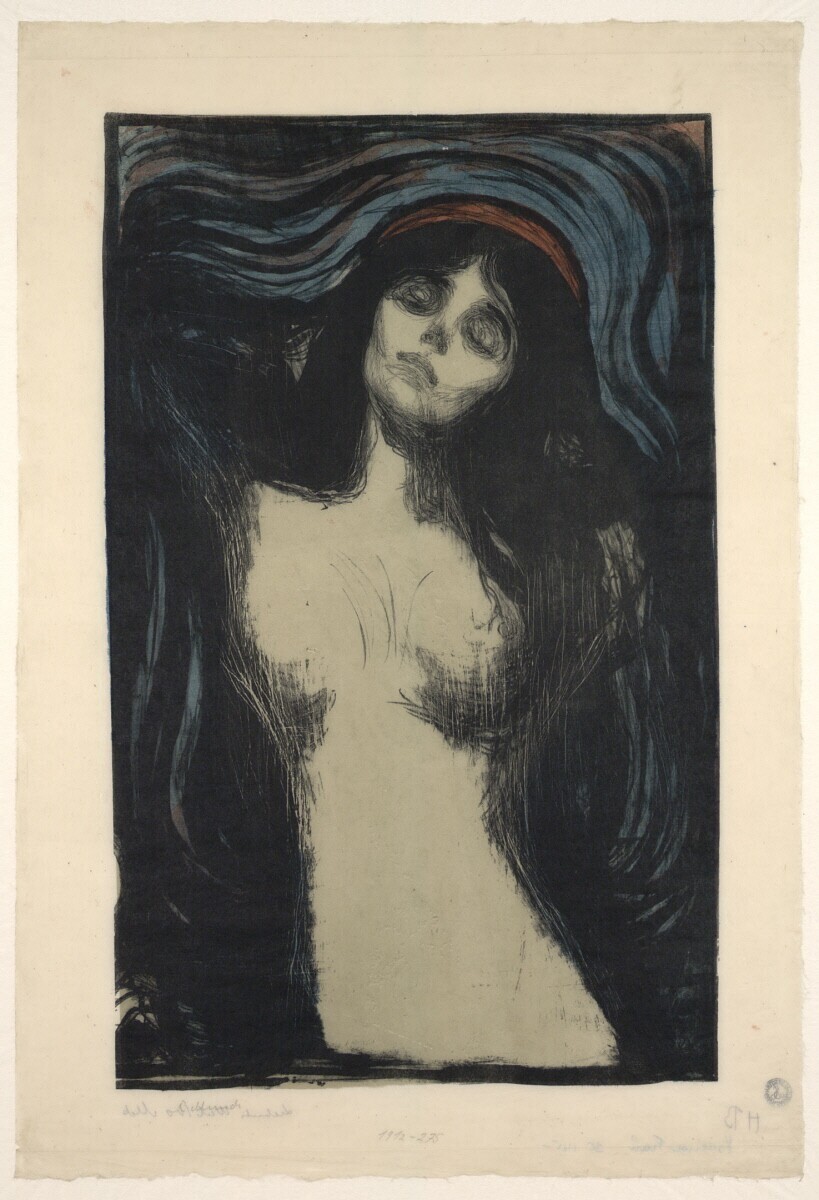
Those interested in the development of Dürer, Klimt, Munch, and other European masters will especially appreciate the Albertina’s online offerings. As an institution renowned for its large print room and collections of drawings, the museum has made available a great many sketches and studies, some of which clearly informed the iconic works we all recognize today. But there are also complete works as well, on which you can focus by clicking the “Highlights” checkbox above your search results. To understand Europe, you’d do well to begin in Vienna; to understand Europe’s art — including its photography, its posters, and its architecture, each of which gets its own section of the archive — you’d do well to begin at the Albertina online.
via Medievalists.net
Related content:
The Genius of Albrecht Dürer Revealed in Four Self-Portraits
Explore 7,600 Works of Art by Edvard Munch: They’re Now Digitized and Free Online
30,000 Works of Art by Edvard Munch & Other Artists Put Online by Norway’s National Museum of Art
Based in Seoul, Colin Marshall writes and broadcasts on cities, language, and culture. His projects include the Substack newsletter Books on Cities, the book The Stateless City: a Walk through 21st-Century Los Angeles and the video series The City in Cinema. Follow him on Twitter at @colinmarshall, on Facebook, or on Instagram.
Read More...The Only Written Eye-Witness Account of Pompeii’s Destruction: Hear Pliny the Younger’s Letters on the Mount Vesuvius Eruption
Though my shocked soul recoils, my tongue shall tell. — Pliny the Younger
A great deal of what we know — or think we know — about the destruction of Pompeii and Herculaneum in 79 AD comes filtered through modern mythologies like the 1834 novel The Last Days of Pompeii. Written by Edward Bulwer-Lytton (the first novelist to start a tale with “It was a dark and stormy night”), the book’s Romantic fascination with civilizational decay was one stream of thinking that blames Pompeiians themselves, in part, for their destruction. That blame manifests as explicit, or more subtle, suggestions of divine punishment. Or it can look like chiding impractical residents who didn’t get out in time or took the wrong route out of town to avoid the heavy downpour of molten rock and ash, as though a volcanic eruption were a traffic jam in a thunderstorm.…
Blame is a reflexive defense against the horrifying possibility that the screaming figures frozen in ash could be us. There’s little to counter our certainty from Pompeiians themselves. Somewhere between 10,000 to 12,000 people got out in time (approximately 2,000 were killed), but there are no existing accounts from the city’s former residents-turned- refugees. If they had anything to say about it later, we’ll never know. We do, however, have an eyewitness account of the destruction. Its author, Pliny the Younger, watched from a vantage point above the immediate scenes of panic and death: his villa across the bay of Naples in Misenum. He also happened to be nephew to the great Roman naturalist and military campaigner Pliny the Elder, and an adept writer and keen observer of nature himself.
Pliny the Younger’s letters — published in 9 volumes during his lifetime, 10 afterward — hold more interest for historians than their descriptions of Vesuvius. In his long life, “he was a poet, a senator, a public official,” Joan Acocella writes at The New Yorker. He had firsthand knowledge of “celebrated crimes” among the Roman elite. But the destruction of Pompeii was formative: his uncle died in an attempted evacuation of the city by sea, a major event for Pliny and for Roman arms and letters. While the Younger had been at leisure in Misenum, the Elder had been at work, “in active command of the fleet,” his nephew writes in a letter to his friend, fellow lawyer, and later famed historian Publius Cornelius Tacitus. Pliny begins with an explanation, more or less, for why he’s still alive.
When his uncle saw the “cloud of unusual size and appearance” rising over the bay, he “ordered a boat made ready, telling me I could come with him if I wished.” Had the cautious nephew accepted his invitation, Pliny the Younger would probably have died at the age of 18, something he surely meditated upon from time to time in later life. In the letter, he styles his uncle as a “hero” for his rescue attempts. Pliny wasn’t there himself to see these events, but he imagines what his uncle said and did. He even describes Pliny the Elder’s dramatic collapse and death in Stabiae, several miles away across the Bay. It’s hard to sift the facts from literary embellishment, but Pliny’s descriptions of Vesuvius itself are vivid and terrifying. The mountain, he writes, was covered in “broad sheets of fire and leaping flames… their bright glare emphasized by the darkness of night.”
His observations of the initial eruption seem highly credible given his actual location:
It was not clear at that distance from which mountain the cloud was rising (it was afterwards known to be Vesuvius); its general appearance can best be expressed as being like an umbrella pine, for it rose to a great height on a sort of trunk and then split off into branches, I imagine because it was thrust upwards by the first blast and then left unsupported as the pressure subsided, or else it was borne down by its own weight so that it spread out and gradually dispersed. In places it looked white, elsewhere blotched and dirty, according to the amount of soil and ashes it carried with it.
Pliny seems to want to write more about what he saw, but he obliges Tacitus’ request to tell the story of his uncle’s death. “You will pick out of this narrative whatever is most important,” he concludes. “For a letter is one thing, a history another; it is one thing writing as a friend, another thing writing to the public.” You can hear the letter read in full in the YouTube video above from Voices of the Past.
The line between public history and private correspondence may not be so clear as Pliny imagined, especially when his letters are the only eyewitness sources we have. In a second missive to Tacitus, per his friend’s request, Pliny describes the scene back in Misenum on the second day of the eruption. He and his mother had debated what to do, and finally decided to evacuate. Here, writing about events he experienced firsthand, he strays from the narrative conventions of his first letter, conveying the chaotic atmosphere of terror all around him as they left. The letter is harrowing, and worth quoting at length.
Though Pliny himself, at the end of the letter, pronounces it unworthy of inclusion in Tacitus’ history, it remains the one firsthand account to which we can turn when imagining the experience.
Ashes were already falling, not as yet very thickly. I looked round: a dense black cloud was coming up behind us, spreading over the earth like a flood. ‘Let us leave the road while we can still see,’ I said, ‘or we shall be knocked down and trampled underfoot in the dark by the crowd behind.’ We had scarcely sat down to rest when darkness fell, not the dark of a moonless or cloudy night, but as if the lamp had been put out in a closed room.
You could hear the shrieks of women, the wailing of infants, and the shouting of men; some were calling their parents, others their children or their wives, trying to recognize them by their voices. People bewailed their own fate or that of their relatives, and there were some who prayed for death in their terror of dying. Many besought the aid of the gods, but still more imagined there were no gods left, and that the universe was plunged into eternal darkness for evermore.
There were people, too, who added to the real perils by inventing fictitious dangers: some reported that part of Misenum had collapsed or another part was on fire, and though their tales were false they found others to believe them. A gleam of light returned, but we took this to be a warning of the approaching flames rather than daylight. However, the flames remained some distance off; then darkness came on once more and ashes began to fall again, this time in heavy showers. We rose from time to time and shook them off, otherwise we should have been buried and crushed beneath their weight. I could boast that not a groan or cry of fear escaped me in these perils, but I admit that I derived some poor consolation in my mortal lot from the belief that the whole world was dying with me and I with it.
Related Content:
Pompeii Rebuilt: A Tour of the Ancient City Before It Was Entombed by Mount Vesuvius
Josh Jones is a writer and musician based in Durham, NC. Follow him at @jdmagness
Read More...Why 80s British Pop Queen Kate Bush Owns 2022
Kate Bush has been lying in wait for us on this side of the millennium – especially for those of us on the U.S. side of the pond, who paid too little attention when she became pop royalty in the UK (and Japan!) at the turn of the 80s.
Bush was too quirky, too British, and maybe too much her own woman for U.S. audiences, maybe. But now they’re ready. Finally, in the millions, Americans are catching up to the brilliance of her 1985 single “Running Up That Hill” thanks to its resurrection by Stranger Things Season 4.
Thus far, the Internet has preferred her early stuff. Her first album and its eponymous single, Wuthering Heights, garnered attention online because of its beloved, bizarre video, an inspiration to Kate fans worldwide. 1979 was the last time that she toured and the last time she appeared onstage until a 2015 comeback appearance.
Bush relied on elaborate music films to carry her image. Her early turn to video, we might say, helped make her a cult favorite when she declined to be a celebrity for a few decades. Now video has killed the touring superstar, and Bush is an American pop queen.
In 2022 — almost 40 years after its release — “Running Up That Hill” has hit No 1 on the Hot Billboard 100 Songwriters charts, the first song by a female artist to top the chart this year. Her 1985 album Hounds of Love has become Bush’s first Billboard No. 1 album, this summer, ranking at the top for alternative albums and No. 2 for top rock albums.
“Running Up That Hill (A Deal with God)” first peaked at No. 3 on British charts in 1985. The album, Hounds of Love — one of her very best among a long string of great records — was hailed as “f**ing” brilliant” by NME. “Our Kate’s a genius, the rarest solo artist this country’s ever produced,” wrote Jane Solanas.
Over here in the States, we were hardly unaware of Kate. Although “Running Up That Hill” only hit No. 30 on the charts, her music continued to thrive in underground scenes yet unmeasured by sales and chart positions. (Hounds of Love’s “Cloudbusting” invaded U.S. raves and clubs in 1992 via samples in British group Utah Saints’ “Something Good,” a song most people heard on sketchy dance floors and ratty cassette mixtapes).
As for the mainstream U.S. press, well… “The Mistress of Mysticism has woven another album that both dazzles and bores,” wrote a Rolling Stone critic in 1985. “Her vision will seem silly to those who believe children should be seen and not heard.” A New York Times’ review called Hounds of Love “slightly precious, calculated female art rock.”
There’s nothing slight about Kate Bush’s work, but Cheers to the sounds of f***ing brilliant children at work. See why Bush’s revival — or enduring staying power — should come as no surprise in the Polyphonic video above.
Related Content:
Kate Bush Enjoys a (Long-Overdue) Revival, Sparked by Season 4 of Stranger Things
Revisit Kate Bush’s Peculiar Christmas Special, Featuring Peter Gabriel (1979)
300 Kate Bush Impersonators Pay Tribute to Kate Bush’s Iconic “Wuthering Heights” Video
Josh Jones is a writer and musician based in Durham, NC. Follow him at @jdmagness
Read More...How a Dutch “Dementia Village” Improves Quality of Life with Intentional Design
People suffering from dementia lose their ability to take an active part in conversations, everyday activities, and their own physical upkeep.
They are prone to sudden mood swings, irritability, depression, and anxiety.
They may be stricken with delusions and wild hallucinations.
All of these things can be understandably upsetting to friends and families. There’s a lot of stigma surrounding this situation.
Taking care of a spouse or parent with dementia can be an overwhelmingly isolating experience, though no one is more isolated than the person experiencing severe cognitive decline firsthand.
While many of us would do anything to stay out of them, the sad fact is residential memory care facilities are often the end-of-the-line reality for those living with extreme dementia.
During the first summer of the COVID-19 pandemic, nursing home deaths attributed to Alzheimer’s disease and dementia increased by more than 20 percent, owing to such factors as chronic staffing shortages and a ban on outside visitors.
As DeAnn Walters, director of clinical affairs for the California Association of Health Facilities, told Politico:
We’re trying to be supporter, social worker, caregiver, friend and housekeeping for the resident. It’s putting a lot of pressure on the caregivers and the operation of the facility to make sure everyone has what they need. Before the pandemic we couldn’t even get socks on people and you’d see them walking around barefoot.
Not the vision any of us would choose for our parent’s golden years, or our own.
The Hogeweyk, a planned village just outside of Amsterdam, offers a different sort of future for those with severe dementia.
The above episode of By Design, Vox’s series about the intersection of design and technology, explores the innovations that contribute to the Hogeweyk’s residents overall happiness and wellbeing.
Rather than grouping residents together in a single institutional setting, they are placed in groups of six, with everyone inhabiting a private room and sharing common spaces as they see fit.
The common spaces open onto outdoor areas that can be freely enjoyed by all housed in that “neighborhood”. No need to wait until a staff member grants permission or finishes some task.
Those wishing to venture further afield can avail themselves of such pleasant quotidian destinations as a grocery, a restaurant, a barbershop, or a theater.
These locations are designed in accordance with certain things proven to work well in institutional settings — for instance, avoiding dark floor tiles, which some people with dementia perceive as holes.
But other design elements reflect the choice to err on the side of quality of life. Hand rails may help in preventing falls, but so do rollators and walkers, which the residents use on their jaunts to the town squares, gardens and public amenities.
The designers believe that equipping residents with a high level of freedom not only promotes physical activity, it minimizes issues associated with dementia like aggression, confusion, and wandering.
Co-founders Eloy van Hal and Jannette Spiering write that the Hogeweyk’s critics compare it to the Truman Show, the 1998 film in which Jim Carrey’s title character realizes that his wholesome small town life, and his every interaction with his purported friends, neighbors, and loved ones, have been a set up for a highly rated, hidden camera reality TV show.
They describe The Hogeweyk as a stage for, “the reminiscence world”, in which actors help the residents live in a fictitious world. Many Alzheimer’s experts have, however, valued The Hogeweyk for what it really is: a familiar and safe environment in which people with dementia live while retaining their own identity and autonomy as much as possible. They live in a social community with real streets and squares, a real restaurant with real customers, a supermarket for groceries and a theatre that hosts real performances. There is no fake bus stop or post office, there are no fake façades and sets. The restaurant employee, the handyman, the caretaker, the nurse, the hairdresser, etc.—in short: everyone who works at The Hogeweyk uses their professional skills to actually support the residents and are, therefore, certainly not actors.
Professional care and support goes on around the clock, but rarely takes centerstage. Normal life is prioritized.
A visitor describes a stroll through some of the Hogeweyk’s public areas:
In the shade of one of the large trees, a married couple gazes happily at the activity in the theatre square. An elderly gentleman, together with a young lady, intently study the large chess board and take turns moving the pieces. At the fountain, a group of women chat loudly on colourful garden chairs. The story is clearly audible—it is about a memory of a visit to a park in Paris which had the same chairs. Passers-by, old and young, greet the women enthusiastically. A little further on, a woman is talking to a man opposite her. She is gesturing wildly. After a while, another woman joins the conversation. The two women then walk through the open front door of Boulevard 15.
The covered passage smells of freshly-baked cookies. The scent is coming from De Bonte Hof. Amusing conversations can be heard that pause for a moment when the oven beeps in the kitchen that has been decorated in an old-fashioned style. A tray of fresh cookies is removed from the oven. Two women, one in a wheelchair, enter the venue, obviously seduced by the smell. They sample the cookies.
The supermarket across the street is very busy. Shopping trolleys loaded with groceries are pushed out of the shop. The rattle of a shopping trolley dissipates into the distance as it disappears from view towards Grote Plein. A man reluctantly pushes the full trolley while two women follow behind him arm in arm. The trio disappear behind the front door of Grote Plein 5.
A staffer’s account of a typical morning in one of Hogeweyk’s houses reveals more about the hands-on care that allows residents to continue enjoying their carefully designed home, and the autonomous lifestyle it makes possible:
Mr Hendricks wakes up on the sofa. He unzips his fly. I jump up and escort him to the toilet just in time. I grab a roll of medication for him from the medication trolley. He is now walking to his room. We pick out clothes together and I lay them out on his bed. He washes himself at the sink. I watch briefly before leaving. Fifteen minutes later, I poke my head through the door. That’s not how electric shaving works! I offer to help, but Mr. Hendricks is clearly a bit irritated and grumbles. He’ll be a little less shaven today. We’ll try again after breakfast…
We help Mrs Stijnen into the shower chair with the hoist. She is clearly not used to it. Discussing her extensive Swarovski collection, displayed in the glass case in her room, turns out to be an excellent distraction. She proudly talks about the latest piece she acquired this year. On to the shower. The two other residents are still sleeping. Great, that gives me the chance to devote some extra time to Mrs Stijnen today.
The doorbell rings again and my colleague, Yasmin, walks in. She’s the familiar face that everyone can rely on. Always present at 8 a.m., 5 days a week. What a relief for residents and family. She, too, puts her coat and bag in the locker. The washing machine is ready, and Yasmin loads up the dryer. The table in the dining room is then set. Yasmin puts a floral tablecloth from the cupboard on the table. Mr Hendricks lends a hand and, with some guidance, puts two plates in their place, but then walks away to the sofa and sits down. A Dutch breakfast with bread, cheese, cold cuts, jam, coffee, tea and milk is served. Yasmin is making porridge for Mrs Smit. As always, she has breakfast in bed. Yasmin helps Mrs Smit. It is now 08:45 and Mr Hendricks and Mrs Stijnen are sitting at the dining table. Yasmin pushes the chairs in and sits down herself. They chat about the weather, and Yasmin lends a helping hand when needed.
Mr Hendricks is really grumpy today and is currently grumbling at Mrs Jansen. I’m wondering if we’re overlooking something?
Learn more about the Hogeweyk, the world’s first dementia village here.
Watch a playlist of Vox By Design episodes here.
Related Content
How Music Can Awaken Patients with Alzheimer’s and Dementia
Dementia Patients Find Some Eternal Youth in the Sounds of AC/DC
- Ayun Halliday is the Chief Primatologist of the East Village Inky zine and author, most recently, of Creative, Not Famous: The Small Potato Manifesto. Follow her @AyunHalliday.
Read More...Pink Lady and Jeff: Japan’s Biggest Pop Musicians Star in One of America’s Worst-Reviewed TV Shows (1980)
In 1963, Kyu Sakamoto’s “Sukiyaki” proved that a song sung in Japanese could top the charts in the United States. Not that the American recording industry was quick to internalize it: another Japanese single wouldn’t break the Billboard Top 40 for sixteen years, and even then it did so in English. The song was “Kiss in the Dark” by Pink Lady, a pop duo consisting of Mitsuyo Nemoto and Keiko Masuda, better known as Mie and Kei. In 1978 they’d been the biggest pop-cultural phenomenon in their native country, but the following year their star had begun unmistakably to fall. And so, like many passé Western acts who become “big in Japan,” Pink Lady attempted to cross the Pacific.
Mie and Kei made their American television debut performing “Kiss in the Dark” on Leif Garrett’s CBS special in May 1979. Accounts differ about what happened next, but less than a year later they had their own primetime variety show on NBC. Officially titled Pink Lady, it tends to be referred to these four decades later as Pink Lady and Jeff. This owes to the role of its host, rising (and NBC-contracted) young comedian Jeff Altman, who brought to the table not just his comic timing and skill with impressions, but also his command of the English language. That last happened not to be possessed to any significant degree by Mie or Kei, who had to deliver both their songs and their jokes phonetically.
In the video at the top of the post, you can see a compilation of the highlights of Pink Lady and Jeff’s entire run. Then again, “highlights” may not be quite the word for a TV show now remembered as one of the worst ever aired. “Pink Lady and Jeff represents an unpalatable combination of institutions that were on their way out, like variety shows, disco, and the television empire of creators and puppeteers Sid and Marty Krofft,” writes the AV Club’s Nathan Rabin. The Krofft brothers, creators of H.R. Pufnstuf and Land of the Lost, tell of having been tapped to develop a program around Mie and Kei by NBC president Fred Silverman, who’d happened to see footage of one of their stadium-filling Tokyo concerts on the news.
Sid Krofft remembers declaring his ambition to make Pink Lady “the strangest thing that’s ever been on television.” The startled Silverman’s response: “Let’s do Donny and Marie.” Donny Osmond himself ended up being one of the show’s high-profile guest stars, a lineup that also included Blondie, Alice Cooper, Sid Caesar, Teddy Pendergrass, Roy Orbison, Jerry Lewis, and even Larry Hagman just a week before the epochal shooting of his character on Dallas. None of them helped Pink Lady find enough of an audience to survive beyond its initial six episodes (all available to watch on Youtube), a discomfiting mélange of generic comedy sketches, unsuitable musical performances (with precious few exceptions, Mie and Kei weren’t permitted to sing their own Japanese songs), and broad references to sushi, samurai, and sumo.
The main problem, Altman said in a more recent interview, was that “the variety show had run the gauntlet already, and really was not a format that was going to live in the hearts and homes of people across America anymore.” Not only had that long and earnest television tradition come to its ignominious end, it would soon be replaced by the ironic, ultra-satirical sensibility of Altman’s colleague in comedy David Letterman. But here in the twenty-first century, Altman guesses, the time may be ripe “for a variety-type show to come back.” We live in an era, after all, when a piece of forgotten eighties Japanese pop can become a global phenomenon. And however dim the prospects of the variety show as a form, Mie and Kie themselves have since managed more comebacks than all but their most die-hard fans can count.
Related content:
David Bowie and Cher Sing Duet of “Young Americans” and Other Songs on 1975 Variety Show
Famed Art Critic Robert Hughes Hosts the Premiere of 20/20, Where Tabloid TV News Began (1978)
Based in Seoul, Colin Marshall writes and broadcasts on cities, language, and culture. His projects include the Substack newsletter Books on Cities, the book The Stateless City: a Walk through 21st-Century Los Angeles and the video series The City in Cinema. Follow him on Twitter at @colinmarshall, on Facebook, or on Instagram.
Read More...The Brooklyn Public Library Gives Every Teenager in the U.S. Free Access to Books Getting Censored by American Schools
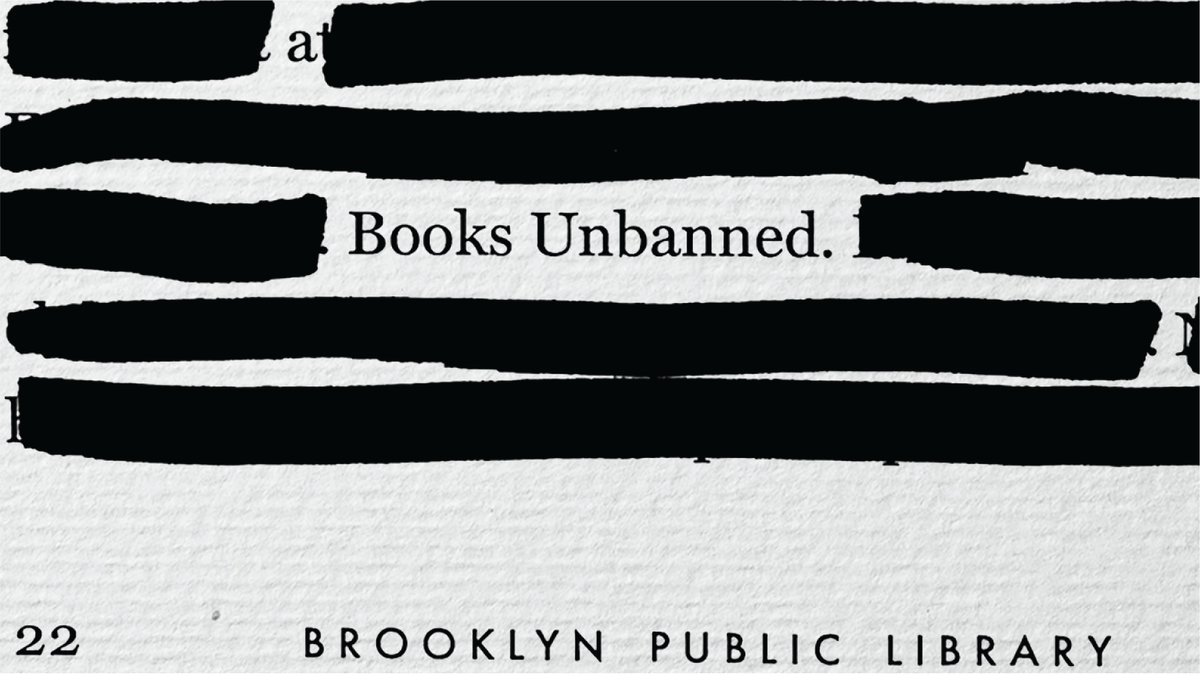
We have covered it before: school districts across the United States are increasingly censoring books that don’t align with white-washed conservative visions of the world. Art Spiegelman’s Maus, The Illustrated Diary of Anne Frank, Alice Walker’s The Color Purple, Toni Morrison’s The Bluest Eye, and Harper Lee’s To Kill a Mockingbird–these are some of the many books getting pulled from library shelves in American schools. In response to this concerning trend, the Brooklyn Public Library has made a bold move: For a limited time, the library will offer a free eCard to any person aged 13 to 21 across the United States, allowing them free access to 500,000 digital books, including many censored books. The Chief Librarian for the Brooklyn Public Library, Nick Higgins said:
A public library represents all of us in a pluralistic society we exist with other people, with other ideas, other viewpoints and perspectives and that’s what makes a healthy democracy — not shutting down access to those points of view or silencing voices that we don’t agree with, but expanding access to those voices and having conversations and ideas that we agree with and ideas that we don’t agree with.
And he added:
This is an intellectual freedom to read initiative by the Brooklyn Public Library. You know, we’ve been paying attention to a lot of the book challenges and bans that have been taking place, particularly over the last year in many places across the country. We don’t necessarily experience a whole lot of that here in Brooklyn, but we know that there are library patrons and library staff who are facing these and we wanted to figure out a way to step in and help, particularly for young people who are seeing, some books in their library collections that may represent them, but they’re being taken off the shelves.
As for how to get the Brooklyn Public Library’s free eCard, their Books Unbanned website offers the following instructions: “individuals ages 13–21 can apply for a free BPL eCard, providing access to our full eBook collection as well as our learning databases. To apply, email bo***********@**********ry.org.” In short, send them an email.
You can find a list of America’s most frequently banned books at the website of the American Library Association.
NOTE: We’re seeing reports on Twitter that a teacher in Norman, OK has been terminated for letting a student know about the Brooklyn Public Library’s free library. While this report hasn’t been fully substantiated, teachers who want to recommend this resource should proceed with caution. Parents could seemingly refer BPL’s free library to students with less concern about retaliation.
If you would like to support the mission of Open Culture, consider making a donation to our site. It’s hard to rely 100% on ads, and your contributions will help us continue providing the best free cultural and educational materials to learners everywhere. You can contribute through PayPal, Patreon, and Venmo (@openculture). Thanks!
Related Content
Texas School Board Bans Illustrated Edition of The Diary of Anne Frank
The 850 Books a Texas Lawmaker Wants to Ban Because They Could Make Students Feel Uncomfortable
Umberto Eco Makes a List of the 14 Common Features of Fascism
Read More...How Salman Rushdie Has Lived and Written Under the Threat of Death: a Free Documentary
Alfred Hitchcock specialized in films about marked men: innocents, more or less, who suddenly find themselves pursued by sinister forces to the ends of the Earth. Little wonder, then, that Salman Rushdie would count himself a Hitchcock fan. The novelist references the filmmaker more than once in Salman Rushdie: Writing Under Death Threats, the DW television documentary above. He remembers a sequence from The Birds that cuts between students in a classroom and the playground outside: in one shot a blackbird comes to sit on the jungle gym, and just a few shots later it’s been joined by 500 more. “The case of what happened to The Satanic Verses was, it was something like the first blackbird.”
Rushdie refers, of course, to the fatwa called down upon him in response to that novel’s supposed blasphemies against Islam by Ayatollah Khomeini. As a result he had to spend most of the subsequent decade in hiding, under the protection of the British government. By the time of this documentary, which came out in 2018, the danger seemed to have passed.
“What’s happening now, as the scandal goes away,” he says of The Satanic Verses, “is that people are able to read it as a book, rather than as some kind of scandalous text.” But the danger had not passed, as we learned earlier this month when Rushdie was stabbed onstage at a literary event in upstate New York, avoiding death by what’s been reported as a narrow margin indeed.
This story has its ironies, not least that Rushdie’s attacker was born in California a decade after the Iranian government’s disavowal of the fatwa. But for Rushdie himself, the attempt on his life can’t have come entirely as a surprise: he saw the gathering blackbirds of violent fanaticism as well as those of metropolitan complacency. Reflecting on the 2015 attack on French satirical magazine Charlie Hebdo, he laments that “even people who are on the liberal, progressive, leftist end of the spectrum now find ‘problematic’ the idea of supporting people who make fun of religion.” Always and everywhere, writing has been done under the threat of one kind of punishment or another; more than 30 years after The Satanic Verses, Rushdie’s case remains the most harrowingly extreme illustration of the writer’s condition.
Related content:
Hear Salman Rushdie Read Donald Barthelme’s “Concerning the Bodyguard”
Salman Rushdie: Machiavelli’s Bad Rap
Based in Seoul, Colin Marshall writes and broadcasts on cities, language, and culture. His projects include the Substack newsletter Books on Cities, the book The Stateless City: a Walk through 21st-Century Los Angeles and the video series The City in Cinema. Follow him on Twitter at @colinmarshall, on Facebook, or on Instagram.
Read More...What Made Better Call Saul a Master Class in Visual Storytelling: A Video Essay
A decade ago, nobody interested in prestige dramatic television could have ignored Breaking Bad, Vince Gilligan’s AMC series about a downtrodden high-school chemistry teacher who becomes a calculating and savage crystal-meth dealer. Such was the critical and popular success of the show that, less than two years after it ended, it was resumed in the form of Better Call Saul. The title character Saul Goodman had been the aforementioned teacher-turned-dealer’s lawyer in Breaking Bad, and the later series, a prequel, traces the half-decade journey that brought him to that point: a journey that began when he was a Chicago con man named Jimmy McGill.
Better Call Saul’s six-season run (one episode longer than Breaking Bad) came to an end this week. During that time, the show has received even stronger accolades than the one that spun it off. To get a sense of what makes it such an achievement in a field crowded with some of the most ambitious creators of popular culture today, watch the video essay above by Youtuber Thomas Flight.
Here on Open Culture, we’ve previously featured his visual analyses of auteurs like Wes Anderson and Bong Joon-ho as well as shows like The Wire and Chernobyl. Five years ago, he uploaded a video explaining “why Better Call Saul is brilliant”; now he argues that it’s a “master class in visual storytelling.”
“ ‘Show, don’t tell’ is such common advice in filmmaking and screenwriting that it’s basically a cliché at this point,” says Flight, “but it’s also much easier said than done.” He goes on to draw from Better Call Saul a host of prime examples of showing-not-telling, organized into four categories of its special strengths: “props as symbolic objects,” “visual performances,” “characters in process,” and “storytelling with cinematography.” Better Call Saul’s creators make rich use of objects, gestures, expressions, places, angles, and much else besides to tell — or rather, show — the story of Jimmy/Saul’s transformation, as well as the transformations of those around him. But which of those characters will star in Gilligan’s next, surely even more ambitious series?
Related content:
How Breaking Bad Crafted the Perfect TV Pilot: A Video Essay
Watch the Pilot of Breaking Bad with a Chemistry Professor: How Sound Was the Science?
The Science of Breaking Bad: Professor Donna Nelson Explains How the Show Gets it Right
Watch the Original Audition Tapes for Breaking Bad Before the Final Season Debuts
Breaking Bad Illustrated by Gonzo Artist Ralph Steadman
Based in Seoul, Colin Marshall writes and broadcasts on cities, language, and culture. His projects include the Substack newsletter Books on Cities, the book The Stateless City: a Walk through 21st-Century Los Angeles and the video series The City in Cinema. Follow him on Twitter at @colinmarshall, on Facebook, or on Instagram.
Read More...“When We All Have Pocket Telephones”: A 1920s Comic Accurately Predicts Our Cellphone-Dominated Lives
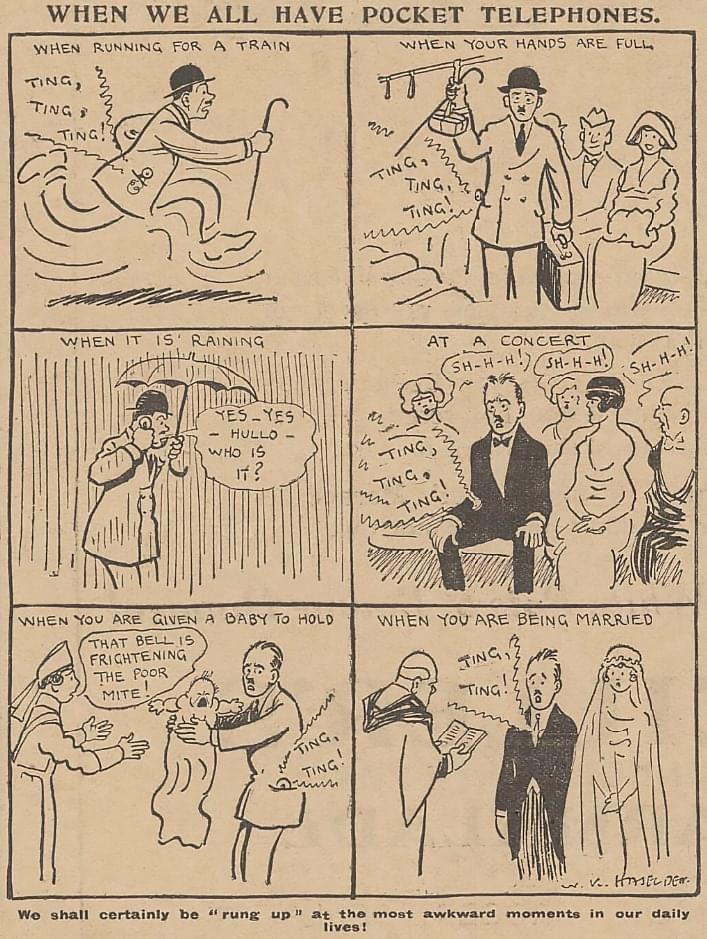
Much has been said lately about jokes that “haven’t aged well.” Sometimes it has do to with shifting public sensibilities, and sometimes with a gag’s exaggeration having been surpassed by the facts of life. As a Twitter user named Max Saltman posted not long ago, “I love finding New Yorker cartoons so dated that the joke is lost entirely and the cartoons become just descriptions of people doing normal things.” The examples included a partygoer admitting that “I haven’t read it yet, but I’ve downloaded it from the internet,” and a teacher admonishing her students to “keep your eyes on your own screen.”
All of those New Yorker cartoons appear to date from the nineteen-nineties. Even more prescient yet much older is the Daily Mirror cartoon at the top of the post, drawn by artist W. K. Haselden at some point between 1919 and 1923. It envisions a time “when we all have pocket telephones,” liable to ring at the most inconvenient times: “when running for a train,” “when your hands are full,” “at a concert,” even “when you are being married.” Such a comic strip could never, as they say, be published today — not because of its potential to offend modern sensitivities, but because of its sheer mundanity.
For here in the twenty-twenties, we all, indeed, have pocket telephones. Not only that, we’ve grown so accustomed to them that Haselden’s cartoon feels reminiscent of the turn of the millennium, when the novelty and prestige of cellphones (to say nothing of their gratingly simple ringtones) made them feel more intrusive in day-to-day-life. Now, increasingly, cellphones are day-to-day life. Far from the literal “pocket telephones” envisioned a century ago, they’ve worked their way into nearly every aspect of human existence, including those Haselden could never have considered.
Yet this wasn’t the first time anyone had imagined such a thing. “Rumors of a ‘pocket phone’ had been ringing around the world since 1906,” writes Laughing Squid’s Lori Dorn. “A man named Charles E. Alden claimed to have created a device that could easily fit inside a vest pocket and used a ‘wireless battery.’ ” In the event, it would take nearly eight decades for the first cellphone to arrive on the market, and three more on top of that for them to become indispensable in the West. Now the “pocket telephone” has become the defining device of our era all over the world, though the social norms around its use do remain a work in progress.
via Laughing Squid
Related content:
The First Cellphone: Discover Motorola’s DynaTAC 8000X, a 2‑Pound Brick Priced at $3,995 (1984)
Filmmaker Wim Wenders Explains How Mobile Phones Have Killed Photography
A 1947 French Film Accurately Predicted Our 21st-Century Addiction to Smartphones
The World’s First Mobile Phone Shown in 1922 Vintage Film
Based in Seoul, Colin Marshall writes and broadcasts on cities, language, and culture. His projects include the Substack newsletter Books on Cities, the book The Stateless City: a Walk through 21st-Century Los Angeles and the video series The City in Cinema. Follow him on Twitter at @colinmarshall, on Facebook, or on Instagram.
Read More...Support Us
We're hoping to rely on loyal readers, rather than erratic ads. Please click the Donate button and support Open Culture. You can use Paypal, Venmo, Patreon, even Crypto! We thank you!

About Us

Open Culture scours the web for the best educational media. We find the free courses and audio books you need, the language lessons & educational videos you want, and plenty of enlightenment in between.
Advertise With Us
FREE UPDATES!
GET OUR DAILY EMAIL
Get the best cultural and educational resources on the web curated for you in a daily email. We never spam. Unsubscribe at any time.
FOLLOW ON SOCIAL MEDIA
Open Culture editor Dan Colman scours the web for the best educational media. He finds the free courses and audio books you need, the language lessons & movies you want, and plenty of enlightenment in between.
Advertise With Us

