Ella Fitzgerald Imitates Louis Armstrong’s Gravelly Voice While Singing “I Can’t Give You Anything But Love, Baby”
Are great artists born, or are they made? Probably a little of both, but I suspect that deep down, even if we don’t like to admit it, we know it’s probably a little more the former. We can become skilled at most anything with dedication and hard work. Talent is another matter—a mysterious combination of qualities we know when we hear but can’t always define. Ella Fitzgerald had it when she first stepped on stage on amateur night at Harlem’s Apollo Theater as a teenager, intending to do a tap dance routine.
She’d only done the performance on a dare, had no formal training outside of singing in church, her bedroom, and the Harlem streets, and she only chose to sing that night because the act before her did a tap dance and stole her thunder.
She blew the audience away—a tough New York crowd not known for being forgiving—and rendered even the boisterous teenagers in the balcony speechless. “Three encores later,” she wrote, “the $25 prize was mine.” Fitzgerald’s golden, three-octave voice, impeccable timing, and improvisational brilliance are not exactly the kinds of things that can be taught.
She didn’t look the part of the typical female jazz singer, at least according to popular perception, writes Holly Gleason at NPR. “A large woman who’d grown up rough,” including time spent in a New York State reformatory, she was rejected by bandleaders even after that first, revelatory performance, and the press frequently referred to her in terms that disparaged her appearance. “Fitzgerald recognized she didn’t possess Billie Holiday’s torchy allure,” Holly Gleason writes, or “Eartha Kitt’s feral sensuality or Carmen McRae’s sex appeal. But that would not stop the woman who took her vocal cues from the horns, as well as from jazz singer Connee Boswell.”
It didn’t stop her from winning a Grammy in the Grammy’s first year, or having a record label, Verve, founded just to put out her music. Ella’s range and pitch-perfect ear meant she could imitate not only the horn section or her favorite singer Boswell but just about anyone else as well, from popular jazz singer Rose Murphy, with her high, cartoonish voice, “chee chee” affectations, and “brrrp” telephone sound effects, to the low, gravelly rasp of Fitzgerald’s longtime duet partner Louis Armstrong. See her do exactly that in the clip at the top, moving effortlessly in “I Can’t Give You Anything but Love, Baby” from her own voice, to Murphy’s, to Armstrong’s in the space of just a few minutes.
Whatever obstacles Fitzgerald faced, her voice seemed to soar above it all. In becoming a global jazz star and “The First Lady of Song,” says jazz writer Will Friedwald, “she showed people that this is music Americans should be proud of.”
via Ben Phillips
Related Content:
Ella Fitzgerald Sings ‘Summertime’ by George Gershwin, Berlin 1968
How Marilyn Monroe Helped Break Ella Fitzgerald Into the Big Time (1955)
Josh Jones is a writer and musician based in Durham, NC. Follow him at @jdmagness
Read More...When R.E.M.‘s Michael Stipe Created the Lyrics for “The Voice of Harold” by Riffing on the Liner Notes of an Old Gospel Album (1983)
R.E.M. is one of those bands that just thinking about can send me into a reverie of memories of the rooms of friends with whom I listened to “Pretty Persuasion,” “Rockville,” and the poetry of “7 Chinese Bros.”—one of Michael Stipe’s early, incomprehensible songs, like “Swan Swan H,” whose cryptic lyrics one must seemingly take on faith. The song must mean something, after all, to Stipe. Maybe the mystery of who, exactly, the “seven Chinese brothers swallowing the ocean” were to him would be revealed someday in an interview or stray reference in a biography….
Now that we live in an age of instant information gratification, we can skip the years of wonder and find the answer right away: the song was partly inspired, we learn at Songfacts, by a 1938 children’s book called The Five Chinese Brothers, based on a traditional folk tale of young brothers with supernatural powers. (It’s also partly a tribute to photographer Carol Levy, a friend who died in a car crash before the recording of Reckoning.) Needing another syllable, maybe, Stipe changed the number to seven, an oddly prophetic move given that a new version of the story, published ten years later, also featured seven brothers.
The reference shows how many great songwriters work: picking at bits and pieces from their memories and whatever captivating text happens to be laying around…. And Stipe is one of those singers, like Elton John, who can sell any line, no matter how obscure or absurd.
In early songs, especially, he showed an uncanny ability to invest incantatory combinations of words with haunting pathos and urgency. He could sing from the phone book or the back of a cereal box and make it compelling. In fact, the story of “7 Chinese Bros.” involves an almost similar feat in the form of “Voice of Harold,” familiar to fans as the B‑side to “So. Central Rain” and part of the 1987 odds and ends collection Dead Letter Office. What possible explanation could there be for these non sequitur gospel lyrics, sung to the tune of… “7 Chinese Bros.”?
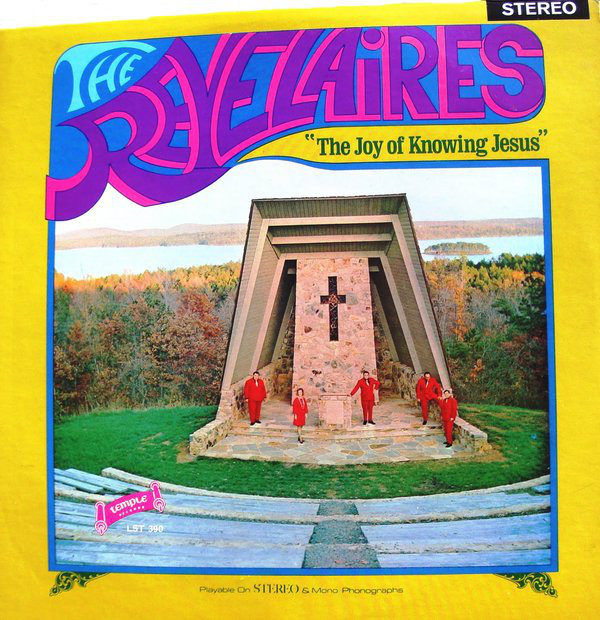
Was Stipe a secret Evangelist, hoping to win converts by extolling “the pure tenor quality of the voice of Harold Montgomery”? More teasingly vague themes emerge, along with references to figures like the Reverend Bill Funderburk, Charles Surratt, John Barbee, and Rhonda Montgomery (“That’s Rhonda! An artist!”). Instead of “Seven Chinese brothers swallowing the ocean,” the chorus introduces us to “The Revelaires, A must / The Revelaires / A must.” If you’re one of those who heard this song and thought, “What…?”, you can wonder no more.
The explanation comes to us from a 2009 interview producer Don Dixon gave to Uncut magazine. (For some reason, Dixon refers to “7 Chinese Bros.” as “7 Chinese Blues,” never a title of the song). The story begins with Stipe feeling down in the dumps in a stairwell outfitted as a lounge for him in the studio.
We were working on the vocal for “7 Chinese Blues,” but Michael just wasn’t into it. He was down in his stairwell. I hit the talk-back to let him know I was coming through to make an adjustment… This was just an excuse to take a look at him, see if I could loosen him up a little. While I was in the attic, I’d noticed a stack of old records that had been taken up there to die, local R&B and gospel stuff mostly. I grabbed the one off the top (a gospel record entitled The Joy of Knowing Jesus by the Revelaires) and as I passed Michael on the way to the Control Room, I tossed it down to him. I thought he might be amused. When I fired up the tape a few seconds later, Michael was singing, but not the lyrics to “7 Chinese Blues.” He was singing the liner notes to the LP I’d tossed him. When Michael began to sing these liner notes, he was much louder than he’d been earlier and it took a few seconds for me to realise what was going on and adjust the levels. He made it all the way through the song, working in every word on the back of that album! I rewound the tape, we had a chuckle and proceeded to sing the beautiful one-take vocal of the real words that you hear on Reckoning. He seemed more confident after that day.
Stipe didn’t just sing the words from the back of the album, he improvised cut-ups as he went, re-arranging phrases to fit the meter of the original song. “Voice of Harold” became a fan favorite for much the same reason as “7 Chinese Bros.” and “Swan Swan H”—it seemed to hide a mystery in plain view, its impassioned delivery at odds with its nonsensical narrative. Released after Reckoning, it turns a spontaneous motivational tool during the making of the album into a creation all its own.
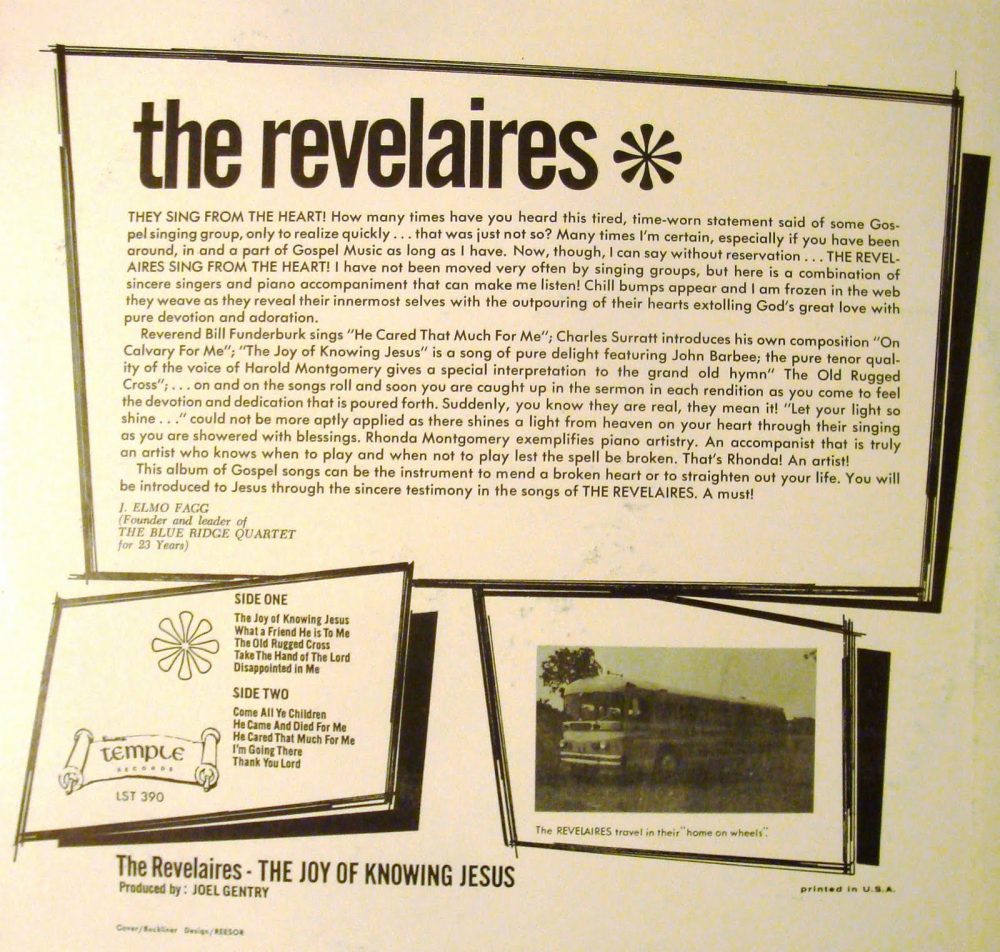
Jim Connelly explores the relationship between “7 Chinese Bros.” and “Voice of Harold” even further in a post at Medialoper, pointing to the firm conviction that’s so “chill-inducing” in the latter (and that comes through in the former recording, made immediately afterward). They may be found words, serendipitously picked up and put together on the spot, but in Stipe’s voice we can tell that “He’s real. He means it,” whatever the hell it is. See a video of “Voice of Harold” with lyrics, at the top, and follow along with the liner notes on the back of Revelaires’ gospel album The Joy of Knowing Jesus just above.
Related Content:
“It’s the End of the World as We Know It,” Michael Stipe Proclaims Again, and He Still Feels Fine
Why R.E.M.’s 1991 Out of Time May Be the “Most Politically Important Album” Ever
R.E.M.’s “Losing My Religion” Reworked from Minor to Major Scale
Josh Jones is a writer and musician based in Durham, NC. Follow him at @jdmagness
Read More...Mulan Re-Disneyfied: A Pretty Much Pop Culture Podcast (#62) Discussion with Actor Michael Tow

Is the new Mulan the equivalent for Asian-Americans what Black Panther was for African-Americans? The largest entertainment machine we have featured an all-Asian cast telling a traditional Chinese story aimed at the widest possible audience. Did it work?
Actor Michael Tow joins your hosts Erica Spyres, Mark Linsenmayer, and Brian Hirt to discuss the development, aesthetics, and political controversies surrounding the film. The vision of feminism changed between the original poem from ca. 550 C.E. (“When the two rabbits run side by side, how can you tell the female from the male?”) to the present, and the “just be you” ethic (with your magical chi!) is not the norm for China in any period. Was the project in its very conception doomed to fall short of some of its goals? Was the live-action an improvement over the 1998 animated version?
Read the poem, and watch a reading of the illustrated 1998 Robert San Souci book Fa Mulan that the films were based on. There have been many adaptations of the story in China.
Other sources we read to prepare included:
- “Inside Disney’s Bold $200M Gamble on ‘Mulan’: ‘The Stakes Couldn’t Be Higher’ ” by Rebecca Ford
- “How Disney’s ‘Mulan’ Became One of 2020’s Most Controversial Movies” by Alice Su
- “Disney Wanted to Make a Splash in China With ‘Mulan.’ It Stumbled Instead” by Brooks Barnes and Amy Qin
- “Why Chinese viewers hate Disney’s ‘Mulan’” by Dennis E. Yi
- “A Chinse-American Actor’s Reaction to Disney’s Biggest Flop” by Victor Zheng
- “Review: ‘Mulan’ is Uncritical of China—and Unmemorable” by Kevin Christopher Robles
- “Mulan: A Flawless Feminist Fable That Stands the Test of Time (Review)” by Zach Gilbert (about the animated film)
Follow Michael on Twitter @michaelctow and check out his imdb credits. Michael hosted a Q&A with the Mulan cast shortly after the film’s release.
Learn more at prettymuchpop.com. This episode includes bonus discussion that you can only hear by supporting the podcast at patreon.com/prettymuchpop. This podcast is part of the Partially Examined Life podcast network.
Pretty Much Pop: A Culture Podcast is the first podcast curated by Open Culture. Browse all Pretty Much Pop posts
Read More...Explore the Codex Zouche-Nuttall: A Rare, Accordion-Folded Pre-Columbian Manuscript
In the past two decades, the Latin American world has seen a tremendous resurgence of indigenous language study and literature. Some Mexican writers are “ditching Spanish,” Dora Ballew writes, for “Zapotec, Tzotzil, Mayan and other languages spoken long before Europeans washed up on the shores of what is now Mexico.” Large anthologies of such literature have been published since 2001. The move is not a recovery of lost languages and cultures, but an affirmation of “the number of people fluent in both an indigenous language and Spanish,” scholars and writers Earl and Sylvia Shorris explain.
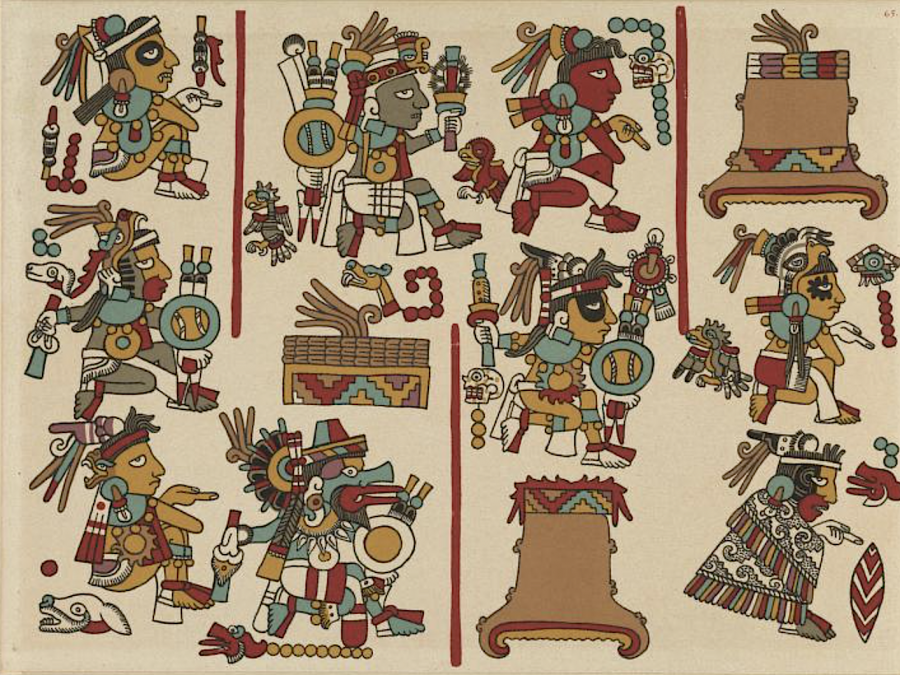
“At least several million” indigenous language speakers in Mexico alone ensure that “literature has ample place in which to flourish.” Despite the incursions of both the Aztecs, then the Spanish, speakers of Mixtec, for example, survived and now “inhabit a vast territory of broad mountain ranges and small valleys that stretch across the modern-day states of Puebla, Guerrero and Oaxaca,” writes Dr. Manuel A. Hermann Lejarazu.
An expert on Mixtec codices, Lejarazu ties the contemporary culture of Mixtec speaking people back to the Postclassic past, “a period between the tenth and sixteenth centuries when political centres proliferated, filling the vacuum left after the collapse of large cities established in preceding centuries.”

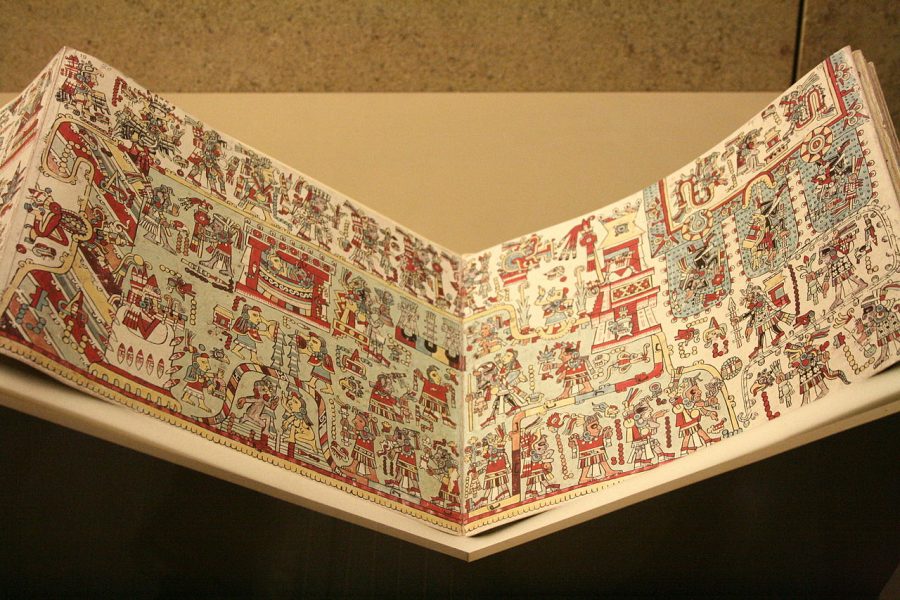
Much of the little that is known of the indigenous Mixtec literary culture comes from the Codex Zouche-Nuttall, one of only a handful of pre-Columbian manuscripts in existence. Made of deer skin, the codex “contains two narratives,” the British Museum notes. “One side of the document relates the history of important centres in the Mixtec region, while the other, starting at the opposite end, records the genealogy, marriages and political and military feats of the Mixtec ruler, Eight Deer Jaguar-Claw.”
Although finished around 1556, the pictographic folding manuscript “is considered to be of pre-Hispanic origin,” Lejarazu writes, “since it preserves a strong indigenous tradition in its pictographic techniques, with no demonstrable European influence.” The codex was first discovered in 1854 in a Dominican monastery in Florence. It’s unclear exactly how and when it arrived in Europe, but several such codices “reached the Old World as gifts or as part of the documents submitted to Spanish courts that handled legal matters in the Indies.”
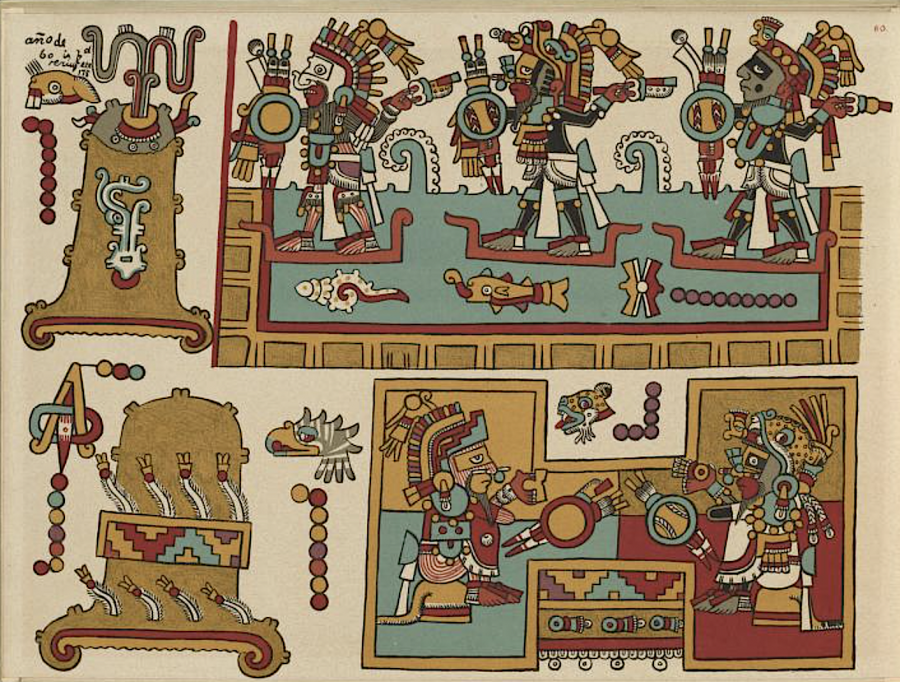
Though severed from its origins, the Codex Zouche-Nuttall is now freely available online in a scanned 1902 facsimile edition at the British Museum and the Internet Archive. You can learn much more about these incredibly rare documents from Lejarazu’s article and Robert Lloyd Williams’ Complete Codex Zouche-Nutall, which explains how the pictographic record functions like a storyboard, or outline, for a complex narrative tradition that tied Mixtec rulers to the gods, to each other, and to the past and future.
Related Content:
Native Lands: An Interactive Map Reveals the Indigenous Lands on Which Modern Nations Were Built
Speaking in Whistles: The Whistled Language of Oaxaca, Mexico
Josh Jones is a writer and musician based in Durham, NC. Follow him at @jdmagness
Read More...How Storyboarding Works: A Brief Introduction to How Ridley Scott, Alfred Hitchcock, Martin Scorsese, Wes Anderson & Other Directors Storyboard Their Films
When you’re making a film with complex shots or sequences of shots, it doesn’t hurt to have storyboards. Though professional storyboard artists do exist, they don’t come cheap, and in any case they constitute one more player in the game of telephone between those who’ve envisioned the final cinematic product and the collaborators essential to realizing it. It thus greatly behooves aspiring directors to develop their drawing skills, though you hardly need to be a full-fledged draftsman like Ridley Scott or even a proficient comic artist like Bong Joon-ho for your work to benefit from storyboarding.
You do, however, need to understand the language of storyboarding, essentially a means of translating the rich language of cinema into figures (stick figures if need be), rectangles, and arrows — lots of arrows. Drawing on examples from Star Wars and Jurassic Park to Taxi Driver and The Big Lebowski, the RocketJump Film School video above explains how storyboards work in less than ten minutes.
As storyboard artist Kevin Senzaki explains how these drawings visualize a film in advance of and as a guide for filmmaking process, we see a variety of storyboards ranging from crude sketches to nearly comic book-level detail, all compared to corresponding clips from the finished production.
These examples come from the work of such directors as Alfred Hitchcock, Martin Scorsese, James Cameron, Wes Anderson, and Christopher Nolan — all of whose films, you’ll notice, have no slight visual ambitions. When a shot or sequence requires serious visual effects work, or even when a camera has to make just the right move to advance the action, storyboards are practically essential. Not that every successful director uses them: no less an auteur than Werner Herzog has called storyboards “the instruments of the cowards,” those who can’t handle the spontaneity of either filmmaking or life itself. Rather, he tells aspiring directors to “read, read, read, read, read, read, read, read, read… read, read… read.” But then so did Akira Kurosawa, who didn’t just draw his movies in advance — he painted them.
Related Content:
How the Coen Brothers Storyboarded Blood Simple Down to a Tee (1984)
Download New Storyboarding Software That’s Free & Open Source
Based in Seoul, Colin Marshall writes and broadcasts on cities, language, and culture. His projects include the Substack newsletter Books on Cities, the book The Stateless City: a Walk through 21st-Century Los Angeles and the video series The City in Cinema. Follow him on Twitter at @colinmarshall, on Facebook, or on Instagram.
Read More...The Story Behind the Iconic Photograph of 11 Construction Workers Lunching 840 Feet Above New York City (1932)
Dorothea Lange’s “Migrant Mother”…
Nick Ut’s Pulitzer Prize-winning “The Terror of War”…
Richard Drew’s “The Falling Man”…
Throughout the years, a number of iconic photographs have tapped into the collective unconscious, shaping our view of historic events, sometimes to a degree that leads to social change.
These images are not dependent on knowing the subjects’ identities, though it’s always interesting when more context leaks out, often as the result of some serious sleuthing by reporters, archivists, or other interested parties.
1932’s “Lunch atop a Skyscraper (New York Construction Workers Lunching on a Crossbeam)” is one of the lighter-hearted photos to create such a lasting public impression.
Eleven workers are depicted enjoying their break, relaxing on a girder a dizzying 840-feet above New York City, unburdened by safety harnesses or other protective gear.
In the words of Rockefeller Center archivist Christina Roussel, who narrates the TIME Magazine 100 Photos episode above, they are the “unsung heroes of construction.”
The unusual designation may lead you to rack your brains for a sung hero of construction.
Grandpa’s cog-in-the-wheel contribution to the erection of an iconic landmark can be a source of anecdotal pride for families, but it rarely leads to greater renown.
Looming over this image is John D. Rockefeller, Jr, who masterminded a 22 acre complex of 14 commercial buildings in the Art Deco style. The project was a boost to the economy during the Great Depression, employing over 250,000 people—from truckers and quarrymen to glaziers and steelworkers and hundreds of other jobs in between. It created an enormous amount of goodwill and patriotic pride.
The Rockefeller organization capitalized on this positive reception, with a steady stream of staged publicity photos, including the daring eleven sharing a nosebleed seat on what was to become the 69th floor of the RCA Building (now known as 30 Rock.)
As film critic John Anderson, reviewing the documentary Men at Lunch in The New York Times, wrote:
The popularity of the picture, which has been colorized, satirized, burlesqued with the Muppets and turned into a life-size sculpture by Sergio Furnari, is partly about the casual recklessness of its subjects: The beam on which they sit seems suspended over an urban abyss, with the vastness of Central Park spread out behind them and nothing, seemingly below. But in fact a finished floor of 30 Rockefeller Plaza was probably just a few feet away.
The documentary helped confirm the identities of several of the men.
Irish immigrants Maddy O’Shaughnessy and Sonny Glynn hold down either end, as verified by their sons.
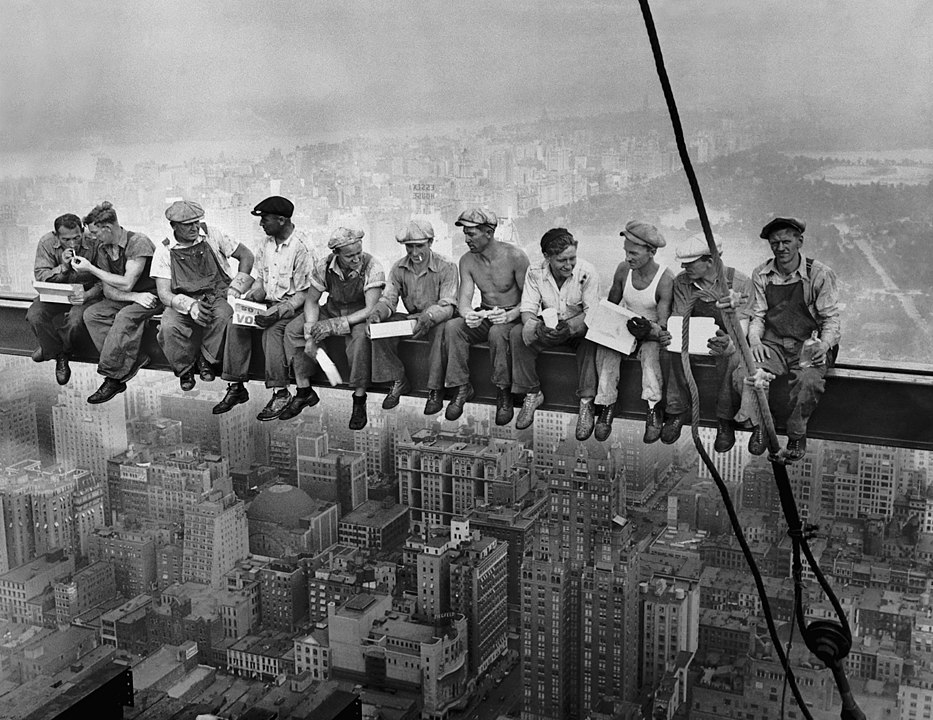
William Eckner, third from left, and Joe Curtis, third from right, were named in a similarly spirited annotated photo taken around the same time.
The man seated to Curtis’ right may or may not be John Charles Cook of the St. Regis Mohawk Reservation.
The photographer’s identity is also debatable. It’s most often credited to Charles C. Ebbets but Tom Kelley and William Leftwich were also on hand that day, leather satchels of glass plates slung across their backs, as they, too, defied gravity, documenting the completion of architect Raymond Hood’s master plan.
Related Content:
How Dorothea Lange Shot, Migrant Mother, Perhaps the Most Iconic Photo in American History
Yale Presents an Archive of 170,000 Photographs Documenting the Great Depression
Yale Presents an Archive of 170,000 Photographs Documenting the Great Depression
Ayun Halliday is an author, illustrator, theater maker and Chief Primatologist of the East Village Inky zine. Follow her @AyunHalliday.
Read More...Discovered: The User Manual for the Oldest Surviving Computer in the World

Image by Clemens Pfeiffer via Wikimedia Commons
The first computer I ever sat before, the 1983 Apple IIe, had a manual the size of a textbook, which included a primer on programming languages and a chapter entitled “Getting Down to Business and Pleasure.” By “pleasure,” Apple mostly meant “electronic worksheets,” “word processors,” and “database management.” (They hadn’t fully established themselves as the fun one yet.) Getting these programs running took real effort and patience, especially compared to the MacBook Air on which I’m typing now.
All those old tedious processes are automated, and no more do we need manuals—we’ve got the internet, which also happens to be the only way I could operate an Apple IIe, whether that means tracking down a manual on eBay or finding a scanned copy somewhere online. Luckily, for vintage Apple enthusiasts, this isn’t difficult, and someone with rudimentary knowledge of Apple DOS could muddle through without one.

When we go further back into computer history, we find machines that became incomprehensible over time without their operating instructions. Such was the case with the Zuse Z4, “considered the oldest preserved digital computer in the world,” notes Vice. “The Z4 is one of those machines that takes up a whole room, runs on magnetic tapes, and needs multiple people to operate. Today it sits in the Deutsches Museum in Munich, unused. Until now, historians and curators only had a limited knowledge of its secrets because the manual was lost long ago.”
The computer’s inventor, Konrad Zuse, first began building it for the Nazis in 1942, then refused its use in the VI and V2 rocket program. Instead, he fled to a small town in Bavaria and stowed the computer in a barn until the end of the war. It wouldn’t see operation until 1950. The Z4 proved to be “a very reliable and impressive computer for its time,” Sarah Felice writes. “With its large instruction set it was able to calculate complicated scientific programs and was able to work during the night without supervision, which was unheard of for this time.”
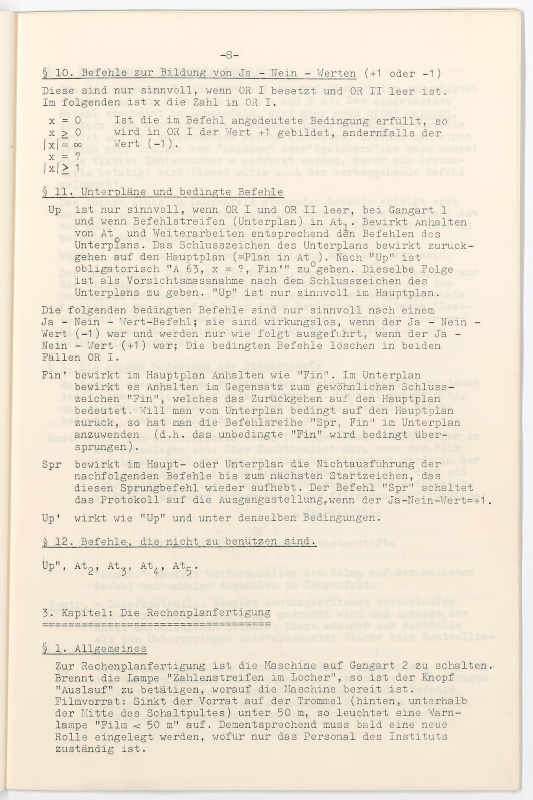
These qualities made the Zuse Z4 particularly useful to the Institute of Applied Mathematics at the Swiss Federal Institute of Technology (ETH), where the computer performed advanced calculations for Swiss engineers in the early 50s. “Around 100 jobs were carried out with the Z4 between 1950 and 1955,” writes Herbert Bruderer, retired ETH lecturer. “These included calculations on the trajectory of rockets… on aircraft wings…” and “on flutter vibrations,” an operation requiring “800 hours machine time.”
René Boesch, one of the airplane researchers working on the Z4 in the 50s kept a copy of the manual among his papers, and it was there that his daughter, Evelyn Boesch, also an ETH researcher, discovered it. (View it online here.) Bruderer tells the full story of the computer’s development, operation, and the rediscovery of its only known copy of operating instructions here.
Related Content:
The First Pizza Ordered by Computer, 1974
Josh Jones is a writer and musician based in Durham, NC. Follow him at @jdmagness
Read More...Frida Kahlo’s Venomous Love Letter to Diego Rivera: “I’m Amputating You. Be Happy and Never Seek Me Again”
Painter Diego Rivera set the bar awfully high for other lovers when he—allegedly—ate a handful of his ex-wife Frida Kahlo’s cremains, fresh from the oven.
Perhaps he was hedging his bets. The Mexican government opted not to honor his express wish that their ashes should be co-mingled upon his death. Kahlo’s remains were placed in Mexico City’s Rotunda of Illustrious Men, and have since been transferred to their home, now the Museo Frida Kahlo.
Rivera lies in the Panteón Civil de Dolores.
Other creative expressions of the grief that dogged him til his own death, three years later:
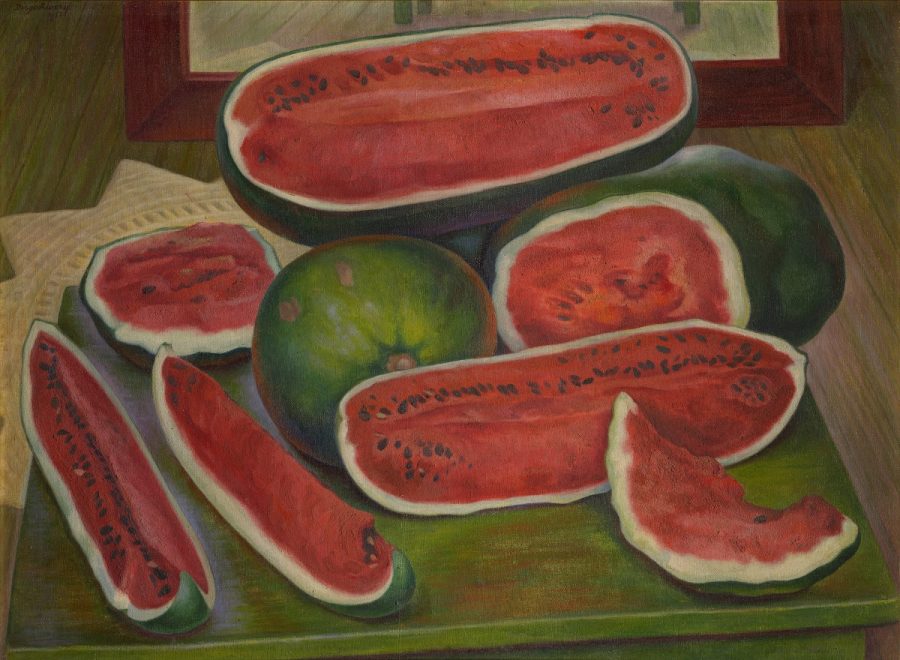
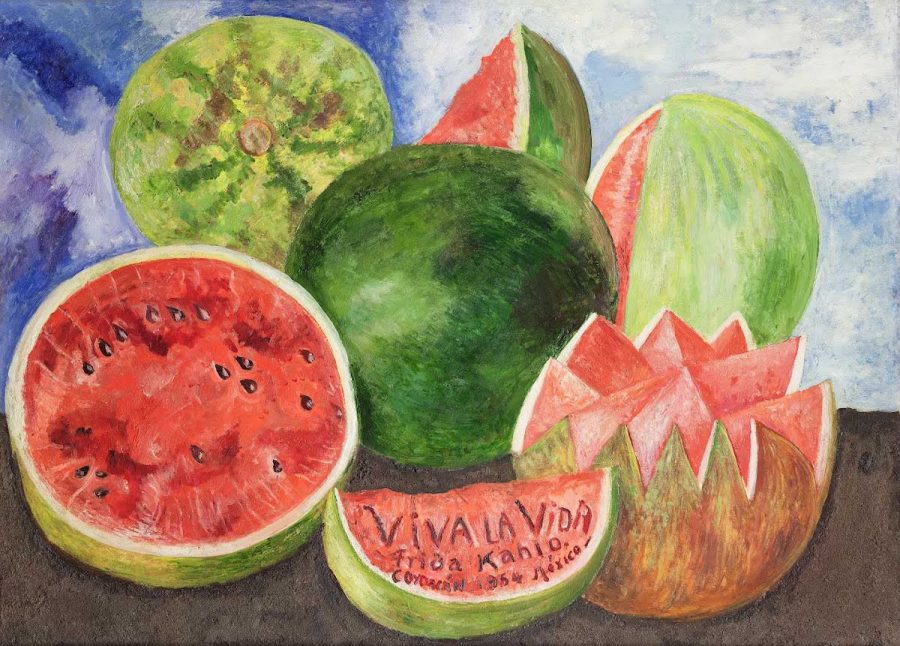
His final painting, The Watermelons, a very Mexican subject that’s also a tribute to Kahlo’s last work, Viva La Vida…
And a locked bathroom in which he decreed 6,000 photographs, 300 of Kahlo’s garments and personal items, and 12,000 documents were to be housed until 15 years after his death.
Among the many revelations when this chamber was belatedly unsealed in 2004, her clothing caused the biggest stir, particularly the ways in which the colorful garments were adapted to and informed by her physical disabilities.
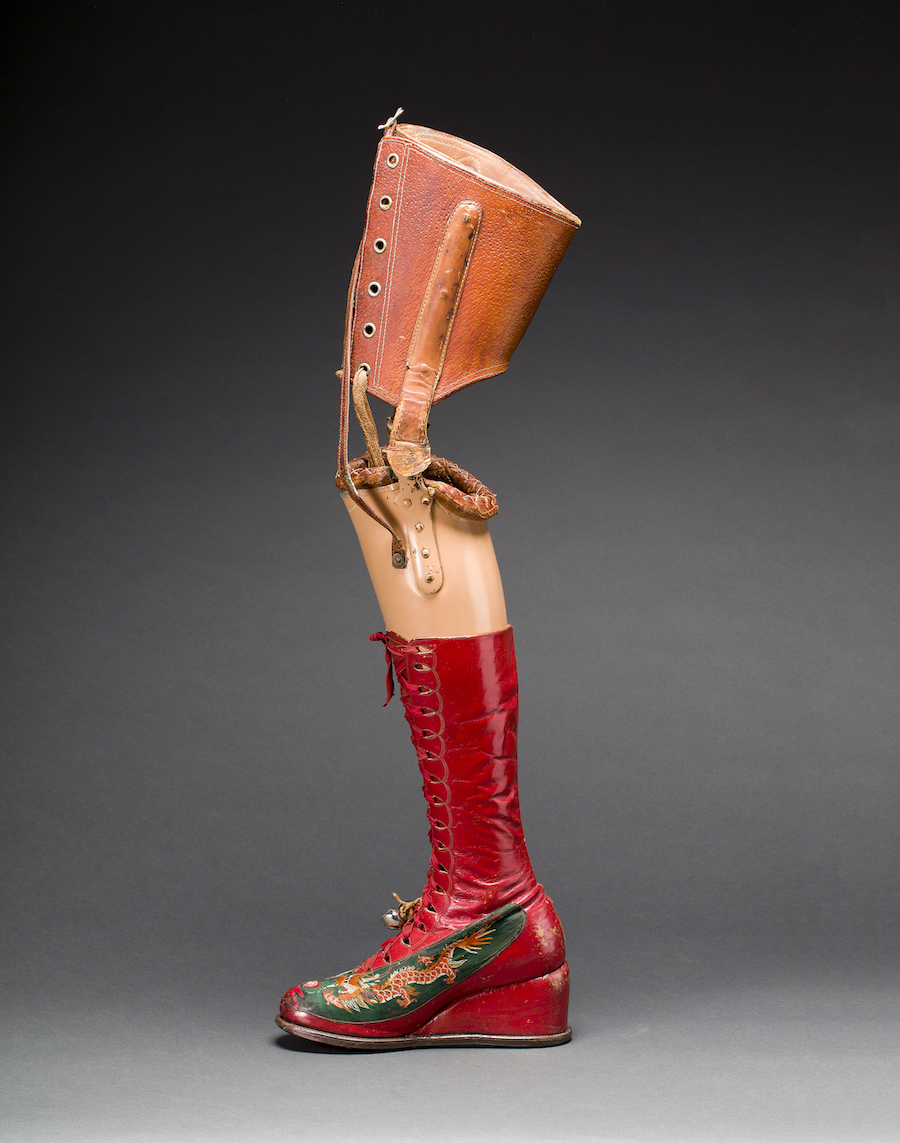
Her prosthetic leg, shod in an eye-catching red boot was given a place of honor in an exhibit at the Victoria and Albert Museum.,
These treasures might have come to light earlier save for a judgment call on the part of Dolores Olmedo, Rivera’s patron, former model, and friend. During renovations to turn the couple’s home into a museum, she had a peek and decided the lipstick-imprinted love letters from some famous men Frida had bedded could damage Rivera’s reputation.
In what way, it’s difficult to parse.
The couple’s history of extramarital relations (including Rivera’s dalliance with Kahlo’s sister, Christina) weren’t exactly secret, and both of the players had left the building.
One thing that’s taken for granted is Kahlo’s passion for Rivera, whom she met as girl of 15. Tempting as it might be to view the relationship with 2020 goggles, it would be a disservice to Kahlo’s sense of her own narrative. Self-examination was central to her work. She was characteristically avid in letters and diary entries, detailing her physical attraction to every aspect of Rivera’s body, including his giant belly “drawn tight and smooth as a sphere.” Ditto her obsession with his many conquests.
Not surprisingly, she was capable of penning a pretty spicy love letter herself, and the majority were aimed at her husband:
Nothing compares to your hands, nothing like the green-gold of your eyes. My body is filled with you for days and days. you are the mirror of the night. the violent flash of lightning. The dampness of the earth. The hollow of your armpits is my shelter. my fingers touch your blood. All my joy is to feel life spring from your flower-fountain that mine keeps to fill all the paths of my nerves which are yours.
Her most notorious love letter does not appear to be one at first.
Bedridden, and facing the amputation of a gangrenous right leg that had already sacrificed some toes 20 years earlier, she directed the full force of her emotions at Rivera.
The lover she’d tenderly pegged as “a boy frog standing on his hind legs” now appeared to her an “ugly son of a bitch,” maddeningly possessed of the power to seduce women (as he had seduced her).
You have to read all the way to the twist:
Mexico,
1953My dear Mr. Diego,
I’m writing this letter from a hospital room before I am admitted into the operating theatre. They want me to hurry, but I am determined to finish writing first, as I don’t want to leave anything unfinished. Especially now that I know what they are up to. They want to hurt my pride by cutting a leg off. When they told me it would be necessary to amputate, the news didn’t affect me the way everybody expected. No, I was already a maimed woman when I lost you, again, for the umpteenth time maybe, and still I survived.
I am not afraid of pain and you know it. It is almost inherent to my being, although I confess that I suffered, and a great deal, when you cheated on me, every time you did it, not just with my sister but with so many other women. How did they let themselves be fooled by you? You believe I was furious about Cristina, but today I confess that it wasn’t because of her. It was because of me and you. First of all because of me, since I’ve never been able to understand what you looked and look for, what they give you that I couldn’t. Let’s not fool ourselves, Diego, I gave you everything that is humanly possible to offer and we both know that. But still, how the hell do you manage to seduce so many women when you’re such an ugly son of a bitch?
The reason why I’m writing is not to accuse you of anything more than we’ve already accused each other of in this and however many more bloody lives. It’s because I’m having a leg cut off (damned thing, it got what it wanted in the end). I told you I’ve counted myself as incomplete for a long time, but why the fuck does everybody else need to know about it too? Now my fragmentation will be obvious for everyone to see, for you to see… That’s why I’m telling you before you hear it on the grapevine. Forgive my not going to your house to say this in person, but given the circumstances and my condition, I’m not allowed to leave the room, not even to use the bathroom. It’s not my intention to make you or anyone else feel pity, and I don’t want you to feel guilty. I’m writing to let you know I’m releasing you, I’m amputating you. Be happy and never seek me again. I don’t want to hear from you, I don’t want you to hear from me. If there is anything I’d enjoy before I die, it’d be not having to see your fucking horrible bastard face wandering around my garden.
That is all, I can now go to be chopped up in peace.
Good bye from somebody who is crazy and vehemently in love with you,
Your Frida
This is a love letter masquerading as a doozy of a break up letter. The references to amputation are both literal and metaphorical:
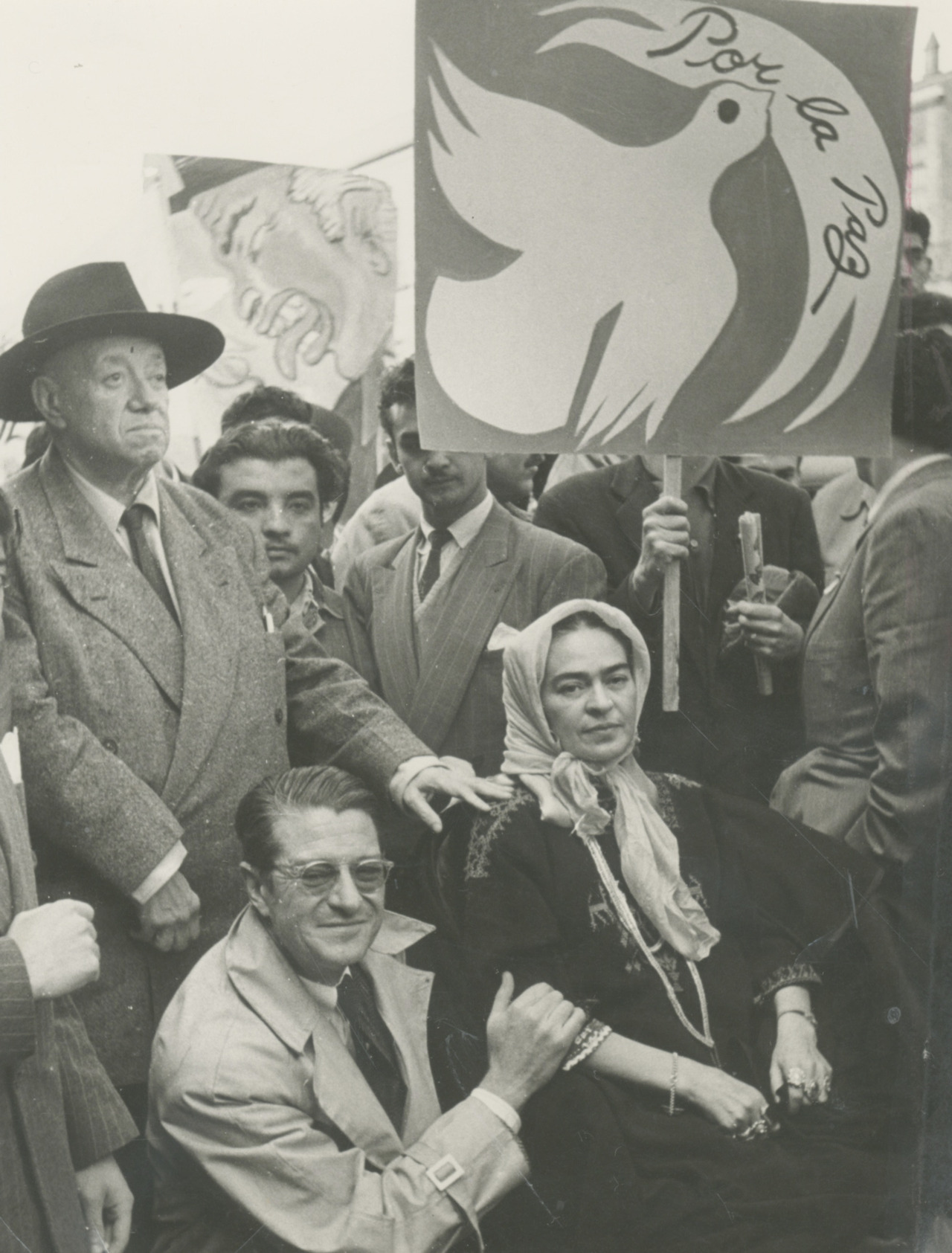
No doubt, she was sincere, but this couple, rather than holding themselves accountable, excelled at reversals. In the end the letter’s threat proved idle. Shortly before her death, the two appeared together in public, at a demonstration to protest the C.I.A.’s efforts to overthrow the leftist Guatemalan regime.
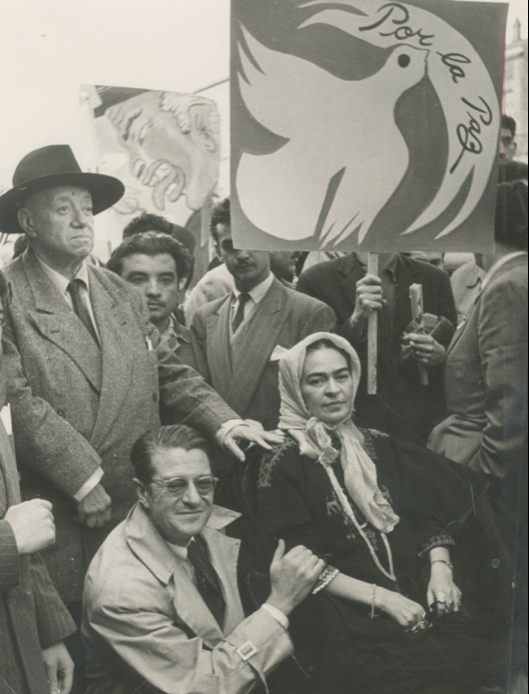
Image via Brooklyn Museum
Once Frida was safely laid to rest, by which we mean rumored to have sat bolt upright as her casket was slid into the incerator, Rivera mused in his autobiography:
Too late now I realized the most wonderful part of my life had been my love for Frida. But I could not really say that given “another chance” I would have behaved toward her any differently than I had. Every man is the product of the social atmosphere in which he grows up and I am what I am…I had never had any morals at all and had lived only for pleasure where I found it. I was not good. I could discern other people’s weaknesses easily, especially men’s, and then I would play upon them for no worthwhile reason. If I loved a woman, the more I wanted to hurt her. Frida was only the most obvious victim of this disgusting trait.
via Letters of Note and the book, Letters of Note: Love.
Related Content:
Take a Virtual Tour of Frida Kahlo’s Blue House Free Online
What the Iconic Painting, “The Two Fridas,” Actually Tells Us About Frida Kahlo
Ayun Halliday is an author, illustrator, theater maker and Chief Primatologist of the East Village Inky zine. Follow her @AyunHalliday.
Read More...Understanding Chris Marker’s Radical Sci-Fi Film La Jetée: A Study Guide Distributed to High Schools in the 1970s
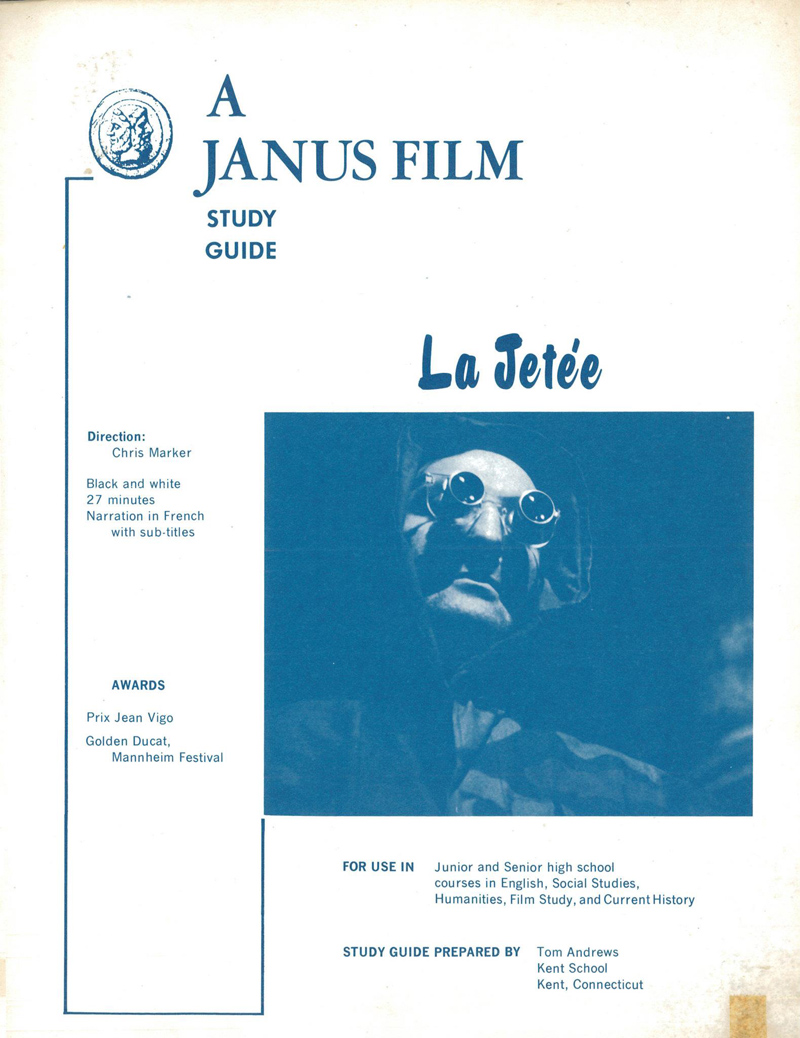
Pop quiz, hot shot. World War III has devastated civilization. As a prisoner of survivors living beneath the ruins of Paris, you’re made to go travel back in time, to the era of your own childhood, in order to secure aid for the present from the past. What do you do? You probably never faced this question in school — unless you were in one of the classrooms of the 1970s that received the study guide for Chris Marker’s La Jetée. Like the innovative 1962 science-fiction short itself, this educational pamphlet was distributed (and recently tweeted out again) by Janus Films, the company that first brought to American audiences the work of auteurs like Ingmar Bergman, Federico Fellini, and Akira Kurosawa.
Written by Connecticut prep-school teacher Tom Andrews, this study guide describes La Jetée as “a brilliant mixture of fantasy and pseudo-scientific romance” that “explores new dramatic territory and forms, and rushes with a stunning logic and a powerful impact to its shocking climax.”
The film does all this “almost entirely in still photographs, their static state corresponding to the stratification of memory.” More practically speaking, at “twenty-seven minutes in length, La Jetée is an ideal class-period vehicle” that “can help students speculate on the awesome potential of life as it may exist after a third world war” as well as “man’s inhumanity to man, not only as it may occur in the future, but as it already has occurred in our past.”
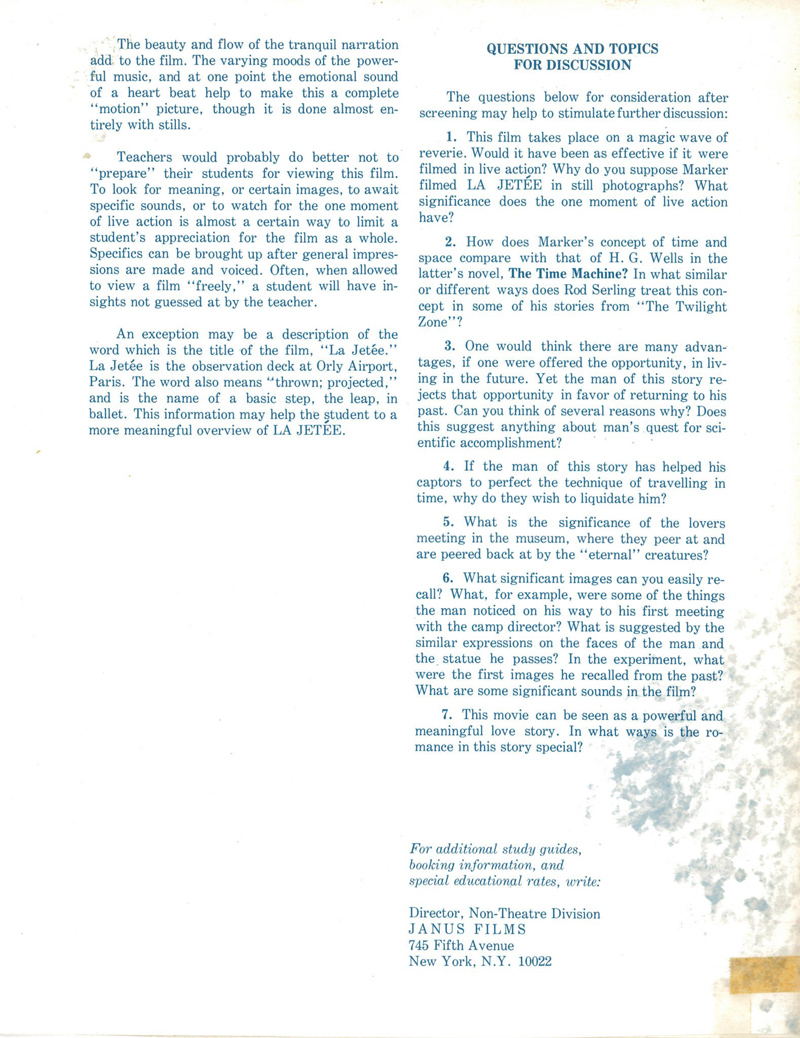
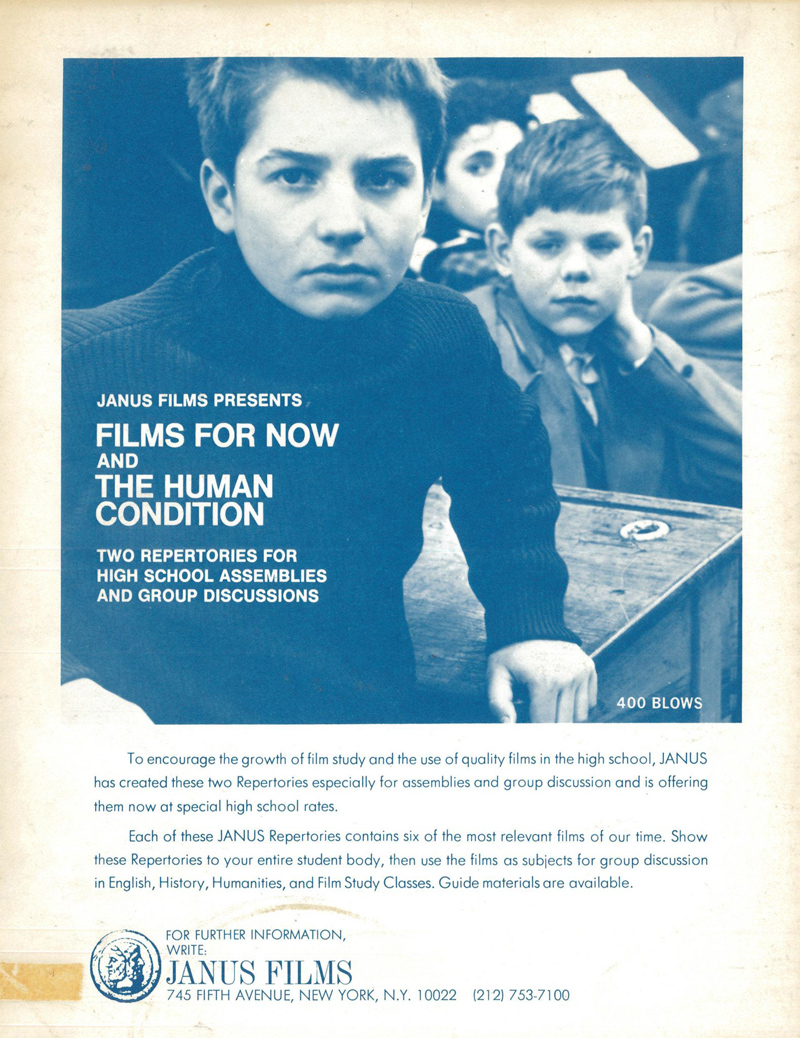
“Why do you suppose Marker filmed La Jetée in still photographs? What significance does the one moment of live action have?” “How does Marker’s concept of time and space compare with that of H.G. Wells in the latter’s novel, The Time Machine?” “If the man of this story has helped his captors to perfect the technique of time travel, why do they wish to liquidate him?” These and other suggested discussion questions appear at the end of the study guide, all of whose pages you can read at Socks. It was produced for Films for Now and The Human Condition, “two repertories for high school assemblies and group discussions” based on Janus’ formidable cinema library. (François Truffaut’s The 400 Blows also looks to have been among their educational offerings.) You can see further analysis of La Jetée in A.O. Scott’s New York Times Critics’ Picks video, as well as the Criterion Collection video essay Echo Chamber: Listening to La Jetée.
Much later, in the mid-1990s, Terry Gilliam would pay tribute with his Hollywood homage 12 Monkeys, and Marker himself still had many films to make, including his second masterpiece, the equally unconventional Sans Soleil. But at time of this study guide’s publication, La Jetée’s considerable influence had only just begun to manifest. It was around then that pioneering cyberpunk novelist William Gibson viewed the film in college. “I left the lecture hall where it had been screened in an altered state, profoundly alone,” he later remembered. “My sense of what science fiction could be had been permanently altered.” Perhaps his instructor heeded Andrews’ advice that “teachers would probably do better not to ‘prepare’ their students for viewing this film.” Not that anyone, in the 58 years of the film’s existence, has anyone ever truly been prepared for their first viewing of La Jetée.
Related Content:
Petite Planète: Discover Chris Marker’s Influential 1950s Travel Photobook Series
A Concise Breakdown of How Time Travel Works in Popular Movies, Books & TV Shows
Based in Seoul, Colin Marshall writes and broadcasts on cities, language, and culture. His projects include the Substack newsletter Books on Cities, the book The Stateless City: a Walk through 21st-Century Los Angeles and the video series The City in Cinema. Follow him on Twitter at @colinmarshall, on Facebook, or on Instagram.
Read More...Studio Ghibli Puts Online 400 Images from Eight Classic Films, and Lets You Download Them for Free

Japan’s Studio Ghibli has long been protective of their intellectual property, with Hayao Miyazaki and his team overseeing how their characters are merchandized, as well as carefully making sure foreign distribution of their films stay faithful to the original. (Miyazaki famously–although apocryphally–sent Miramax’s Harvey Weinstein a katana sword along with a note reading “No Cuts,” because the mogul and all-around bad person was notorious for recutting Asian films for western audiences).
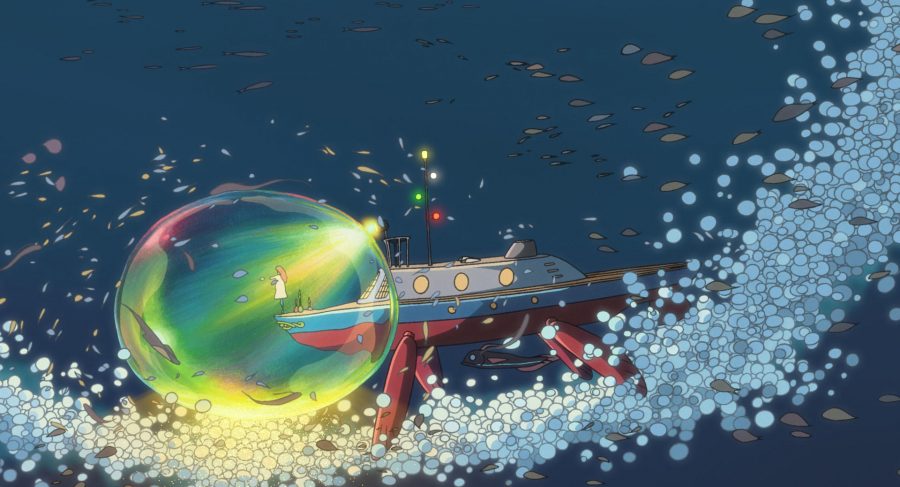
It’s not that you can’t get tons of Ghibli merchandise—there’s a Totoro beer if you’re interested—it’s that Studio Ghibli likes control. Which makes this huge hi-res image dump from the studio a surprising gift. Earlier this year they released a series of backgrounds to spice up your Zoom meetings. And now they’ve just released 400 images from eight of their films, with plenty more to come.
You can do what you want with these 1920x1080 jpgs, with one caveat from producer Toshi Suzuki: “Please use them freely within the scope of common sense.”
The studio is not releasing all their classics in one go, however. Among the famous Spirited Away and Ponyo, there’s art from films that barely got screenings in the States: Tales from Earthsea (2006), From Up on Poppy Hill (2011), and When Marnie Was There (2014).

Look, they can’t all be Totoros, and Studio Ghibli has delivered plenty of sweet romantic dramas along with its more fantastic films. If you are curious, Netflix and HBOMax are streaming pretty much the whole catalog.
Which is a surprise, as Miyazaki has long banned Ghibli’s films from streaming. As Suzuki told reporters in a March announcement:
“First of all, Hayao Miyazaki doesn’t know exactly what video streaming services like Netflix are. He doesn’t use personal computers, he doesn’t use smartphones. So when you mention digital distribution to him, he just doesn’t get it.”
He added:
“Hayao Miyazaki is currently making a movie but it’s taking a really long time. When that happens, it’s only natural that it will require a lot of money too. I told him this can cover the production costs for that movie. When I said that, he said “Well, there’s nothing I can do then.”
As long as we enjoy the films “within the scope of common sense,” I hope Miyazaki will have nothing to worry about. Enter the image archive here.

Related Content:
A Virtual Tour Inside the Hayao Miyazaki’s Studio Ghibli Museum
Hayao Miyazaki Picks His 50 Favorite Children’s Books
Ted Mills is a freelance writer on the arts who currently hosts the Notes from the Shed podcast and is the producer of KCRW’s Curious Coast. You can also follow him on Twitter at @tedmills, and/or watch his films here.
Read More...Support Us
We're hoping to rely on loyal readers, rather than erratic ads. Please click the Donate button and support Open Culture. You can use Paypal, Venmo, Patreon, even Crypto! We thank you!

About Us

Open Culture scours the web for the best educational media. We find the free courses and audio books you need, the language lessons & educational videos you want, and plenty of enlightenment in between.
Advertise With Us

FREE UPDATES!
GET OUR DAILY EMAIL
Get the best cultural and educational resources on the web curated for you in a daily email. We never spam. Unsubscribe at any time.
FOLLOW ON SOCIAL MEDIA

Open Culture editor Dan Colman scours the web for the best educational media. He finds the free courses and audio books you need, the language lessons & movies you want, and plenty of enlightenment in between.
Advertise With Us