The Story of “Wipe Out,” the Classic Surf Rock Instrumental
“Not all genres in music are self-explanatory,” writes Mark Stock at The Manual. “Just ask baroque pop or post metal. With surf rock, however, it’s pretty much as advertised.” This observation gets at what makes surf rock so refreshing. Its “wavy guitar sounds” and rollicking beats are a musical onomatopoeia for the thrills of a sun-drenched sport. From its niche origins, surf rock invaded garages around the world. It found its way into the Pixies and the B‑52s. Waves of indie surf bands continue to wash ashore.
Surf rock melded with hardcore punk, another genre that does what it says and has scored many a board sport. Where hardcore is aggro, surf is mellow and joyous, even when it’s sinister and dangerous; hardcore thrives on bashing three-minute attacks, surf shows off its technical chops, even when it sticks to three chords, as in the Surfaris’ classic “Wipe Out.”
The song, a 12-bar blues driven by Ron Wilson’s drum solo, produced “the yardstick for every aspiring young drummer in the early 60s” and beyond. At the time of its recording, Wilson wasn’t even old enough to drive.
According to guitarist Bob Berryhill, the Surfaris formed in 1962 while the members of the band were still in high school. (Their sax player, Jim Pash, was 12 when he joined.) They played teen dances and talent shows, and by January the following year, they had an original, “Surfer Joe.” They had their parents drive them to a studio owned by a man named Dale Smallen.
We met at a place in the California desert called Cucamonga, and recorded Surfer Joe. In those days 45’s required a B side so Dale asked us to play another song. We had not written a song before Surfer Joe so I suggested a drum solo type of song with simple guitar breaks. Ronnie started playing the famous Wipe Out solo and in about 10 minutes we had the song together. We needed a gimmick introduction so my Dad broke a plaster soaked board close to the mic and Dale Smallen let out a laugh and screamed wipe out. We gave Dale the master tape and he took it to Hollywood, and by July 1963 it was #2 on the Billboard top 100.
Before they knew it, the teenaged Surfaris were touring Japan, Australia, and the U.S. with Roy Orbison, The Beach Boys, the Righteous Brothers, and The Ventures, a brilliant instrumental rock band who were one of the biggest things going in the early 1960s.
The Ventures took “Wipe Out” further into the reaches of drumming legend in their cover (see drummer Mel Taylor attacking the skins like Gene Krupa in a live performance in Japan from 1965, above). Then, in 1966, the Surfaris broke up. The Beatles had wiped them off the charts, or as Berryhill puts it, somewhat bitterly, “The British Invasion changed music to focus more on the introspective needs of the ‘Me Generation.’” Surf lost its hip appeal, but it was not forgotten.
“In 1980,” Berryhill says, “the punk/new wave movement revived ‘Wipe Out,’ which gave it a new audience.” It popped up in commercials, The Fat Boys teamed up with The Beach Boys for a rap cover, even the Muppets had a version. Surf rock “became a sponge,” surf guitarist Jason Loughlin says. “In the 80s through the 90s [it] soaked up influences from punk music and alternative rock.” Bands like Man or Astro-Man? brought in period sci-fi reverences; surf teamed up with rockabilly, another genre that “had a short window of popularity and growth and then went underground” until the 80s.
But “Wipe Out” acquired a special status as a pure specimen of surf. It remains one of the most popular instrumental songs of all time. And all because of an inventive 15-year-old drummer, his high school buddies, and their supportive parents. It may not be the most rock ’n’ roll of musical histories, but it is the most surf rock of stories. A tale of talent, teenage enthusiasm, and the guileless desire to make other kids dance.
Related Content:
Quentin Tarantino Explains The Art of the Music in His Films
A History of Rock ‘n’ Roll in 100 Riffs
Josh Jones is a writer and musician based in Durham, NC. Follow him at @jdmagness
Read More...Free Courses to Maintain Mental & Physical Health During a Pandemic
As I write this, the smoke from the numerous forest fires across California are making the air quality terrible, so we are being told to stay inside. However, the heatwave is making it insufferable to *be* inside. And we also have to be wary of COVID-19 and wear a mask. You could say this is a slightly stressful situation. And a lot of us are dealing with even more than that–job stability, rent, and on and on. Just typing this made me anxious!
During this time we should try not to neglect our mental health. Fortunately Coursera offers free online courses about Mental Health and Well-Being.
The Coursera video above comes from a Facebook live event that features Yale University’s Laurie Santos, who teaches Coursera’s Science of Well-Being course. This 30 minute Q&A dives right in to our current situation, with Santos outlining a protocol for mental health that should be as much a part of your regimen as wearing a mask and washing your hands with soap (while singing Happy Birthday to yourself, don’t forget.)
Here’s a top ten of Coursera’s most popular health & well-being courses to check out:
- Mind Control: Managing Your Mental Health During COVID-19 from University of Toronto
- The Science of Well-Being from Yale University
- Finding Purpose and Meaning In Life: Living for What Matters Most from University of Michigan
- Stanford Introduction to Food and Health from Stanford University
- A Life of Happiness and Fulfillment from Indian School of Business
- Positive Psychiatry and Mental Health from The University of Sydney
- Hacking Exercise For Health. The surprising new science of fitness. from McMaster University
- Introduction to Self-Determination Theory: An approach to motivation, development and wellness from University of Rochester
- Biohacking Your Brain’s Health from Emory University
- Managing Your Health: The Role of Physical Therapy and Exercise from University of Toronto
Santos answers questions from viewers, covering topics like avoiding tension and arguments with our loved ones, staying informed on the world without creating more anxiety, how can frontline/healthcare workers combat anxiety, how to keep yourself positive when living alone without family or friends, how to keep productive and healthy at work with the threat of layoffs, how to look for a new job after being laid off because of COVID, how to help your child who is missing their school friends, how do we create good experiences to create good memories, what we can do about sleep problems, how to care for family members with COVID while also working a job, and how to show random acts of kindness during this time (which is what Santos covers often in her Happiness Lab podcast).
Overall, focus on self-compassion, Santos says, which has to be the starting point for all of this. When you enroll in these courses, Coursera gives you two options. You can enroll as a paid student and get a certificate at the end. Or choose to “audit” the course (as shown here) and the course is free. Just like in college! All the learning, none of the blue book essays!
Related Content:
Free Online Psychology & Neuroscience Courses
1,500 Free Online Courses from Top Universities
Free Courses on the Coronavirus: What You Need to Know About the Emerging Pandemic
Ted Mills is a freelance writer on the arts who currently hosts the Notes from the Shed podcast and is the producer of KCRW’s Curious Coast. You can also follow him on Twitter at @tedmills, and/or watch his films here.
Read More...Essential Reads on Feminism: The New York Public Library Creates a Reading List to Honor the 100th Anniversary of the 19th Amendment
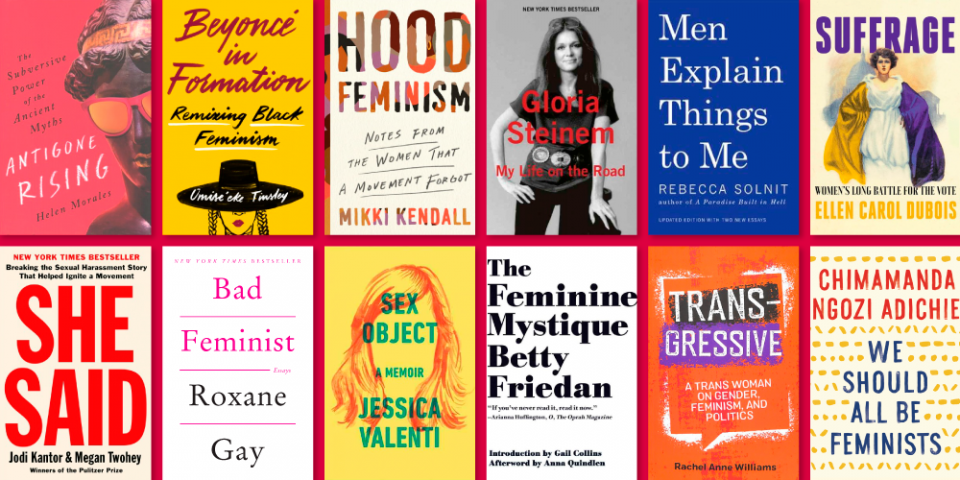
We may all have the best of intentions when we collect and share reading lists. We buy the books, stack them neatly by the chair or bed, then something happens. Like… literally, every day, something happens…. Let’s cut ourselves some slack. We’ll get to those books, or give them away to people who will read them, which is also a good thing to do.
But even if we can’t keep up, reading lists are still essential educational tools, especially for kids, young adults, and their parents and teachers. As we celebrate the centenary of the 19th Amendment (which fell on August 18th) and talk about its many shortcomings, it may be more important than ever to understand the U.S. history that brought us to the current moment.
This is a history in which—whether rights were guaranteed by the constitution or not—people historically denied suffrage have always had to struggle. Each generation of women, but most especially Black, Latinx, Indigenous, and LGBTQ women, must claim or reclaim basic rights, liberties, and protections. More than ever, feminist reading lists reflect the vast differences in collective and personal experience that fall under the label “Feminist.”
To illustrate the continued critical importance of feminist history, theory, and literature, the New York Public Library published reading lists for adults, kids, and teens on the 19th Amendment’s 100th anniversary. These books can help create community and solidarity and inspire deep reflection as kids are pushed back into schools and parents and teachers try to help them cope.
The adult list contains 126 books and includes links to the library catalog or e‑Book editions. “The titles bridge the past and present of feminist movements, from Simone de Beauvoir’s The Independent Woman (1949) to Roxane Gay’s Bad Feminist: Essays (2014), and from the earliest manifestos for equality to contemporary writings on intersectionality,” Valentina Di Liscia writes at Hyperallergic.
The lists for kids and teens are of a more manageable length, and “if you’re looking to stock the bookshelves before history class starts this fall,” you can hardly do better than to start with these titles (or just bookmark the lists for now), as Danielle Valente—who helpfully transcribes both lists, below—notes at Time Out New York.
NYPL’s Essential Reads on Feminism: For Kids
- Black Girl Magic by Mahogany L. Browne
- Black Women Who Dared by Naomi M. Moyer
- Bold & Brave: Ten Heroes Who Won Women the Right to Vote by Senator Kirsten Gillibrand,
- Brave. Black. First. 50+ African American Women Who Changed the World by Cheryl Willis Hudson
- Delores Huerta: A Hero to Migrant Workers by Sarah Warren
- Elizabeth Started All the Trouble by Doreen Rappaport
- Equality’s Call: The Story of Voting Rights in America by Deborah Diesen
- Good Night Stories for Rebel Girls: 100 Tales of Extraordinary Women by Elena Favilli and Francesca Cavallo
- The Gutsy Girl: Escapades for Your Life of Epic Adventure by Caroline Paul
- Heart on Fire: Susan B. Anthony Votes for President by Ann Malaspina
- Herstory: 50 Women and Girls Who Shook Up the World by Katherine Halligan
- I Am Enough by Grace Byers
- I am Jazz by Jessica Herthel and Jazz Jennings
- Ida B. Wells: Let the Truth Be Told by Walter Dean Myers
- It Feels Good to Be Yourself: A Book About Gender Identity by Theresa Thorn
- Julián Is a Mermaid by Jessica Love
- Leading the Way: Women in Power by Janet Howell and Theresa Howell
- Lillian’s Right to Vote: A Celebration of the Voting Rights Act of 1965 by Jonah Winter
- Limitless: 24 Remarkable American Women of Vision, Grit, and Guts by Leah Tinari
- Little Leaders: Bold Women in Black History by Vashti Harrison
- Lucía the Luchadora by Cynthia Leonor Garza
- Malala’s Magic Pencil by Malala Yousafzai
- Miss Paul and the President: The Creative Campaign for Women’s Right to Vote by Dean Robbins
- The Moon Within by Aida Salazar
- My Name Is Truth: The Life of Sojourner Truth by Ann Turner
- Notorious RBG: The Life and Times of Ruth Bader Ginsburg by Irin Carmon and Shana Knizhnik
- Rad American Women A–Z: Rebels, Trailblazers, and Visionaries Who Shaped Our History… and Our Future! by Kate Schatz
- Roses and Radicals: The Epic Story of How American Women Won the Right to Vote by Susan Zimet
- Shaking Things Up: 14 Young Women Who Changed the World by Susan Hood
- She Persisted: 13 American Women Who Changed the World by Chelsea Clinton
- They, She, He, Me: Free to Be! by Maya Gonzalez and Matthew SG
- Women Win the Vote!: 19 for the 19th Amendment by Nancy B. Kennedy
New York Public Library’s Essential Reads on Feminism: For Teens
- Alice Paul and the Fight for Women’s Rights by Deborah Kops
- Ask a Queer Chick: A Guide to Sex, Love, and Life for Girls Who Dig Girls by Lindsay King-Miller
- Because I Was a Girl: True Stories for Girls of All Ages by Melissa de la Cruz
- Beyond Magenta: Transgender Teens Speak Out by Susan Kuklin
- Beyond the Gender Binary by Alok Vaid-Menon
- Brazen: Rebel Ladies Who Rocked the World by Pénélope Bagieu
- The Bride Was a Boy by Chii
- Colonize This!: Young Women of Color on Today’s Feminism by Daisy Hernández and Bushra Rehman (eds.)
- Dear Ijeawele, or a Feminist Manifesto In Fifteen Suggestions by Chimamanda Ngozi Adichie
- Feminism Is… by Alexandra Black, Laura Buller, Emily Hoyle and Dr. Megan Todd
- Feminism: Reinventing the F‑Word by Nadia Abushanab Higgins
- Fierce Femmes and Notorious Liars: A Dangerous Trans Girl’s Confabulous Memoir by Kai Cheng Thom
- Fight Like a Girl: 50 Feminists Who Changed the World by Laura Barcella
- Full Frontal Feminism: A Young Woman’s Guide to Why Feminism Matters by Jessica Valenti
- Girl Rising: Changing the World One Girl at a Time by Tanya Lee Stone
- Girls Resist!: A Guide to Activism, Leadership, and Starting a Revolution by KaeLyn Rich
- Girls Write Now: Two Decades of True Stories from Young Female Voices
- Here We Are: Feminism for the Real World by Kelly Jensen (ed.)
- I Know Why the Caged Bird Sings by Maya Angelou
- I, Rigoberta Menchú: An Indian Woman In Guatemala by Rigoberta Menchú
- Lighting the Fires of Freedom: African American Women in the Civil Rights Movement by Janet Dewart Bell
- Modern Herstory: Stories of Women and Nonbinary People Rewriting History by Blair Imani
- Muslim Girl: A Coming of Age by Amani Al-Khatahtbeh
- Not for Ourselves Alone: The Story of Elizabeth Cady Stanton and Susan B. Anthony by Geoffrey C. Ward and Ken Burns
- #NotYourPrincess: Voices of Native American Women by Lisa Charleyboy and Mary Beth Leatherdale (eds.)
- Rethinking Normal: A Memoir in Transition by Katie Rain Hill
- She Came to Slay: The Life and Times of Harriet Tubman by Erica Armstrong Dunbar
- Sissy: A Coming-of-Gender Story by Jacob Tobia
- Tomboy: A Graphic Memoir by Liz Prince
- Trans Teen Survival Guide by Owl and Fox Fisher
- Trans+: Love, Sex, Romance, and Being You by Kathryn Gonzales and Karen Rayne
- Votes for Women!: American Suffragists and the Battle for the Ballot by Winifred Conkling
- With Courage and Cloth: Winning the Fight for a Woman’s Right to Vote by Ann Bausum
- You Don’t Have to Like Me: Essays on Growing Up, Speaking Out, and Finding Feminism by Alida Nugent
- Amazons, Abolitionists, and Activists: A Graphic History of Women’s Fight for Their Rights by Mikki Kendall
This is, indeed, an excellent place to start. Given younger generations’ levels of engagement with current events, it’s likely your kids or students are already familiar with many of the newer books on the lists.
And if you, yourself, need some less daunting bibliographies to get you started, you might also check out Emily Temple’s “40 New Feminist Classics” list on LitHub or her (shorter and less diverse) “10 Essential Feminist Books” at The Atlantic, or feminist writer Mona Eltahawy’s list of Black feminist books on Twitter, or former NFL player Wade Davis and Cornell English professor Mukoma Wa Ngugi’s lists for “men who care about feminism.”
If there’s any overarching theme to be found among such a vast and ever-expanding canon of feminist literature, it might be summed up best in the title of a recent Angela Davis book on feminist movements around the world: “Freedom is a constant struggle.”
Related Content:
11 Essential Feminist Books: A New Reading List by The New York Public Library
Download All 239 Issues of Landmark UK Feminist Magazine Spare Rib Free Online
103 Essential Films By Female Filmmakers: Clueless, Lost In Translation, Ishtar and More
Josh Jones is a writer and musician based in Durham, NC. Follow him at @jdmagness
Read More...Graphic Novels Tell the Story of David Bowie, Billie Holiday, John Coltrane, Jean-Michel Basquiat & Other Artists and Thinkers
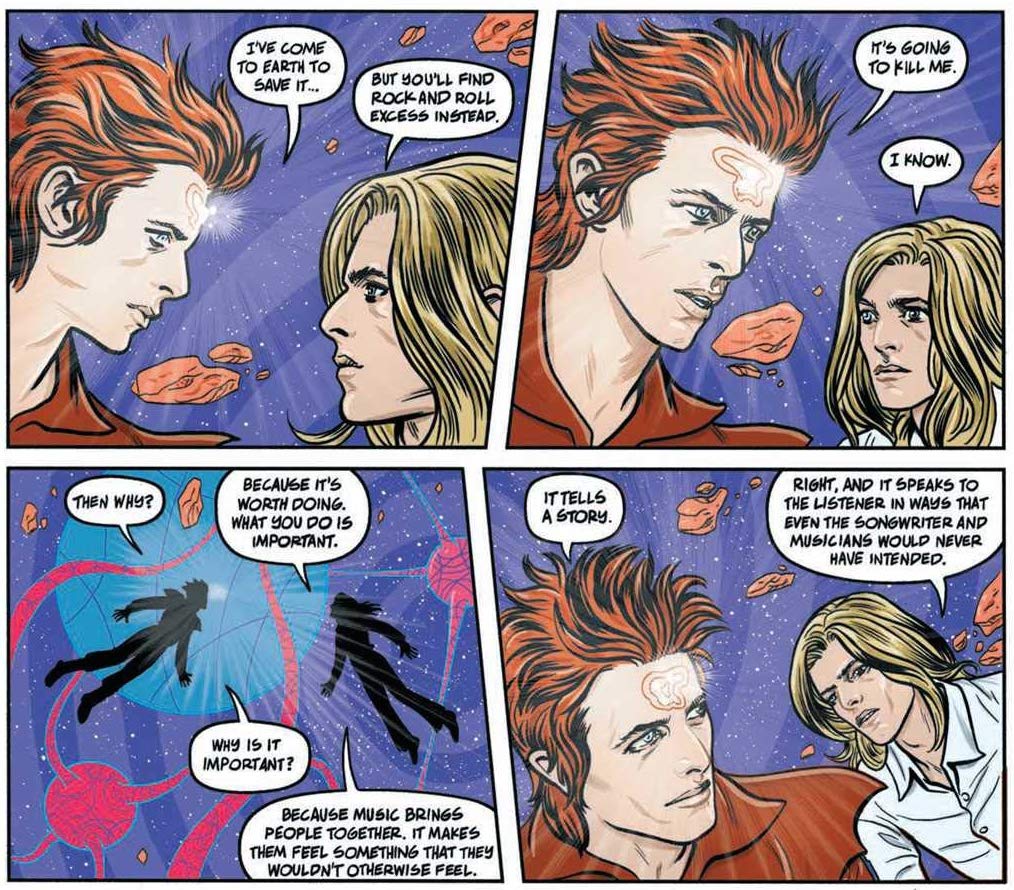
If you’re fascinated by certain artists and thinkers, you can learn about them from books. Anyone who has a significant cultural or intellectual influence on humanity sooner or later gets a biography written about them, and usually more than one. But how many get their own graphic novels? The versatility of the “comic book,” long unsuspected by many Western readers, has been more and more widely discussed in recent decades. Some of those readers, however, won’t believe what can be done with the form until they see what can be done with it. So why not show them the graphic novel on the life of David Bowie published not long ago — and if they remain unconvinced, why not show them the other one?
Few subjects demand a visual form as much as Bowie, because of the centrality of his ever-changing appearance to his artistic project as well as the need to evoke the effervescent cultural periods he lived through and did more than his part to define.
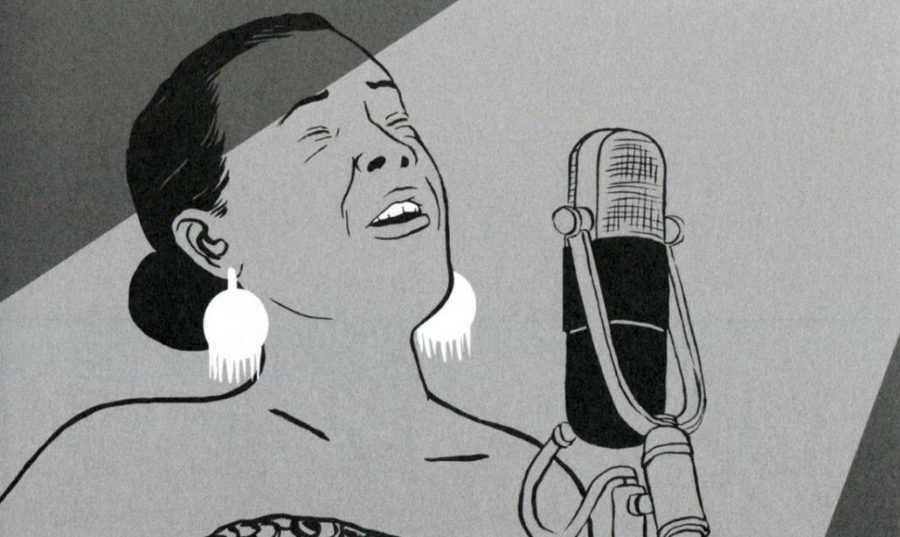
Hence the importance of Michael Allred’s BOWIE: Stardust, Rayguns, & Moonage Daydreams and Nejib’s Haddon Hall as graphic-novel contributions to the growing field of Bowieology. Comic artists and writers have also done well by other figures with places in music history: John Coltrane and Billie Holliday, for example, the subjects of Paolo Parisi’s Coltrane and Blues for Lady Day: The Story of Billie Holiday.

We’ve previously featured both of those books here on Open Culture, as well as Parisi’s Basquiat: A Graphic Novel. Conveying the life of a fellow artist, even one who worked in a different medium, poses a unique set of challenges to the graphic novelist. But it’s one thing to depict the work of another, and something else again to visually reimagine it, as in BOOM! Studios’ adaptation of Kurt Vonnegut’s Slaughterhouse-Five, a novel involving not a few biographical elements in the first place. Other respected works of literature lately to undergo graphic novelization include James Joyce’s Ulysses in Rob Berry’s Ulysses Seen, and the “weird fiction” of H.P. Lovecraft in the equally weird Lovecraft Anthology.
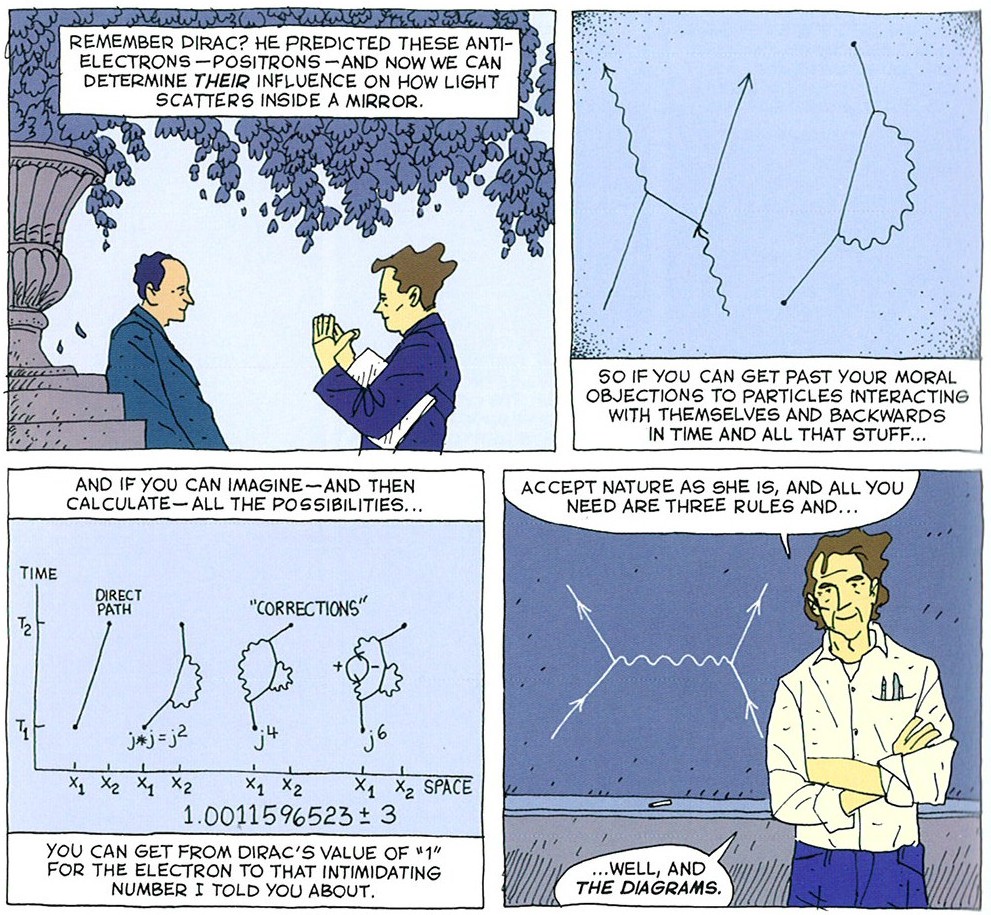
You can also read a graphic-novel adaptation of a source work never completed in the first place — but never completed, one must note, by Salvador Dalí and the Marx Brothers. A collaboration between pop-culture scholar Josh Frank, artist Manuela Pertega, and comedian Tim Heidecker, Giraffes on Horseback Salad realizes on the page a film that not only was never, but quite possibly could never have been made. For readers closer to worldly reality, there’s Jim Ottaviani and Leland Myrick’s Feynman: A Biography, which tells and shows the life of world-famous theoretical physicist, teacher, and bon vivant Richard Feynman. Never before, surely, has a comic book had to legibly and convincingly depict quantum electrodynamics, safe-cracking, and bongo-paying — to name just three of Feynman’s pursuits.
Related Content:
Bound by Law?: Free Comic Book Explains How Copyright Complicates Art
iTunes Terms & Conditions Adapted into a Graphic Novel: Read It Free Online
Anne Frank’s Diary: The Graphic Novel Adaptation
Read the Entire Comic Book Adaptation of T.S. Eliot’s “The Love Song of J. Alfred Prufrock”
A Comic Book Adaptation of Edgar Allan Poe’s Poignant Poem, “Annabel Lee”
Based in Seoul, Colin Marshall writes and broadcasts on cities, language, and culture. His projects include the book The Stateless City: a Walk through 21st-Century Los Angeles and the video series The City in Cinema. Follow him on Twitter at @colinmarshall, on Facebook, or on Instagram.
Read More...A New Interactive Map Shows All Four Million Buildings That Existed in New York City from 1939 to 1941
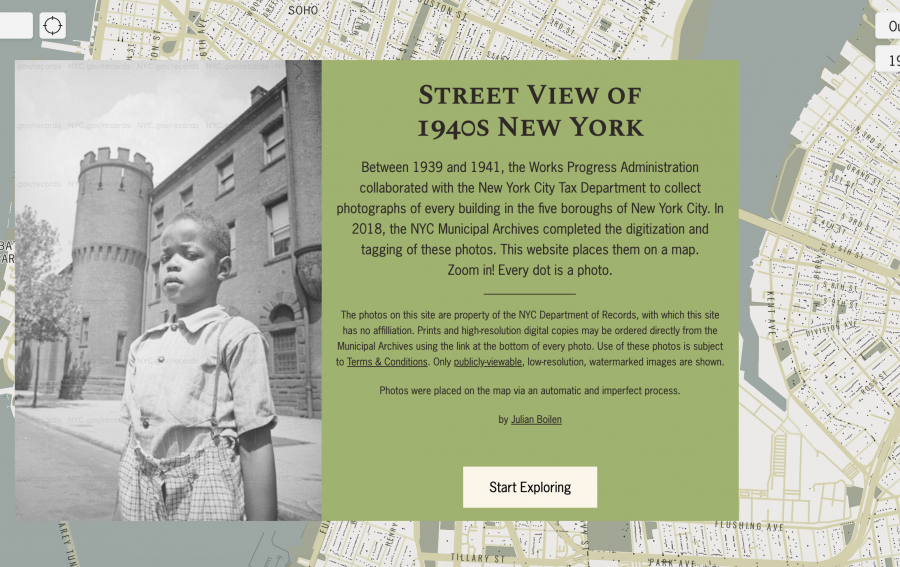
New Yorkers have borne witness to a noticeable uptick in the number of shiny, new buildings going up in the city over the last few years, crowding the waterfront, rising from the ashes of community gardens and older, infinitely more modest structures.
Their developers have taken care to top load them with luxury amenities—rooftop cabanas, 24-hour fitness clubs, marble countertops, screening rooms.
But one thing they can’t provide is the sense of lived history that imbues every old building with a true sense of character, mystique, and oft-grubby charm.
I fear that the occupants of these newer buildings won’t have nearly as much fun as the rest of us searching for our current addresses on the NYC Municipal Archives’ interactive map, above.
Every dot represents a Works Progress Administration photograph of a New York City building, snapped between 1939 and 1941 as a means of standardizing the way in which property values were assessed and recorded.
There are 4,282,000 dots, spread out between five boroughs.
Does that sound densely packed?
You should see it today… there’s been a lot of vertical build.

This unassuming fuel oil plant near Brooklyn’s Gowanus Canal has given way to a 430-unit building boasting a yoga room, spin studios, and valet services for those in need of dry-cleaning, laundry, apartment cleaning, or dog walking…though sadly, no on-premises motor oil. We find that omission somewhat surprising for such a full-service residential development on the banks of a Superfund site, whose clean up is estimated to tip the scales at $500 million.


We also wonder what the occupants of the above buildings would have made of the glassy 25-story complex that opened on their coordinates earlier this year. Is it just us, or does it seem a bit disingenuous of its developers to trumpet that its location is “the epitome of New York City’s authenticity, with over a century of rich history, where the world’s sartorial and culinary trends are born”?

(You can find us a few blocks away muttering into our chopped liver at Russ and Daughters, a venerable food shop that looks much the same today as it did in 1940, though you’ll have to confirm with a bit of research on your own if you don’t want to take our word for it, the WPA “dot” revealing little more than a man with a stick and several moving vehicles.)

Our final stop is one of many architectural ghosts to haunt the Hudson Yards colossus, the self-described “epicenter of Manhattan’s New West Side… a beacon for creative professionals, a hub for fashion, design, communications and art.” In addition to a much reviled $200 million shawarma-shaped “3‑dimensional public space” and state of the art wine fridges, amenities now include diagnostic and antibody testing “performed by top medical professionals.”
It’s telling that in the summer of 2020, prospective tenants were offered incentives including two months’ free rent and a $2,000 gift card.
Proof, perhaps, that New York will continue as it always has—a city in constant flux. The prevalence of modern high rise buildings in dystopian fiction gives us pause.…
Explore the Street View of 1940s New York here.
Related Content:
New York Public Library Puts 20,000 Hi-Res Maps Online & Makes Them Free to Download and Use
Ayun Halliday is an author, illustrator, theater maker and Chief Primatologist of the East Village Inky zine. Follow her @AyunHalliday.
Read More...Back to the Arena: Battling the Hunger Games Prequel with Pretty Much Pop: A Culture Podcast (#57)
Remember when The Hunger Games was everywhere? Its author Suzanne Collins has decided that young people could benefit from more exploration of Just War Theory through the world of Panem, and so has published The Ballad of Songbirds and Snakes, a prequel covering the early years of future president Coriolanus Snow during the 10th Hunger Games.
Pretty Much Pop hosts Mark Linsenmayer, Erica Spyres, and Brian Hirt give their spoiler-free reviews of the new book and look back on the original book trilogy and its adaptation into four films (and do spoil those, in case you want to go watch them). We talk about what makes these novels “YA,” the function of adapting them to film, and the limits of the franchise’s premise and world-building. Does the work critique yet glorify violence at the same time? Will the film version of the new novel be our next Phantom Menace?
Some articles we looked at included:
- “A ‘Hunger Games’ Prequel Focuses on an Unlikely Character” by Sarah Lyall
- “ ‘The Ballad Of Songbirds And Snakes’ Is A Lackluster Prequel To ‘The Hunger Games’ ” by Annalisa Quinn
- “Why the ‘Hunger Games’ Prequel Book is So Controversial” by Lauren Sarner
- Stephen King’s original 2008 Entertainment Weekly review of The Hunger Games
- “Hunger Games: 25 Things Wrong With Katniss Everyone Chooses To Ignore” by Stephanie Marceau
- “How Bad Is Katniss’ PTSD in The Hunger Games? We Asked the Experts” by Vasilis Pozios and Praveen Kambam
- “How does The Hunger Games Criticise American Society?” By Megan Burbage
- “Suzanne Collins Talks About ‘The Hunger Games,’ the Books and the Movies” (Q&A with David Levitan)
- “Why the Message of the Hunger Games Films is Dangerous” by Peter Bloom
- “10 Years Later, is The Hunger Games Still Shocking?” by Constance Grady et al at Vox
- “Hunger Games Prequel Movie The Ballad of Songbirds and Snakes Officially Set by Lionsgate” by Joseph Baxter
Learn more at prettymuchpop.com. This episode includes bonus discussion that you can only hear by supporting the podcast at patreon.com/prettymuchpop. This podcast is part of the Partially Examined Life podcast network.
Pretty Much Pop: A Culture Podcast is the first podcast curated by Open Culture. Browse all Pretty Much Pop posts.
Read More...A Record Store Designed for Mice in Sweden, Featuring Albums by Mouse Davis, Destiny’s Cheese, Dolly Parsley & More

We live in [insert adjective, expletive, emoji, tweet, Tik Tok video here] times, I don’t have to tell you. We could all do with a little distraction from current events. I’m talking, obviously, about mice.
Not everyone loves the little home invaders. Some people loathe them. But who could fail to be charmed by the creations of the AnonyMouse collective, a group of artists who have recreated “miniature restaurants, record shops, and apothecaries squeeze[d] into ground-level windows on the street next to their human-sized equivalents”?
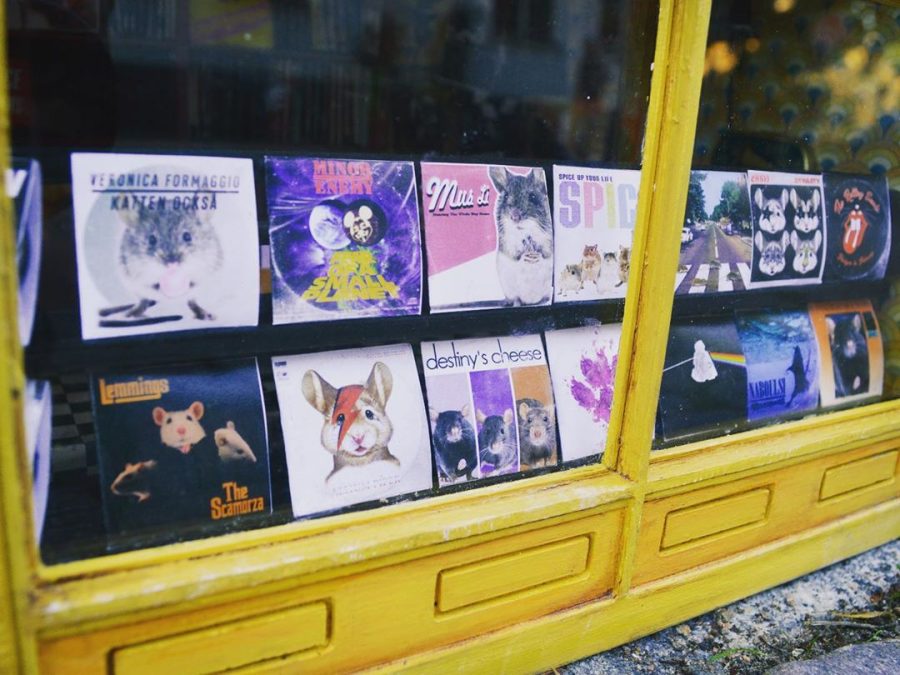
These installations have appeared “in cities across Sweden, France, and the Isle of Man,” writes Grace Ebert at Colossal, and they are profoundly adorable. The artists suggest “that the mice have a symbiotic relationship with the pedestrians on the street” by repurposing human items like a champagne topper or matchbox as mouse-sized furniture.
“Twenty-five installments currently exist across Europe…largely inspired by Astrid Lindgren’s and Beatrix Potter’s whimsical tales and movies from Don Bluth and Disney.” Unlike previous, similar projects by the artists Bill Scanga and, more recently, Filippo and Marianna, the miniatures do not feature any actual rodents, alive or otherwise, other than those who chance to wander in off the street. Instead, they adapt human cultural products for an imagined parallel mouse world.
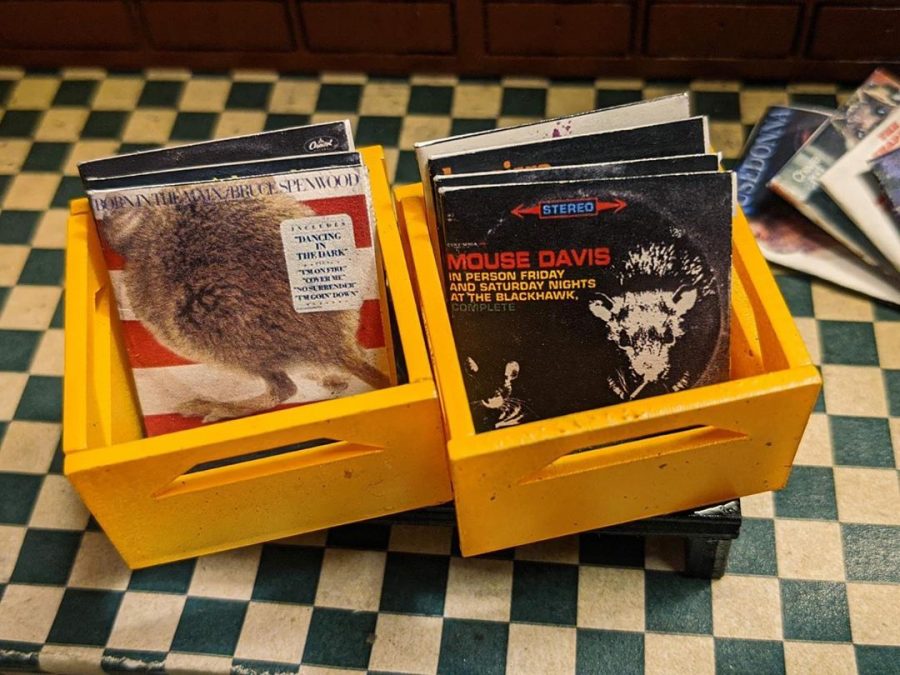
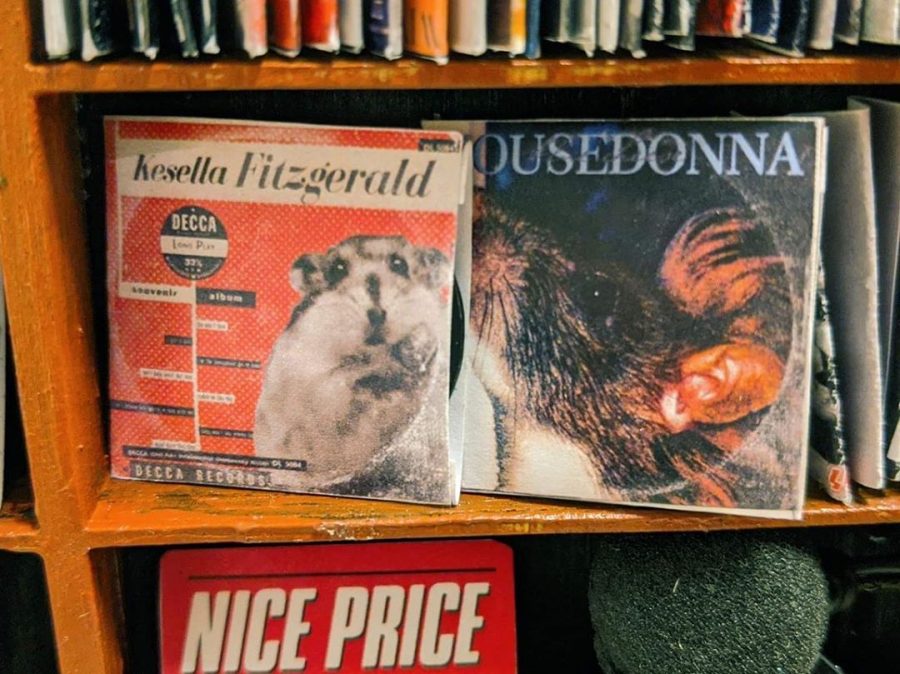
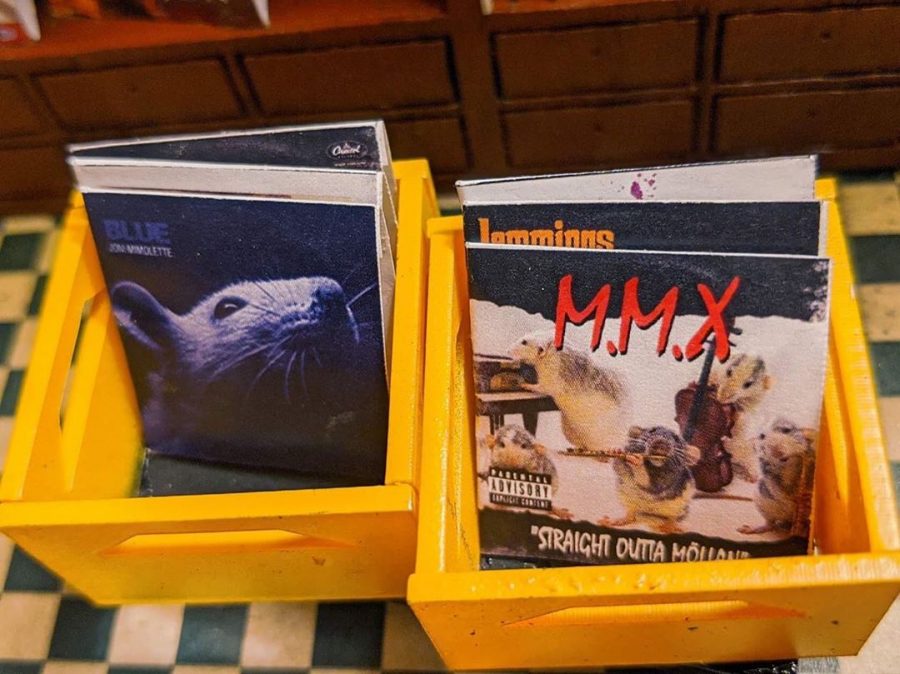
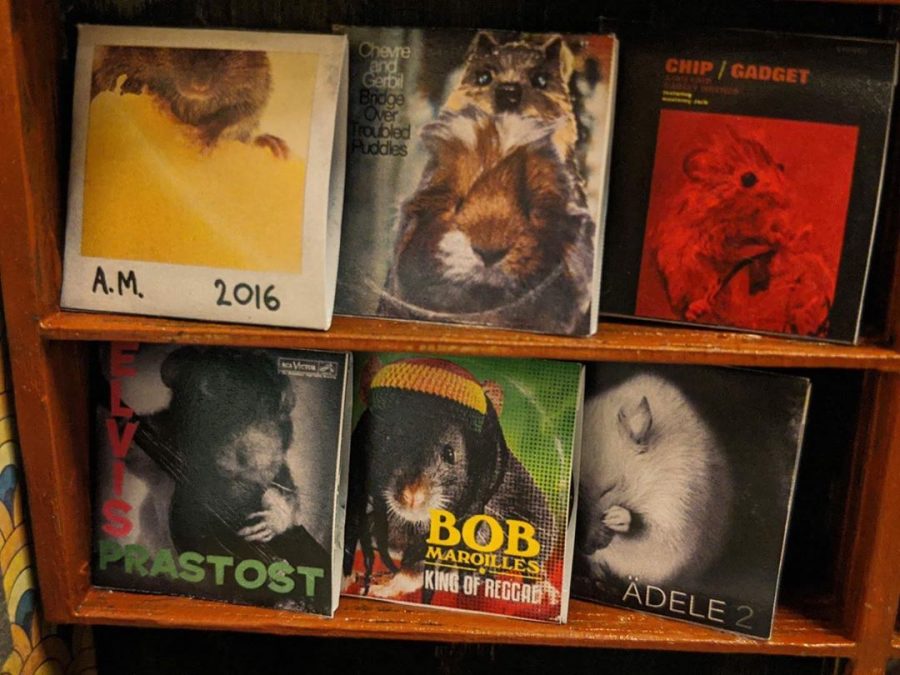
AnonyMouse’s latest installation, Ricotta Records in Lund, Sweden, “features tiny vinyl,” for example, “from the likes of Destiny’s Cheese, Bruce Spenwood, Kesella Fitzgerald, Dolly Parsley, and Winnimere Houston,” reports the Vinyl Factory. “In addition to its record selection, the shop also has a selection of miniature posters and instruments.”

See several images of the inventive interior above and below, and more—including band posters for Rats Against the Machine and Modest Mouse, the only band whose name remains unchanged—at the Vinyl Factory and the Anonymouse Instagram page. Should you be so moved as to participate in the growing AnonyMouse fan community, they have started a contest for the best Ricotta Records suggestions. The winner will receive a framed, mouse-sized poster.
You don’t have to love mice to get in on the action. Current frontrunners, NME notes, include “Amy Winemouse” and “Tailor Swiss”….
Related Content:
Josh Jones is a writer and musician based in Durham, NC. Follow him at @jdmagness
Read More...Every Possible Kind of Science Fiction Story: An Exhaustive List Created by Pioneering 1920s SciFi Writer Clare Winger Harris (1931)
When Jeanette Ng gave her acceptance speech at the 2019 Joseph W. Campbell awards (now called the Astounding Award for Best New Writer), she described “Golden Age” editor Campbell as “a fascist” who “set a tone of science fiction that still haunts the genre to this day. Sterile. Male. White.” The list of Hugo winners this year show how much the situation is changing. Ng herself won a Hugo for her Campbell speech. (The unpleasant performance of the awards’ online presenter sadly got more headlines than the winners.)
Yet popular canons of sci-fi, even “seemingly progressive books for their time,” Liz Lutgendorff writes, still contain a “pervasive sexism.” Campbell was hardly the only offender, but the charge certainly sticks to him. “The first science fiction anthologies were published during a backlash against first-wave feminism,” Wired explains. In response to growing women’s activism, “male editors such as John W. Campbell and Groff Conklin specifically excluded women from” the pages of Astounding Science Fiction’s popular anthology series and Conklin’s many best-ofs.
Prior to these powerful editors, “women writers were relatively common throughout the pulp era, and the proportion of women readers was even higher.” Lisa Yaszek, Professor of Science Fiction Studies at Georgia Tech, found that “at least 15 percent of the science fiction community were women—producers—and reading polls suggest that 40 to 50 percent of the readers were women.” These figures surprised even her. Many of the writers whom Campbell excluded were hugely popular during 1920s, influencing their contemporaries and inspiring readers.
One such writer, Clare Winger Harris, published her first short story “The Runaway World,” in the July 1926 issue of Weird Tales (after writing an earlier historical novel in 1923). That same year, she won third place in a story contest run by legendary Amazing Stories editor Hugo Gernsback, from whom the Hugo Awards take their name. She would go on to publish ten more stories in popular science fiction pulps, most of them for Gernsback. Then she disappeared from writing in 1930, ostensibly to raise her three sons.
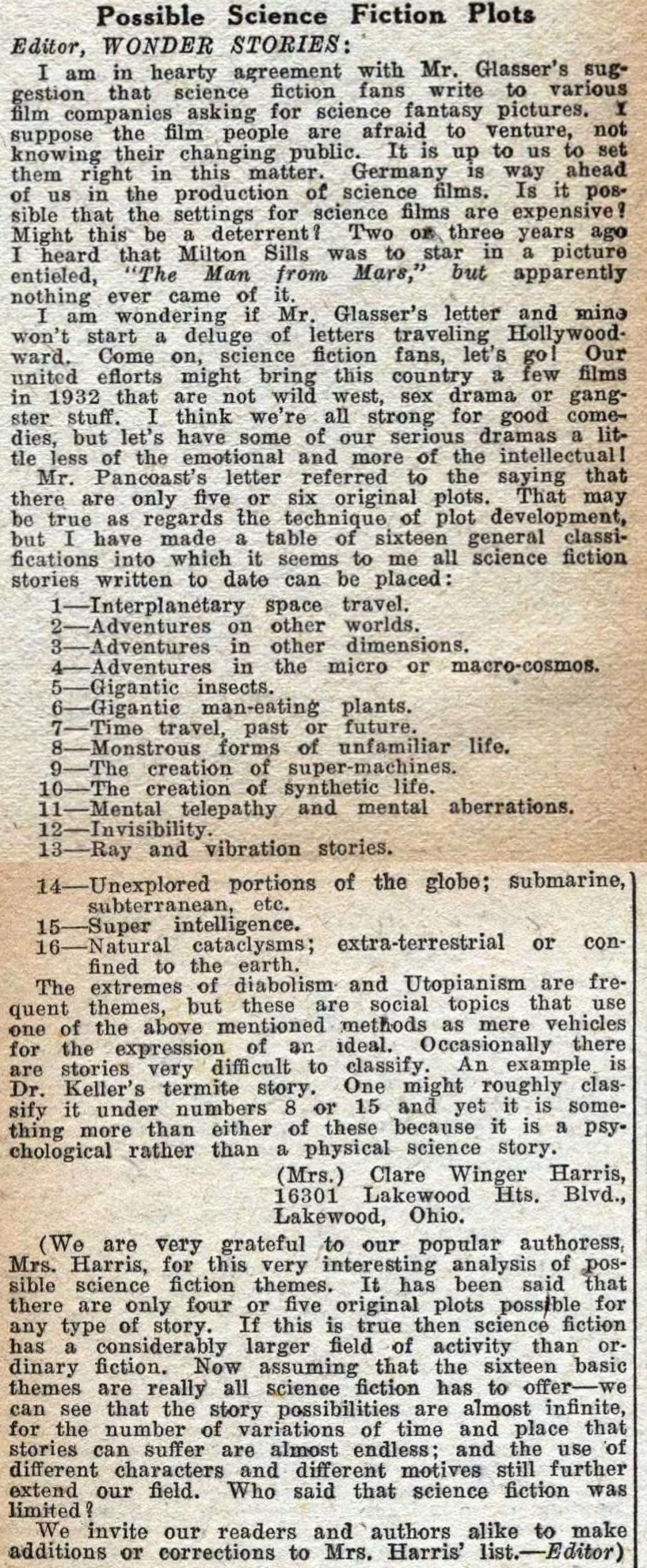
But she had more to say. In the August 1931 edition of Gernsback’s Wonder Stories, a letter from Harris appears in which she rallies the community to insist that Hollywood make sci-fi films. “Come on, science fiction fans, let’s go!” she writes, “Our united efforts might bring this country a few films in 1932 that are not wild west, sex drama or gangster stuff. I think we’re all strong for good comedies, but let’s have of our serious dramas a little less of the emotional and more of the intellectual.”
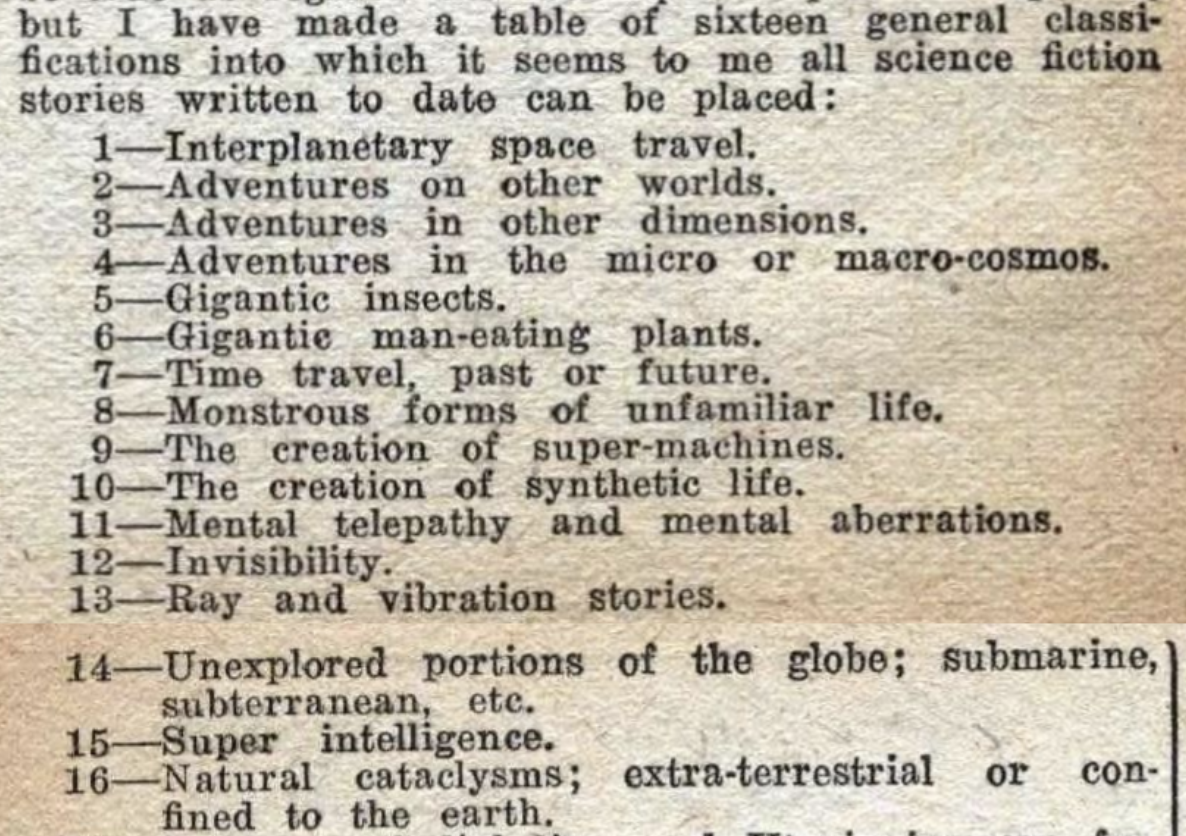
Harris goes on, in response to another reader letter, to correct the notion that “there are only five or six original plots.” (This number has varied over the ages from seven to thirty-seven). “That may be true as regards the technique of plot development,” writes Harris, “but I have made a table of sixteen general classifications into which it seems to me all science fiction stories written to date can be placed.” See it above.
Sci-fi author Doris V. Sutherland points to the redundancies and dated quaintness of much of the list. Giant insects have fallen out of fashion. “A number of the categories speak of the technological level of the day. The inclusion of ‘ray and vibration stores’ harks back to an era when the unseen effects of various electro-magnetic waves had only recently been grasped by researchers.” Moreover, the atomic age was yet to dawn. After it, “the idea of a man-made apocalypse would become rather more topical.”
The status of Harris’s letter as a “time capsule” that summarizes the “dominant themes in SF” at the time documents her keen appreciation for, as well as innovation on, those themes. She was valued for this talent by many in the field, Gernsback included. Upon learning she had won third prize in the 1926 Amazing Stories contest, he “gave praise,” Brad Ricca writes at LitHub, “couched in the cultural moment”—as well as indicative of his own biases.
That the third prize winner should prove to be a woman was one of the surprises of the contest, for, as a rule, women do not make good scientification writers, because their education and general tendencies on scientific matters are usually limited. But the exception, as usual, proves the rule, the exception in this case being extraordinarily impressive.
These insulting beliefs did not prevent Gernsback from continuing to publish Harris’s work, nor any of women whose writing he approved. (He also helped make Campbell’s career.) Some have found it remarkable that Harris published under her own name rather than a male pseudonym, but Yaszek argues this was fairly common at the time. In fact, several male authors published under female pseudonyms. (Gernsback himself once adopted the moniker “Grace G. Hucksnob.”)
As women writers were edged out of science fiction during Campbell’s reign in the 1930’s, Harris retreated. Her only published literary productions were the 1931 letter and a short story that again proves her status as a pioneer. Her last story original story “appeared in 1933 in the fifth and last issue of a stapled, mimeographed pamphlet called Science Fiction that had a print run of maybe—maybe—50 issues,” Ricca writes. The story had been solicited by the tiny magazine’s editors, Jerry Siegel and Joe Shuster, major Harris fans who would, of course, “go on to create Superman, the most recognized science fiction character on the planet.”
Learn more about Harris’s fascinating life—including her father’s brief stint as a Gernsback-influenced sci-fi novelist and her status as an early American convert to Buddhism before her death in 1968—at Ricca’s excellent LitHub investigation. See her full letter above.
Related Content:
The Encyclopedia of Science Fiction: 17,500 Entries on All Things Sci-Fi Are Now Free Online
Josh Jones is a writer and musician based in Durham, NC. Follow him at @jdmagness
Read More...An Introduction to Postmodernist Thinkers & Themes: Watch Primers on Foucault, Nietzsche, Derrida, Deleuze & More
For decades we’ve been hearing about the problem of Postmodernism. I suppose I get, in a vague sort of way, what people mean by this: moral relativism, mistrust of objectivity and scientific, religious, and other authorities, “incredulity toward metanarratives,” as Jean-Francois Lyotard defined the term in The Postmodern Condition in 1979.
Don’t we find much of this radical skepticism in the work of David Hume? The Cynics? Or Nietzsche (a Postmodern ancestor, but also claimed by Pragmatist and Existentialist thinkers)? A problem with blanket critiques of Postmodernism is that the word has never represented a cohesive school of thought (nor, for that matter, has Existentialism).
The term derives from an architectural movement of the 1960s that is, itself, impossible to clearly define since it intentionally grafts together approaches and traditions in experiments that celebrate kitschy excesses of style and that defy narrative coherence. Postmodern architecture gave us modern malls and multiplexes, aiding and abetting late capitalist sprawl. (But this is another story….)
Lyotard certainly fit the stereotype of the Postmodernist philosopher, with his lifetime of socialist activism and theoretical hybrids of Marx and Freud. He gets little credit, though he put the term in circulation in philosophy. Instead, Michel Foucault is often cited as a significant influence, though he rejected the categorization and thought of himself as a modernist.
Many a survey of Postmodern thought, such as this YouTube video series by Then & Now, begins with Foucault. The series covers other thinkers we don’t always see put in this box, like sociologist Pierre Bourdieu and 19th century Russian novelist Fyodor Dostoevsky. Nietzsche appears, of course, in two parts, as well as Eve Sedgwick, Jacques Derrida and Gilles Deleuze and Felix Guattari.
But in many ways, Foucault may be the best place to begin. As professor of philosophy Scott Moore writes:
If postmodernism is understood as a rejection of… an Enlightenment point of view… one that is characterized by a detached, autonomous, objective rationality… then Foucault is surely a postmodernist. Turning Bacon on his head, Foucault affirmed that it is not the case that knowledge is power, but power is knowledge. Meaning, those people who have power (social, political, etc.) always decide what will or will not be counted as “knowledge.”
Unlike, however, many later cultural theorists who inherited the cumbersome label, Foucault looked not to the present or the future in his work, but to the past, re-interpreting primary sources from ancient Rome to the post-WWI global economic order, through several different disciplinary lenses.
Then & Now creator Lewis Waller takes a postmodern approach to this series himself. In the video “Detachment, Objectivity, Imagination: A Critique,” he makes a case that Romantic historians like Michelet, Thierry, and Carlyle had a “better understanding of the reality of the historian’s craft than the scientifically minded did.” It’s a contrarian argument that begins with Sir Walter Scott and that may unsettle your preconceptions of what the catch-all term Postmodernism might include.
See more videos from the series above and watch all of them on YouTube. You may or may not feel like you have a better sense of what Postmodernism means in general. If we take it as shorthand for the loss of unchallenged heteropatriarchal power, then it is, I suppose, a problem for many people. If we take it to mean a mode of thought that “problematizes” seemingly simple concepts we mistake for the very structure of reality, then it “is also an attitude,” writes Moore, “and it has been most artfully practiced by Socrates, St. Augustine, Kierkegaard, Wittgenstein, and a host of others.”
Maybe Postmodernism has appeared in every period of philosophical and literary history. Only it hasn’t always been so… well… so overwhelmingly French, which could have had more than a little to do with its negative reputation in Anglophone countries. Put your metanarratives aside and learn more here.
Related Content:
David Foster Wallace on What’s Wrong with Postmodernism: A Video Essay
Hear Hours of Lectures by Michel Foucault: Recorded in English & French Between 1961 and 1983
Josh Jones is a writer and musician based in Durham, NC. Follow him at @jdmagness
Read More...2020: An Isolation Odyssey–A Short Film Reenacts the Finale of Kubrick’s 2001: A Space Odyssey, with a COVID-19 Twist
From New York City designer Lydia Cambron comes 2020: An Isolation Odyssey, a short film that reenacts the finale of Stanley Kubrick’s iconic film, 2001: A Space Odyssey. But with a COVID-19 twist. “Restaged in the context of home quarantine,” Cambron writes, “the journey through time adapts to the mundane dramas of self-isolation–poking fun at the navel-gazing saga of life alone and indoors.” If you’ve been a good citizen since March, you will surely get the joke.
Related Content:
Watch the Opening of Kubrick’s 2001: A Space Odyssey with the Original, Unused Score
James Cameron Revisits the Making of Kubrick’s 2001: A Space Odyssey
Rare 1960s Audio: Stanley Kubrick’s Big Interview with The New Yorker
Read More...Support Us
We're hoping to rely on loyal readers, rather than erratic ads. Please click the Donate button and support Open Culture. You can use Paypal, Venmo, Patreon, even Crypto! We thank you!

About Us

Open Culture scours the web for the best educational media. We find the free courses and audio books you need, the language lessons & educational videos you want, and plenty of enlightenment in between.
Advertise With Us

FREE UPDATES!
GET OUR DAILY EMAIL
Get the best cultural and educational resources on the web curated for you in a daily email. We never spam. Unsubscribe at any time.
FOLLOW ON SOCIAL MEDIA

Open Culture editor Dan Colman scours the web for the best educational media. He finds the free courses and audio books you need, the language lessons & movies you want, and plenty of enlightenment in between.
Advertise With Us

