What Made Richard Feynman One of the Most Admired Educators in the World
If Richard Feynman had only ever published his work in theoretical physics, his name would still be known far and wide. As it is, Feynman remains famous more than thirty years after his death in large part for the way he engaged with the public. From his popular textbook The Feynman Lectures on Physics (which you can read free online here) to his bestselling conversational essay collections like Surely You’re Joking, Mr. Feynman to the classes he taught at Cornell (now available online) to his demonstration of what went wrong with the Space Shuttle Challenger, he kept in conversation all his life with humanity outside the realm of professional science. This explains, in part, why Feynman became what Bill Gates calls, in the video above, “the best teacher I never had.”
Gates points to Feynman’s lecture series “The Character of Physical Law,” previously featured here on Open Culture, as “a great example of how he could explain things in a fun and interesting way to everyone. And he was very funny.”
That sense of humor complemented a sense of rigor: “Dr. Feynman used a tough process on himself, where if he didn’t really understand something, he would push himself,” asking questions like “Do I understand this boundary case?” and “Do I understand why we don’t do it this other way?” Such an effort to find the gaps in and failures of one’s own understanding may sound familiar, fundamental as it is to Feynman’s “notebook” technique of learning that we’ve posted about more than once before.
You only know how well you understand something when you explain it to someone else; many of us realize this, but Feynman lived it. The depth of his own understanding allowed him never to be boring: “Feynman made science so fascinating,” Gates says, “He reminded us how much fun it is,” and in so doing emphasized that “everybody can have a pretty full understanding. He’s such a joyful example of how we’d all like to learn and think about things.” Though the term “science communicator” wasn’t in wide use during Feynman’s lifetime, he played the role to near-perfection. And in the kind of materials highlighted here, he continues to convey not just knowledge but, as he liked to put it, the pleasure of finding things out.
Related Content:
Richard Feynman’s “Lost Lecture:” An Animated Retelling
The “Feynman Technique” for Studying Effectively: An Animated Primer
Based in Seoul, Colin Marshall writes and broadcasts on cities, language, and culture. His projects include the book The Stateless City: a Walk through 21st-Century Los Angeles and the video series The City in Cinema. Follow him on Twitter at @colinmarshall, on Facebook, or on Instagram.
Read More...The Recipes of Famous Artists: Dinners & Cocktails From Tolstoy, Miles Davis, Marilyn Monroe, David Lynch & Many More
Celebrities (those who are not professional celebrity chefs, that is) release cookbooks at an alarming rate. Do we imagine most of their recipes were actually curated by the person on the cover? Do we suppose that person has spent the countless hours in the kitchen required to become an authority on what the rest of us should eat? As in all things, it depends.
Stanley Tucci seems to have more than proven his mettle, releasing two well-loved cookbooks and earning praise from Mario Batali. But I’d also take a chance on Snoop Dogg’s From Crook to Cook, which includes 50 of his own recipes, such as “baked mac and cheese and fried Bologna sandwiches with chips.” How could you go wrong?
Many a celebrity cookbook aims for the fine-dining approach famous people are used to getting from personal chefs. But Snoop joins a long tradition of artists whose signature dishes are everyday comfort foods and holiday favorites. Whatever else he and Leo Tolstoy might find to talk about, for example (use your imagination), they would surely swap mac and cheese recipes.
Tolstoy’s recipe for mac and cheese is made on the stovetop, not baked, but it sounds delicious all the same, with its layers of Parmesan cheese. Far more complex meals, fit for Russian aristocrats, appear in The Cookbook, a collection of Tolstoy family recipes, though we can hardly imagine the Tolstoy family did much of the cooking themselves.
Not so with Miles Davis, who also uses Parmesan in a dish not usually known to feature the Italian cheese. His chili—or rather “Miles’s South Side Chicago Chili Mack”—sounds incredibly rich in a recipe published in 2007. “I could cook most of the French dishes,” Miles wrote in his autobiography, “and all the black American dishes.” His skills in the kitchen were well attested, though his personal recipe book has been lost.
Other celebrities like Marilyn Monroe also go with comforting old favorites. What appears in her recipe for turkey and stuffing (besides walnuts and no garlic… feel free to make substitutions…)? That’s right, Parmesan cheese. If there’s a pattern in this repetition, maybe it’s that the rest of us home cooks should do more with Parmesan cheese.
If you’re wondering what kind of cheese Ernest Hemingway puts on his favorite burger, the answer is none. Another celebrity cook who surely did a good bit of his own cooking, Hemingway asks a lot of those willing to take a chance on his burger recipe, which commingles India relish, capers, Beau Monde seasoning, Mei Yen Powder with garlic, green onions, egg, and red or white wine.
Despite such unusual toppings, a burger is still a burger—for millions of people the most comforting food they can imagine. Cracking open Salvador Dali’s 1973 cookbook reveals few dishes that are familiar, or actually edible or even legal. Dali formed ambitions to become a chef, he claimed, at the age of 6. Maybe that’s also when he came up with “Toffee with Pine Cones,” “Veal Cutlets Stuffed with Snails,” and “Thousand Year Old Eggs.”
None of these recipes have in mind the needs of the carb-conscious, or of vegetarians and vegans. But some creative reimagining could make them suitable for several kinds of modern diets. (In Hemingway’s case, a simple swap for any burger alternative might do the trick.) When it comes to cocktail recipes, alternatives are trickier.
If you don’t drink alcohol or eat meat, you’ll have little to gain from Leonard Cohen’s recipe for The Red Needle, which involves two ounces of tequila and should be served with Montreal smoked meat sandwiches. Likewise, I doubt there’s any vegan, low-sugar, non-alcoholic way to make Eudora Welty’s “Mother’s Eggnog” (which she also attributed to Charles Dickens).
Maybe celebrity cookbooks these days don’t contribute so much to the epidemic of heart disease and hypertension. But there’s something to be said for the authenticity of recipes from famous people of the past. They reflect dishes and drinks made with deep affection—for butter, cheese, carbs, salt, fat, and booze.
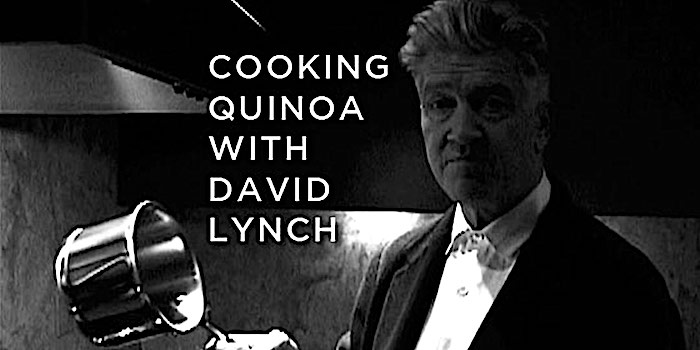
If it’s healthier fare you’re looking for, why not take a chance on Allen Ginsberg’s cold summer borscht? Or David Lynch’s easy quinoa recipe? Aleister Crowley’s recipe for a rice meant to be eaten with curry sounds delightful, though one can’t help but wonder at another lost recipe the infamous occultist once made for his fellow mountaineers on an expedition—a rice so spicy, he claimed, it made them “dash out of the tent after one mouthful and wallow in the snow, snapping at it like mad dogs.”
See many more recipes from famous artists at the links below.
Related Content:
The Recipes of Iconic Authors: Jane Austen, Sylvia Plath, Roald Dahl, the Marquis de Sade & More
Pablo Picasso’s Two Favorite Recipes: Eel Stew & Omelette Tortilla Niçoise
Ernest Hemingway’s Summer Camping Recipes
Josh Jones is a writer and musician based in Durham, NC. Follow him at @jdmagness
Read More...When Salvador Dalí Met Alice Cooper & Turned Him into a Hologram: The Meeting of Two Kings of Camp (1973)
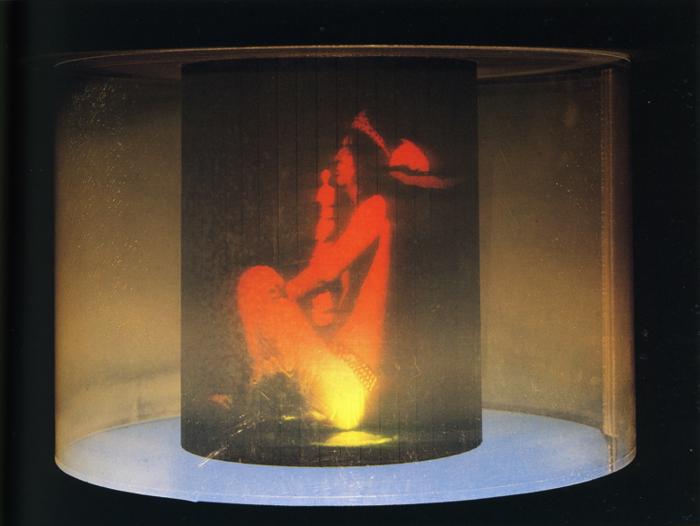
Kings of camp Alice Cooper and Salvador Dalí made a natural pair when they met in New York City in April of 1973. “A mind-melding of sorts took place,” writes Super Rad Now. “Over the course of about two weeks” Cooper and Dalí “ate together, drank together, and basked in the glow of each other’s exceptional uniqueness.” Then Dalí decided to turn Cooper into a hologram, the First Cylindric Chromo-Hologram Portrait of Alice Cooper’s Brain.
How did this come about? It was only a matter of time before Dalí sought out the “godfather of shock rock.” The Surrealist prankster “knew how to promote himself and others,” notes historian and writer Sophia Deboick in a fantastic understatement. Dalí had been shocking audiences decades before Vincent Furnier, lead singer of the band Alice Cooper—who took the name for himself in 1975—was born, making transgressive films like Un Chien Andalou and getting tossed out of the Surrealists for possible fascist sympathies and unabashedly commercial aspirations.
Dalí used his connections to the world of pop music to meet “figures such as Brian Jones, Bryan Ferry and David Bowie” in the late 60s and early 70s. He came calling at Cooper’s door after the 1972 “rapier-waving performance of ‘School’s Out’ on Top of the Pops [drew] the opprobrium of Mary Whitehouse… and a truck carrying a billboard image of Alice wearing only a snake… mysteriously ‘broke down’ on Oxford Circus the same summer, causing chaos.”
Cooper’s schtick was catnip to Dalí, but as usual, the artist had something more sophisticated in mind when he staged what looked like a typically bizarre publicity stunt. Cooper was invited to Dalí’s studio to pose with “an ant-covered plaster brain topped with a chocolate éclair.” This Dalí placed behind Cooper’s head on a red velvet cushion as Alice “sat on a rotating turntable wearing over a million dollars-worth of diamonds from the famous Harry Winston jewelers on Fifth Avenue (Cooper remembers it in the short video clip at the top as 4 million dollars worth), holding a fragmented Venus de Milo as a microphone.”
For Cooper and the band, the collaboration helped bring their own particular artistic vision to fruition, lending them the imprimatur of the most popular shock artist of the century. “Five of the original band members were art majors,” he later recalled, “and we worshipped Dalí: we thought of ourselves as surrealists.” (He also named one of his boa constrictors Dalí.)
For Dalí, the resulting holographic image fulfilled a longstanding exploration of new ideas and a new medium—as well as a deliberate movement away from his devotion to Freudian psychoanalysis.
Throughout the 1970s Dalí worked with optical illusions and stereoscopic images… but his interest in working in the third and fourth dimensions dated back further. His 1958 Anti-Matter Manifesto proclaimed his intent to abandon his exploration of the interior world for a focus on “the exterior world and that of physics [which] has transcended the one of psychology,” saying he had swapped Freud for Heisenberg. The tesseract cross of his Crucifixion (Corpus Hypercubus) (1954) was inspired by the diverse influences of mathematical theory, cubism, and works of Philip II’s architect Juan de Herrera and Catalan mystic Ramon Llull. The Alice hologram may have taken an emerging popular icon as its subject, but the medium was one which fulfilled Dalí’s artistic ambitions at the end of his career to embrace science and break out of the two dimensional.
The attention may have gone to Cooper’s head. He attended the unveiling of the hologram without his band members, then went on to record 1975’s Welcome to My Nightmare without them and promoted “an ABC television special starring Vincent Price” that same year, again with a new band. His star fell over the decade, but his essential place in rock and roll history had already been fully secured.
Alice Cooper’s (the band) gender-bending had influenced David Bowie and the New York Dolls. The Sex Pistol’s John Lydon breathlessly proclaimed them his favorite and sang (“or at least mimed to”) their “I’m Eighteen” at his audition. “The direct line between Alice Cooper and every possible genre of metal is obvious,” Deboick writes.
Like the Surrealist master, Cooper became something of a parody of his earlier incarnation in later years, and in sobriety, the preacher’s son from Detroit reappeared as a “golf-playing born-again Christian.” But however else he is remembered, the man born Vincent Furnier will also always be the only rock star to have his ant-covered brain turned into a hologram by Salvador Dalí, who knew a kindred spirit when he saw one. See a video of the hologram, which resides in Spain, just above.
Related Content:
Salvador Dalí & Walt Disney’s Short Animated Film, Destino, Set to the Music of Pink Floyd
Salvador Dalí Explains Why He Was a “Bad Painter” and Contributed “Nothing” to Art (1986)
Josh Jones is a writer and musician based in Durham, NC. Follow him at @jdmagness
Read More...Errol Morris Makes His Groundbreaking Series, First Person, Free to Watch Online: Binge Watch His Interviews with Geniuses, Eccentrics, Obsessives & Other Unusual Types
Who do we normally see interviewed on television? Actors, pop singers, politicians, and other famous figures, many of whom have undergone rigorous media training, few of whom have especially interesting personalties in the first place, and none of whom could stand up to Errol Morris’ Interrotron. Essentially a teleprompter modified to display Morris’ face on its screen, the Interrotron made a new kind of filmed interview possible: “For the first time,” Morris has said, “I could be talking to someone, and they could be talking to me and at the same time looking directly into the lens of the camera. Now, there was no looking off slightly to the side. No more faux first person. This was the true first person.”
Hence First Person, the Interrotron-centered television series Morris produced and directed in the early 2000s. By that time Morris had already become well known for his interview-based documentaries, which went deep into unusual subjects like the pet cemetery business (Gates of Heaven), a dubious murder trial in Texas (The Thin Blue Line), and the mind of Stephen Hawking (A Brief History of Time). In 1997’s Fast, Cheap, and Out of Control Morris invited into the Interrotron a lion tamer, a topiary gardener, a roboticist and a hairless mole-rat expert, weaving the four interviews together into threads to do with themes of emergence and control. But what could tie together conversations with a true-crime author, a cryonics promoter, a lawyer to the mob, and an authority on giant squids?
Those are just four of First Person’s seventeen subjects, each of whom has their uncommon knowledge, distinctive ability, harrowing experience, or dirty job — or some combination thereof — probed by Morris for an entire episode. Some of them, such as animal-behavior expert and autism spokeswoman Temple Grandin, have become much more well-known since appearing on the show. Others have been sentenced to serve 15 years in prison. And given the two decades that have passed since the show first aired, some of them have since shuffled off this mortal coil: Dennis Fitch, for instance, the pilot who assisted in the “impossible” crash-landing of United Airlines Flight 232 after its sudden and complete loss of control — and whose story is the most gripping hour in First Person’s entire run.
Morris’ fans will sense in First Person themes the director explored before and has explored further since. Take the nature of intelligence, at the forefront of First Person’s two episodes on men with some of the highest IQ-test scores on record. Morris finds Chris Langan thinking his way toward something called a “Cognitive-Theoretic Model of the Universe” and an intellectual priesthood meant to govern the world to come. Richard Rosner, despite his equally formidable brain, divides his time between nude modeling and obsessively re-litigating a failed Who Wants to Be a Millonaire? appearance. (At the time Morris got them into the Interrotron, both men also worked as bar bouncers.) You may well come away from these episodes wondering just what a high IQ gets a person. But if you watch the complete First Person, broken into playlists of its first and second season, on Errol Morris’ Youtube channel, that will be just one of the fascinating and troubling questions running through your mind for years to come.
Related Content:
Errol Morris Captures Competitive Eating Champion “El Wingador”
Watch A Brief History of Time, Errol Morris’ Film About the Life & Work of Stephen Hawking
How Benoit Mandelbrot Discovered Fractals: A Short Film by Errol Morris
November 22, 1963: Watch Errol Morris’ Short Documentary About the Kennedy Assassination
Errol Morris Meditates on the Meaning and History of Abraham Lincoln’s Last Photograph
Errol Morris and Werner Herzog in Conversation
Based in Seoul, Colin Marshall writes and broadcasts on cities, language, and culture. His projects include the book The Stateless City: a Walk through 21st-Century Los Angeles and the video series The City in Cinema. Follow him on Twitter at @colinmarshall, on Facebook, or on Instagram.
Read More...Explore an Interactive, Online Version of the Beautifully Illustrated, 200-Year-Old British & Exotic Mineralogy

What if I said the problem with STEM education is that it doesn’t include nearly enough art? For one thing, I would only echo what STEAM proponents have said for years. This doesn’t only mean that students should study the arts with the same seriousness as they do the sciences. But that science should be taught through the arts, as it was in the 19th century when Naturalists relied on fine art illustration.
Maybe increasing complexity demands charts and graphs, but there are reasons other than hip antiquarianism to cherish 19th century scientific art, and to aim for something close to its high aesthetic standards. Humans seem to find nature far more awe-inspiring when it’s mediated by painting, poetry, narrative, music, fine art photography, etc. We want to be emotionally moved by science. As such, few guides to the natural world have elevated their subjects as highly as British & Exotic Mineralogy, a multivolume reference work for… well, rocks, to put it vulgarly, published between 1802 and 1817.
During these years, “notable naturalist, illustrator, and mineralogist James Sowerby drew intricate pictures of minerals in an effort to illustrate the topographic mineralogy of Great Britain and minerals not yet known to it,” writes Nicholas Rougeux. “These illustrations were some of the finest on the subject and are still considered by some to be to this day.” Though he was surely compensated for his work, Sowerby’s detailed drawings come across as labors of devotion.
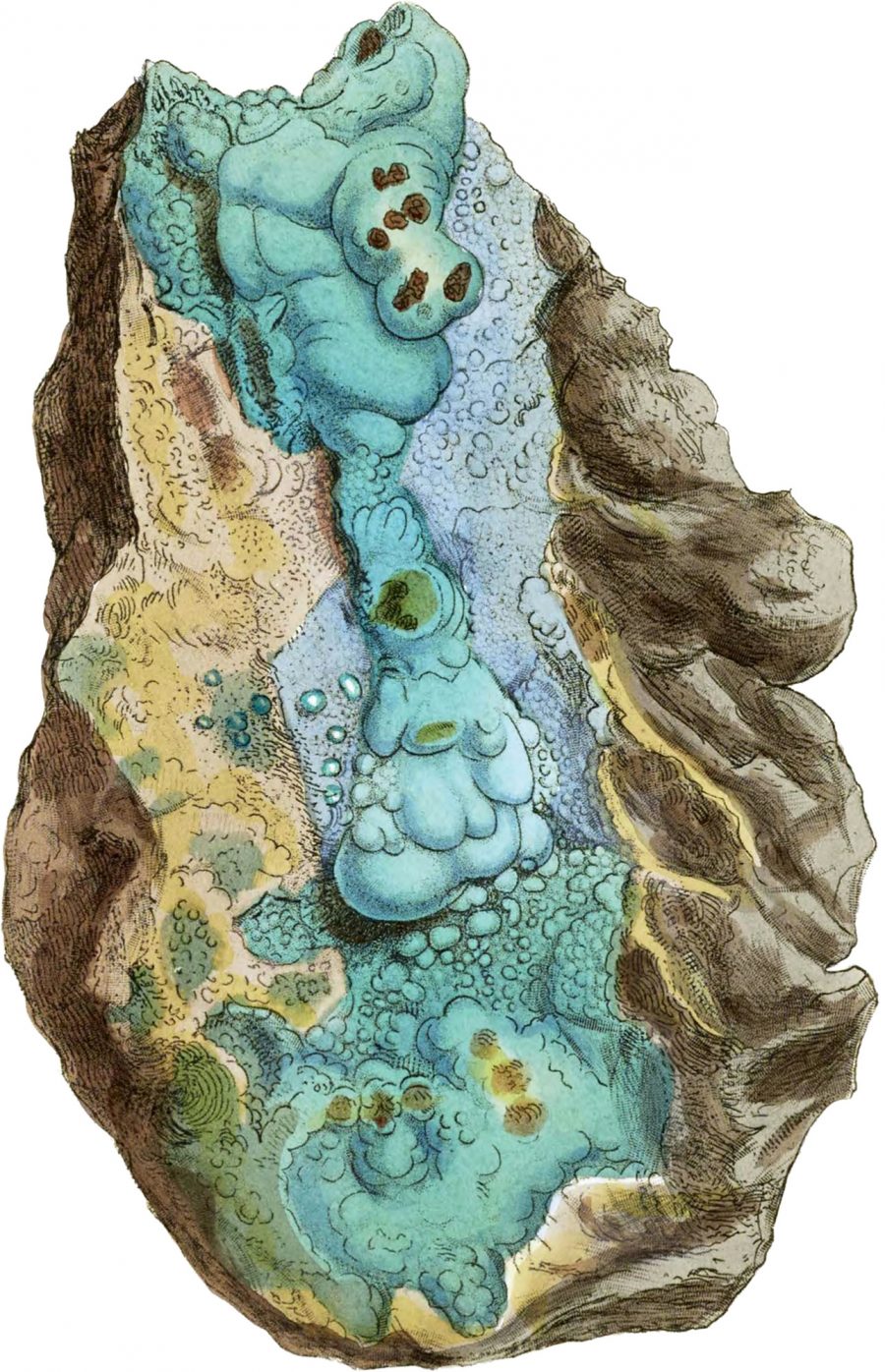
Rather than just printing them on postcards or tote bags (though he does sell posters), Rougeux has done for Sowerby’s minerals what he had previously done for other classic textbooks and taxonomies from the past, such as the 200-year-old Werner’s Nomenclature of Colours and Euclid’s Elements from 1847. Digitizing the 718 illustrations on one sprawling interactive page allows him to retain their educational value: click on any individual mineral and you’ll bring up an enlarged image followed by excerpts from the text.
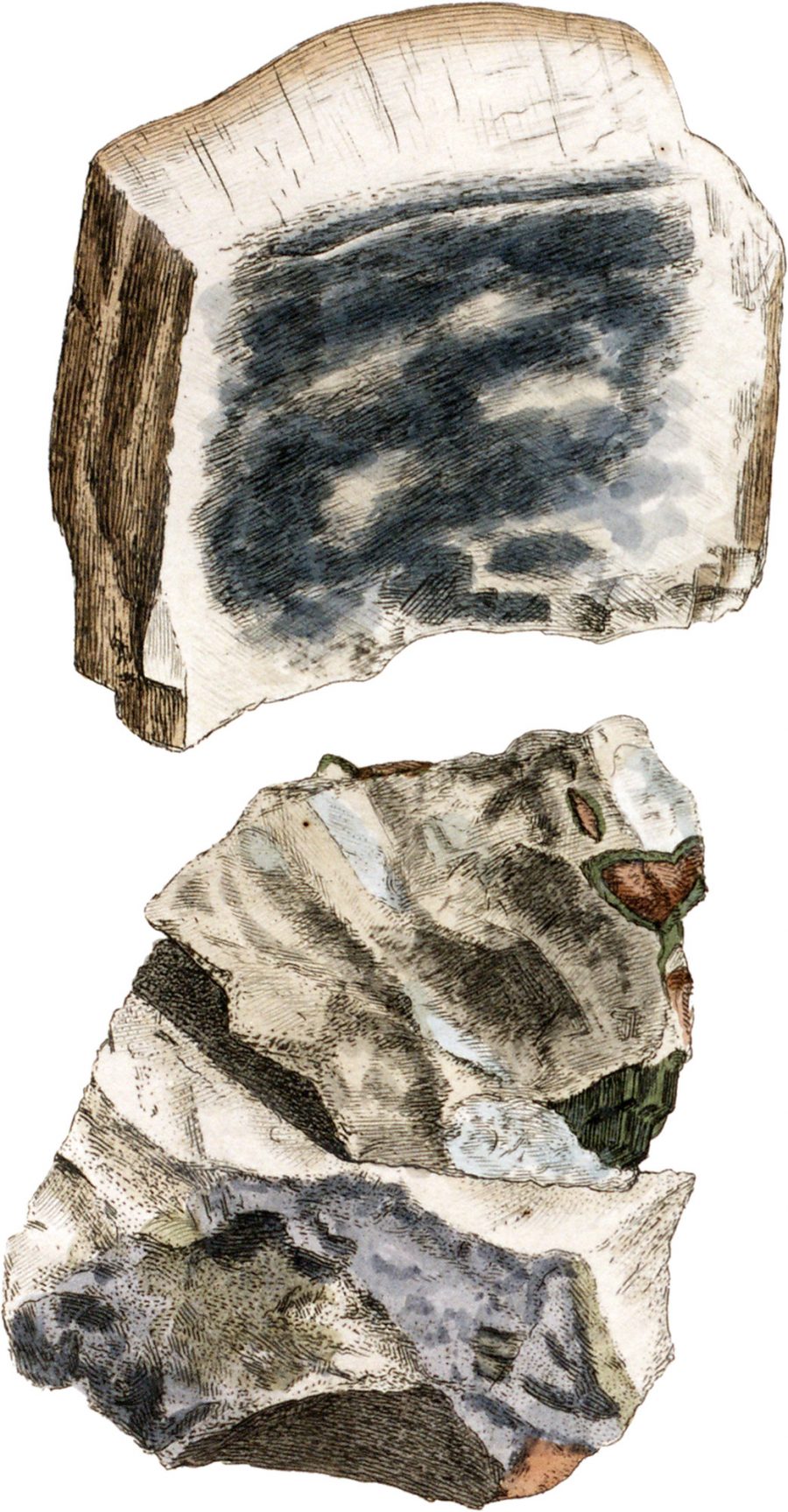
You have never seen such rocks as these, no matter how many uncut gems you’ve held in your hand. Because these illustrations turn them into something else—crystalline palaces, alien organs, petrified explosions, moldy loaves of bread… all the many shapes that time can take in rock form. They aren’t all beautiful rocks, but they are each beautifully-rendered with lines that might remind us of the most skilled comic artists, who are perhaps some of the last inheritors of this kind of graphic style. Sowerby himself illustrated several other scientific works, including series on biology, mycology, and a color system of his own devising.
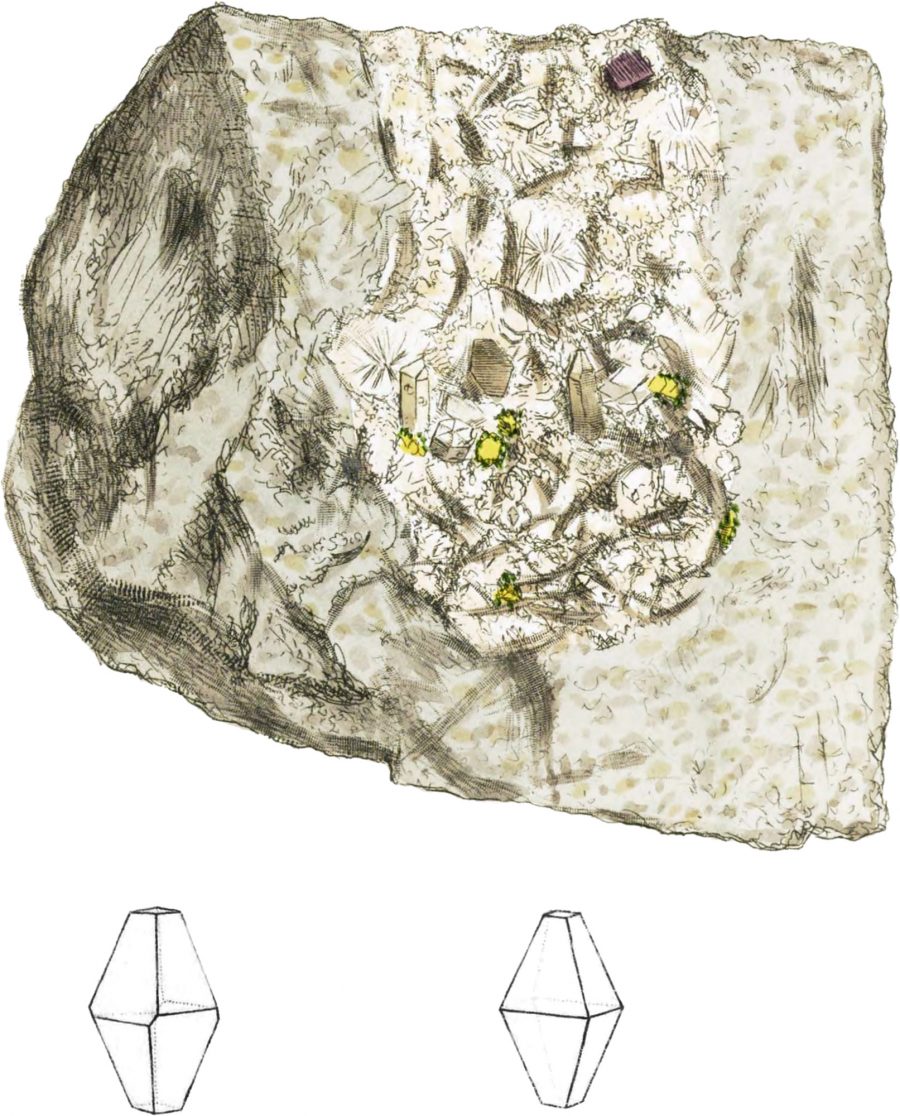
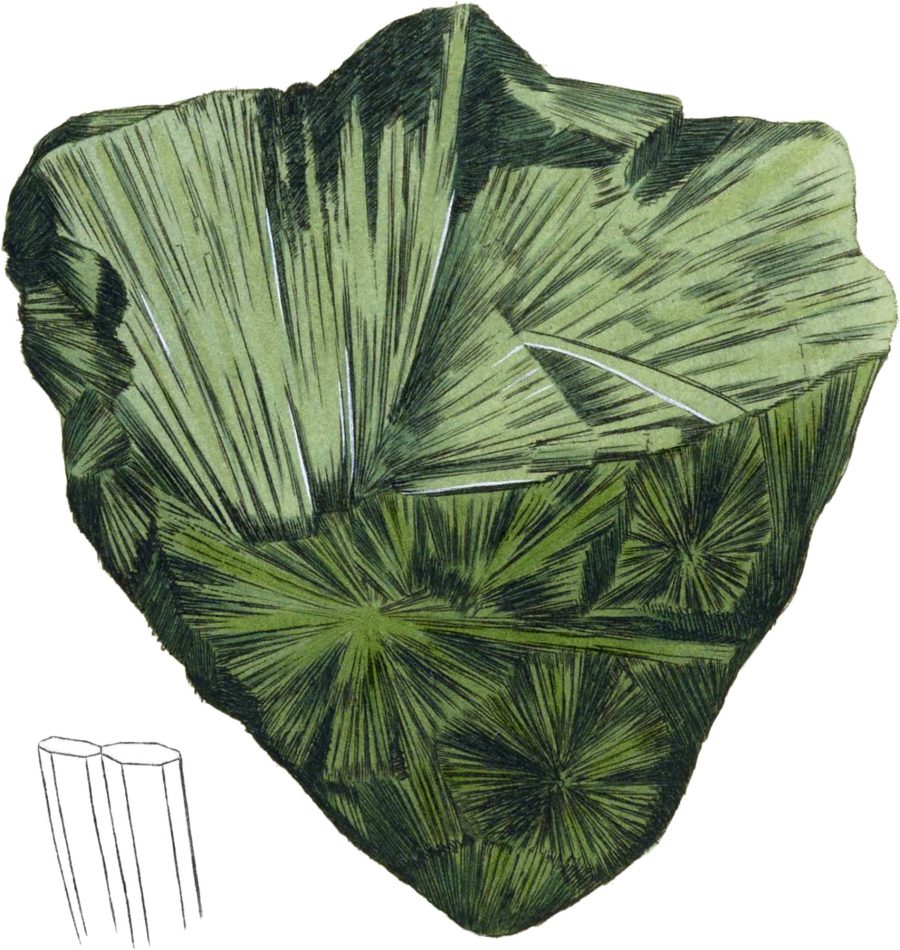
“We feel much pleasure in presenting our friends with a figure and account of the most perfect and rare specimen yet found of this substance,” begins the text accompanying Hydrargillite, above, which resembles a small, misshapen moon or asteroid. Rougeux also takes quite a bit of pleasure in his work of recovering these reference books and making them beautifully useful once again for 21st century readers. You can read his detailed account of the original illustrations and his adaptation of them for use on the web here.
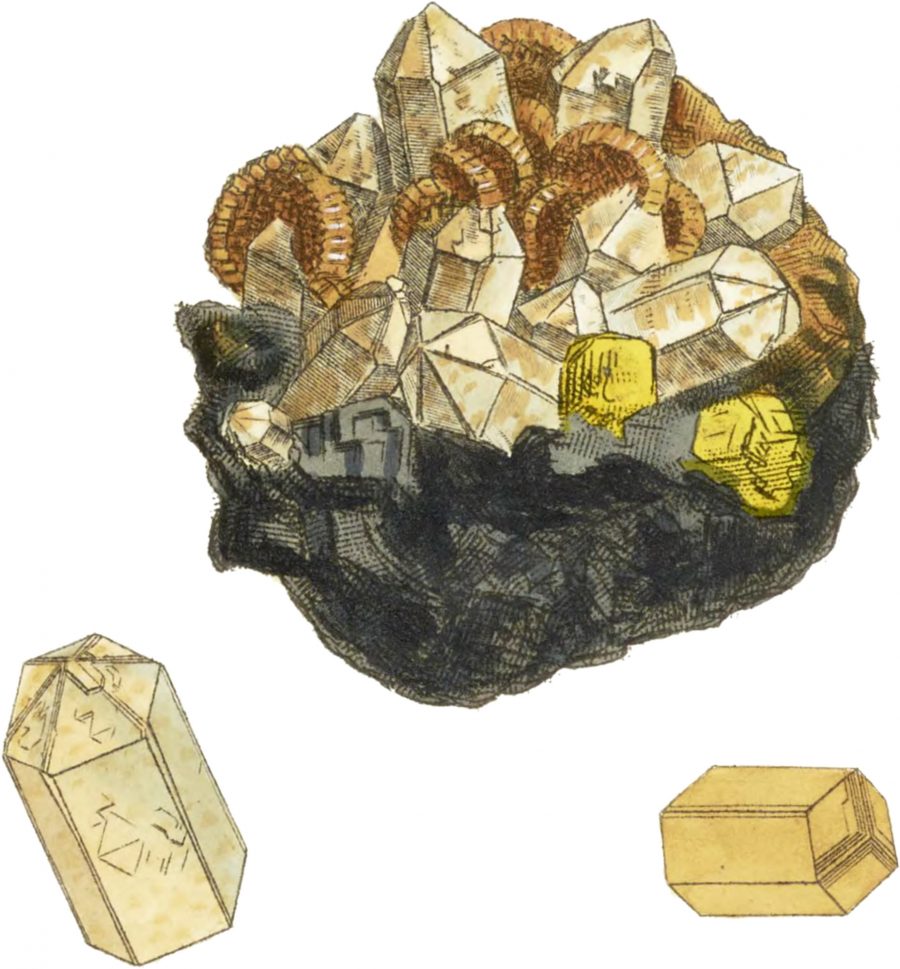
While appreciating the finer points of color, line, and composition in Rougeux’s tapestry of vintage mineral illustrations, you might just inadvertently expand your knowledge and appreciation of mineralogy. You can also read the entire British & Exotic Mineralogy, if you’ve got the time and inclination, at the Internet Archive.
via Kottke
Related Content:
Josh Jones is a writer and musician based in Durham, NC. Follow him at @jdmagness
Read More...One of the Oldest Buddhist Manuscripts Has Been Digitized & Put Online: Explore the Gandhara Scroll
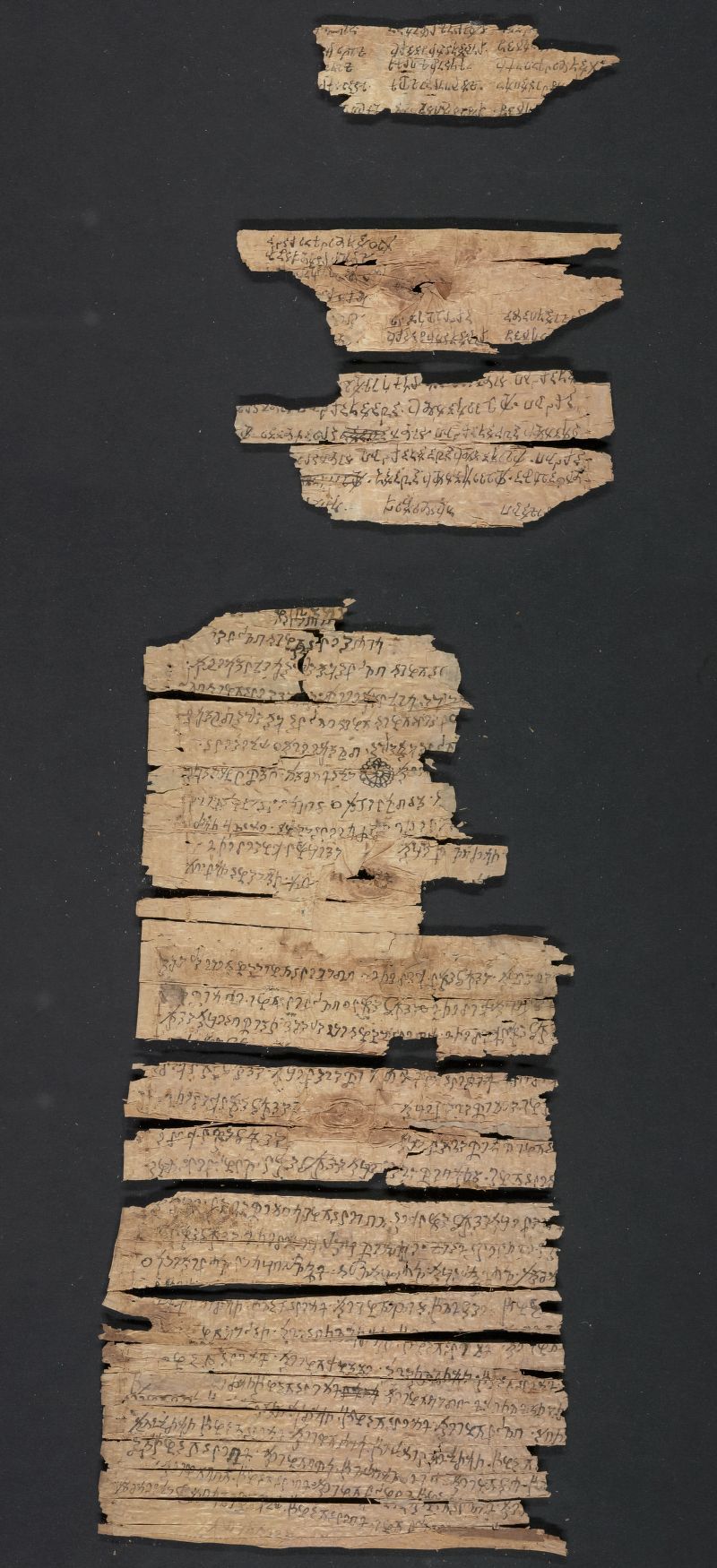
Buddhism goes way back — so far back, in fact, that we’re still examining important evidence of just how far back it goes. Take the exhibit above, which may look like nothing more than a collection of faded scraps with writing on them. In fact, they’re pieces of the laboriously and carefully unrolled and scanned Gandhara Scroll, which, having originally been written about two millennia ago, ranks as one of the oldest Buddhist manuscripts currently known. You can read the scroll’s story at the blog of the Library of Congress, the institution that possesses it and only last year was able to put it online for all to see.
“The scroll originated in Gandhara, an ancient Buddhist kindgom located in what is today the northern border areas of Afghanistan and Pakistan,” writes the Library’s Neely Tucker. “Surviving manuscripts from the Gandharan realm are rare; only a few hundred are known to still exist.” That realm “was under the rule of numerous kings and dynasties, including Alexander the Great, the Mauryan emperor Ashoka and the Kushan emperor Kanishka I,” and for a time “became a major seat of Buddhist art, architecture and learning. One of the region’s most notable characteristics is the Hellenistic style of its Buddhist sculptures, including figures of the Buddha with wavy hair, defined facial features, and contoured robes reminiscent of Greco-Roman deities.”
Written in the Gandhari variant of Sanskrit, the “Bahubuddha Sutra” or “Many Buddhas Sutra,” as this scroll has been called, constitutes part of “the much larger Mahavastu, or ‘Great Story,’ a biography of the Buddha and his past lives.” Here Tucker draws from the scholarship of Richard G. Salomon, emeritus professor of Sanskrit and Buddhist studies at the University of Washington, another institution that holds a piece of the Gandharan Buddhist texts. Many more reside at the British Library, which acquired them in 1994. The Library of Congress bought its Gandhara Scroll from a British dealer more recently, in 2003, and it arrived in what Tucker describes as “an ordinary pen case, accompanied by a handwritten note: ‘Extremely fragile, do not open unless necessary.’ ”
So began “several years of thought and planning to devise a treatment strategy,” an effort that at one point saw the Library’s conservator practicing “her unrolling technique on a dried-up cigar — an item that only approximates the difficulty of working with a compacted birch bark scroll.” Then came “gradual humidification over a few days, careful unrolling by hand with precision tools on a sheet of inert glass, followed by placing another sheet of glass on top once the scroll was completely unrolled,” a “dramatic and silent affair” described in greater detail by Atlas Obscura’s Sabrina Imbler.
The result was six large fragments and more than 100 smaller ones, together constituting roughly 80 percent of the scroll’s original text. You can see all those fragments of the Gandhara Scroll, scanned in high resolution, at the Library of Congress’ web site. This will naturally be a more edifying experience if, like Salomon, you happen to be able to read Gandhari. Even if you can’t, there’s something to be felt in the experience of simply beholding a 2,000 year old text composed on birch bark through the digital medium on which we do most of our reading here in the 21st century — where interest in Buddhism shows no signs of waning.
Related Content:
Breathtakingly-Detailed Tibetan Book Printed 40 Years Before the Gutenberg Bible
The World’s Largest Collection of Tibetan Buddhist Literature Now Online
Google Digitizes Ancient Copies of the Ten Commandments and Genesis
Google Puts The Dead Sea Scrolls Online (in Super High Resolution)
Based in Seoul, Colin Marshall writes and broadcasts on cities, language, and culture. His projects include the book The Stateless City: a Walk through 21st-Century Los Angeles and the video series The City in Cinema. Follow him on Twitter at @colinmarshall, on Facebook, or on Instagram.
Read More...The Flying Train: A 1902 Film Captures a Futuristic Ride on a Suspended Railway in Germany
We’ve been focusing a lot recently on old films from the turn of the century that a small group of enthusiasts have been “remastering” using AI, smoothing out the herky-jerky framing, upping the frame rate by interpolating between-frames, and more.
So what a surprise to find a recent look at a film in the Museum of Modern Art’s film collection from 1902 that already has the fidelity and smoothness, no AI needed.
The above footage is taken from the Wuppertaler Schwebebahn, the suspension railway built in the German city of Barmen in 1901. The Biograph production company—best known to film students as the place where D.W. Griffiths got his start—was one of the most popular of the early film companies, and produced mini-docs like these, called Mutoscopes.
The Mutoscope used 68mm film, a film stock twice as large as most films at the time. (70mm film really only came into its own during the 1950s.) The 30 frames per second shooting rate was also faster than the usual 18fps or 24fps, which means the illusion of reality is closer to the video rate of today. The Mutoscope was also the name of the company’s viewer, where the frames were printed on cards and could be watched through a viewfinder. So we are watching a film that was never meant to be projected. (If you’re thinking that the Mutoscope was also used for private viewings of What the Butler Saw, you are correct.)
Despite the fidelity our favorite upscaler Denis Shiryaev still had a go at improving the footage and adding color and sound. (There’s also a competitor working on their own upscale and colorization version called Upscaled Studio). Which one is better, do you think? And how much was the experience improved?
And in case you’re wondering, the Wuppertal Schwebebahn still operates to this day, looking very much like it did back in 1902. The total route is just over eight miles long and follows the river Wupper for a lot of it, and services 82,000 commuters a day. (Less so during COVID of course.) You can check out footage below. It definitely looks fun fun fun on the Schwebebahn.
Related Content:
Ted Mills is a freelance writer on the arts who currently hosts the FunkZone Podcast. You can also follow him on Twitter at @tedmills, read his other arts writing at tedmills.com and/or watch his films here.
Ted Mills is a freelance writer on the arts who currently hosts the Notes from the Shed podcast and is the producer of KCRW’s Curious Coast. You can also follow him on Twitter at @tedmills, and/or watch his films here.
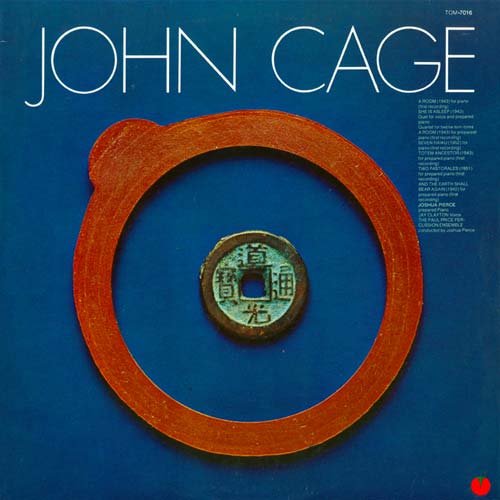
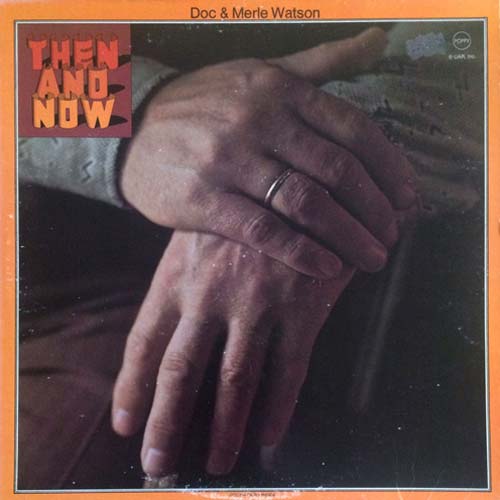
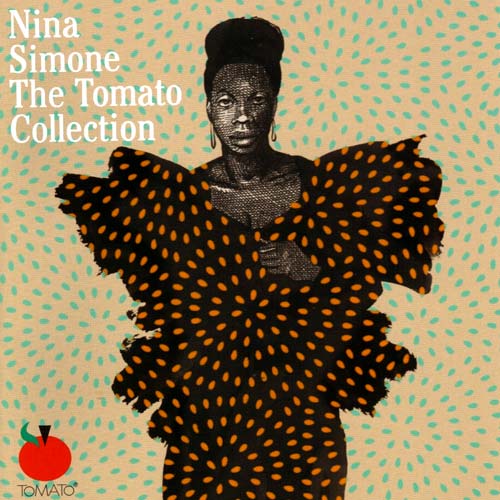
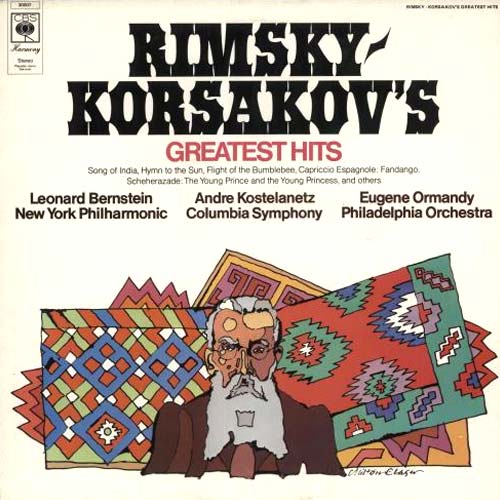
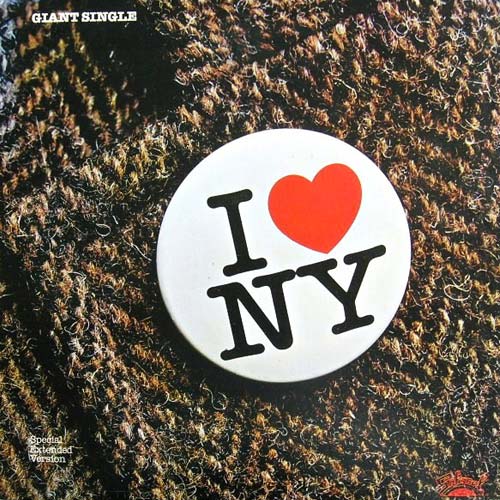
Read More...Milton Glaser’s Stylish Album Covers for The Band, Nina Simone, John Cage & Many More
Milton Glaser hardly needs an introduction. But if the name somehow doesn’t ring a bell, “Glaser’s many contributions to pop culture,” as Ayun Halliday writes in a previous post, certainly will. These include “the I ❤NY logo, the psychedelic portrait of a rainbow-haired Bob Dylan, DC Comics’ classic bullet logo.” All images that “confer undeniable authority.” Many children of the sixties also know Glaser well for his album covers.
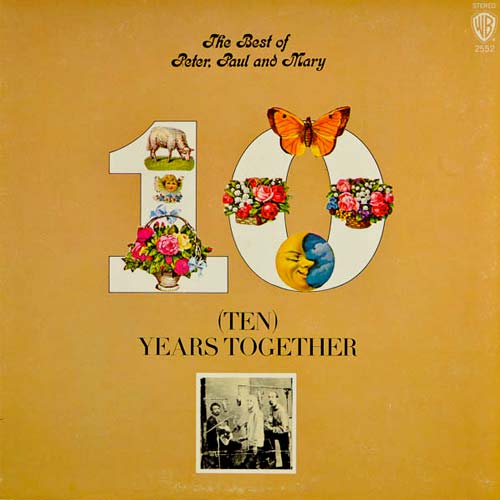
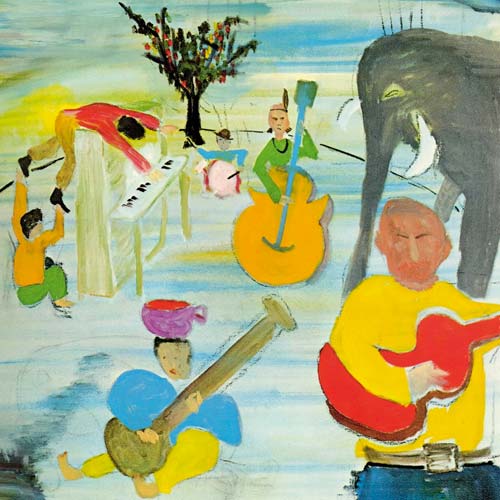
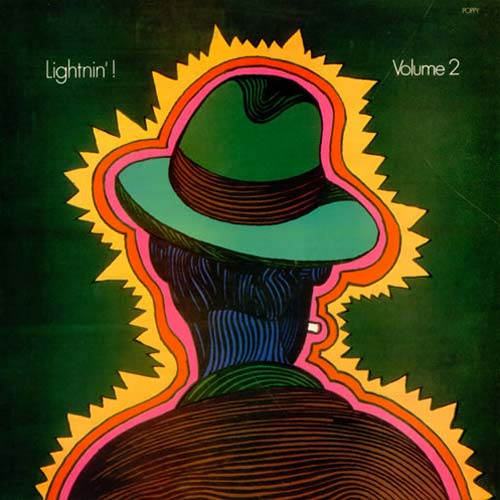
Glaser designed the album art for The Band’s classic Music from Pink, though he stepped back from the cover and used one of Bob Dylan’s paintings instead. He designed covers for classics like Peter, Paul & Mary’s The Best Of: (Ten) Years Together and Lightnin’ Hopkins’ Lightnin’! Volumes One and Two.
“Glaser had a long history with record labels,” writes designer Reagan Ray. “According to Discogs, he was credited with the design of 255 albums over the course of 60 years. His relationship with record label executive Kevin Eggers led him to explore a variety of covers for the Poppy and Tomato record labels, including the career of Townes Van Zandt.”
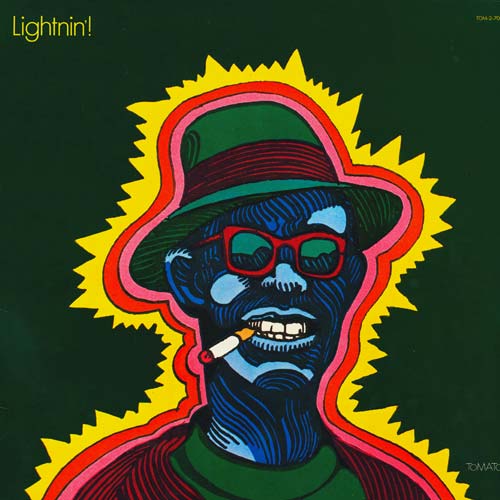
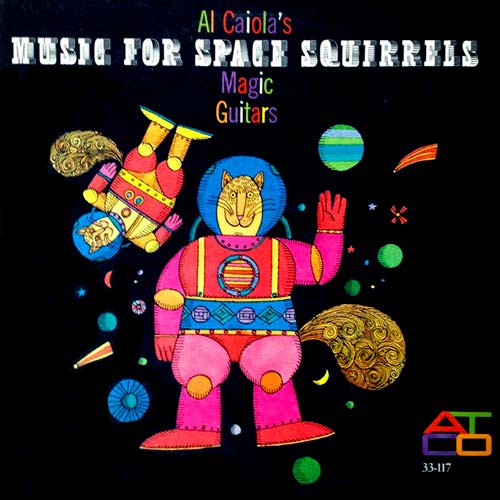
Glaser illustrated rock, folk, blues, jazz…. “Classical album covers never get much attention in graphic design history,” Ray points out. But “his colorful paintings were interesting and unique in an otherwise stuffy genre.” He even illustrated an album by Al Caiola’s Magic Guitars called Music for Space Squirrels, whatever that is. Did he listen to all of these albums? Who knows? Glaser left us in June, but not before dispensing “Ten Rules for Work and Life” that set the bar high for aspiring artists.
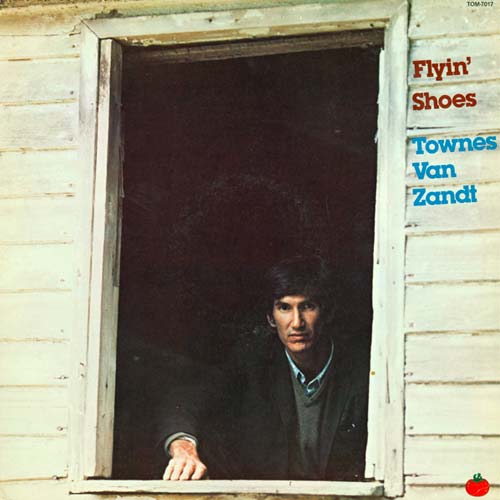
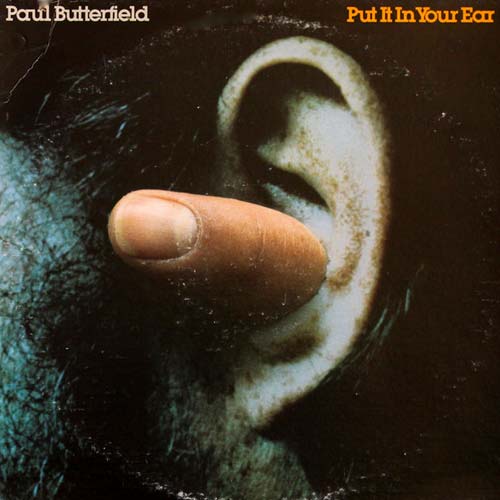
One of his rules: “Style is not to be trusted. Style change is usually linked to economic factors, as all of you know who have read Marx. Also fatigue occurs when people see too much of the same thing too often.” If anyone would know, it was Glaser. “His work is everywhere,” writes Ray, “and his legacy is vast.” He also had a very recognizable style. See a much larger selection of Glaser’s album covers, curated by Ray from over 200 albums, here. And visit an online collection of Glaser’s other graphic design work at the School of Visual Arts.
Related Content:
Milton Glaser (RIP) Presents 10 Rules for Life & Work: Wisdom from the Celebrated Designer
Art Record Covers: A Book of Over 500 Album Covers Created by Famous Visual Artists
Josh Jones is a writer and musician based in Durham, NC. Follow him at @jdmagness
Read More...What Is a “Blerd?” Pretty Much Pop: A Culture Podcast #56 Discusses Nerd Culture and Race with The Second City’s Anthony LeBlanc

The Interim Executive Producer of The Second City joins your hosts Mark Linsenmayer, Erica Spyres, and Brian Hirt to discuss the scope of black nerd-dom: what nerdy properties provide to those who feel “othered,” using sci-fi to talk about race, Black Panther and other heroes, afrofuturism, black anime fans, Star Trek, Key & Peele, Get Out vs. Us, and more.
A few articles you might enjoy:
- “Blerd Defined” by Rod T. Faulkner
- “What Is a Blerd” by Angele Joubert-Johnson
- “The Rise of the Black Nerd in Pop Culture” by Mekeisha Madden
- “15 Black Comics Writers Whose Work You Need to Read” by Sam Stone
- “Why I’m Writing Captain America” by Ta-Nehishi Coates
- “7 Black Nerd Podcasts to Check Out” from trillmatic.com
- “The Hugo Awards Just Made History, and Defied Alt-Right Extremists in the Process” by Aja Romano
Some relevant videos and podcasts:
- The Rundown with Robin Thede: A Race Odyssey
- Looking Back at Tomorrow’s Afrofuturism episode
- Empire Blerd ep. 23 featuring Sinbad and his son
- A sample episode of King Vader
- Key & Peele on detecting alien impostors
- Anthony’s first appearance on Hello from the Magic Tavern
Learn more at prettymuchpop.com. This episode includes bonus discussion that you can only hear by supporting the podcast at patreon.com/prettymuchpop. This podcast is part of the Partially Examined Life podcast network.
Pretty Much Pop: A Culture Podcast is the first podcast curated by Open Culture. Browse all Pretty Much Pop posts.
Read More...The Strange Costumes of the Plague Doctors Who Treated 17th Century Victims of the Bubonic Plague
In the 17th and 18th centuries, what we know of as The Age of Enlightenment or early modernity, Europeans traversed the globe and returned to publish travel accounts that cast the natives they encountered as childlike beings, destitute savages, or literal monsters. Unable to make sense of alien languages and cultures, they mistook everything they saw.
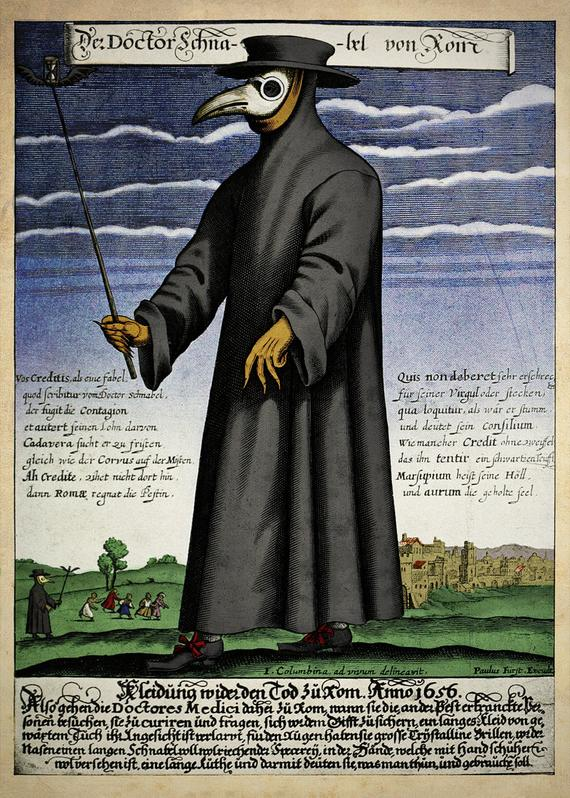
Meanwhile, the bubonic plague swept Europe, and plague doctors wandered towns and countryside in a “fanciful-looking costume [that] typically consisted of a head-to-toe leather or wax-canvas garment,” writes the Public Domain Review, “large crystal glasses; and a long snout or bird beak, containing aromatic spices (such as camphor, mint, cloves, and myrrh), dried flowers (such as roses or carnations), or a vinegar sponge.”
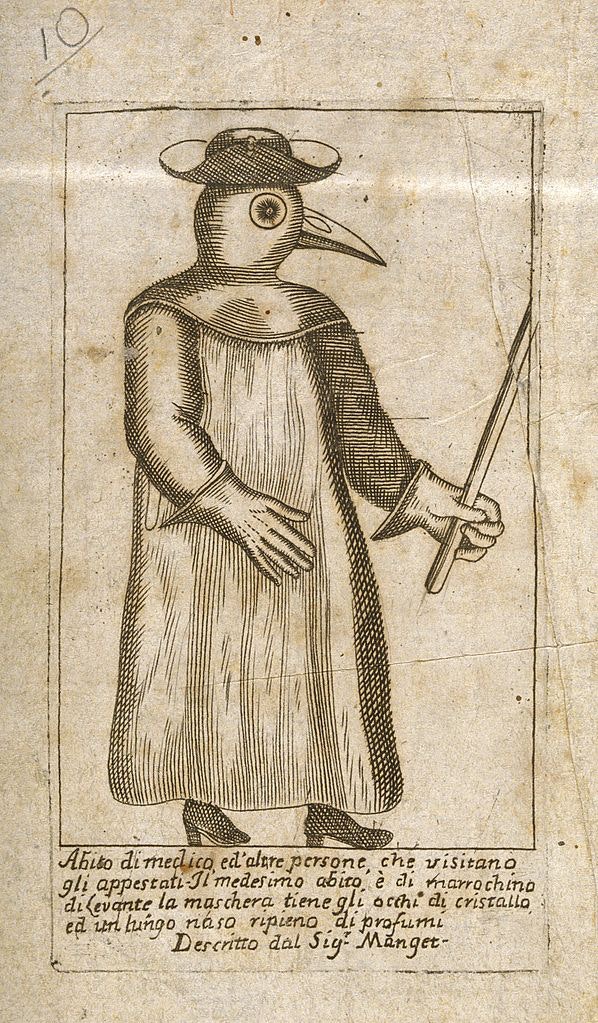
Moreover, the plague doctor—as you can see from illustrations of this bizarre character—also carried with him a wand, “with which to issue instructions,” one scholar writes, “such as ordering disease-stricken houses filled with spiders or toads ‘to absorb the air’ and commanding the infected to inhale ‘bottled wind’ or take urine baths, purgatives, or stimulants.” The wand was also used to forcefully fend off patients.
Visiting travelers from elsewhere might be justified in thinking the plague doctor represented some strange, primitive religious custom: perhaps a monstrous—and mostly ineffective—exorcism ritual. The “early-modern hazmat suit” is perfectly reasonable, of course, if you understand the reigning theory of “miasmas,” which posited that disease is spread through “bad air.” Not entirely wrong, as our current masked existences show, but in the case of the plague, miasma theory was only very partially explanatory.
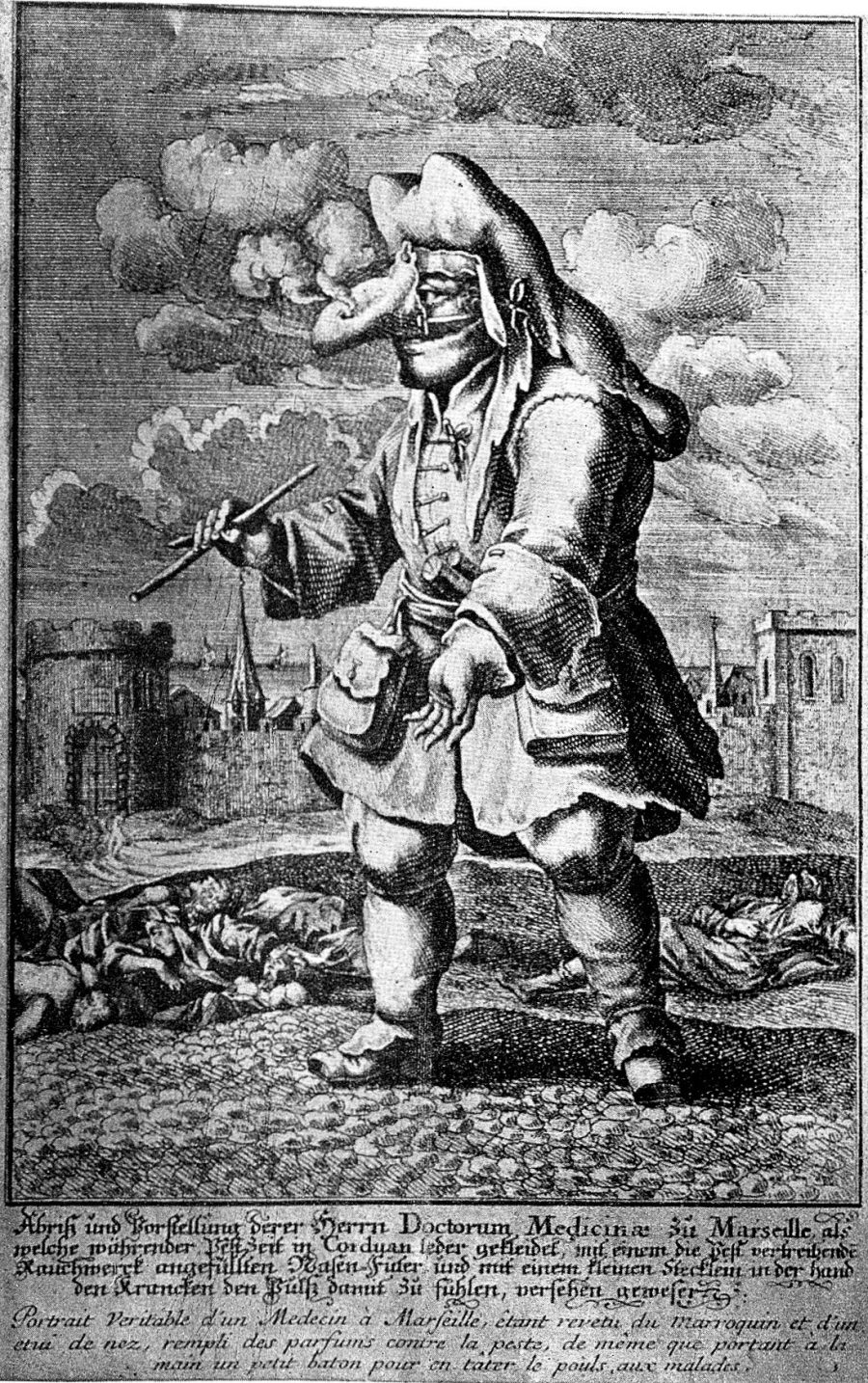
Which is to say the costume wasn’t entirely useless. “The ankle-length gown and herb-filled beak… would also have offered some protection against germs,” especially since its herbs were sometimes lit on fire and allowed to smolder, sending billowing smoke from the plague doctor’s face. (The satirical engraving above from 1700 mocks this practice.) “The appearance of one of these human-sized birds on a doorstep could only mean that death was near.”
This particular design has been credited to a French doctor, Charles de Lorme, said to have invented it in 1619. “De Lorme thought the beak shape of the mask would give the air sufficient time to be suffused by the protective herbs before it hit the plague doctors’ nostrils and lungs.” Often mistaken for Medieval or Renaissance garb, the plague doctor costume is, in fact, a modern piece of kit.
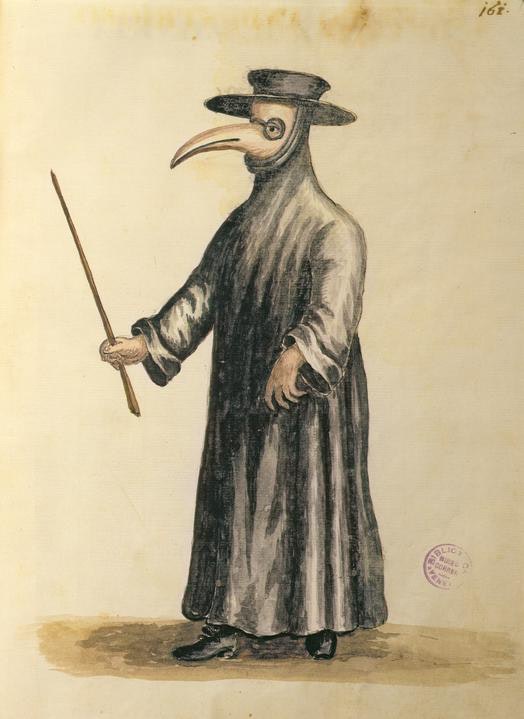
Much has been made of the bird mask, but as one skeptical history writer has effectively shown, there are good reasons to doubt the widespread adoption of the beak. It may have been a rarity; most plague doctors probably wore what would look to us today like Klan robes and hoods. All the more reason for plague doctor costumes to seem shocking once again, as a British teen discovered when he decided in May to dress the part of the classic beaked figure. (Residents found it “terrifying” and police offered stern “words of advice.”)
No matter how widespread the beak was historically, its iconic status as part of the plague doctor costume remains inscribed in art and culture. “The look was so iconic in Italy that the ‘plague doctor’ became a staple of Italian commedia dell’arte and carnival celebrations,” Erin Blakemore writes at National Geographic. Given the associations a more authentic costume would evoke, no one seems to be clamoring to replace beaked masks with pointed hoods in representations of plague doctors. The beak also symbolically conveys an important fact about plague doctors: they were not healers—they were mostly witnesses of death.
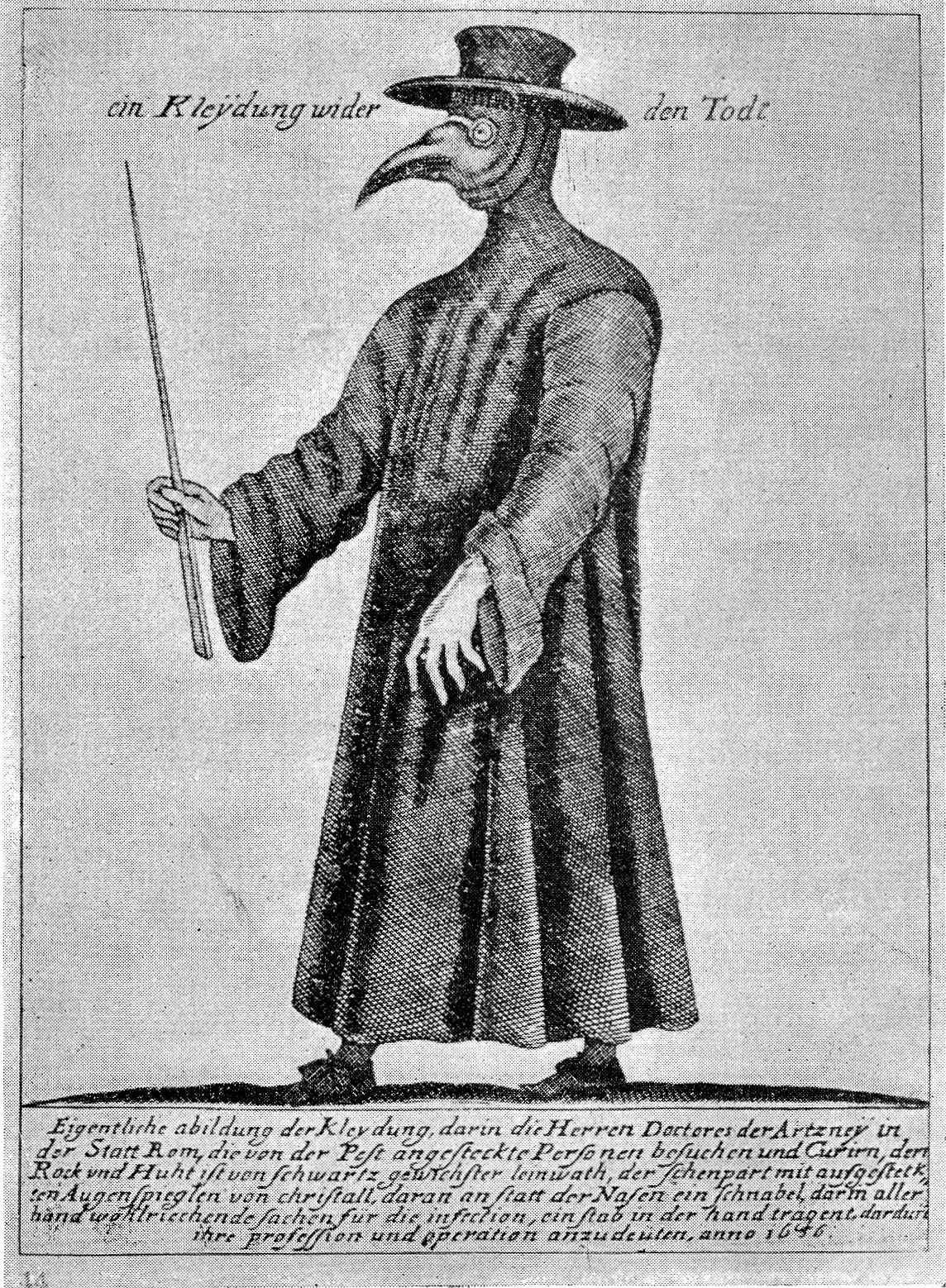
Few of their remedies had any effect. Rather, on the government’s payroll, plague doctors—often second or third-rate practitioners attempting to build a career—recorded demographic data, witnessed wills, and performed autopsies. They were like weird avian aliens come to observe the customs of a continent’s dying population, appearing in what came to be widely understood as the “costume of death,” as the illustration above puts it. See more representations of the plague doctor costume at the Public Domain Review.
Related Content:
The History of the Plague: Every Major Epidemic in an Animated Map
Download Classic Works of Plague Fiction: From Daniel Defoe & Mary Shelley, to Edgar Allan Poe
Isaac Newton Conceived of His Most Groundbreaking Ideas During the Great Plague of 1665
Josh Jones is a writer and musician based in Durham, NC. Follow him at @jdmagness
Read More...Support Us
We're hoping to rely on loyal readers, rather than erratic ads. Please click the Donate button and support Open Culture. You can use Paypal, Venmo, Patreon, even Crypto! We thank you!

About Us

Open Culture scours the web for the best educational media. We find the free courses and audio books you need, the language lessons & educational videos you want, and plenty of enlightenment in between.
Advertise With Us

FREE UPDATES!
GET OUR DAILY EMAIL
Get the best cultural and educational resources on the web curated for you in a daily email. We never spam. Unsubscribe at any time.
FOLLOW ON SOCIAL MEDIA

Open Culture editor Dan Colman scours the web for the best educational media. He finds the free courses and audio books you need, the language lessons & movies you want, and plenty of enlightenment in between.
Advertise With Us