A 5‑Hour, One-Take Cinematic Tour of Russia’s Hermitage Museum, Shot Entirely on an iPhone
In 2002, Russian filmmaker Alexander Sokurov made cinema history with Russian Ark, which dramatizes a wide swath of his homeland’s history in a single, unbroken 96-minute shot. What’s more, he and his collaborators shot it all in a single location, one both rich with historical resonance and not exactly wide-open to movie shoots: St Petersburg’s State Hermitage Museum, whose complex includes the former Winter Palace, official residence of Russia’s emperors from 1732 to until the 1917 revolution. What viewer could forget Russian Ark’s breathtaking final scene, which opens as the camera floats into the midst of a grand ball set in 1913 — taking place in the very hall it would have in 1913?
Now, at least in terms of duration, Apple has gone to the Hermitage and done Sokurov one better: its new advertisement for the iPhone 11 Pro is a five-hour journey through the entire museum, shot by filmmaker Axinya Gog in one continuous take — all, of course, on the phone itself. Like Russian Ark, it constitutes a cinematic achievement not possible before recent technological advances. Sokurov demonstrated the new possibilities of digital video camera that could capture film-like images; Gog demonstrates the new possibilities of a camera-phone with not only the battery life to shoot five straight hours of video, but at a resolution that looks at least as good as the cutting-edge digital video of 2002.
Just above appears the trailer for the ad, which hints that what the full production might lack in storytelling ambitions compared to a film like Russian Ark, it makes up for in not just duration but other human elements. Gog’s camera — or rather, iPhone — captures a Hermitage Museum without the usual crowds, striking enough in itself, but also with the addition of skilled dancers and musicians (even beyond those who recorded the video’s score). This in addition to no fewer than 588 works of art spread across 43 galleries, including paintings by Rembrandt, Raphael, Caravaggio, and Rubens. The deeper you go, the more you’ll realize that, even if you’ve spent serious time in the Hermitage yourself, you’ve never had this kind of aesthetic experience there before. It may sound excessive to say “watch to the end,” but if any five-hour video has ever merited that insistence, here it is.
via Colossal
Related Content:
The Romanovs’ Last Spectacular Ball Brought to Life in Color Photographs (1903)
Based in Seoul, Colin Marshall writes and broadcasts on cities, language, and culture. His projects include the book The Stateless City: a Walk through 21st-Century Los Angeles and the video series The City in Cinema. Follow him on Twitter at @colinmarshall or on Facebook.
Read More...Use Your Time in Isolation to Learn Everything You’ve Always Wanted To: Free Online Courses, Audio Books, eBooks, Movies, Coloring Books & More
“I have never let my schooling interfere with my education.” Mark Twain may or may not have actually said that, but either way the sentiment resonates — and with a new strength now, since schools have closed all over the world in an attempt to halt the spread of the pandemic coronavirus. For many, this period of isolation (self-imposed or otherwise) represents an opportunity to rediscover the value of education: not the kind directed by an institution, but the much more valuable kind that runs on one’s own steam. If you count among that select group of self-educators (or educators of children whom you can no longer send to school), we here at Open Culture have spent nearly the past decade and a half amassing just the resources you need.
At our selection of more than 1,500 free online courses, you can take deep dives into subjects from archaeology and architecture to law and literature to physics and psychology. (We’ve even got courses specifically designed to help you understand the coronavirus itself.) If you’ve been meaning to catch up on the work of the aforementioned Twain — or that of Dostoevsky, Wittgenstein, Kafka, and Proust, among others — he appears in our roundup of more than 800 free eBooks.
Should you prefer reading through earphones while exercising or cleaning — especially important activities these days — we can also offer you more than a thousand free audiobooks, whether you prefer Isaac Asimov or Jane Austen, Adrienne Rich or Charles Bukowski. (You can also get audiobooks from Audible if you sign up for a free 30-day trial there.)
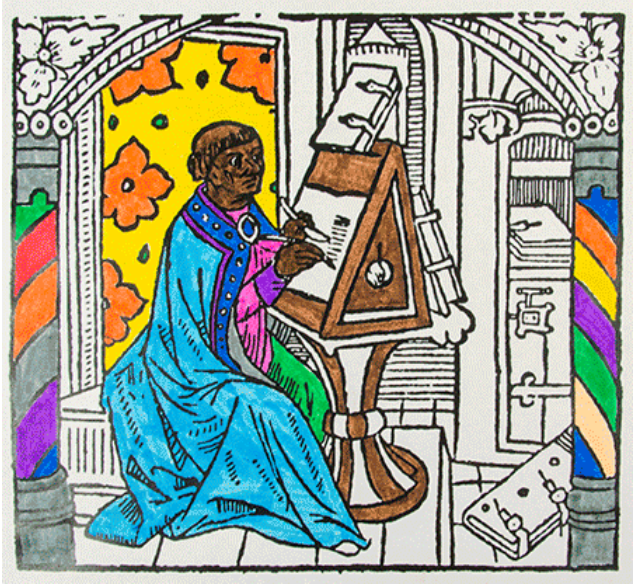
While quarantine puts a temporary stop to many of our usual activities, it shouldn’t get in the way of movie night. Our collection of 1,1500 free movies will cover all your movie nights through the time of the coronavirus and then some, including as it does classic films noirs, thriller and horror pictures (including some by no less a suspense master than Alfred Hitchcock), documentaries, and even the fruits of the film industries of countries like Russia and South Korea. And though we can’t get enough cinema here at Open Culture, it’s hardly the only visual art form we feature: you might spend some time, for instance, with this collection of two million images from 30 world-class museums. This range of art also appears in free museum-produced coloring books geared to all ages.
If you’d like to use your time of “social distance” to develop skills other than coloring, we can point you toward resources for learning to cook, to draw (like an architect, like a Japanese mangaka, like Lynda Barry), to play the guitar, and to practice yoga. Bear in mind also the online-education offerings from Masterclass we’ve featured here on Open Culture, from “Margaret Atwood Teaches Creative Writing” to “David Sedaris Teaches Storytelling and Humor” to “Werner Herzog Teaches Filmmaking.” (The educational offerings provided by The Great Courses also provide another good option.) Those aren’t free, but everything else in this post is, including our collection of online language-learning resources. Having spread through world travel, the coronavirus will keep many wary of going abroad in the foreseeable future. But when the pandemic ends, you’ll want to be prepared to enjoy foreign lands again. Italy, a country especially hard-hit by the virus, will surely welcome all the visitors it can get. Until then, why not get a grasp on its language — and its cuisine — with a course like MIT’s “Learn Italian with Your Mouth Full”?
Related Content:
Free Courses on the Coronavirus: What You Need to Know About the Emerging Pandemic
Coursera Providing Free Access to Its Course Catalog to Universities Impacted by COVID-19
Quarantined Italians Send a Message to Themselves 10 Days Ago: What They Wish They Knew Then
Based in Seoul, Colin Marshall writes and broadcasts on cities, language, and culture. His projects include the book The Stateless City: a Walk through 21st-Century Los Angeles and the video series The City in Cinema. Follow him on Twitter at @colinmarshall or on Facebook.
Read More...Italians’ Nightly Singalongs Prove That Music Soothes the Savage Beast of Coronavirus Quarantine & Self-Isolation
It’s not like we’re maestros…it’s a moment of joy in this moment of anxiety. —Emma Santachiara, Rome
As reported by The New York Times, Ms. Sanachiara, age 73, has joined the vast choir of ordinary Italians taking to their balconies and windows to participate in socially distant neighborhood singalongs as coronavirus rages through their country.
The Internet has been exploding with messages of support and admiration for the quarantined citizens’ musical displays, which have a festive New Year’s Eve feel, especially when they accompany themselves on pot lids.
Three days ago, Rome’s first female mayor, Virginia Raggi, called upon residents to fling open their windows or appear on their balconies for nightly 6pm community sings.
A woman in Turin reported that the pop up musicales have forged friendly bonds between neighbors who in pre-quarantine days, never acknowledged each other’s existence.
Naturally, there are some soloists.
Tenor Maurizio Marchini serenaded Florentines to “Nessun Dorma,” the famous aria from Puccini’s opera Turandot, repeating the high B along with a final Vincerò!, which earns him a clap from his young son.
In Rome, Giuliano Sangiorgi, frontman for Negramaro, hit his balcony, guitar in hand, to entertain neighbors with Pino Daniele’s 1980 hit “Quanno Chiove” and his own band’s “Meraviglioso.”
Earlier in the year, the 11 million residents of Wuhan, China, the deadly epicenter of the coronavirus outbreak, also used music to boost morale, singing the national anthem and other patriotic songs from their individual residences. Jiāyóu, or “add oil,” was a frequent exhortation, reminding those in isolation to stay strong and keep going.
Readers, are you singing with your neighbors from a safe distance? Are they serenading you? Let us know in the comments.
Related Content:
Bruce Springsteen Singin’ in the Rain in Italy, and How He Creates Powerful Imaginary Worlds
Ayun Halliday is an author, illustrator, theater maker and Chief Primatologist of the East Village Inky zine. Like most of us in this crazy, historic period, all of her events have been cancelled. Follow her @AyunHalliday.
Read More...Quarantined Italians Send a Message to Themselves 10 Days Ago: What They Wish They Knew Then
Countries like the US, England, France, Spain and Germany are about 9–10 days behind in the COVID-19 progression. For our benefit, the video channel called “A THING BY” asked Italians to record a message they wish had heard 10 days prior. Let’s take careful note of what they have to say.
If you would like to support the mission of Open Culture, consider making a donation to our site. It’s hard to rely 100% on ads, and your contributions will help us continue providing the best free cultural and educational materials to learners everywhere. You can contribute through PayPal, Patreon, and Venmo (@openculture). Thanks!
Related Content:
Free Courses on the Coronavirus: What You Need to Know About the Emerging Pandemic
Spanish Flu: A Warning from History
Read More...
Zoom Providing K‑12 Schools Free Access to Videoconferencing Tools During COVID-19 Crisis: They’ll Power Your Online Courses

FYI: Zoom provides a turnkey video conferencing solution that’s high quality and easy to use. And now universities across the country use Zoom to power their online courses. Today, Zoom announced that K‑12 schools can gain free access to Zoom during the COVID-19 crisis. Students or teachers can sign up here.
If you would like to support the mission of Open Culture, consider making a donation to our site. It’s hard to rely 100% on ads, and your contributions will help us continue providing the best free cultural and educational materials to learners everywhere. You can contribute through PayPal, Patreon, and Venmo (@openculture). Thanks!
Related Content:
Coursera Providing Free Access to Its Course Catalog to Universities Impacted by COVID-19
Free Courses on the Coronavirus: What You Need to Know About the Emerging Pandemic
Read More...
Why You Should Read The Plague, the Albert Camus Novel the Coronavirus Has Made a Bestseller Again
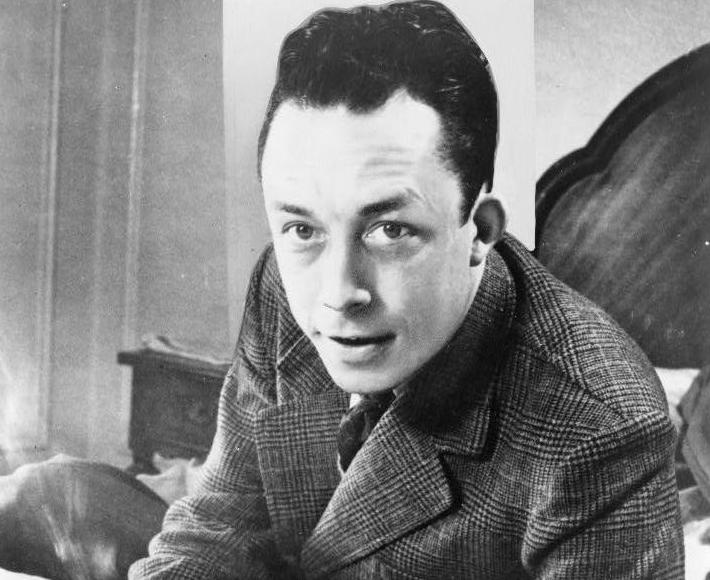
The coronavirus, fair to say, isn’t good for the economy: not for the economies of individual nations, and not for the world economy as a whole. But that’s not to say that every industry has taken a hit. This is hardly the worst time in history to produce and sell toilet paper, for instance, nor to furnish the packages of necessities demanded by “preppers” who foresee the end of society as we know it. One probably wouldn’t wish to take the place of the makers of Corona beer right now, but despite the now-unfortunate brand name, their sales, too, have stayed strong. And for publishers around the world who have been considering a reprint of Albert Camus’ La Peste, now is most assuredly the time.
The Plague, as it’s titled in English, “follows the inhabitants of Oran, an Algerian town that is sealed off by quarantine as it is ravaged by bubonic plague,” writes The Guardian’s Alison Flood. “Penguin is rushing through a reprint of its English translation to meet demand,” but last week stock had already sold out on Amazon.
“The publisher added that sales in the last week of February were up by 150% on the same period in 2019.” The novel has also become a bestseller in Italy — a country especially hard hit by the virus — and sales “have also risen sharply in France, according to the French books statistics website Edistat,” to the tune of “around 300% on the previous year.” I live in South Korea, one of the countries most severely hit by the coronavirus, and recently wrote an essay about reading The Plague here in the Los Angeles Review of Books.
Though Camus tells a story set in real city and about a specific disease, his literary rendering of a community isolated and under invisible siege has the universal quality of myth. Each main character — the tireless doctor Rieux, the suicidal-turned-gregarious Cottard, the humanist outsider Tarrou — exemplifies a different arc of individual reaction to the crisis. Even in Seoul I noticed certain parallels: Camus’ description of the “commercial character of the town” and the work habits of its people, of the sudden runs on particular items thought to have preventative properties (peppermint lozenges, in the novel), of the fierce public attacks on the government whenever the struggle turns especially harrowing. Readers the world over will feel a grim sense of recognition at the Oran authorities’ unwillingness to call the plague a plague, due to “the usual taboo, of course; the public mustn’t be alarmed, that wouldn’t do at all.”
Camus wrote The Plague in 1947, five years after his best-known work The Stranger and just three years after the real Oran’s most recent outbreak of the bubonic plague. (You can get a primer on Camus’ life, work, and reluctantly existentialist philosophy in the animated School of Life video above.) Like The Stranger, and like all great works of art, The Plague permits more than one interpretation: J.M. Coetzee suggests one reading of the novel “as being about what the French called ‘the brown plague’ of the German occupation, and more generally as about the ease with which a community can be infected by a bacillus-like ideology.” But each era has its own reading of The Plague — in the year 2003, for instance, critic Marina Warner offered it up as a “study in terrorism” — and of all its readers and re-readers in this historical moment, how many could resist an entirely more literal interpretation?
Related Content:
The History of the Plague: Every Major Epidemic in an Animated Map
Free Courses on the Coronavirus: What You Need to Know About the Emerging Pandemic
The Absurd Philosophy of Albert Camus Presented in a Short Animated Film by Alain De Botton
See Albert Camus’ Historic Lecture, “The Human Crisis,” Performed by Actor Viggo Mortensen
Based in Seoul, Colin Marshall writes and broadcasts on cities, language, and culture. His projects include the book The Stateless City: a Walk through 21st-Century Los Angeles and the video series The City in Cinema. Follow him on Twitter at @colinmarshall or on Facebook.
Read More...Covering Robert Johnson’s Blues Became a Rite of Rock ‘n’ Roll Passage: Hear Covers by The Rolling Stones, Eric Clapton, Howlin’ Wolf, Lucinda Williams & More
American rock and roll originated from all corners of the country in the 1940s and 50s: from the exuberant gospel of the south, rollicking western swing of Texas, lean electric blues of Chicago, fast-paced Chicano music of L.A…. Truly a cultural melting pot, it represented the U.S to itself, amplifying and intensifying contemporary trends that continued right alongside the upstart new genre. But along with the deaths, arrests, and army stints of the music’s most famous stars at the end of the 50s, rock’s first wave suffered from a kind of creative fatigue, seeming to have done all it could with its source material.
British musicians who fell in love with Elvis and Little Richard saw a need to revitalize the music by reaching back to older forms—to the influences of rock and roll’s influences, most from the American South. First came skiffle, a jazz-blues-folk fusion born in the early-20th century U.S. It launched the careers of The Beatles and became huge in its own right as a popular British folk form of the 50s. Then came the massive influence of the Mississippi Delta blues, which gave The Rolling Stones, and virtually every band featuring Jeff Beck, Eric Clapton, or Jimmy Page, a reason for being.
Among Delta Blues players, no one contributed more to British invasion bands and the blues-rock explosion in the U.S. than Robert Johnson, the legendary Mississippi bluesman who is said to have traded his soul for his talent. Johnson’s evolution from relative obscurity in his lifetime to rock’s most revered ancestor in death is the story of the music’s rebirth. As Keith Richards put it:
To me Robert Johnson’s influence—he was like a comet or a meteor that came along and, BOOM, suddenly he raised the ante, suddenly you just had to aim that much higher. You can put the record on now, and it’s a fresh and interesting as the first day you heard it.
Never mind that Johnson died five years before Richards was born. For the generation just discovering him, the bluesman was a brand-new epiphany. All of them returned the favor, giving Johnson’s name immortal fame and covering his songs. How do their versions stack up against the originals? Compare for yourself in some classic examples here. At the top, see the Stones play “Love in Vain” live in Texas in 1972, and below them, hear Johnson’s recorded version.
Clapton leaned even more heavily on Johnson’s style than Keith Richards, turning Johnson’s iconic “Crossroads” into his own signature blues. Further up, see Clapton play “Rambling on My Mind” at Madison Square Garden in 2008. Just above, hear Johnson’s 1936 recording. The tradition of covering Johnson didn’t start or end with classic rock stars, of course. “Long before white British kids discovered him,” writes Stephen Deusner at Paste, “older black bluesmen were playing the hell out of Robert Johnson’s tunes, chief among them Howlin’ Wolf.” See Howlin’ Wolf, another hero of the Rolling Stones, play “Dust My Broom” below with his killer electric band.
Still, it took white musicians to bring Johnson’s music to white audiences outside of blues fandom, just as it took Clapton’s cover of “I Shot the Sheriff” to help Bob Marley cross over. After Cream, the Stones, the Yardbirds, etc., it became fashionable for everyone to cover Johnson’s songs, almost as a rite of rock and roll passage.
Lucinda Williams recorded a take of “Rambling on My Mind” for her debut album in 1979, Country-blues punks Gun Club released their manic, unhinged version of Johnson’s “Preaching the Blues” on their 1980 debut. The list of explicitly Robert Johnson-influenced musicians goes on and on, dwarfed by the list of musicians indirectly influenced by him. Hear the 10 best Robert Johnson covers, according to Deusner, at least, at Paste, and find all of Johnson’s original recordings for comparison here.
Related Content:
The Story of Bluesman Robert Johnson’s Famous Deal With the Devil Retold in Three Animations
Keith Richards Waxes Philosophical, Plays Live with His Idol, the Great Muddy Waters
Robert Johnson Finally Gets an Obituary in The New York Times 81 Years After His Death
Josh Jones is a writer and musician based in Durham, NC. Follow him at @jdmagness
Read More...Coursera Providing Free Access to Its Course Catalog to Universities Impacted by COVID-19

FYI: If you work in a university impacted by COVID-19, Coursera invites you to leverage their course catalogue. The company’s CEO writes:
The spread of the coronavirus (COVID-19) is the most serious global health security threat in decades. In many countries, restrictions imposed by government agencies have disrupted daily routines for millions, including students. Many universities in the impacted regions have suspended face-to-face seminars, closed campuses, and are scrambling to find a solution to minimize disruption for their students.
We are fortunate to have university and industry partners, who have been at the forefront of responding to the challenges humanity has faced from time to time. Inspired by their support and consistent with our mission of serving learners everywhere, we are launching a global effort to assist universities and colleges seeking to offer online courseware in response to the coronavirus.
Starting today, we’ll provide every impacted university in the world with free access to our course catalogue through Coursera for Campus. Universities can sign up to provide their enrolled students with access to more than 3,800 courses and 400 Specializations from Coursera’s top university and industry partners. These institutions will have access until July 31, 2020, after which we plan to provide month-to-month extensions depending on prevailing risk assessments. Students who enroll on or before July 31 will continue to have access until Sept. 30, 2020.
Over the past few weeks, Duke University has been using Coursera for Campus to serve impacted students at their Duke Kunshan campus in China. This effort has been swiftly adopted by students and widely recognized by the broader community. We believe that Coursera for Campus can be an effective resource to help all higher education institutions respond to the impact of coronavirus.
As a global community of educators, we are honored to be serving fellow institutions and student communities during this crisis. Over the next few days, we will also hold webinars and share more resources, including experiences from our partner community, to help institutions looking to transition online during this crisis. Stay tuned.
Sign up for Coursera’s Coronavirus program here.
If you would like to support the mission of Open Culture, consider making a donation to our site. It’s hard to rely 100% on ads, and your contributions will help us continue providing the best free cultural and educational materials to learners everywhere. You can contribute through PayPal, Patreon, and Venmo (@openculture). Thanks!
Read More...Spanish Flu: A Warning from History
Two years ago historians marked the 100th anniversary of the Spanish Flu, a worldwide pandemic that seemed to be disappearing down the memory hole. Not so fast, said historians, we need to remember the horror. Happy belated anniversary, said 2020, hold my beer. And so here we are. As I write this, the President wheezed through an Address to the Nation which calmed no fears and sent Dow futures tumbling. I scrolled down my news feed to see that Tom Hanks and his wife both have it. Our god is an amoral one, and its noodly appendages touch all.
So let’s put our current moment into perspective with this 10+ minute history on the Spanish Flu from Cambridge University. Here are the numbers: it killed 20 million people according to contemporary accounts. Later scientists and historians revised that number to somewhere between 50 to 100 million.
“This virus killed more people in the first 25 weeks than HIV/AIDS has killed in 25 years,” says historian of medicine Dr. Mary Dobson. And unlike our current COVID-19 strain, this strain of flu went after 20 to 40 year olds with a vengeance. The symptoms were graphic and unpleasant–people drowning in their own phlegm, blood shooting out of noses and ears, people dropping down dead in the street.
Where did it start? Certainly not in Spain–it gained that nickname because the first cases were recorded in the Spanish press. One theory is that it started in Kansas and found its way overseas, from barracks to the frontlines. It might has come from birds or pigs, but scientists still don’t know how it jumps from species to species and how it quickly evolves within humans to infect each other.
Right now, it seems like COVID-19 can subside if countries can work quickly, like in China. But history has a warning too. As Europe and America celebrated Armistice Day at the end of the war, the flu seemed to be going away too. Instead it came roaring back in a second wave, deadlier than the first.
Some famous folks who got the virus but survived included movie stars Lillian Gish and Mary Pickford, right at the height of their fame; President Woodrow Wilson, who was so out of it (though recovering) that some historians blame the weaknesses in the Treaty of Versailles on him. Artist Edvard Munch contracted it (which seems fitting, considering his obsessions) and painted several self-portraits during his illness. Raymond Chandler, Walt Disney, Greta Garbo, Franz Kafka, Georgia O’Keeffe, and Katherine Anne Porter all survived.
Others weren’t so lucky: painter of sensuous, gold leaf paintings Gustav Klimt died from it, as did poet and proto-surrealist Guillaume Apollinaire, and artist Egon Schiele. (And so did Donald Trump’s grandpa).
The Spanish Flu never really went away. There were still cases in the ‘50s, but we humans evolved with it and it became a seasonal type of flu like many others. Flu viruses constantly evolve and mutate, and that’s why it is very difficult to create vaccines that can stop them.
If you’ve read this far, one last thing: GO WASH YOUR HANDS AND STOP TOUCHING YOUR FACE!
Related Content:
Ted Mills is a freelance writer on the arts who currently hosts the artist interview-based FunkZone Podcast and is the producer of KCRW’s Curious Coast. You can also follow him on Twitter at @tedmills, read his other arts writing at tedmills.com and/or watch his films here.
Read More...The Meaning of Life According to Simone de Beauvoir
When someone presumes to explain the meaning of life, they usually draw, however vaguely, on religion. Many a philosopher has ventured a secular answer, but it’s hard to compete with the ancient stories of the world’s major faiths. The richness of their metaphors surpasses historical truth; humans, it seems, really “cannot bear very much reality,” as T.S. Eliot wrote in the Four Quartets. Maybe we need stories to keep us going, which is why we love Plato, whose myth of the origins of love in his novella, the Symposium, remains one of the most moving in the Western philosophical canon.
Plato’s philosophical project was a story that existentialists like Simone de Beauvoir were eager to be rid of, along with the hoary old myths of religion. The Athenian’s pious idealism “dismissed the physical world as a flawed reflection of higher truth and unchanging ideals,” says Iseult Gillespie in the TED-Ed video above. “But for de Beauvoir, early life was enthralling, sensual, and anything but static.” Material reality is not an imperfect copy, but the medium into which we are thrown, to exercise freedom and responsibility and determine our own purposes, as de Beauvoir argued in The Ethics of Ambiguity.
For de Beauvoir, as for her partner Jean-Paul Sartre, the “ethical imperative to create our own life’s meaning,” precedes any pre-existing meaning to which we might attach ourselves, and which might lead us to deny freedom to others. “A freedom which is interested only in denying freedom,” she wrote, “must be denied.” We might think of such a statement in terms of Karl Popper’s paradox of intolerance, but the idea led de Beauvoir in a different direction—away from the liberalism Popper defended and in a more radical philosophical direction.
De Beauvoir’s existentialist feminism asked fundamental questions about the given categories of social identity that lock us into prefigured roles and shape our lives without our consent or control. She realized that social constructions of womanhood—not a Platonic ideal but a historical production—restricted her from fully realizing her chosen life’s meaning. “Despite her prolific writing, teaching, and activism, de Beauvoir struggled to be taken seriously by her male peers.” This was not only a political problem, it was also an existential one.
As de Beauvoir would argue in The Second Sex, categories of gender turned women into “others”—imperfect copies of men, who are construed as the ideal. Later theorists took up the critique to show how race, sexuality, class, and other stories about human identity restrict the ability of individuals to determine their lives’ meaning. Instead, we find ourselves presented with social narratives that explain our existence to us and tell us what we can hope to accomplish and what we cannot.
De Beauvoir was also a storyteller. Her personal experiences figured centrally in her philosophy; she published several acclaimed novels, and along with Nobel-winning novelists and playwrights Sartre and Albert Camus, made Existentialism the most literary of philosophical movements. But when it came to grand abstractions like the “meaning of life,” the answer all of them gave in their philosophical work was that such things aren’t hovering above us like Plato’s ideal forms. Each of us must figure it out ourselves within our flawed, imperfect, individual lives.
Related Content:
An Animated Introduction to the Feminist Philosophy of Simone de Beauvoir
Simone de Beauvoir Tells Studs Terkel How She Became an Intellectual and a Feminist (1960)
Josh Jones is a writer and musician based in Durham, NC. Follow him at @jdmagness
Read More...Support Us
We're hoping to rely on loyal readers, rather than erratic ads. Please click the Donate button and support Open Culture. You can use Paypal, Venmo, Patreon, even Crypto! We thank you!

About Us

Open Culture scours the web for the best educational media. We find the free courses and audio books you need, the language lessons & educational videos you want, and plenty of enlightenment in between.
Advertise With Us

FREE UPDATES!
GET OUR DAILY EMAIL
Get the best cultural and educational resources on the web curated for you in a daily email. We never spam. Unsubscribe at any time.
FOLLOW ON SOCIAL MEDIA

Open Culture editor Dan Colman scours the web for the best educational media. He finds the free courses and audio books you need, the language lessons & movies you want, and plenty of enlightenment in between.
Advertise With Us

