Cy Kuckenbaker’s Time Collapse Videos Let You See Daily Life As You’ve Never Seen It Before
There are apps to track the number of daily minutes you habitually fritter away on social media, but can your smartphone help you get a handle on the automotive color preferences of midday San Diego drivers?
Or the number of planes landing at San Diego International Airport on the day after Thanksgiving?
Or, for that matter, the traffic patterns of non-professional surfers hoping to catch a wave at at Point Loma?
No, but filmmaker Cy Kuckenbaker can.
His “time collapse” videos stemmed from a desire to get to know the city in which he lives with the same vigor he brought to bear as a Peace Corps volunteer in his 20s, exploring Iraq, Africa, and Eastern Europe.
This impulse might lead others to join a club, take a class, or check out restaurants in an unfamiliar neighborhood.
For Kuckenbaker, it means setting up his camera for a fixed shot, uncertain if his experiment will even work, then spending hours and hours in the editing room, removing the time between events without altering the speed of his subjects.
It’s a form that requires a lot of patience on the part of its creator.
He estimates that he spent 2 hours editing for every second of Midday Traffic Time Collapsed and Reorganized by Color: San Diego Study #3, above, providing him ample time to listen to the following audiobooks (get your free Audible trial here):
Revolution 1989 by Victor Sebestyen
How Music Works by David Byrne
Two Years Before the Mast by Richard Henry Dana
Super Sad True Love Story by Gary Shteyngart
1493 by Charles Mann
1491 by Charles Mann
With the Old Breed by E. Sledge
The Emperor of Maladies by Siddhartha Mukherjee
The Unbearable Lightness of Being by Milan Kundera
Each car was keyed out of the original shot, then ranked and reinserted based on color. 28 of the raw footage’s 462 didn’t make the cut due to erratic shape or movement. See if you can spot them in the extremely ordinary-looking original footage, below. Extra credit for spotting the empty Gatorade bottle that made it into every frame of the compression:
His studies may not reveal much about his home city to the average tourist, but Kuckenbaker himself is able to interpret the numbers in ways that go beyond mere quantity and averages, such as San Diegans’ apparent vehicular color preference:
Nationally, red is a more popular color than blue. But not San Diego. San Diego, there’s more blue than red, so it’s like, you know, an outlier. And I thought about that for a while and it’s like, personally, the way I understand the city, that makes sense to me. The sort of tone of the city, the attitude of the city—it’s an ocean city. I can see why people would think, “Well, I live in San Diego. Why would I have a red… I want a blue car!”
His Point Loma compression boiled an hour’s surfing down to 2 minutes and 15 seconds that KPBS’ David Wagner heralded as “a surfer’s wildest dream come true, a fantasy break where perfect waves roll in one after another like clockwork, no lulls in between.”
The raw footage and Kuckenbaker’s documentation of the After Effects technique used to composite the waves speaks to a slightly more tedious reality. No word on what audio books got him through this one, though he goes into the technical specs and quotes Joseph Conrad on his blog.
The compression of the nearly 70 arriving Black Friday flights that kicked off Kuckenbaker’s San Diego-based time collapses in 2012 feels a bit martial, especially if Ride of the Valkyries just happens to be playing in the background. It makes me worry for San Diego, and also wish for a Kuckenbaker to come collapse time in my town.
See more of Cy Kuckenbaker’s Time Collapse videos here.
Related Content:
53 Years of Nuclear Testing in 14 Minutes: A Time Lapse Film by Japanese Artist Isao Hashimoto
The Milky Way in Time-Lapse Video
Ayun Halliday is an author, illustrator, theater maker and Chief Primatologist of the East Village Inkyzine. Join her in NYC on Monday, September 9 for another season of her book-based variety show, Necromancers of the Public Domain. Follow her @AyunHalliday.
Read More...Aldous Huxley Trips on Acid; Talks About Cats & the Secret of Life (1962)
Dystopia and drugs: these are the two concepts most commonly associated with Aldous Huxley, who wrote Brave New World and, decades later, advocated the mind-expanding possibilities of psychedelic substances. The sociopolitical realities of the 21st century have prompted us to return to and more fully understand what Huxley was trying to tell us with his novelistic vision of a society engineered and automated into total submission. But how many of us really understand his perspective on what the drugs did for his thinking?
Huxley may have written eloquently on the subject, most popularly in 1954’s The Doors of Perception, but in the audio clip above we can hear some of that thinking straight from the visionary’s mouth. “This is a recording of Aldous Huxley on 100 μg of LSD, made on December 23 1962,” writes the uploader, “gonzo philosopher” Jules Evans. “The trip sitter is his wife, Laura Archera Huxley.” A trip sitter, for the uninitiated, is like the designated driver of a psychedelic journey, a companion who stays on the ground to look out for the one who gets high. (This same wife would, the following year, take Huxley on his final trip, the one that would take him all the way out of this world.)
Huxley “discusses the secret of life — to be oneself and at the same time ‘identical with the divine.’ And he wonders about the value of blasting off into the stratosphere, like Timothy Leary.” Leary, a fellow champion of psychedelics, began his career as a clinical psychologist at Harvard and ended up dedicating his life to the possibilities of LSD, along the way popularizing the phrase “turn on, tune in, drop out.” “Tim is alright,” says the tripping Huxley. “He’s just sort of… an Irishman, banging around, but I think he’s doing a lot of good.” But in Huxley’s view, Leary also “just wants to be an ass. We all have to be forgiven for something. My God, will you forgive me!”
In just three minutes drawn from a longer recording stored at UCLA’s Huxley archive, the writer makes a variety of other observations as well. These include the desire of drug-users to “take holidays from themselves,” the value of psychedelic experiences showing people that “they don’t have to always live in this completely conditioned way,” and the challenge of having to be “completely boxed up in oneself as that cat is” — as he gestures, presumably, toward a household pet — “at the same time one has to be completely identical with God!” LSD has reportedly led some of its users to communion with the divine, but on this trip Huxley settles for trying to commune with the feline. After a brief attempt at speaking the cat’s own language, he returns to English to make a broader point about the human and animal condition: “Luckily he doesn’t have our problems. But he has his own.”
Related Content:
The Historic LSD Debate at MIT: Timothy Leary v. Professor Jerome Lettvin (1967)
Based in Seoul, Colin Marshall writes and broadcasts on cities, language, and culture. His projects include the book The Stateless City: a Walk through 21st-Century Los Angeles and the video series The City in Cinema. Follow him on Twitter at @colinmarshall or on Facebook.
Read More...The Books on Barack Obama’s Summer Reading List (2019)
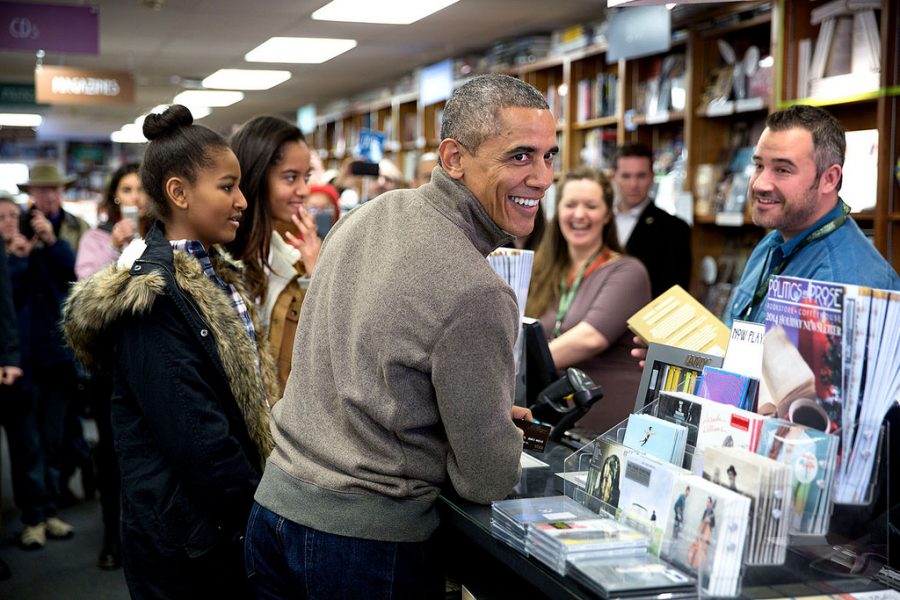
Photo by Pete Souza via obamawhitehouse.archive.gov
As is his custom, Barack Obama posted on Facebook his summer reading list, a mix of novels, memoirs, and instructive non-fiction. If you haven’t achieved the perfect state of tsundoku, you can get a few new reads for the waning days of summer. President Obama writes:
It’s August, so I wanted to let you know about a few books I’ve been reading this summer, in case you’re looking for some suggestions. To start, you can’t go wrong by reading or re-reading the collected works of Toni Morrison. Beloved, Song of Solomon, The Bluest Eye, Sula, everything else — they’re transcendent, all of them. You’ll be glad you read them. And while I’m at it, here are a few more titles you might want to explore:
Sometimes difficult to swallow, The Nickel Boys by Colson Whitehead is a necessary read, detailing the way Jim Crow and mass incarceration tore apart lives and wrought consequences that ripple into today.
Exhalation by Ted Chiang is a collection of short stories that will make you think, grapple with big questions, and feel more human. The best kind of science fiction.
Wolf Hall, Hilary Mantel’s epic fictionalized look at Thomas Cromwell’s rise to power, came out in 2009, but I was a little busy back then, so I missed it. Still great today.
Haruki Murakami’s Men Without Women examines what happens to characters without important women in their lives; it’ll move you and confuse you and sometimes leave you with more questions than answers.
American Spy by Lauren Wilkinson is a whole lot more than just a spy thriller, wrapping together the ties of family, of love, and of country.
The Shallows by Nicholas Carr came out a few years ago, but its arguments on the internet’s impact on our brains, our lives, and our communities are still worthy of reflection, which is something we all could use a little more of in this age.
Lab Girl by Hope Jahren is a beautifully written memoir about the life of a woman in science, a brilliant friendship, and the profundity of trees. Terrific.
Inland by Téa Obreht just came out yesterday, so I won’t spoil anything. But those of you who’ve been waiting for Obreht’s next novel won’t be disappointed.
You’ll get a better sense of the complexity and redemption within the American immigrant story with Dinaw Mengestu’s novel, How to Read the Air.
Maid by Stephanie Land is a single mother’s personal, unflinching look at America’s class divide, a description of the tightrope many families walk just to get by, and a reminder of the dignity of all work.
POTUS’ previous lists of recommended books can be found in the Relateds below.
If you would like to support the mission of Open Culture, consider making a donation to our site. It’s hard to rely 100% on ads, and your contributions will help us continue providing the best free cultural and educational materials to learners everywhere. You can contribute through PayPal, Patreon, and Venmo (@openculture). Thanks!
Related Content:
Barack Obama Shares a List of Enlightening Books Worth Reading
The 5 Books on President Obama’s 2016 Summer Reading List
A Free POTUS Summer Playlist: Pres. Obama Curates 39 Songs for a Summer Day
The Books on Barack Obama’s Summer Reading List: Naipaul, Ondaatje & More
Read More...How Joni Mitchell Wrote “Woodstock,” the Song that Defined the Legendary Music Festival, Even Though She Wasn’t There (1969)
Among the slew of iconic late-60s acts who played Woodstock 50 years ago, one name stands out conspicuously for her absence: Joni Mitchell. Was she not invited? Did she decline? Was she double-booked? Mitchell was, of course, invited, and eagerly wanted to be there. The story of her non-appearance involves alarming headlines in The New York Times and an appearance on The Dick Cavett Show the day after the festival that her manager, Elliot Roberts and label head David Geffen, decided she simply couldn’t miss.
Her significant other at the time, Graham Nash, reached the upstate New York festival with CSNY, “by helicopter and a stolen truck hot-wired by Neil Young,” reports the site Nightflight. But Geffen and Mitchell, seeing the headline “400,000 People Sitting in Mud,” and a description of the roads as “so clogged with cars that concertgoers were abandoning them and walking,” decided they shouldn’t take the risk. (She described the scene as a “national disaster area.”) Instead, they watched news about the mud-splattered event from Geffen’s New York City apartment (other accounts say they holed up in the Plaza Hotel).
So how is it Mitchell came to write the definitive Woodstock anthem, with its era-defining lyric “we’ve got to get ourselves back to the garden”? In the way of all artists—she watched, listened, and used her imagination to conjure a scene she only knew of secondhand. CSNY’s version of “Woodstock” (live, below, at Madison Square Garden in 2009) is the one we tend to hear most and remember, but Mitchell’s—her voice soaring high above her piano—best conveys the song’s sense of youthful hippie idealism, mystical wonder, and just a touch of desperation. (At the top, she plays the song live in Big Sur in 1969.) David Yaffe, author of Reckless Daughter: A Portrait of Joni Mitchell describes the song as “purgation. It is an omen that something very, very bad will happen with the mud dries and the hippies go home.”
Mitchell did make the Cavett Show gig, alongside Stephen Stills, David Crosby, and Jefferson Airplane, all just returning from the festival. But she didn’t have much to say. Instead, the gregarious Crosby does most of the talking, describing Woodstock as “incredible, probably the strangest thing that’s ever happened in the world.” Surveying the scene from a helicopter, he says, was like seeing “an encampment of a Macedonian army on a Greek hill crossed with the biggest batch of gypsies you ever saw.” Later on the show, Mitchell played “Chelsea Morning” and other songs, after performances by Jefferson Airplane.
“The deprivation of not being able to go,” she remembered, “provided me with an intense angle” on the festival. “Woodstock, for some reason, impressed me as being a modern miracle, like a modern-day fishes-and-loaves story. For a herd of people that large to cooperate so well, it was pretty remarkable and there was tremendous optimism. So I wrote the song ‘Woodstock’ out of these feelings, and the first three times I performed it in public, I burst into tears, because it brought back the intensity of the experience and was so moving.”
She did finally get the chance to play “Woodstock” at Woodstock, in 1998 (above, on electric guitar), for an appreciative long-haired, tie-dyed audience—many of them nostalgic for a moment they missed or were too young to have experienced. The performance highlights the “sense of longing that became essential to the song’s impact,” as Leah Rosenzweig writes at Vinyl Me, Please. “Sure, it was the irony of the century”: the song that best captured Woodstock for the people who weren’t there was written by someone who wasn’t there. “But it was also a perfect recipe for Mitchell to do what she did best: draw humans together while remaining completely on the sidelines.”
Related Content:
Watch Joni Mitchell’s Classic Performances of “Both Sides Now” & “The Circle Game” (1968)
Young Joni Mitchell Performs a Hit-Filled Concert in London (1970)
Josh Jones is a writer and musician based in Durham, NC. Follow him at @jdmagness
Read More...Hear Laurie Anderson Read from The Tibetan Book of the Dead on New Album Songs from the Bardo
Laurie Anderson began her career as an artist in the late 1960s, and since then she’s made connections both personal and professional with many of the most influential cultural figures of the past five decades. She has also, inevitably, seen a fair few of them depart this earthly existence, including her husband Lou Reed. The question of what happens to the dead is, for Anderson, apparently not without interest, even in the case of the non-human dead: the 2015 documentary Heart of a Dog traces the journey of Anderson’s late pet Lolabelle through the bardo, in Tibetan Buddhism the liminal state between death and rebirth.
The bardo is the central theme of Bardo Thodol, better known to Westerners in translation as The Tibetan Book of the Dead. On the new album Songs from the Bardo, Anderson reads from that eighth-century text with improvisational accompaniment by, among others, Tibetan musician Tenzin Choegyal and composer Jesse Paris Smith.
Stereogum’s Peter Helman writes that “Smith, the daughter of punk legend Patti Smith” — one of the many still-living influential artists in Anderson’s wide network — “first met Choegyal in 2008 at the annual Tibet House US Benefit Concert at Carnegie Hall.” Seven years later, they enlisted Anderson to narrate the first performed version of what would become Songs from the Bardo.
“Anderson narrates text from the Tibetan Book Of the Dead while Choegyal, Smith, cellist Rubin Kodheli, and percussionist Shahzad Ismaily provide the musical accompaniment,” writes Helman. “Smith plays piano and creates drone beds using a collection of crystal bowls, while Choegyal incorporates traditional Tibetan instruments like lingbu (a bamboo flute), dranyen (a lute-like stringed instrument), singing bowls, gong, and his own voice.” In the record’s liner notes, Choegyal writes of trying to “channel the wisdom and traditions of my ancestors through my music in a very contemporary way while holding the depth of my lineage.” The music, Anderson explains, “is meant to help you float out of your body, to go into these other realms, and to let yourself do that without boundaries.”
You can get a taste of this transcendence from “Lotus Born, No Need to Fear” the first sample track from the album the group has released. On it Anderson reads of the experience of the bardo, where “consciousness becomes airy, speeding, swaying, and impermanent.” For a Metafilter user named Capt. Renault, listening brings to mind another of Anderson’s artworks: her virtual-realty piece Aloft, which “has you sitting in an empty airplane which disintegrates around you, leaving you high, high above the ground with no support. You are aware of the possibility of death, but Laurie’s smooth, comforting voice leads to a complete absence of fear, and you are free to explore this world she’s created. Because of Laurie, I faced my death and I didn’t mind it.”
Related Content:
Leonard Cohen Narrates Film on The Tibetan Book of the Dead, Featuring the Dalai Lama (1994)
Laurie Anderson’s Top 10 Books to Take to a Desert Island
Based in Seoul, Colin Marshall writes and broadcasts on cities, language, and culture. His projects include the book The Stateless City: a Walk through 21st-Century Los Angeles and the video series The City in Cinema. Follow him on Twitter at @colinmarshall or on Facebook.
Read More...Science Shows That Snowball the Cockatoo Has 14 Different Dance Moves: The Vogue, Headbang & More
We humans think we invented everything.
The wheel…
The printing press…
Dancing…
Well, we’re right about the first two.
Turns out the impulse to shake a tail feather isn’t an arbitrary cultural construct of humanity but rather a hard-wired neurological impulse in beings classified as vocal learners—us, elephants, dolphins, songbirds, and parrots like the Internet-famous sulphur-crested cockatoo, Snowball, above.
Animals outside of this elite set can be trained to execute certain physical moves, or they may just look like they’re dancing when tracking the movements of their food bowl or shimmying with relief at being picked up from doggy daycare.
Snowball, however, is truly dancing, thanks to his species’ capacity for hearing, then imitating sounds. Like every great spontaneous dancer, he’s got the music in him.
Aniruddh Patel, a Professor of Psychology at Tufts who specializes in music cognition, was the first to consider that Snowball’s habit of rocking out to the Backstreet Boys CD he’d had in his possession when dropped off at a parrot rescue center in Dyer, Indiana, was something more than a party trick.
Dr. Patel notes that parrots have more in common with dinosaurs than human beings, and that our monkey cousins don’t dance (much to this writer’s disappointment).
(Also, for the record? That goat who sings like Usher? It may sound like Usher, but you’ll find no scientific support for the notion that its vocalizations constitute singing.)
Snowball, on the other hand, has made a major impression upon the Academy.
In papers published in Current Biology and Annals of the New York Academy of Sciences, Patel and his co-authors John R. Iversen, Micah R. Bregman, and Irena Schulz delved into why Snowball can dance like … well, maybe not Fred Astaire, but certainly your average moshing human.
After extensive observation, they concluded that an individual must possess five specific mental skills and predilections in order to move impulsively to music:
- They must be complex vocal learners, with the accompanying ability to connect sound and movement.
- They must be able to imitate movements.
- They must be able to learn complex sequences of actions.
- They must be attentive to the movements of others.
- They must form long-term social bonds.
Cockatoos can do all of this. Humans, too.
Patel’s former student R. Joanne Jao Keehn recently reviewed footage she shot in 2009 of Snowball getting down to Queen’s “Another One Bites the Dust” and Cyndi Lauper’s “Girls Just Want to Have Fun,” identifying 14 distinct moves.
According to her research, his favorites are Vogue, Head-Foot Sync, and Headbang with Lifted Foot.
If you’ve been hugging the wall since middle school, maybe it’s time to take a deep breath, followed by an avian dancing lesson.
How did Snowball come by his astonishing rug-cutting confidence? Certainly not by watching instructional videos on YouTube. His human companion Schulz dances with him occasionally, but doesn’t attempt to teach him her moves, which she describes as “limited.”
Much like two human partners, they’re not always doing the same thing at the same time.
And the choreography is purely Snowball’s.
As Patel told The Harvard Gazette:
It’s actually a complex cognitive act that involves choosing among different types of possible movement options. It’s exactly how we think of human dancing.
If he is actually coming up with some of this stuff by himself, it’s an incredible example of animal creativity because he’s not doing this to get food; he’s not doing this to get a mating opportunity, both of which are often motivations in examples of creative behavior in other species.
You can read more science-based articles inspired by Snowball and watch some of his many public appearances on the not-for-profit, donation-based sanctuary Bird Lovers Only’s website.
Related Content:
Why We Dance: An Animated Video Explains the Science Behind Why We Bust a Move
Ayun Halliday is an author, illustrator, theater maker and Chief Primatologist of the East Village Inkyzine. Join her in NYC on Monday, September 9 for another season of her book-based variety show, Necromancers of the Public Domain. Follow her @AyunHalliday.
Read More...Listen Online to Every Minute of the Original Woodstock Festival
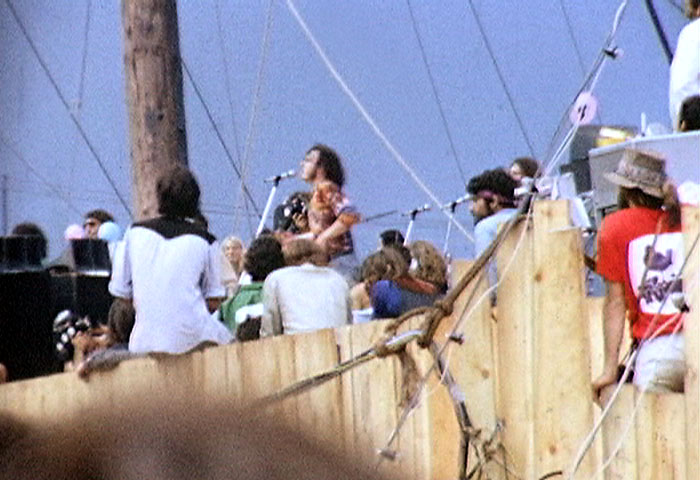
Image of Joe Cocker by Derek Redmond and Paul Campbel, via Wikimedia Commons
Lifehacker has this great tip. “Starting at 5:07 p.m. EST today, August 15, you can listen to every minute of the three days of concerts, courtesy of Philadelphia radio station WXPN. It will include all of the festival’s archived audio: from the iconic performances to the stage announcements to the rain delays. The exclusive broadcast will feature newly reconstructed audio archives of each of Woodstock’s 32 acts, starting with Richie Havens’ opening set, and continuing through to Jimi Hendrix’s closing performance on Sunday morning. According to a release from the station, it will be broadcast in as close to real time as possible.” To listen, go to this page, scroll down, and launch the media player.
If you would like to support the mission of Open Culture, consider making a donation to our site. It’s hard to rely 100% on ads, and your contributions will help us continue providing the best free cultural and educational materials to learners everywhere. You can contribute through PayPal, Patreon, and Venmo (@openculture). Thanks!
Read More...A Short Animated Introduction to Hypatia, Ancient Alexandria’s Great Female Philosopher
Ten years ago, a film came out called Agora, a biopic of philosopher and mathematician Hypatia of Alexandria, daughter of mathematician Theon, the last recorded director of the Library of Alexandria. The movie wasn’t well-reviewed or widely seen, which is neither here nor there, but it was heavily criticized for historical inaccuracies. This seemed a little silly. “One does not go to the movies to learn about ancient history but to be entertained,” as Joshua J. Mark writes at the Ancient History Encyclopedia. Agora is not an accurate rendering of the little we know of Hypatia, but neither is Spartacus, a far more entertaining film, an accurate depiction of the 2nd century B.C.E. gladiator and rebel.
And yet, we should know who Hypatia was, and we should understand what happened to her, something many of the film’s religiously-motivated critics refused to admit, claiming that the depiction of hostile, anti-intellectual Christians in the movie was nothing more than prejudicial animus on the part of director Alejandro Amenabar. The truth is that “the anti-intellectual stance of the early church is attested to by early Christian writers,” Mark points out. And “the historical records state” that Hypatia “was beaten and flayed to death by a mob of Christian monks who then burned her in a church.”
The TED-Ed video above calls this mob a “militia” who saw Hypatia’s scientific pursuits as “witchcraft.” The charge is, of course, specifically gendered. The manner of her death was so brutal and shocking that “even those Christian writers who were hostile to her and claimed she was a witch,” Mark writes, “are generally sympathetic in recording her death as a tragedy. These accounts routinely depict Hypatia as a woman who was widely known for her generosity, love of learning, and expertise in teaching in the subjects of Neo-Platonism, mathematics, science, and philosophy.”
As is the case with many ancient figures, none of her own writings survive, but both her contemporary critics and sympathetic students record similar impressions of her intellectual curiosity and scientific knowledge. The short video lesson tells us Hypatia was born around 355 A.C.E., which means she would have been around sixty years old at the time of her death. She lived in Alexandria, “then part of the Egyptian province of the Eastern Roman Empire, and an intellectual center.” Educated by her father, she surpassed him “in both mathematics and philosophy, becoming the city’s foremost scholar.”
She eventually succeeded Theon as head of the Platonic school, “similar to a modern university,” and she served as a trusted advisor to the city’s leaders, including its governor, Orestes, a “moderate Christian” himself. Her achievements were many, but her teaching, drawing on Plato, Aristotle, Plotinus, and Pythagoras, was her greatest legacy, the TED-Ed lesson (scripted by Soraya Field Fiorio) asserts. Hypatia’s death not only deprived the city of a beloved teacher and scholar. Her murder, at the behest of Alexandrian bishop Cyril, “was a turning point.” Other philosophers fled the city, and Alexandria’s “role as a center of learning declined.”
“In a very real way,” the lesson tells us, “the spirit of inquisition, openness, and fairness she fostered died with her.”
For a more complete treatment of Hypatia’s life and intellectual contributions, read Maria Dzielska’s book, Hypatia of Alexandria.
Related Content:
The Rise and Fall of the Great Library of Alexandria: An Animated Introduction
Free Courses in Ancient History, Literature & Philosophy
Josh Jones is a writer and musician based in Durham, NC. Follow him at @jdmagness
Read More...Watch John Entwistle’s Bass-Playing Genius on Display in Isolated Tracks for “Won’t Be Fooled Again” and “Baba O’Reilly”
I guess it’s easy to be “The Quiet One” in The Who when surrounded by a preening singer with golden locks, a guitarist with a windmill arm who smashes his equipment, and a completely insane drummer (on and off stage). But John Entwistle helped root the band by standing still and delivering some of the meatiest and beatiest licks and melodic runs in ‘60s rock.
The above footage salvaged from the doc The Kids Are Alright shows the master at work. “Won’t Be Fooled Again” isn’t known as a bass-forward song, so this isolated track from a live take show will make you hear it anew. Entwistle plays his bass like an electric lead, doubling the drums sometimes, other times mimicking the vocals. He plays triplets and runs. He zooms up the neck, slides down, arpeggiates, the lot. It’s thick. Just hit play.
As some YouTube wag points out, it’s something of a bass player joke come to life at the end, where Entwistle leaves his bass onstage and walks off, while a girl rushes out of the audience to embrace the lead singer. Such is life in a band.
From the same shoot, you can also check out his isolated bass from “Baba O’Reilly.” Entwistle has a three-note riff to work with. He stays true to it while filling in spaces here and there with distortion turned way up. At the end he has a sip of (I assume) water and looks about as excited as when he started.
In the mid-nineties, Entwistle was interviewed for a book on drummer Keith Moon. Author Tony Fletcher caught him in an honest mood:
“I wasted my whole fucking career on The Who,” he said between gulps of Remy Martin brandy, his favourite tipple. “Complete fucking waste of time. I should be a multi-millionaire. I should be retired by now. I’ll be known as an innovative bass player. But that doesn’t help get my swimming pool rebuilt and let me sit on my arse watching TV all day. I wouldn’t want to, but I’d like the chance to be able to.”
Not all rock bands consist of best friends, and some are downright rancorous. But that’s often what brings out the best in people. So as you gaze at Entwistle stifling a yawn during these two clips, consider his confession and enjoy.
Related Content:
The Neuroscience of Bass: New Study Explains Why Bass Instruments Are Fundamental to Music
Listen to Grace Slick’s Hair-Raising Vocals in the Isolated Track for “White Rabbit” (1967)
What Makes Flea Such an Amazing Bass Player? A Video Essay Breaks Down His Style
Ted Mills is a freelance writer on the arts who currently hosts the artist interview-based FunkZone Podcast and is the producer of KCRW’s Curious Coast. You can also follow him on Twitter at @tedmills, read his other arts writing at tedmills.com and/or watch his films here.
Read More...People Pose in Uncanny Alignment with Iconic Album Covers: Discover The Sleeveface Project

We’ve all heard a great deal over the past twenty years or so about the death of the album. This talk seems to have begun with the emergence of the downloadable individual song, a technology that would finally allow us consumers to purchase only the tracks we want to hear and avoid paying full price for “filler.” But against these odds, the long-playing album has persisted: artists still record them and listeners, at least dedicated listeners, still buy them, sometimes even on vinyl.
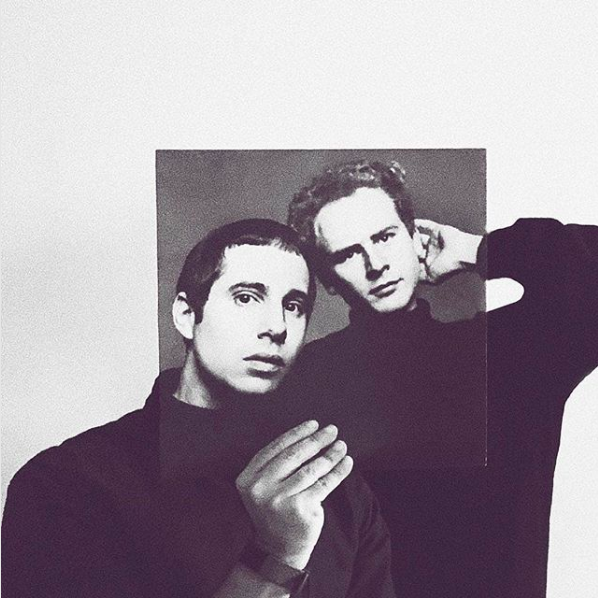
Somehow the album has remained culturally relevant, and a fair bit of the credit must go to its cover. It didn’t take long after the introduction of the 12-inch, 33 1/3‑RPM vinyl record in 1948 for the marketing purposes of its large outer sleeve to become evident, and the past 71 years have produced many a memorable image in that form. Few platforms could be as representative of our digital age as Instagram, but it is on Instagram that the album cover has recently received homage from across the globe.
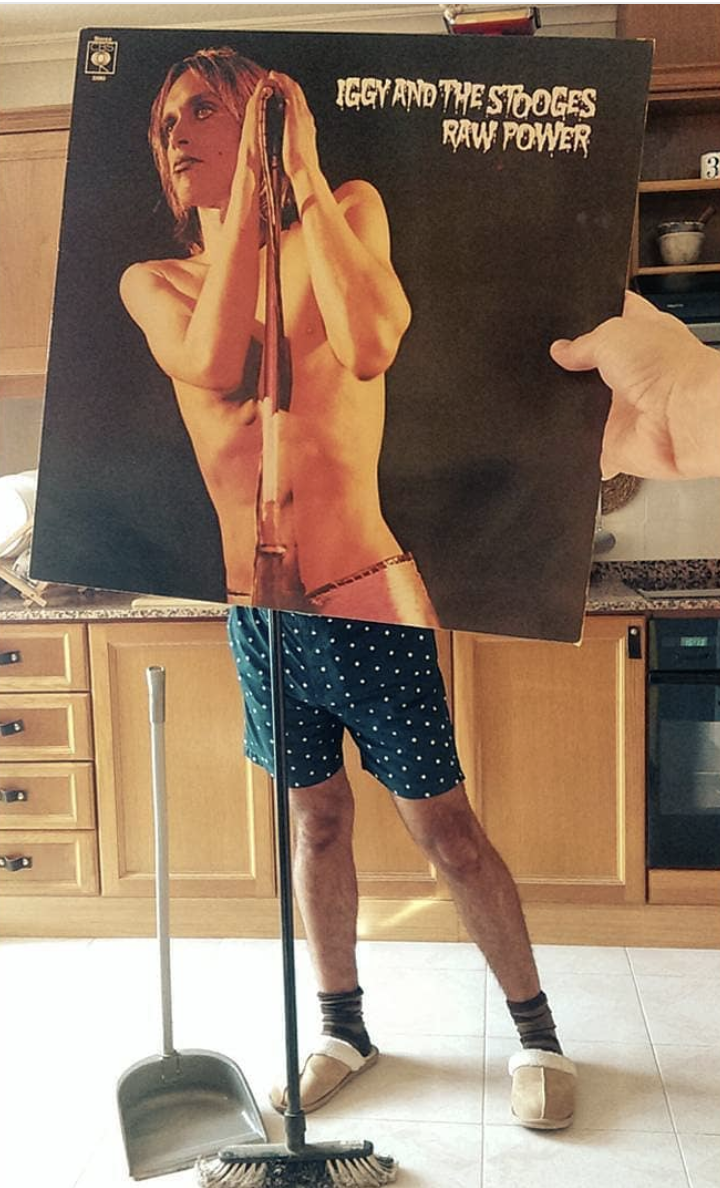
“Sleeveface is an amusing participatory photo project in which people from all over the world strategically pose with matching album covers,” writes Laughing Squid’s Lori Dorn, “creating the illusion that the original picture is complete.”
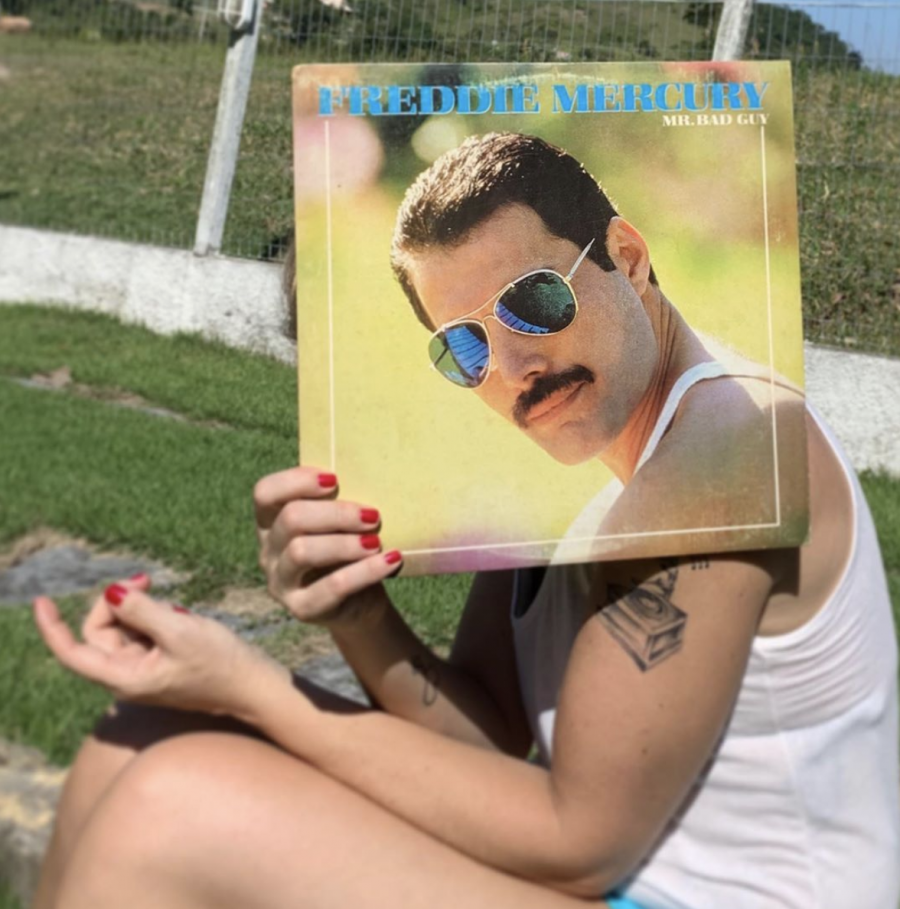
Browse the tags #sleeveface and #sleevefacesunday (for everything on the internet eventually gets its day) on Instagram and you’ll see a variety of tribute poses, some of them uncannily well-aligned, to musicians whose faces we all know not least because they’ve appeared on iconic album covers: Bruce Springsteen to Bob Marley, Simon and Garfunkel to Iggy and the Stooges, Leonard Cohen to Freddie Mercury, Janis Joplin to Adele.
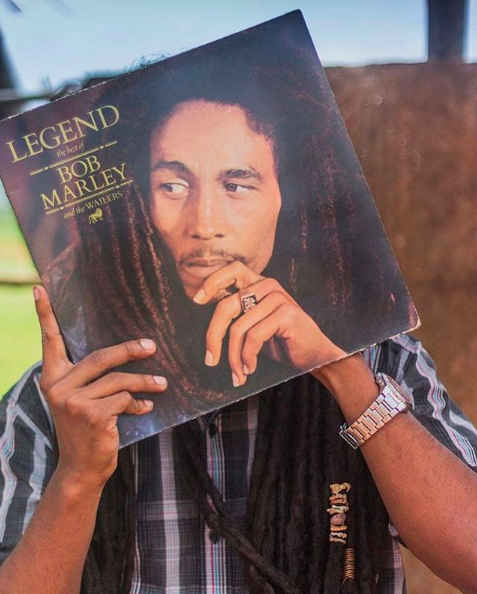
All those famous names have undergone the sleeveface treatment, and quite a few of them have undergone it more than once. Many of us have grown familiar indeed with these albums, and surely even those of us who’ve never listened to them start-to-finish probably know at least a couple of their songs. But even if you’ve never heard so much as a measure of any of them, you’ve almost certainly seen their covers — and may well, at one time or another, have been tempted to hold them up in front of your own face to see how they lined up. Popular music shows us how much we have in common, but so does its packaging.
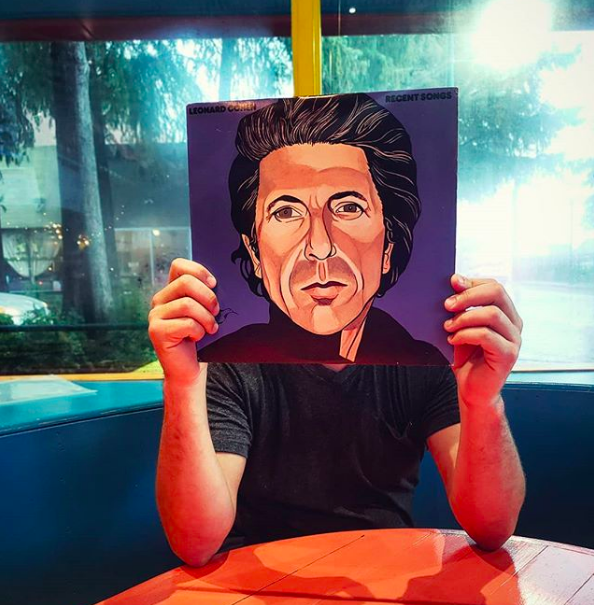
via Laughing Squid
Related Content:
Classic Jazz Album Covers Animated & Brought to Life
The Groundbreaking Art of Alex Steinweiss, Father of Record Cover Design
Based in Seoul, Colin Marshall writes and broadcasts on cities, language, and culture. His projects include the book The Stateless City: a Walk through 21st-Century Los Angeles and the video series The City in Cinema. Follow him on Twitter at @colinmarshall or on Facebook.
Read More...Support Us
We're hoping to rely on loyal readers, rather than erratic ads. Please click the Donate button and support Open Culture. You can use Paypal, Venmo, Patreon, even Crypto! We thank you!

About Us

Open Culture scours the web for the best educational media. We find the free courses and audio books you need, the language lessons & educational videos you want, and plenty of enlightenment in between.
Advertise With Us

FREE UPDATES!
GET OUR DAILY EMAIL
Get the best cultural and educational resources on the web curated for you in a daily email. We never spam. Unsubscribe at any time.
FOLLOW ON SOCIAL MEDIA

Open Culture editor Dan Colman scours the web for the best educational media. He finds the free courses and audio books you need, the language lessons & movies you want, and plenty of enlightenment in between.
Advertise With Us


